Tag Archives: 70’s Movies

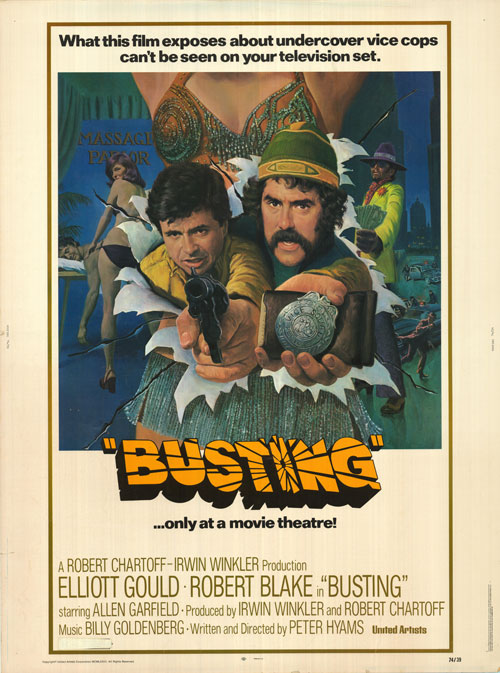
Busting (1974)

By Richard Winters

My Rating: 7 out of 10

4-Word Review: Cops on a mission.

            Michael (Elliot Gould) and Patrick (Robert Blake) are two vice cops hauling in prostitutes and drug dealers only to find that are being let go without being charged. They eventually realize that local crime boss Carl Rizzo (Allen Garfield) has an inside influence with the police department allowing these criminals to get off. Michael and Patrick decide to turn-the-tables, but this proves dicey as Rizzo’s influence is strong and could cost the two not only their jobs, but also their lives.

The film has a gritty style that nicely captures the rugged street life of its characters. Director Peter Hyams uses his background as a news producer and documentary filmmaker to give the film an authentic quality. His tendency for natural lighting is perfect for this kind of material. The film lacks music at least at the beginning, which is effective as it gives you the feeling that you watching some sort of underground police video especially during the opening sequence. The pounding soundtrack during the chase scenes is okay, but what impressed me was the haunting melody used in some of the other parts that sounded like something you might hear in a thriller, or horror film, but it works because it is an unusual sound for a cop picture. The dialogue is great as it manages to be acerbic and insightful while still remaining realistic.

The first half is hampered by the two’s preoccupation with nabbing a prostitute. I remember watching the old ‘Cops’ TV-show where there would be many episodes detailing elaborate stings that the police would use to nab some otherwise harmless schmuck who was simply looking for a little action. Most who are arrested will go right back to doing it again after being given a light fine, or jail sentence, which to me always seemed wasteful both to the law enforcement’s time and the taxpayer’s money when there are far more serious crimes out there. When the Carl character mocks the two with the line ‘You arrest ten-dollar hookers and think you are Captain Marvel’ I had to laugh and agree. What is even worse is when Michael is off-duty he ends up paying for the services of a call-girl meaning I guess that when he is in the mood himself then it is alright.

The film improves during the second half and includes an exciting foot chase at night inside a sprawling inner-city fruit market. Hyams use of tracking camera shots helps build the tension and I found it interesting that an innocent bystander ends up getting shot and killed as I don’t think I’ve seen that happen in any other police movie. Another chase that happens at the end and involves two ambulances careening down city streets is equally well done.

The cat and mouse game that they play with the crime boss was intriguing enough to keep this viewer interested. Garfield plays the part with his usual hyper-style that makes the character both repellent and human at the same time. The best thing about the film though is that fact that it chooses a somber tone and then sticks with it. Too many times ‘statement movies’ with a downbeat message end up selling-out and become an audience pleaser at the most unlikely moment, but this film doesn’t. I’m not saying that it ends on a depressing note, but it does effectively hit home the fact that police are hampered by a lot of bureaucracy that limits their effectiveness. It also examines the boredom and monotony that can come with the job, which other police dramas rarely if ever touch on.

The film was controversial because of its over-reliance on gay stereotypes during a barroom scene. I was a bit surprised by this because the scene itself is short and the stereotypes shown weren’t too different from other films of the period dealing with the same topic. Michael does refer to them by using the derogatory ‘F-word’, but I am pretty sure that a lot of cops in 1974 used that very same word and since this film was intended to show how things were I was able to go with it. The two also get ganged up on and viciously beaten by the gay patrons that I found to be amusing.

I also have to mention Cornelia Sharpe a former model who had a brief 10 year film career in mostly grade B exploitation pictures. She looks her best here not only during a nude scene that she has with a doctor at his office where she pretends to be one of his patients while really being a prostitute, but also during her appearance in court where she wears a pink hat and dress. I also liked that despite being a hardened hooker she still gives a warm smile to a lonely child sitting in the waiting room.

My only real complaint with the film is that it features one of the tackiest make-up jobs in the history of movies and seriously affects the film’s realism. The scene I refer to is when Michael and Patrick get beat-up by some of Carl’s thugs. The ‘injuries’ to Patrick’s face clearly look like it was smeared on in two seconds with some light red paint.

My Rating: 7 out of 10

Released: February 27, 1974

Runtime: 1Hour 31Minutes

Rated R

Director: Peter Hyams

Studio: United Artists
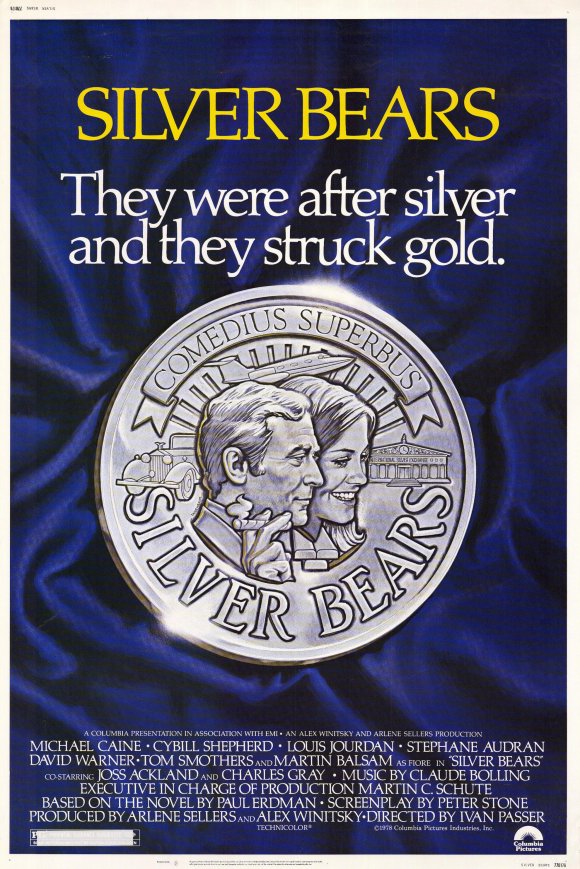
Silver Bears (1978)

By Richard Winters

My Rating: 6 out of 10

4-Word Review: Investing in Silver Mine.

This is an engaging, lighthearted look at the complex inner-workings of financial institutions and markets and how a group of con-men try to exploit it. The plot is elaborate and although it is easy to follow as you are watching it, as long as you are paying close attention, it is hard and even convoluted to explain, but I will try my best.

The basic premise works like this: Doc Fletcher (Michael Caine) is hired by underground kingpin Joe Fiore (Martin Balsam) to open a phony bank which they can use as a front for their laundered money. When they get there they find that the building is some rundown offices on top of a restaurant. Prince di Siracusa (Louis Jourdan) then tells them of a silver mine in Iran that is run by his distant cousins Agha (David Warner) and Shireen (Stephanie Audran).  Doc decides the bank can invest in the mine and use the money to create a better building premises as well as attracting rich investors. The silver in the mine begins to flood the market causing a drop in value at the London Stock Exchange and forces Charles Cook (Charles Gray) to decide to buy out the bank that is funding the mine in order to then close the mine. To do this he contacts the President of the First National Bank of California (Joss Ackland) who is looking to expand his business in Europe. The bank president sends Donald Luckman (Tom Smothers) out to negotiate a sale of the bank with Doc, but without telling Doc the true reason why. This makes Doc suspicious and to find out their true motives he decides to seduce Donald’s beautiful and free-spirited wife Debbie (Cybil Shepard). Once she divulges their secret things really get going in a high-spirited fashion.

The catalyst of the comedy comes through the many different ‘negotiating’ sessions that take place throughout the film all of which prove to be quite amusing. The first is when Doc negotiates with Agha about a suitable deposit Agha must give to the bank in order to obtain a bank loan even though the bank has no money to give. The second is when Donald tries to bargain with Doc on a selling price for the bank and the third is when Doc tries to intimidate Crime boss Joe into not accepting Donald’s offer. The final one at the end is where all the characters chase Charles around his mansion in order to get settlements to their deals, which have by then soured.

The characters are charming and delightful. Caine is superb as always playing a man who would like to be a lot more ruthless and intimidating if he weren’t surrounded by a bunch of incompetents. Jourdan is suave as the Prince and the two leads share very contrasting personalities and styles, which makes their conversations and budding friendship interesting.

This movie is also a great chance to see Jay Leno in a rare acting role. I’d say being a talk show host is more his repartee, but he is energetic enough here to remain amiable and seeing him with a big mop of curly black hair is almost worth the price itself. Shepard is fantastic and the one thing that gives the film some zest. She is best known for her bitchy roles of which she is very good, but her she plays a fun-loving hippie type and is hilarious. Although this movie is a bit hard to find fans of Shepard should really seek this out as they won’t be disappointed.

Smothers is okay as the meticulous accountant who thinks he has all the bases covered until he gets an unsettling surprise at the end. Usually he is stuck playing characters on the dim-witted side, so it was nice to see him in something that was a slight change of pace. Although Balsam’s screen time is brief I still got a kick out of the way he would look at pictures showing the bloody corpses of the victims he had ordered killed while he ate his breakfast.

The film was shot on-location in such places as Switzerland and Morocco and although it does show some of the exotic topography of the regions it wasn’t enough and I wanted to see more. The musical score is terrible and resembles a show tune from the big band era that does not fit with the mood, or action of the story. I also didn’t find it enticing to have the film begin by focusing the camera onto the naked rears of a bunch of fat, middle-aged men as they get into a hot tub.

For those looking for a diverting, original comedy that emphasizes the subtle and dryly humorous exchanges between business partners then this little known gem should hit the spot.

My Rating: 6 out of 10

Released: April 21, 1978

Runtime: 1Hour 53Minutes

Rated PG

Director: Ivan Passer

Studio: Columbia Pictures

Available: VHS

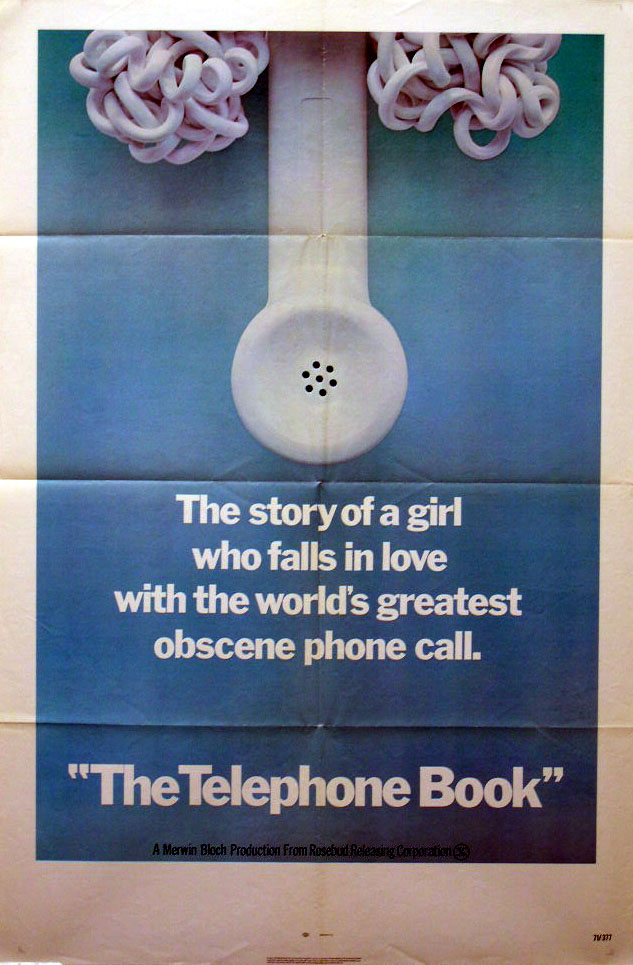
The Telephone Book (1971)

By Richard Winters

My Rating: 7 out of 10

4-Word Review: She likes obscene calls.

            Due to the recent death of writer/director Nelson Lyon on July 17th I felt it was time to dig up my old copy of this bizarre underground cult flick and give it another view. I stated in another review I made about this film that I considered it The Gone with the Wind of underground moviemaking and I still stand behind it. The film is hampered by its low budget and black and white photography, but I was impressed with it creative camera angles, editing, set design and music. Lyon showed a genuine vision and made the most out of what little resources he had. Even the content, which could be seen as pornographic by some, is presented in such a quick paced and diverting style that it becomes engaging and amusing.

The basic premise deals with Alice (Sarah Kennedy) an over-sexed young blonde living alone in an apartment with walls lined with wall paper that has hundreds of pictures of people in various sex acts. One day she gets a call from an obscene phone caller and she falls in love with him because it was the ‘most sweetest and most beautiful dirty call’ she had ever received and although she had received other obscene calls in her life this one ‘had class’. She becomes obsessed with meeting the man. He tells her that his name is John Smith and that he is ‘in the book’.  She goes through the telephone book to call him up, but because she lives in New York City she realizes there are a lot of John Smiths. The rest of the film deals with her encounters of all the various John Smiths that she meets as well as her climatic meeting with the real John Smith and the very weird conversation that she has with him.

The film’s structure is basically made up of a lot of vignettes all dealing with various forms of perversity. Some famous character actors appear in cameos and some of which prove to be quite outrageous and funny. Barry Morse best known for playing Lieutenant Gerard in the 1960’s TV-series ‘The Fugitive’ has one of the film’s best moments playing Har Poon ‘the greatest stag movie actor of all-time’. He has a scene where 10 naked ladies, at least that is how many I was able to count, all jump on top of him and begin sucking on his various body parts. There is Roger C. Carmel as a psychiatrist who enjoys exposing himself to ladies on a subway train, but when Alice decides to do the same thing in return he becomes shocked and repulsed. Character actress Lucy Lee Flippan makes her film debut here as a ‘reformed’ obscene phone caller who describes how when her husband was away at work and her kids where at school she would call up men at their jobs and talk dirty to them while masturbating  with a banana. There is also William Hickey playing a man suffering from a permanent and incurable erection.

The best appearance though comes from Norman Rose famous for narrating many films. Here he appears wearing a mask of a pig and playing the actual obscene phone caller. He describes how he calls 4 different women a night every week of the year except for two when he goes on vacation to ‘get out of the grind’. He also explains how he has perfected his obscene phone skills to the point that he could seduce the president of the United States if he wanted to, but doesn’t because he has ‘no political ambitions’. The conversation gets weirder including telling Alice about his foray into becoming an astronaut while he seductively washes her hair, but Lyon’s use of imagery during this segment keeps it interesting and even memorable. My only complaint would be that I wished he had taken off the mask so we could have seen what he really looked like.

The film ends with an eye popping animation segment dealing with a giant headless naked woman who squats down and has sex with a sky scrapper that needs to be seen to be believed. This is also the only part of the film that is in color.

Despite the fact that it was all done on a shoestring budget and with no character development I had few complaints although I didn’t understand how the obscene caller was always able to call up Alice and get a hold of her even when she was not at home and at someone else’s place. This was of course before cellphones, but I suppose demanding logic from a film that otherwise revels in the absurd would prove futile. The film did not do well on its initial run, but was rereleased in 2011 to much more positive reviews both here and in Europe. Through word of mouth it is expected to gain the cult following it deserves and maybe eventually a DVD or Blu-ray release.

Kennedy is delightful in the lead, but her appeal may depend on one’s personal tolerance. She looks and acts almost exactly like Goldie Hawn and was her replacement on the ‘Laugh-In’ show when Hawn left to concentrate on her movie career. I enjoyed Kennedy’s giddiness and child-like enthusiasm to all the perversions around her, but her voice sounds like she has sucked in helium and could prove annoying to some.

My Rating: 7 out of 10

Released: October 3, 1971

Runtime: 1Hour 24Minutes

Rated X

Director: Nelson Lyon

Studio: Rosebud Films

Available: VHS, DVD, Blu-ray 

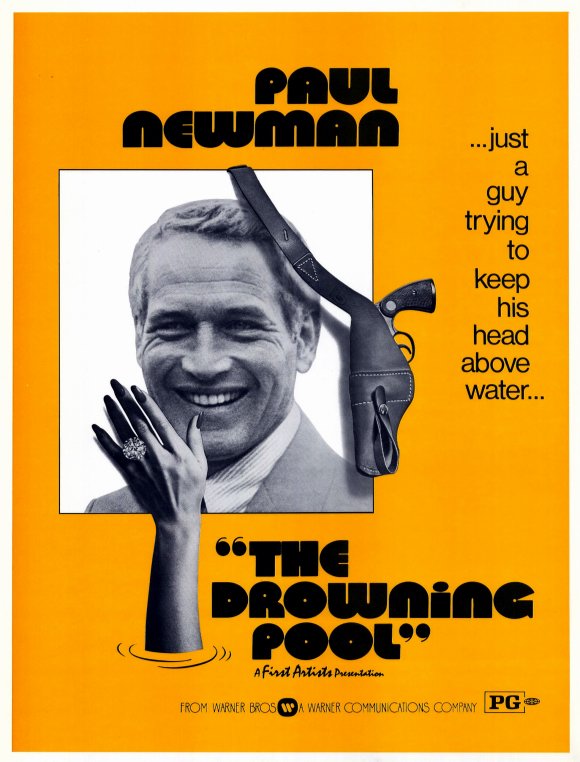
The Drowning Pool (1975)

By Richard Winters

My Rating: 7 out of 10

4-Word Review: Way too much water.

            Detective Lew Harper (Paul Newman) travels to New Orleans in order to help Iris (Joanne Woodward) an old love of his who has now married and living in a large southern mansion that is controlled by her husband’s domineering mother Olivia (Coral Browne). Iris asks Harper to track down a former servant who she has fired and is now sending notes to her husband threatening to describe one of her elicit affairs. Initially Harper thinks it will be a simple straightforward case, but finds many twists and turns including the presence of an oil company looking to buy the land the mansion sits on for drilling. There is also Iris’s over-sexed teen daughter Schuyler (Melanie Griffith) who is always present when there is any trouble as well as the town’s sheriff Broussard (Tony Franciosa) who takes an unusual interest in the well fare of Iris and her daughter.

By itself this is an okay mystery although it takes a while getting there and there are too many characters popping in out of nowhere threatening harm to Harper to point that almost becomes formulaic. Compared to the first Harper this film pales in comparison. It lacks the snappy dialogue that made the first one so fun. The supporting characters are not as well defined, or as interesting and the overall production values are not as slick. I was amazed that with a script written by Tracy Keenan Wynn, Walter Hill, and Lorenzo Semple Jr. that it could be so overall ordinary, but it is. That doesn’t mean it is not passable, or entertaining, but it lacks the zing from the first.

I also didn’t like the change of location. Harper with his very detached approach worked better with the jaded Hollywood types. Here he just seems out-of-place. The mansion setting is boring and predictable. However, the scene where Harper is taken by boat along a swamp and to a pit bull farm where the animals are trained for dog fighting is special.

As for the supporting characters Richard Jaeckel, who has appeared with Newman before in several good scenes including the drowning one in Sometimes a Great Notion, is good as ‘bullet head’ a corrupt policeman who is constantly harassing Harper. Harper later turns the tables playing a game of Russian roulette with him that is great. Murray Hamilton is also quite good as the evil oil baron Kilbourne and the all red jumpsuit that he appears in is something else.

On the female end you have to love Melanie Griffith as the devious, nympho teen. She plays that type of part so well that I don’t think there is any other actress that could ever do it better. I did not like Gail Strickland as Mavis who is Kilbourne’s wife.  When we first see her she is a conniving, cocky, flirtatious woman, but then in a later scene turns into a whimpering, whiny mess begging Harper for help when she barely knows him. This extreme contrast didn’t work with me and I thought that a woman who marries a rich, but shady businessman and has been involved in some underhanded maneuverings herself should have a little better ‘plan B’ in place and not sink to such a pathetic helpless level the minute things unravel. Woodward is wasted in a boring role that allows for very little range. I wished she had played Strickland’s part as I think she would’ve made it more interesting.

The one scene that really stands out and makes this movie special is the part where Harper and Mavis are trapped in a hypo-therapy room in an old, abandoned asylum. Newman does most of his stunts here including being sprayed by a fire hose while locked in a strait jacket. The sequence where they plug up all the drains and then turn on all the showers in an attempt to float up the pool of water and escape out the skylight is amazing as is the moment where the gallons of water comes rushing through the door toppling furniture and people. This scene is incredible on many levels and should make it into the top twenty of best movie moments ever.

My Rating: 7 out of 10

Released: June 25, 1975

Runtime: 1Hour 48Minutes

Rated PG

Director: Stuart Rosenberg

Studio: Warner Brothers

Available: VHS, DVD, Amazon Instant Video

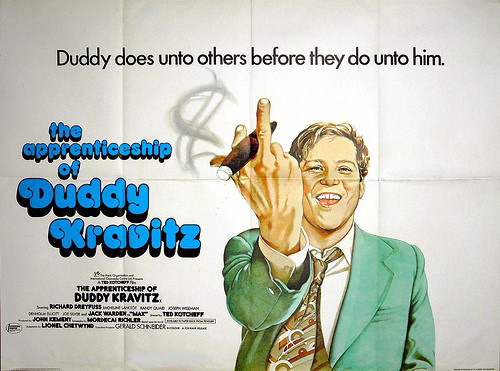
The Apprenticeship of Duddy Kravitz (1974)

By Richard Winters

My Rating: 8 out of 10

4-Word Review: Anything to get ahead.

            Duddy Kravitz (Richard Dreyfuss) is a young Jewish man looking to make a name for himself and escape the working class existence of his father. He comes up with several schemes many of which aren’t legal and don’t work, but his aggressive nature drives him even as it alienates those around him.

I loved the Duddy character and I liked him because of his unlikableness. Yes, he is obnoxious, deceitful, conniving, brash, arrogant, crude, and aggressive to the point of running down anyone who might get in his way, but you are shown why he is that way. How the desperate world around him has brought out the ugliness and the allure of money and social prestige only makes it worse. Duddy is more of a victim of a capitalistic culture that promises with money comes happiness, but fails to mention all the sacrifices and compromises that must come with it.  The script by Mordecai Richler, which is based on his novel, does a terrific job on analyzing the idea of success on how the end doesn’t always justify the means and how a man who is poor but true to his values can be far richer than one who may have a fortune, but is hollow.

Dreyfuss does a terrific job and I consider this one of his best performances even though apparently he was dissatisfied with it personally. I liked the nervous energy and ticks that he gives the character that easily reveals the desperation and drive that he has inside. He manages to bring out the human side of his character making him relatable despite his many flaws. What is interesting is the way Duddy will display a certain sensitive side in brief and surprising moments.

Jack Warden is wonderful as the father a man who is well aware of his son’s faults, but remains loyal to his strive for success. The film’s final image, which features Warden is a gem especially when taken into effect everything that came before it. Joe Silver, a deep, gravelly voiced character actor has his best performance of his career as Farber. This is a man who shows deep devotion and respect to religion and spirituality, but then openly boasts to Duddy at how he cheated and back-stabbed a business partner.

Denhom Elliot is great in comic relief playing an alcoholic has-been filmmaker who makes a movie involving the bar mitzvah of Farber’s son that ends up showing everything from Adolf Hitler, to a naked woman’s breast, and even a man eating glass. He exhibits this to everyone in the synagogue and the facial reactions of Farber while he is watching it is hilarious.

The on-locations shooting in Montreal is well done. I felt like I was right there back in the 1950’s. The inside of Duddy’s home had a nice lived-in look and feel. There are images that stay with you long after it is over including the gorgeous forest and lake that Duddy hopes to one day own.

This is a perfect example of a compelling drama. Each scene works seamlessly with the others and the film continues to reveal more insight as it goes on. It also an excellent character detailing someone who is all too real and facing many difficult life decisions that we all face.

My Rating: 8 out of 10

Released: April 11, 1974

Runtime: 2 Hours

Rated PG

Director: Ted Kotcheff

Studio: Paramount

Available: VHS, DVD, Amazon Instant Video

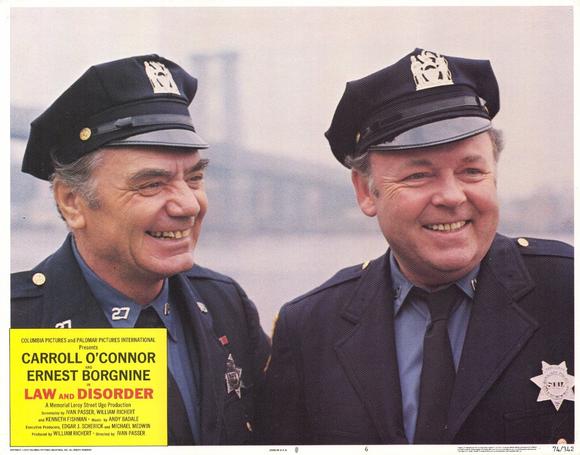
Law and Disorder (1974)

By Richard Winters

My Rating: 6 out of 10

4-Word Review: Regular citizens become cops.

Due to the recent death of Ernest Borgnine I felt a review of this film, which features Borgnine in a very strong and effective performance, would be appropriate. The story deals with two middle-aged men named Willie and Cy (Carroll O’Connor, Ernest Borgnine) who after being robbed decide to join the police force as auxiliary cops. Their escapades start out as lighthearted and comical, but eventually they become faced with some serious consequences.

This is a rare film appearance for O’Connor who performed in a lot of movies during the 60’s, but did very little once he became a household name with ‘All in the Family’. It is fun to see him though the role doesn’t exercise his acting talents enough. He is a toned down version of Archie and comes off as boring and benign with a smiling face button on his coat that is annoying. His two best scenes come when he tries to pretend he is a young urban street punk and as a cab driver with a nice way of handling two obnoxious passengers.

It is actually Borgnine that steals the picture. Usually he is more of an unassuming supporting player, but here he comes into his realm. He is funny in a cantankerous way, but with some good dramatic moments in-between. Watching him angrily smash up a stolen bicycle with a lead pipe is intense and memorable. He proves that he might have made a good Archie Bunker had O’Connor not been available.

The female cast runs hot and cold in terms of performances.  It was fun to see Ann Wedgeworth, a native Texan, transplanted into the role of a Bronx housewife. Karen Black though is outrageously wasted in two very brief and meaningless scenes as an over-sexed hair stylist.

The story on the whole is alright. The beginning features a lot of amusing, fast paced comical adventures. The problem really begins towards the middle when the film shifts to a more serious tone, which bogs down the pace and fractures the narrative. You get roped into thinking this is a good comedy and then find it is anything but. The drama isn’t bad, but it doesn’t mesh well with the silliness. It also veers too much from the main premise making the message and point of view confusing. It tries to tackle too many topics, but fails to make any type of meaningful or lasting statement in the process.

Overall the film is good enough to keep you captivated and on the most part it is entertaining. Yet the story is disjointed and frustrating. The music played over the opening credits sounds like something for a senior citizens dance party and was a horrible choice. However, the on-location shooting of New York City is great and gives the viewer an authentic feel of an average urban neighborhood.

My Rating: 6 out of 10

Released: October 9, 1974

Runtime: 1Hour 44Minutes

Director: Ivan Passer

Studio: Columbia Pictures

Available: VHS, DVD

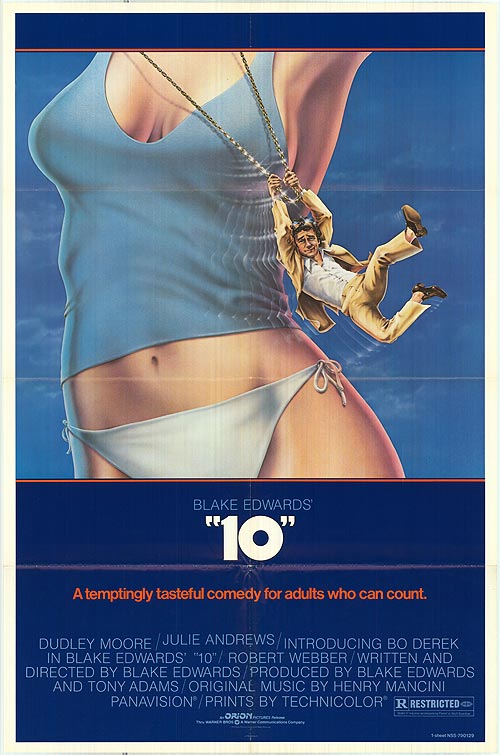
10 (1979)

By Richard Winters

My Rating: 3 out of 10

4-Word Review: Bo Derek is hot.

George Webber (Dudley Moore) is a successful songwriter who has just turned 42 and finds himself longing for a beautiful younger woman (Bo Derek) that he sees while driving. Problem is he meets her on her wedding day and yet he still pursues her all the way to Mexico where she goes for her honeymoon.

It’s really, really hard to believe that this was such a big hit. It meanders badly and has a lot of slow stretches. It is also not that sexy. Bo is only shown sporadically and you never really get to see her naked, or at least not from the front. Writer/director Blake Edwards incorporates his patented slapstick humor, but it’s uninspired and doesn’t mesh well with a film that is supposedly working on a more mature and sophisticated level.

The issue of middle-age, or better yet ‘male menopause’, has been handled before and better. In fact this thing can’t hold a candle to Tom Ewell and The Seven Year Itch. The issues it brings up are quite general and handled superficially. It offers no new perspective and is shockingly unimaginative.

Dudley Moore fits nicely into his role and it seems not too far removed from the man himself as it deals with a uniquely talented man that harbors a degree of cynicism and detachment. His relationship with girlfriend Samantha (Julie Andrews) has some interesting elements and it could have been a foundation for a movie in itself.

Derek is stunning, but rather poor in the acting department. Having a beautiful lady portray such a shallow person is a real turn off. Sure it’s done to give the film its point, but it seems extreme.

Overall I found the film to be weak and empty and unable to even come close to meeting its reputation.

My Rating: 3 out of 10

Released: October 5, 1979

Runtime: 2Hours 2Minutes

Rated R

Director: Blake Edwards

Studio: Warner Brothers

Available: VHS, DVD, Blu-ray, Amazon Instant Video

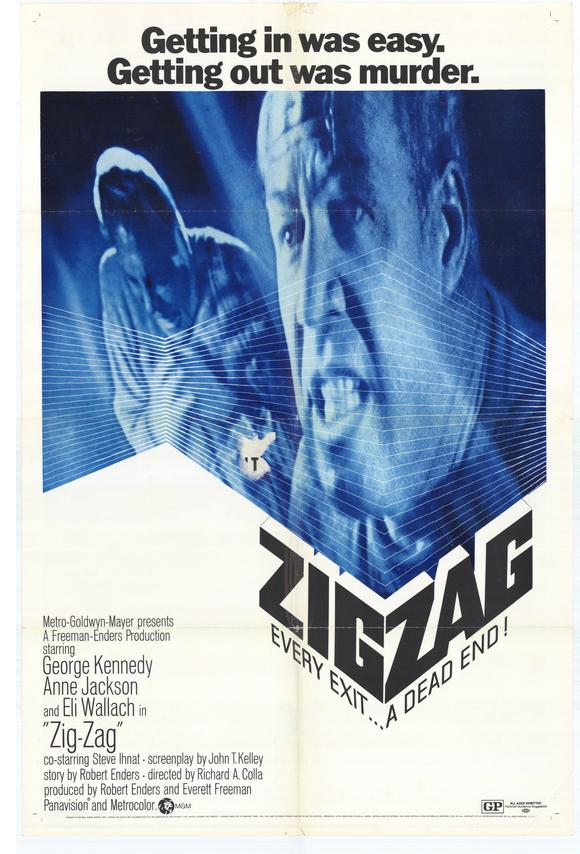
Zig Zag (1970)

By Richard Winters

My Rating: 5 out of 10

4-Word Review: Framing yourself isn’t good.

            Paul Cameron (George Kennedy) is an insurance agent and family man who learns that he is dying from a brain tumor and has only a few months to live. In order to provide money for his wife and children he sets himself up as the kidnapper of a wealthy businessman in an unsolved case that offered a $225,000 reward for anyone leading to the conviction of the culprit. After he is found guilty at his trial he faints and the doctors there decide to do experimental laser surgery to remove the tumor. The operation proves to be a success forcing Paul to go on a battle to prove his innocence, or risk spending the rest of his life in jail for a crime he did not commit.

Although he has done well in supporting roles Kennedy proves to be quite weak as a leading man as he shows almost no emotion in any of his scenes. When he is told of his tumor he takes it in a very matter-of-fact way without getting upset at all, which seemed unrealistic. His performance is dull and the few times that he does get upset it comes off as forced. His presence hurts the film and a more engaging, eccentric actor could’ve made it more interesting.

Eli Wallach as Paul’s attorney is terrific and the one thing that injects some energy. He is dynamic throughout and is fun to watch even during the slow parts. It was nice to see him doing a scene with his real-life wife Anne Jackson. As of this writing the two have now been married for 64 years, which has to be one of the longest marriages in Hollywood history.

The supporting cast features a long list of familiar character actors making it like spot-the-star. They include: Dana Elcar, Douglas Henderson, Steve Ihnat, William Marshall, Joan Tompkins, Robert Sampson, Leonard Stone, and Walter Brooke in an interesting duplicitous part.

Richard A. Colla’s direction is impressive. The film opens with a diverting cinema verite-style scene showing Paul going through the examination process before entering the prison, which seems unusually elaborate touch for what is otherwise just a gimmicky script. Another innovative part is when Paul is shown planting evidence at the scene of the crime and only the sounds and ambiance of the locale is heard without any music, which is more effective.  Unfortunately the direction and story become much more conventional towards the middle and it is not as interesting. The film tries to be too many things and does not come together as a seamless whole. The courtroom scenes were too extended for my tastes as we know Paul is innocent, but wants to be convicted anyways, so his many prolonged conversations with his exasperated lawyer who does not know of his scheme seem rather pointless. However, when Paul is cured and then goes on a mission to find the real killer it becomes exciting as the mystery itself proves to be complex and intriguing.

The twist ending did not go over well with audiences at the time of the film’s initial release. It’s a downer for sure, but after seeing so many tacky happy Hollywood endings in my lifetime I can’t say I totally hated it. As a budding screenwriter I enjoy irony and the ending here certainly has that. It’s slickly handled and although I saw it coming others may be genuinely surprised by it. My only complaint is that it’s a bit abrupt and could’ve and should’ve been extended in some way, or given a more effective closure.

If you like a movie with a lot of twists then this film may be worth seeking out. The legendary Roy Orbison sings the title tune during a party scene and it sounds like some of his best stuff. I am surprised it didn’t chart and I wished they had allowed the viewer to hear the complete son before cutting away.

My Rating: 5 out of 10

Released: September 11, 1970

Runtime: 1Hour 45Minutes

Rated PG

Director: Richard A. Colla

Studio: MGM

Available: VHS (as False Witness), DVD (Warner Archive) 

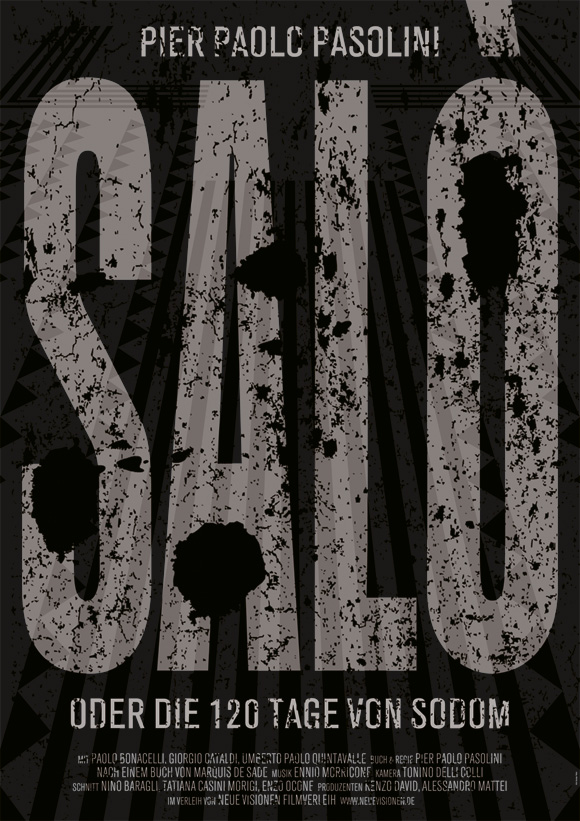
Salo, or the 120 Days of Sodom (1975)

By Richard Winters

My Rating: 5 out of 10

4-Word Review: They want sex slaves.

During the end of WW II in a northern city of occupied Italy a group of bourgeoisie men and women round up a group of teenage boys and girls and take them to an isolated mansion where they are forced to become sex slaves. They are also inflicted with cruel tortures in this story based on the writings of Marquis De Sade.

The film is interesting, but only up to a point. Director Pasolini’s natural lighting fetish really works here and he makes it into an art form. His ability to find the perfect moment in the day to shoot the scene and be able to frame the action within the shadows is amazing and along with the color schemes gives it a very distinctive look and an unusual atmosphere.

The acting by the adults is amazing as they project evilness without flaw. The perverted stories they tell in some ways is more shocking than the actual scenes and the casual way they go about their sick behavior achieves an unprecedented level.

The story itself has some good insights. It shows the veneer of civilized behavior and how the passive nature of the victims and society as a whole only helps to allow evil to flourish. There’s also the main point which is that evil is truly a part of the human make-up and hides itself in everybody and can come out if provoked including the victims themselves.

Yet the film makes its point and then hammers it home without pause. The non-stop perversity becomes excessive and the redundancy eventually makes the shock value and message meaningless. Showing the background of these captors might have helped given it more of a balance.

I have nothing against those who wish to ‘push the envelope’ and there is nothing that says movies need to be tasteful, or even entertaining, but I couldn’t help but wonder if Pasolini simply used the material as an excuse to explore his own dark fantasies. Of course DeSade’s actual writings were far more twisted and unsettling then anything you see here and the film is a significantly toned down version.

Actual teenagers were used and there is an abundance of nudity and perversity. Something like this could never have been made here in the states and exactly how it ever got made is more interesting than the film itself. If there was ever a movie begging for a “Making of…” documentary it’s this one. It is also interesting to note that Pasolini was mysteriously killed by a hit-and-run driver just a few days before the film’s official release.

My Rating: 5 out of 10

Released: November 22, 1975

Runtime: 1Hour 56Minutes

Rated NC-17

Director: Pier Paolo Pasolini

Studio: United Artists

Available: DVD, Blu-ray (The Criterion Collection)

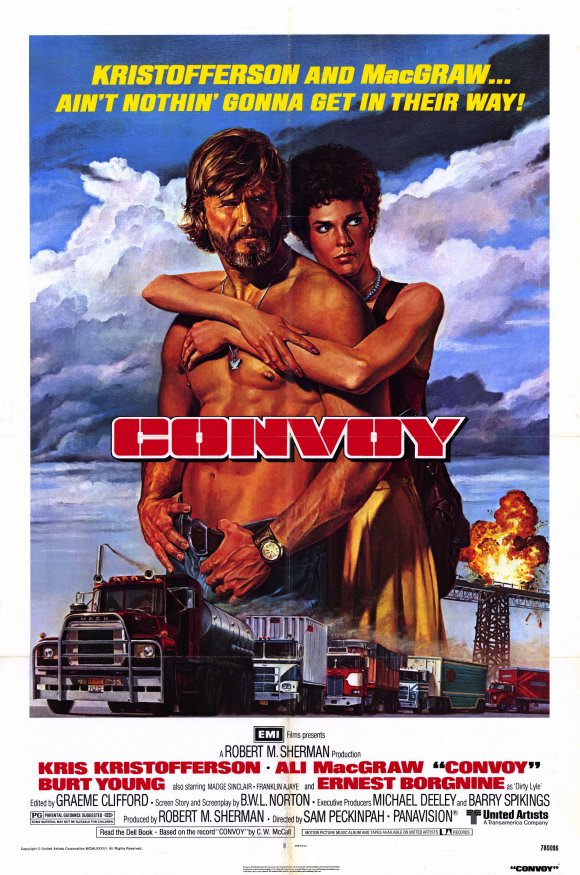
Convoy (1978)

By Richard Winters

My Rating: 3 out of 10

4-Word Review: The song is better.

Trucker Martin ‘Rubber Duck’ Penwald (Kris Kristofferson) battles corrupt Sheriff Lyle ‘Cottonmouth’ Wallace (Ernest Borgnine) by getting his fellow truckers to band together and form an unstoppable convoy that stretches for miles and soon creates a national media frenzy.

The film’s setup is weak and the ending even weaker. It has all the good-ole-boy/trucker clichés without adding anything new in the process and makes Smokey and the Bandit look brilliant and inspired. Kristofferson is much too laid back for a leading man role and cannot carry the picture. Borgnine’s character is portrayed awkwardly. At the start he is made to look like a real jerk of a sheriff who overacts to a minor contrivance that starts the whole thing rolling. Then at the end he turns more sympathetic and even secretly sides with Kristofferson, which doesn’t work at all. In either case Jackie Gleason is a much better actor for this type of role. The worst part about the movie though is director Sam Peckinpah’s attempts to throw in a ‘serious message’ into this silly action flick that does nothing but slow it down and bomb in the process.

The only good scene in the whole film is the fight sequence inside the truck stop restaurant. Peckinpah puts a funny spin to his trademark ‘slow motion’ violence and the result is amusing. Unfortunately he starts putting all the action into slow motion, which eventually becomes tiring. Ali McGraw as Melissa an attractive woman Martin picks up along the way is always a pleasure to look at, but unfortunately she is given very little to say or do.

If you’ve read the synopsis then you have essentially ‘seen’ the movie. The hit song by C.W. McCall that this movie is based on is pretty good and I would suggest listening to that instead and saving yourself 108 minutes of your time. This is all shockingly uninspired stuff for such an otherwise maverick director.

My Rating: 3 out of 10

Released: June 28, 1978

Runtime: 1Hour 50Minutes

Rated PG

Director: Sam Peckinpah

Studio: United Artists

Available: VHS, DVD, Amazon Instant Video