I Am the Cheese (1983)

iam

By Richard Winters

My Rating: 6 out of 10

4-Word Review: Dealing with past memories.

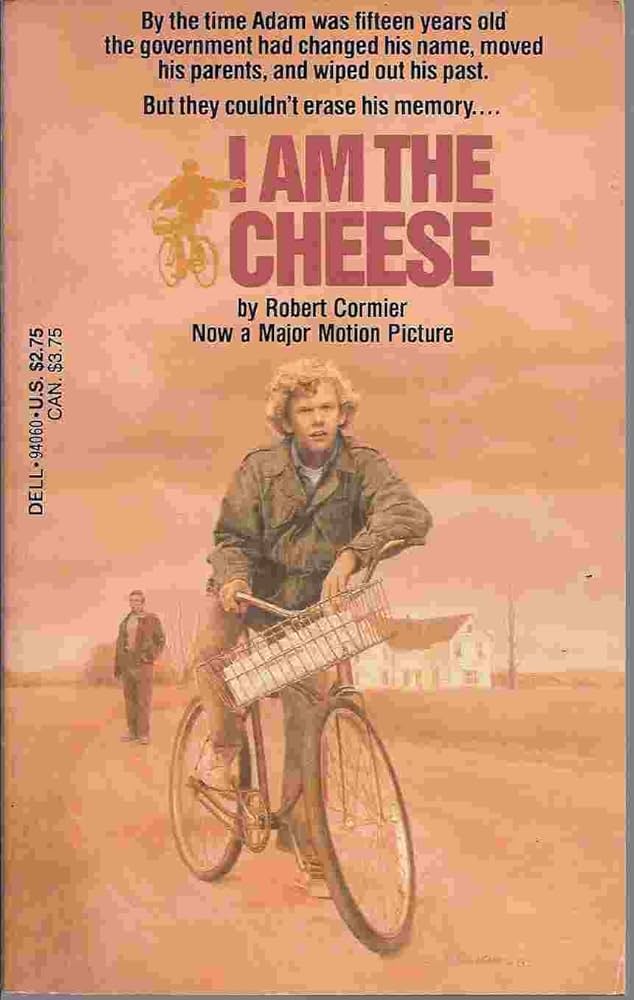
Adam (Robert MacNaughton) is an adolescent boy taking a bike trip through Vermont in order to deliver a present to his father (Don Murray). During his ride memories from the past that had been stuck in his subconscious come to the surface including his on-and-off relationship with Amy (Cynthia Nixon) as well as the sometimes odd behavior of his father. Helping sort through these things including him finding in his father’s desk drawer two different birth certificates with his name on it, is Dr. Brint (Robert Wagner) a therapist at a mental hospital that Adam is currently residing in.

The film is based on the book of the same name written by Robert Cormier, who appears briefly as Amy’s father, who wrote many young adult novels with his best known one being The Chocolate War. The screenplay was written by David Lange, who was also the producer, and the brother of Hope Lange who gets cast as Adam’s mother and is a reunion of sorts for her with Don Murray, who plays Adam’s father, and whom she’d been married two from 1956-62. She had also co-starred with Robert Wagner in The Young Lions in 1957 though here they don’t share any scenes together.

The film, which was the one and only directorial foray of Robert Jiras who worked as a Hollywood make-up artist for many years, is decidedly low budget though since most of the action takes place with Adam on his bike it really doesn’t hurt the effect of the story and the lush summertime New England scenery becomes an added benefit. MacNaughton, who’s better known for playing the older brother in E.T. before leaving the acting business after the 80’s and becoming a mail sorter, is quite good as he effectively channels his character’s inner anxiety and confusion. Nixon is also a stand-out playing against the cliche of a typical teenage girl, who are usually portrayed as being giggly, insecure, and into the latest fads, but instead she is cultured, poised, confident, and smart and she adds a wonderful addition to the movie and it’s just a shame she wasn’t in it more.

The plot follows the book pretty closely including the constant shifting between the present and the past and also the therapy sessions. While I usually like non-linear narratives I initially found this structure off-putting. The publishers in fact felt, when the they read the initial manuscript, that it would too confusing for young readers and pressured Cormier to simplify the structure, which he refused. Despite this it does become genuinely riveting by the second act.

Spoiler Alert!

The twists are good and makes sitting through it worth it though the moment when the bad guys catch-up with Adam and his parents should’ve been played-out more since it’s such a traumatic moment. It’s possible that because this was aimed at teen viewers the producers felt this violent element required being toned down, but crucial scenes like these have to stand-out and the way it gets done here it just doesn’t.

In the film, like in the book, the psychiatric sessions are ultimately revealed to be a sham where Robert Wagner’s character isn’t a doctor at all, but instead part of the government conspiracy to make sure Adam doesn’t know more than he should about his parent’s past as otherwise he would be deemed a ‘risk’ and ‘terminated’. However, in the movie they have Adam escaping from the place and riding off on his bike like he’s now ‘free’, but he really isn’t. He has no job skills, no family, no money, and no place to live. He’s be better off just staying at the clinic even if it was a fake one, as he at least had a roof over his head and food to eat. Being on his own at 16 was unlikely to end well and such a sophisticated government operation such as this one was at some point going to track him down, dead or alive, so the tacked-on ‘happy ending’ doesn’t jive.

My Rating: 6 out of 10

Released: November 11, 1983

Runtime: 1 Hour 36 Minutes

Rated PG

Director: Robert Jiras

Studio: Almi Pictures

Available: VHS, DVD-R

When the Legends Die (1972)

whenlegends

By Richard Winters

My Rating: 8 out of 10

4-Word Review: Indian becomes rodeo rider.

Tom Black Bull (Tillman Box) is a young Ute Indian orphan living in the wild with his pet bear. One day Blue Elk (John War Eagle) an Indian elder comes upon the child and decides it’s time to get him acclimated into society by having him enroll into a school where Tom does not get along with the other students and forcing him to begrudgingly release his bear. Over the years Tom grows to being a young adult (now played by Frederic Forrest), but is bitter with the racism that he must endure. By chance he gets spotted by Red (Richard Widmark) who’s impressed by the way Tom can ride and control a difficult horse and decides he’d like to train him into becoming a rodeo rider. Tom sees this as an opportunity to get out of the slums that he’s in, but soon realizes that Red, who suffers from alcoholism, is exploiting him just like the other white men by forcing him to intentionally lose contests in order to trick people into betting against him.

During the early 70’s there were many modern-day westerns that focused on the rodeo circuit including Junior Bonner, J.W. Coop, The Honkers and Riding TallWhile all of those were good in their own right I’ve found this one to be at the top. The others were more a character study with the rodeo atmosphere a side-story while this one examines the training and technique that it takes to be a successful bronco rider with a meticulous detail making it more revealing and informative. The others didn’t always do a adequate job of making it seem like the lead character was actually riding the kicking horse and many times looked like a shot of the guy on top of one of those bull machines you see inside western barrooms, but here it’s captured in an authentic style including a disturbing moment where Tom refuses to get off the horse as it continues to buck, which ultimately exhausts the animal and requires it to be shot.

The story is based on the 1962 novel of the same name by Hal Borland who was a journalist who specialized in writing novels with an outdoor setting. The book though was aimed more for young adults and split up into four different sections while the film just analyzes the third portion. It also updates the time period to the modern day versus the turn-of-the century like in the book. It’s expertly directed by Stuart Miller, better known as a producer, with a well-written script by Robert Dozier that has crisp dialogue that manages to intimate a lot while saying little and never overstating anything.

Forrest plays his role with a sullen expression that remains constant throughout and some might complain it makes it one-dimensional, but I felt this helped illustrate the character’s inner anger and it’s fascinating seeing the juxtaposition of someone who’s very rugged and savvy when it comes to nature and animals, but quite virginal, literally, when it has anything to do with societal elements like women, alcohol, and other vices.

Widmark is brilliant as usual and one of the few people who can play a miserable, brash, and genuinely unpleasant old guy and still keep it on a humanistic level. Watching him go from gruff and demanding as he’s clearly the more worldy-wise at the start to more of a vulnerable and even dependent one at the end is a fascinating journey to watch. In many ways his relationship with Tom is like a father and son where the older one starts out as the stern teacher only to have it flip with the younger one, now fully accustomed to the world, taking the reins and caring, albeit begrudgingly, to someone who can no longer do it themselves.

My only complaint with the film that is otherwise close to flawless is that I would’ve liked to have seen one moment where Widmark shows some actual kindness to Tom as all the way through he’s quite grouchy and condescending even when Tom offers him some much needed support. I realize his character was a victim of the hard world he lived in and thus it wasn’t natural for him to show any tender side, which he most likely possessed very little of anyways, but one even fleeting moment of gratitude, even if it just was putting his arm around the young man and showing him a slight gesturing hug, could’ve gone a long way to giving it a bit more emotional balance and the touching image that every hard-edge drama ultimately should have and needs.

My Rating: 8 out of 10

Released: October 19, 1972

Runtime: 1 Hour 47 Minutes

Rated PG

Director: Stuart Miller

Studio: 20th Century Fox

Available: DVD-R

Runaway Train (1985)

runaway

By Richard Winters

My Rating: 8 out of 10

4-Word Review: Trapped on speeding locomotive.

Manny (Jon Voight) is a robber locked away in solitary confinement at a maximum security prison because of his two previous attempts at escape. He plans on making a third try with the help of a younger, more naive prisoner named Buck (Eric Roberts). Their breakout this time proves successful, but they find themselves having to fight the bitter cold and hike along the frozen Alaska landscape. They come upon a rail line and board a train by sneaking onto one of it’s four empty locomotives. However, unbeknownst to them the engineer, (Reid Cruickshanks) suffers a fatal heart attack while starting up the train and causing it to accelerate at high speeds, which is too fast for them to jump off. Later the two meet Sara (Rebecca De Mornay) an employee of the train company and three devise a plan to climb onto the lead engine and press the kill switch, but while this is going on the two fugitives are being pursued by police bounty hunter Rankin (John P. Ryan) who’s determined to board the runaway train via a helicopter and arrest Manny and bring him back to prison.

The story is based on a script by Akira Kurosawa who had read an article written in Life magazine about a runaway train and decided it would make for a good movie and planned to have this be his first American film. The shooting was to take place in the fall/early winter of 1965 with Peter Falk playing Manny and Henry Fonda as Rankin. However, the location, which was upstate New York received some early season snowstorms, which caused many production delays and eventually the financers pulled-out and film ultimately was never made. The project sat dormant for many years until 1982 when the script’s current owner managed to get Russian director Andrei Konchalovsky, at the suggestion of Francis Ford Coppola, interested in reviving it.

The film is for the most part masterfully done and quite suspenseful with kudos going to filming it in Alaska where the snow and ice are real and so vividly captured that you can almost feel the cold permeate through the big screen. Originally it was to be shot in Montana where the prison is, the same one that was also used in Fast Walkingbut the weather conditions proved to be mild and attempts at fake snow weren’t successful, so it was eventually decided to move the production further north.

I did though have some quibbles with the escape sequence, which gets done by having them hide in a cart of laundry, which is awfully predictable and unimaginative and you’d think a maximum prison such as this one would be on the lookout for such a thing making it all seem too easy. Voight having a gadget that could bend bars was equally too convenient. I realize prisoners can be adept at smuggling in many things, but if it’s so simple to get something that can literally bend steel bars then why doesn’t every prisoner use to breakout?

The casting of Voight was in my opinion a mistake, or at least not as effective as another actor in the part. He looks too thin and not threatening at all despite him wearing false teeth, tanning his skin in more of a darker tone, and putting on a fake scar around his eye, but for me this all came-off as highly affected and just didn’t seem gritty enough. While his performance improves as he gets on the train I couldn’t buy-in that this was a real bad ass as the movie wants you to believe and I really wish Voight had listened to his first instinct and not taken the role as he felt it wasn’t he type of character he could play, but eventually changed his mind when Konchalovsky convinced him that great actors play against type. I also didn’t like screenwriter Edward Bunker changing him into a bank robber as in the original script he was a killer, which would’ve made for a far more intriguing character arch as it would then attempt to humanize someone that is perceived as being quite viscous.

The train scenes are quite intense as it takes on a man vs. the elements theme with Roberts, who usually plays sleazy characters, doing quite well as the conscientious person here. De Mornay is fantastic too wearing very little make-up, which makes her look younger and almost teen-like and far more youthful than in Risky Businesswhich is a film she did 2 years before this one. My only complaint is that the character gets introduced in an awkward manner where she just literally ‘pops-in’ without any warning in the middle of it and the film should’ve given the viewer some hint that there was someone else on the train right from the start.

The scenes inside the dispatch office are highly engaging and become almost like comic relief, which for a film that’s as tension filled as this one, is a welcome addition and helps give the viewer a bit of a breather between moments on the train. I loved how oblivious the dispatchers, played by the talented T.K. Carter and Kyle T. Hefner, are initially to the situation and are seen at the start being quite laid-back. Hefner is even in the bathroom when the news hits and the film misses a great opportunity, similar to the one in Catch-22where he would be seen sitting on the toilet as he got updated on the situation. Kenneth McMillan, one of the all-time great character actors, comes-in later to lend advice and he really should’ve been given more screentime and possibly replaced Hefner altogether as he has a way to create amazing energy that his co-stars just didn’t.

Spoiler Alert!

The ending in which Manny goes down with the train, we don’t actually see it crash, but know it’s coming, with Manny raising his arms in the air like he somehow has achieved something I found disappointing. I didn’t care for it back when I first saw it during my college days and had the same response to it this time around. This was in the original script as well and was intentionally done to go against the theme of most American movies were the protagonist must always come out as the perceived winner, but either way it comes-off as all wrong for this time of film. We spend so much time watching him do whatever it takes to survive and going to great risks to accomplish it that to see him ultimately give-in to his inevitable circumstances and simply accept death to come and take him kills all the momentum that had built-up and becomes a letdown for the viewer. I kind of wonder if this is the reason why it didn’t do well at the box office as it only managed to recoup $7 million of its $9 million budget.

My Rating: 8 out of 10

Released: December 6, 1985

Runtime: 1 Hour 51 Minutes

Rated R

Director: Andrei Konchalovsky

Studio: The Cannon Group

Available: DVD, Blu-ray, Pluto TV, Roku, Tubi, YouTube

Bear Island (1979)

bear

By Richard Winters

My Rating: 4 out of 10

4-Word Review: Killer in the artic.

A group of scientists travel to a small island in the artic to study the effects of climate change. They’ve been instructed by Gerran (Richard Widmark), the leader of the expedition, who forbids anyone to go near the U-boat base, which are ships leftover from WWII, but Lansing (Donald Sutherland) whose father was a U-boat captain, decides to sneak off one day with his friend Judith (Barbara Parkins) to check it out. Along the way they get struck by an avalanche that kills Judith, and which Lansing is convinced was started by a mysterious man with a rifle. He goes to the location again the next day and is able to find the cave the ships are in via snorkeling. He comes upon evidence that someone else from the camp had already been there and soon more people from the group begin turning-up dead.

The film is based on the Allistair MacLean novel of the same name, which was published in 1971. Great care was put into the production to make it seem as authentic as possible. Producer Peter Snell wanted it filmed at a cold location because he desired a real looking the snowy landscape and stated that audiences “can tell styrofoam snow”, and since I’m originally from a northerly region I can attest to that myself and one of the things I really hate about movies that take place in cold places, but shot inside a film studio. However, they weren’t able to shoot it at the actual  Bear Island, which is off the Norwegian coast, because they wanted to take advantage of the tax write-off that they would get by filming it in Canada and this in fact became the most expensive movie ever made in Canada up to that time.

While the film didn’t do well with either the critics, or the box office, there are some really cool scenes. I loved the bird’s eye views, especially the opening one of a man skiing all by himself amidst the otherwise barren, white landscape. The sequence between two snow scooters known as ‘The Caterpillar’, which are driven by Sutherland and Vanessa Redgrave, and two hydrocopters, which are maned by the bad guys, makes for a very unique and exciting chase over the frozen tundra. The collapsing of a giant radio tower and Sutherland getting involved in a bare knuckle fist-fight are also quite memorable.

The acting is good especially by Widmark who speaks in a German accent. I also liked Christopher Lee’s performance though for him he gets more captivating after his character gets injured and he lays dying. Vanessa Redgrave though is wasted. She speaks with a Nordic accent, which makes it somewhat interesting, but her character doesn’t have much to do and is just lead around by Sutherland and the forced romance between them is both annoying and ridiculous. You’d think someone who had just won the Academy Award for Best Supporting Actress just a year before would’ve had a better quality of parts to choose from though her outspoken politics may have had something to do with a more limited selection of offers making her feel that she had to take this one simply to stay busy.

The film’s fatal flaw though is that it doesn’t stay faithful to the book and makes many plot changes including having the group be scientists instead of a film crew like it had been done in the novel. This was director Don Sharp’s idea as he felt you couldn’t ‘make films about film units’, which I whole heartedly disagree. People working on movies have a far more eclectic personalities, ‘artsy types’ than scientists who are more matter-of-fact about things and tend to respond in a reserved manner. The characters are quite dull and there’s very little to distinguish them from the others. The viewer has no emotional investment in any of them and thus who gets killed, or even the identity of the killer becomes pointless and outside of the snazzy stunts it has no impact.

Spoiler Alert!

Having the killer turn-out to be Lawrence Dane was another disappointment as he had played villains many times before and his lurking eyes makes him almost a shoe-in for a bad guy and the first person you’d expect.  Some creativity to the killer’s identity was desperately needed possibly even have it turn out to being Redgrave, or even Sutherland might’ve been a big enough surprise to make the rest of it seem worth it, but ultimately this is yet another example where too much attention was put into the effects and not enough in the character development.

My Rating: 4 out of 10

Released: November 1, 1979

Runtime: 1 Hour 58 Minutes

Rated PG

Director: Don Sharp

Studio: Columbia Pictures

Available: VHS, DVD (Region 0), DVD-R

A Day in the Death of Joe Egg (1972)

deathjoe

By Richard Winters

My Rating: 9 out of 10

4-Word Review: Caring for disabled child.

Bri (Alan Bates) and Sheila (Janet Suzman) are a British couple caring for their daughter Josephine (Elizabeth Robillard), who they’ve nicknamed ‘Jo’ or ‘Joe Egg’. Sheila had a narrow pelvic, which caused Jo’s birth to be a difficult one. The couple had wanted the delivery to occur at home, but due to the complications they were forced to go to the hospital. Initially Jo seemed to be a healthy baby, but she began to suffer from ongoing seizures that eventually put her into a coma. She never came out of it and by age 10 sits in a wheelchair unable to speak, care for herself, or show any type of emotional response to anything. Bri and Sheila pretend to have ‘conversations’ with her in an attempt to lessen the stress of caring for her. Bri feels she should be placed in an institution, but Sheila won’t hear of it, which causes a rift to form in their marriage. Eventually Bri becomes so frustrated with the situation he begins to consider killing Jo and even starts to joke about his intentions to not only his wife, but also their friends (Peter Bowles, Sheila Gish).

The film is based on the stage play of the same name written by Peter Nichols who used his own experiences of caring for a child with cerebral palsy as the basis for the story. It premiered at the Citizen’s Theatre in Glasgow, Scotland in 1967 before eventually moving to Broadway a year later where it starred Albert Finney and Zena Walker and won rave reviews. The movie was filmed in 1970 and completed on time, but the studio decided to then shelve it fearing due to the downbeat storyline that they’d have no way to market it and it would be unable to find an audience. It was only after Suzman’s acclaimed performance in Nicholas and Alexandra that they eventually released it to theaters hoping to capitalize off the attention she got from that one in order to get people to see this one.

Many sources refer to this as being a ‘black comedy’, but I found absolutely nothing funny and in fact it’s instead brutally bleak. I guess the humor as it were was in the way the parents have ‘conversations’ with the kid, but this doesn’t really come-off as being even the slightest bit amusing particularly when you have the child just sitting there with her eyes rolled-up in her head and resembling someone who has died.

This doesn’t mean I didn’t like the film as in-fact I found it quite powerful, but clearly much more from the dramatic end. I admired the way it pulls-no-punches and forces the viewer to confront some very uncomfortable questions like what is the point of caring for a child that will never be able to recognize them, or show any response, or emotion to anything? Granted there’s many kids with disabilities out there and some can grow to lead productive lives, but when one is in a literally vegetable state such as this it does make it infinitely more severe and emotionally challenging. Director Peter Medak approaches the material, which is certainly no audience pleaser, in an earnest way with many varied cutaways and dream-like segments including one memorable moment where Bri and Sheila are on a gray, stormy beach and he imagines throwing the baby carriage that the child is in into the sea, which helps give the production a moody, surreal-like vibe and keeps it on the visual scale quite inventive.

The acting is superb especially Suzman whose character must deal with the inner turmoil of dealing with the stark reality a child who won’t ever grow into anything, but also a husband, whom she loves and is emotionally dependent on, who wants out. It’s interesting too seeing Sheila Gish in a supporting role as a friend who places a high degree on physical appearance and can’t stand anything that is ugly, or deformed and yet she in real-life many years later lost an eye to skin cancer and was forced to walk around with an eye patch.

I was most impressed though with Robillard whose career never really took-off, but proves up to the challenging task here and was picked out of over 100 other children who auditioned for the role. Remaining motionless and unresponsive and whose only noise is periodic moans isn’t as easy as you’d think especially when everyone else is moving and speaking around you. The best moments of the whole movie is when Sheila envisions what Jo would be like if she were a normal kid and we see shots of her jump roping and playing with the other children, which effectively accentuates their sad situation even more.

Spoiler Alert!

The ending, where Bri essentially runs away from home and leaves Sheila alone with the kid, I felt was realistic and most likely what would happen to most any couple stuck in the same environment. The shots of seeing Sheila lying down in bed fully aware that Bri is gone and looking almost at peace with that to me spoke volumes. My only complaint is that I felt the couple’s tensions and cracking of their relationship should’ve been apparent right from the start. They seemed to get along too well at the beginning, but with the child already age 10 by that point and with no signs of ever getting better I felt there should’ve already been plenty of arguments and disagreements and sleeping in separate bedrooms instead of showing them still having a robust sex life and only by the second act do things finally start falling-apart between them.

My Rating: 9 out of 10

Released: June 4, 1972

Runtime: 1 Hour 46 Minutes

Rated R

Director: Peter Medak

Studio: Columbia Pictures

Available: DVD-R

On the Edge (1986)

ontheedge

By Richard Winters

My Rating: 5 out of 10

4-Word Review: Disqualified runner enters race.

Wes (Bruce Dern) was at one-time a star, long distance runner who ended up in 1964 being banned from competition after calling out the secret practice of paying amateur athletes under-the-table. He’s now nearing 40 and wants to take one last stab at entering the grueling Cielo-Sea cross-country race and hires his old coach, Elmo (John Marley), to help him train for it. The runners are much younger than him by a couple of decades, but they’re aware of his history and look up to him. Unfortunately the race organizers still use what he did in the past against him and refuse to allow him to enter, but Wes decides to join the race anyways illegally, which forces the organizers to try and knock him out of it as the race is going on and being broadcast live.

Surprisingly for a movie that is so little known and hard-to-find the quality isn’t bad. Director/writer Rob Nilsson conveys some wonderful bird’s-eye shots of the climactic race including seeing the runners going along a winding route as it scales a high hill, which is dramatic and exciting. The character building and his personal mission is fairly well done and the strenuous preparation that he must go through to get ready for the race is handled in a way that makes it quite vivid for the viewer. After watching what he must go through you feel as mentally and physically drained as he does especially the shots showing the things from the runner’s point-of-view as they bound down the rugger trails with the camera tied directly to their bodies.

Dern, who was at one time a long distance runner himself and actually ran the race that gets depicted here, which in real-life it’s called the Dipsea race the oldest race run in America, back in 1974, does a fine job though his dialogue is limited and I missed-out on some of his patented, ad-libbed ‘Dernisms’. His character is marginally interesting though in a lot of ways not all that well defined. There’s no real explanation of what he’s been doing for the past 20 years that he’s been away from the sport and the film makes it almost seem like he’s been wandering around as a vagabond all that time. It would’ve been interesting had we seen him stuck in some boring office job and his secret longing to ‘break free’ and do something, no matter how high the odds, that he felt passionate about, which would’ve helped the viewer get more into his mission that is otherwise emotionally lacking.

It would’ve been intriguing too had he been married with a family and the wife was not in agreement to what he was doing, which would’ve added some extra dramatic conflict. Instead we get treated to his casual relationship with Pam Grier, who’s a marvelous actress in her own right, but here is mostly wasted. She pops in and out almost like a fantasy character who’s dialogue is limited, so we learn little about her as a person, and their semi-erotic love-making is cheesy. Their moments together was considered so inconsequential that the distributors cut-out her scenes entirely for the theatrical release only to restore them for the DVD version, but overall they really don’t add much.

The movie is only marginally captivating for the first third, but it does become more appetizing when it finally gets to the actual race.  I’ve never seen a race movie where the person we’re meant to be rooting for isn’t even supposed to be in the event in the first place. The attempts by the organizers to ‘take him down’ and literally drag him out via physically tackling him, or at least trying to, at various points in the race, are memorable particularly as they fail each time. My only gripe is that the other runners intervene to protect him, which I wasn’t sure was completely plausible. After all he wasn’t wearing a number, so it was obvious he shouldn’t be there, and he was competing with them for the title, so one less person would better their chances, so why not allow him to be taken out? Of course there is a scene earlier where Dern hitches a ride and everybody inside the van, made up of young runners who recognize him and even treat him as a sports hero, could explain that he was idolized by his competitors and therefore decided to stick-up for him, but in the moment where you’re only focus is winning you’d think some of them might not care what happens to him and more concerned about getting to the finish line and not doing anything that might slow them up.

Spoiler Alert!

The film ends with the seven runners all holding hands as they cross the finish line. While some could consider this novel, as most movies dealing with competitions will rarely celebrate a tie, it still seems hard to imagine that all seven of them would, in the spur-of-the-moment, agree to share the prize and there wouldn’t be at least one of them who would take advantage of it and run out in front at the last second in order to achieve all the glory and money, or at least lean his head out to get that ‘photo finish’. Maybe having one, or two hold hands and agree to finish it together might come-off as passable. It’s Dern who slows up to let the others catch-up to him, so they might be grateful that he let them share the spotlight, but let’s face it there’s always a black sheep in every bunch who for selfish reasons, these are athletes conditioned and trained to win after all, who would attempt to exploit the situation making the final image too romanticized for its own good.

My Rating: 5 out of 10

Released: May 2, 1986

Runtime: 1 Hour 35 Minutes

Rated PG-13

Director: Rob Nilsson

Studio: Skouras Pictures

Available: VHS, DVD (Out-of-Print)

Bone (1972)

bone

By Richard Winters

My Rating: 8 out of 10

4-Word Review: Black man terrorizes couple.

Bill (Andrew Duggan) is a slimy used car salesmen residing in Beverly Hills with his bickering wife Bernadette (Joyce Van Patten). He spots a rat in his pool and initially thinks a black man, who calls himself Bone (Yaphet Kotto), is there to remove it. However, Bone has other ideas as he accosts the couple and forces them back inside their luxurious home and begins ransacking it in an effort to find some money. When he is unable to he instructs Bill to go to the bank and take out all the money he has there and come back with it, or he’ll rape his wife. Bill immediately does as he’s instructed, but along the way starts to think he’d be better off without her and decides to not to take the money out and instead goes on ‘a date’ with a young woman (Jeannie Berlin) that he meets while standing in line at the bank. When the other two realize they’ve been had they then conspire to track Bill down and kill him in an effort to collect on his life insurance money.

This was the directorial debut of Larry Cohen who up until this time was mainly known for writing teleplays for many popular TV-series from the 60’s. While he is now famous for doing campy, low budget horror flicks this feature was far different from those and leans more in the arena of black comedy without much suspense. The story though is laced with a lot of social commentary, which is what stands it out and it’s just a shame that this has gotten lost in shuffle with all of his other efforts, some of which were quite cheesy, while this one has some impactful moments and signs of a serious filmmaker with strong potential.

The film though does have a few drawbacks, which I’ll get out of the way first. An ethically dubious car salesman is probably the oldest cliche out there as well as a bickering rich, white couple making the premise seem a bit predictable. The husband and wife are shown to be at odds immediately and thus there’s no surprise then when hubby decides not to try and save her.

While Kotto is certainly a big guy he still should’ve come with a weapon (a gun, or at the very least a knife) and the fact that he’s able to take control, so quickly without one makes it seem a bit too easy.  He just pops-in as if he were a genie, a few shots showing him casing the neighborhood would’ve helped alleviate this, and he should’ve been wearing a mask to disguise his identity, unless he was planning to kill them, but without a weapon that wasn’t likely to happen. He’s also able to find incriminating financial information about the hubby a bit too conveniently as this is a big house and yet within a matter of two minutes he comes upon it, which seemed too rushed.

The excellent acting though more than makes up for these other issues. Duggan certainly looks the part of an aging, compromised suburban businessman whose eaten up with guilt and depression. While only 49 at the time he appears more like 69 and I could’ve done without the scene where he runs down the street topless making his sagging skin and chest muscles quite evident. Van Patten is equally terrific and surprisingly goes fully nude in a well-shot and edited assault moment. Jeannie Berlin has some fine moments too as a gal Duggan picks-up who initially seems quite ditzy, but eventually reveals a very sad and painful experience from her past, which manages to be quite profound. Kotto too is good particularly his sinister smile even though Paul Winfield was the original choice and I think would’ve been better, but Cohen found his acting to be ‘too genteel’, so he went with Kotto instead.

What I really liked were the segues and intermittent cutaways that help reveal the darker side to the Duggan character like his imaginary car commercials were he starts to see bloody crash victims inside the vehicles he’s trying to sell. The imagery showing a German Shepheard dog that he used for those commercials and what he ultimately does with him is also quite alerting. The shots dealing with their adult son in jail and the climactic sequence in some sand dunes are quite strong to the extent it gives the movie a powerful punch at the end and makes it almost criminal that this isn’t better known.

Alternate Titles: Housewife, Dial Rat for Terror

Released: July 22, 1972

Runtime: 1 Hour 35 Minutes

Rated R

Director: Larry Cohen

Studio: Jack H. Harris Enterprises

Available: DVD, Amazon Video, Tubi

Hold-Up (1985)

holdup

By Richard Winters

My Rating: 5 out of 10

4-Word Review: Robber disguised as clown.

Grimm (Jean-Paul Belmondo) has come-up with what he considers to be an ingenious plan. He will rob a bank disguised as clown with two of his friends, Georges (Guy Marchand) and Lise (Kim Cattrall). While he’ll be a clown the other two will pretend to be bank customers and then when he agrees with the Police Commander Simon (Jean-Pierre Marielle), whom he is negotiating with via phone, to release some hostages he’ll let Georges and Lise ‘go’ and no one will know the difference. Meanwhile Grimm will take-off his clown disguise and put on a new one as an old man while pretending that the clown is still inside holding the rest of the bank employees and customers at gunpoint. By the time the police catch-on that there’s no longer any clown the three hope to have escaped on a plane and be far away. While the robbery works without a flaw the getting on the plane part becomes a major, if not impossible, challenge.

The story is based on the novel ‘Quick Change’ by Jay Cronley, which 5 years later was made into another, better known movie that starred Bill Murray. This was a French production that was filmed on-location in Montreal, Canada and one of the few movies that starred Belmondo that didn’t do well financially back in his home country and in-fact it was the first staring vehicle of his that didn’t crack the top 10 of highest grossing movies of that year, which was the first for him since 1976 when L’Alpagueur achieved only 19th place.

Belmondo is certainly a legendary actor whose long and storied career deserves to be admired, but I didn’t care for him here and felt his presence actually brought down the whole movie. He was apparently quite admired behind-the-scenes amongst the cast and crew and he did all of his own stunts including a scene where he climbs out of a moving car and manages to slither his way, while the vehicle is still going at high speeds, onto a tow truck and he did this while already being in his mid-50’s. However, his character is overly cocky and his glib conversational interplay between he and the police chief does not come-off as funny and more like you side with the chief and want to see this arrogant man caught. You’d think someone who had never pulled-off a robbery before would be much more nervous, or at least display some signs of anxiety, so his unbridled confidence seems completely out-of-place with the situation he’s in.

If anything I enjoyed Marchand and Cattrall far better as these two seemed much more human and displayed the insecurity you’d expect. They were like regular people full of foibles and someone you’d actually want to root for and thus I felt the movie would’ve been greatly improved had it just focused on the couple doing the robbing and cut-out Belmondo’s part completely. I also didn’t think the clown disguise worked as unlike in the American version his whole face isn’t covered with white paint and instead simply uses a red wig, a red clown nose, and some eyebrows, which I didn’t feel would be enough to hide his true identity and witnesses could’ve easily recognized who he was outside of the clown get-up and thus the whole disguise thing ends-up defeating its own purpose.

The first act works pretty well with shades of Dog Day Afternoon and some offbeat moments to the bank robbery theme by having one scene where the hostages are forced to get in a circle and sing a rendition of ‘London Bridges Falling Down’. The second and third acts though become protracted and seem to be the start of a whole different movie altogether. The bank segment has a crafty, sophisticated tone where the humor has a satirical bent and the main characters seem smart, savvy, and cool. In the second half the movie suddenly becomes like a live action cartoon with an abundance of car chases and the three leads, who had seemed so clever at the beginning, quickly become inept at seemingly every turn.

The biggest problem is the Lasky character played by Tex Konig. Konig is a big bearded guy that resembles Bluto from the old Popeye cartoons who’s also a tow truck driver who wants to get his hands on the stolen money and chases the three all around the city, which leads to many car stunts and crashes. Some may enjoy the smash-ups, but it comes across as unimaginative filler by filmmakers that didn’t know how to end the story cleverly, so they came-up with a lot of mindless action in order to keep it going.

The infighting between Cattrall and Marchand seems unnecessarily added in as well. This animosity needed to be introduced right at the start in order to make it consistent with the plot and not just thrown-in later to add some conflict for the sake of conflict. You’d think too that if she really resented the guy she would’ve refused to go ahead with the robbery unless someone else took his place.

Having the story then end with the three going to France and then Italy just furthers dilutes the plot, which no longer resembles a robbery flick at all, but more of a jet setting one. While not perfect the remake, which came-out in 1990, fares better in just about all phases.

My Rating: 5 out of 10

Released: October 23, 1985

Runtime: 1 Hour 54 Minutes

Not Rated

Director: Alexandre Arcady

Studio: Cinevideo

Available: DVD-R (dvdlady.com)

Quick Change (1990)

quick1

By Richard Winters

My Rating: 7 out of 10

4-Word Review: Clown robs a bank.

Grimm (Bill Murray) has had it with New York City. He wants to get out of there and move somewhere tropical as soon as possible and conspires to rob a bank in order to get the money to do it. He dresses as a clown and then has his girlfriend Phyllis (Geena Davis) and friend Loomis (Randy Quaid) pretend to be customers at the bank, so that when he releases the ‘hostages’ they can be two of them. The robbery goes smoothly as they’re able to get $1 million out of the bank, but trying to get out of the city itself proves trying as they get lost on their way to the airport and then their getaway car gets demolished. Police Chief Walt Rotzinger (Jason Robards) is hot-on-their-tale and relentless in his quest to haul them in as he proves to be just one slight step behind them where ever they go and moving in closer with every waking second.

This is the second version of the story that was adapted from a 1981 novel of the same name written by Jay Cronley, a humorist who resided in Tulsa, Oklahoma, who two other novels, Funny Farm and Let It Ride that were also made into movies as well as Hold-Up that was a French film shot in Canada that was the first rendition of this plot. This adaptation proves to be the better one as it takes place, like in the novel, in New York City and takes full advantage of the city’s ambience making it feel almost like it’s a third character.

This is the perfect role for Murray and some critics felt this was his best acting performance of his career he also doubles not only as the producer, but also the co-director as he took over the reins in order to save the project when the originally directing choice Jonathan Demme decided to bow-out at the last minute. The snarky, glib personality of the character is played to the hilt by Bill who has the magical ability to be the world’s biggest smart ass and still have a unique charm about it. Great supporting work by Davis, though the two apparently didn’t get along behind-the-scenes and years later she accused him of sexually harassing her during the production. Good work too by Robards who doesn’t fall into the cliche of a stupid egotistical cop and instead proves to be pretty savvy, which helps accentuate the tension as he’s constantly on their heels and only a beat behind them no matter where they go.

The three acts are better tied together by placing the main nemesis as the city itself and creating a surreal After Hours vibe. Some of the potshots are subtle like watching all the hot dog vendors race over to where the robbery is taking place so that they can take advantage of the situation by selling food to all the onlookers. It also illuminates the ethnic, cultural mix of the Big Apple by featuring a jousting match between two Latinos on bicycles as well as the headaches of trying to find your way around the city and the confusing road signs and constant construction though some of this humor may not resonate with today’s viewers since with the advent of GPS many of these ‘asking for directions’ situations have now become a thing of the past.  The music score by Randy Edelman with its pounding, hard edge quality perfectly matches the city’s gritty, urban attitude.

While the robbery is slick I did find a few loopholes. The first is where does Murray get his other clothes when he changes out of his clown costume and disguises himself as one of the hostages to get away? He is not seen carrying a bag of any kind nor is Davis or Quaid, so not sure where the other suit came from. Some may argue that he was wearing it underneath his clown costume, but this doesn’t work since it was a shirt that came up to his neck that he’s seen coming out of the bank with and when he’s the clown he’s shown with a V-neck T-shirt that exposes the top of his chest. It also doesn’t explain where he gets the glasses, other wig, and shoes that he also has on when he walks out as the fake hostage.

The characterizations are a bit off too as both Davis and Quaid become easily rattled during the second half when they’re trying to get to the airport and become increasingly shaken that they’re going to be caught, but if they have a propensity to being that worried you wonder what gave them the nerve to go through with the robbery in the first place? During that segment they’re very cool and calm and even a bit ballsy, so why the sudden shift to overly panic the moment they get out? A way to have solved this would’ve had the Davis character with a penchant for risks, or enjoy living on the edge and taking chances, so every time they would get into a jam during their escape she’d see it as a certain thrill and not allow it to overtly alarm her.

Spoiler Alert!

The biggest beef though is with the ending in which Robards suddenly realizes, as he’s standing on the ground watching the jet fly overhead that has the three robbers onboard. The film acts like it’s now ‘too late’ and there’s nothing he can do about it, but there really is. All he has to do is go back to the airport and ask where the destination is of the plane that just took off, as I remember it was Paris, France. Since both the U.S. and France are members of Interpol he could easily contact the authorities there asking them to detain the three once the plane had landed. They could then be brought in for interrogation where a simply body search would expose all the money that they had taped to their bodies underneath their clothes, and in Quaid’s case in his duffel bag. This would be more than enough evidence to prove that they were the robbers and thus extradited back to the U.S. for prosecution.

My Rating: 7 out of 10

Released: July 13, 1990

Runtime: 1 Hour 29 Minutes

Rated R

Director: Howard Franklin, Bill Murray

Studio: Warner Brothers

Available: DVD, Blu-ray, Amazon Video, Tubi

Rich Kids (1979)

richkids

By Richard Winters

My Rating: 5 out of 10

4-Word Review: Dealing with divorcing parents.

Franny (Trini Alvarado) is a 12-year-old who’s learning that her two parents (Jon Lithgow, Kathryn Walker) are getting a divorce. She is unhappy about this and thus turns to her friend Jamie (Jeremy Levy) whose parents also went through a divorce a couple of years earlier. He gives her guidance and tips on how to deal with it. She turns to him as a confidant and begins spending time with him at his place even overnights. Her parents are under the impression that Jamie’s father (Terry Kiser) is keeping a watchful eye on them, but in reality he’s over at his new girlfriend’s pad and not paying the least bit of attention to what the kids are doing who then get into all sorts of mischief including alcohol. Once Franny’s parents do catch-on and head over there along with Jamie’s mother and her new husband (Roberta Maxwell, Paul Dooley) they fear it may be too late especially after Franny’s mother finds the book ‘The Joy of Sex’ that her daughter had hidden away and been reading.

On the surface this film, which was produced by Robert Altman, should’ve been a winner and on the technical end it does everything right.  The color schemes and docu-drama approach gives it a vivid day-in-the-life vibe and captures growing up on the Upper West Side neighborhood quite well to the extent that you feel like you’ve visited the area yourself once the film is over. The acting, particularly Alvarado in her film debut, is terrific though kudos must also go to Lithgow and Walker whose portrayal of fraught parents trying to shield their child from life’s ugly realities while also still attempting to be upfront and honest with her is well done. Director Robert M. Young shows a good eye for detail and keeps things visually interesting particularly when they go to Jamie’s dad’s place and interact with the exotic pets he has and make goofy faces with his bedroom full of wall mirrors on every side, which I felt was the movie’s highlight.

Story-wise there are a few profound moments and everything that occurs rings true, but in the process it’s not particularly riveting either. I sat through the whole thing expecting at some point to be grabbed in and it just never occurred. Part of the issue is that it takes too much of a minimalistic approach. So much effort is put in to keeping it realistic that nothing every stands-out. It’s like one of those 70’s after school specials that gets stretched out to 2-hours length, but could’ve easily said what it wanted to in only half that time. It’s all pleasantly done, but ultimately rather meh.

I didn’t like the sex difference of the two kids as it made me cringe all the way through fearing that even at age 12 things might start to get a little kinky like they’d play a game of ‘doctor’, or get drunk, which they kind of do, and dare each other to take their clothes off. It seemed at that age children still like playing with members of their own sex and are quite clicky about it and don’t really begin to reach out to the other side until maybe 14 or 15, so it would’ve been more believable if Jaimie had been a girl instead of a boy.

The title is a bit confusing as these really aren’t wealthy families sure they aren’t poor, but there’s nothing about their lifestyles or home life that isn’t of the middle-class variety making it misleading to have the word ‘rich’ in there. The promotional poster is awful too as the drawings don’t look anything like the real stars and depicts the two leads like they’re dorky looking, which they really aren’t. It also gives one the impression this might be an animated feature, which it certainly isn’t. Actual picks of the two stars would’ve been better especially since Alvarado has such expressive blue eyes, photogenic face, and wonderfully natural smile that one shouldn’t pass-up the opportunity to have her sweat face plastered on the promotional materials whenever possible.

My Rating: 5 out of 10

Released: August 17, 1979

Runtime: 1 Hour 41 Minutes

Rated PG

Director: Robert M. Young

Studio: United Artists

Available: DVD