Cover Me Babe (1970)

cover me babe 3

By Richard Winters

My Rating: 3 out of 10

4-Word Review: Student filmmaker alienates everyone.

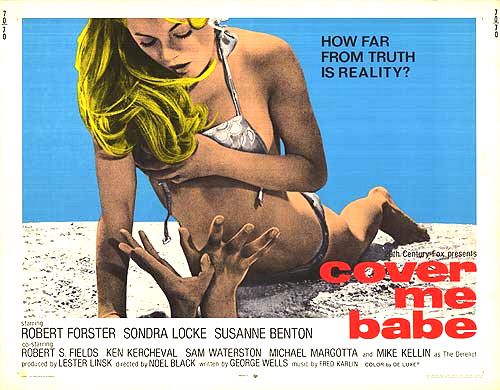
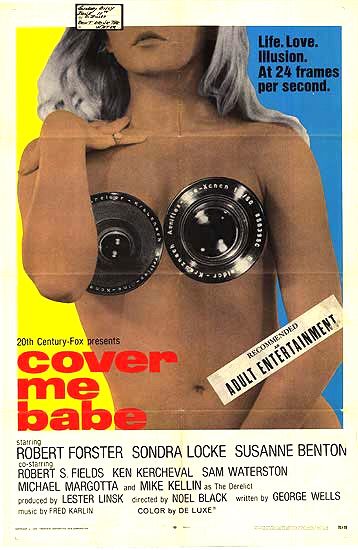
Tony Hall (Robert Forster) is a student filmmaker who feels he is a great director in the making and not afraid to let everyone know it. He becomes obsessed with capturing reality as it is and people’s emotional responses. He goads those around him including his own girlfriend (Sondra Locke) into doing things they are uncomfortable with simply so he can capture that uneasiness and the facial expressions that come with it. Some feel he is going too far, but the more they try to reel him in the more boundaries he pushes.

I’ve attended a film school in Chicago back in the early ‘90s, so for me I found this plot to be intriguing. In a lot of ways, at least at the beginning, I thought they captured the arrogance of these young would-be student directors who are convinced they are the next Kubrick or Scorsese in-the-making quite well. Their elitist attitude and willingness to compromise good taste and common sense simply to attain a shock effect to get attention are all very real.

Unfortunately the film goes overboard especially with the lead character who quickly becomes unlikable. I don’t mind a certain bit of cockiness or a say-it-like-it-is persona, but this guy is downright rude, smug, abrasive and even cruel. You spend the whole time hoping someone will punch him in his face, but it never happens and I believe this is the sole reason why this film failed at the box office as no one wants to sit through an entire movie watching a person whose behavior they can’t stand.

His excessively rude attitude towards a studio head (Jeff Corey) who wants to offer him an opportunity make a feature film is particularly confounding. It’s similar to Troy Duffy the real-life subject of Overnight and the director of The Boondock Saints who became quite arrogant to everyone once he got himself a Hollywood contract, but at least in Duffy’s case he had gotten his proverbial foot-in-the-door and therefore felt it was ‘safe’ to let his obnoxious side out, but the Forster character here doesn’t yet have one and you’re compelled to feel that the guy must be mentally ill to think he ever will by behaving in the outrageous way that he does.

Forster gives a solid performance, but the character seems too similar to one he just got done doing in Medium Cool and bordered almost on type casting. Locke is okay as the girlfriend and can be seen fully nude at the beginning, but why she would want to stick with such a jerk is hard to understand and makes her character annoying because of it. I realize some gals have the ‘bad-boy syndrome’, but it goes overboard with it here.

The film lacks a cinematic touch and its best part comes at the beginning where we watch a student film with a dream-like sequence in a Federico Fellini style that is actually pretty good. Another memorable bit comes near the end where Forster broadcasts to a group of students his own film, which features a scene showing a man jumping off a ledge and then panning over to reveal the shocked expressions of the people on the ground who witnessed it as well as the students watching it on film.
cover me babe 2

My Rating: 3 out of 10

Released: October 1, 1970

Runtime: 1Hour 25Minutes

Rated R

Director: Noel Black

Studio: 20th Century Fox

Available: None at this time.
Ishtar (1987)

ishtar

By Richard Winters

My Rating: 2 out of 10

4-Word Review: Songwriters travel to Morocco.

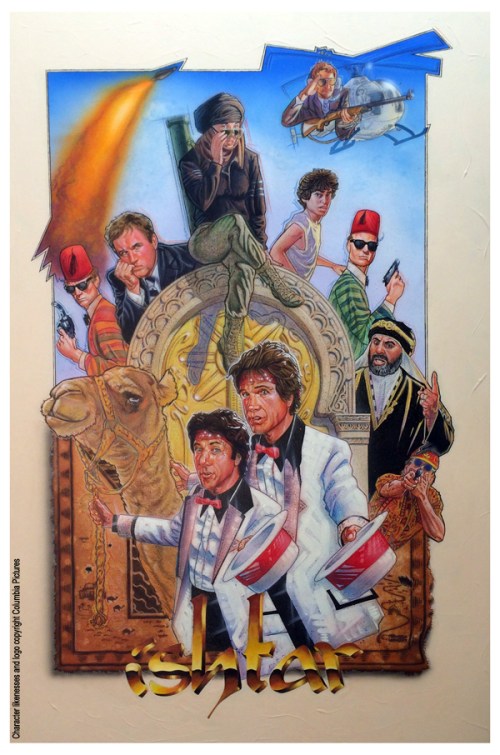
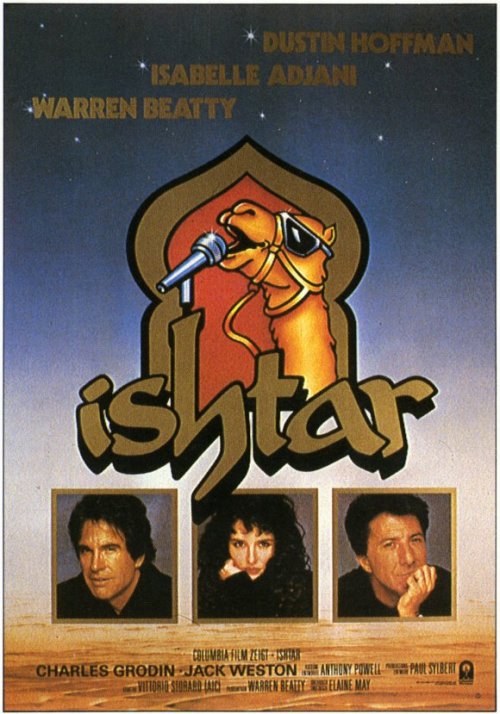
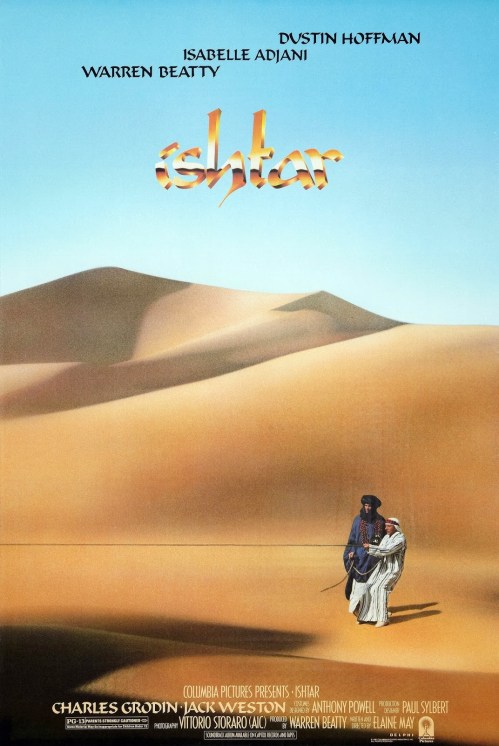
Clarke (Dustin Hoffman) and Lyle (Warren Beatty) are losers-at-life that now in their middle-age years are convinced that they have talent as songwriters even though this opinion is shared by no one else. They manage to get themselves a talent agent (Jack Weston) who tells them that the only place he can get their act booked is at a club in Morocco. The two, desperate for any attention they can get, decide to take him up on the offer, but once they arrive they become swept up in international intrigue with the Emir of Ishtar and the CIA.

This film was a notorious flop in its day not only with its cost overruns, production delays and box office receipts, but with its behind-the-scenes discord between star Beatty and writer/director Elaine May. It seemed that critics and film goers alike considered it a bomb, but I came into this thing with an open mind. May has written some great scripts in the past and is known for her impeccably dry humor. I was convinced that in this day-and-age of broad comedy and over-the-top farces American audiences were simply not geared to pick up on the subtleties of the humor.

Unfortunately five minutes in it becomes painfully clear this thing is every bit as bad as its reputation states. The humor relies too heavily on the two main characters spending what seems like hours on end sitting around trying to come up with bad lyrics for their already dumb sounding songs and then singing them in an off-key, tone deaf kind of way. This may elicit a mild grin for a minute or so, but after spending the first twenty minutes on it, it gets really annoying. Even at the end as the two crawl on the desert floor they continue to work on these same lyrics, which by that time has become as dried up as the desert itself.

The insane, almost incoherent plotline is another issue. It’s like two diametrically different stories clashed precariously into one with only the thinnest of threads holding it together. What starts out as a sardonically amusing look at two middle-aged men chasing an elusive dream suddenly becomes the second reel of Raiders of the Lost Ark without warning. The wild array of loosely structured coincidences that the two go through as they reluctantly find themselves more and more inadvertently involved with the intrigue around them is so flimsily plotted and poorly thought out that it’s not even worth the effort to describe other than to say it makes little sense, is unexciting and most of all not funny.

The main characters are a turn off as well and not comically engaging as intended. The idea that two men hitting 50 would suddenly decide to chuck their relationships and jobs to chase after a songwriter career despite not getting any positive feedback from anyone else to convince them that they even possessed the ability to do it and which usually doesn’t pay well anyways seems weird and bordering on mental illness. Having the characters in their early 20’s and just starting out and willing to take any remote venue they could in order to get their first ‘big break’ would’ve worked better, or portrayed these middle-aged men as once being famous and now desperate for a comeback, or even has-been CIA agents caught up in one last case of intrigue. Just about any other scenario would’ve made more sense than the one that ultimately gets used.

Hoffman is a great actor, but his efforts here are wasted on the weak material. Beatty does well playing a dimwit and the scene where he ‘beats up’ on Adjani who he thinks is a boy is probably the only funny moment in the film. Isabelle Adjani though, who was dating Beatty at the time, is miscast in a role that doesn’t convey her talents and seems almost degrading especially the scene where she lifts up her dress at a crowded terminal and exposes her breasts in effort to prove to Hoffman that she is really a female.

This movie is in some way so amazingly bad that I was almost convinced that it was intentional and if that was the case then at least in that area it can be considered a success.

ishtar 2

ishtar 3

My Rating: 2 out of 10

Released: May 15, 1987

Runtime: 1Hour 47Minutes

Rated PG-13

Director: Elaine May

Studio: Columbia Pictures

Available: DVD, Blu-ray, Amazon Instant Video

Running (1979)

running 1

By Richard Winters

My Rating: 5 out of 10

4-Word Review: Life of a runner.

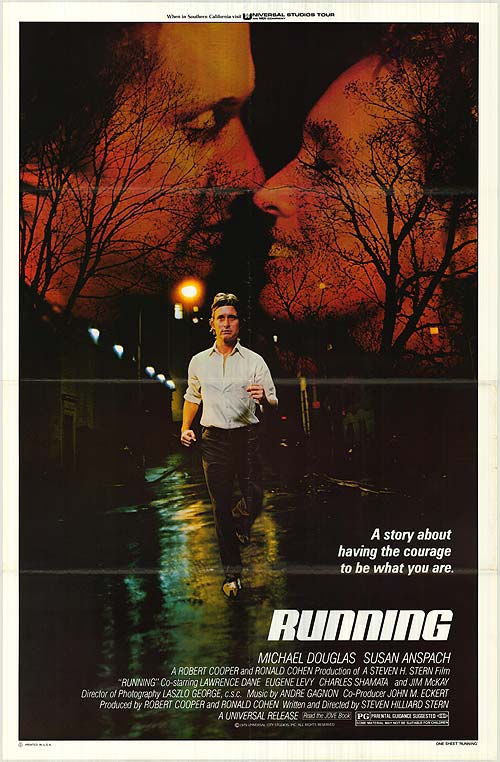
Michael (Michael Douglas) is suffering, at the age of 32, a midlife malaise. He goes from one dead end job to another and his marriage is crumbling. He runs to relieve the stress and finds that he has a major passion for it. When he qualifies for the Olympics he is initially excited, but it’s short lived because his former coach (Lawrence Dane) is on hand to constantly remind him how he has a tendency to ‘choke’ at the last minute and can never win a race when the pressure is on, which begins to wear on him psychologically.

The theme of a middle aged man having a passion for something that isn’t exactly ‘practical’ and resisting the pressures from the rest of world that tries to get him to conform to something that is, is highly relatable. I also liked the side-story dealing with the psychological element, which plays a far stronger factor in sports and amongst athletes than one might think. However, the majority of the screen time is spent with Michael trying to reconcile with his wife Janet (Susan Anspach) making it seem more like a romance and seemingly added in as ‘filler’ because the filmmakers believed that the running theme wouldn’t be enough to  carry it.

I also had a hard time understanding why the kids at high school, or at least his daughter’s friends, which gets played by Lesleh Donaldson in her film debut, would make fun of Michael simply because he was frequently seen around town running. I see joggers and runners every day and saw a lot of them back in the ‘70s too, so I don’t get why that would be a source of mockery and it seems like it was yet another manufactured dramatic element put in to give it more conflict. What’s even worse is when Michael finally qualifies for the Olympics then the kids do a full 180 degree turn and get excited about it and even run with him down the city streets, which gets corny to say the least.

Halfway in you realize this is just another variation of the Rocky formula and normally I would’ve found it annoying, but for some reason I actually got into it. I even liked the scene where he spots a giant cross standing on a hill and decides to run up the incline to reach it much like Rocky climbing the steps of the Philadelphia Museum of Art and to some degree it’s invigorating although it would’ve been nice had it shown him standing next to the cross once the climb was achieved. The final segment that takes place during the climactic Olympic race even has a twist to it that I didn’t see coming and to a degree it’s interesting though pushing plausibility. I won’t give it away I’ll just say that he doesn’t win the race, but he doesn’t exactly lose it either.

Douglas did all of his own running and to prepare for the role he would run many miles a day; IMDB states that he ran 50 to 60 miles a day, which I found hard to believe, so we’ll just say it was ‘many’. Anspach is good as the sympathetic wife particularly when the character has a conflict of emotions and breaks out in tears. Eugene Levy appears with a full afro in a rare serious turn as Michael’s attorney. Lawrence Dane is okay as the hardened coach who dispenses a lot of ‘tough love’, but little else.

My Rating: 5 out of 10

Released: November 2, 1979

Runtime: 1Hour 42Minutes

Rated PG

Director: Steven Hilliard Stern

Studio: Universal

Available: DVD (Italian Import Region 0)

Below the Belt (1980)

below the belt 1

By Richard Winters

My Rating: 4 out of 10

4-Word Review: Waitress becomes a wrestler.

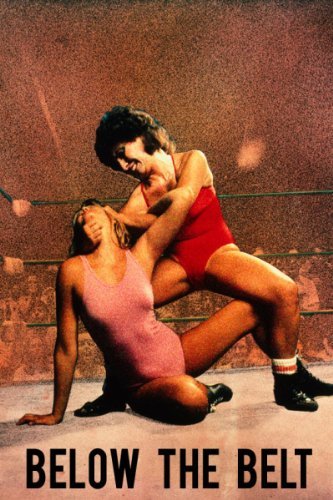
Rosa (Regina Baff) works as a waitress at a sports arena who one day catches the eye of wrestling promoter Bobby Fox (John C. Beecher) after she decks a guy who tries to get fresh with her. Fox is in need for a new wrestler to promote and feels she’d make a perfect fit despite her having no experience in the sport. Since she is bored with her job and low on funds she decides to take him up on his offer, but finds that life in the wrestling world can be quite lonely and grueling and the promises of fame and fortune are fleeting.

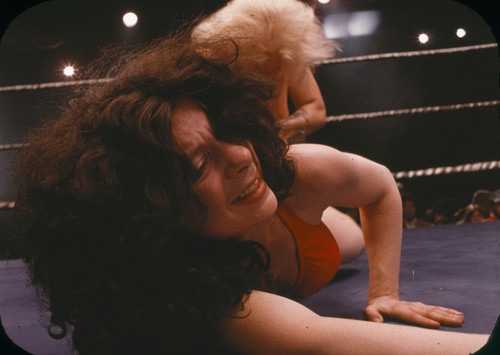
Unlike Grunt! The Wrestling Movie, which was reviewed last week, this movie does not take a fan’s perspective of the business nor does it get caught up in the colorful caricatures or silly storylines. Instead it reveals a rather bleak look at the hardships faced by those working the circuit and how emotionally and physically taxing it can be living on the road and going paycheck-to-paycheck. In fact there is more footage shown of them behind-the-scenes preparing for a bout than an actual match although the climax does feature Rosa, dubbed the Mexican Spitfire, taking on defending champion Terrible Tommy (played by real-life wrestler Jane O’Brien) who plays dirty, doesn’t have any front teeth and even beats up on the referee.

Comical moments get spread throughout, but they tend to get overplayed and don’t work. What grabbed me was the main character and how relatable her situation was particularly the way her life was unfocused and her inability to stick with any job for too long, which her boyfriend and father nag her about, but then when she tells them about her new found wrestling passion they scoff and show no support. I also liked how the film examines both side of the age spectrum including Thalia (K.C. Townsend) who lies about her age and pretends to be older than she is simply so she can escape her tedious small-town life and get into the wrestling circuit, which she considers her ‘big break’ while on the other end there’s Verne (Sierra Pecheur) who’s in her late 30’s and been in the business for many years and now feels trapped and unable to get out.

Baff, with her plain looks, is a good representation of the average young woman still struggling for direction, but her thin body made me think she wouldn’t be able to handle the rigor of the sport in real-life. Shirley Stoler is on the opposite end as she was quite overweight and humorously carries around a handgun with her to fight off all the would-be rapists that she feels are lurking in the shadows and ready to attack her at any minute. Dolph Sweet is also memorable as an aging wrestler who reluctantly realizes that the business and his passion for it have passed him by.

There’s a heavy dose of blues music that gets played frequently throughout. To some extent the soundtrack, with songs sung by Billy Preston, Jennifer Holliday and the Voices of Deliverance, lends flavor and distinction to the proceedings, but it also ends up becoming overdone and intrusive in a film that is alright, but tries a little too hard to make its point.

below the belt 2

My Rating: 4 out of 10

Released: December 10, 1980 (Filmed in 1974)

Runtime: 1Hour 34Minutes

Rated R

Director: Robert Fowler

Studio: Atlantic Releasing Corporation

Available: VHS

It’s Only Money (1962)


its only money

By Richard Winters

My Rating: 3 out of 10

4-Word Review: TV repairman gets rich.

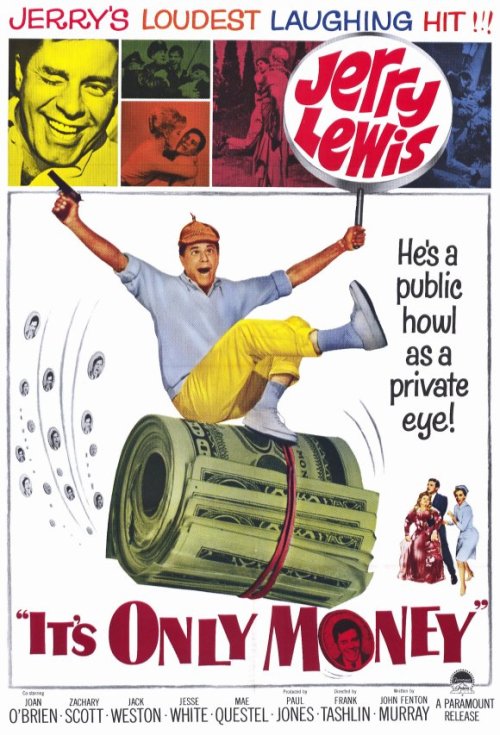
Lester March (Jerry Lewis) is a dimwitted TV repairman who has a penchant for reading detective magazines and desires to become a private eye. When Pete Flint (Jesse White) who is an actual detective comes to his shop one day with a broken TV set Lester uses the opportunity to ‘audition’ himself as Pete’s assistant on his next case. Pete decides to try him out by putting him on a case involving a rich family whose heir to their fortune is missing yet when Lester starts to investigate he realizes it may be himself that they are looking for.

The script by John Fenton Murray comes off like it was written in one day and could’ve possibly been done by a 10-year-old in a matter of an hour. The plot is lame and flimsy, the humor excessively silly and the movie offers nothing new or creative. The running gag involving the Jack Weston character and his many attempts at trying to kill Lester is nothing more than a live action, subpar version of the Wiley E. Coyote/Road Runner formula.

How much one enjoys this film relies heavily on how much they can tolerate Lewis. To some extent he is mercifully more restrained here and not as obnoxious as usual, but there are still several scenes that get unnecessarily extended just so he can play up a gag that has nothing to do with the plot and isn’t funny. The biggest issue I have with the character is that he’s too unrealistically and painfully stupid. It’s one thing to be a slightly dimwitted schmuck, but this guy speaks and acts like he has a severe mental defect and needs clinical help.

Mae Questel, who was best known as the voice of cartoon character Betty Boop, is far funnier and without trying half as hard. The scene where she gets into a tight jumpsuit despite being quite overweight and elderly and then tries to do some exercises will certainly elicit a few genuine chuckles from just about anybody and the only real funny part in the movie. Weston isn’t too bad as the nemesis especially the scene involving his attempts to run Lester over with a car.

The climactic sequence involves Lester being chased around by robotic lawn mowers, which offers a slight diversion, but the rest of the film is forgettable and subpar even for Jerry Lewis standards.

My Rating: 3 out of 10

Released: November 21, 1962

Runtime: 1Hour 23Minutes

Not Rated

Director: Frank Tashlin

Studio: Paramount

Available: DVD, Amazon Instant Video, You Tube

Ea$y Money (1983)

easy money

By Richard Winters

My Rating: 4 out of 10

4-Word Review: Breaking his bad habits.

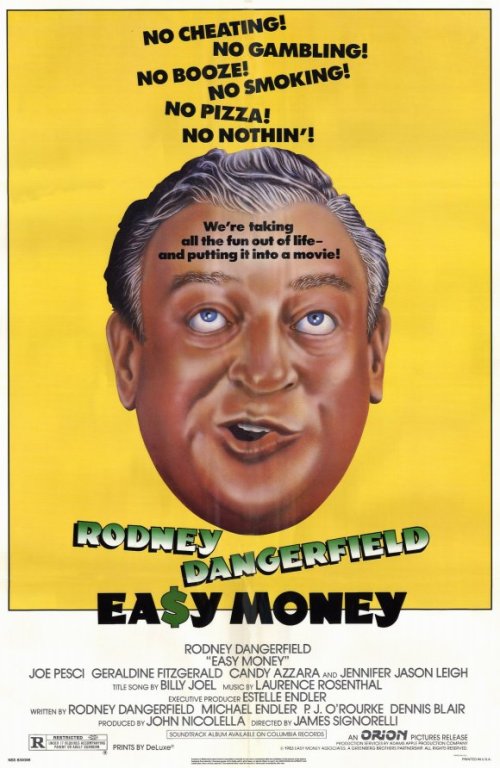
Monty Capuletti (Rodney Dangerfield) is a married man with two teenage daughters who is trying desperately to make ends meet while working as a child photographer. His oldest daughter Allison (Jennifer Jason Leigh) is set to get married to a man named Julio (Taylor Negron) that Monty does not approve of. Attending the wedding is Monty’s rich, but hateful mother-in-law (Geraldine Fitzgerald) who promptly dies on her way back home. At the reading of her will she stipulates that she will give her entire fortune to Monty, but only if he gives up all of bad habits, which includes his drinking, gambling and drug use. Monty isn’t sure he can do it, but his eager family members try to coach him into trying.

This was Rodney’s first starring vehicle after his breakout success in Caddyshack, but the script doesn’t take advantage of his comic ability. The opening sequence in which the viewer gets an understanding of the character’s personality visually by having the camera pan through his cluttered work area is great and probably the best part of the whole movie, but trying to confine his edgy persona into the sterile role of a suburban dad isn’t effective. His wife, played by Candice Azzara, is much too young and good looking a woman and would typically be way out of his league. His daughters are also too attractive and he was already in his 60’s at the time, which made him much better suited for a grandfatherly role. A much funnier plot would’ve had him stuck with his adult daughters still living at home because they were too ugly to find suitors and his desperate attempts to con someone into marrying them just so he could get rid of them and be able to enjoy  his ‘golden years’ in peace.

The script is limp and doesn’t get going with its main premise until the second half with the first part dealing with the daughter’s on-again, off-again relationship with her new husband that goes nowhere and seems added in solely to pad the running time. The idea of Monty having to give up his bad habits is poorly thought out as well as there is no third party coming in to observe that he sticks with it, or hidden cameras placed somewhere to monitor him. It leaves everything up to his family members to ‘keep him on track’ even though they could’ve lied and covered up for him and his ability to cheat at any time was wide open.

The film also does not take enough advantage of the jokes that it does have. One scene has him, in a bout of frustration, swearing at a fat kid that is not behaving, but the camera never cuts back to the parent’s shocked expression, which would’ve been the best part. Another segment has Julio and his friend trying to sneak into Rodney’s house late at night in an attempt to win back Allison, but in the process they snap off the power lines connected to the home and knock out the electricity yet the film never gets the response of the rest of the household when this occurs and instead quickly cuts away and never comes back to it making it seem almost like it never happened. Last, but not least is a scene where Rodney gets an exercise bike for Christmas and tries it out only for him to go crashing into the Christmas tree and hitting his head against the window and yet no one jumps up to see if he is alright even though I would think that would be the most natural response for someone, especially family members, to do.

There is also a scene involving drunk driving, which I found interesting only because 5 years later the movie License to Drive also had a similar scene, but in that one it was somehow considered more controversial and labeled in bad taste even though the scene here I thought was worse because it was done by the main characters, or in this case Joe Pesci who plays Rodney’s best friend.

The segment where Rodney gets shot in the buttocks and forced to hang in midair at the hospital while his injuries are allowed to heal is quite funny as is the scene involving male runway models showing off Rodney’s latest ‘regular guy’ fashions, but outside of these two segments the film falls flat in a script that never gains any traction and is wildly unfocused. Billy Joel of all people sings the film’s title tune in a song that is catchy, but I’ve never heard played on the radio even though all the rest of his tunes seemingly are.

My Rating: 4 out of 10

Released: August 19, 1983

Runtime: 1Hour 35Minutes

Rated R

Director: James Signorelli

Studio: Orion Pictures

Available: DVD, Blu-ray

Eraserhead (1977)

Eraserhead

By Richard Winters

My Rating: 6 out of 10

4-Word Review: Couple has deformed baby.

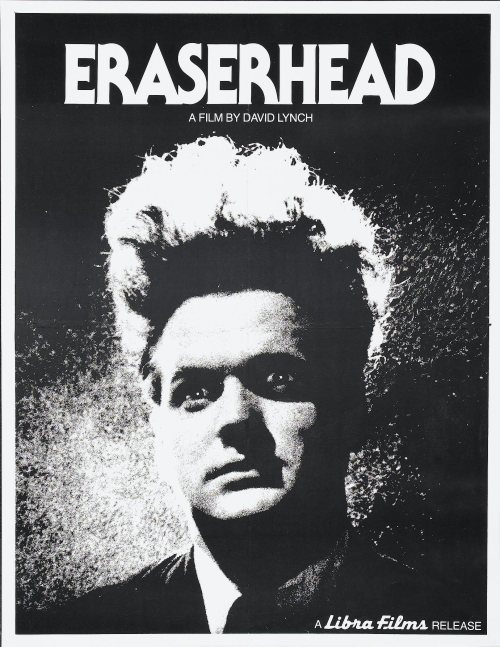
In David Lynch’s first feature length film, a movie that took almost 5 years to make and had a good deal of it financed by Sissy Spacek and her husband, we have a surreal almost cryptic-like tale detailing a lonely man named Henry (Jack Nance) and his ultimate descent into a madness as he is forced to take care of severely deformed child while also harboring the dark urge to kill it.

It is hard to say whether one can like or dislike this as it goes so far out of the conventional form of film narrative that it seemingly defies all genres and puts itself into a category all its own. On a sheer technical level it is quite impressive especially when you factor in its shoestring budget and array of production set-backs. Each scene is meticulously detailed with wild and unsettling imagery that on a purely visual level will be more than enough to leave an impact. Overall the film is cold, ugly and unyielding, but helped tremendously by Nance’s presence as a sort of detached everyman who seems as confused and aloof to his surroundings as the viewer.

To me the most jarring image is the baby, which is incredibly lifelike. Had it came off looking fake, or like some puppet or Claymation attempt the film would’ve been a failure, or deemed laughable, but this thing is freaky looking to the extreme and Lynch spares no expense in getting the camera close up to it, which could force some viewers to turn away. Supposedly it was made from the embalmed fetus of a calf, but no one knows for sure and the crew was forced to blind fold themselves when Lynch set it up, so the secret would never come out. Either way it is effective and it manages to move its eyes and mouth almost like it were real and coming off as far more authentic than any computerized effect.

Spoiler Alert!

Of course the most confounding thing about the film is its story and symbolism’s that can be interpreted in a million different ways depending on the viewer’s own perspective. For what it’s worth I’ll give you my interpretation, which isn’t that complicated. To me the deformed baby symbolizes Henry’s soul, which has been mangled by the soulless world that he lives in, which would explain why he is so extremely passive because he is simply a walking zombie. The scene where his head pops off and the ugly child’s head pops into its place only reinforces this. The lady that he sees in the radiator is an angel from heaven and the beautiful lady that lives across the hall from him is the devil who entices him with sex, but when she realizes he has no soul to take, just an ugly mangled remnant of one, which gets exposed to her when she sees him standing in the doorway, she quickly loses interest and moves onto someone else. When he finally kills the baby he is essentially killing himself, which then explains why he ends up in the final scene in heaven with the lady in the radiator.

The man in the planet that we see at the beginning represents Henry’s own subconscious as he quarrels within his mind at the thoughts of killing the child. The man could also represent the world at large and how it controls everyone with its levers, which when Henry finally kills himself they start to have sparks fly from them and the man struggles in containing them, which shows that Henry has now ‘broken free’ from the man and this world by taking his own life.

End of Spoiler Alert!

Some consider this a horror pic, but I found certain parts of it to be quite funny in a darkly humorous way particularly the segment where Henry goes to visit his girlfriend’s parents. To me the most horrifying thing about is the way it challenges the viewers to question their own morality by forcing them to face the difficult quandary or what they would do if put into the same situation as Henry and forced to care for a hideous looking baby that some would consider would be better off dead.

My Rating: 6 out of 10

Released: September 28, 1977

Runtime: 1Hour 29Minutes

Not Rated

Director: David Lynch

Studio: Libra Films International

Available: DVD (Criterion Collection), Amazon Instant Video

Grunt! The Wrestling Movie (1985)

grunt

By Richard Winters

My Rating: 4 out of 10

4-Word Review: Who is masked wrestler?

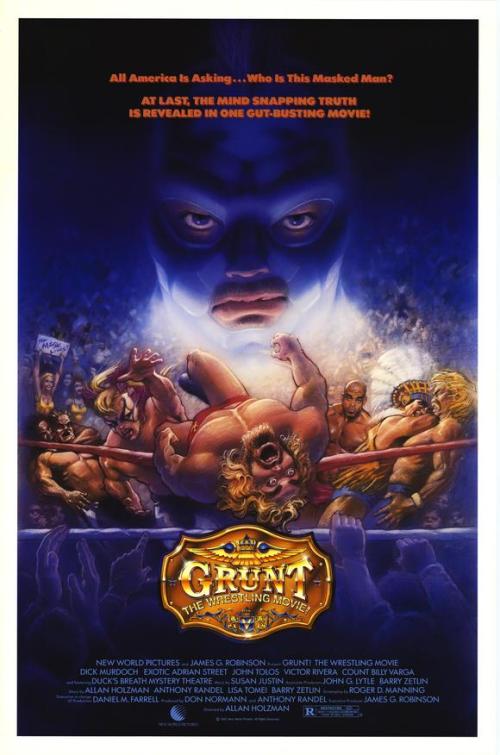
On October 13, 1979 Mad Dog Joe De Curso (Greg ‘Magic’ Schwarz) has a violent wrestling match with defending champion Skull Crusher Johnson (Greg Rivera). During the melee Johnson accidently gets his head stuck in the ringside ropes where Mad Dog decapitates him with one swift kick. The wrestling world then goes into an uproar with the biting question on everyone’s mind ‘Does a defending champion lose his title when he loses his head?’ that nobody, not even the commissioner seems willing to answer. After spending 90 days in jail Mad Dog gets released, but suffers from severe depression and eventually jumps to his death off of a bridge. Yet documentary filmmaker Leslie Uggams (Jeff Dial) thinks that Mad Dog is still alive and working under the disguise of a masked wrestler whose identity is unknown. Uggams begins a crusade of trying to unravel the mystery by interviewing those who knew Mad Dog best while also following the masked wrestler around to his events and trying to get to know both him and his French lady manager Angel Face (Lydie Denier).

The first 10 minutes of this thing is brilliantly bizarre that has just the right mix of offbeat humor, wrestling action and cinematic quality to make it interesting, original and hilarious. I am no wrestling fan myself, but director Allan Holzman manages, at least in the opening segment, to draw the uninitiated into the wrestling world by unfolding all the side dramas, storylines and over-the-top characters that fans of the spectacle find so enjoyable. The bit is also filmed in black-and-white with a sort-of foggy back drop that helps give it a surreal effect while also playfully making fun of the event and those who watch it.

Unfortunately the remainder of the movie is unable to sustain that same momentum becoming instead an overplayed one-joke that goes nowhere. It also spends too much time in the ring where the viewer is forced to watch one wrestling bout after another until it becomes more like a pay-per-view event than a movie.

One of the few non wrestling segments that I did enjoy is when the masked man and Angel Face go onto Wally George’s ‘Hot Seat’ TV-Program. George was a notoriously combative conservative talk show host during the ‘80s and the precursor to Rush Limbaugh and Bill O’Reilly. He was also the father to actress Rebecca De Mornay who has spent her entire career trying desperately to downplay that fact. Liberal guests would come onto his show and almost immediately be berated before being thrown off, which is what happens to the masked man and Angel Face, but not before George gets into the masked man’s face and demands he take it off, which is pretty funny.

Adrian Street, a wrestler who dresses in drag, is a scene stealer and the segment with the masked man being interviewed on his show is equally good. I also enjoyed Denier as the rambunctious manager who flashes an opposing player during one of the mask man’s wrestling matches and carries around a pet poodle who wears a mask similar to her clients.

The scene involving a bout between two lady wrestlers with the song ‘She Was a Mighty Big Girl for Her Age’ is good and the match where the masked man takes on four dwarf wrestlers is an absolute howl, but the film is geared too much to the hardcore fan and those with very little interest in the ‘sport’ will find it off-putting and overtly silly.

My Rating: 4 out of 10

Released: November 24, 1985

Runtime: 1Hour 29Minutes

Rated R

Director: Allan Holzman

Studio: New World Pictures

Available: VHS, DVD-R, Amazon Instant Video

King Rat (1965)

king rat 1

By Richard Winters

My Rating: 6 out of 10

4-Word Review: An island prison camp.

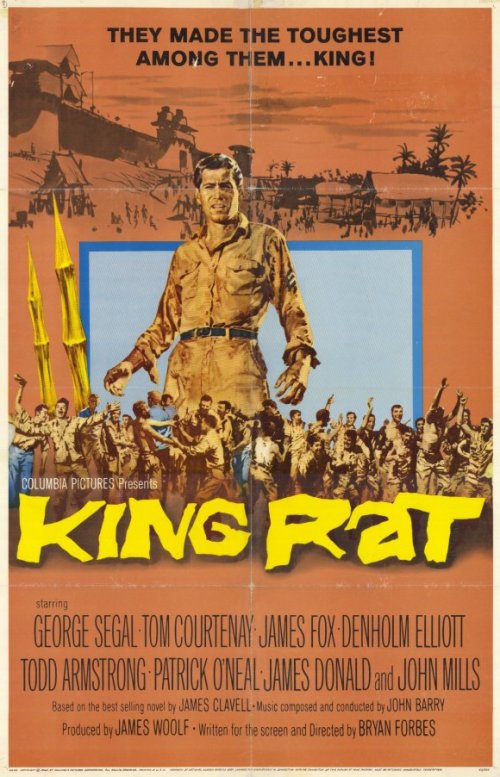
British and American POWs are held on an Island prison camp run by the Japanese during WW II. This camp is unlike the others as it does not have any walls, barbed wire fences, or prison guards. The men are allowed to roam freely while trapped on a tiny island with nowhere to go. Corporal King (George Segal) manages to wheel-and-deal his way to the top of the food chain by getting involved with the underground black market, which allows him to live the relative good-life while the other prisoners remain near starvation. He befriends Marlowe (James Fox) who can speak the Malaysian language, which he feels can come in handy as he gets involved with a diamond smuggling operation as well as selling deer meat, which unbeknownst to his customers is actually meat from rats who’ve feed off of the bodies of the other dead prisoners.

To some extent one can find some similarities to this and The Great Escape or Stalag 17 in that the prisoners have managed to create their own underground network without their captors being aware, but that is pretty much where the comparisons end. This film is darker and examines more the psychological deterioration that the men go through while realizing its themselves and each other that is more the enemy than the actual Japanese guards who are shown very little and have no presence at the camp or in the movie.

Segal gives a star making performance as a anti-hero who could easily be quite unlikable, but Segal’s engaging on-screen persona gives the character an added spark making him and his constant conniving more amusing than anything particularly with the way he barters with the Malaysian guards during their discussions on the price of the transfer of diamonds.

The supporting cast is outstanding as well especially Fox as the only sympathetic character and Tom Courtenay as the overzealous Grey and his never-ending crusade to take King and his cronies down. James Donald is also good as the no-nonsense Dr. with a very matter-of-fact bedside manner and a young Richard Dawson who gets the shock of his life when he comes in after the Japanese surrender to free the men of their enslavement only to find that they’re strangely reluctant to leave.

The film works in episodic fashion and while it maintains a gritty level it also has some lulls and few too many shifts in tone. There are though many unique and memorable moments including the ending where the men find themselves free to return home, but respond much differently than you’d expect. There is also a scene where the men kill a dog after it attacks some chickens and then later eat it as if it were a delicacy.

My Rating: 6 out of 10

Released: October 27, 1965

Runtime: 2Hours 14Minutes

Not Rated

Director: Bryan Forbes

Studio: Columbia Pictures

Available: DVD, Amazon Instant Video

Legal Eagles (1986)

legal eagles

By Richard Winters

My Rating: 5 out of 10

4-Word Review: Searching for stolen paintings.

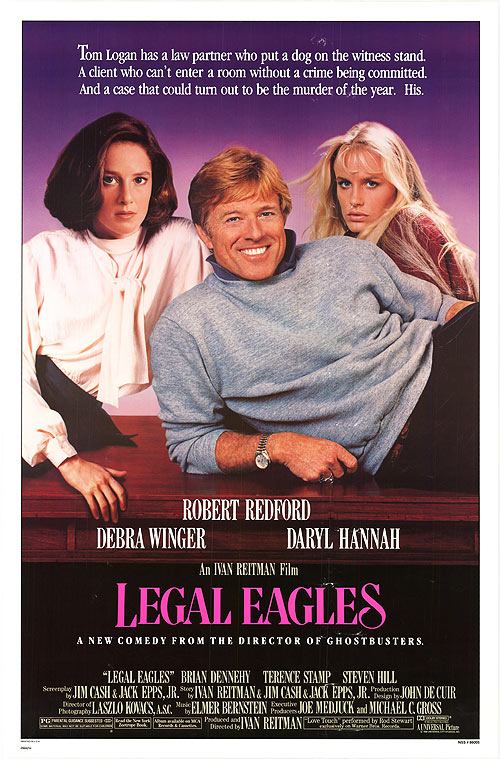
Successful district attorney Tom Logan (Robert Redford) suddenly finds himself in a big mess when defense lawyer Laura Kelly (Debra Winger) approaches him in regards to her quirky client Chelsea Deardon (Daryl Hannah). She feels that Chelsea is innocent of the charges against her and hopes to have them dropped before it goes to court. When Tom looks into the case he finds that there’s much more to it than initially assumed, which leads the three into danger, stolen paintings, murder and even a weird love triangle.

If you are expecting anything having to do with a legal drama then you’ll be highly disappointed as there is very little time spent in the actual courtroom. Instead you get what amounts to an ‘80s action flick with explosions, car chases and even shootouts as these two lawyers go through things that no other lawyer in the history of the universe has ever went through either before or after.

The main selling point, and the only thing that actually works, is the casting. Redford with his laid back style is terrific in this type of comedy and I enjoyed the way he tries to remain cool-under-pressure despite being exasperated with two very kooky females, who both have an interest in him, coming at him from both sides. Winger is fun too as a well-meaning young attorney who tries hard, but still seems a bit ‘rough-around-the-edges’. Hannah is also perfectly cast in a role that works well with her slightly flaky, free-spirited persona and she even has a scene where she performs a fire-laden performance art piece that she wrote herself.

The first hour has a nice balance between the interpersonal relationships of the three as well as an intriguing mystery, but the second half leans too much into the action and gets overblown. The supposedly ‘exciting’ finale only helped to get me bored and annoyed. It’s the chemistry of the three stars and the romantic entanglements that ensued between them that had me interested and are what made the plot unique. The film should’ve emphasized this area more and even played it up. Having things end up working out so conveniently between the three despite the fact that both women were for a time seemingly competing for Redford’s affections misses out on a lot of potential fireworks and amusingly comical scenarios.

Familiar faces pop up in minor roles including a young Christine Baranski as a fledgling member of Tom’s legal team as well as Terence Stamp in a role that ends up being so small and insignificant I was surprised he agreed to take it. The film also features Rod Stewart’s hit song ‘Love Touch’ that climbed to number 6 on the pop charts, but isn’t heard until the very end when it gets played over the closing credits.

My Rating: 5 out of 10

Released: June 20, 1986

Runtime: 1Hour 56Minutes

Rated PG

Director: Ivan Reitman

Studio: Universal

Available: VHS, DVD, Amazon Instant Video