Category Archives: Thrillers/Suspense

The China Syndrome (1979)

china-syndrome

By Richard Winters

My Rating: 8 out of 10

4-Word Review: He senses the vibration.

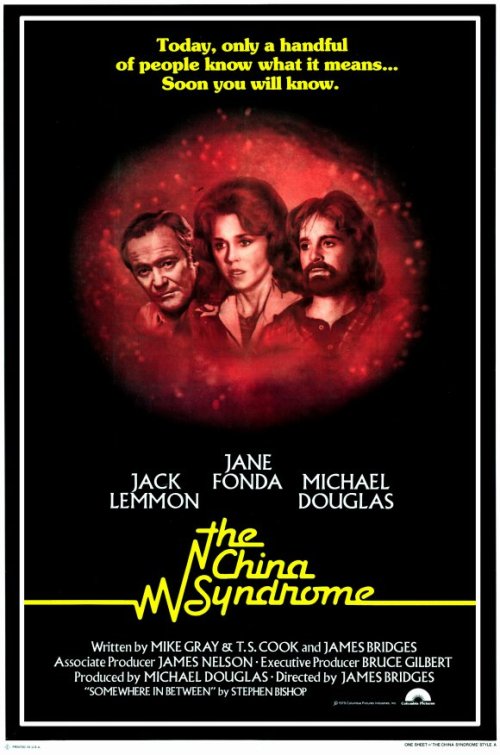
Kimberly Wells (Jane Fonda) is a television news reporter who along with Richard (Michael Douglas) her cameraman gets a chance to go inside a nuclear power plant and film its operations. While inside they witness the plant going through an emergency shutdown when the coolant to one of the nuclear reactors becomes dangerously low. Richard secretly films the nervous reactions of the men in the control room during the incident and wants to broadcast the footage on the news, but the station managers refuse for fear they might get sued. Later Kimberly comes into contact with Jack (Jack Lemmon) who is a shift supervisor at the plant and he informs her that the welds on the pumps are compromised and could lead to a core meltdown at some point. Richard, Kimberly and Jack then conspire to somehow get this information out to the public before it is too late while also avoiding those who wish to silence them.

One of the things I really enjoyed about this film is the way it remains completely realistic throughout and never once compromises anything simply for the sake of cheap drama. The behind-the-scenes politics of an on air news show is quite fascinating particularly how it is decided what constitutes ‘news’ and what doesn’t as well as the staff’s pecking-order and how an individual reporter has limited say on what topics they can actually report on.

The inside of the power plant is impressive particularly the scene where Jack goes inside the massive pump room to investigate a leak. The control room looks quite authentic and the film’s final twenty-five minutes take place solely inside of it, which makes for a gripping climax.

The film also has the distinction of having no musical soundtrack. Other than a song by Stephan Bishop which is played at the beginning there is no other music to be heard and quite frankly I didn’t miss it at all. The sound of the power plant’s emergency alarm going off is all that is needed to create tension and having the closing credits scroll to a deadening silence leaves a powerful impact. Apparently a score was composed by Michael Small, but it was rejected and rightly so as I listened to some of it and it had way too much of a disco sound and didn’t fit the theme at all.

The stars are excellent, but I was surprised how Fonda’s part gets increasingly pared down as the movie progresses. Douglas steals it away from her during an angry confrontation with his superiors, but ultimately Lemmon is the real star even though it deceptively doesn’t start out that way. The supporting cast is equally good including Wilford Brimley as a loyal, but quiet employee, Scott Brady as the cantankerous plant manager and Richard Herd as the steely and conniving owner.

As for the merits of the film’s message it’s hard to say. What was once a hot/trendy topic during the ‘70s and ‘80s now seems long forgotten. However, the script still brings up many good points no matter what one’s political leanings are and it’s great to watch a film that can be intelligent and entertaining at the same time without ever going overboard on either end.

My Rating: 8 out of 10

Released: March 16, 1979

Runtime: 2Hours 2Minutes

Rated PG

Director: James Bridges

Studio: Columbia Pictures

Available: DVD, Blu-ray (Region 0), Amazon Instant Video, YouTube
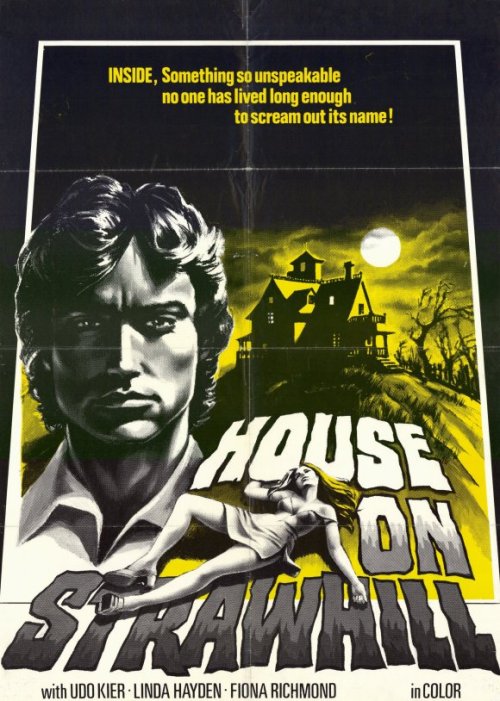
House on Straw Hill (1976)

house-on-straw-hill-1

By Richard Winters

My Rating: 3 out of 10      

4-Word Review: Writer battles his secretary.

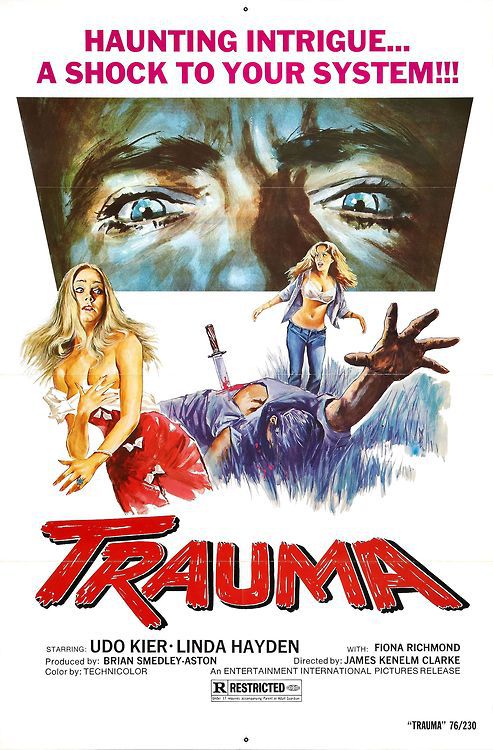
Paul (Udo Kier) is a writer who had success with his first novel and now working on his much anticipated second one. To help him get the manuscript done faster he hires a secretary (Linda Hayden) who comes to his isolated, countryside home to type it up, but the two don’t get along. Soon Paul becomes convinced that she is out to kill him and he just may be right.

This pseudo horror film has an enticing visual style.  I liked the close-up shots of the typewriter keys banging on the paper as well as the giant wheat field surrounding the home, which to a degree helps create an interesting atmosphere, but writer/director James Kenelm Clarke goes back to these things too often eventually making the film one-dimensional and monotonous.

The film is also loaded with a lot of explicit sex. If this were a porno then that would be great, but for an intended horror film it goes off the mark completely. We really don’t need to see Linda constantly masturbating. Having Paul find a dildo in her suitcase as he does would’ve been enough. Linda’s ultimate seduction of Paul’s girlfriend (Fiona Richmond) in a provocative lesbian sequence is completely pointless to the story and clearly just done to grab the crowd that’s into watching mindless sleaze.

The characters come off as weird, half-human caricatures whose motivations and actions are confusing. Both Paul and Linda needed to be better fleshed out for the viewer to have any compelling reason to care what happens to either one of them. The scene where Linda masturbates in the wheat field and is then attacked and raped by some locals only for her to turn-the-tables on them and kill them is particularly stupid because she is somehow able to immediately compose herself afterwards and come back to the house and act like it never happened when with anyone else it would’ve been an emotionally traumatic experience that would’ve taken months maybe even years to get over if even then.

The film’s twist ending is particularly weak and the film should’ve used flashbacks and other subtle clues to help the viewer figure it out for themselves the reasons for Linda’s motivations instead of having it all explained to them by her at the end. I also didn’t like the title as it is too reminiscent to Straw Dogs, which also took place in a remote home in the English countryside and dealt with a rape by some of the local thugs. This might’ve been intentional, but it was a big mistake because it just reminds the viewer of that movie, which was far better.

house-on-straw-hill-2

My Rating: 3 out of 10

Alternate Titles: Trauma, Expose

Released: March 15, 1976

Runtime: 1Hour 24Minutes

Rated X

Director: James Kenelm Clarke

Studio: Norfolk International Pictures

Available: DVD, Blu-ray

Alone in the Dark (1982)

alone-in-the-dark-1

By Richard Winters

My Rating: 3 out of 10

4-Word Review: Psychopaths escape from hospital.

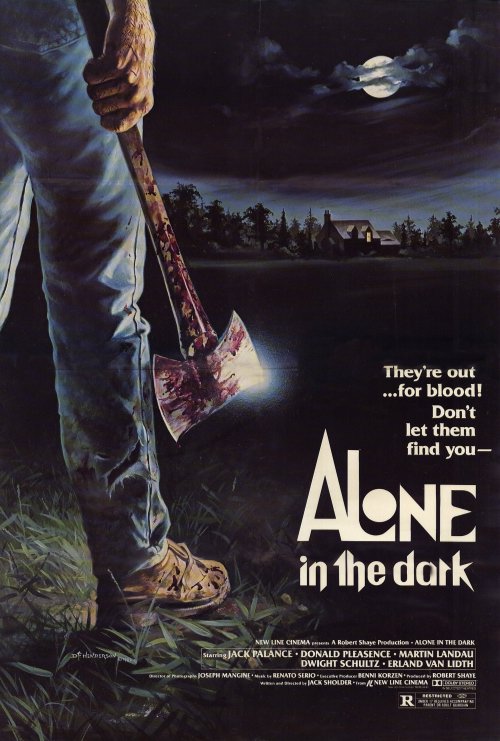
Dan Potter (Dwight Schulz) is a new doctor hired at a local mental hospital to oversee some of their more violent psychopaths. Unfortunately before he has any time to implement his new therapy techniques there is power failure, which allows three of the most dangerous ones (Jack Palance, Martin Landau, Erland van Lidth) to escape. They immediately track down the doctor at his residence and lurk outside while the frightened family stays trapped in their home and forced to somehow fight them off.

The story is dull and has a plot where you know exactly where it’s going right from the start. There are no unexpected twists and the gore is almost non-existent. The scares are sparse and not effective with several scenes that come off as unintentionally funny.

There is also never any explanation to what causes the power failure and the idea that it would last for two consecutive nights without some sort of major weather event being the factor is highly unlikely. The fact that the patients are housed inside an institution with electrical monitors and the people who ran the place had no backup plan implemented or considered if the power would ever go out is dumb and most likely an emergency generator would’ve been installed years earlier for just such a scenario, which would then make this whole stupid plot nonexistent from the get-go.

Landau gives a good performance, which makes this dumb thing slightly worth catching although overall the psycho characters are too cardboard and generic to be frightening. Hiring B-actors on the downside of their careers and who were most likely willing to accept any mindless dreck that was handed to them simply so they could keep the cash flowing in, was not a good idea as they approach the material in too much of a hammy way.

I actually came away liking Schulz’s performance best and was impressed how his character here was so much different from his most famous one in ‘The A-Team’ TV-show. It was also fun seeing Van Lidth, who is best remembered as Grossberger from Stir Crazy, with a full head of hair.

The film has only two scenes that are worth catching and even then it really isn’t much. However, I did like the part where the three crazies enter a sporting goods store during the blackout that is being raided by all the ‘sane’ people who act way more fringe than the actual lunatics. The scene where Palance attends a punk rock concert where the band The Sick Fucks is playing is pretty good too even though the atmosphere inside doesn’t effectively reflect a real mosh pit scene.

The overall scenario though dealing with these very clichéd psyhcos ominously lurking outside a home occupied by an equally clichéd All-American family that respond to everything with perpetual looks of fear is not interesting or intense. It also comes off as being too stagey and theatrical and might’ve worked better had it taken more of a modern day hand-held camera/ cinema vertite approach.

My Rating: 3 out of 10

Released: November 12, 1982

Runtime: 1Hour 32Minutes

Rated R

Director: Jack Sholder

Studio: New Line Cinema

Available: DVD

WarGames (1983)

wargames-1

By Richard Winters

My Rating: 7 out of 10

4-Word Review: Teen hacks government computer.

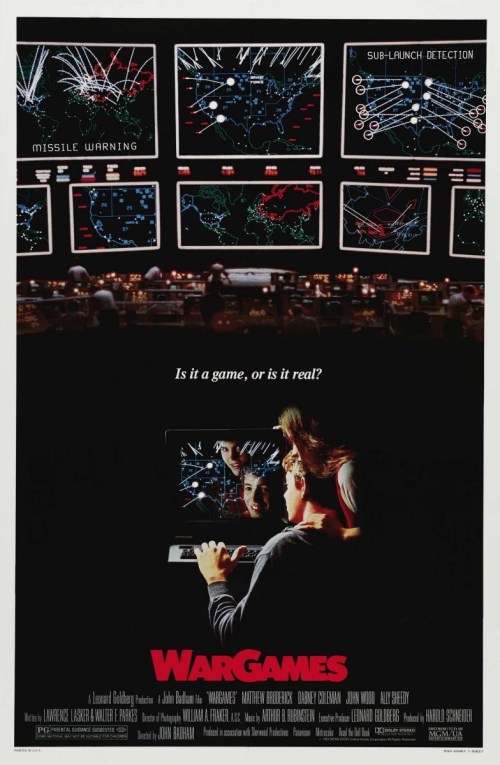
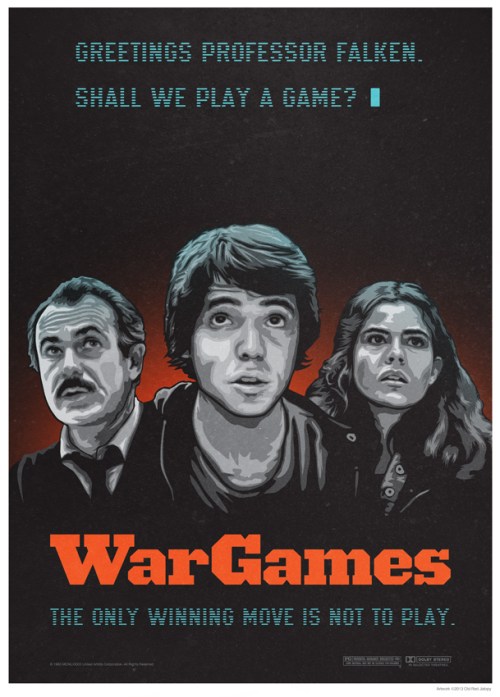
David (Matthew Broderick) is a teenager who’s a whiz with computers and even able to dial up his school’s machine and change his grades without anyone noticing. One day he unknowingly hacks into a military computer where he and his girlfriend Jennifer (Ally Sheedy) begin to play a game of global nuclear war while unaware that everyone at NORAD the military base is seeing the game as it’s being played  and thinking that it is the real thing.

The film does a great job of showing the nuclear missiles up close while still in their silos and ready to fire, which gives the viewer a frightening awareness of just how real the potential is. The NORAD command center, which is quite impressive, was built specifically for the film at a cost of one million and is apparently even more elaborate than the real one.

David’s hacking talents do seem a bit farfetched, but if you’re able to suspend your disbelief a little then it’s a pretty cool and suspenseful flick. Some of my favorite scenes in this area are when he is able to escape from an electronically locked room as well as the way he gets a dial tone from a receiver at a pay phone despite not having any money.

Broderick’s character is in many ways identical to the one that he played in Ferris Bueller’s Day Off at least with his technological smarts, but here he thankfully doesn’t have that annoying smugness as his initial cockiness realistically wilts quickly away the minute he realizes that he’s gotten in-over-his-head. I did however find it hard to believe that such a bright kid could get an ‘F’ on his biology exam. His character is described as being an ‘underachiever’, which is fine, but there’s a big difference between being that and being a complete flunky.

Ally Sheedy is fantastic and in many ways outshines Broderick, but it’s hard to figure that she would suddenly jump into her car, without being asked, and drive all the way from Seattle to Colorado on a whim after she gets a strange call from David. The fact that her character states that it took her only 3 hours to get there is a complete crock as according to Mapquest the distance between Seattle and Grand Junction is 1,122 miles with an estimated drive time of 18 hours and 9 minutes.

Dabney Coleman is good in support as McKittrick and nobody can exude nervous energy quite like he does. Yet I was disappointed that he isn’t seen more. As much as I love Barry Corbin I felt his general character was clichéd and boring and I wished they had simply combined that character with McKittrick’s and then given the part solely to Coleman to play.

There were also a few scenes that I felt should’ve been extended especially the opening scene where we see two members of the missile combat crew ordered to turn the key to launch a missile strike. One of them, played by John Spencer, panics and becomes reluctant to turn the key while the other one holds a gun and insists that he must. It turns out this was only a surprise drill, but it cuts away before we see what happens and we only learn about this later while it would’ve been more satisfying to have seen the complete scenario played out visually.

I would’ve also liked to have seen when the government agents storm David’s house and search his bedroom simply to witness his parent’s (William Bogert, Susan Davis) reactions. The film spends time introducing them and they are rather amusing, so it would’ve been interesting to get their take on the situation as it unfolded.

I also felt the way David and Jennifer find Falken (John Wood), the man who invented the military computer that David plays the nuclear game with, was too easy. I realize David gets Falken’s address from the computer, but it’s still a remote island that David has never been to, so how he is able to come upon the home so quickly without a map is questionable. I also thought Falken was too congenial with them as this was a scientist in hiding with top secret military information and no way of knowing if these two were spies or not, which makes inviting them into his house and opening up to them the way he does seem quite reckless.

The ending though is excellent and I liked how these kids didn’t have that teen ‘attitude’ nor is there any of that generation gap crap either. Instead everyone, young and old, works together to solve a mutual problem, which is what I liked about this movie the most.

wargames-4

My Rating: 7 out of 10

Released: June 3, 1983

Runtime: 1Hour 54Minutes

Rated PG

Director: John Badham

Studio: MGM/UA

Available: DVD, Blu-ray, Amazon Instant Video, YouTube
Mad Max (1979)

mad max 1

By Richard Winters

My Rating: 7 out of 10

4-Word Review:  Gang harasses cop’s family.

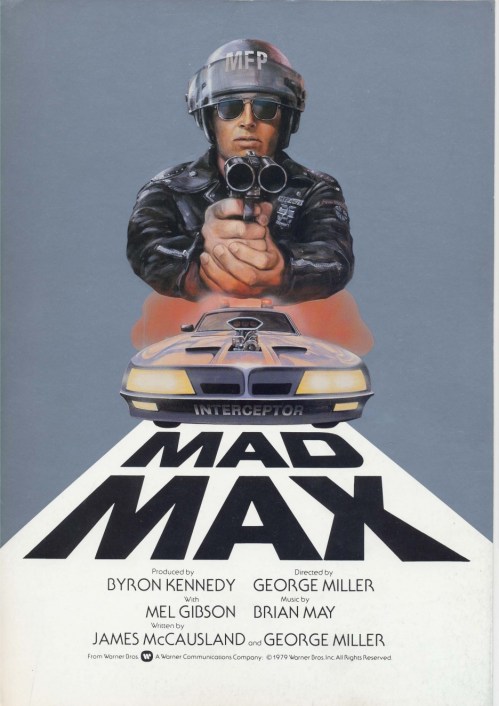
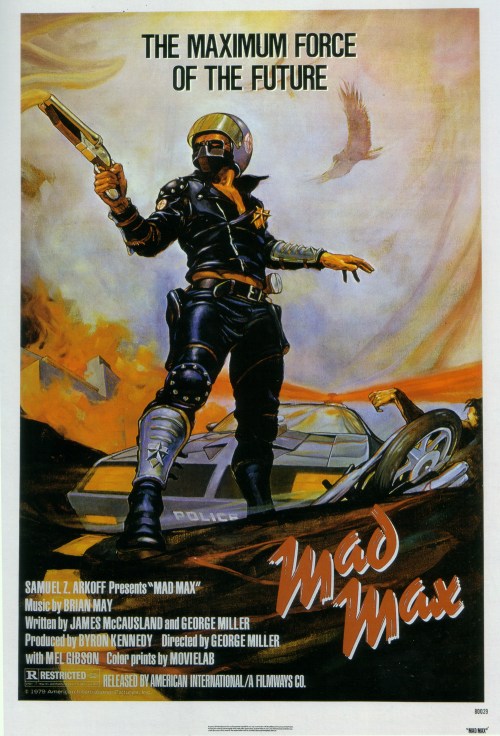
In the not so distant future where lawlessness is the norm motorbike gangs terrorize the Australian countryside and it’s up to highwayman known as the Main Force Patrol (MFP) to keep them under control. When one of the officers known as Max (Mel Gibson) kills a gang member during a high-speed chase the gang’s leader named Toecutter (Hugh Keyes-Byrne) gets his revenge by having his gang member’s destroy a small town and rape a couple. He also has the youngest member of his gang named Johnny (Tim Burns) kill Max’s partner Goose (Steve Bisley) by having his car set on fire with him still inside. After Max witnesses Goose’s charred remains he quits the force, but Toecutter and his men continue their harassment by this time setting their sights on Max’s wife (Joanne Samuel) and young child.

This film, which was produced by a generally novice crew including its director who at one time worked as a doctor inside a hospital emergency room, became a worldwide cult hit that has spawned many sequels and imitations. The intent was to create a “silent movie with sound” with the emphasis more on imagery and action than dialogue or story. For the most part it succeeds quite well in this area with some excellent car chases particularly the one at the beginning and coupled with the dry barren Australian countryside, which truly does give off a strong, desolate future-type look.

The film though lacks any backstory and one spends the greater part of the first hour asking ‘Who are these people and how exactly did they get there?’ The film can still be enjoyed without it, but comes off as poorly realized and lacking any type of depth. The narrative is also just a little too simple and obvious. When the wife decides to go off to get some ice cream when Max is at the car repair place it doesn’t take a genius to figure out that she’ll bump into the marauding gang when she gets there, which of course she does. Later, she goes for a walk in a forest, but Max doesn’t go with her, or give a gun for protection even though the gang is still on the loose, which seemed like really poor judgement.

There are also times when the film pulls away from the violence a little too soon and would have been more effective had it stayed on it for a while longer. One of these moments occurs during the rape sequence and another time is when Max visits Goose in the hospital, but instead of having the camera capture Goose’s burned face, which would’ve been much more graphic and disturbing, it instead looks at Max’s widening eyes, which is cheesy and cartoonish.

The film’s biggest issue though is the music score by Brian May, which is so loud and obnoxious and borders on being a distraction. The booming orchestral sound doesn’t jive at all with the futuristic setting and seems much better suited for a 1940’s serial instead. The images would be enough to set the tone and having the blasting music added in makes it come off as heavy-handed and amateurish.

Byrne as the gang leader is distinct looking and effectively menacing although his evilness could’ve been played up even more. Sheila Florance though is a lot of fun as the elderly, gun-toting Aunt May who single-handedly tries to take down the gang with only her and her rifle. However, it’s Gibson that steals it with his young, baby-face that makes him look like a choirboy and heightens the intrigue by having such a contrasting look to the gang members and making the viewer wonder if he really can take them down or not.

mad max 2

My Rating: 7 out of 10

Released: April 12, 1979

Runtime: 1Hour 28Minutes

Rated R

Director: George Miller

Studio: Roadshow Film Distributors

Available: DVD, Blu-ray, Amazon Instant Video, YouTube
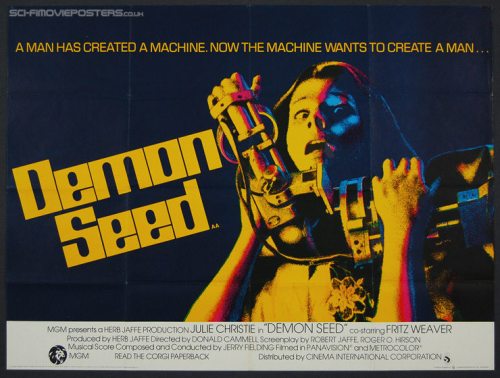
Demon Seed (1977)

demon seed 1

By Richard Winters

My Rating: 6 out of 10

4-Word Review: Computer impregnates a human.

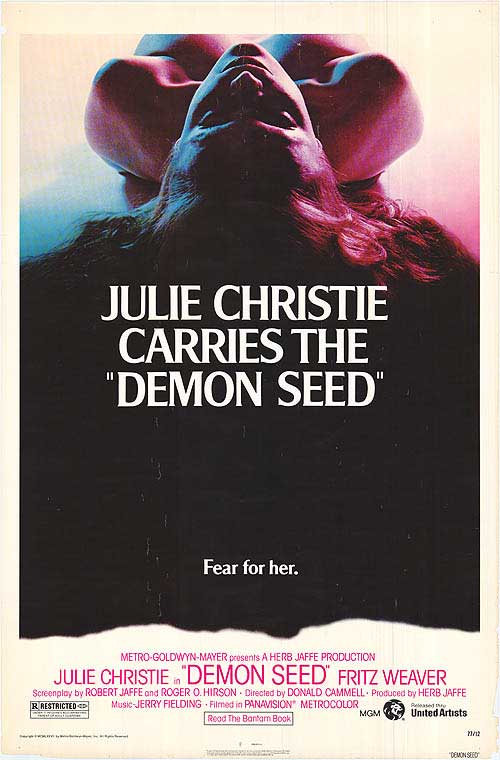
Based on an early Dean R. Koontz novel the story centers on Susan Harris (Julie Christie) who is married to Alex (Fritz Weaver) a man who has created a giant artificially intelligent computer named Proteus (voice of Robert Vaughn) as well as installing a computer inside their own home, which does all of their household chores and is fully automated via voice command.  Things seem to be going fine until Proteus starts to question the assignments that he has been given and his unhappiness with being ‘trapped inside a box’. To remedy the situation he decides to use the computer terminal inside the Harris’s home, so that he can overtake the house through his electronic commands and then impregnate Susan to have his child and therefore experience life as a person instead of a machine.

One of the things that got on my nerves right away was the way the film immediately telegraphs where it is going and reeks with ‘70s paranoia about computers ‘overtaking the world’, which was a prevalent fear during that era as computers were just in their infancy and their ultimate place in human society still not fully understood.

The Alex character is too ambivalent towards the warning signs and comes off like the clichéd super scientist with a child-like enthusiasm about his ‘creation’ and not the slightest concern for what might happen if things go wrong and the way he becomes so quickly shocked when the computer does start to behave in a way he had not considered seems almost laughable. Real-life scientists would most assuredly have considered these issues and had safeguards already put in place and the fact that the characters here don’t just doesn’t seem believable.

When the Proteus computer takes over Susan’s home I didn’t find it frightening, but more unintentionally funny for many of the same reasons. I don’t think that I myself could ever get used to a computer running everything for me and doing whatever I said at the sound of my voice. In the back of my mind, and in any sane person’s mind for that matter, I would be worrying about it malfunctioning and the consequences that it would entail, so when things finally do go wrong I found it laughable because anyone could have clearly seen it coming from the start. In fact the only thing that saves this thing from a being a complete dud is Christie’s brilliant performance and the fact that she gets you to see her character as a real human being and someone you care for and want to see rescued.

Spoiler Alert!

The script suffers from a myriad of other logical loopholes as well. One of them is the whole basic premise of how a computer can somehow manipulate human DNA in order to get supposedly his ‘genes’ into the child, so that it fully has his own traits and even his own voice. There is also no suitable explanation for how he was able to speed-up the gestation period from the 9 months to just 28 days. I was also surprised that the husband never bothers to call his wife during that 28-day period. Yes, I realize that they had just separated, but it was a very amicable one and I would still have thought he would’ve called-in at some point simply to check-in. There is also another character played by Gerrit Graham who comes into the house and tries to shut down the computer and is killed in the process making me believe that his disappearance would’ve caused suspicion and others would’ve come looking for him. There is also the issue of her mail, which I’m sure would’ve been piling up at her front door and causing both the mail carrier and neighbors to take notice.

End of Spoiler Alert!

The film is full of many colorful graphics and effects although they may no longer be considered as state-of-the-art as they once were. The idea is an intriguing one and Robert Vaughn gives the Proteus character a lot of menace with his voice, but he is still no HAL. The ending is really over-the-top, but in a wildly interesting sort of way even though it does nothing but create more questions than answers.

demon seed 3

My Rating: 6 out of 10

Released: April 8, 1977

Runtime: 1Hour 34Minutes

Rated R

Director: Donald Cammell

Studio: MGM

Available: DVD (Warner Archive)

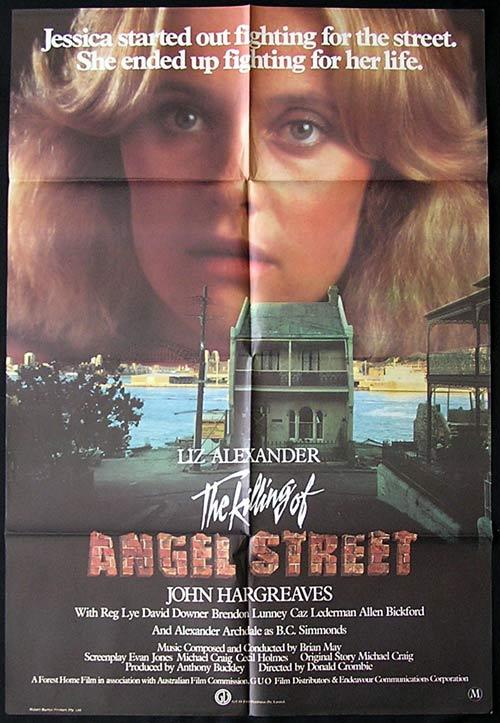
The Killing of Angel Street (1981)

killing of angel street

By Richard Winters

My Rating: 6 out of 10

4-Word Review: Their homes get demolished.

Jessica (Elizabeth Alexander) is a quiet woman who suddenly finds herself embroiled in a heated battle between homeowners and developers who want to build beachfront property on their land and tearing down their homes in the process. Jessica’s father (Alexander Archdale) is one of the homeowners whose place will be destroyed if the developers have their way. Since she has no experience in fighting these matters she employs the assistance of local union leader Elliot (John Hargreaves) to help her in her fight and the two quickly start-up a relationship, but just as they feel they are making some headway Jessica begins to get harassed by complete strangers who break into her home and threaten her life unless she agrees to back-off.

This film is based on the same real-life incident that was also the inspiration for Heatwave, which came out a year after this one. What I found so interesting is how both films took the same incident, but managed to veer into two very diametrically opposite directions with it. Heatwave viewed the situation from all different perspectives including that of the antagonist while this one only looks at the viewpoint of the lead character and uses the premise as a catalyst to what surmounts to being a basic thriller.

While I felt Heatwave was the superior film I did feel this movie was better at creating an emotional impact with the viewer. You get to know the residents better here and are more sympathetic to their cause as well as witnessing the human side and its impact. The shots of houses getting torn down is especially strong as well as the shot near the end where you see the crumbling skeletons of the buildings all in a row and looking like remnants of some sort of war zone.

The film suffers from the weak presence of its lead actress whose performance comes off as being much too rehearsed and lacks any type of spontaneity. Hargreaves, who became one of Australia’s best known lead actors, is wasted in a benign supporting role and is not seen very much. Archdale practically steals it in a touching portrait of an old man clinging to the only thing he has left, but the pronounced bags under his eyes almost becomes a distraction.

The film’s final 20 minutes are the best. This is where Jessica finds herself kidnapped and hung upside down over the side of a tall building, which is quite intense, as well as a myriad of almost surreal events where she runs into evil people and ugly situations wherever she turns including that of a humiliating and unnecessary full body search while inside the seemingly safe confines of a police station.

The story though veers way off from what actually happened making this an almost fictional account and barely related to the real Juanita Nielsen whose true-life story inspired this one. The real event had far more interesting twists and I’m not sure why neither film chose to stick to the facts and it almost begs for a talented filmmaker to come in and create a film that examines the events and people as it actually occurred.

My Rating: 6 out of 10

Released: October 1, 1981

Runtime: 1Hour 35Minutes

Not Rated

Director: Donald Crombie

Studio: Forest Hill Films

Available: VHS

The Last Wave (1977)

last wave 2

By Richard Winters

My Rating: 6 out of 10

4-Word Review: Suffering from strange premonitions.

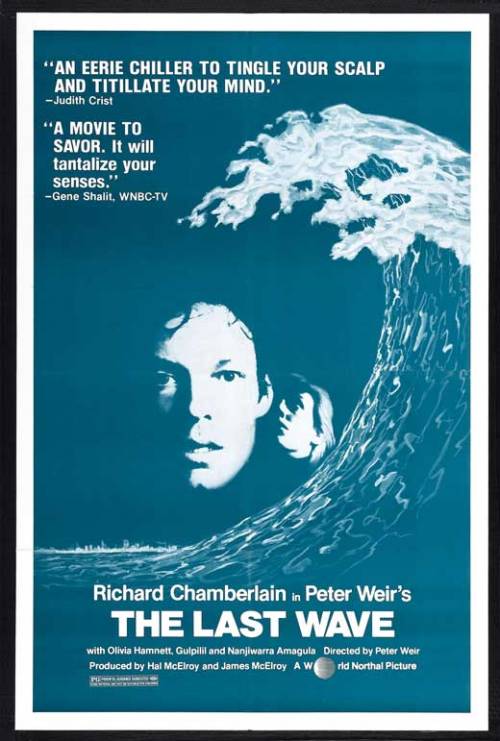
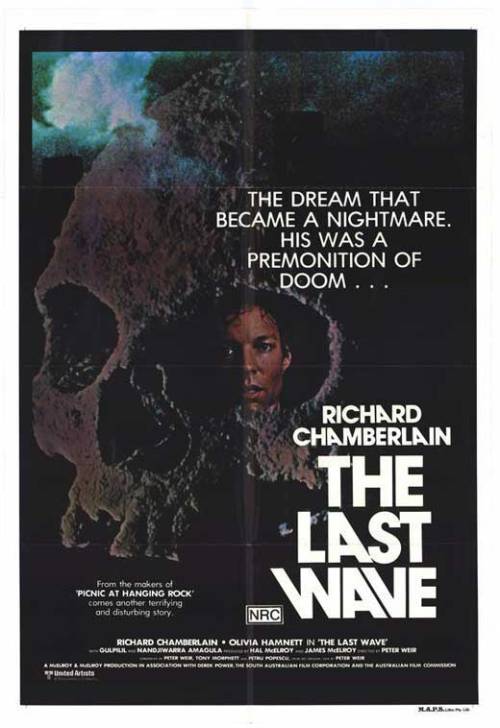
David Burton (Richard Chamberlain) is a lawyer working in Sydney, Australia who is hired to defend some aborigines that have been accused of murder. David’s specialty is taxation law and he feels overwhelmed in this new role, but still takes it on with an earnest dedication, but in the process begins to experience strange dreams and even sees one of his clients, Chris (David Gulpilil), in them. This coincides with weird weather events that begin occurring all over the continent including the phenomena of black rain. David can’t help but feel that somehow this is all connected and after doing extensive research finds that tribal aborigines have a belief system involving what they call dreamtime in which spirits from another world communicate with us through our dreams and David has been the chosen recipient due to his lifelong ability to dream of events in his sleep that eventually occur later in real-life.

The film, which is directed by the gifted Peter Weir, has terrific imagery that almost makes-up for its other shortcomings. There have been a lot of movies that have tried to create creepy nightmare segments, but the ones here work much better than most and gave this viewer an effectively spooking feeling. The silhouette of the aborigines in the pouring rain, the shots of a large seismic wave and use of tribal music all get used to ultimate effect. Even the rain storms become fascinating to watch. None of them were actual ones, but instead large firehoses were employed along with giant fans to create a sort-of surreal stormy effect that actually looked better than the real thing.

The story though borders on being convoluted and would’ve worked better had the movie been given a longer runtime. The first hour is spent with the viewer seeing a lot of strange events that make no sense and are given no explanation. It is only after about an hour in that some expert, who’s given no formal distinction to what their line of study is or degree, explains to David the importance that dreams have to the aborigine culture, which helps tie things together, but this should’ve occurred earlier as some viewers will probably find it too confusing and off-putting otherwise.

Chamberlain is his usual bland self, but okay in this type of role as it doesn’t demand anyone who is colorful. The character though is supposed to be this very pragmatic individual, but he seemed to buy into the mystical qualities of the aborigine belief system much too quickly. A person with a practical approach to life would most likely be quite cynical to the events as they first occurred and even reluctant to base any value on his own nightmares, at least initially.

The ending is a major letdown. For one thing we have the main character inside an ancient sacred site beneath a sewer system where he suddenly has to start ‘thinking out loud’ by explaining what he is seeing on the drawings along the wall even though the viewer could’ve figured this out for themselves without the ‘narration’. The ambiguous conclusion is frustrating and makes sitting through the rest of it feel like a big waste of time.

last wave 1

My Rating: 6 out of 10

Released: November 13, 1977

Runtime: 1Hour 45Minutes

Rated PG

Director: Peter Weir

Studio: Cinema International Corporation

Available: DVD (Criterion), Blu-ray (Reg. B), Amazon Instant Video

Blood Simple. (1984)

blood simple 2

By Richard Winters

My Rating: 8 out of 10

4-Word Review: Love triangle turns deadly.

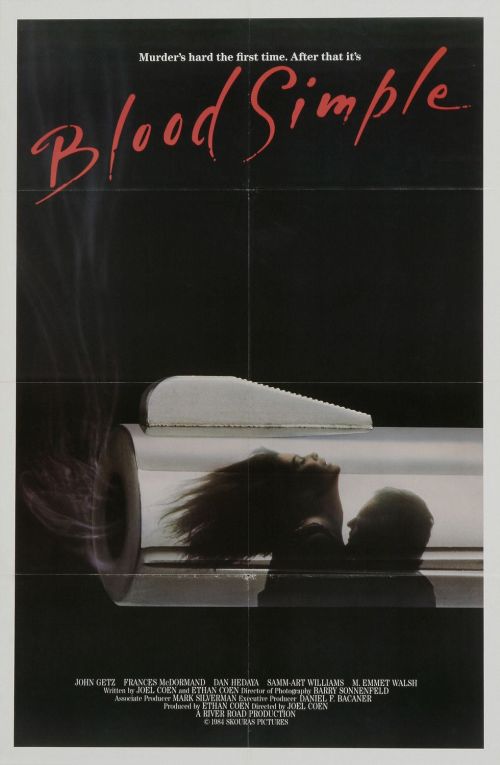
Julian (Dan Hedaya) is a jealous and controlling husband who suspects that his wife Abby (Frances McDormand) is cheating on him. He hires a sleazy private detective named Loren (M. Emmet Walsh) to follow her around only for Julian to ultimately learn, to his shock, that not only is she fooling around, but it is with Ray (John Getz) who is one of his employees. Filled with rage Julian then asks the detective if he’d be willing to kill both of them for a price. Loren says he will, but then fakes the murder simply so he can collect the cash, which then leads to a myriad of twists.

This marks the Coen brother’s feature film debut and I was surprised to learn that every major studio passed on it and it wasn’t released to theaters until it got a favorable response after being screened at the Toronto Film Festival. The film is filled with the directorial flair that we’ve become accustomed to in their movies. I particularly enjoyed the inventive camerawork with my favorite shot being a tracking one done down a bar top in which the camera somehow leaps over a drunk’s head. The opening shots showing the desolate, dry and heat soaked Texas landscape helps give the film a gritty flair and the brief, clip-like dialogue that seems more like sound bites is quite interesting and helps reveal more by what the characters don’t say than by what they do.

McDormand is terrific in her film debut and her angelic-looking blue eyes help make her character more appealing to the viewer while the rest of them come off as being pretty vile. I was also impressed with how her Texas accent here sounds just as effective as the Minnesota one that she did in Fargo.

Hedaya does well playing the type of part he’s become best known for and I’ll give him credit for allowing himself to be put into a hole and having dirt thrown on him, but when he gets shot it is clear that his eye lids are fluttering and chest moving up and down, which should’ve been equally obvious to his shooter as well.

The story is slick, but the character’s actions not so much. Both Julian and the detective sneak into Ray’s house, but park their cars, which have very distinctive features, right in front of the home in which any neighbor looking out their window could report seeing it later when speaking to the police. Ray’s actions are even dumber as he gets fingerprints all over the murder weapon and then foolishly carries a dead body into his car where it doesn’t take a genius to know that the victim’s blood will most likely seep all over his backseat cushions.

The story appears to take place in the summer as the daytime scenes show the characters sweating, but then at nighttime we see the character’s breath, which makes it seem more like a winter time setting. I also thought the viewer should’ve been shown how the detective was able to doctor the photos to make it look like Abby and Ray had been shot as this was well before the age of personal computers or photo cropping.

There is another scene near the end where Abby, in an effort to escape from her killer, climbs out of her bedroom window and into a neighboring room. However, there was no ledge for her to climb onto making it almost impossible for her to do what she did, which is why I think they didn’t even attempt to show it and was simply something that we are expected to ‘forgive’ in order to enjoy the rest of the movie.

Despite these minor flaws I still found it to be an inventive film and one of the better attempts at creating a modern-day film noir that should be considered the standard for all others that followed.

My Rating: 8 out of 10

Released: October 12, 1984

Runtime: 1Hour 39Minutes

Rated R

Director: Joel Coen

Studio: Circle Films

Available: DVD, Blu-ray

Fever (1989)

fever 1

By Richard Winters

My Rating: 6 out of 10

4-Word Review:  Suspense in the desert.

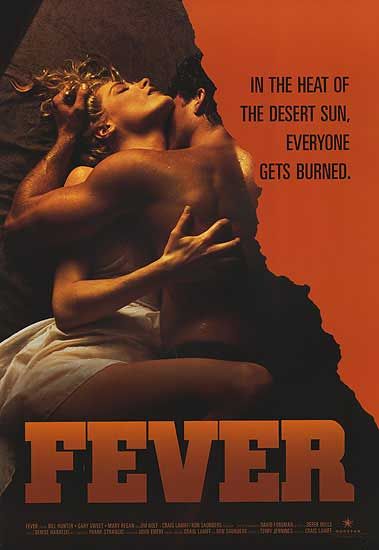
This review will be a first in a series in which we celebrate Australian cinema by reviewing one film each week from Down Under. Today’s movie centers on Jack Welles (Bill Hunter) who comes upon a suitcase full of money after a shootout with a drug dealer. He decides to keep the loot and take it home to his lovely wife Leanne (Mary Regan) unfortunately when he gets there he finds that she is in bed with another man named Jeff (Gary Sweet). The enraged Jack attacks Jeff, but Jeff and Leanne manage to fight him off while knocking him out in the process. Thinking that they’ve killed him they take his body out to the desert and dump it into a vat. The problem is that Jack isn’t dead and he proceeds to relentlessly chase the two while also being followed by a busy-body deputy named Morris (Jim Holt) who thinks that Jack is hiding something and who in-turn is also being followed by criminal kingpin Mr. Tan (Lawrence Mah) who is out to retrieve his drug money.

For the most part this film works pretty well and has a story that is compact and original and will keep the viewer guessing all the way through to the end. It also has some particularly novel camera angles including seeing the inside of a car, with the driver still at the wheel, as it flips over.

The film manages to avoid most of the expected loopholes that you usually see in these types of stories, but there are still a few discrepancies. The biggest one is that Jack recovers from the blow to his head a bit too quickly and magically. There is no dried blood, or bandages needed despite the fact that he does initially bleed when he is first hit. In fact there is no sign of even a cut and no after effects like headaches, swelling or dizziness that most assuredly would affect anyone else after being hit over the head with a vase and knocked unconscious. There is also a scene near the end where, in an effort to find his wife, Jack barges into a lady’s washroom and kicks open all the stall doors before finding a woman sitting on the toilet, but for some reason she doesn’t scream or react at all when he does this, which is weird.

The casting is another issue. Hunter is way older than the actress who plays his wife and it doesn’t look right or make sense. Why would such a young beauty settle for some tubby middle-ager? It clearly wasn’t for love or money and the actor playing her lover has too much of the chiseled male model features of a soap opera star. The solution would’ve been to cast performers to play the wife and lover that were of the same age and looks range as Hunter.  Average looking, middle-aged people have sex and affairs in real-life, so why can’t characters on the big screen ever reflect this?

The story also suffers by having characters that are not likable and nobody to root for. Any screenwriting coach will tell you that no matter how clever, or creative the plot may be if it does not have three dimensional characters then it won’t work.

However, with all that said there are still enough unexpected twists to keep it interesting particularly the ones that occur during the final ten minutes. The last one is especially good and one I would never have guessed, nor seen done in any other film, so the movie gets kudos for that.

My Rating: 6 out of 10

Released: February 1, 1989

Runtime: 1Hour 23Minutes

Rated R

Director: Craig Lahiff

Studio: Genesis Films

Available: VHS