Category Archives: Sports Movies

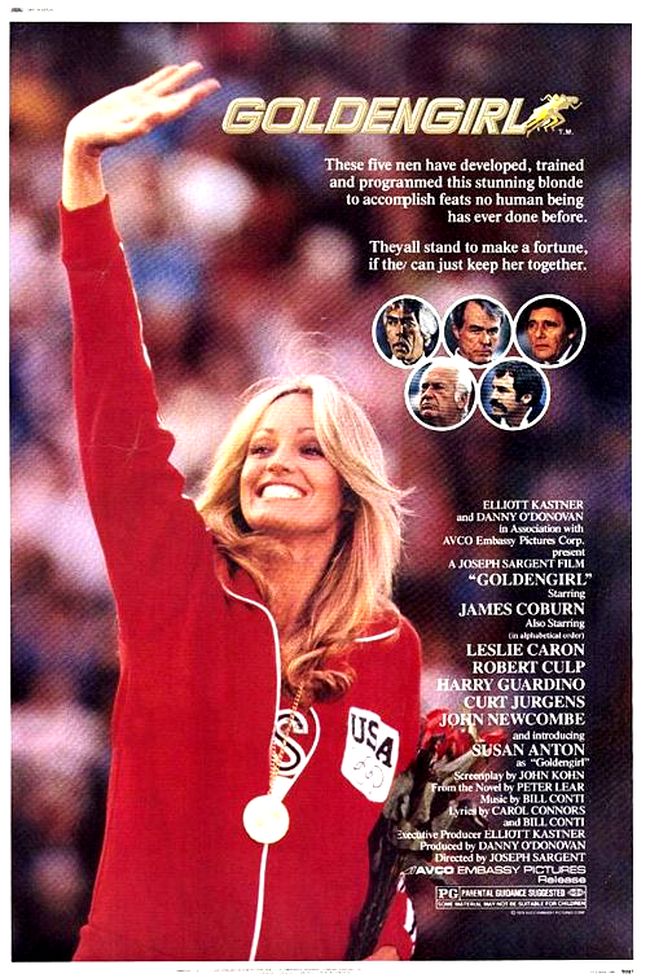
Goldengirl (1979)

goldengirl

By Richard Winters

My Rating: 2 out of 10

4-Word Review: Runner injected with hormones.

Goldine (Susan Anton) is a tall, 6-foot-2, athlete, who’s also quite beautiful, who shows a lot of talent as a runner and ends-up qualifying for the 1980 Summer Olympics in Moscow. However, behind-the-scenes there’s a sinister plot. Her father Serafin (Curt Jurgens) is a neo-Nazi who has injected her with hormonal drugs and vitamins from an early age in order to get her to be taller and stronger than the other athletes. This regimen has had a adverse effect on her system causing her to get diabetes of which she’s required to take two pills before every race in order to prevent her from going into shock. Dryden (James Coburn), who’s been hired by her father to help market her and make money off of her name and potential celebrity, recognizes these problems and tries to get her to drop-out, but the lust for fame and recognition are too much and Goldine decides to stay-in even as the warning signs mount.

Based on the 1977 novel of the same name by Peter Lovesey and originally intended for a miniseries on NBC-TV, who initially funded the production, but then scraped the telecast when the US pulled out of the Olympics due to the Soviet invasion of Afghanistan. The film was then re-edited from its initial 4-hour cut and paired down to less than 2-hours before being released to theaters where it managed to recoup only $3million from its $7million budget. Alot of the problem is that not enough happens to make sitting through it seem worth it. The sinister neo-Nazi story angle doesn’t get played-up to make it suspenseful, or even mildly diverting. In many ways this could’ve been just an average film about athletes training for the Olympics because for the most part that’s pretty much what it focuses on and even then, the interest level is only marginal.

Coburn is a great actor, but I didn’t know what he was doing in this type of movie as he seemed too old for the part. While he was only 50 when it was shot, he looks much more like 60, or even 70. Having him ultimately get into a sexual relationship with Goldine seemed absurd. I got nothing against May-December romances, but it just didn’t make sense why this beautiful, young woman would have to settle for some old guy, or would even want to, to satisfy her sexual needs. A woman looking like she did should’ve been able to attract a man her age, let alone many, possibly even a fellow runner and the story would’ve been stronger had she been in a relationship with someone else her age who was at odds with the father and fought for her right from the start versus some old guy waltzing-in who only takes a casual concern to her problems and could easily bow-out at any moment, which is what he ultimately kind of does.

The biggest detriment is with Anton. As an actress I thought she did quite well. She was known at the time for being crowned Miss California in 1969, but her work here did lead to a Golden Globe nomination and her own TV-series and given the fact that she didn’t go through the conventional acting training I felt she earned it and was effective. Her character though is bland, and she should’ve been the one uncovering her father’s dastardly plan instead of Coburn. She spends a lot of time reacting to things versus driving the action like a protagonist should. Her personality traits aren’t clear and seem almost robotic most of the way and it prevents the viewer from having any emotional connection to her, or her quandary. Having her start to ‘flip-out’ near the end, supposedly because of her ‘condition’, makes her even more of an enigma and might’ve had a more profound effect had she been better defined and three-dimensional from the beginning.

Spoiler Alert!

Curt Jurgens meltdown while being interviewed live on-the-air by reporter Robert Culp, and then his subsequent running-out onto the racetrack, while in full view of millions of spectators, in an effort to win his daughter’s affections back, is the best moment in the movie. It’s a bit campy and over-the-top for sure, but when a film is as boring as this one even a silly moment can help it and quite frankly there should’ve been more of them.

The warp-up though is terrible. Having her decide at the last second not to take her diabetic pills as directed and then proceed to go into the race anyways is the movie’s one and only suspenseful minute, but then director Joseph Sargent botches it by fading out and not showing her collapsing on the track. We’re told about it later, but it would’ve been more dramatic for the audience to have witnessed it first-hand. To then have her fully recover and not learn from the event and go on afterwards like it was ‘no big deal’ defeats the purpose of the movie. What’s the point of sitting through an almost 2-hour flick where the character doesn’t change, or grow in any way and the events that happen throughout it don’t really lead to anything?

My Rating: 2 out of 10

Released: June 15, 1979

Runtime: 1 Hour 45 Minutes

Rated PG

Director: Joseph Sargent

Studio: AVCO Embassy Pictures

Available: DVD, Blu-ray, Amazon Video, YouTube
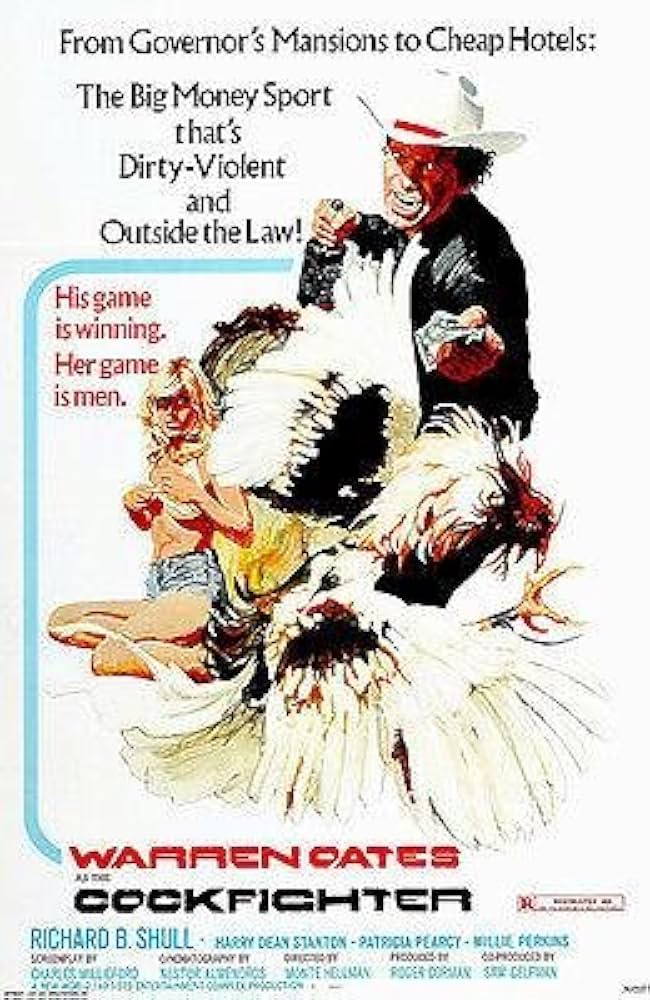
Cockfighter (1974)

cockfighter

By Richard Winters

My Rating: 6 out of 10

4-Word Review: He refuses to talk.

Frank (Warren Oates) has a passion for cockfighting. While he’s had other endeavors in his life he’s always come back to this because of the unpredictability. He can predict the way the chicken is built how it will fare in a fight, but it’s actual fighting spirit is unknown until it’s put to the test and because of that factor it keeps him intrigued with the sport. However, his bragging gets him into trouble when one of his chickens losses a battle during a makeshift fight inside a hotel room with a chicken from fellow cocker Jack (Harry Dean Stanton). After he’s forced to pay up the bet Jack tells him that he ‘talks too much’ convincing Frank to take a vow of silence and become effectively mute until he’s able to win a cockfighting championship.

The story is definitely a relic of a bygone era as cockfighting is no longer legal in the U.S. with Louisiana being the last state to ban it in 2008. Today only a few countries in the world allow it as the sport is considered by many to be animal abuse. The film pulls-no-punches and will be deemed brutal for certain viewers who’ll probably turn it off by the halfway mark if not sooner. The fights between the chickens are actual and up close. You see the beaks of one cock jamming into the eyes of another and their dead carcasses of which there ends up being many thrown into a heap onto others into a trash bin, or in one segment where the fights take place in a hotel room, into a bathtub with what seems like hundreds them. There’s even a scene where Oates hacks-off a live chicken’s head with an ax and another moment where he lays a chicken onto the pavement and then steps on its head and yanks it off from the rest of its body by sheer force, so if any of these details upset you then it’s best to stay away from the movie altogether.

For those who are game the story ends up having a darkly humorous tone. The armed robbery that takes place inside a hotel room and Richard B. Shull’s character hiding his earnings amidst the pile of dead chickens where he presumes no one would dare think to even check is amusing. The best moment though comes when Ed Begley Jr. becomes incensed when Oates’ chicken kills his during a fight and being so distraught at losing his prized possession comes after Oates with an ax.

The acting is marvelous particularly by the legendary Oates though he doesn’t say much until the very end, but he makes up for it by being the film’s voice-over narrator. What impressed me most though was his comfort level in handling the chicken’s and at one point casually dealing with one that tried attacking him, which made me believe that this must go back to upbringing in rural Kentucky where he lived amongst them as a kid so he was used to their behavior and not scared away as I’d think another actor without that type of background wouldn’t be able to pull-it-off.

The script was written by Charles Williford, who appears in the movie as a judge/ref during the cockfights and based off his novel of the same name. While the film does move along at a brisk pace and is never boring I did feel it lacked a certain context. It works more like a preview than a full story. You get a general feeling about the people and atmosphere, but not a deep understanding. My main curiosity was with the folks who come to see these fights and what motivated them to want to watch such a bloody sport. Analyzing this mentality would’ve been interesting, but never happens making the film feel incomplete and like it’s only barely tapping into the surface of the subject.

My Rating: 6 out of 10

Released: July 30, 1974

Runtime: 1 Hour 23 Minutes

Rated R

Director: Monte Hellmen

Studio: New World Pictures

Available: DVD, Blu-ray, Amazon Video, Fandor, Pluto, Tubi, Plex, Shout TV

When the Legends Die (1972)

whenlegends

By Richard Winters

My Rating: 8 out of 10

4-Word Review: Indian becomes rodeo rider.

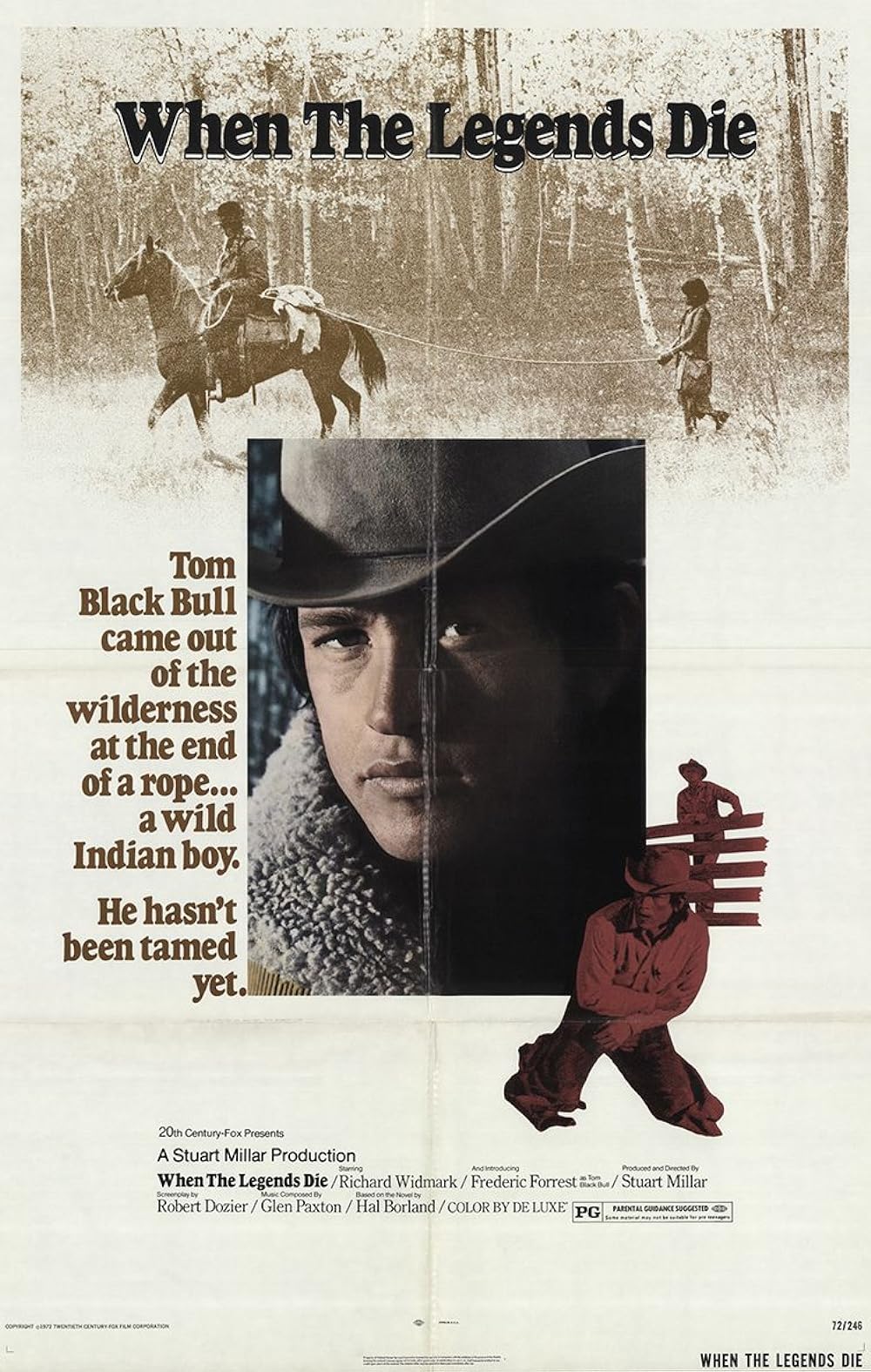
Tom Black Bull (Tillman Box) is a young Ute Indian orphan living in the wild with his pet bear. One day Blue Elk (John War Eagle) an Indian elder comes upon the child and decides it’s time to get him acclimated into society by having him enroll into a school where Tom does not get along with the other students and forcing him to begrudgingly release his bear. Over the years Tom grows to being a young adult (now played by Frederic Forrest), but is bitter with the racism that he must endure. By chance he gets spotted by Red (Richard Widmark) who’s impressed by the way Tom can ride and control a difficult horse and decides he’d like to train him into becoming a rodeo rider. Tom sees this as an opportunity to get out of the slums that he’s in, but soon realizes that Red, who suffers from alcoholism, is exploiting him just like the other white men by forcing him to intentionally lose contests in order to trick people into betting against him.

During the early 70’s there were many modern-day westerns that focused on the rodeo circuit including Junior Bonner, J.W. Coop, The Honkers and Riding TallWhile all of those were good in their own right I’ve found this one to be at the top. The others were more a character study with the rodeo atmosphere a side-story while this one examines the training and technique that it takes to be a successful bronco rider with a meticulous detail making it more revealing and informative. The others didn’t always do a adequate job of making it seem like the lead character was actually riding the kicking horse and many times looked like a shot of the guy on top of one of those bull machines you see inside western barrooms, but here it’s captured in an authentic style including a disturbing moment where Tom refuses to get off the horse as it continues to buck, which ultimately exhausts the animal and requires it to be shot.

The story is based on the 1962 novel of the same name by Hal Borland who was a journalist who specialized in writing novels with an outdoor setting. The book though was aimed more for young adults and split up into four different sections while the film just analyzes the third portion. It also updates the time period to the modern day versus the turn-of-the century like in the book. It’s expertly directed by Stuart Miller, better known as a producer, with a well-written script by Robert Dozier that has crisp dialogue that manages to intimate a lot while saying little and never overstating anything.

Forrest plays his role with a sullen expression that remains constant throughout and some might complain it makes it one-dimensional, but I felt this helped illustrate the character’s inner anger and it’s fascinating seeing the juxtaposition of someone who’s very rugged and savvy when it comes to nature and animals, but quite virginal, literally, when it has anything to do with societal elements like women, alcohol, and other vices.

Widmark is brilliant as usual and one of the few people who can play a miserable, brash, and genuinely unpleasant old guy and still keep it on a humanistic level. Watching him go from gruff and demanding as he’s clearly the more worldy-wise at the start to more of a vulnerable and even dependent one at the end is a fascinating journey to watch. In many ways his relationship with Tom is like a father and son where the older one starts out as the stern teacher only to have it flip with the younger one, now fully accustomed to the world, taking the reins and caring, albeit begrudgingly, to someone who can no longer do it themselves.

My only complaint with the film that is otherwise close to flawless is that I would’ve liked to have seen one moment where Widmark shows some actual kindness to Tom as all the way through he’s quite grouchy and condescending even when Tom offers him some much needed support. I realize his character was a victim of the hard world he lived in and thus it wasn’t natural for him to show any tender side, which he most likely possessed very little of anyways, but one even fleeting moment of gratitude, even if it just was putting his arm around the young man and showing him a slight gesturing hug, could’ve gone a long way to giving it a bit more emotional balance and the touching image that every hard-edge drama ultimately should have and needs.

My Rating: 8 out of 10

Released: October 19, 1972

Runtime: 1 Hour 47 Minutes

Rated PG

Director: Stuart Miller

Studio: 20th Century Fox

Available: DVD-R

On the Edge (1986)

ontheedge

By Richard Winters

My Rating: 5 out of 10

4-Word Review: Disqualified runner enters race.

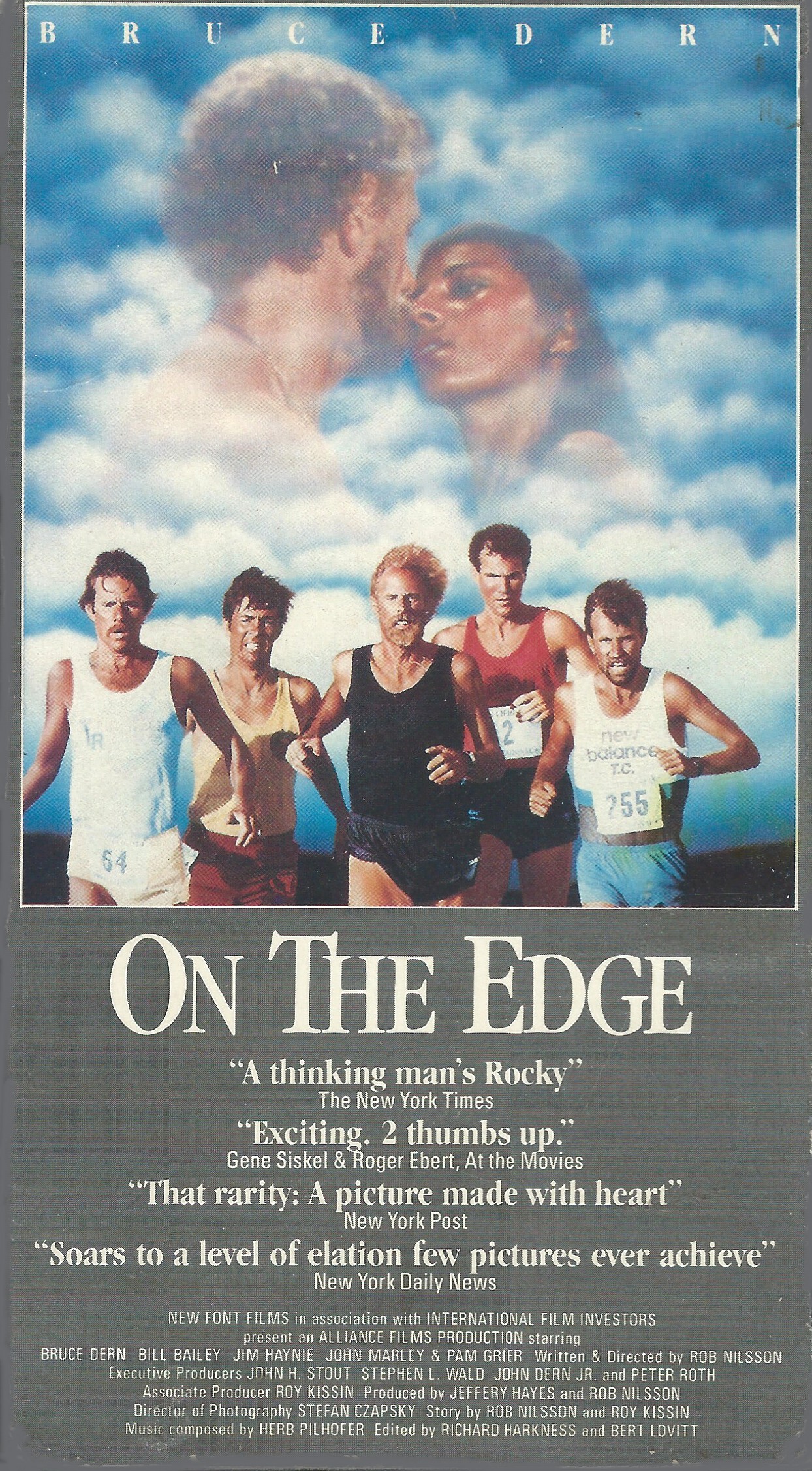
Wes (Bruce Dern) was at one-time a star, long distance runner who ended up in 1964 being banned from competition after calling out the secret practice of paying amateur athletes under-the-table. He’s now nearing 40 and wants to take one last stab at entering the grueling Cielo-Sea cross-country race and hires his old coach, Elmo (John Marley), to help him train for it. The runners are much younger than him by a couple of decades, but they’re aware of his history and look up to him. Unfortunately the race organizers still use what he did in the past against him and refuse to allow him to enter, but Wes decides to join the race anyways illegally, which forces the organizers to try and knock him out of it as the race is going on and being broadcast live.

Surprisingly for a movie that is so little known and hard-to-find the quality isn’t bad. Director/writer Rob Nilsson conveys some wonderful bird’s-eye shots of the climactic race including seeing the runners going along a winding route as it scales a high hill, which is dramatic and exciting. The character building and his personal mission is fairly well done and the strenuous preparation that he must go through to get ready for the race is handled in a way that makes it quite vivid for the viewer. After watching what he must go through you feel as mentally and physically drained as he does especially the shots showing the things from the runner’s point-of-view as they bound down the rugger trails with the camera tied directly to their bodies.

Dern, who was at one time a long distance runner himself and actually ran the race that gets depicted here, which in real-life it’s called the Dipsea race the oldest race run in America, back in 1974, does a fine job though his dialogue is limited and I missed-out on some of his patented, ad-libbed ‘Dernisms’. His character is marginally interesting though in a lot of ways not all that well defined. There’s no real explanation of what he’s been doing for the past 20 years that he’s been away from the sport and the film makes it almost seem like he’s been wandering around as a vagabond all that time. It would’ve been interesting had we seen him stuck in some boring office job and his secret longing to ‘break free’ and do something, no matter how high the odds, that he felt passionate about, which would’ve helped the viewer get more into his mission that is otherwise emotionally lacking.

It would’ve been intriguing too had he been married with a family and the wife was not in agreement to what he was doing, which would’ve added some extra dramatic conflict. Instead we get treated to his casual relationship with Pam Grier, who’s a marvelous actress in her own right, but here is mostly wasted. She pops in and out almost like a fantasy character who’s dialogue is limited, so we learn little about her as a person, and their semi-erotic love-making is cheesy. Their moments together was considered so inconsequential that the distributors cut-out her scenes entirely for the theatrical release only to restore them for the DVD version, but overall they really don’t add much.

The movie is only marginally captivating for the first third, but it does become more appetizing when it finally gets to the actual race.  I’ve never seen a race movie where the person we’re meant to be rooting for isn’t even supposed to be in the event in the first place. The attempts by the organizers to ‘take him down’ and literally drag him out via physically tackling him, or at least trying to, at various points in the race, are memorable particularly as they fail each time. My only gripe is that the other runners intervene to protect him, which I wasn’t sure was completely plausible. After all he wasn’t wearing a number, so it was obvious he shouldn’t be there, and he was competing with them for the title, so one less person would better their chances, so why not allow him to be taken out? Of course there is a scene earlier where Dern hitches a ride and everybody inside the van, made up of young runners who recognize him and even treat him as a sports hero, could explain that he was idolized by his competitors and therefore decided to stick-up for him, but in the moment where you’re only focus is winning you’d think some of them might not care what happens to him and more concerned about getting to the finish line and not doing anything that might slow them up.

Spoiler Alert!

The film ends with the seven runners all holding hands as they cross the finish line. While some could consider this novel, as most movies dealing with competitions will rarely celebrate a tie, it still seems hard to imagine that all seven of them would, in the spur-of-the-moment, agree to share the prize and there wouldn’t be at least one of them who would take advantage of it and run out in front at the last second in order to achieve all the glory and money, or at least lean his head out to get that ‘photo finish’. Maybe having one, or two hold hands and agree to finish it together might come-off as passable. It’s Dern who slows up to let the others catch-up to him, so they might be grateful that he let them share the spotlight, but let’s face it there’s always a black sheep in every bunch who for selfish reasons, these are athletes conditioned and trained to win after all, who would attempt to exploit the situation making the final image too romanticized for its own good.

My Rating: 5 out of 10

Released: May 2, 1986

Runtime: 1 Hour 35 Minutes

Rated PG-13

Director: Rob Nilsson

Studio: Skouras Pictures

Available: VHS, DVD (Out-of-Print)

Paradise Alley (1978)

paradise

By Richard Winters

My Rating: 5 out of 10

4-Word Review: Promoting brother as wrestler.

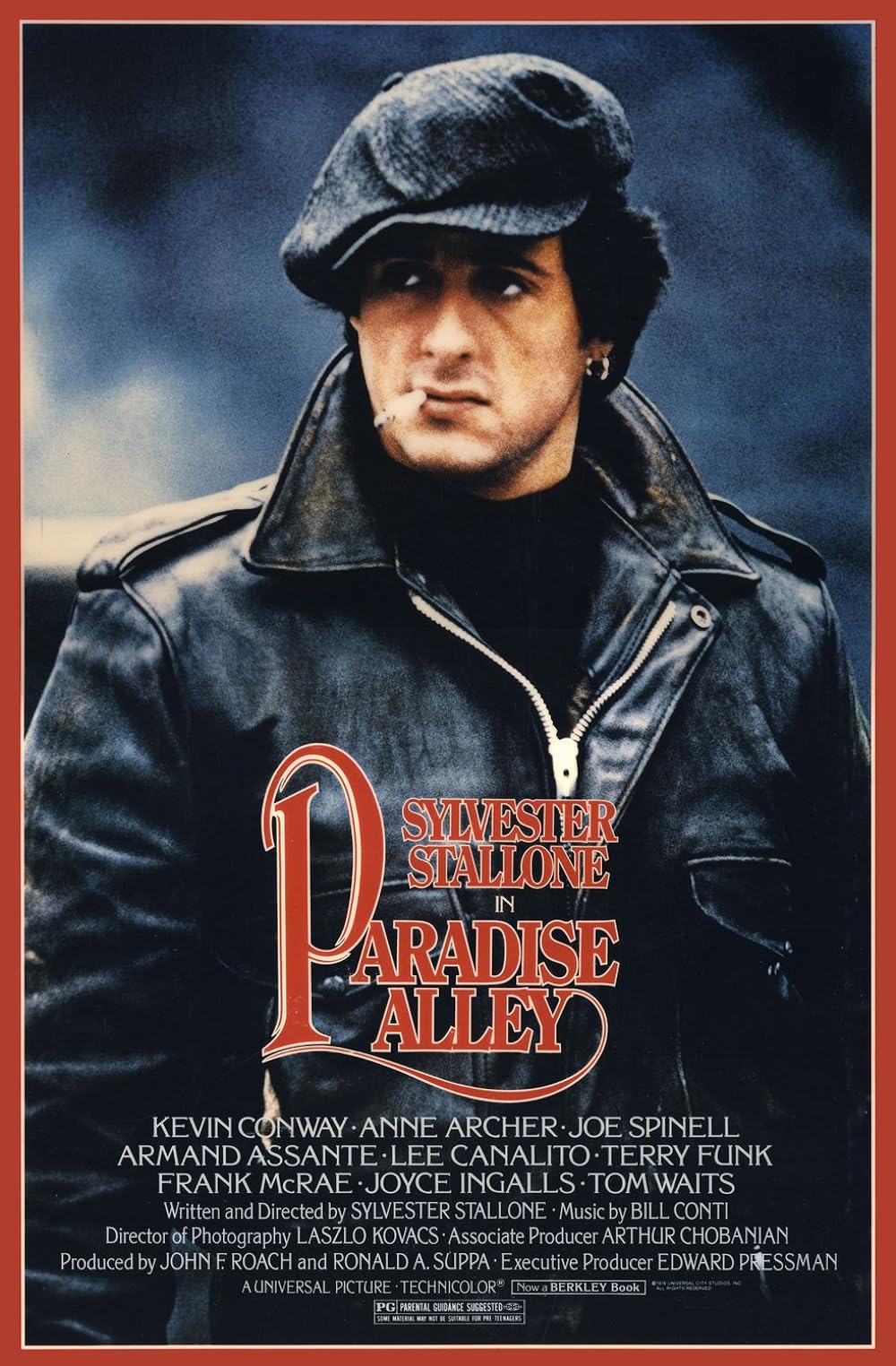
Cosmo (Sylvester Stallone) is a local street hustler in Hell’s Kitchen who will attempt just about anything to make a buck even pretending to be a homeless person begging for money. Eventually he gets the idea of turning his younger brother Victor (Lee Canalito) into a wrestler and then promoting his bouts inside the ring with others. Victor, who’s strong and well built, initially resists, but he eventually grows tired of his job hauling ice blocks and decides to give in. Cosmo’s other brother Lenny (Armand Assante), a war veteran who walks with a limp, is not keen to the idea either, but through prodding comes onboard as Victor’s manager. Things start out well, but the despite winning the contests Victor’s body takes quite a toll and Cosmo ultimately believes it’s time to give up on it, but Lenny, who begins to enjoy the money he’s making as manager, refuses to let up and pushes Victor into more and more dangerous matchups, which Cosmo’s worries may be putting Victor at too much risk.

The script was written by Stallone that was initially started as a novel. He wrote this before Rocky, but couldn’t get anyone interested in financing it though he was at least able to get it optioned. He then had an acting audition with two producers, Irwin Winkler and Robert Chartoff, while he didn’t get the part he did mention, as he was walking out, about this script. The two men were interested in looking it over, but the other producer who Stallone had optioned it to refused to give it up, so Sly instead wrote Rocky, which he then handed over to Chartoff and Winkler, which was green-lit. Then when that became a runaway success the producers agreed to finance this one even allowing Stallone to not only star, but also direct.

Unfortunately the result here is a mish-mash with things being off-kilter right from the start. The absurd race that Stallone has with another man, done over the opening credits, where the two jump from one tall city building to another seemed hard to believe. At some point one or both are going to miss hitting the other side and fall most likely to their death, which does happen eventually, but the guy is lucky enough to conveniently hang onto an outdoor clothes line though with no explanation for how he got down from that and Stallone, supposedly his friend, just laughs at him dangling there and struts away. Stallone also sings the opening song, which is dreadful.

Things really don’t improve much from there. There are a few nice camera angles and provocative close-ups here and there, but the scenes meander to the point there doesn’t seem to be any momentum, or story. The tone shifts precariously from gritty realism to romanticized idealism. The characters aren’t consistent either. Stallone is the one that initially involved in pushing his reluctant brother into the ring while Assante is very cautious and then for some inexplicable reason this gets reversed with Stallone warning of the danger while Assante becomes overly driven. However, for it to make sense there needs to be an explanation for this big change between the two and none is given making their mutual character archs poorly fleshed-out.

Stallone is certainly engaging though his likability gets tested especially with the segment where he ties up a live monkey, even puts a gag in its mouth, and then dangles it from the ceiling. Anne Archer is fun and virtually almost unrecognizable sporting a red hairdo while playing a sassy Italian love interest. Kevin Conway is highly amusing as the heavy who talks tough when surrounded by his henchmen, but proves wimpy when all alone and his climatic pants pulldown is a hoot. Noted real-life wrestler Terry Funk is quite memorable as the muscled bully and the arm wrestling match-up between he and Victor where the mounting sweat glistens off his body as he struggles to keep his arm from hitting the table is one of the movie’s highlights.

The climactic wrestling match done inside a building with a very leaky roof where the action is done in slow-motion with water splashing all over does have its moments though it eventually becomes redundant. While there’s flashes of occasional brilliance it never fully comes together. A tighter script and more consistent tone were sorely needed and Victor, who’s the only likable guy of the bunch, required more of a multi-dimensional context. The fact that he could beat-up anyone and do it in such a humble way while never having to pay the ultimate price either physically or mentally just isn’t believable.

My Rating: 5 out of 10

Released: September 22, 1978

Runtime: 1 Hour 47 Minutes

Rated PG

Director: Sylvester Stallone

Studio: Universal

Available: DVD, Blu-ray, Amazon Video, YouTube
Let it Ride (1989)

let

By Richard Winters

My Rating: 5 out of 10

4-Word Review: Betting at horse racing.

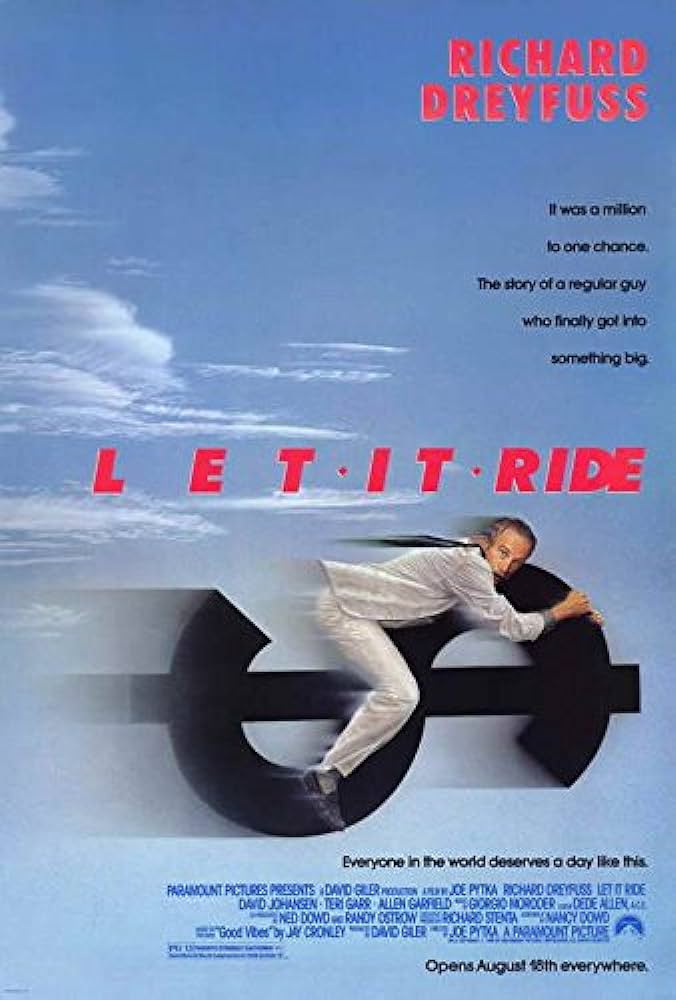
Jay (Richard Dreyfuss) along with his friend Looney (David Johansen) are two struggling Miami cab drivers. One day Looney, who secretly records discussions that his passengers have while in the backseat of his cab, overhears a tip by two men of an upcoming horse race. He passes on the recording to Jay. Jay has not had much success in betting and has even promised his wife Pam (Teri Garr) that he will quit, but he can’t pass up this opportunity and places a wage on the horse that had been discussed. It turns out to being a photo finish in his favor and he spends the rest of the day making more bets by using all of his winnings as his wagering. Soon, he finds himself getting richer and richer even as his wife comes to the track in an effort to get him to stop. Will his luck hold, or run out?

Probably the best thing about the movie is the acting particularly by Dreyfuss, who’s known for playing aggressive, snarky types, but here comes-off as surprisingly sympathetic. You genuinely feel for the guy and his need to win at something and has one comically touching moment where he kneels at the toilet of a grimy bathroom stall and prays/pleads to God for a break. Garr, who reunites with Dreyfuss as the two starred 10 years earlier in Close Encounters of the Third Kind where they also played a husband and wife, is equally engaging though while seen right at the start disappears for quite awhile only to reappear briefly during the second act where it would’ve been better had she remained in it all the way through.

In support Johansen, better known as Buster Poindexter the lead singer of the punk band the New York Dolls, is amusing as Jay’s ever losing friend and Robbie Coltrane has some great reaction moments as the ticket seller. Jennifer Tilly almost steals it as a voluptuous vamp while Allen Garfield gets in a few funny quips as her Sugar Daddy boyfriend. A young Cynthia Nixon, wearing braces, can be seen as a underage girl trying to sneak in a bar with a phoney ID though her part doesn’t have all that much to do with the main plot and Michelle Phillips, singer from the Mama’s and the Papa’s, as a rich women who comes onto Jay at a luncheon.

The story, which is based on the 1979 novel ‘Good Vibes’ by Jay Conley, starts out well. I enjoyed the way it captures the working class life of Miami versus the usual glossy look at the chic neighborhoods of the area. All the actors including the stand-ins and those milling about in the background have a very ordinary, everyday quality, which nicely captures how people, who sometimes have very little money, will still flock to the track in a desperate attempt to ‘make it big’ even though it rarely ever happens. The shooting, done on-location at the famed Hialeah Park Race Track, one of the oldest in Florida, is terrifically done and you feel like you’re right there standing next to the track as the horses go thumping by while kicking up clumps of dirt.

The tone though is inconsistent. Instead of remaining this character study with a slice-of-life quality it instead skewers into becoming a camp comedy. Case in point comes when Jay gets arrested for mistaken identity, but still makes a mad dash to place his bet, which gets filmed in a sped-up fashion including having him crash through a wooden door with a cartoonish flair that’s jarring and out-of-place. It also gets highly exaggerated as in only one day’s time everyone at the track gets to know Jay and cheers him on, which is too quick of a turnaround for such a thing to realistically happen.

Spoiler Alert!

The ending leaves much to be desired as Jay just continues to win and win until his earnings amount to over $600,000 (or $2 million in today’s dollars), but what is causing him to have such a streak of luck? Did God really answer his prayers, or is some other mystic source at play? Everyone knows that you end up losing more than you win at gambling and a winner’s luck will eventually run-out at some point.  Showing a guy who never was good at gambling before without having earned it like learning some special skill, or insight, makes for a flimsy and fanciful movie. Getting lucky on one bet, maybe even a really, really big one that beats long odds, which is how the movie should’ve played it, might happen, but having him just continue to ‘get lucky’ with no explanation is too exaggerated and doesn’t show the harsh downside, which if you’re going to do a story about gambling in any type of realistic way, needs to be shown as well.

My Rating: 5 out of 10

Released: August 18, 1989

Runtime: 1 Hour 27 Minutes

Rated PG-13

Director: Joe Pytka

Studio: Paramount

Available: DVD, Blu-ray, Amazon Video, YouTube
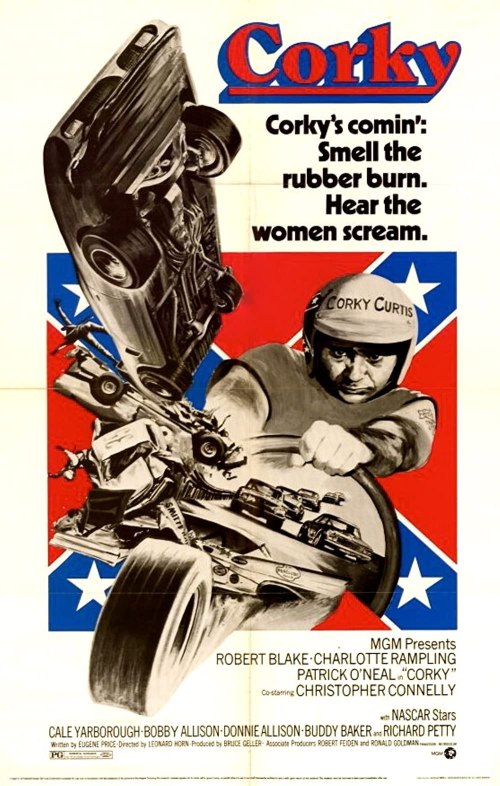
Corky (1972)

corky

By Richard Winters

My Rating: 7 out of 10

4-Word Review: Race driver self destructs.

Corky (Robert Blake) works as a car mechanic during the day, but on weekends he drives in some of the local races. He’s aggressive nature though causes many accidents and damages in the race, so his boss Randy (Patrick O’Neal) decides to replace him with another driver named Steve (John Gruber). Corky resents being replaced and thus enters the next race anyways and rigs the front hood of his car, so it will pop-up at a strategic time, so that he can crash into Steve’s car while feigning that it was an ‘accident’ because he couldn’t see where he was going due to the hood. The crash though puts Steve in the hospital and it’s enoough for Randy to fire Corky from his job. Now, with no money left, he goes traveling to Georgia with his buddy Billy (Christopher Connelly). They enter a few races there, but Corky parties away all the winnings and eventually come back to Texas penniless. He tries to get back with his wife Peggy Jo (Charlotte Rampling), but finds that Randy has been helping her out and giving her enough money, so that she can go back to school to get a diploma and eventually be able to earn a living without Corky. This causes him to seethe with rage and he goes back to Randy’s place of work in order to exact a violent revenge.

The film was directed by Leonard Horn, who shot to fame for having directed some of the highest rated episodes of the ‘Mission Impossible’ TV-series, which garnard him enough attention to get him a contract to helm two cinematic features. His first one was The Magic Garden of Stanley Sweatheartwhich starred Don Johnson and while it wasn’t completely successful, and very little seen, it did have an interesting cinema verité style. This works the same way with a strong emphasis on atmosphere that gets small town living in rural Texas just right. Even the little moments like when Corky turns on his friend Billy in the middle of a desolate road during an impending rain storm leaves a memorable impression as does the envelope-pushing moment where Corky decides to strip down and go skinny dipping with two young boys (Matt Nelson Karstetter, Richard McGough) at a country watering hole.

Robert Blake is excellent. Sometimes it’s hard to imagine him as a leading man due to him at one time being a part of the ‘Little Rascals’ ensemble, and then rising to becoming a TV-star before falling into infamy at being accused of killing his child’s mother. However, with all that being said he was still a great actor who probably didn’t get as much starring roles as he deserved, but he plays the angry loner role to a perfect-T. Rampling as his wife, who was born in England, masks her British accent quite well and creates an odd, but interesting sounding Texas one in the process. I also liked that she sports blonde hair. O’Neal is good in support and there’s an fun collage of actual race driving champions like Richard Petty and Cale Yarborough who appear briefly as themselves though I was upset to read that Roddy McDowell’s scenes, where he plays a salesmen, got cut out completely as his appearance could’ve added an intriguing element.

Spoiler Alert!

The story itself is rather tepid at first. There were many films from the 70’s dealing with rugged individualists and hard drinking, womanizing rebels who couldn’t, or didn’t want to conform to societal rules and thus hit the road looking for adventure and to ‘find themselves’. This though, at least during the first two acts, adds nothing to the equation, or give us any new insights and in fact seems more like the same old, same old generic character study, but all that changes in the third act when Corky unravels completely and goes on a shooting spree. The films from that era always had the non-conformist getting ‘reeled-in’ at some point usually through the love of a romantic partner, or some familial obligation, but here it’s a meltdown to the extreme and it’s a movie way ahead of its time as it deals with what’s commonly known as a mass shooter these days. At that time this concept was rarely seen and for that it deserves definite kudos as does the message that being too irresponsible will catch-up with you and one can’t just live the outlaw image and not eventually have to pay the price.

My Rating: 7 out of 10

Released: March 15, 1972

Runtime: 1 Hour 28 Minutes

Rated PG

Director: Leonard Horn

Studio: MGM

Available: DVD-R (Warner Archive)

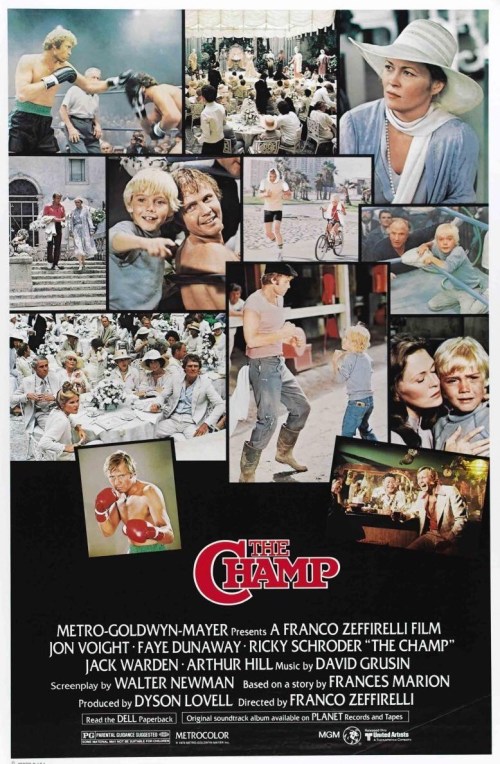
The Champ (1978)

champ1

By Richard Winters

My Rating: 7 out of 10

4-Word Review: Idolized by his son.

Billy (Jon Voight) is a former boxer whose been out of the ring for 7 years. Now at age 37 he works as a horse trainer. His 8-year-old son T.J. (Ricky Schroder) idolizes him and refers to his as ‘The Champ’ instead of dad. Billy though suffers from many inner demons including his perpetual drinking and gambling as well as not making enough money to sufficiently support either himself, or his son. Nonetheless he continues to go out gambling whenever given the chance and he manages to win enough money to buy his son a horse, which they name She’s a Lady. They enter Lady into a race where T.J. meets Annie (Faye Dunaway). Unbeknownst to T.J. Annie is his mother whom she gave up at birth, but now that she’s married to a wealthy man (Arthur Hill) she wants to have custody. Billy refuses to allow it, but when he loses the horse because of a gambling debt and Annie gives him the money to pay it off he eventually relents and has T.J. go live with her while he’s in jail for assault. Once he’s released the father and son reunite, but Billy realizes he must make more money in order to keep him and thus decides to go back into the ring one last time despite warnings from Jackie (Jack Warden), his former manager, that to do so could be life threatening.

The film is remake of the 1931 classic with Wallace Beery playing the part of the father and Jackie Cooper as the son. Director Franco Zeffirelli remembered watching it as a child and it having a profound effect on him. Then years later while he was in his hotel room while on-location filming another feature he saw it come on television and the film again moved him in such a way that he decided he wanted to do a remake. This though wasn’t the first remake as it had already been done in 1953 as The Clown starring Red Skelton though the story had been revised without the boxing theme and the climactic event at the end doesn’t take place at a sporting event, but instead a dangerous stunt that the lead character must do during a live broadcast of a TV special.

While this one stays more faithful to the original concept it was still panned by many critics as being overly sentimental and soap opera-like. Many who were fans of the original felt this one fell far short and complained about the long running time, this one runs of full 2-hours while the older one was only 83 minutes, with the feeling that it stretched the plot out too much and at spots was too slow. Though I’ve never seen the 30’s version I found myself genuinely wrapped up in the drama and the characters.

Many at the time complained that Voight was going back to the same type of Joe Buck character that he played in Midnight Cowboy, but I disagreed. That character was genuinely stupid, but Billy isn’t he’s just down-on-his-luck and suffering from basic human frailties, which made his situation far more compelling.

Schroder is an absolute jewel. He got the part after beating out over 2,000 others and it’s easy to see why. His ability to cry on demand with real tears streaming down his face is amazing and not something other actors are able to do. He’s cute and engaging without it ever getting forced, or overdone. His presence gives the film its energy and virtually the sole reason for why it works as well as it does.

The main complaint that I did have was with Annie. She’s marvelously played by Dunaway, who’s always been one of my favorite actresses and it’s a good role for her acting style as she’s excellent at playing characters that have a bit of a cold and aloof manner while not easily able to show their soft side, but with that said I still couldn’t understand what made the character tick, or her motivations. For one thing she seemed to have nothing in common with Billy, so what brought them together in the first place was a mystery and then having her abandon the kid while she went off living her life seemed pretty extreme. In most cases it’s the father that shirks the responsibility of raising the child, but here it’s reverse, but with no clear explanation as to why. There’s a vague excuse later on that it was so she could ‘pursue her career’, but then this doesn’t explain why she now wants to get close to her son. If she was selfish back then what made her change to suddenly want to be loving and caring? She went 7 years without ever seeing the kid, and did pretty well without him, so why now must she have him? I felt there needed to be some extra context added like she had been addicted to drugs when she had TJ, which then made her deemed unfit to raise him, but now that she had kicked the habit she wanted him back, or maybe she had suffered a miscarriage with her second husband and this made her feel guilty about the child she had let get away and this motivated her to want to seek out TJ, but without any of this added information the character comes-off as transparent, unrealistic, and unrelatable.

I will agree with Leonard Maltin in his review where he states that it looks like Faye wants to go to bed with her own kid. This occurs during the scene where Ricky is on her yacht and looking off in the distance while Faye comes up behind him and begins sniffing his hair like she’s getting turned-on by him. To call this a cringey, awkward moment is an understatement and it’s unintentionally laughable. Why it was left in, or why Zeffirelli thought it would be a good idea to put in I don’t know. The movie manages to recover, but it’s a segment that is indeed ridiculous.

The boxing element is another problem as it gets introduced way too late. It gets briefly mentioned throughout the first 2 acts and there’s even a quick scene where Billy shows up at a gym, but overall it gets played-out as a side-story only to suddenly, 90-minutes in, becomes the main focus, which gives the film a very disjointed feel. Jack Warden’s character doesn’t appear at all until near the end almost like it’s a tacked-on bit that doesn’t really flow with everything else that came before. The boxing scenes are impressive and helps to effectively expose the brutality of the sport, but I felt Billy’s training and decision to enter the ring should’ve been made sooner and the boxing scenes mixed-in throughout, but either way it’s still an competent tearjerker that shouldn’t leave a dry eye in the house.

champ2

My Rating: 7 out of 10

Release: March 20, 1979

Runtime: 2 Hours 3 Minutes

Rated PG

Director: Franco Zeffirelli

Studio: MGM

Available: DVD, Amazon Video, YouTube

The All-American Boy (1973)

american

By Richard Winters

My Rating: 4 out of 10

4-Word Review: Amateur boxer seeks fame.

While Jon Voight is best known in the world of boxing movies for having done The Champ in 1979, which some consider infamous, his first go-around was actually this one though it remained stuck on the studio shelf long after it was filmed only to be released after his success in Midnight Cowboy. He plays the character of Vic (Jon Voight) a talented, good-looking man whose shown ability in the amateur ring and now is ambitious about making the Olympic team. Arty (Ned Glass) takes him under-his-wing, even lets him stay at his place, while he trains him, but then all of sudden Vic decides he doesn’t want to be a boxer anymore, to the shock of everyone, and never bothers to give anyone any explanation as to why.

The script was written by Charles Eastman, who also directed, and who was the brother of Carole Eastman, who wrote the script for Five Easy Pieces under the pseudonym of Adrien Joyce. Like with his sister’s script it works as a character study and the story is broken up in sections, in this case ‘The Manly Art in Six Rounds’. At various times, usually every 10-minutes, a title will appear on screen such as ‘Round 1’, or ‘Round 2’, but honestly I didn’t see the point  and it doesn’t really make it more interesting and could’ve easily be discarded and probably should’ve been.

On the writing end, particularly the dialogue, it works. Eastman creates a conversational quality where what the characters say is never ‘too on the nose’ (screenwriter’s lingo for being too specific) and the viewer must read into it in order to understand what they mean. In that area the film works, but it’s also highly talky and begins to have a stagnant feel. There’s also very little about the actual sport of boxing. If you’re expecting something like Rocky where there were long segments dealing with the his preparation you’ll be out of luck here. I got particularly frustrated with the scene dealing with Vic getting ready for a contest where he’s seen standing around while other participants and fans enter into the arena, which gets drawn-out, and then just as the fight is supposed to begin it cuts away showing Vic on the phone describing what happened, but to have to sit through a long build-up just to see no action is a letdown.

There finally is some boxing about 50-minutes in and the choreography in the ring, with each participant getting some hits on the other, appears realistic though there’s no blood, or bruising. What makes this segment unusual is more what occurs amongst the audience where one of the spectators, played by Noble ‘Kid’ Chissell, a former professional boxer from 1924 to 1934, begins to masturbate underneath his raincoat, which he has over his lap, which becomes painfully obvious to the other people around him.  Why this was put-in I don’t know. It’s not clear either whether he’s getting-off on the two boxes, or his attraction is to one of the pretty ladies in the audience (I’d presume it was the boxers), but such a bizarre character doing such a strange thing in public needed better fleshing-out and quite frankly more screentime as cringe or not I found his appearance to be one of the few diversions and far more intriguing than the main star.

Seeing a young Anne Archer, who looks almost like an adolescent here, this counts as her film debut since it was filmed before either The Honkers or Cancel My Reservationwhich were both released earlier, is a pleasure though her character doesn’t have a lot to do. E.J. Peaker is quite good as Vic’s on-again, off-again girlfriend, who has a memorable bit inside a recording studio as she attempts to boost her singing career. Jeanne Cooper, better known for her work on ‘The Young and Restless’, which lasted for 5-decades, is quite striking. The best acting though goes to Ned Glass, who is engaging as the foul-mouth manager who spews the F-word seemingly non-stop.

The ending in which Vic gets on a helicopter and is cheered on by his fans and supporters who gather to see him off is the film’s best moment. It’s not like anything super exciting happens, but the location, filmed in the hills just outside of Vacaville, California, where the grass is dark brown, but the trees that dot the landscape remain green gives-off a surreal effect. It goes on for a full 20-minutes all in this vast brown countryside with characters running around in it and at certain points even sliding down the hillsides. The unusual topography leaves a lasting impression and I’ll give props to the filmmakers for taking full-advantaged of it and the one element that allows this otherwise sterile production to stand-out.

My Rating: 4 out of 10

Released: October 24, 1973 (Filmed in 1970)

Runtime: 1 Hour 58 Minutes

Rated R

Director: Charles Eastman

Studio: Warner Brothers

Available: DVD-R (Warner Archive), Amazon Video

The Boys in Company C (1978)

boys1

By Richard Winters

My Rating: 7 out of 10

4-Word Review: Going through boot camp.

Tyrone (Stan Shaw), Billy Ray (Andrew Stevens), Alvin (James Canning), Vinnie (Michael Lembeck), and Dave (Craig Wasson) are five young men from varying backgrounds and wildly different temperaments who get drafted into the army in August of 1967. Their experiences in boot camp, which is harshly run by the demanding Sergent Loyce (R. Lee Ermey) and the equally stern Sergeant Aquilla (Santos Morales) prove challenging both physically and psychological, but the real test comes when they’re put out onto the battlefield and their personalities begin to disintegrate.

While the film acts like everything that goes on is based on fact and even includes specific dates for each event and at the end small bios of what occurred to the characters after they returned to civilian life it’s actually all fictional and based on a screenplay written by Rick Natkin in 1972 while attending a film class at Yale and then later expanded. It’s noted as being the first film in the 70’s to deal with the Vietnam War on the field of battle as well as the film debut of R. Lee Ermey playing a similar role to the more famous one that he did in Full Metal Jacket. Here though he’s thinner and while the things he says are certainly still aggressive it’s not in quite the over-the-top way as in the Stanley Kubrick film. In fact I sympathized with him here and the challenges he faced in trying to get the rag-tag group conditioned and how he supported the Tyrone character and the racism he had to deal with. Morales also plays the same type of drill sergeant and found it ironic that both men had some missing front teeth in the same areas of their mouths and wondered what the story was behind that.

Shot in the Philippines where its similar type of topography to Vietnam lends an authentic look and the viewer is given a vivid feeling for what wartime life was like where things could be calm and peaceful one moment and then bombs going off the next. While I’ve had my issues with Wasson, Stevens, and Lembeck in some of their other films where I considered their acting to be weak here their performances are solid and the transitions their characters go through during the course of the movie are compelling though without question Shaw is the standout.

While the first half shows the realities of war the second part becomes mired in the darkly comical absurdities. This was clearly inspired by the era where such films as M*A*S*H took the Korean conflict and turned it into a surreal comedy, but mixing the grittiness with moments of levity cheapens the reality. Scott Hylands’ character is particularly off-putting. He plays a captain who makes one insane blunder after another until he becomes more of a caricature. I’m sure it’s quite possible for high-ranking officials to make the occasional misjudgment, but this guy becomes clownish to the top degree making it almost farcical in the process. The climactic soccer game has the same issue where the soldiers can get out of fighting on the front line if they just agree to lose the game, but this scenario never actually occurred to any veteran I’ve ever known and it’s jarring to go from action on the battlefield to kicking a ball around like a war movie that suddenly turns into a sport’s one.

It’s still well enough directed to keep it engaging and there are some strong even profound moments despite the severe shifts in tone, but it would’ve been better had it maintained the realism from the beginning and not thrown-in stuff that would’ve been better suited for satire.

My Rating: 7 out of 10

Released: February 8, 1978

Runtime: 2 Hours 5 Minutes

Rated R

Director: Sidney J. Furie

Studio: Columbia Pictures

Available: DVD, Blu-ray, Amazon Video