Category Archives: Sequels

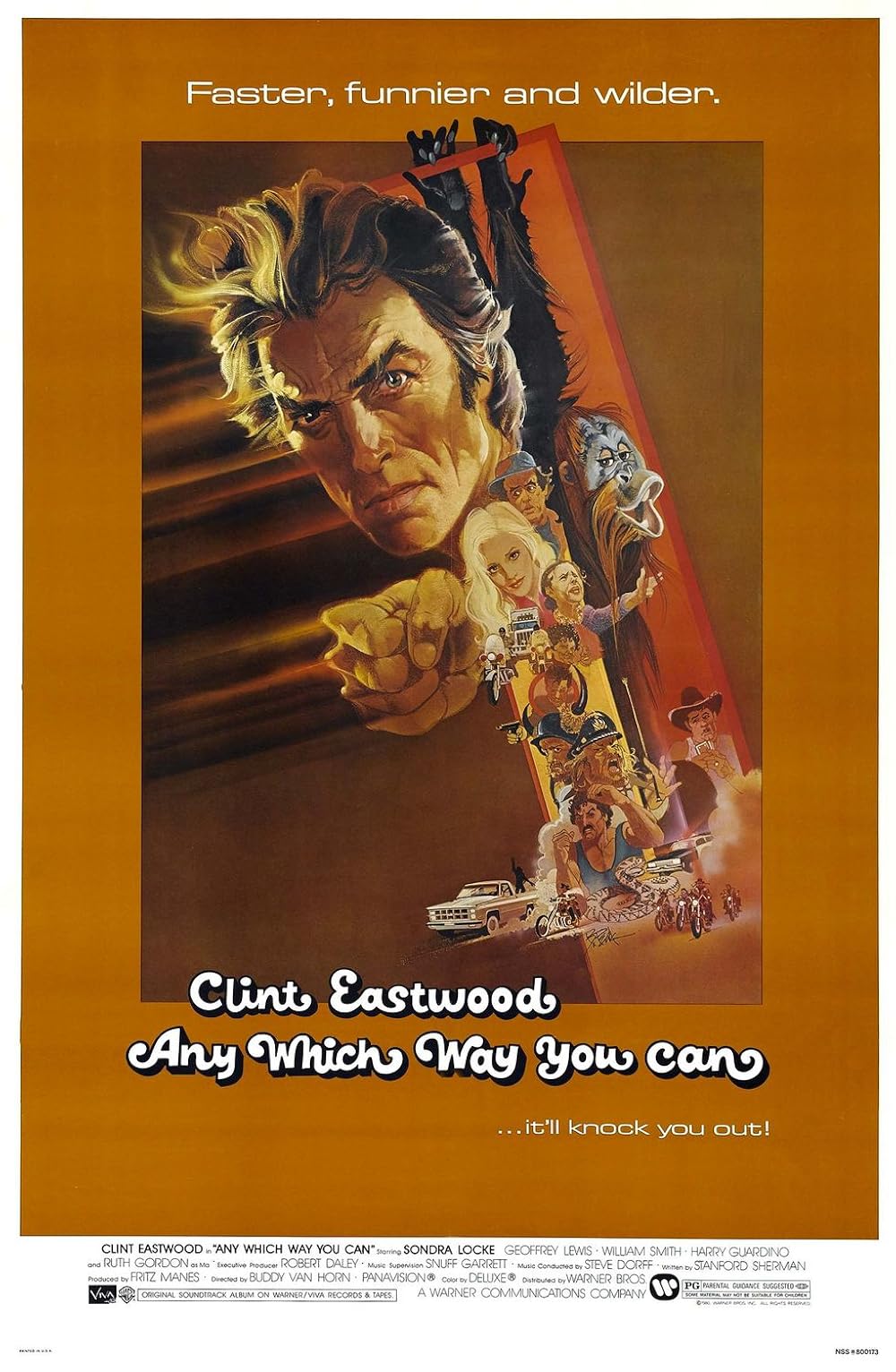
Any Which Way You Can (1980)

By Richard Winters

My Rating: 7 out of 10

4-Word Review: Betting on a fight.

Philo (Clint Eastwood) is still working as a trucker, still travels around with his pet orangutan Clyde, and still lives at home with his mother (Ruth Gordon) while getting involved in some bare-knuckle fights on the side to earn some extra money. He also continues to be harassed by the Black Widow biker gang who constantly hound him to even a past score. Things begin to change a bit when he meets back up with Lynn (Sondra Locke) who apologizes for her behavior from before and wants to rekindle their romance. Philo resists at first, but eventually the two get back together and she even moves-in with him in a spare room, but pressure mounts when fight handicapper Jack Beckman (Harry Guardino) comes-up with the idea of pairing Philo with Jack Wilson (William Smith), whose fighting skills mixes both martial arts and boxing. Jack figures it would be a match that would generate much betting interest and uses his men and money to convince Philo to take part in it. While Philo does initially agree he eventually backs out due to pressure from Lynn as she feels it’s too dangerous, but Jack, who has Mafia money riding on the fight, won’t take no for an answer and kidnaps Lynn in an effort to get Philo to reconsider. 

This is one of those sequels that’s a vast improvement over the first and much of the credit goes to Stanford Sherman, who wrote over 18 episodes for the 60’s ‘Batman’ TV-show and shows a good knack for balancing campy humor with interesting action. He’s also able to tie-in everything that goes on, so it doesn’t come off like a disconnected mess like with the first installment that had characters and situations coming-out of nowhere that wasn’t cohesive. Here each character has a purpose and everything that happens has a reason and connects with the main theme making for a much slicker production even when some of it gets silly.

Much more attention goes to the ape here though it’s not the same one as in the first film. That one was named Manis who was deemed to have grown too big for the part, so he got replaced by Buddha who has some amusing segments with his best moments coming when he tears up some cars, including one being driven by a bad guy, played by Michael Cavanaugh, as he’s trying to get away and another scene where he wears a dress and then ‘flashes’ an amorous hotel owner. However, in a book by Jane Goodall entitled ‘Visions of Caliban’ it was asserted that Buddha was badly beaten by his owner during the production after he stole some doughnuts on the set and was eventually clubbed to death forcing them to bring in a third ape named C.J. to do the publicity tour for the movie after filming had wrapped. 

Like in the first one the movie also features a lot of bare-knuckle brawls though these aren’t quite as interesting since Clint wins every one of them, so there’s never any tension. To keep it realistic, and give it better balance, they should’ve had him lose one, possible in humiliating style, and the rest of the movie could’ve been having him trying to defend his title and the audience would’ve been more emotionally invested in seeing him do it.  Would’ve been nice too had they not implemented that annoying punch sound effect that to me puts the fight at a cartoon level and I wished more movies from the period did it like The Whole Shootin’ Matchwhich didn’t feel the need to have that effect put in and thus actually made the fighting grittier and more intense in the process. 

While the film is way too long, there’s no reason for a runtime of 2-hours with such a slight and goofy plot, which should’ve have not been more than 85-minutes. However, it saves itself with some genuinely inspired moments including when real-life couple Logan and Anne Ramsey, who play a traveling husband and wife who stay in the hotel room next to the two apes whose noisy love making turn them on as does Clint and Sondra in adjacent room while Ruth and the elderly hotel clerk, played by Peter Hobbs, also make it in the motel office, I found to be quite amusing and almost worth the price of admission. The climactic bout between Clint and Smith and the way it galvanizes people from all over to witness it and bet money on it, including the Black Widow biker gang, who survive a ‘taring’ earlier, is good fun making it worth checking out on a slow night. 

My Rating: 7 out of 10

Released: December 17, 1980

Runtime: 1 Hour 56 Minutes

Rated PG

Director: Buddy Van Horn

Studio: Warner Brothers

Available: DVD, Blu-ray, Amazon Video, YouTube

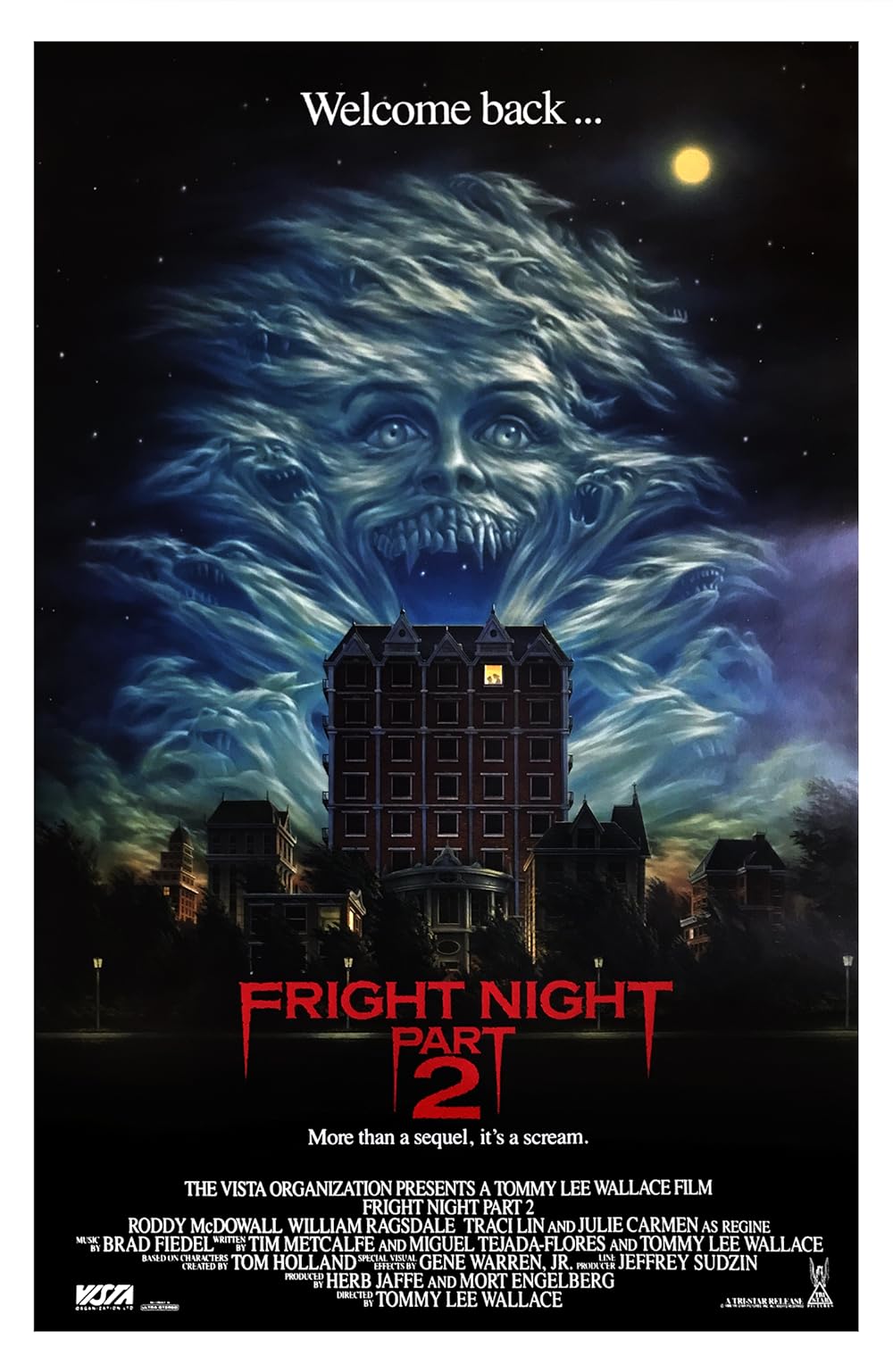
Fright Night Part 2 (1988)

fright2

By Richard Winters

My Rating: 6 out of 10

4-Word Review: Vampire’s sister stalks teen.

Charley (William Ragsdale) is now in college and having been convinced by his therapist (Ernie Sabella) that the ordeal he went through when he was in high school with his next-door neighbor Jerry Dandridge really wasn’t about a vampire, but instead the man had simply been a serial killer. In order to celebrate his successful ‘conversion’ he takes his new girlfriend Alex (Traci Lind) over to visit Peter (Roddy McDowall) who had been instrumental in helping Charley defeat Jerry. While there Charley looks out a window and sees movers hauling in three giant crates that look similar in size to coffins and he begins to fear the old ordeal is starting all over again. He begins dreaming that beautiful woman named Regine (Julie Carmen) visits him in his apartment one night and bites him on his neck and soon he begins showing odd traits like having to wear dark glasses because he no longer likes the sunlight. After going to a party with Peter where Regine is also in attendance, he becomes convinced that she’s really just a performance artist and no longer fears her until Peter takes out his trusty hand-held mirror and notices that he can’t see her reflection. Once Regine realizes that Peter’s on to her she admits that she really is a vampire and out for revenge over what he and Charley did to Jerry who happened to be her brother.

As sequels go this one isn’t bad though there’s quite a few things that are different from the first one, which is mainly a who slew of new faces. Amanda Bearse, who had figured so prominently as Charley’s original girlfriend is nowhere to be seen as she was working on the TV-show ‘Married With Children’ and not able to reprise her role while Stephen Geoffreys, who played Charley’s friend Ed was busy starring in 976-Evil and thus not available.  Director Tom Holland and Chris Sarandon, who had played Jerry Dandridge in the first, were involved in Child’s Play, and thus unable to commit though purportedly Sarandon did visit the shoot in order to offer emotional support.

Tommy Lee Wallace, who was best known for having directed Halloween III: Season of the Witcha film that was a critical and commercial failure when first released, but has through the years gained a cult following, got tabbed to direct this one and his background doing music videos can be clearly sensed here as it features a lot of quick edits and a moody vibe, which I really liked. Regine and her vampire clan that constantly surround her dress almost like a kitschy 80’s rock glam band, which is silly looking and campy, but also in a weird way creepy. Despite the low budget the special effects are still good particularly the monstrous transformations and the climactic sequence that takes place inside an elevator.

While Sarandon was highly impressive in the first version and there was simply no way that any other actor could’ve topped his performance Carmen is an adequate replacement. Too many times when producers can’t get a certain actor they then go out of their way to find someone similar, but here they wisely took the other route by finding someone who was quite the opposite. Instead of being verbally intimidating like with Jerry she does her stalking through being sexually alluring and the result is just as scary.

It’s also great seeing McDowall return as his presence in the first installment had been quite entertaining and his character here remains just as fun and I felt his hair looked better too. In the original the white in his hair appeared to have been sprayed on similar to how a white Christmas tree would look while in this one it’s a more natural looking gray with the white appearing on the edges, but the top part of his head still having a brownish color. I was though confused about how he was able to afford such a spacious pad in a ritzy apartment building that resembled a castle since in the first film he had been living in a cramped, dingy apartment that he was being evicted from and still working at the same job, so where he found the influx of cash to being able to move-up to a new swanky place is not explained.

The two things though that I didn’t care for was having Charley so easily convinced that what he had seen with his own eyes, Jerry being a vampire, was somehow not real, which made the character come-off as weak, easily influenced, and not reliable and like someone you really didn’t feel like rooting for if they could be brainwashed to that effective a degree. Also, having him slowly start to turn into a vampire wasn’t interesting in the least and having the bite mark continue to bleed even after it was bandaged didn’t make sense. Even if the puncture is created by a vampire the blood should still clot like it would with any other wound and not just turn the victim into a hemophiliac, which is what it kind of started to appear like.

The attempts at humor were misguided and genuinely got into the way of the scares and the whole thing would’ve been more effective had it been played straight. Overall though I felt was an effective follow-up and in certain ways even a bit better than the first. Finding a print of it though may be challenging as it’s never been released onto Blu-ray and the DVD issue, which came-out in 2003, is now out-of-print. It’s also not streamed anywhere. Even on its initial release it was only seen at select theaters for a brief time before falling off into obscurity. The main reason for this is that was produced by a production company run by Joseph Mendez, who while the movie was being filmed, was murdered along with his wife by their two teenage sons, which sent the company into bankruptcy and hampered the film from getting out. It also hurt the production of Part 3, which had already been in the planning stages. Infact both McDowall and Holland had a meeting with Mendez about moving forward with the third installment on the morning of his murder. That meeting though had proved to be a bit contentious, so when McDowall heard about the murder the next day he then immediately called Holland and said: “I didn’t do it, did you?”

My Rating: 6 out of 10

Released: December 8, 1988

Runtime: 1 Hour 43 Minutes

Rated R

Director: Tommy Lee Wallace

Studio: New Century/Vista

Available: DVD (out-of-print)

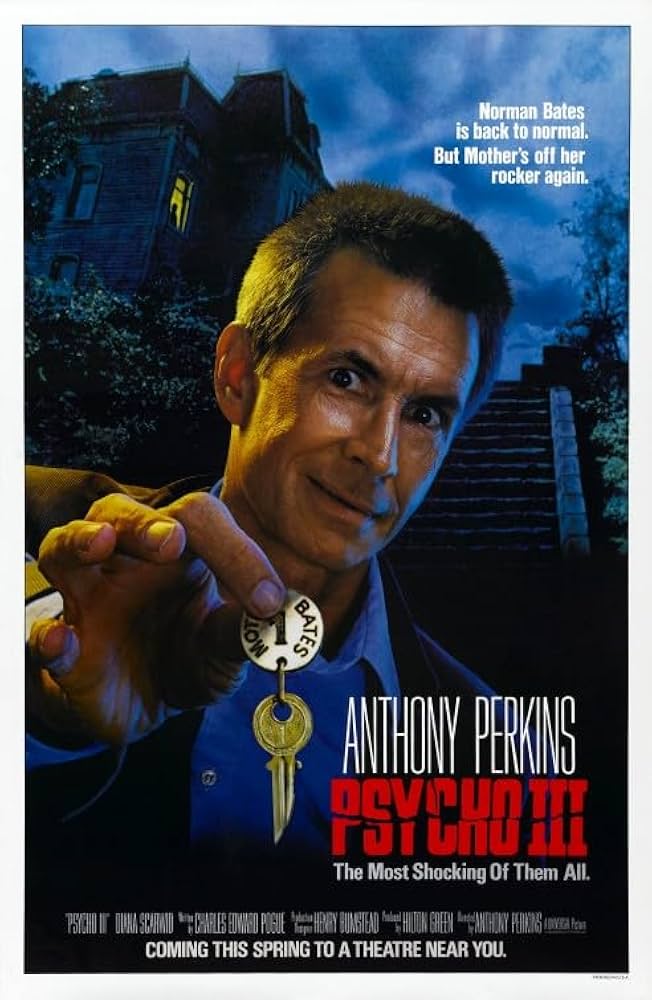
Psycho III (1986)

psycho3

By Richard Winters

My Rating: 3 out of 10

4-Word Review: Norman gets a girlfriend.

The story begins a month after the one in the second installment ended with police searching for the whereabouts of Emma Spool (Claudia Bryar) whom Norman (Anthony Perkins) killed and now keeps her preserved body in his home and yet curiously the police don’t suspect him. Meanwhile a roving journalist named Tracy Venable (Roberta Maxell) does and she keeps trying to get interviews with Norman in an effort to weed-out the truth while also snooping around his property any chance she gets. Maureen (Diana Scarwid) is a nun who’s lost her faith and thus left the convent and rents a room at the Bates Hotel. She closely resembles Marion Crane, one of Norman’s earlier victims, which sets off his desire to kill again, but when he goes into her room in an attempt to stab her he finds that she’s already slit her wrists and bleeding profusely, which sets off his emotional senses to help her and thus he takes her to the nearest hospital, which in-turn gets her to fall for him and the two begin a romantic relationship once she gets out. Norman also hires a wanna-be music artist named Duane (Jeff Fahey) to help out around the hotel as an assistant manager, but Duane becomes aware of Norman’s mother fixation and tries to use it against him just as an assortment of strange murders reoccur on the premises.

The third installment of the franchise is by far the weakest and it’s no surprise that it didn’t do as well at the box office and pretty much nixed anymore sequels getting released with the Part IV one, which came out 4 years later, being made as a TV-movie instead of a theatrical one. Perkins, who made his directorial debut here, starts things off with some intriguing segues and a good death scene of showing a nun falling off of a high ledge, but the storyline itself is getting quite old. Watching the ‘mother’ committing murders is no longer scary, interesting, or even remotely shocking. The script offers no new intriguing angles and things become quite predictable and boring very quickly.

Perkins gives another fun performance, which is pretty much the only entertaining element of the film, and Scarwid is compelling as a young emotionally fragile woman trying to find her way in a cold, cruel world. Maxwell though as the snooping reporter is unlikable and thus if she is meant to be the protagonist it doesn’t work. Fahey’s character is also a turn-off as his sleazebag persona is too much of a caricature and having him predictable do sleazy things as you’d expect from the start is not interesting at all.

The whole mystery angle has very little teeth and the way the reporter figures out her the clues comes way too easily. For instance she goes to Spool’s old apartment and sees a phone number scrawled out several times on a magazine cover sitting on the coffee table, so she calls it and finds out it’s for the Bates Motel and thus connects that Norman most likely had something to do with her disappearance, but wouldn’t you think the police would’ve searched the apartment before and seen that same number and made the same connection much earlier? Also, what kind of landlord would leave a place intact months later after the former tenant fails to ever come back? Most landlords are in the business to make money and would’ve had the place cleaned-out long ago and rented it to someone new.

The fact that the police don’t ever suspect Norman particularly the town’s sheriff, played by Hugh Gillin, is equally absurd. Cops by their very nature suspect everybody sometimes even when the person is innocent. It’s just part of their job to be suspicious and constantly prepare for the worst, so having a sheriff not even get an inkling that these disappearances could have something to do with Norman, a man with a very hefty and well known homicidal past, is too goofy to make any sense and starts to turn the whole thing especially the scene where a dead corpse sits right in front of him in a ice machine, but he doesn’t spot it, into a misguided campiness that doesn’t work at all.

I didn’t like the whole ‘party scene’ that takes place at the hotel, which occurs when a bunch of drunken football fans decide to stay there. I get that in an effort to be realistic there needed to be some other customers that would stay there for the place to remain open, though you’d think with the hotel’s well-known history most people would be too afraid to. Either way the constant noise, running around and racket that these people put-on takes away from the creepiness and starts to make the thing resemble more of a wild frat party than a horror movie.

Spoiler Alert!

The death by drowning scene is pretty cool, but everything else falls unfortunately flat. The final twist where it’s explained that Spool really wasn’t his mother after all sets the whole narrative back and makes the storyline look like it’s just going in circles and not moving forward with any revealing new information making this third installment feel pointless and like it shouldn’t have even been made. Screenwriter’s Charles Edward Pogue’s original script had Duane being the real killer while the Maureen character would be a psychologist who would come to visit Norman and who would be played by Janet Leigh, who had played Marion Crane in the first film. Her uncanny resemblance to one his earlier victims would then set Norman’s shaky mental state to go spiraling out-of-control, which all seemed like a really cool concept, certainly far better than what we eventually got here, but of course the studio execs considered this idea to be ‘too far out’ and insisted he should reel it back in with a more conventional storyline, which is a real shame.

My Rating: 3 out of 10

Released: July 2, 1986

Runtime: 1 Hour 33 Minutes

Rated R

Director: Anthony Perkins

Studio: Universal

Available: DVD, Blu-ray, Amazon Video, YouTube

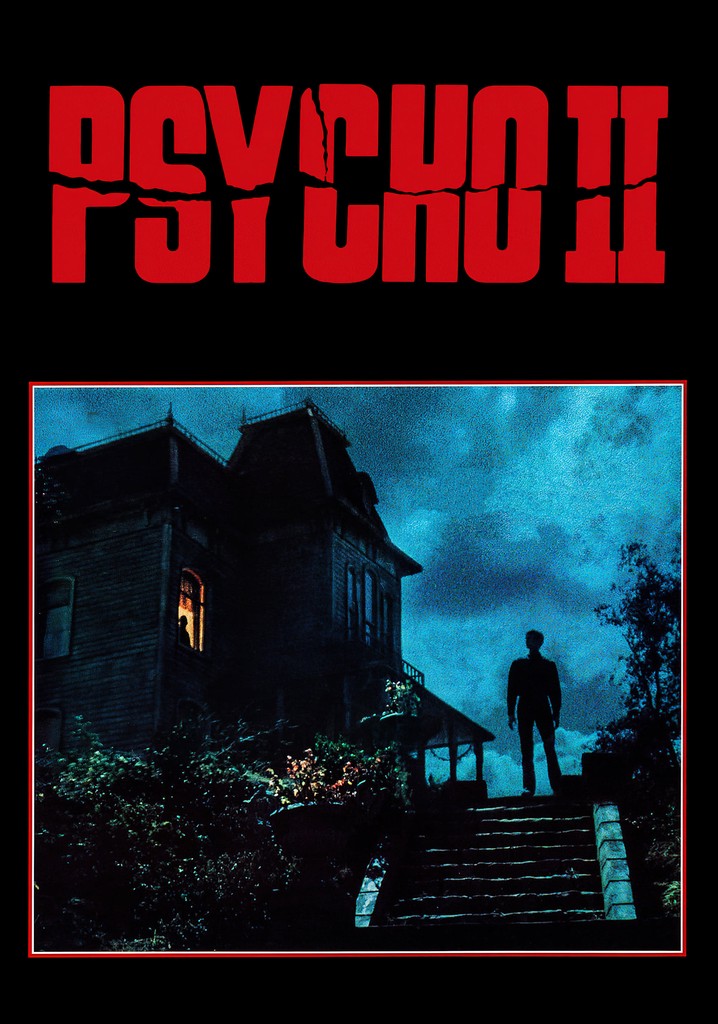
Psycho II (1983)

psycho2

By Richard Winters

My Rating: 7 out of 10

4-Word Review: Norman Bates comes home.

After 22 years of being confined to a mental institution over the murders of 5 people Norman Bates (Anthony Perkins) is now deemed to be no longer a menace to society much to the protest of Lila Crane (Vera Miles) whose sister Marion was one of his victims. With nowhere else to go Norman returns to the old house that he shared with his mother and tries to restart his hotel business that had been run while he was incarcerated by Warren (Dennis Franz) who had allowed the place to be turned into a flophouse for drug users and is immediately fired. To help bring in an income he gets a job at a nearby cafe as a cook where he meets Mary (Meg Tilly) who works there as a waitress. The two quickly start-up a friendship and when Norman learns that she’s broken-up with her boyfriend and no place to stay he offers a bedroom in his house for her to sleepover, but soon Norman starts receiving notes and even phone calls from someone perpetuating to be his mother and then murders begin occurring by someone dressed as an old lady. Has Norman gone back to his old homicidal ways, or is it someone else trying to make it look like it’s him, so that he’ll be rearrested and sent back to prison?

The attempt to make a sequel to the Hitchcock classic had been discussed for years and apparently even the master himself had considered it, but the studios generally nixed the idea figuring there was just no way to upstage the first one. Then Robert Bloch, who written the novel that the first one was based on, came out with a second installment also called ‘Psycho II’ that was published in 1982 that helped spark new interest in the franchise. However, the book’s plot was far different than this one. In the novel version Norman escapes from the mental institution while dressed in a nun’s outfit and then hitches a ride with another nun whom he kills and then rapes. After absconding with her van he then picks up a males hitch-hiker whom he plans to kill and then use his body to fake his own death. Police later find the burning van and charred remains, but are unable to identify who it is. Meanwhile across town a movie is being made about Norman’s life and Norman’s psychiatrist fears that Norman is going to go there to kill everyone in the production, so he decides to become a ‘technical advisor’ to the film to help watch out for the crew, but while there he starts to become more worried about the film’s director who’s a spitting image of Norman from 20 years earlier and he reveals an unhealthy infatuation with the actress playing Marion Crane.

While I found the book to be highly creative the studio execs disliked its satirical elements regarding the movie business and discarded it while hiring Tom Holland, who had some success with the 1978 horror TV-Movie ‘The Initiation of Sarah’ and also the screen adaptation of The Beast Within to write a script with a more conventional storyline. While this story isn’t bad, I personally liked the Bloch version better, this one does have some logic holes mainly around releasing someone who’s killed several people from well published crimes and clearly suffering from a severe mentally ill state and yet somehow convincing the parole board and public at-large that he’s now ‘cured’, which really pushes the plausibility meter. The film also portrays Norman as being a likable guy just trying to find his way, which is awkward since the viewer is technically supposed to be fearing him, but half the time ends up sympathizing with him instead and this dueling dichotomy doesn’t work.

The acting though is terrific especially Perkins who makes his portrayal of Norman into an almost art form and the most enjoyable element of the movie though he initially was reluctant to recreate the role complaining that it hurt his career playing the part in the first one and it had caused him to become typecast, but when he found out that they were planning to cast Christopher Walken in the part if he rejected it he then decided to come-on board. Dennis Franz is also a delight as nobody can play a brash, blue-collar out-of-shape ‘tough guy’ quite like him and his taunting, loud-mouth ways help bring an element of dark humor to the proceedings.

Spoiler Alert!

My favorite though was Meg Tilly who helps tie all the of the craziness around her together by being the one normal person of the whole bunch. Reportedly she and Perkins did not get along and she refused to attend the film’s premiere though the frostiness of their relationship doesn’t show on the screen and the two end-up working well together. The only thing that I didn’t like was the misguided twist of her turning out to being the daughter of the Vera Miles character and in cahoots with her in her attempt to drive Norman crazy. For one thing if this were true then it should’ve been Meg instigating the idea of her moving into the house with him versus Norman coming up with the idea and her seeming reluctant.

The film has some good creepy camera angles of the home, which seems even more frightening here especially with the way it’s isolated desert setting gets played-up. There’s also a couple of gory killings, which I liked, but the second-half does drag and the movie could’ve been shortened by a good 20-minutes. However, the film’s conclusion where Norman learns the his mother’s sister, played by Claudia Bryar, is actually his real mother and she was behind the recent murders was a perfect ironic angle that took me by surprise and I loved it. Why he would then proceed to kill her with a shovel I didn’t really get as it seemed they could’ve started-up some weird bond and became a homicidal couple, which would’ve been more frightening, but still it’s a cool twist either way and helps make this a decent sequel.

My Rating: 7 out of 10

Released: June 3, 1983

Runtime: 1 Hour 53 Minutes

Rated R

Director: Richard Franklin

Studio: Universal

Available: DVD, Blu-ray, Amazon Video, YouTube

Herbie Rides Again (1974)

herbie1

By Richard Winters

My Rating: 3 out of 10

4-Word Review: Saving home from demolition.

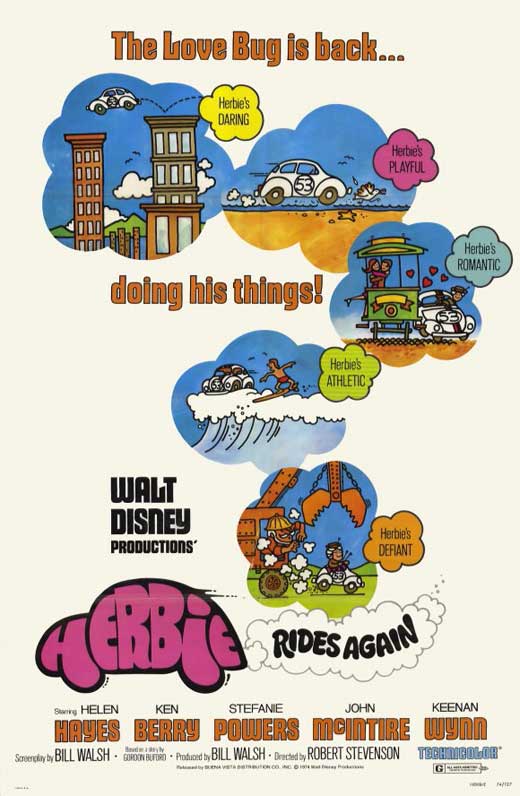
Alonzo Hawk (Keenan Wynn) is a rich man who wants to build the world’s tallest sky scrapper on land that is currently occupied by a little firehouse built in 1892 and owned by an old lady named Mrs. Steinmetz (Helen Hayes). So far she’s refused all offers by Alonzo’s lawyers to sell, so Alonzo decides to have his nephew Willoughby (Ken Berry) go visit her as he has a very clean-cut image and hopes his nice-guy approach may be what it takes to persuade her. However, once he’s there he gets introduced by Mrs. Steinmetz former neighbor Nicole (Stefanie Powers) who’s now living with the old day due her place being demolished by Alonzo. When Nicole realizes Willoughby is related to Alonzo she immediately takes a disliking to him and even punches him in the face. Her feelings towards him though begin to change when she gives him a ride in the Volkswagen beetle that Steinmetz is taking care of for its owner while he’s away in Europe racing. Willoughby at first doesn’t believe that the car, who’s named Herbie, has a mind of its own, but soon realizes it does after his trip in it and this eventually gets him to side with Nicole and Steinmetz on the issue they’re having with his uncle and he begins fighting with the other two and Herbie to stop Alonzo from tearing the place down.

This was a rather odd idea for a sequel to the Love Bug that came-out 6 years earlier and had the VW Beetle involved in racing, but now apparently was ‘retired’ and no longer able to race effectively even though in the third entry to the series, which came-out 3 years later he does go back to racing.  The plot here though doesn’t really need the car involved to help propel it, yes the vehicle does ‘come to the rescue’ a few times, but the story could’ve easily worked with just the humans fighting Alonzo in various ways and would’ve been just as funny. To make-up for this the film does show archived footage, which goes on for several minutes, of the car ‘dreaming’ about it’s racing days though some of his race ‘victories’ could be called into question like when it decides to go off the racing track in one and cut through a forest and then back onto the track where it’s now at the front line of the other cars, which most would deem as cheating and not really an honorable win.

Overall though I really didn’t find any of the scenes with the car to be all that interesting. It’s hard to get emotionally attached to some machine that doesn’t speak, or show any expression and the only sign that it’s ‘alive’ is through its car stunts. The fact that it has seemingly no limits to what it can do, at least driving wise, I felt worked against it. To create even the modicum of suspense, or believability, there needs to be some rules to what it can and cannot do and yet here it defies all probability like driving on the side of cliffs without falling off, or being able to somehow pull vehicles, that are much bigger and weigh more, around like it does during a ‘tug-of-war’ scene with a cop car that’s attempting to tow it. It’s even able to smash through walls without receiving any damage to its front-end. I’m okay with the car having a certain ‘personality’, but when the car is able to get out of any predicament in a seeming magical way then there really isn’t any intrigue at all.

The acting by Hayes, Powers, and Wynn are good and I was especially impressed with Wynn’s ability to essentially shout out all of his lines in a consistently snarly way and yet never get any laryngitis and he certainly adds energy to all of his moments. Berry though is so vanilla that he’s just plain boring. It might’ve worked better had he remained loyal to his uncle longer, but he sides with the two ladies so easily that his character quickly becomes quite benign to the point that it would’ve been more interesting to have just the two women, and the car of course, fighting the bad guys and his presence excised from the script completely.

The nightmare segment where Alonzo dreams of being attacked by not only Herbie, but several clones of Herbie whose front hood opens up to reveal a mouth with giant teeth, which also includes a take-off of King Kong, where Alonzo is on top of the Empire State Building as he fights off the Herbie’s that are flying in a circle around him is genuinely inspired and the best part of the movie. Everything else though falls painfully flat including the cheap special effects where the exterior of the firehouse looks like it’s a painting on a back-drop, which I’m sure it was, or the scene where Herbie goes up the Golden Gate Bridge, which you can plainly tell was a miniature model matted onto a picture because as the car goes back down it starts to lose its pixelation and fade-out and disappear into thin air.

My Rating: 3 out of 10

Released: June 6, 1974

Runtime: 1 Hour 28 Minutes

Rated G

Director: Robert Stevenson

Studio: Buena Vista

Available: DVD, Blu-ray, Amazon Video, YouTube

Smokey and the Bandit Part 3 (1983)

smokey1

By Richard Winters

My Rating: 0 out of 10

4-Word Review: Where is the Bandit?

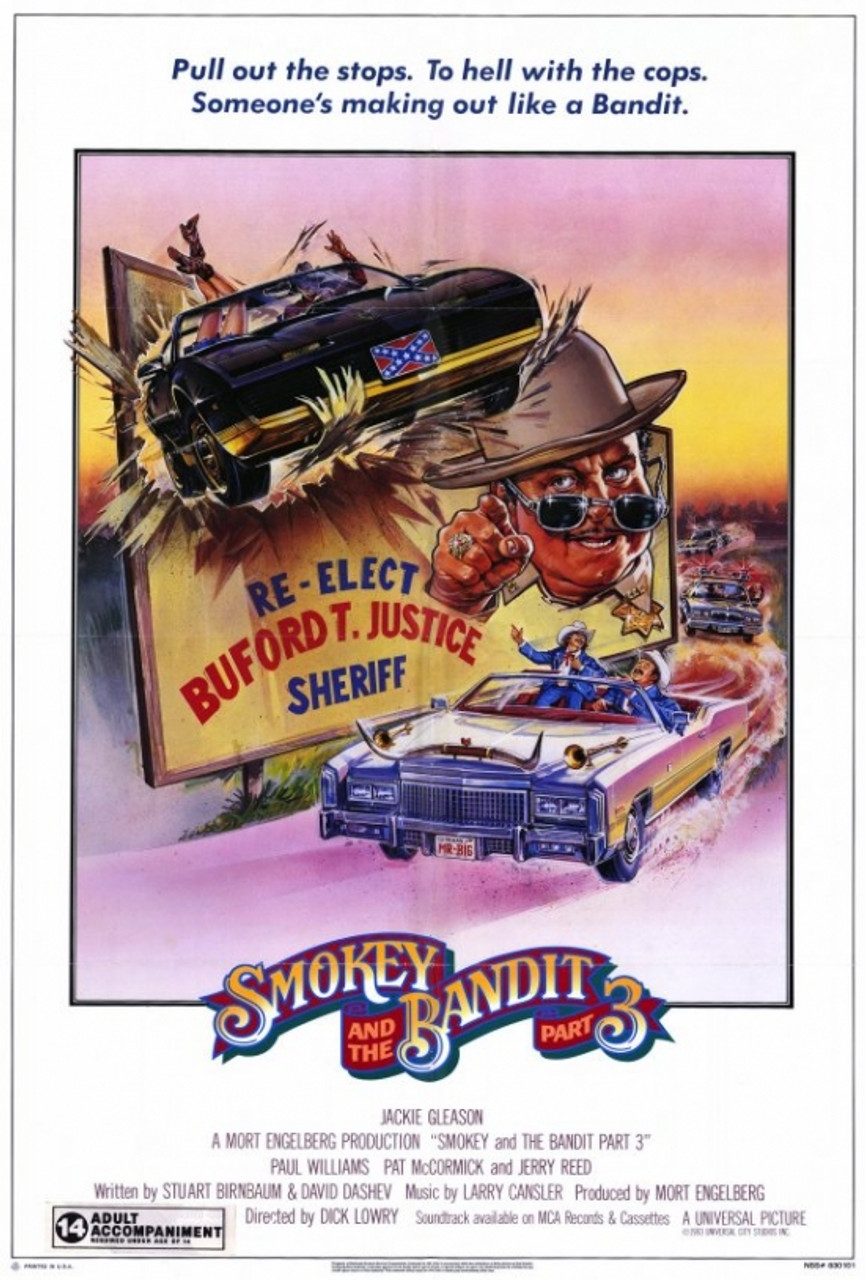
Buford T. Justice (Jackie Gleason) announces his retirement as sheriff after more than 30 years of service. He decides to spend his time in Florida where he expects to get some rest and relaxation. However, once he becomes a part of the senior community he doesn’t enjoy it and feels the need to get back to what he liked doing most, which was chasing after the elusive Bandit. Big Enos (Pat McCormick) and Little Enos (Paul Williams) offer him a deal to get back into the swing of things. They bet that he can’t drive his police car from Miami, Florida to Austin, Texas, a total of 1,400 miles, in two days with a stuffed fish tied to the top of the car. If he’s able to succeed at the challenge he’ll make $250,000, which Buford readily accepts. To keep him from getting there the two Enos brothers set-up traps along the way in order to stymie his progress, but Buford and his dim-witted son Junior (Mike Henry) manage to get out of each predicament that gets thrown at them, so the Enos brothers decide to call-in Snowman (Jerry Reed) to help them. Snowman is a trucker, but in this instance he gets to pretend he’s the Bandit and even dress in his get-up and drive Bandit’s fancy black and gold Pontiac Trans Am. The new Bandit, who picks-up Dusty (Colleen Camp), a disgruntled used car sales woman along the way, soon catches up with Buford and son and steals their stuffed fish, which turns-the-tables and forces Buford to go after them.

By 1982 both Hal Needham, who had directed the first two installments, and Burt Reynolds, who had played the Bandit in the first two go-arounds, were no longer interested in getting involved in the project for another time as both were already busy working together on Stroker Ace. The studio though didn’t want to give up on the idea of a third installment since the first two had made a lot of money, so they signed-on Gleason to reprise his role as Buford with the promise that he’d have full script approval, which proved difficult as he didn’t like any of the scripts that were handed to him and at one point made the glib remark “with scripts like these who needs writers?’. After going through 11 rejections the writers finally hit on the idea of letting Gleason play dual roles of both the Bandit and the sheriff. Initially Gleason didn’t like this either, but the prospect of hamming up two different characters, which he had already done in Part 2 where he played Buford’s two cousins Gaylord and Reginald, got the better of his ego, so it received the green light.

In October of 1982 the script with Gleason in both roles was shot, but with no explanation for why he was playing the Bandit and everyone else in the story playing it straight like they didn’t see the difference. Eventually upon completion it was sent to a test audience in Pittsburgh where they gave the film unanimously negative feedback convincing the studio that the experimental novelty wasn’t going to work. They then hired Jerry Reed, who wasn’t even in the project before then, and asked him to reprise his role as Snowman who would then disguise himself as the Bandit. Then every scene that originally had Gleason in the role as Bandit was reshot with Reed now doing the part, but all the rest of the scenes that had already been filmed without the Bandit remained intact. The reshot Bandit segments were filmed in April of 1983 and the film eventually got its release in August of that year where the response of audiences and critics alike remained just as negative.

For years this was considered by many to be an urban myth as no footage with Gleason as the bandit was ever seen, but then in 2010 a promo of Gleason playing Buford, but talking about becoming the Bandit, or ‘his own worst enemy’ appeared on YouTube with the title of Smokey IS the Bandit Part 3 and Jerry Reed’s name not appearing anywhere on the cast list. Then in 2016 the actual shooting script that was shot in October of 1982 was downloaded to IMDb’s message board (back when they still had them), which plainly detailed Gleason as the Bandit, but had no written dialogue for those scenes since Gleason was routinely allowed to ad-lib his lines. The lost footage of Gleason in the Bandit scenes is purportedly in the control of the Gleason estate where it’s kept under wraps never to be shown to anyone again by apparently Gleason himself who felt humiliated by the test audiences negative reaction.

As it is the movie is not funny at all and unsurprisingly did not do well at the box office. Nothing much makes sense and the humor is highly strained including a drawn-out segment featuring the Klu Klux Klan, which I found downright offensive. Having a Blu-ray release of the lost footage of Gleason in dual roles would most likely be a big money maker as through the years it’s built up a lot of curiosity. It might be confusing and weird just like the original test audiences said it was, but it couldn’t be any worse than what we ultimately get here, which is as bottom-of-the-barrel as they come.

smokey2

My Rating: 0 out of 10

Released: August 12, 1983

Runtime: 1 Hour 25 Minutes

Rated PG

Director: Dick Lowry

Studio: Universal

Available: DVD, Blu-ray

Sleepaway Camp III: Teenage Wasteland (1989)

sleepaway3

By Richard Winters

My Rating: 3 out of 10

4-Word Review: Angela commits more murders.

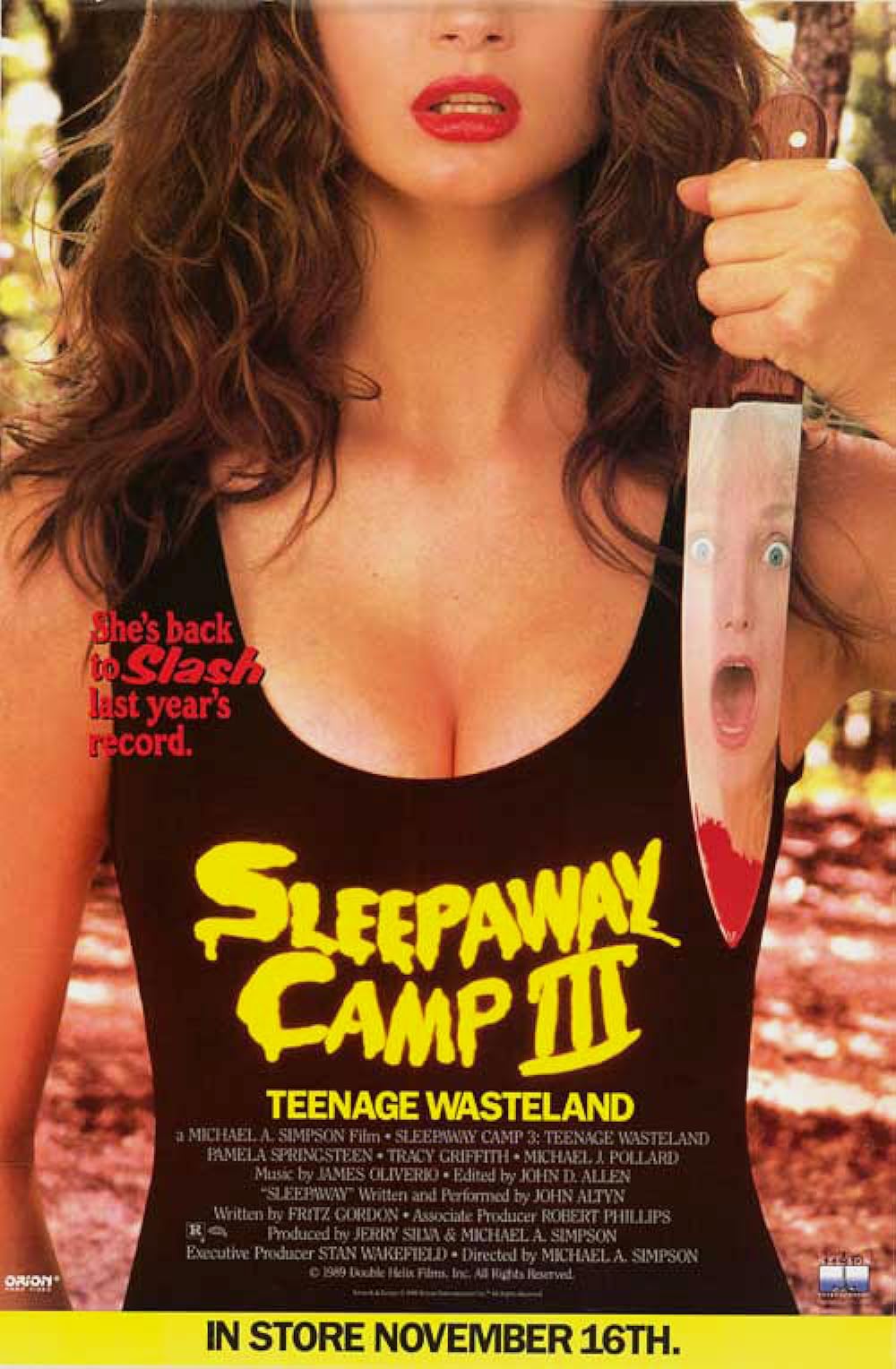
When Maria (Kashina Kessler), who has the words ‘milk’ and ‘shake’ tattooed to her breasts, goes off to camp, she is impeded by a truck driven by Angela (Pamela Springsteen) that runs her over and allows Angela to take on her identity. Angela then returns to the same campsite where she committed her atrocities from the last film, but which is now run by husband and wife Herman (Michael J. Pollard) and Lilly (Sandra Dorsey), who have turned it into a place to help reform teens with a criminal record and renamed Camp New Horizons. It doesn’t take long though for Angela to revert to her old ways and soon both campers and counselors begin disappearing with a frightening regularity.

While Part II was filming producer Jerry Silva was so impressed with what he was seeing that he immediately authorized another sequel with a script for this one being written while that one was still being shot and then only one weekend for pre-production. This also pushed the filming date back into October where not only were the leaves already changing, but in one segment you can see the breaths of the actors when they speak, which certainly does not give the viewer a summery feel.

The second installment had an okay balance between the black comedy and horror, but this one goes overboard into silly season. The initial killing is especially problematic as it has the victim chased down by a big truck in broad daylight. Yes, she eventually gets run over when she runs into a back alley, but the semi starts barreling down on her when she’s walking on an busy road with other cars, so other people would’ve witnessed what was happening and reported it making the odds of Angela getting away with it quite slim. Also, where does a woman, who was 13 when she got locked up into a mental hospital and been there most of the time until her recent release, find the time and money to learn how to drive a big rig and how was she able to steal one?

While Springsteen’s performance was slightly tolerable in the second installment I felt it got plain annoying here. She isn’t scary and even though this is meant as a dark comedy the villain should still have some frightening presence and she has none making for no suspense at all. She also has her hair dyed blonde, in order to resemble Maria, which has her looking even less like Felissa Rose who played the character in the first one and further way from the original concept making this seem like its own little movie with name-only connections to the other two.

The murders though are an improvement and the only thing that saves it. Part II put no creativity or imagination into the killings, but here we get a couple of memorable ones including Angela roasting marshmallows on a fire that’s burning two of her victims. Killing one of the campers via tying them up to a flagpole and then allowing them to drop many feet to the hard cement below was my favorite though the death by lawnmower, which apparently made some of the women members on the MPAA board, who were hired to give the movie its rating, physically sick, deserves honorable mention. Even here though there’s problems like when Angela stands over the body of a man and swings an ax on him, but then returns to the campsite wearing the same clothes she had, which would’ve been highly doubtful as they would’ve most assuredly been covered with blood splatter.

The only element I found interesting was the appearance of Michael J. Pollard who was at one time starring in Hollywood classics like Bonnie and Clyde and was even given a couple of leading man roles in  studio produced films, but here relegated to low budget direct-to-video fare. He isn’t even in it all that much as his character is one of the first to be killed though he does at least get to make-out with a hot young chick (Stacie Lambert), which may have made it worth it.

My Rating: 3 out of 10

Released: August 4, 1989

Runtime: 1 Hour 20 Minutes

Rated R

Director: Michael A. Simpson

Studio: Double Helix Films

Available: DVD, Blu-ray, Freevee, Pluto TV, Tubi, Amazon Video

Sleepaway Camp II: Unhappy Campers (1988)

sleepaway2

By Richard Winters

My Rating: 3 out of 10

4-Word Review: Angela returns to camp.

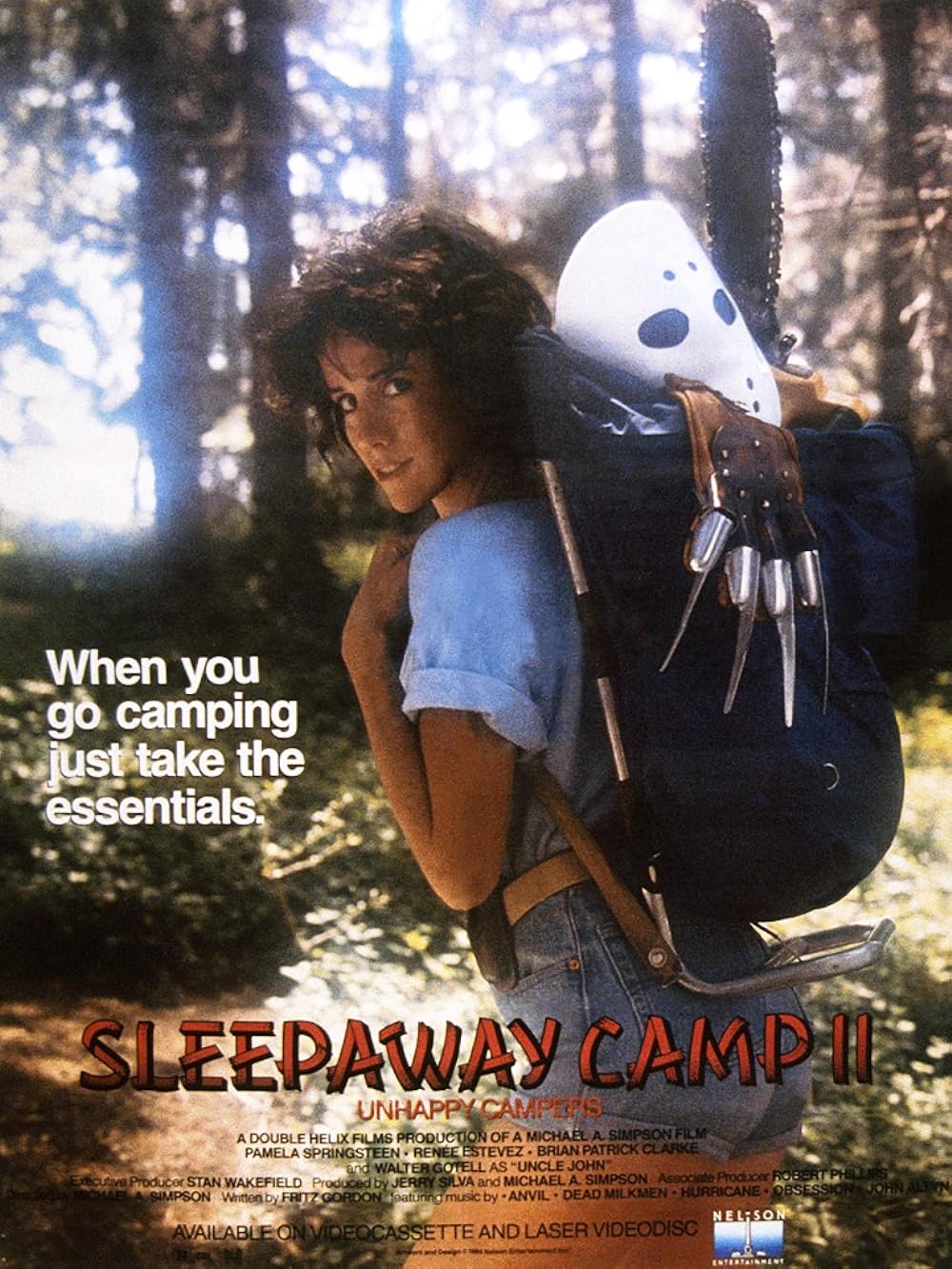
Angela (Pamela Springsteen), the teen killer in the first film, has now been ‘reformed’ after going through years of shock therapy and sexual reassignment surgery. She gets a job as a counselor at a camp named Rolling Hills, which is 60 miles away from Camp Arawak, the site where she had previously killed all those people. The campers and other counselors have no idea about her past and have a hard time getting along with her and she’s quite strict with no tolerance for anyone who breaks the rules. If someone does draw her ire she quickly dispenses with them by reverting to her old habits and after they’re offed she goes and tells the camp leader, Uncle John (Walter Gotell), that she ‘sent them home’, but when she starts doing this to too many kids everyone’s suspicions begin to rise.

While on the technical end the production is decent the storyline is ridiculous even when taken into context of a black comedy, which is what the filmmakers were hoping for, it doesn’t work. The idea that Angela would be let out of a mental hospital in such a short period of time, just 5 years, after killing so many people is absolutely absurd and would create a national, media uproar. Since the murders were all deliberate and plotted out she most likely would be considered sane and stood trial and sent to a regular prison anyways. Why would any campsite hire her? Don’t these people do background checks? A way to have resolved this would’ve been to shown her at the beginning escaping from the mental hospital, and possibly killing a few orderlies along the way, which would’ve helped the story make more sense and also been an excuse to show blood and guts, which is what audiences for these types of films pretty just want anyways.

While Pamela Springsteen, who’s the younger sister of Bruce Springsteen, may be a quality actress in her other films she does not play the role here in a convincing way. What made Angela so memorable in the first was her penetrating stare, which we don’t see any of. Angela’s inner angst came from her gender issue and not that she was some old-fashioned prude, like in this one, that kills people who don’t live up to her high moral standard. It’s like a completely different person who’s connection to the other one is in name only. Apparently Felissa Rose, who played the role in the original, auditioned for the part, but because she couldn’t convey the one-liners in a humorous way that they wanted they decided to go with Pamela. Personally I feel they shouldn’t have even bothered to make it if Felissa couldn’t have recreated the role, which I felt she had earned the right to.

The killings are not as creative either and in fact look downright pathetic. I’ll give some credit to the death in the outhouse where a victim is shoved into the hole were people relieve themselves and then she struggles several times to come up, with more and more waste appearing on her as she does, but otherwise it’s tacky fare especially the end where they come into an abandoned home featuring all the dead victims that looks too obvious as being mannequins with red paint.  I also didn’t care for the nightmare segment, apparently done to help pad the runtime, that rehashes the killing scenes we’ve already seen and is highly redundant.

Fans of the film say it’s the humor that sells it. Yes, some of it is kind of funny like when the male counselor (Brian Patrick Clarke) smells underneath his arm pits after Angela walks away thinking that the reason she was so cold to him wasn’t because she’s a psycho, but more because of his possibly bad body odor. My favorite though is when Ally (Valerie Hartman) has sex with a man and then only after it’s over does she bother to ask him if he has ‘AIDS’. Yet outside of this it’s a letdown. As sequels go it’s not the worst of its kind, but I would’ve preferred more of a straight horror approach that tried to stay faithful to the first one, both in tone and with the cast.

My Rating: 3 out of 10

Released: February 28, 1988

Runtime: 1 Hour 20 Minutes

Rated R

Director: Michael A. Simpson

Studio: Double Helix Films

Available: DVD, Blu-ray, Amazon Video, Pluto, Tubi, YouTube

Hellbound: Hellraiser II (1988)

hellbound

By Richard Winters

My Rating: 7 out of 10

4-Word Review: The cenobites come back.

The story begins immediately where the first installment ended with Kristy (Ashley Laurence) in the hospital recovering from her injuries while she pleads with Dr. Channard (Kenneth Cranham) and his assistant Kyle (William Hope) to destroy the bloody mattress that her stepmother Julia (Clare Higgins) died on for fear that it might bring the woman back to life. Dr. Channard finds this possibility intriguing, so he brings the mattress back to his home and then has one of his mentally ill patients bleed on it, which brings Julia, minus her skin, back from the other dimension. She feeds on the patient, which gives her strength and Dr. Channard supplies her with more of them until she is able to take human form. Kristy finds out about it and travels to Channard’s home along with Tiffany (Imogen Boorman), a mental patient at the hospital whom she meets that cannot speak, but has a gift for solving puzzles. When they confront Julia and Channard all four get taken to the other dimension known as the labyrinth that houses the cenobites.

While Clive Barker wrote the script and produced he did not direct and instead handed over the reins to his friend Tony Randel. Randel wanted to turn into more of a dark fantasy and the transitions works making it visually arresting. The mazes that make up the other dimension, which are captured from a bird’s-eye view as we see tiny dots, which represent the characters running, are amazing and I enjoyed Tiffany’s brief foray into a circus like freak show that had a giant fetus with its lips sewn shut, that was creepy and I wished extended further. The scene where Julia bursts out of the mattress to attack the patient I found genuinely horrifying and a dare say one of the scarier moments in horror film history. I also liked the backstory revealing how pinhead (Doug Bradley) came into being. Supposedly this backstory was supposed to take up a major part of the runtime, but due to budget limitations it had to be scrapped and we only see a brief snippet of it through quickly edited segments, which to me was probably best.

The script though does seem a little weak in the way it sets up the premise as it’s way too convenient that the patient in the neighboring room to Kristy’s would have this fixation to solving puzzle boxes, which just makes it highly predictable where its going to go. Have her Dr. show an equal fascination with the puzzles and the cenobite world is again betting long odds and having someone with this dark obsession from outside the hospital track Kristy down would’ve been more believable. The way the mental patients are housed looks dated like we’re seeing an asylum from the 16th century though it still works, if you suspend your belief a bit, with the film’s over the top style.

I was glad that at least Andrew Robinson’s character from the first one doesn’t appear here. He was asked to reprise his role, but refused, which was good because if he had returned the script would’ve had a scene where he and Frank where together in the same body like Siamese twins, which sounded ridiculous. I also don’t like movies that have a character die-off, like Robinson’s did in the first one, and then magically come back to life later, which seems to defeat the purpose. If someone dies then they should stay dead otherwise it’s really not that horrifying seeing anyone get killed if we know that somehow they can still find a way to exist.

Spoiler Alert!

The Julia character, which was already poorly defined in the first installment, gets worse here. Supposedly, she was so madly in-love with Frank that she was willing to kill for him, which meant they must have some sort of special and perverse bond, but in this one she gleefully rips his heart out, literally. In the first one she showed signs of being conflicted over what she was doing, but here she becomes one-dimensionally evil and very boring.

The only cool thing about her is the way she sheds her skin off, but this proves problematic when Kristy puts on the skin in order to disguise herself. The women had different body types and heights, so the skin should not be able to fit her. Also, the inside of the skin was lined with blood from Julia, so putting it on should make Kristy suffocate and quite frankly gag at the grossness of having someone else’s blood seep all over her and thus not be able to wear it for more than a few seconds, or at least that’s how I would respond if I were in that situation, which makes the ending here a bit problematic.

My Rating: 7 out of 10

Release: December 23, 1988

Runtime: 1 Hour 37 Minutes

Rated R

Director: Tony Randel

Studio: New World Pictures

Available: DVD, Blu-ray, Amazon Video, Plex, Pluto, Tubi, YouTube

Poltergeist III (1988)

poltergeistIII

By Richard Winters

My Rating: 3 out of 10

4-Word Review: Ghosts haunt a skyscraper.

Carol Anne (Heather O’Rourke) has been sent away by her parents to Chicago so that she can live with her Aunt Diane (Nancy Allen) and her husband Bruce (Tom Skerritt) along with Donna (Lara Flynn Boyle) Bruce’s teen daughter from a previous marriage. Carol Ann is told that this is just a temporary set-up while she attends a school for gifted children. The school though is more of a therapy center for kids with emotional issues and run by Dr. Seaton (Richard Fire), who doesn’t believe Carol Ann’s stories about seeing ghosts and thinks she’s making it up to get attention and has some sort of ability to create mass hypnosis to get others to believe it too.  Soon after moving there the evil Reverend Kane (Nathan Davis) returns and begins terrorizing Carol Anne by appearing in mirrors as he continues his attempts to bring her back to the other side.

In another example of a sequel nobody asked for writer/director Gary Sherman, who had some success helming horror flicks early in his career that gained a cult following like Dead & Buried manages to inject an interesting vision. Moving the setting away from a suburban home and into a city skyscraper was a good idea as the story needed to progress somewhere and not just be a rehashing of things again and again in the same place, or one that looks just like it, would’ve give the whole thing a very redundant quality. Visually it looks sharp, I especially liked the scenes with frozen ice, with the special effects done live and not matted onto the film print later on like in the first two. The use of the mirrors, which are used as sort of window to the other dimension where the evil spirits reside, does offer a few jolts.

I liked that O’Rourke reprised her role and she gives an excellent performance, though she’s not seen all that much as she gets kidnapped and taken to the other side, which forces others to go after her just like in the first two installments, but it’s fun seeing her grow into a more accomplished actress who can handle broader speaking lines and able to hold her own in a wider variety of dramatic situations. The only negative is her visible swollen cheeks, the result of cortisone treatment shots that she was getting due to a misdiagnosis of Crohn’s disease, which gives her a chipmunk type look.

Zelda Rubinstein also reprises her role as Tangina, but like in the second installment, isn’t seen enough and it’s disappointing when she goes away. Davis takes on the role of the Reverend when Julian Beck, who played the role in Part II, died, but the character is only seen sporadically and doesn’t have all that much of a presence and an effective horror film needs a villain, whether it’s in human, spirit, or monster form, with adequate screen time to build tension and here that’s just not the case.

The storyline starts to become derivative of other better known horror flicks especially the use of the possession theme where we have an evil Carol Anne running around tricking everyone that she’s the real one, but isn’t. Her transformation into a devilish ghoul resembles a cheap imitation of Linda Blair from The Exorcist. I admit the first time it’s done it caught me off guard and was good enough to elicit a minor jolt, but then they go back to it too often where it becomes boring and predictable. The shots showing Carol Anne being spotted running away around corners and through doorways while wearing a red pajama suit is too reminiscent of Don’t Look Now, a Nicholas Roeg directed classic that dealt with parents searching for their missing young daughter and would occasionally spot her, or what they thought was her, running around street corners and through doorways in Venice while also wearing a bright red piece of clothing.

The biggest mistake though was that the reins weren’t fully handed over to O’Rourke as she was the only real carryover from the first two. Rubenstein too should’ve been given more of a part, but in any case the action should’ve followed Carol Anne all the way through and having it instead cut over to Skerrit and Allen’s characters and making them the main stars isn’t interesting at all. They come-off as quite bland and benign and just thrown in because Craig T. Nelson and Jobeth Williams didn’t want to recreate their roles. O’Rourke by this stage had enough acting ability that she could’ve carried it and the audiences would’ve excitedly been there with her the whole way, but unfortunately during the second and third act she gets relegated to cameo status while Skerrit and Allen take over, which are people we care nothing about and makes it seem like a completely different type of movie entirely.

My Rating: 3 out of 10

Released: June 10, 1988

Runtime: 1 Hour 38 Minutes

Rated PG-13

Director: Gary Sherman

Studio: MGM/UA

Available: DVD, Blu-ray, Amazon Video, YouTube