Category Archives: Quirky

Little Big Man (1970)

By Richard Winters

My Rating: 8 out of 10

4-Word Review: Raised as an Indian.

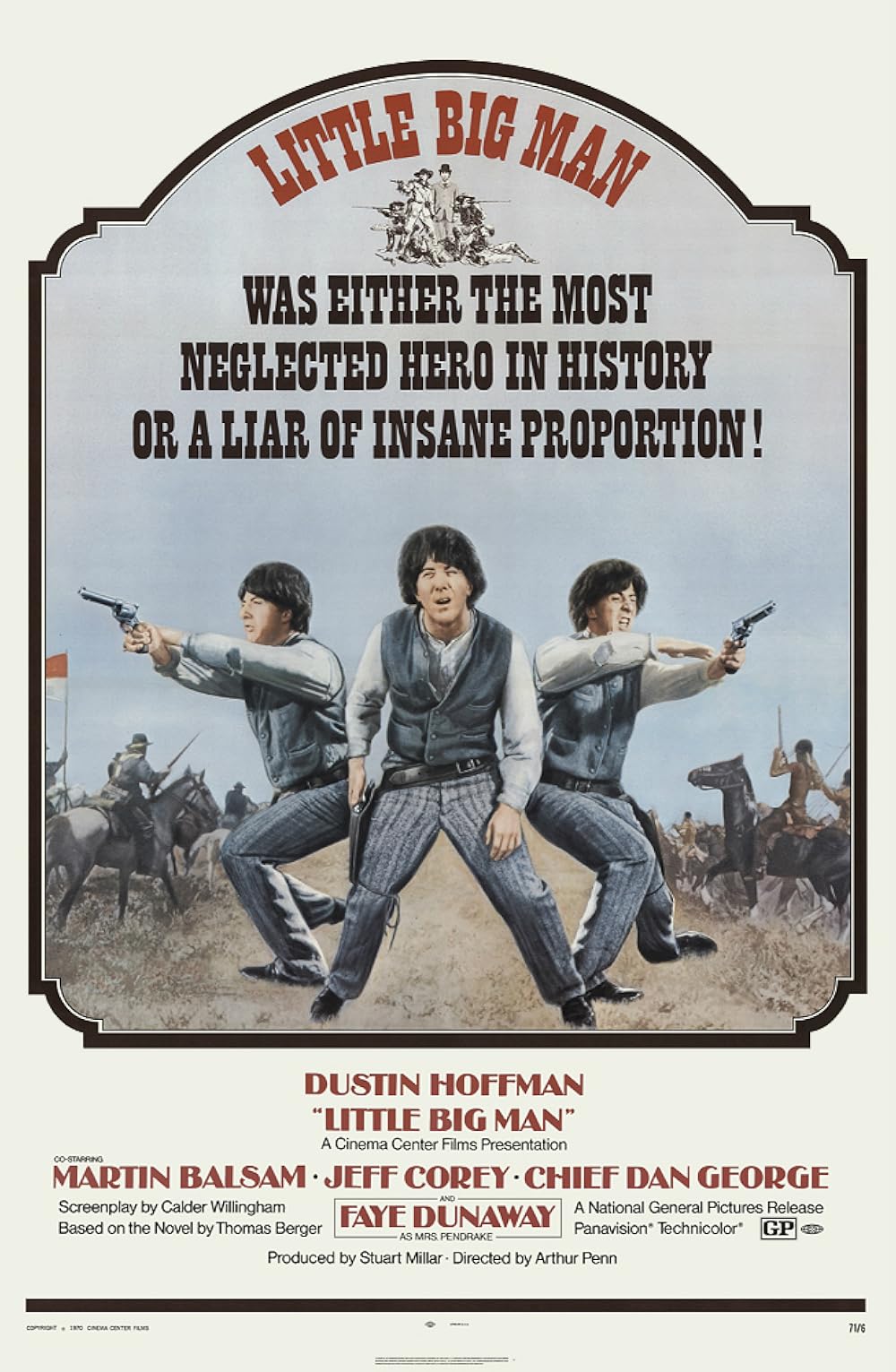
Jack Crabb (Dustin Hoffman) has reached the age of 121 and agrees to a taped interview with a reporter (William Hickey). He recounts his life events including being kidnapped by Cheyenne Indians in 1859 when he was 10 and befriending their tribal leader Old Lodge Skins (Chief Dan George) who gives him the nickname Little Big Man. He then goes on to elaborate other life events like being captured by the U.S. Calvary where he is placed in the home of a Reverend (Thayer David) and his beautiful wife (Faye Dunaway) who despite her professed Christianity is having an affair with a soda shop owner, which disillusions Jack from religion altogether. He also goes through his marriage to a Swedish immigrant named Olga (Kelly Jean Peters) and how she gets kidnapped by the Cheyenne during a stagecoach ride and Jack’s attempts to find her, which reunites him with Old Lodge Skins and leads him to meet General Custer (Richard Mulligan), who he initially admires, but eventually learns to despise.

The film is based on the 1964 novel by Thomas Berger of the same name and wonderfully mixes the whimsical style of that book into the movie and maintains overall an excellent balance between quirky moments, of which there’s many and jarring scenes dealing with Indian Massacres by the U.S. Calvary, which remains effectively disturbing and impactful despite all the humor that goes on in between. The impressive cinematography by Harry Stradling Jr. that manages to capture the Big Sky Country, filmed on-location in Montanna where many of these historical events actually occurred, in all of its glory and makes you feel like you’ve genuinely been physically transported back to that era.

The most amazing element though, which comes up right away, is the makeup effects on Hoffman where he’s made to look about as elderly as you can get and hats-off to makeup artist Dick Smith to achieve it in such an effective way. While aging of characters has been attempted in other films, I’ve never seen it so realistic as here and in fact it still holds claim even after all these years in the Guiness Book of World Records as ‘The Greatest Age Span Portrayed by a Movie Actor’. My only quibble is that his eyes as an old man appear to be blue even though for the rest of the movie Hoffman’s eyes are clearly brown.

The acting all around is superb starting of course with Hoffman and then moving onto Dunaway whose first attempt at comedy this was and she’s really funny if not a complete scene-stealer. Thayer David awesome too as her bombastic minister husband and I wished there had been more scenes with him. Chief Dan George is quite memorable as the Indian Chief, he became the first Native American ever nominated for an Oscar for his work here, in a part that was originally intended for Marlon Brando who thankfully turned it down as having a genuine Native American makes it so much more compelling. Great work too by the lesser-known Kelly Jean Peters whose frantic screams of terror, as she’s being kidnapped, I found to be both funny and frightening at the same time.

While it doesn’t affect one’s enjoyment of the movie, the film does have a few drawbacks, or moments that could’ve been done slightly better. Having Hoffman constantly come back into contact with people he had been with years earlier got a bit too cute for its own good. I was okay with some of it, like his reunion with the Indian Chief, but having him literally re-meet everyone he had known before got unrealistic and almost monotonous. I also couldn’t understand why the people he meets again don’t recognize him right away as is the case with Dunaway, as Hoffman has a very distinct face that really doesn’t change much even as he ages, so forcing him to have to remind her who he was should’ve been quite unnecessary. Same goes in reverse with the reunion with his sister, played by Carole Androsky, I immediately recognized her voice even before seeing her face, but for Hoffman it takes a long time to remember who she is, but if I the viewer could detect her voice right away why couldn’t he?

Another issue is when he meets his wife Olga many years later when she’s become a part of an Indian tribe. When he married her she had a very strong Swedish accent and due to the language barrier could only say a very few words, basically just ‘Yah’. Then, when he sees her again, she speaks fluent English, but how could she have learned that by being in an Indian tribe? Also, she had completely lost her accent, which I don’t believe would happen. I’ve known people who have lived in this country for 30 or 40 years, but where originally from somewhere else and no matter how long they’ve been here, or how ‘Americanized’ they may become they still retain their original accent, or at least sufficient hints of it.

Spoiler Alert!

There’s also issues with the General Custer character. Acting wise I felt Richard Mulligan nailed it as he integrates a great blend of comic self-importance to him, but on the satire end it goes a little too far. He gets portrayed as being a complete buffoon with a clownish logic and such a severe narcissistic ego he’s unable to realize when everyone else around him thinks he’s an idiot. There were many different issues that went into the Battle of Little Big Horn, or more commonly known as Custer’s Last Stand, and this movie answers it by saying the guy running it was a self-deluded moron, which I suppose comically and emotionally is satisfying, but doesn’t sufficiently tackle the others nuances that were also involved. There’s also the argument over the demise of Wild Bill Hickok though having him get killed by a little kid was historically inaccurate I felt it was so humorously ironic that I was willing to forgive it.

The ending, where in the book Old Lodge Skins dies, but in the movie he doesn’t, annoyed some fans as well. Director Arthur Penn admitted in interviews that the earlier script drafts had him dying, but then he felt that would be ‘too depressing’ so they had him live, but I felt with such a picturesque back drop that having him lay down for his final resting place was appropriate. He was really old anyways and had also become blind, so having him get up and be led away by Hoffman was just prolonging the inevitable anyways, so they might as well have him go down when it was his time as ‘cheating it’ like they do here doesn’t really add all that much.

My Rating: 8 out of 10

Released: December 23, 1970

Runtime: 2 Hours 27 Minutes (Uncut) 2 Hour 19 Minutes (Studio Version)

Rated GP

Director: Arthur Penn

Studio: National General Pictures

Available: DVD, Blu-ray, Amazon Video, PlutoTV, YouTube
The Adventure of Sherlock Holmes’ Smarter Brother (1975)

sherlock

By Richard Winters

My Rating: 6 out of 10

4-Word Review: Sibling solves the case.

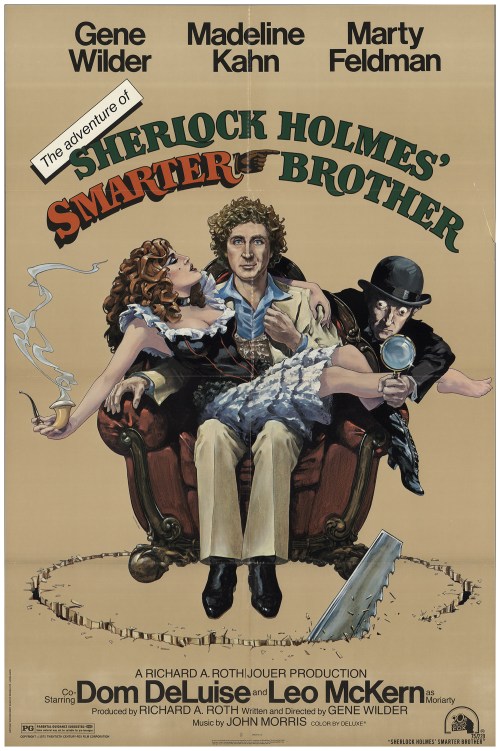
Gene Wilder plays Sigerson Holmes, the jealous younger brother of Sherlock, who is upset that his sibling is so famous for solving crimes while he sits in obscurity having not seen as much success though he feels he’s just as smart if not smarter. One day Sigerson gets a case that his brother doesn’t want to get involved in due to him desiring to lay low for awhile. It involves Jenny Hill (Madeline Kahn) who’s a beautiful music hall dancer who is being blackmailed by an opera singer named Eduardo (Dom DeLuise) over a lewd letter she sent him years ago. However, the document proves to be much more than just a letter and is in fact an important paper that foreign powers will pay high price to get their hands on. Eduardo agrees to sell it to the evil Professor Moriarty (Leo McKern), but will only hand it over to him during one of his operas, which Sigerson and his loyal partner Orville (Marty Feldman) plan to attend in order to intercept the paper before it gets into the wrong hands.

Gene Wilder was approached by producer Richard Roth to do a parody of Sherlock Holmes, but Wilder didn’t like the idea of poking fun of what he felt was an iconic character. Roth told him to think about it and then approached him a week later. By this point Wilder said he had come up with a better idea instead of it being about Sherlock it would focus on his jealous brother Sigerson. Roth found the premise intriguing and suggested Wilder begin writing the screenplay which he did while working on Young Frankenstein. Once completed he asked his friend Mel Brooks to direct, but Brooks declined saying he didn’t like working on projects that were not his own idea, so Wilder took the reins himself calling it a ‘terrifying commitment’.

While the movie has some good moments the Sigerson character is not interesting. For one thing he’s poorly defined. One minute he’s cunning and sharp and then the next he proves dimwitted and clumsy almost becoming another Inspector Clouseu. The comedy should feed off the character, but with it unclear whether he’s brilliant or buffoon it never catches its stride and for the most part the scenes with him in it are boring and the audience doesn’t care if he solves the case nor feel that there’s any redemption if he does. He’s also genuinely unlikable particularly with the way he snaps at Jenny Hill making you almost want to despise the guy and hope he doesn’t succeed. Also, if he really is Sherlock’s brother then I felt there needed to be some scenes with them together and the interplay between the two could’ve been amusing if done right, but this never happens.

Wilder directs the film the way most actors turning director do by having the scenes more extended and allowing the actors to drive the pace and momentum versus the editing. With a so-called ‘zany’ comedy like this that doesn’t work and there’s several segments that go on too long until it becomes dull and looking a bit amateurish. The biggest example of this is when Jenny arrives a Sigerson’s place to tell him about the letter. Their interplay doesn’t go anywhere and ultimately in order to get out of it the characters, for some unexplained reason, break-out into song and dance making it seem like its a musical, which it isn’t, but either way it’s dumb and not funny. During Jenny’s music hall show, which Sigerson and Orville attend, she sings a long song there too, which wasn’t needed and saps the comic energy.

There are though some offbeat moments much of which comes from McKern a usually serious actor who shines in his campy part and really plays it up to the point that he becomes the highlight. The part where he goes to a fortune telling machine, that he has inside his residence, is inspired and his visit with Eduardo in which the two strangely fondle each other and even go to bed together that gives off weird homoerotic vibes is good too in a sort of bizarre ‘what am I looking at’ type of way.

The best part though is when a giant saw blade cuts off the back of Wilder’s and Feldman’s trousers causing their bare behinds to be exposed. They then go to a formal dance party and shock everyone who sees their asses with them still not aware that they’re showing. What’s so interesting about this part is that they both have really good looking butts especially Feldman. You’d think with his freaking looking face that his rear wouldn’t be so hot either, but it amazingly is, so in keeping with our current male ass scorecard we still have Dabney Coleman, who bears his behind in Modern Problemscoming in first and Tim Matheson’s in Impulsebeing a close second and then Wilder and Feldman tying for third place.

My Rating: 6 out of 10

Released: December 14, 1975

Runtime: 1 Hour 31 Minutes

Rated PG

Director: Gene Wilder

Studio: 20th Century Fox

Available: DVD, Blu-ray

Roadie (1980)

roadie1

By Richard Winters

My Rating: 7 out of 10

4-Word Review: Truck driver and groupie.

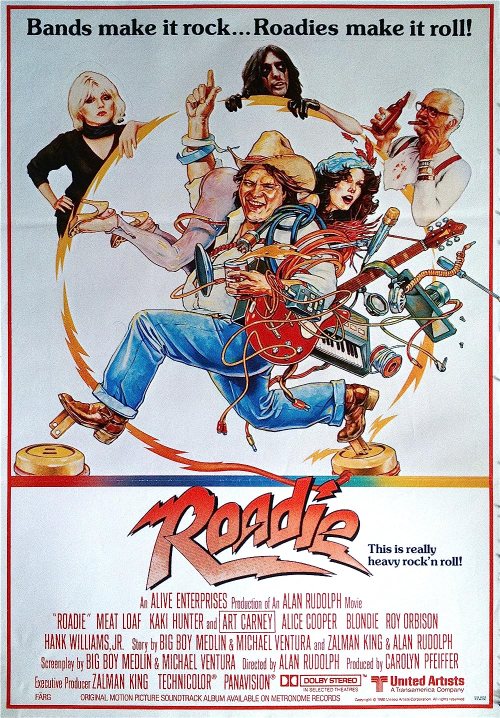
Travis (Meat Loaf) and B.B. (Gailard Sartain) are two truck drivers out making deliveries when they come upon a disabled RV on the side of the highway. Initially they don’t plan to stop, but when Travis sees Lola (Kaki Hunter), a would-be rock ‘n’ roll groupie, peering out the RV window he decides he’s ‘fallen in love’ and pulls-over. His ability to fix mechanical issues using unorthodox tools impresses Ace (Joe Spano) who’s a road manager and wants Travis to drive them to Austin to set-up equipment for a Hank Williams Jr. show. Because of his fondness for Lola he agrees and promptly quits his job as a trucker to travel all over the country meeting such rock ‘n’ roll legends as Roy Orbison and Blondie while also awkwardly courting Lola who’s more infatuated with meeting her idol Alice Cooper.

While director Alan Rudolph has never had a box office hit his movies have usually achieved success amongst the critics except for this one, but  I considered it his most original effort. Roger Ebert described it as being ‘disorganized and episodic’ even though life on the road in a tour group works that way with new issues coming up almost hourly and like driving on the open road there can be many detours and speed bumps as well as fleeting faces, which in that context the film recreates, in quirky comic form, quite well. He also complained about the lack of character development and maybe in Travis’ case there wasn’t much, but he’s such a funny caricature that I didn’t think he needed any. With Lola though I felt there was and impressed me with how much depth she ultimately showed especially since she initially seemed like nothing more than a caricature too. I really liked that she wasn’t as into Travis at the start like he was into her, which can happen a lot, and she has to grow into liking him during their many adventures though still never really openly admits to it to either herself, or others, which I felt was a refreshing change from the ‘love at first sight’ thing in the Hollywood formulas. Ebert also complained that the songs were never played to completion though the ones that are about Texas are.

There’s many unique laugh-out-loud moments. Some of my favorites was the laundromat scene where Travis and Lola have a box of Tide that supposedly holds cocaine. The car chase in Austin done at night in front of the state Capitol building is amusing as is the barroom brawl. Granted there’s been a lot of those in movies, but like with everything else it has a quirky style unlike the others especially as Travis gets hit in the head and begins rambling out incoherent nonsense. The scenes at Travis’ boyhood home where his father (Art Carney) and sister Alice Poo (Rhonda Bates) are a riot including the telephone booth connected to machine belts that allows it to go from the exterior of the home to the inside and the BBQ chicken eating scene, which may be, at least visually, the best moment in the film.

It’s also nice to have a movie that’s all about Texas to actually be filmed in Texas. Too many try to cheat it, a few of them have been reviewed here recently, that mask the Arizona desert, or even the California one to Texas, but anyone from the Lone Star State could easily detect the difference. This one truly has the Texas look and you can see this from the very first shot which features armadillos crossing the highway and because of this it gets the honor of being put into the Scopophilia movie category of ‘Movies that take place in Texas’ versus the ones that say they are set here, but filmed elsewhere.

Spoiler Alert!

Probably the only thing that doesn’t quite work is the ending where Travis and Lola are kissing in the front seat of a pick-up only to see a bright light of a spaceship. I realize the intent was to do a parody of the ‘Paradise by the Dashboard Light’ song and maybe if we had actually seen the ship, which got inadvertently destroyed before shooting began I might’ve forgiven it, or maybe even been impressed, but entering in a sci-fi genre that late becomes almost like a sell-out and too surreal for its own good. Something that stayed true to the playful quirkiness that came before it would’ve tied the bow better.

My Rating: 7 out of 10

Released: June 13, 1980

Runtime: 1 Hour 45 Minutes

Rated PG

Director: Alan Rudolph

Studio: United Artists

Available: DVD, Blu-ray

Zelig (1983)

zelig1

By Richard Winters

My Rating: 4 out of 10

4-Word Review: Wanting to fit in.

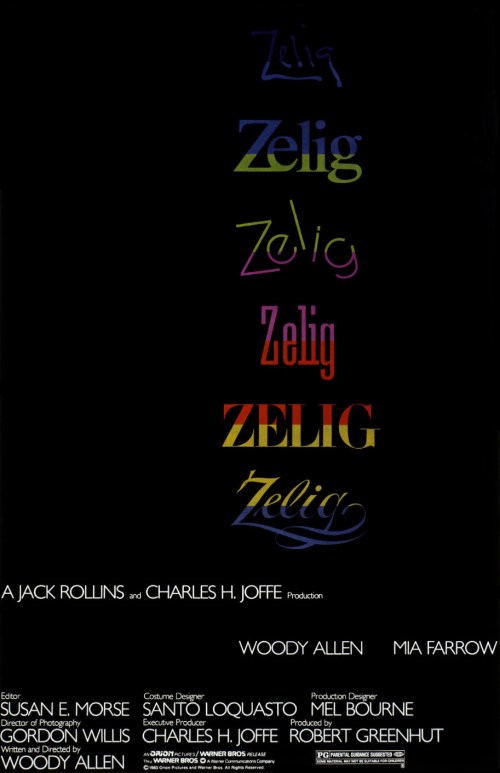
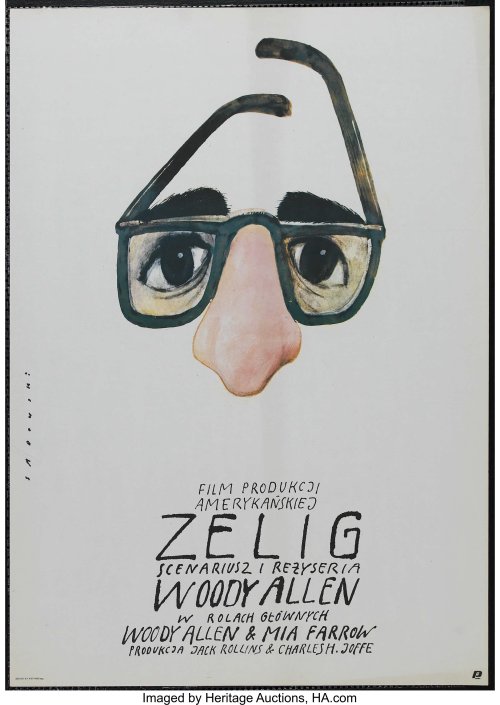
Leonard Zelig (Woody Allen) is a man living in the 1920’s and 30’s who has an uncanny ability to reflect the personalities and features of those he’s surrounded with. Even if he’s in the company of someone of a different race, or ethnicity, he can still acquire their traits, including their skin color, until he looks exactly like them. He becomes known as a the human chameleon and Dr. Eudora Fletcher (Mia Farrow) , a psychiatrist, becomes determined to find the root cause. She takes him on as a patient and under intense hypnosis comes to the realization that his deep need to be liked by others causes him to conform to the most extreme ways imaginable. Through her therapy she gets him to become more confident in expressing his own opinions, but this leads to him arguing with others over the most mundane reasons, which leads to several fights. She again puts him under hypnosis, so that he’ll become more of centrist, but this then leads to even further complications.

Allen was inspired to do this movie when his friend Dick Cavett was hosting a history series on HBO and a segment was done where Cavett’s likeness got spliced into an historical image. While the effects of using old newsreel footage and photos from long ago and inserting in cast members to make it seem like they were there when the picture was taken may not seem like that big of a deal today, but back in the 80’s it was very much talked about. I remember an entire segment of CBS Morning News hosted by Diane Sawyer going in depth about the ‘incredible’ special effects and ‘how did they do it?’ With digital filmmaking and movies like Forrest Gump we’re used to it, but back then it was state-of-the-art and got nominated for several awards. To help make it look as authentic as possible cinematographer Gordon Willis used vintage cameras and lenses from the 20’s and then stomped on the negatives of the film in his shower to help create the crinkles and scratches.

While telling the story through newsreel footage is certainly diverting and many times amusing I was fully expecting after about 20 minutes or so that it would eventually become more like a normal movie with the plot being propelled by actual characters, dialogue, and conventional scene structure, but instead it sticks with the novelty until the bitter end, which for me was a mistake as it makes the viewer too detached from the people in the movie to the point that they become distant caricatures that we really care nothing about. Much comedy is also lost as everything hinges on the voice-over narration of Patrick Horgan and how he describes what’s going on versus having it played out. A great example of this is when Allen gets into an argument with someone over whether ‘it’s a nice day, or not’, but all we see of it is some grainy, black-and-white figures in a distance that appear to be squabbling when witnessing the actual argument in real-time would’ve been so much funnier.

My favorite moment had nothing do with the special effects, but instead was the scene with Farrow and Allen where she tricks him, using reverse psychology, into admitting he really wasn’t a psychiatrist like her, and the movie needed more segments like this one. The vintage footage is nice for awhile and highly creative, but ultimately makes it come-off like a one-note joke, or an experimental film that’s misses the most basic elements of a good story, which is character development. It’s a shame too as Farrow gives a strong performance, which gets overshadowed. Usually she’s best at playing emotionally fragile types, but here is a strong woman and does quite well though I thought it was ridiculous that in color segments where here character is speaking in the modern day as an old woman another actress, Ellen Garrison, plays the part when they could’ve easily had Farrow doing it by dying her hair gray and putting on a few wrinkles. So much effort was put into the black-and-white vintage stuff that they forgot about the simplest of all special effects: stage make-up.

There’s also a host of other famous faces that have cameo bits as they talk about the fictional Zelig in the modern-day like historians discussing a past event, or famous person. Of these includes Susan Sontag, Saul Bellow, Irving Howe, and John Morton Blum, but like with the newsreel element it gets overplayed and derivative. It also brings to question what exactly was the movies’ point. Was it a satire on conformity and if so it could’ve gone much deeper, or poking fun at documentaries, which could’ve been played-up much more too. In either case it’s a misfire that’s engaging for awhile, but eventually, even with its short runtime, wears itself out.

zelig2

My Rating: 4 out of 10

Released: July 15, 1983

Runtime: 1 Hour 19 Minutes

Rated PG

Director: Woody Allen

Studio: Orion Pictures

Available: DVD, Blu-ray

Tapeheads (1988)

tape

By Richard Winters

My Rating: 5 out of 10

4-Word Review: Starting a video company.

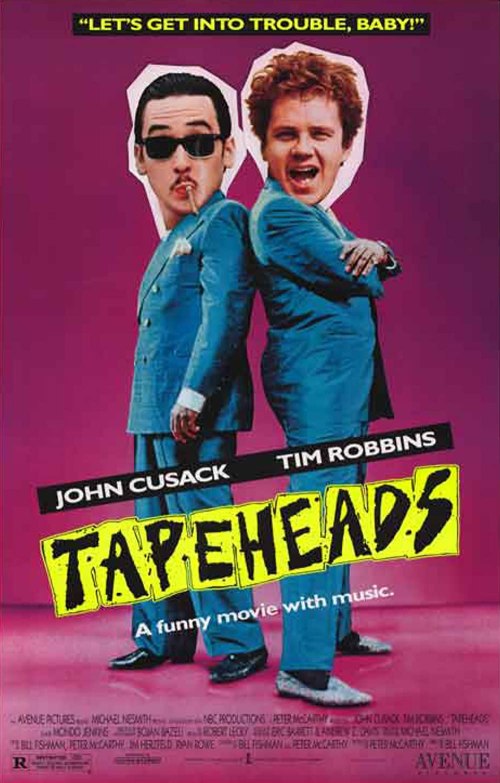
Ivan (John Cusack) and Josh (Tim Robbins) are two slackers who can’t hold down a job for too long. After getting fired as security guards they decide to start-up their very own music video production company, which they name ‘Video Aces’. They find it tough going with many people, like with one producer, the sly Mo Fuzz (Don Cornelius), trying to get them to do the work on spec where they’re forced to make the video using their own funds with the vague promises of potential money later on after they’re ‘discovered’. They finally hit-on the idea of promoting the singing duo the Swanky Modes (Sam Moore, Junior Walker) a soul group that the two idolized in the 70’s when they were kids. Their plan is to hijack a Menudo concert and have the Swanky Modes sing in their place and thus exposing their music to a whole new audience.

The film is produced by the former Monkee Mike Neismith, who had earlier produced the very successful cult hit Repo ManUnfortunately this one doesn’t work quite as well. Much of the problem is that it’s directed by Bill Fishman whose background is in music videos and not filmmaking and it shows. Repo Man succeeded because it was centered around a character and it also had a better mix of quirky comedy and story development. This one is handled in a more slap-dash way. Cusack and Robbins both give excellent performances, but are only seen intermittently and they never really grow or evolve like a character in a good movie should nor do they earn their way into the next scene. Instead they become almost like Barbra Eden from ‘I Dream of Jeannie’ where they just seem to pop in and out of these weird scenarios with bizarre people. The plot is thin and more like a collection of wacky skits. Even as satire it fails because it pokes fun of so many various things, in a completely rambling way, that it becomes unclear what the point, or message is supposed to be. There are certainly some clever, funny bits, but ultimately it comes-off more like an experiment gone awry than a movie.

While the cast is filled with a lot of recognizable faces most of them aren’t seen much. I was disappointing that Doug McClure, as Josh’s exasperated and disapproving dad, wasn’t in it more as he had he potential of creating some interesting confrontations. Susan Tyrrell gets wasted too, which is a shame as she talks here with a high society accent, but  I do remember her saying in an interview that she considered herself a ‘lazy person’ who only did movies for the money and would drop-out altogether if she didn’t need to earn a living, so in that respect maybe she didn’t mind the small bit. Lee Arenberg, who plays a security guard, is only in the beginning, but should’ve returned as he’s seen eating Twinkies while sitting on a toilet inside a public stall and anyone who does something that gross deserves more attention.

Some of the roles are bigger. Mary Crosby, the daughter of Bing Crosby, who starred in the infamous Ice Pirates, 5 years before this one, which virtually killed her film career before it began, does quite well here as a duplicitous agent and actually seems to get more screen time than the two stars. The aging Clu Gulager is quite funny as a Presidential candidate with major skeletons in his closet. The best one though is King Cotton (real name Richard Sony) who was the lead vocalist of the blues band Navasota in the 60’s. Here he plays a restaurant owner who partakes in a wacky music video to promote his business with one version shown during the film and another one called ‘Roscoe’s Rap’ that gets played at the end over the closing credits with both being quite memorable.

My Rating: 5 out of 10

Released: January 22, 1988

Runtime: 1 Hour 33 Minutes

Rated R

Director: Bill Fishman

Studio: Filmstar

Available: DVD, Plex

Real Men (1987)

real1

By Richard Winters

My Rating: 5 out of 10

4-Word Review: CIA negotiates with aliens.

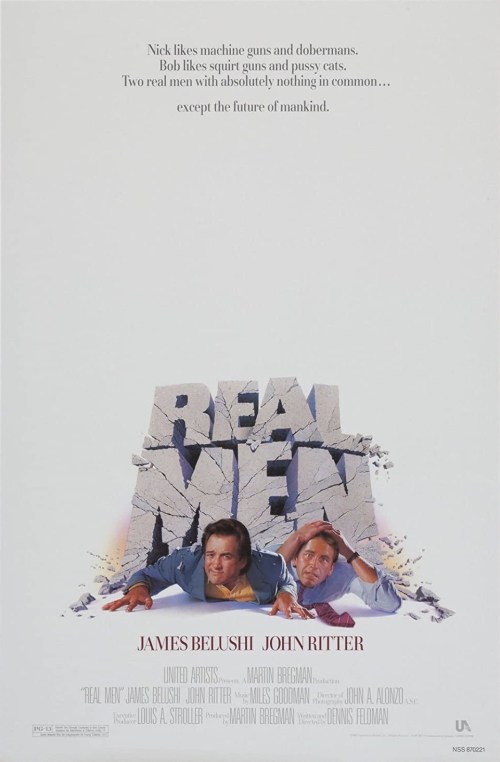
Insurance agent Bob Wilson (John Ritter) gets reluctantly recruited into becoming a CIA agent by another agent named Nick (James Belushi). Nick needs Bob because he looks very similar to an agent named Pillbox (Ritter) who was killed in the line of duty while going through a practice run of delivering a glass of water to some outer space aliens. The aliens had agreed to help the human race when the humans accidentally spilled a deadly chemical into the ocean that’s expected to destroy all life on earth in 5 years. The aliens give the earthlings two choices either the package that will help them clean up the toxic spill, or the other package, which is a deadly weapon that will destroy the planet. The only thing the aliens want in return is a glass of water delivered directly to them by Pillbox, but agents from other countries as well as rogue CIA members don’t want this deal to go through as they’d rather get their hands on the deadly weapon, so they kill Pillbox and now it’s up to Bob to make the water/package trade-off in Pillbox’s place, but Bob thinks Nick is crazy and doesn’t believe the story he’s telling him. Bob is also very timid and hates confrontations, so it’s up to Nick to give him the needed confidence while also stopping him from running away, which he does routinely.

Extremely odd mix of weird humor and sci-fi works for the first half before taking a completely downward spiral by the third. The script was written by Dennis Feldman, who spent years as a still photographer before deciding to try his hand at script writing after his brother Randy sold a couple of his own scripts that were made into movies. Dennis’ first one was Just One of the Guys and then his second was Golden Child, which sold for $330,000 and he was also given the opportunity to direct, but he declined the directing option feeling he wasn’t ready only to regret it when the director who ultimate was hired, Michael Ritchie, changed his story in ways he didn’t like. When the opportunity to direct came again he made sure to choose it.

Much like an indie flick the quirkiness is strong, but engaging. The humor is centered on the way it twists the logic around, so nothing works the way you’d expect while also playfully poking fun at tropes used in other spy genre movies. Ritter is terrific playing against type. Usually he’s the center of the comedy, but here he responds to the zaniness around him with perpetually nervous, shocked expressions. Belushi, with his glib responses and stoic nature where no matter how dire the situation he remains completely calm and collected, is funny as well and the two make a unique pair.

Unfortunately during the second half the chemistry gets ruined when Ritter’s character has this extreme arch where he goes from timid to overly confident. His confident side isn’t as funny and the way he’s able to beat-up anybody with just one punch gets highly exaggerated. I was okay with it occurring once or twice, but at some point his brazenness should catch-up with him. The movie acts like confidence is all you need to find success, but it can also backfire by putting one in situations that gets them way over-their-heads and for balance the story should’ve had this ultimately occur. You’d also think Ritter’s hand would be hurting, or even broken with the way he is constantly punching everybody. Belushi’s diversion into dating a BDSM queen bogs the pace down and takes away from the main action. The wrap-up offers no pay-off and the film despite its bright start fizzles.

Like with most 80’s movies it’s always fun seeing how things have changed as well as stayed the same. Humor-wise there’s a moment where at the time it was considered innocuous, but by today’s standards would be deemed offensive. It occurs when Belushi takes Ritter home to meet his parents where it’s revealed that his father (played by Dyanne Thorne of Ilsa movie fame) has had an operation to become a woman. This is spun as being ‘comically freakish’, but in today’s gender fluid culture would be portrayed differently. The element that remains the same is the portrayal of Russia, which at the time was considered the enemy and rival of the US and now even after the fall of communism and the supposed ending of the cold war, it’s still the same arch rival.

My Rating: 5 out of 10

Released: September 25, 1987

Runtime: 1 Hour 25 Minutes

Rated PG-13

Director: Dennis Feldman

Studio: United Artists

Available: DVD, Blu-ray

The Rubber Gun (1977)

rubber1

By Richard Winters

My Rating: 6 out of 10

4-Word Review: Making cash dealing drugs.

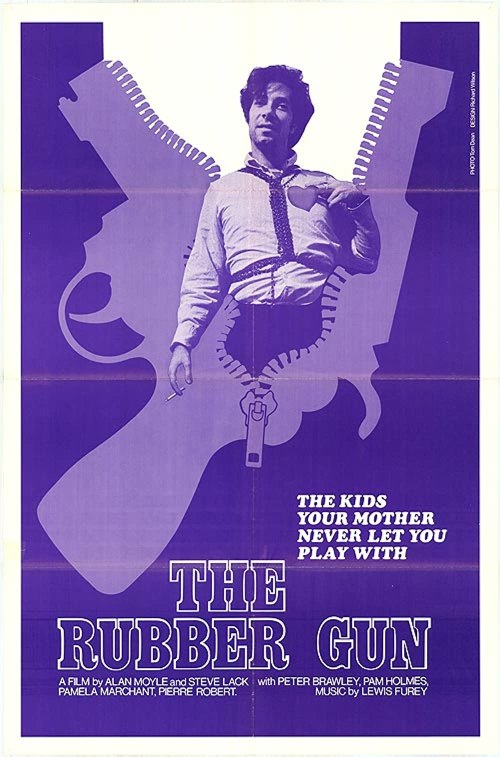
Steve (Stephen Lack) is a cash-strapped would-be artist who hasn’t made any money with his art exhibits in the past 5 years and has turned to drug dealing in order to bring in some income. He lives in a cramped, rundown studio apartment in Montreal with his makeshift ‘family’ who are also dealers as well as addicts. Bozo (Allan Moyle) is a student at nearby McGill University who is doing a thesis paper on drug use with the controversial position that it has positive effects and chooses Steve’s family as his subject, but without letting them know what he’s doing. Steve though is beginning to have second thoughts about being in the business as he sees what it does both on himself and those around him especially Pierre (Pierre Robert) a bi-sexual heroin addict who’s the father of a young daughter that he doesn’t seem able to take care of and whose addiction has caused him to become a narc with the police feeding him heroin in order to get info on Steve and the family.

Fascinating, experimental film that’s quite similar to Dealingbut with much more of an avante-garde flair. Director Allan Moyle, whose first film this was, takes the Paul Morrissey approach where he gives the actors a general idea of what the scene was about, but then lets the performers ad-lib the lines. The result is much more of a conversational quality where discussions ramble on a bit, much like in real-life, but remain revealing and amusing throughout.  Instead of feeling like you’re watching a movie it seems more like a documentary giving one a rare vivid view of the counterculture movement north of the border.

Probably the biggest surprise is Stephen Lack, who also co-wrote the screenplay and co-produced. I saw him in Scannerswhich he did 4 years after this one, and felt he gave one of the worst performances of a leading man I had ever seen and one of the main reasons that film didn’t succeed as well as it could’ve. Here though he’s amazingly engaging. Maybe it’s because he’s playing an extension of himself as I have no doubt that this is loosely based on his own experiences as a struggling artist, but the guy is quite funny in virtually everything that he says and does and I enjoyed how we see all different sides to his character from his partying one to more of a responsible one and by the end disillusioned with dealing. He even has a scene where he talks about regularly visiting his parents each week, who are quite conservative and unaware of his ‘occupation’, though it would’ve been even more fun to see the actual visit versus just discussing it.

My favorite character was Rainbow a small child, the daughter of Pierre and his girlfriend, who couldn’t have been more than 3 who goes on with her playing as the grown-ups in the room talk about drugs and other things. The image of innocence inside a room of jaded debauchery is darkly amusing. What’s better is that unlike most other movies she’s not given any cutesy lines to say and simply allowed to be herself, which makes her all the more engaging. Despite what’s initially perceived as ‘bad parenting’ you still get the feeling that these fringe adults do love the kid and in their dysfunctional way care for her, which ultimately makes the characters more appealing to the viewer instead of less.

The film has an obvious low budget look, with faded color, grainy stock, muffled sound, and choppy editing. Some may consider this a detraction, but it also helps accentuate the fringe realism with a kick-ass soundtrack to boot. In an era now where everyone his trying to make a movie on their phones with virtually no money this film should be used as a prime example on how to get it done by creating multi-dimensional characters and then allow the actors to fill-out the details through their improvisation, which helped lead writer/director/star Moyle to a Hollywood contract where he went on to make even more interesting movies on a bigger budget.

My Rating: 6 out of 10

Released: April 24, 1977

Runtime: 1 Hour 26 Minutes

Not Rated

Director: Allan Moyle

Studio: St. Lawrence Productions

Available: None

Move (1970)

move

By Richard Winters

My Rating: 1 out of 10

4-Word Review: Relocating to another apartment.

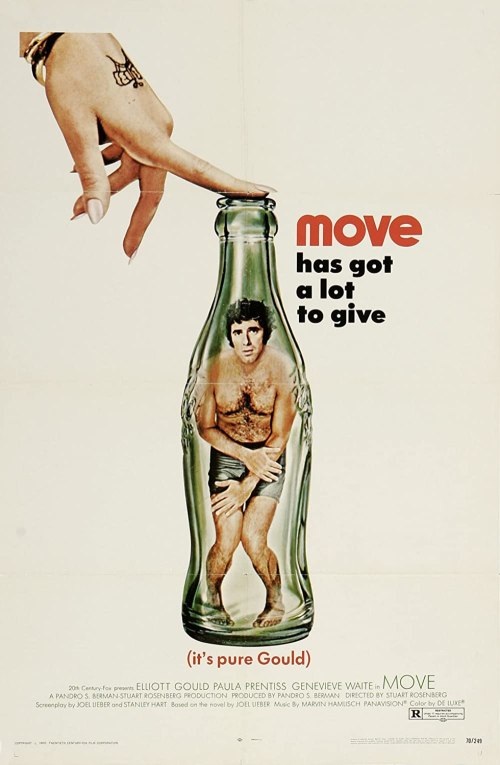
Hiram (Elliot Gould) dreams of being a successful playwright, but is only able to find work writing sex stories for adult magazines. He and his wife Dolly are both bored in their marriage, but find no alternatives, so they continue to exist in a union that no longer has any zing. They also prepare to move into another apartment, but complications with the movers and repeatedly strange phone calls from a man claiming to be holding their stuff hostage, only increases Hiram’s ongoing anxiety. Just when things begin to look completely bleak he bumps into a beautiful young lady (Genevieve Waite) one day while walking a dog. Just like a plot in one of his sex stories she invites him back to her apartment for an afternoon of unbridled passion. Hiram enjoys the visit and returns the next day for a rendezvous, but finds she no longer is there and no one he asks knows who she is. Was she simply a fleeting stranger, or a product of his over-active imagination?

While I’m a fan of quirky, offbeat comedies from the early 70’s this one doesn’t hit-the-mark. It’s quite similar in theme and style to Little Murdersa dark comedy that dealt with the alienation of living in New York City and also starred Gould, as well as The Steagleabout a man who enlivens his otherwise mundane life by living out wild fantasies in his head.  Both those movies had a far faster pace, which is what a zany comedy needs, and were able to distinguish the fantasy elements from the real-life. Here it gets confusing and you can’t tell it’s a dream until well into the segment. Since the rest of the movie is slow and boring the fantasy moments needed to be over-the-top to make-up for it, but instead they get underplayed making the whole thing a big, pointless mess.

Much of the blame could be squarely placed on 20th Century Fox who paid $85,000 for the rights to the novel before it had even been published. The studio execs apparently felt that the theme of apartment living in New York was trendy enough to be worth taking a risk on before even knowing if the story itself was workable. They labeled it ‘dirty Barefoot in the Park’ and gave the book’s author, Joel Lieber, who jumped to his death from his Upper West side apartment just a year later, the job of writing the screenplay. However, his lacking a background in screenwriting shows as there’s no cohesive structure. Assigning Stuart Rosenberg to direct, who up until then had solely focused on dramas, only helped to cement this thing into the disaster that it became.

I did enjoy the wild costume party that Gould goes to near the end where all the guests, many of them seen earlier in character roles, wear tasteless and provocative stuff, but the film doesn’t stay on this segment long enough to make sitting through the dull drivel that comes before it worth it. Waite, who’s the mother of Bijou Phillips and former girlfriend of Mama’s and Papa’s lead singer John Phillips, does offer some unique energy during her moments, which are alas too brief. Otherwise nothing else works. There needed to be more of a clear point to what we were seeing for instance revolving around all the crazy mishaps that can occur during a move, which could’ve been both funny and original, but examining the inner turmoil of the main character, in a medium that places emphasis on the visual, was a problematic idea that should never have been green-lit.

My Rating: 1 out of 10

Released: July 31, 1970

Runtime: 1 Hour 29 Minutes

Rated R

Director: Stuart Rosenberg

Studio: 20th Century Fox

Available: DVD-R

Stanley: Every Home Should Have One (1984)

stanley

By Richard Winters

My Rating: 4 out of 10

4-Word Review: Trying to be normal.

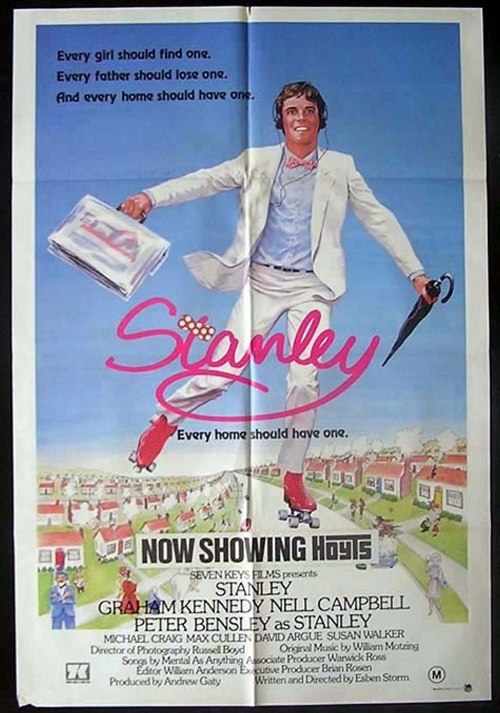
Stanley (Peter Bensley) is a lovable eccentric living on a boat for the past 10 years whose had limited contact with the outside world. His father Sir Stanley (Michael Craig) is a powerful business tycoon who wants his son to take over his company, but after Stanley tries to get the board members to eat dog food his father decides he’s wants his son committed until he can learn to be ‘normal’. Stanley doesn’t want to be put away, so he escapes from his father and moves-in with an adopted suburban family who he hopes can teach him the finer points of normalcy, only to find they are more screwed-up than he is. In the meantime his father hires his butler (Max Cullen), who at one time used to work for the secret service, to track Stanley down and bring him back.

Quirky might be an understatement for this odd comedy with an unusual sense of humor that some viewers might not appreciate, or even get. The script hinges on a lot of non-sequiturs and offbeat situations that are loosely tied together. The emphasis is on odd points-of-view that may appeal to some . For those who are game it kind of works with a fresh indie vibe though by the end it wears itself out.

The main character is likable, but not as unique as he should’ve been. He only acts bizarre at the beginning, but after that becomes pretty normal and only reacts and responds to the goofy people around. The film’s title acts like he’s ‘special’, but really he’s not. In fact Graham Kennedy and Sue Walker, who play the married couple he moves-in with, are far funnier and the movie should’ve centered entirely around them as they’re the only two that get any genuine laughs.

Stanley’s romance with Amy (Nell Campbell), a woman he meets at an employment agency, is a subplot that wasn’t needed. Amy comes-off as cold and prickly and her sister Sheryl (Lorna Lesley) seemed to be a better fit as she conveyed the same wide-eyed optimistic approach to life as Stanley while Amy was the complete opposite. His constant badgering her for a date makes him seem like a creepy stalker who won’t take ‘no’ for answer. Having her eventually cave to Stanley’s unending persistence sends the wrong type of message making it seem like harassment is a ‘good thing’ and can get the other person to eventually ‘fall-in-love’ with them if done right when in reality it almost always leads to a restraining order instead.

The film’s theme is the same as the one in the 60’s cult classic King of Hearts, where the ‘crazy’ people are actually the normal ones while those that are considered ‘normal’ are really screwed-up, but the message here is handled in a heavy-handed way and not particularly insightful. The comedy itself dies-out by the final third culminating in a tired, slapstick chase that doesn’t even include Stanley’s incredibly tiny red car, which was the only interesting element in the film and should’ve been used more for comic effect.

My Rating: 4 out of 10

Released: March 6, 1984

Runtime: 1 Hour 33 Minutes

Not Rated

Director: Esben Storm

Studio: Seven Keys

Available: None

The Check is in the Mail (1986)

check1

By Richard Winters

My Rating: 3 out of 10

4-Word Review: Suburban man drops-out.

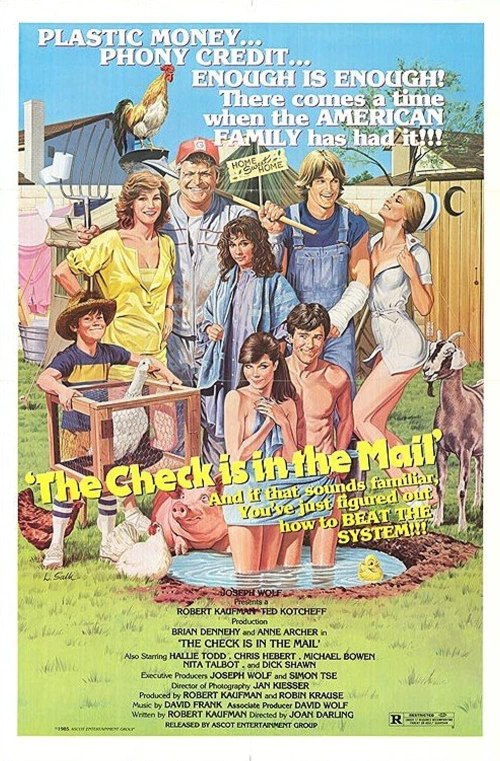
Richard (Brian Dennehy) is a married father who’s finding the suburban American Dream not as satisfying as he thought. While he does live a semi-comfortable existence the bills and other demands are making him stressed and he feels the only way to fight it is by dropping-out. He turns his front lawn into a vegetable garden, buys goats and chickens, and even turn-off the electricity. While this gives him some local fame and even a subject of a TV-news report, it does not go-off well with the rest of his family, but Richard, who used to be a social activist during his college days, feels the need to stay the course.

While the film has an interesting premise, the script, which was written by Robert Kaufman, who had success in the early part of his career, but was clearly slumming by this point, goes nowhere. It takes almost 40-minutes in before the dropping-out part even begins and before that meanders around in a lot of loosely related stuff that makes it seem almost like a sketch comedy and not a cohesive story. Certain elements, like Richard’s gambling problems, get glossed over and the film makes no attempt at analyzing anything in any type of realistic way.

With that said there were a few funny bits. The chant that Richard starts and gets others to follow along at an airport is good. Him taking the his car out for a spin in order to test out the supposedly repaired brakes while the forcing the mechanic (Richard Foronjy) to ride along is entertaining too. I also got a kick out of Richard vacationing in Hawaii and sleeping overnight by the pool in order to be able to get a deck chair and how everyone is so desperate to get one and keep it that when a man who cannot swim jumps into the pool no one tries to save him even his own wife for fear they’ll lose their seat. The neighbor’s birthday party, which gets disrupted by Richard’s goats and chickens, who inadvertently raid the place via an open window, is quite funny and the best part of the movie. There are though some really dumb moments like Richard’s wife (Anne Archer) visiting a psychiatrist (Harry Townes) that gets needlessly prolonged, cliched, and not necessary.

Dennehy is likable and while consumers getting upset and losing their temper in public at modern-day inconveniences was a little more socially acceptable then than it is now, as this behavior could get him labled a ‘male Karen’ by today’s standards, he’s able to pull it-off in a way that makes you want to cheer for him instead of judging him as being ‘entitled’. Dick Shawn and Nita Talbot appear late in the film as Dennehy’s neighbors in scenes shot after the main production had wrapped and done by a different director (Ted Kotcheff). While these moments help give energy to a film that otherwise flat-lines, and Shawn even ad-libs, it still would’ve been better had they been introduced earlier.

Dropping-out is certainly something that everyone has secretly thought of at one time or another, but this film doesn’t do it justice. It fails to dig deeply into the subject and misses out on a lot of potentially unique scenarios and insights. The result is a mish-mash of quirky concepts that doesn’t add up to much and fails to makes any type of meaningful, or impactful statement.

My Rating: 3 out of 10

Released: May 2, 1986

Runtime: 1 Hour 22 Minutes

Rated R

Director: Joan Darling, Ted Kotcheff (uncredited)

Studio: Ascot Entertainment Group

Available: VHS