Category Archives: Obscure Movies

Improper Channels (1981)

improper channels

By Richard Winters

My Rating: 1 out of 10

4-Word Review: The system is screwed.

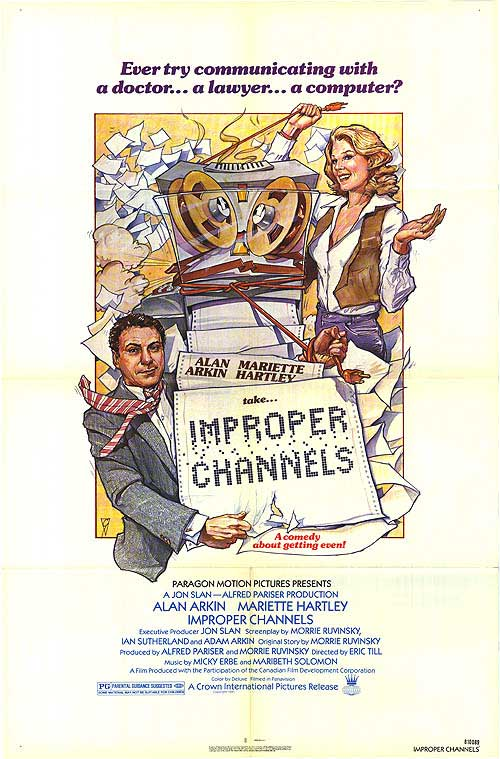
Jeffrey Martley (Alan Arkin) is a middle-aged man soon to be divorced from his wife Diana (Mariette Hartley) who is driving along in his car with his 5-year-old daughter Nancy (Sarah Stevens) when he is forced to put on the brakes quickly in order to avoid hitting another vehicle. Sarah, who was not wearing a seatbelt since there were no such seat belt laws at the time, falls to the car floor and hits her head. It is a minor bruise, but Jeffrey takes her to the hospital as a precaution. As the doctors are examining her social worker Gloria (Monica Parker) overhears Jeffrey’s conversation with the medical staff and thinks that the injuries may have come from child abuse. She takes the child out of his custody and puts her into a protected foster home while she uses the help of a computer expert (Martin Yan) to come up with as much dirt from Jeffrey’s past as she can in order to prevent him from getting her back. Jeffrey and Diana hire a lawyer and try to fight the charges, but find that the system is against them.

This is a wretched attempt at satire that never gets off the ground. Director Eric Till’s bland direction makes this thing look like a TV-movie and the majority of it is more like a drama. The comedy is not very funny and the little that there is comes off as forced and out of place. Jeffrey’s and Diana’s situation becomes more harrowing as it goes along and this thing probably would have worked better and been more riveting had they kept it at a realistic and dramatic level all the way through.

The social workers are portrayed as being completely inept, incompetent, and malicious without any balance making me wonder if the writers had a major grudge against them in real-life. Gloria’s boss Harold Cleavish (Harry Ditson) is particularly unlikable and comes off as an all-around prick in every way. However, he does get the film’s one and only funny line when he chastises Gloria for believing that the social services profession is about helping people:

Harold: I have been in social services for 9 years and in that time I haven’t helped anyone and I hope to God that I never will. If you really want to help humanity then become a prostitute.

Hartley is a wonderful actress and I will never forget her Emmy award winning performance in a guest spot on ‘The Incredible Hulk’ TV-show unfortunately her career never took off despite a great debut in Sam Peckinpah’s Ride the High Country. Today most people probably know her for her Polariod commercials that she did with James Garner back in the 80’s. Even so she is great here and gives the material more effort than it deserves. Arkin who has played the man against the system many times seems strangely reserved.

The most annoying thing about the film is the ending where Jeffrey turns-the-tables and tries sticking it to the system. Having an average man who works as an architect and has no special computer experience break into the computer systems of the social welfare office and erase his records and send everything on the fritz is too exaggerated. Having him dump out streams of computer printout paper from the office windows and line the city streets with it is too goofy and unbelievable to be even slightly humorous. The filmmakers display a limited and confused understanding of the technological revolution and treat it like it is nothing more than a passing fad that can be easily taken down by the common man. The pat and silly wrap-up makes light of an otherwise serious issue and thus makes the entire production stupid and pointless.

My Rating: 1 out of 10

Released: April 17, 1981

Runtime: 1Hour 32Minutes

Rated PG

Director: Eric Till

Studio: Crown International Pictures

Available: VHS

Tilt (1979)

tilt 2

By Richard Winters

My Rating: 4 out of 10

4-Word Review: She’s a pinball wizard.

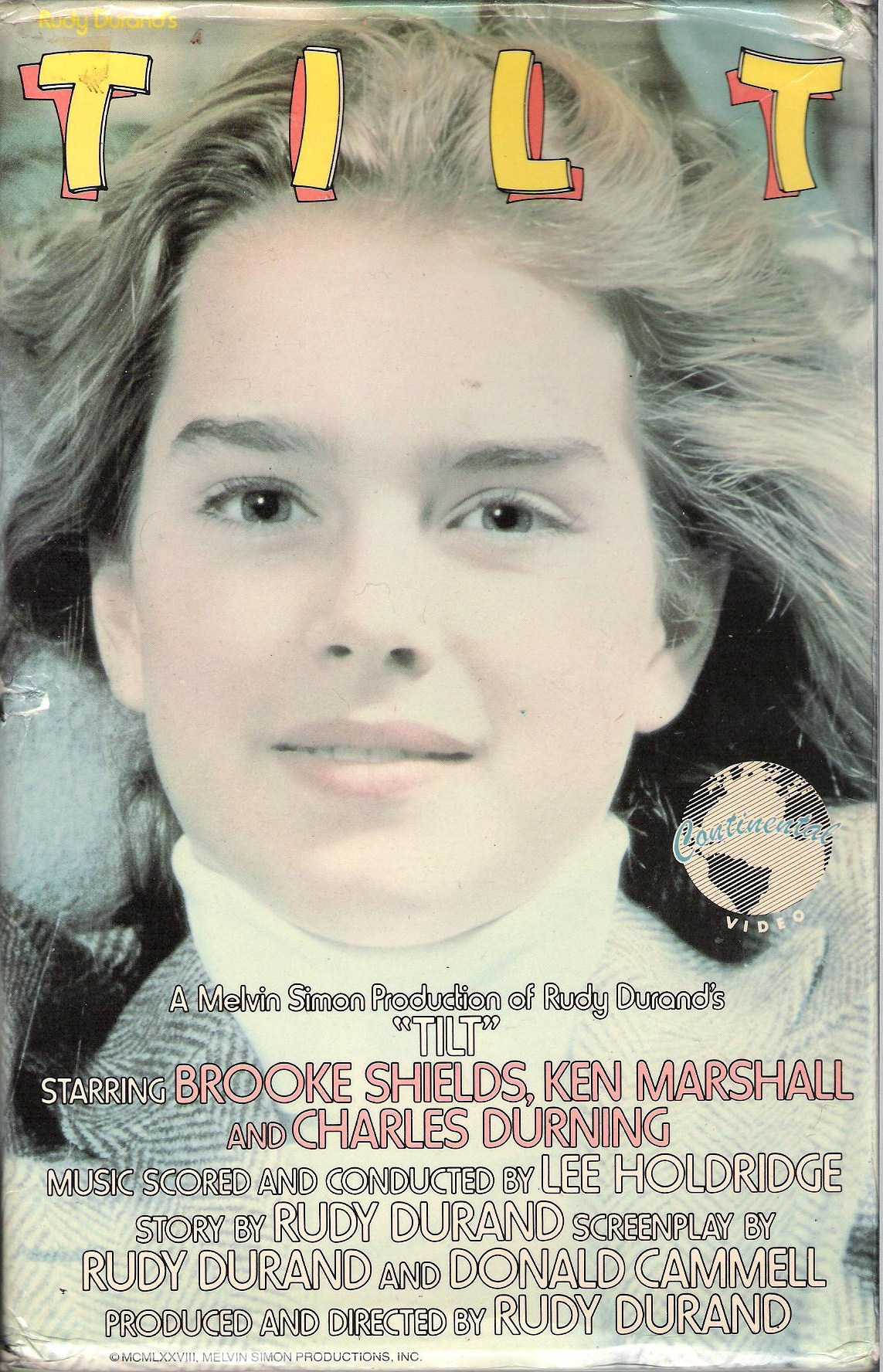
Brenda (Brooke Shields) who goes by the nickname Tilt is a 14-year-old pinball machine champion. When she becomes fed up with her overbearing father she decides to run away from home. She meets Neil (Ken Marshall) a man in his 20’s who is struggling to establish himself as a country music singer. He schemes to use Tilt’s pinball talents by hustling pinball patrons at bars and arcades around the country, but his real motivation is to have Tilt beat Harold Remmens (Charles Durning) who is nicknamed ‘The Whale’ due to his immense weight. The Whale is an arrogant bar owner who seems unbeatable at pinball and due to a few run-ins that he has had with Neil the two have become bitter enemies. Neil hopes to shatter his ego by having him get beat by an adolescent girl in a so-called pinball showdown, but Tilt has other ideas.

It is easy to see why this movie bombed at the box office and basically sat on the studio shelf for years. It seems to have no idea what audience to play too. There are too many adult references in it to make it suitable for teens especially preteens, but the story itself is so vapid that adults will be bored with it. The concept is offbeat enough that it might have worked as a comedy, or even parody, but director Rudy Durand approaches it as a standard drama, which due to the subject matter seems almost awkward. The 110 minute runtime is much too long for this kind of material and although it manages to move itself along it is never all that interesting with extraneous footage that should have been cut. Having faster cuts, juxtapositions, and even a non-linear narrative would have given it more energy and cinematic flair.

Having the action revolve solely around pinball games isn’t interesting. It is hard to follow the games and the constant footage of showing the inside of the arcade game as they are playing it becomes monotonous and fails to elicit any excitement. They is never any explanation as to what special skills Tilt or The Whale have that allows them to be so good, but it might have been a little more enlightening had one been forthcoming.

Shields is terrific and helps keep things afloat. She looks cute and wears pants with the words ‘pinball champ’ stenciled along her rear. Her ability and confidence at sharing scenes and holding her own with her much older adult counterparts is what makes her so special. One of the best scenes is when she hitches a ride with an ornery trucker (Geoffrey Lewis) who complains about the lack of morals in today’s world, but then turns around and tells her he has condoms in his shirt pocket and invites her to a rendezvous in the nearest hotel. Tilt says she will just as long as she can do it with both him and his wife, which gets her immediately booted out of the truck for being a ‘pervert’.

Marshall doesn’t have as much charisma as his younger female co-star and his Texas twang was a bit too strong for my taste. He travels the country and stays in the same hotel room with the girl knowing full well that she is only 14, but makes no sexual advances, which of course is good, but I kept wondering if this where the real world that he would most likely have tried something. I also found it strange that Tilt’s father (amusingly played by Gregory Walcott in a brief bit) wouldn’t have every police force in the country looking for her and once caught Neil would be thrown in jail even if he didn’t do anything because most likely no one would ever believe him.

Durning is excellent as always and gives the part a nice hammy turn and makes the movie, at least when he is in it, like the campy comedy that it should be. The little dance and moves that he makes while he plays the pinball games are amusing. His stomach bulges out even more than normal making it seem almost like he is pregnant. When Neil meets him after several weeks of not seeing him and states “You look like you have lost some weight” is the film’s one and only funny line.

The film’s final sequence in which Tilt and The Whale get together late at night in an empty bar and challenge each other to a pinball contest is the best scene in the whole movie. Their banter and interactions with each other gives the film a unique flavor. The surprise twist that occurs at the very end is cute and endearing and helps give this otherwise flat film more points than it deserves.

Also, look quick for Lorenzo Lamas and Fred Ward in small roles.

tilt

My Rating: 4 out of 10

Released: April 3, 1979

Runtime: 1Hour 50Minutes

Rated PG

Director: Rudy Durand

Studio: Warner Brothers

Available: VHS

A Child is Waiting (1963)

a child is waiting

By Richard Winters

My Rating: 7 out of 10

4-Word Review: Help for retarded children.

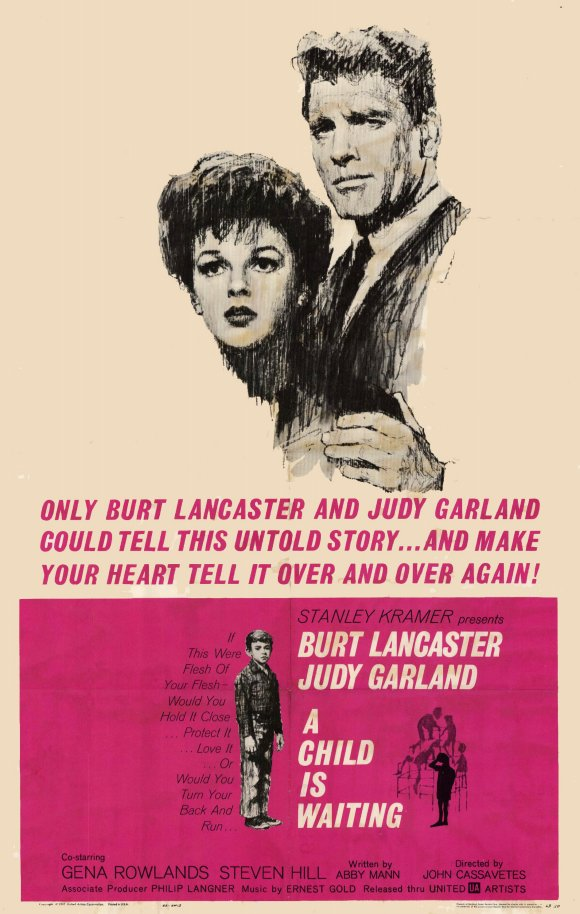
Jean Hanson (Judy Garland) is a woman looking for direction in her life. She takes a job with Dr. Matthew Clark (Burt Lancaster) who runs a school for children with mental handicaps. She finds the work to be more taxing than expected, but also forms a strong attachment to one of the boys named Reuben Widdicombe (Bruce Ritchey).  Dr. Clark notices this bonding and considers it to be a potential problem so his has Jean moved to another building, which causes Reuben to become very upset and displays his anger in all sorts of anti-social ways.

This film is raw and compelling and offering a refreshingly vivid non-sanitized look into work with the mentally handicapped. Director John Cassavetes and screenwriter Abby Mann take off all of the Hollywood gloss and shows things in a real and uncompromising way. The majority of the children are disabled and not actors. Their responses and behaviors are genuine. Some of the best moments are when Cassavetes turns on the camera and then just let things happen particularly when Garland and Lancaster visit a hospital for mentally handicapped adults as well as when they put on a play celebrating Thanksgiving with the children as the performers.

The film is tastefully done and avoids showing some of the cruelties people with these disabilities go through and instead only talks about them lightly. What I really liked though was that it shows things from the adult perspective particularly those of the parents and the difficult adjustment they have as well as the array of emotions. The meeting between a group of doctors discussing which schools for which handicapped children should be given more money and which one of them had a better potential to being more self-sufficient was equally interesting. The movie also makes great use of silence to help propel the emotion and thankfully keeps the music to a minimum.

Garland was a good choice simply for her perpetual look of concern on her face, which remains throughout. However, she has a very worn and haggard appearance and looking much older than the forty years that she was and by looking at her here it should come as no surprise that a mere seven years after filming this she would be dead.

Lancaster is splendid and this may be one of his best roles of his already illustrious career. His soothing and calm voice is perfect for the part and his best moment comes when he patiently tries to teach the children how to correctly annunciate certain words.

Ritchey is good as the child and has a face that is very cute and full of expression. However, he seems to suffer from a severe speech impediment that makes it difficult to understand what he is saying. I wasn’t sure if he suffered from this in real-life, or it was just done for the part, but since he never appeared in any other film role makes me believe that he did.

Steven Hill is also superb playing Reuben’s father a man who turned his back on his son and virtually abandoned him when he was diagnosed as being mentally handicapped only to at the very end have a change of heart.

My Rating: 7 out of 10

Released: January 14, 1963

Runtime: 1Hour 42Minutes

Not Rated

Director: John Cassavetes

Studio: United Artists

Available: VHS

The Luck of Ginger Coffey (1964)

the luck of ginger coffey

By Richard Winters

My Rating: 7 out of 10

4-Word Review: He needs a job.

Ginger Coffey (Robert Shaw) is a middle-aged man living in Montreal whose dreams and ambitions far outweigh his grim predicament. He moves from one low paying job to another convinced that his lot in life will improve. His wife Vera (Mary Ure) decides to leave him and Ginger tries to win her back while juggling two jobs and hoping to get a promotion in one that never seems to come.

As a vivid look at the daily lives of the everyday working class this film hits a solid bullseye. The conversations between the co-workers and the monotonous and sometimes demeaning job interview process and Ginger’s on-going arguments with his wife and daughter are all true to form. There is no pretension and director Irvin Kershner keeps everything at a bare-bones minimum giving it almost a documentary style and making the viewer feel immersed in the bleak environment. The outdoor shots of the city are unexciting and cinematically unappealing, but help reflect the grim level. Watching Ginger get kicked out of his apartment and have to carry what is left of his belongings and then place them on the outside sidewalk while he goes in to visit his daughter in her school is quietly powerful.

Robert Shaw is excellent. This is a man who had by all accounts had a very dominating and proud personality in real-life and usually played characters with the same traits, so seeing him play against type and succeed is interesting. What is really effective is that he makes the character very human and likable despite his constant goof-ups, which keeps the viewer compelled to his situation.

Ure, who at the time was married to Shaw in real-life, gives an equally outstanding performance. Her perplexed facial expressions are perfect and the fact that we see her character grow and become more confident is good.

I also must mention Liam Redmond as Ginger’s cantankerous boss, who is nicknamed by his employees as ‘Hitler’. Ginger’s rushed job interview that he has with him is one of the film’s highpoints as is the moment when Ginger dashes away from him when he is caught making a personal phone call.

The only real complaint I have with the film is the ending, which is for the most part non-existent. I have seen vague wide-open endings in my movie viewing lifetime, but this thing is a cop-out and really boring one at that. I think when a viewer has spent nearly two hours empathizing with his difficult  and precarious situation that they deserve some sort of finality, or at least a hint of what became of him and whether he ever did find that ‘luck’ that he was so convinced was out there.

My Rating: 7 out of 10

Released: September 21, 1964

Runtime: 1Hour 40Minutes

Not Rated

Director: Irvin Kershner

Studio: Continental Distributing

Available: YouTube

The Power (1968)

the power 2

By Richard Winters

My Rating: 6 out of 10

4-Word Review: Who has the power?

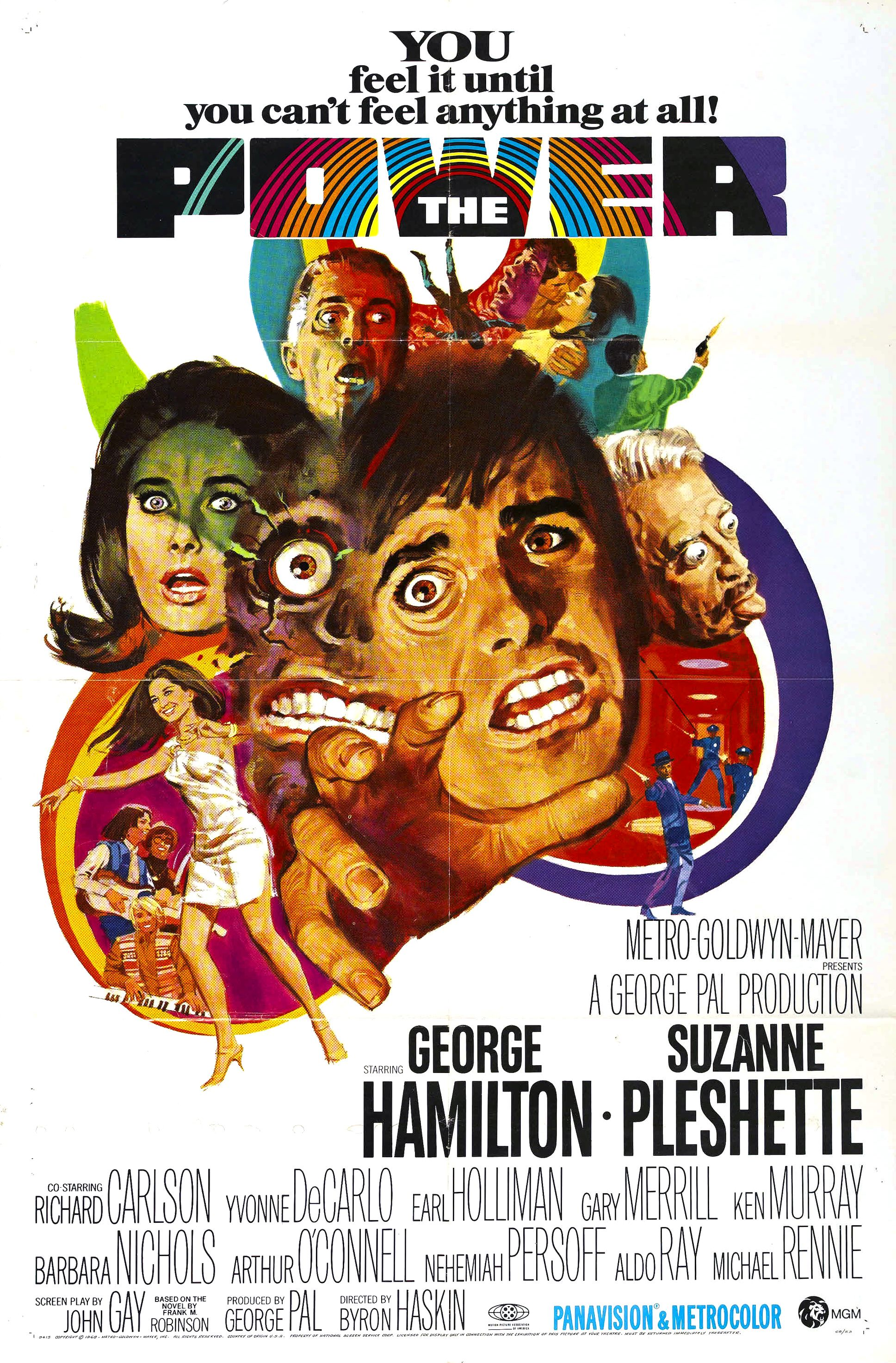
Professor Jim Tanner (George Hamilton) is the head of a scientific research group who come to realize that one of their members has strong telekinetic powers and is slowly killing off the other members one-by-one by fantastic and bizarre means. It is up to Jim and his assistant Margery (Suzanne Pleshette) to find out who it is and try to put a stop to it before they become his next victim.

There are definite shades to Agatha Christie’s classic mystery novel ‘And Then There Were None’ and in fact that title even gets mentioned here. Despite a pace that ebbs and flows Director Byron Haskin gives the proceedings a flashy and creative flair. Watching Jim getting attacked by toy soldiers in a display window is cool as is the part where he gets stranded in the middle of a desert. The ending features visuals of faces melting and skeletons dancing that reminded me a bit of the one in Raiders of the Lost Ark. I also enjoyed the scene showing an actual heart inside a man’s body getting squeezed and forcing it to stop.

The supporting cast is fabulous and almost of half of the film’s entertainment alone. Yvonne De Carlo is terrific in a brief, but fun bit as the tipsy wife of one of the victim’s. Gary Merrill is solid as a hard-bitten police detective and Aldo Ray is good as a menacing bad guy. Michael Rennie better known for his starring role in another sci-fi classic The Day the Earth Stood Still is effective here as the mysterious Arthur Nordlund, but my favorite of them all would have to Arthur O’Connell as the nervous and high-strung Henry Hallson. The look on his face after he is spun around at high speeds in a space compressor is probably the film’s best moment.

Where the film fails is that this mysterious person’s powers are much too broad with no limitations of any kind. I can handle the idea of telekinesis, but this guy can also make walls of buildings grow and make doorways disappear. He can even change the words on street lights to go from ‘Don’t Walk’ to ‘Don’t Run’. To me this made it seem too fabricated and far-fetched. Even in sci-fi there needs to be same perimeters and basis of logic of some kind and this film offers none. The fact that there is never any explanation given for how this person got these amazing powers, or what might have caused it makes it even weaker and hurts what is otherwise an interesting idea.

My Rating: 6 out of 10

Released: February 21, 1968

Runtime: 1Hour 48Minutes

Not Rated

Director: Byron Haskin

Studio: MGM

Available: DVD (Warner Archive)

Antonia and Jane (1991)

antonia and jane 1

By Richard Winters

My Rating: 7 out of 10

4-Word Review: Friends aren’t always friends.

Jane (Imelda Staunton) is a depressed single woman slipping into middle-age and jealous of her lifelong friend Antonia (Saskia Reeves) who she feels is prettier and gets all the breaks. Jane pours her thoughts out to her therapist (Brenda Bruce), but the twist is that Antonia sees the same therapist and is having the same problems only in reverse as she is jealous of Jane. The first half-hour looks at things from Jane’s point-of-view while the second half shows it from Antonia’s.

The element that really makes this movie so enjoyable is the cutaways. Everything talked about during their sessions is recreated visually. These recreations are all quite funny. Some of my favorites are when Jane talks about a trip to Canada and we see her pushing over a tall pine tree with one hand. There is also the segment where Antonia’s 10-year-old son gives a raunchy stand-up comedy routine to his friends during his birthday party. The part where the two find themselves trapped in an old French war movie complete with them speaking fluid French and subtitles is quite creative as is the many different and colorful outfits that the two wear each year when they get together for their annual visit with the other.

Somehow friendships between females are quite different than the ones of their male counterparts. Harbored jealousies and insecurities seem to always lurk beneath the surface no matter how ‘happy’ their facades and this film explores them with biting and accurate detail as well as showing how skewed people’s perspectives can sometimes be. I also found myself digging the name Antonia and wondered why we don’t hear more women named that so…

Memo to all young couples and parents to be: Let’s get a few more  Antonias out there and a few less Ashleys. Thank You.

The Howard character played by Bill Nighy is also quite amusing. Jane meets him at an art exhibit where he displays big blown-up black and white photographs of twenty-four different naked rear-ends. The two go down the line and analyze each and every one, which in a strange way I thought was kind of interesting. I also got a kick out of the way he asks Jane out on a date.

Howard: Are you involved in a long-term monogamous mutually self-absorbed sexual relationship?

Jane: No.

Howard: Me neither.

In an effort to keep the quirkiness going the two women characters sometime do strange things that at times makes them hard to relate to and is the film’s only real weakness. For instance Antonia tells Jane that she is having an affair with Jane’s husband and Jane becomes very supportive of it and attends their wedding even though most people would probably want to kill their friend if they told them that and the unfaithful husband to boot. There is another scene where Antonia meets a stranger at a theater and goes back to his place for sex and even allows herself to get tied up during some kinky bondage games, which most viewers will consider being too reckless and putting oneself into too vulnerable a position with someone they don’t even know.

Usually films that seemed obsessed with tying everything together get overdone and annoying, but here the ironies are hilarious and become funnier as it goes along. Strangely it is the very end where the film loses it flamboyance and instead gives us a nice, simple scene of genuine human affection that leaves the strongest impact in this very offbeat and entertaining gem.

My Rating: 7 out of 10

Released: November 2, 1991

Runtime: 1Hour 15Minutes

Rated R

Director: Beeban Kidron

Studio: Miramax

Available: VHS

All the Way Home (1963)

all the way home 2

By Richard Winters

My Rating: 8 out of 10

4-Word Review: Life must go on.

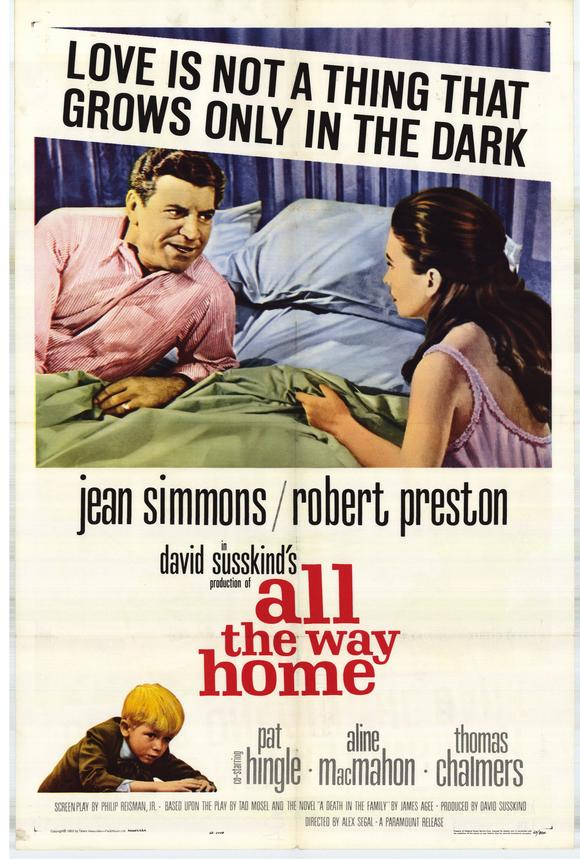
Based loosely on the childhood experiences of writer James Agee who is best known for penning the screenplay to the classic film Night of the Hunter.  The story here looks at how a southern family copes and in particular the young boy Rufus (Michael Kearney) after their father (Robert Preston) is tragically killed in a car accident.

Based on Agee’s unfinished novel ‘A Death in the Family’, which was also made into a stageplay the film makes loving tribute to the era. The sets and even the Model T car driven by the father are all authentic. In fact it was filmed near the exact neighborhood in Knoxville where Agee grew up. The mannerisms and dialogue are true to the period without any compromising for a more modern audience. The revisionism which has become so trendy in today’s period piece films is thankfully missing here. The slower and gentler pace seemed reflective of the era and I found it refreshing.

Preston gives one of his best roles second only to his signature one in The Music Man. He doesn’t get killed until the second half of the film, so the viewer gets to know and like the character and thus feels the pain of the loss along with the family members. We never see the actual accident nor given any explanation for what happened, which is just as well. Too many times filmmakers seemed compelled to have to give a reason for everything even though in life that is not always possible, so it is nice that here they did not fall into that trap. This emphasis instead is on how the family members cope and the emotional impact of the loss, which is something everyone must go through at some point and it ends up being quite compelling.

Kearney gives a terrific performance and one of the best from a child actor that I have seen. He is cute without ever being precocious. Watching him observe everyone else around him are some of the best moments in the film. It also brings up the great point that sometimes children are better at adapting to tragic events than their adult counterparts.

Durable character actor Pat Hingle gives one of his most interesting performances as Preston’s nervous and hyper brother. Preston has a great line in describing him when he says: “Talking to him is like putting socks on an octopus.”

Aline MacMahon is good as the kind, but stern aunt. I particularly liked the moment where Rufus falls to the ground in an emotional tantrum, but she restrains the others from helping him and insists that it is important that he learns to get himself up on his own. Jean Simmons as the mother and wife is also splendid, but seems to get better as the movie progresses particularly in her conversation with Rufus at the end, which is touching.

My Rating: 8 out of 10

Released: October 17, 1963

Runtime: 1Hour 37Minutes

Not Rated

Director: Alex Segal

Studio: Paramount

Available: Amazon Instant Video

The Flim-Flam Man (1967)

flim flam man 2

By Richard Winters

My Rating: 6 out of 10

4-Word Review: Con-man finds apprentice.

Curley (Michael Sarrazin) is a young army deserter living in an over-turned and abandoned freight car in the rural regions of Kentucky. By chance he meets up with Mordecai Jones (George C. Scott) a traveling con-man who decides to use Curly as his apprentice as well as his assistance in some of his more elaborate schemes. At first Curley goes along with it, but when he fall in-love with Bonnie (Sue Lyon) one of Mordecai’s intended victims he decides he wants out much to Mordecai’s reluctance.

Scott really shines and this may be his best comic performance. Although he was only 38 at the time he looks and acts like a genuine old man even though his gray hair looks like it was frosted on much like what is done to white Christmas trees. In some way it might have been more authentic had an older actor played the role, but Scott is so much fun in the part that the movie may not have worked as well.

Sarrazin is solid in support. His quiet demeanor and understated performances never allowed him to get the recognition that he deserved, but he was always effective in these types of roles and having the character walk the moral tightrope and sometimes fall off makes him interesting and believable. Lyon is also good as the romantic interest. Although I felt the romance bogged things down a bit I still enjoyed her natural acting style that is devoid of any pretension.

Harry Morgan is fun as the headstrong sheriff who chases after Mordecai and Curly as is Albert Salmi as his dim-witted deputy. Salmi’s blank looking facial expressions are tops and the car chase that they have with the two culprits features some impressive comical stunt work and seems to tear-up the entire main street of the town.

The soundtrack by Jerry Goldsmith has wonderfully soothing melody with some great harmonica and trumpet solos. The on-location shooting in Kentucky captures the countryside and the hazy late summer sunshine of the region well.  For the most part the film is quite amiable and amusing, but predictable. The script lacks the unexpected twist or unique insight that would elevate it above being just the fluff that it is. The ending, which features Curly rigging the courthouse with dynamite and threatening it blow it up has a touching quality to it, but proves frustrating as it doesn’t show us what ultimately becomes of the characters.

My Rating: 6 out of 10

Released: August 22, 1967

Runtime: 1Hour 44Minutes

Director: Irvin Kershner

Studio: 20th Century Fox

Available: VHS 

Gaily, Gaily (1969)

gaily gaily

By Richard Winters

My Rating: 5 out of 10

4-Word Review: Naive fellow becomes wise.

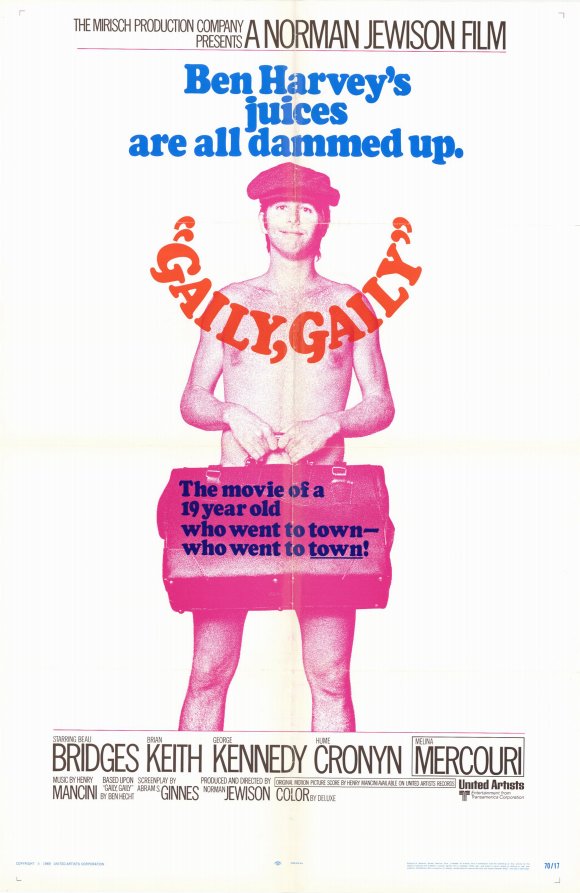
Ben Harvey (Beau Bridges) is a sheltered young man who decides to leave the safe confines of his humble little town and make a go of it in the big city of Chicago in 1910. However, soon after arriving he is robbed of all of his money and then taken in by Lil (Melina Mercouri) a Madame at the local brothel. Ben then gets a job at the city newspaper, but finds corruption at every turn and when he tries to stop it he ends up falling victim to its allure like everyone else.

The first hour is engaging. It features just the right mix of Americana and whimsy. The pace is quick with a wonderfully quirky sense of humor that comes flying fast and furiously. Opening the film by having Ben dreaming of topless women and featuring some very old turn-of-the-century black and white porno pics is funky. I also liked the scene where Ben manages to make all the prostitutes at the bordello he is staying at teary-eyed after reading them a sad story that he had written. The look at Lil’s face when he tells her that his life’s ambition is to ‘change the world’ is a hoot.

Unfortunately the second half deteriorates badly. The scenes become stretched out too long and the attempts are farcical humor lack any cleverness. The side-story about the attempts of a mad scientist Dr. (Charles Tyner) at using a serum he has invented to revive the dead is stupid. The slapstick like chase sequence gets overblown and the whole thing ends on a flat and boring note, which is a shame. The sets and costumes recreating the period atmosphere are wonderful, but put to waste by the silly script. I felt the film could have been more interesting had it taken a more realistic and dramatic route.

Bridges is actually pretty good. He has played the wide-eyed idealist so many times that it becomes a bit annoying, but here he seems to be making fun of it and it works to an extent. However, his extreme naivety at not catching on that the women he is living with are prostitutes is just too over-the-top and makes you almost want to hit him on his head in order to drive some sense into it.

Brian Keith does well playing the type of gruff, brash character that he excels at. George Kennedy though seems stiff and out of place in the setting and does not appear to be particularly adept at comedy.

Mercouri looks to be having a lot of fun here and her singing isn’t bad either. Margot Kidder is fantastic in her film debut and one of the best things about the film. She plays one of Lil’s prostitutes who takes a liking to Ben and I enjoyed how her character goes from being jaded to idealistic and rather naïve. Melodie Johnson is great simply because she is gorgeous to look at. She is now a successful novelist and judging from the pictures on her website is still looking quite attractive.

My Rating: 5 out of 10

Released: December 16, 1969

Runtime: 1Hour 47Minutes

Rated R

Director: Norman Jewison

Studio: United Artists

Available: Amazon Instant Video, Netflix streaming

The Birthday Party (1968)

the birthday party 3

By Richard Winters

My Rating: 8 out of 10

4-Word Review: Tear up the newspaper.

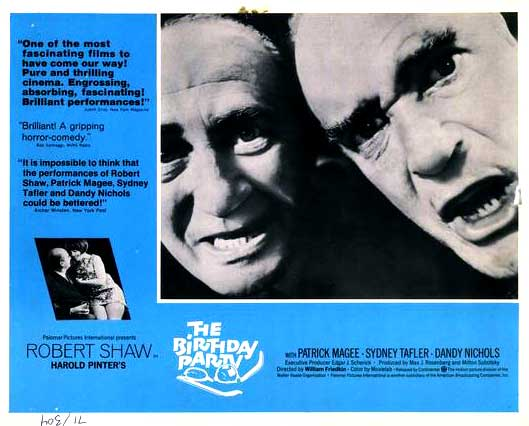
Since tomorrow will be my birthday I wanted to come up with a film that had birthdays as its theme and found this bizarre but fascinating obscurity. It is the story based on the play by Harold Pinter of Stanley Webber (Robert Shaw) a mysterious and private man who takes up lodging in a rundown British seaside house. He rents an upstairs room from Mr. and Mrs. Bowles (Moultrie Kelsall, Dandy Nichols) who are quite odd themselves. One day two men dressed in black suits (Patrick Magee, Sydney Tafler) come to pay Stanley a visit. They know something about Stanley’s past and their presence frightens him to the extent that it causes him to have a nervous breakdown.

On the surface this film shouldn’t work. There is an excessive amount of talking with dialogue that doesn’t say much and at times seems absurd. The set is drab and dirty with the camera seemingly locked down inside of it. There is never any explanation about Stanley’s past or what he is running from nor who the men are or what they know about him. The ending is elusive and the viewer will go away feeling more confused than they did at the start.

However, it is these ingredients that make the film so thoroughly intriguing. The seemingly banal dialogue is simply a façade for underlying thoughts and feelings. What Stanley is trying to run from is unimportant because it is really not about him at all and is instead more about ourselves, human nature and the quandary of our existence. It’s an examination of people’s futile attempts at trying to escape from who they are only to have society and life catch up with them. The set could be a metaphor for the inside of Stanley’s head. The grimy and decayed place symbolizes his decayed soul and the men in black suits are his conscience coming to haunt him.

Once you adjust to the eccentric narrative it then becomes a fantastic film for observing subtitles and nuance. Director William Friedkin shows a keenness for detail not only visually, but with the sound as well. The way the Magee character tears up a newspaper and the sound used for it could actually unnerve some viewers. Stanley’s meltdown scene is very unique and overall the direction is superb for such difficult material.

This movie was years ahead of its time, but for some it may be off-putting. However, it should be enjoyed by those who crave the avant-garde. It is also a rare chance to the see the normally strong-willed Shaw playing a very weak and vulnerable character. Nichols is also a stand-out playing an Edith Bunker type with a perverse streak lying just beneath the surface.

the birthday party 1

My Rating: 8 out of 10

Released: December 9, 1968

Runtime: 2Hours 3Minutes

Rated G

Director: William Friedkin

Studio: Palomar Pictures International

Available: VHS, DVD (Region 2)