Category Archives: Mystery

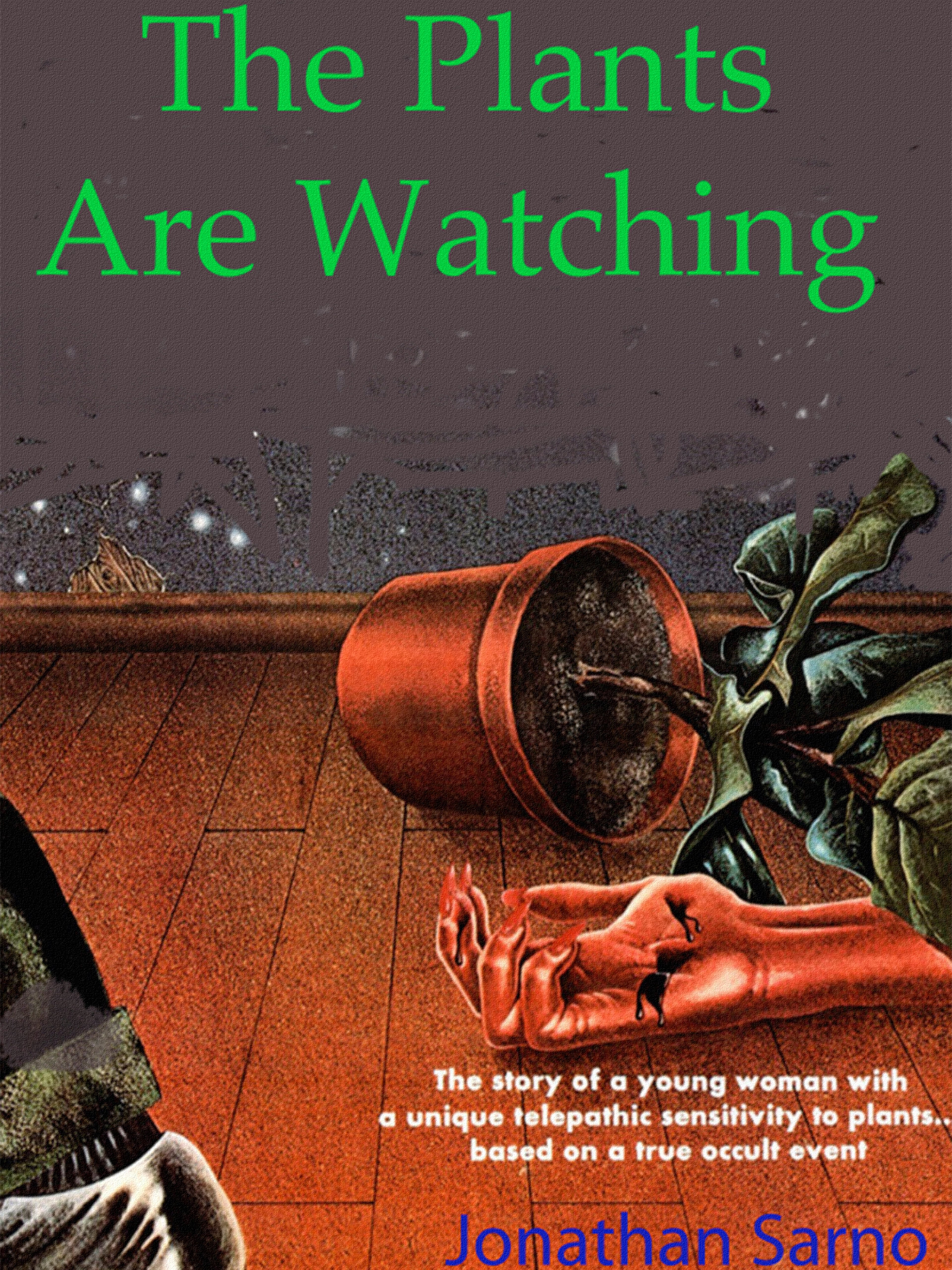
The Plants Are Watching (1979)

By Richard Winters

My Rating: 6 out of 10

4-Word Review: Communicating with a plant.

Laurie (Nancy Boykin) is deeply into plants and has them placed all over her apartment and even feels she has the ability to communicate with them. Directly below her place lives her sister Rilla (Nancy Snyder) along with Rilla’s boyfriend Robert (Joel Colodner). Laurie doesn’t like Robert and the two are continually getting into arguments. One day Laurie is found dead and the police consider it an accident. Rilla though fears that Robert may be responsible and tries on her own to investigate. She reads up on Kirlian photography that can capture electrical discharges from objects including plant life. Her attempt is to see if the plant that was present when Laurie had her ‘accident’ can tell her through its distress signals from its leaves, which can be detected through the photo process, can lead her to what really happened. However, as she’s doing this a new suspect emerges, Dusty (Ted Le Plat), forcing her to have to go through the difficult determination as to who the real culprit is.

Extremely odd idea for a horror film almost works with a really good and creepy beginning and excellent surprise ending. The Kirlian photo technique was one that I was not familiar with, so the movie is educational on that end as it delves into its innerworkings and history and some of the shots that it shows, including the fingerprints of a psycho compared to a regular person and the different colored light charges that it gives off, are quite fascinating as are the variety of discharges that a leaf can emit from one that is under stress, or sick versus a healthy one.

The setting is limited, mainly due to the low budget, where all the action takes place in the apartment building though this does at least give the viewer a good feel for urban New York City living and helps create a certain ambiance. While the plants never do any actual ‘speaking’ you do through the course of the film begin to see them like they’re characters alongside their human counterparts making the moment where Robert throws some of the potted plants against the wall and thus smashing them seem genuinely disturbing like you’ve just witnessed a ‘murder’ and credit goes to the filmmakers for their ability to bring this out.

Despite one good scare, which occurs during a dream sequence, there’s not enough shocks to completely keep it going. The middle drags quite a bit and the main reason is that there’s no real villain. Robert is initially portrayed as being a possible menace, but he’s just too civil to create any adequate tension. Having Rilla break-up with him and move-out only to eventually allow him back into her bed just dilutes everything. A good horror film needs a threatening dark force and this thing tip toes too much around that.

The film cheats too by ultimately having the plant ‘communicate’ with Rilla somehow by showing her a ‘vision’ of what actually occurred though it’s never explained how exactly it does this. I was okay with her hooking the plant up to a machine and monitoring its stress level whenever one of the two men are in the room and thus having her deduct on her own who the killer was from that, but then spelling everything out seemed too easy. The ending twist though is pretty cool and the scene where she’s trapped in the elevator with no escape is nicely intense and surprisingly grisly though it’s a shame that this same kind of tension and violence couldn’t have been carried throughout. 

Alternate Title: The Kirlian Witness

Released: June 14, 1979

Runtime: 1 Hour 12 Minutes

Rated R

Director: Jonathan Sarno

Studio: CNI Cinema

Available: Amazon Video, YouTube

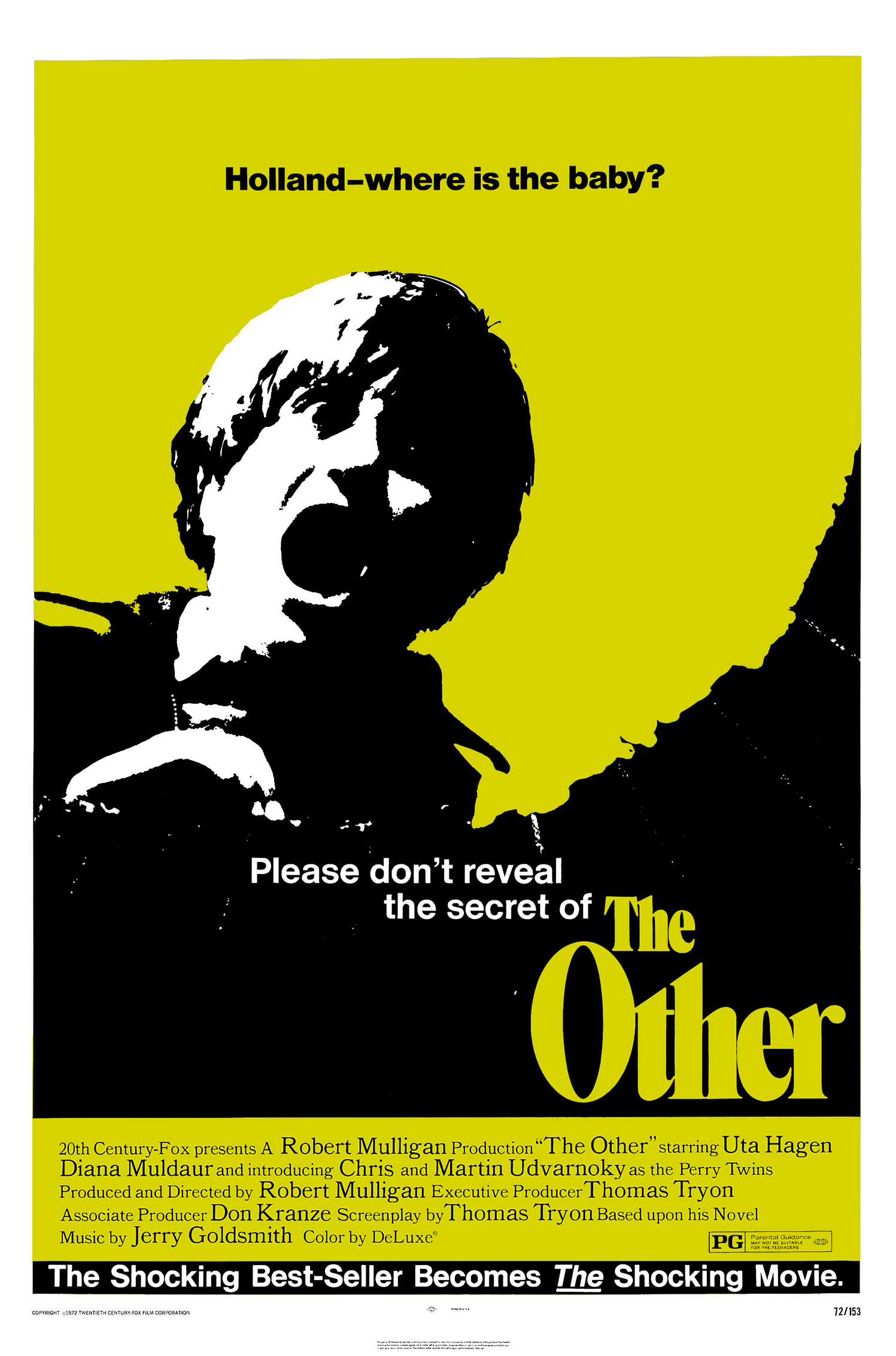
The Other (1972)

By Richard Winters

My Rating: 7 out of 10

4-Word Review: Twin brother causes havoc.

Niles and Holland (Chris and Martin Udvarnoky) are twin brothers living with their mother (Diana Muldaur) and aunt and uncle (Norma Connolly, Lou Frizzell) on an isolated farm. Niles becomes good friends with Ada (Uta Hagen) a neighbor lady who taps into Niles’ special abilities. She teaches him a technique in which he can separate his mind from his body and then have it harbor in another body be it a person, or animal, or even a bird. Ada though fears Niles is using this ability for evil purposes when those around him begin turning up dead. When his mother is found at the bottom of the stairs unconscious and stuck to a wheelchair the rest of her life afterwards Ada tries to convince Niles to give up the game, but Niles insists it’s really his brother Holland that’s committing the acts of violence and not him, but Ada refuses to believe him as she’s in on a secret that Niles is refusing to accept.

Tom Tryon, who had been an actor throughout the 50’s and 60’s, became frustrated at the quality of roles he’d been offered and wanted to try novel writing. After watching Rosemary’s Baby and seeing the reaction it got he decided to write his own horror story basing it on some of the experiences he had gone through while growing up in a small New England town. It took nine different rewrites before he was able to get it published where it became a best seller and allowed him to quit acting and become an author fulltime. When it was bought into a movie Tryon retained the rights to the story, which allowed him to write the screenplay though he later admitted to not liking the finished product and blaming it on the casting and editing, which had cut out a significant portion of the story, over 25-minutes of it, based on feedback from test audiences.

On the surface the film really doesn’t seem much like a horror movie, or at least what modern audiences have come to expect from horror. There’s no gore, several of the killings aren’t even shown and just implied, there’s also no shocks, or scares and the majority of the plot takes place outside in the sunshine versus the darkness of night. Initially viewers didn’t take to it too well and it lost money at the box office with many feeling that Robert Mulligan, best known for having done To Kill a Mockingbird, was not the right choice for this type of material with the biggest complaint being that the movie was ‘too beautiful’ and made more like a drama, which had been my feeling when I first saw it years ago on TV. However, after viewing it again in its complete form without any commercials I was able to get into it more and if one is patient, it can have many benefits.

It still could’ve been played up more, and I didn’t like the setting at all. It was shot in Murphys and Angel Camp, California even though the setting in the book had been a small town in the east. Originally Mulligan had wanted to shoot it in Connecticut, but since the story took place in the summer and they weren’t able to begin production until the fall he felt the leaves changing color would have a negative effect and thus choose to do it in the west, but topography is all wrong as all you get is very dry, brown, parched earth that doesn’t allow for much atmosphere. The eastern autumn foliage would’ve been to its benefit and made it even creepier as it would’ve reminded one of Halloween.

Despite this there are some good moments like the twin’s trip to the circus where they sneak behind the curtains and view the participants of the freakshow including witnessing a fetus floating in a glass jar of liquid, which is a great foreshadowing. Niles ability to view things outside himself like witnessing the point of view of a crow as it flies around the property is well done too though the best moment comes at the end when a baby is found missing during the night that creates a panic and is quite riveting both emotionally and visually.

The Udvarnoky twins was an unusual choice as they hadn’t been in any movies before, nor did anything films afterwards and only became aware of the roles through their grade school teacher who sent in their headshots upon learning that a film was being shot in the area and searching for twins to star in it. Originally the part was meant for Mark Lester, who could’ve done it easily since neither twin is ever in the same shot, but the brothers do admirably especially Chris, who sadly died at the young age of 49 from kidney disease, who’s able to carry the film throughout and in just about every scene though their constant whispering may eventually become irritating to some. Uta Hagen, who was known for being an acclaimed acting teacher as well as for her stage work, but had never been in a movie before, is splendid and the one element that keeps it both compelling and unnerving. Good work too by Victor French in a small, but pivotal bit and a young John Ritter.

Spoiler Alert!

The story was actually given three different endings. In the book we find that Niles is sitting inside a mental hospital as an adult and describing what happened through flashbacks. In the version broadcast on TV Niles is able to escape the fire set by Ada, but then through voiceover is heard talking to his dead brother where he states that they’ll be ‘taken away’ (most likely an institution) and will be able to ‘play the game’ there. In the film though we see Niles looking out his bedroom window before being called down to dinner revealing that he had escaped detection by the others who did not suspect him of committing the killings and thus was still free to kill again, which is the scariest.

My Rating: 7 out of 10

Released: May 26, 1972

Runtime: 1 Hour 41 Minutes

Rated PG

Director: Robert Mulligan

Studio: Twentieth Century Fox

Available: VHS, DVD-R

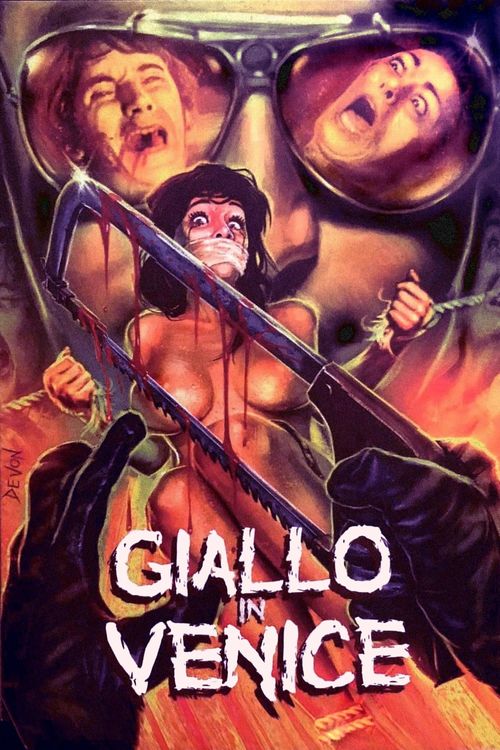
Giallo in Venice (1979)

giallo2

By Richard Winters

My Rating: 5 out of 10

4-Word Review: Investigating a couple’s murder.

Inspector Angelo (Jeff Blynn) heads the investigation of the death of a couple (Gianni Dei, Leonora Fani) who were murdered brutally in broad daylight along the riverside and in full view of the public though only an old man living in a nearby apartment is able to offer any tangible eyewitness testimony. The odd thing is that the killer for some reason saves the woman victim from drowning only to then stab her later once he brings her to shore. To learn more about the couple Angelo speaks with a local prostitute named Marzia (Mariangela Giordana) who confides that Fabio, the male victim, had deep seated sexual perversions that came-out during his marriage to Flavia the female victim. His drive to pursue these dark fantasies, which we see through flashback, and forcing his wife to play into them, she believes in some indirect way is what lead to their deaths.

This film is considered to be the final word in giallo shock cinema that permeated the Italian movie scene all through the 70’s and into the early 80’s. Not only does it contain some remarkably savage deaths, which get captured in explicit detail, but an extraordinary amount of sex, which has made some liken it to a porn film. It was directed by Mario Landi, who got his start in the 60’s making dramas and even spiritual films before moving into the tawdry drive-in fare of the 70’s that featured stories dealing with prostitutes and drugs. It wasn’t until the end of 70’s when he finally ventured his way to horror, but because of his late arrival and because there were so many other bigger names already in the genre he decided in order to draw some attention and have his movie stand-out in a cluttered field by taking things to the most extreme violent and sexual level he could, which in that respect you could say he succeeds valiantly.

Of course this has lead it to be quite controversial even to this day and very hard to find a complete director’s cut. The version currently streaming on Tubi is heavily edited and runs only 1 Hour 15 Minutes, but the full version, which is 1 Hour 39 Minutes, can be obtained through Full Moon Features, which released the DVD with all gore and sex fully intact in 2022 and this review is based on the viewing of that one.

Many commentors on Amazon and IMDb argue whether this is even a horror film as so much is loaded with sex, and a blaring melodic music score that seemed better suited for a blissful romantic flick, that it gets hard to tell. Some will accuse this of being a cheap soft core porn flick, and they have a point while others will insist that because it has a plot to it and mystery that puts it outside of being an adult film as those focus only on the sex and nothing else. Personally I think both sides could be right and this could easily be labeled the first porn horror film.

While the sex is excessive I did find these moments intriguing simply because of Favio, who I suppose could be considered an early example of what we would now call a porn addict who looks at old pictures of perverse sex acts and then forces his wife to play them out, sometimes with him as a participant, or having her do it with strangers. Things become progressively more extreme as that’s the only way he can continue to get-off making these scenes far darker and creepier than the violent ones featuring the killer. In fact this becomes one of those very rare horror films where the killer is quite forgettable and doesn’t stand-out at all while it’s the victims who are memorable.

The film though is most noted for its graphic violence with the highpoint, or low point depending on your point-of-view, being when the killer slices into a naked women’s leg as she’s tied to a kitchen table, which is prolonged and leaves little to the imagination.  While this is certainly gory what I found more disturbing was when the killer burns a man alive and then, once the flames have been stamped out, you see nothing but the victim’s eyes moving back and forth inside his otherwise blackened, charred head.

The story is not as well thought out as the effects. The opening murder happens in the daytime in a public area with the victim’s screaming out loudly as they’re stabbed making it hard to believe it wouldn’t have drawn more attention than just one lonely old man. The police inspector looks like he spent more time on his perfectly blow-dried hair than the case and his constant egg eating and having one always in his hand gets overplayed. The ultimate killer reveal isn’t surprising nor captivating making this one of the weaker giallos case-wise but makes-up for it with the violence if that’s what you’re into.

My Rating: 5 out of 10

Released: December 31, 1979

Runtime: 1 Hour 39 Minutes

Not Rated 

Director: Mario Landi

Studio: Variety Distribution

Available: DVD

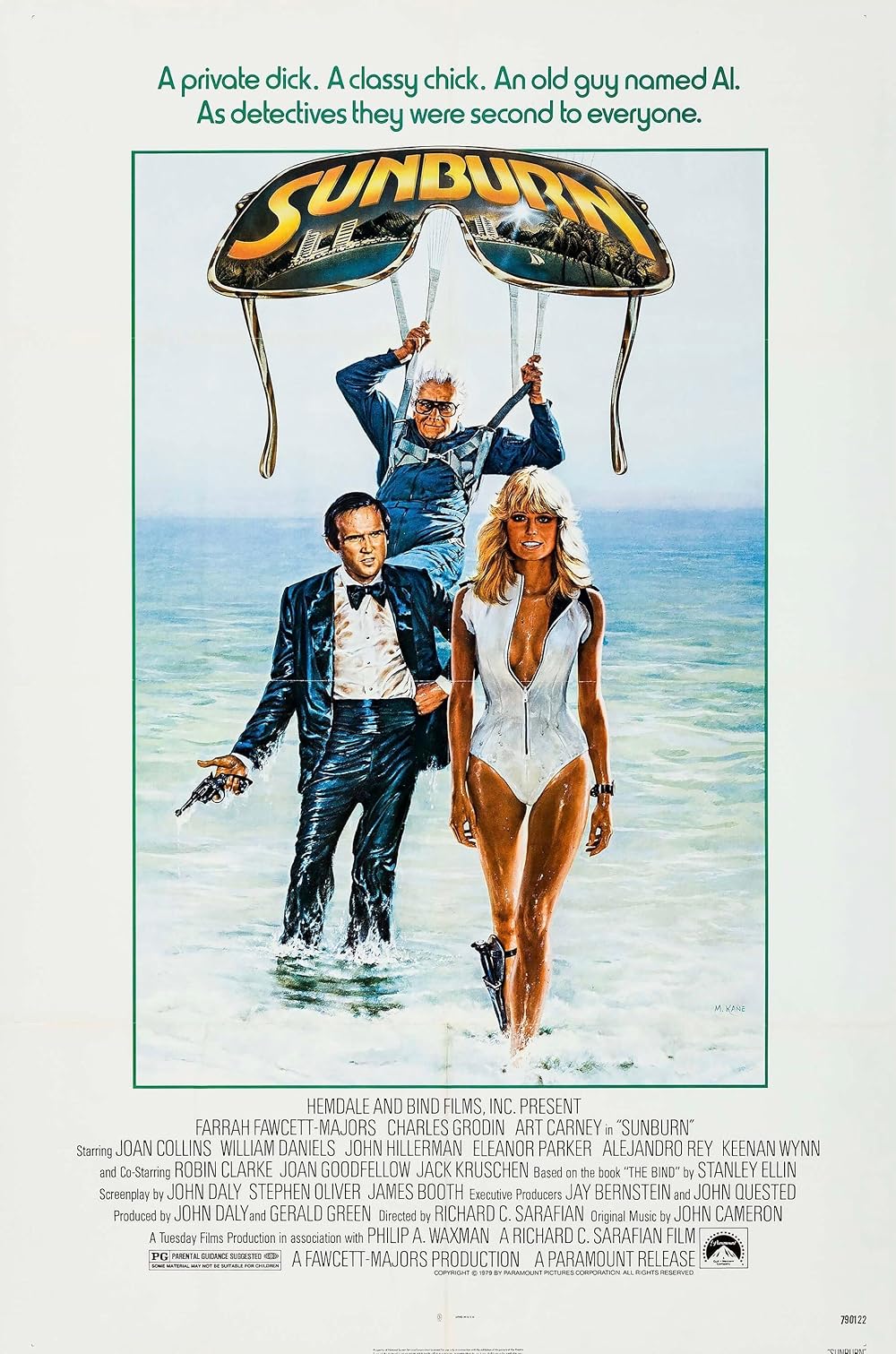
Sunburn (1979)

By Richard Winters

My Rating: 2 out of 10

4-Word Review: Couple investigates insurance fraud.

Jake (Charles Grodin) works as a private eye and gets hired by an insurance company wanting him to investigate a case that took place in Acapulco of a man who crashed his car into a building and died. The authorities have labeled it an ‘accident’, which would put them on the hook to have to pay out a large sum of money, so they’d like Jake to travel down there and find out if that were really the case, or if it could be deemed as a suicide. Jake decides to hire an actress from a modeling agency named Ellie (Farrah Fawcett-Majors) to act as his wife. Ellie takes an interest in the case and helps him search for clues while also forming a romance with him, which starts out rocky but becomes stronger as they find themselves sucked further into the mystery and the potential dangers.

The film is based on the 1970 novel ‘The Bind’ by Stanley Ellin, which had a grittier tone than the movie. Farrah’s agent Jay Bernstein felt this would be a good vehicle for her, but wanted the script turned into more of a lighter and comical story that the book did not have. This was at a crucial point in her career as the first film he got her cast in Somebody Killer Her Husbanddid badly with both the critics and public, so it was important that she prove her box office ability with this picture and when this one also bombed she fired him complaining that both movies had been ‘put together with hustle and bubble gum’.

One of the elements that really hurts it is the casting of Charles Grodin, who by his own admission was their sixth choice for the role as they had initially pursued Robert Redford and even Harrison Ford, who would’ve both been way better. Grodin can certainly be funny, but this part doesn’t give him much to work with. He has a few amusing moments when he’s trying to scare away a lizard from entering their bedroom and then in an effort ‘to protect her’ from a further ‘lizard invasion’ agrees to sleep on a nearby chair, which cause him to do nothing but toss and turn the whole night in an effort to find a ‘comfortable’ position.

His character though didn’t seem all that professional as he leaves it up to her to place a listening device into one of the suspect’s phones, but she had no background in this kind of thing, so what would happen if she screwed it up? The insurance company is promising him a lot of money so it should be up to him to do most of the legwork to make sure it gets done right and if any ditzy amateur blonde can be pulled in off the street to do what he does then what’s the point in hiring him to begin with?

Farrah does much better here than her previous film. I enjoyed her dialogue with Grodin and how just because she was hired to play his wife didn’t mean she was automatically going to be one during their off hours when he for some chauvinistic reason expects her to make him a sandwich, which she immediately declines to do. I was confused though why her character would want to get so involved in the case. She’s just there to play a part, so why not just do her job and enjoy the sun? Instead, she constantly puts herself in increasingly dangerous situations for no real reason. She’s gets paid whether the case gets solved or not, so why jeopardize her life over something that she has no emotional or financial investment in?

It’s also hard to believe that such a hot looking lady wouldn’t be in a relationship. It would’ve been far more enjoyable had there been a jealous boyfriend who secretly followed her on her mission and even threw a few monkey wrenches into the investigation, which could’ve added extra spark into a movie that’s otherwise too leisurely. For her to then fall in love with Grodin was equally dumb. The guy could’ve been her father and lacked any type of sexual pizazz. Had Redford or Ford been cast then the romance might’ve made more sense, but such a beautiful woman like her would have no reason to settle for a doofus like him and would simply be there for the payout and then be long gone.

Art Carney is great in support and actually does most of the work making it seem like Grodin’s character wasn’t even necessary and in fact having Carney and Farrah team up would’ve made it unique and more entertaining as Carney despite his advanced age shows a lot of energy particularly when he goes out onto the disco floor. The rest of the cast though gets wasted with many of them having only one or two lines making you wonder why they’d bother to sign on at all.

The film does have one memorable moment where Carney and Farrah, in an effort to escape the bad guys who are pursuing them, inadvertently crash their car into a bull fighting ring and then must avoid the bull who goes after them. This action is both humorous and exciting, but otherwise unless you’re some super Farrah fan the movie offers little else that’s interesting.

My Rating: 2 out of 10

Released: August 10, 1979

Runtime: 1 Hour 45 Minutes

Rated PG

Director: Richard C. Sarafian

Studio: Paramount Pictures

Available: DVD-R (MGM Limited Edition Collection)

Double Negative (1980)

By Richard Winters

My Rating: 4 out of 10

4-Word Review: Who killed his wife?

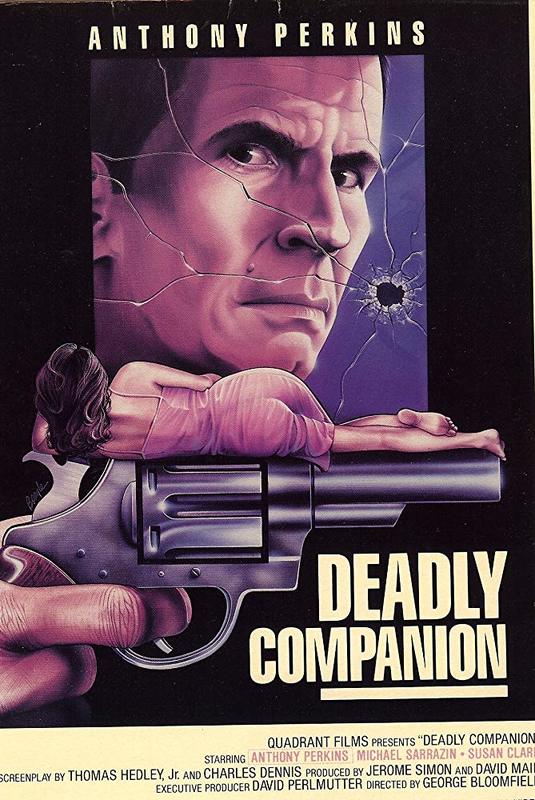
Michael (Michael Sarrazin) is a photojournalist tormented by fragmented memories of his wife’s murder. Paula (Susan Clark) is his girlfriend who’s trying to help him sort through these flashbacks, so he can find some answers. However, she too has things to hide as she’s busily paying off a man named Lawrence Miles (Anthony Perkins) who threatens to go to the police about what he knows about the killing. There’s also Lester (Howard Duff) a private investigator who sticks his nose too deeply into the case and finds himself at deadly odds with both Lawrence and Paula.

The film is based on the 1948 novel ‘The Three Roads’ written by Ross Macdonald under his real name Kenneth Millar. Macdonald later went on to have a stellar career writing novels about private investigator character Lew Archer and this story has plenty of potential but gets mishandled and ultimately becomes a misfire. A lot of the problem stems from the production employing three different writers who all had different perspectives on where they wanted the story to go and then relying on director George Bloomfield to cram it all together, which he doesn’t succeed at. The result is a fragmented mishmash that takes a long while to become intriguing and even then, remains interesting only sporadically. Lots of extended scenes particularly at the beginning that should’ve been trimmed and a poor pacing that barely manages to create any momentum.

It doesn’t help that the main characters are wholly unlikable and uninteresting. Clark especially comes off as arrogant right from the beginning when we see her drive by what appears to be Amish people in a horse and buggy fighting through the snow and cold while she enjoys things in her warm ritzy car, which makes her seem detached and uncaring. The scene where she’s trying to procure an important real estate deal and then gets hampered by Michael playing loud music in the other room, so she then excuses herself and promises to be right back. I was fully expecting her to yell at Michael for his misbehavior, but instead she strips off her clothes and the two make love, but it seemed like sex should be the last thing on her mind during such an serious business meeting and what would happen if the clients, who were just a door away and waiting for her return, would walk in on them? 

Sarrazin doesn’t cut it either. I know he’s been lambasted by critics in his other film appearances for being too transparent and forgettable and yet I’ve usually defended him as I feel he can sometimes be effective even given the right material. Here though he falls precariously flat. Some of it is the fault of the writing which doesn’t lend him to create a character with any nuance, or likability, but in either case he’s a complete bore and the viewer isn’t emotionally invested in his predicament. His flashback moments where he sees himself in some sort of prisoner of war camp doesn’t make a lot of sense, or have much to do with the main plot, and seems like something for a whole different movie. 

On the other hand, Perkins is fantastic and the only thing that livens it up to the extent that he should’ve been given much more screen time as the film sinks whenever he’s not on. It’s great too at seeing SCTV alums like John Candy, Eugene Levy, Joe Flaherty, Dave Thomas, and Catherine O’Hara in small parts where with the exception of Candy they’re not comical but instead make a rare turn at being dramatic. Duff is kind of fun and has one great moment, really the only good one in the movie, where he gets trapped in an elevator and must escape being shot by Perkins, who has his arm lodged in the otherwise closed doors, by desperately running back and forth in the closed space that he’s given. Michael Ironside has a memorable bit too as a bar patron who becomes incensed at Sarrazin when he refuses to allow him to buy him a drink. 

Spoiler Alert!

The denouement just leaves more questions and fails to tie up the loose ends as intended. For one thing it shows Sarrazin as being the one who strangled his wife, which I had started to suspect a long while earlier, so it’s not a ‘shocking surprise’ like I think the filmmakers thought it would. It also has Perkins leaving the scene, as he was having an affair with the woman, and even briefly speaking to Clark who witnesses him going, so why he’d insist Clark needs to pay him hush money didn’t make much sense. Sure, he could still go to the police and say that it was Sarrazin that did it, but Perkins fingerprints were at the scene of the crime, so I’d think either way he’d get implicated, and Clark could come forward saying she was a witness who saw him leaving. If anything, Clark should’ve been pushing him to go to the cops versus bribing him to stay away.  

Also, the way it gets shown, Clark comes into the bedroom after Sarrazin has already strangled his wife, so all she sees is him weeping over his wife’s dead body. For all she knew, from that perspective, is that Perkins really did kill the woman and Sarrazin was simply the first to come upon her dead body and thus for it to be crystal clear Clark should’ve entered while he was still in the middle of the act versus when he was already done.

Beyond that is that question of why would Clark want to stay with someone she knew had such violent tendencies? Wouldn’t she be afraid he could get upset at some point and do that to her? Sarrazin even asks her at the very end if she is afraid and her only response is: ‘aren’t you’? This though only muddles things further cementing it as a botched effort. 

Alternate Title: Deadly Companion

My Rating: 4 out of 10

Released: May 12, 1980

Runtime: 1 Hour 36 Minutes

Director: George Bloomfield

Studio: Quadrant Films

Available: Amazon Video

The Return of the Pink Panther (1975)

By Richard Winters

My Rating: 7 out of 10

4-Word Review: Tracking down stolen diamond.

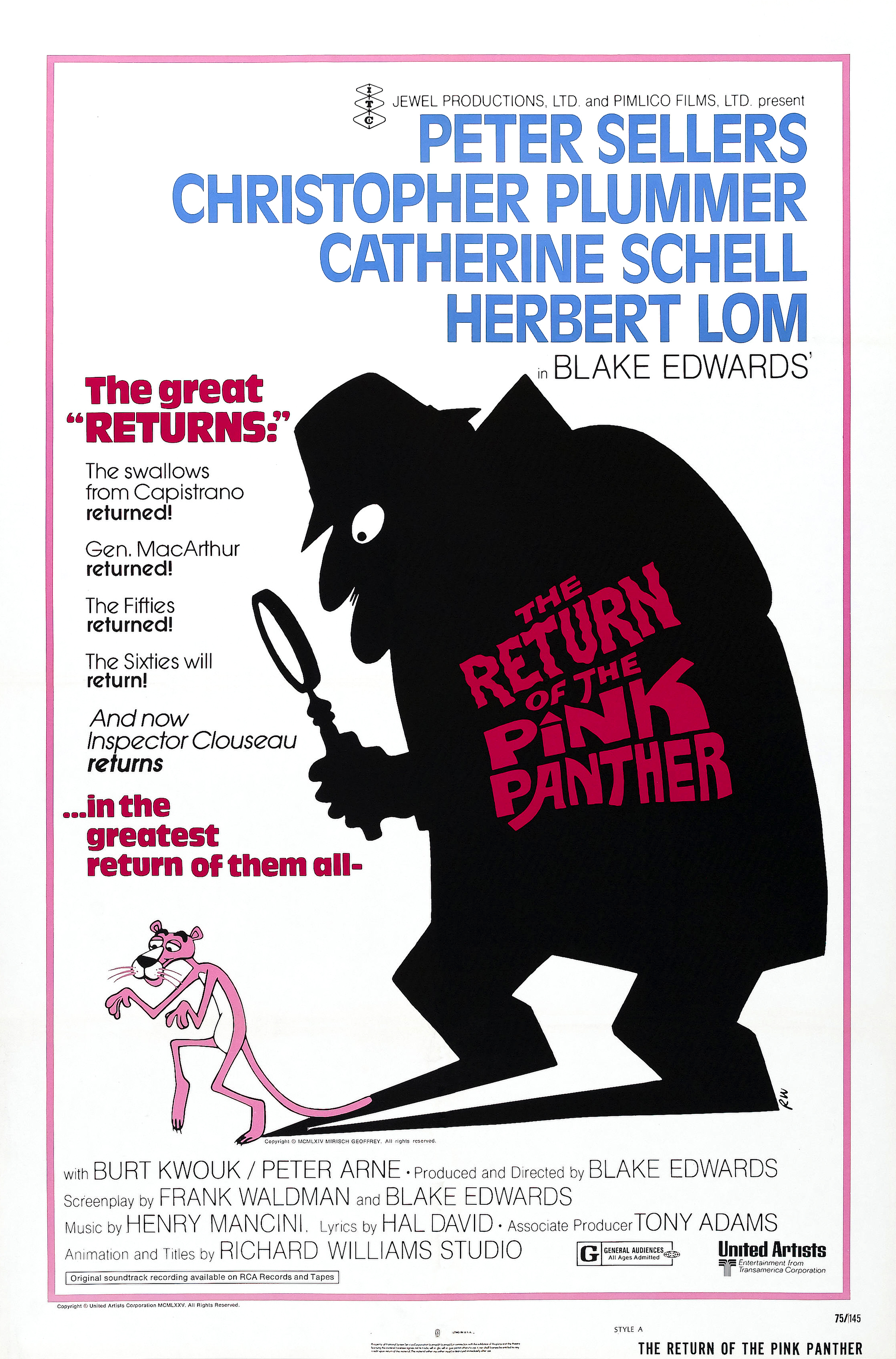
Inspector Clouseau (Peter Sellers) has been demoted to street cop by Chief Inspector Dreyfuss (Herbert Lom) due to Clouseau’s continual incompetence, which is starting to drive Dreyfuss completely mad. However, inside the country of Lugash a prized diamond known as the Pink Panther is stolen and since Clouseau had success retrieving it the first time it went missing during a heist he is put on the case to find it again much to Dreyfuss annoyance. Clouseau suspects that the culprit is Charles Litton (Christopher Plummer), who is a notorious thief. Clouseau attempts to use several different disguises in order to infiltrate Litton’s home that he shares with his wife Claudine (Catherin Schell) in order to find incriminating evidence against Litton so that he can turn him in, but his attempts to try and a take Litton down prove to be comically inept. 

This marked the fourth installment of the Pink Panther series and the first in 10-years that reunited writer/director Blake Edwards with Sellers. Both had said after doing the second film A Shot in the Dark, that they never wanted to work with the other again due to much infighting during the production, but both had since then fallen on hard times. Edwards was by the early 70’s considered box office poison after the colossal failure of Darling Lilli which managed to recoup a measly $3 million from a $25 million budget and his other films from that era Wild Rovers and The Carey Treatment hadn’t done much better. Since Pink Panther had been his last success, he was interested in reviving it and even wrote up a 14-page treatment but found no takers amongst the major studios. Then producer Lew Grade agreed to finance it in exchange for Edward’s wife Julie Andrews agreeing to star in a British TV-special that he wanted to produce. Since Sellers career had also bottomed out, he came onboard to most everyone’s surprise without much hassle.

The film was shot in many scenic locations including Morrocco giving the optics an exotic flair and the proceedings a sophisticated European vibe making it seem like a step-up from just a silly comedy. In the first two installments all the characters were written to be funny and goofy particularly the second film, which had been based on a stage play. Here though the comedy is wisely given over to Sellers while the couple he’s after remain savvy, which makes it more intriguing as you want to see how this inept idiot takes them down, or is able to trip them up at their own game. I also liked how funny bits are interspliced with some legitimate action, especially the opening scene that features the heist, which could’ve easily fit into a realistic film dealing with a robbery. These moments help add a bit of relief from all the laughs, a sort of chance to catch your breath, while making the plot seem like it’s not just all about being a farce.

Lom adds terrific support as Clouseau’s exasperated supervisor, and his assertive acting style works nicely off of Sellers clownish one making the interplay between the two a highlight. It’s good too that Plummer replaced David Niven, who played the character in the first one, but wasn’t able to do it here due to scheduling conflicts, as Niven would’ve been too old and not plausible to have outrun the bad guys like Plummer does. 

My only issue is that Claudine is shown attempting to hold in her laughter at Clouseau right from the start like she knows he’s an idiot before she even met him, but this goes against the premise. Clouseau is considered an accomplished detective by the outside world hence why he was selected to head the case and it’s only the people that work with him and know him who are aware of his ineptness. This is the whole reason why Dreyfuss gets driven mad by him because the rest of the world celebrates the man that he knows is really a fool, so Claudine should’ve initially thought of him as being sharp and only came to the conclusion he was incompetent by the end after having dealt with him. It actually would’ve been funnier had she and Charles feared Clouseau upfront having believed his celebrated reputation and misreading his bumbling as being ‘genius’ ploys and remained that way throughout. In either case seeing her covering her mouth and shielding her giggles makes almost seem like she’s falling out of character and a blooper, similar to how Harvey Korman would unintentionally crack-up during Tim Conway’s antics on the ‘The Carol Burnett Show’ and for that reason it should’ve been avoided. 

My Rating: 7 out of 10

Released: May 21, 1975

Runtime: 1 Hour 54 Minutes

Rated PG

Director: Blake Edwards

Studio: United Artists

Available: DVD, Blu-ray, Amazon Video, YouTube

You’ll Like My Mother (1972)

By Richard Winters

My Rating: 3 out of 10

4-Word Review: Pregnant woman held captive.

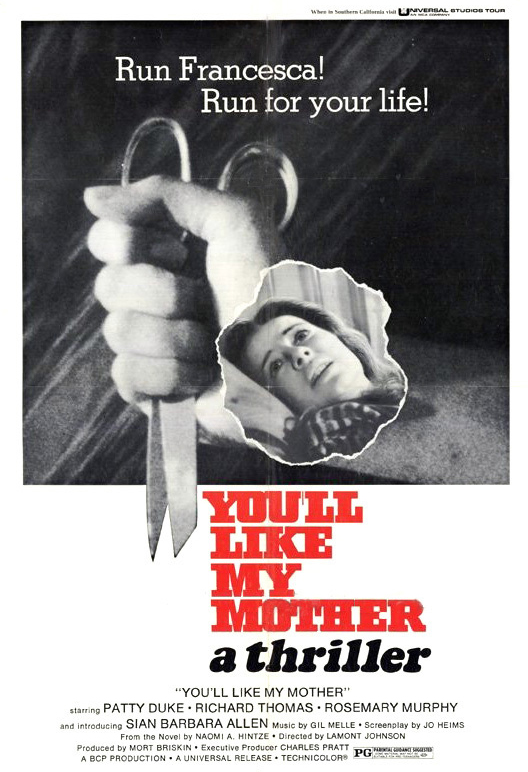
Francesca (Patty Duke) travels by bus to Duluth, Minnesota in order to meet her mother-in-law (Rosemary Murphy) after her husband dies in a plane crash in Vietnam leaving her alone and pregnant. When she arrives, she finds the woman to be cold and indifferent unlike how her husband had described her where he always insisted that ‘you’ll like my mother’. Francesca also finds out that he apparently had a sister, a mute girl named Kathleen (Sian Barbara Allen) that he had never mentioned. A snowstorm blocks her from leaving forcing her to stay in an upstairs bedroom where more troubling secrets come out including the fact that a young man named Kenny (Richard Thomas) is secretly residing in the home and has been accused in the past of being a serial rapist.

Blah thriller based on the 1969 novel of the same name by Naomi A. Hintze. The only interesting aspect about the film is that it was shot on-location at the Glensheen Historic Estate, which 5 years later became the site of a real-life crime when the mansion’s owner, Elisabeth Congdon and her nurse, were murdered by her son-in-law. The movie also marks the debut of Sian Barbara Allen, who died just recently and was quite active in TV and movies during the 70’s before retiring in 1990 in order to focus full-time on being an activist. She was, particularly in her prime, a great beauty with the most mesmerizing pair of blue eyes you’ll ever see. Unfortunately, her role doesn’t have her saying much outside of a few words she manages to mumble out and her character seems to be put in simply to help the protagonist figure out the mystery.

The story unfolds slowly and because the majority of it takes place in one building it becomes visually static. Since it was filmed in Minnesota during the winter the white stuff on the ground is real, which helps with the authenticity, but because it didn’t actually snow when it was being shot the crew was forced to use fake falling flakes in a feeble attempt to replicate a snowstorm, which they’re not able to pull off. Anyone who’s ever experience a real blizzard will see how tacky this one looks and thus the premise that ‘nobody can get through this storm’ is lost.

Patty Duke is good, but her character doesn’t do much outside of staying cooped up in room while Allen does most of the leg work. Her insistence that she didn’t need any help financially makes you wonder then why did she come at all? If it was just for a visit, she could’ve done that in the summer when Minnesota weather is more hospitable and after the baby was born. In many ways having her in need of money would’ve made more sense and heightened the dramatic tension since that would make her desperate with nowhere else to turn.

Murphy is a weak villain as half the time she’s more nervous than Duke and easily fooled making it seem that anyone could outfox her and get away. It doesn’t help that she stupidly gives away who she really is and why she’s there when she has a conversation with Thomas that gets overheard by Duke, which ruins the mystery when the film is only halfway through and thus killing what moderate intrigue there had been.

The foot chase through the snow at the end does offer some tension but waiting all the way until the finale for any action was a mistake and Duke should’ve tried to escape earlier. The plot twists aren’t enough to make sitting through worth it. It’s not adequate material for a 90-minute feature length film as there’s 30-minute episodes of the old ‘Alfred Hitchcock Presents’ with more plot wrinkles than what you get here.

My Rating: 3 out of 10

Released: October 13, 1972

Runtime: 1 Hour 33 Minutes

Rated PG

Director: Lamont Johnson

Studio: Universal Pictures

Available: DVD (Warner Archive)

Brainwaves (1982)

brainwaves

By Richard Winters

My Rating: 3 out of 10

4-Word Review: Transferred brainwaves cause nightmares.

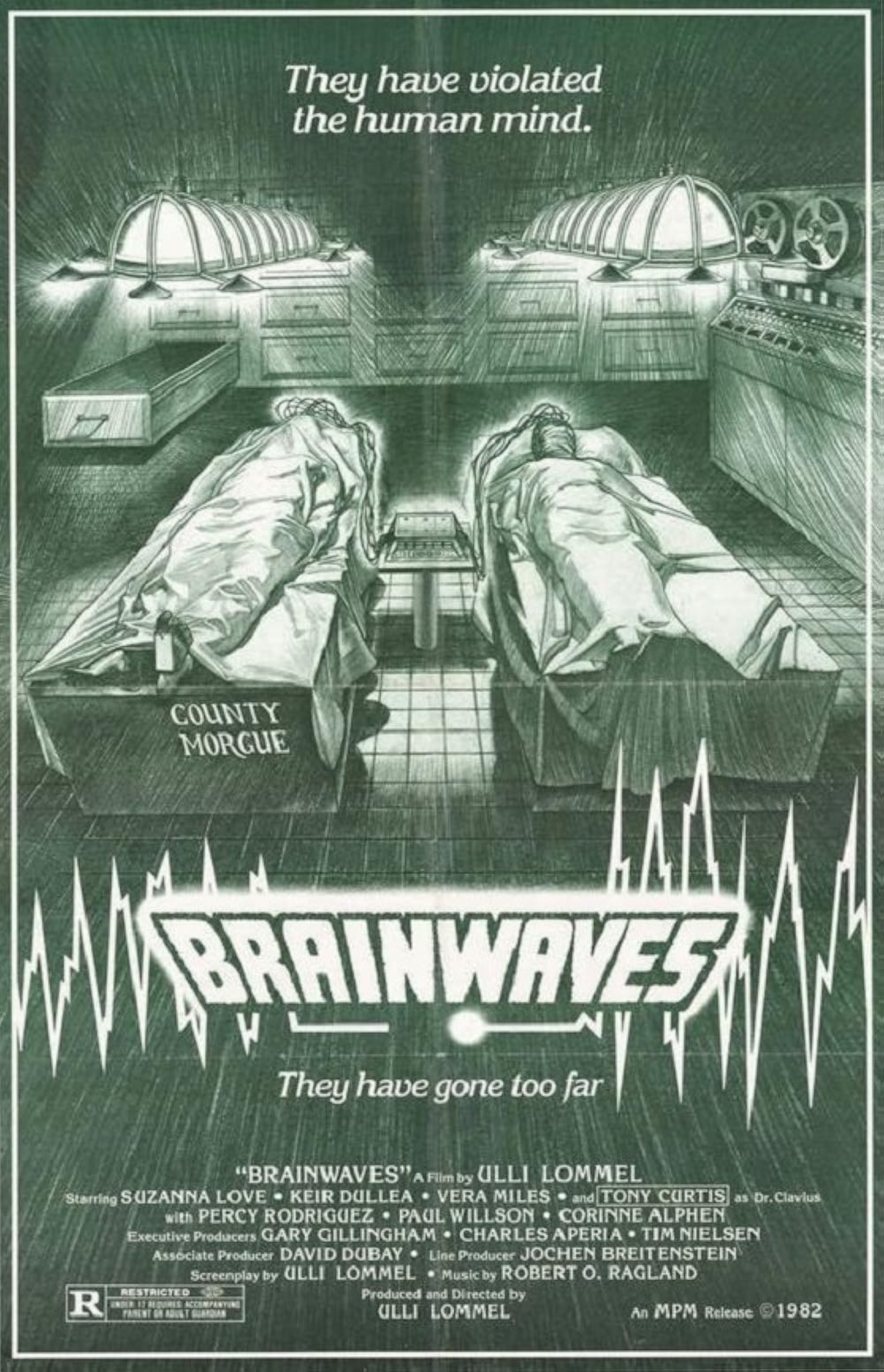
Kaylie (Suzanna Love) is a married mother of a young child living in San Francisco. One day while running out to the grocery store she gets the heel of her shoe caught in a trolley car track and this causes her to get hit by a car and suffer severe brain damage. Dr. Clavius (Tony Curtis) is heading experimental surgery that can transfer brainwaves from one victim to another. Kaylie’s husband Julian (Kier Dullea) agrees to the procedure in an effort to bring his wife back to her former state. Unbeknownst to him the other victim was a woman named Leila (Corinne Wahl) who was murdered in her bathtub by an unknown assailant. When Kaylie receives the brain transfer she begins having nightmares about the murderous incident. They then go on a search to try and unravel the mystery, but inadvertently get the attention of the killer who now begins stalking Kaylie in order to silence her before anymore oppressed memories come to light, which could identify him.

The film was directed by Ulli Lommel with a script that he had co-written with Love, who was also his real-life wife. The two had success a couple of years earlier with The Boogeyman and thus it inspired them to attempt another horror film. The concept is great and could’ve created an excellent plot, but the second-half labors too much in the recovery phase inside the hospital, which losses all the tension. The killer, whom we only see from the back, disappears from the story completely during the middle-half to the point you forget about him only to have him finally return by the third act, but by then it’s too late.

Dullea, as the concerned husband, is excellent even though acting here was a major comedown as he was getting leading man roles in major studio productions back in the 60’s, but now was relegated to low budget horror films though with that said he still makes the most of it. The same unfortunately can’t be stated for Tony Curtis, who only got the role because John Huston, who was the original choice, was too ill. Curtis had been a leading man in the 50’s and 60’s, so having to accept a part in such a minor production where he wasn’t even the star was certainly taxing on his ego and it shows as he appears grouchy and irritable throughout and seems like he wanted to be anywhere else, but in this movie.

Spoiler Alert!

The opening murder is okay though you know once she walks into the bathroom and turns on a portable radio that it’s most likely going to end up in an electrocution, so when it does finally occur it’s no surprise. The trolly car incident is nicely shot as well, but the ‘big reveal’ of who the killer is, which turns out to be non other than the victim’s boyfriend, which is the first person you would’ve suspected and thus is a complete letdown. The film should’ve had a wider array of suspects to choose from and played this part out more. The climactic sequence, done near the Golden Gate Bridge, gets shot in slow motion, which gives the proceedings a really tacky look.

The final twist features the dead body of the killer being wheeled into the doctor’s lab where it will apparently be used as a brain donor to another crash victim is cool, but the film then ends when it should’ve continued on with the psycho now chasing after Kaylie inside whatever body his brainwaves got transferred to. By having writer/director Lommel not take full advantage of the myriad plot twists as it could’ve is what really hurts it making it no wonder that it’s box office proceeds was a disastrous $3,111 out of a budget that had been $2.5 million.

My Rating: 3 out of 10

Released: November 19. 1982

Runtime: 1 Hour 20 Minutes

Rated R

Director: Ulli Lommel

Studio: Motion Picture Marketing

Available: VHS, DVD-R (out-of-print)

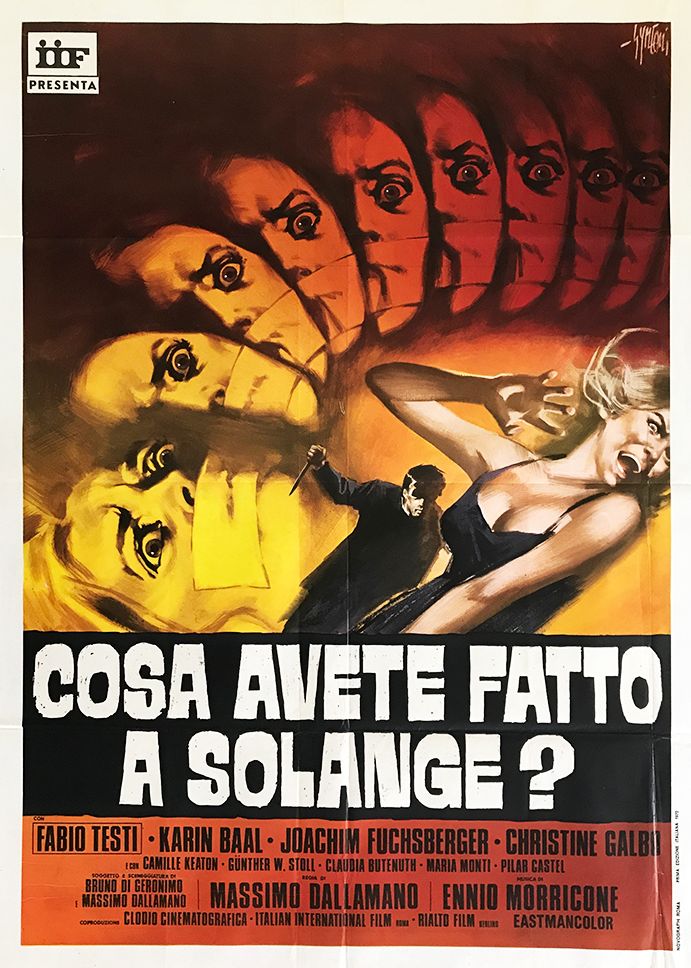
What Have You Done to Solange? (1972)

solange

By Richard Winters

My Rating: 7 out of 10

4-Word Review: Bearded priest murders schoolgirls.

Enrico (Fabio Testi) is a high school teacher who’s having an affair with Elizabeth (Cristina Galbo) who’s one of his students. While making-out with her on a boat at a park Elizabeth spots a shadowy figure murdering a young girl in a nearby wooded area. The girl turns-out to be one of her classmates, but Enrico convinces her not to tell anyone for fear that it could jeopardize his job. Once the murder gets discovered and reported on the news Enrico goes back to the scene to check for clues only to be photographed by the police who are there doing the investigation. Inspector Barth (Joachim Fuchsberger) spots Enrico in the photo and brings him in for questioning. Enrico denies any knowledge of the killing, but comes under suspicion especially after Elizabeth is later found murdered in her bath tub. Enrico then reconciles with his frigid wife Herta (Karin Baal) in order to have her help him do their own investigation, so they can unmask who the real killer is before the police are able to close in on him.

The film is a unique partnership between a West German production company and an Italian one that was filmed on-location in London. While there are many German actors in the cast the film as a whole is modeled after an Italian giallo and has many of the mystery, gore, and sleaze elements that you’d expect from those. The direction, by Massimo Dallamano, who was a cinematographer of Spaghetti westerns during the 60’s, approaches the material with a visual elegance. The photography is crisp and detailed with some evocative camera work and angles as well as a few graphic shots including the murderers modus operandi, which is shoving a large knife up his victim’s vaginas, which not only gets revealed on the corpses, but also in x-ray version, but also a drowning death in a bath tub that gets played-out moderately well. In most slasher flicks the victim goes down easily when they’re attacked by surprise by their killer, but here this one struggles quite a bit making the killing more drawn-out and thus more realistic.

The plot though, particularly the second act, gets stretched too thin. We have an intriguing set-up and a zesty conclusion, but in-between it meanders. The biggest reason for this is that the protagonist and his quandary becomes neutered and thus all the potential drama from his situation evaporates. Having the inspector tell him upfront that he doesn’t think he did it hurts the tension and would’ve been intriguing if they thought he did, or he even became their prime suspect. Having Enrico make amends with his wife, at the beginning they’re at extreme odds and even close to fully hating each other, further moderates things as the wife could’ve been an interesting possible suspect too, killing the school girls and trying to make the hubby look like he did it in order to get back at him for cheating on her, but then having the two team-up just fizzles away a potentially dark undercurrent to their relationship. Showing Enrico working with the inspector ultimately makes him seem more like a side character in his own movie and by the end like he’s not really the star at all as the inspector completely takes over.

The one performer that does stand-out is Camille Keaton. She’s better known for her starring role in the cult hit I Spit On Your Grave, but here in one of her first performances in the front of the camera she’s quite impressive and she does so without uttering a single line of dialogue. She comes-in real late too to the extent I was starting to think she’d have some minor part and be spotted for only a few seconds, but her character comes-on strong despite not saying anything and is an integral component to the whole mystery. What I liked most about her was her trance-like demeanor and glazed over look in her eyes that’s both effective, creepy, and disturbing at the same time.

Spoiler Alert!

The film’s wrap-up could’ve been better done as it elaborates about the motives of the killer and the elements of the case too much saying things that the viewer should’ve been able to pick-up on during the course of the movie. For instance it describes the sex parties that these teen girls attended, but snippets of these orgies should’ve been shown and not just discussed. The film had no qualms with the violence, so why not have a little explicit sex as well. Also, Keaton’s character going in to have an abortion like it’s going to be some ‘fun activity’ didn’t seem believable. The attempt was to show that she was naive about how rough the procedure would be and thus became ‘traumatized’ by it afterwards, but she still should’ve shown some trepidation upfront as just about anybody else would.

My Rating: 7 out of 10

Released: March 9, 1972

Runtime: 1 Hour 47 Minutes

Rated R

Director: Massimo Dallamano

Studio: Italian International Films

Available: DVD, Blu-ray, Amazon Video, CONtv

I Am the Cheese (1983)

iam

By Richard Winters

My Rating: 6 out of 10

4-Word Review: Dealing with past memories.

Adam (Robert MacNaughton) is an adolescent boy taking a bike trip through Vermont in order to deliver a present to his father (Don Murray). During his ride memories from the past that had been stuck in his subconscious come to the surface including his on-and-off relationship with Amy (Cynthia Nixon) as well as the sometimes odd behavior of his father. Helping sort through these things including him finding in his father’s desk drawer two different birth certificates with his name on it, is Dr. Brint (Robert Wagner) a therapist at a mental hospital that Adam is currently residing in.

The film is based on the book of the same name written by Robert Cormier, who appears briefly as Amy’s father, who wrote many young adult novels with his best known one being The Chocolate War. The screenplay was written by David Lange, who was also the producer, and the brother of Hope Lange who gets cast as Adam’s mother and is a reunion of sorts for her with Don Murray, who plays Adam’s father, and whom she’d been married two from 1956-62. She had also co-starred with Robert Wagner in The Young Lions in 1957 though here they don’t share any scenes together.

The film, which was the one and only directorial foray of Robert Jiras who worked as a Hollywood make-up artist for many years, is decidedly low budget though since most of the action takes place with Adam on his bike it really doesn’t hurt the effect of the story and the lush summertime New England scenery becomes an added benefit. MacNaughton, who’s better known for playing the older brother in E.T. before leaving the acting business after the 80’s and becoming a mail sorter, is quite good as he effectively channels his character’s inner anxiety and confusion. Nixon is also a stand-out playing against the cliche of a typical teenage girl, who are usually portrayed as being giggly, insecure, and into the latest fads, but instead she is cultured, poised, confident, and smart and she adds a wonderful addition to the movie and it’s just a shame she wasn’t in it more.

The plot follows the book pretty closely including the constant shifting between the present and the past and also the therapy sessions. While I usually like non-linear narratives I initially found this structure off-putting. The publishers in fact felt, when the they read the initial manuscript, that it would too confusing for young readers and pressured Cormier to simplify the structure, which he refused. Despite this it does become genuinely riveting by the second act.

Spoiler Alert!

The twists are good and makes sitting through it worth it though the moment when the bad guys catch-up with Adam and his parents should’ve been played-out more since it’s such a traumatic moment. It’s possible that because this was aimed at teen viewers the producers felt this violent element required being toned down, but crucial scenes like these have to stand-out and the way it gets done here it just doesn’t.

In the film, like in the book, the psychiatric sessions are ultimately revealed to be a sham where Robert Wagner’s character isn’t a doctor at all, but instead part of the government conspiracy to make sure Adam doesn’t know more than he should about his parent’s past as otherwise he would be deemed a ‘risk’ and ‘terminated’. However, in the movie they have Adam escaping from the place and riding off on his bike like he’s now ‘free’, but he really isn’t. He has no job skills, no family, no money, and no place to live. He’s be better off just staying at the clinic even if it was a fake one, as he at least had a roof over his head and food to eat. Being on his own at 16 was unlikely to end well and such a sophisticated government operation such as this one was at some point going to track him down, dead or alive, so the tacked-on ‘happy ending’ doesn’t jive.

My Rating: 6 out of 10

Released: November 11, 1983

Runtime: 1 Hour 36 Minutes

Rated PG

Director: Robert Jiras

Studio: Almi Pictures

Available: VHS, DVD-R