Category Archives: Musical

Back to the Beach (1987)

By Richard Winters

My Rating: 3 out of 10

4-Word Review: Couple revisits surfing culture.

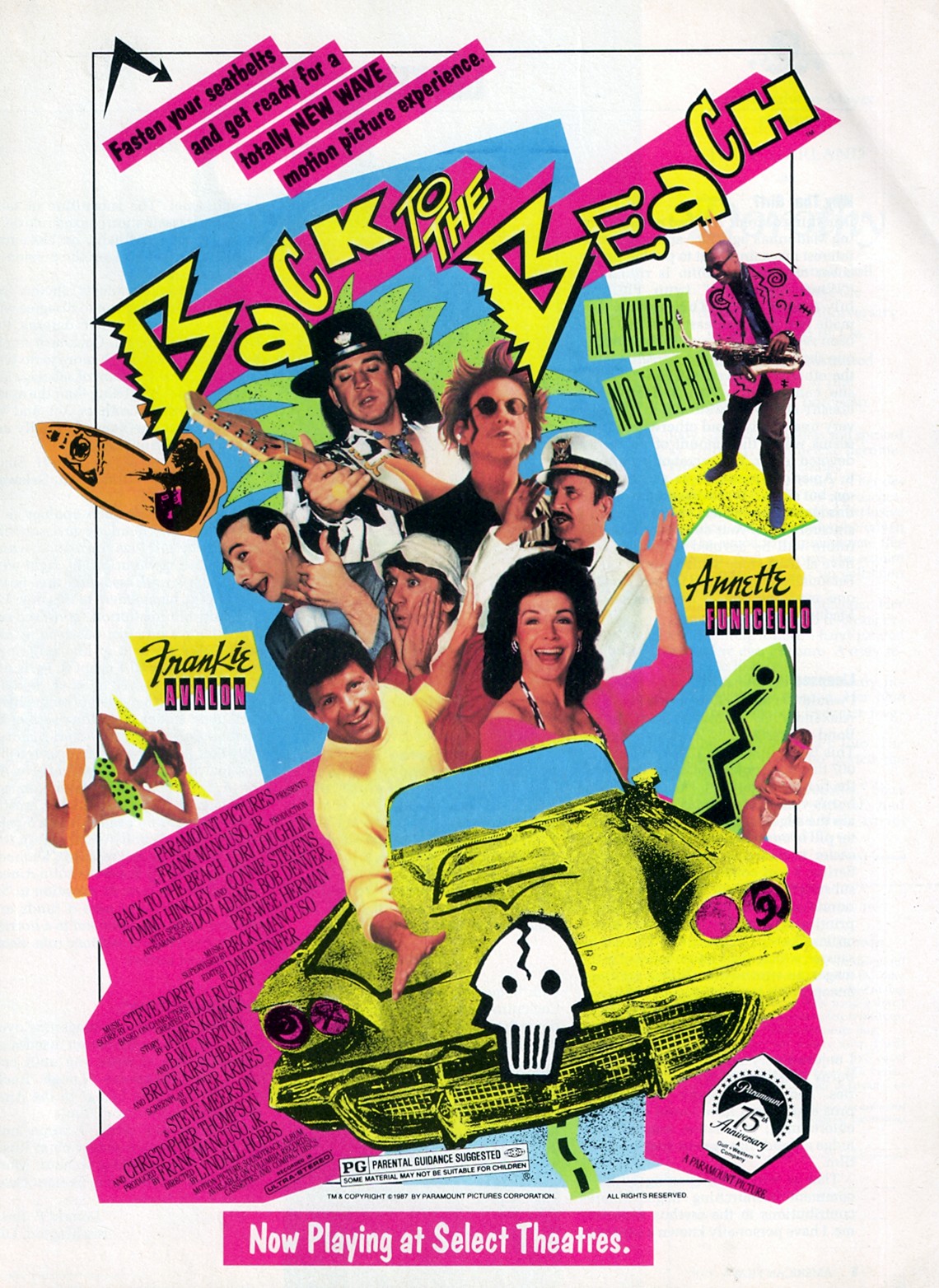
25 years ago, Frankie (Frankie Avalon), was a hot shot surfer known as the ‘Big Kahuna’, but now he’s a middle-aged, frustrated car salesman living in Ohio.  His wife Annette (Annette Funicello) was also a part of the surfing culture and that’s where the two first met, but now she’s a suburban housewife raising a rebellious kid named Bobby (Demien Slade). Frankie longs to revisit his old stomping ground, so the family takes a trip to California to visit their daughter Sandi (Lori Laughlin) not knowing that she’s living on the beach with her boyfriend Michael (Tommy Hinkley). Frankie also runs into Connie (Connie Stevens) his old sweetheart that still has a crush on him. Annette becomes jealous of all the attention Connie gives him causing a rift between the two, so they spend the rest of their vacation doing things on their own. Annette then catches the eye of Troy (John Calvin) who chases after her while Tommy gets in with a group of punk surfers who try to take over the beach prompting Frankie to challenge their leader to a surfing contest.

The film came out at a time when many 60’s shows and movies were getting revisited usually with the same cast members, or at least those that were still alive. Frankie had been shopping around the script for many years before finally finding a taker though the studio had insisted on more campy approach, but producer/writer James Komack resisted insisting that having it a light comedy dealing with the travails of growing into middle age and being a modern-day parent was enough.

It starts out almost like Airplane!, with visual sketch-like comedy, but then meanders into being almost all talk with not a lot happening. More confrontations or dilemmas, even the comic variety, would’ve helped, but instead the second half stagnates. Frankie and Annette ‘breaking up’ is a good example as the minute after having their spat they secretly long to get back together. It would’ve been a more intriguing story had the two genuinely went their separate ways only to decide at the very end that being a part wasn’t worth it and then make an attempt to reconcile, so there would at least be some dramatic tension, which is otherwise totally lacking.

Frankie is amusing and looks almost like he hadn’t aged a day and the potshots at his ‘perfect hair’, which looks suspiciously like a hair piece, are fun. Connie enlivens things as the beach blonde bimbo and Bob Denver is fun playing off his Gilligan persona, this time as a bartender known as ‘little buddy’. Some of the other cameos don’t work as well including Don Adams as The Harbormaster who initially seems like he’s going to ruin the festivities but gets neutered away too easily making his presence seem rather pointless. Having the son Bobby dressing and acting like a punk right from the start is off-putting and not funny. Would’ve been better and allowed for some character arch had he been super clean-cut, maybe in an effort to emulate his dad, only to get ‘corrupted’ when he meets the punks and then changing his look.

Funicello’s presence was disappointing. She hadn’t been in a movie in a while and was better known to younger audiences for being a spokesperson for Skippy peanut butter, which the film does parody, but her acting is rather stiff. This was when she began experiencing MS symptoms, so that may have had something to do with it, but her character is one-dimensional. She never says or does anything outrageous and is too ‘goody-goody’ making her moments flat and forgettable. It’s possible she didn’t have the acting chops to play anything different though it would’ve been nice had she at least tried to go against her image a little.

The film ends on a high note. I enjoyed seeing Frankie back on the surfboard even if he does it in front of a green screen, but I really felt there needed to be more jokes and a faster pace. Trying to turn it into a ‘dramedy’ was not what these cartoon characters needed. A surreal edge was necessary and though it teases this concept at times it wasn’t enough turning it into a misfire that never quite takes off.

My Rating: 3 out of 10

Released: August 7, 1987

Runtime: 1 Hour 32 Minutes

Rated PG

Director: Lyndall Hobbs

Studio: Paramount Pictures

Available: DVD, Blu-ray, Amazon Video, PlutoTV, YouTube

The Muppet Movie (1979)

By Richard Winters

My Rating: 7 out of 10

4-Word Review: How they became famous.

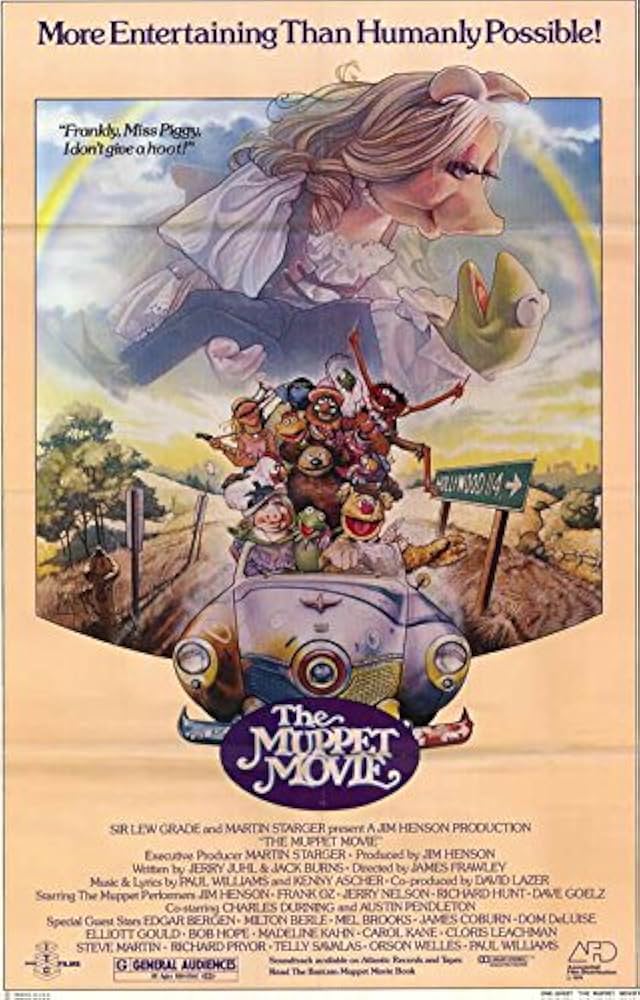
Kermit (Jim Henson) is a lonely frog living in a Florida swamp who dreams of one day making it to Hollywood and becoming famous. He then meets talent agent Bernie (Dom Deluise) who hears Kermit singing a song with a banjo and becomes convinced that the frog has what it takes to become a star. He hands him his card and tells him to give him a visit when it makes it to California. Kermit then sets-off on a cross-country trip and along the way meets several other characters all looking for their big-break including Fozzie Bear, a struggling comedian, and Miss Piggy (Frank Oz) who wants to become a fashion model. They tag along on the trip with Kermit while pilling into Fozzie’s Studebaker as he drives them to the west coast, but then they meet up with Doc Hopper (Charles Durning), an owner of restaurants who specializes in frog legs, who wants Kermit to be his new spokesmen in some commercials that he’s producing, but Kermit declines. However, Doc refuses to take no for answer and chases after the gang and using increasingly more sinister methods in order to get the frog to change his mind. 

Due to the success of ‘The Muppet Show’ creator Jim Henson was given financing to produce his own movie featuring the same puppet characters audiences had grown to love from the program. Since this would be a large-scale production great effort had to be put into making the muppets appear real and able to blend into an actual outdoor setting versus having everything done on a sound stage like it was in the TV-show. Henson refused to compromise on anything and insisted that money would not be a limitation, and this included the segment where Animal, one of the muppet characters, grows to giant proportions. Initially the idea was to keep the puppet the same size and place him on a miniaturized set, which would’ve cut down on costs, but Henson felt this didn’t look convincing enough, so instead they constructed Animal’s head to gigantic proportions that measured over sixty feet, which called for way more money and was very time consuming, but ultimately worth the effort. 

The story itself is pedestrian and relies, similar to the TV-show, with rapid fire quips and comebacks much like in old vaudeville. On the surface the humor is corny, and some could find the whole thing silly, but enjoyment comes with the puppet characters that are made to be like caricatures of humans, and their amusing responses and reactions. It’s also filled with a lot of great songs all written by the talented Paul Williams, who appears briefly. Normally in movie musicals the songs end up sounding the same and it starts to feel like we’re just listening to the same loop done over and over, but here each music bit has a distinct beat and a good toe-tapping quality, which not only adds to the fun, but actually helps move the story along versus holding it up. 

The only drawback is the massive amount of guest star appearances. There are many familiar faces, but most of them are only in it for a half-minute, or so and few of them have anything that’s actually funny to say, or even moderately clever. Performers like Bob Hope, Richard Pryor, Madeline Kahn, and Edgar Bergen, in his last screen appearance before dying just a couple weeks later, are essentially wasted in bits that add nothing and could easily have been excised and not missed. However, there’s a few cameos that do work including Steve Martin as an annoyed waiter, Cloris Leachman as a receptionist allergic to animal hair and Orson Welles who comes on near the end and has the film’s best line. Mel Brooks also quite memorable in an over-the-top send-up of a German mad scientist. 

Durning though is the one exception as he is more like a main cast member and in it quite a bit. Of course, he’s an outstanding character actor and a personal favorite and he shines here as well particularly with his attempt at a Cajun accent, but it seemed a bit ridiculous for a guy to go to such extreme measures just to get Kermit to be in his commercials. A better storyline would’ve had Kermit witness Durning turning one of his family members, perhaps one of his distant frog cousins, into a frog legs meal and thus threaten to turn Durning into the authorities and this would cause him to chase after him in order to try and keep him from squealing.  It also would’ve been nice had he shown a change-of-heart at the end and come around to being a friend to the muppets versus remaining an adversary. It comes close at one point when Durning realizes he doesn’t have any real friends like Kermit does, but I would’ve liked to have seen him come to grips with his aggressive personality and make amends to do better moving forward. 

My Rating: 7 out of 10

Released: June 22, 1979

Runtime: 1 Hour 35 Minutes

Rated G

Director: James Frawley

Studio: Associated Film Distribution

Available: DVD, Blu-ray, Amazon Video, YouTube

A Perfect Couple (1979)

perfect2

By Richard Winters

My Rating: 5 out of 10

4-Word Review: Meeting through dating service.

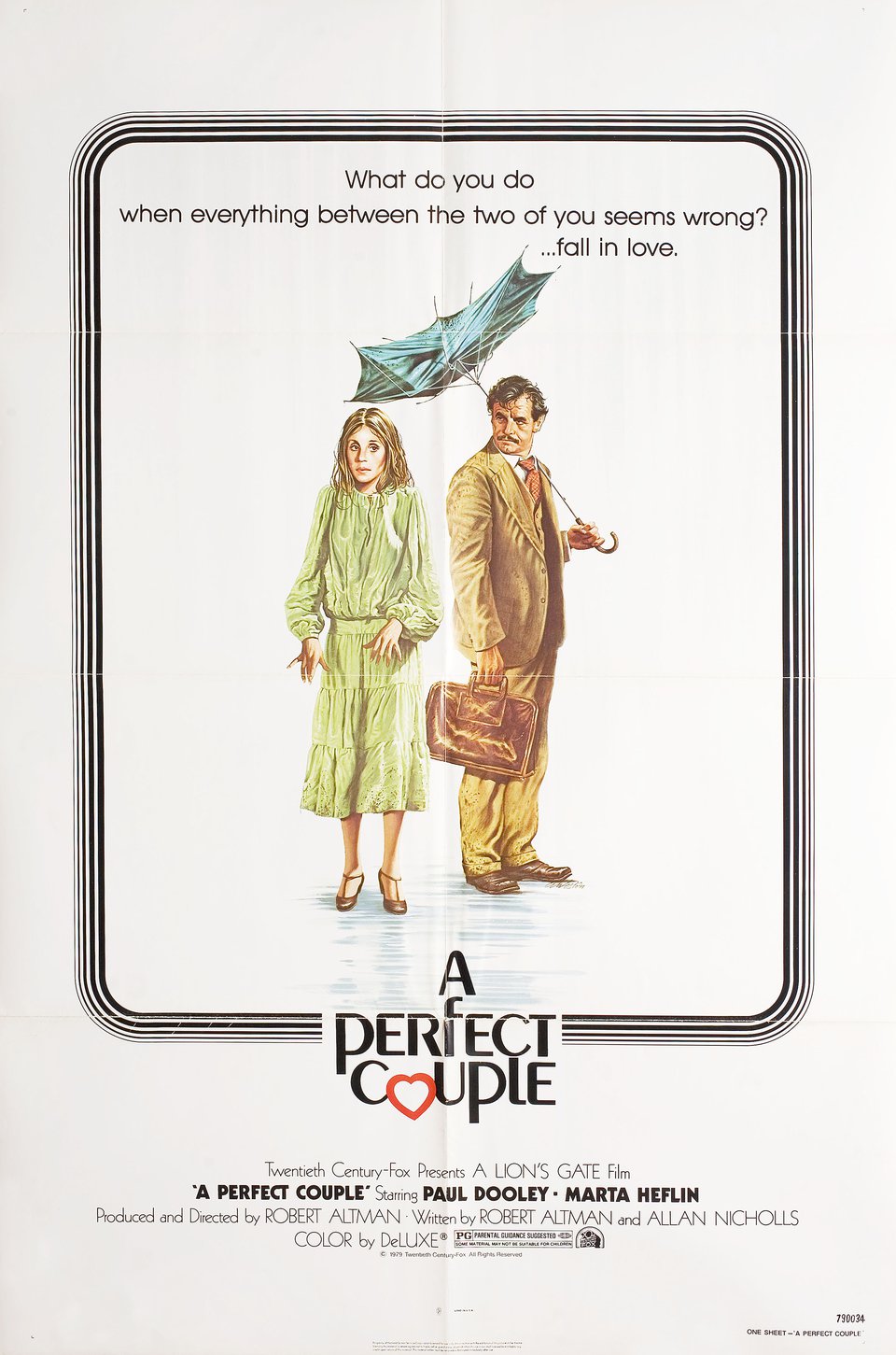
Sheila (Marta Heflin) is a singer in a traveling rock band run by Ted (Ted Neeley) who is quite demanding and openly berates and even fines members of the group who do not follow his orders. Alex (Paul Dooley) is a middle-aged Greek man still living at home with his domineering father (Tito Vandis) and extended family who berate him at every turn for not conforming to the family orthodox. Both are single and lonely and decide to join a dating service. From there they get connected and go on a first date at an outdoor orchestra concert where it rains and they both get wet. Despite the mishap Alex pressures Sheila for a second date, but miscommunication causes problems here as well. They eventually go their separate ways by dating other people they meet at the service, but Alex feels the need to try one more time to make it work and thus goes on tour with Sheila’s band as they hit the road, but finds their communal lifestyle is not for him.

The inspiration for the movie came while Robert Altman was shooting A Wedding and intrigued with the idea of what would happen if Paul Dooley’s character in that film started dating Sandy Dennis’ character and thus decided to write a whole movie about them. Problems though started right away during rehearsals when Dooley, who’s allergic to cats, could not handle being in the same room with Dennis, who was a major cat lover and would usually bring her pets to the reading, which would send him into a severe allergic reaction. Even when she quit bringing the felines with her it still caused issues with Dooley due to the cat hairs on her clothing. Altman then cut Dennis from the cast and had the part rewritten for Heflin, who was 33 at the time, but looked much younger like she was only 22 or 23 and thus accentuating the differences between the couple.

The film starts out with the two already on their first date instead of showing them viewing potential dates through the taped interviews that the service had available, which I felt was needed. As a guy I could see why Dooley would get into a young, semi-hot chick like Heflin as lonely guys, no matter their age, can instantly ‘fall-in-love’ with a woman from their looks alone, but both need to agree to the date before they go and I couldn’t understand why Heflin would to go out with a guy who was way older and didn’t seem to have much going for him. Maybe all of the other prospects were total duds and he was the best of the lot, so she decided to give it a try, or maybe she had some sort of father complex, but that’s something that still needs to be revealed and the fact that it isn’t leaves a big gaping logic hole.

The characters are palatable to some extent, but behave in ways that makes them at times quite infuriating. Dooley is especially problematic. Granted he’s playing someone who is socially clumsy and not real slick with the dating thing and trying a bit too hard to make it all work, but still insisting that he enter her apartment even when she makes it quite clear that she’s more comfortable just saying goodbye at the door is creepy. Having him show up at her place unannounced and demanding she see him for a second date and not leaving until she relents makes it even worse. There needs to be someone to tell him that his behavior is out-of-line and this isn’t a way to ‘woo a woman’ and in many cases will justifiably scare them off. Unfortunately the Heflin character doesn’t do this. Even though everything he does makes her quite uncomfortable she never protests it and lets him keep having his way, which makes her as annoying as he is.

Their unique living arrangements brings up even more issues. For Heflin I could understand her situation and it made sense. Sure the band manger is a demanding jerk, but I could see her feeling the need to put up with it because she wanted to break into the rock singing business and felt this was part of the crap she had to get through while she works her way up. For Dooley, his living arrangements are just downright baffling as he plays a 50-year-old who’s still residing at home with his father who’s highly demanding forcing Dooley to become a pathetic, obedient simp when around him. I could understand if the guy was like 20 how this might be somewhat believable, but by 50 he should’ve broken away a long time ago and the fact that he hasn’t needs to be explored and explained as it’s highly unusual and seems to intimate that there’s a serious personality disorder of some kind that begs for analyzation that never comes.

The entire runtime has the two going through every bad date moment you could think of. They have absolutely nothing in common and repeatedly talk past each other, so there’s no constructive communication whatsoever and yet somehow at the end they ‘fall in love’, but how? To make a relationship work there needs to be a connecting bond, but the film fails to show what it is making it quite shallow. There’s also an abundance of music played by the band Heflin’s a part of called ‘Keepin’ Em off the Streets’, which gets way overdone. There’s 12 different numbers, which bogs down the pace and makes it seem like a band’s demo reel instead of a movie.

The only memorable bit is when Allan F. Nichols, who co-wrote the script, appears as Dana 115, one of Heflin’s dates for the night and he has a physical confrontation with Dooley, which ended up making me laugh, but that’s about it. Nothing else happens that is either amusing or insightful. A fluffy movie that doesn’t go far enough to be either compelling or memorable.

My Rating: 5 out of 10

Released: April 6, 1979

Runtime: 1 Hour 47 Minutes

Rated PG

Director: Robert Altman

Studio: 20th Century Fox

Available: DVD

Roadie (1980)

roadie1

By Richard Winters

My Rating: 7 out of 10

4-Word Review: Truck driver and groupie.

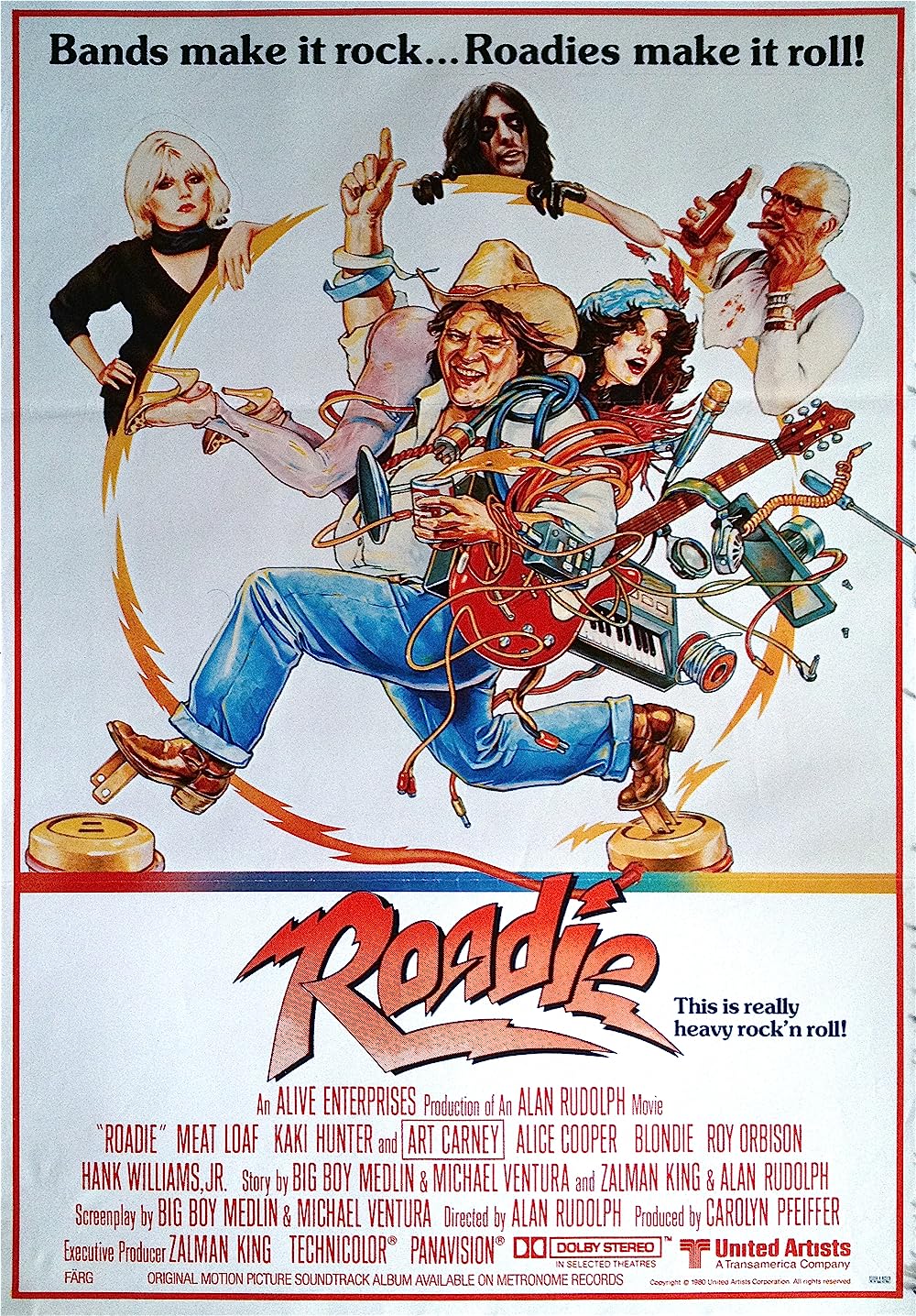
Travis (Meat Loaf) and B.B. (Gailard Sartain) are two truck drivers out making deliveries when they come upon a disabled RV on the side of the highway. Initially they don’t plan to stop, but when Travis sees Lola (Kaki Hunter), a would-be rock ‘n’ roll groupie, peering out the RV window he decides he’s ‘fallen in love’ and pulls-over. His ability to fix mechanical issues using unorthodox tools impresses Ace (Joe Spano) who’s a road manager and wants Travis to drive them to Austin to set-up equipment for a Hank Williams Jr. show. Because of his fondness for Lola he agrees and promptly quits his job as a trucker to travel all over the country meeting such rock ‘n’ roll legends as Roy Orbison and Blondie while also awkwardly courting Lola who’s more infatuated with meeting her idol Alice Cooper.

While director Alan Rudolph has never had a box office hit his movies have usually achieved success amongst the critics except for this one, but  I considered it his most original effort. Roger Ebert described it as being ‘disorganized and episodic’ even though life on the road in a tour group works that way with new issues coming up almost hourly and like driving on the open road there can be many detours and speed bumps as well as fleeting faces, which in that context the film recreates, in quirky comic form, quite well. He also complained about the lack of character development and maybe in Travis’ case there wasn’t much, but he’s such a funny caricature that I didn’t think he needed any. With Lola though I felt there was and impressed me with how much depth she ultimately showed especially since she initially seemed like nothing more than a caricature too. I really liked that she wasn’t as into Travis at the start like he was into her, which can happen a lot, and she has to grow into liking him during their many adventures though still never really openly admits to it to either herself, or others, which I felt was a refreshing change from the ‘love at first sight’ thing in the Hollywood formulas. Ebert also complained that the songs were never played to completion though the ones that are about Texas are.

There’s many unique laugh-out-loud moments. Some of my favorites was the laundromat scene where Travis and Lola have a box of Tide that supposedly holds cocaine. The car chase in Austin done at night in front of the state Capitol building is amusing as is the barroom brawl. Granted there’s been a lot of those in movies, but like with everything else it has a quirky style unlike the others especially as Travis gets hit in the head and begins rambling out incoherent nonsense. The scenes at Travis’ boyhood home where his father (Art Carney) and sister Alice Poo (Rhonda Bates) are a riot including the telephone booth connected to machine belts that allows it to go from the exterior of the home to the inside and the BBQ chicken eating scene, which may be, at least visually, the best moment in the film.

It’s also nice to have a movie that’s all about Texas to actually be filmed in Texas. Too many try to cheat it, a few of them have been reviewed here recently, that mask the Arizona desert, or even the California one to Texas, but anyone from the Lone Star State could easily detect the difference. This one truly has the Texas look and you can see this from the very first shot which features armadillos crossing the highway and because of this it gets the honor of being put into the Scopophilia movie category of ‘Movies that take place in Texas’ versus the ones that say they are set here, but filmed elsewhere.

Spoiler Alert!

Probably the only thing that doesn’t quite work is the ending where Travis and Lola are kissing in the front seat of a pick-up only to see a bright light of a spaceship. I realize the intent was to do a parody of the ‘Paradise by the Dashboard Light’ song and maybe if we had actually seen the ship, which got inadvertently destroyed before shooting began I might’ve forgiven it, or maybe even been impressed, but entering in a sci-fi genre that late becomes almost like a sell-out and too surreal for its own good. Something that stayed true to the playful quirkiness that came before it would’ve tied the bow better.

My Rating: 7 out of 10

Released: June 13, 1980

Runtime: 1 Hour 45 Minutes

Rated PG

Director: Alan Rudolph

Studio: United Artists

Available: DVD, Blu-ray

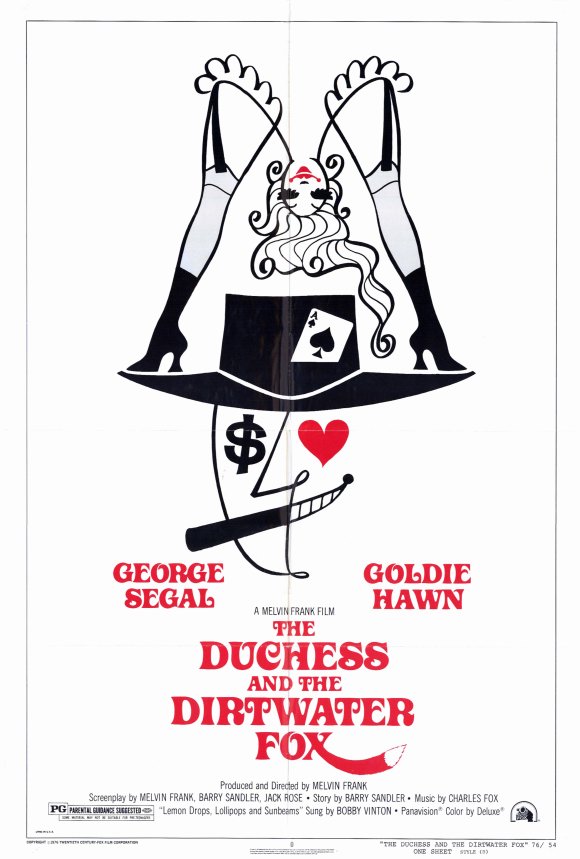
The Duchess and the Dirtwater Fox (1976)

duchess2

By Richard Winters

My Rating: 5 out of 10

4-Word Review: She steals stolen money.

Amanda (Goldie Hawn), who goes by the nickname Bluebird, works as a dance hall girl in the old west, but dislikes having to entertain the leering male clientele and looks for an opportunity that will allow her to live the ‘easy life’. She finally finds it in the form of a rich Mormon family from Utah who are looking for a nanny to watch after their large brood. In order to disguise herself as being one she’ll need to buy herself a suitable outfit, but she has no money. Then Charlie (George Segal), who goes by the nickname Dirtwater Fox, and who has just absconded with over $40,000 of stolen loot from the infamous Bloodworth Gang, walks into the saloon where Bluebird works and immediately starts flirting with her as she performs a dance routine on-stage. Bluebird finds him annoying, but agrees to go up to his hotel room as a prostitute performing a sexual service in order to get the money for her nanny outfit. However, once up there, Dirtwater refuses to pay her, so she drugs his drink, which knocks him out, and steals the briefcase with the stolen money. When Dirtwater wakes-up he goes after her and the two eventually meet back up, but find despite their mutual dislike that they must work together in order to avoid the vengeful clutches of the Bloodworth Gang who are hot-on- their-trail. 

The film was directed by Melvin Frank with a screenplay by Jack Rose, two men whose career peaks was during the 40’s and 50’s, but by the 70’s their senses of humor were quite dated and story ideas placid. After finding inexplicable success with the highly overrated A Touch of Classwhich starred Segal and Glenda Jackson, director Frank became convinced that he had a winning chemistry and wanted to re-team the two in a western romantic comedy. Jackson though rejected the offer and was replaced by Hawn, who quite honestly is the only good thing about the movie. She had been up to this time known for her dumb blonde, ditzy persona, but here goes against type by playing a sharp-tongued, no nonsense lady who takes little crap from anyone. She plays the part perfectly and in the process grows as an actress. Her use of different accents is fun as well as being spot-on and the song and dance routines that she does despite Leonard Maltin calling them in his review ‘misplaced’ are actually quite entertaining and deliciously bawdy. 

Segal though is the film’s detriment. His acting is weak and a good example of this is when he’s caught cheating at a card game and strung up by a noose by an angry mob and yet even as the rope is put around his neck he remains cool and calm when anyone else in that situation would be panicked and struggling to get away. His character is totally unlikable and never grows on the viewer. It should’ve been a signal when Jackson backed-out to have Segal replaced with a younger charismatic actor who was more Hawn’s age instead of forcing her character to fall for someone who was 12 years her junior.

For a western the action is light and fleeting and there’s several scenes including the extended one with the two inside the hotel room where the pace slows up to a complete halt and becomes visually stagnant making it seem almost like a filmed stage play. The film does not play-up the character’s relationship, or illustrate how it grows. When the stagecoach they were riding in goes off a cliff, which they were able to jump out of it in time, they must climb down a steep ravine to get to it in order to retrieve the briefcase of money that was still on it. Instead of filming the scene showing the two helping each other navigate the rocky terrain, which could’ve been both amusing and romantic, the film just immediately cuts to them already there without ever showing how they were able to make it down.

Spoiler Alert!

The most annoying aspect, at least story-wise, comes at the end when Dirtwater and Bluebird find the Bloodworth Gang’s hideout. Dirtwater sneaks into it and immediately detects a loose floorboard, which signaled a hidden trap door leading to where the money was stored, which came-off as too easy. What’s the point of attempting to hide the loot if some stranger can just walk in and in a matter of seconds detect where it’s located? It’s also unrealistic to expect that the money would still be in the bag as most likely the gang members would’ve already split-up the loot amongst themselves.

There’s also the issue of Segal getting shot several times at the end by the gang as does his horse. The horse then collapses to the ground and seemingly dies only to mysteriously, after laying motionless for quite awhile, get up and magically comes back to life without any explanation. Segal on the other-hand is ‘kept alive’ by being coaxed to keep crawling after the money bag, which Goldie holds-out in front of him, but are we to believe that he’s going to manage to continue to crawl hundreds of miles through the desolate wilderness in a bullet-riddled body before they’re able to find medical help?

The idea that Goldie would even want to keep the schmuck alive is dingy. The guy refused to give up the money even as he lay dying and no longer had any use for it instead of just handing it over to someone he supposedly ‘loved’. Anyone else in that same situation would’ve been incensed at his selfishness and just grabbed the money out of his hands and been on their merry way while letting the son-of-a-bitch rot where he was. 

My Rating: 5 out of 10

Released: April 1, 1976

Runtime: 1 Hour 43 Minutes

Rated PG

Director: Melvin Frank

Studio: 20th Century Fox

Available: DVD-R (20th Century Fox Cinema Archives)


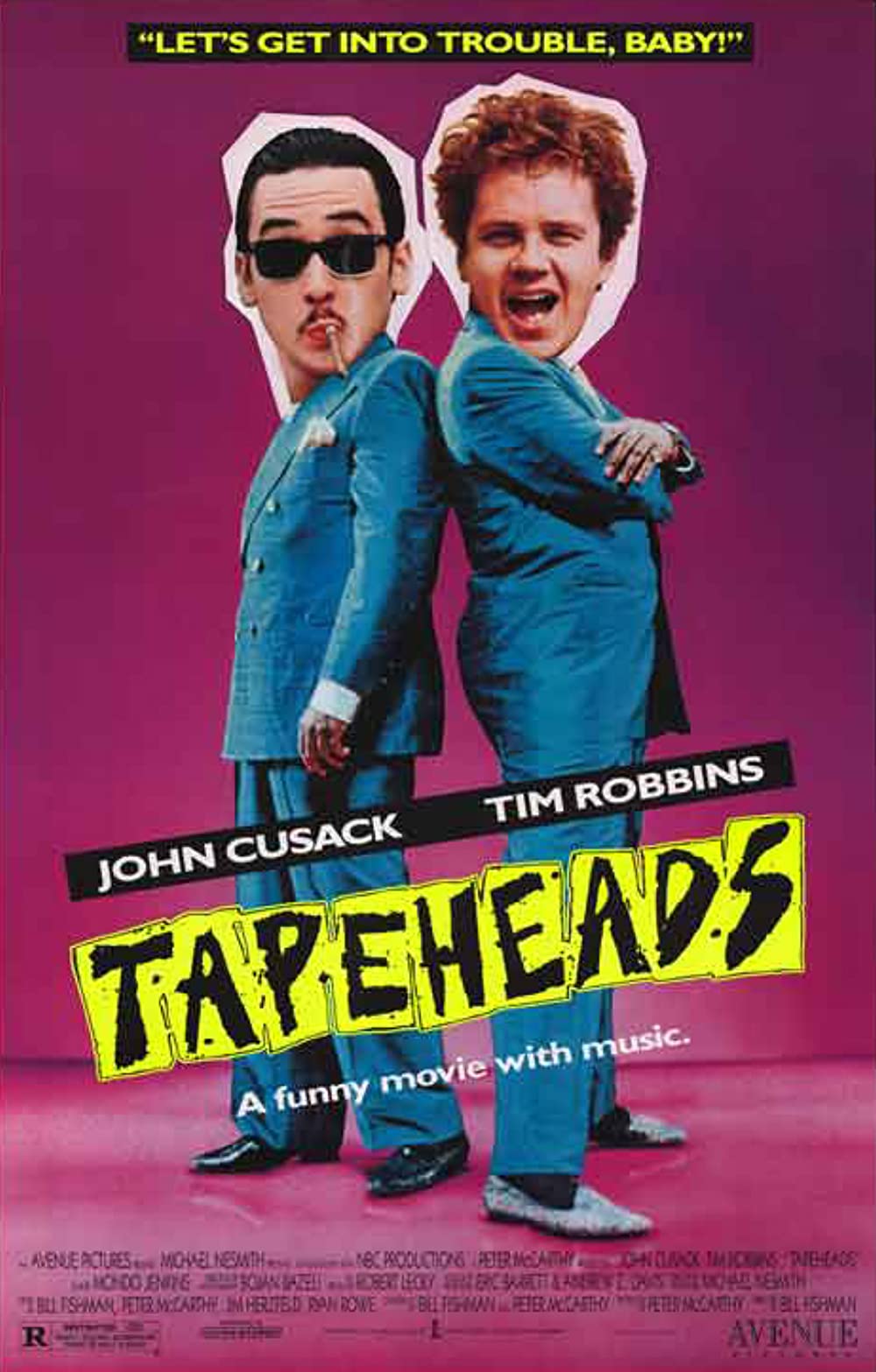
Tapeheads (1988)

tape

By Richard Winters

My Rating: 5 out of 10

4-Word Review: Starting a video company.

Ivan (John Cusack) and Josh (Tim Robbins) are two slackers who can’t hold down a job for too long. After getting fired as security guards they decide to start-up their very own music video production company, which they name ‘Video Aces’. They find it tough going with many people, like with one producer, the sly Mo Fuzz (Don Cornelius), trying to get them to do the work on spec where they’re forced to make the video using their own funds with the vague promises of potential money later on after they’re ‘discovered’. They finally hit-on the idea of promoting the singing duo the Swanky Modes (Sam Moore, Junior Walker) a soul group that the two idolized in the 70’s when they were kids. Their plan is to hijack a Menudo concert and have the Swanky Modes sing in their place and thus exposing their music to a whole new audience.

The film is produced by the former Monkee Mike Neismith, who had earlier produced the very successful cult hit Repo ManUnfortunately this one doesn’t work quite as well. Much of the problem is that it’s directed by Bill Fishman whose background is in music videos and not filmmaking and it shows. Repo Man succeeded because it was centered around a character and it also had a better mix of quirky comedy and story development. This one is handled in a more slap-dash way. Cusack and Robbins both give excellent performances, but are only seen intermittently and they never really grow or evolve like a character in a good movie should nor do they earn their way into the next scene. Instead they become almost like Barbra Eden from ‘I Dream of Jeannie’ where they just seem to pop in and out of these weird scenarios with bizarre people. The plot is thin and more like a collection of wacky skits. Even as satire it fails because it pokes fun of so many various things, in a completely rambling way, that it becomes unclear what the point, or message is supposed to be. There are certainly some clever, funny bits, but ultimately it comes-off more like an experiment gone awry than a movie.

While the cast is filled with a lot of recognizable faces most of them aren’t seen much. I was disappointing that Doug McClure, as Josh’s exasperated and disapproving dad, wasn’t in it more as he had he potential of creating some interesting confrontations. Susan Tyrrell gets wasted too, which is a shame as she talks here with a high society accent, but  I do remember her saying in an interview that she considered herself a ‘lazy person’ who only did movies for the money and would drop-out altogether if she didn’t need to earn a living, so in that respect maybe she didn’t mind the small bit. Lee Arenberg, who plays a security guard, is only in the beginning, but should’ve returned as he’s seen eating Twinkies while sitting on a toilet inside a public stall and anyone who does something that gross deserves more attention.

Some of the roles are bigger. Mary Crosby, the daughter of Bing Crosby, who starred in the infamous Ice Pirates, 5 years before this one, which virtually killed her film career before it began, does quite well here as a duplicitous agent and actually seems to get more screen time than the two stars. The aging Clu Gulager is quite funny as a Presidential candidate with major skeletons in his closet. The best one though is King Cotton (real name Richard Sony) who was the lead vocalist of the blues band Navasota in the 60’s. Here he plays a restaurant owner who partakes in a wacky music video to promote his business with one version shown during the film and another one called ‘Roscoe’s Rap’ that gets played at the end over the closing credits with both being quite memorable.

My Rating: 5 out of 10

Released: January 22, 1988

Runtime: 1 Hour 33 Minutes

Rated R

Director: Bill Fishman

Studio: Filmstar

Available: DVD, Plex

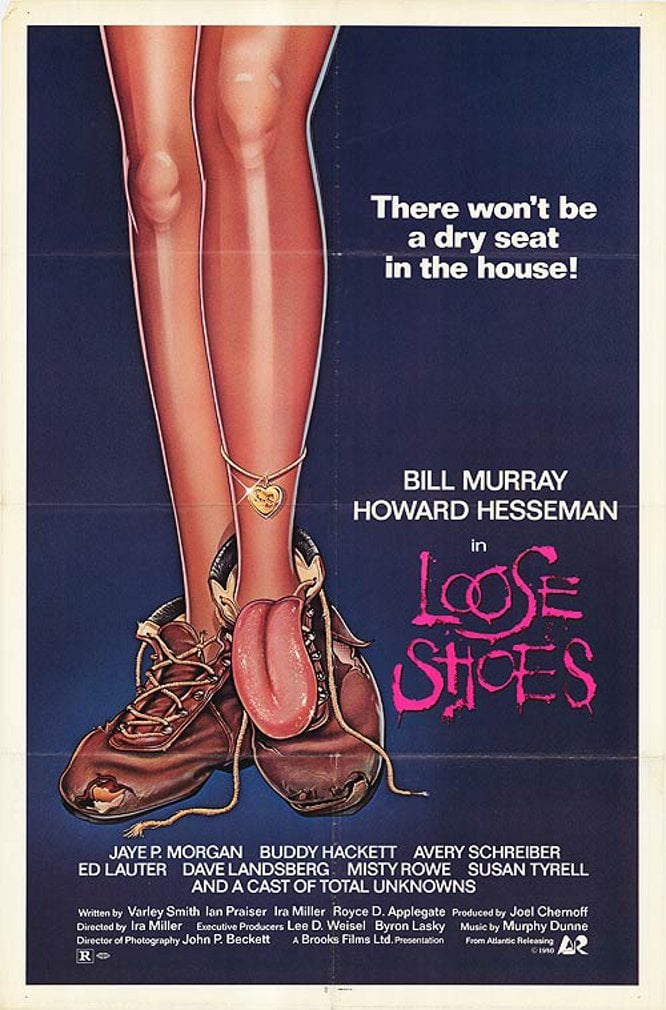
Loose Shoes (1978)

loose1

By Richard Winters

My Rating: 3 out of 10

4-Word Review: Lame parody of movies.

In 1967 an improv group, which Chevy Chase was an early member, began that called themselves Channel One, who performed improvisational skits making fun of current events and TV-shows. Instead of doing them on stage in front of audience they filmed it and then played them on three different TV screens at a theater in Greenwich Village. When these proved successful the collection of filmed skits were then toured around the country at college campuses and got a favorable reaction, so the producer decided to turn it into a feature length film. At the time this was considered a novelty as the movie, which was called The Groove Tube, would have no plot and just be a collection of skits, but it proved popular enough that it gave others the same idea. From this came Tunnelvision, American Raspberry, and probably the most famous one Kentucky Fried Movie. 

In 1977 Ira Miller, who had worked with Mel Brooks on his projects and was a member of Second City during the 60’s, became inspired to do his own version of this. He financed it using most of his own money. The concept was for it to be a parody of recent movies and structured similar to movie previews one would see at theaters before the main feature would begin. The working title was Coming Attractions and to keep costs low he cast young, unknown talent like Bill Murray, who agreed to work for a small fee in order to get the exposure, or B-actors that he knew who as a favor would work at below scale for a day in order to help him out. Initially it got such a bad reaction from test audiences that it was shelved for several years, but then after Meatballs was released, which made Murray a star, it was re-released under its new title in order to capitalize on his fame.

The film suffers from production values that are so cheap I’ve seen high school projects that were done better and it doesn’t help that the DVD issue looks like it was copied straight off of a VHS tape. Both IMDb and Wikipedia list the original runtime as 84 minutes, which is incorrect as it was actually 74 minutes, but the DVD version only goes 69 minutes and cuts out several segments including ‘Jewish Star Wars’, which is alright as even with the abbreviated runtime it still felt like it was never going to end and adding in the stuff that was edited out would’ve just prolonged the agony. It would’ve helped had there been some consistent characters like a family going to the theater to see a feature and becoming increasingly annoyed at the ongoing previews. After each skit it could’ve cutback to their reaction, which would’ve given it some minimal structure and focus that otherwise is sorely lacking.

Some of the segments had potential like the ‘Invasion of the Penis Snatchers’, but Miller approaches the material too much like a gag writer where he’s more interested in the punchline instead of playing out a funny scenario. The skit that has Jaye P. Morgan doing a send-up of Nurse Ratched needed to be extended as she could’ve done it hilariously. The segment that spoofs the Woody Allen film Play it Again Sam isn’t exactly funny, but David Landsburg’s impression of Allen is so spot-on that it’s entertaining nonetheless. Murray’s segment where he plays a prisoner on death row is okay and you even get to see him at one point with his head shaved. I also liked the bit with Susan Tyrrell as a woman stuck in the boonies only here the hicks are open-minded and even features a virtually unrecognizable Ed Lauter as a free-spirited, cocaine sniffing, redneck sheriff.

The best moment ‘Dark Town After Dark’ comes at the very end and features a send-up of a Cab Calloway dance number with the song ‘Loose Shoes’ being sung. The lyrics of which came from a comment made by President Gerald Ford’s Secretary of Agriculture Earl Butz. He was on a plane flight to California with entertainers Sonny Bono and Pat Boone. Boone asked him why republicans weren’t able to attract more blacks. He responded by making a comment that forced him to resign once it got out: “I’ll tell you what coloreds want. It’s three things: first, a tight pussy, second, loose shoes, and third, a warm place to shit.”

My Rating: 3 out of 10

Released: September 1, 1978 as Coming Attractions. Re-released August 1, 1980 as Loose Shoes

Runtime: 1 Hour 14 Minutes (Original Cut). 1 Hour 9 Minutes (DVD Version).

Rated R

Director: Ira Miller

Studio: Cinema Finance Associates

Available: DVD, Amazon Video

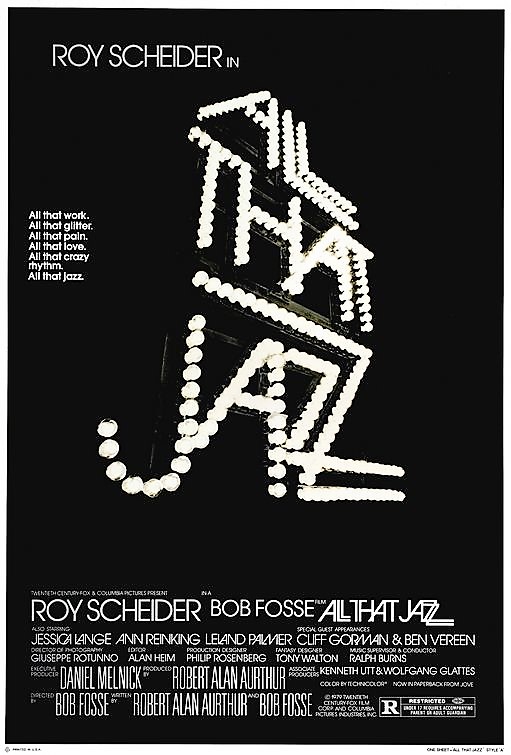
All That Jazz (1979)

all that1

By Richard Winters

My Rating: 7 out of 10

4-Word Review: Overworked choreographer battles exhaustion.

Joe (Roy Scheider) is a dance choreographer who’s busy staging his next play while also editing a film he has directed, which the Hollywood studio is demanding get completed. These pressures cause him to take his anger out on his dancers as well as his ex-wife (Leland Palmer), who’s helping to finance the play, as well as his live-in girlfriend Katie (Ann Reinking). As the deadline for both approaches he begins seeing visions of the angel of death (Jessica Lange) whom he has a running conversation with. Eventually he starts to have chest pains, which cause him to be sent to the hospital even as he continues to drink and smoke over his Dr.’s objections. When he finally does have a heart attack he’s whisked into surgery where he directs extravagant musical numbers inside his head while the producers of the play hope for his demise as their insurance proceeds will not only help them avoid a financial loss, but even make a net profit.

The film is based in large part on writer/director Bob Fosse’s own experiences. He started out as a dancer who eventually became a choreographer who shot to fame in the 50’s with such musicals as The Pajama Game and Damn Yankees. By the 70’s he had become an award winning film director and it was while he was staging the Broadway musical Chicago in 1975 and also completing the editing for the film Lenny that much of what happened here got played-out. The biggest irony though is that Cliff Gorman, who starred onstage as the comedian Lenny Bruce of which the film and play Lenny is based, plays the star of the fictional film that Joe is editing even though in real-life Gorman lost out on the starring film role to Dustin Hoffman simply because Hoffman had a more bankable name, which is a shame because from the clips seen here you can easily tell that Gorman was an edgier Lenny that would’ve made that movie stronger.

As for this movie it’s directed in similar style as Frederico Fellini’s 8 1/2. The art direction and editing, which both won an Oscar, come fast and furiously as it constantly jumps back-and-forth from reality to dream-like sequences. While this type of non-linear narration could prove distracting and confusing in most other films here it actually helps. The script does a good job of revealing the stressful and competitive nature of the dance business, but it doesn’t show us anything that couldn’t have been presumed already making these scenes less impactful and the dance numbers, some of which are provocative, more entertaining.

Some complained that Scheider, who by this time was better known as an action star, was miscast, though I came away impressed even with his pale complexion and thin frame (he lost weight to help replicate a sickly/exhausted appearance) that became a bit difficult to watch. It’s the character that he plays that I found to be the biggest issue as the guy is a complete jerk sans the few scenes that he has with his daughter, played by Erzsebet Foldi, who is the one person he treats nicely and I wanted to see more moments between them. The dance number that she and his girlfriend put on for him inside his apartment is the film’s brightest moment while the reoccurring segue of Joe getting up each morning and putting visine into his blood shot eyes before looking into a mirror and saying “It’s showtime, folks!” become redundant and annoying.

On the technical end it’s near brilliant, but as an emotionally impactful character study it’s a total flop. The protagonist is too selfish for anyone to care about and shows too little redeeming qualities, nor much of an arc, to make it worthwhile. Ultimately it’s an exercise in extreme self-loathing that will leave the viewer as detached from the proceedings as the characters who are in it.

My Rating: 7 out of 10

Released: December 16, 1979

Runtime: 2 Hours 3 Minutes

Rated R

Director: Bob Fosse

Studio: 20th Century Fox

Available: DVD, Blu-ray (Criterion Collection)

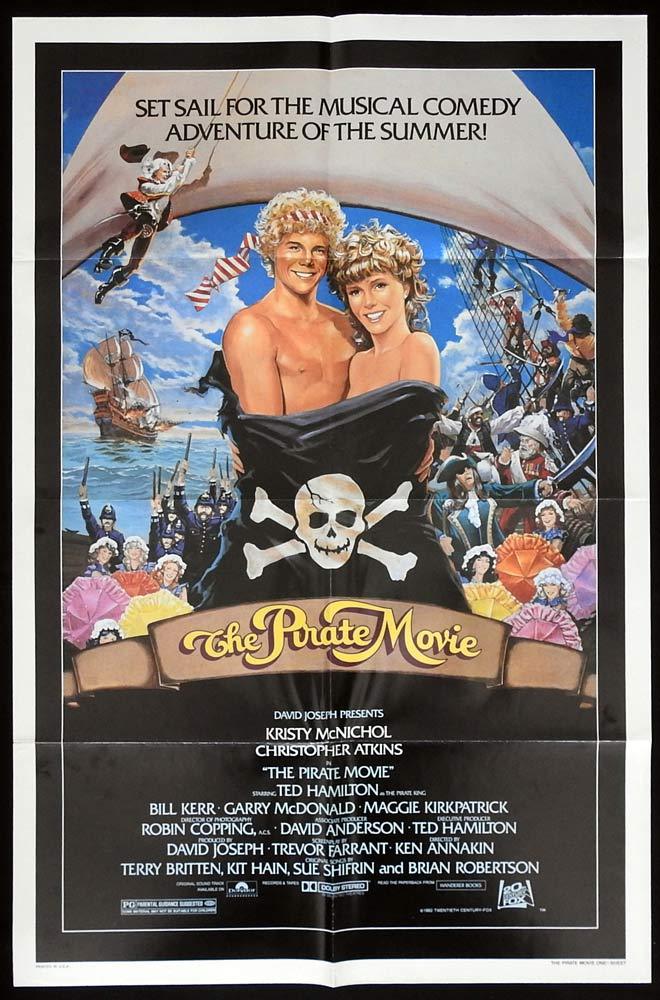
The Pirate Movie (1982)

pirate2

By Richard Winters

My Rating: 1 out of 10

4-Word Review: Nerd dreams of pirates.

Mabel (Kristy McNichol) is a nerdy girl living in Australia as an American exchange student who does not fit-in with the three sisters (Kate Ferguson, Rhonda Burchmore, Catherine Lynch) of her host family. One day the four visit a sword play demonstration being put on at a local festival. All four immediately become infatuated with Frederic (Christopher Atkins) the handsome swordplay instructor who later on invites them on a boat ride except the sisters don’t want Mabel to come along, so they untie the boat from the dock before she can board. Mabel then rents another boat to catch-up to them, but gets caught in a storm and washed up to shore in an unconscious state where she has a dream about a crew of 18th century pirates lead by The Pirate King (Ted Hamilton) who cast Frederic off their ship when he refuses to become a pirate like them. Frederic then washes up to shore where he meets Mabel and her sisters, but this time the sisters are all nerdy while Mable is the beautiful maiden that he immediately falls in love with. However, they must also avoid the clutches of The Pirate King and his men who also come to the island looking for women to kidnap.

The story is loosely based the the Gilbert and Sullivan operetta from 1880 called The Pirates of Penzance, but jacked-up with a lot of campy comedy and modern day, teeny-bopper songs that, unless you’re really into 80’s cheese, makes it an almost excruciating experience to sit through. I don’t mind some campiness, but there still needs to be an exciting plot and a story that has a sense of adventure and even a few moments of tension for balance, but all this thing has is one lame gag after another. There’s also a ton of anachronisms including an Inspector Clouseau-type character and even light sabers that have absolutely no place in a movie set in the 18th Century.

The dream concept gets poorly played-out as this is supposedly Mabel’s, but when a person is having a dream then everything is from their perspective and they’re involved in someway with everything that goes on in it and yet here there’s a great number of scenes where Mabel isn’t even present. She also mentions at one point that since this is ‘her dream’ she wants a ‘happy ending’, but people don’t usually know they’re dreaming while they’re having it and only become aware after they’ve awaken.

Kristy is much more entertaining in the nerd role (she looks literally like Peter Billingsley from A Christmas Story) and she should’ve remained in that character and then earned her way into becoming a beautiful, confident women at the end instead of having her change over to one in a split second like here. Atkins is amusing simply because he has a big-brawny body with the high-pitched voice of an 8th grader though his poor acting, which at first works since the movie itself is bad, eventually got on my nerves.

The only funny bits are the behind-the-scenes outtakes that get shown during the closing credits although Ted Hamilton, who also served as the executive producer, does have a few amusing moments even though as the villain he’s too hammy.

Spoiler Alert!

The romance I didn’t like because it happens too quickly as romances are more interesting when there’s a challenge to overcome and since Frederic had no experience with women many funny awkward scenarios could’ve been incorporated, but aren’t. What really annoyed me is that when Mabel does finally wake up Frederic is right there, almost like magic, and kisses her, so they fall in love just like in the dream, but what’s the use of having a dream concept if the reality is going to play-out in exactly the same way? Could’ve been funnier had they gotten together only to eventually realize they couldn’t stand each other, which would’ve added a smidgen of reality that this otherwise vapid thing is sorely missing.

My Rating: 1 out of 10

Released: August 6, 1982

Runtime: 1 Hour 38 Minutes

Rated PG

Director: Ken Annakin

Studio: 20th Century Fox

Available: DVD

Starstruck (1982)

By Richard Winters

My Rating: 7 out of 10

4-Word Review: Teens dream of stardom.

Jackie (Joey Kennedy) is a teen working as a waitress at her mother’s pub, but dreams of becoming a famous singer. Her 14-year-old cousin Angus (Ross O’ Donovan) acts as her manager trying to get her a spot on the local talent TV-show called ‘The Wow! Show’, but Terry (John O’May) the program’s host, refuses to see her, so they decide to have her perform a publicity stunt by walking across two high rise buildings in downtown Sydney on a tightrope while nude. This gets so much news coverage that Terry can’t help but bring her on his show, which initially proves to be a great success until Jackie becomes pressured to cut her backing band and tone down her quirky style. After alienating all of her friends she then tries to win them back by plotting to crash a New Year’s Eve talent contest at the Sydney Opera House where they hope to win the $25,000 cash prize in order to save their now dying pub.

After the success of My Brilliant Career director Gillian Armstrong set out to make a movie that was completely different in style from that one and eventually came up with the idea of doing a musical parody and on that level it works. The musical numbers are not only quite funny, especially the one done inside the pub where all the customers and staff join together to create one long line dance, but impressively staged too. I was literally blown away with the segment done inside Terry’s penthouse pool that was meant to be a take-off on the old Busby Berkley numbers from the 40’s, but in many ways just as good if not better.

The film also gets filled with a lot of humorous moments, most of which, like Angus’ elaborate attempts to try and make contact with Terry and even ditching school to do so, are quite funny. The segment dealing with Jackie’s high wire act I found initially preposterous. How exactly where they able to connect the tightrope between the two buildings, which would’ve been a massive feat in itself and never shown, but the outcome, as silly as it is, still had me chuckling.

The film has a terrific supporting cast especially Pat Evison as the elderly and overweight Nana, who shows exuberant support for Jackie’s ambitions even when the other adults don’t. O’Donovan and his constant scheming is also engaging, but I found Kennedy’s performance in the all important lead role to be flat. Singing-wise she is quite good, which is the whole reason she got the part, but her acting doesn’t have the same energy. Her character really isn’t very funny either and it’s Angus doing all the hard work to get her noticed and she never seems to appreciative it making the viewer not as emotionally invested at seeing her succeed as they should’ve been.

The film gets a bit too quirky for its own good too. It’s got a lot of visual pizazz, but no substance whatsoever and it would’ve been nice had there been some grittiness tied in. Everything happens too easily making it seem like a fairy tale and convincing me that the most suitable ending would’ve had Jackie waking up and realizing it had all been a dream because that’s exactly what it comes-off like.

On a side note I was surprised how much the Sydney Harbour Bridge, which was completed in 1932 and stands as the world’s tallest, gets shown. Not only is it featured in every skyline shot of the city, but there’s also a mural of it on the wall of the pub, a toy model of it on top of the pub’s TV, and even a replica of it put on stage during the film’s climactic dance number. I’m not sure what the exact shot count number is that features it in one form or another, but if you take a shot of whiskey every time you see it you’ll be drunk and passed out on the floor by the time it’s over.

My Rating: 7 out of 10

Released: April 8, 1982

Runtime: 1 Hour 45 Minutes (Australian Version) 1 Hour 35 Minutes (US Release)

Rated PG

Director: Gillian Armstrong

Studio: Cinecom International Films

Available: DVD, Amazon Video, Pluto TV, Tubi