Category Archives: Movies with Nudity

The Jewel of the Nile (1985)

jewel of the nile

By Richard Winters

My Rating: 5 out of 10

4-Word Review: Searching for a jewel.

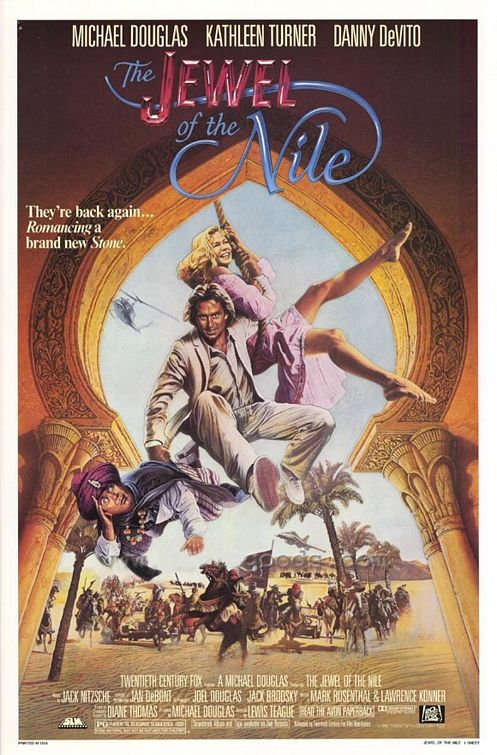
In this sequel to Romancing the Stone Jack (Michael Douglas) and Joan (Kathleen Turner) are living the easy life on a yacht, but are bored and looking for some adventure. Joan is given the opportunity to write a book about a visiting sheik named Omar (Spiros Focas) and travels to the Middle East to learn more about him. There she finds that he has sinister intentions and simply using her to be a part of his scheme, which compells her to try and expose him, but first she must escape from his clutches. Jack and Ralph (Danny DeVito) team up to help her along with a prince named Jewel (Avner Eisenberg) and together the four find themselves in one wild predicament after another.

Although this film did not do as well in the box office as its predecessor I still ended up enjoying it and felt in a lot of ways it was better. It has a bigger budget and slickly handled direction. The humor is more consistent and edgy and Jack and Joan share a love/hate relationship that is more entertaining than the Harlequin romance novel that the first one became while the on-location shooting that was done mainly in Morocco has some genuinely breathtaking scenery.

The scene in which the three get into a fighter jet plane and use it to tear up a village while still remaining on the ground is the film’s highlight. Their escape from Omar while climbing on a very steep rocky cliff is exciting and watching DeVito get sat on by a donkey is quite funny.

DeVito’s character is used much more here and his on-screen moments are one of the best things about the movie. Focas as the evil sheik is okay and at the very least is a more dynamic bad guy than the ones that were used in the first film. Holland Taylor as Joan’s snarky agent is the only one whose presence gets wasted and she ends having what amounts to only a few minutes of screen time making me wonder why she even bothered to appear at all.

The biggest drawback, like with the first film, is with the plot itself. The concept is too broad and the set-up rather convoluted making me both confused and ambivalent at the same time. It improves by the middle to be mildly interesting and has enough comedy and action to keep afloat, but the 105 minute runtime is too long for the bubblegum material and stretches the climactic sequence past its peak until it becomes derivative and overdone.

My Rating: 5 out of 10

Released: December 11, 1985

Runtime: 1Hour 45Minutes

Rated PG

Director: Lewis Teague

Studio: 20th Century Fox

Available: VHS, DVD, Blu-ray, Amazon Instant Video, Netflix streaming, YouTube
The Gauntlet (1977)

the gauntlet

By Richard Winters

My Rating: 7 out of 10

4-Word Review: Alcoholic cop escorts hooker.

Ben Shockley (Clint Eastwood) is a down-and-out cop and borderline alcoholic who’s given the assignment of escorting a hooker named Gus Mally (Sandra Locke) from a prison in Phoenix to a trial in Las Vegas where she will be a key witness. Ben is initially told that it’s a ‘nothing witness to a nothing trial’, but finds that to be anything but the truth as the two are shot at and chased by both the mob and his fellow policeman convincing him that he’s been set-up and making him determined to ‘even the score’.

This film overall is great fun and has enough well-choreographed action sequences to be entertaining for just about anyone who watches it. The story also manages to have some intrigue and a certain symbolic message. The on-location shooting done in and around Phoenix gives it an added flair particularly the long shots of the dessert landscape.

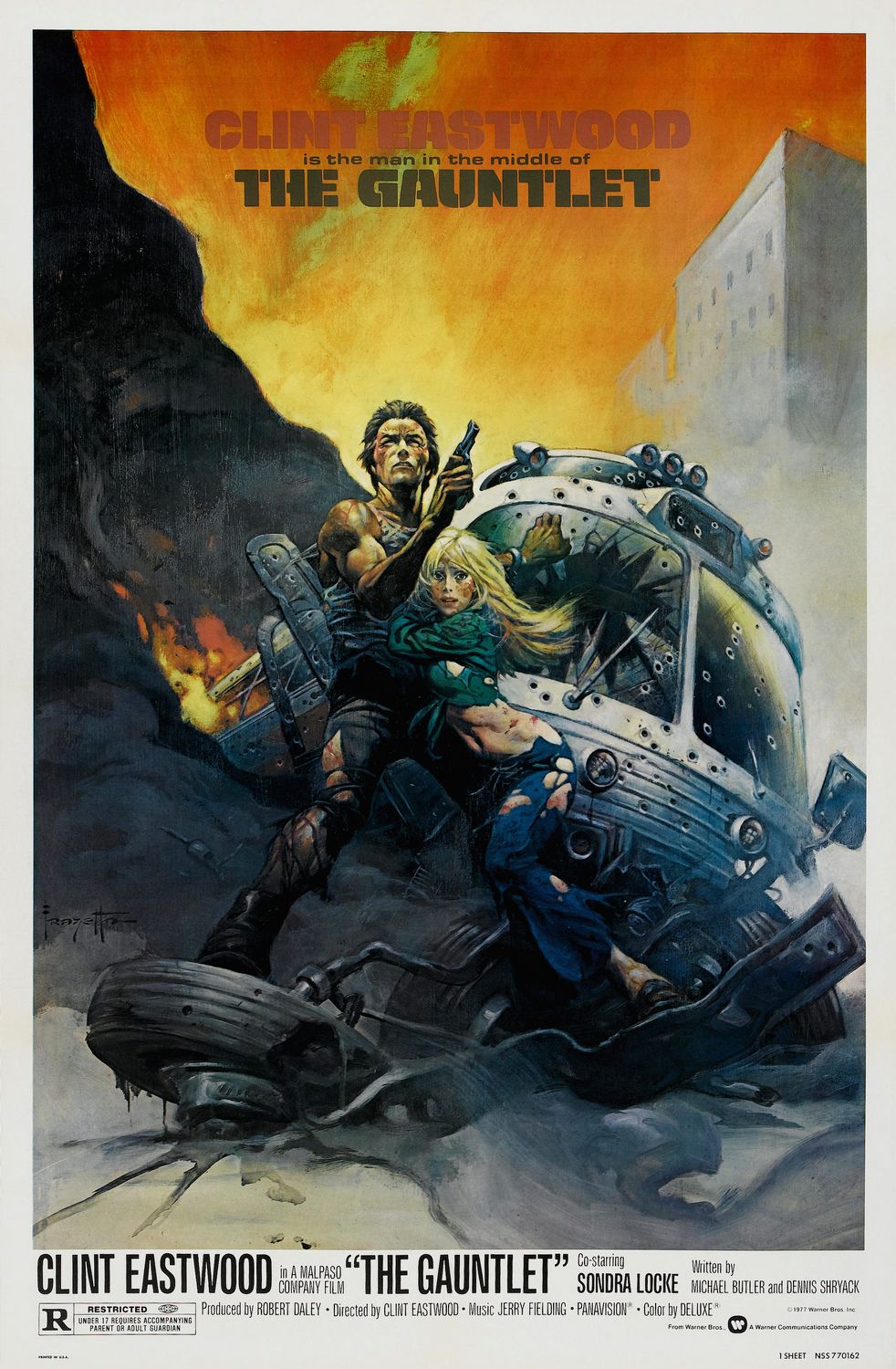
The film is best known for its climatic sequence involving Eastwood and Locke riding in a bus that travels slowly down the main streets of Phoenix while being shot at by hundreds of cops lining the sidewalk that ultimately puts thousands of holes into the vehicle. As a visual this is exciting and memorable, but I still kept wondering why the cops didn’t simply aim at the bus’s tires, which would’ve disabled the vehicle instantly and they would not have had to bother shooting up the rest of it.

Another action segment in which Eastwood and Locke are riding on a motorcycle while being chased and shot at by men in a helicopter brought up some similar issues. Again the segment itself is exciting and surprisingly prolonged although it would’ve done better without the bouncy jazz score being played over it. Either way the helicopter begins to attack Eastwood while he is standing at an outdoor phone booth. He then runs inside to an indoor food market where the Locke character already is, but instead of staying there where they are shielded he instead leads her out of the building and onto the motorbike where it would be more dangerous because it makes them an open and vulnerable target.

I also wasn’t too crazy about Locke’s performance or her character. For one thing Locke approaches the part in too much of a one-dimensional way. A hardened, snarky prostitute may be realistic, but hardly interesting or appealing and the character would’ve been more fun had their being some sort of unique or funny trait about her instead of leaning so heavily towards the stereotype.

The other supporting characters though are great. Pat Hingle is excellent as Ben’s nervous, hyper friend who finds himself unwittingly in the middle of the fracas. I also enjoyed William Prince playing an extension of the corrupt, jaded corporate-like character that he did in Network. Bill McKinney is also good as a hick cop who has an interesting ‘conversation’ with Locke about her ‘profession’.

If you’re looking for a bubblegum, action-packed escapism then this film should do the trick and still holds up well today even when compared to modern-day action flicks.

My Rating: 7 out of 10

Released: December 21, 1977

Runtime: 1Hour 49Minutes

Rated R

Director: Clint Eastwood

Studio: Warner Brothers

Available: VHS, DVD, Blu-ray, Amazon Instant Video

Black Widow (1987)

black widow

By Richard Winters

My Rating: 4 out of 10

4-Word Review: She kills her husbands.

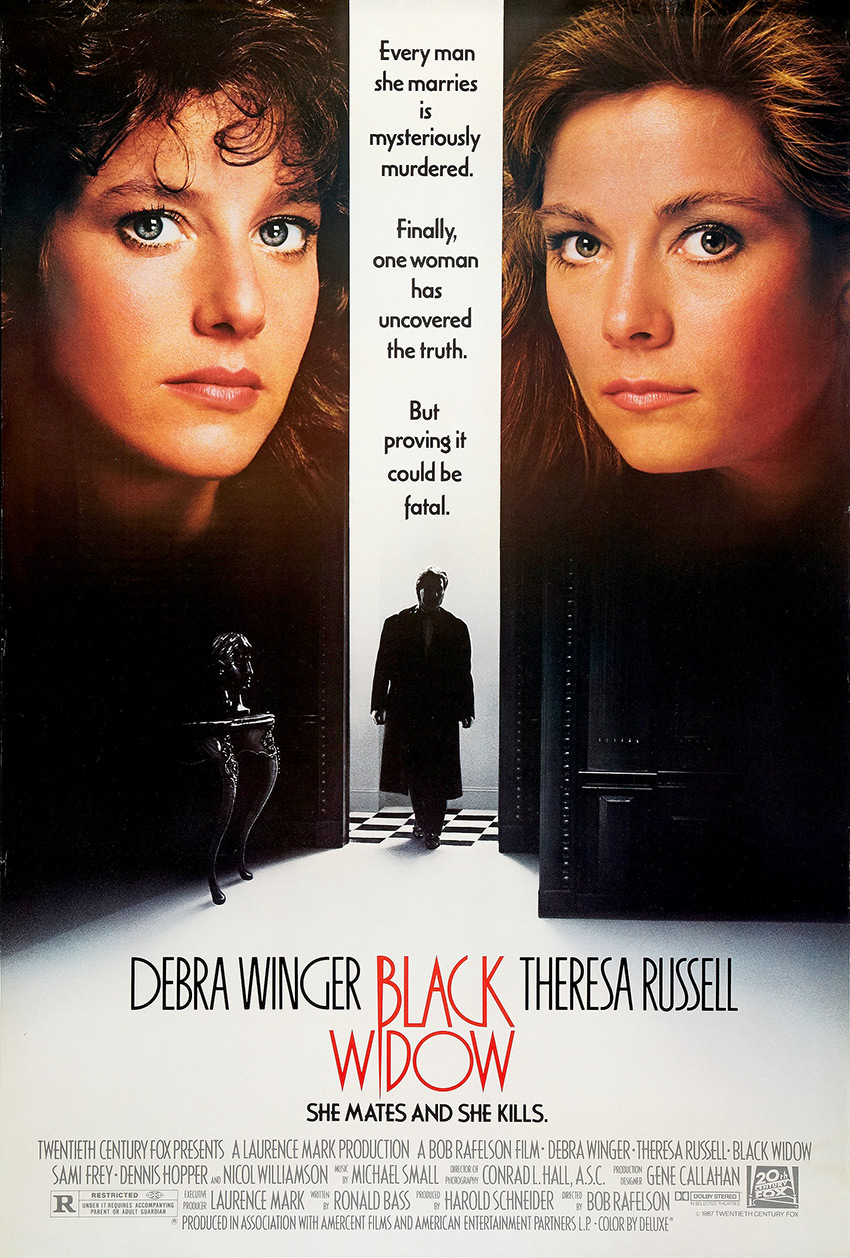
A federal agent named Alexandra (Debra Winger) tracks an elusive woman named Catherine (Theresa Russell) who marries rich men and then kills them off to inherit their fortune. Catherine is constantly changing her identity making it tough for her to track and Alexandra’s superiors do not share her same passion for the case nor believe there’s even a case at all. Finally while in Hawaii Alexandra manages to make contact with the woman and the two become fast friends only to have Alexandra become the next target when Catherine starts to suspect that she’s been double-crossed.

The film’s biggest asset is Conrad L. Hall’s cinematography, which is uniformly gorgeous and breathtaking. I loved the outdoor shots of Hawaii most notably the open terrain and the volcano as well as the scuba diving underwater sequence. The shots of the Seattle skyline and woodsy cabin are equally good making this on a visual level a top notch production. Winger is great in the lead even if her character lets down her guard a few too many times. I also enjoyed James Hong a perennial character actor who gets his most memorable role as a sleazy private investigator. It’s also fun to go back to what life was like before the internet, cellphones and debit cards and where ‘disappearing’ was so much easier.

Ronald Bass’s script though is shallow and formulaic. Just as it should be getting exciting it instead becomes boring and the slick twist at the end cannot overcome all of its loopholes. I found it surprising that Alexandra would be the only person in the world that would be on to this woman. Wouldn’t the relatives of the deceased start to suspect her as well? One segment has Catherine agreeing to give some relatives a large sum of money as a ‘gift’ to get them off her back, but what about the relatives of the first two husbands? The police work is also extremely sloppy. One of the husbands was allergic to penicillin, which is what Catherine uses to kill him, but they never think to test for it or investigate to see if Catherine had recently acquired a prescription for it, which she had. I also couldn’t figure out why Catherine would want to robotically go right back out and marry another rich man just after killing another. Why not ‘enjoy the fruits of her labor’ as it was and live it up with the money she already acquired from the last one before going through all the stress and planning of nabbing the next?

In fact the most frustrating thing about the film is the Catherine character as we never learn what motivates her or anything about her background. Alexandra is asked at one point what she thinks motivates this woman and she responds that it’s ‘not important’, but actually it is because it helps create a three-dimensional character instead of this evil prototype that gets increasingly more boring as the film progresses.

There is also a twist in the film where Catherine has one of her husband’s sign over his fortune to charity in his will, which helps him believe that she is not after him for his money, but then after he is killed it is learned that his legal residence was actually Florida, which has something called a ‘Mark Main’ statute that invalidates any bequest to charity that is made in a will six months before his death and thus allows the inheritance to go back to the surviving spouse, which Catherine takes full advantage of, but are we the viewer really expected to believe that Catherine knew about this loophole all along? Who researches that kind of stuff or even thinks to research it? Okay, so maybe she had some area of legal expertise in her background, but then why is she also such an expert at poisons and forgery and all the other stuff that she does and gets away with in order to stay ahead of the police? Haven’t these filmmakers ever watched an episode of ‘Columbo’ where even the smartest of killers will eventually screw up because it is simply humanely impossible to be ontop of everything like the character here is? By making the villain so over-the-top cunning and conniving while also cool under pressure hurts the tension instead of heightening it because it throws the believability factor out the window and ultimately makes this otherwise slick thriller empty and forgettable.

My Rating: 4 out of 10

Released: February 6, 1987

Runtime: 1Hour 42Minutes

Rated R

Director: Bob Rafelson

Studio: 20th Century Fox

Available: VHS, DVD, Amazon Instant Video

The Catamount Killing (1974)

catamount killing 2

By Richard Winters

My Rating: 3 out of 10

4-Word Review: They’re wracked with guilt.

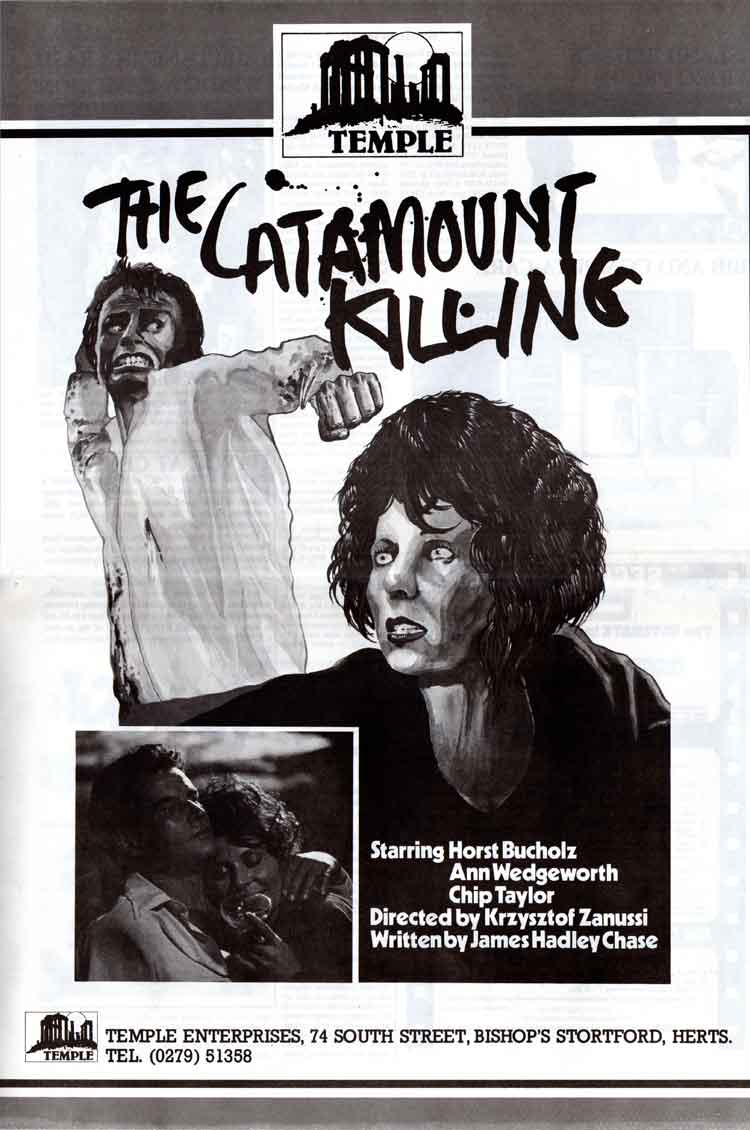
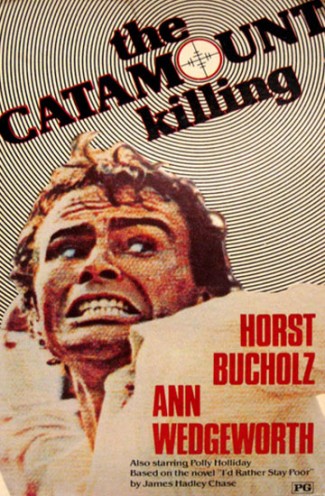
Mark (Horst Buchholz) is a recent divorcee who has moved to a small town and gotten a job as the new bank manager. The bank is small and not adequately guarded giving him the idea to pull off a robbery as an inside job. He seduces the emotionally fragile Kit (Ann Wedgeworth) into helping him with his plan. Initially things go smoothly, but then they begin feeling guilty over what they’ve done especially since the robbery involved the death of someone else. Then Kit’s daughter Iris (Louise Caire Clark) becomes suspicious that her mother might’ve been involved, which causes the couple to unravel in dramatic fashion.

I hate to use the fact that this is a low budget film as a reason for why it’s poor as not every movie has to have state-of-the-art special effects to be entertaining and good story telling and competent direction are still the foundation of a good movie and that can be accomplished on the most miniscule of budgets. However, this film, which was filmed on location in Bennigton, Vermont, looks cheap and stale. The camera work is unimaginative and it does not take advantage of some of the historical landmarks in the town where it was filmed making the background and setting look blah and uninteresting. Its loud, crashing orchestral music score would be better suited for a Hollywood epic and is pretentious and out-of-place here.

The set-up moves too fast and could’ve been the result of watching the American version, which is 11 minutes shorter than the European one. Either way it’s poorly constructed with the two falling in love and plotting the crime without much background information given about them making it all seem forced and rushed. The robbery itself isn’t unique and when compared to other bank robbery movies this one is weak and forgettable.

Buchholz gives a strong performance, which helps the limp material to some degree. Wedgeworth is outstanding. Somehow her soap opera-styled histrionics and Texas accent is something I’ve always found appealing and makes for a fun performance. This also mark the film debut of Polly Holliday who appears briefly sporting a foreign accent that does not sound too believable.

There are enough twists to keep it plausible and mildly engrossing, but the ending lacks impact and like the rest of the movie falls flat. The plot is based off the novel ‘I’d Rather Stay Poor’ by James Hadley Chase, which I suspect would be a far superior version to this.

catamout killing 1

My Rating: 3 out of 10

Released: August 11, 1974

Runtime: 1Hour 22Minutes (American Version)

Rated PG

Director: Krzysztof Zanussi

Studio: Starlight

Available: VHS, DVD-R, Amazon Instant Video

Joyride (1977)

joyride 2

By Richard Winters

My Rating: 4 out of 10

4-Word Review: This joyride turns joyless.

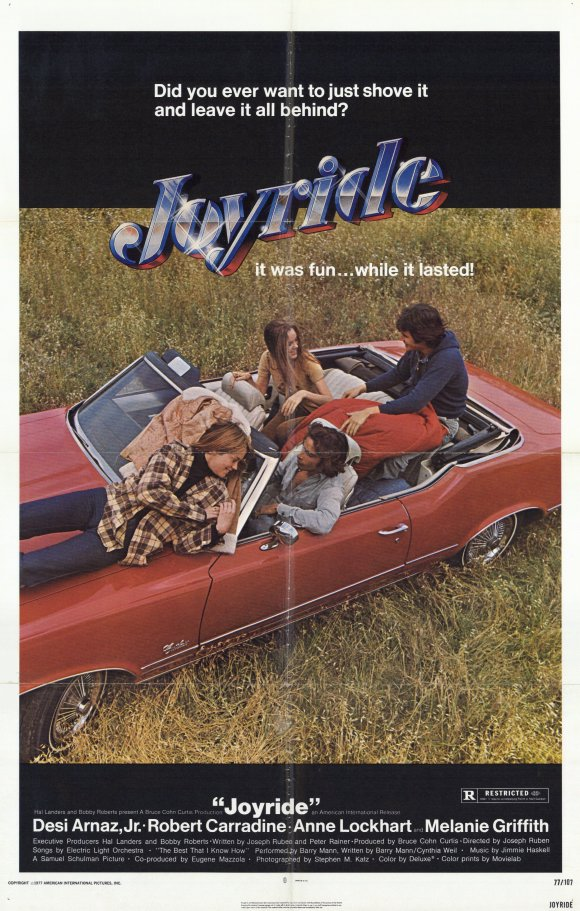
Scott (Desi Arnaz Jr.) is bored with his job and finds that his friend John (Robert Carradine) is too. With John’s girlfriend Susie (Melanie Griffith) in tow they decide to drive up to Alaska where they hope to get jobs on the pipeline. Unfortunately they end up facing a lot of unexpected problems and eventually are forced into robbery with the Canadian Mounted Police hot on their tail.

The film was written and directed by Joseph Ruben who later went on to do much better things, but this isn’t too bad for the most part. It has a good pace without any of the static drama or wooden dialogue typical with these types of features during that era. The situations are for the most part believable and mildly engrossing. The film also features two very unique scenes including that of a genuine pissing contest, which John wages and wins with some fellow bar patrons and a scene where the trio is forced to eat dog food that by the looks on their faces seems to have been the real thing.

Unfortunately the film tends to ramble and takes a lot of predictable dramatic twists while failing to add any new perspective to it. The characters seem ill-prepared for many of the expected problems that they face, which any sensible viewer could’ve predicted would happen from the get-go. It’s also unrelentingly downbeat. I was expecting a little more frivolity and humor, which could’ve helped and I also thought it was unrealistic that every person they meet in the town turns out to be corrupt, conniving or mean.

It’s interesting to some extent to see the next generation of baby boomers or those who were too young to get involved in the protest movement during the 60’s, but still trying to carry on the counter-culture torch during the mid and late 70’s. The four leads are all offspring of famous celebrities, which is the film’s one true novelty and I couldn’t help but wonder while I viewed this what their presumably more conservative parents must’ve thought while watching their kids in this playing characters that are quite jaded and with no shortage of sex, nudity and cursing.

Arnaz Jr. is the weakest link and quite transparent while lacking the charisma needed for a lead actor. Carradine is good and it’s nice seeing him not playing a nerd type. Griffith is cute and there’s even a glimpse of her bare bottom during one segment when she flashes some passing motorists. The most dynamic performance though goes to Anne Lockhart who appears later on and acts as a love interest for Scott. Her character is sassy and real while helping add some needed dynamics and it’s a shame she didn’t stay for the entire duration.

The second half where they decide to rob the payroll department and then go on a mad car chase across the northern Canada has a few fun moments. Unfortunately the viewer is left hanging as we are never shown if they ultimately get away or are caught, which is frustrating and ends up being a cop-out of the highest order.

My Rating: 4 out of 10

Released: June 6, 1977

Runtime: 1Hour 32Minutes

Rated R

Director: Joseph Ruben

Studio: American International Pictures

Available: DVD

Crimes of Passion (1984)

crimes of passion

By Richard Winters

My Rating: 1 out of 10

4-Word Review: Moonlighting as a hooker.

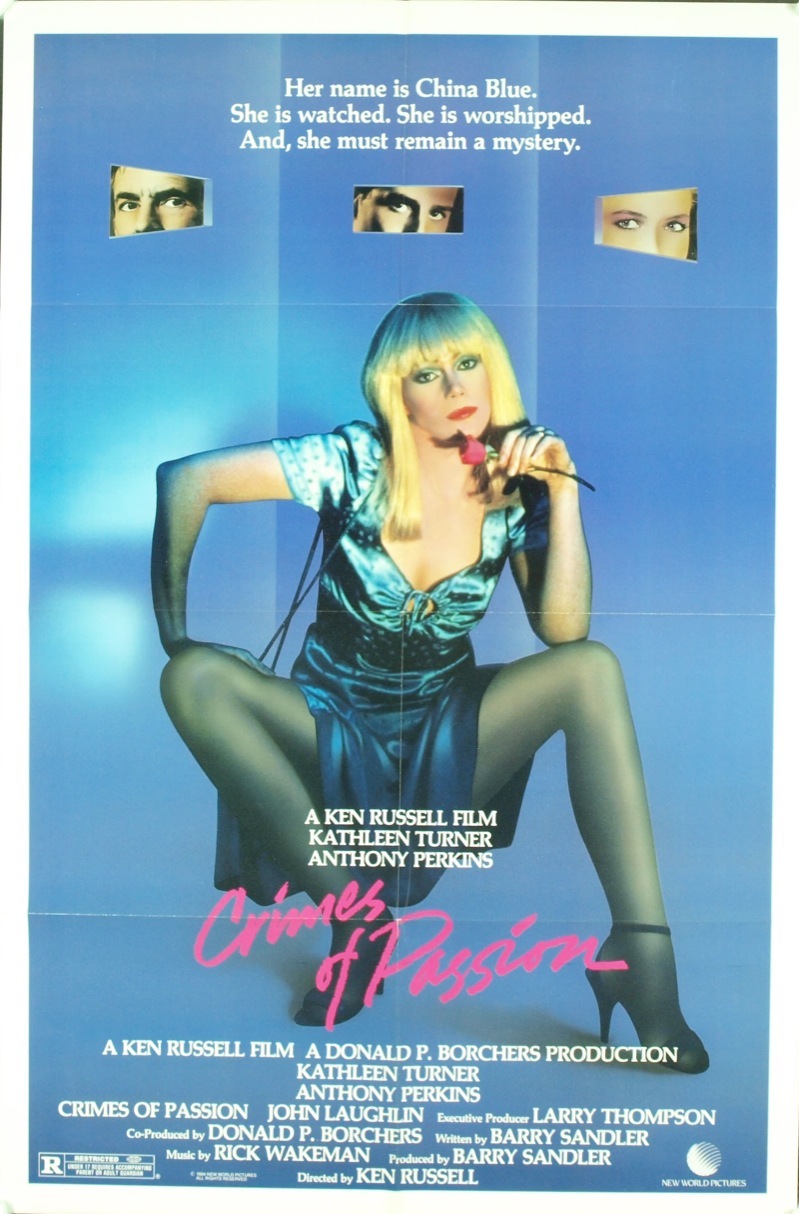
Bobby (John Laughlin) is suffering from marital problems at home while also having trouble keeping up with his kid’s expenses, so he looks for a part-time job and gets hired by Lou Bateman (Norman Burton) an owner of a fashion clothing studio to work as a private investigator by following around one of his designer’s named Joanna (Kathleen Turner) who he is convinced is selling his patents to a competitor. What Bobby finds instead is that Joanna is actually working as a hooker in the seedy red light district and using the name of China Blue, which gets Bobby more infatuated with her. Soon they are locked into a passionate affair, but unaware that China/Joanna is also being stalked by a crazy street preacher named Peter Shayne (Anthony Perkins) who is suffering from demons of his own while also harboring strange ideas on how to ‘save her’.

The film, which is directed by Ken Russell who can sometimes be brilliant and other times horribly self-indulgent, is annoying from the beginning. The recreation of a therapy group is wooden and artificial and the sex scenes are over-the-top with characters that are one-dimensional and poorly fleshed out. The gaudy color schemes and flashing lights used to recreate the seedy hotel look quickly become repetitive and irritating. It’s hard to tell whether Russell is trying to be serious or campy, but it’s a mad mixture that ends up being a pointless mess. Rick Wakeman’s obnoxious electronic music score and the cliché ridden Psycho-like finale simply add insult to injury.

The script by Barry Sandler is shallow and filled with plot devices that make no sense. Rarely do prostitutes ever fall in love with one of their clients and many create a defense to keep that part of their lives separate from their personal one and vice-versa, so the fact that Joanna and Bobby get into a relationship so quickly and seamlessly while failing to explain why she would find Bobby so ‘special’ out of all the other men she had already had indiscriminate sex with makes this dumb movie even more absurd. It’s also hard to believe that Joanna would be such a great employee as she is described to be by her boss when she is going out every night having sex with strange men at all hours. I would think at some point she’d become exhausted and her productivity at her day job would be effected. I also thought it was a bit goofy why someone would hire Bobby as a private investigator to begin with when he had no experience in that area.

Annie Potts gives the film’s all-around best performance particularly during a strong scene involving her character in bed with Bobby and her roundabout way of admitting that he no longer satisfies her. Laughlin is okay, but bland and the segment where he dresses up as a giant penis having an erection is downright embarrassing. Perkins is fun as the flamboyantly weird reverend and I got a kick out of his singing as well as his bag full of sex toys, but in the end it’s just a bad rendition of Norman Bates that typecasts him while discrediting his earlier more serious efforts.

The scene where China visits an old man who has only a few months to live is the movie’s one and only interesting moment. Had there been more of a history shown to Joanna’s character and why this seemingly intelligent woman did what she did I might’ve have been able to get into it more instead of being completely bored with it. The sexual imagery was considered quite ‘shocking’ and explicit for 1984 standards, but now comes off as benign and hooky especially since one can find far more graphic stuff simply by casually surfing any one of the thousands of porn sites on the internet today.

My Rating: 1 out of 10

Released: October 19, 1984

Runtime: 1Hour 47Minutes

Rated R

Director: Ken Russell

Studio: New World Pictures

Available: VHS, DVD

The Revolutionary (1970)

the revolutionary 2

By Richard Winters

My Rating: 6 out of 10

4-Word Review: He fights against capitalism.

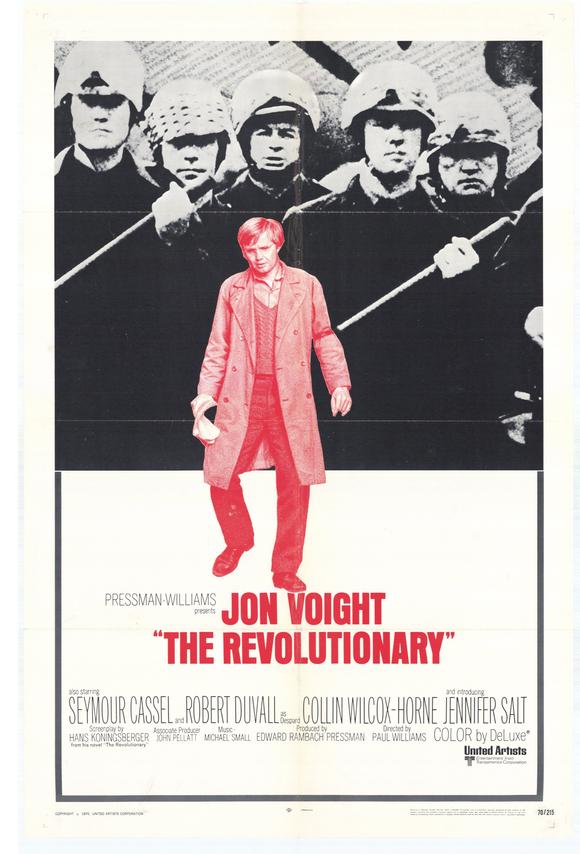
Jon Voight plays a college student involved in a student protest group called The Radical Committee. They push for social change particularly with a more communist/socialist style of government, which he becomes fonder of after working with Despard (Robert Duvall) a nearby factory worker who’s trying to start a union up at his plant. After being suspended from the school for his radical views he becomes frustrated at seeing how his work and actions seem to have very little influence or effect. He then meets up with Leonard (Seymour Cassel) who is a more seasoned radical and not shy about using violent or unethical methods to make his point and pressures Voight to start doing the same.

On the whole despite its slow pace this is a slickly produced intriguing character study. I enjoyed the grainy pictures of the 1917 Bolshevik Revolution shown over the opening credits, but I didn’t like the film’s choice of on-location shooting. Supposedly it takes place in a small American city, but it doesn’t resemble one since it was filmed in London, which gives everything from the old buildings to roadways and sidewalks a European look that you never see in any American town or city. There is also no explanation initially about what the students are protesting against or why they are at odds with the school, which makes the storyline seem generic and hard to get into at first.

I loved Voight’s character as it is similar to his Joe Buck one in Midnight Cowboy with all of the social awkwardness, but fortunately he is not as painfully dumb. It is interesting to see how such a highly intellectual man with strong opinions and ideals can still at times be quite timid. I was looking forward to seeing the character go through a transition and was disappointed that it took so long to get there.  To me the ending should’ve been the beginning and the fact that it isn’t hurts the film’s overall impact. I was also confused as to why the Jennifer Salt character, who plays a young lady from an affluent family, would find Voight so appealing, or why she wanted to continue to go out with him, which to me demanded more of an explanation.

The scene in which a mob gets attacked by some riot police is photographed in a way that makes it intense and startling and could’ve been extended even more. The ending is nerve wracking and great example of how complete silence without any music can sometimes create far more tension. Unfortunately the ambiguous resolution is a disappointment and after such a long and deliberately slow build-up comes off almost like a cop-out.

My Rating: 6 out of 10

Released: July 15, 1970

Runtime: 1Hour 40Minutes

Rated R

Director: Paul Williams

Studio: United Artists

Available: DVD (MGM Limited Edition Collection), Amazon Instant Video

David Holzman’s Diary (1967)

david holzman 1

By Richard Winters

My Rating: 8 out of 10

4-Word Review: He records his life.

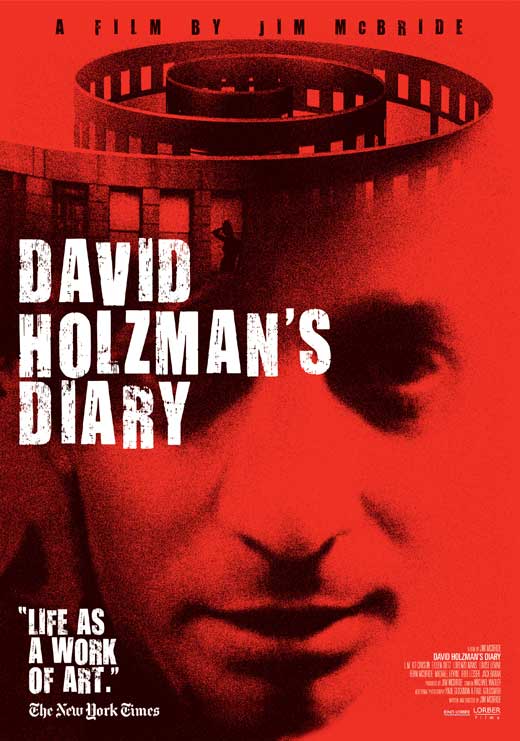
David (L.M. Kit Carson) is a young college-aged movie fan who wants to use the camera to not only record his life, but help him better understand and interpret reality. Unfortunately he finds that instead of clarifying things the camera instead brings out even more of reality’s complexities making his life and the world he is in even more confusing. It also inadvertently exposes a darker side to his personality that he wasn’t aware of which his voyeurism to both an attractive woman across the street as well as his live-in girlfriend Penny (Eileen Dietz) who eventually gets fed up with his film and him and moves out.

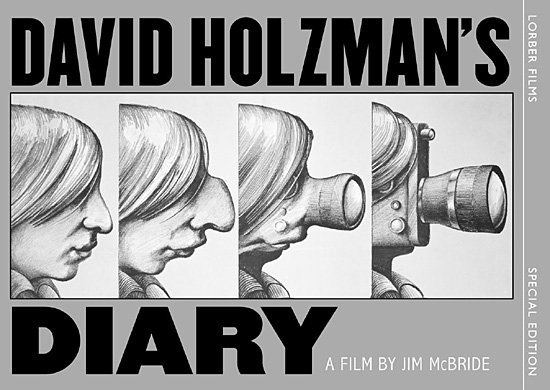
I realize the saying ‘ahead of its time’ can get a bit overused, but this is one case where that term really fits. This movie is cool on many different levels and features scenes and segments that you will never see done anywhere else. The Cinema verite style is perfect and I loved how the camera gets turned on itself as we are given a good background and visual to the type of camera that was used and why for its time was considered a cutting edge piece of machinery. The scene where he takes a shot of every image that he saw during a night of television viewing and then plays it back creating a mosaic of flashing images from shows and commercials is equally cool. The segment where he interviews a woman, which was apparently a man dressed in drag, but quite hard to tell, who stops her car in the middle of the street to tell him of her candid sexual desires while holding up traffic is quite amusing as is the part where he stalks a nervous lady from a subway car out onto the city streets.

The film also successfully transcends its time period. I have always said it is very easy to tell the time period or decade a movie was made usually after viewing it for only a few minutes, but this was one case where it is actually quite hard to tell. The detached, hip nature of the protagonist is still trendy and the film’s existential philosophical approach dealing with an artist’s need to recreate reality, but ultimately failing is as relevant today as ever. The loosely structured ad-libbed dialogue gives it a legitimate documentary feeling and was so believable that when audiences first viewed it during the 60’s they booed when they saw the closing credits and realized it had all been made-up. This was also the first American film to use the f-word and one of the first to feature full nudity, which is done by the attractive Dietz who later went on to play the face of the demon in the movie The Exorcist.

Although I saw this movie many years earlier and was already a big fan I watched it again during a special showing at the The Marchesa Theatre in Austin as a tribute to the film’s star who passed away in October of 2014. Afterwards many people got on stage to talk about how Carson had inspired them with their lives and careers and it included his son Hunter Carson as well as film director Guillermo del Toro who was probably the most entertaining.

If the film has any drawbacks it’s in the use of black frames that are shown in between shots where for several seconds the viewer will see no image at all and at times only a voice over. This might’ve been done for effect, but ends up giving it too much of an amateurish feel. There are also times when the camera stays too fixated on its subject making it look too much like talking heads with not enough cutaways or interesting camera angles. Overall though it’s still one-of-a-kind and worth checking out for a glimpse at experimental and original filmmaking at its purest.

david holzman 2

My Rating: 8 out of 10

Released: October 3, 1967

Runtime 1Hour 14Minutes

Not Rated

Director: Jim McBride

Studio: Direct Cinema Limited

Available: DVD, Blu-ray, Amazon Instant Video

Modern Problems (1981)

modern problems

By Richard Winters

My Rating: 2 out of 10

4-Word Review: Chevy acquires telekinetic powers.

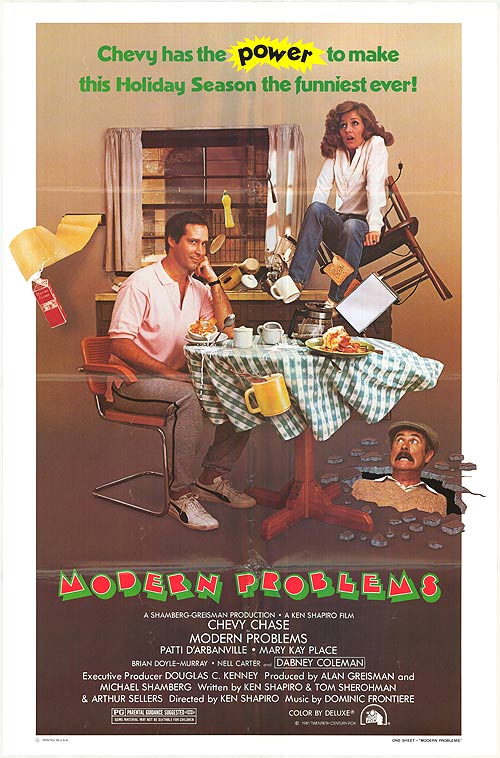
Being dumped by his girlfriend (Patti D’Arbanville) and working a stressful job as an air traffic controller Max (Chevy Chase) finds himself falling into a deep depression. Then one night while following a truck home that is carrying nuclear waste he and his car get sloshed with a greenish liquid that spews out the back end of the truck’s tank. Soon afterwards he realizes that he can make objects move and uses this new found ability to try and win his girlfriend back while getting revenge on her new boyfriend (Mitch Kreindel).

The film is written and directed by Ken Shapiro who earlier teamed up with Chase to do The Grove Tube and like with that one the story is widely unfocused throwing in gags that have nothing to do with the central theme. It takes too long for Max to acquire his special powers and when he does it doesn’t go far enough with it wasting a potentially creative idea on what turns out to be just another comedy dealing with modern day relationships. The movie is horribly dated with a bit having Chase sniff up some white ‘demon dust’ in a not so subtle take on cocaine that at a time when free basing was still considered trendy might’ve been considered ‘cool’ and ‘hilarious’ by its intended audience. The opening segment is insulting to actual air traffic controllers as it makes them all look like they’re lazy and incompetent and the silly cartoon-like sounds added to the special effects gives the whole thing a very kiddie-like feel.

The logic of this thing is crazy as well. I realize being exposed to nuclear waste can bring cancer, birth defects and a wide assortment of other ailments, but nowhere have I read that it can cause telekinesis making the whole premise dumb and dubious from the start. The idea of having all these amazing powers, but only using them sparingly while moping around hoping somehow to get back into his girlfriend’s favor seems quite limiting as most people with his abilities would have much broader ambitions like saving the world or even conquering it for that matter. Although politically incorrect there could’ve been a wide array of things that he could’ve done to ‘win his girlfriend back’ like suspending her in mid-air until she agrees to see him exclusively. Also, when he notices that he is glowing green and has spots all over his face when looking into a mirror you would think he would immediately run to the nearest doctor, but doesn’t and when he finally does expose his powers to everybody else by levitating the Dabney Coleman character the other people in the room respond with a ho-hum attitude instead of screaming and running away like a normal person would.

Chase’s deadpan talents get wasted here and during the second half he becomes almost comatose during a lame parody of The Exorcist. Dabney Coleman gets equally wasted as he speaks in a weird accent while playing his trademark egotistical character that for some reason isn’t as engaging as it usually is. You also get to see a shot of his bare ass, which to me wasn’t a good thing, but there is a thread on IMDB with people stating in all seriousness that it is one of the ‘best looking asses ever’, ‘pure perfection’ and ‘the greatest moment in cinema history’, so I guess to each his own.

My Rating: 2 out of 10

Released: December 25, 1981

Runtime: 1Hour 29Minutes

Rated PG

Director: Ken Shapiro

Studio: 20th Century Fox

Available: VHS, DVD, Amazon Instant Video

Such Good Friends (1971)

such good friends 1

By Richard Winters

My Rating: 8 out of 10

4-Word Review: Her husband fools around.

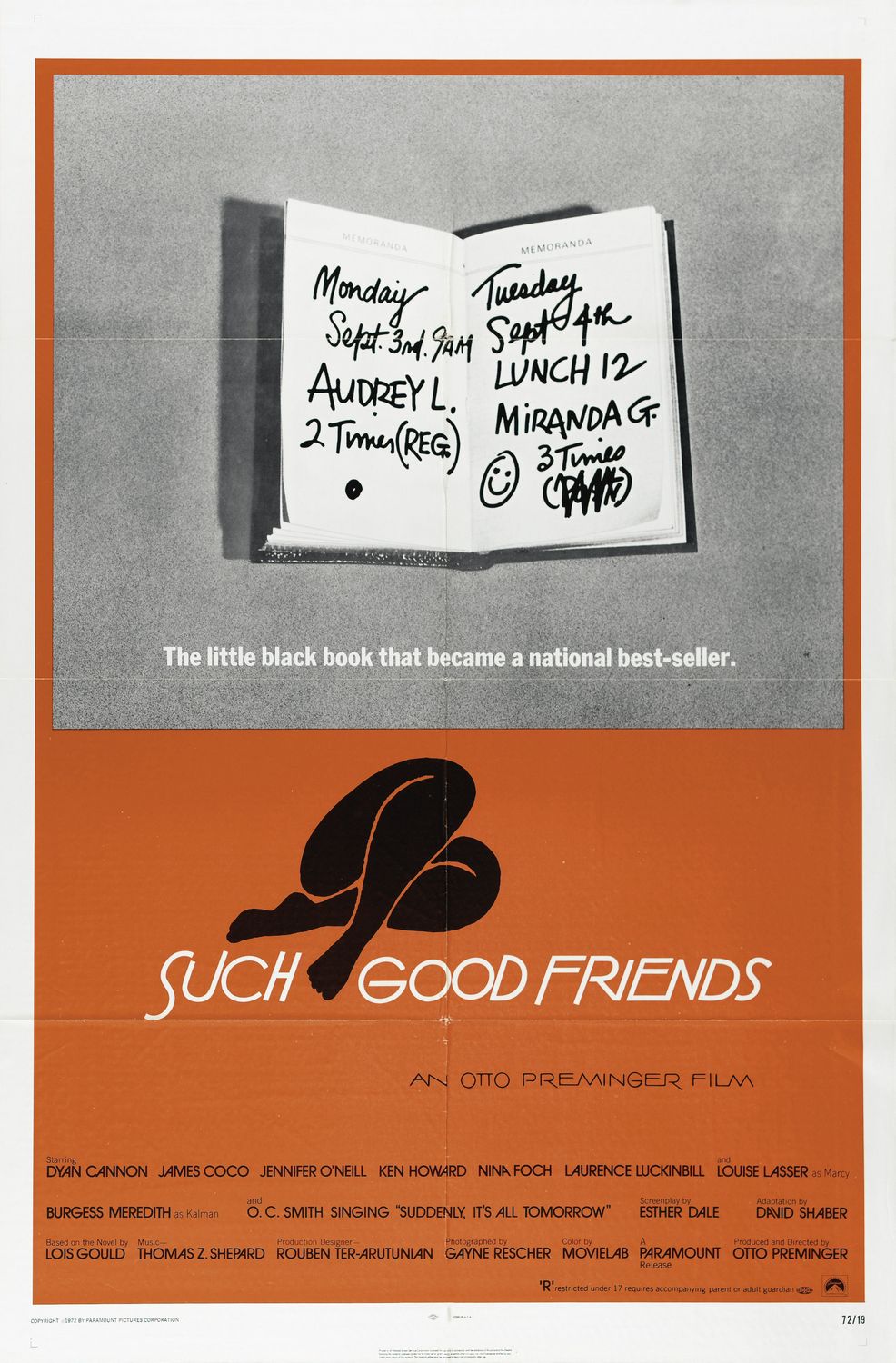
Julie (Dyan Cannon) is a well-off New York Housewife living in a swanky Manhattan apartment with her husband Richard (Laurence Luckinbill) who is the successful editor of a New York fashion magazine. Her life seems fulfilled and happy until Richard goes into the hospital for routine surgery, which has unexpected complications that sends him into a coma. While going through some of his personal belongings she comes upon his little black book that lists all sorts of sexual conquests he has had with her friends, which first leads the devastated Julie into considering suicide, but then ultimately into revenge.

This film can be considered Otto Preminger’s swan song as the two movies he made after this weren’t worth watching. This movie also proves to be a giant improvement from the awful Skidoo that he did just three years before where he tried unsuccessfully to get with the ‘hip generation’, but failed miserably. It has the same irreverence and satire as that one, but it is much more disciplined and sophisticated and makes its point without going overboard. It also shows that despite his renowned cantankerous nature behind-the-scenes he was still a gifted director who managed to span five decades with movies that had vastly different styles and themes and he deserves to be labeled a filmmaking legend.

I loved the way the camera spins around in a circle during a scene inside a New York art museum as well as some breathtaking shots of the New York skyline while on top of Jennifer’s and Richard’s condominium. The fractured narrative that deals heavily with flashback sequences is also nicely handled though the scenes showing a middle-aged Cannon trying to look like she is an adolescent while wearing pigtails looks tacky and should’ve been scrapped.

The film is based on the Lois Gould novel of the same name and while that book had a much more serious tone the movie gives the material more of a satirical spin much like Diary of a Mad Housewife, which Preminger had scriptwriter Elaine May (who gets credited as Ester Dale) watch before writing this one. The result is endlessly witty dialogue and some near brilliant conversational exchanges between the characters. Some of the best bits are Jennifer’s discussions with Richard’s doctors who seem reluctant to take responsibility for their medical blundering as well as Jennifer’s awkward sexual encounter with her friend Cal (Ken Howard) when he is unable to ‘rise to the occasion’.

Although she has a face that can show pain and sadness well Cannon may not have been the best choice and some other actresses would’ve been more interesting in the part. Apparently Preminger had her in tears already on the first day and she has in subsequent interviews called him a ‘horrible man’. The scene showing her naked in a snapshot is actually that of another nude model with Cannon’s face cropped on it.

James Coco is great in support and I was genuinely shocked that it didn’t get him nominated for best supporting actor. The scene where Cannon is undressing him for some sex and he tries desperately to distract her while he takes off a corset that he is wearing underneath is frickin’ hilarious. Burgess Meredith has an outrageous moment where he is seen nude while attending a posh party and only his genitals are covered by a book hung from a belt that he is wearing.

The only real negative is the ending that is too serious and somber and deflates the energy from the film’s otherwise snarky tone. Some of the music used doesn’t work with the scenes either including the O.C. Smith song played over the closing credits. Otherwise it’s as fresh, original and timely as it was when it first came out and ripe to be rediscovered by the right audience. The title sequence created by Saul Bass that is used to open the film is diverting and I wished it had been extended.

My Rating: 8 out of 10

Released: December 16, 1971

Runtime: 1Hour 42Minutes

Rated R

Director: Otto Preminger

Studio: Paramount

Available: DVD, Blu-ray, Amazon Instant Video