Category Archives: Movies with Nudity

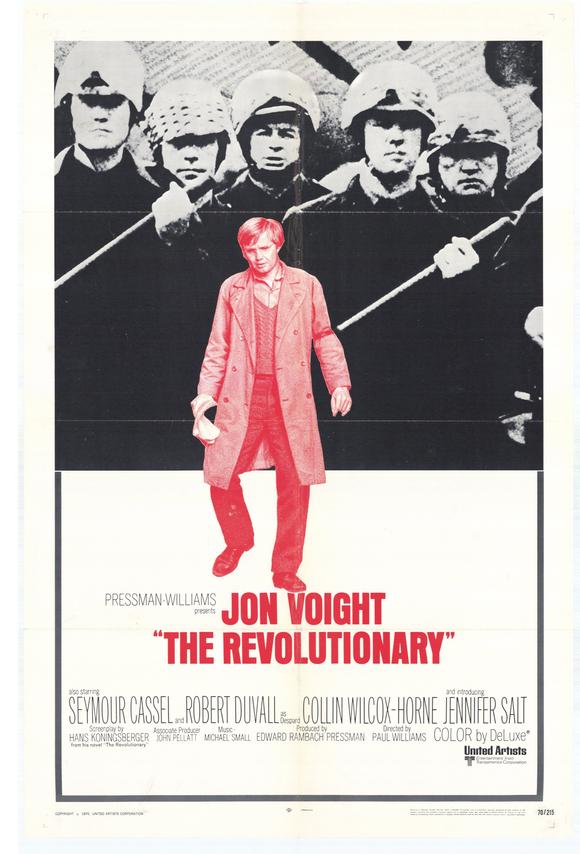
The Revolutionary (1970)

the revolutionary 2

By Richard Winters

My Rating: 6 out of 10

4-Word Review: He fights against capitalism.

Jon Voight plays a college student involved in a student protest group called The Radical Committee. They push for social change particularly with a more communist/socialist style of government, which he becomes fonder of after working with Despard (Robert Duvall) a nearby factory worker who’s trying to start a union up at his plant. After being suspended from the school for his radical views he becomes frustrated at seeing how his work and actions seem to have very little influence or effect. He then meets up with Leonard (Seymour Cassel) who is a more seasoned radical and not shy about using violent or unethical methods to make his point and pressures Voight to start doing the same.

On the whole despite its slow pace this is a slickly produced intriguing character study. I enjoyed the grainy pictures of the 1917 Bolshevik Revolution shown over the opening credits, but I didn’t like the film’s choice of on-location shooting. Supposedly it takes place in a small American city, but it doesn’t resemble one since it was filmed in London, which gives everything from the old buildings to roadways and sidewalks a European look that you never see in any American town or city. There is also no explanation initially about what the students are protesting against or why they are at odds with the school, which makes the storyline seem generic and hard to get into at first.

I loved Voight’s character as it is similar to his Joe Buck one in Midnight Cowboy with all of the social awkwardness, but fortunately he is not as painfully dumb. It is interesting to see how such a highly intellectual man with strong opinions and ideals can still at times be quite timid. I was looking forward to seeing the character go through a transition and was disappointed that it took so long to get there.  To me the ending should’ve been the beginning and the fact that it isn’t hurts the film’s overall impact. I was also confused as to why the Jennifer Salt character, who plays a young lady from an affluent family, would find Voight so appealing, or why she wanted to continue to go out with him, which to me demanded more of an explanation.

The scene in which a mob gets attacked by some riot police is photographed in a way that makes it intense and startling and could’ve been extended even more. The ending is nerve wracking and great example of how complete silence without any music can sometimes create far more tension. Unfortunately the ambiguous resolution is a disappointment and after such a long and deliberately slow build-up comes off almost like a cop-out.

My Rating: 6 out of 10

Released: July 15, 1970

Runtime: 1Hour 40Minutes

Rated R

Director: Paul Williams

Studio: United Artists

Available: DVD (MGM Limited Edition Collection), Amazon Instant Video

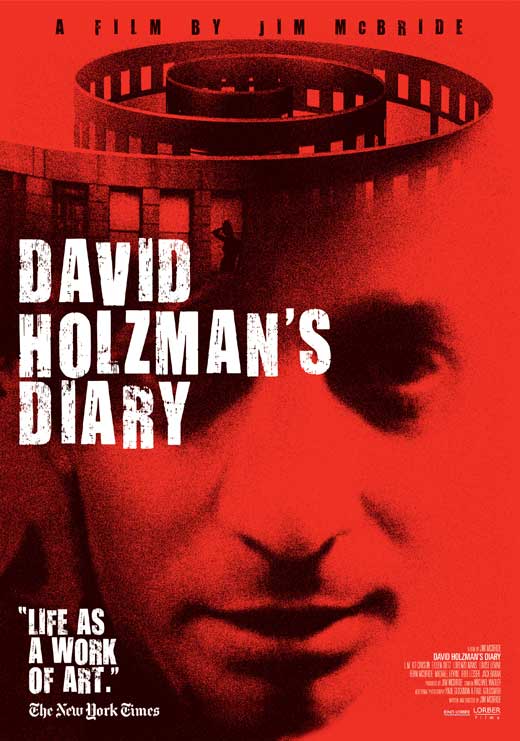
David Holzman’s Diary (1967)

david holzman 1

By Richard Winters

My Rating: 8 out of 10

4-Word Review: He records his life.

David (L.M. Kit Carson) is a young college-aged movie fan who wants to use the camera to not only record his life, but help him better understand and interpret reality. Unfortunately he finds that instead of clarifying things the camera instead brings out even more of reality’s complexities making his life and the world he is in even more confusing. It also inadvertently exposes a darker side to his personality that he wasn’t aware of which his voyeurism to both an attractive woman across the street as well as his live-in girlfriend Penny (Eileen Dietz) who eventually gets fed up with his film and him and moves out.

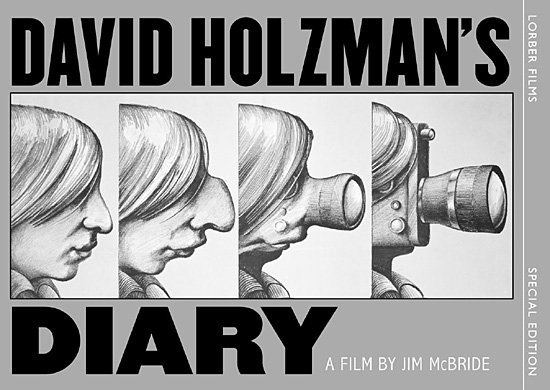
I realize the saying ‘ahead of its time’ can get a bit overused, but this is one case where that term really fits. This movie is cool on many different levels and features scenes and segments that you will never see done anywhere else. The Cinema verite style is perfect and I loved how the camera gets turned on itself as we are given a good background and visual to the type of camera that was used and why for its time was considered a cutting edge piece of machinery. The scene where he takes a shot of every image that he saw during a night of television viewing and then plays it back creating a mosaic of flashing images from shows and commercials is equally cool. The segment where he interviews a woman, which was apparently a man dressed in drag, but quite hard to tell, who stops her car in the middle of the street to tell him of her candid sexual desires while holding up traffic is quite amusing as is the part where he stalks a nervous lady from a subway car out onto the city streets.

The film also successfully transcends its time period. I have always said it is very easy to tell the time period or decade a movie was made usually after viewing it for only a few minutes, but this was one case where it is actually quite hard to tell. The detached, hip nature of the protagonist is still trendy and the film’s existential philosophical approach dealing with an artist’s need to recreate reality, but ultimately failing is as relevant today as ever. The loosely structured ad-libbed dialogue gives it a legitimate documentary feeling and was so believable that when audiences first viewed it during the 60’s they booed when they saw the closing credits and realized it had all been made-up. This was also the first American film to use the f-word and one of the first to feature full nudity, which is done by the attractive Dietz who later went on to play the face of the demon in the movie The Exorcist.

Although I saw this movie many years earlier and was already a big fan I watched it again during a special showing at the The Marchesa Theatre in Austin as a tribute to the film’s star who passed away in October of 2014. Afterwards many people got on stage to talk about how Carson had inspired them with their lives and careers and it included his son Hunter Carson as well as film director Guillermo del Toro who was probably the most entertaining.

If the film has any drawbacks it’s in the use of black frames that are shown in between shots where for several seconds the viewer will see no image at all and at times only a voice over. This might’ve been done for effect, but ends up giving it too much of an amateurish feel. There are also times when the camera stays too fixated on its subject making it look too much like talking heads with not enough cutaways or interesting camera angles. Overall though it’s still one-of-a-kind and worth checking out for a glimpse at experimental and original filmmaking at its purest.

david holzman 2

My Rating: 8 out of 10

Released: October 3, 1967

Runtime 1Hour 14Minutes

Not Rated

Director: Jim McBride

Studio: Direct Cinema Limited

Available: DVD, Blu-ray, Amazon Instant Video

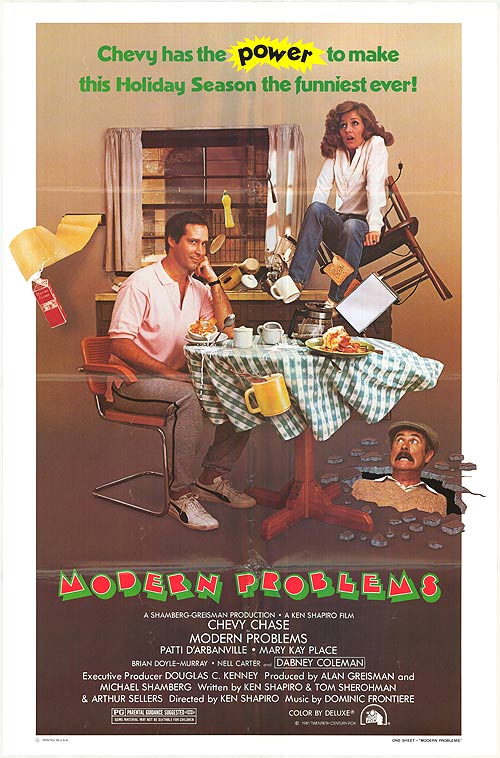
Modern Problems (1981)

modern problems

By Richard Winters

My Rating: 2 out of 10

4-Word Review: Chevy acquires telekinetic powers.

Being dumped by his girlfriend (Patti D’Arbanville) and working a stressful job as an air traffic controller Max (Chevy Chase) finds himself falling into a deep depression. Then one night while following a truck home that is carrying nuclear waste he and his car get sloshed with a greenish liquid that spews out the back end of the truck’s tank. Soon afterwards he realizes that he can make objects move and uses this new found ability to try and win his girlfriend back while getting revenge on her new boyfriend (Mitch Kreindel).

The film is written and directed by Ken Shapiro who earlier teamed up with Chase to do The Grove Tube and like with that one the story is widely unfocused throwing in gags that have nothing to do with the central theme. It takes too long for Max to acquire his special powers and when he does it doesn’t go far enough with it wasting a potentially creative idea on what turns out to be just another comedy dealing with modern day relationships. The movie is horribly dated with a bit having Chase sniff up some white ‘demon dust’ in a not so subtle take on cocaine that at a time when free basing was still considered trendy might’ve been considered ‘cool’ and ‘hilarious’ by its intended audience. The opening segment is insulting to actual air traffic controllers as it makes them all look like they’re lazy and incompetent and the silly cartoon-like sounds added to the special effects gives the whole thing a very kiddie-like feel.

The logic of this thing is crazy as well. I realize being exposed to nuclear waste can bring cancer, birth defects and a wide assortment of other ailments, but nowhere have I read that it can cause telekinesis making the whole premise dumb and dubious from the start. The idea of having all these amazing powers, but only using them sparingly while moping around hoping somehow to get back into his girlfriend’s favor seems quite limiting as most people with his abilities would have much broader ambitions like saving the world or even conquering it for that matter. Although politically incorrect there could’ve been a wide array of things that he could’ve done to ‘win his girlfriend back’ like suspending her in mid-air until she agrees to see him exclusively. Also, when he notices that he is glowing green and has spots all over his face when looking into a mirror you would think he would immediately run to the nearest doctor, but doesn’t and when he finally does expose his powers to everybody else by levitating the Dabney Coleman character the other people in the room respond with a ho-hum attitude instead of screaming and running away like a normal person would.

Chase’s deadpan talents get wasted here and during the second half he becomes almost comatose during a lame parody of The Exorcist. Dabney Coleman gets equally wasted as he speaks in a weird accent while playing his trademark egotistical character that for some reason isn’t as engaging as it usually is. You also get to see a shot of his bare ass, which to me wasn’t a good thing, but there is a thread on IMDB with people stating in all seriousness that it is one of the ‘best looking asses ever’, ‘pure perfection’ and ‘the greatest moment in cinema history’, so I guess to each his own.

My Rating: 2 out of 10

Released: December 25, 1981

Runtime: 1Hour 29Minutes

Rated PG

Director: Ken Shapiro

Studio: 20th Century Fox

Available: VHS, DVD, Amazon Instant Video

Such Good Friends (1971)

such good friends 1

By Richard Winters

My Rating: 8 out of 10

4-Word Review: Her husband fools around.

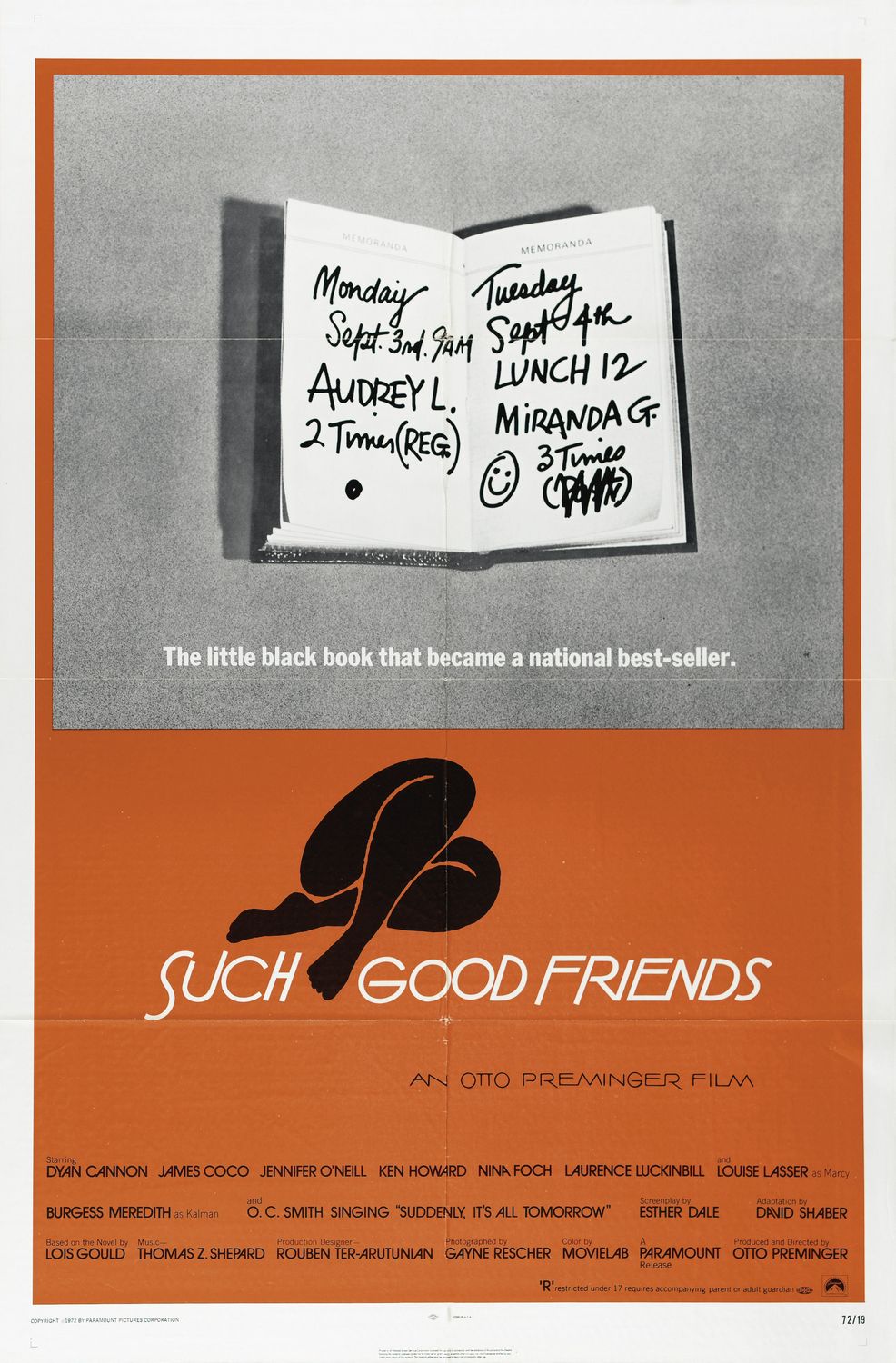
Julie (Dyan Cannon) is a well-off New York Housewife living in a swanky Manhattan apartment with her husband Richard (Laurence Luckinbill) who is the successful editor of a New York fashion magazine. Her life seems fulfilled and happy until Richard goes into the hospital for routine surgery, which has unexpected complications that sends him into a coma. While going through some of his personal belongings she comes upon his little black book that lists all sorts of sexual conquests he has had with her friends, which first leads the devastated Julie into considering suicide, but then ultimately into revenge.

This film can be considered Otto Preminger’s swan song as the two movies he made after this weren’t worth watching. This movie also proves to be a giant improvement from the awful Skidoo that he did just three years before where he tried unsuccessfully to get with the ‘hip generation’, but failed miserably. It has the same irreverence and satire as that one, but it is much more disciplined and sophisticated and makes its point without going overboard. It also shows that despite his renowned cantankerous nature behind-the-scenes he was still a gifted director who managed to span five decades with movies that had vastly different styles and themes and he deserves to be labeled a filmmaking legend.

I loved the way the camera spins around in a circle during a scene inside a New York art museum as well as some breathtaking shots of the New York skyline while on top of Jennifer’s and Richard’s condominium. The fractured narrative that deals heavily with flashback sequences is also nicely handled though the scenes showing a middle-aged Cannon trying to look like she is an adolescent while wearing pigtails looks tacky and should’ve been scrapped.

The film is based on the Lois Gould novel of the same name and while that book had a much more serious tone the movie gives the material more of a satirical spin much like Diary of a Mad Housewife, which Preminger had scriptwriter Elaine May (who gets credited as Ester Dale) watch before writing this one. The result is endlessly witty dialogue and some near brilliant conversational exchanges between the characters. Some of the best bits are Jennifer’s discussions with Richard’s doctors who seem reluctant to take responsibility for their medical blundering as well as Jennifer’s awkward sexual encounter with her friend Cal (Ken Howard) when he is unable to ‘rise to the occasion’.

Although she has a face that can show pain and sadness well Cannon may not have been the best choice and some other actresses would’ve been more interesting in the part. Apparently Preminger had her in tears already on the first day and she has in subsequent interviews called him a ‘horrible man’. The scene showing her naked in a snapshot is actually that of another nude model with Cannon’s face cropped on it.

James Coco is great in support and I was genuinely shocked that it didn’t get him nominated for best supporting actor. The scene where Cannon is undressing him for some sex and he tries desperately to distract her while he takes off a corset that he is wearing underneath is frickin’ hilarious. Burgess Meredith has an outrageous moment where he is seen nude while attending a posh party and only his genitals are covered by a book hung from a belt that he is wearing.

The only real negative is the ending that is too serious and somber and deflates the energy from the film’s otherwise snarky tone. Some of the music used doesn’t work with the scenes either including the O.C. Smith song played over the closing credits. Otherwise it’s as fresh, original and timely as it was when it first came out and ripe to be rediscovered by the right audience. The title sequence created by Saul Bass that is used to open the film is diverting and I wished it had been extended.

My Rating: 8 out of 10

Released: December 16, 1971

Runtime: 1Hour 42Minutes

Rated R

Director: Otto Preminger

Studio: Paramount

Available: DVD, Blu-ray, Amazon Instant Video

Raw Force (1982)

raw force 1

By Richard Winters

My Rating: 2 out of 10

4-Word Review: Ghosts of martial artists.

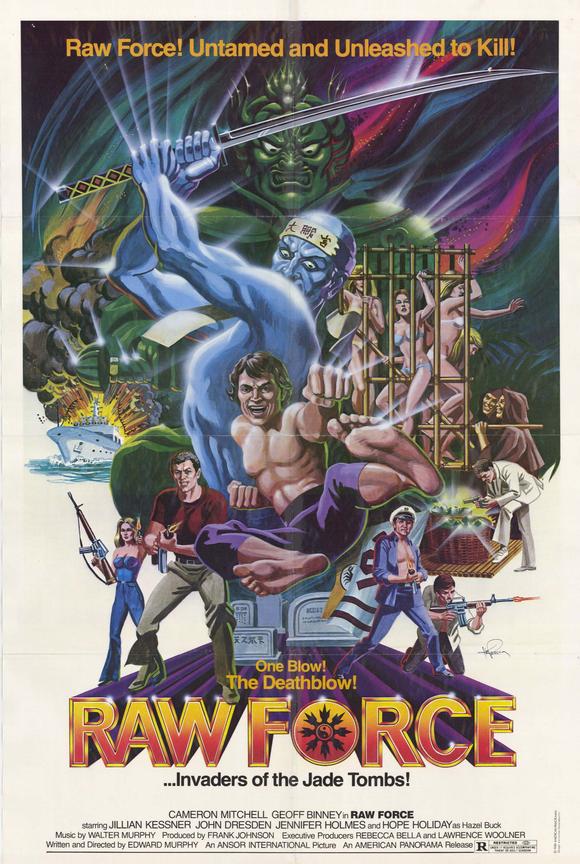
A group of martial arts students board a boat owned by Hazel (Hope Holiday) and piloted by Harry (Cameron Mitchell). During their ride the boat catches fire and they are forced to abandon it and get into a raft. After several days at sea they come upon an island that is the home to some ghosts of famous martial artists as well as a female slavery ring run by a group of monks. When the three groups meet it becomes a wild ride of sex and violence.

The film, which was shot entirely on-location in the Philippines, is clearly an exploitation cheapie and on the sex side it does pretty well as there is an abundance of nudity particularly during the first 45 minute or so that should satisfy any voyeur since the models for the most part are pretty good looking. However, the script is corny and dumb. Way too much time is spent on the set-up featuring a lot of stale conversations between wooden characters and comic sidelights that are silly and uninspired. The action itself is poorly captured and not very exciting while lacking in blood or realistic looking special effects.

Veteran character actress Holiday is actually the best thing playing a ditzy middle-aged woman sharing a love/hate relationship with Mitchell. Carl Anthony who plays Lloyd a man who considers himself much more of chick magnet than he really is amusing and Camille Keaton best known for her role as Jennifer Hills in the original I Spit on Your Grave and slated to star in its recently announced sequel has a bit part as a ‘girl in toilet’.

This film may be good for a few laughs on a bad 80’s movie night with friends, but the limited budget doesn’t allow it to distinguish itself from the myriad of other B-grade features that came out at the same time. The film’s one and only good moment comes during a scene at a bar where a fight breaks out and the naked lady stripper continues to dance on the bar top while remaining completely oblivious to the action around her.

My Rating: 2 out of 10

Alternate Title: Kung Fu Cannibals

Released: July 9, 1982

Runtime: 1 Hour 26Minutes

Rated R

Director: Edward D. Murphy

Studio: American Panorama

Available: VHS, DVD, Amazon Instant Video

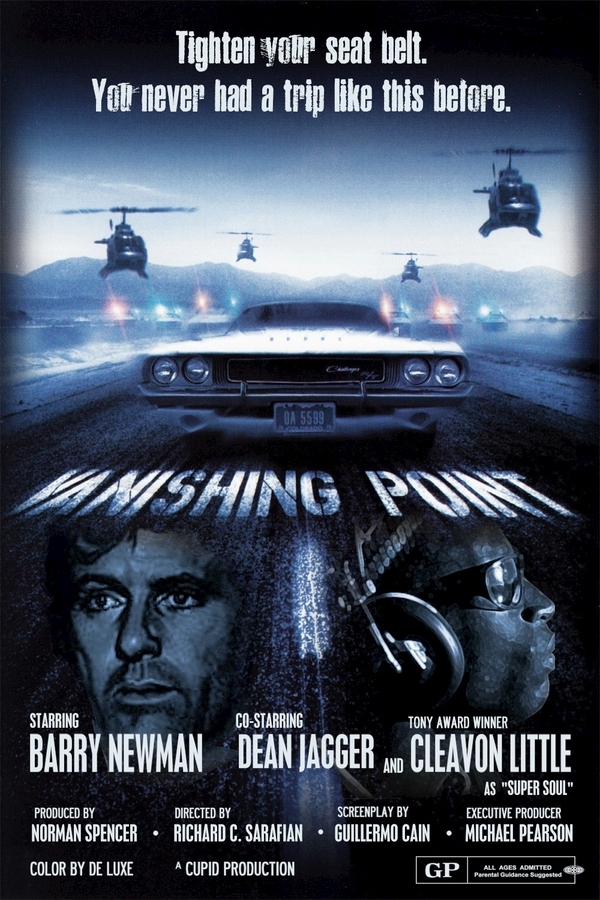
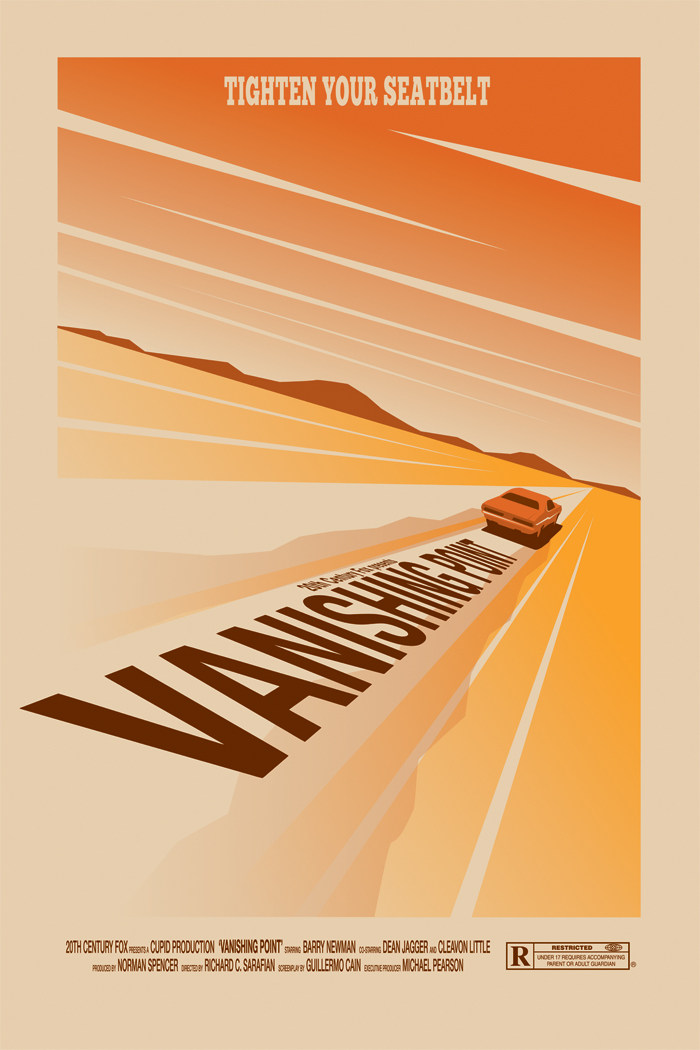
Vanishing Point (1971)

vanishing point 1

By Richard Winters

My Rating: 7 out of 10

4-Word Review: Racing to San Francisco.

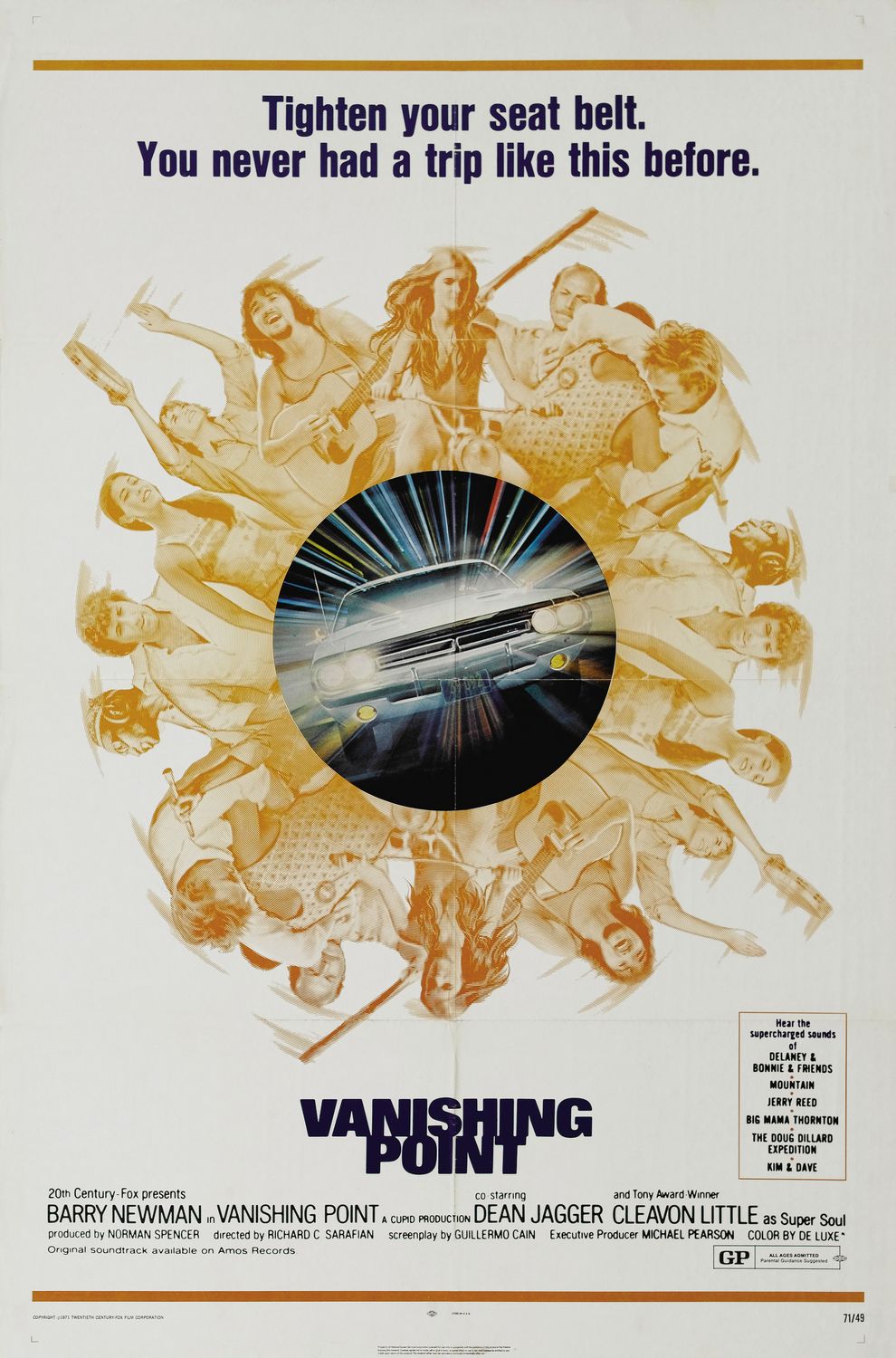
Kowalski (Barry Newman) is a car delivery driver whose next assignment has him driving a white Dodge Challenger R/T 440 Magnum from Denver to San Francisco. He is a former cop who seems disillusioned and detached from the world around him. To give his existence some meaning he decides to ‘challenge’ himself by making the delivery in record time and even makes a bet with a local drug dealer while purchasing some ‘uppers’ that he can get to San Francisco by 3:00 the next day. As his record drive proceeds he gets the attention of the local law enforcement from every state that he drives through, but none of them are able to stop him despite all efforts. He also attracts the attention of a local blind, black DJ named Super Soul (Cleavon Little) who has access to the police radio frequency and able to help Kowalski with his goal.

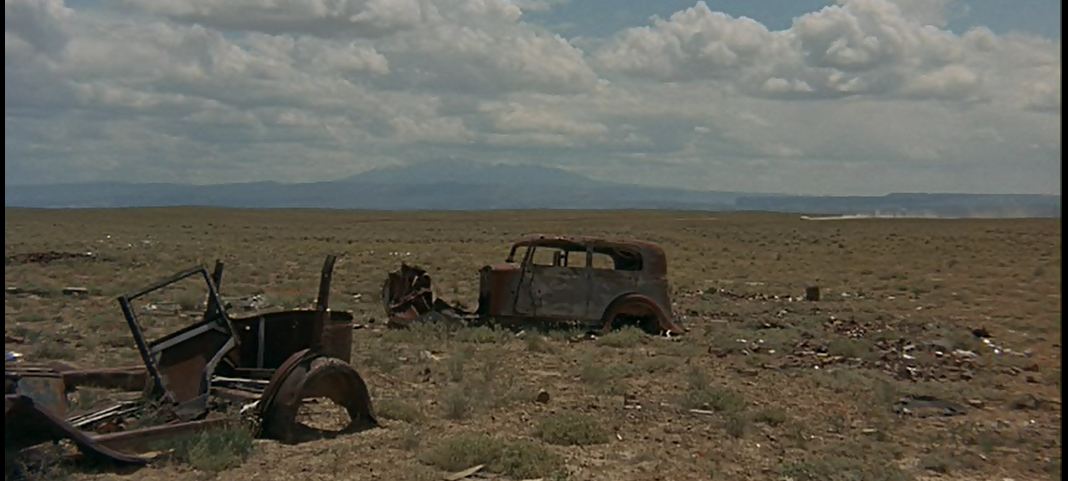
Richard C. Sarafain’s direction and John Alonzo’s cinematography are the real winners here. In fact my favorite scenes from this film are the long distance shots capturing the car driving along the lonely highways to the backdrop of the stunning western skies and its rugged, sandy landscape. This is a movie that will appeal to one’s emotional senses and bypass the need for logic. Certain things aren’t fully explained particularly Kowalski’s past, but the fact that it isn’t makes it more enjoyable. It’s the connection with his need for speed, escape and non-conformity that attracts us and it’s the adrenaline that propels the movie and viewer’s interest forward thus making this one of the quintessential road movies from its era or any other.

Capture 1


Capture 2

Newman seems an unusual casting choice as he really doesn’t have the dynamic star power or all that many lines of dialogue. He is also clearly in his mid-30’s for a part that seems better suited for some renegade, long haired 20-year-old, but in some ways his presence makes the movie more intriguing and distinctive by showing middle-aged people can have a dormant desire to rebel as well and sometimes even more so.

Little is terrific in what is probably the best performance of his career even though it seemed highly improbable and even ridiculous for a black DJ playing soul tunes at a radio station located in a small, isolated town inhabited by conservative, white, racist people. Severn Darden is edgy as a traveling evangelist and Dean Jagger is appealing as an old-time snake hunter. On the flip side of the 20th Century Fox DVD you can see the extended U.K. release that features a brief scene with Charlotte Rampling as a hitch-hiker. This sequence was intended to be allegorical, but really isn’t that impressive even though Rampling is quite attractive with her hair highlighted with blonde streaks.

Spoiler Warning!

The ending, which features Kowalski intentionally driving into some bulldozers parked in the middle of the road, which kills him instantly in a ball of flames, has proved through the years to be quite controversial and filled with many interpretations. I found it to symbolize Kowalski’s ultimate need for escape as he realized that he could never achieve the true freedom that he wanted, so he decided in a way to become a martyr and take his chances in another world beyond this one. The wry smile seen on his face just before he does it signifies the ‘fuck you’ that he gives to the authorities who are convinced that they finally have him cornered but really don’t. It also connects to the death of the counter-culture movement who by that time had realized that their dream of a utopian society filled with complete individual freedom and outside of mainstream control was never going to happen.

End of Spoiler Warning!

vanishing point 4


vanishing_point

My Rating: 7 out of 10

Released: January 15, 1971

Runtime:  1Hour 45Minutes (U.K. Version) 1Hour 39Minutes (U.S. Version)

Rated R

Director: Richard C. Sarafain

Studio: 20th Century Fox

Available: DVD, Blu-ray

Up the Creek (1984)

up the creek

By Richard Winters

My Rating: 2 out of 10

4-Word Review: Win the raft race.

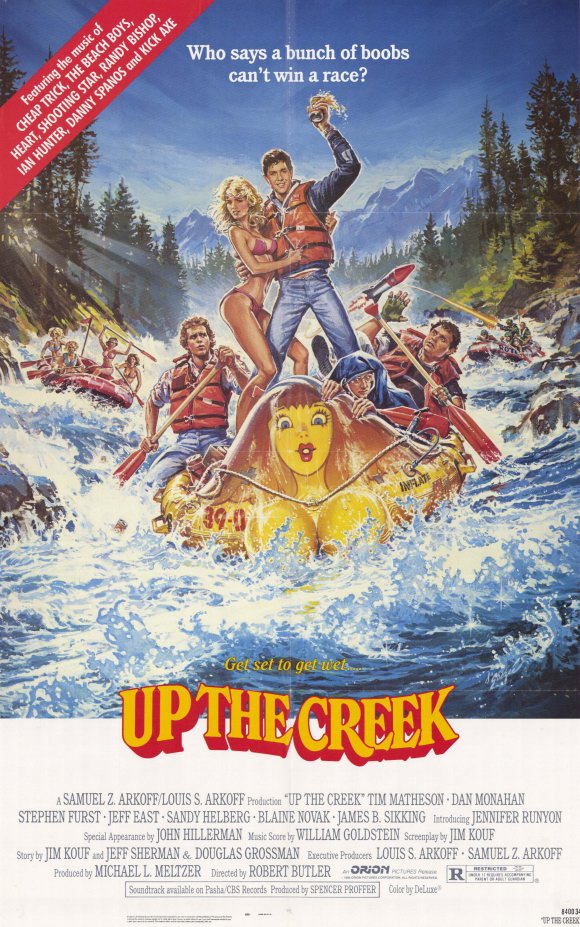
Bob McGraw (Tim Matheson) is a lazy college student who has taken out over 30 student loans under false names that has allowed him to remain in the school for 12 years. When the school’s dean (John Hillerman) finds out about it he threatens to have him expelled unless he and his buddies (Stephan Furst, Dan Monahan, Sandy Helberg) can win the annual raft race, which is something the school hasn’t done in many years. The four agree to do it once the dean promises them free degrees, but they find things to be tough going as not only must they fight the mighty rapids, but also some Ivy League preppies that will sink to any cheating low to win and a team of marines disgruntled at being disqualified.

This film seems like an odd career move for director Robert Butler who had just come off tremendous critical success with his directing of several early episodes of the ground breaking series ‘Hill Street Blues’ as well as his creation of the slick ‘Remington Steele’ TV-series and the dark/edgy Night of the Juggler film yet here he reverts back to his Disney roots doing a sort of updated, raunchy 80’s version of his Medfield College films that starred Kurt Russell. Unfortunately this one isn’t half as clever and entertaining as those were and in a lot of ways just as silly and childish. The only thing he gets right is the filming done on the Deschutes River in Oregon, which manages to have a few nifty shots of the rafts going down the rapids, but that is about it.

Matheson is the one thing that manages to hold it together playing an amusing caricature of a slacker that remains on-target throughout. Jennifer Runyon as an attractive blonde that he meets up with is gorgeous and perfect eye candy even though she has no nude scenes despite being the hottest female in the film. Furst has a few funny moments in a clichéd role of a gluttonous, overweight character, but it’s the dog named Chuck that ends up being the real scene stealer especially during a diverting game of charades.

Unfortunately the film is unable to hold the balance between being silly and raunchy. In fact after the first 20 minutes there is very little adult humor or nudity at all and what we get left with is a live action cartoon that is more lame than funny. The repetitive hijinks by the competing teams are campy and tiresome and the fact that Matheson and his crew are constantly able to rebuild their inflatable raft after it gets repeatedly destroyed makes no sense. The film would have worked better had it scraped the dumb humor altogether and focused solely on the race as that is the only time that it ever gets even slightly interesting.

My Rating: 2 out of 10

Released: April 6, 1984

Runtime: 1Hour 36Minutes

Rated R

Director: Robert Butler

Studio: Orion Pictures

Available: VHS, DVD-R, Amazon Instant Video

Macon County Line (1974)

macon county line 3

By Richard Winters

My Rating: 6 out of 10

4-Word Review: Sheriff attacks innocent trio.

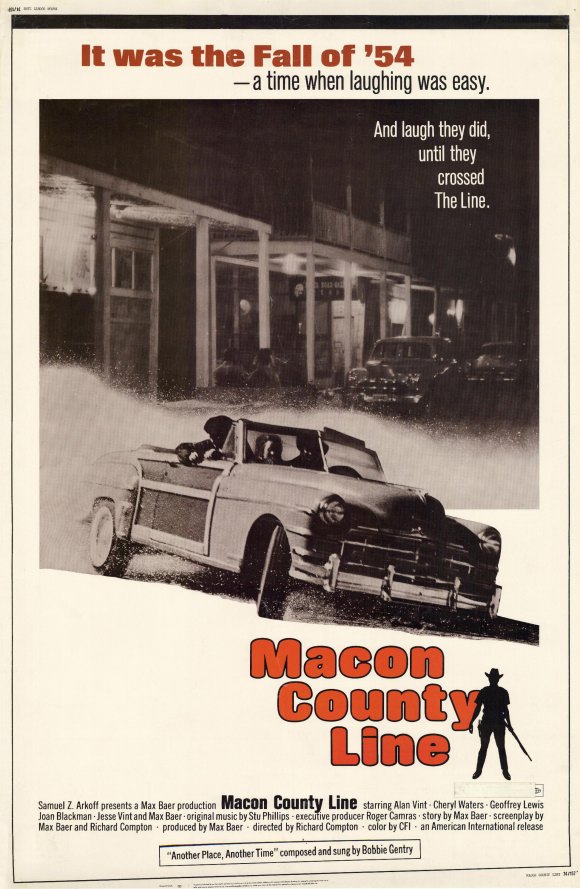
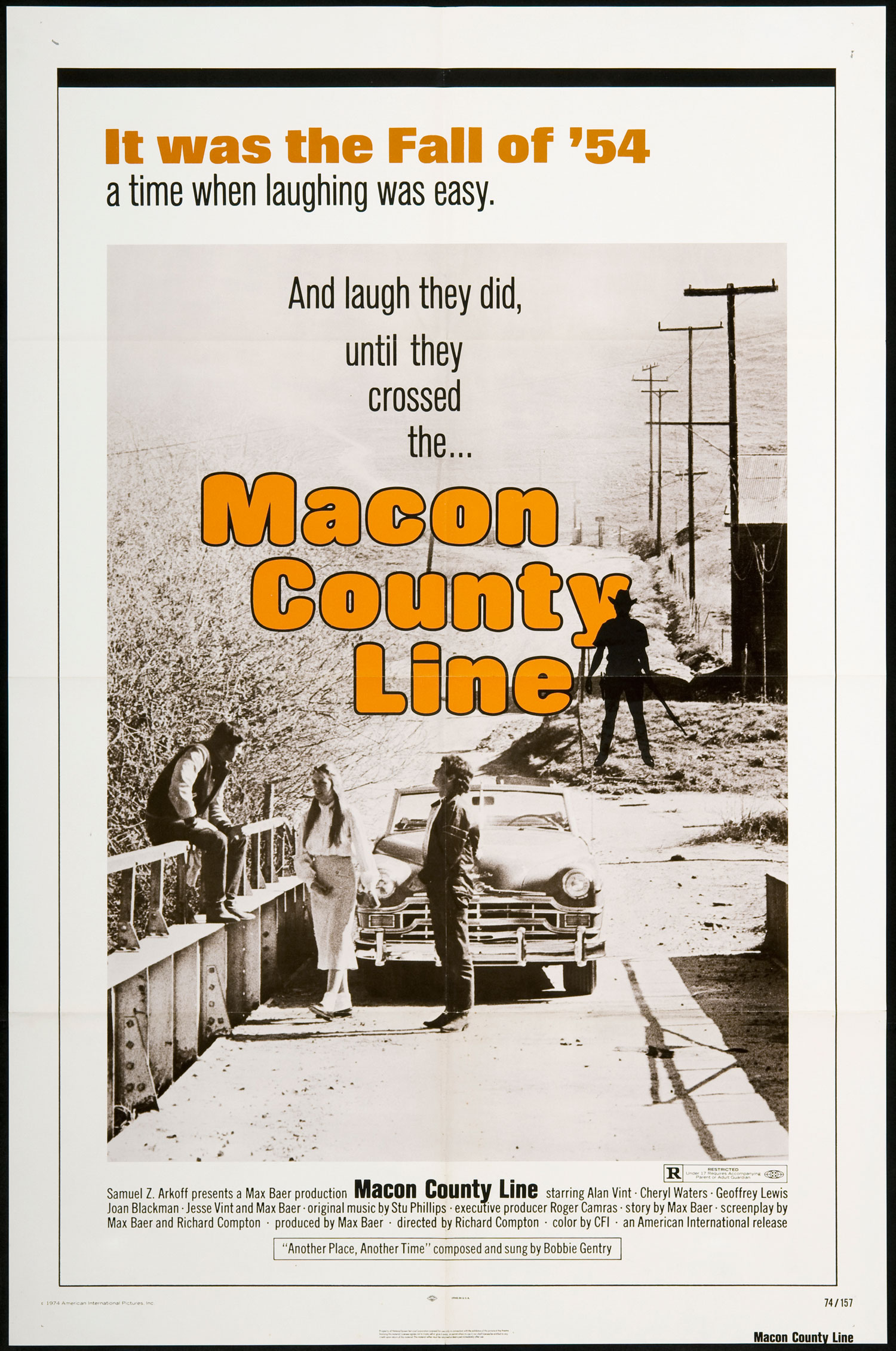
The year is 1954 and Chris and Wayne Dixon (played by real-life brothers Alan and Jesse Vint) are two brothers traveling through the Deep South for one last hurrah before joining boot camp. Along the way they pick up attractive hitch-hiker Jenny (Cheryl Waters) and the three appear ready to party it up when their car suddenly breaks down in front of an isolated country home. Unbeknownst to them the home’s inhabitant (Joan Blackman) has been murdered and when her husband, who just so happens to be the county sheriff, (Max Baer Jr.) arrives to find the carnage he immediately suspects it’s the kids sleeping in the nearby car. Thus begins a wild night chase through the country backwoods as the three try desperately to outrun a man with an unrelenting rage while pleading with him that they are innocent.

The film is a definite step above the average drive-in fare of that era with characters that manage to avoid the usual stereotypes and clichés. The 1950’s are painted in a little more of an edgier way and populated by people that are much more crass than what you will find in an old episode of ‘Leave it to Beaver’ or some sanitized recreation of that period, which I found to be refreshing. The music, particularly La Vern Baker’s gospel tinged opening song and Bobbie Gentry’s closing one is great and really helps to create a definitive mood. There are also two really good flashback sequences including a dimly lighted, moody one dealing with police brutality of a criminal and an ‘interrogation’ scene done at a police station that isn’t bad either.

Unfortunately the story is thin and hinges solely on the frantic chase that takes up the movie’s final 20 minutes, which is well edited and even features a twist ending, but up to then it is rather uneventful with too much time spent on the trio’s visit with a dimwitted auto mechanic (played by Geoffrey Lewis) that adds unnecessary comic relief.  There is also an ill-advised, dream-like segment where Jenny and Chris decide to take off their clothes and make love in some stagnant water found inside an old, rusted circular drinking trough in an abandoned barn that not only takes away from the film’s grittiness, but also seemed extremely unhygienic as well. I was also expecting more car chases especially with all he nicely refurbished vintage cars that appear, but the only one that they do have gets shot at night and the camera focuses more on the driver’s nervous faces in a cheesy melodramatic style than on the automobiles.

The film was produced and co-written by Max Baer Jr. who is better known as Jethro from the hit 60’s TV-series ‘The Beverly Hillbillies’ and in fact he wrote the story for this movie on the back of some Hillbilly scripts during breaks in filming. Although this was filmed in Sacramento the location is supposed to be the south and could’ve been either Georgia, Tennessee, or Alabama as all three of those states have a Macon County, but the real irony is that the two brother are from Chicago and we even see a close-up of their Illinois plate, which also has a Macon County although it’s likely the story wasn’t set in that one.

macon county line 4

My Rating: 6 out of 10

Released: August 8, 1974

Runtime: 1Hour 28Minutes

Rated R

Director: Richard Compton

Studio: American International Pictures

Available: DVD
Get Crazy (1983)

Capture 1

By Richard Winters

My Rating: 6 out of 10

4-Word Review: Save the Saturn Theater.

Stagehand Neil (Daniel Stern) who works for concert promoter Max Wolfe (Allen Garfield) has his hands full trying to put together a New Year’s Eve bash to welcome in 1983. First he must deal with a persnickety fire marshal (Robert Picardo), an arrogant rock star (Malcolm McDowell) and raucous, stoned fans who will stop at nothing to get into the event even if they haven’t paid. He also must try to stop Colin Beverly (Ed Begley Jr.) who wants to blow up the theater and replace it with a high rise business building. They’ve even planted a bomb in the place that is set to go off when the clock strikes midnight unless Neil can somehow get to it first.

The film is directed by Allan Arkush who also did the cult hit Rock ‘N’ Roll High School and it has similar cartoonish, slam-bang paced gags as well as featuring some of the same actors including Paul Bartel who appears here as a Dr. wearing a blood splattered white coat and Mary Woronov. It also makes a playful reference to that film by having one of the characters (Stacey Nelkin) wearing a Ramones T-shirt. I ended up preferring this movie to that one as the humor has more of a satirical edge.

get crazy 1

It’s all loosely based on Arkush’s experiences working at the Fillmore East Rock Palace between the years of 1968 to 1971. He initially wanted to make it more of a realistic, subtle comedy, but was only able to get it funded when he agreed to turn into an Airplane-like formula, but it still succeeds anyway. In fact one of the things I really liked about this film is it gives the viewer despite its exaggerated nature a good composite of what things are like for someone who would work at one of these places and the audience seems genuinely raucous and very much like what you would find at a wild rock party of that era.

Stern is likable in the lead and Miles Chapin is engaging as his would-be nemesis. Begley is a bit boring as the villain in a type of role that doesn’t take advantage of his talents, but singer Lou Reed as a songwriter going through a creative bloc who uses bits of random conversations that he hears as ‘inspiration’ for his lyrics is quite funny. The true scene stealer though is McDowell who sings two knock-out songs that are better than the ones done by the rock bands.

Although it was made and takes place during the 80’s  it still seems much more like a 70’s movie especially with the free-basing drug use, which had become out-of-style during the ‘just say no’ decade as well as unprotected sex between strangers. However, McDowell’s conversation with his talking penis while inside a dingy bathroom more than makes up for any of the film’s other shortcomings. I also got a kick out of the poster of him that features giant roaming eyes and a moving tongue.

get crazy 4

My Rating: 6 out of 10

Released: August 5, 1983

Runtime: 1Hour 32Minutes

Rated R

Director: Allan Arkush

Studio: Embassy Pictures

Available: VHS

Fedora (1978)

fedora 3

By Richard Winters

My Rating: 2 out of 10

4-Word Review: Old actress stays young.

This Review Contains Spoilers!

Barry ‘Dutch’ Detweiler (William Holden) is a struggling film director looking to make a big splash by trying to convince a reclusive Greta Garbo-like actress (Marthe Keller) to come out of retirement and star in his next big picture. He however, has trouble getting into contact with her as she resides on a secluded island estate in Greece. Finally after giving his script to her plastic surgeon (Jose Ferrer) he is able to meet her, but finds things to be on a strange side as she looks almost ageless and living with an authoritative Countess (Hildegard Knef) and personal secretary (Frances Sternhagen) who treat her like she is a child and refuse to let her out of their sight. As Barry investigates further he unravels the dark secret that the three share and the shocking reason why Fedora never seems to age.

Based on a short story by actor-turned-author Tom Tryon this was director Billy Wilder’s second-to-last film and as legendary as he is it was surprising to me why this film has never been released to DVD despite the fact that all of his other ones have. However, after viewing it the reason became clear as this is a real dud and a great director’s worst movie. The plot is poorly thought out and leaves a bundle of loopholes. In fact the believability is so low that it’s hard to get into it at all and the big twist that occurs near the middle where Fedora’s secret is exposed, which is that the old, ugly Countess is the real Fedora while the woman masquerading as the young looking one is really her daughter, is not surprising as I had suspected it from the very beginning. The acting and melodramatics are so much on a goofy soap opera level that the studio ended up dropping the film from its distribution when test audiences were found laughing in all the wrong places.

The island residence used to represent Fedora’s secluded home appeared rather old and rundown and the interiors were a bit cramped and not looking as luxurious as one would expect for a rich actress and Holden’s character is able to invade the place a bit too easily. I also thought the idea that the young Fedora would be constantly seen wearing white gloves to supposedly to cover up how young looking her hands were and thus tip people off that she really wasn’t an old woman at all didn’t make any sense as the daughter had already made three movies under the guise as being the old Fedora and it is impossible to believe that she would have been allowed to wear gloves through all of those roles.

The part where the Holden’s character gets knocked unconscious is equally stupid. For one thing he is not taken to a hospital, but instead back to his seedy hotel where he lies in bed for a whole a week before finally, miraculously regaining his consciousness. However, if a person is knocked out for that long a period it almost inevitably leads to a coma and how where they able to feed him and give him water? A hospital could’ve hooked him up to an IV that a dingy hotel wouldn’t have, which most likely would have had him dying from dehydration long before he makes his magically recovery and for someone who was hit over the head so violently you would expect some bruising, swelling and cuts and yet Holden wakes up without a single scratch on him!

The plastic surgery angle is another mess. Supposedly the whole reason Fedora got her daughter to pretend to be her is after she had some experimental surgery done on her face that became botched and made her too ugly to look at and yet one can see far worse plastic surgery disasters by observing many of today’s actresses attending your average Hollywood gala. Since the movie gets so over-the-top with its melodrama anyways they really should have made her face much more grotesque and thus given the viewer and film a lasting image.

Initially Marthe Keller was expected to play both the young and older Fedora, but when it was found that she had an allergic reaction to the old age makeup that was used Knef was then hired to play the part of the countess. Since their voices did not sound similar German actress Inga Bunsch dubbed for both of them, but her excessively deep voice gets really annoying to listen to.

After watching this film I came to the conclusion that Wilder had fallen into the same trap as his famous Norma Desmond character from Sunset Boulevard as he seems to be clinging too much to sentiments and a filmmaking style from a bygone era that no longer has relevance and unfortunately embarrasses himself in the process.

fedora 1

My Rating: 2 out of 10

Released: May 30, 1978

Runtime: 1Hour 54Minutes

Rated PG

Director: Billy Wilder

Studio: Lorimar

Available: VHS