Category Archives: Movies with Nudity

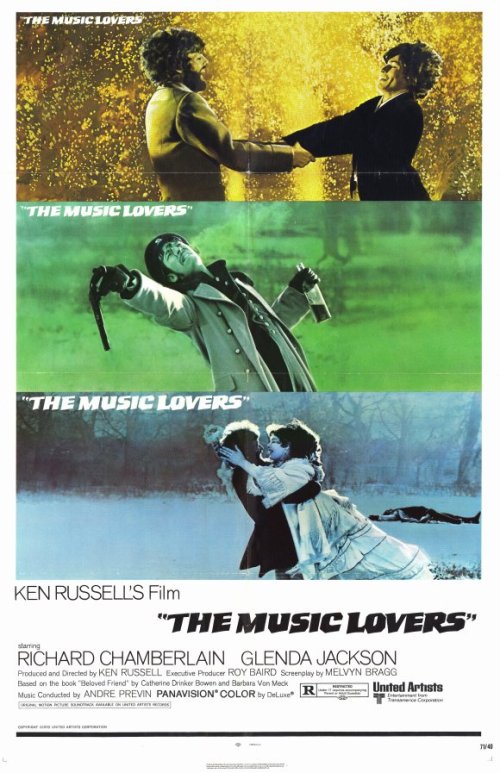
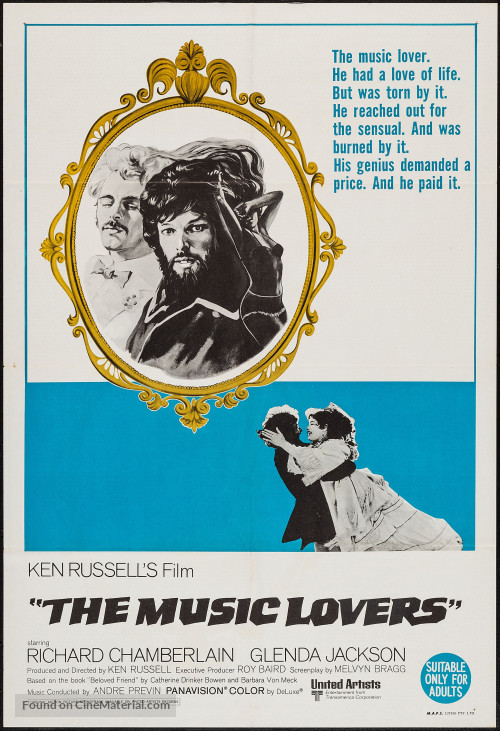
The Music Lovers (1971)

music lovers 1

By Richard Winters

My Rating: 6 out of 10

4-Word Review: Madness has no bounds.

This is a revealing look at Russian composer Pyotr Ilyich Tchaikovsky (Richard Chamberlain) and based on his own personal correspondences as he fought his homosexual tendencies by marrying Nina (Glenda Jackson) a woman he really did not love. Her nymphomania becomes something he cannot satisfy and he eventually abandons her where they then both go on to suffer their own personal forms of madness.

Pianists and composers were like what rock stars are today and I liked how director Ken Russell handles the concert sequence by infusing in the thoughts of the people as they listen to the music and therefore allowing the viewer to visualize the experience of a concert goer.

The scenes with Nina in the asylum are a good example of the grotesque imagery, but they are also well orchestrated and quite memorable. However at times it also gets overdone and unintentionally comical especially the sequence involving Chamberlain’s ill-fated attempt at lovemaking to Jackson on a shadowy, bouncing train car.

Russell shows no feeling for the subject and seems more interested in using it only as an excuse to show off his flashy style. The viewer is never allowed to get emotionally attached to the characters as we are only given a fragment of what these people were like and never the whole picture. The emphasis seems exclusively on their dark and self-destructive sides and watching their descent into madness is not very inspiring or insightful.

The casting of Chamberlain was a poor choice as the guy seems to have a very limited acting range. He is good looking, but lacks the charisma and his facial expressions rarely change while he shifts badly from underplaying the part to overplaying it.

Jackson fares far better and this could be considered a real find for her fans because she plays a type of character that she has never done before, or since. Usually she plays strong willed people, but here her character is weak allows herself to be dominated and exploited shamelessly even by her own mother while also taking part in a very provocative nude scene.

Overall if you like Russell’s style then you will enjoy it more than others. Otherwise it comes off as shallow, moody, and fragmented with some real slow spots during the middle half.

music lovers 2

My Rating: 6 out of 10

Released: January 24, 1971

Runtime: 2Hours 4Minutes

Rated R

Director: Ken Russell

Studio: United Artists

Available: DVD, Amazon Instant Video

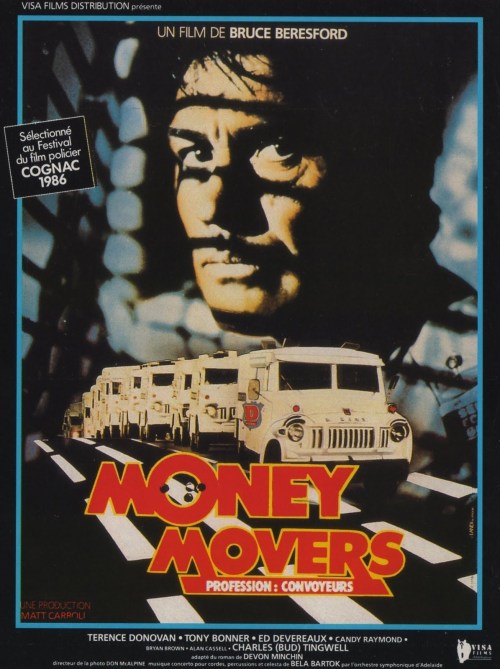
Money Movers (1979)

money movers 2

By Richard Winters

My Rating: 8 out of 10

4-Word Review: Employees become the thieves.

Lionel Darcy (Frank Wilson) runs an Australian armored truck business that transports payroll funds from one location to the other. After there is a robbery to one of his trucks he tries to increase security measures in order to prevent another one from occurring unaware that his own employees, with help of a local crime boss (Charles ‘Bud’ Tingwell) are planning an even bigger attack and everyone, even the police detective hired in to investigate the first crime, are in on it in one or the other.

The film is based on a novel by Devon Minchin, who worked as head of security for The Beatles when they were on tour in Australia and also owned at one time Australia’s largest armored car security company. The story itself is based on two real-life robberies that occurred in Sydney during the summer of 1970.

To me what stands out most about this film is how everyone, with the sole exception of Darcy, is thoroughly corrupt. There is no ‘good-guy’ in this movie, but instead of that being a turn-off it becomes almost like a running-joke where the viewer waits to find out what dark vice each new character will reveal to have. Fortunately they and their vices remain strangely engaging and this is mainly because none of them are portrayed as being inertly ‘evil’, but instead people sucked into an already screwed-up system and simply trying to make a living and doing it in the only way they know how.

Ed Devereaux , who plays a retired cop named Dick Martin, becomes the film’s reluctant protagonist although his presence gets refreshingly underplayed while having him look worn, aged and genuinely overwhelmed yet still remaining dedicated to his cause and ultimately managing to put a monkey wrench into the proceedings. Darcy, the only other non-corrupt character, is equally engaging albeit in an unconventional way as his utter cluelessness as just how criminally overrun his own company is, is a perfect comical testament to how many business owners and CEOs are thoroughly detached from the companies they run and the people they supposedly control.

The violence is graphic and impactful and one of the most memorable elements of the movie particularly during the final shootout that occurs inside the garage of the armor car company. There is none of this staged nonsense where the men have ‘manly’ fistfights that always get coupled with that annoying smacking sound-effect. Instead it gets captured in quick, ugly ways where the men desperately do whatever ugly tactic they can to stop the other one. The action is stark and unglamorous while given a bestial quality like starving animals fighting over a last piece of meat that leaves the viewer feeling like they’ve just witnessed an actual crime as it happened.

The film’s beginning is admittedly confusing and there should’ve been some backstory given before it jumps right away into the crime that features a dizzying array of shootings and double-crossings before the viewer is even able to figure out who is who. Yet after this awkward first part it manages to settle down while becoming a rapid-paced, in-your-face crime thriller that has proven to be highly influential and years-ahead-of-its-time.

money movers 1

My Rating: 8 out of 10

Released: February 1, 1979

Runtime: 1Hour 32Minutes

Rated R

Director: Bruce Beresford

Studio: Roadshow Film Distributors

Available: VHS, Amazon Instant Video 

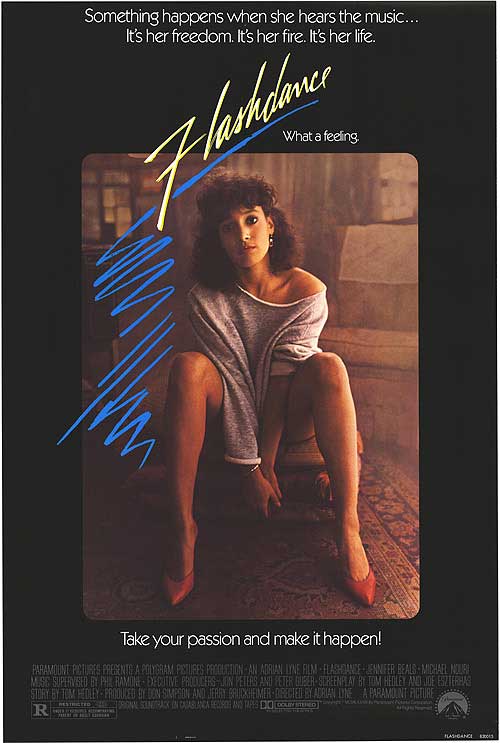
Flashdance (1983)

flashdance 2

By Richard Winters

My Rating: 6 out of 10

4-Word Review: Dancing is her passion.

Alex Owens (Jennifer Beals) is a young lady of 19 who works as a welder during the day, but moonlights as an exotic dancer by night. She dreams of one day joining the dance institute and train to work in the professional ballet, but when she goes to their admissions desk they demand that she show some proof of prior training, which she doesn’t have and this is enough to intimidate her from applying at all.  She eventually starts up a relationship with Nick (Michael Nouri) who is the owner of the factory where she works. He uses his money and influence to pull-some-strings at the dance conservatory so that she’ll be able to get an audition, but she resents his help and threatens to not only pull out of their relationship because of it, but her audition as well.

The film is loosely based on the real-life story of Maureen Marder and the plot is relatable to anyone who dreams of one day rising above their humble beginnings, which is what makes the film interesting. Beals does well in the title role and has a very appealing face, but I was surprised how little dancing there actually was. Out of the whole runtime there are only three dance routines that the Beal character does, which was a shame as the routines are well staged, have a lot of energy and creativity and the most unique part about the film while its contrived romantic angle is  a complete bore.

The Alex character has issues as well as she comes off as too much of a mish-mash of different extremes making her more like a caricature than a real person. I realize human beings can be a bag of contradictions, but this character takes it too far. The biggest one is when she goes every week to confession even though she doesn’t behave at all like she is a religious person in any other way. I would think a devoutly Catholic individual wouldn’t feel as relaxed about getting on stage and gyrating her body let alone stripping off her clothes the minute she brings her new boyfriend back to her place, going to bed with him on their first date and even aggressively flirting with him at a restaurant.  In either case the confession scene was unnecessary because all it does is have the character verbally explain what the viewer has already been able to pick-up on visually.

The character is also highly volatile in ways that could easily get her pegged as being a borderline psycho these days. First she throws a rock through her boyfriend’s window when she thinks he is seeing another woman, then she jumps out of a moving car in the middle of a tunnel that could’ve caused a major traffic accident and then tops it all off by rushing onstage to drag her friend Jeanie (Sunny Johnson) off at a strip club and then callously throwing the dollars that Jeanie had earned into a puddle of water all because she consider herself to be a ‘good friend’, which brings up another point; why does this character consider stripping to be so ‘sleazy’ while being an exotic dancer is ‘respectable’? Granted she doesn’t take her clothes off as an exotic dancer, but the outfits she wears are quite revealing and the dance numbers are so sexually tinged that in my opinion there wasn’t that much of a difference.

I was also surprised how the male characters at her factory job seemed to treat her as being ‘just-one-of-the-guys’ as this was a highly attractive single woman making me believe that a lot of the guys would be hitting on her besides just the owner. I would also expect that she would be sexually harassed at the work place by some of them since she spends her evenings playing into their fantasies with her sexy dancing and the fact that the film fails to tackle this subject even briefly makes it poorly thought-out.

Overall though I found it to be an enjoyable watch and I think this was mainly due to Adrian Lyne’s direction and his use of lighting that made each shot seem like a visual design and his ability to photograph the grimy, steel mill setting in a way that made it seem artsy and evocative as well as the film’s rousing dance number at the end that despite its cheesy nature is still inspiring and fun.

My Rating: 6 out of 10

Released: April 15, 1983

Runtime: 1Hour 34Minutes

Rated R

Director: Adrian Lyne

Studio: Paramount

Available: DVD, Blu-ray, Amazon Instant Video, YouTube

The Last Wave (1977)

last wave 2

By Richard Winters

My Rating: 6 out of 10

4-Word Review: Suffering from strange premonitions.

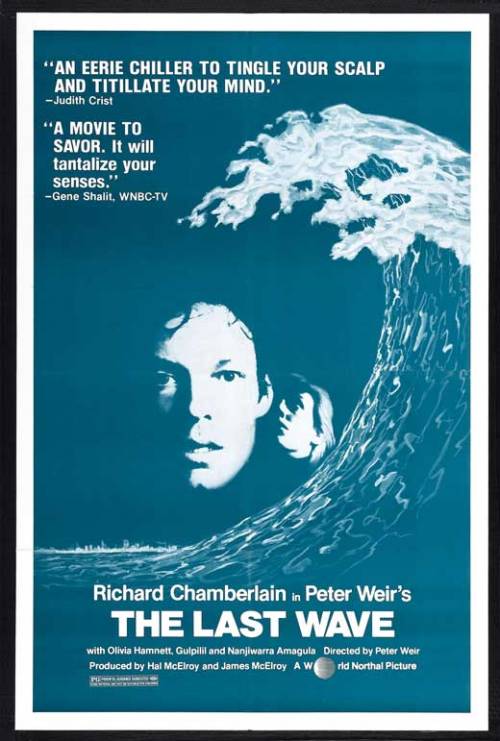
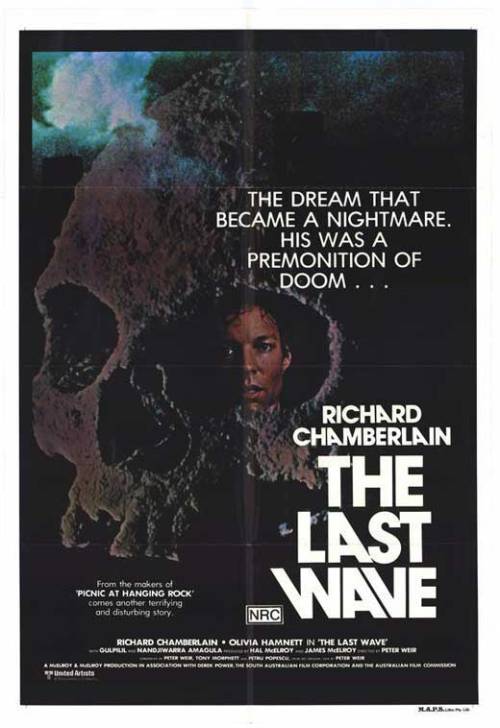
David Burton (Richard Chamberlain) is a lawyer working in Sydney, Australia who is hired to defend some aborigines that have been accused of murder. David’s specialty is taxation law and he feels overwhelmed in this new role, but still takes it on with an earnest dedication, but in the process begins to experience strange dreams and even sees one of his clients, Chris (David Gulpilil), in them. This coincides with weird weather events that begin occurring all over the continent including the phenomena of black rain. David can’t help but feel that somehow this is all connected and after doing extensive research finds that tribal aborigines have a belief system involving what they call dreamtime in which spirits from another world communicate with us through our dreams and David has been the chosen recipient due to his lifelong ability to dream of events in his sleep that eventually occur later in real-life.

The film, which is directed by the gifted Peter Weir, has terrific imagery that almost makes-up for its other shortcomings. There have been a lot of movies that have tried to create creepy nightmare segments, but the ones here work much better than most and gave this viewer an effectively spooking feeling. The silhouette of the aborigines in the pouring rain, the shots of a large seismic wave and use of tribal music all get used to ultimate effect. Even the rain storms become fascinating to watch. None of them were actual ones, but instead large firehoses were employed along with giant fans to create a sort-of surreal stormy effect that actually looked better than the real thing.

The story though borders on being convoluted and would’ve worked better had the movie been given a longer runtime. The first hour is spent with the viewer seeing a lot of strange events that make no sense and are given no explanation. It is only after about an hour in that some expert, who’s given no formal distinction to what their line of study is or degree, explains to David the importance that dreams have to the aborigine culture, which helps tie things together, but this should’ve occurred earlier as some viewers will probably find it too confusing and off-putting otherwise.

Chamberlain is his usual bland self, but okay in this type of role as it doesn’t demand anyone who is colorful. The character though is supposed to be this very pragmatic individual, but he seemed to buy into the mystical qualities of the aborigine belief system much too quickly. A person with a practical approach to life would most likely be quite cynical to the events as they first occurred and even reluctant to base any value on his own nightmares, at least initially.

The ending is a major letdown. For one thing we have the main character inside an ancient sacred site beneath a sewer system where he suddenly has to start ‘thinking out loud’ by explaining what he is seeing on the drawings along the wall even though the viewer could’ve figured this out for themselves without the ‘narration’. The ambiguous conclusion is frustrating and makes sitting through the rest of it feel like a big waste of time.

last wave 1

My Rating: 6 out of 10

Released: November 13, 1977

Runtime: 1Hour 45Minutes

Rated PG

Director: Peter Weir

Studio: Cinema International Corporation

Available: DVD (Criterion), Blu-ray (Reg. B), Amazon Instant Video

Fever (1989)

fever 1

By Richard Winters

My Rating: 6 out of 10

4-Word Review:  Suspense in the desert.

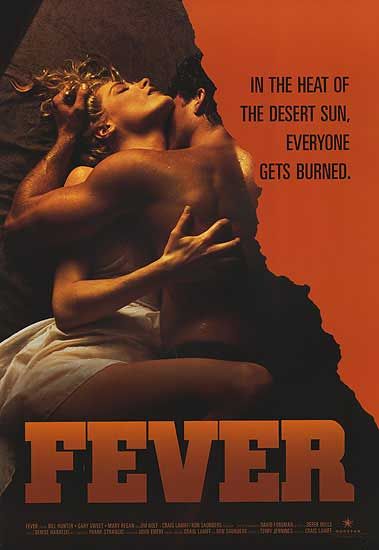
This review will be a first in a series in which we celebrate Australian cinema by reviewing one film each week from Down Under. Today’s movie centers on Jack Welles (Bill Hunter) who comes upon a suitcase full of money after a shootout with a drug dealer. He decides to keep the loot and take it home to his lovely wife Leanne (Mary Regan) unfortunately when he gets there he finds that she is in bed with another man named Jeff (Gary Sweet). The enraged Jack attacks Jeff, but Jeff and Leanne manage to fight him off while knocking him out in the process. Thinking that they’ve killed him they take his body out to the desert and dump it into a vat. The problem is that Jack isn’t dead and he proceeds to relentlessly chase the two while also being followed by a busy-body deputy named Morris (Jim Holt) who thinks that Jack is hiding something and who in-turn is also being followed by criminal kingpin Mr. Tan (Lawrence Mah) who is out to retrieve his drug money.

For the most part this film works pretty well and has a story that is compact and original and will keep the viewer guessing all the way through to the end. It also has some particularly novel camera angles including seeing the inside of a car, with the driver still at the wheel, as it flips over.

The film manages to avoid most of the expected loopholes that you usually see in these types of stories, but there are still a few discrepancies. The biggest one is that Jack recovers from the blow to his head a bit too quickly and magically. There is no dried blood, or bandages needed despite the fact that he does initially bleed when he is first hit. In fact there is no sign of even a cut and no after effects like headaches, swelling or dizziness that most assuredly would affect anyone else after being hit over the head with a vase and knocked unconscious. There is also a scene near the end where, in an effort to find his wife, Jack barges into a lady’s washroom and kicks open all the stall doors before finding a woman sitting on the toilet, but for some reason she doesn’t scream or react at all when he does this, which is weird.

The casting is another issue. Hunter is way older than the actress who plays his wife and it doesn’t look right or make sense. Why would such a young beauty settle for some tubby middle-ager? It clearly wasn’t for love or money and the actor playing her lover has too much of the chiseled male model features of a soap opera star. The solution would’ve been to cast performers to play the wife and lover that were of the same age and looks range as Hunter.  Average looking, middle-aged people have sex and affairs in real-life, so why can’t characters on the big screen ever reflect this?

The story also suffers by having characters that are not likable and nobody to root for. Any screenwriting coach will tell you that no matter how clever, or creative the plot may be if it does not have three dimensional characters then it won’t work.

However, with all that said there are still enough unexpected twists to keep it interesting particularly the ones that occur during the final ten minutes. The last one is especially good and one I would never have guessed, nor seen done in any other film, so the movie gets kudos for that.

My Rating: 6 out of 10

Released: February 1, 1989

Runtime: 1Hour 23Minutes

Rated R

Director: Craig Lahiff

Studio: Genesis Films

Available: VHS

Laughter in the Dark (1969)

laughter in the dark

By Richard Winters

My Rating: 6 out of 10

4-Word Review: Man obsesses over teen.

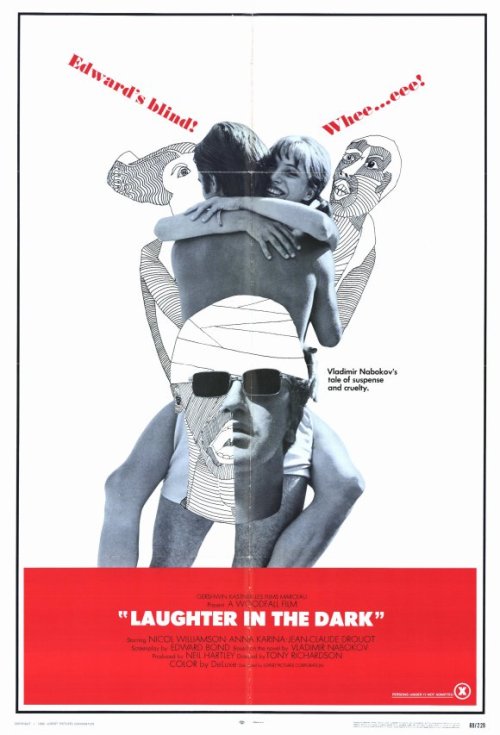
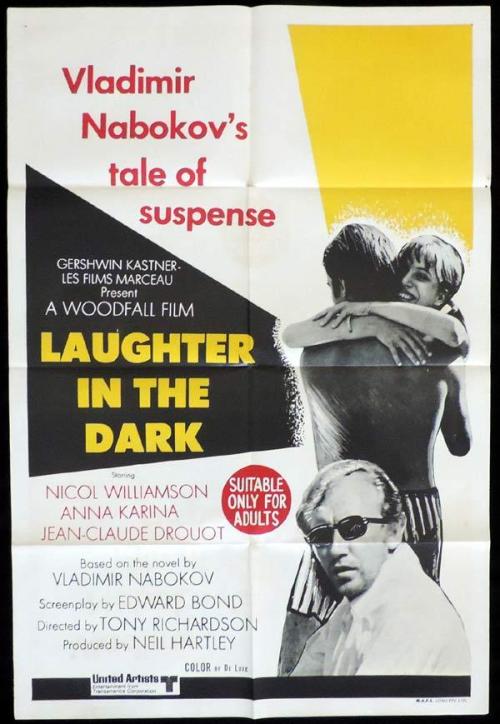
This film is based on an early novel by Vladimir Nabokov, who is more famous for writing Lolita and the story here has a similar theme to that one. The plot revolves around Edward (Nicol Williamson) who is a successful middle-aged art curator, but bored with his marriage and looking for an escape. While watching a film inside a theater one day he spots the beautiful Margot (Anna Karina). While she is only 18 he becomes madly obsessed with her and tries to start-up a relationship. She initially resists, but then realizes that he has a lot of money and decides to play-him. On the side she has a passionate relationship with Herve (Jean-Claude Drouot) who begins to work for Edward as his assistant. Initially Edward has no clue that Herve and Margot are cavorting around behind his back, but eventually he catches on and plots a dark revenge only to find himself as the victim.

While the story has its share of intriguing moments it suffers from featuring a main character that is not relatable.  Fantasizing about having sex with a beautiful, younger woman is fine, but he shouldn’t expect her to automatically reciprocate those same feelings and even if she does he should be concerned that it is only because of his money, which are thoughts that he never once seems to consider. He also spouts out right from the beginning of how much he ‘loves’ her like a lovesick 14-year-old, but a man his age would normally be wise enough to realize that there is a big difference between that and sexual attraction, which is all that this really is.

It also takes way too long for Edward to catch on to the affair occurring between Herve and Margot even though anyone else would’ve seen the red flags a mile-away. It is for these reasons and the way he gets taken advantage of time and again that makes the character come off as suffering from some serious mental defect that is not in any way a normal for even a halfway intelligent person.

It all would’ve worked much better had Richard Burton remained on as the film’s star. He was the original choice for the part and even filmed a few scenes before being kicked off the project due to repeatedly showing up drunk. Williamson is a fine actor and has an impressive resume, but he’s rather benign here while Burton would’ve been able to bring in an extra dimension and because he was older would’ve made the contrasting age difference between him and Margot even stronger.

Karina on the other hand is stunning and an absolute beauty to behold. She was much older than what the part called for, but her wicked, conniving performance more than makes up for it as she eats up every scene that she is in and everyone else in it.

It was filmed on the island of Majorca, which allows from some exotic Mediterranean scenery and Raymond Leppard’s harpsicord soundtrack is pleasing. I also, for the most part, enjoyed the story, which manages to remain intriguing all the way up until its unsatisfying conclusion. The drama though, particularly at the beginning, is clumsy and the whole thing ultimately comes off as a good director’s weakest work.

laughter in the dark 2

My Rating: 6 out of 10

Released: May 11, 1969

Runtime: 1Hour 44Minutes

Rated X

Director: Tony Richardson

Studio: Lopert Pictures Corporation

Available: None at this time.

Catch-22 (1970)

catch 22 2

By Richard Winters

My Rating: 8 out of 10

4-Word Review: The insanities of war.

Having to fly numerous combat air missions has sent Word War II fighter pilot John Yossarian (Alan Arkin) to the brink of insanity. He goes to his unit’s psychiatrist Dr. Daneeka (Jack Gilford) asking him if he can be sent home. The doctor admits that anyone who feels that they are going crazy shouldn’t be flying, but there’s a problem known as ‘Catch-22’, which states that anyone who no longer wants to fly combat missions isn’t crazy but normal and therefore John’s request is denied and he is forced to remain while observing how utterly ridiculous everyone else is, particularly his military superiors, even though they’re considered to be the ‘normal’ ones.

The film is based on the best-selling novel by Joseph Heller, who started writing his novel in 1953 and would only spend 1-hour each day working on it until finally completing it 8 years later. The story is very loosely based on some of his experiences and emotions that he had as a fighter pilot during the war and it’s always nice watching something that was done, no matter how satirical, from an insider’s perspective and his numerous potshots at the nonsense that makes up the military hierarchy could easily be parlayed to anyone who has had to deal with bureaucracy at any level.

Certain changes were made in the novel’s transition to the big-screen, but overall screenwriter Buck Henry does well in bringing the fragmented narrative vibe of the book to the film. I was really impressed with the aerial sequences, which used the B-25 Mitchell and took 6 months to film. The cinematic style was years-ahead-of-its-time as well including having things occur in the background of a scene that has no connection to what the characters in front of the camera are discussing and at times even oblivious to.

The film features many laugh-out-loud segments with my favorite being the part where Yossarian attends a military award ceremony and accepts his medal while being, to the shock of the military brass that is handed out the medal, stark naked. Anthony Perkins, who plays the hopeless chaplain, is also quite funny in a rare, but interesting turn in a comedic role.

One of the things that I didn’t like about the film, although it didn’t bother me quite as much as it did when I first saw the movie many years ago, is the way the tone shifts from being quirky and hilarious at the beginning to somber and serious towards the end. I realize that the novel works in the same way, but the first half of the film successfully balanced the line of exposing the absurdities of war in a comedic vein while still showing the serious consequences without ever getting overwrought, so it’s a shame that the second half couldn’t have worked the same way instead of leaving the viewer with a gloomy, depressed feeling when it’s over and almost forgetting completely about the comedy that came before it. I also believe this is why this film failed at the box office while the similar M*A*S*H succeeded simply because that movie remained funny all the way through.

Arkin, in the lead, is miscast and seems too old for the part. His nervous, hyper persona doesn’t work and would’ve been more effective had it been toned down by being played by a younger actor who was more emotionally detached. The rest of the supporting cast though is great including Martin Balsam who makes cinematic history by being the first actor to ever appear sitting on a toilet in a movie.

My Rating: 8 out of 10

Released: June 24, 1970

Runtime: 2Hour 2Minutes

Rated R

Director: Mike Nichols

Studio: Paramount

Available: DVD, Amazon Instant Video, YouTube

Fame (1980)

fame 3

By Richard Winters

My Rating: 4 out of 10

4-Word Review: School of Performing arts.

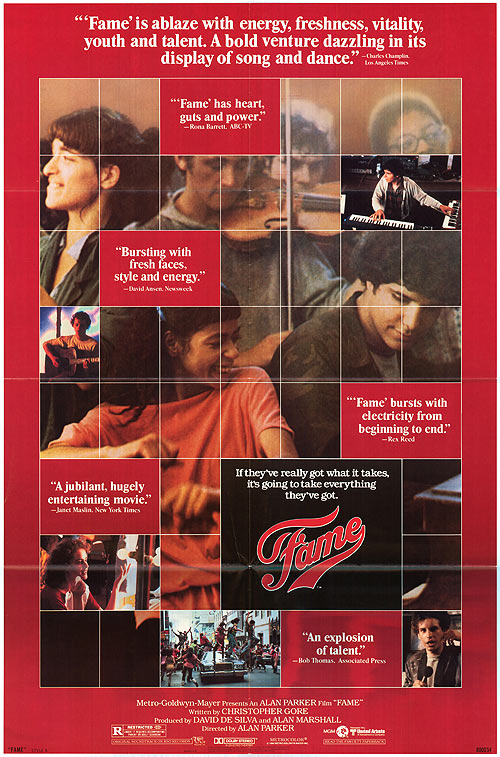
Filmed at the now demolished Haaren High School the film is intended to be a showcase of New York’s famous Fiorello LaGuardia High School that specialized in training students in the arts, dance and drama. The story centers on an eclectic mix of teens that join the school. There’s Doris (Maureen Teefy) who is pushed by her mother (Tresa Hughes) into becoming a singer/actress despite suffering from horrible stage fright. Leroy (Gene Anthony Ray) wants to become a dancer despite not being able to read while Ralph (Barry Miller), Montgomery (Paul McCrane) and Bruno (Lee Curreri) all suffer from personal demons/insecurities of their own.

I’m sure in its day this came off as fresh and exhilarating, but time has not been kind to it. The film starts out with the teens auditioning to get into the school, which might have been interesting had it not come off as a poor man’s version of ‘American Idol’, which has dulled our senses so much to the audition process that anything else now seems second-rate. I think what surprised me most about these scenes is how patient the judges/instructors were as all of the teen’s auditions were quite poor and they should’ve been politely escorted out a minute into them instead of being allowed to continue on with something that was clearly not working. What shocked me even more though is that several of the main characters gave horrid auditions that made it look like they had no talent at all and yet somehow they were accepted into the school anyways making it look like this wasn’t necessarily a place for gifted students after all, but instead just someplace willing to bring in any loser that wanted in.

The characters aren’t appealing either. Doris is much too neurotic; Montgomery is boringly benign and Ralph comes off as an obnoxious, attention-seeking clown. There are many scenes showing the students being highly disrespectful to their instructors that normally would’ve gotten them kicked out of any other school, but here for some reason they don’t. Out of all the students Coco (Irene Cara) was the only one I liked as she had genuine talent and also seemed much more dedicated, but the film ends up degrading her by having her character go to a rundown apartment of some slimy producer who wants to ‘audition’ her for his next film even though it is quite obvious to any viewer that the guy is a first-rate sleazebag and his audition is clearly just a set-up to a scam, or in this case an underground porno.

The script is filled with a lot of unresolved storylines and loopholes. For instance Leroy is unable to read and when this gets discovered he tears up the school in a fit of rage and yet somehow still remains a student for the full four years. Did he eventually teach himself how to read and pay for the damages that he caused? These pertinent questions never get answered, but really should’ve.

I enjoyed the shots capturing the New York’s busy and sometimes dangerous city sidewalks as well as a bird’s-eye shot of Times Square. The scene where a couple of students go to a showing of The Rocky Horror Picture is great, but the rest of the movie is just one long mish-mash. At certain points it tries to be a gritty drama and then at other times it breaks out into tacky dance routines. Instead of being a compelling drama it’s more of a broad overview and would’ve worked much better had the number of main characters been paired down to just one or two and the time span cut from four years to just one.


My Rating: 4 out of 10

Released: May 16, 1980

Runtime: 2Hours 13Minutes

Rated R

Director: Alan Parker

Studio: MGM

Available: DVD, Blu-ray, Amazon Instant Video, YouTube

The Last Picture Show (1971)

last picture show 1

By Richard Winters

My Rating: 9 out of 10

4-Word Review: A Texas sized drama.

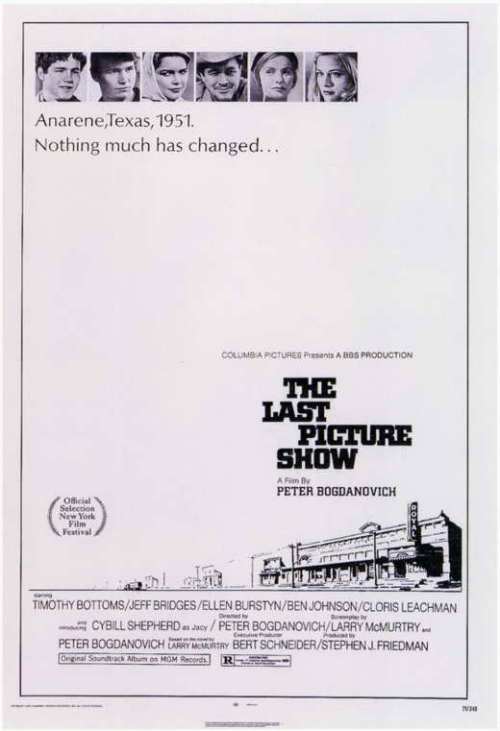
Based on the Larry McMurtry novel, who also co-wrote the screenplay, the story deals with the inter-workings and relationships of a people living in a small Texas town known as Anarene during the years of 1951 and 1952.  There’s Duane (Jeff Bridges) and Sonny (Timothy Bottoms) two high school seniors who are also best friends. Duane dates the highly attractive Jacey (Cybill Shepherd) who seems more geared to playing the field with every guy in town and even makes a play for Sonny, which seriously affects his relationship with Duane. There’s also Ruth (Cloris Leachman) the lonely coach’s wife who begins a brief affair with Sonny until he decides to bail-out for the more attractive Jacey. Sam (Ben Johnson) makes up part of the older generation still stuck in the dusty town and trying to make ends meet by running the local movie theater and pool hall both of which come to a halt when he dies suddenly.

I saw this film just recently outside on the big screen as part of the Texas Film Heritage and Preservation Society here in Austin. Although I had seen it before I was hit with how much more impressive and visually sumptuous it is on the big screen. Robert Surtees’ black and white cinematography is top-notch and the main ingredient to what makes it so spellbinding, so much meticulous attention is taken into each and every shot that one could almost watch this with the sound down and still find it thoroughly compelling.

Director Peter Bogdanovich takes great care to make sure that all of the elements are there and spins them together like a well-crafted machine so the viewer learns bit and pieces about these characters and their attitudes through each shot and camera angle that comes along. Filming it on-location in Archer City where McMurtry grew up helps accentuate the authenticity as does playing the country music from the period although I could’ve done with a little less of that and more of the sound of the wind and dust crackling across the barren region instead.

What surprised me most was how interesting and varied the love making scenes where and how instrumental they became to the film as a whole. One of the most memorable ones is when Sonny first tries to make love to Ruth, but is quite awkward about it. We see the pained expressions on both of their faces, hear the rusty springs of the mattress, and then finally witness Ruth’s attempts to shield her crying and frustration from Sonny. Duane’s futile attempt at sex with Jacey later on is also good particularly the fiery look of anger spewing from Jacey’s eyes when he is unable to perform. The scene involving a mentally challenged young man pushed into attempting sex with an obese and caustic prostitute inside the backseat of a cramped car is both darkly funny and sad, but the most provocative love making moment comes near the end when Jacey has sex with her mother’s boyfriend (Clu Gulager) on top of a pool table inside a dark and lonely pool hall while bracing the table’s side pockets with her hands for leverage.

The performances are all-around outstanding and both Leachman and Johnson won the Academy Award for their work here, but I still came away feeling, just like I did twenty years ago when I first saw this film, that Shepherd does the best job and leaves the most lasting impression. I love how her character slips between being insecure and indecisive to cunning and conniving and Shepherd’s facial expressions are completely on-target all the way. Her striptease done on top of a diving board is still pretty hot and my only complaint about the character is the way she elopes with Sonny and then completely bails on him the next day. I realize she didn’t love the guy and she’s just used him like she did others, but I didn’t understand what her motivation was in this instance as she seemed to get little if anything out of it.

I was also a bit disappointed that the Coach Popper character played by Bill Thurman didn’t have a bigger role in the story. The way he berates his players during practice is amusing and would most likely get coaches in today’s more sensitive world in hot water. I also found his constant spitting of tobacco juice into a cup that he carries around with him to be grotesquely amusing, but my biggest beef is the fact that we have a main character screwing his wife and the whole town knows about it, but never any reaction from the man himself. Maybe he was aware and didn’t care, but the movie should’ve made an attempt to show this, or at least some interaction between Sonny and the Coach since Sonny was at one time one of his players, which would have to make things quite awkward whenever they would bump into each other and in a small town that would most likely happen on more than a few occasions.

Overall though this is a great movie and I was surprised at how frank and explicit it was despite its 1950’s setting. Some may argue that it was done with too much of a revisionist mindset and things weren’t quite this wild, but others, like myself, will insist that it probably was, but just not talked about as much.

My Rating: 9 out of 10

Released: October 22, 1971

Runtime: 2Hours 6Minutes (Director’s Cut)

Rated R

Director: Peter Bogdanovich

Studio: Columbia Pictures

Available: DVD, Blu-ray, Amazon Instant Video

Life Size (1974)

life size 1

By Richard Winters

My Rating: 5 out of 10

4-Word Review: A sex doll obsession.

Michel (Michel Piccoli) runs a successful dental practice, but finds that his life is empty and his marriage to his wife Isabelle (Rada Rassimov) is no longer working. He has cheated on her before, but those affairs left him with the same empty feeling, so this time he decides to take a different route by purchasing a life size sex doll that looks so real that she almost seems human. He takes her everywhere and even brings her along to a visit with his mother (Valentine Tessier) so she can meet his new ‘girlfriend’.  The doll becomes the centerpiece of his very existence and he spends every waking moment he can with her until he sees footage, from a closed circuit camera that he has set-up in his house, of one of friends having sex with her while he was away. He becomes outraged at her ‘betrayal’ and decides that her punishment will be ‘death’.

The film, which can best be described as an early, distant cousin to Lars and the Real Girl, definitely has its share of unique and memorable moments. Writer/director Luis Garcia Berlanga does an admirable job of analyzing just what might happen if sexual fantasy gets taken to its most extreme level. The scenes showing Michel taking the doll to a clothing store in order to be measured and fitted with the latest fashions and marrying the doll in a makeshift wedding are by far the film’s two best segments.

However, it’s Michel’s scenes with his wife that I found to be the most unsettling. The scene where he fondles his wife’s naked breasts late at night as she sleeps while looking at a picture of the doll is quirky enough, but then later on, in the film’s most disturbing moment, she tries immersing completely into his sexual fantasy by pretending to be a sex doll herself in a desperate attempt to win him back.

What is initially considered the sexual substitute to the real thing soon becomes the preferable choice here and it reminded me of an article I read in a science journal a few years back about young men in their 20’s forced to be prescribed Viagra because they were no longer able to achieve erections with their wives/girlfriends because the proliferation of porn on the internet had somehow dulled their senses to real sex to the point that they found it to be a ‘turn-off’. Now, if you are a fan of porn then that’s great and I don’t mean to be appear like I’m trying to knock it, but I did find it fascinating that elements of that article correlated to what this film was showing and how successful this movie was at foreshadowing the phenomenon’s that we are now seeing in our modern day culture.

Although the film is adequately directed and more of a psychological study than a perverse sleaze feast it’s still not an overall success. The main issue is that the main character acts overtly freaky about the doll from the very beginning without enough backstory to tell us why and simply saying it’s due to a unhappy marriage is not enough. A far more compelling concept would’ve been to portray the main character as being more ‘normal’ by having him feel awkward about the doll and even a bit embarrassed only to grow increasingly more obsessed as the film progresses until his ultimate infatuation with it shocks even him.

Alternate Titles: Grandeur Nature, Love Doll, Tamano Natural

My Rating: 5 out of 10

Released: August 21, 1974

Runtime: 1Hour 41Minutes

Rated X

Director: Luis Garcia Berlanga

Studio: Cinema International Corporation

Available: None at this time.