Category Archives: Movies with Nudity

Liar’s Moon (1980)

By Richard Winters

My Rating: 3 out of 10

4-Word Review: Couple harbors dark secret.

During the summer of 1949 in a small Texas town Jack (Matt Dillon), who has just turned 18, falls for Ginny (Cindy Fisher) who is 17. Jack is from the poor side of town and helps out his father (Hoyt Axton) on a family run farm while Ginny lives a more privileged life as the daughter of the town’s banker (Christopher Connelly) As Jack and Ginny’s relationship progresses they find stiff resistance to it from their mutual parents particularly Ginny’s father, but they don’t know why. In order to get married they go to Louisiana to elope, but Ginny’s father hires a detective (Richard Moll) to track them down and bring his daughter back no matter what the cost.

The one aspect about the movie that I did like is that it paints its small town characters in a generally positive light. Too many times movies that deal with stories that took place in a bygone era always seem to portray the characters as being more dopey than people of today, or more racist and meaner especially if it takes place in the south, but fortunately that doesn’t occur here. Instead we get shown regular, everyday people that you could easily meet today that just so happen to have lived a long time ago.

The film also has a nice leisurely pace to it and the romantic angle doesn’t seem quite as rushed, which is good, but the film also lacks finesse. The only part of the movie that has any atmosphere or cinematic flair is the opening flashback sequence, which gets done in black and white, while the rest of it pretty much flat lines. The scene where three men get royally drunk on some strong whiskey and another one where the town’s young men try to tackle a baby hog at the fair are the only times when there’s spontaneity or verve.

The story itself is too obvious and too many clues are given away, so by the time the ‘shocking’ secret get revealed you pretty much had guessed it way earlier. A few extra twists are thrown in during the final 15 minutes, but overall it becomes soap opera laden and too similar to the tragedy tinged teen romances of the 70’s that gives the whole thing a formulaic feel.

The eclectic cast is really the only interesting aspect about the film with Dillon giving a solid performance and Fisher looking quite beautiful even when she is constantly crying, which is pretty much all she does during the final third. Academy Award winning actor Broderick Crawford, whose last film this was, gets completed wasted in a pointless role that has very little screen time and the same goes for Yvonne De Carlo who speaks here in what sounds to be an Irish accent. Susan Tyrrell though is strong playing another one of her fringe characters, this time in the form of a prostitute, who comes off as cold and snarky at first, but eventually becomes surprisingly sympathetic.

Spoiler Alert!

Two different endings were filmed and distributed and which ending you saw depended on which theater you attended. One has the main character dying while the other one doesn’t, but both come-off as rather cheesy and make you feel like sitting through this thing really wasn’t worth it.

My Rating: 3 out of 10

Released: September 2, 1982

Runtime: 1 Hour 46 Minutes

Rated PG

Director: David Fisher

Studio: Crown International Pictures

Available: DVD, Amazon Video.

Tunnel Vision (1976)

By Richard Winters

My Rating: 1 out of 10

4-Word Review: Lame parody of television.

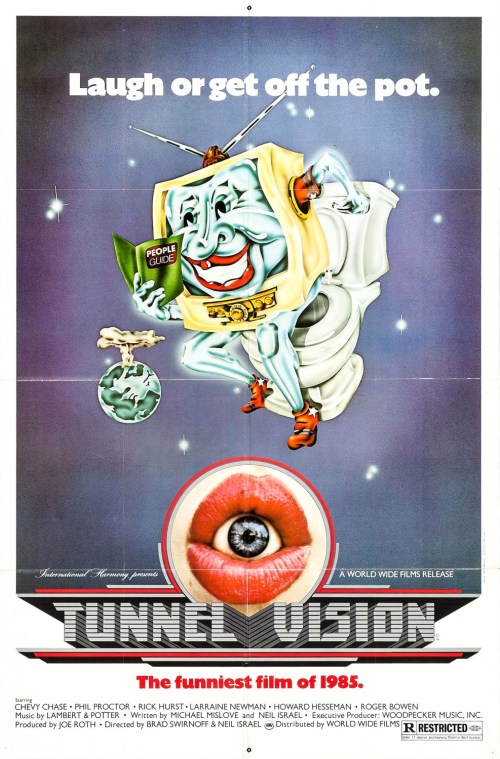
The year is 1985 and due to a new Bill of Rights an uncensored television network has been created, which causes many viewers to become hooked on its content watching it for hours while neglecting their other responsibilities. The head of the network, Christian A. Broder (Phil Proctor) is brought in for a senate hearing where the network’s programs are examined by a government panel to see if it should be allowed, or if censoring it would be the better option.

What was considered ‘pushing-the-envelope’ in its day would now barely pass as a blip on the radar of the average seventh grader. I was honestly expecting much more sex and nudity here, but ultimately the film offers very little and nothing is worse than smug filmmakers thinking they’re making something ‘edgy’ when they really aren’t. I also got tired of seeing a close-up shot of a plastic eyeball popping out of a woman’s lipstick laden lips, which I suppose might be considered by some as being sort-of sexy looking, but after it gets shown over and over again it becomes annoying.

The overall tone is too inconsistent. Certain provocative bits get lumped in with a lot of goofy, mindless ones, which creates a casual chuckle every 20 minutes or so but then coupled mainly with a lot of groans in between. The film also never cuts away to show any reaction shots of the conservative committee who are supposedly watching these ‘shocking’ clips, which could’ve added in an extra layer of humor. The viewer is also required to be highly familiar with mid 70’s programs and commercials as otherwise many of the in-jokes will go completely over their heads especially to those born at a later time.

The film was written and directed by Neal Israel who managed to have one hit Bachelor Party in 1984, but overall his other output conveys the same mindless, lame comedy as this one and whose talents seem limited. Had there been some visual flair it might’ve helped, but everything looks like it was filmed inside someone’s suburban home using low-budget home movie-like production values. Also, for a film that was supposed to be a peek into the future it certainly doesn’t have much of a futuristic design and instead reeks of mid-70’s sensibilities.

Of course there’s a lot of politically incorrect bits here too, which includes a parody of ‘All in the Family’ that features a Romanian gypsy family that spouts every conceivable ethnic slur, but this segment like so many of the others are just not that funny or imaginative. The only interesting aspect about the film is that, besides showing some young up-and-coming stars at the beginning of their careers, it also features many behind-the-scenes announcers whose voices you’ll immediately recognize, but not their faces, so seeing them in front of the camera for a rare time like Donny Darko who portrays a newscaster named Steve Garvey is kind of cool, but otherwise this thing is nothing more than a dated dud.

My Rating: 1 out of 10

Released: March 3, 1976

Runtime: 1 Hour 7 Minutes

Rated R

Director: Neal Israel

Studio: World Wide Pictures

Available: DVD

Breezy (1973)

By Richard Winters

My Rating: 7 out of 10

4-Word Review: Hippie falls or businessman.

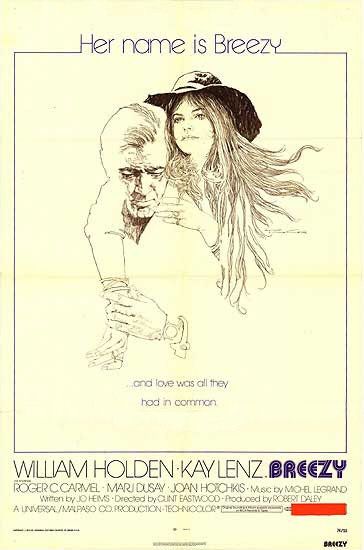
Edith Alice ‘Breezy’ Breezerman (Kay Lenz) lives the life of a hippie after losing both her parents to a car accident years earlier. Her transient lifestyle consists of one-night-stands and hitching rides from strangers. One day she jumps into a car owned by Frank Harmon (William Holden). Frank is a middle-aged man who went through a tumultuous divorce years earlier and isn’t interested in getting into a relationship especially with someone young enough to be his daughter and yet Breezy’s carefree ways begin to grow on him and despite his reluctance the two slowly form a bond.

The script was written by Jo Heims who also penned Clint Eastwood’s earlier hit Play Misty for Me. Originally she wanted Clint to play the part of Frank, but he felt he was too young for the role and decided he would direct instead although you can still spot him for a brief second leaning against a wooden rail during a scene at a boardwalk. Unfortunately his fan base  was expecting to see more of an action or western flick and not some laid-back counter-culture love story and much of his following gave it a-bad-word-of-mouth to others who then stayed away. After some bad reviews from an initial screening the studio decided to shelve it for a year before finally releasing it to select theaters with very little promotion, which caused it to tank at the box office, but this is definitely a movie that deserves a second look.

One of the things that I liked is that it tackles the controversial subject of relationships with a wide age difference something that is still sometimes considered ‘gross’ even by otherwise liberal minded people today. Yet the subject gets examined in a refreshingly non exploitative way where it is actually the man who is reluctant to get involved and even at one point outright rejects her while she continues to pursue it convinced that despite one of them ‘being on this planet a little bit longer than the other’ they still have the same wants and needs.

The film like its title has a nice ‘breezy’ pace too that reflects its Bay area setting quite well and allows the viewer to get to know the characters and their interpersonal dynamics without ever feeling that it gets rushed or is forced. The introspective script makes many key insights particularly with the Holden character and how his ‘old school’ upbringing and fear of being judged by others makes him hesitant to get involved despite the strong feelings that he has for her.

Eastwood shows astute direction as well. I particularly liked the scene where Holden writes down the phone number from a lady guest and then the camera follows the woman out of the house and remains focused on her through the front window as she gets into a cab while we also see the back of Holden’s hand who crumples up the piece of paper with the phone number on it and throws it into an ashtray, which shows us his disinterest in her visually without having it verbally explained and is a hallmark of good filmmaking.

The motivations for Breezy’s character particularly the reasons for why she falls so quickly for Holden isn’t clear. There is also a scene where Holden puts an injured dog that he rescued from the side of the road into his car, but it never shows what he did with it. Then an hour later that same dog comes back into play as we realize he had taken it to a vet., but I felt that segment should’ve been shown since it ends up being integral to the story otherwise this is a really well made sleeper looking to find new fans who can appreciate an intelligently done romance.

My Rating: 7 out of 10

Released: November 18, 1973

Runtime: 1 Hour 46 Minutes

Rated R

Director: Clint Eastwood

Studio: Universal

Available: DVD, Blu-ray (Region B), Amazon Video, YouTube

She-Devil (1989)

By Richard Winters

My Rating: 3 out of 10

4-Word Review: Jilted wife gets revenge.

Ruth (Roseanne Barr) is an overweight, plain-looking woman who is married to Bob (Ed Begley Jr.) a womanizer who can’t keep his eyes or hands off other beautiful women that he sees. At a party he spots Mary (Meryl Streep) a wealthy author of romance novels and the two quickly begin a torrid affair. Ruth becomes jealous of all of this and plots a very elaborate, multi-step revenge.

This film marked a change of pace for director Susan Seidelman who burst onto the movie scene during the early 80’s with indie tinged/punk themed films like Smithereens and Desperately Seeking Susan that were subtle on the humor and heavier on the character development. Here it’s the exact opposite as the emphasis is on camp, which is fun for awhile especially the gaudy color schemes that permeate each and every shot, but eventually the broad caricatures become too one-dimensional.

Streep’s  performance as a prissy, stuck-up rich lady is the main part of the entertainment, but the motivations of her character were confusing. I didn’t understand why such a beautiful woman that was loaded with money and could get virtually any man that she wanted would want to settle for such a bland, dopey dweeb like Begley. I also couldn’t understand why she’d stick with him after his kids move into her mansion and turn her life into a living hell. She wasn’t married to him, so why not just throw him and his litter out instead of going through the torment that she does?

I liked that fact that Barr truly fits her part physically. Too many times Hollywood casts good-looking women in roles that require someone homely and feels that by cropping up their hair and putting glasses on them will do the trick, which it doesn’t, so at least here we get someone that more than looks the part especially with the giant mole that gets put on her upper lip.

However, I had issues with her character intentionally setting her house on fire by overloading the circuits and putting aerosol cans into her microwave, which would be easily detected by an inspector once the fire gets put out, so why doesn’t she end up getting arrested for arson? Also, she gets a job at a senior living facility despite not having any experience. Doesn’t anyone check an applicant’s references anymore?

The film is based on the novel ‘The Life and Loves of a She-Devil’ by Fay Weldon, but the movie strays from the original story in many ways. In the book Ruth has  sex with various men, which doesn’t get touched on here at all. She also through plastic surgery ends up resembling Mary and ultimately becoming her after the real Mary dies, which the film doesn’t show at all, but should’ve since it would’ve given it some much needed irony. Weldon also insisted that her story was about envy and not revenge, which is a point that Barry Strugatz’s script misses entirely.

Eccentric character actress Sylvia Miles gets perfectly cast as Streep’s obnoxious mother, which is great and dwarf-looking actress Linda Hunt is enjoyable as Barr’s pal, but the film comes off as a one-note joke that doesn’t know when to stop and ultimately becomes annoying.

My Rating: 3 out of 10

Released: December 8, 1989

Runtime: 1 Hour 39 Minutes

Rated PG-13

Director: Susan Seidelman

Studio: Orion Pictures

Available: DVD, Blu-ray, Amazon Video

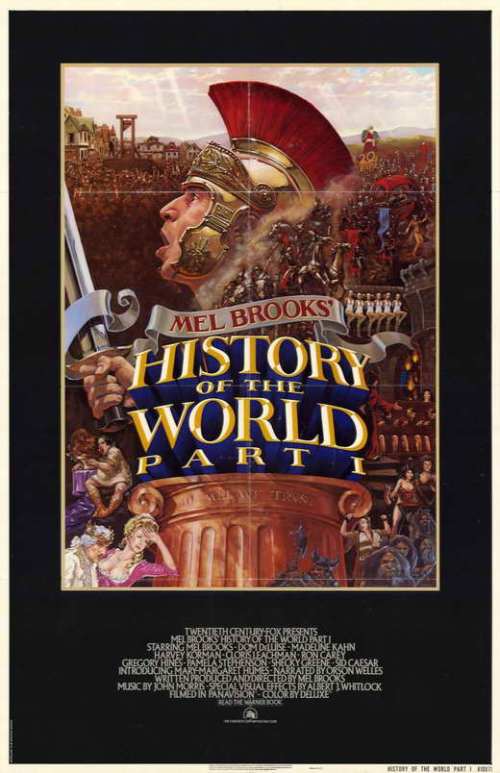
History of the World, Part I (1981)

By Richard Winters

My Rating: 3 out of 10

4-Word Review: Making historical events funny.

In 1979 Mel Brooks was riding high after directing 4 hit movies and as he was walking across a studio parking lot a man who had worked on his crew from his previous films asked him what his next project would be. Brooks, feeling the pressure to come up with something big and splashy, told him it was going to be about the history of the world. This film ended up being the result of that conversation although it’s hard to call it a movie at all since it’s really just a collection of vignettes dealing with 4 specific periods: The Stone Age, The Roman Empire, The Spanish Inquisition, and The French Revolution.

At first glance it’s almost shocking that something this overreaching could’ve been produced to begin with. Had anyone but Brooks approached the studio heads with this concept it would’ve been slapped down immediately and the person told not to come back until they had an idea that was more focused, but because of Brooks’ prior success these same executives decided to swallow their better judgement. Not only did they unwisely give it the green light, but they threw more money at it than any of his previous film budgets combined; a whooping 11 million, which all pretty much goes to waste.

It’s not like there aren’t a few funny moments here and there: the musical number during the Spanish Inquisition, the Last Supper parody, and the Jews in space all elicit a few chuckles, but the rest of it’s lame and corny like skits from some mediocre variety show. An overarching character that would’v been in all of the scenes was needed like a time traveler from the modern day who goes back and interacts with all the people from the time periods, which could’ve been a riot.

A lot of familiar faces pop in-and-out, but many of them are onscreen for only a few seconds. A better idea would’ve been to whittle down the cast list to only a handful of performers and then having them play the different roles in each time period instead of just introducing more stars into the mix, which only helps to give the already bloated production a very cluttered feel.

Not only does Brooks cast himself into too many of the film’s major roles, which makes the thing seem like a vanity project, but he also relies too heavily on his aging Hollywood friends in supporting parts instead of introducing a young vibrant talent into the mix that could’ve helped attract new, younger fans. It also doesn’t help that Richard Pryor was set to play a big role in this, but then just two days before shooting he suffered a serious accident that burned his face and forced him to bow out leaving Gregory Hines to replace him who is not nearly as funny or dynamic.

I couldn’t help but connect this thing with Bill Cosby’s mega-flop Leonard Part 6.  Apparently many people on the production crew of that film felt the material was subpar, but too afraid to approach Cosby, who was such a big star at the time, to tell him. I can only presume there were also people on the crew of this film who felt the same way, but didn’t want to jeopardize their careers by speaking up, which is too bad. While this movie did ultimately make money it was mainly during its first week and enthusiasm due to bad word-of-mouth quickly dwindled afterwards. Brooks reputation never fully recovered, which is why no one even a big star should be above constructive criticism, which  might’ve helped modify this clunker into becoming something better.

My Rating: 3 out of 10

Released: June 12, 1981

Runtime: 1 Hour 32 Minutes

Rated R

Director: Mel Brooks

Studio: 20th Century Fox

Available: DVD, Blu-ray

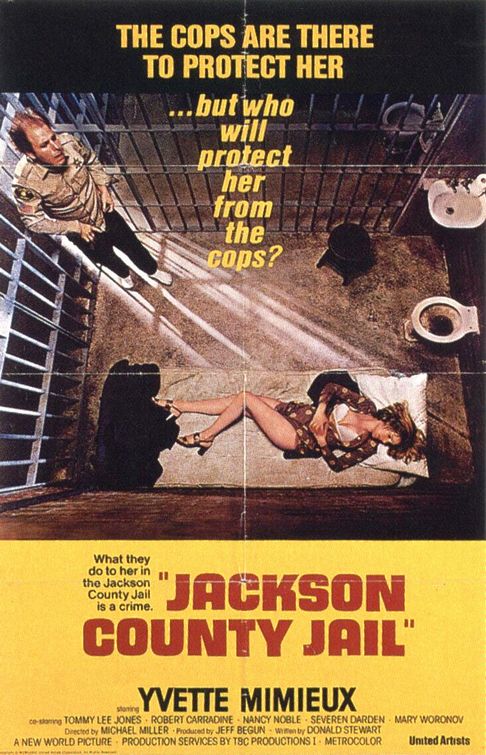
Jackson County Jail (1975)

By Richard Winters

My Rating: 5 out of 10

4-Word Review: Deputy rapes his prisoner.

Nothing seems to be going right in Dinah’s (Yvette Mimieux) life. She quits her job as an advertising executive only to come home to find that her husband (Howard Hesseman) has been cheating on her. She decides to travel across the country and back to her old digs in New York. Along the way she picks up two hitch-hikers (Robert Carradine, Nancy Lee Noble) who end up robbing her at gunpoint and driving off with her car and money. When she walks to the nearest town she finds that no one is willing to help her since, without any identification, she can’t prove who she is. The sheriff (Severn Darden) throws her in jail temporarily until her identity can be confirmed. While there she gets raped by one of the deputies (Fredric Cook) and then goes on the run with Coley (Tommy Lee Jones)  a small-time crook and drifter.

This is yet another Roger Corman produced cheapie made to capitalize on the exploitative low budget drive-in fervor that was so popular during the early to mid 70’s. This one fares better than most as it manages to retain its gritty tone throughout without ever resorting to campiness. The car chase doesn’t have any of the cartoonish or humorous stunts as most others did during that time period, but instead like in Cannonball! shows more of the potential ugly side to them by having several of the vehicles crash and blow-up in flames and killing those that were inside them, which helps accentuate the realism.

The police aren’t quite as inept either although I did find it curious that the cops in the helicopter once they found where Mimieux and Jones’s hideout was didn’t continue to chase the two via the air as they tried to escape down the road in their pick-up. The part where the cop shoots at Jones who collides on foot into a marching band is absurd too as no policeman with half-a-brain would fire into an open crowd as it’s too dangerous and would almost assure innocent victims getting hit.

Mimieux is adequate and the funky 70’s style compact car she drives in with its roundish flying saucer body and oversized steering wheel is a laughable relic. However, for someone whose lived in L.A. she didn’t seem savvy especially when she decides to pick-up two hitch-hikers, which is just asking for trouble, or naively unaware that the obviously drunken, leering cafe owner (Britt Leach) is only being ‘helpful’ so he can have a chance to pounce on her.

Jones is excellent in support, but I found it odd that despite being considered a ‘good guy’ he makes no effort to stop her rape, which he witnesses by being in the adjoining cell, but then when she kills the rapist by beating him over the head with a stool he reaches through the bars and stops her.

The film’s most interesting performance is Fredric Cook’s who plays the rapist. His film career never really took off and he spent most of his life working as an acting teacher, but here in his film debut he really shines. I liked the way his character starts out as a redneck dope who seems put in for comic relief and then quietly becomes menacing as he serves Mimieux her food, explodes into a sudden massive rage, and then after the act is committed becomes guilt ridden and even ashamed, which creates a very interesting portal into the mindset of most male attackers.

The second half unfortunately slows up creating boring segments when the pace and tension should instead be revved up. The wide-open ending offers no conclusion to Mimieux’s ultimate fate and the film’s message is vague and transparent.

My Rating: 5 out of 10

Released: April 2, 1976

Runtime: 1 Hour 24 Minutes

Rated R

Director: Michael Miller

Studio: New World Pictures

Available: DVD, Amazon Video

They Only Kill Their Masters (1972)

By Richard Winters

My Rating: 5 out of 10

4-Word Review: Dog turns on owner.

Abel Marsh (James Garner) is the police chief of a small west coast seaside town who’s put in charge of investigating a baffling case where a dog inexplicably turned on its owner and killer her. The clues though don’t match up convincing Abel that the dog is innocent and used simply as a ruse to cover-up an even more sinister crime.

This is the first of four films all written by Lane Slate to feature the character of Abel Marsh. All of the subsequent films featured the same small town setting and quirky themed murders, but where made for TV instead featuring Alan Alda in the role of Abel for Isn’t it Shocking and then Andy Griffith playing the part in The Girl in the Empty Grave and Deadly Game.

The mystery here has its share of intriguing elements and I liked the methodical pace, which is reminiscent of actual police work where the clues don’t just come easily and quickly. I also liked how the viewer remains just as in the dark about who did it as the investigator. The subplot involving the doberman is interesting as well and like in the film To Kill a Clown, which came out the same year, the dog ends up being the ultimate scene-stealer from his human counterparts.

Due to this being the last film made on MGM’s famous backlot many former stars from Hollywood’s golden age agreed to appear in small roles including Ann Rutherford in an amusing bit as a old-school secretary who can’t figure out how to work an electric type writer. The best bit though comes from June Allyson who doesn’t have any speaking lines until the very end where she gets a bravura-like finale similar to Betsy Palmer’s in Friday the 13th and even sports the same type of hairstyle as hers and sweater/pants, which makes it all the more ironic.

The thing though that I found annoying was the formulaic romance that starts almost immediately between Garner and Katherine Ross. For one thing the mystery could’ve worked just as well had Ross’ character not been in it at all, but if they did feel the need to throw in a romantic subplot it’s always more interesting when there’s some friction or resistance at first only to have it evolve into a relationship later versus making it a ‘love at first sight’ scenario, which is too quick and unrealistic especially when there’s a 15-year age difference between the two.

What gets even more aggravating is that after spending the night with her Garner then starts to suspect that she may know more about the crime than she lets on, so the next day he storms into her apartment and quite literally starts strangling her to get the info. Then when he realizes he may have jumped to the wrong conclusion he leaves her place in a huff without even bothering to apologize. Several hours later he sheepishly returns, but instead of slamming the door in his face she asks if he’s alright?!

Later near the end of the film she returns to his office and acts like somehow it was all her fault and seems to leave things open to rekindling the romance, but why? Unless she’s desperate (and she’s way too beautiful for that) or has extremely low self-esteem she should’ve ended things right when he attacked her because it was an obvious red flag and the fact that she doesn’t shows how dated and out-of-touch the film is in regards to modern day relationship dynamics.

The scenery is nice especially the Malibu location of the victim’s house and seeing it get burned quite literally to the ground is kind of cool too. However, the quirky elements don’t gel and overall the film ends up being transparent and flat.

My Rating: 5 out of 10

Released: November 22, 1972

Runtime: 1 Hour 37 Minutes

Rated PG

Director: James Goldstone

Studio: MGM

Available: DVD-R (Warner Archive), YouTube

Oliver’s Story (1978)

By Richard Winters

My Rating: 3 out of 10

4-Word Review: Adjusting to wife’s death.

It’s been 6 years since Oliver (Ryan O’Neal) lost his wife to leukemia and he’s still having a hard time learning to move on from it. He hasn’t been in a serious relationship since and his friends including his step father (Edward Binns) are pressuring him to start dating. Finally by chance he meets Marci (Candice Bergen) while she is out jogging. She is secretly an heiress to a massive fortune, which allows the two to connect due to their similar well-to-do upbringings, but when things start to get serious Oliver finds himself  resisting unable to cut the ties from his past and move forward.

This is definitely a sequel that nobody asked for and in fact both O’Neal and Bergen initially had no interest doing it. The original film worked because it centered on the couple and when you take away one of them you have only half a movie. Oliver on his own is boring and watching him learn to adjust to life as a single person is not compelling and no different than the hundreds of other movies dealing with the dating scene.

John Marley, who played Jenny’s father in the first film, refused to appear in this one because he was unhappy with how his name was going to be placed in the credits, so he got replaced by Edward Binns who seems to be playing a completely different character. Here the father-in-law and Oliverhave acquired a chummy friendship and even hang out together despite this never having been established in the first film. Ray Milland reprises his role as Oliver’s father, but gets portrayed in a much more likable way while in the first one he came off more as a heavy.

The film’s only interesting aspect is seeing how much the social norms have changed. Here being single is considered like a disease and his pesky friends are emboldened enough to set Oliver up on dates and openly telling him that he needs to ‘get out more’ even though by today’s standards the single lifestyle is much more prevalent and accepted and doing these same types of actions now by well meaning friends would be considered intrusive and obnoxious.

Having one of the women that he meets at a dinner party invite him back to her place despite barely knowing him is something not likely to occur today either. The way though that Oliver meets Marcie is the most absurd as he quite literally chases her down while she is jogging, which would scare most women into thinking that they had a crazy stalker on their hands.

On the production end the film is competently made with the springtime scenery of New York as well as shots of the couple’s trip to Hong Kong being the only thing that I enjoyed. The story though lacks punch and drones on with too many side dramas. O’Neal’s performance is good, but his chemistry with Bergen is lacking, which ultimately makes this a production that had misfire written all over it before a single frame of it was even shot.

My Rating: 3 out of 10

Released: December 15, 1978

Runtime: 1 Hour 30 Minutes

Rated PG

Director: John Korty

Studio: Paramount

Available: DVD, Amazon Video,  YouTube
To Kill a Clown (1972)

By Richard Winters

My Rating: 3 out of 10

4-Word Review: Couple harassed by veteran.

Timothy (Heath Lamberts) and Lily (Blythe Danner) are a couple suffering through a rocky marriage. In an attempt to try and save it they decide to rent a beach house for a summer where they hope the quiet seaside scenery can help mend the friction. Their landlord is Evelyn (Alan Alda) a crippled war veteran with two dobermans who resides in a large house next to theirs. Evelyn considers Timothy to be effeminate and ‘unfocused’ and decides to challenge him to a psychological game where he will put Timothy through the rigors of army training. Initially Timothy finds this challenge amusing, but the game becomes much harsher than he expected and when he tries to get out of it Evelyn won’t let him, which eventually leads to Timothy and Lily becoming hostages inside their own home where Evelyn’s two ferocious dogs guard them.

The film is based on the short story ‘The Master of the Hounds’ by Algis Budrys that appeared in the August 1966 edition of the Saturday Evening Post. The plot certainly has some intriguing qualities, but the pace is too laid-back and I spent much of the time rather bored with it. The tension comes in spurts and when it does get going it cuts away just as it gets interesting. The Timothy character is overly smug and to some extent I actually enjoyed some of the harassment that Evelyn gives him, which ultimately minimizes the ‘horror’ that the viewer is supposed to be feeling.

In the story the setting was supposed to be the Jersey shore and in the film it’s somewhere off the New England coast, but in actuality it was filmed in the Bahamas and in an attempt to mask the tropical surroundings they found one of the blandest looking beaches to film it on. The lack of scenery gives the film no visual flair and it ultimately comes off like something done on the cheap end by a director lacking talent of vision.

The only interesting aspect is seeing Alda, who was known throughout the 70’s and 80’s as being a very liberal, ‘sensitive’ male, playing someone who is the exact opposite and to a degree he does it well, but it could’ve and should’ve been played-up much more. Lamberts is good too, but it would’ve been better had the character been an actual army deserter, which would’ve then made the men’s contrasting personalities even more vivid.

Danner though, in her film debut,  comes off best by acting as a buffer between the two men. The dobermans though are the real stars and I wouldn’t have minded seeing more of them. In fact the film’s best moment involves one of them standing guard as it holds the frightened couple hostage in their living room and growling threateningly if one of them even moves their head in he slightest.

Unfortunately the action takes too long to get going and the whole thing gets misguidedly underplayed. I found the freeze-frame shots, which the film uses to transition from one scene to the next, distracting and overly artsy especially for a movie that is supposedly trying to be reality based.

My Rating: 3 out of 10

Released: August 23, 1972

Runtime: 1 Hour 44 Minutes (Reissued at 1 Hour 26 Minutes)

Rated R

Director: George Bloomfield

Studio: 20th Century Fox

Available: VHS

Fortune and Men’s Eyes (1971)

By Richard Winters

My Rating: 6 out of 10

4-Word Review: His life in prison.

Smitty (Wendell Burton) is a young first-time offender who’s sent away to the Canadian penitentiary for six months. He gets assigned to a cell with three other men: Rocky (Zooey Hall), Mona (Danny Freedman), and Queenie (Michael Greer). Queenie is an openly gay drag queen while Mona is a soft-spoken young man who likes to write poetry. Rocky is the tough guy who offers Smitty ‘protection’ if Smitty agrees to become his subordinate and do anything he asks including sexual favors. To avoid the harassment that he sees others getting that don’t have the same ‘protection’ he agrees, but eventually he grows tired of Rocky’s dominance and decides to challenge it.

The film is based on  a play written by John Herbert who also wrote the screenplay. It is based on actual experiences that he received when he was arrested for dressing in drag in 1947 and taken to a reformatory at the age of 20. The play, which was written in 1967 initially had a hard time getting produced due to the subject matter, but was eventually put on the stage by Sal Mineo who directed and also played Rocky while Don Johnson played Smitty and Greer, like in the film, played Queenie.

The film version though makes many changes to the story some of which I’m not sure I liked. The one thing though that I thought was excellent is that it was shot inside an actual prison, which helps add authenticity. As opposed to most movies which shoots things from outside the cell looking in this one captures everything from inside the cell, which makes the viewer feel like they’re locked in the jail with the rest of the men and gives one a true feeling of the claustrophobic prison experience.

The shock element may not be as strong as it once was. The scene where Rocky rapes Smitty in the shower as the camera fixates on the running faucets and we hear only Smitty’s cries may be a bit too stylized and even kind of hokey by today’s standards. The segment though where Mona is grabbed from behind by a brute and taken into a dingy cell where he’s gang raped while the guards look away was to me far more potent. A later scene dealing with a prisoner being taken to a back room and beaten by the guards could’ve been stronger had it been extended.

For me personally the most shocking element is seeing Smitty’s transformation from naive man who we the viewer can mostly relate too, to someone who becomes almost as bad as Rocky. However, I found it annoying that it’s never made clear what he did that got him into prison in the first place and his character arch would’ve been stronger had the film started with him in the outside world committing the crime and subsequently getting arrested.

Burton’s acting abilities don’t seem quite on par with the demands of the role. His blank-eyed stare and monotone delivery make him seem like a one-dimensional actor and he was most likely given the role simply because of his babyface. Greer though in many ways steals it as the flamboyant drag queen and the outrageous performance that he puts on during the Christmas show at the prison is quite memorable.

Spoiler Alert!

The film remains compelling, but is hampered visually by being done almost entirely in one setting. The ending though leaves open too many questions. Does Smitty ever get out? How does he behave once he does and how has his experiences in prison changed him? None of these things get answered, which to me made the film incomplete and despite some good dramatic efforts here and there unsatisfying.

My Rating: 6 out of 10

Released: June 15, 1971

Runtime: 1 Hour 42 Minutes

Rated R

Director: Harvey Hart, Jules Schwerin (uncredited)

Studio: MGM

Available: VHS