Category Archives: Movies with Nudity

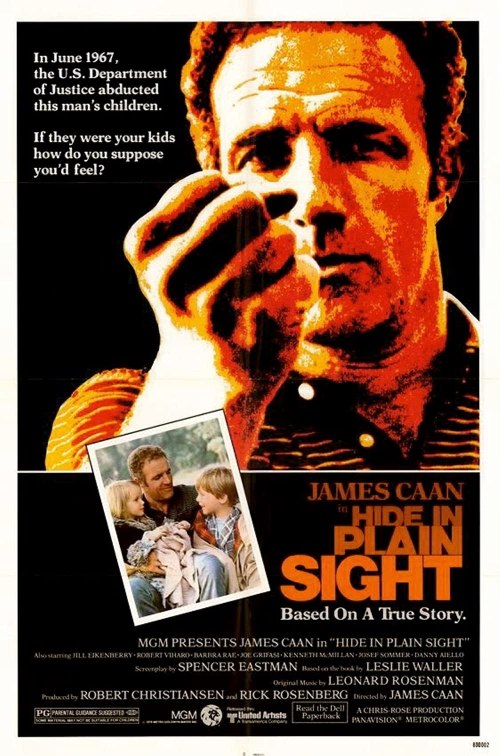
Hide in Plain Sight (1980)

hide

By Richard Winters

My Rating: 6 out of 10

4-Word Review: Searching for his children.

Thomas Hacklin (James Caan) is a divorced father of two children who has visiting rights to see his kids every weekend. One day when he arrives at his ex-wife Ruthie’s (Barbra Rae) residence he finds the home abandoned and no one around. He eventually learns that her and the kids have been put into the Witness Protection Program due to her remarriage to Jack (Robert Viharo) a gangster who qualified for the program when he became a state’s witness against the mob. Thomas’ efforts to find his kids prove futile and the authorities are no help, but he becomes relentless and hires a lawyer (Danny Aiello) to represent him in court, but even then the odds remain seemingly insurmountable.

The film is based on the novel of the same name by Leslie Waller, which in-turn was based on the actual experiences of Thomas Leonhard who one day in 1967 when he went to pick-up his kids for his weekly visitation found them gone and the house that they had been living in with his ex-wife Rochelle to have been abandoned. This then precipitated an 8-year crusade by Thomas to get them back, which proved to be a landmark legal battle, but on July 4, 1975 he was eventually reunited. The film though changed several things from the true story including adding in a subplot where Thomas gets followed by the mob and eventually leads to a violent confrontation. It also compresses the time span from 8 years to 18 months.

While I enjoyed the movie more than when I first saw it over 10 years ago the issues that I had with it during the first viewing remained the same. Most of it had to do with Caan’s, in this the only film that he directed, non-use of close-ups, which the studio heads complained about during the production. A good example of this is when Thomas and ex-wife are arguing on a public sidewalk the camera does not move-in, like in most movies, to allow us to hear what they’re saying, but instead pulls back, so they go further away, but what’s the point of seeing characters on the screen argue if we can’t hear what it’s about? Another scene has Thomas arriving at his ex-wife’s abandoned home, but instead of having the camera go inside with him as he enters it, it remains outside and then tracks around the home to the back door, which Thomas is seen leaving. This though lessens the impact as having the viewer visually witness the suddenly empty house would’ve been far more dramatic.

I did though like that many of the scenes were shot in Buffalo at the exact locations where the real-life incidents happened. The film reconstructs the look and feel of the 60’s quite nicely and many of the participants from the actual events coached the actors on how to perform their roles accurately. The acting is impressive especially by Viharo who’s mafia mobster caricature is right on-target. Kenneth McMillan is quite entertaining as a police detective who initially impedes Thomas’ efforts, but eventually has a change-of-heart. As with any great character actor, which McMillan clearly is, it’s what they add to the part that makes it interesting and here it’s his excessive eating with virtually each scene he’s in has him stuffing his face though I wondered how many takes were required to do each scene and if he ultimately overate and got himself sick while performing the role.

Spoiler Alert!

I was annoyed though with how certain fictional things that got added-in like Thomas’ dealings with the mob got played-down instead of up. The original script by Spencer Eastman called for a lengthy car chase and violent fist-fight, but Caan chose to take the subtle route making these moments less tension filled and possibly too slow and uneventful for some people to sit through. I was also amused how the actual reunion between the father and kids was different from the one in the movie where it’s portrayed as being a happy one. In real-life the kids disliked their father’s rules and ended up moving back with their mother showing how ironic life can be where you fight hard for something and then when you finally get it it ends up not being as great as you thought it would be.

My Rating: 5 out of 10

Released: March 21, 1980

Runtime: 1 Hour 32 Minutes

Rated PG

Director: James Caan

Studio: MGM

Available: DVD-R (Warner Archive Collection), Amazon Video

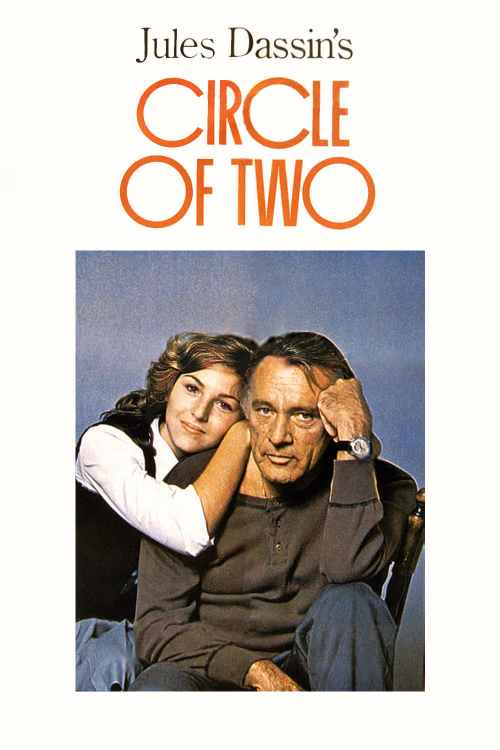
Circle of Two (1981)

circle3

By Richard Winters

My Rating: 4 out of 10

4-Word Review: Old man/young teen.

Ashley St. Clair (Richard Burton) is an aging painter of 60 who has lost his passion and hasn’t either sold, or attempted to do a painting in over 10 years. Sarah (Tatum O’Neal) is an unhappy 15-year-old who’s tired of dating guys her own age as she finds them to be immature and only interested in one thing…sex. She then meets Ashley, first after she sneaks into an adult theater to watch an X-rated movie and then later at a coffee shop. Despite the extreme differences in their ages they still connect through their mutual interest in art. Ashley even begins to paint again and the two share an enjoyable, but platonic friendship. However, once Sarah’s parents (Robin Gammell, Patricia Collins) find out about they put an immediate stop to it by locking her in her room and and in protest Sarah refuses to eat.

Based on the novel ‘A Lesson in Love’ by Marie-Terese Baird this film marks the final one to be directed by famed Greek director Jules Dassin and in many ways this may be the weakest one that he did. The whole way the relationship gets going is very rushed and forced. Bumping into the same person twice in one day, in the big city of Toronto, doesn’t seem likely and then having Sarah fall so head-over-heels for him to the point she starts spouting out the ‘L’ word quite quickly is dingy. A more plausible scenario would’ve had Ashley teaching an art class (he no longer paints, but still has to bring in an income somehow) of which Sarah attends and then through the course of several months a bond is slowly created.

The sex angle is a complete mess. Fortunately Ashley makes no moves on her, but Sarah does aggressively begin to come-on to him and at one point stands completely naked in front of him. In her autobiography ‘A Paper Life’ O’Neal expressed great discomfort in having to do this scene though I didn’t detect this, but maybe that’s just because she’s such a great actress, but either way the scene was completely unnecessary.  It’s also inconsistent with the character as she broke-up with her boyfriend Paul (Michael Wincott) because he was trying to pressure her into having sex and she was still a virgin, so if she didn’t want sex with a guy her own age why would she want it with one who was way older and is this era of pre-Viagra how could she even be sure he could do it? A better scenario would’ve had sex never coming into play and it was simply their other mutual interests that connected them and it was only outsiders, like Sarah’s parents, that presumed the worst when it really wasn’t occurring.

The one bright spot is the acting with both leads being superb. O’Neal proves that her strong and memorable performance in Paper Moon was no fluke and the only thing that keeps the film watchable. Burton is excellent as well. Although he usually has a strong presence here he wisely takes a step back playing someone who’s weak and tentative, which in many ways reflected his own career at the time where many felt he was washed-up and the years of alcohol abuse certainly did age him making him look even older than 60 when he really wasn’t, and thus a perfect fit for the part. The only issue here is that Tatum seems way too mature for 15 both physically and personality-wise and having her play someone who was 17 would’ve been more appropriate.

While the film remains marginally compelling the talky ending in which Burton goes on a long speech like a tenured professor lecturing to a college class practically ruins it. I was also frustrated that we never learn much about the old man, played by George Bourne Sr., an elderly gentleman who agrees to let Ashley paint his portrait for a fee, which in-turn revitalizes his career and I felt this character should’ve been in it more, or at least a few scenes showing what they talked about as his portrait was being done.

Tatum’s abstaining from all food plays-out poorly as well. For one thing she doesn’t change physically, so we’d never know she wasn’t eating if it weren’t mentioned. She then travels to New York and I was fully expecting her to pass-out in the middle of crowded Grand Central Station from a lack of nutrients, but apparently in-between time she had eaten something, but this should’ve been shown and the fact that it isn’t is a sign of shoddy film-making, which despite Dassin’s previous output, this whole movie ends up pretty much being.

My Rating: 4 out of 10

Released: May 7, 1981

Runtime: 1 Hour 46 Minutes

Rated PG

Director: Jules Dassin

Studio: World Northal

Available: DVD-R, Amazon Video

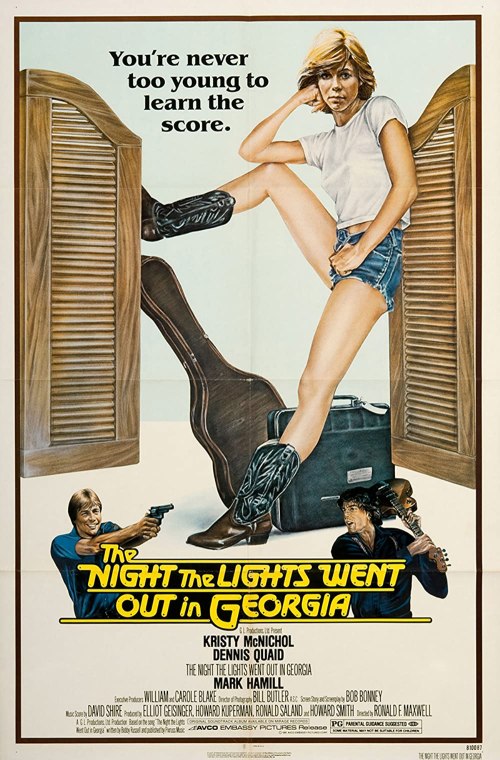
The Night the Lights Went Out in Georgia (1981)

night

By Richard Winters

My Rating: 3 out of 10

4-Word Review: Not like the song.

Travis (Dennis Quaid) is an aspiring singer with some talent, but little discipline. He’s achieved one hit song,but his drinking and partying keeps getting him in trouble. Amanda (Kristy McNichol) is his younger sister and though she’s only 16 she is more mature and responsible. She tries to manage Travis’ career by getting him to Nashville, so he can cut a record and get an agent, but his wild ways and their lack of funds, keeps preventing them from getting there. Eventually he gets arrested for public drunkenness and in order to pay the fine is forced to get a job at a local bar. It’s there that he meets Melody (Sunny Johnson) and tries to pursue a relationship, but becomes aware that Seth (Don Stroud), the deputy sheriff, has a thing for her as well and he won’t allow any other guy to talk to her as he’ll fly into a jealous rage and warns Travis of this, but Travis being reckless as always doesn’t let this phase him. As this goes on Amanda begins a romance of her own with with Conrad (Mark Hamill) who works as a state trooper.

Although in theory it’s ‘inspired’ by the song of the same name it technically doesn’t have anything to do with it. In other films that were made from songs like Convoy, Harper Valley PTAand Ode to Billy Joethe central theme was maintained and then expanded on, but here we don’t even get that. The song, with lyrics written by Bobby Russell and then sung by his then wife Vicki Lawrence, had to do with a man getting executed for killing another man who had an affair with his wife even though it was really his kid sister that did the crime. A plot like that could’ve had great potential for being an interesting movie, so why the producers didn’t just go with that original concept I don’t know, but it seems like a travesty for them to retain the song title and I’m surprised the producers of the record didn’t sue.

The plot, as it is here, is limp and uninspired. It basically feeds off of a lot of predictable shenanigans like Travis getting caught in a hotel bed with another man’s wife and then being chased around both on foot and in a vehicle until both he and Amanda are able to get away. In between we get treated to a lot of songs, which normally I’d say was nothing more than filler, which it still is, but since the rest of it is so lame, it comes off more like the best thing in it. Quaid and McNichol do all of their own singing and even wrote their own lyrics and they give energetic performances when onstage, so if you decide to see this thing then I’d suggest fast-forwarding through the rest of it and just stick with the music and you might be pleased.

The acting by Quaid is excellent and Don Stroud is great as the nemesis. McNichol is alright, at least when she’s singing, but otherwise gets pushed to the background and with her super short hair and nagging personality lacks sex appeal and at times looks almost like she could’ve been Quaid’s kid brother instead. The fact that they’re so close and do everything together would make one wonder if there’s something incestuous going on. In the more innocent times of the early 80’s maybe this wouldn’t be the first thought that would pop into people’s minds, but these days I’d suspect others would be wondering the same thing. There’s also no explanation for what happened to their parents. At one point McNichol mentions that she’s orphaned, so there really needs to be a backstory showing of what caused that.

Spoiler Alert!

The biggest gripe though is with the ending in which Travis gets shot and killed by Seth, who also dies in the gunfight. It then concludes with McNichol getting with Hamill, who quits his job as the state trooper, and the two drive-off in her rickety old truck to God knows where. Since the story was mainly about the brother/sister relationship then I felt that’s where it should’ve ended with them in Nashville either getting the record deal, or not. The Hamill character is bland and seemed to be added in with no other purpose, but to extend the already anemic plot. There’s also the fact that he was 29 at the time while McNichol plays someone who was only 16, so them getting into a relationship doesn’t exactly look kosher. Granted the age of consent in the state of Georgia is 16, so I guess in the eyes of law it’s okay, but many today will consider this kind of romance to be cringey, and I can’t help but wonder if that’s the main reason why this film has never had a proper DVD release nor any streaming option.

My Rating: 3 out of 10

Released: June 5, 1981

Runtime: 1 Hour 52 Minutes

Rated PG

Director: Ron Maxwell

Studio: AVCO Embassy Pictures

Available: DVD-R

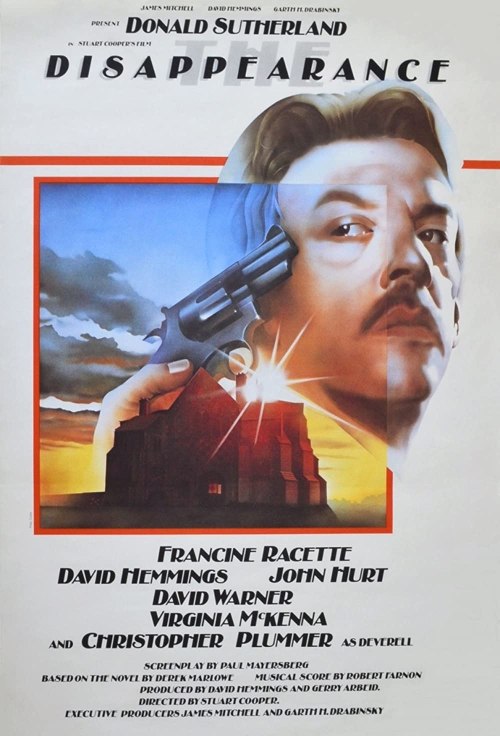
The Disappearance (1977)

disappearance

By Richard Winters

My Rating: 7 out of 10

4-Word Review: Where is his wife?

Jay Mallory (Donald Sutherland) is a professional assassin who works for a secret organization that contracts him out to do hits all over the world. After returning home from his latest assignment he finds that his wife Celandine (Francine Racette) is not there. Since they had a tumultuous relationship he initially presumes she left on her own accord, but then his friend and fellow hit man Burbank (David Warner) informs him that her disappearance may have something to do with his last hit. The organization that employs him now calls with another assignment, but this time they’re reluctant to give any details, which is unusual. Jay is afraid he’s being set-up as Burbank told him that the company is known to ‘retire’ those that are deemed no longer useful or trustworthy. He decides though to go through with the assignment as he’s curious how it will play-out and confident enough in his ability to get out of any jam, but soon finds himself faced with an entangling twist he never expected.

The film is a fascinating portrait of what can be done with creative direction. Stuart Cooper, who’s not exactly a household name and in fact this was his last theatrical film until 2010 when he did Magic Man, lends some interesting directorial touches that makes the story and characters more interesting than they might otherwise. What I especially liked was the non-linear narrative in which the movie cuts back and forth between the past to the present day. These types of storylines are typically frowned upon by Hollywood studios as they’re considered to be ‘too confusing’ for mainstream audiences to follow, but I had no such difficulty and felt it allowed in added nuance that would not have been present had the plot been approached in the conventional way. Nonetheless when the film tanked at the box office upon its initial release the studio insisted that the film be re-cut where the story would be presented in the standard linear format, but this version did even worse, so fortunately for the DVD/Blu-ray release it was brought back to its original way and labeled as being the ‘director’s cut’ though Cooper actually had no input on it, but eventually approved once he viewed it.

It’s also highly atmospheric particularly with the way it captures the cold, wintry climate of Montreal in the dead-of-winter. Having been born and raised in Minnesota I can tell a fake winter scene done on an indoor sound stage using artificial snow within seconds, but here the cold, including the mounds of snow drifts and nasty hollowing wind, is quite vivid and helps to symbolize the cold nature of the characters and the business they’re in.

I was a little more lukewarm with the acting. Sutherland can certainly be an outstanding leading man, but he seems too kind and sensitive for a person making a living killing others for money though I did like the scene where he plays memory games with his wife while at home, which brings out how crucial paying attention to detail is for his line of work. The supporting players are all familiar faces though I felt Warner was a bit wasted and underused. Virginia McKenna, best known for her starring role in the classic Born Free, is seen for only a brief bit though her interaction with Sutherland is quite pivotal while Christopher Plummer doesn’t appear at all until the final 15-minutes, but still manages to come-off with a memorable presence.

Spoiler Alert!

The film’s biggest downfall though is with the ending, which becomes one twist too many. Up until that point the twists had been a logical fit that made sense when you went back and thought about it. Then at the very end Sutherland gets shot and killed while walking home from the grocery store, but it’s never shown who did it, or why. Maybe it was the secret organization that wanted to ‘retire’ him, but this needed to be shown and explained. Just leaving the viewer hanging with a violent, but vague scenario isn’t satisfying and cheapens the rest of it.

My Rating: 7 out of 10

Released: September 17, 1977

Runtime: 1 Hour 31 Minutes

Rated R

Director: Stuart Cooper

Studio: Trofar

Available: DVD (Region 2), Blu-ray

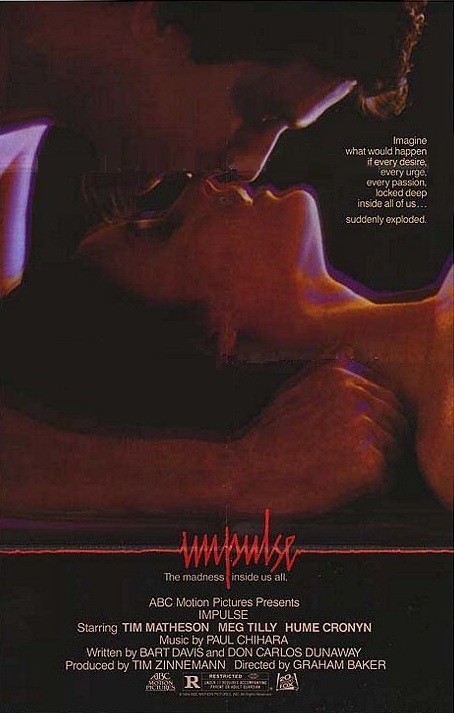
Impulse (1984)

impulse

By Richard Winters

My Rating: 3 out of 10

4-Word Review: The townspeople act crazy.

Jennifer (Meg Tilly) and her boyfriend Stuart (Tim Matheson) return to the small town she grew up in to help care for her mother (Lorinne Vozoff) who suddenly and quite impulsively shot herself in the head while talking to Jennifer over the phone. When they arrive they find the people behaving in strange ways by acting on their inner impulses without any social restraint. Stuart, who is a chemist, believes it may have something to do with what’s in the water, but when he tests it he finds nothing unusual. The people though continue to behave in a more aggressive manner where even the kindly old doctor (Hume Cronyn) who was looking after Jennifer’s mother in the hospital begins showing homicidal tendencies. The couple fear they might not be able to get out of there alive and begin to suspect that the ultimate cause has some connection to the earthquake that shook the town just days before they arrived.

The premise is certainly intriguing and there are a share of weird moments, but director Graham Baker approaches the material in the wrong way. The original screenplay by Nicholas Kazan, which was entitled ‘Animals’, was intended as a horror film and closely inspired by George Romero’s similarly themed The Crazies, which came out 11 years earlier. For whatever reason Baker didn’t pursue it with a horror bent and that in my opinion is where it all goes wrong. It’s hard to actually know what genre to place it in. At times it seems a little bit like sci-fi and other moments like a drama, but either way the tension is lacking. You see the townspeople doing crazy stuff, which initially piques your interest, but then it goes nowhere with it. The weird acts just continue to go on and on until it becomes redundant and ultimately boring until you really don’t care what the explanation is behind it.

Spoiler Alert!

It’s not until 45-minutes in before even gets slightly suspenseful when Jennifer finds herself trapped in a burning garage, but even this goes by too quickly. There was one moment where Jennifer’s former boyfriend, apparently jealous at seeing her with Stuart, decides to bend his own fingers back, as a sort-of self mutilation, until they break, which I found genuinely shocking and cringy. However, there are other moments, which I found to be unintentionally funny making me believe it might’ve worked better as a quirky comedy.

The ending though is the most annoying. The explanation for why this all occurred is that chemicals from a nearby toxic waste dump got into the facility that produced the milk that the townspeople drank. The leak apparently caused by the earthquake that jostled one of the overhead pipes that then leaked the toxins into the milk vat. Since Jennifer didn’t like the milk she wasn’t affected, but I felt it was a stretch that all 900 of the other people in the town did drink it, as there are many folks who aren’t into milk, so there should’ve been others like Jennifer, who didn’t behave nutty instead of her remaining the only normal one.

What I found really stupid though is that the movie acts like 900 people suddenly dying in a town is apparently ‘no big deal’ and the rest of the country just ‘moves-on’, which I found preposterous. There is simply no way the media would let something like this go unchecked and the rest of the nation would be demanding answers and a federal investigation. It would become the news story of the year if not the decade and something that would be heavily talked about.

Somebody would have to be held accountable at some point, which then brings up the final issue of who the hell was the organization that dropped the crop dusting poisons onto the town via airplanes that ultimately is what killed everybody? The movie doesn’t bother to answer this, which is really frustrating making the whole thing a big build-up to nothing and not worth anyone’s time.

End of Spoiler Alert!

On a lighter note I couldn’t end this review without mentioning Tim Matheson. As an actor I found his performance here to be incredibly dull. Granted the character he played was benign to begin with, but he certainly didn’t do anything to make him interesting. However, with that said, his bare ass steals it. Many ass aficionados have felt, and even debated, that Dabney Coleman’s bare behind seen in Modern Problems wins the prize for best ass put onscreen in a Hollywood movie, but Matheson’s exposed tush, seen at the 17:49 mark, definitely deserves honorable consideration.

My Rating: 3 out of 10

Released: September 28, 1984

Runtime: 1 Hour 31 Minutes

Rated R

Director: Graham Baker

Studio: 20th Century Fox

Available: DVD-R, Blu-ray

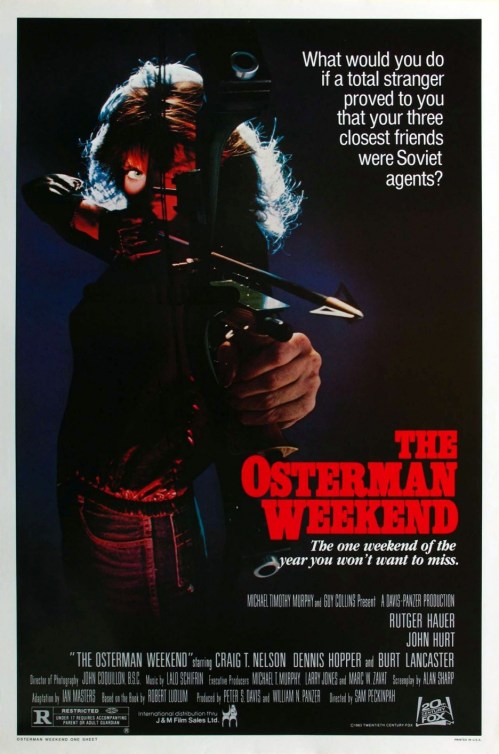
The Osterman Weekend (1983)

osterman1

By Richard Winters

My Rating: 7 out of 10

4-Word Review: His friends are spies.

Based on the 1972 Robert Ludlum novel of the same name the story centers around John Tanner (Rutger Hauer) a controversial host of a TV show where government officials are interviewed and many times put on the spot by Tanner who harbors anti-establishment political leanings. Maxwell Danforth (Burt Lancaster) is the director of the CIA who along with fellow agent Laurence Fassett (John Hurt) have uncovered a Soviet spy network within the US known as Omega. The decision is made not to arrest the three members (Craig T. Nelson, Dennis Hopper, Chris Sarandon) that have been identified as the spies, but instead try to get one to turn on the others and thus expose the organizations without tipping-off the KGB that they were aware of it all along. Since Tanner went to college with the three men and plans to have a weekend get-together with them at his place he gets chosen by Fassett to carry-out the trap where he’ll try to get one of his friends during the two-day stay to turn on the others. Tanner initially resists, but eventually agrees and has his whole house rigged with secret cameras and microphones, so the CIA is fully aware of everything that goes on, but ultimately Tanner begins to suspect that things may not be as they seem.

This was director Sam Peckinpah’s final film and 5 years after releasing his last one ConvoyHe was already quite ill due to effects of substance abuse and had to take frequent naps during the shooting day, but still managed to get the movie released on-time and within budget. Many have felt this was one of his weaker efforts, but I came away enjoying it despite the fact that Peckinpah despised the story and the Ludlum novel of which it was based and only agreed to the it because he needed the work. What I liked best was his patented use of slow-motion photography. Here I felt it came into use in excellent ways especially during the car chase. Most chase sequences in movies can get confusing because it’s usually done at fast speeds making it hard to follow and many times done with jump cuts, but here because it gets slowed down it made it more dramatic particularly with the crashes.

Admittedly some of his other directorial touches were a bit odd. The opening sequence showing two naked people in bed together making love, which was shot on video tape and has a romantic music score, making it seem like a soft core porn flick and had many of members of the film’s test audience confused and even walking out in disgust. There is a surprising level of nudity, including seeing Cassie Yates topless, that I didn’t feel was necessary. There’s also touches of humor that I didn’t care for either. Apparently this was Peckinpah’s attempt to balance the violence, but it hurts the tension. The producers didn’t like the comical bits either and cut most of them out when Peckinpah got fired during post production, but a couple do remain, which are amusing, like when Hurt has to be pretend on-the-spot that he’s a television news reader giving an impromptu weather report, but still out-of-place for this type of story.

Many critics complained about the elaborate plot Roger Ebert stated in his review that it ‘made no sense’ and caused him to become ‘angry at it’ as a result. Vincent Canby of the New York Times described it as ‘incomprehensible’ and Dave Kehr of the Chicago Reader labeled it ‘a mess’. I didn’t have such difficulty following it and although it’s a bit intricate it isn’t really all that confusing as long as you pay close attention and the twists that do occur I found enjoyable and many times was already predicting. My one complaint was be the way Tanner gets so easily persuaded that his friends, people he’s known for a long time and is very close to, are spies and he immediately turns against them. This is also a man that is supposedly ‘anti-government’, so you’d think he might like the fact that his friends are spies. A good way to have avoided this was having the character not hosting a liberal talk show, but instead a conservative one where Tanner would be a patriotic, pro-American type guy and thus making his acceptance of what the CIA agents tell him more plausible.

It’s interesting seeing Hauer, who usually plays villains, being a good guy, while Lancaster being a perennial protagonist, mixing it up here as a baddie. Both play against type well and the supporting cast has their share of moments too including Craig T. Nelson as a judo fighting expert and Hopper, who should win the award for best nervous expression. In all though it’s Helen Shaver that steals it as Hopper’s cocaine addicted wife. She’s not likable in any way and actually quite annoying, but she definitely stands-out with has a few choice moments.

Spoiler Alert!

I will admit that the ended, where Tanner tries to out the CIA director during an interview on his TV-show, doesn’t work and becomes one twist too many. Having Hauer simultaneously speak on-the-air in his studio and then show-up at the same time at Hurt’s hide-out didn’t seem realistic. Apparently this occurred because the show was taped early and only given the illusion that it was done live, but how they were able to pull all that off is a stretch and having his friend Nelson suddenly become a seasoned in-studio director when that wasn’t his job otherwise didn’t jive either. It’s not enough to ruin everything that came before it, which I overall enjoyed, but it’s still a lame ending either way.

My Rating: 7 out of 10

Released: September 30, 1983

Runtime: 1 Hour 43 Minutes

Rated R

Director: Sam Peckinpah

Studio: 20th Century Fox

Available: DVD, Blu-ray, Amazon Video, Fandor

A Wedding (1978)

wedding2

By Richard Winters

My Rating: 7 out of 10

4-Word Review: Guests at wedding party.

Muffin (Amy Stryker) marries Dino (Desi Arnaz Jr.) at a wedding ceremony that is non-eventful. However, during the reception afterwards, held at the mansion of Dino’s family, the Correllis, everything begins to go wrong including having the family’s elderly matriarch, Nettie (Lillian Gish) promptly die just as the guests arrive. Snooks (Paul Dooley) and Tulip (Carol Burnett) are the parents of the bride, while Buffy (Mia Farrow) is Muffin’s jealous older sister. During the party Buffy lets Dino know that she’s pregnant with his baby, which sends the family into an uproar once word gets out. Meanwhile Mack (Pat McCormick), the cousin of the groom, makes it known that he’s ‘madly in-love’ with Tulip and wishes to have an affair with her. Tulip at first resists, but then devises a scheme where the two can meet in 2-weeks, at a location in Tallahassee, Florida under the ruse that Tulip will be going to visit her sister who lives there.

While director Robert Altman made some great movies and revolutionized movie-making with his over-lapping conversations technique, he did also produce a few duds. Most of them came during the 70’s when he was given too much free rein to make whatever he wanted in however way he wanted to do it, which culminated in a lot of over-indulgence. This one though, which came right in the middle of his down cycle, is one of his better efforts The idea came as an accident as he was tired of being hounded by a reporter asking, while he was still working on finishing up on 3 Women, what his next project would-be and he joked that he was set to ‘film a wedding’, which at the time had come into vogue for people to shoot the weddings of their family members in a home movie style. Later that night, after speaking with the reporter, he partook in a drinking session with the crew of 3 Women, where they discussed the possibilities of making a movie about a wedding where ‘everything would go wrong’ and by the end of the night he had already come-up with an outline for his script.

This film though, like with all of Altman’s movies, does come with its share of detractors. Gene Siskel in particular did not like the characters, who I admit are a cliche of the nouveau riche and too easy a satirical target. He also complained that there was no one likable, which is true, though films where one person in a large group somehow manages to rise-above-the-fray and being morally virtuous when all the rest aren’t, is unrealistic and having an amoral climate such as here where everyone gets dragged down to the same level as everyone else makes more sense.

The edginess of the comedy is dated as well as what was considered ‘pushing-the-envelope’ at the time, like introducing the characters who are secretly gay, smoke marijuana on the sly, have had multiple sex partners, or (gasp) had sex outside of marriage, is no longer even remotely the scandal, even amongst the most conservative, as it once was, so to enjoy the film one must put themselves in that time period to totally appreciate it. With that said, it still works beautifully. It’s amazing, when considering the massive amount of characters and intersecting story-lines, how well it flows and it’s never confusing, nor do you ever lose track of any of the characters, or their issues, even if they’ve not been shown for a while. The humor gets exaggerated just enough for comic effect, but always within the realms of reality, which is what I really enjoyed about it, is that this could easily remind people of their own real-life weddings, and wedding parties, that they’ve been through.

The cast is splendid and perfectly game to the script’s demands with many of them allowed to freely ad-lib. Howard Duff probably gets the most laughs as the chain-drinking doctor of a dubious quality and Viveca Lindfors as a caterer who becomes ill, takes a pill, and then breaks-out into a loud song during the reception. Burnett is superb as a middle-aged housewife looking for more excitement in her life while also juggling the difficulties of raising a promiscuous daughter and Paul Dooley is quite enjoyable as her brash, and never shy to speak-his-mind husband. I also got a kick out of Amy Stryker, who was cast on-the-spot simply because she wore braces and resembles a young Burnett in many ways and was therefore perfect to play her daughter. Though the ultimate scene stealer is Mia Farrow, who although well into her 30’s at the time, looks amazingly still adolescent-like and pulls off the part of a young daughter quite convincingly. She utters very few words, but makes up for it with her shocking topless scene (she looks great) and the bit where she openly tries to count everyone she has slept with to the stunned silence of the others, including her parents, in the room.

wedding3

My Rating: 7 out of 10

Released: September 12, 1978

Runtime: 2 Hours 5 Minutes

Rated PG

Director: Robert Altman

Studio: 20th Century Fox

Available: DVD

Melvin and Howard (1980)

melvin1

By Richard Winters

My Rating: 7 out of 10

4-Word Review: Melvin meets Howard Hughes.

The film is based on the true story of Melvin Dummar (Paul Le Mat), who on one night in December, 1967 came upon what he thought was a homeless man (Jason Robards) on the side of the road of a lonely desert highway after he parked his pick-up in order to take a pee. He gives the man, who is banged-up from a motorcycle stunt gone wrong, but who refuses medical attention, a lift and they have a long conversation as he takes the man to the Desert Springs Hotel in Las Vegas. During the trip he admits to being Howard Hughes, who at the time was one of the richest men in the world. Melvin does not believe him initially and goes about his life working odd jobs including that of being a milk man. He lives with his wife Lynda (Mary Steenburgen) and daughter Darcy (Elizabeth Cheshire) in a rundown mobile home, but Lynda leaves him and becomes a stripper. Melvin marries another woman named Bonnie (Pamela Reed), but his financial troubles continue until he receives an envelope stating that he’s been given $156 million from Hughes in his final will and testament. Melvin thinks his struggles are finally over, but they’re just beginning as he must go to court and defend himself from those who feel that the document was a forgery.

The star of this film is Jonathan Demme’s superb direction. He first directed while working under Roger Corman and doing a couple of cheap exploitation/drive-in flicks before branching out on his own with the quirky Citizens Band that had plenty of potential, but didn’t quite gel. This one clicks from beginning to end and helped greatly by the Academy Award winning script by Bo Goldman. I really enjoyed the dry, offbeat humor with the funniest moment being inside the little white chapel when Melvin decides to marry Lynda a second time after she gets pregnant. The scene where Lynda almost gives an elderly man (played by Herbie Faye in his final film appearance), who was acting as a witness to the proceedings, a heart attack when she kisses him after the wedding is over, s hilarious as is Melvin and Lynda working as witnesses to other weddings that go on there and being kissed, sometimes quite sensuously, by the other brides and grooms. The film also shows a good understanding of working class people, showing their struggles in life without ever demeaning them. The on-location shooting in both Utah and Nevada where many of the real-life events happened gives it a nice, gritty feel and look.

While I’ve complained about Paul Le Mat’s acting in some of my other reviews his performance here is perfect in a role he was born to play. He looks very much like the real Melvin Dummar, who can be seen briefly standing behind the counter at a bus terminal, and even more ironically is that now, in the year 2022 with his gray beard and hair that he sports as seen in pics from his twitter account, exactly like Howard Hughes in this film. Steenburgen, who netted the Oscar for Best Supporting Actress, is a lot of fun particularly when she strips off her clothes and walks around fully nude in a public bar in a scene that had to be shot 9 different times as she was so nervous doing it. Dabney Coleman, in a small bit near the end, is quite good as the cynical judge, but I was disappointed that Gloria Grahame is given only one word of dialogue. Supposedly she had more lines, but her scenes got cut, but why bother to bring in a famous Academy Award winning actress if you’re not really going to use her?

My complaint comes mainly with the TV game show that Melvin and Lynda enter that works as a talent contest and called ‘Easy Street’. It was meant to be a hybrid of the ‘Gong Show’ and ‘Let’s Make a Deal’ where a contestant does some sort of act showcasing their talents and if the audience is pleased with it the contestant wins a prize by choosing what’s behind one of three doors. The problem here is that it’s made too look too easy as Lynda’s tap dancing should’ve gotten her booed off of the stage instead of cheered. Having them get lucky and win a big prize, $10,000, negates the hardship theme. It doesn’t propel the plot either as Melvin quickly misspends the money and they end up in the exact same situation there were in before with Lynda walking out on him, for a second time, which comes-off as redundant. The satirical elements of the game show isn’t played-up enough and the segment is more surreal than amusing.

I also felt the opening sequence where Melvin picks-up Howard should’ve been saved until the end. In the real-life event there was speculation that Melvin was a part of the ruse as his second wife Bonnie had worked for a magazine called ‘Millionaire’ that had access to Hughes memos and signature and some had felt that she had used this inside knowledge to forge the will, which was rife with spelling errors and other discrepancies. The film though doesn’t bring any of this up and acts like Melvin is totally innocent where as adding in some nuance where the viewer isn’t completely sure if Melvin is complicit could’ve added some interesting intrigue and then having the scene where he picks-up Howard, showing that he was telling the truth after all, be the surprise reveal instead of giving it all away right at the start. The title is also misleading. Makes it seem like it’s going to be some sort of buddy movie when really Howard is in it only at the start and then pretty much disappears.

My Rating: 7 out of 10

Released: September 19, 1980

Runtime: 1 Hour 35 Minutes

Rated R

Director: Jonathan Demme

Studio: Universal

Available: DVD, Blu-ray

Rapists at Dawn (1978)

rapists1

By Richard Winters

My Rating: 7 out of 10

4-Word Review: Teen boys assault women.

Rubiales (Manuel de Benito), Quinto (Daniel Medran), Rafi (Bernard Seray), Cana (Cesar Sanchez) and Cana’s pregnant sister Lagarta (Alicia Orozco) roam the streets of Barcelona, Spain looking for young women to assault. The boys live on the poor side of town and are from abusive home lives with little future except working boring, low paying jobs. Feeling that society has ‘discarded’ them they they take out their hostilities on the pretty women that they meet. They pick their victims at random usually as they spot them getting out of their cars and go walking into their schools many times while in front of the victim’s family member who’ve just dropped them off. They then take the women to an isolated area and proceed to gang rape them while Lagarta acts as the look-out. The police are aware of the crimes, but seem helpless to do much about it. When they catch the boys in the act and try to arrest them the boys manage to escape making them confident that they can’t be stopped.

While films like I Spit on Your Grave and Irreversible get all the attention as being the ‘last word’ in rape movies, this one, if it was better known and more attainable, would trump those. The rapes here are graphic, prolonged and quite violent. Some will complain that it’s exploitative while others will argue that if you’re going to show rape for the violent crime that it truly is then it must be captured in all of its unpleasantness and toning it down for the sake of good taste does a disservice. Personally I found the brutal nature to be effective as I came away feeling really sorry for the victims, as it’s captured in such a real way you can barely see the acting and instead start to consider it more like a graphic documentary.

This movie also handles the aftermath in an interesting way by examining the debilitating effect the crime has on the victim psychologically and how they become like a different person. They’re outgoing and well-adjusted beforehand and then afterwards depressed, angry, and even ashamed. They turn sullen and anti-social to both their friends and family making it seem like they’ll never be the same again. The film also analyzes what happens when one of the women becomes pregnant, something that I don’t remember being touched upon in other rape films, and how the mother of the victim insist, due to religious reasons, that she keep the baby and not abort it, making her seem as cruel as the gang.

The thuggish boys are portrayed in an intriguing multi-dimensional way too. While they’re cocky when out and about they recoil and become like victims themselves when at home and dealing with their abusive fathers. I did like too that in their own twisted way they have ‘limits’ or  a ‘code of morality’ albeit a very weird one. A great example of this is when Lagarta becomes shocked when the boys continue to penetrate one of the victims even after she has clearly died. Normally Lagarta had no problem seeing them violently molest the women, but when one of them actually gets killed during the attack and the boys continue the assault it’s only then that she feels things have ‘gone too far’.

It’s hard to say what genre to put this one into. It’s not really a horror film as none of the women become Rambo-like by packing a big gun and going on a revenge tour against their assailants, which although emotionally satisfying isn’t realistic If anything it brings out how there are no easy answers, which makes it even more horrifying, but still thought provoking.

My Rating: 7 out of 10

Released: May 3, 1978

Runtime: 1 Hour 33 Minutes

Not Rated

Director: Ignacio Iquino

Studio: Ignacio Ferres Iquino

Available: DVD-R

Hysterical (1982)

hysterical1

By Richard Winters

My Rating: 1 out of 10

4-Word Review: Ghostly witch haunts lighthouse.

While Casper (Bill Hudson) has had success writing racy novels he longs to author something of a serious quality and thus uproots out of New York and drives across the country to Oregon where he takes-up residence in a town called Hellview. It is there that he rents a lighthouse as he feels it’s secluded locale will give him the quiet that he needs to complete his book. However, he’s unaware that the place is haunted by Venetia (Julie Newmar) a woman who committed suicide at the lighthouse 100 years earlier. She now sees this as an opportunity to resurrect Captain Howdy (Richard Kiel) a man she was in-love with, but who she killed when he threatened to dump her and return to his wife. As Casper notices more and more bizarre occurrences happening at his place he requests the services of Dr. Paul Batton (Mark Hudson) and his assistant Fritz (Brett Hudson) to aid him in solving the supernatural mystery.

This was the one and only film to feature the Hudson Brothers, which were a famous teen idol band who rose to fame in 1974 when they were a summer replacement series for the ‘Sonny and Cher Show’ only to get enough good ratings that they were offered their own Saturday morning show ‘The Hudson Brothers Razzle Dazzle Show’ during the 1974-75 season. The brothers came from humble beginnings born in Portland, Oregon and raised by a single parent mom after their father announced one day, when they were quite small, that he was ‘going out to get some cigarettes’, but then never returned. They formed their band when there were still just kids and first called themselves the My Sirs and then The New Yorkers followed by Everyday Hudson and then just Hudson. Their biggest success came during the mid-70’s where they had a couple of top 40 Billboard hits including ‘So You Are a Star’ and ‘Rendezvous’  though by the end of the decade their fame had significantly faded and their final studio album ‘Damn Those Kids’, which was released in 1980, failed to sell at all.

The fact that these guys were no longer a big act makes is surprising that they would’ve been given the funding to make this film, which was shot in the fall of 1981 as they were clearly on a career decline. The script is credited as being written by the three brothers with help from Jeffrey Ganz who got brought in as a ‘comedy consultant’. The humor derives almost exclusively  as a collection of gags that poke fun of famous scenes from popular horror movies of the day. Unfortunately none of it is funny and results in coming-off as quite cheap and cheesy. It’s also not clear what age group they were going with here as the band, during the 70’s, was quite popular with children and the film does have a lot of silly, cartoon-like bits that they would enjoy, but it’s also laced with stuff more attuned to older adolescence and even one moment that features a topless woman. The special effects are corny and having the victims of Captain Howdy turn into zombies the second they’re killed isn’t very inspired. Since they become zombies after getting axed to death you’d think they’d have obvious flesh wounds and missing limbs, but here they don’t just faces that become pale white and regurgitating the phrase ‘What difference does it make?’ and that’s it.

The film’s only cool moment is when the zombies do a rap song and dance, which is amusing, making me believe this would’ve worked better as a horror musical like Rocky Horror Picture Show. I was surprised too that the brothers never break-out into their old rock routine especially since it’s built into the script that the zombies respond well to music. The brothers don’t even do the film’s opening and closing song, which is instead sung by a female performer named Harriet Schock.

The cast is filled with a lot of familiar character actors, with some of them, like Bud Cort as a lispy mad scientist, doing okay. It’s funny seeing Murray Hamilton playing a mayor who’s reluctant to close the beaches since that’s the exact same role he played in Jaws, but this irony quickly wears thin. Robert Donner, doing a send-up of Crazy Ralph from Friday the 13th, where he proclaims “You’re doomed” to everyone he meets gets old real fast. Other actors like Keenan Wynn, who was related to the Hudson family through marriage and appeared here in a small and insignificant role as a favor, gets completely wasted.

Today this film sits in absolute obscurity and deservedly so. The Hudson Brothers themselves, though all still living, are relics of the past as well. Lead singer Bill is probably better known as being married to Goldie Hawn and the father of actors Kate and Oliver Hudson.

My Rating: 1 out of 10

Released: December 22, 1982

Runtime: 1 Hour 27 Minutes

Rated PG

Director: Chris Bearde

Studio: Embassy Pictures

Available: DVD-R