Category Archives: Movies with a rural setting

!Three Amigos! (1986)

By Richard Winters

My Rating: 2 out of 10

4-Word Review: Western stars travel south.

El Guapo (Alfonso Arau) and his gang terrorize a small village in 1916 Mexico by demanding that its residents pay him ‘protection money’ or risk getting pillaged. Carmen (Patrice Martinez), who is the daughter of one of the village elders, tries to come up with a plan to stop them and finds her solution after watching a silent film featuring The Three Amigos (Steve Martin, Chevy Chase, Martin Short) who  fight evil doers and injustice. Thinking they are real heroes she sends them a telegram inviting them to her town to fight El Guapo. The Amigos, who have just gotten fired, think it’s an invitation to do a show and in desperate need of money travel across the border unaware of the dangers that await.

While the concept is ripe for great comic potential the script almost immediately starts showing its cracks. Now, I was not around in 1916, but it seems to me that people would’ve still been sophisticated enough to know the difference between movie acting and the real thing and the fact that Carmen, who is well over 18, doesn’t makes her seem a bit too naive. The three amigos aren’t much better as they fail to know the meaning of such words as infamous, tequila, or even veranda. Comedies based on misunderstandings can be highly enjoyable, but it still depends on the characters being reasonably intelligent to make it work and the group here are just too dumb to be believed making the whole scenario weak and watered down from the get-go.

What’s even more aggravating is that the film cheats on its own rules. Steve Martin scolds the bandits for using real bullets, as at that point he was still under the impression that they were fellow actors, but then the amigos’ guns end up having real bullets too even though if they were really just actors they should’ve been stage props with blanks. They turn out to be great shots too, able to shoot the bad guys even from long distance making them seem like actual gunfighters and not actors at all. There’s also a scene where Martin gets shot in the arm and while this might not be fatal it could still cause severe pain and infection, but there’s no scene showing it getting removed and bandaged up and  he continues to move it like it wasn’t even injured.

While it was interesting seeing Chase getting laughs for being a doofus as opposed to his snarky quips I still felt the three characters were too transparent. Not only is there very little contrast between their personalities, but there personal lives are never shown. These were supposedly big stars who should’ve had a big fan base, agents, friends, or wives/girlfriends, so the idea that they had ‘nothing to go back to’ and thus decided to remain in Mexico didn’t really make sense. Even with the argument that they had recently gotten fired from their jobs they should’ve had enough fame and connections in L.A. to find other gigs without immediately being so hard-up.

There’s a scene too where the three are shown sleeping together in a small bed, which seemed to intimate that they were gay. This never gets confirmed, but the film might’ve been more interesting had they been.

The moment where the three sing ‘My Little Buttercup’ inside a rough Mexican bar filled with bandits is the high point, but everything else is downhill. Instead for forcing these dimwitted actors to face the harsh realities of true western life outside of their Hollywood safe place it deviates into ill-advised surreal fantasy that contradicts the whole premise. The worst moment is when they sing a song in front of an incredibly fake looking sunset backdrop that features talking animals, which is so stupid that it destroys everything else that comes either before or after it.

My Rating: 2 out of 10

Released: December 10, 1986

Runtime: 1 Hour 43 Minutes

Rated PG

Director: John Landis

Studio: Orion Pictures

Available: DVD, Blu-ray, Amazon Video, YouTube
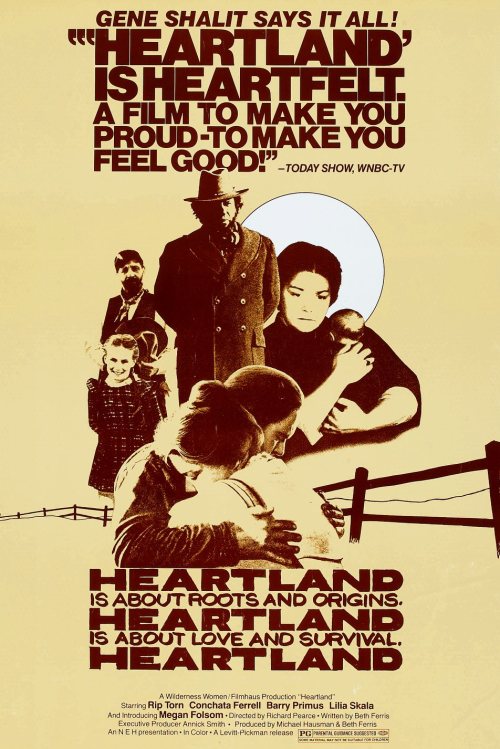
Heartland (1979)

By Richard Winters

My Rating: 7 out of 10

4-Word Review: Life on the frontier.

In 1910 a widow named Elinore (Conchata Ferrell) and her 7-year-old daughter Jerrine (Megan Folsom) travel to Wyoming where she gets a job as a housekeeper to rancher named Clyde (Rip Torn). The two slowly fall-in-love, eventually marry, and have a baby of their own. Unfortunately the harsh winter and remote locale takes its toll causing tragedy to both their small family and to the ranch itself.

The story is based on the letters written by Elinore Pruitt Stewart to her former employer as she described her adventures working on a ranch as a homesteader to Henry Clyde Stewart during the years of 1910 to 1914. The film stays very faithful in tone and content to the period and some of the most fascinating moments are simply observing the different chores that they had to do back then and what now comes off as very archaic.  Shooting the film on-location in the Rocky Mountain region, substituting Montana for Wyoming, and capturing all four seasons helps add to the authenticity.

Farrell’s strong personality gives life to her character and reveals the inner strength required to endure and survive the hardships of frontier life and it’s amazing how closely she resembled the real Elinore Stewart as evidenced by an old photograph of her taken in 1913. Torn is also quite good, but his thick Scandinavian accent makes it difficult to understand everything he says. I also really enjoyed Folsom as the young girl, who doesn’t have much dialogue, but more than makes up for it with her expressive face. Lilia Skala is also good as Mrs. Landuer a headstrong elderly neighbor who goes by the nickname of Grandma.

While the soundtrack matches the period flavor I felt there was too much of it and would’ve enjoyed more silence as that is pretty much all you would’ve heard anyways on the frontier during that time. I would’ve also liked more of a backstory to Elinore, specifically showing why she was widowed, in real-life her husband died in a railroad accident before their daughter Jerrine was even born, and yet it would’ve helped the viewer understand Elinore better had this been dramatized, or at least touched on.

The ending is also too abrupt. It brings up all the challenges in maintaining the ranch, but no conclusion as to whether they were able to withstand them all or not. Several story threads get left hanging even though in real-life Elinore lived 19 years past when this story took place and Clyde lived for another 35 years, so having some denouncement at the end explaining where they ultimately ended up past what we see here was in my opinion very much needed and the fact that it doesn’t occur makes the film seem like only half-a-movie.

There’s also some scenes that may make certain viewers uncomfortable. Many of them deal with animals getting killed including a wild pig that gets shot at point blank range and then skinned and gutted. Since this was apart of the frontier life back then I didn’t have a real problem with it, but others might. The most disturbing scene though deals with a cow trying to give birth and requires both Torn and Farrell sticking their hands inside the cow’s vagina at the same time in order to turn the calf around, so that its head will come out first. They then tie a rope around the calf’s head and yank him out in extremely explicit fashion. While some may consider this the miracle of birth others may not be able to stomach it, but overall it does help to heighten the realism either way.

My Rating: 7 out of 10

Released: September 22, 1979

Runtime: 1 Hour 36 Minutes

Rated PG

Director: Richard Pearce

Studio: Filmhaus

Available: DVD, Amazon Video

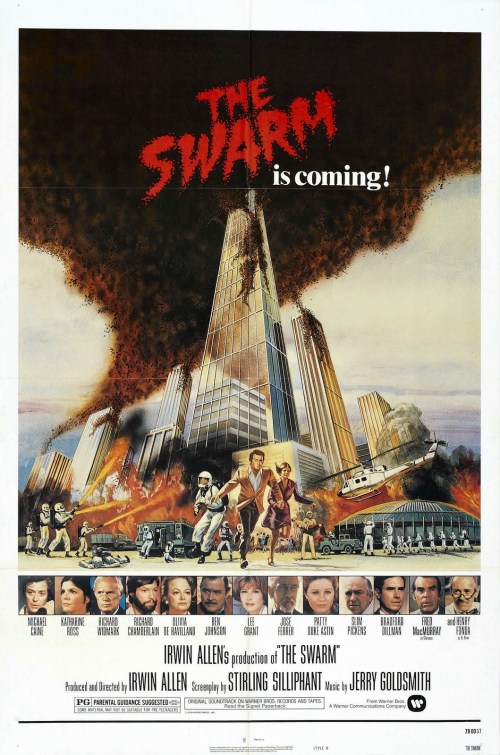
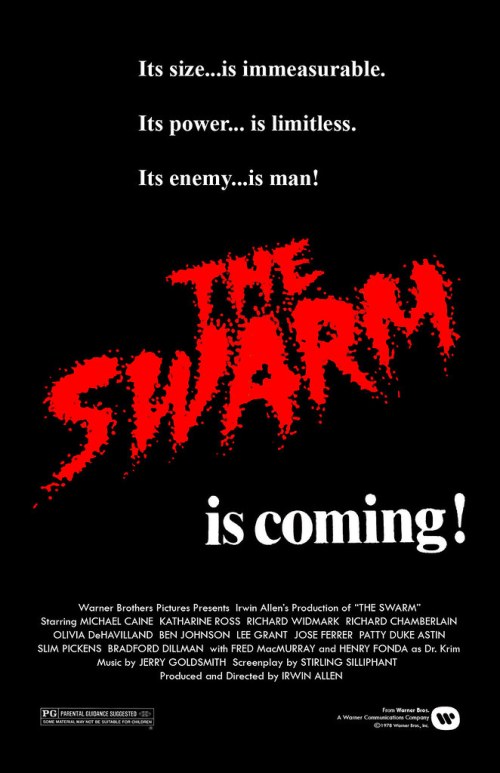
The Swarm (1978)

By Richard Winters

My Rating: 1 out of 10

4-Word Review: Killer bees invade Texas.

When his parents (Robert Varney, Doria Cook) are attacked by African Killer Bees while out on a picnic their young son Paul (Christian Juttner) manages to escape by jumping into their car and driving off. He then drives into the small town of Marysville, Texas where he tells the people about what happened. Scientist Bradford Crane (Michael Caine) and Army General Slater (Richard Widmark) are put in charge, but neither can agree on what strategy to use. Meanwhile Paul gets some of his friends to go back out to the park where the attack occurred to set fire to the hive, but instead of killing the bees it gets them to swarm onto the nearby town and the unsuspecting citizens.

Director/producer Irwin Allen was by the late 70’s known as the disaster master after having by that time either produced or directed 4 ( he ultimately ended up making 7) disaster flicks for both TV and the big screen many of which like The Poseidon Adventure and The Towering Inferno made a ton of money, so he was riding high coming into this one only to have it bomb monumentally at both the box office and with the critics. He took the failure of this film so personally that he refused to ever mention it and even walked out of an interview when he was asked about it.

In retrospect it’s easy to see why it failed as the special effects just aren’t interesting enough. Watching repetitive shots of swarming bees can only go so far and the victims just lay there without having their skin show any signs of swelling from the multiple stings, which you’d expect them to have. The shots from the point-of-view of the victims, which shows the bees in a giant form, is the only cool thing though, like everything else in the film, this ends up getting overdone and corny.

The script is ripe with unintentionally funny moments including having the authorities attempt to kill the bees by spraying at them with a flame thrower, which doesn’t seem to affect the bees at all and instead only sets buildings on fire as well as some of the people. The idea that the bees were set off by an alarm siren at a military base, which somehow sounded exactly like their mating call is too preposterous to believe and only makes the ‘science’ behind the film completely silly.

The film also makes the mistake of having the setting be in Texas, but not actually filming it there. Sure there’s a few shots of some famous Houston landmarks that get briefly shown, but the majority of it was clearly shot on a studio backlot in California and any true Texan will easily spot this as the topography and landscape between those two states are quite different. Had the film been made on-location it would’ve helped give it a little more character, which it is otherwise lacking.

The cast is made up of a lot of famous names, but they all get wasted. Lee Grant appears only briefly as an aggressive TV reporter that for the most part has little to do with the progression of the plot. Fred MacMurray, in his last film appearance, plays a rival to Ben Johnson who both compete for the affections of Olivia de Havilland, but all three get killed off in the second act, so what’s the use of introducing this potential story arc if it ends up not really going anywhere?

Caine makes for one of the most boring screen heroes in film history and gets seriously upstaged by Henry Fonda, who plays one of the scientists trying to create a serum to combat the deadly bee stings, even though Fonda is confined to a wheelchair the whole time. This was the first of many ‘paycheck movies’ that Caine did and in fact he admittedly never even bothered to read the script before agreeing to sign on, but still felt it was worth it as he was able to use the funds to purchase a nice mansion in Malibu unfortunately for the viewer there’s no such mansion just boredom instead.

My Rating: 1 out of 10

Released: July 14, 1978

Runtime: 2 Hours 35 Minutes

Rated PG

Director: Irwin Allen

Studio: Warner Brothers

Available: DVD, Blu-ray (Warner Archive), Amazon Video, YouTube

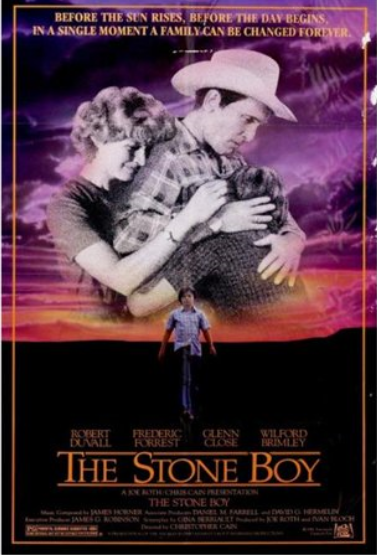
The Stone Boy (1984)

By Richard Winters

My Rating: 6 out of 10

4 Word Review: Accidentally killing his brother.

Based on the 1957 short story by Gina Berriault, the film centers on a 12-year-old boy named Arnold (Jason Presson) who accidentally kills his older brother Eugene (Dean Cain)  one morning while they go out to pick peas on their farm. His parents (Robert Duvall, Glenn Close) don’t know how to react to the tragedy and begin to treat Arnold like he’s a stranger to his own family, which causes him to consider running away.

In an era of big budget special effects I enjoyed the film’s low-key approach, but this gets ruined right away by instilling all sorts of ill-advised cinematic effects, including slow motion, during the shooting scene. You can’t spend so much time and effort creating a docu-drama look and feel to a production, which nicely reflects the slow/quiet paced lifestyle of rural America, only to suddenly pivot away from it at the most inopportune time, which results in a jarring, disconcerting feel for the viewer.

The shooting scene goes against the grain of the main character too. We’re supposed to emotionally connect with the kid, but the way he behaves is bizarre. I would’ve expected him to start crying when he realizes he has shot his brother and go running back to the house for help, but instead he conveys no emotion at all and calmly continues to pick the peas like nothing has happened, which makes him seem mentally disturbed.

It’s also rare for a person to instantly fall over dead with one shot like the brother does here. For that to happen the bullet would’ve had to hit the heart directly or some other vital organ, but the gun went off while it was being held at a precarious angle and most likely the bullet would’ve only grazed his brother, or just injured him. The accident also occurred not far from the house, so why the parents didn’t immediately come running out when they heard the gun going off, or the boy screaming is hard to understand. It’s important to note that we don’t actually hear him scream as the scene is shot with no sound, but we do see him open his mouth real wide in horror, so I can only imagine that he did scream out and if so the rest of his family should’ve heard it.

It would’ve been better had this scene not been shown at all and only alluded to, or done like it was in Ordinary People, which had a similar storyline, but didn’t play out the death sequence until the very end as a flashback. In either case the rest of the film is okay and even has a few touching and profound moments, but it stretches out the premise of the short story it’s based on too much, which creates draggy periods that prevents it from being as effective as it could’ve.

My Rating: 6 out of 10

Released: April 4, 1984

Runtime: 1 Hour 31 Minutes

Rated PG

Director: Christopher Cain

Studio: 20th Century Fox

Available: DVD, Amazon Video, YouTube

Showdown (1973)

By Richard Winters

My Rating: 2 out of 10

4-Word Review: Friends go separate ways.

Chuck (Rock Hudson) and Billy (Dean Martin) were once close childhood friends, but as they grew older their lives drifted apart. Now Chuck is a sheriff while Billy has become a bank robber. When he and his gang rob a train it is up to Chuck to track him down and bring him to justice.

This flat and lifeless concoction was the last film directed by George Seaton who seemed to be slumming when he did this one as it’s derivative and formulaic to the extreme with nothing in it that is diverting or memorable. Part of the problem is the tone. It starts out as a potential western comedy with Billy riding on a train and pretending to be a sheriff. When the train gets attacked by the bandits he convinces everyone to put their valuables into a sack, so he can ‘protect’ them only to shock the people by absconding with them instead, which is kind of funny and had the film stayed at this level it still wouldn’t have been all that great, but at least more entertaining.

Unfortunately the rest of the story turns into one long, drawn-out drama that is both slow and pointless. The flashbacks showing the men when they were children are neither amusing nor insightful and could’ve easily been scrapped. I was also under the impression initially that the two men were brothers and the story might’ve had more impact had they been.

The film’s title seems to imply some big, climactic finish, which doesn’t really occur. Instead of waiting until the end for the two men to meet up with each other it actually occurs during the second act and when they do there’s no big confrontation or fireworks, which makes their interactions as flat and boring as the rest of the film. There is some mild tension involving Billy’s former gang members who want to track him down in order to inflict revenge on him for shooting another member of the gang, but this story angle doesn’t get played up enough and they’re given only moderate screen time.

Martin is engaging despite coming off looking washed-up and far older than the 57 years that he was with his hair looks dyed and buffed up by some Hollywood stylist. Hudson though is unable to match Martin’s charm making it seem like it would’ve been better had he not been in it at all and instead just solely focused on Martin trying to escape the clutches of the other gang members. Even Susan Clark, who is a great actress, gets wasted and miscast as Hudson’s wife as she looks too young to have been married to him and was in reality 18 years his junior making it more appropriate had she played his daughter.

My Rating: 2 out of 10

Released: June 20, 1973

Runtime: 1 Hour 39 Minutes

Rated PG

Director: George Seaton

Studio: Universal

Available: DVD-R (Universal Vault Series), Amazon Video, YouTube

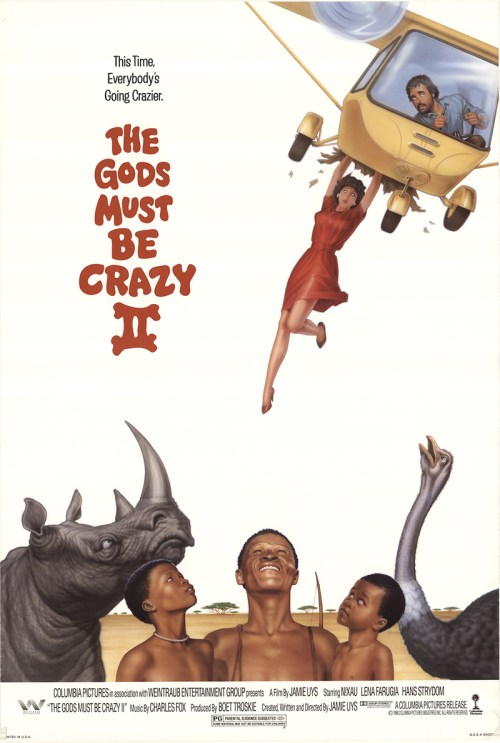
The Gods Must Be Crazy II (1989)

By Richard Winters

My Rating: 7 out of 10

4-Word Review: Misadventures in the desert.

Xiri (Eiros) and Xisa (Nadies) are the two children of Xixo (N!xau) and a part of a nomadic desert tribe of the Kalahari who go roaming off into the wilderness and encounter a truck driven by two elephant poachers (Lourens Swanepoel, Pierre van Pletzen). Having had no previous contact with modern technology the children become fascinated with the vehicle and climb into its water tank just as it drives off taking them many miles away from their home. When the children fail to return their father goes out looking for them and in the process comes into contact with a lawyer (Lena Farugia) and a zoologist (Hans Strydom) who are stranded after their small engine plane crashes as well as two soldiers (Erick Bowen, Treasure Tshabalala) fighting from opposite sides of the war and each precariously trying to get the upper hand on the other.

This follow-up to the run away hit was filmed in October, 1985, but took over 4 years to find a distributor and suffered many setbacks during its production, which frustrated writer/director Jamie Uys so much that he retired from directing after completing this one and never worked on another film. On the whole though it’s not too bad, but like with the first one it does start out a bit clumsily.

My biggest complaint had to do with the scenes dealing with the lady lawyer named Ann and her interactions with the macho pilot/zoologist Hans who takes her up in the plane, which to me became too sexist and too similar to the scenario played-out in the first film where a lady-in-distress being rescued by a male character more acclimated to the environment. However, in the first film this was funny because the male was so clumsy and inept it made him seem more like a lovable clod, but here the guy character resembles the male image, especially with his mustache, of the Marlboro man and his constant aggravation at this ‘ditzy lady’ isn’t amusing while her inability to understand technology played too much into the feminine stereotype that women can’t comprehend machinery must have a man come to their rescue.

I did find the small engine plane that they rode in, which was a modified Lazair Ultralight, fascinating as I found it interesting at how something so small and flimsy could carry two people and still get off the ground, but was disappointed to learn later that this was only because it got attached to a crane and in reality wouldn’t have flown. Although the filmmakers achieve this illusion pretty well the scene where the two fly above the clouds is clearly fake as you can tell the backdrop of the sky is a painting and in that regards the whole plane scene, especially since it really couldn’t fly anyways, should’ve been discarded and some other plot line created that would’ve brought the two together.

The two runaway children though are quite cute especially the frightened but resourceful little boy who grabs a nearby piece of wood to put on top of his head to fool the hyena that has been stalking him into thinking that he is taller than he really is, which actually ends up working. I was also most impressed with the scenes dealing the Honey Badger, which is known for its ferocious defensive abilities and lives up to its reputation here when he grabs a hold of Hans boot with his teeth and refuses to let go no matter how far Hans walks.

The last half-hour when all the various characters from the four divergent story lines eventually merge is when the film finally manages to hit its stride and it’s a shame this couldn’t have occurred sooner, but ultimately as a sequel it’s surprisingly funny and manages to retain much of the same charm from the first one.

My Rating: 7 out of 10

Released: October 13, 1989

Runtime: 1 Hour 38 Minutes

Rated PG

Director: Jamie Uys

Studio: 20th Century Fox

Available: DVD, YouTube

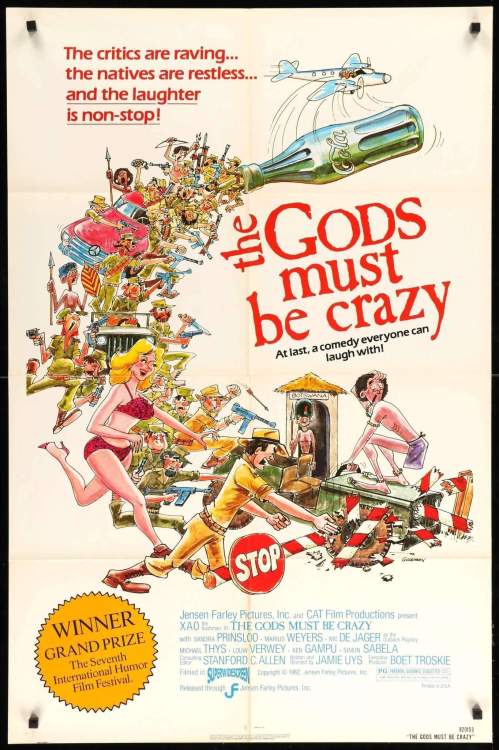
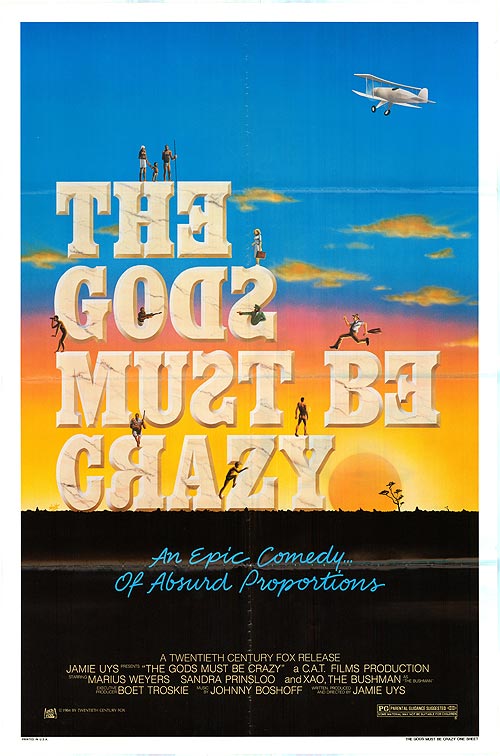
The Gods Must Be Crazy (1980)

By Richard Winters

My Rating: 8 out of 10

4-Word Review: Coke bottle causes problems.

One day while flying over the Kalahari desert a airplane pilot inadvertently throws a coke bottle out of his cockpit window, which falls to earth and is found by Xi (N!xau) and he brings it back to his nomadic tribe. At first everyone is intrigued with the object as they are an isolated people unaware of modern technology. They think it’s a ‘gift from the gods’ and make use of the bottle in different and creative ways, but eventually the bottle causes friction from within the tribe because there is only one and no one wants to share it. Xi decides to ‘give the bottle back to the gods’ by traveling to the end of the earth and throwing it off. During his journey he meets a clumsy biologist named Andrew Steyn (Marius Weyers) and a pretty school teacher named Kate (Sandra Prinsloo) while also saving school children who are kidnapped by a group of terrorists led by Sam (Louw Verwey).

This film became the biggest box office success in South African history and when released abroad became the most successful foreign film in the U.S., but the film initially comes off like a nature documentary complete with monotone voice-over narration by Paddy O’Byrne only to then shift uneasily into a flick dealing with political revolutionaries who systematically massacre the heads of state via machine gun. It’s not until about 30 minutes in that the gentle comical flow of the story gets going, but even then there’s a lot of sped up stop action photography, dubbed voices, and a cartoonish sounding musical score that gives it a choppy amateurish feel throughout.

Yet despite all this the concept is quite original and filled with genuinely funny moments. Writer/director Jamie Uys, who appears briefly as a Reverend, shows an amazing ability to squeeze laughs out of virtually any scene and sometimes in the most amazing of ways. Some of my favorite moments was when the jeep hangs upside down in a tree, or the scene showing the same disabled jeep getting tugged along by another vehicle and because the desert was so flat and barren the man driving the vehicle is able to get out of it and it simply drives itself with no fear it would run into anything. The shot where N!xau arrives at what he thinks is the end of the earth, but in reality is a place known as God’s Window is quite memorable and picturesque as well.

Of course the film does come with its fair share of controversy and accused of being racist with two countries, Trinidad and Tobago, banning the movie from being shown there because of it. The main complaint centers around the bushmen tribe that N!xau comes from being shown as completely cut-off from the modern world and unsophisticated when in reality this is not true. The 2004 Columia TriStar DVD edition has a wonderful documentary called ‘Journey to Nyae Nyae’ on its bonus section where a filmmaker travels to the real-life desert bushmen tribe that actor/star N!xau resided and found that although the people were quite poor they were far from ignorant and in fact excitedly embraced technology like a computer when it was shown to them. There’s even a really cute segment where the children get shown this film and laugh along at all the same antics just like American audiences.

This same documentary also has a very sad edge to it as it shows the impoverished life N!xau had even after the film became a worldwide hit. While the movie grossed over 200 million N!xau was only paid $2,000 for his work and the other actors who played the bushmen got paid nothing. Director Uys tried to rectify this by paying N!xau many years later an additional $20,000 and a monthly stipend, but by then he had already become sick with tuberculosis and ended up dying from it in 2003.

My Rating: 8 out of 10

Released: September 10, 1980

Runtime: 1 Hour 49 Minutes

Rated PG

Director: Jamie Uys

Studio: 20th Century Fox

Available: DVD, Amazon Video, YouTube

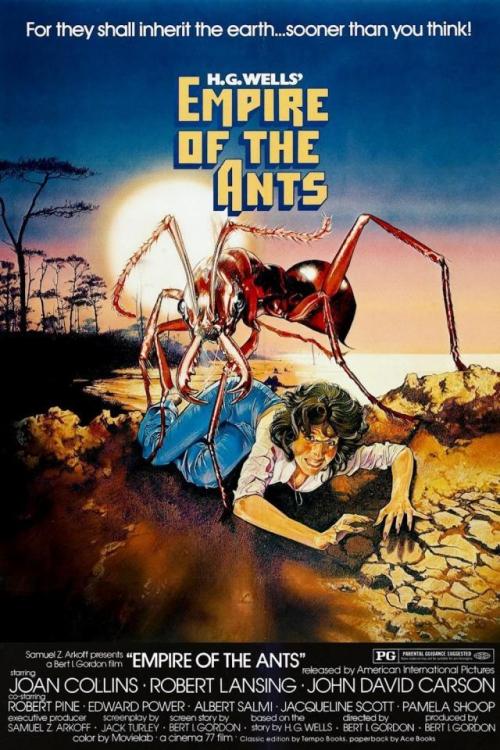
Empire of the Ants (1977)

By Richard Winters

My Rating: 3 out of 10

4-Word Review: Giant ants terrorize island.

A group of prospective home buyers are taken on a tour of a small island off the coast of Florida that supposedly has ‘prime beach front property’, but in reality it’s worthless. Marilyn (Joan Collins) is the realtor touring the others around, which quickly gets cut short when ants, who have feed off of toxic chemicals that were illegally dumped there and have now grown to giant size, begin attacking the people.

This film marks yet another tacky production by director Bert I. Gordon who enjoyed making movies filled with special effects dealing with giant animal life much like he did just two years earlier in Food of the Gods. The effects are predictably laughable where process shots showing close-ups of ants get combined with shots of the actors on the set, but you can tell that the quality of the film stock is different making the ants look completely out-of-place in the setting. When the actors get directly attacked by the ants large rubber mock-ups were used, but this gets combined with a shaking camera and quick edits making the action hard to follow.

It might’ve worked a bit better had it not given away right up front the cause for why the ants got so big and thus allowed for some mystery. Having the toxic waste be the cause just adds more questions than answers anyways. For instance: why were these chemicals being dumped to begin with and why did they choose this island? How were the ants able to get so big so fast? Did they just feed on the chemicals and then ‘poof’ they were big, or how fast or slow did the process work? Why were just the ants the ones that got big? Supposedly other insects, spiders and birds might’ve ingested the chemicals too, so why don’t they grow to a giant size as well?

The cast of characters are predictably stale and taking a full 30-minutes introducing them to the audience before the action even kicks-in just makes the movie even more boring. Having more eccentric characters would’ve helped like having the ants attack a clown convention that was meeting there, which would’ve given the film a humorous/offbeat edge that is otherwise lacking.

For the record I did enjoy Robert Pine who plays this coward who makes no attempt to save his wife when she’s attacked and then obsesses afterwards that everyone believe his story that he ‘couldn’t find her’ and there was ‘nothing he could do’. Collins is quite attractive, most will remember her for her appearance on the TV-show ‘Dynasty’, which was her career peak, but done when she was already well into her 50’s and no longer had a youthful appeal, but here she looks youngish and easy-on-the-eyes, which helps during the film’s slow moments.

The film states during the opening credits that it’s ‘inspired’ by the H.G.Wells story, but that short story, which was published in 1905, was way different. For one thing it didn’t involve ants growing to a giant size, so trying to connect the two as the producers here do, is outrageous. Had the filmmakers stuck more closely to that story, the film would’ve been much more interesting.

My Rating: 3 out of 10

Released: July 29, 1977

Runtime: 1 Hour 29 Minutes

Rated PG

Director: Bert I. Gordon

Studio: American International Pictures

Available: DVD, Amazon Video

What Ever Happened to Aunt Alice? (1969)

By Richard Winters

My Rating: 8 out of 10

4-Word Review: Old lady kills housekeepers.

After the death of her husband, Claire (Geraldine Page) is shocked to learn that there is no money in his will. Fearing a life of destitution she plots to hire old lady housekeepers who she’ll manipulate to give her their life savings in which she’ll invest into stocks through her broker (Peter Brandon). Once these stocks start making money she’ll murder the housekeeper and keep all the profits for herself. After killing off her fourth housekeeper, Miss Tinsley (Mildred Dunnock) and burying her dead body in her backyard, she hires Alice (Ruth Gordon). Alice though has a secret, she was at one time the former employer for Miss Tinsley, who wants to investigate what happened to her and is suspicious that Claire may hold the secret. Claire though becomes aware of Alice’s scheme and decides to try and make Alice her fifth victim.

This marked the third of Robert Altman’s trilogy featuring old lady killers with the first two being What Ever Happened to Baby Jane? and Hush…Hush, Sweet Charlotte. This was the first one to be filmed in color and the harsh dry desert landscape setting works as a great metaphor to Claire’s barren, evil soul. I also enjoyed the winding plot, which is based on the 1961 novel ‘The Forbidden Garden’ by Ursula Curtiss that has many offbeat twists including a memorable scene featuring the two old ladies rolling around on the floor during a furious fight that you’ll most likely never see in any other movie.

Page’s performance is the main reason why the film is so entertaining. Watching all the various characteristics that she gives to her haughty character is fascinating and she helps make Claire, as nasty as she is, quite memorable. I especially liked the part where after she kills one of her victims she displays for a split second a shocked expression like even she can’t believe what she has just done and this helps to make her character multi-dimensional, like there’s still some semblance of a tortured conscious somewhere within her and she isn’t just a robotic, evil person.

Gordon is okay in support, but I felt her character should’ve had some backup plan that she would use in defense when things got ugly. She keeps assuring her nephew (Robert Fuller) that she can handle things, but when Claire turns on her she becomes almost like a deer-in-headlights. I also didn’t like the wig that she wears and have to agree with one critic who said it makes her look like a giant, walking-talking peanut. I realize that the wig does eventually come into play as part of the plot, but I felt in the brief segments where she’s shown not wearing it she could’ve been seen with her real hair and not just in another wig, which looked just as dumb.

Honorable mention should also go to Spike who plays a stray dog named Chloe. Spike was a well trained animal who was in many films and TV-shows between 1956 and 1971 and the parts where he bares his teeth and growls at Claire every time he sees her, as she attempts to harm him, are amusing.

Spoiler Alert!

The script by Theodore Apstein, fortunately avoids a lot of loopholes, but I did feel at the end they should’ve shown or explained how the characters played by Rosemary Forsythe and Micheal Barbera were able to escape from their burning house. I also found it hard to fathom why Robert Fuller’s character, upon learning that his Aunt had been killed in a suspicious car accident didn’t immediately accuse Claire of doing it. He had pretended not to have any connection to Alice during the majority of the story as that was part of their scheme, but once she was dead I didn’t see why he still needed to pretend. I would think he’d be so emotionally distraught at that point that he would let out his true emotions without even thinking and possibly even tried to attack Claire while having to be restrained by the others.

End of Spoiler Alert!

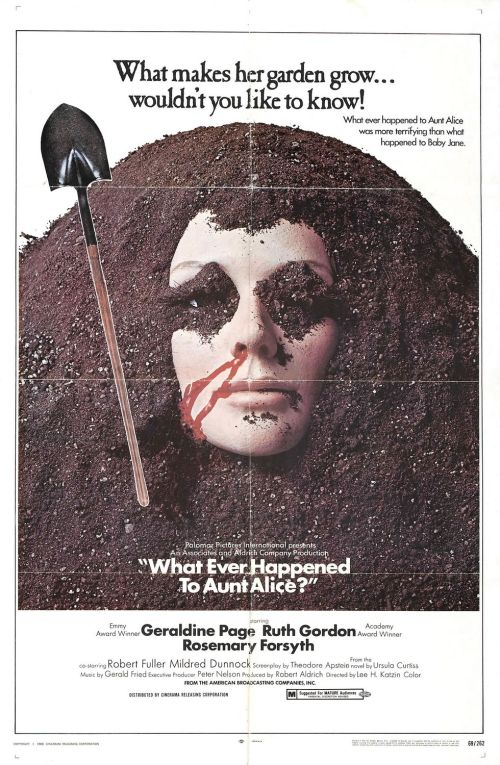
The film’s promotional poster, as seen above, is a bit problematic as it features a young model looking like she’s been buried, but in the movie it was only old ladies that were killed and buried. Showing a beautiful lady may have been more visually appealing, but it’s not authentic to the film that it’s trying to promote.

My Rating: 8 out of 10

Released: July 23, 1969

Runtime: 1 Hour 41 Minutes

Rated M

Director: Lee H. Katzin (Bernard Girard for the first 4-weeks of filming)

Studio: Cinerama Releasing Corporation

Available: DVD, Blu-ray

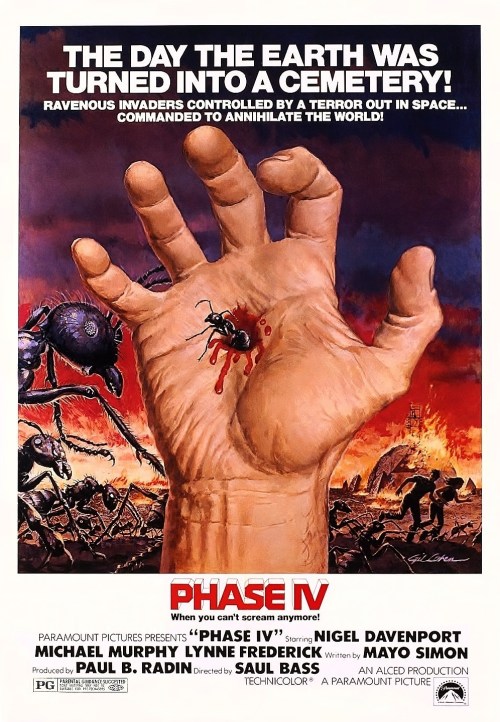
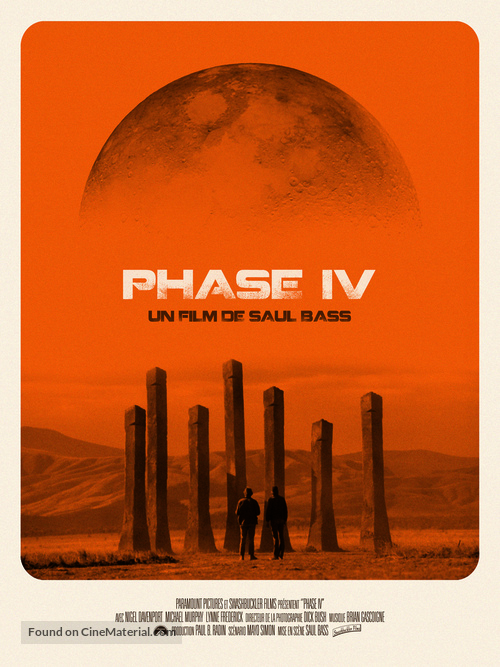
Phase IV (1974)

By Richard Winters

My Rating: 7 out of 10

4-Word Review: The ants take over.

Ants in a small isolated community in Arizona begin to behave strangely by building large towers and geometric designs in the crops. Dr. Hubbs (Nigel Davenport) and James Lesko (Michael Murphy) are two scientists hired to come-in and find out why the ants are behaving the way they are and try to put a stop to it. They construct a computerized lab in the middle of the desert and begin they’re research only to find that they’ve walked into the ant’s trap.

This was the first feature length movie directed by Saul Bass who was an award winning graphic designer who did title sequences and film posters for many famous movies from the 1950’s through the 1980’s. His great attention to detail pays off here in a film that is full of many intricate and stunning imagery including incredible micro photography of the insect life, but unfortunately the movie bombed badly at the box office, which never allowed him to direct another film again.

On the surface it’s easy to see why it didn’t go over well as a large amount of the runtime focuses on the ants and while this photography is impressive it also makes it seem more like a nature film, but without any voice-over narration explaining what the ants are doing. It’s not like you can’t figure it out, but it does require close attention and could still be confusing to some and not something mainstream audiences are used to, or expected to sit through.

When the humans are onscreen the acting isn’t bad and surprisingly there is some character development, which a lot of other high concept Sci-fi flicks sometimes don’t have. I enjoyed Davenport and his very matter-of-fact approach to the situation in which nothing ever gets to him emotionally no matter how grisly and his never ending obsession to usurp the ants no matter how ultimately bleak it gets.

Lynne Frederick is good too as a teen-aged girl who gets taken in by the scientists when the rest of her family are killed. Initially I didn’t like her presence as I was afraid it was going to lead to some annoying, manufactured side romance, but fortunately that didn’t occur and instead becomes more of the emotional, human side of the trio especially with the way her eyes gaze at the evil ants. I also really liked the segment that shows in close-up of an ant climbing on her foot and then up through her body, even going in and out of her bellybutton until finally arriving at her head all while she sleeps.

The ending though is a disappointment as it never explains the reason for the ant’s behavior. I actually did find the story intriguing for awhile and even kind of scary, but you can’t expect a viewer to sit through a near 90-minute film and not supply them with some answers. No conclusion is given either as to who ultimately wins the battle, man or ant, which was something better explained in the original director’s cut, which had a surreal, image-laden montage showing what life on the ‘new earth’ was like, but this got cut by Paramount and never shown in the film released to theaters. In 2012 a faded print of the original ending was found and after being digitally scanned was added to a new 35mm print that was played at several select art house theaters, but this version has never been released onto DVD/Blu-ray, which is a shame as the movie comes off as incomplete without it.

For those who are interested here is a faded print of the original ending:

My Rating: 7 out of 10

Released: September 6, 1974

Runtime: 1 Hour 24 Minutes (Studio version)

Rated PG

Director: Saul Bass

Studio: Paramount

Available: DVD, Blu-ray, Amazon Video, YouTube