Category Archives: Movies with a rural setting

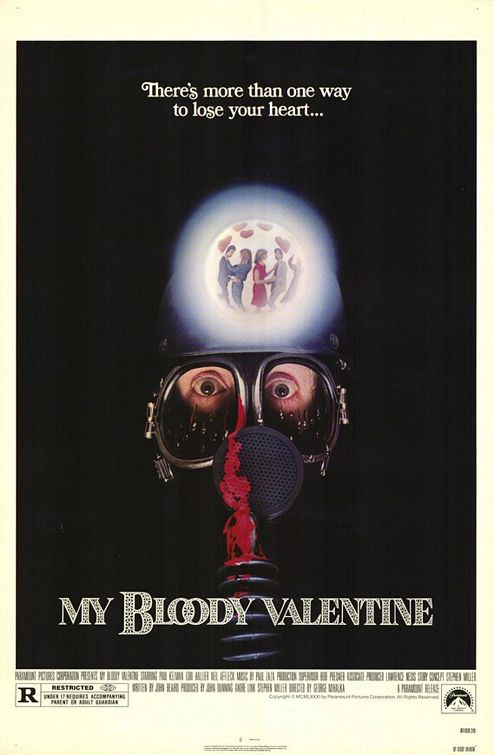
My Bloody Valentine (1981)

my bloody valentine

By Richard Winters

My Rating: 2 out of 10

4-Word Review: A Killer with heart.

After 20 years a small Canadian mining town of Valentine Bluffs has decided to hold another Valentine’s Day Dance. The previous ones were canceled due to one ending in bloodshed by a psychotic mine worker named Harold Warden. Now he is locked away so they think it is safe except the killings start happening again and this time the killer tears the hearts out of the victims and delivers them in heart shaped boxes to their relatives.

This movie has a cool looking poster and a deliciously macabre concept and has also attained a strong cult following including Quinton Tarantino, but I unfortunately was not impressed with it. I found it to be excruciatingly boring and a major strain just to sit through. The direction and writing are uninspired creating predictable scenarios and delivering all the expected teen slasher movie clichés with a monotonous regularity.  Nothing is distinctive or scary and it fails to deliver any suspense or tension. It can’t even make effective use of its unique mine shaft setting. The final sequence takes place there, but it is nothing spectacular. The constant delivering of human hearts in candy style boxes soon loses its effect and eventually becomes stupid especially with the corny poems written on the attached note cards.

The young victims are dull and stereotypical. They look like caricatures from all the other slasher horror films except here they speak with thick Canadian accents. One of them looks like an overweight version of Meathead from ‘All in the Family’. There is also a ‘class clown’ type of character that resembles very closely the ‘class clown’ character from Friday the 13th . Here he does nothing but crack dumb jokes and watching him eventually get decapitated is the film’s single most gratifying moment.

The sheriff character is a real loser. He wears a big belt buckle and dopey haircut that makes him appear to be some middle-aged buffoon who has just stepped out of the 60’s. His logic is also flawed. He decides not to warn the town that a killer is on the loose even after he has killed a couple of people as he is afraid it will create too much of a panic, so instead he waits until seven more people die and the citizens all go into a panic anyways.

Usually in even the poorest of horror films the killings and gore can at least keep things entertaining on a tacky level and yet here they are as dull as everything else. Also, since when has going into a dark and dingy cave been considered a great place to have sex? To me it seems absurd and yet several of the teen couples go into the mine for distinctly that purpose.

Remade in 2009.

My Rating: 2 out of 10

Released:  February 11, 1981

Runtime: 1Hour 30Minutes

Rated R

Director: George Mihalka

Studio: Paramount

Available: VHS, DVD, Blu-ray, Amazon Instant Video
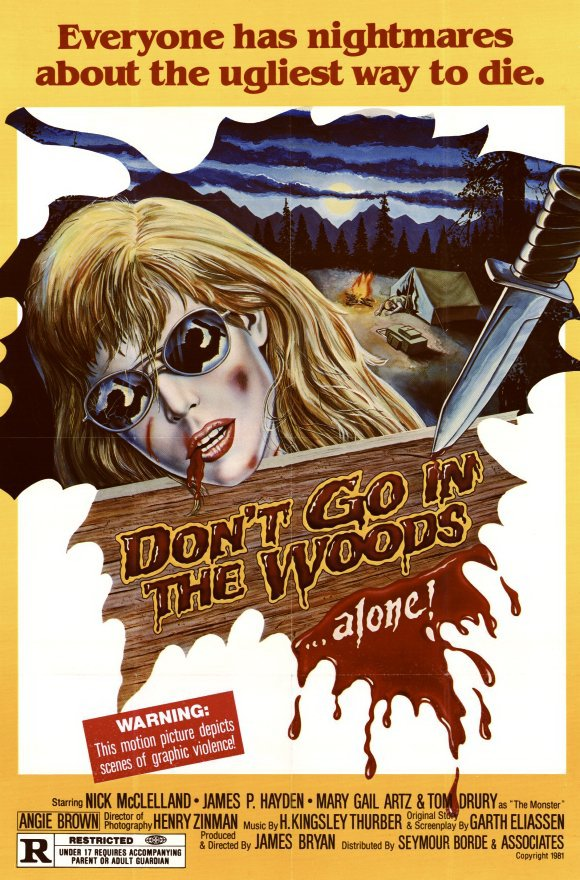
 

Don’t Go in the Woods (1981)

don't go in the woods

By Richard Winters

My Rating: 0 out of 10

4-Word Review: Don’t watch this movie.

Excruciatingly bad on all levels this film could very well rank as the worst horror movie/slasher film of all time and given how many bad ones there are that is really saying something. The story, or what little there is of it, features four college-aged hikers, two men and two women, spending an idyllic weekend in the woods of a state park. Little do they know that a madman is on the loose and killing people at a frantic pace. When he catches up with them they run, scream, and then get sliced up.

The acting itself is the real horror. Usually even a real low budget film will at least have a few B-names in the cast whether they were famous at one time and now slumming, or an up-and-coming star, but this has neither. Most of the cast never appeared in another film and watching them perform here will tell you why. Of course having them straddled with stale, stilted dialogue that has no conversational quality doesn’t help and the proceedings would have been better off had director James Bryan allowed them to ad-lib.

The gory special effects are unimaginative and pathetic. It is edited in such a way that it is very hard to follow what exactly is happening to the victims and the majority of it basically entails gobs of red blood splattering everywhere and little else.

The killer is laughable and dressed in a Neanderthal getup that makes him look like a cross between a caveman and what a Minnesota Vikings fan wears to a football game. His cartoonish laugh is annoying and the isolated, decrepit cabin that he resides in seems too reminiscent to Jason’s hangout in Friday the 13th Part 2. There is also never any explanation, even at the very end, as to who the hell this guy is, how he got there, or where he is from.

This film also has one of the ugliest female casts of any horror film I have seen. Usually films of this genre cast a couple of Playboy Playmates or Penthouse Pets in the mix as eye candy to help liven things up during the slow parts, but this one instead has the two female leads with such short haircuts that they almost look like boys. There is also no nudity, which in this instance is probably a good thing.

Outside of a cheesy song played over the closing credits the film lacks any type of music score. In some ways like in I Spit on Your Grave this can help accentuate the cinema-vertite grittiness, but here it makes an already cheap production seem even cheaper. Some music could have helped cover-up the constant sound of birds cooing in the background, which eventually got annoying. The dialogue was also dubbed in during post production, which gives it even more of an amateurish quality.

The director of this one has absolutely no talent or ability. Your average fifth-grader could pump out something better than this.

My Rating: 0 out of 10

Released: September 1, 1981

Runtime: 1Hour 22Minutes

Rated R

Director: James Bryan

Studio: Seymour Borde and Associates

Available: DVD, YouTube

Funny Games (1997)

funny games 3

By Richard Winters

My Rating: 8 out of 10

4-Word Review: Killers like playing games.

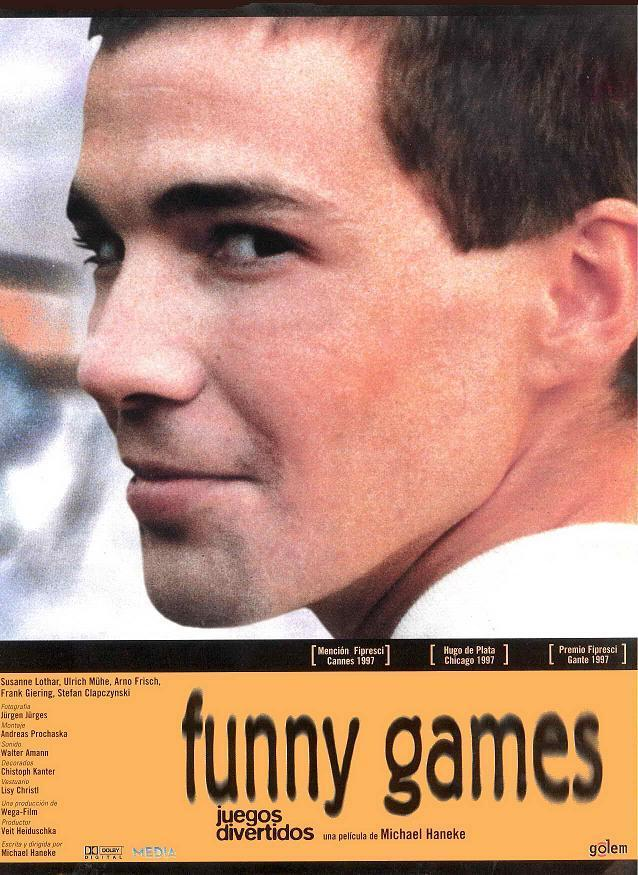
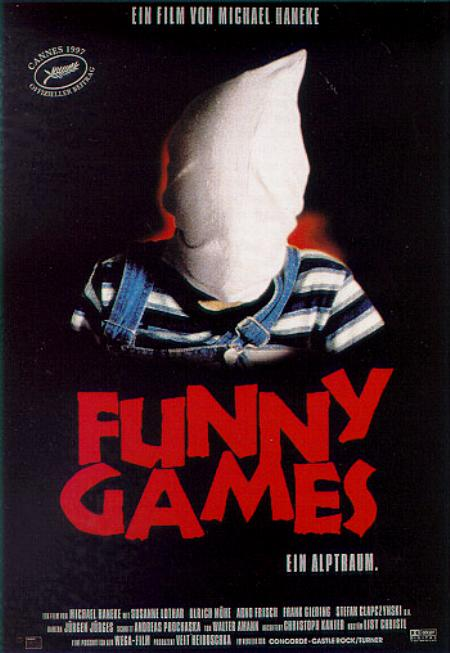
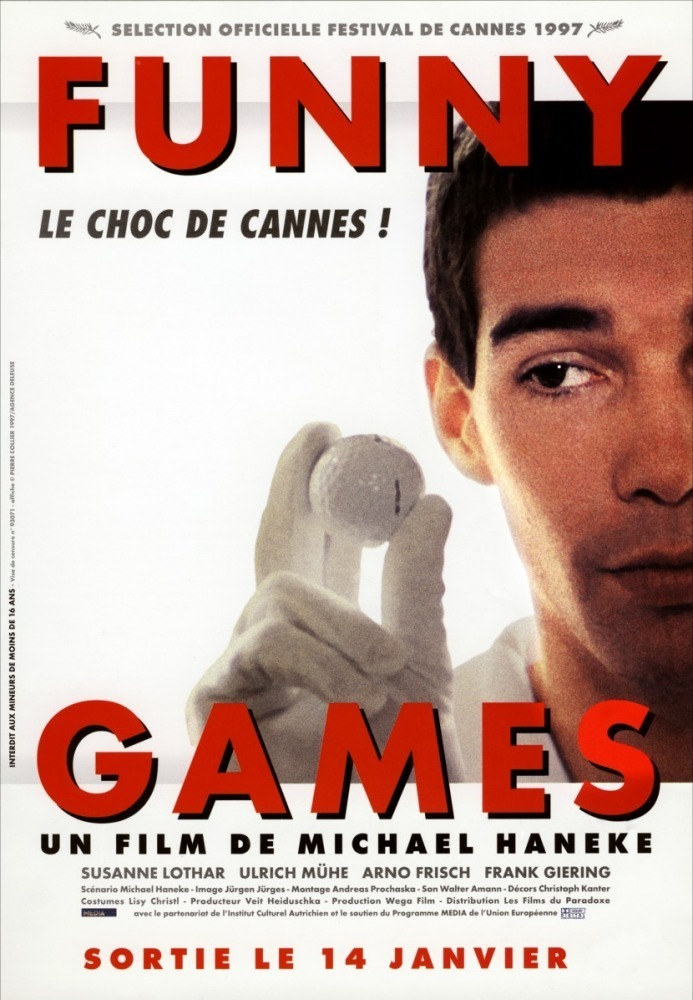
A family is tormented by two young men (Arno Frisch, Frank Geiring) who break into their home and proceed to play ‘funny games’ on them. These games are cruel and humiliating in nature. They are ‘played’ simply to prove that they can. As the film progresses and reveals some very unusual narrative devices it becomes obvious that the real ‘funny games’ are those played on the viewer by writer/director Michael Haneke.

Clearly this is long overdue as it is a revisionist look at the very violent psycho/thriller genre. Last House on the Left and Henry: Portrait of a Serial Killer have both handled the violence and dehumanization theme quite well before, which thus minimizes some of this film’s shock value. Yet Haneke shows an astute awareness of his craft and its manipulative nature. He cuts into all the accepted formalities and conventions of the genre and film making in general that you have to give it high marks. There is one scene, where the camera literally stays locked on the carnage for several minutes that the repugnance of violence really does hit home as intended.

funny games 2

The whole thing is supposed to shake the viewer into reevaluating their own viewpoints. It’s an almost ongoing assault questioning their views on justice, tolerance to violence, prayer and other cosmic forces and even their own fragility. It also tries to force them to analyze why they view these types of films and find them entertaining.

Like the heavy metal music played over the opening credits this thing is raw, abrasive and filled with anger and rebellion. Haneke is clearly upset. Upset at irresponsible directors who make violent films and an overly tolerant public that watches them.

This is an ugly film with an unrelenting nature and flashes of contempt. The average movie goer will probably not like it. However, it you are a connoisseur of cutting edge cinema then you may find the whole thing refreshingly provocative.

funny games 1

Frisch and Geiring as the two killers look and act so much against type that they become two of the most chilling and memorable villains in screen history. Also, Susanne Lothar and Ulrich Muhe who play the husband and wife victims are actually married in real life.

An American version, which was directed by Haneke as well and stars the beautiful Naomi Watts and follows this one almost scene-for-scene was released in 2007.

funny games 4

My Rating: 8 out of 10

Released: May 14, 1997

Runtime: 1Hour 48Minutes

Not Rated

Director: Michael Haneke

Studio: Attitude Films

Available: DVD, Blu-ray, Amazon Instant Video

The Strange Vengeance of Rosalie (1972)

the strange vengeance of rosalie

By Richard Winters

My Rating: 7 out of 10

4-Word Review: She can’t be trusted.

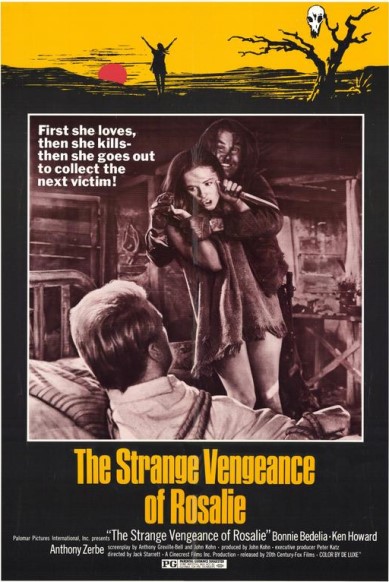
This is an okay obscurity about an Indian girl named Rosalie (Bonnie Bedelia) whose grandfather has just died and in an attempt to stave off loneliness tricks Virgil (Ken Howard) a traveling businessman into coming back to her isolated ramshackle place. Once there she breaks his leg in order to trap him and hopes that in the time it takes to heal he will learn to love her.

Critic Leonard Maltin calls this film “farfetched” and going “way off base” yet nothing could be further from the truth. If you accept the initial premise then the rest of the film is carried out in a plausible and believable fashion.

Director Jack Starrett certainly has a vision here. The remote desert like local is captured well and gives it a distinct feel. The premise is static, but the story keeps moving and new elements are added in nicely. The second hour does begin to meander, but it is finished off by a surprise ending that comes out of nowhere and is completely unexpected. You have to watch it all the way through to really appreciate it yet it does help the film come together and even helps explain its title.

The similarities between this and Misery are quite evident and in some ways this film wins out. It is not as slick or polished, but it is also not as formulated either. This is not your standard thriller as you have no idea where it is going. It runs the gamut between drama, adventure, and even human interest. There is also the added sexuality element and a genuine relationship between the two, which Misery did not have.

The best thing is the Rosalie character. She is young and beautiful. Her intentions and motivations are constantly surprising. In some ways she is like the Barbara Eden character in ‘I Dream of Jeannie’. She is naive and trusting, but also headstrong, self- sufficient and cunning and Bedelia is perfect in the role.

Being made in the early 70’s and at the height of political awareness there is some thought to there being meaning to the fact that she is Indian and Howard the typical white businessman. She is constantly trying to win approval of this white man who otherwise seems oblivious to her conditions or needs. He is also too self-absorbed and too locked into his mindset of minorities being ‘inferior’ to realize how consistently she outsmarts him. Like with a lot of minorities there is a great deal of frustration with the attitudes of the establishment. Howard is just too stuck in to his preconceived notions to ever see her as an equal no matter how hard she tries.

Overall this is a decent film especially when compared to other low budget, independent films of that same era. The twist ending helps, but you have to stick with it.

My Rating: 7 out of 10

Released: June 16, 1972

Runtime: 1Hour 47Minutes

Rated PG

Director: Jack Starrett

Studio: 20th Century Fox

Available: Amazon Instant Video (Edited Version)

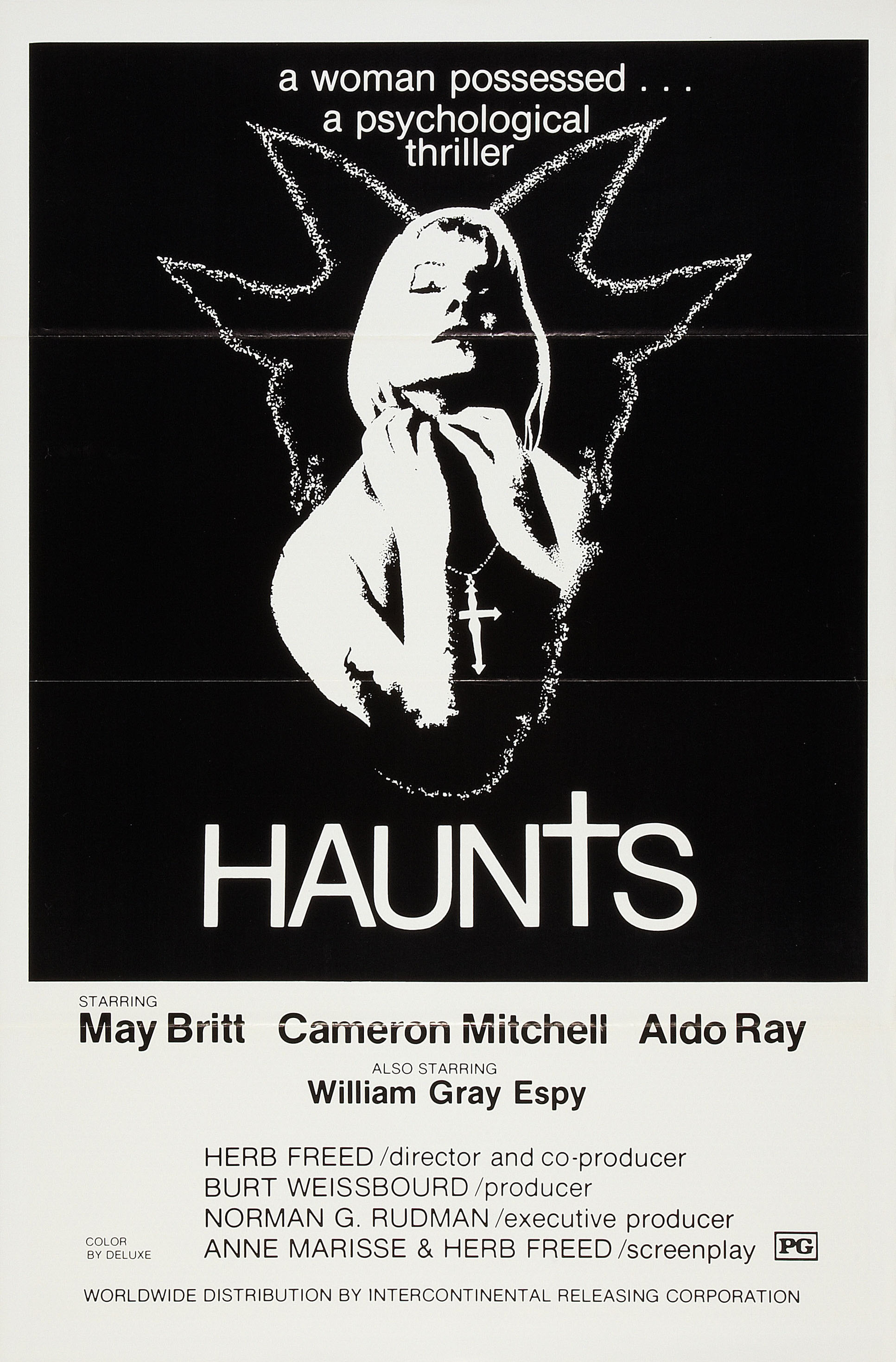
Haunts (1977)

haunts

By Richard Winters

My Rating: 6 out of 10

4-Word Review: Haunted by childhood memories

This is an extremely odd horror film that manages to be effective nonetheless. The story deals with Ingrid (May Britt) a deeply spiritual woman living alone on an isolated farmstead and occasionally visited by her uncle Carl (Cameron Mitchell).  She is haunted by strange childhood memories and visions that are never quite clear. When a killer begins murdering women in the nearby small town Ingrid feels she knows who the culprit is and when he attacks her she notifies the police, but no one seems to believe her, which leads to weird and unexpected twists.

The film has all the usual trappings that one might expect from a low budget 70’s horror film and in some cases it is even worse. The film stock is faded and grainy and while in a certain way this helps build atmosphere it also looks like someone’s amateurish home movie. The lighting is flat and the backgrounds of the interior scenes are quite bland. The voices of the actors echo and sound like they were picked up by a weak inexpensive boom microphone. There are also certain nighttime sequences that are too dark and shadowy and it is hard to follow the action and yet despite all this I still found the film to be quite captivating even more so than most horror films.

Writer/director Herb Freed captures the small town life quite well. Filmed on location in Mendocino, California the rainy, gray climate, dry fall-like landscape, and old gothic style homes helps build a great atmosphere. Pino Donaggio’s musical score is filled with long violin strains and flute solos that usually would be better suited for a romance yet the melodic sound works surprising well with the material and even heightens the dark underscore of the story. The characters have interesting flaws and although the scares are quite sparse they are still effective.

Britt gives a superior performance and casting her in the lead was astute. Her bright blonde hair and Swedish accent helps give it distinction. The scenes that she is in are compelling while the ones without her are a dull and draggy. Mitchell isn’t quite as good. He was once considered an up-and-coming star until alcoholism banished him to low budget movie hell. He openly took just about any part for the money and I couldn’t help but feel that he was phoning in this one. Aldo Ray who plays the town sheriff isn’t much better, but I felt this was more from lack of talent than effort.

The killer could have been created to be more frightening and distinguished than just some schmuck with a ski mask. The movie is also a bit overlong and at times confusing. It requires close attention and maybe even a repeat viewing to totally get it. Conventional horror movie fans may be put off by the lack of gore and its slow, but deliberate pace where the emphasis is more on mood than chills. However, the restrained and prolonged ending has to be one of the most unique in horror film history. The twist is intriguing and the final image that is captured through a mirror is memorable.

My Rating: 6 out of 10

Released: July 12, 1977

Runtime: 1Hour 40Minutes

Rated PG

Director: Herb Freed

Studio: International Film Distributors

Available: VHS, DVD, Amazon Instant Video, YouTube

Dixie Lanes (1988)

dixie lanes 2

By Richard Winters

My Rating: 3 out of 10

4-Word Review:  Karen Black is funny.

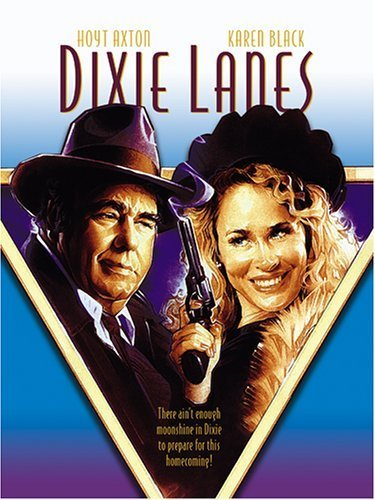
Clarence Laidlaw (Hoyt Axton) returns home from the war to find that is his son Everett (Christopher Rydell) does not want to speak to him due to certain felonies that he supposedly committed before he left. Meanwhile Everett romances Judy (Pamela Springsteen) while also agreeing to deliver a hatbox filled with secret items for his kooky Aunt Zelma (Karen Black) that may entail the transfer of stolen money.

The film moves along too slowly with a storyline that borders on being almost nonexistent. The movie seems to want to focus on the interactions of the slightly offbeat small town characters, but none of them are interesting enough and their dialogue is not funny enough to be engaging.  The recreation of the 1940’s is okay on a low budget level, but there have been so many more bigger budgeted movies that have created a much richer more vivid portrait of Americana that watching this or even the reason behind making it seems unnecessary.

The eclectic cast is interesting, but straddled with such limp material that they have nowhere to go with it. Art Hindle, Moses Gunn, Ruth Buzzi, Nina Foch, and even Tina Louise appear although it is in a very small role. Rydell as the young lead seems misplaced as his hairstyle looks more like an 80’s cut and his pouty, moody, detached behavior seems suited for a more modern era.

Black is a lot of fun and is the one good thing about the movie as she adds a lot of much needed energy. Her over-the-top screams and mannerisms even had me chuckling in a few places particularly at her attempts at bowling. She also had me convinced that she had a knack for comedy and should’ve done more of it. However, like with Rydell her character didn’t seem right for the time period especially with her bleached frizzy hair and her flirtatious and outspoken manner.

Axton’s laid-back style and smooth sounding voice is great for when he is doing one of his ballads, but as a lead actor he is almost lifeless. His graying hair made him seem more like Foch’s husband instead of her son.

There is almost no action to speak of until the very end when director Don Cato implements a forced, slapstick-like car chase that is out-of-sync with the tone of the rest of the film. This takes place during some unexplained supernatural wind storm that makes no sense and pretty much cements this thing as being a poorly realized waste of celluloid.

My Rating: 3 out of 10

Released: May 3, 1988

Runtime: 1Hour 23Minutes

Rating: PG-13

Director: Don Cato

Studio: Miramax

Available: DVD

The Grass is Singing (1981)

the grass is singing 1

By Richard Winters

My Rating: 7 out of 10

4-Word Review: Farming isn’t her thing.

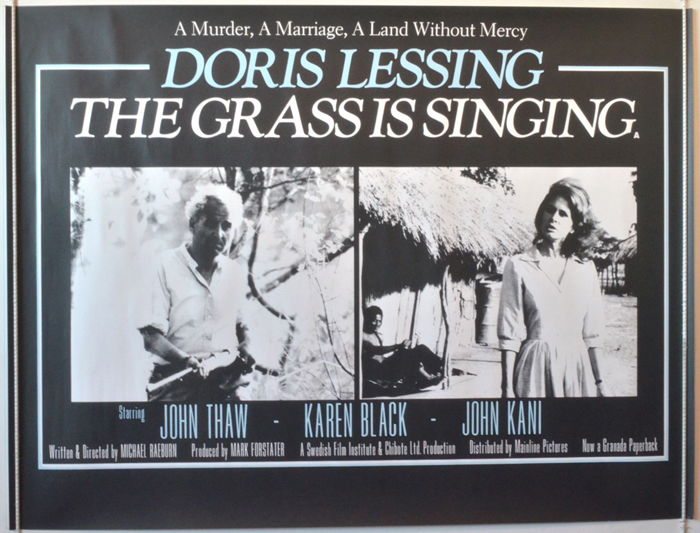
In memory of Karen Black who died on August 8th we will review on each Monday of this month an 80’s film that she starred in as well as a 70’s movie that she was in on Fridays. This film is based on the Doris Lessing novel and was filmed on-location in Zambia. The story centers on Mary a racist woman from South Africa who is bored with her job and lonely. She meets Richard (John Thaw) a simple man who becomes smitten with her. She is not as crazy about him but decides to accept his proposal of marriage simply as a way to escape her dreary existence and loneliness. He moves her to his farm where she finds the rigorous lifestyle difficult to adjust too. The isolation begins to wear on her already tightly wound temperament and eventually she begins to show erratic behaviors that become more disturbing and shocking.

The Zambia locations are captured in vivid style with a grainy film stock that makes it look like it were a documentary. The farm setting is indeed desolate and makes for great atmosphere. Director Michael Raeburn wisely refrains from using too much music and when he does he uses instrumentals from the native culture, which further elevates the film and gives it distinction.

The film stays pretty faithful to the novel and starts out in startling fashion with Mary being stabbed and bloodied on her backdoor step and then shifts back seven years where we see what lead up to it. The pace is slow, but involving and the characters are three-dimensional and believable. Mary’s breakdown happens in a deliberate and realistic fashion starting with little things that work into bigger ones. In the end you feel more sorry for her than frightened and thoroughly engulfed with her sad and pathetic circumstances.

This was Black’s last serious role before being quarantined in B-movie purgatory. This may also be one of her finest moments as she brings out the manipulative nature of the character quite well and I love the way she always seems to add quirky qualities to her parts. She also speaks with an authentic sounding South African accent.

Thaw is quite good in support and creates empathy from the viewer playing a very humble man looking for simple companionship with no idea what he was getting into.

There is some serious filmmaking going on here in a movie that makes some great points about life and human nature that is well worth checking out. The original theatrical release which is what I saw and able to obtain from a private collector runs a full 105 minutes. However, the American release which is available on DVD from Synergy Entertainment as well as Amazon Instant Video and goes under the title Killing Heat runs only 90 minutes and heavily edits out the explicit violence and nudity and has a narrative that is choppy and at times confusing.

My Rating: 7 out of 10

Alternate Title: Killing Heat (U.S. version)

Released: September 18, 1981

Runtime: 1Hour 45Minutes (Original Version)

Not Rated

Director: Michael Raeburn

Studio: Chibote

Available: VHS, DVD, Amazon Instant Video (as Killing Heat)

Paperback Hero (1973)

paperback hero

By Richard Winters

My Rating: 5 out of 10

4-Word Review: Big fish small pond.

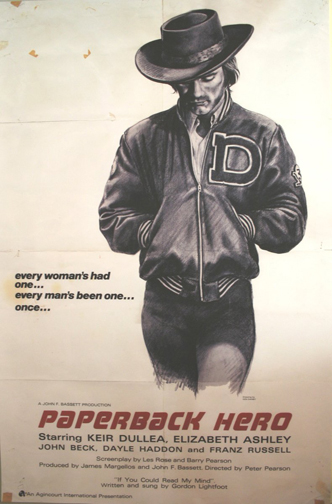
Rick (Keir Dullea) is a hockey player living in a small town on the western plains of Canada. To pass his time he imagines he is a gunslinger in the old west and makes himself the self-imposed marshal of the community.  Outside of Sheriff Burdock (George R. Robertson) the other townsfolk considered it an amusing and otherwise harmless quirk. Then Rick learns that his hockey team will be disbanded and he will be without a job. He is given an opportunity for employment in nearby Saskatoon, but he refuses it feeling that he will lose his ‘mystique’ in the bigger city. Slowly the strains and pressures of his situation start to get to him and eventually it culminates in an old fashioned gunfight right in the center of town between him and the sheriff.

If the film gets one thing right it is in the recreation of small town life. Filmed on-location in Delisle, Saskatchewan director Peter Pearson gives the viewer a wonderful and vivid feel of the town. Just about all the sections of the hamlet are captured including the inside of abandoned buildings, trailer homes and farms as well as a couple of nice bird’s eye shots. The remoteness and flat wheat laden terrain brings to life the region in an almost stunning clarity. Having grown up in a small town not too terribly far from the Canadian border I can say that this film hits-the-mark in its portrayal of people in the Nordic region. All the little dramas that can go on between people locked in a remote local as well as the scenes done inside a dark and dingy bar that many times can constitute as the place to go for a ‘night-on-the-town’ is amusingly well played-out.

However, despite having the right flavor the film lacks direction. It was hard for me to get into this because all the scenes were random and not connected together by all that much. The plot is thin and made up if anything by a series of vignettes.  The main character is brass, egotistical, deluded and arrogant. He treats women like they are his property. He beats up one and considers it minor because her bruises are only the ‘size of a quarter’. He talks about getting turned on by one woman while making love to another and then is surprised when she gets upset with him. Having a film built around such an unlikable character is not entertaining or interesting especially when we are given no history to why he became the way he is.

Dullea does well in the lead and shows a lot more emotion and panache than one might expect from him especially when compared to his most famous role as the rather robotic Dave Bowman in 2001: A Space Odyssey. It is always fun to see Elizabeth Ashley and here she plays one of Rick’s love interests, but her role is small and rather thankless though she does get shown in a long and explicit nude scene.

My favorite was Dayle Haddon as the alluring Joanna. Haddon has retired from the acting profession years ago, but was at one time a fashion model and she looks gorgeous here. The scene that takes place in an abandoned house where she tells Rick off and shreds his deluded ego while doing it in a quiet whispery tone is the movie’s best moment.

The segment showing a big hockey brawl where fans jump out of the stands to get involved and even the ref gets bloodied is fun. I also liked the part where Rick takes Joanna on car ride through the wheat fields. The camera is hooked up to the bumper of the car so the viewer gets an up close experience of watching the wheat thrash before them at high speeds. The standoff at the very end in the center of town is also interesting, but the film takes too long to gel and the main character is such a turn-off that it hurts the good points and ultimately makes this a misfire.

The movie also features the Gordon Lightfoot’s song ‘If You Could Read My Mind’, which is a great a song, but it has been played so much on lite-rock stations that instead of getting the viewer more engrossed in the movie it instead takes them out of it. The film works hard to create a gritty appeal and for the most part succeeds, which is why having a long segment with the song played over it doesn’t work and I would have left it out.

My Rating: 5 out of 10

Released: September 21, 1973

Runtime: 1Hour 33Minutes

Rated R

Director: Peter Pearson

Studio: Alliance Film Distribution

Available: VHS, YouTube

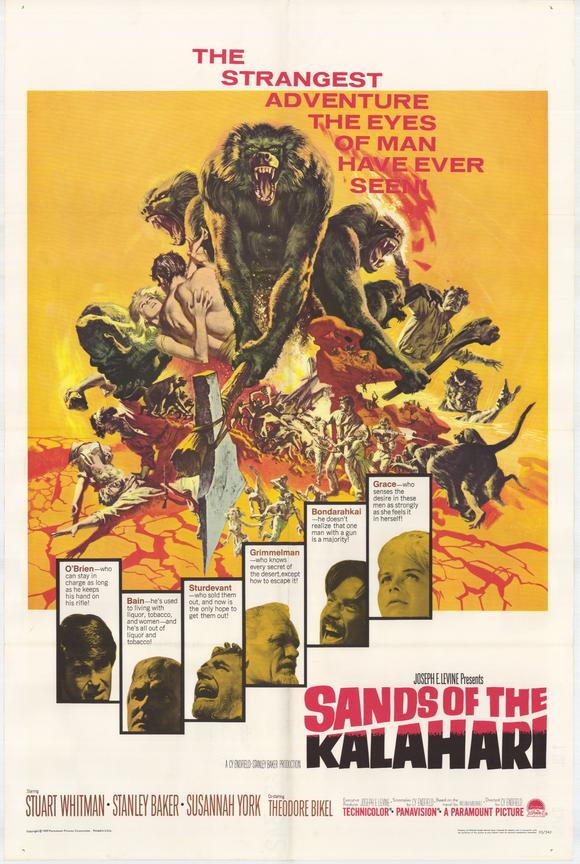
Sands of the Kalahari (1965)

sands of the kalahari

By Richard Winters

My Rating: 8 out of 10

4-Word Review: Stranded in the desert.

Based on the novel by William Mulvihill the story centers on a group of six individuals, five men and one woman, who fight to survive the blistering heat of the Kalahari Desert when their plane crashes after it’s struck by a large swath of locusts. Instead of working together as a team the group quickly disintegrates with infighting and tensions. The young and virile Brian (Stuart Whitman) who initially takes control of the situation starts to feel that his own survival would be heightened if there were less people needing food and water, so he decides to carefully eliminate them one-by-one, which leads to many interesting confrontations and a very unusual climactic finale.

Filmed on-location in Namibia the desert becomes its own character. The stunning sandy landscape is breathtaking and watching the characters walk along it under the crystal blue sky becomes almost awe-inspiring particularly during birds-eye view shots. The viewer feels like there are right there feeling the heat along with the rest of the characters. Writer/director Cy Endfield keeps things on an authentic level and stays for the most part faithful to the book with the exception of changing one of the characters who had been African American in the novel to Caucasian here. His use of actual animals is what impressed me the most particularly the baboons who become a major part of the story as well as seeing a live scorpion crawling up a man’s arm. The only real technical weakness is the cloud of locusts forming on the horizon, which looked like dust being sprayed on the plane’s windshield and when they started to splatter onto the window it looked more like scrambled eggs and not quite as impressive as I think the filmmaker’s had hoped.

I also had a bit of a problem with the Sturdevan character, which had been the plane’s pilot and is played by actor Nigel Davenport who attempts to rape Grace (Susannah York) after they had only been stranded in the desert for a day and a half. I felt this was too quick for people to so suddenly drop their civilized veneers and cave into their more animalistic urges. I could see this maybe occurring after being there for weeks or months, but I would think initially the urgency would be finding help and just plain surviving and sex being the last thing on anyone’s minds. This same issue occurs with Grace who becomes romantically attached to Brian and even professes her ‘love’ for him after only a couple of days, which again seemed too rushed. The romantic scenes make the film seem soap-opera like and gives it an unnecessary melodramatic feel that does nothing but bog down the pace.

Whitman whose career dissipated after the 60’s and was confined with less significant roles and films is memorable here. The character who comes onto the plane at the last second is initially big and brawny heroic and watching him devolve into a selfish anti-social man is interesting as are the scenes with him trapped in a hole. The segment where he throws a fire into a cave filled with baboons and then shoots the animals as they run out is quite startling. I also enjoyed York. She has always been a splendid actress, but here with her blonde hair matched against her red skin and torn dress looks genuinely sexy.

The one-on-one confrontations between the characters especially the one between Grimmelman (Harry Andrews) and Brian and then later between Brian, Grace and Mike (Stanley Baker) is what helps the film really stand-out. I would have liked it played-out a bit more, but the twist that comes at the end is indeed unexpected and leads to one of the more unusual climactic sequences you will ever see.

My Rating: 8 out of 10

Release: November 24, 1965

Runtime: 1Hour 59Minutes

Not Rated

Director: Cy Endfield

Studio: Paramount

Available: DVD, Amazon Instant Video 

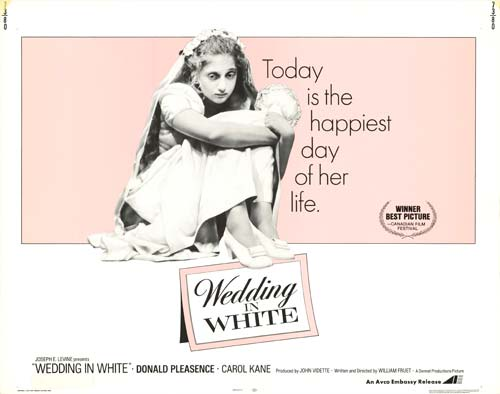
Wedding in White (1972)

wedding in white 1

By Richard Winters

My Rating: 8 out of 10

4-Word Review: Ending is a kicker.

Jeannie (Carol Kane) is a shy 16-year-old girl living in a small, bleak Canadian town just after the war who is raped by her older brother’s army buddy. Her parents (Donald Pleasance, Doris Petrie) respond as if it is her fault and resort to some extreme even shocking measures in order to ‘save the family honor’.

This is a solid little drama with good scene construction. The pacing is deliberate and an ending that really packs a wallop. The sets and location look authentic for the period and the characters are believable. Jeannie’s friend Sara (Christine Thomas) seems like a very typical teenager no matter what time period and her interactions with Jeannie show the realities of teenage friendships and makes for an interesting sidelight from the main story.

Kane is impressive acting in a style I’ve never seen from her before. Pleasance is solid as usual and his Canadian accent sounds almost authentic, but it is a bit overdone. Petrie is also quite good as the mother. She really brings to surface a character that is so cloistered she is unable to make any clear decision for herself.

The story itself is the real strong point. It is convincing, insightful, and well-crafted and brings out a sort of darkness and ‘evil’ that can come from ‘wholesome small towns’ and ‘God fearing people’. It shows how having a rigid morality can sometimes create a sort of immorality and also brings to light the lies people wish to live by and how at times it can cloud their better judgment, but most of all it’s a study at  how easily sensitive, fragile people can get sucked away and how sadly common it is.

This is a film designed to leave you feeling shocked, angered, saddened, and maybe even a little repulsed. This is quality viewing that deserves more attention.

My Rating: 8 out of 10

Released: October 20, 1972

Runtime: 1Hour 43Minutes

Rated R

Director: William Fruet

Studio: Cinepix

Available: DVD