Category Archives: Movies with a Hotel setting

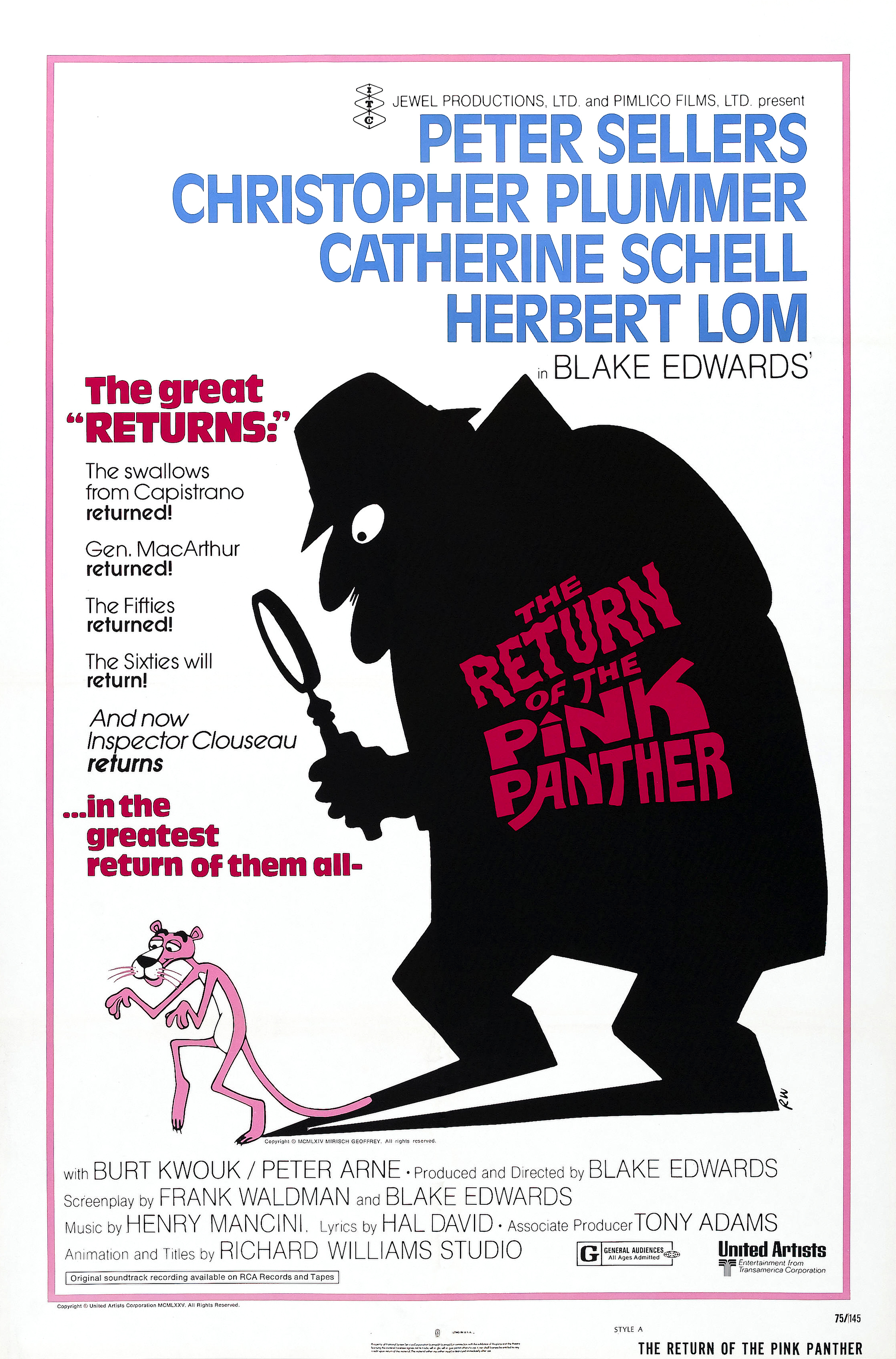
The Return of the Pink Panther (1975)

By Richard Winters

My Rating: 7 out of 10

4-Word Review: Tracking down stolen diamond.

Inspector Clouseau (Peter Sellers) has been demoted to street cop by Chief Inspector Dreyfuss (Herbert Lom) due to Clouseau’s continual incompetence, which is starting to drive Dreyfuss completely mad. However, inside the country of Lugash a prized diamond known as the Pink Panther is stolen and since Clouseau had success retrieving it the first time it went missing during a heist he is put on the case to find it again much to Dreyfuss annoyance. Clouseau suspects that the culprit is Charles Litton (Christopher Plummer), who is a notorious thief. Clouseau attempts to use several different disguises in order to infiltrate Litton’s home that he shares with his wife Claudine (Catherin Schell) in order to find incriminating evidence against Litton so that he can turn him in, but his attempts to try and a take Litton down prove to be comically inept. 

This marked the fourth installment of the Pink Panther series and the first in 10-years that reunited writer/director Blake Edwards with Sellers. Both had said after doing the second film A Shot in the Dark, that they never wanted to work with the other again due to much infighting during the production, but both had since then fallen on hard times. Edwards was by the early 70’s considered box office poison after the colossal failure of Darling Lilli which managed to recoup a measly $3 million from a $25 million budget and his other films from that era Wild Rovers and The Carey Treatment hadn’t done much better. Since Pink Panther had been his last success, he was interested in reviving it and even wrote up a 14-page treatment but found no takers amongst the major studios. Then producer Lew Grade agreed to finance it in exchange for Edward’s wife Julie Andrews agreeing to star in a British TV-special that he wanted to produce. Since Sellers career had also bottomed out, he came onboard to most everyone’s surprise without much hassle.

The film was shot in many scenic locations including Morrocco giving the optics an exotic flair and the proceedings a sophisticated European vibe making it seem like a step-up from just a silly comedy. In the first two installments all the characters were written to be funny and goofy particularly the second film, which had been based on a stage play. Here though the comedy is wisely given over to Sellers while the couple he’s after remain savvy, which makes it more intriguing as you want to see how this inept idiot takes them down, or is able to trip them up at their own game. I also liked how funny bits are interspliced with some legitimate action, especially the opening scene that features the heist, which could’ve easily fit into a realistic film dealing with a robbery. These moments help add a bit of relief from all the laughs, a sort of chance to catch your breath, while making the plot seem like it’s not just all about being a farce.

Lom adds terrific support as Clouseau’s exasperated supervisor, and his assertive acting style works nicely off of Sellers clownish one making the interplay between the two a highlight. It’s good too that Plummer replaced David Niven, who played the character in the first one, but wasn’t able to do it here due to scheduling conflicts, as Niven would’ve been too old and not plausible to have outrun the bad guys like Plummer does. 

My only issue is that Claudine is shown attempting to hold in her laughter at Clouseau right from the start like she knows he’s an idiot before she even met him, but this goes against the premise. Clouseau is considered an accomplished detective by the outside world hence why he was selected to head the case and it’s only the people that work with him and know him who are aware of his ineptness. This is the whole reason why Dreyfuss gets driven mad by him because the rest of the world celebrates the man that he knows is really a fool, so Claudine should’ve initially thought of him as being sharp and only came to the conclusion he was incompetent by the end after having dealt with him. It actually would’ve been funnier had she and Charles feared Clouseau upfront having believed his celebrated reputation and misreading his bumbling as being ‘genius’ ploys and remained that way throughout. In either case seeing her covering her mouth and shielding her giggles makes almost seem like she’s falling out of character and a blooper, similar to how Harvey Korman would unintentionally crack-up during Tim Conway’s antics on the ‘The Carol Burnett Show’ and for that reason it should’ve been avoided. 

My Rating: 7 out of 10

Released: May 21, 1975

Runtime: 1 Hour 54 Minutes

Rated PG

Director: Blake Edwards

Studio: United Artists

Available: DVD, Blu-ray, Amazon Video, YouTube

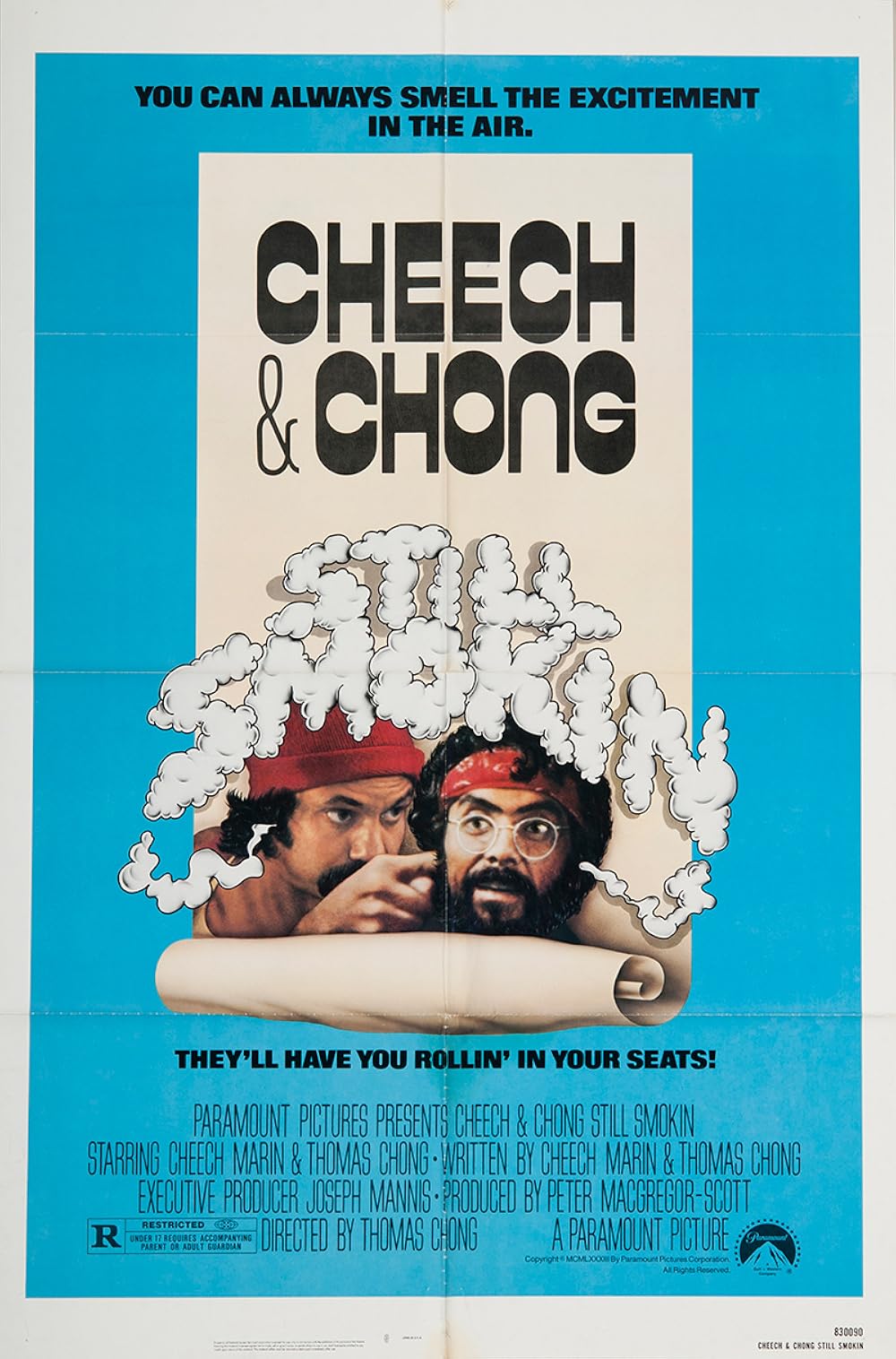
Still Smokin (1983)

By Richard Winters

My Rating: 2 out of 10

4-Word Review: Stoners travel to Amsterdam.

Cheech and Chong (Cheech Marin, Thomas Chong) travel to a film festival in Amsterdam dedicated to Burt Reynolds and Dolly Parton. Along the way Cheech gets mistaken as Reynolds and afforded the luxurious hotel room that should’ve been for him. The two take full advantage of it by ordering expensive dinners and drinks while signing it off on the hotel bill to be paid by the promoters. The promoter (Han Man in’t Veld) learns that the real Burt and Dolly won’t be showing up leaving the entire festival in shambles, but then the two stoners decide to save it by agreeing to do an improv comedy routine live in front of an audience where the Queen Beatrix of the Netherlands will be present. 

While the two may still be ‘smokin’ the film series has by this point completely lost all of its fire. My biggest complaint, which I’ve had with all of the previous installments, is that there isn’t enough story going on and had there been it would’ve been funnier. For instance, instead of the movie starting out with the two already celebrities it should’ve shown how they got into improv and learned the craft. Maybe it could’ve been because their drug dealing was no longer feasible and they were tired of constantly being harassed by the cops, so someone suggested improv as a side hustle. The two might’ve resisted at first, but then with nothing to lose decide to go on stage and try it out. To their surprise they become a hit, and this would then lead to fame and offers. Had it been done this way we would’ve at least had a plot and character development, but instead we’re just informed that they’ve become stars already, which makes it disjointed from the previous installment where they were driving around in the desert, still employed by the Arabs who wanted them to get into the adult film business.

The routines are flat almost shockingly so, as I’ve been involved in improv since moving to Austin 10 years ago and to be honest total amateurs stepping onstage for the first time and just coming up with a bit on the fly are far funnier than anything these supposed pros do here. I’m still impressed with their ability to change characters and speak in different accents, but their interplay doesn’t go anywhere. The skits as they are deals with an undercover cop (Chong) trying to arrest a drug dealer (Cheech), there’s also a gun debate between the two, a wrestling match where the two try to take on an opponent who’s invisible and yet another where they’re gay men trapped in a sci-fi movie, which may be deemed as offensive by today’s viewers as it relies heavily on gay stereotypes and mannerisms.

I remember in our improv group, like with most, somebody would usually yell out ‘scene’ when it was deemed that it had gone on too long and needed to end and I felt somebody should’ve been jumping into this movie and doing the same thing. The set-ups are okay and have potential, but don’t go anywhere that is interesting, or even slightly amusing. There are also certain bits that have no payoff at all but could’ve really used them. The best example of this is when the two continue to ‘sign-off’ on all of their elaborate room service expenses, but by the manager’s own admission, runs out of money, so who ends up paying for all those lavish meals and luxuries? I was fully expecting some moment to come where a massive bill showing of what they owed to come back to haunt them and their eyes getting all big, which could’ve been humorous, but it never happens proving how poorly thought the whole thing is. 

The final 20-minutes relies solely on concert footage of the two reenacting past skits that had been made famous from their record albums. These I found gross as the humor focuses too heavily on body fluids and stuff that would amuse only a seventh grader. I can be game for a dirty joke, if it’s clever, as anyone and have never been accused of being a prude, but when you have two grown men onstage crawling around pretending to be dogs who go through the motions of taking a shit and then smelling it, is when I checkout. Yes, the audience in the movie appears to be enjoying it, but I believe that was more from the shock value as back then some of this stuff was still considered pushing-the-envelope, but by now the edge has worn off and will be passee for many of today’s viewers. 

My Rating: 2 out of 10

Released: May 6, 1983

Runtime: 1 Hour 31 Minutes

Rated R

Director: Thomas Chong

Studio: Paramount

Available: DVD, Blu-ray, Amazon Video, PlutoTV, YouTube

For the Love of Benji (1977)

By Richard Winters

My Rating: 6 out of 10

4-Word Review: Secret code on paw.

Benji (Benjean) and his dog mate Tiffany along with Cindy (Cynthia Smith), Paul (Allen Fiuzat), and their nanny Mary (Patsy Garrett) arrive at the airport to board a plane that will take them to Crete, Greece where they plan to vacation. While waiting in-line Mary visits with the man standing behind her, Chandler Dietrich (Ed Nelson), who seems nice and she, along with the two kids, start-up a friendship. Unbeknownst to them he’s not such a swell guy but instead a spy who’s stolen a secret formula that can accelerate the production of oil. He sneaks into the baggage room and imprints this formula onto Benji’s paw while the animal is stuck in a cage. Things though don’t go as planned because Benji and Tiffany don’t arrive in Greece when the plane does causing much confusion. When he does finally get spotted by a baggage handler he escapes from his cage and runs through the city streets lost and alone. He manages to find the hotel that his owners are staying at but is afraid to go up to them when he sees they’re with Chandler. Once Chandler realizes that Benji is in the vicinity he buys a large Doberman dog to go sniff him out and thus retrieve the formula still imprinted on his paw.

For a follow-up this isn’t bad, and the change of scenery helps. The film also features some exciting chase sequences including the climactic one with Benji trying to escape Chandler who attempts to run him down with his sports car. The segments though dealing with Benji roaming the city streets I didn’t find interesting, nor does it have the gripping quality that they had in the first installment and to have added a dramatic quality to it the children should’ve been lost with Benji and thus caused even more of an urgency. Also, the opening scenes get done in Greek with no subtitles, so it’s impossible to understand what’s said and for the sake of clarity should’ve been spoken at the very least in broken English.

Garret is delightful as the tubby nanny and the scene where she tries to nervously hold a suspected criminal, played by Art Vasil, with a gun despite clearly not knowing how to handle one, is entertaining. The children however seem used only as props to get excited when they see Benji and despondent when they don’t. Surprised too that Peter Breck, who played their father in the first one, isn’t here. It’s stated that he’ll be arriving a week later, but his character was the only one in the first film that had any discernable arch as he initially didn’t like the dog but learned to accept it when the pooch saved the kids, so it would’ve been interesting to see how his relationship with the pet had progressed.

Nelson is the most effective as he’s a smart and cunning villain that creates quality tension every moment, he’s on screen and his somber eyes along with his salt and pepper hair create a creepy vibe. My only issue is that there’s no explanation for how he’s able to get into the baggage area without being detected. He’s in there for several minutes as he drugs the dog, so you’d think some employee would’ve walked in on him, but don’t. Did he bop a security guard on the head to gain access, or knock him out with the same drug he used on the dog? Either way it should’ve been shown as well as explained how he was able to just open the door to the room as you would think it would’ve been locked and a key, or pass code needed for entry.

Spoiler Alert!

The climactic sequence gets a bit botched as Benji arrives at the hotel the family is staying at only to see it surrounded by police. Then Nelson drives up in his car with a gun pointed at Cindy’s head in an attempt to get the dog to jump into the vehicle. However, it doesn’t make much sense for Nelson to go into an area where police are visibly all over as there’s no real chance for escape. It would’ve worked better had the police not been seen up front making Nelson’s arrival seem more plausible as he’d be under the impression no cops were there and more tense as the viewer would think it was all up to Benji to save the girl and no one else to help. Once Benji bites Nelson’s arm forcing him to drop the gun then the police could’ve suddenly appeared by jumping out of the bushes, or wherever, and arrested him.

My Rating: 6 out of 10

Released: June 10, 1977

Runtime: 1 Hour 25 Minutes

Rated G

Director: Joe Camp

Studio: Mulberry Square Releasing

Available: DVD, Blu-ray

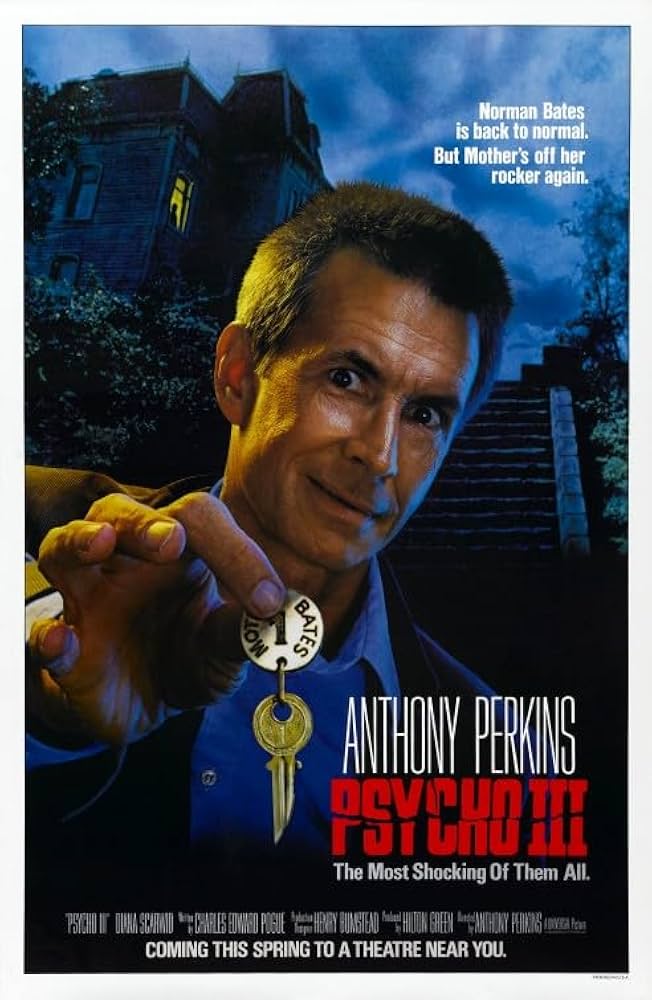
Psycho III (1986)

psycho3

By Richard Winters

My Rating: 3 out of 10

4-Word Review: Norman gets a girlfriend.

The story begins a month after the one in the second installment ended with police searching for the whereabouts of Emma Spool (Claudia Bryar) whom Norman (Anthony Perkins) killed and now keeps her preserved body in his home and yet curiously the police don’t suspect him. Meanwhile a roving journalist named Tracy Venable (Roberta Maxell) does and she keeps trying to get interviews with Norman in an effort to weed-out the truth while also snooping around his property any chance she gets. Maureen (Diana Scarwid) is a nun who’s lost her faith and thus left the convent and rents a room at the Bates Hotel. She closely resembles Marion Crane, one of Norman’s earlier victims, which sets off his desire to kill again, but when he goes into her room in an attempt to stab her he finds that she’s already slit her wrists and bleeding profusely, which sets off his emotional senses to help her and thus he takes her to the nearest hospital, which in-turn gets her to fall for him and the two begin a romantic relationship once she gets out. Norman also hires a wanna-be music artist named Duane (Jeff Fahey) to help out around the hotel as an assistant manager, but Duane becomes aware of Norman’s mother fixation and tries to use it against him just as an assortment of strange murders reoccur on the premises.

The third installment of the franchise is by far the weakest and it’s no surprise that it didn’t do as well at the box office and pretty much nixed anymore sequels getting released with the Part IV one, which came out 4 years later, being made as a TV-movie instead of a theatrical one. Perkins, who made his directorial debut here, starts things off with some intriguing segues and a good death scene of showing a nun falling off of a high ledge, but the storyline itself is getting quite old. Watching the ‘mother’ committing murders is no longer scary, interesting, or even remotely shocking. The script offers no new intriguing angles and things become quite predictable and boring very quickly.

Perkins gives another fun performance, which is pretty much the only entertaining element of the film, and Scarwid is compelling as a young emotionally fragile woman trying to find her way in a cold, cruel world. Maxwell though as the snooping reporter is unlikable and thus if she is meant to be the protagonist it doesn’t work. Fahey’s character is also a turn-off as his sleazebag persona is too much of a caricature and having him predictable do sleazy things as you’d expect from the start is not interesting at all.

The whole mystery angle has very little teeth and the way the reporter figures out her the clues comes way too easily. For instance she goes to Spool’s old apartment and sees a phone number scrawled out several times on a magazine cover sitting on the coffee table, so she calls it and finds out it’s for the Bates Motel and thus connects that Norman most likely had something to do with her disappearance, but wouldn’t you think the police would’ve searched the apartment before and seen that same number and made the same connection much earlier? Also, what kind of landlord would leave a place intact months later after the former tenant fails to ever come back? Most landlords are in the business to make money and would’ve had the place cleaned-out long ago and rented it to someone new.

The fact that the police don’t ever suspect Norman particularly the town’s sheriff, played by Hugh Gillin, is equally absurd. Cops by their very nature suspect everybody sometimes even when the person is innocent. It’s just part of their job to be suspicious and constantly prepare for the worst, so having a sheriff not even get an inkling that these disappearances could have something to do with Norman, a man with a very hefty and well known homicidal past, is too goofy to make any sense and starts to turn the whole thing especially the scene where a dead corpse sits right in front of him in a ice machine, but he doesn’t spot it, into a misguided campiness that doesn’t work at all.

I didn’t like the whole ‘party scene’ that takes place at the hotel, which occurs when a bunch of drunken football fans decide to stay there. I get that in an effort to be realistic there needed to be some other customers that would stay there for the place to remain open, though you’d think with the hotel’s well-known history most people would be too afraid to. Either way the constant noise, running around and racket that these people put-on takes away from the creepiness and starts to make the thing resemble more of a wild frat party than a horror movie.

Spoiler Alert!

The death by drowning scene is pretty cool, but everything else falls unfortunately flat. The final twist where it’s explained that Spool really wasn’t his mother after all sets the whole narrative back and makes the storyline look like it’s just going in circles and not moving forward with any revealing new information making this third installment feel pointless and like it shouldn’t have even been made. Screenwriter’s Charles Edward Pogue’s original script had Duane being the real killer while the Maureen character would be a psychologist who would come to visit Norman and who would be played by Janet Leigh, who had played Marion Crane in the first film. Her uncanny resemblance to one his earlier victims would then set Norman’s shaky mental state to go spiraling out-of-control, which all seemed like a really cool concept, certainly far better than what we eventually got here, but of course the studio execs considered this idea to be ‘too far out’ and insisted he should reel it back in with a more conventional storyline, which is a real shame.

My Rating: 3 out of 10

Released: July 2, 1986

Runtime: 1 Hour 33 Minutes

Rated R

Director: Anthony Perkins

Studio: Universal

Available: DVD, Blu-ray, Amazon Video, YouTube

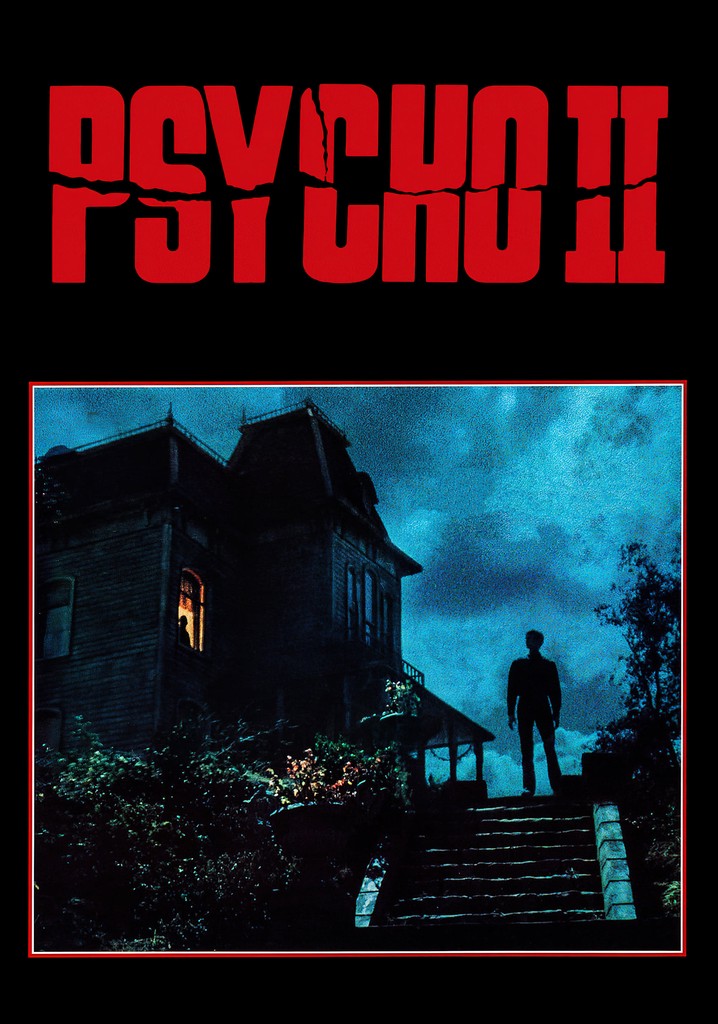
Psycho II (1983)

psycho2

By Richard Winters

My Rating: 7 out of 10

4-Word Review: Norman Bates comes home.

After 22 years of being confined to a mental institution over the murders of 5 people Norman Bates (Anthony Perkins) is now deemed to be no longer a menace to society much to the protest of Lila Crane (Vera Miles) whose sister Marion was one of his victims. With nowhere else to go Norman returns to the old house that he shared with his mother and tries to restart his hotel business that had been run while he was incarcerated by Warren (Dennis Franz) who had allowed the place to be turned into a flophouse for drug users and is immediately fired. To help bring in an income he gets a job at a nearby cafe as a cook where he meets Mary (Meg Tilly) who works there as a waitress. The two quickly start-up a friendship and when Norman learns that she’s broken-up with her boyfriend and no place to stay he offers a bedroom in his house for her to sleepover, but soon Norman starts receiving notes and even phone calls from someone perpetuating to be his mother and then murders begin occurring by someone dressed as an old lady. Has Norman gone back to his old homicidal ways, or is it someone else trying to make it look like it’s him, so that he’ll be rearrested and sent back to prison?

The attempt to make a sequel to the Hitchcock classic had been discussed for years and apparently even the master himself had considered it, but the studios generally nixed the idea figuring there was just no way to upstage the first one. Then Robert Bloch, who written the novel that the first one was based on, came out with a second installment also called ‘Psycho II’ that was published in 1982 that helped spark new interest in the franchise. However, the book’s plot was far different than this one. In the novel version Norman escapes from the mental institution while dressed in a nun’s outfit and then hitches a ride with another nun whom he kills and then rapes. After absconding with her van he then picks up a males hitch-hiker whom he plans to kill and then use his body to fake his own death. Police later find the burning van and charred remains, but are unable to identify who it is. Meanwhile across town a movie is being made about Norman’s life and Norman’s psychiatrist fears that Norman is going to go there to kill everyone in the production, so he decides to become a ‘technical advisor’ to the film to help watch out for the crew, but while there he starts to become more worried about the film’s director who’s a spitting image of Norman from 20 years earlier and he reveals an unhealthy infatuation with the actress playing Marion Crane.

While I found the book to be highly creative the studio execs disliked its satirical elements regarding the movie business and discarded it while hiring Tom Holland, who had some success with the 1978 horror TV-Movie ‘The Initiation of Sarah’ and also the screen adaptation of The Beast Within to write a script with a more conventional storyline. While this story isn’t bad, I personally liked the Bloch version better, this one does have some logic holes mainly around releasing someone who’s killed several people from well published crimes and clearly suffering from a severe mentally ill state and yet somehow convincing the parole board and public at-large that he’s now ‘cured’, which really pushes the plausibility meter. The film also portrays Norman as being a likable guy just trying to find his way, which is awkward since the viewer is technically supposed to be fearing him, but half the time ends up sympathizing with him instead and this dueling dichotomy doesn’t work.

The acting though is terrific especially Perkins who makes his portrayal of Norman into an almost art form and the most enjoyable element of the movie though he initially was reluctant to recreate the role complaining that it hurt his career playing the part in the first one and it had caused him to become typecast, but when he found out that they were planning to cast Christopher Walken in the part if he rejected it he then decided to come-on board. Dennis Franz is also a delight as nobody can play a brash, blue-collar out-of-shape ‘tough guy’ quite like him and his taunting, loud-mouth ways help bring an element of dark humor to the proceedings.

Spoiler Alert!

My favorite though was Meg Tilly who helps tie all the of the craziness around her together by being the one normal person of the whole bunch. Reportedly she and Perkins did not get along and she refused to attend the film’s premiere though the frostiness of their relationship doesn’t show on the screen and the two end-up working well together. The only thing that I didn’t like was the misguided twist of her turning out to being the daughter of the Vera Miles character and in cahoots with her in her attempt to drive Norman crazy. For one thing if this were true then it should’ve been Meg instigating the idea of her moving into the house with him versus Norman coming up with the idea and her seeming reluctant.

The film has some good creepy camera angles of the home, which seems even more frightening here especially with the way it’s isolated desert setting gets played-up. There’s also a couple of gory killings, which I liked, but the second-half does drag and the movie could’ve been shortened by a good 20-minutes. However, the film’s conclusion where Norman learns the his mother’s sister, played by Claudia Bryar, is actually his real mother and she was behind the recent murders was a perfect ironic angle that took me by surprise and I loved it. Why he would then proceed to kill her with a shovel I didn’t really get as it seemed they could’ve started-up some weird bond and became a homicidal couple, which would’ve been more frightening, but still it’s a cool twist either way and helps make this a decent sequel.

My Rating: 7 out of 10

Released: June 3, 1983

Runtime: 1 Hour 53 Minutes

Rated R

Director: Richard Franklin

Studio: Universal

Available: DVD, Blu-ray, Amazon Video, YouTube

Psycho (1960)

psycho

By Richard Winters

My Rating: 9 out of 10

4-Word Review: Don’t take a shower.

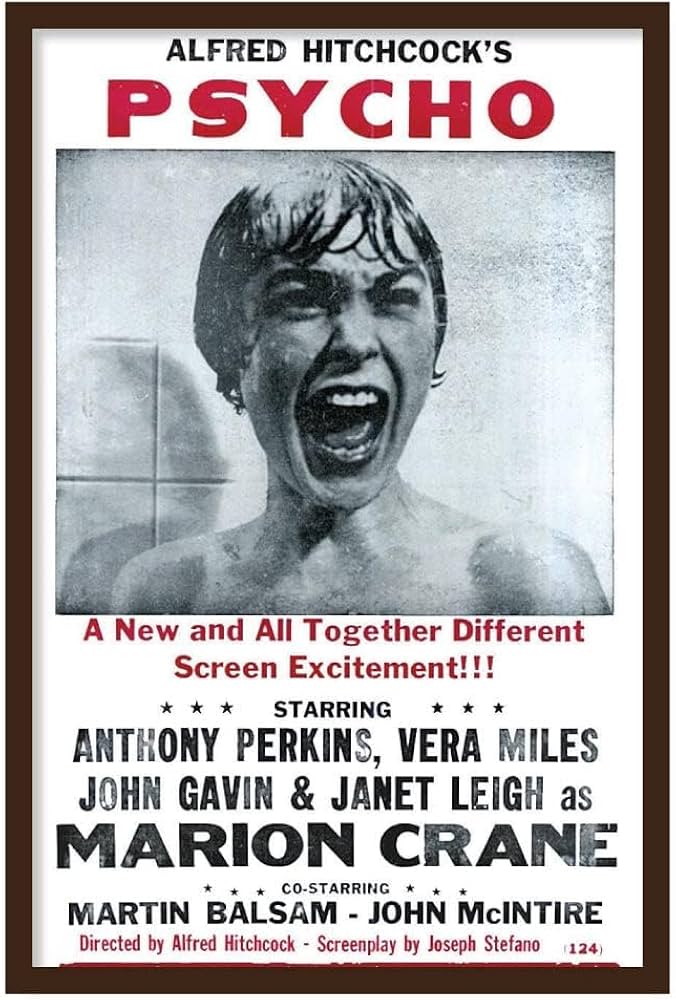
Marion Crane (Janet Leigh), who works as a secretary at a real estate firm, steals $40,000 in cash from her boss (Vaughn Taylor), who trusted her to take the money to the bank, in order to help her boyfriend Sam (John Gavin) pay off his debts. As she’s traveling to where he lives she encounters a rainstorm causing her to take the nearest exit. There she drives into the lot of a isolated lodge called Bates Motel, run by a young man named Norman (Anthony Perkins) who’s still living with his mother in an old rundown house that sits ominously on a hill behind the hotel rooms.  Norman becomes immediately smitten to the woman, who signs the hotel ledger under an assumed name, and invites her to have dinner with him in the hotel office. Marion, who sees him as a awkward, but otherwise harmless guy who’s still dominated by his mother, agrees. After they eat she departs back to her room and takes a shower when what appears to be his mother, who considers all women to be ‘whores’, stabs and kills her. Norman then cleans-up the evidence by submerging the dead body and her car in a nearby swamp. Soon a private detective named Arbogast (Martin Balsam) begins investigating the case and what he finds out leads Marion’s boyfriend Sam and her sister Lila (Vera Miles) to the property where they’ll unravel a shocking secret.

The film, which at the time was considered ‘too tawdry and salacious’ to be made into a movie and thus the studio refused to give director Alfred Hitchcock the required funding and forcing him to use his own funds and crew to produce it, was based on the novel of the same name by Robert Bloch. Bloch began writing it in 1957 when coincidentally in the neighboring town not more than 35 miles from his came to the light the criminal activities of Ed Gein who killed two people while also digging up dead bodies and then skinning them in an effort to create a ‘woman suit’ he could wear so he’d ‘become his dead mother’ who had dominated him for the majority of his life. Rumors were that Gein’s crimes had inspired the book, but Bloch insisted that he had almost finished with the manuscript before he became aware of the real-life case and then became shocked with how closely it resided with his story.

While the film follows the book pretty closely there are a few differences. In the book the Marion character dies from decapitation while in the movie it’s from stab wounds. The Norman character is described as an overweight man in his 40’s while in the movie he’s thin and in his 20’s, which I felt was an improvement as it made more sense why Marion would feel less guarded around him and put herself in a more vulnerable position than she might otherwise as she still viewed him as a ‘wet-behind-the-ears’ kid. It also helps explain why Norman blunders his interview with the detective and virtually incriminates himself because he was too sheltered and not worldly-wise enough to handle pressure situations.

The film is full of a lot of firsts. It was the first to show a toilet or use the word transvestite, but what I really liked though is that it takes a different spin on the character of the victim. Typically, even today, victims are portrayed as being virginal and angelic beings particularly women, but here it works against that. Right away with the opening scene in the hotel room we see she’s definitely no virgin and what’s more she’s having sex outside of wedlock in an era where ‘good girls saved themselves for marriage’. Having her then be susceptible to corruption by stealing from her employer, or not feel frightened initially by Norman and even superior to him further works against the grain of the ‘sweet, fragile damsel in distress’ cliche and makes her seem more human since she’s not perfect and vulnerable to the same vices as everyone else, which in-turn gives the more an added darker dimension.

The film’s hallmark though is its memorable camera work from a close-up of the victim’s unblinking eye, still not sure how Leigh could’ve kept her eyes open for as long as she does, to the interesting way the house gets captured from the ground looking upward on a hill towards the sky with the creepy night clouds floating behind it.  My favorite one though is the tracking shot showing Norman walking into his mother’s room and then having the camera stop right at the top of the door frame and then spin around towards the hallway as he then leaves the room and carries his mother down the stairs. The only shot that I didn’t care for is when the Martin Balsam character gets stabbed at the top of the stairs, but instead of immediately falling over backwards and then rolling down the stairs, which is what would happen 99% of the time, he instead somehow ‘glides’ down an entire flight of stairs backwards while remaining upright and only finally falling to the floor once he hits the bottom, which goes against the basic laws of physics and to me looks fake and goofy, but other than that it’s a classic and still holds-up amongst the best horror movies made.

My Rating: 9 out of 10

Released: June 16, 1960

Runtime: 1 Hour 49 Minutes

Director: Alfred Hitchcock

Studio: Paramount

Available: DVD, Blu-ray, Amazon Video, YouTube

Same Time, Next Year (1978)

sametime

By Richard Winters

My Rating: 6 out of 10

4-Word Review: Affair lasts 26 years.

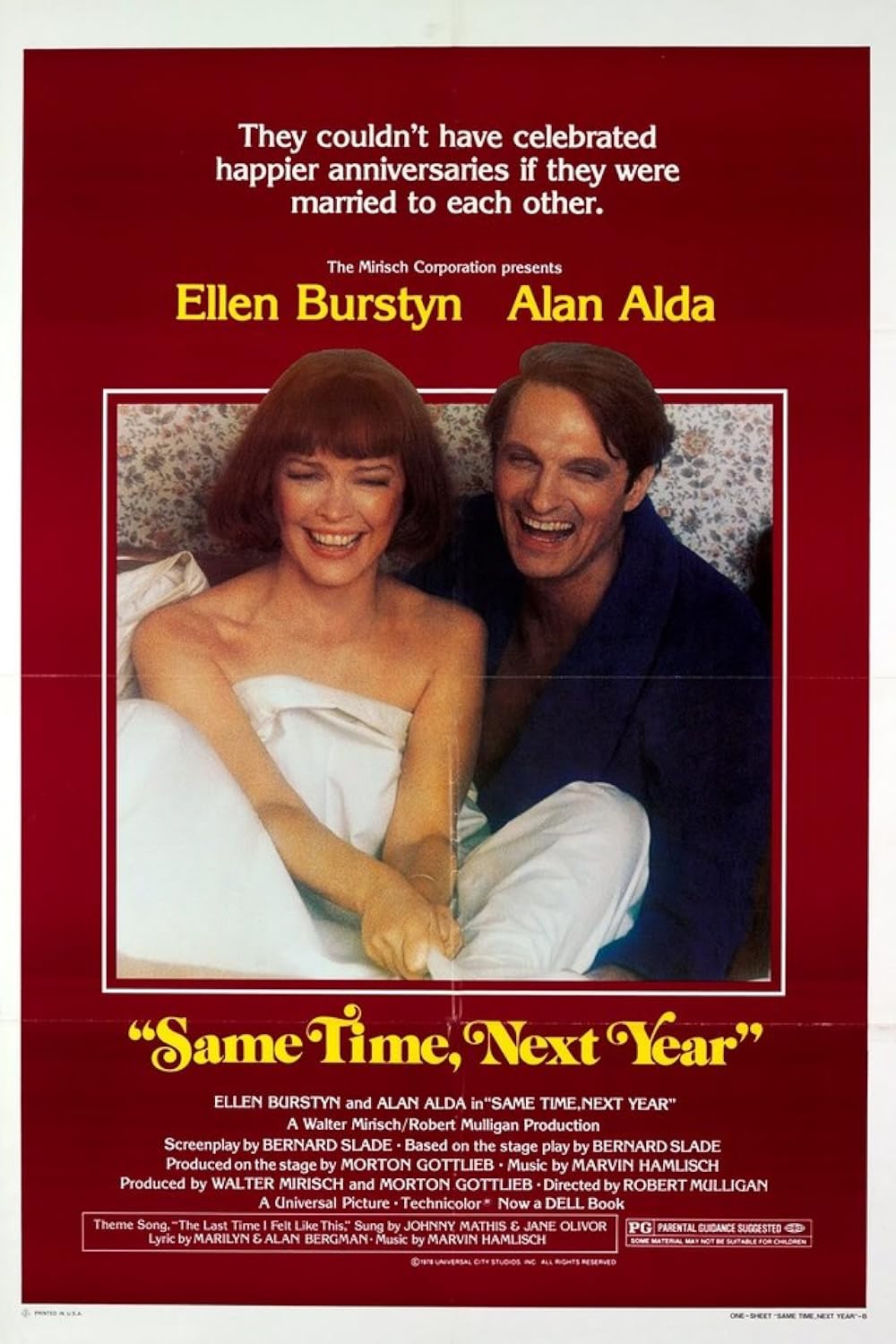
George (Alan Alda) meets Doris while staying at an inn in California in 1951. Both George and Doris are married with kids, but that doesn’t stop them from having a tryst while they’re there since neither of their spouses are with them. They decide to continue to meet each year at the same time and inside the same oceanside cabin. This reoccurring rendezvous lasts all the way up to 1977 and they go through many changes both in their personal lives and personalities, but remain in-love with the other despite never divorcing from their spouses.

While there’s a definite Neil Simon quality to the dialogue and situational comedy it was actually written by Bernard Slade who at that time was best known for creating the sitcoms ‘The Flying Nun’ and ‘The Partridge Family’. Originally it opened as a play on March 14, 1975 and starred Ellen Burstyn and Charles Grodin and ran for 1,453 performances. Slade also wrote the screenplay to which he was nominated for an Oscar.

While the interiors were filmed on a soundstage the outer portion of the cottage was built specifically for the film and when shooting was completed it was decided to move this foundation to a location in Little River, California with the interiors fitted with the furnishings that had been used on the soundstage during filming and then allowing couples to rent it out. This became so popular that the cabin was split into two with one called ‘Same Time’ and the other ‘Next Year’ and can still be rented out for a romantic getaway to this very day.

While the film stays faithful to the stage version I felt there should’ve been added context revolving around how they meet. We see them first making contact as they enter the inn to check-in and then they have dinner at separate tables before Alda invites himself over to eat at Burstyn’s, but we never hear their dialogue and instead get treated to sappy music, which could’ve easily been chucked and not missed. It also fails to answer one of the plot’s more crucial questions: why would a married woman with kids be traveling the countryside all by herself? For Alda it could make some sense as it was socially acceptable for a man to be traveling single for business reasons, but woman at that time were pretty much stuck in the home doing the majority of the child rearing, so what would her reason be for being out on the road all alone? Maybe she was visiting relatives, but you’d think if that were the case they’d let her stay at their place, or she’d bring her kids along, but either way there needed to be an explanation and there isn’t any.

The fact that they’re able to continue to do this for literally two and a half decades without the spouses finding out for the most part begs a lot of questions. What excuses were they giving their families, so that they could continue to keep meeting at the exact same time of year? Having an angry spouse secretly follow them and then unexpectedly show-up could’ve added some extra spice and if this situation had occurred in real-life most likely that would’ve ultimately happened.

While this may sound like nit-picking I had issues with the cabin setting too. Don’t get me wrong it’s scenic and I loved the outdoor moments where you get a great view of the shore and pine trees, but the interior of the place should’ve changed, or been updated with the times instead of the furniture and the placement of it looking virtually the same for 26 years. Make-up work could’ve been done on Ivan Bonar who plays the Inn’s owner and while the two stars age in interesting ways he remains ancient looking right from the start and never changes.

On the plus side I found both Burstyn and Alda to be fabulous and I enjoyed their comic, and sometimes dramatic, interplay even though their transitions in personalities proves a bit problematic. Normally as people age their attitudes and perspectives can shift, but it’s more linear and not herky-jerky like here. For instance during the 60’s Burstyn gets into the flower child movement only to, by the 70’s, become a business owner and a part of the establishment. Alda too goes from hardcore conservative during the 60’s, even admitting to voting for Barry Goldwater, to necklace wearing lib by the 70’s, which seemed like these characters were just conforming to the trends and attitudes of the day like caricatures instead of real people.

Spoiler Alert!

All of the quibbles listed above I could’ve forgiven, but the ending I found annoying. I actually liked the idea that George’s wife dies and he meets someone else and she won’t allow him to keep seeing Burstyn, so he then puts pressure on Burstyn to divorce her husband and marry him, which she refuses, so he then walks-out. This I found to be very realistic as most affairs don’t last this long anyways, so the memories and good times they had would be treat in itself and should be left at that. For Alda then to walk back-in and say it had all been a lie and they could continue to get together ‘forever’ was too far-fetched for a concept that had been pushing the plausibility to begin with. Everything needs to end at some point as even ‘perfect marriages’ will stop when one partner dies. The audience saw the first meeting, so they should’ve been treated to the last one too. Even if it meant having them elderly and entering with their walkers it should’ve been shown and the story given, one way or another, a finality of some sort.

My Rating: 6 out of 10

Released: November 22, 1978

Runtime: 1 Hour 59 Minutes

Rated PG

Director: Robert Mulligan

Studio: Universal

Available: DVD-R

Who can Kill a Child? (1976)

who3

By Richard Winters

My Rating: 6 out of 10

4-Word Review: Children kill the adults.

Tom (Lewis Fiander) and Evelyn (Prunella Ransome), who is pregnant, travel to an island off the coast of Spain in order to find some peace and quiet while on vacation. Once they arrive they find the place conspicuously devoid of any adults with many of the shops and bars looking like they’ve been abandoned. The only people around are children who behave strangely and will not talk to Tom, or Evelyn even when spoken to directly. They then come upon an adult survivor named Padre (Antonio Iranzo) who describes to them how the night before the children suddenly went crazy and began killing all the adults on the island without any provocation. Can Tom and Evelyn escape, or will they become yet another victim?

While there’s been other movies detailing children, or even groups of kids, who murder the adults around them this one is considered the granddaddy of all of them and, though not ever verified, the possible inspiration to Stephen King’s Children of the Corn. The film’s creepiness comes not so much with scares, as there’s very little of that, but more through its quiet atmosphere and isolation that grows increasingly more ominous as it goes. Violence-wise it’s scarce with only the minimum of gore though the sequence done over the opening credits, which has grisly real-life footage of victims of the Holocaust as well as both the Korean and Vietnam Wars is not for the squeamish and may be too explicit and grim for some to sit through.

The script was written in only a matter of 4 short days and it shows with character motivations that aren’t particularly well thought out. For instance I didn’t understand why Tom wouldn’t tell Evelyn about what he saw, in regards to the child beating up and eventually killing an old man, and wanted to somehow play down and even lie about what was going on. This is a pregnant woman who has a right to know about the dangers lurking about. Shielding her from the horrifying realities isn’t going to help her be alert and put up her defenses and if anything just make her more vulnerable to be taken advantage of by the kids. What kind of husband lies to his wife about such urgent matters? Does he think because she’s female she won’t be ‘strong enough’ to handle the truth? If so it makes him sexist and not particularly likable because of it.

Tom also is too slow to respond to things. Even after witnessing first hand the children’s atrocities he doesn’t immediately try to arm himself, get off the island, or board him and his wife off in some sort of safe room with a fortified door. Instead they remain pretty much out in the open in an abandoned hotel with both the entrances and exits wide open for anyone to come into. At one point he even gives his wife a sedative and tells her to take a nap inside one of the hotel rooms while leaving the door open as he goes downstairs to speak to the male survivor, but how does he know a kid won’t sneak into the room while he’s gone?

It’s strange too how the children kill a Dutch woman and even strip off her clothes, but when Tom walks in they all scurry away. If they’ve already killed a vast number of adults why would they fear Tom when he comes in and instead not just attack him too? For that matter why does Tom feel so emboldened to walk in on these kids to begin with? He’s seen what terrible things they can do, so why does he risk exposing himself to them? These clearly aren’t normal kids, so he should remain at a safe distance and view what they’re doing from a hiding spot.

While there’s creepy moments and imagery it all mainly comes during the third act and some more scares and action earlier could’ve helped. The special effects aren’t too great either with the shot of the bloodied old man, whose supposedly just been killed, clearly still breathing as his chest heaves up and down, though Tom carries him away like he’s now nothing more than a corpse. Having Padre describe the violent attacks of the children onto the adults from the previous night was disappointing as this should’ve been played out visually, even if through flashback, as it would be much scarier to see this instead of just being told about it.

Spoiler Alert!

The ending has its fair share of suspenseful moments, but again more logic loopholes. When Tom and Prunella are trapped in a room behind a wooden door a small child crawls through the window space and tries to shoot at them, but Tom manages to hit the kid with a bullet first with a rifle he’s found. The other kids then quit trying to break the door down the couple are in once they hear the shot and all go filing away. Tom says this is because none of the other adults responded with aggression and violence towards them like he did. Once they realized, by hearing the gunshot, that Tom meant business they all backed off knowing that he might kill them as well. However, the kids could not see through the door, the tiny window on it was too high up for them to look through, so for all they knew the gunshot was the sound of the small kid shooting the couple with his gun and therefore they should’ve continued the attack and not immediately stopped.

The children are also able to somehow brainwash their peers into doing their evil bidding by simply looking into their eyes, which somehow puts them under a spell. They even use this power to get the fetus inside Evelyn’s womb to attack her, but where do they get this power from? What kind of entity is behind all of this? Nothing gets answered, which leaves too many questions open and thus not as effective as it could’ve been.

My Rating: 6 out of 10

Released: April 26, 1976

Runtime: 1 Hour 53 Minutes

Rated R

Director: Narciso Ibanez Serrador

Studio: Penta Films

Available: DVD (Region 0), Blu-ray (Region B/2)

Terror at Red Wolf Inn (1972)

terror1

By Richard Winters

My Rating: 4 out of 10

4-Word Review: An appetite for humans.

Regina (Linda Gillen) is a shy college student living in a dorm by herself who doesn’t have enough money to go to Spring break with the rest of her friends, so she’s forced to stay on the campus all alone while the others go. Then she receives a letter telling her that she’s won a free trip to a bed and breakfast resort called the Red Wolf Inn. She’s offered a private plane ride to get there and once she arrives she’s greeted by a kindly elderly couple (Arthur Space, Mary Jackson) who own the place and two other women, Pamela (Janet Wood) and Edwina (Margaret Avery), who are also staying there, as well as the couple’s adult grandson Baby John (John Neilson). While things start out well Regina soon grows uncomfortable and convinced that the couple has ulterior motives. When both Pamela and Edwina disappear Regina fears she’ll be next, but her efforts to escape are thwarted trapping her in the home to become the next meal item unless she can convince Baby John, who has fallen for her, to help her find a way out.

This very odd piece of 70’s horror that seems to want to combine a grisly theme with offbeat humor definitely has a few keen moments. My favorite was the way Regina finds out that she’s ‘won something’ and excitedly shouts it out to her otherwise empty dorm building. Some may consider this exaggerated as most people today would be highly cynical of such a letter, but back in the 70’s, (and I was around then), the teens were more trusting and had a propensity to be experimental and act as if life was just one big adventure, so in that respect the movie gets it right and this became for me one of the funnier moments The only caveat is how did the couple find out about Regina to send her the letter? Why was she chosen and how often and how many of these letters did they mail and how many of them got answered, which never gets addressed, but should’ve.

On the horror end its not very scarry and only borderline creepy. There is a dream sequence that had the potential of being cool, but doesn’t go on long enough. Regina’s attempt at escape I did like, but it does leave open plenty of loopholes like why was a motorboat, that wasn’t tied to any dock, conveniently left out in the bay for her to swim to? Initially I though it was an intended trap and she’d get into it and see dead bodies lying there, but that’s not the case as she uses it to get over to a neighbor’s house, but no ones inside and all the other buildings in the area are eerily empty, but why? The dinner scene in which everyone chomps at their food like pigs could’ve been considered revolting and upsetting had it been confirmed that it was people they were eating, but this wasn’t yet established, so the shock effect is lost.

Some have labeled this as a comedy-horror and one of the first films to use this sub-genre, but outside of the opening bit there really isn’t anything all that amusing. There are some moments of extreme awkwardness like when Baby John smashes the head of a baby shark repeatedly against a rock while a shocked Regina looks on in horror before he turns to her and confesses how much he loves her, which is darkly humorous in a distorted type of way, but outside of that the chuckles are as infrequent as the scares.

Spoiler Alert!

I did enjoy Mary Jackson’s performance who goes from nice old lady to threatening matron effectively, but the wrap-up leaves much to be desired. Initially it’s sort-of exciting as Regina and Baby John make a daring run for it only to be chased down by the older couple’s dog and then viciously attacked by both the pet and the old man. The film then cuts to show Regina and Baby John back inside the kitchen of the grandparent’s home having supposedly gotten the upper hand, but this is a struggle that needed to be played-out, the film lacks action anyways and this would’ve offered much needed excitement and tension. Showing the old couple’s decapitated heads inside the freezer had a gory appeal, but then having the old guy look up and wink ruins it and turns the whole movie into one big stupid joke.

Some viewers insist that the 77 minute version, which is what’s available on DVD despite the cover saying it’s 90 minutes, is the edited version with certain scenes of ‘horror’, or other ‘dark’ moments left out and this is based mainly on the fact that IMDb lists the original runtime as 90 minutes and Leonard Maltin’s review book says it’s 98 minutes, but I’m not so sure. As short as the 77 minute runtime is it still came off as draggy. This was also made in an era where implying the violence and gore was considered shocking enough making me believe that the DVD cut is pretty much the whole thing. Even if a longer version may exist it’s doubtful that it would be filled with more carnage as it’s clear that the filmmakers were going for a soft tongue-and-cheek approach making me believe the supposed lost scenes would’ve amounted to being talky bits that wouldn’t have added much.

terror2

Alternate Title: Terror House

My Rating: 4 out of 10

Released: September 27, 1972

Runtime: 1 Hour 17 Minutes

Rated R

Director: Bud Townsend

Studio: Red Wolf Productions

Available: DVD

Hot Resort (1985)

hot

By Richard Winters

My Rating: 2 out of 10

4-Word Review: Looking for some action.

Filmed on the island of St. Kitts in the West Indies the story, or what little there is of it, follows around a group o college men lead by Brad (Bronson Pinchot) and Chuck (Dan Schneider) who travel there in order to work at the resort and earn some money over the summer. They hope also to hit-on the bikini-clad babes in-between shifts and seem to have sex much more on their minds than work. The resort manager (David Lipman) hires disciplinarian Bill Martin (Samm-Art Williams) to get them under control, but even he has a hard time keeping them in-line. The boys also clash with a group of snotty ivy leaguers, who are on the island to film a soup commercial. After having several run-ins with them the boys challenge the Ivy guys to a rowboat race and become determined to beat them even if it means cheating.

This yet another low budget production produced by The Cannon Group, which was run by Yoram Globus and his cousin Menaham Golan. They made a business of buying bottom barrel scripts and turning them into low budget productions and while some of them where a delightful surprise and even rivaled a standard Hollywood production this was certainly not one of them. The script was co-written by Boaz Davidson, who had earlier success with the Israeli teen comedy Lemon Popsicle, which was later Americanized into The Last American Virgin that was also written and directed by him, but this one has none of the comic spark of those and seems compelled to reach to the lowest common denominator possible almost challenging the viewer to see how much inane, low brow humor they’re willing to sit through before turning it off.

Granted 80’s teen sex comedies where never meant to be masterpieces, but this thing, even when compared to those others, is incredibly uninspired and adds nothing new to the otherwise tired mix. The only two things that are a bit different from the norms of that genre is that the fat guy, played by Schneider, who later went on to star in the TV-show ‘Head of the Class’, isn’t shown constantly stuffing his face with food, or the butt of all the jokes. In fact he’s portrayed as being just as hip as the others and getting more action than the rest of them.

The film also switches things around in that it isn’t the men that are on the aggressive make, but instead the women, who literally grab the guys as they’re walking and minding their own business and then bring them into a room for hot action. At one point they even swipe an elderly man off the sidewalk though it’s hard to believe that any woman could be that oversexed. It might’ve made the story more funny and at least given it a certain logic by having the females take some sort of drug that causes them to become sexual animals, but that’s not the explanation here, which just makes the shenanigans all the more insane.

I started to wonder too if these gals were on the pill because if not they risked getting pregnant, which would force them to either get a lot of abortions, or raising kids they really didn’t want all by themselves since they didn’t even bother to get the names of the guys they had fucked, and seemed to choose them at random. Also, if you really think about it, it comes-off like rape as the men constantly say no and resist making it more like we’re witnessing a crime than just a carefree sex.

The guys who play Ivy Leaguers speak in such an overblown accent that it’s not even mildly amusing, but genuinely irritating and there’s simply no way that anyone who talked like that, no matter how deluded they were, would think they were cool and not worried that people would be making fun of them behind their backs. I will give some props though to the scene where the emergency medical personal must come to the aid of a couple who get stuck inside a car that they were making love in forcing the fire department to saw off the roof of the vehicle to get them out though anyone who would even think of trying to have sex in the back seat of a tiny VW bug should have their heads examined.

Some of the supporting players are amusing particularly Stephen Stucker, who plays the same type of character that he did in Airplane! where he’d jump into a scene say something quirky and then quickly jump back out. I also enjoyed Frank Gorshin (billed as Mr. Frank Gorshin) a talented impressionist who rose to fame playing the Riddler on the ‘Batman’ TV-show. Here he plays a dirty minded middle-aged man who tries to teach the youngsters the finer points of hitting-on chicks much to the consternation of his wife (Zora Rasmussen) who sits next to him and listens in as he talks about it. Mae Questal though, who’s best known for being the voice of Betty Boop and Olive Oyl gets sorely wasted particularly in the scene where she gets ‘tricked’ into putting on a dress with a giant bullseye on the back, which her husband plans to use as a target to aim his gun at, though it’s hard to imagine any woman wouldn’t have seen this before she put it on, which just shows how stupid and poorly thought out the gags are.

Even on the level of cheap, soft core porn it’s no good. The nudity is infrequent and fleeting and the women aren’t exactly cover girls looking more like they’re around 30 and a bit ‘rough-around-the-edges’, so if you’re looking to grab this thing simply for some healthy voyeurism you’ll still end up sorely disappointed anyways.

My Rating: 2 out of 10

Released: January 14, 1985

Runtime: 1 Hour 33 Minutes

Rated R

Director: John Robins

Studio: The Cannon Group

Available: VHS, DVD-R (dvdlady.com)