Category Archives: Movies that take place in the Big Apple

Simon (1980)

By Richard Winters

My Rating: 4 out of 10

4-Word Review: College professor becomes brainwashed.

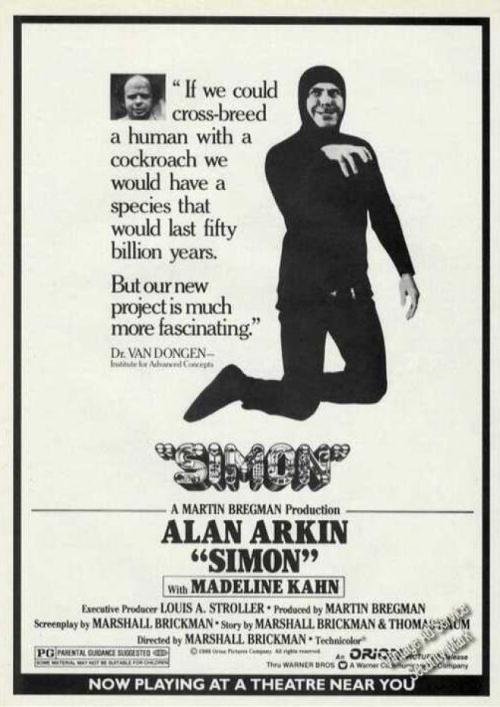
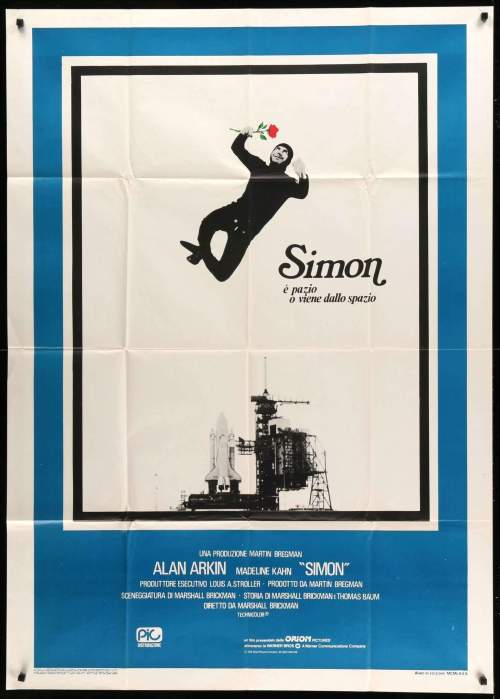
An underground group of scientists who enjoy playing elaborate pranks decide to brainwash a college professor named Simon Mendelssohn (Alan Arkin) into believing that he is an alien from another planet. After he is successfully brainwashed he then escapes from the institution and gets in with a religious cult who have a transmitter that can block the TV airwaves and allow him the ability to be seen by the entire nation where he tries to reform American culture while also becoming a celebrity sensation.

This extremely odd comical satire  seems out of place for a studio backed film and more in tune with a independent project as it’s unclear what specific type of audience the filmmakers were hoping to attract as mainstream viewers will most likely find the humor off-putting. One could describe it as being ahead-of-its-time, but the banal potshots at such overused targets as TV and American consumerism makes it seem more dated instead.

The movie would’ve worked better had it remained focused on one intended target and then ravaged the hell out of it instead of soft jabs at various safe targets, which makes its overall message muddled and unclear. There are some funny bits including watching Austin Pendleton, who is the head of the research group, making love to a giant telephone receiver, whose voice is supplied by Louise Lasser. It’s also funny having a brainwashed person such as Simon trying to brainwash others via the airwaves, which could’ve been really hilarious had they gone farther with this idea.

There’s signs that writer/director Marshall Brickman hadn’t fully thought through the quirky story idea to begin with. For instance why would this underground group of scientists allow a video crew in to film what they are doing as the members are seen at the beginning talking directly to the camera and answering questions by some unseen interviewer. Wouldn’t this allow their secret to get out and get them into trouble? The army that takes over the institute is too incompetent as Simon and his girlfriend Lisa (Judy Graubart) are able to escape from it too easily and their inability to locate Simon’s rogue TV transmitter even after days of searching is rather pathetic. I realize this is meant to be ‘funny’, but even a comedy should have some tension to it to make it more interesting and the army’s extreme buffoonery isn’t humorous at all, but just plain dumb instead.

Arkin is the one thing that saves it. His unusual acting style makes him hard to cast, but here he really delivers especially during the segment where he plays out the evolution of man, but without using any dialogue although it might’ve been funnier and more of an interesting contrast had his character not been so kooky to begin with, but instead some stuffy intellectual only to become zany once he was brainwashed.

Judy Graubart makes for a good anchor as the one normal person in the whole movie. She was best known for her work on the children’s TV-show ‘The Electric Company’ and this was her live-action film debut, which should’ve lead to a long line of film appearances, but instead she only had brief bits in two other movies and that was it.

There are signs of a great movie trying to break out and the overall concept has brilliant potential, but this is the type of film where you’ve got to go full-throttle and Brickman seems either unable or too timid to do that making what could’ve been sharp satire into a transparent, benign mess that offers only a few chuckles, but not much else.

My Rating: 4 out of 10

Released: February 1, 1980

Runtime: 1 Hour 37 Minutes

Rated PG

Director: Marshall Brickman

Studio: Orion Pictures

Available: DVD-R (Warner Archive) Amazon Video, YouTube

Mister Buddwing (1966)

By Richard Winters

My Rating: 3 out of 10

4-Word Review: He’s lost his memory.

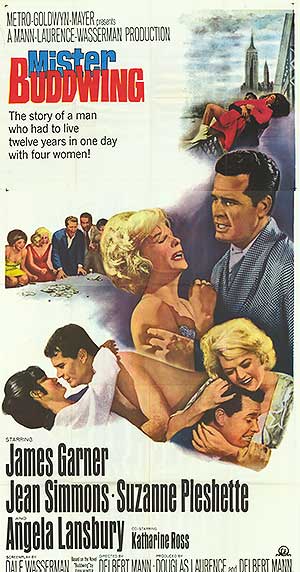
A man (James Garner) wakes up one morning to find himself on a bench in Central Park unaware of how he got there or who he is. He finds a crumpled up piece of paper in his coat pocket with a phone number scribbled on it and when he calls it a woman by the name of Gloria (Angela Lansbury) answers, but talking to her makes him even more confused. He then spends the day wandering around the city while coming up with the name Buddwing after he spots the word Budweiser on a passing truck and then looks up into the sky and sees the wings of a jet plane. He bumps  into women who remind him of someone that he knows as Grace, but every time he meets someone it just leads to more dead ends and things get even worse when he’s mistaken as being an escapee from a mental hospital.

The film is based on a novel by Evan Hunter and initially holds some intrigue. I was impressed by the flashy camera work during the opening shot and I was hoping especially with its evocative black-and-white cinematography and jazz score by Kenyon Hopkins that this would have a strong cinema vertite feel, but any potentially artsy style gets lost by a draggy script that bogs down in Buddwing’s past romantic memories that amounts to nothing more than extended talky scenes that cripples the mystery angle until you end up not caring what the answers are.

Garner’s usual appeal gets seriously strained, which is probably why in his memories ‘The Garner Files’ he calls this “The worst movie I ever made” and then asks “What was I thinking?”. Normally I admire actors that are willing to go out of their safety zone, but his constant deer-in-headlights expression becomes tiring to see and the crying that he does while inside Lansbury’s apartment seems insincere.

The one’s that come off best are the four women that he bumps into as he wanders around. All are portrayed by famous leading ladies: the fore mentioned Lansbury as well as Suzanne Pleshette, Katherine Ross, and Jean Simmons who give outstanding performances and helps keep the otherwise rocky picture afloat. However, during the flashback sequences the different actresses all end up playing the same Grace at different times, which I found confusing and off-putting.

The explanation for Buddwing’s amnesia, which apparently ends up being just the result of having some stressful event occurring in his life, is highly suspect as I’ve not read of this happening to anyone in real-life, or if it does it is extremely rare. Not only does the credibility get pushed, but Delbert Mann’s direction, with the exception of the opening shot, lacks creativity, which makes this already flat story even more of a strain to sit through.

Released: October 11, 1966

Runtime: 1 Hour 40 Minutes

Not Rated

Director: Delbert Mann

Studio: MGM

Available: DVD-R (Warner Archive), Amazon Video, YouTube

So Fine (1981)

By Richard Winters

My Rating: 2 out of 10

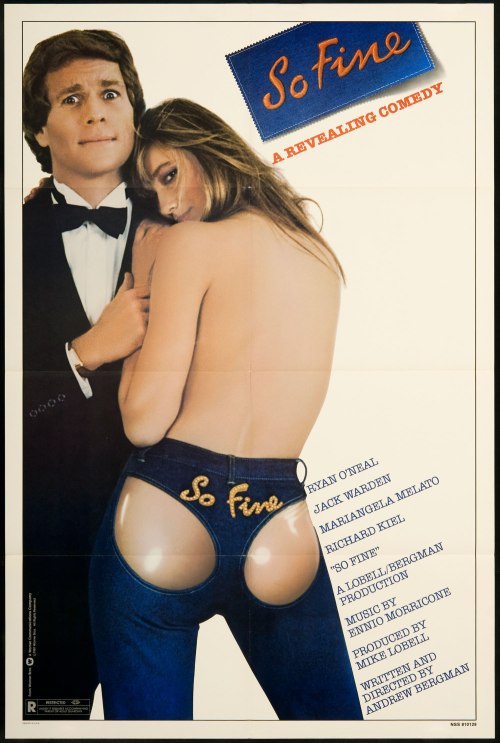
4-Word Review: Jeans that expose ass.

Bobby Fine (Ryan O’Neal) is an English professor at a college waiting to get tenure who inexplicably becomes the head of his father’s clothing company, which produces women’s apparel, when his father Jack Fine (Jack Warden) is unable to pay off a debt that he has with a local loan shark named Eddie (Richard Kiel). Bobby knows nothing about the clothing business, but inadvertently strikes on a hot idea, jeans that look like they’re revealing a woman’s butt cheeks, which becomes a huge fashion sensation. Unfortunately Bobby also starts having an affair with Eddie’s wife Lira (Mariangela Melato) which jeopardizes not only his newfound success, but his life as well.

The film was written and directed by Andrew Bergman who was just coming off great success as the screenwriter for The In-Laws and was fully expecting this film to do just as well, but instead it had less than a 2-week run in the theaters. Much of this can be blamed on the humor, which is lowbrow and farcical while failing to give any new insights into the clothing business, or anything else for that matter. The jeans themselves don’t look sexy either as plastic gets used in replacement of the real butt cheeks where exposing the actual ass would’ve been far more provocative.

O’Neal’s affair with Melato is both unfunny and dumb. Why would such a good-looking guy, who could easily get women to fall for him,  fall suddenly head-over-heals to a wife of a mobster who will kill him instantly if he found out? This guy teaches at a college, so why not get into a sexual relationship with one of the coeds, who are most likely younger and better looking than this middle-aged woman and does not have the baggage of a marriage?

The climactic sequence, which takes place at an opera is when this thing really jumps-the-shark as it features Melato coming out of the audience and agreeing to replace the leading lady on stage when she falls ill, but how would Melato have known all the words to the music without having been to any of the rehearsals? This segment also features Kiel getting on stage and becoming a part of the opera as well where he sings in fluent Italian even though it was never established earlier that he knew the language.

It was fun seeing Kiel, who built a career by playing a lot of mindless hulks most notably in the James Bond films, being given more speaking lines than usual, but I noticed the very apparent lump on his forehead, which in his other films I didn’t. Maybe this was because in the Bond movies he was given metal teeth, which is what got the viewer’s attention and took away from the lump, which here I found became a distraction.

Melato, who was a big star in Italy particularly with the films she did with director Lina Wertmuller, gets completely wasted in a thankless, one-dimensional role of an over-sexed vamp that is neither funny nor interesting. O’Neal, whose best bit may just be the perplexed expression he conveys in the film’s poster seen above, is adequate, but upstaged by Warden who is far funnier and the movie would’ve worked better had he been the star.

The jeans angle, which features a TV-ad that has Anita Morris as one of the dancers, is brief and more of a side-story while the emphasis is on O’Neal’s fling with Melato that isn’t very inspired and no surprise why this ultimately failed at the box office.

My Rating: 2 out of 10

Released: September 25, 1981

Runtime: 1 Hour 30 Minutes

Rated R

Director: Andrew Bergman

Studio: Warner Brothers

Available: DVD-R (Warner Archive), YouTube

She-Devil (1989)

By Richard Winters

My Rating: 3 out of 10

4-Word Review: Jilted wife gets revenge.

Ruth (Roseanne Barr) is an overweight, plain-looking woman who is married to Bob (Ed Begley Jr.) a womanizer who can’t keep his eyes or hands off other beautiful women that he sees. At a party he spots Mary (Meryl Streep) a wealthy author of romance novels and the two quickly begin a torrid affair. Ruth becomes jealous of all of this and plots a very elaborate, multi-step revenge.

This film marked a change of pace for director Susan Seidelman who burst onto the movie scene during the early 80’s with indie tinged/punk themed films like Smithereens and Desperately Seeking Susan that were subtle on the humor and heavier on the character development. Here it’s the exact opposite as the emphasis is on camp, which is fun for awhile especially the gaudy color schemes that permeate each and every shot, but eventually the broad caricatures become too one-dimensional.

Streep’s  performance as a prissy, stuck-up rich lady is the main part of the entertainment, but the motivations of her character were confusing. I didn’t understand why such a beautiful woman that was loaded with money and could get virtually any man that she wanted would want to settle for such a bland, dopey dweeb like Begley. I also couldn’t understand why she’d stick with him after his kids move into her mansion and turn her life into a living hell. She wasn’t married to him, so why not just throw him and his litter out instead of going through the torment that she does?

I liked that fact that Barr truly fits her part physically. Too many times Hollywood casts good-looking women in roles that require someone homely and feels that by cropping up their hair and putting glasses on them will do the trick, which it doesn’t, so at least here we get someone that more than looks the part especially with the giant mole that gets put on her upper lip.

However, I had issues with her character intentionally setting her house on fire by overloading the circuits and putting aerosol cans into her microwave, which would be easily detected by an inspector once the fire gets put out, so why doesn’t she end up getting arrested for arson? Also, she gets a job at a senior living facility despite not having any experience. Doesn’t anyone check an applicant’s references anymore?

The film is based on the novel ‘The Life and Loves of a She-Devil’ by Fay Weldon, but the movie strays from the original story in many ways. In the book Ruth has  sex with various men, which doesn’t get touched on here at all. She also through plastic surgery ends up resembling Mary and ultimately becoming her after the real Mary dies, which the film doesn’t show at all, but should’ve since it would’ve given it some much needed irony. Weldon also insisted that her story was about envy and not revenge, which is a point that Barry Strugatz’s script misses entirely.

Eccentric character actress Sylvia Miles gets perfectly cast as Streep’s obnoxious mother, which is great and dwarf-looking actress Linda Hunt is enjoyable as Barr’s pal, but the film comes off as a one-note joke that doesn’t know when to stop and ultimately becomes annoying.

My Rating: 3 out of 10

Released: December 8, 1989

Runtime: 1 Hour 39 Minutes

Rated PG-13

Director: Susan Seidelman

Studio: Orion Pictures

Available: DVD, Blu-ray, Amazon Video

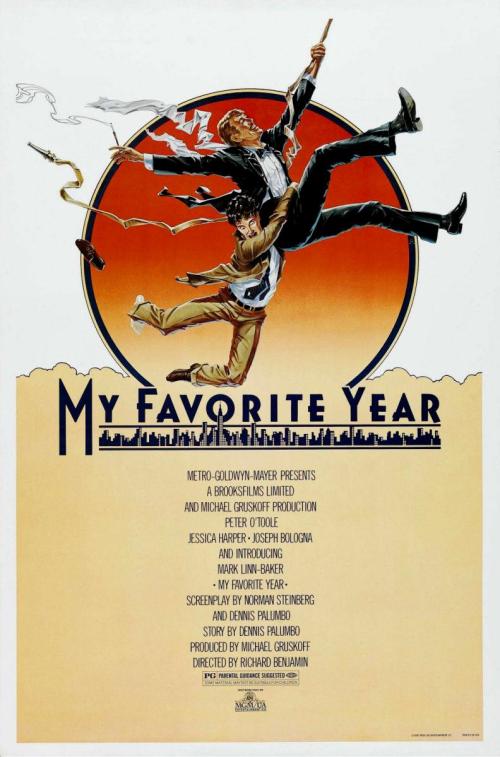
My Favorite Year (1982)

By Richard Winters

My Rating: 5 out of 10

4-Word Review: Babysitting an alcoholic actor.

The year is 1954 and Benjy (Mark Linn-Baker), who works as a junior writer at a top rated TV variety show, is put in charge of babysitting a famous matinee idol named Alan Swann (Peter O’Toole) who is set to guest star on an episode of the show. Alan is a well known alcoholic who usually finds a way to stay constantly inebriated and it’s Benjy’s job to keep him sober, which proves challenging.

The first 30 minutes of the film has some snappy dialogue and a fast, engaging pace. It’s loosely based on a real-life incident where Mel Brooks, then working as a young writer on the TV-show ‘Your Show of Shows’, was put in charge of watching Errol Flynn and making sure he stayed away from the bottle, which he apparently did making the comic situations that occur here highly fabricated.

Unfortunately by the middle half it starts to lose steam and never fully recovers. It works best during the scenes where Baker and O’Toole are together, which is where the story should’ve stayed. Instead it unwisely tries to work in a ridiculous romantic side-story between Baker and Jessica Harper, which isn’t interesting at all and even slightly creepy as Harper has clearly stated she’s not interested in getting into a relationship with him and yet he continues to pursue her and even gets jealous and acts like he ‘owns’ her when he sees her with another guy.

The film also doesn’t take enough advantage of Joseph Bologna who plays the narcissistic/ego-driven star of the show that was apparently based on Sid Caesar. Nobody can play a brash, arrogant, obnoxious guy quite like Bologna and still manage to somehow remain likable and engaging in the process, so when you got him in the cast and in top form you should use his skills to its full potential, which this film doesn’t.

The Swan character ultimately gets overblown. I didn’t have a problem with his extreme drunkenness at the start, but he begins to behave too much like some overgrown man-child like when he impulsively jumps onto a policemen’s horse and rides it for no particular reason almost like he’s from a completely different planet and no longer even slightly resembling an actual person who must deal with real consequences. Watching him meltdown without restraint when he realizes he’ll be put on live television makes him pathetic and lacking even a modicum of professionalism. Anyone as emotionally fragile as he is would never even have a chance in the real Hollywood where one must put up a tough front in order to survive in it.

Richard Benjamin’s directorial debut isn’t bad, but it does have two glaring flaws. One occurs when Baker and O’Toole are on the rooftop of a building and their images are matted over a green screen, which causes orbs to appear around their heads, which is distracting and amateurish looking.  Another one comes when at the end O’Toole saves Bologna, who’s getting beat up by some thugs on live TV, by slashing the bad guy’s clothes with his sword, which wouldn’t occur since stage props don’t actually use real blades.

The brief appearances by the raspy voiced Selma Diamond and Cameron Mitchell are gems and the film also manages to work in a few poignant moments, which is nice. Overall though the concept gets stretched too thin and becomes too cute for its own good.

My Rating: 5 out of 10

Released: October 8, 1982

Runtime: 1 Hour 32 Minutes

Rated PG

Director: Richard Benjamin

Studio: MGM

Available: DVD, YouTube

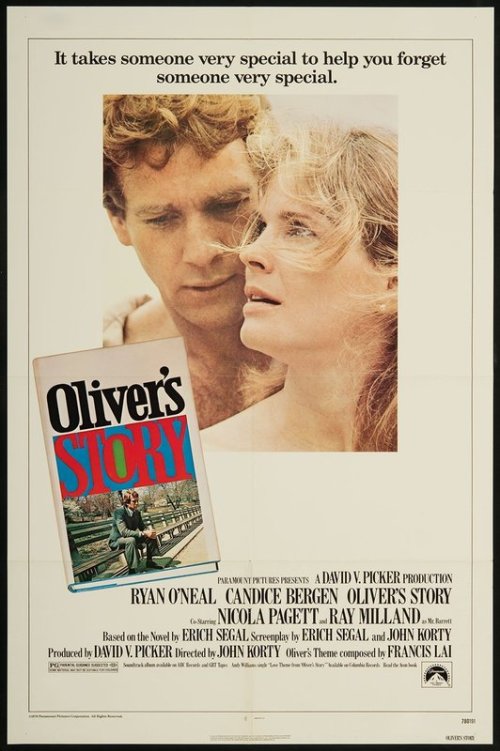
Oliver’s Story (1978)

By Richard Winters

My Rating: 3 out of 10

4-Word Review: Adjusting to wife’s death.

It’s been 6 years since Oliver (Ryan O’Neal) lost his wife to leukemia and he’s still having a hard time learning to move on from it. He hasn’t been in a serious relationship since and his friends including his step father (Edward Binns) are pressuring him to start dating. Finally by chance he meets Marci (Candice Bergen) while she is out jogging. She is secretly an heiress to a massive fortune, which allows the two to connect due to their similar well-to-do upbringings, but when things start to get serious Oliver finds himself  resisting unable to cut the ties from his past and move forward.

This is definitely a sequel that nobody asked for and in fact both O’Neal and Bergen initially had no interest doing it. The original film worked because it centered on the couple and when you take away one of them you have only half a movie. Oliver on his own is boring and watching him learn to adjust to life as a single person is not compelling and no different than the hundreds of other movies dealing with the dating scene.

John Marley, who played Jenny’s father in the first film, refused to appear in this one because he was unhappy with how his name was going to be placed in the credits, so he got replaced by Edward Binns who seems to be playing a completely different character. Here the father-in-law and Oliverhave acquired a chummy friendship and even hang out together despite this never having been established in the first film. Ray Milland reprises his role as Oliver’s father, but gets portrayed in a much more likable way while in the first one he came off more as a heavy.

The film’s only interesting aspect is seeing how much the social norms have changed. Here being single is considered like a disease and his pesky friends are emboldened enough to set Oliver up on dates and openly telling him that he needs to ‘get out more’ even though by today’s standards the single lifestyle is much more prevalent and accepted and doing these same types of actions now by well meaning friends would be considered intrusive and obnoxious.

Having one of the women that he meets at a dinner party invite him back to her place despite barely knowing him is something not likely to occur today either. The way though that Oliver meets Marcie is the most absurd as he quite literally chases her down while she is jogging, which would scare most women into thinking that they had a crazy stalker on their hands.

On the production end the film is competently made with the springtime scenery of New York as well as shots of the couple’s trip to Hong Kong being the only thing that I enjoyed. The story though lacks punch and drones on with too many side dramas. O’Neal’s performance is good, but his chemistry with Bergen is lacking, which ultimately makes this a production that had misfire written all over it before a single frame of it was even shot.

My Rating: 3 out of 10

Released: December 15, 1978

Runtime: 1 Hour 30 Minutes

Rated PG

Director: John Korty

Studio: Paramount

Available: DVD, Amazon Video,  YouTube

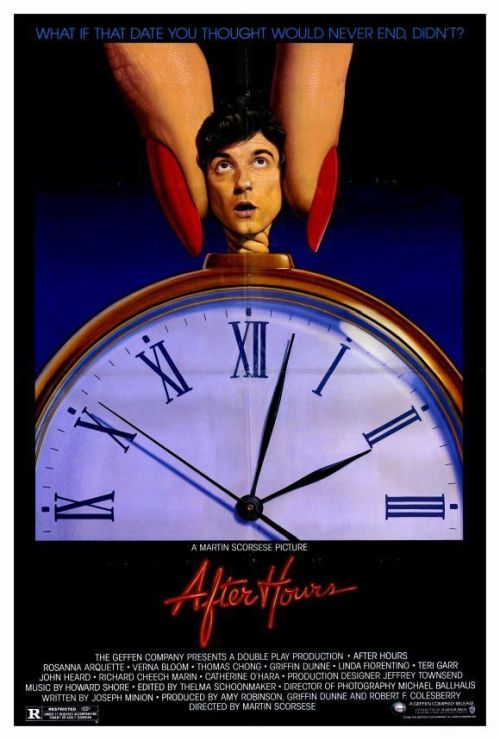
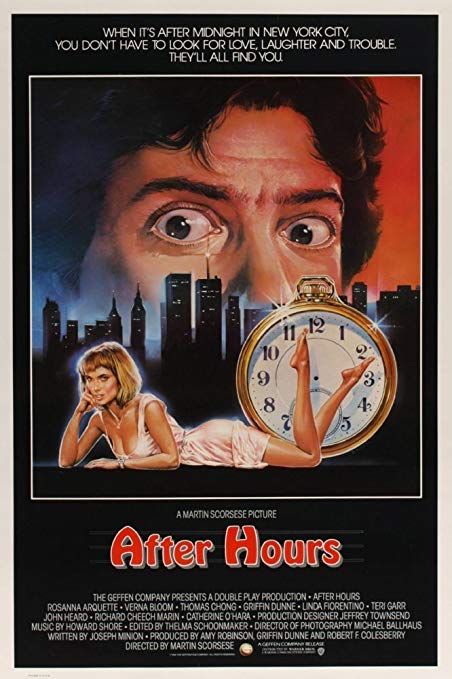
After Hours (1985)

By Richard Winters

My Rating: 8 out of 10

4-Word Review: Don’t stay out late.

Paul (Griffin Dunne) is a single man living in New York, who’s bored with his job and looking to spend his Friday night on the town in hopes that he might hook-up with an attractive woman. While at a late night cafe he meets Marcy (Rosanna Arquette) who tells him that she lives with a sculptress who makes and sells paperweights. Paul decides to use the excuse that he wants to buy one as his ruse to go over to her apartment in hopes of ‘getting lucky’. Yet when he arrives things quickly become surreal where everybody he meets behave in strange ways making his night-on-the-town a nightmarish event.

The film is based on a screenplay by Joseph Minion, who has written two other produced screenplays 1999’s On the Run and 1991’s Motorama that play off the exact same theme, and was done for the screenwriting class that he was taking at Columbia University, which got the attention of Dunne who optioned it as a project he felt would be a perfect fit for his acting style. Unbeknownst to him though was that the first part of it was based on a 30 minute-monologue piece called ‘Lies’ written by Joe Frank and broadcast on NPR radio in 1982 and when the film came out the studio was forced to pay Frank an out of court settlement because of it.

Many have felt the film’s theme is Paul’s emasculation by all the women that he meets, and to an extent that’s probably true, but for me I found it more interesting to see how despite the film’s surreal quality it’s still not that far off from truth. It’s like going out on a first date with a really attractive person who your’e excited about only to find as you get to know them that they’re really screwed-up, or meeting a new group of people who you initially think you have something in common with only to learn as you talk to them that you really don’t. It also nicely satirizes the hip/happening patrons of the club scene who walk around with a perpetual arrogant attitude of coolness, but in reality are quite hollow.

The production was filmed at night, which forced the crew to work for 10-straight weeks from sundown to sun up and then catch-up with their sleep during the day, but the effort was worth it as it helps create this underworld feel with no connection to the ‘proper’ daytime one. I also loved how it tries to explore New York’s club scene and the artsy SoHo district with all the eccentric personalities that make up that subculture, which helps to make New York the unique place that it is and which gets criminally ignored in most other movies that take place there.

The acting is excellent with everyone perfectly cast although the scenes I enjoyed the most involved Dunne’s exchanges with some lesser known performers like Murray Moston as a subway attendant and Clarence Felder as a nightclub bouncer. Credit must also go to Dunne himself who plays the normal guy role perfectly. Had he been too over-the-edge with it, or too nerdy it wouldn’t have worked as the character had to be someone the viewer could relate to while behaving/reacting to things in plausible ways in order to feed off the paradox that the more rational he was the more irrational everything else around him  became.

Spoiler Alert!

The ending proved to be the toughest part for director Martin Scorsese to implement. Originally Dunne’s character was driven away in the van still trapped in a the plaster sculpture that Gail (Verna Bloom) had put him in, but this got a negative response from the test audience, so they then considered having Dunne crawl into Bloom’s womb to hide and then getting ‘reborn’ out on the highway, but that was too bizarre.

The one that they finally came up with, which was suggested by director Michael Powell who came on as a consultant, has Dunne ending up at the office where he worked, which has added irony since most offices are boring places that people usually can’t wait to get out of.  However, it never shows how these experiences changed him and a scene should’ve been added showing Dunne afraid to ever leave and continuing to work late in the night after everyone else had gone before finally getting dragged out by the security guards.

The film also fails to explain how Dunne ever got back into his apartment since the bartender (John Heard) had taken his keys to his place earlier. A good alternative ending would’ve had Dunne falling out of the van not at the office, but at his apartment instead where he would’ve then be let in by his landlord. He would fall asleep in his bed feeling safe only to awaken with everyone that had been chasing him earlier now standing around his bedside having been let in by the bartender with the keys.

Overall this is the type of film that you wished had gone on longer as it gets funnier the more it goes on. My only quibble is that Dunne should’ve been forced to get the Mohawk when he was at the club as seeing him with one would’ve accentuated his beaten down mindset and made his appearance when he returned to work even more absurd.

My Rating: 8 out of 10

Released: September 11, 1985

Runtime: 1 Hour 37 Minutes

Rated R

Director: Martin Scorsese

Studio: Warner Brothers

Available: DVD, YouTube

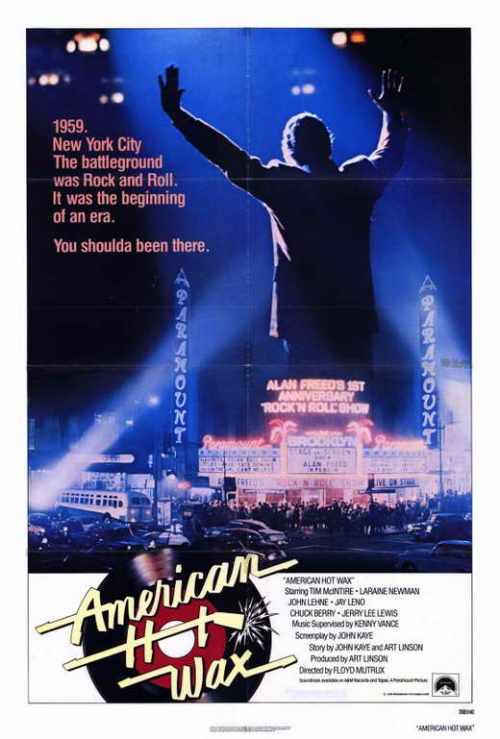
American Hot Wax (1978)

By Richard Winters

My Rating: 3 out of 10

4-Word Review: DJ plays the hits.

The film centers on real-life disc jockey (Alan Freed) who was instrumental in bringing rock ‘n’ roll music to the airwaves during the late 50’s and even credited with coining the phrase. Unfortunately he also got wrapped up in a payola scandal in which record companies paid him under-the-table to play their records on the air, which destroyed his career and left him in virtual poverty before dying in 1965 at the young age of 43 from cirrhosis of the liver.

I’ll admit I never longed for the nostalgia of the late 50’s or early 60’s.  Everything from that period seemed silly and antiquated to me and yet this film nicely brings out the excitement that people living then had. There clearly was a feeling of change on the horizon particularly in the music scene and it’s fun seeing all the young people jumping in and trying to become a part of it. The recreation of that energy is great and the one thing that this movie does well. Unfortunately it quickly becomes one-note with an unending procession of different music groups clamoring to become the next big act. Watching people stop Freed on the street and giving him a impromptu audition is at first fun, but seeing that scenario get repeated continuously is tedious.

There are some famous fresh young faces in the cast including Jay Leno, Fran Drescher, and Laraine Newman, but their parts are small and their appearances erratic. The story desperately needed a central character for the viewer to latch onto and none gets forthcoming. The barrage of people that get thrown in and then just as quickly forgotten makes the film unfocused and lacking any type of real plot.

McIntire is excellent, but his character badly undernourished. There’s a hackneyed dramatic segment where we see him conversing with his father on the phone and are given the idea that he is on rough terms with him, but it never gets explored further and for the most part we learn nothing at all about his personal life including the fact that he was married three times and had four kids, which never even gets mentioned while the payola scandal is only briefly touched on. The film would’ve had more substance had they explored the man’s personality and life more, but instead he remains as a frustratingly distant figure.

Clearly the filmmakers were looking to cash-in on the success of American Graffiti and hence the similar title, but just recreating the look and music of a bygone era isn’t enough. Even the appearances of Chuck Berry and Jerry Lee Lewis fail to save a superficial effort that justifiably bombed badly at the box office.

My Rating: 3 out of 10

Released: March 17, 1978

Runtime: 1 Hour 31 Minutes

Rated PG

Director: Floyd Mutrux

Studio: Paramount

Available: None at the time.

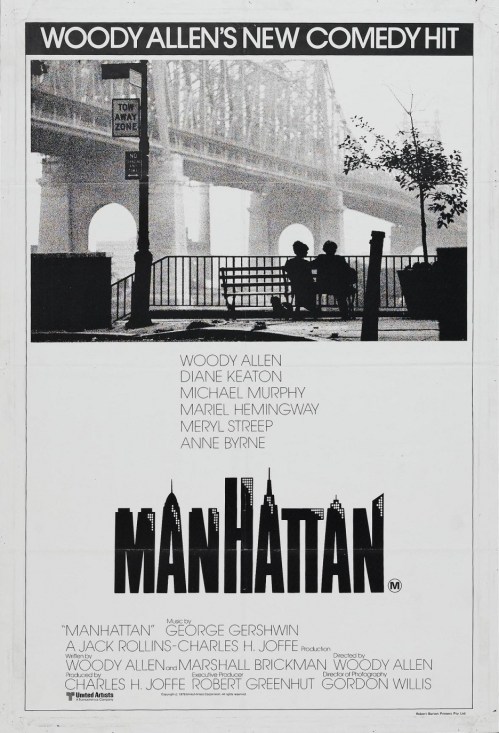
Manhattan (1979)

By Richard Winters

My Rating: 5 out of 10

4-Word Review: Writer has relationship issues.

Isaac (Woody Allen) is an unemployed TV writer who’s currently dating Tracy (Mariel Hemingway) a 17-year-old girl, but he feels guilty about this and thinks it’s only a matter of time before she moves on to someone else that is more her age. In the meantime he begins seeing Mary (Diane Keaton) who is the mistress to his best friend Yale (Michael Murphy). Eventually Isaac falls for Mary, but she then goes back to Yale forcing Isaac to beg Tracy to come back to him even as she’s prepares to go off to London to study acting.

Although this film became a critical darling I agree more with Allen himself who considers this to be the least favorite out of all of the movies he’s directed. The much ballyhooed black-and-white cinematography is a detriment especially when it shows the fireworks going off above the skyline, which if done in color would’ve been vibrant, but here it’s less than thrilling. The film also doesn’t give you much of a feel for the city since all it does is give brief shots of the skyscrapers and never any of its eclectic neighborhoods, shops, street life, or people. Looking at various photos of the city in Wikipedia gives one a far better visual taste of Manhattan then this film ever does and the George Gershwin score has unfortunately lost its uniqueness since United Airlines used it for many years for its ad campaign and I kept thinking of that the whole time it gets played here.

Allen’s trip with Keaton to a planetarium is interesting visually and their facial expressions during a visit to a concert is amusing, but otherwise the storyline dealing with their budding romance is boring and predictable. It’s fun to see, and a testament to Keaton’s great acting ability,  her playing a completely different type of person than the one she did just two years earlier in Annie Hall, but the character itself is off-putting and not someone most men would want to warm-up to. Maybe it’s the way she thinks that just because she’s from Philadelphia that makes her or anyone else from there morally superior, which I realize is meant to be amusing, but I didn’t find it that way mainly because I know people in real-life who are actually like that.

Allen’s visits with his ex-wife, played by Meryl Streep doesn’t jive either because I could not believe that they were ever compatible enough to ever have gotten married in the first place.  It’s also weird that her new partner Connie (Karen Ludwig) remains so civil and calm when in Allen’s presence since he apparently tried at one time to run her over with a car, which to me would make her not want to be anywhere near him, or even allow him into her home.

Allen’s relationship with Hemingway is the film’s only interesting aspect. Some of course may consider this to be controversial due to the wide age differences between the two although technically in the state of New York the age of consent is 17, so in the eyes of the law it was legal even though the characters themselves amusingly don’t seem aware of this. What I liked though was that Hemingway, despite being so young, comes off as the mature one in the relationship and when they’re shown walking side-by-side she is actually taller, which I found to be the funniest part of the whole movie. She also does a very convincing cry, which isn’t easy.

Unfortunately the relationship also leaves open a plethora of questions that the movie never bothers to answer. For instance where are her parents and what do they think of her living with a 42-year-old man? What do her friends think of Allen and what exactly does she see in this scrawny, whiny little man to fall-in-love with him anyways?

Supposedly her character is based on actress Stacey Nelkin who had a on-going relationship with Allen for 8 years starting when she was 16, but that made more sense because she was a young would-be starlet who most likely was mesmerized by Allen as a well-established director and who she probably saw as being her ticket to possibly breaking into the business, but here Isaac is an unemployed nobody yammering incessantly about things like Ingmar Bergman, which is something most teens can’t get into, so again I ask what does this Hemingway character see in this guy that would make her want to move in with him?

I’ve been a fan of many of Allen’s other films especially his comedies from the early 70’s and some of his dramas too, but this one left me cold. I felt that way when I first saw it over 20 years ago and nothing changed upon the second viewing as it seems to be cramming in three diametrically different storylines giving it kind of a jumbled narrative instead of just focusing on one.

My Rating: 5 out of 10

Released: April 18, 1979

Runtime: 1 Hour 36 Minutes

Rated R

Director: Woody Allen

Studio: United Artists

Available: DVD, Blu-ray, Amazon Video

Unfaithfully Yours (1984)

By Richard Winters

My Rating: 7 out of 10

4-Word Review: Conductor suspects wife’s infidelity.

Claude Eastman (Dudley Moore) is a famous orchestra conductor who’s married to Daniella (Nastassja Kinski). While he is on vacation his friend Norman (Albert Brooks) hires a detective (Richard B. Shull) to keep an eye on her and he mistakenly thinks that she’s cheating on Claude with Maximillan (Armand Assante). When Claude finds this out he comes up with a crafty plot to kill her and frame it on Maximillian, but once he tries to put the plan into action everything goes awry.

This is a remake of the film with the same title that was released in 1948 and starred Rex Harrison. That film was quite funny especially the second-half, but it wasn’t perfect and this one makes several changes to the original script that I felt actually improved it. One of the changes is that while Claude is conducting the orchestra he comes up with the plan of how he wants to kill her, but in the original it was three different ideas while here it is only one. Some viewers have complained about this, but the truth is that the other two ideas weren’t very funny or interesting, so whittling it down to only one works better.

I also felt that it was dumb at how in the original Harrison had no interest in reading the report that the private eye hands him and at one point even tries to set it on fire, but I would think any reasonable person, even if they wanted to believe that their partner wouldn’t cheat on them, would still be curious enough to want to take a look at it. In this version Moore initially resists but eventually his curiosity gets the better of him, which is how I think 99 % of other people would act if in the same situation, which therefore makes Moore’s attempts at retrieving the report after initially discarding it all the more comical.

The actual murder plan though is better handled in the first one, where if done exactly right was rather ingenious and even believable. Here though the idea that Moore comes up with has a lot of glaring holes in it right from the start including the fact that he attempts to record his wife’s laughter/screams while inside a restaurant, but the noise of the other customers would conceivably drown out the wife’s voice. The recorder is also placed too far away from where the wife is sitting making whatever noise it does pick-up from her come off as quite muffled and distant.

I felt that Harrison’s acting in the original was what really made it work, but Moore does just as good here particularly in the animated way he conducts, which is a laugh onto itself. However, the scene where he mistakenly drinks some coke that is laced with crushed tranquilizer pills, which presumably should’ve knocked him out completely, but instead it makes him behave in a slightly drunken state is too reminiscent to the alcoholic character that he played in Arthur and therefore should not have been done here due to the comparison.

Although it doesn’t quite hold-up and loses steam by the end it’s still an entertaining ride. If you’re more into classic Hollywood films, or you want to watch and compare both, then I’d say the black-and-white original is just as good as both films had me laughing-out-loud at several points and both deserve a 7 out of 10.

My Rating: 7 out of 10

Released: February 10, 1984

Runtime: 1 Hour 36 Minutes

Rated PG

Director: Howard Zieff

Studio: 20th Century Fox

Available: DVD