Category Archives: Movies that take place in Texas

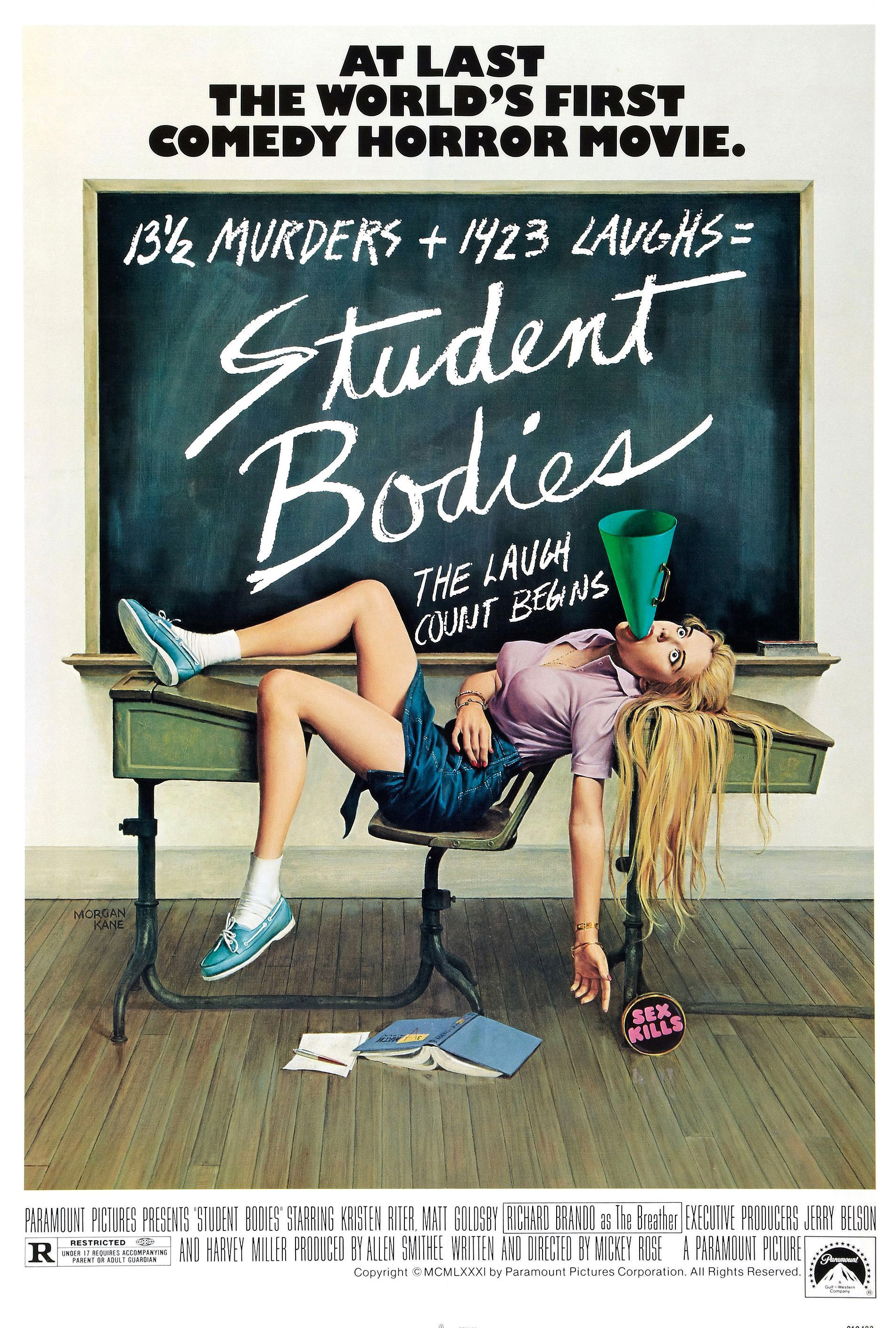
Student Bodies (1981)

By Richard Winters

My Rating: 6 out of 10

4-Word Review: Who is ‘the breather’?

A killer, simply known as ‘the breather’, is stalking students of Lamab High School. His first victims are Julie (Angela Bressler) and her boyfriend Charlie (Keith Singleton). He then proceeds to hack away more students with the police seemingly unable to do anything about it. Fellow student Toby (Kristen Riter) decides to take matters into her own hands by investigating things on her own only to end up getting incriminated as the killer, which forces her to try and convince others that she’s not the one.

This film, like Jekyll and Hyde…Together Again, is the product of the 1980 writer’s strike where Paramount was looking for scripts that could be produced on a modest budget with a nonunion crew in an effort to have some movies released to the theaters while the strike wore on. This was deemed at the time to be a perfect fit as studio heads were impressed with the box office smash Airplane that had come out a year earlier and been a parody of disaster flicks and they were hoping this film would not only cash in on audiences that had liked that one, but also for those who were into slasher films, which at the time were proving to be quite popular. The end result was a modest success with the movie making a $5.2 million profit off of a $510,000 budget. Though it really didn’t obtain its cult following until it began airing on late night cable TV during the 90’s.

While there had been horror movie parodies before those made fun of the standard haunted house theme while this was the first to satirize slasher movies, which up to that point had only been around for a few years. I was though leery as this was written and directed by Mickey Rose, best known as a script collaborator on many of Woody Allen’s movies, but who had ventured on his own to write and direct I Wonder Who’s Killer Her Now? 5 years earlier, which I considered incredibly lame and feared more of the same here. However, to my surprise, this one wasn’t bad, with probably the best moments coming right at the start, which is a perfect send-up of When a Stranger Calls. What makes this one work is that those behind the scenes, including the talented writer Jerry Belson and producer Michael Ritchie, is that they had clearly watched a lot of horror movies and therefore the humor, at least at the beginning, is laser sharp, versus other horror parodies, including Pandemonium, which came out a year later, that seemed to be made by people who really hadn’t watch horror and were just throwing in any dumb gag that they could.  The film also has an engaging protagonist, played by Riter who gives a splendid performance and it’s a shame this was her only movie.

Of course there are some detractions. The onscreen titles that flash on every once in a while, get annoying. I didn’t mind it alerting us to the body count, including when Riter kills a fly, which gets considered as a ‘1/2’ a death, but flashing on every time someone leaves a door unlocked, became a bit overdone and heavy-handed. There’s also a few ‘ program interruptions’ like when a spokesman comes on to advise that he must say the work ‘fuck’ in order to get an R-rating as those movies tend to make more money, which while somewhat funny, gives the film too much of a skit-like feel.

The film also lacks any gore or violence even though that was the whole mainstay of slasher movies to begin with. There could’ve been several reasons for this, but I think the main one was that the cultural elites at the time, and I know because I was around then, considered slasher films to be ‘lowbrow’ and onscreen blood effects as ‘tasteless’. The chic argument was that horror movies shouldn’t need gore to be scary and slasher flicks were simply a ‘passing fad’ that would eventually die off into obscurity though 40 years later the exact opposite has happened. Horror movies are now the fastest growing genre and the ‘distasteful’ slasher films of the 80’s are now considered classics. Films like Shaun of the Dead have proven that you can have a lot of blood and guts and still be funny, so this movie misses out and leads to a very boring middle half in which the humor starts to become strained mainly because they run out of ideas, which some funny gore could’ve helped fill-in. It also makes it seem like only half a parody when the main modern horror ingredient, the violence, gets completely glossed over. 

Spoiler Alert!

I did though really like the wrap-up, despite Leonard Maltin, who called the ending ‘really bad’. I considered it one of the best aspects especially the dream sequence where Riter goes down the school’s hallway and victims seemingly come back to life and pop-out of the classroom doors. The Wizard of Oz spin in which the characters from the dream, which is basically the entire movie, are shown to have the exact opposite personalities in ‘real-life’ when Riter wakes-up, I found to be quite creative. I got kick out of the Carrie take-off too, which I knew had to be coming at some point, that had Riter’s hand bursts out of the ground after she’s dead. My only quibble here is that, since it was her boyfriend who killed her and he’s the one bending over her grave, there should’ve been a knife in her hand when it comes out of the ground and thus stabbing him in revenge. 

My Rating: 6 out of 10

Released: August 7, 1981

Runtime: 1 Hour 25 Minutes

Rated R

Director: Mickey Rose

Studio: Paramount

Available: DVD, Blu-ray, Amazon Video, YouTube
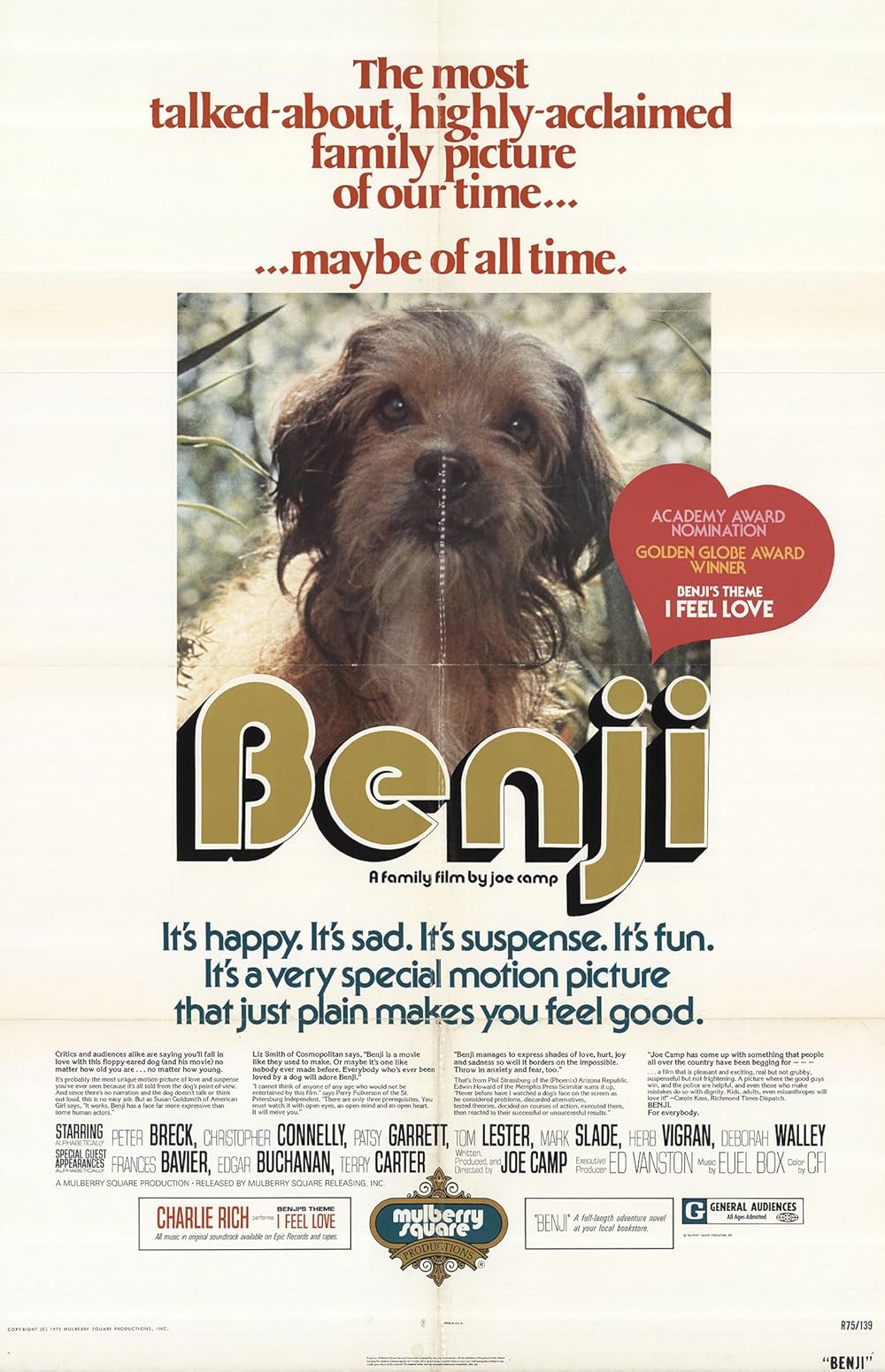
Benji (1974)

By Richard Winters

My Rating: 8 out of 10

4-Word Review: Dog saves kidnapped children.

Benji (Higgins) is a stray dog who resides in an empty house that some consider haunted in the outskirts of a small town. He regularly visits Cindy (Cynthia Smith) and Paul (Allen Fiuzat) who are children who live in a big home with their father (Peter Breck) and housekeeper Mary (Patsy Garrett). The children want to keep the dog as their own, but the father refuses insisting that strays can carry diseases and therefore it wouldn’t be safe. One day three people (Deborah Walley, Christopher Connelly, Tom Lester) break into the abandoned home, but do not notice Benji, or his poodle companion Tiffany, who hide behind a table. The three, who are led by a fourth person named Mitch (Mark Slade), plot a kidnapping and to Benji’s shock it turns out to be the two children that are the victims. He tries to alert Mary and the father, but is unable to get them to understand until he comes up with a clever tactic to clue them in. Will he be able to get them and the police to catch-on soon enough before the kidnappers move the children out of the home and into an undisclosed location?

The film was a labor of love for writer/director/producer Joe Camp who worked in advertising before deciding to get into filmmaking. The inspiration came while he was watching Lady and the Tramp on TV and concluded that there weren’t enough quality children’s films out there and decided to attempt to change that. However, when he shopped his storyline around to the various studios it got roundly rejected, so he decided to use his background in marketing to make and distribute the film himself. It was made on a modest budget of $500,000 but ended up making $45 million.

Compared to other children’s films this is an improvement as both the children and adults are portrayed as being smart, realistic people. In other kiddie flicks it seems it always has to be one way or the other with the kids being the naive ones saying cutesy, silly things and the adults chuckling about it, or dispensing preachy ‘life lessons’, or its the kids that are in the know while the adults are out-of-touch, so it’s nice when both sides can be shown as sensible and even when there are disagreements it gets handled in a respectful manner. The soundtrack doesn’t have that cheesy, singsong saccharine quality like you usually hear in this type of genre, but is instead distinct, jazzy, and even toe-tapping.

It’s impressive how the film gets literally inside the head of the dog and you see everything, including the camera angles, from his point-of-view. Most other films with animals as characters don’t do that. Usually they get paired with a human friend/owner who helps ‘narrate’ what the animal is thinking, but here there’s none of that. I was thinking, but willing to forgive the moment when one of the kidnappers pulls out a gun and Benji reveals a frightened expression though animals really won’t know what a gun is, but director Camp smartly inserts a visual showing the dog encountering a gun in the past when police confront a robber and thus explaining why the dog would understand its danger, which other filmmakers wouldn’t have bothered to show, or even thought through.

I have only two criticisms. The first one is a relatively mild complaint dealing with the behavior of the bad guys, particularly Connelly and Lester’s characters who seem unrealistically spooked by the house even though two big, tough rugged guys who are streetwise enough to commit a bold kidnapping shouldn’t believe such childish things. When they broke into the house, they should’ve gone through the entire place including the upstairs to make sure no one else, including a possible vagrant, was residing there. Also, when the kids are kidnapped, the perpetrators should’ve worn masks, or blindfolded the kids, so as not to be identified later, which seems like something that should’ve been a no-brainer.

Spoiler Alert!

The biggest issue though is when Mitch kicks the little dog named Tiffany and it appears that he’s killed her. While it does show at the very end that she was only injured as the she hobbles out of the vet clinic wearing a cast on her tiny legs it is still very traumatic for a child to see such a violent act on a defenseless animal. I remember when I watched this movie at the age of 5 in the theaters, I cried all the way home afterwards. A few years later when we watched it again on Showtime with my younger brother and sister, they cried about it too. A scene like that, even if the dog is eventually shown as surviving, wasn’t necessary and the movie should’ve certainly been given a PG-rating as the G-rating is misleading.

My Rating: 7 out of 10

Released: October 17, 1974

Runtime: 1 Hour 25 Minutes

Rated G

Director: Joe Camp

Studio: Mulberry Square Releasing

Available: DVD, Blu-ray

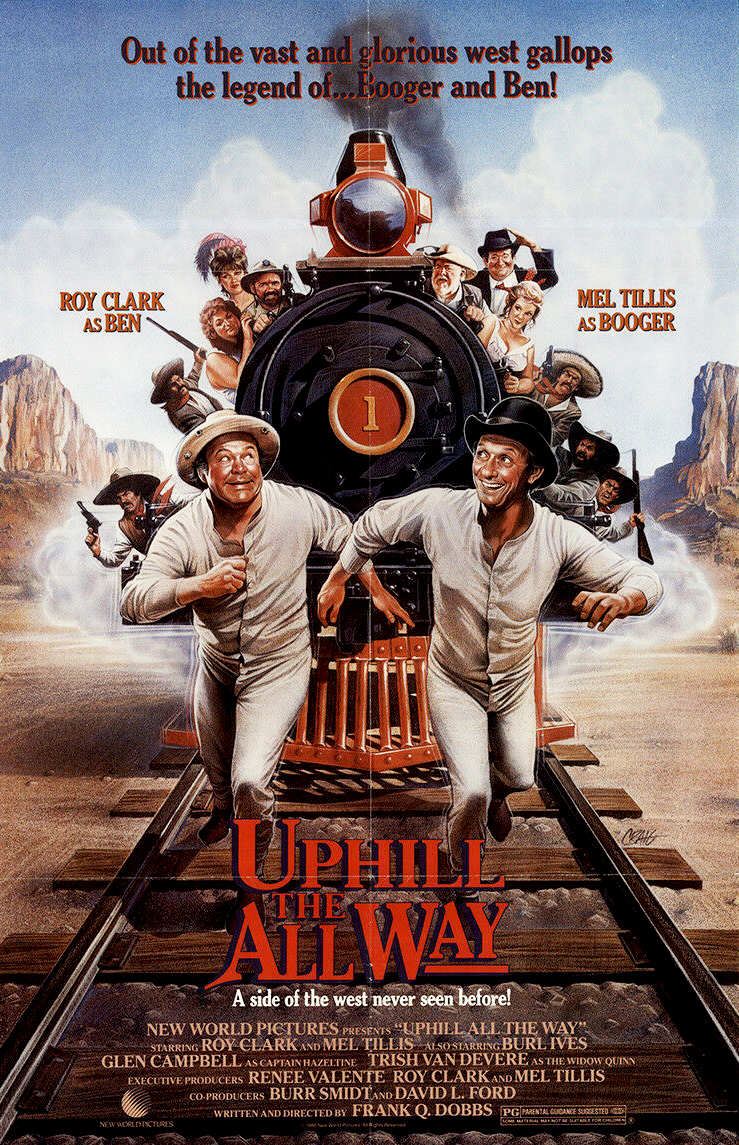
Uphill All the Way (1986)

uphill

By Richard Winters

My Rating: 2 out of 10

4-Word Review: Bumbling cowboy con-men.

Ben (Roy Clark) and Booger (Mel Tillis) are two con-men living in the old west, who don’t have a dime between them. After getting kicked-off a train for not having tickets they then venture to a saloon in order to win some money at poker, but even though they attempt to cheat, they still end up losing. In desperation they try to trade in their rifle for a loan, but the bank teller (Richard Paul) mistakenly thinks they’re trying to hold him up and sounds the alarm. The two then go on the run while being chased by a posse of sorts that includes the sheriff (Burl Ives) two prostitutes (Elaine Joyce, Jacque Lynn Colton) and the town drunk (Frank Gorshin).

The film is a misguided effort to replicate the campy, rural humor of the TV-show ‘Hee-Haw’, which Roy Clark hosted for almost 17years and which Mel Tillis made several guest appearances, and try to turn it into something resembling a movie. While the show never met any critical acclaim it still managed to succeed because all the humor, much of it being ribald and corny, was set-up into brief segments that only lasted for a few minutes if even that long and relied almost exclusively on one-liners. As soon as the punchline was uttered it would quickly move to another segment much like the variety show ‘Laugh-In’ was styled. However, trying to expand that format and silly comedy into a feature length film is virtually unworkable. Instead of a plot we get a collection of goofy situations coupled with goofy characters saying and doing cartoonish things that gets strung along with a mind numbing 90-minutes before it finally, mercifully manages to end much like putting a sick horse out of its misery.

Had the chemistry between the two stars been better it might’ve had some chance, but Tilis and Clark, both better known as country singers of which they’re very good at, don’t have what it takes to carry a movie. I was thankful at least that Tillis didn’t rely on his old stuttering routine for cheap laughs and here for the most part he articulates quite well, but he fails to have much to say that is amusing. Clark with his tubby physique coupled with his high-pitched voice seems all wrong for different reasons and his attempts at being exacerbated comes-off as affected. The banter between the two is stale and with both being in their 50’s they lack the fresh boyish charm that they might’ve otherwise been able to exude had they done this when they were in their 20’s.

The supporting cast falls equally flat. Burl Ives looks old and tired here and like he’s just phoning-it-in. Gorshin, a great and versatile talent if given the right material, is completely wasted as a drunk who does and says very little. Trish Van Devere, who during the early 70’s was considered a leading lady, reveals how sadly her career had fallen, she officially retired after doing just one more movie after this one and I think it was because she was no longer getting any quality offers, doesn’t appear until 55-minutes in and almost becomes like a background character with not much to do. Burt Reynolds does appear briefly near the beginning, he apparently accepted no fee for his work here, but is quite amusing and had he been in more scenes might’ve saved it. Elaine Joyce stands-out too as she usually played bubble-headed blondes, but here is a bitchy, angry type and does surprisingly well with it though if she’s going to be the best thing about a movie then you know it must be in real trouble.

The story is disjointed too as it starts out as a playful chase comedy then strangely diverts into an extended shoot-out where the two become hold-up in a home with another family trying to fend-off a group of bad guys that are separate from the ones chasing after them making it seem like two different, poorly realized plots meshed into one. I will give it some credit for being a movie with a Texas setting that was actually filmed in Texas unlike some other movies that say the setting is Texas when it really isn’t. You can tell that it is the Lone Star state because of the prickly pear cactus that is seen all about, which is different from the upright variety that’s seen in the deserts of Arizona and California. Though on the negative end it was shot in the month of October when the searing heat of the region was over and any good Texas movie should have the heat play a factor since that’s very much a strong characteristic of the state.

My Rating: 2 out of 10

Released: January 21, 1986

Runtime: 1 Hour 26 Minutes

Rated PG

Director: Frank Q. Dobbs

Studio: New World Pictures

Available: DVD, Blu-ray, Amazon Video, YouTube
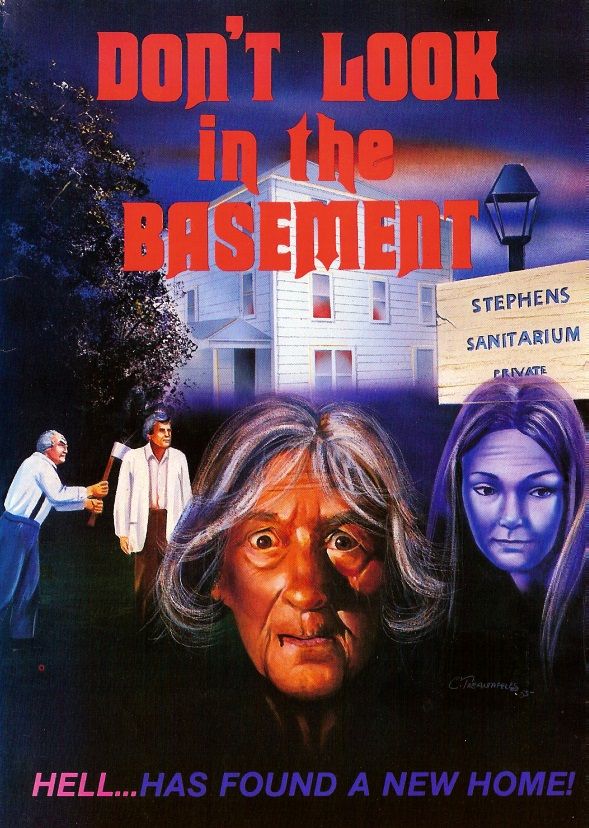
Don’t Look in the Basement (1973)

dontlook

By Richard Winters

My Rating: 2 out of 10

4-Word Review: Murder inside insane asylum.

Charlotte Beale (Rosie Holotik) gets hired by the director of a rural mental health institute, but when she arrives she finds only one nurse there, Dr. Geraldine Masters (Annabelle Weenick), who reluctantly agrees to take-in Charlotte though warning that the institute’s director was killed earlier by one of the patients, but she is determined to carry-on his work in his absence. The hospital is unusual in that it allows the patients to freely walk around with no perimeters as well as acting-out all of their fantasies versus trying to have them reeled-in back to reality. Charlotte though finds her stay there to be stressful as some of the patients try to attack her and she’s not allowed to leave the premises. She begins to wonder if she’s really there to help treat the insane, or instead slowly turned into becoming like one of them.

The film was shot in the summer of 1972 in the very small town of Tehuacana, Texas, which has a population of only 228 people. While the isolation works to some degree, particularly the exterior shots of the old white building that stands-in as the hospital, the interior action takes place in only 4 of the rooms and a hallway and thus there is no visual variety to the shot selections. You start to see the same shots over and over like a repeating loop that ultimately becomes redundant and boring.

The mentally ill patients are not captured in any type of realistic way as they’re characterized as being simpletons perpetually locked in child-like fantasies. In reality those with mental health issues can still be quite intelligent and simply suffering from dangerous delusions, thoughts, or emotional imbalance versus like here where they’re portrayed as being overgrown children lost in make believe and who never got past age 4. What’s worse is the entire thing gets solely focused on them, their silly antics and inane dialogue, making it seem more like a misguided, unfunny comedy than a horror film.

The staff members, or what little of them there are, are poorly fleshed-out as well. Nurse Charlotte immediately becomes spooked by one of the elderly residents on her first night like she’s had absolutely no training on how to handle mentally ill people. At each and every turn she gets more and more thrown off by them like someone who has no educational background in that field and the part could’ve easily just been some pedestrian thrown in there and you’d never know the difference.

The gore is quite minimal and even pathetic. When the doctor gets axed in the back he immediately falls down to the ground dead. I could understand this happening if the ax got him in the head, but instead it cuts into his shoulder, which shouldn’t have been enough to kill him, at least not instantly, and he instead should’ve been screaming out in pain versus just lying there motionless. The ax killings at the end are equally lame showing only small trickles of blood crawling down the victim’s faces when with a blade that big and that sharp their whole heads, if not entire bodies, should’ve been drowning in red.

Spoiler Alert!

The final 15-minutes are slightly creepy, but it’s not enough to make sitting through the rest of it worth it. The ‘big twist’ in which Nurse Masters is revealed to be a mental patient like the rest of them is no surprise as I had been suspecting it the whole time. There’s also no conclusion to what happens to the main character Charlotte, we see her escape outside into the rain, but not what she does after that. Does she go to the police and report what happens, or does she get committed since it’s intimated earlier that she may be crazy too, or does she just get lost in the wilderness surrounding the place and die? Nothing gets answered on this, but really should’ve.

In 2014 the director’s son, Tony Brownrigg, rebooted the franchise by doing a sequel, which was filmed at the same location as this one with one of the cast members, Camilla Carr, who was the only one still living, returning to play a part, but as a different character from the first one.

My Rating: 2 out of 10

Released: May 16, 1973

Runtime: 1 Hour 29 Minutes

Rated R

Director: S.F. Brownrigg

Studio: Hallmark Releasing Corporation

Available: DVD, Blu-ray (Region B/2), Plex, Pluto, Tubi, Amazon Video, YouTube

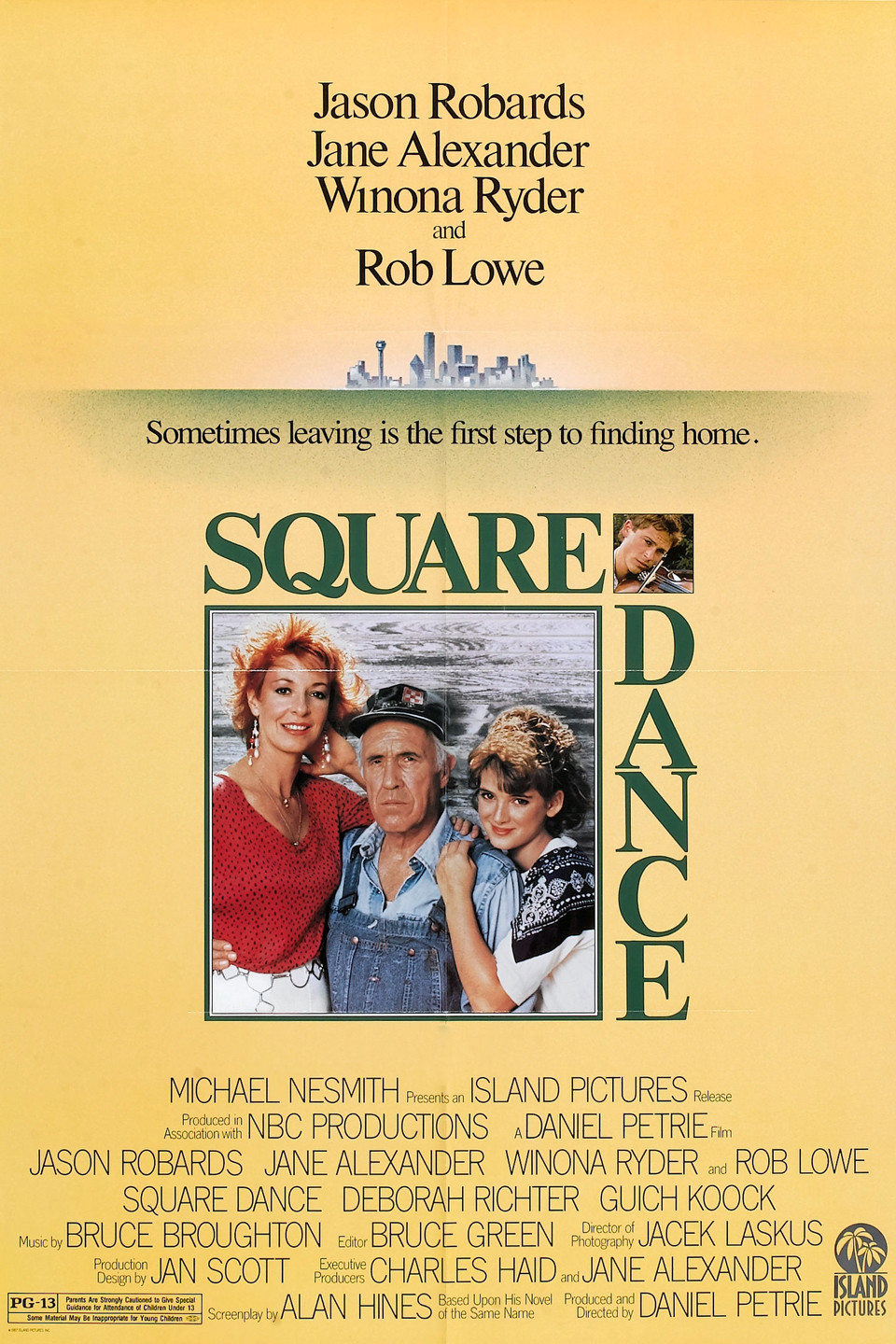
Square DANCE (1987)

square

By Richard Winters

My Rating: 3 out of 10

4-Word Review: Moving to the city.

Gemma (Winona Ryder) is a country girl whose never known life beyond the small Texas farm that she lives on with her grandfather (Jason Robards). She at times though does think about her mother (Jane Alexander) who lives in Dallas and what city living would be like. One day her mother takes a rare trip to the farm and invites Gemma to come live with her. Gemma is turning 13 and intrigued to spreading-her-wings. While she loves her grandfather she’d be interested in trying something new, so she agrees to go with her while promising to write home to her grandfather regularly. Once there she finds the jaded lifestyle of her mother and the people around her not to be to her liking as Gemma is quite religious and reads her Bible often. She does though meet-up with Rory (Rob Lowe) a young man who is mentally handicapped, but professes to love her and the two plan to one day get married despite the opposition by her mother and those around her.

This was a film produced by Michael Nesmith better known for being a part of the Monkees rock band in the 60’s. Some of the other films he produced were of a comical/surreal nature, but this is one of the few dramas that he did (the film was also co-produced by co-star Jane Alexander and actor Charles Haid) and while some of his comedies weren’t so great this thing could’ve used some laughs to help liven it up. While the intentions may have been laudable the result is mostly tedium as its attempts to reflect the slow lifestyle of country living backfires creating a movie that’s too methodically paced to ever become interesting and the fact that it managed to only recoup $225,000 at the box office out of its initial $4 million budget is no surprise.

If you watch this movie for any reason do it for the acting, which is exemplary. Ryder, in only her second film appearance, crafts a shy, awkward and sheltered teen quite well and her performance helps guide the viewer through the lulls. Robards and Alexander are equally fine, which is to be expected, but Lowe is probably the most impressive playing against type. Usually he played cocky, worldly-wise types, but here shines as a kind, but dim-witted soul though his delivery, in retrospect, comes-off too much like Tom Hanks in Forrest Gump. Granted this one came out 6 years before that one, but since that film is more famous than this one you can’t help but compare the two and come away feeling, despite Lowe’s best efforts, that his acting here is a bit affected.

The story is too minimalistic as not enough happens to justify sitting through 90-minutes of it. I had a hard time buying into Gemma believing she could marry a mentally handicapped man and having it work out. Granted she’s not worldly-wise and lacks sophistication, but I felt this type of thinking was too naïve even for someone with her background. Wanting to help the man and take care of him possibly as a guardian of some kind would be fine, but the love aspect gets overblown and makes the film come-off as overly idealized and not realistic.

None of the characters, with the exception of maybe Lowe’s, goes through much of a transition. I was expecting Gemma to become corrupted by the jaded ways of the people she meets and possibly even becoming less religious, or even beginning to question her faith, but none of that happens. Gemma basically remains the same, even after a few tussles, and returns back to the farm like nothing happened, which made me wonder what was the point. There’s way too many loose ends that are left open like the grandfather’s lingering racism and his inability to get along with a black friend he used to play with when he was a kid. Gemma invites the black man over for dinner, but the film fails to show us whether the two men begin talking, or remain silent. A good drama should give us some conclusion to things and see the characters grow, which in this case it doesn’t do making the whole thing seem half-baked and not worth the effort or time.

My Rating: 3 out of 10

Released: January 16, 1987

Runtime: 1 Hour 52 Minutes

Rated PG-13

Director: Daniel Petrie

Studio: Island Pictures

Available: DVD-R

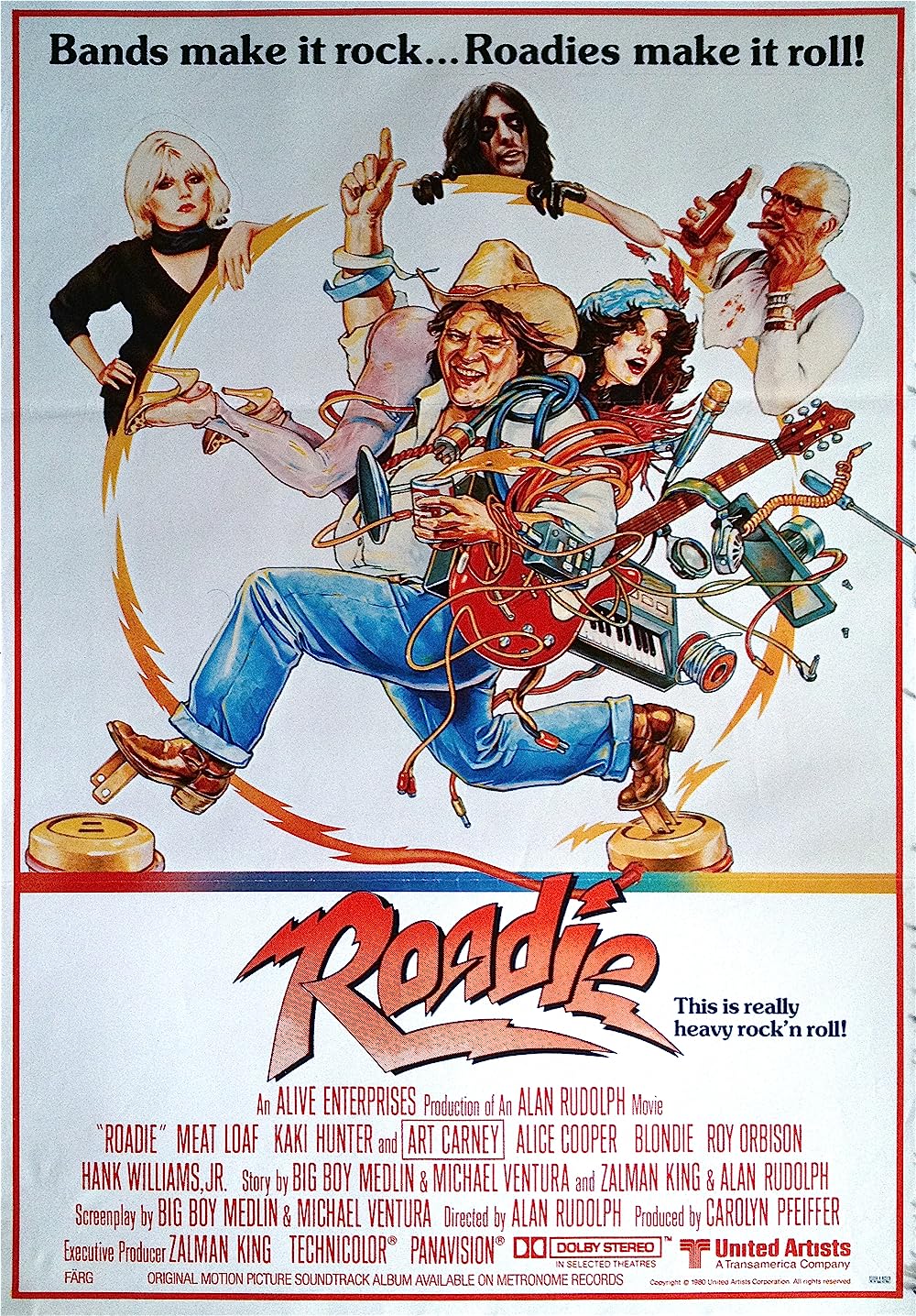
Roadie (1980)

roadie1

By Richard Winters

My Rating: 7 out of 10

4-Word Review: Truck driver and groupie.

Travis (Meat Loaf) and B.B. (Gailard Sartain) are two truck drivers out making deliveries when they come upon a disabled RV on the side of the highway. Initially they don’t plan to stop, but when Travis sees Lola (Kaki Hunter), a would-be rock ‘n’ roll groupie, peering out the RV window he decides he’s ‘fallen in love’ and pulls-over. His ability to fix mechanical issues using unorthodox tools impresses Ace (Joe Spano) who’s a road manager and wants Travis to drive them to Austin to set-up equipment for a Hank Williams Jr. show. Because of his fondness for Lola he agrees and promptly quits his job as a trucker to travel all over the country meeting such rock ‘n’ roll legends as Roy Orbison and Blondie while also awkwardly courting Lola who’s more infatuated with meeting her idol Alice Cooper.

While director Alan Rudolph has never had a box office hit his movies have usually achieved success amongst the critics except for this one, but  I considered it his most original effort. Roger Ebert described it as being ‘disorganized and episodic’ even though life on the road in a tour group works that way with new issues coming up almost hourly and like driving on the open road there can be many detours and speed bumps as well as fleeting faces, which in that context the film recreates, in quirky comic form, quite well. He also complained about the lack of character development and maybe in Travis’ case there wasn’t much, but he’s such a funny caricature that I didn’t think he needed any. With Lola though I felt there was and impressed me with how much depth she ultimately showed especially since she initially seemed like nothing more than a caricature too. I really liked that she wasn’t as into Travis at the start like he was into her, which can happen a lot, and she has to grow into liking him during their many adventures though still never really openly admits to it to either herself, or others, which I felt was a refreshing change from the ‘love at first sight’ thing in the Hollywood formulas. Ebert also complained that the songs were never played to completion though the ones that are about Texas are.

There’s many unique laugh-out-loud moments. Some of my favorites was the laundromat scene where Travis and Lola have a box of Tide that supposedly holds cocaine. The car chase in Austin done at night in front of the state Capitol building is amusing as is the barroom brawl. Granted there’s been a lot of those in movies, but like with everything else it has a quirky style unlike the others especially as Travis gets hit in the head and begins rambling out incoherent nonsense. The scenes at Travis’ boyhood home where his father (Art Carney) and sister Alice Poo (Rhonda Bates) are a riot including the telephone booth connected to machine belts that allows it to go from the exterior of the home to the inside and the BBQ chicken eating scene, which may be, at least visually, the best moment in the film.

It’s also nice to have a movie that’s all about Texas to actually be filmed in Texas. Too many try to cheat it, a few of them have been reviewed here recently, that mask the Arizona desert, or even the California one to Texas, but anyone from the Lone Star State could easily detect the difference. This one truly has the Texas look and you can see this from the very first shot which features armadillos crossing the highway and because of this it gets the honor of being put into the Scopophilia movie category of ‘Movies that take place in Texas’ versus the ones that say they are set here, but filmed elsewhere.

Spoiler Alert!

Probably the only thing that doesn’t quite work is the ending where Travis and Lola are kissing in the front seat of a pick-up only to see a bright light of a spaceship. I realize the intent was to do a parody of the ‘Paradise by the Dashboard Light’ song and maybe if we had actually seen the ship, which got inadvertently destroyed before shooting began I might’ve forgiven it, or maybe even been impressed, but entering in a sci-fi genre that late becomes almost like a sell-out and too surreal for its own good. Something that stayed true to the playful quirkiness that came before it would’ve tied the bow better.

My Rating: 7 out of 10

Released: June 13, 1980

Runtime: 1 Hour 45 Minutes

Rated PG

Director: Alan Rudolph

Studio: United Artists

Available: DVD, Blu-ray

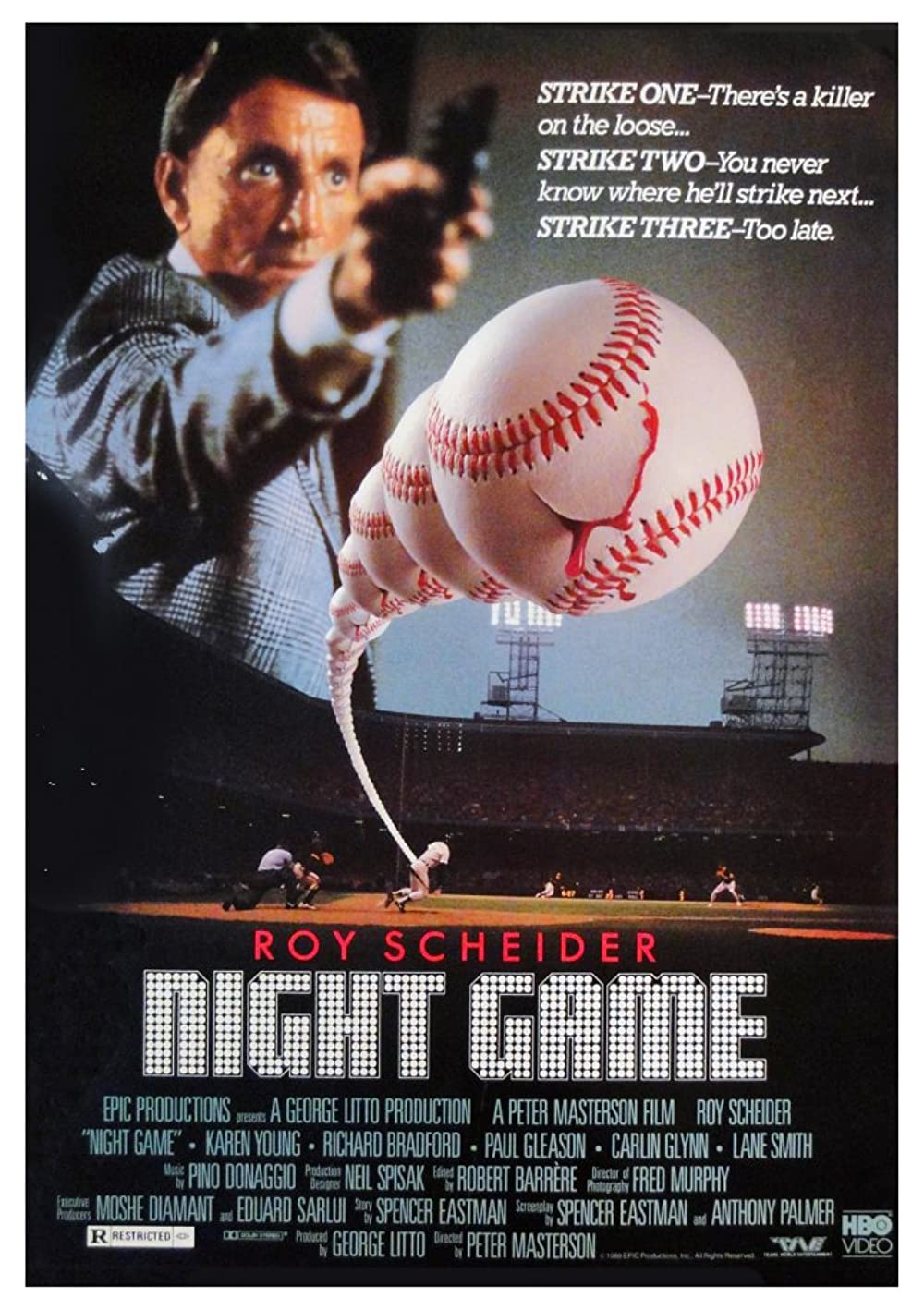
Night Game (1989)

nightgame1

By Richard Winters

My Rating: 4 out of 10

4-Word Review: Baseball score and murder.

Mike Seaver (Roy Scheider), a police detective, is put in charge of investigating a series of bizarre murders where women, some of them prostitutes, are murdered along the beaches of Galveston, Texas after each Houston Astros home game where pitcher Silvio Baretto achieves a victory. There are initially no suspects and it all seems to be a coincidence until Seaver ties the clues together and hones in on the killer while quarreling with Witty (Lane Smith) a state investigator brought in to help him with the case, but who has opposing ideas as to how to approach it.

The story is a strange mixture wanting to feed-off of the slasher films of the 80’s while also tying it to a sports themed flick, that was also popular during that decade, but manages to fail on both ends. The killings aren’t imaginative enough to attract a horror audience while the gore is much too graphic for those just looking for a slick thriller and thus both types of viewers will get put-off with this pretty quickly. Fans of sports movies won’t like it either as the baseballs scenes are brief and fleeting. While it’s kind of fun to see the Astros old color bar uniforms as well as watching actual game footage shot inside the old Astrodome, which at one time was coined ‘the 8th wonder of the world’ it hardly seems necessary especially since a TV-movie ‘Murder at the World Series’, which came out in 1977, had a very similar storyline that also included the Astros and Astrodome making this seem like a cheap, uninspired rip-off of that one.

The plot at least, while still dated especially on the technology end, takes a realistic approach to being a detective and how hard it is to find clues that can help piece the case together and lead to an actual suspect. Scheider, who was 57 at the time and looking it, manages to give it some energy and this was helped no less than by casting Richard Bradford as his nervous and pensive superior whose white hair and old school ways helps to offset Scheider’s wrinkles despite the fact that Scheider was in real-life 2 years older. The side stories though dealing with Smith coming in to butt heads with Roy doesn’t get played-up enough to be interesting and Scheider squabbling with his mother-in-law over a color TV that he got her drags the pacing down and hurts the tension of the mystery, which is where the sole focus of the script should’ve stayed.

Spoiler Alert!

What really ruins it though is the stupid ending. For one thing people in big cities, and Houston is the 4th largest one in the US, get murdered all the time, so having a cop able to somehow tie it to when a pitcher wins a game was too much of a stretch as technically there’s likely to be a murder happening somewhere whenever ANY pitcher wins a game and there needed to be more direct clues, like the killer sending cryptic notes to the police, or media, stating what his intentions were for it to realistically come together for the investigators.

The man playing the murderer, Rex Linn, who is supposedly a former pitcher who got cut from the team and then ultimately loses his hand in an accident and has it replaced with a hook, looks more like an disheveled, beer bellied truck driver who never played a sports game in his life. His motivations, to kill someone whenever the pitcher, who replaced him on the rotation, wins a game, in order to steal media attention away from the new pitcher’s success, is poorly thought out. It would’ve made more sense had the disgruntled man gone after the pitcher directly by either threatening his life, or those of his family, or maybe even attempting to kill the general manager, or owner, since they were the ones directly responsible for cutting him instead of no-name hookers who usually don’t get a lot of news attention anyways when they’re killed and thus making the whole premise pretty vapid.

My Rating: 4 out of 10

Released: September 15, 1989

Runtime: 1 Hour 35 Minutes

Rated R

Director: Peter Masterson

Studio: Epic Productions

Available: DVD, Blu-ray, Amazon Video, Tubi

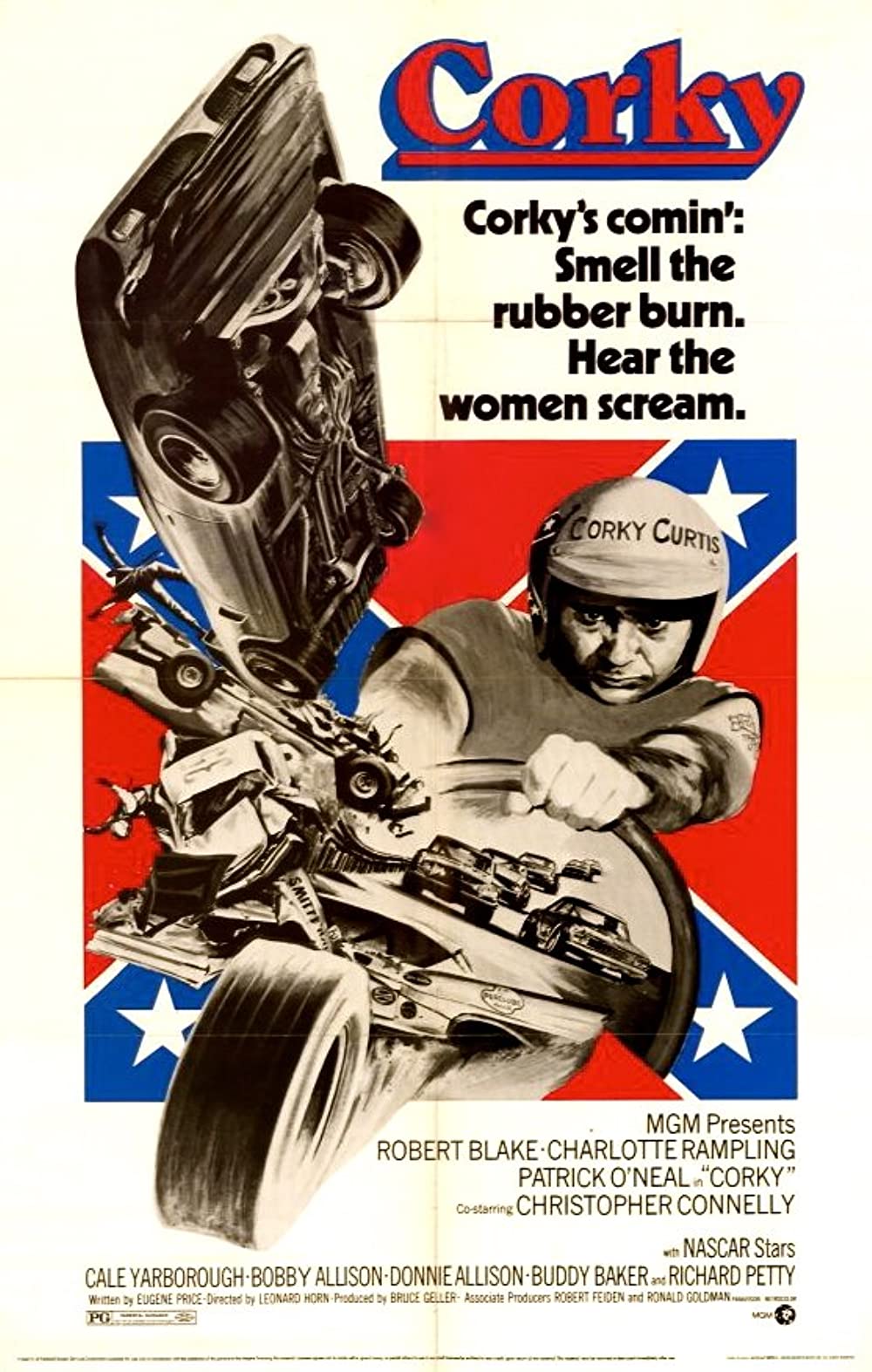
Corky (1972)

corky

By Richard Winters

My Rating: 7 out of 10

4-Word Review: Race driver self destructs.

Corky (Robert Blake) works as a car mechanic during the day, but on weekends he drives in some of the local races. He’s aggressive nature though causes many accidents and damages in the race, so his boss Randy (Patrick O’Neal) decides to replace him with another driver named Steve (John Gruber). Corky resents being replaced and thus enters the next race anyways and rigs the front hood of his car, so it will pop-up at a strategic time, so that he can crash into Steve’s car while feigning that it was an ‘accident’ because he couldn’t see where he was going due to the hood. The crash though puts Steve in the hospital and it’s enoough for Randy to fire Corky from his job. Now, with no money left, he goes traveling to Georgia with his buddy Billy (Christopher Connelly). They enter a few races there, but Corky parties away all the winnings and eventually come back to Texas penniless. He tries to get back with his wife Peggy Jo (Charlotte Rampling), but finds that Randy has been helping her out and giving her enough money, so that she can go back to school to get a diploma and eventually be able to earn a living without Corky. This causes him to seethe with rage and he goes back to Randy’s place of work in order to exact a violent revenge.

The film was directed by Leonard Horn, who shot to fame for having directed some of the highest rated episodes of the ‘Mission Impossible’ TV-series, which garnard him enough attention to get him a contract to helm two cinematic features. His first one was The Magic Garden of Stanley Sweatheartwhich starred Don Johnson and while it wasn’t completely successful, and very little seen, it did have an interesting cinema verité style. This works the same way with a strong emphasis on atmosphere that gets small town living in rural Texas just right. Even the little moments like when Corky turns on his friend Billy in the middle of a desolate road during an impending rain storm leaves a memorable impression as does the envelope-pushing moment where Corky decides to strip down and go skinny dipping with two young boys (Matt Nelson Karstetter, Richard McGough) at a country watering hole.

Robert Blake is excellent. Sometimes it’s hard to imagine him as a leading man due to him at one time being a part of the ‘Little Rascals’ ensemble, and then rising to becoming a TV-star before falling into infamy at being accused of killing his child’s mother. However, with all that being said he was still a great actor who probably didn’t get as much starring roles as he deserved, but he plays the angry loner role to a perfect-T. Rampling as his wife, who was born in England, masks her British accent quite well and creates an odd, but interesting sounding Texas one in the process. I also liked that she sports blonde hair. O’Neal is good in support and there’s an fun collage of actual race driving champions like Richard Petty and Cale Yarborough who appear briefly as themselves though I was upset to read that Roddy McDowell’s scenes, where he plays a salesmen, got cut out completely as his appearance could’ve added an intriguing element.

Spoiler Alert!

The story itself is rather tepid at first. There were many films from the 70’s dealing with rugged individualists and hard drinking, womanizing rebels who couldn’t, or didn’t want to conform to societal rules and thus hit the road looking for adventure and to ‘find themselves’. This though, at least during the first two acts, adds nothing to the equation, or give us any new insights and in fact seems more like the same old, same old generic character study, but all that changes in the third act when Corky unravels completely and goes on a shooting spree. The films from that era always had the non-conformist getting ‘reeled-in’ at some point usually through the love of a romantic partner, or some familial obligation, but here it’s a meltdown to the extreme and it’s a movie way ahead of its time as it deals with what’s commonly known as a mass shooter these days. At that time this concept was rarely seen and for that it deserves definite kudos as does the message that being too irresponsible will catch-up with you and one can’t just live the outlaw image and not eventually have to pay the price.

My Rating: 7 out of 10

Released: March 15, 1972

Runtime: 1 Hour 28 Minutes

Rated PG

Director: Leonard Horn

Studio: MGM

Available: DVD-R (Warner Archive)

Vasectomy: A Delicate Matter (1986)

vasectomy1

By Richard Winters

My Rating: 0 out of 10

4-Word Review: Father considers male sterilization.

Gino (Paul Sorvino) is a proud Italian man who has fathered eight children, but now his wife Anna (Cassandra Edwards) doesn’t want anymore kids and pressures him to get a vasectomy. Gino fears the procedure, but eventually agrees only to have an angry confrontation with the doctor (William Marshall), which sends him running away from the operating room. Anna insists that he still must go through with it, or he won’t be allowed back into bed with her until he does. Meanwhile Gino must also worry about his greedy relatives, who’ve concocted an elaborate plan to steal money from the bank he works at and put it out of business.

I don’t know if I’ve ever seen a movie quite this bad. It’s not so much for any technical miscues. No shaky camera, boom mikes getting into the screen, atrocious lighting, schlocky sets, or bad acting. In fact all of those things are okay. What really reeks is the bland script that is poorly paced and not funny. The film starts out really slow and never gains traction. For a comedy there needs to be a lively plot and quick edits, but this thing dies out before it even has a chance to get started. 18-minutes in and I was still waiting for the first laugh and became genuinely confused whether this was meant to be a comedy at all. 

The main plotline is so weak that the inane crooked loan scheme is added jut to pad the runtime. The living situation of the family is rather unrealistic as well. Of course since it was the 80’s, the height of capitalism, the question of whether a family could actually afford 8 kids is never addressed, but most people, even those working at a bank, might find that situation financially challenging. The home looks too well maintained for having all those kids too who would most likely be running around and disorganizing everything. The mother is never shown having to deal with them either. In fact she comes-off as an affluent suburbanite who’s fully in-control of her life and able to out with her lady friends without the typical struggles of having to juggle her personal life with child rearing demands. All 8 kids end up being boys, but what are the odds of that? They’re also all around the same age like she popped them all out simultaneously and all of them get crammed into the same bedroom even though the house they resided in looked big enough that that shouldn’t have been necessary.

Paul Sorvino manages to be solid even though with his rotund belly he does look a bit pathetic during the scenes where he wears a baseball uniform. He does though sing the national anthem surprisingly well, apparently he sang opera to the crew between takes, and the segment where he goes in to the operation and babbles incessantly, is actually kind of amusing. I was not impressed though with Edwards as she looked too young to be his wife like she was still in her 20’s while he was already in his late 40’s. 

While I’m not a violent person I would consider, if I ever met the director of this, Robert Burge, to punching him as I honestly felt like he maliciously stole 90-minutes of my life and I don’t understand what the purpose was for it. 33,000 scripts get submitted yearly, but only 1 percent of those ever gets sold or produced, so how the hell did this one sneak through? Even a crew member from the film stated in his IMDb review that he’d give this a negative rating if he could. Maybe the director was a guy that had enough funds he was able to produce it himself and therefore didn’t feel the need to answer to anybody. If that were the case then this would’ve been an instance where having never made a movie would be better than living with the embarrassment of your name being attached to this mess for all those unfortunate enough to see it.

My Rating: 0 out of 10

Released: September 26, 1986

Runtime: 1 Hour 30 Minutes

Rated PG-13

Director: Robert Burge

Studio: Vandom International Pictures

Available: VHS, DVD-R (dvdlady.com)


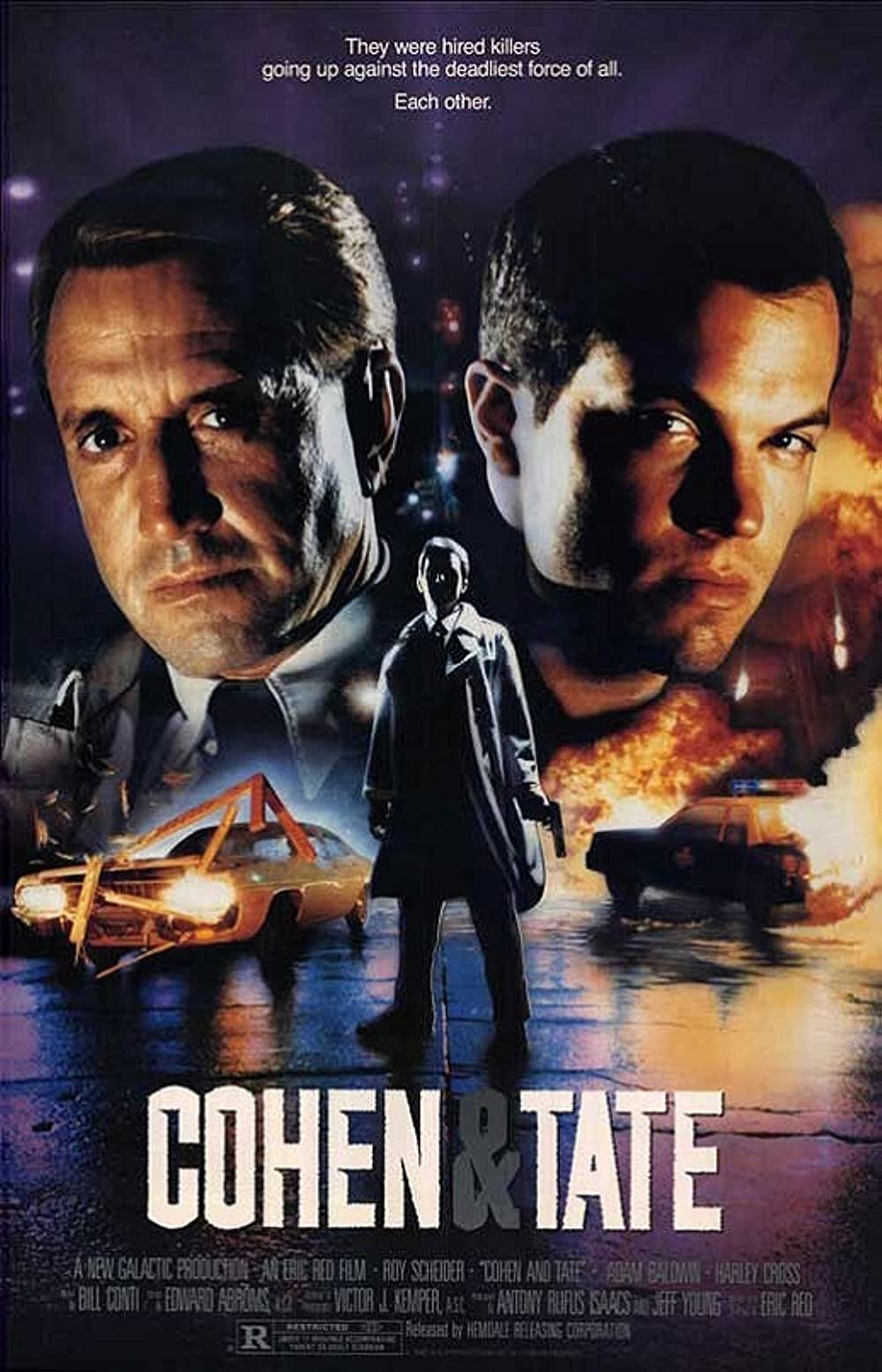
Cohen & Tate (1988)

cohen

By Richard Winters

My Rating: 6 out of 10

4-Word Review: Child witness gets kidnapped.

Travis (Harley Cross) is a 9-year-old who witnesses a mob hit and for his own protection both he and his parents (Cooper Huckabee, Suzanne Savoy) are put into a witness protection program where they are uprooted from the home they’d live-in and moved to an isolated place that has federal agents standing guard outside around-the-clock. One day the place gets invaded by Cohen (Roy Scheider) and Tate (Adam Baldwin), who are two hit men working for the mob. The mob wants to prevent Travis from testifying in court, so the two hit men kill the parents and the federal agents and then kidnap the boy and take him on a long road trip to Houston where the mob bosses can question him directly. Along the way Cohen and Tate bicker and make clear they do not like each other and Travis exploits this to get them to fight more and then uses it as a diversion to escape.

After writing the screenplays for The Hitcher and Near Dark Eric Red was finally given the green light to direct his own movie and tension-wise the film is compact, but visually it’s boring. The car ride taking place almost completely a night where we see nothing but the interior shots of an old, grimy car enveloped by pitch blackness is not interesting and having it instead take place in the daylight where the rugged, but scenic Texas landscape could’ve added ambiance would’ve worked better. The night setting also adds in a few logic loopholes like when the kid runs down the highway there’s tons of traffic, but why would there be so many vehicles in the dead of night and the middle-of-nowhere? Also, you’d think a least a few of those drivers who saw a kid running on the road might want to pull over and offer assistance, but none of them do.

The film’s only surprising element is seeing Roy Scheider play a bad guy, which he rarely ever did. The role was originally intended for Gene Hackman, who turned it down, and then offered to John Cassavetes, who also passed on it, which is ashame. Cassavetes, with his tall stature and hawk-like facial features would’ve been perfect. Scheider, for what it’s worth, is okay, but he looks frail especially when seated next to the much bigger and younger Baldwin making his character appear weak and vulnerable. The film wants to portray Scheider as being in-control, but that’s not really how it ever comes-off. 

The in-fighting between the hit men is a big problem as it telegraphs right away the eventual meltdown between the two and Bladwin’s character, as a young thug with a violent, quick triggered temper, is about as cliched as you can get. These guys don’t come-off as being very smart either making the film’s ironic theme at seeing this young kid outsmart them at every turn not that impressive since anyone with an IQ of 5 could’ve easily done the same thing. A well run criminal plan, or any plan for that matter, predicts unexpected possible problems upfront and has a Plan-B already in-place in-case they arise, but these guys seem like they never bothered to think through anything making their constantly perplexed expressions at every blunder that comes along unintentionally comical and more like they’re stooges instead of bad-ass killers.

The boy is another issue as he’s too savvy for his age. Most kids would be paralyzed with fear at being kidnapped by two thugs who’ve just killed his parents (it’s later learned that the father survived the attack, but upfront he didn’t know this). A normal kid would’ve sat in the back of the car crying and not known what to do, but this one acts super street smart and even talks back to the killers, which isn’t interesting or realistic. A better approach would’ve had him terrified and helpless at the beginning and then slowly becoming more emboldened as the story progressed. 

Spoiler Alert!

The ending is anti-climactic. A police helicopter spots the stolen vehicle that Scheider and the kid are in, so at the last second Scheider veers the car off the highway and drives it into the business district of Houston. However, there are no cars or people around even though it’s during the day. The police squad cars then quickly race in and surround them like they were waiting for him, but how would they have known he would end up in that area since he veered off the highway in an impulsive spur-of -the- moment way?

My Rating: 6 out of 10

Released: October 12, 1988

Runtime: 1 Hour 26 Minutes

Rated R

Director: Eric Red

Studio: Hemdale

Available: DVD-R (MGM Limited Edition Collection), Blu-ray