Category Archives: Movies from Canada

Death Weekend (1976)

death weekend

By Richard Winters

My Rating: 3 out of 10

4-Word Review: She can defend herself.

This Canadian thriller, which is loosely based on actual events deals with a rich playboy named Harry (Chuck Shamata) who invites Diane (Brenda Vaccaro) who is also a model to spend the weekend with him at his isolated lakeside cabin that is miles from anywhere. On their way there they run into a biker gang whose leader (played by Don Stroud) takes an intense disliking to Harry. The gang tracks the two down at their cabin where they proceed to terrorize them before eventually killing Harry and forcing Diane to defend herself alone, which she does valiantly.

In a way this is a poor man’s version of I Spit on Your Grave or Straw Dogs, but not nearly as effective. For one the violent scenes aren’t very intense. This is due mainly to the fact that writer/director William Fruet keeps the camera too removed from the action and never once uses a hand held. There is also no gore as Fruet always cuts away just before anything happens and what little you do see looks tacky. Of course a film doesn’t have to be gory to be scary or intense, but if it is going to have this type of violent theme then it should at least equal it in style. The tension also ebbs and flows and the four hoodlums are too dumb and seem like cardboard cutout caricatures that possess no human qualities whatsoever.
The Harry character does allow for some added dimension, which helps and hurts. I liked the way he sees himself as this ‘refined’ gentlemen and yet views women in the same Neanderthal way as the thugs. He brags of having money and power, but when that gets stripped away from him he becomes amazingly spineless. This makes for a good commentary of the rich and successful, but unfortunately also turns him into being too much of a jerk and when the bad guys proceed to tear his place apart we are not ‘horrified’ at all, but instead enjoy seeing it.

There are actually a few good elements one of which is the music score, which effectively creates an ominous feeling. It was also filmed in Ontario Canada during the autumn and the desolate, bleak landscape helps match the bleakness of the situation and characters. I also loved the morning mist captured during the final chase sequence that gives things a very eerie look. There is also a well-staged car chase at the beginning that was done at high speeds and features some great stunt driving.

The film is saved somewhat by Vaccaro’s interesting performance as a victim. She is independent and self-sufficient and refuses to allow herself to be seen or used as a sex object. This goes along with the film’s overall theme which seems to run on the emergence of the woman in a man’s world and the basic redefining of the female role in society. Yet I felt it would have worked better had the character harbored the old female traits at the beginning and then had these new traits come out as the film progressed.

death weekend

My Rating: 3 out of 10

Alternate Title: House by the Lake

Released: September 17, 1976

Runtime: 1Hour 27Minutes

Rated R

Director: William Fruet

Studio: American International Pictures

Available: VHS
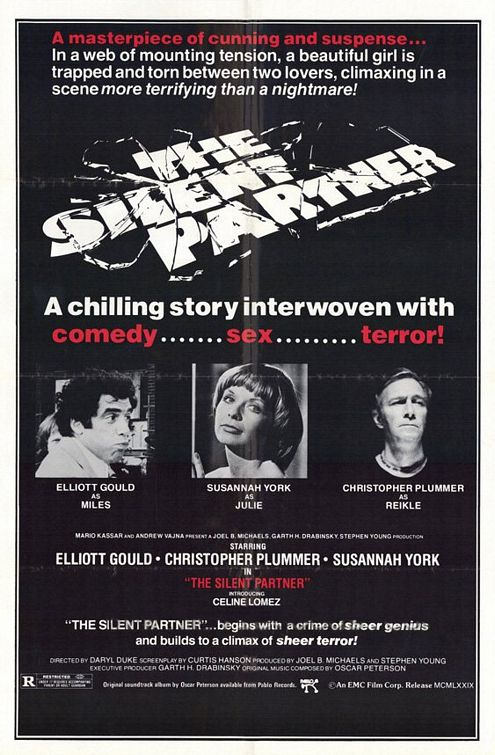
The Silent Partner (1978)

silent partner 2

By Richard Winters

My Rating: 8 out of 10

4-Word Review: Bank teller outsmarts robber.

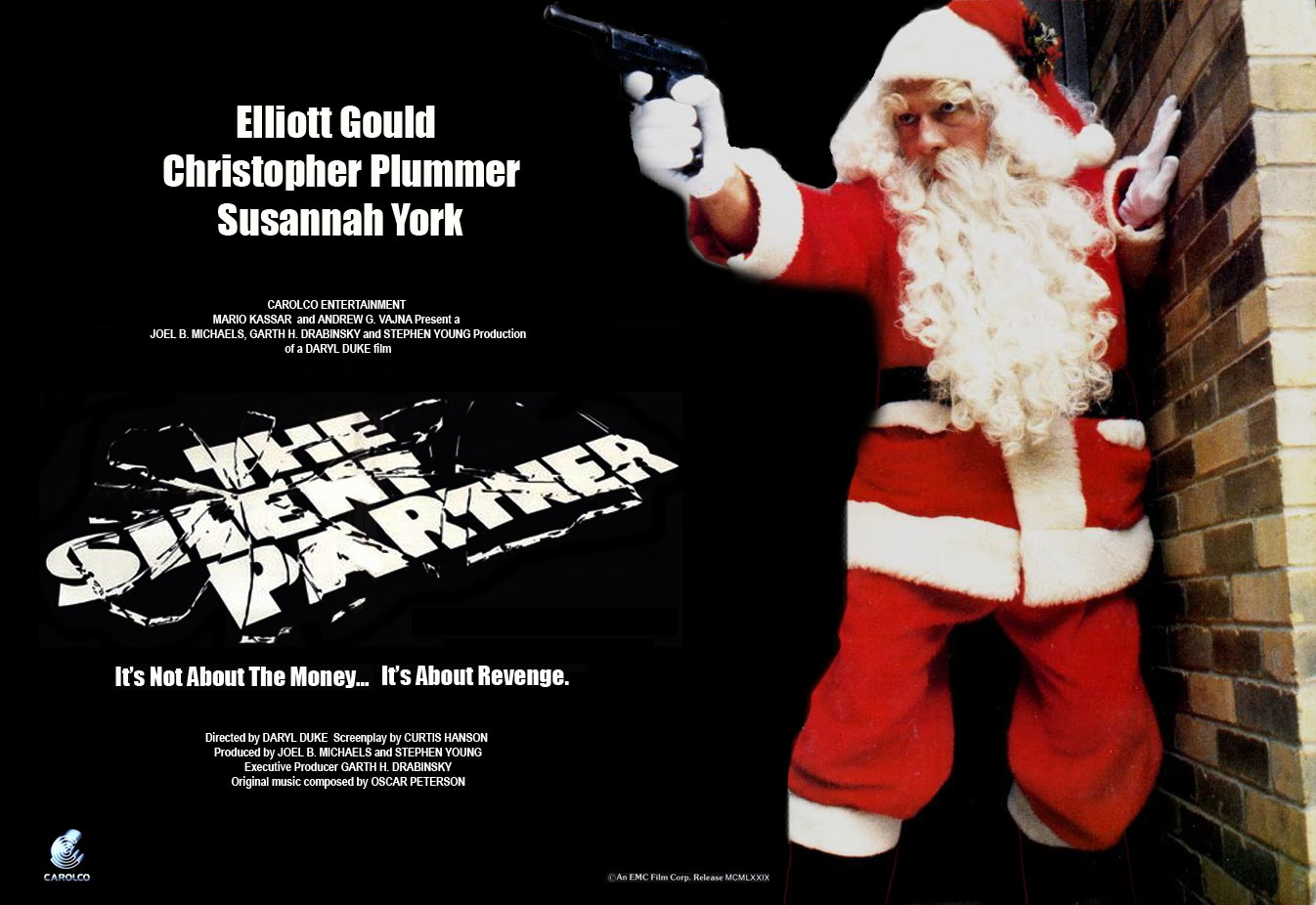
This is an ingenious, slick, and really fun caper movie that puts a whole new spin on the old bank robbery theme. Here Elliot Gould plays a bank teller named Miles who, by sheer accident, becomes aware that a man named Harry (Christopher Plummer) is planning on robbing his bank. Miles decides to take the money from his till and put it into his lunchbox. Then when Harry robs the bank it is actually Miles the teller that gets the money while Harry goes away with very little. Yet this is only the beginning as Harry and Miles continue to play a crafty game of cat- and-mouse, which leads from one interesting twist to another.

Gould plays against type here and he does quite well. Usually he tends to be loud, argumentative, and anti-authority, but here he is quiet and unassuming. It’s the type of character you think wouldn’t have the guts to pull off what he does, which makes him all the more intriguing. In fact he just keeps surprising you all the way along, stringing the very psychotic and dangerous Harry in ways you couldn’t imagine. It is only his final move that seems to be testing the odds too much.

Plummer makes a terrific adversary. He is dashing and handsome as ever, but with an intensely sinister edge and an icy cold gaze.

Susannah York as Miles’ love interest Julie is wasted. Her character seems thrown in for good measure and at no time seems interesting. There is no chemistry between them and the whole love angle is forced and unnecessary. Celine Lomez, as Elaine the other female character, is different. She is stunningly beautiful and much cagier. She plays between both Harry and Miles and you are never sure which side she is really on. Her acting isn’t spectacular, but she is sensual and has a nice French accent. Her gory and gruesome demise though is unwarranted and works as a drawback to the movie.

There are a few other negatives about the film. One is the drab setting that takes place in Toronto and yet we hardly see any of it. Having the bank itself set inside a boring shopping mall is not too visually exciting. The same goes for Miles’s bland apartment. The supporting characters, especially the other bank employees are incredibly dull. Their lines and basic presence all seem to have been written in simply as ‘filler’. A young John Candy plays one of these co-workers and his comic talents are wasted.

Still the story is creative and has enough unique twists that it overcomes the technical shortcomings and manages to be a highly entertaining flick.

silent partner 1

My Rating: 8 out of 10

Released: September 7, 1978

Runtime: 1Hour 46Minutes

Rated R

Director: Daryl Duke

Studio: EMC

Available: VHS, DVD, Amazon Instant Video

Why Shoot the Teacher? (1977)

why shoot the teacher 2

By Richard Winters

My Rating: 8 out of 10

4-Word Review: Not a good job.

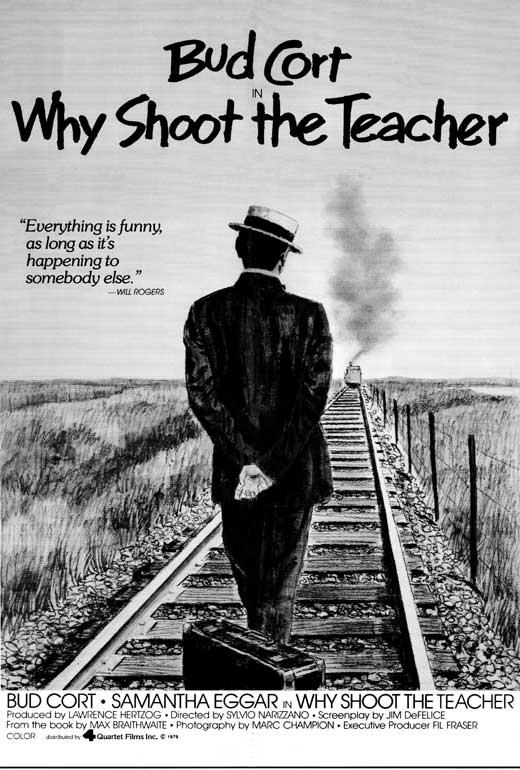
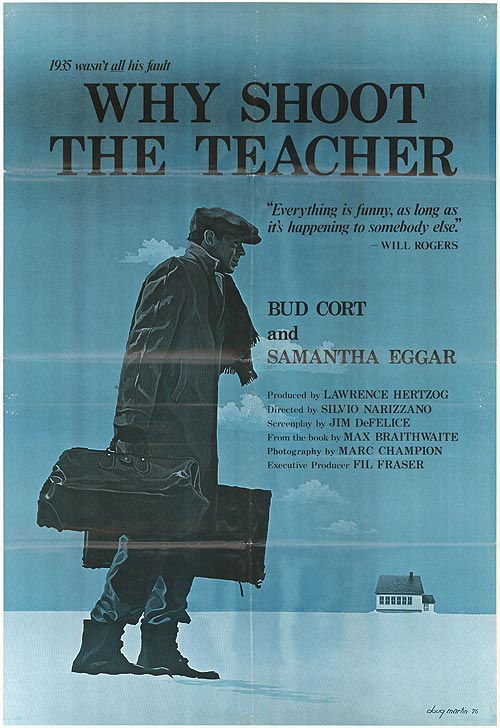
If you hate your job then watching the escapades of Max Brown (Bud Cort) dealing with his should make you feel a lot better about yours, or even lucky. The setting is 1935 and Max has traveled to an isolated farming community in Saskatchewan Canada in order to live out his dream of being a school teacher. The problem is that he must live in the dingy basement of the school that has no running water and an outhouse that gets regularly overturned by the rowdy school children, sometimes with Max in it, and he is only paid $20 dollars a month for his efforts, which even back then was a paltry amount. What is worse is that the district can’t even afford to pay him so instead gives him promissory notes and forces him to be dependent on the generosity of the townspeople for his food. Since he had to borrow money for his train ride up there he is unable to go back and forced to spend the harsh Canadian winter all alone while dealing with difficult students and indifferent parents and adults.

Cort really shines. The fact that through all his diversity he still remains civil and upbeat makes the character quite appealing even though he does evolve and at times compromises from his initial ideals. The best example of this is when he eventually, despite his initial reluctance, uses the strap on one of the older bigger students while the rest of the school children watch through the school windows. Although Cort is best known for his starring role in Harold and Maude I’d actually say this is his best all-around performance.

Samantha Eggar another under-appreciated and underused performer is terrific in support as Alice Field a woman transplanted from England who like with Max finds herself alienated and unconditioned to the harsh climate. She also has a really amusing line when she states “Canada is a nice country…sometimes…in the spring.”

Filmed on-location in the tiny town of Hanna, Alberta the sprawling wheat fields create a tremendous sense of isolation as well as a distinctive sense of natural beauty. The story is filmed during all three seasons, which makes the viewer feel like they are battling the rigorous Nordic climate right alongside Max. One of the funniest moments is when the word ‘Spring’ is flashed on the screen while a raging blizzard goes on behind it making Canada one of the few places that can make Minnesota, where I am originally from, seem like a mild climate.

The film is wonderfully vivid and creates a rich multi-textured tapestry of life on the prairie. By keeping everything on a realistic level it helps recreate what life must have been like for a lot of rural school teachers during the period, which is what makes it so fascinating. The film’s faded washed-out color and archaic low budget technical approach only helps to accentuate the look and feel of the period. There are shades of Wake in Fright here that also dealt with a man teaching school in an isolated school house while battling the elements and I found it interesting to note that Ted Kotcheff who was the director of that film was listed as a production consultant on this one.

My only complaint about the film was the misleading title. There is no shooting of any kind of the teacher, or even any talk of it. Why they came up with that title, which is based on the book with the same title is a mystery. Unfortunately it may give some people the idea that this is a violent film when nothing could be further from the truth and may turn-off potential viewers from enjoying this endearing slice-of-life comedy/drama.

why shoot the teacher 1

My Rating: 8 out of 10

Released: June 23, 1977

Runtime: 1Hour 39Minutes

Rated PG

Director: Silvio Narizzano

Studio: Lancer Productions Limited

Available: VHS, DVD, Amazon Instant Video, YouTube

Improper Channels (1981)

improper channels

By Richard Winters

My Rating: 1 out of 10

4-Word Review: The system is screwed.

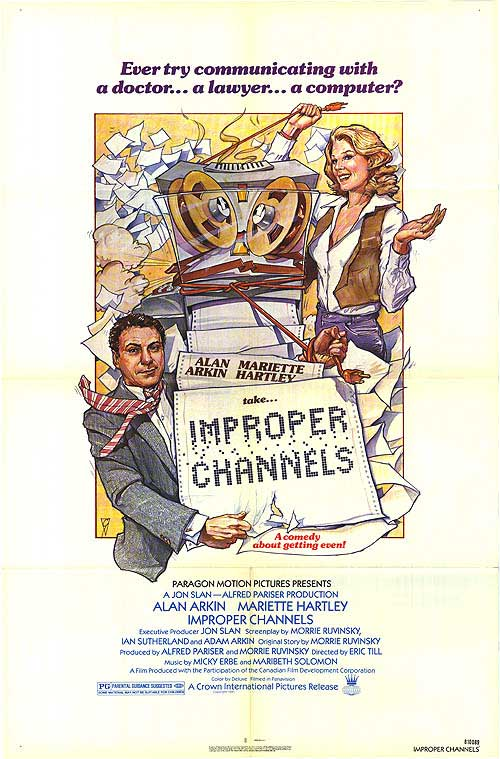
Jeffrey Martley (Alan Arkin) is a middle-aged man soon to be divorced from his wife Diana (Mariette Hartley) who is driving along in his car with his 5-year-old daughter Nancy (Sarah Stevens) when he is forced to put on the brakes quickly in order to avoid hitting another vehicle. Sarah, who was not wearing a seatbelt since there were no such seat belt laws at the time, falls to the car floor and hits her head. It is a minor bruise, but Jeffrey takes her to the hospital as a precaution. As the doctors are examining her social worker Gloria (Monica Parker) overhears Jeffrey’s conversation with the medical staff and thinks that the injuries may have come from child abuse. She takes the child out of his custody and puts her into a protected foster home while she uses the help of a computer expert (Martin Yan) to come up with as much dirt from Jeffrey’s past as she can in order to prevent him from getting her back. Jeffrey and Diana hire a lawyer and try to fight the charges, but find that the system is against them.

This is a wretched attempt at satire that never gets off the ground. Director Eric Till’s bland direction makes this thing look like a TV-movie and the majority of it is more like a drama. The comedy is not very funny and the little that there is comes off as forced and out of place. Jeffrey’s and Diana’s situation becomes more harrowing as it goes along and this thing probably would have worked better and been more riveting had they kept it at a realistic and dramatic level all the way through.

The social workers are portrayed as being completely inept, incompetent, and malicious without any balance making me wonder if the writers had a major grudge against them in real-life. Gloria’s boss Harold Cleavish (Harry Ditson) is particularly unlikable and comes off as an all-around prick in every way. However, he does get the film’s one and only funny line when he chastises Gloria for believing that the social services profession is about helping people:

Harold: I have been in social services for 9 years and in that time I haven’t helped anyone and I hope to God that I never will. If you really want to help humanity then become a prostitute.

Hartley is a wonderful actress and I will never forget her Emmy award winning performance in a guest spot on ‘The Incredible Hulk’ TV-show unfortunately her career never took off despite a great debut in Sam Peckinpah’s Ride the High Country. Today most people probably know her for her Polariod commercials that she did with James Garner back in the 80’s. Even so she is great here and gives the material more effort than it deserves. Arkin who has played the man against the system many times seems strangely reserved.

The most annoying thing about the film is the ending where Jeffrey turns-the-tables and tries sticking it to the system. Having an average man who works as an architect and has no special computer experience break into the computer systems of the social welfare office and erase his records and send everything on the fritz is too exaggerated. Having him dump out streams of computer printout paper from the office windows and line the city streets with it is too goofy and unbelievable to be even slightly humorous. The filmmakers display a limited and confused understanding of the technological revolution and treat it like it is nothing more than a passing fad that can be easily taken down by the common man. The pat and silly wrap-up makes light of an otherwise serious issue and thus makes the entire production stupid and pointless.

My Rating: 1 out of 10

Released: April 17, 1981

Runtime: 1Hour 32Minutes

Rated PG

Director: Eric Till

Studio: Crown International Pictures

Available: VHS
The Luck of Ginger Coffey (1964)

the luck of ginger coffey

By Richard Winters

My Rating: 7 out of 10

4-Word Review: He needs a job.

Ginger Coffey (Robert Shaw) is a middle-aged man living in Montreal whose dreams and ambitions far outweigh his grim predicament. He moves from one low paying job to another convinced that his lot in life will improve. His wife Vera (Mary Ure) decides to leave him and Ginger tries to win her back while juggling two jobs and hoping to get a promotion in one that never seems to come.

As a vivid look at the daily lives of the everyday working class this film hits a solid bullseye. The conversations between the co-workers and the monotonous and sometimes demeaning job interview process and Ginger’s on-going arguments with his wife and daughter are all true to form. There is no pretension and director Irvin Kershner keeps everything at a bare-bones minimum giving it almost a documentary style and making the viewer feel immersed in the bleak environment. The outdoor shots of the city are unexciting and cinematically unappealing, but help reflect the grim level. Watching Ginger get kicked out of his apartment and have to carry what is left of his belongings and then place them on the outside sidewalk while he goes in to visit his daughter in her school is quietly powerful.

Robert Shaw is excellent. This is a man who had by all accounts had a very dominating and proud personality in real-life and usually played characters with the same traits, so seeing him play against type and succeed is interesting. What is really effective is that he makes the character very human and likable despite his constant goof-ups, which keeps the viewer compelled to his situation.

Ure, who at the time was married to Shaw in real-life, gives an equally outstanding performance. Her perplexed facial expressions are perfect and the fact that we see her character grow and become more confident is good.

I also must mention Liam Redmond as Ginger’s cantankerous boss, who is nicknamed by his employees as ‘Hitler’. Ginger’s rushed job interview that he has with him is one of the film’s highpoints as is the moment when Ginger dashes away from him when he is caught making a personal phone call.

The only real complaint I have with the film is the ending, which is for the most part non-existent. I have seen vague wide-open endings in my movie viewing lifetime, but this thing is a cop-out and really boring one at that. I think when a viewer has spent nearly two hours empathizing with his difficult  and precarious situation that they deserve some sort of finality, or at least a hint of what became of him and whether he ever did find that ‘luck’ that he was so convinced was out there.

My Rating: 7 out of 10

Released: September 21, 1964

Runtime: 1Hour 40Minutes

Not Rated

Director: Irvin Kershner

Studio: Continental Distributing

Available: YouTube

Exotica (1994)

exotica

By Richard Winters

My Rating: 8 out of 10

4-Word Review: Obsessed with a stripper.

This is a fascinating and engrossing character study interweaving different characters and stories together until they become one. Bruce Greenwood plays Francis an accountant who frequents a strip bar and becomes fixated on a particular dancer named Christina (Mia Kirshner). Elias Koteas is the club D.J. who notices this obsession and becomes jealous since he at one time had a relationship with her. Thomas (Don Mckellar) is the nebbish pet shop owner who has a secret as well as a key between the three.

This is thoroughly compelling stuff that’s impossible to predict. The characters are believable, exposing traits you just don’t see in them at the start. Much like people you’d meet and get to know in real life each scene becomes like a piece to the puzzle.

Director Atom Egoyan may be a little too obsessed with tying everything together taking the final scene one step too far. Yet he still creates an interesting subtext. He seems to show how interconnected we all are to one another and how we can relate on different levels. The simple fact that we are human connects us no matter how ‘disconnected’ we may feel or be.

The sex club atmosphere is also taken from a different angle. He shows a much more complex and psychological motive behind it and how sex is only one element in it.

Like with Egoyan’s other films this thing is filled with a lot of philosophical banter and is quite humorless with a tendency to be a bit ‘heavy’. However, unlike The Sweet Hereafter it keeps moving and doesn’t get completely bogged down in it.

On the technical end the lighting is too washed out. The music selection is good, but oppressive. Overall though the film achieves what it wants too. It keeps your attention and remains thought provoking throughout.

My Rating: 8 out of 10

Released: May 16, 1994

Runtime: 1Hour 43Minutes

Rated R

Director: Atom Egoyan

Studio: Miramax

Available: VHS, DVD, Blu-ray

Visiting Hours (1982)

visiting hours 2

By Richard Winters

My Rating: 3 out of 10

4-Word Review: He doesn’t like women.

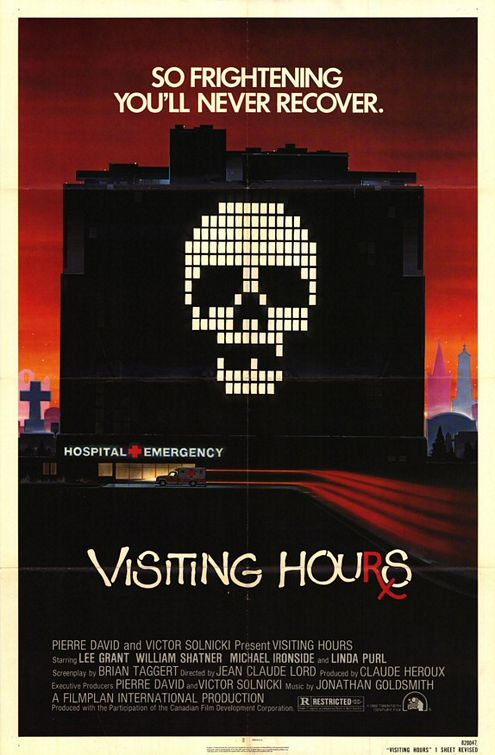
Deborah Ballin (Lee Grant) is an outspoken reporter who does a news segment dealing with domestic violence that angers misogynist Colt (Michael Ironside). For revenge he attacks her inside her home, but she manages to escape and gets treated at the local hospital. Unfortunately the psychotic Colt continues to stalk her inside the hospital, which causes her, other patients and the hospital staff to fear for their lives.

The script is predictable and unimaginative. It sticks to the tired 80’s slasher formula like it is a religion. The set-up is awkward and rushed while the rest of the film dealing with Colt’s perpetual stalking becomes prolonged and redundant. The scares lack excitement and the frights are non-existent. The only potentially interesting part that could’ve allowed this film to really stand out is when Deborah is taken into the operating room and put under anesthesia and thinks that the surgeon arriving to do the operation is Colt in disguise. The film teases the viewer with this possibility, but then chickens out.

The only novelty is having a 55-year-old actress as the heroine as opposed to the youthful, virginal looking types that get cast in these things in-part because of their screaming abilities. Having Grant playing a self-assured, confident character is refreshing change of pace for the genre, but then the film compromises even this by having Deborah’s young nurse played by Linda Purl become the target of Colt’s evil rage and by the end it’s Purl who has the most screen time.

Ironside is a competent actor and it is no surprise that he would be cast in the role of a killer due to his menacing facial features. He is talented enough to make the scenes he is in interesting despite the fact that he says less than 15 words during the whole film. Still the cutaways showing the reason for his mental illness being due to him witnessing as a child his mother throwing boiling water on his father is hooky. Also having him wear a small bell around his neck that rings every time he moves if awfully stupid for a person with a habit of stalking people.

The film has a similar concept to Halloween II that also dealt with a killer stalking a victim while inside a hospital, but here at least they use an actual hospital that is lighted the way a real hospital should be. The foot chase between Grant and Ironside that has them going to all areas of the building reminded me a little of the chase between Genvieve Bujold and Lance LeGault in the film Coma although that one is still far superior to the one here.

There are few mildly intense moments at the end that helps save this from being a complete boring waste, but still does little to make up for the rest of it that falls flat. Oh yeah, William Shatner also appears here in a pointless and dull role as Deborah’s boss.

My Rating: 3 out of 10

Released: May 21, 1982

Runtime: 1Hour 43Minutes

Rated R

Director: Jean-Claude Lord

Studio: 20th Century Fox

Available: DVD

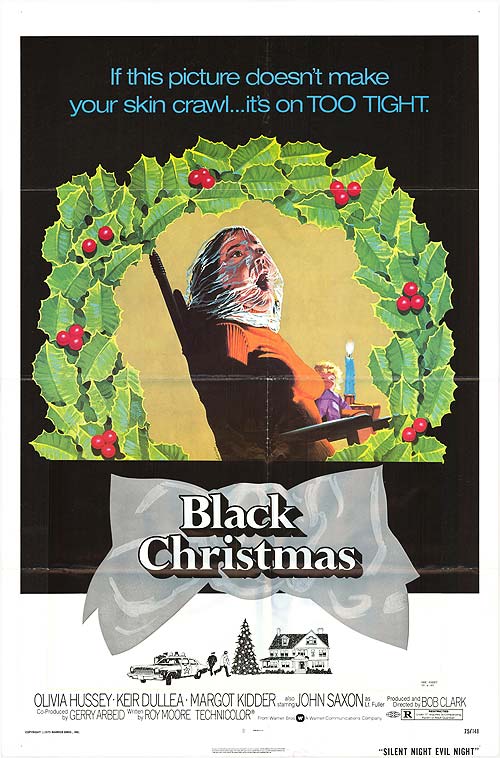
Black Christmas (1974)

black christmas 1

By Richard Winters

My Rating: 8 out of 10

4-Word Review: He’s in the attic.

It’s Christmas time at the sorority house, but as the girls celebrate the season they continue to get harassing phone calls from a strange man who speaks in different and frightening voices. Unbeknownst to them the man has snuck into the attic of their house and the calls are coming in from another room. As the night progresses the girls begin to disappear forcing the lone survivor to fight off the killer by herself.

I have not seen the remake of this film and due to negative response that I have heard I don’t think I want to either. This review pertains to the original only. If you have seen the remake and disliked it you should still give this film a try.  Despite its low budget it is quite effective and it slowly builds up the tension in a nice compact style with a great twist ending.

Of course one of the things that make this movie so good is the humor. I loved Marian Waldman as the alcoholic house mother Mrs. McHenry who stashes bottles of whiskey in all sorts of goofy places. The vulgar Santa who swears even as the kids are sitting on his lap is a hoot and a nice precursor to Bad Santa, but my favorite is the poster of a sweet old lady giving the finger.

One of the best moments on the terror end is the part where the killer’s eyeball can be seen looking through a small crack in the doorway, which is memorable. The scene where the camera pans from each girl’s nervous and frightened face as they listen to the weird voices emanating from the phone receiver is very well done although it would have been even stronger had the Christmas music not have been playing in the background.

The performances are top rate and I liked the fact that the girls all have distinct personalities from one another. Margot Kidder as the vulgar and obnoxious sorority sister Barb is a scene stealer and I’d say this is the best performance of her career. I loved when she calls one of the more conservative members of the group a ‘professional virgin’, or has the audacity to call her own mother a ‘gold-plated whore’. The part where she gets a young kid drunk and even swears in front of him is also funny as is her conversation about a species of turtle that can have sex for three straight days without stopping. Yet through all of her outrageousness director Bob Clark still manages to create a three-dimensional character by showing her as also being lonely, moody, and suffering from asthma, which is good.

Olivia Hussey as Jess is terrific. She is poised, confident, intelligent, and sweet and the type of character the viewer can immediately connect with and care about. Her face has a wonderful fragility about it as well a natural beauty. The look of terror coming from her eyes seems genuine and the horror is made more effective because she responds to it in a believable and relatable way.

Keir Dullea is good as Jess’s high strung boyfriend Peter. I had to chuckle a bit seeing him here as it brought back memories of what playwright Noel Coward once said about him “Keir Dullea gone tomorrow”, which seemed to have some credence since he was starring in the masterpiece 2001: A Space Odyssey just a few years earlier and now delegated to a supporting role in a low budget horror film. I always felt that his reserved and emotionless delivery can work when given the right role and for the most part it clicks here despite the fact that he was pushing 40 at the time and not quite looking college age.

I read one review where the critic complained that he did not feel it was believable for a killer to be hiding in an attic and no one else in the house aware of it, but the house was a big old building and for me it seemed possible especially since it was only for a short period of time. Overall I felt this was a very plausible premise that is handled in a realistic fashion without all the glaring loopholes, which is one reason I continue to enjoy it no matter how many times I’ve seen it.

However, there are a few quibbles. One is the policeman who gets his throat slashed while sitting in an unmarked police car just outside of the sorority home. I would think a seasoned office would be able to spot someone sinking up on him while he is inside a car especially since it was otherwise not a busy street and since it was wintertime I think it would be highly doubtful that he would be sitting there with the driver’s side window rolled down. I also had to roll my eyes at the scene where Jess is trying to get out of the house as she is being chased by the killer and yet for some inexplicable reason the front door conveniently jams even though no had a problem with it before.

Bob Clark shows what a talented director he is and it is too bad his career and life was cut short in a car accident in 2007. It is one thing to have a big budget and access to all the state-of-the-art special effects, but it is another to make a memorable movie on a shoestring. Despite its low budget it doesn’t seem hampered by many of the limitations that other similar films suffer.

Some may prefer lots of gore, which this one has very little of, and a bigger-than-life monster or bad guy, but the reason this is a classic is because they go with the philosophy that less is more. Any self-respecting horror fan should see this film and most likely appreciate it.

My Rating: 8 out of 10

Released: October 11, 1974

Runtime: 1Hour 38Minutes

Rated R

Director: Bob Clark

Studio: Warner Brothers

Available: VHS, DVD (Special Edition), Blu-ray

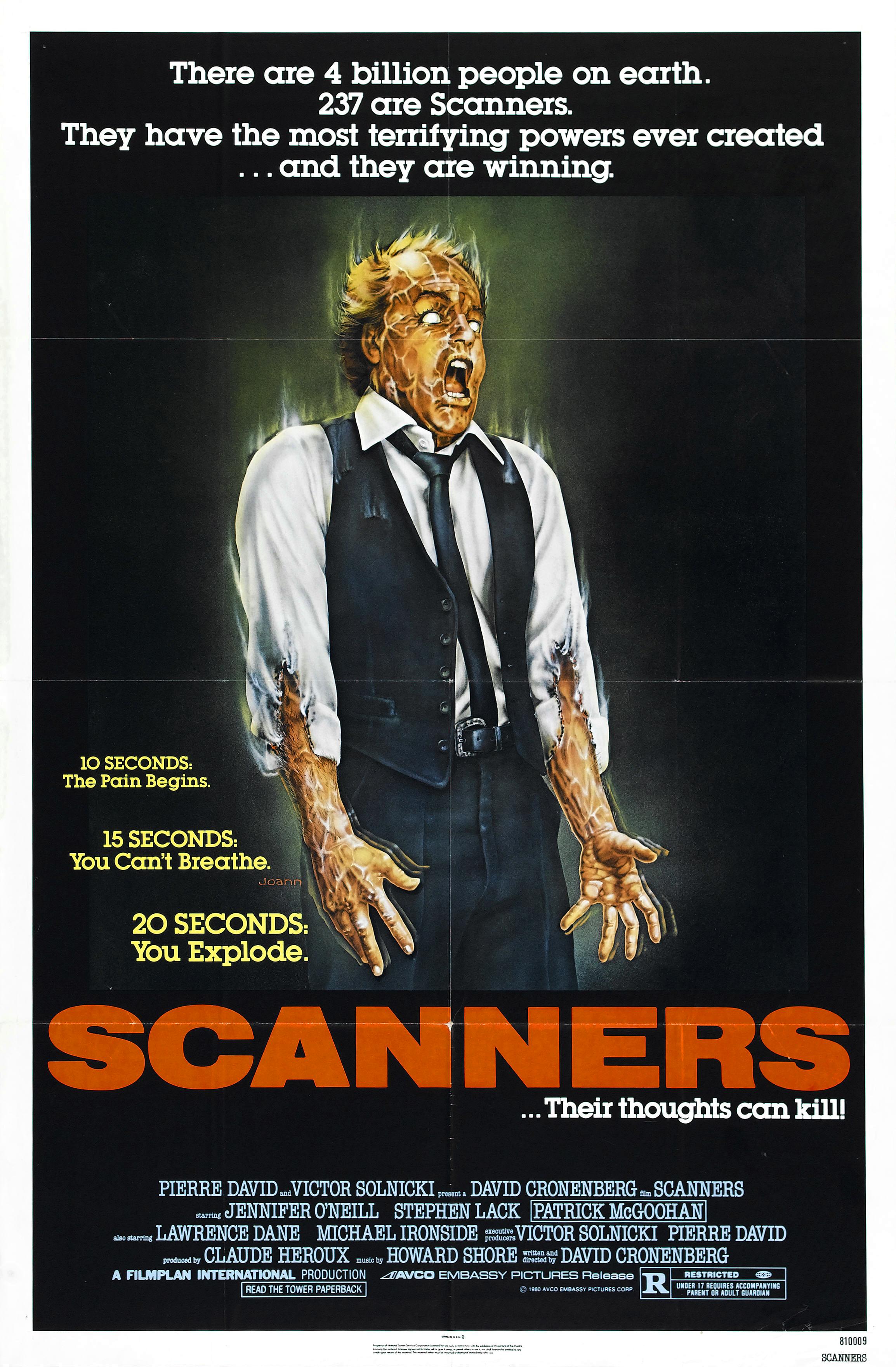
Scanners (1981)

By Richard Winters

My Rating: 7 out of 10

4-Word Review: His head will explode.

Scanners are people with strange psychic powers that can not only read other people’s minds, but also kill them and even move objects with their brainwaves. A corrupt group of scanners lead by Darryl Revok (Michael Ironside) threatens world domination. Dr. Paul Ruth (Patrick McGoohan) who works for a company that is trying to stop these dangerous people finds a scanner named Cameron (Stephan Lack) that Darryl’s groups is seeking, but has not yet located. Ruth trains Cameron on how to hone in his scanning powers and then track down Darryl’s group and destroy it.

Director David Cronenberg is still in my estimation one of the premiere cult/horror directors around. It is one thing to make a great horror movie when you have a big budget and state of the art special effects, but it is another to make an effective movie when you have little to work with and yet Cronenberg has continually shown that a creative imagination can triumph over all else. He has also shown a refreshingly daring vision throughout his career and seems to have no hesitation in tackling taboo subjects.

This film proves no exception. The story is quite creative and there are continually new and surprising twists thrown in. The special effects are excellent and imaginative. I loved the protruding, blood spurting veins coming out of the arms and heads of Cameron and Darryl during their intense scanner showdown at the end. The melting telephone receiver isn’t bad and off course the exploding head is memorable and deserves its place in the annals of gross cinema history.

With that said I still felt the film could have done a better job at setting up the story. It starts right away with a lot of action before anything is explained and makes things confusing. Some sort of prolog in this case would have been appropriate. Everything also seems rushed. This is a great plot with interesting scenarios and I as a viewer wanted a little more time to soak it all in, but wasn’t given any. The sets and backdrops are redundantly dark and grimy and lack visual design. Overall the film has a seriously dated look and although there are way too many films being remade these days and some that are not necessary this is one movie were I would advocate it especially if done with a high budget and a competent director.

Stephan Lack makes for incredibly weak leading man. He is better known in the art world as a renowned painter and his film career was quite brief. After watching his performance here it is not hard to see why. He has very much of a ‘deer-in-headlights’ look and a voice tone that shown no infliction, or emotion. His lack of charisma or stature seriously weakens the film’s overall effect and why he was chosen for the part is a mystery.

Jennifer O’Neill is gorgeous as Kim a female scanner who works with Cameron in his quest to find Darryl. The woman, who was a former model, has a face that is so beautiful it is mesmerizing no matter what angle she is shown at or emotion that she is conveying. My only complaint is the small streak of gray that was put into her hair, which I found unnecessary especially since she was portraying someone who was Cameron’s same age, which was the early 30’s.

On the villainous side Ironside certainly has the chiseled threatening features of a bad guy. However, I actually thought that Canadian character actor Lawrence Dane who plays one of Darryl’s spies was actually more effective.

The artwork done by the Benjamin Pierce character (Robert A. Silverman) visualizing giant heads and the thoughts inside people’s heads was really cool and avant-garde.

My Rating: 7 out of 10

Runtime: 1Hour 43Minutes

Rated R

Director: David Cronenberg

Studio: AVCO Embassy Pictures

Available: DVD

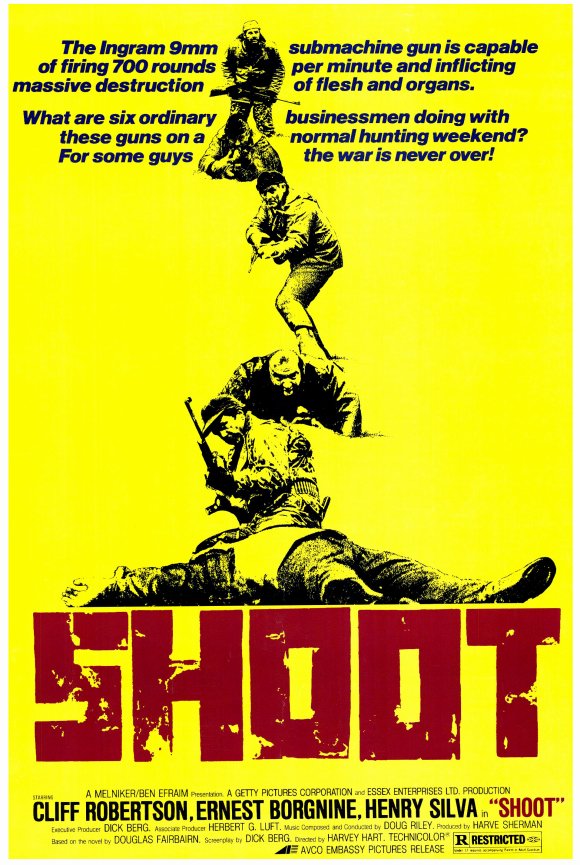
Shoot (1976)

By Richard Winters

My Rating: 2 out of 10

4-Word Review: Hunters out for revenge.

Rex (Cliff Robertson) is a man who really enjoys hunting and especially likes his guns, just watch the way he cleans and caresses it at the beginning, it’s almost obscene. He takes his buddies out on a hunting party in the woods. They come upon a group of other hunters and for some inexplicable reason they begin shooting at each other until one of the men in the other party dies. Rex and his group go back home sure that the police will be contacted and an investigation to pursue, but that doesn’t happen, so Rex thinks they are out for revenge instead. He becomes convinced that the other party plans to attack his group at the exact same spot the very next week. He gets his men ready for battle and dressed in army gear as they prepare for what they believe will be all out warfare.

Part of the problem with this film, which is based on the novel by Douglas Fairbairn, is that it doesn’t make any sense. Rex and his buddies meet the other party from across the river and then the two groups proceed to just stand there in silence like zombies before all the shooting breaks out. There is no reason for why any of it happens and I found it hard to believe this could ever occur in real-life. I am not a hunter myself, but I presume different hunting parties come into contact with each other all the time and it doesn’t end up with them trying to kill each other. I would also think that they may politely greet each other and share some sort of brief conversation in passing. Having all the men not say anything seemed odd and unfounded. The story would have made more sense had the groups spoken to one another and then somebody said something that was insulting and then it escalated. Doing it the way it is done here seems stupid and it is hard for any viewer to get into the plight of characters when there is no reasonable motivation.

The logic for the second half of the story works just as strangely. There is absolutely no reason to believe that the other hunters are planning any type of revenge at the same spot for the next week. The men don’t even know who any of them are. It would have worked better had the other group sent Rex’s group some sort of threatening message, or harassed them in some way to make the threat more real. Watching them prepare and discuss at length for a battle that may never occur is a waste not only of their time, but the viewers as well.

In between there is a long, boring middle part, which includes a scene where Rex visits the widow (Kate Reid) of the man that his group shot while under the pretense that he was an old friend of the deceased. Reid gives an interesting performance, but having her come on to Rex so shamelessly and even tells him that she wasn’t wearing any underwear seemed absurd and unnecessary. A similar scene happens in Rex’s office when the wife (Helen Shaver) of one of his friends aggressively flirts with him as well. Neither of the scenes helps propel the story, or characters and just another clue of a sloppy and unfocused script. There are a few too many shots exposing the boom microphone making me wonder if director Harvey Hart was only going through the motions on this one.

Robertson and Ernest Borgnine as Rex’s friend Lou are adequate, but the characters are painted in one-dimensional ways. The hunters are portrayed as violent prone loons with a penchant for shooting at anything and unable to display any type of sophistication, or rationale. The ultimate anti-gun, anti-violence message is heavy-handed and predictable. This was a trendy theme during the 70’s, but there had been so many better films on the subject that the producers shouldn’t have even bothered to make this one.

The on-location shooting in Ontario, Canada is poorly done. The buildings used for the interior scenes are dull and unimpressive with no visual style or sense. The outdoor scenes are flatly shot and done in the dead of winter, which gives the film a very brown, gray, and drab look. It would have been better had this been done in the summer as the green foliage would have been more scenic. There is also the issue of snow cover. On the first Saturday during their initial hunting trip there is no snow, then on the following Tuesday when Rex visits the grieving widow of the man that they shot there is a good six inches of the white stuff. Then on the following Saturday when they meet in town to get ready for their trip the snow is all gone only to again appear when they get to their hunting site.

I did like the solo trumpet soundtrack although it gets overplayed. The unexpected violent ending is indeed a surprise, but only helps in creating more loopholes. This was another attempt at cashing in on the success of Deliverance by coming up with a similar theme, but lacking the superior execution of the original. Another Deliverance-rip-off that came out in the 80’s Southern Comfort will be reviewed on Monday.

My Rating: 2 out of 10

Released: May 28, 1976

Runtime: 1Hour 39Minutes

Rated R

Director: Harvey Hart

Studio: AVCO Embassy Pictures

Available: YouTube