Category Archives: Movies from Canada

Julie Darling (1982)

By Richard Winters

My Rating: 7 out of 10

4-Word Review: Wanting father to herself.

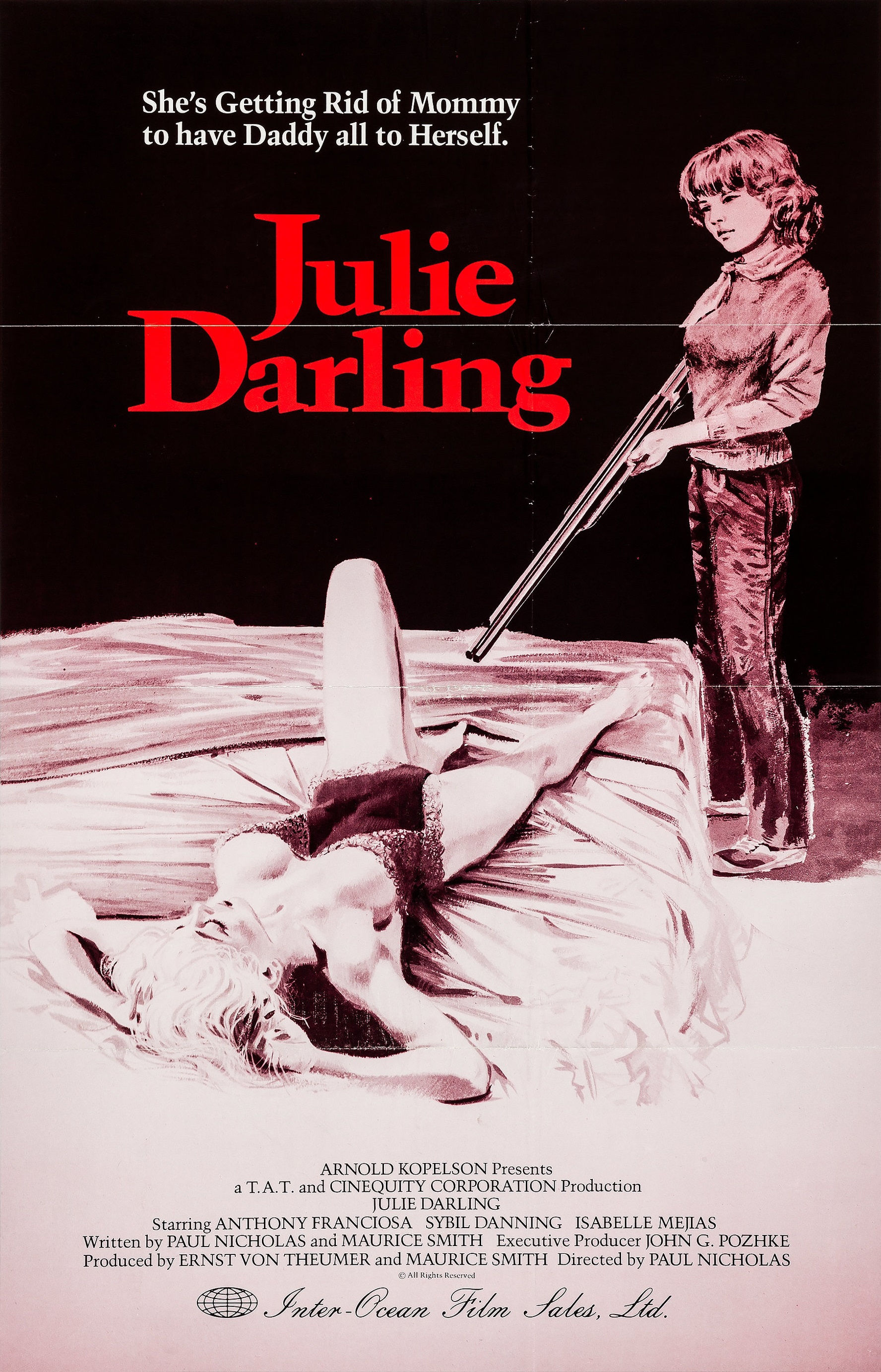
Julie (Isabelle Mejias) is a possessive daughter with weird interests like having a pet snake in which she enthusiastically feeds it live mice much to the shock of her best friend (Natascha Raybakowski). She also shows an unhealthy affection for her father (Anthony Franciosa) even going as far as fantasizing about making love to him. Because of this she hates her mother (Cindy Girling), so when her mom is attacked one day by the delivery boy (Paul Hubburd) she does not make any attempt to stop it despite having a rifle in her hand. Instead, she watches him crush her mother’s head onto the cement floor, which instantly kills her and then later when he is a part of a line-up at a police station she does not identify him and allows him to go free, but she does this for ulterior reasons. As her father has remarried to Susan (Sybil Danning) causing her jealousy to start all over again and motivating her to ‘hire’ the delivery boy to do what he did to her mother to Susan.

This is a surprisingly inventive story that works for the most part despite the majority of the action taking place in one setting, namely the house, which creates a boring visual. I was a bit taken back why this isn’t better known, or at the very least acquired a small cult following, though the fact that it has very little gore, with the exception of the groin stabbing via a glass bottle, it may have been enough to turn off the horror diehards though if you’re a patient viewer the climax should be rewarding.

Unfortunately, there are some eye-rolling moments as well. The mother’s inability to pick-up on the fact that the delivery guy was coming on to her even after making remarks about her ‘nice figure’, until it was too late didn’t jive with me. I’ve found females are very alert to guys making a pass to them, or ‘flirting’ as it were, so having this woman be completely oblivious, especially when the guy was at the age where you’d expect him to make some moves, proved unrealistic. The father’s relationship with Danning needed better fleshing out. Apparently he was already having a hot-and-heavy- relationship with her without the mother or daughter being aware, which is kind of hard to do, but most of the time the other woman doesn’t want to stay in that position forever and usually pushes the guy to get a divorce, so at the beginning of the movie he shouldn’t have been so conciliatory to the wife’s demands like he is, knowing of course that he already had a ‘spare tire’, and instead used that as an opportunity to request a break-up.

Having Danning move in with the father, and even get married to him, so soon after the wife’s murder should’ve created suspicion with the police chief. Normally the husband is always the initial suspect in these types of investigations especially since the daughter states that she didn’t get a good look at the assailant and could not describe any defining features, which means it could very well have been the husband who did it, or hired someone to do it, in order to get her out of the way and bring his new lover in and the fact that the cops never ever consider this makes them quite inept.

Mejias is badly miscast in the lead. Her moody facial expressions signal right from the start that she’s a psycho nutcase and there’s no character arc, or transition making all of her scenes one-dimensional. What’s worse is that she’s supposedly playing someone who’s 10-to-12, but even with being dressed in clothes for a pre-adolescent she still looks to be at least 16 and in fact was actually 20 at the time of filming. Having an actual age-appropriate child actor in the role with a more angelic face would’ve been far more interesting particularly if she were portrayed as being a ‘good girl’ at first and then had her dark side slowly emerge later. 

Despite all this I still found the twists that occur during the final 30-minutes makes up for the most part the other issues. While it’s remained obscure, I feel it has cult potential. Horror fans tired of the same old formula may enjoy its offbeat nature. 

Alternate Title: Daughter of Death

My Rating: 7 out of 10

Released: May 21, 1982

Runtime: 1 Hour 30 Minutes

Rated R

Director: Paul Nicholas

Studio: Twin Continental

Available: DVD, Blu-ray, Amazon Video, Roku Channel
Dead Ringers (1988)

By Richard Winters

My Rating: 7 out of 10

4-Word Review: Twin brother’s relationship erodes.

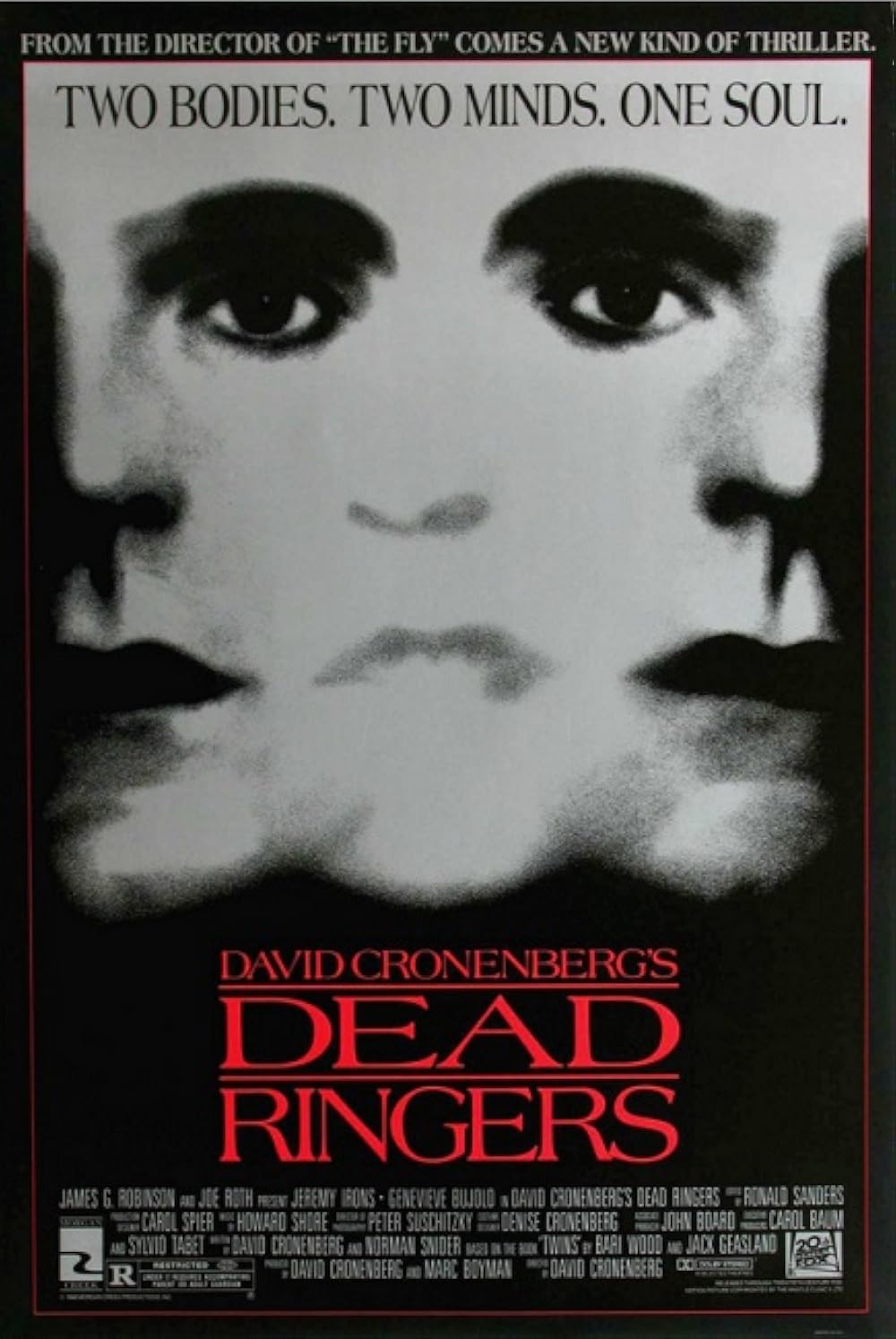
Twins Elliot and Beverly (Jeremy Irons) work at a clinic as gynecologists with Elliot being the more outgoing of the two. Elliot routinely dates women many of them patients at their clinic but will then ‘hand them off’ to Beverly who is the shyer of the two and unable to get women without Elliot’s help. Since Elliot likes variety in his relationships, he’s okay with Beverly getting the women once he’s lost interest in them and the women can never tell the difference. Things though begin to change when Claire (Genevieve Bujold) enters into the picture. She, like the ones before her, was a patient whom Elliot is quickly able to hook-up with and then after a brief fling is given to Beverly, but this time Beverly falls for her in a deep way and not so eager to drop her. Claire also becomes aware that she’s been tricked by the two and has a confrontation with Elliot about it while she continues to see Beverly on the side. Beverly though becomes conflicted with his dual loyalties unable to handle how fractured his relationship with his brother, who he used to be quite close to, has become spiraling him into a depression that ultimately leads to a dangerous drug addiction. 

In 1981 David Cronenberg became interested in doing a movie about twins and producer Carol Baum sent him articles about Steward and Cyril Marcus. These were identical twins who were gynecologists working and living together in New York City. On the morning of July 17, 1975 both were found dead inside Cyril’s cluttered apartment in what had initially been perceived as being a suicide pact, which was later ruled out, but both did die within a few days of the other. While their deaths generated may articles and even a novel the cause to what circumstances lead to them dying together has remained open and thus Cronenberg decided to ‘answer’ that question with this story though he had to go through many years of different producers, screenwriters, and various different drafts before this version was finally given the green light.

If you’re a fan of Cronenberg, particularly his gore, which he’s best known for, then you may be disappointed with this as there really isn’t much. There are still some disturbing moments including the garish genealogical instruments that Beverly pays an artist, played by Stephan Lack, to create which he then plans on using on one of his patients, to the shock of his medical staff, which is a creepy moment. There’s also a dream sequence where Claire bites off a membrane connecting the two brothers, which is cool, but brief. There was also a scene shot that had the head of one of the twins coming out of the stomach of the other one, but this didn’t go over well with the test audiences, so it got cut, but I really wished had been left in. 

It’s really Irons and his incredible performance as the twins that makes this such an engaging movie to watch. Having one actor playing dual roles has certainly been done before, but never quite this effectively. Even though they look exactly alike I really got the sense these were two different people and Irons ability to craft such diverse personalities and postures, this was achieved by putting his weight on the balls of his feet while playing one of them and having his weight put on his heels while playing the other helps to, in a very subtle way, create a strong distinction and a hypnotic presence that sucks you into the story and never lets you go. 

My only quibble is that rarely have I seen twins that you couldn’t tell apart in some way. I noticed that Irons did have some minor moles on his right cheek and then another on the left side of his head near his eye. In the movie both of the brothers have these lesions in the exact same place, but I think in reality they wouldn’t, so they could’ve masked the moles on one of the characters through make-up, so it would only show on one of them and that could’ve been a way to tell them apart physically. There’s also the issue with one of them given a women’s name, which Claire does question at one point. Beverly gets quite defensive when it’s brought up insisting that his name is spelled in the ‘masculine’ way, but on the credits it’s spelled out just like it would had the name been given to a female, so I felt there should’ve been more explanation of why he’d been given an unusual name as it was something that would certainly come off as odd to many and I don’t think I’ve ever heard of a man with that name. 

I also had some problems with Bujold’s character as she seems to be plopped in solely to get the story going and start the process of having the brother’s strong bond dissolve, but for a character to generate such a pivotal thing I think she should’ve stood out more. What was it about this woman that created a division between the boys that the other women hadn’t? I would’ve liked seeing her more involved in the conflict possibly confronting Elliot in an angry way, not the conciliatory one we see here, and forbidding Beverly to see him, which would’ve helped make her more prominent versus just being a story device. 

My Rating: 7 out of 10

Released: September 23, 1988

Runtime: 1 Hour 53 Minutes

Rated R

Director: Michael Cronenberg

Studio: 20th Century Fox

Available: DVD, Blu-ray, Peacock, PlutoTV, Roku,Tubi, Amazon Video, YouTube

Nothing Personal (1980)

By Richard Winters

My Rating: 2 out of 10

4-Word Review: Saving seals from slaughter.

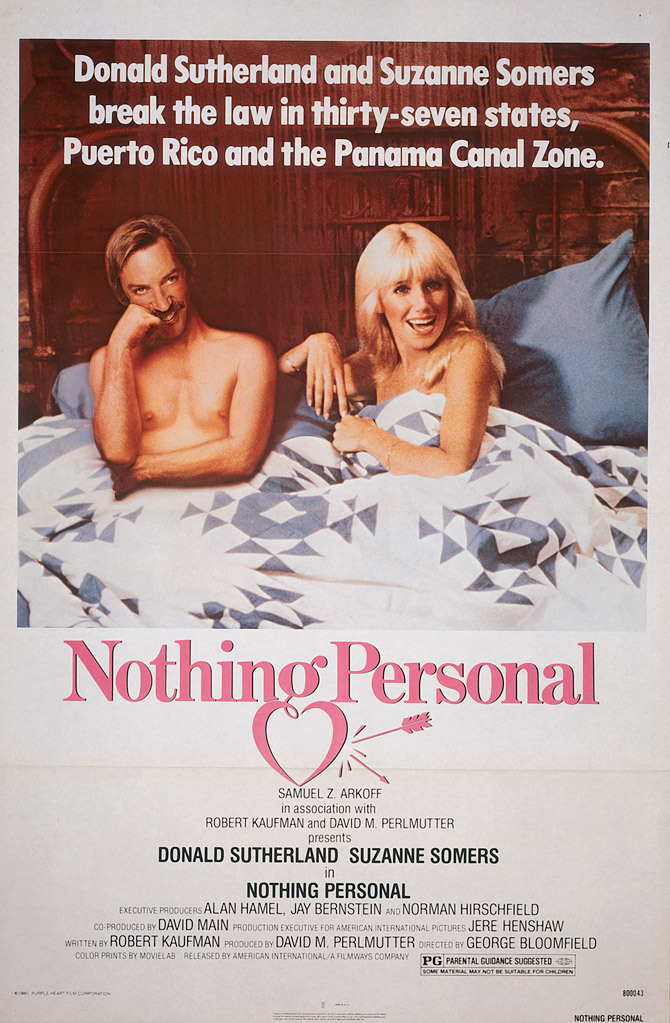
Roger (Donald Sutherland) is a college professor who becomes aware by one of his students, Peter (Michael Wincott), that seals are being systematically slaughtered by a construction company trying to build homes in an area populated by them. Roger then goes on a crusade to stop this and hires the services of Abigail (Suzanne Somers) a young lawyer bent on proving herself. The two though come up with major roadblocks when they attend the stockholder meetings of the company. While the CEO Ralston (Lawrence Dane) seems to listen to their concerns the company still decides to push through their construction agenda prompting Roger and Abigail to find other ways to prevent the homes from going up, which then causes the heads of the company to resort to nefarious means to stop them.

The screenplay was written by Robert Kaufman and sold in 1972 but then languished in the studio’s slush pile as it couldn’t find any director interested in filming it. Then in 1980 after the success of Love at First Bitewhich had also been penned by Kaufman, director George Bloomfield decided to take a stab at this one, but for tax write-off purposes it was filmed in Canada despite the setting being Washington D.C.

A lot of the issue with the movie, which was not well received by audiences or critics alike, and ended up tanking at the box office, is that it’s just not all that funny. The humor is dry and amounts to a few throwaway lines said by the characters just before the scene cuts away and if you’re not listening carefully enough, you’ll miss it though even if you do catch it it’s nothing that’s going have you rolling-in-the-aisles. Would’ve worked better had it been done as a drama, or even a thriller, as neither the comedy or romantic elements add much and in a lot of ways detracts from the main story.

While Sutherland is traditionally a good actor his presence here hinders things. He comes off initially as completely oblivious to what’s happening and only manages to get informed by Peter who’s very passionate about the cause and even interrupts a class that Sutherland is teaching to inform him about it. Sutherland immediately poo-poo’s the news and only after doing more research does he decide to take on the cause, but I felt that Peter, who gets largely forgotten and not seen again, should’ve been the one to lead the charge since he was already heavily into the issue and being a student would have more time on his hands while Sutherland was working a job and therefore shouldn’t have been able to devote his full attention to it like he does. Having a romantic relationship grow between Peter and Somers would’ve worked better as they seemed more around the same age while Sutherland looks to be more like her father.

Somers’ character is quite problematic. Initially she’s someone that wants to prove herself and be taken seriously but then turns into a complete slut almost overnight as she gets in bed naked when she invites Sutherland into her room and immediately makes overtures that she wants to get-it-on. This though is not a proper way that someone who wants to gain the respect of her peers and clients as she moves up in the business world should be behaving and therefore it’s hard for the viewer to take anything that she says or does seriously.

Too much time also gets spent on them fooling around to the point that it seems they’re more into sex than saving the seals. The movie should’ve waited until the very end to introduce some romantic overtures after they had succeeded with their mission when it would’ve been more appropriate, but the way it gets done here makes them seem like vapid juveniles with hyper hormones and not much else.

The film though really jumps-the-shark when the CEO of the company and his trusted assistant, played by Dabney Coleman, resort to criminal means in an effort to stop Sutherland and Somers from shutting down their project. Even going as far as trying to kill them by trapping them inside a barn and then setting it on fire. There are certainly CEO’s out there that can be corrupt, but they have enough money that they’d pay someone else to do their dirty work and would most certainly not be doing it themselves. Supposedly these are successful businessmen that have worked their way up the corporate ladder, so why throw it all away by so obviously going after their foes, which is something that could easily be handled through bribery.

Spoiler Alert!

The ending, which was described by one IMDb reviewer as being of the ‘surprise’ variety and makes sitting through the rest of the movie ‘worth it’, had me more confused than anything. It has Dane and company planning to build more homes on a different site that would require them to kill off more wildlife. They then get a knock at the door and when they open it, it reveals a smiling Sutherland and Somers, but it’s not clear whether they appear in order to stymie this new project or are somehow in on it. Since Dane and Coleman have annoyed expressions when they see them I think it’s meant to show the former, but the IMDb reviewer thought it meant the later and I really couldn’t blame anyone for not being sure, which makes this yet another problem for a movie that already had a ton of them.

My Rating: 2 out of 10

Released: March 28, 1980

Runtime: 1 Hour 40 Minutes

Rated PG

Director: George Bloomfield

Studio: American International Pictures

Available: DVD-R, Tubi, Amazon Video

Double Negative (1980)

By Richard Winters

My Rating: 4 out of 10

4-Word Review: Who killed his wife?

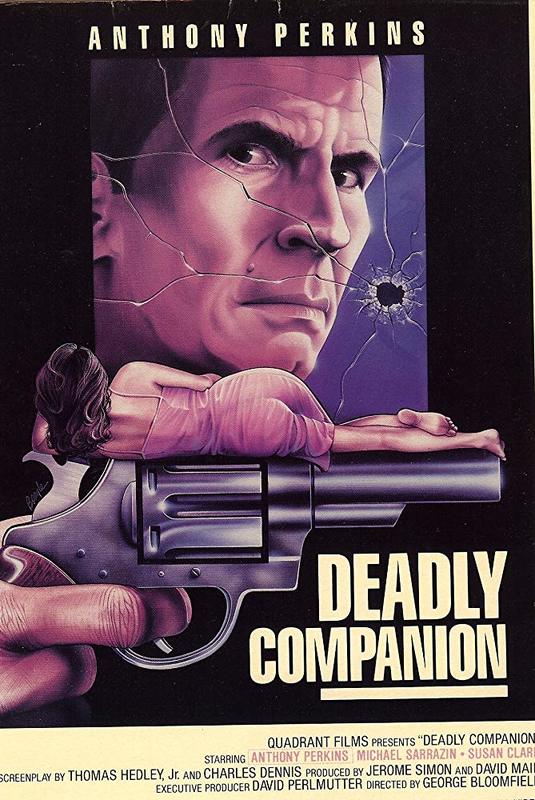
Michael (Michael Sarrazin) is a photojournalist tormented by fragmented memories of his wife’s murder. Paula (Susan Clark) is his girlfriend who’s trying to help him sort through these flashbacks, so he can find some answers. However, she too has things to hide as she’s busily paying off a man named Lawrence Miles (Anthony Perkins) who threatens to go to the police about what he knows about the killing. There’s also Lester (Howard Duff) a private investigator who sticks his nose too deeply into the case and finds himself at deadly odds with both Lawrence and Paula.

The film is based on the 1948 novel ‘The Three Roads’ written by Ross Macdonald under his real name Kenneth Millar. Macdonald later went on to have a stellar career writing novels about private investigator character Lew Archer and this story has plenty of potential but gets mishandled and ultimately becomes a misfire. A lot of the problem stems from the production employing three different writers who all had different perspectives on where they wanted the story to go and then relying on director George Bloomfield to cram it all together, which he doesn’t succeed at. The result is a fragmented mishmash that takes a long while to become intriguing and even then, remains interesting only sporadically. Lots of extended scenes particularly at the beginning that should’ve been trimmed and a poor pacing that barely manages to create any momentum.

It doesn’t help that the main characters are wholly unlikable and uninteresting. Clark especially comes off as arrogant right from the beginning when we see her drive by what appears to be Amish people in a horse and buggy fighting through the snow and cold while she enjoys things in her warm ritzy car, which makes her seem detached and uncaring. The scene where she’s trying to procure an important real estate deal and then gets hampered by Michael playing loud music in the other room, so she then excuses herself and promises to be right back. I was fully expecting her to yell at Michael for his misbehavior, but instead she strips off her clothes and the two make love, but it seemed like sex should be the last thing on her mind during such an serious business meeting and what would happen if the clients, who were just a door away and waiting for her return, would walk in on them? 

Sarrazin doesn’t cut it either. I know he’s been lambasted by critics in his other film appearances for being too transparent and forgettable and yet I’ve usually defended him as I feel he can sometimes be effective even given the right material. Here though he falls precariously flat. Some of it is the fault of the writing which doesn’t lend him to create a character with any nuance, or likability, but in either case he’s a complete bore and the viewer isn’t emotionally invested in his predicament. His flashback moments where he sees himself in some sort of prisoner of war camp doesn’t make a lot of sense, or have much to do with the main plot, and seems like something for a whole different movie. 

On the other hand, Perkins is fantastic and the only thing that livens it up to the extent that he should’ve been given much more screen time as the film sinks whenever he’s not on. It’s great too at seeing SCTV alums like John Candy, Eugene Levy, Joe Flaherty, Dave Thomas, and Catherine O’Hara in small parts where with the exception of Candy they’re not comical but instead make a rare turn at being dramatic. Duff is kind of fun and has one great moment, really the only good one in the movie, where he gets trapped in an elevator and must escape being shot by Perkins, who has his arm lodged in the otherwise closed doors, by desperately running back and forth in the closed space that he’s given. Michael Ironside has a memorable bit too as a bar patron who becomes incensed at Sarrazin when he refuses to allow him to buy him a drink. 

Spoiler Alert!

The denouement just leaves more questions and fails to tie up the loose ends as intended. For one thing it shows Sarrazin as being the one who strangled his wife, which I had started to suspect a long while earlier, so it’s not a ‘shocking surprise’ like I think the filmmakers thought it would. It also has Perkins leaving the scene, as he was having an affair with the woman, and even briefly speaking to Clark who witnesses him going, so why he’d insist Clark needs to pay him hush money didn’t make much sense. Sure, he could still go to the police and say that it was Sarrazin that did it, but Perkins fingerprints were at the scene of the crime, so I’d think either way he’d get implicated, and Clark could come forward saying she was a witness who saw him leaving. If anything, Clark should’ve been pushing him to go to the cops versus bribing him to stay away.  

Also, the way it gets shown, Clark comes into the bedroom after Sarrazin has already strangled his wife, so all she sees is him weeping over his wife’s dead body. For all she knew, from that perspective, is that Perkins really did kill the woman and Sarrazin was simply the first to come upon her dead body and thus for it to be crystal clear Clark should’ve entered while he was still in the middle of the act versus when he was already done.

Beyond that is that question of why would Clark want to stay with someone she knew had such violent tendencies? Wouldn’t she be afraid he could get upset at some point and do that to her? Sarrazin even asks her at the very end if she is afraid and her only response is: ‘aren’t you’? This though only muddles things further cementing it as a botched effort. 

Alternate Title: Deadly Companion

My Rating: 4 out of 10

Released: May 12, 1980

Runtime: 1 Hour 36 Minutes

Director: George Bloomfield

Studio: Quadrant Films

Available: Amazon Video

Meatballs (1979)

meatballs2

By Richard Winters

My Rating: 3 out of 10

4-Word Review: Shenanigans at summer camp.

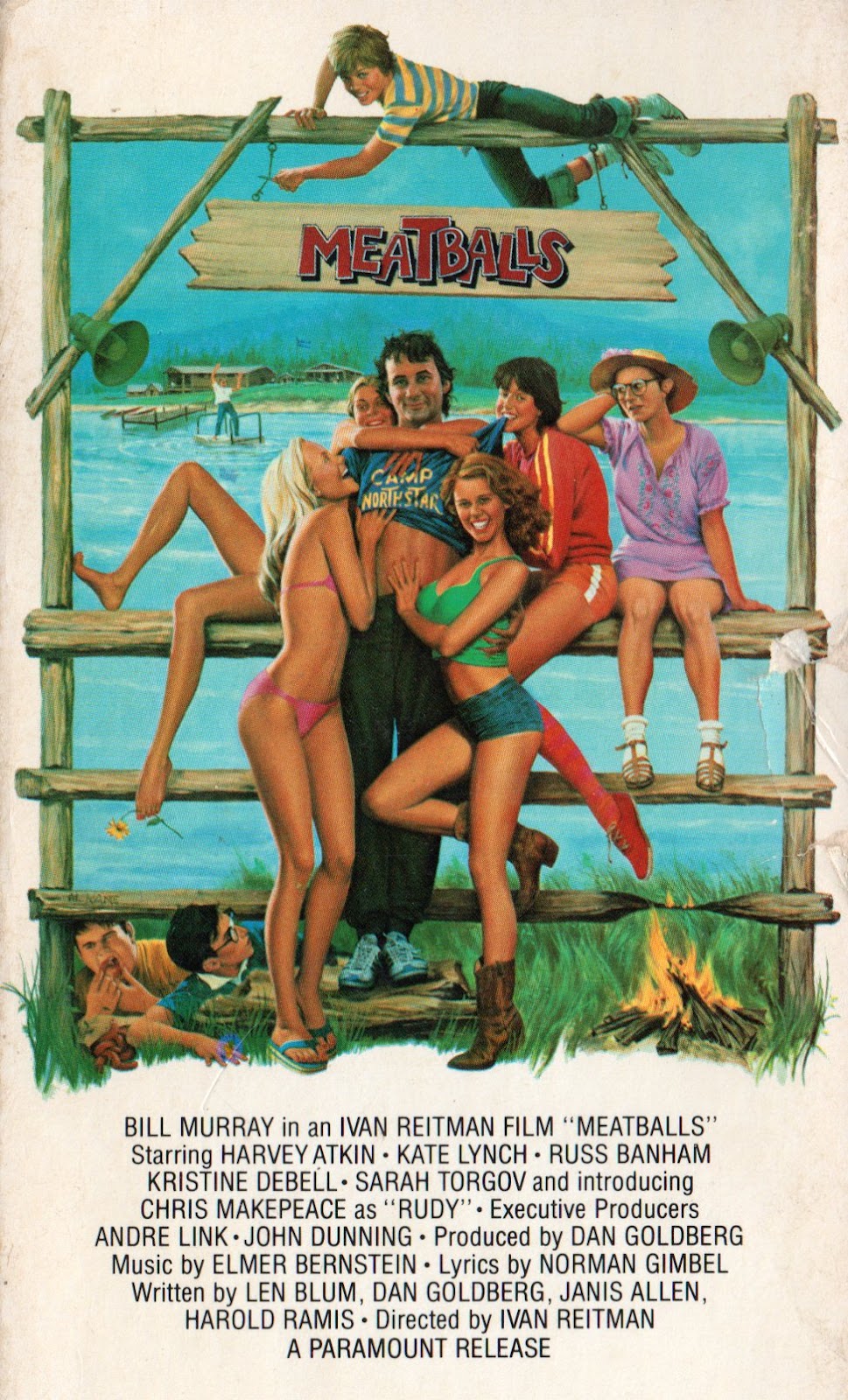
Tripper (Bill Murray) has been assigned to lead a new group of counselors-in-training while simultaneously pulling pranks on camp director Morty (Harvey Atkin). He also takes shy camper Rudy (Chris Makepeace) under his wings and giving the kid some confidence, so that he can play in sports and feel that he has a chance to win. Tripper also gets involved in the annual Olympiad between his camp, Camp North Star, and their rival Camp Mohawk, which sits across the lake from theirs. Camp Mohawk has won the title the past 12 years, but this year Tripper thinks things will be different mainly because he’s trained Rudy on how to be a cross-country runner due to their early morning jogs together and assigns him, much to the disagreement of the other campers, to run against Mohawk’s top runner in the crucial final race.

This was the fourth film directed by Ivan Reitman and while he went on to direct a lot of big hits I felt here he was still learning the craft and it would’ve been a better movie had someone with more experience been at the helm. Originally it was intended for John Landis to direct, but he was too busy working on The Blues Brothersso Reitman reluctantly took the reins, but the pacing and tone is all off. To some degree it seems to want to be an Animal House wanna-be filled with off-color humor and slapstick, but at other points it tries for sentimental drama. Nowhere is this more evident than it’s eclectic choice of music featuring bouncy tune by Rick Dees and then turning around and having a sappy song by Maureen McGovern that seems out of place for a film that most of the time dwells in low brow humor.

Story-wise it’s incredibly vapid and seems to almost be plotless most of the way. The main crux of the script is apparently centered around Rudy and Tripper’s attempts to help him find some confidence in himself, but even these moments come-off as trite and thrown-in at haphazard intervals. In-between we get treated to a lot of silly hijinks and benign characterizations that mostly fall flat. There’s a lot of potential story threads that the could’ve been funny, but the movie fails to follow through on.

There’s a segment where the parent’s come to visit for a day, but this lasts for a minute and then it’s over. I also wanted to see the reluctant Rudy give out the morning messages of the day via an intercom set-up that had been traditionally done by Tripper. Since Tripper was going to be out he handed over the duties to Rudy who seemed nervous about the responsibility, so it would’ve been interesting to watching how he ended up approaching it and how the other campers responded, but instead we aren’t shown any of it. The same goes for a little boy who brings a frog with him that doesn’t ever move because he’s ‘tired’ yet we never get any follow-up to this, so why even have the scene, which isn’t funny or interesting anyways, if it has no real point to the plot?

The running gag involving the camp director named Morty who’s constantly referred to as ‘Mickey’ gets overblown and rather dumb. It has him being such a sound sleeper that the other campers, under Tripper’s guidance, move him and his bed, along with his bedside table, out of cabin and into various other parts of the campsite including at one point on a raft on a lake. When he wakes up he then finds himself in a very precarious situation, but it’s hard to believe that someone could sleep that deeply that they would’ve wake-up while they were being moved. Even if that were the case you’d think they’d come-up with some way to prevent it occurring in the future like bolting their door shut, or constructing some sort of booby trap that would catch the pranksters in the act. This could actually make it even funnier as it would be upping the ante each time versus just replaying the same old prank. At the very least you’d expect an ultimate angry confrontation between Morty and Tripper who he knew was behind it, which at one point he threatens to do, as he states ‘we’ll talk about it later’, but we never see the ‘talk’ actually happen, which again makes it seem like the movie really isn’t going anywhere.

Bill Murray, who reportedly wasn’t sure if he wanted to do it due to his SNL obligations at the time, but finally did show up to the shoot on the third day of production, is genuinely quite funny and the only things that saves it from being a dud though it comes close to being one anyways. However, his character does prove to be a bit problematic in the scene where he aggressively tackles an attractive counselor he wants to have sex with, played by Kate Lynch, which would be deemed sexual harassment in this day and age and not the ‘good natured, boys will be boys’ fun that it was considered at the time.

The film though does manage to elicit nostalgic homage to the camping experience, so those that look back to their summer camp days with fond memories may bond to this better. Otherwise I found it highly overrated and genuinely surprised that it did so well at the box office.

My Rating: 3 out of 10

Released: 1 Hour 34 Minutes

Rated PG

Director: Ivan Reitman

Studio: Paramount Pictures

Available: DVD, Blu-ray, Amazon Video, Freevee, Pluto, Roku, Tubi, YouTube

Bear Island (1979)

bear

By Richard Winters

My Rating: 4 out of 10

4-Word Review: Killer in the artic.

A group of scientists travel to a small island in the artic to study the effects of climate change. They’ve been instructed by Gerran (Richard Widmark), the leader of the expedition, who forbids anyone to go near the U-boat base, which are ships leftover from WWII, but Lansing (Donald Sutherland) whose father was a U-boat captain, decides to sneak off one day with his friend Judith (Barbara Parkins) to check it out. Along the way they get struck by an avalanche that kills Judith, and which Lansing is convinced was started by a mysterious man with a rifle. He goes to the location again the next day and is able to find the cave the ships are in via snorkeling. He comes upon evidence that someone else from the camp had already been there and soon more people from the group begin turning-up dead.

The film is based on the Allistair MacLean novel of the same name, which was published in 1971. Great care was put into the production to make it seem as authentic as possible. Producer Peter Snell wanted it filmed at a cold location because he desired a real looking the snowy landscape and stated that audiences “can tell styrofoam snow”, and since I’m originally from a northerly region I can attest to that myself and one of the things I really hate about movies that take place in cold places, but shot inside a film studio. However, they weren’t able to shoot it at the actual  Bear Island, which is off the Norwegian coast, because they wanted to take advantage of the tax write-off that they would get by filming it in Canada and this in fact became the most expensive movie ever made in Canada up to that time.

While the film didn’t do well with either the critics, or the box office, there are some really cool scenes. I loved the bird’s eye views, especially the opening one of a man skiing all by himself amidst the otherwise barren, white landscape. The sequence between two snow scooters known as ‘The Caterpillar’, which are driven by Sutherland and Vanessa Redgrave, and two hydrocopters, which are maned by the bad guys, makes for a very unique and exciting chase over the frozen tundra. The collapsing of a giant radio tower and Sutherland getting involved in a bare knuckle fist-fight are also quite memorable.

The acting is good especially by Widmark who speaks in a German accent. I also liked Christopher Lee’s performance though for him he gets more captivating after his character gets injured and he lays dying. Vanessa Redgrave though is wasted. She speaks with a Nordic accent, which makes it somewhat interesting, but her character doesn’t have much to do and is just lead around by Sutherland and the forced romance between them is both annoying and ridiculous. You’d think someone who had just won the Academy Award for Best Supporting Actress just a year before would’ve had a better quality of parts to choose from though her outspoken politics may have had something to do with a more limited selection of offers making her feel that she had to take this one simply to stay busy.

The film’s fatal flaw though is that it doesn’t stay faithful to the book and makes many plot changes including having the group be scientists instead of a film crew like it had been done in the novel. This was director Don Sharp’s idea as he felt you couldn’t ‘make films about film units’, which I whole heartedly disagree. People working on movies have a far more eclectic personalities, ‘artsy types’ than scientists who are more matter-of-fact about things and tend to respond in a reserved manner. The characters are quite dull and there’s very little to distinguish them from the others. The viewer has no emotional investment in any of them and thus who gets killed, or even the identity of the killer becomes pointless and outside of the snazzy stunts it has no impact.

Spoiler Alert!

Having the killer turn-out to be Lawrence Dane was another disappointment as he had played villains many times before and his lurking eyes makes him almost a shoe-in for a bad guy and the first person you’d expect.  Some creativity to the killer’s identity was desperately needed possibly even have it turn out to being Redgrave, or even Sutherland might’ve been a big enough surprise to make the rest of it seem worth it, but ultimately this is yet another example where too much attention was put into the effects and not enough in the character development.

My Rating: 4 out of 10

Released: November 1, 1979

Runtime: 1 Hour 58 Minutes

Rated PG

Director: Don Sharp

Studio: Columbia Pictures

Available: VHS, DVD (Region 0), DVD-R

Hold-Up (1985)

holdup

By Richard Winters

My Rating: 5 out of 10

4-Word Review: Robber disguised as clown.

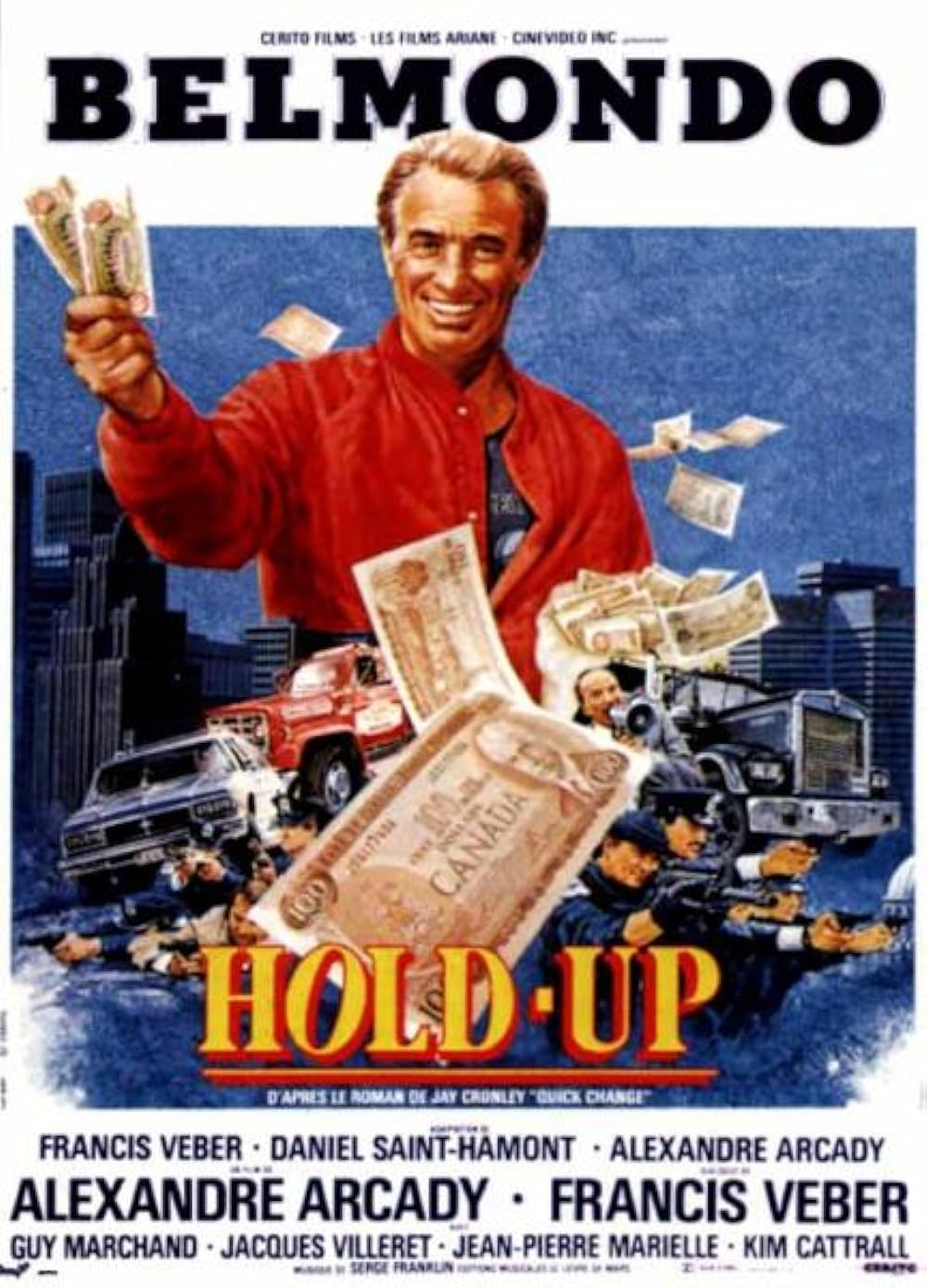
Grimm (Jean-Paul Belmondo) has come-up with what he considers to be an ingenious plan. He will rob a bank disguised as clown with two of his friends, Georges (Guy Marchand) and Lise (Kim Cattrall). While he’ll be a clown the other two will pretend to be bank customers and then when he agrees with the Police Commander Simon (Jean-Pierre Marielle), whom he is negotiating with via phone, to release some hostages he’ll let Georges and Lise ‘go’ and no one will know the difference. Meanwhile Grimm will take-off his clown disguise and put on a new one as an old man while pretending that the clown is still inside holding the rest of the bank employees and customers at gunpoint. By the time the police catch-on that there’s no longer any clown the three hope to have escaped on a plane and be far away. While the robbery works without a flaw the getting on the plane part becomes a major, if not impossible, challenge.

The story is based on the novel ‘Quick Change’ by Jay Cronley, which 5 years later was made into another, better known movie that starred Bill Murray. This was a French production that was filmed on-location in Montreal, Canada and one of the few movies that starred Belmondo that didn’t do well financially back in his home country and in-fact it was the first staring vehicle of his that didn’t crack the top 10 of highest grossing movies of that year, which was the first for him since 1976 when L’Alpagueur achieved only 19th place.

Belmondo is certainly a legendary actor whose long and storied career deserves to be admired, but I didn’t care for him here and felt his presence actually brought down the whole movie. He was apparently quite admired behind-the-scenes amongst the cast and crew and he did all of his own stunts including a scene where he climbs out of a moving car and manages to slither his way, while the vehicle is still going at high speeds, onto a tow truck and he did this while already being in his mid-50’s. However, his character is overly cocky and his glib conversational interplay between he and the police chief does not come-off as funny and more like you side with the chief and want to see this arrogant man caught. You’d think someone who had never pulled-off a robbery before would be much more nervous, or at least display some signs of anxiety, so his unbridled confidence seems completely out-of-place with the situation he’s in.

If anything I enjoyed Marchand and Cattrall far better as these two seemed much more human and displayed the insecurity you’d expect. They were like regular people full of foibles and someone you’d actually want to root for and thus I felt the movie would’ve been greatly improved had it just focused on the couple doing the robbing and cut-out Belmondo’s part completely. I also didn’t think the clown disguise worked as unlike in the American version his whole face isn’t covered with white paint and instead simply uses a red wig, a red clown nose, and some eyebrows, which I didn’t feel would be enough to hide his true identity and witnesses could’ve easily recognized who he was outside of the clown get-up and thus the whole disguise thing ends-up defeating its own purpose.

The first act works pretty well with shades of Dog Day Afternoon and some offbeat moments to the bank robbery theme by having one scene where the hostages are forced to get in a circle and sing a rendition of ‘London Bridges Falling Down’. The second and third acts though become protracted and seem to be the start of a whole different movie altogether. The bank segment has a crafty, sophisticated tone where the humor has a satirical bent and the main characters seem smart, savvy, and cool. In the second half the movie suddenly becomes like a live action cartoon with an abundance of car chases and the three leads, who had seemed so clever at the beginning, quickly become inept at seemingly every turn.

The biggest problem is the Lasky character played by Tex Konig. Konig is a big bearded guy that resembles Bluto from the old Popeye cartoons who’s also a tow truck driver who wants to get his hands on the stolen money and chases the three all around the city, which leads to many car stunts and crashes. Some may enjoy the smash-ups, but it comes across as unimaginative filler by filmmakers that didn’t know how to end the story cleverly, so they came-up with a lot of mindless action in order to keep it going.

The infighting between Cattrall and Marchand seems unnecessarily added in as well. This animosity needed to be introduced right at the start in order to make it consistent with the plot and not just thrown-in later to add some conflict for the sake of conflict. You’d think too that if she really resented the guy she would’ve refused to go ahead with the robbery unless someone else took his place.

Having the story then end with the three going to France and then Italy just furthers dilutes the plot, which no longer resembles a robbery flick at all, but more of a jet setting one. While not perfect the remake, which came-out in 1990, fares better in just about all phases.

My Rating: 5 out of 10

Released: October 23, 1985

Runtime: 1 Hour 54 Minutes

Not Rated

Director: Alexandre Arcady

Studio: Cinevideo

Available: DVD-R (dvdlady.com)

Wild Horse Hank (1979)

wildhorse

By Richard Winters

My Rating: 4 out of 10

4-Word Review: Teen girl saves horses.

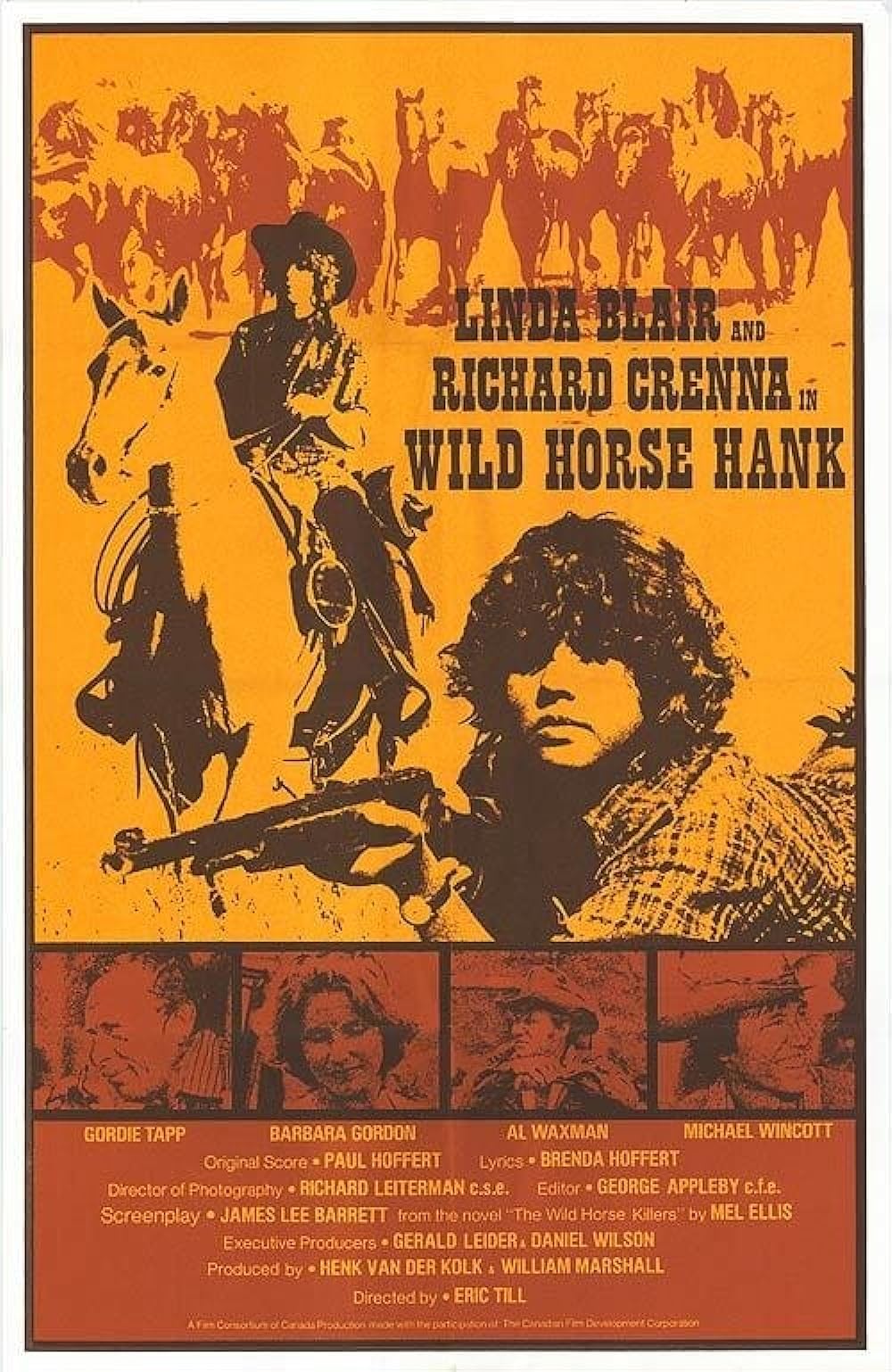
Based on the novel ‘The Wild Horse Killers’ by Mel Ellis the story centers around a teen girl named Hank (Linda Blair) who while tracking down her escaped stallion comes upon a group of men abusing some horses. She later learns that these men plan on destroying them in order to resell their meat for pet food. Hank becomes determined to herd them along treacherous terrain to the safety of a federal park where the horses will be free to roam without danger of being hunted. The problem is that it will be 150-mile trek and her father (Richard Crenna) doesn’t feel she’ll be up to the job, but Hank isn’t use to taking no for an answer and decides, with rifle in hand, to take on the challenge.

What stood out for me was the gorgeous western Canadian setting filmed on-location at both Dinosaur Provincial and Waterton Lakes National Park in the province of Alberta. The vast open view gives one a true sense of the outdoors and the rugged elements. The portrayal of the towns folk particularly the girlfriend of one of the bad guys, played by Barbara Gordon, who refers to her toddler son as her ‘popcorn fart’ and allows him to sip beer while complaining to everyone that he’s ‘a burden’ displays in raw fashion the economic hardship of country living and how fringe some in that region are and what levels they’d be willing to resort to in order to try and get out of it. It also gives a motivation for why the men are as savage as they are and it isn’t so much that they’re just ‘evil’, but more because other opportunities in such isolated areas are sadly few and far between.

The men are portrayed differently than in most other films where bad guys are given menacing looks and threatening presence. Here though they’re more like non-descript jobos you might find at the neighborhood bar, who on their own don’t pose much of a threat and like with the culprits in the classic film Straw Dogs don’t really become scary until they band together showing how otherwise benign people can become dangerous through peer pressure and financial insecurity, which in a way ends up making them even scarier.

Blair can certainly be a great actress if given the right material and knowing how much she loves animals I’m sure she took on this project because the theme was close to her heart, but the character doesn’t offer her much acting range. Normally the protagonist is supposed to grow and change in some way during the course of a movie, but here she’s one-dimensional. She’s super head-strong right from the start and remains that way to the end making her personal journey static. Had she been insecure at the beginning and then learned to overcome those feelings would’ve at least given the character a genuine arch.

I was surprised too that Crenna, who’s only adequate in his role and borders on being miscast, doesn’t go along with his daughter on her trek. He argues with her about how dangerous it is and yet ultimately waves her on her way and stays home. Had he tagged with her there could’ve been more opportunity for conversation and learned more about these people instead of long segments of silence, which makes the viewer more emotionally detached from what the character is going through instead of engaged.

I know I’ve complained about other adventure movies that throw in a hooky romance as a subplot, which I usually find annoying and yet this is a rare case where I wish it had been done. There’s a young good-looking guy named Charlie, played by Michael Wincott, who’s related to the poachers, but teeters the fence on whose side he’s on. He has some interactions with Blair during her trek and seemed like he was a potential love interest, but then he disappears only to come back later. He should’ve stayed all the way through as they made an interesting and cute couple with just enough animosity to keep it spicy.

Spoiler Alert!

There is a scene where Blair’s horse gets injured and she’s forced to shoot it, which I found powerful and the climactic sequence in which her father, who conveniently reappears again, gets all the truckers to create a roadblock, which stops the traffic, so the horses can cross the road. Overall though the film lacks subtext. The formula is too simple and straight forward. It may interest preteens especially those who love horses, but the main characters aren’t multi-dimensional.

My Rating: 4 out of 10

Released: May 15, 1979

Runtime: 1 Hour 35 Minutes

Not Rated

Director: Eric Till

Studio: Canadian Film Development Corporation

Available: DVD-R

If You Could See What I Hear (1982)

ifyou

By Richard Winters

My Rating: 2 out of 10

4-Word Review: Blind man finds love.

Tom (Marc Singer) is a young man attending college who also happens to be blind due to being a premature baby and put into an incubator that had too much oxygen. He meets up with Sly (R.H. Thompson) and the two become fast friends and eventual roommates. Both go on the prowl for women with Tom having the better luck as he soon gets into a relationship with a black woman named Heather (Shari Belafonte) though when he proposes marriage she bails. He then has flings with many other women that he meets at a bar where he works at, but when he meets Patti (Sarah Torgov) he begins to fall in-love despite their differences as she’s a staunch catholic while he’s an atheist.

The story is based on the early life of Tom Sullivan who became a famous songwriter and singer during the 70’s, he even sang the National Anthem at Superbowl X, as well as gust starring in several popular TV-shows of that era though today probably not that many people would know who he is. Marc Singer, best known for having starred in The Beastmaster as well as the 80’s TV-miniseries ‘V’, is also a casualty of that period and not real well known outside of those who lived through the decade. Why Singer was even cast I’m not sure as Sullivan clearly had acting experience and I would’ve thought he could’ve played himself and it might’ve been a better movie had he done it.

Story-wise it comes-off as comical vignettes spliced together and hardly seems believable, or at the very least highly exaggerated. Sullivan is given too much of a bigger-than-life vibe as where ever he goes everyone immediately gravitates to him and he becomes the life-of-the-party.  When he does seem to get into trouble he’s able to easily get out of it in circumstances that others wouldn’t. For instance he gets stopped by the police for driving a car without a license or vision, something that would get anyone else a ticket, fine, and arrest especially when his car does end up causing damage, but here the cops just shake their heads in a bemusement and walk away. He also jumps off a boat in the middle of a deep lake without a life jacket and unable to spot the life line that gets thrown to him and yet miraculously he gets out of this pickle just fine too. He’s even able to play golf against opponents with vision and beat them at their own game even catching them when they try to cheat. It’s like the guy can never lose.

The romantic/sex angle gets handled in an equally glossy way. He has a Fonzi-like quality with hot women clinging to him like he’s a magnet. Bimbo blondes and other babes prance in an out of his rented bedroom on an almost nightly basis to the point I was stunned when one of them refuses to go up to his room. This is only because she was ‘catholic’, but then after awhile she ends up doing it with him anyways with the brief delay being caused by her ‘morality’. It’s like his handicap is never a factor and in some ways almost an asset.  Some may argue this is a good thing as it shows a blind person can still live a normal life, but I don’t think there’s anything ‘normal’ here as even a good-looking sighted man isn’t able to score as frequently and consistently as this guy.

Spoiler Alert!

I have nothing against cute. Sometimes a cutesy moment or two in a movie is a good thing and can help bring in a lighthearted mood, but when it gets done constantly throughout it becomes like eating an entire carton of ice cream, which may be good for awhile, but will eventually make you puke. Even when it does finally get serious, which doesn’t occur until 90-minutes in, when he tries to save a young girl whose fallen into a backyard pool, it gets botched. Supposedly this is based on Sullivan’s true-life incident where he saved his own daughter from drowning, but I have a strong feeling the logistics were changed from the real one as here we see the girl floating lifelessly for several minutes making it look like her lungs were filled with water and beyond saving.

Of course there will always be those that may like it. There’s one commenter on IMDb who states she used to watch this over and over back in 1983 when it was on HBO and really loved it though if she went back to it now she might I suspect see it in a more critical way. Siskel and Ebert, who could never agree on anything, both voted it the worst movie of 1982.

My Rating: 2 out of 10

Released: April 23, 1982

Runtime: 1 Hour 43 Minutes

Rated PG

Director: Eric Till

Studio: Citadel Films

Available: DVD-R (dvdlady.com)

Martin’s Day (1985)

martinsday

By Richard Winters

My Rating: 4 out of 10

4-Word Review: Escaped convict kidnaps boy.

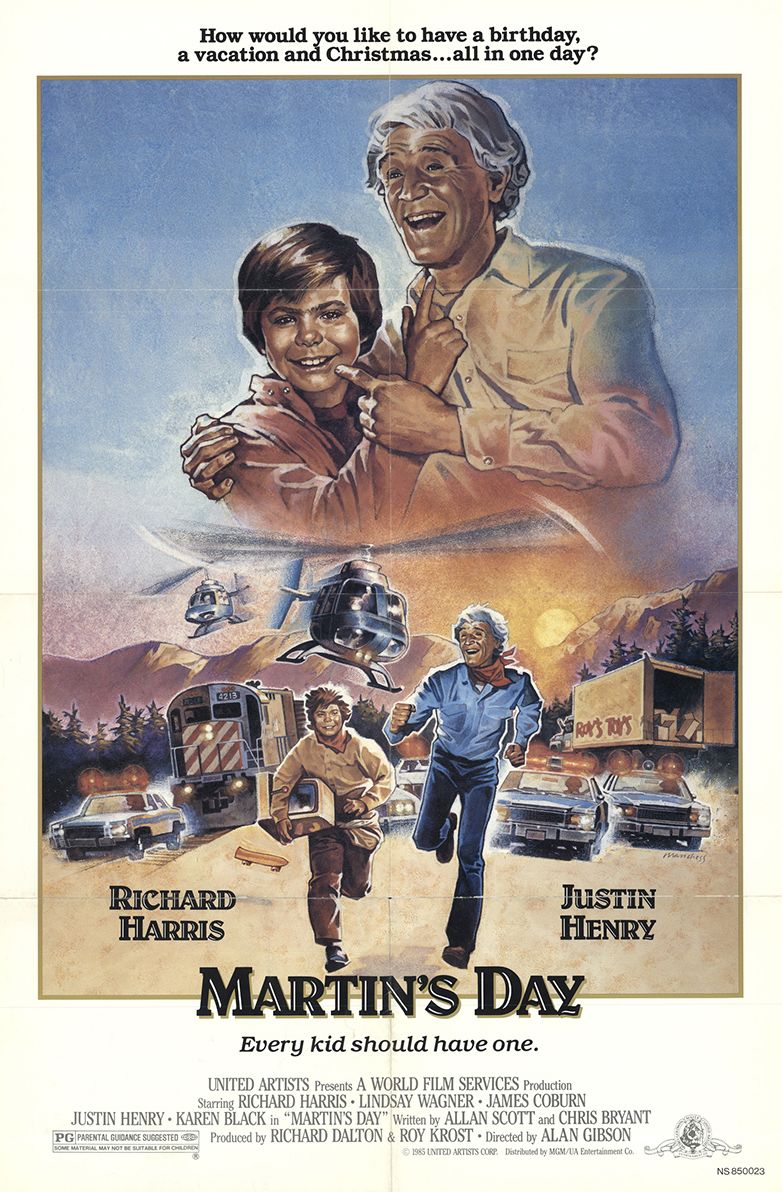
Martin Steckert (Richard Harris) breaks out of jail and disguises himself as a policeman while also absconding with a squad car. Soon some other cops notice the stolen car, which has a broken rear window, and begin to inspect it while Martin is buying groceries. When Martin returns he sees the cops inside the car, but notices their vehicle, which has caught the attention of some neighborhood boys, is sitting idle. He decides to use that car to getaway, but just as he tries to get inside it the other cops take out their guns and point them at him. In a desperate move Martin grabs one of the kids and threatens to kill him, which forces the officers to put down their weapons and let him get away. During the subsequent road trip the two get to know each other and he learns that the kid’s name is also Martin (Justin Henry). A unique bond is created, but the Canadian police force, lead by Lt. Lardner (James Coburn), is hot-on-their-trail.

Richard Harris is fantastic as usual, but the majority of the film is too intent on being a family-friendly movie that it ends up having no edge. The Canadian landscape, shot in September of 1983 in the province of Ontario, is nice and gives one a good feel of rural Canada, but everything else comes-off as trite and predictable though the eclectic supporting cast allows for some added interest.

I especially got a kick out of Lindsay Wagner playing the prison psychiatrist, who tries to replicate the Canadian accent by adding an ‘eh’ at the end of her sentences. I was surprised though that James Coburn, who was still considered a quality leading man at the time, was relegated to such a small role and only seen sporadically. Karen Black does a fine job as Harris’ former lover, but she’s in it for only about 5-minutes and they should’ve had her go along on the trip with the other two, which would’ve added some much needed energy and even a little spice.

The story itself is weak mainly because it telegraphs everything out and there’s absolutely no surprises. It’s clear right from the start, that Harris, while in jail, is a nice guy with a few anger issues, but then when he kidnaps the kid we know upfront that he isn’t going to hurt him. A more intriguing way to have done it, which would’ve allowed for some genuine tension, was to have shown him getting into angry confrontations with his cellmate and possibly even his therapist, so when the kid and him are alone you start to worry how he’ll behave and then during the course of the movie he could learn to be more calm and sympathetic. Even having him threatening the kid versus telling him upfront he’s not going to hurt him, would’ve upped the dramatic ante and allowed for a wider character arch.

I also couldn’t understand why the kid wouldn’t want to go back to his parents and start missing his home life at some point. The movie portrays his mom and dad, whom we never see, as being ‘strict’, but the rules that they had for him, like not eating candy on weekdays and only on weekends, didn’t seem all that outrageous. Had the film shown some scenes at the beginning where his folks were abusive towards him then his ‘escape’ with Harris might’ve made more sense, but as it gets done here the concept becomes highly strained.

Also, for a film aimed at a younger audience the segment where Harris intentionally sets himself on fire while inside his cell was quite graphic and could disturb a lot of children viewers. The scene where Harris backs the squad car that he’s just stolen into the front wall of the policeman’s house gets botched when I noticed that the backend of the vehicle remains completely intact and with no signs of damage, which just painfully illustrates that a breakaway wall was used and not a real one. Another logistical lapse comes when Harris and the kid park their pick-up on the train tracks, which forces the locomotive to stop and allows them to holed-up the train while the kid gets trained by the engineer on how to work it. Then in the next shot we see the train starting down the tracks with the kid now at the helm, but with the pick-up on the side of the tracks and no longer on them, but  it’s never shown how did the pick-up got moved.

My Rating: 4 out of 10

Released: February 22, 1985

Runtime: 1 Hour 38 Minutes

Rated PG

Director: Alan Gibson

Studio: MGM/UA

Available: DVD (Region 2), Amazon Video