Category Archives: Movies Based on Stageplays

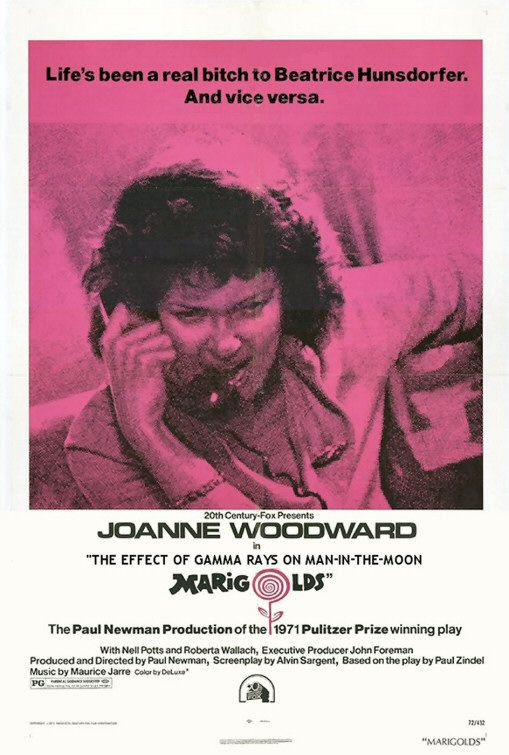
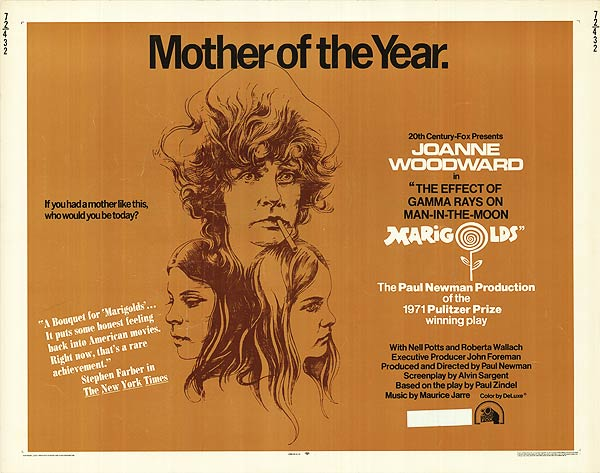
The Effect of Gamma Rays on Man-in-the-Moon Marigolds (1972)

effect of gamma rays 2

By Richard Winters

My Rating: 8 out of 10

4-Word Review: My heart is full.

Beatrice Hunsdorfer (Joanne Woodward) is a single-mother raising two girls while living in the poor side of Staten Island. She is an extremely self-centered, emotionally frail woman who’s bitter about life and alienates everyone that she meets. Ruth (Roberta Wallach) is her rebellious teenage daughter who recognizes her mother’s flawed personality and tries to distance herself from her. Matilda (Nell Potts) is the quiet, introspective daughter who takes in all the chaos while escaping by concentrating on her school science projects particularly the one involving marigolds, but as things progress Beatrice’s mental state becomes more erratic and threatens to tear their lives completely apart.

Actor Paul Newman directs on a tour-de-force level. Absolutely everything comes together while still keeping it on a subtle, visual level. The opening sequences gives the viewer a clear picture of the family’s strife and divergent personalities without ever having to go into any type of verbal backstory, which is great filmmaking at its finest. Although filmed in Bridgeport, Connecticut one still gets a good feeling of a poor inner-city neighborhood with the house that was chosen for the setting looking authentically cluttered without appearing staged. The variety of settings has a cinema verite feel while also remaining true to Paul Zindel’s script. Yet Newman’s greatest achievement is the fact that he creates a wholly unlikable main character that the viewer ends up still feeling quite sorry for and the climactic scene inside the school’s auditorium becomes emotionally wrenching.

Woodward excels in a difficult role and creates a character that becomes permanently etched in the viewer’s mind. Her brilliance comes through from the very beginning with the way she chews her gum while trying on some wigs and her never ending stream of caustic remarks runs the gamut of being rude and insensitive to darkly humorous. Although she was nominated for best actress with the Golden Globes and won the award at the Cannes for her work here she really should have been given the Academy Award as well.

Wallach, who is the daughter of Eli Wallach and Anne Jackson, is terrific in her film debut and has some memorable moments not only when she has a seizure, but also later when she plays a caricature of her mother for a school play. Potts, who is Newman’s and Woodward’s daughter, is quite good too especially with her stunning clear blue eyes and facial expressions.

Judith Lowry, who made a name for herself in her later years playing cantankerous old ladies, is outstanding as an old woman who rents a room from Beatrice. Although she frustratingly never says a word her moments are still unforgettable especially with the way Newman focuses on her wrinkled face and toothless mouth as she sips drinks or even hobbles her way to the bathroom.

Zindel’s story was originally a stage play and in fact Carolyn Coates who is cast as Mrs. McKay here played the Beatrice role in one of the stage versions. Most teenagers from the 70’s and 80’s will recognize Paul Zindel’s name as the author of ‘Pigman’, which was required reading in many high schools during that era. Yet I liked this story, which is based loosely on his experiences while growing up, even better and it’s a real shock that it has never been released on an American DVD as it definitely should be!
effect of gama rays 1

My Rating: 8 out of 10

Released: December 20, 1972

Runtime: 1Hour 40Minutes

Rated PG

Director: Paul Newman

Studio: 20th Century Fox

Available: DVD (Region 2)
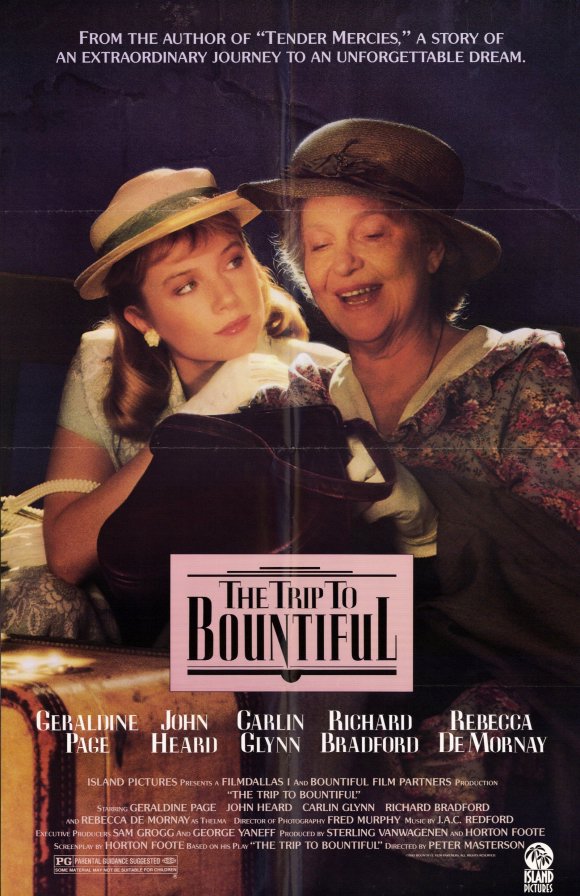
The Trip to Bountiful (1985)

the trip to bountiful 1

By Richard Winters

My Rating: 7 out of 10

4-Word Review: Old lady goes home.

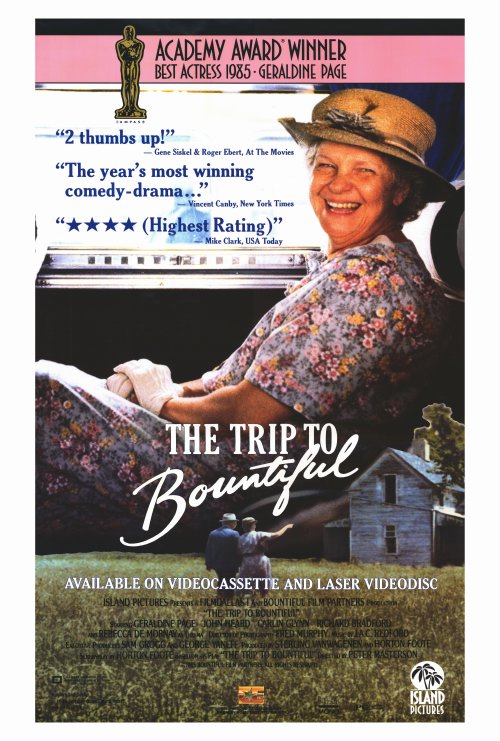
Carrie Watts (Geraldine Page) is an elderly woman living inside a cramped apartment with her grown son Ludie (John Heard) and his wife Jessie Mae (Carline Glynn) in Houston, Texas during the 1940’s. Carrie dreams of one day returning to her childhood home in the small town of Bountiful and ‘escaping’ from Jessie Mae who is overbearing and treats her like a child, but she lacks the transportation or funds. She secretly hides her government checks with the hopes of saving enough to take a train. When she finally makes it to the train station she finds there is no longer any stops to her old town, which is now essentially abandoned, but with the help of the local sheriff (Richard Bradford) he takes her there while Ludie and Jessie follow close behind determined to drag her back with them.

Peter Masterson’s directorial debut shows a great appreciation for Horton Foote’s script as it manages to stay true to the period and tone. I especially liked the part where Carrie describes the quietness of her childhood home while the camera slowly pans the yard and allows the viewer to essentially experience what she is talking about. The recreation of the ‘40s is on-target making you feel like you are living there yourself. Having some tunes of the era playing on a phonograph in the background is a great touch and it’s nice to hear a soundtrack that isn’t from the preverbal classic rock period.

Page shines in her Academy Award winning performance. She has played evil characters with such a relish for most of her career that it is nice seeing her portray a sweet old lady for once and do it so well. Her presence adds to every scene she is in and helps make them more interesting particularly with her conversation on the train with Thelma (Rebecca De Mornay) and the way she holds up everyone in line at the train station specifically two men standing behind her who in real life where her twin sons. She also manages to cry effectively with tears actually coming out of her eyes as opposed to De Mornay whose tearless attempts at it where so pathetic it seemed almost embarrassing.

Carlin is quite good in the snippy adversarial role and I was surprised she didn’t at least get a nomination for her efforts. Heard is solid as a sort of mediator and De Mornay is perfect for the part simply because her fresh youthful face makes a great contrast to Page’s worn one.

The on-location shooting adds a lot of flavor and helps to make this superior over its original stage version. The story itself is slow moving, but a wonderful character study on aging that at times manages to be dryly humorous, honest and sad, but never maudlin.

the trip to bountiful 2

My Rating: 7 out of 10

Released: December 20, 1985

Runtime: 1Hour 48Minutes

Rated PG

Director: Peter Masterson

Studio: Island Pictures

Available: VHS, DVD

The Children’s Hour (1961)

childrens hour

By Richard Winters

My Rating: 4 out of 10

4-Word Review: Ruined by a lie.

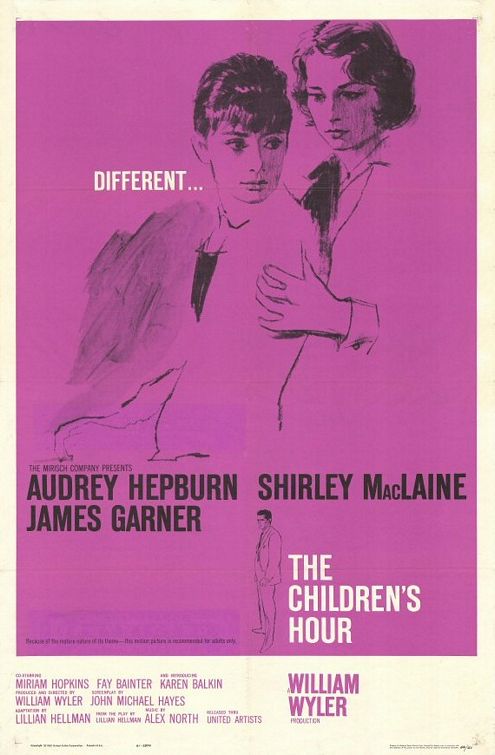
Martha and Karen (Shirley Maclaine, Audrey Hepburn) are two single young women running an all-girl’s school. They have the respect of the community and the parents, but that suddenly changes when one of the students named Mary (Karen Balkin) decides to spread a rumor that Martha and Karen are lovers. This sends everything into an uproar. All the students are moved out and the two women find themselves fighting desperately for their reputations and livelihoods. Karen’s boyfriend Joe (James Garner) remains their staunch supporter, but eventually even he begins to have his suspicions.

The film is based on the landmark play written by Lillian Hellman which ran for 691 performances in 1934 and was based on a true incident that happened in Scotland in 1810. The original film version of the play was made in 1936 and entitled These Three that was also directed by William Wyler and starred Miriam Hopkins as Martha who in this film plays Martha’s Aunt Lily. That film was heavily watered down with the lesbian element completely taken out and instead has the rumor revolve around the two teachers being in love with the same man.

This second film version was supposed to be more like the play, but hardly seems worth the effort. Although Wyler makes some attempts to make it seem more cinematic it still comes off very much like a filmed stage play and a static one at that. Lots and lots of talk with a narrative that is quite plodding and predictable. Having the story work more in a fragmented style might have helped, but either way it is never very engrossing or compelling. It also completely skips over the libel trial, which I thought could’ve given some added drama and it never completely explains why the Aunt Lily character avoided testifying. She comes up with the lame excuse that she was touring with her show, but I felt it was more because she secretly knew Martha was a closet lesbian and didn’t want to have to confront that and the film should’ve made this more clear.

It is also unintentionally funny at times especially the part where actress Fay Bainter’s eyes get bigger and bigger as Mary whispers her ‘shocking’ secret into her ear. Balkin also overdoes the facial expressions, which was probably due to too much coaching on the part of Wyler, but with that said her presence in the film is fun and gives the proceedings a liveliness that is otherwise stagnant.

The film really isn’t all that groundbreaking either and handles the delicate issue in too much of a timid way. For instance there is a scene where Martha admits to her homosexual feelings and states that she feels ‘ashamed’ for having them and Karen counsels her by stating that ‘you did nothing wrong’ because ‘nothing happened’, but what if it had then would it have been wrong? I tend to lean towards the latter making the production seem as stale and prejudicial as the public at the time. I was also confused as to how the two women could remain living at the school when all the students had moved out and they no longer had any income, or how they were still able to have groceries delivered to them.

My Rating: 4 out of 10

Released: December 19, 1961

Runtime: 1Hour 47Minutes

Not Rated

Director: William Wyler

Studio: United Artists

Available: DVD, Blu-ray, Amazon Instant Video

Cabaret (1972)

cabaret 1

By Richard Winters

My Rating: 6 out of 10

4-Word Review: Life in pre-war Germany.

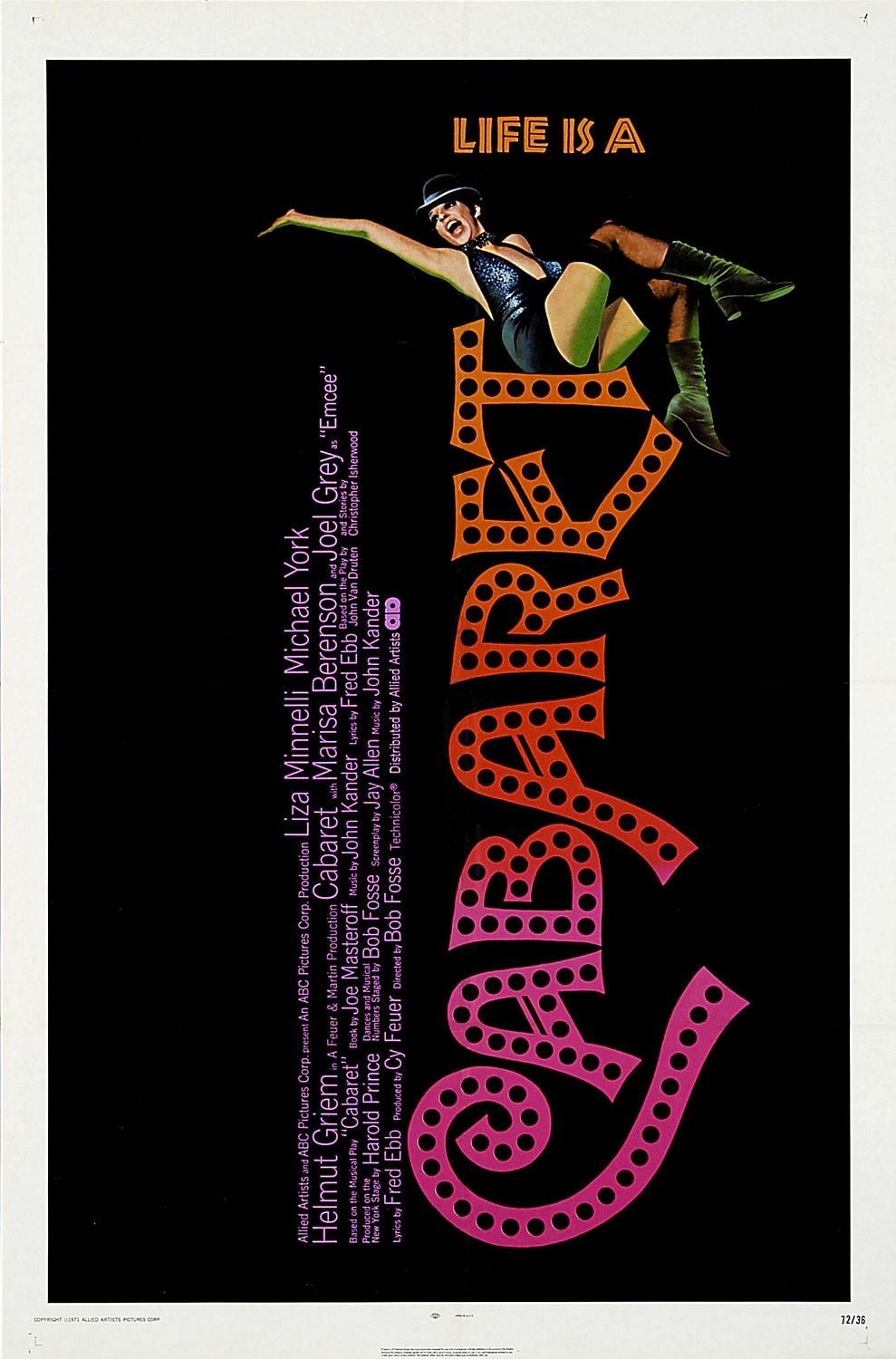
Sally Bowles (Liza Minnelli) is a singer at a seedy Berlin nightclub called the Kit Kat Klub in pre-war Germany. She meets and falls in love with Brian (Michael York) who is a bi-sexual. The two begin a relationship only to have Max (Helmut Griem) enter who seduces them both and gets Sally pregnant.

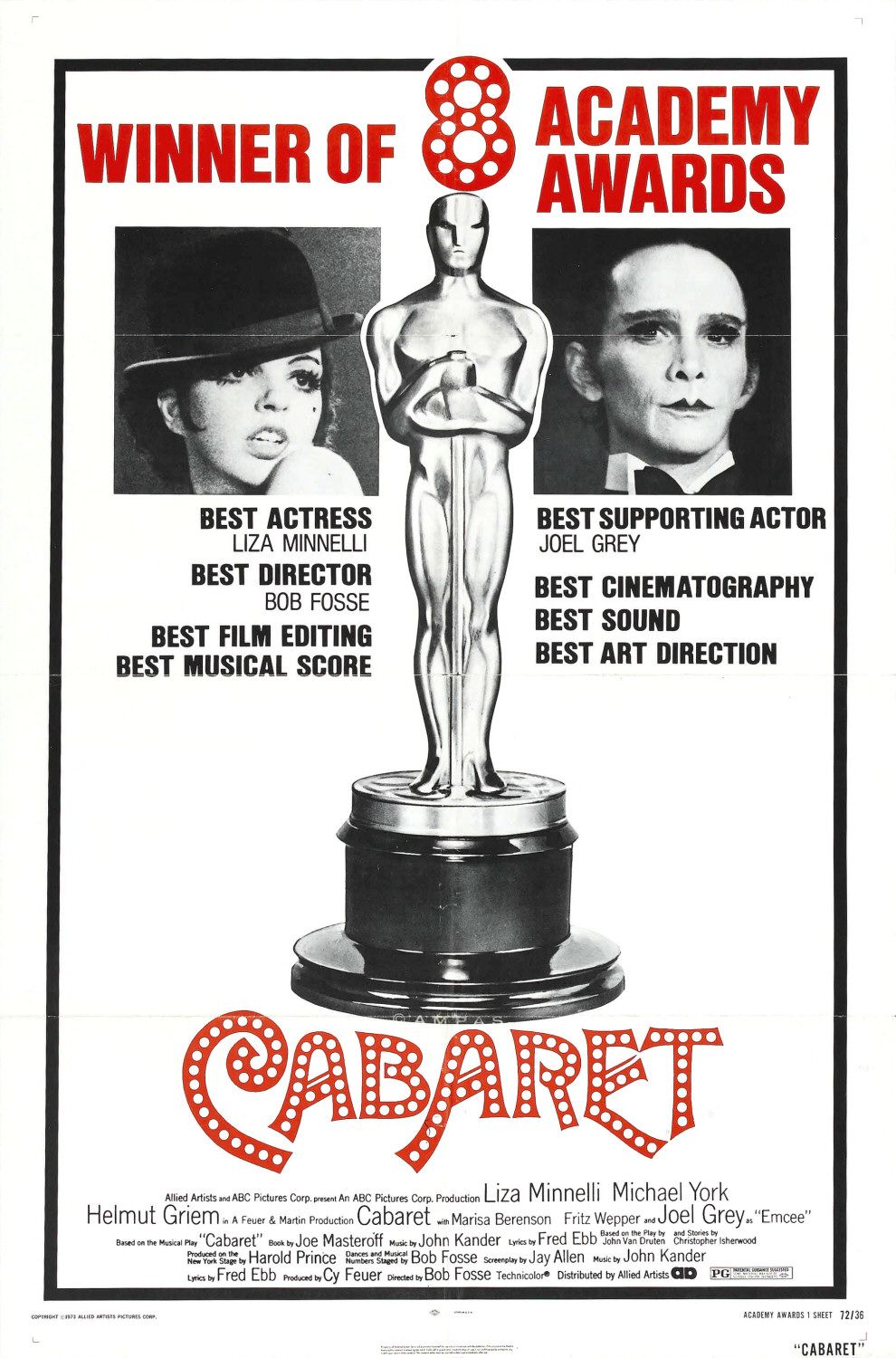
This is a very stylish look at the pre-war years of Germany when it was still under the rule of the Weimer Republic and not yet succumbed to Nazi authority. The dramatic storylines are spliced in-between musical numbers done at the club, which are visually fun and have just the right amount of sensuality and theatrics. In many ways this looks like an obvious inspiration to the later hit Chicago and netted Bob Fosse the Academy Award for best director.

Joel Grey is amazing as the club’s emcee. He has no speaking lines and yet gives a one-of-a-kind performance that also got him the Academy Award for best supporting actor. His distinguished presence gives the film its unique flavor and personality and has to be seen to be fully appreciated.

Unfortunately the stories between the songs seem awfully trite. There is nothing really profound or interesting about them and they tend to bog the whole thing down while making Germans look uniformly dopey.

cabaret 2

Minnelli won the Academy Award for best actress, but it is hard to see why. Yes she certainly does command the stage when she is singing and dancing, but seems misplaced otherwise. For the most part she seemed to be continuing the insecure, kooky character that she already created in The Sterile Cuckoo without adding any new spin to it. One really can’t sympathize with her nor really wants to and I felt the character became overdone and pushed the viewer’s patience.

Pairing her with refined English teacher York helps…a little yet their romance seemed hard to believe. Having this educated, good looking guy become jealous every time she talks to another man seemed unnatural given the circumstances.

Technically it is sound with a good eye for detail, but falters dramatically and isn’t strong enough to be anything more than a slight diversion. The only interesting scene to me was when a young clean-cut teen wearing a Nazi uniform gets up and sings an impassioned pro-German song as it perfectly illustrated visually all the rampant nationalism and brain washing that went on and is both creepy and sad at the same time.

cabaret 3

My Rating: 6 out of 10

Released: February 13, 1972

Runtime: 2Hours 4Minutes

Rated PG

Director; Bob Fosse

Studio: Allied Artists Pictures

Available: VHS, DVD, Blu-ray, Amazon Instant Video, YouTube

Norman…Is That You? (1976)

norman is that you

By Richard Winters

My Rating: 4 out of 10

4-Word Review: Gay son comes out.

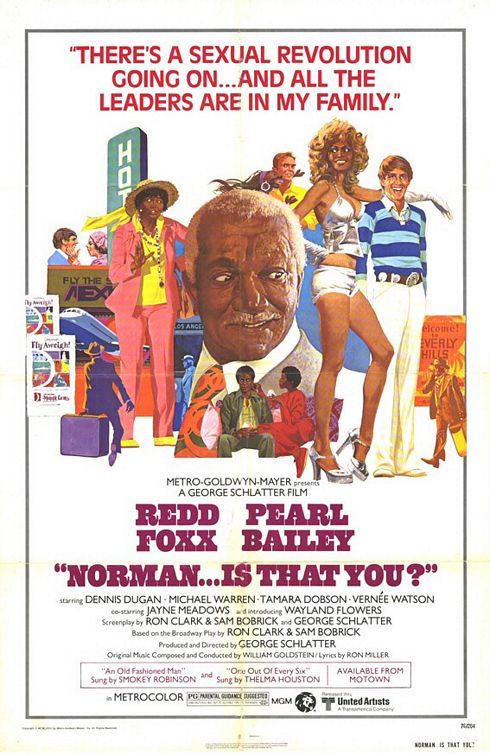
Ben (Redd Foxx) travels to L.A. to visit his son Norman (Michael Warren) after his wife Beatrice (Pearl Bailey) leaves him for his brother. However, unbeknownst to Ben Norman has come to terms with his closeted homosexuality and is now living with Garson (Denis Dugan). When Ben arrives unannounced Norman tries to keep his gay relationship a secret, but Ben eventually finds out about it and goes on a mission to have him ‘cured’.

The story was originally written as a play, but flopped and ran for only 12 performances in 1970. For whatever reason it was decided 6 years later to revamp the idea, but do it with a black cast instead. However, times have changed and most everything here seems quite dated. The Ben character could easily be considered homophobic by today’s standards and the gay jokes he makes seem out-of-line and even offensive.  The production, which was shot on video and then transferred to film, looks stagy and cheap with ‘the view’ of L.A.’s skyline that can be seen outside Norman’s patio door clearly being a painting. George Schlatter who is best known for producing the 60’s variety TV-show ‘Laugh-In’ makes his one-and-only cinematic directorial effort and is unable to overcome the script’s limitations.

Foxx is the only reason it is even slightly enjoyable. Just watching him walk around with his patented strut is amusing. However, the way he treats Garson simply for being gay is no longer considered funny and I felt the Garson character shouldn’t have put up with half as much as he does. Still, the part where Foxx dreams that he is a gay actor accepting the Academy Award is the film’s best moment.

Dugan plays up the flaming gay character relatively well, but Warren is a weak link as he says his lines like he is reading them off of a teleprompter and shows no emotion or variety of facial expressions. Having Bailey cast as Foxx’s wife seemed inspired, but the character gets wasted in trivial husband-and-wife arguments that knock this thing down to a TV-sitcom level. Jayne Meadows who appears as Garson’s mother is equally wasted and is in only one scene even though the character had great potential especially with the idea of setting her up on a date with Foxx.

There is enough comedic banter to save this from being a bomb, but just slightly. Although it is shown that the parents reluctantly come to terms with their son’s sexuality it still conveys the message that it is ‘okay’ to be openly prejudice towards the lifestyle, which likely could rub most of today’s viewers the wrong way.

My Rating: 4 out of 10

Released: September 29, 1976

Runtime: 1Hour 31Minutes

Rated PG

Director: George Schlatter

Studio: United Artists

Available: VHS, Amazon Instant Video, YouTube

The Runner Stumbles (1979)

the runner stumbles 1

By Richard Winters

My Rating: 2 out of 10

4-Word Review: Priest accused of murder.

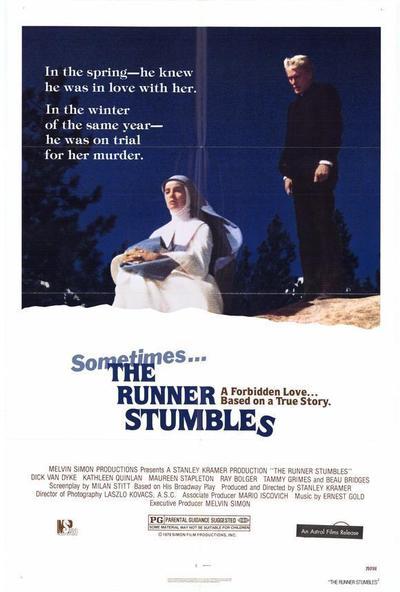
Based on actual events the setting is 1911 in a northern Michigan town where Father Brian Rivard (Dick Van Dyke) presides over a small Catholic parish. He feels frustrated at being stuck in such a depressed town where many of the residents are out of work. In comes Sister Rita (Kathleen Quinlan) to help run the school and the Father immediately takes a liking to her youthful enthusiasm and fresh ideas, but gossip and rumors soon abound when it is found that they are spending too much time together and possibly becoming intimate. When the Sister is found murdered it is the Father who is accused and must fight for his life while straddled with an attorney (Beau Bridges) who seems glib and detached.

One of the biggest problems with the film is the miscasting of Van Dyke in the lead. His performance is stiff, wooden and affected. The chemistry between the two stars is non-existent making the romantic angle seem completely unbelievable. The film would have been better served had a younger man that was more Quinlan’s age and trained in method acting been cast in the part.

Quinlan is excellent in her role, but her efforts become lost as they bounce off Van Dyke’s almost corpse-like presence. Maureen Stapleton adds some excellent support and it’s great to see Ray Bolger in his final film role as the intrusive Monsignor. Bridges is also great as the lawyer and the one thing that livens the film up a little. Had his court scenes been more extended it would have helped the picture immensely.

Director Stanley Kramer, whose last film this was, seems to have lost touch with the modern movie goer. The presentation is stagy and the overly melodic soundtrack does not fit the mood and gets overplayed almost like a radio going on in the background that somebody forgot to turn off. The conversations revolving around the predictably stifling atmosphere of the era add little interest and go on too long as do the debates between giving in to human desires versus religious commitments. The surprise ending hardly makes up for a film that is slow and boring and ultimately making it as stale and stagnant as the small town it tries to portray.

My Rating: 2 out of 10

Released: November 16, 1979

Runtime: 1Hour 49Minutes

Rated PG

Director: Stanley Kramer

Studio: 20th Century Fox

Available: VHS

The Boys in the Band (1970)

boys in the band 1

By Richard Winters

My Rating: 9 out of 10

4-Word Review: This party turns sour.

A group of gay men get together for an intended night of food and laughs as they celebrate Harold’s (Leonard Frey) birthday. Things begin to unravel when Alan (Peter White) appears who was an old college roommate of party host Michael (Kenneth Nelson). He insists that he is not gay, but Michael and the rest of the group intend to prove otherwise, which leads to many harsh and interesting revelations.

This film packs a wallop and is as relevant and daring now as it ever was back then. Director William Friedkin does a terrific job of making this story, which was originally an off-Broadway production seem cinematic. I loved the capturing of the apartment, which makes you feel like you are right there.

The performances are outstanding and all are the original cast from the stage production. Cliff Gorman as the flaming gay personality is a particular standout. The script by Mart Crowley is captivating from beginning to end as it brings out all the different personalities and myriad issues that make up the gay community and the whole thing is a tour-de-force on all levels.

My only complaint would be the character of the Cowboy played by actor Robert La Tourneaux who is the dim-witted, but good looking ‘gift’ giving to Harold for his birthday. I realize the intention is to make him a bit dumb, but it gets overdone. It’s one thing to be an ‘airhead’, but a complete other thing to sound so stupid it’s like he is from another planet. His character is the only one that does not get fleshed out at all and his utterly inane comments come off as hollow and annoying. Ironically La Tourneaux was unable to find many acting parts afterwards and became a gay prostitute in real-life by the late 70’s in order to make ends meet.

The characters are believable and the dialogue moving. It’s a compelling study of those feeling isolated from society and sometimes even themselves.  Even if you are not gay the film can still have a great impact and its quality viewing either way.

My Rating: 9 out of 10

Released: March 17, 1970

Runtime: 1Hour 58Minutes

Rated R

Director: William Friedkin

Studio: National General Pictures

Available: VHS, DVD

Funny Girl (1968)

funny girl

By Richard Winters

My Rating: 6 out of 10

4-Word Review: Fanny’s rise to stardom.

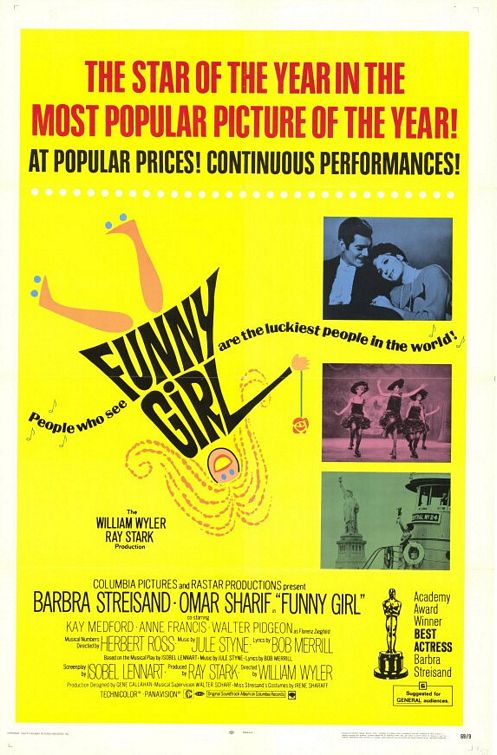
Barbra Streisand, in her film debut, plays Fanny Brice in this loose biography about the Jewish comedian’s rise to stardom in the Ziegfield Follies during the 20’s and 30’s. The story examines how she uses her homely looks to her advantage by honing in her comedic skills to allow her to stand-out. The second half of the film examines her romance and eventual marriage to professional gambler Nick Arnstein (Omar Sharif).

Streisand recreates her Broadway role in grand style and deserved her Oscar win in which she famously tied Katherine Hepburn that year for Best Actress. I’ve always liked her best when she is doing comedy and she has always shown a good knack for timing and delivery. Although stories abound how she was very difficult during the production and showed a tremendous ego, which culminated in the film going through two directors and cinematographers she still plays the very insecure Brice effectively and it’s this appealing ingredient the carries the film and character.

William Wyler’s direction is also outstanding and helps make up for a story that at times seems pretty light. He replaced Sidney Lumet early on and gives the film an added flair with lavish sets. I loved the French-style restaurant and expansive old fashioned New York train station. There is some excellent dance numbers in which Wyler takes full advantage of the visual element including a nifty ballet segment. The recreation of the period is authentic and there are even a few moments of dazzling camera work including the shot showing Fanny singing on top of a tugboat all alone in the New York harbor while the camera circles above her and then careens down.

Kay Medford adds good support as Fanny’s mother and it earned her an Academy Award nomination for supporting actress. Sharif is always solid, but the character seemed poorly fleshed-out and more of a personal background needed to be explored to help explain why he was so infatuated with the extremely insecure and awkward Brice when he could have easily attracted any girl. Walter Pidgeon lacks the commanding presence needed in the part of Florenz Ziegfield and instead comes off as a tired old man getting badly upstaged by Streisand in every scene he has with her.

The songs are pleasing and you may find yourself humming some of them for days afterwards, but I was surprised how few of them there really were with long dramatic intervals in-between. The story itself is placid as Brice’s rise to the top happens too quickly and too much time is spent on the romantic angle making the film seem unbalanced but it manages to be entertaining anyways due mainly to the high production values.

My Rating: 6 out of 10

Released: September 18, 1968

Runtime: 2Hours 30Minutes

Rated G

Director: William Wyler

Studio: Columbia Pictures

Available: VHS, DVD, Blu-ray, Amazon Instant Video

Nuts (1987)

nuts

By Richard Winters

My Rating: 7 out of 10

4-Word Review: Fighting for her sanity.

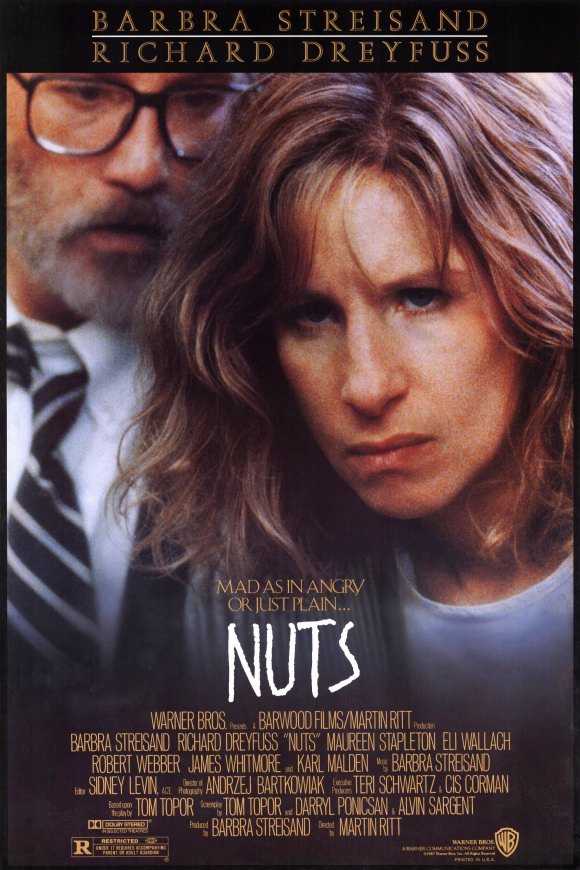
In celebration of Barbra Streisand turning 72 on April 24th we will be reviewing three of her films, one from each decade during the week. This one is based on the Broadway play by Tom Topor dealing with a high priced call girl named Claudia Draper (Barbra Streisand) who murders one of her customers (Leslie Nielson) in self-defense and is arrested. Her mother (Maureen Stapleton) and step father (Karl Malden) think she should be diagnosed as incompetent to stand trial and sent to a mental institution, but she with the help of her lawyer (Richard Dreyfuss) fight for her right to stand trial.

The story and characters evolve in layers, which I liked, but Streisand doesn’t seem right for the part. Her presence makes it seem too much like a star vehicle instead of the character driven story that it should be. Her cantankerous outbursts become a bit excessive and self-destructive making it hard at times to cheer for her or empathize. In the Broadway play the character was played by a woman in her twenties, which made more sense and would’ve worked better instead of casting someone who was already 45.

Seeing her in provocative poises in snapshots that her lawyer obtains is a bit weird but fun as a novelty as is the scene where she spreads her legs without the benefit of any underwear for Dreyfuss, but having her constantly shown with a bright spotlight around her seems disconcerting. It gives her a ghostly appearance and makes her stand out in the wrong way.

The veteran supporting cast comes off better since they wisely underplay it as opposed to her overplaying. Stapleton is quite good especially the moving scenes showing her crying as she listens to her daughter’s testimony. James Whitmore is solid as the thoughtful judge, but it’s Dreyfuss who carries it as the feisty and sometimes exasperated counsel.

This film is also a milestone as it is the last time Leslie Neilson performed in a non-comedic role. He is surprisingly chilling as the psychotic attacker who was apparently so convincing that it scared Streisand during the filming of the scene.

There are times when it gets a bit too theatrical. The judge advises Claudia to quit disrupting the proceedings, but then she continues to do so anyways, which would have gotten most people thrown out of the courtroom. The scene where she sits on the witness stand and describes being a hooker in a very sensual and seductive way seemed over-the-top in a court of law as is the part where she is allowed to wander around the courtroom going on a long rant while everyone else just sits there and passively listens.

Still on the whole I found most of it to be quite riveting and as a drama its first- rate. I just felt Striesand’s presence didn’t help it. She can be quite good in certain other roles just not here. The part was originally intended for Debra Winger who I feel would have fared better.

My Rating: 7 out of 10

Released: November 20, 1987

Runtime: 1Hour 56Minutes

Rated R

Director: Martin Ritt

Studio: Warner Brothers

Available: VHS, DVD, Amazon Instant Video

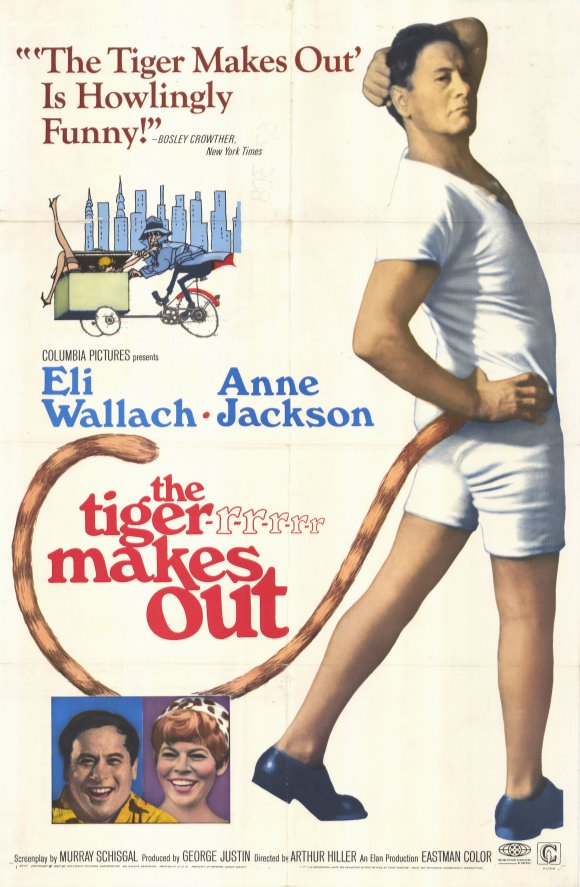
The Tiger Makes Out (1967)

tiger makes out 1

By Richard Winters

My Rating: 5 out of 10

4-Word Review: Mailman kidnaps suburban housewife.

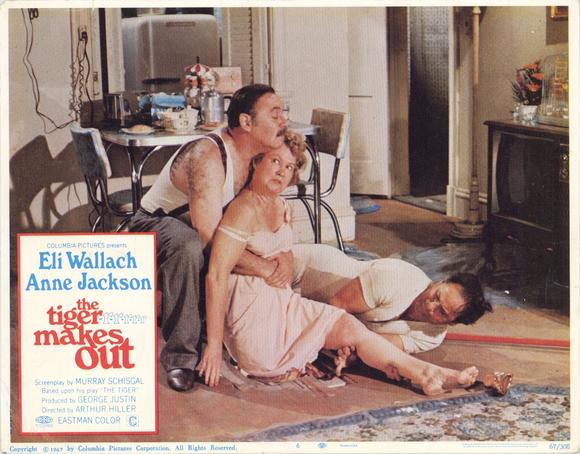
Ben Harris (Eli Wallach) is a middle-aged mailman living in a crummy, rundown basement apartment. He is bitter and angry at the world around him, which he feels is filled with a lot of vapid followers to a rigid and dehumanizing system. When his upstairs neighbor puts a hole in his roof and both his landlord and the housing authority refuse to do anything about it he decides to kidnap a young beautiful women as a form of insurrection. Instead he mistakenly nabs middle-aged housewife Gloria (Anne Jackson) who has similar issues and the two slowly form a budding friendship.

The screenplay is written by Murray Schisgal and is based on his one-act, two-character off-Broadway play ‘The Tiger’. The film is filled with a lot of diverting, offbeat humor some of which works and some of it doesn’t. I liked the part where Gloria’s neighbor Leo (John Harkins) gets his entire family on their knees to pull out crabgrass from their otherwise ‘perfect’ lawn and we eventually see them tear the entire lawn to bits from a bird’s-eye view and in fast-motion. Wallach’s confrontation with Sudie Bond inside the housing authority office is also amusing, but his attempts at kidnapping a woman come off too much like Wiley E. Coyote trying to get the roadrunner and turn the film into an ill-advised live action cartoon.

Director Arthur Hiller does a fabulous job of disguising the fact that this was originally a play. The editing is quick and the locales varied particularly at the beginning. The pace has a kinetic late 60’s feel, which gives it a certain time capsule quality. However the choice of music, which includes a studio group singing the film’s theme, is quite sterile.

Wallach gives a flawless performance and Jackson is also good. The two have been married since 1948 making them Hollywood’s longest lasting couple. Unfortunately the scenes of the two of them inside the apartment are rather stagnant and the one-time that the film gets boring.

There are also some great supporting performances including Rae Allen as a paranoid woman who thinks every man is a potential stalker and Charles Nelson Reilly as a goofy college registrar. The film also marks the film debuts of Dustin Hoffman and Mariclare Costello as his jilted girlfriend, Bob Dishy as an exasperated husband and John P. Ryan as an escort to a female impersonator. You can also spot a young Joe Santo inside the housing authority office and Frances Sternhagen as a passenger on a bus as well as Barbara Colby who in 1975 ended up getting murdered in mysterious and yet unsolved circumstances.

The one error that I noticed in the film is the gaping hole in Ben’s apartment ceiling somehow gets strangely taken care of and is nonexistent when he comes back to the place with his victim. I realize this movie borders on the bizarre and quirky to begin with, but I still felt there needed to be some explanation for that and none is given.

tiger makes out 2

My Rating: 5 out of 10

Released: August 18, 1967

Runtime: 1Hour 34Minutes

Not Rated

Director: Arthur Hiller

Studio: Columbia Pictures

Available: None at this time.