Category Archives: Movies Based on Novels

Pretty Baby (1978)

pretty baby

By Richard Winters

My Rating: 8 out of 10

4-Word Review: He’s robbing the cradle.

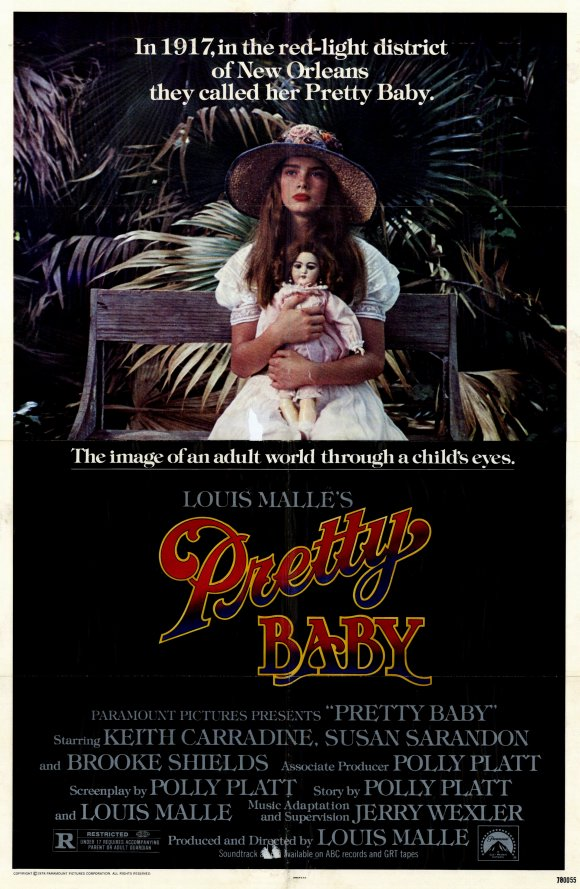
Based on actual accounts of prostitutes living and working in the Storyville area of New Orleans in 1917 the film details the life of Violet (Brooke Shields) the 12 year-old daughter of Hattie (Susan Sarandon) who works as a prostitute and eventually breaks her daughter into the business. Bellocq (Keith Carradine) is a photographer who comes to the brothel to take portraits of the women. He falls in love with the young Violet and the two eventually marry.

Louis Malle’s American film debut is fabulous. He takes a daring subject matter and makes it real and vivid. Sven Nykvist’s cinematography is so detailed that you almost think that you are looking at painted portraits of the era. Malle employs a leisurely European pace to the proceedings, which nicely reflects the slower era. The emphasis is on nuance and in that regard it is brilliant making the viewer feel that they are right there with characters and observing the daily realities around them. The story is certainly shocking, but somehow a strong human element remains making it fascinating and revealing.

The strongest moment comes when a group of middle-aged men bid on Violet to see who will get the honors to take her virginity. Having the camera pan the men’s eager faces, some of whom look to be nearing 50 and even 60 is visually potent as is Violet’s ambivalent expression as she stands on a chair in front of them. The fact that it is approached in a non-sensationalistic matter and instead more like as a slice-of-life makes it all the more disturbing and compelling.

Shields is fabulous. Her facial expressions as she observes the decadence around her is what really makes the movie. She shows a great awareness and creates an intriguing character that cannot read and write and yet acts like having sex with a middle-aged man is ‘no big deal’ and working as a prostitute is completely ‘normal’ way of life. Watching her shift between being very child-like to very jaded is fascinating. I really think this is an actress that is much more talented than she is given credit for and although many other actresses auditioned for the part including Tatum O’Neal, Meg Tilly, Geena Davis, and Diane Lane I really felt the movie wouldn’t have been as effective with them in the role. Shields is really exceptional and should have netted the Oscar, or at least have been nominated.

Sarandon is terrific as her hardened mother and unfortunately is not seen enough, but manages to light up every scene that she is in nonetheless. Singer Frances Faye is also quite good as the head of the brothel. Her old, tired face brings out the difficult, cold lifestyle. Her best moment comes when she is seen staring in a catatonic state into space while everyone else has left the place and all the belongings are being carried out.

Carradine is okay in a restrained performance as a character that is more educated and refined than the rest, which makes for some interesting interactions. The fact that this man ends up getting emotionally stung by such a young girl despite being so much more sophisticated and mature ends up being one of the film’s most definitive moments.

My Rating: 8 out of 10

Released: April 5, 1978

Runtime: 1Hour 50Minutes

Rated R

Director: Louis Malle

Studio: Paramount

Available: VHS, DVD, Amazon Instant Video

The Luck of Ginger Coffey (1964)

the luck of ginger coffey

By Richard Winters

My Rating: 7 out of 10

4-Word Review: He needs a job.

Ginger Coffey (Robert Shaw) is a middle-aged man living in Montreal whose dreams and ambitions far outweigh his grim predicament. He moves from one low paying job to another convinced that his lot in life will improve. His wife Vera (Mary Ure) decides to leave him and Ginger tries to win her back while juggling two jobs and hoping to get a promotion in one that never seems to come.

As a vivid look at the daily lives of the everyday working class this film hits a solid bullseye. The conversations between the co-workers and the monotonous and sometimes demeaning job interview process and Ginger’s on-going arguments with his wife and daughter are all true to form. There is no pretension and director Irvin Kershner keeps everything at a bare-bones minimum giving it almost a documentary style and making the viewer feel immersed in the bleak environment. The outdoor shots of the city are unexciting and cinematically unappealing, but help reflect the grim level. Watching Ginger get kicked out of his apartment and have to carry what is left of his belongings and then place them on the outside sidewalk while he goes in to visit his daughter in her school is quietly powerful.

Robert Shaw is excellent. This is a man who had by all accounts had a very dominating and proud personality in real-life and usually played characters with the same traits, so seeing him play against type and succeed is interesting. What is really effective is that he makes the character very human and likable despite his constant goof-ups, which keeps the viewer compelled to his situation.

Ure, who at the time was married to Shaw in real-life, gives an equally outstanding performance. Her perplexed facial expressions are perfect and the fact that we see her character grow and become more confident is good.

I also must mention Liam Redmond as Ginger’s cantankerous boss, who is nicknamed by his employees as ‘Hitler’. Ginger’s rushed job interview that he has with him is one of the film’s highpoints as is the moment when Ginger dashes away from him when he is caught making a personal phone call.

The only real complaint I have with the film is the ending, which is for the most part non-existent. I have seen vague wide-open endings in my movie viewing lifetime, but this thing is a cop-out and really boring one at that. I think when a viewer has spent nearly two hours empathizing with his difficult  and precarious situation that they deserve some sort of finality, or at least a hint of what became of him and whether he ever did find that ‘luck’ that he was so convinced was out there.

My Rating: 7 out of 10

Released: September 21, 1964

Runtime: 1Hour 40Minutes

Not Rated

Director: Irvin Kershner

Studio: Continental Distributing

Available: YouTube

The Lonely Guy (1984)

the lonely guy

By Richard Winters

My Rating: 6 out of 10

4-Word Review: He needs a girlfriend.

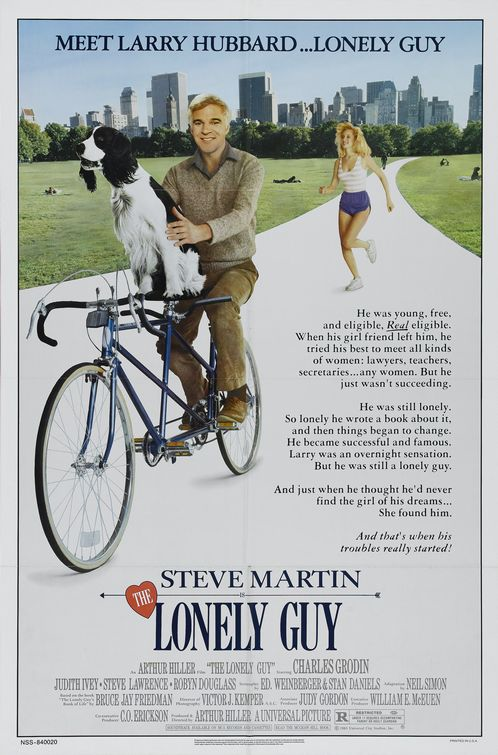
This film almost seems like an extension of Steve Martin’s character in The Jerk and could probably be retitled ‘The Jerk Goes to the Big Apple’. Here we find the same incredibly vapid, highly benign character looking for love and adjusting to the pitfalls of being single.

Like with The Jerk the film taps into the same absurd type of humor some of which is quite funny, but other parts become stretched and even stupid. The best stuff comes at the beginning and then starts to get strained by the end. There is no real story and the whole thing is just loosely structured hit-or-miss comical bits casually tied around the theme of loneliness.

Based on the novel by Bruce Jay Friedman the script was written by Neil Simon, Ed Weinberger and Stan Daniels three titans of comedy who have written some smart stuff in the past and yet I found their script here to be a bit annoying. It takes on the serious issue of social alienation with kid gloves. The points that it makes are superficial with no effort to dig deeper or make any type of real statement. The single male characters are too hopeless and needy and too much emphasis is placed on relationships and the misconception that people who are in them are always happier than those who are not. It also acts like being in relationships will somehow solve everything.

Judith Ivey makes a nice addition as Martin’s eventual girlfriend. She is not glamorously beautiful and therefore the two make a nice and realistic looking pairing. Her scenes and interactions with Martin make the film much stronger.

Unfortunately with Charles Grodin, who is dynamic at dry deadpan humor, is not used to his full potential. Merv Griffin has an unfunny cameo and the recently departed Joyce Brothers also appears with her nerdette persona that was beginning to wear thin.  Singer Steve Lawrence is completely miscast as a ‘chick-magnet’.

The bit involving lonely men jumping off the Brooklyn Bridge every two minutes borders on being tasteless and the running gag involving Ivey having an orgasm every time a man sneezes is just plain dumb. However, the part where Martin argues with a policeman over whether the poop on the sidewalk is from his dog is a gem. There is also a hilarious bit involving Groodin throwing a party with cardboard cutouts of famous movie stars as his ‘guests’ although don’t look for one of Gene Hackman because his have to be reserved one-week in advance!

My Rating: 6 out of 10

Released: January 27, 1984

Runtime: 1Hour 30Minutes

Rated R

Director: Arthur Hiller

Studio: Universal

Available: VHS, DVD, Amazon Instant Video

The Power (1968)

the power 2

By Richard Winters

My Rating: 6 out of 10

4-Word Review: Who has the power?

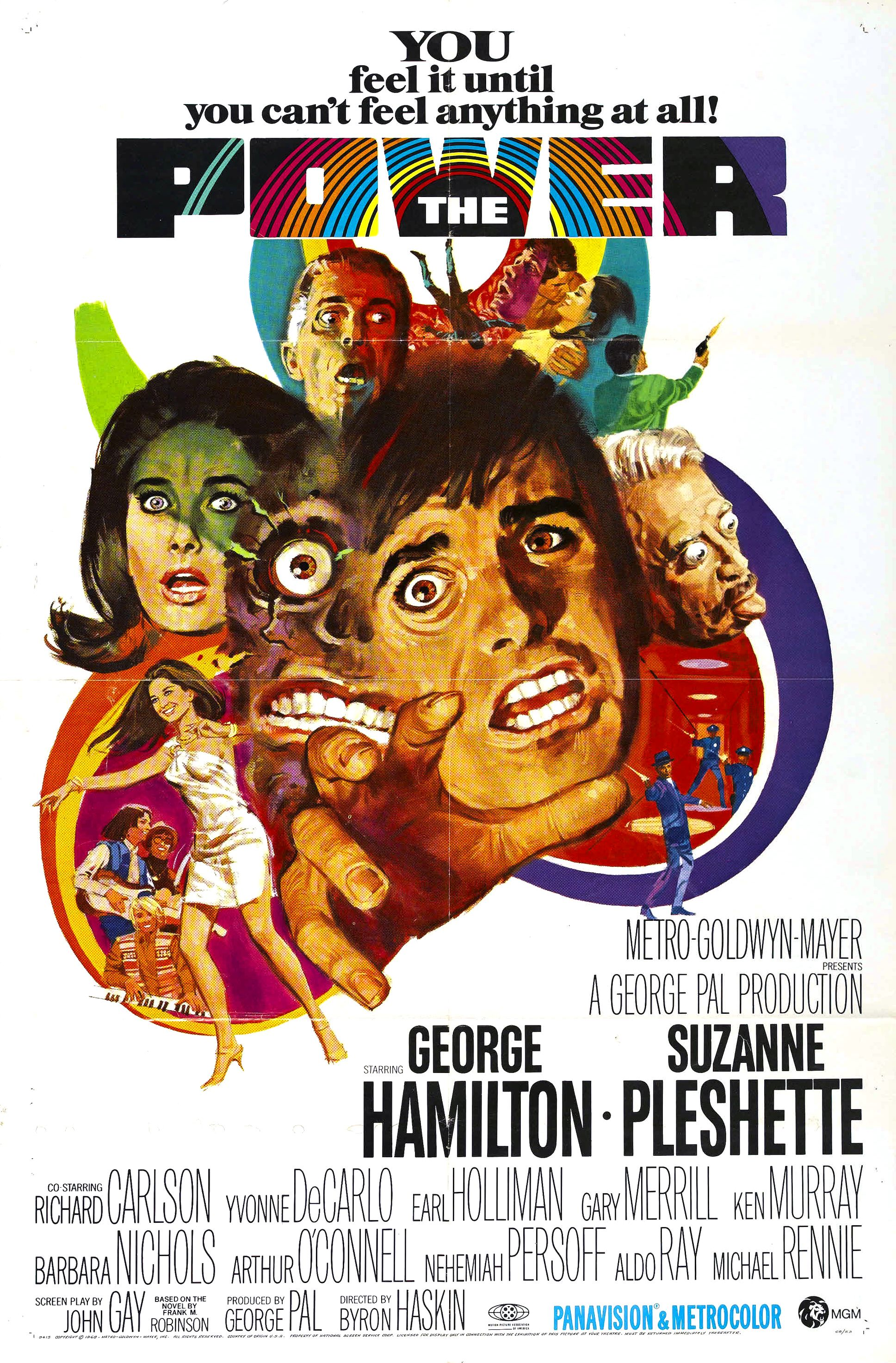
Professor Jim Tanner (George Hamilton) is the head of a scientific research group who come to realize that one of their members has strong telekinetic powers and is slowly killing off the other members one-by-one by fantastic and bizarre means. It is up to Jim and his assistant Margery (Suzanne Pleshette) to find out who it is and try to put a stop to it before they become his next victim.

There are definite shades to Agatha Christie’s classic mystery novel ‘And Then There Were None’ and in fact that title even gets mentioned here. Despite a pace that ebbs and flows Director Byron Haskin gives the proceedings a flashy and creative flair. Watching Jim getting attacked by toy soldiers in a display window is cool as is the part where he gets stranded in the middle of a desert. The ending features visuals of faces melting and skeletons dancing that reminded me a bit of the one in Raiders of the Lost Ark. I also enjoyed the scene showing an actual heart inside a man’s body getting squeezed and forcing it to stop.

The supporting cast is fabulous and almost of half of the film’s entertainment alone. Yvonne De Carlo is terrific in a brief, but fun bit as the tipsy wife of one of the victim’s. Gary Merrill is solid as a hard-bitten police detective and Aldo Ray is good as a menacing bad guy. Michael Rennie better known for his starring role in another sci-fi classic The Day the Earth Stood Still is effective here as the mysterious Arthur Nordlund, but my favorite of them all would have to Arthur O’Connell as the nervous and high-strung Henry Hallson. The look on his face after he is spun around at high speeds in a space compressor is probably the film’s best moment.

Where the film fails is that this mysterious person’s powers are much too broad with no limitations of any kind. I can handle the idea of telekinesis, but this guy can also make walls of buildings grow and make doorways disappear. He can even change the words on street lights to go from ‘Don’t Walk’ to ‘Don’t Run’. To me this made it seem too fabricated and far-fetched. Even in sci-fi there needs to be same perimeters and basis of logic of some kind and this film offers none. The fact that there is never any explanation given for how this person got these amazing powers, or what might have caused it makes it even weaker and hurts what is otherwise an interesting idea.

My Rating: 6 out of 10

Released: February 21, 1968

Runtime: 1Hour 48Minutes

Not Rated

Director: Byron Haskin

Studio: MGM

Available: DVD (Warner Archive)

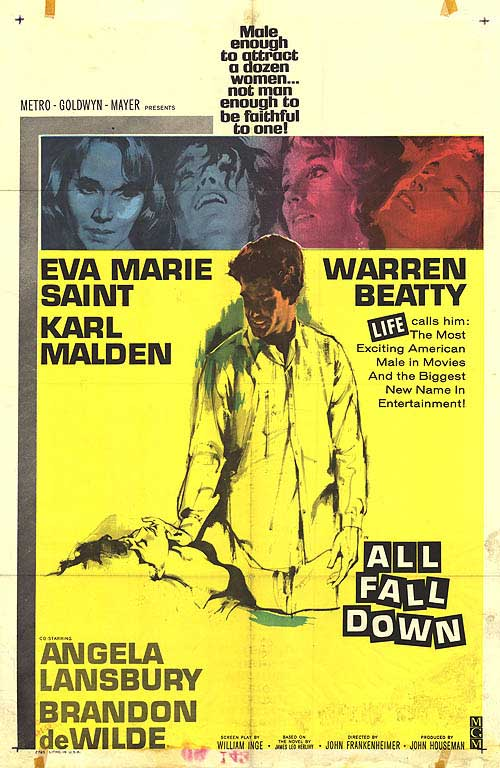
All Fall Down (1962)

all fall down

By Richard Winters

My Rating: 7 out of 10

4-Word Review: Don’t idolize older brother.

Berry-Berry (Warren Beatty) is the malcontent son of Annabell and Ralph Willart (Angela Lansbury, Karl Malden) who is unable to hold down a steady job, is in constant brushes with the law, and beats up his girlfriends. Yet women seem attracted to his rugged good looks, his parents continue to dote on him and overlook his flaws and his younger brother Clinton (Brandon De Wilde) idolizes him. All that changes when Echo (Eva Marie Saint) comes to visit. Clinton falls for her, but when she meets Berry-Berry she instead goes for him. When he mistreats her Clinton finally sees his brother for who he is and decides to take matters into his own hands.

Although overall this is a great production one of the biggest problems I had with it is the name for the leading character. Who names their kid Berry-Berry? I have never heard of that name before and it sounds corny and silly even annoying every time it comes out of one of the character’s mouths. I was almost surprised that the actors didn’t crack-up every time they had to say it. I felt there should have been an explanation for it, but none ever comes. In my mind giving a kid that stupid name is probably the whole reason he became so troubled and difficult in his adult life.

As for the character itself I wanted more of a history to see why he became the way he did. There is no backstory and in that regard the film seems weak and even frustrating. Despite being billed as the star Beatty is not really seen all that much especially during the first hour and in some ways the film comes off more like an ensemble drama. Also, having women fall for him after literally just setting their eyes on him seemed exaggerated and overdone.

Beatty has all the necessary leading man qualities, but in this instance I don’t think he was right for the part. His performance is too reserved and aloof. I didn’t see him conveying the deep seated anger that the part demanded. In many ways it is De Wilde who gives a far stronger performance and steals the film. His boyish face and charm makes for a fantastic contrast to Beatty’s.

Lansbury is sensational. She was only in her thirties at the time, but plays a woman in her fifties and does so convincingly as well as putting on a good accent. Two of her best moments come when her husband brings home three homeless men for the holidays and she insists they only want money and not the comfort of human companionship that her husband believes and the way she proves it is amusing. The part near the end where she defends her eldest son despite all his ugly flaws is brief, but strong and one of the film’s defining moments.

Saint is also excellent in support and so is Madame Spivy. She was a bar owner in real life and plays one here. She had a masculine build and a very no-nonsense demeanor, which comes out when she throws the under aged Clinton out of her establishment.

Director John Frankenheimer does well with the material. The on-locations shooting done in Key West, Florida is striking particularly at the beginning. His use of a rain storm makes a particularly strong dramatic sequence even stronger. However, the screenplay was written by William Inge and based on a novel by James Leo Herlihy. Inge was a noted playwright and the script seems more suited for the stage as it is quite talky and lacking in cinematic elements.

My Rating: 7 out of 10

Released: March 28, 1962

Runtime: 1Hour 51Minutes

Not Rated

Director: John Frankenheimer

Studio: MGM

Available: DVD (Warner Archive), Amazon Instant Video

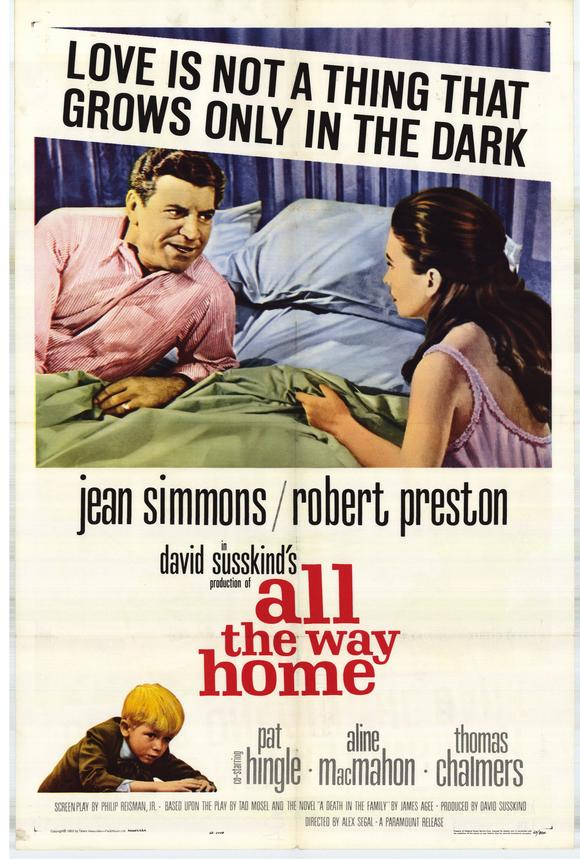
All the Way Home (1963)

all the way home 2

By Richard Winters

My Rating: 8 out of 10

4-Word Review: Life must go on.

Based loosely on the childhood experiences of writer James Agee who is best known for penning the screenplay to the classic film Night of the Hunter.  The story here looks at how a southern family copes and in particular the young boy Rufus (Michael Kearney) after their father (Robert Preston) is tragically killed in a car accident.

Based on Agee’s unfinished novel ‘A Death in the Family’, which was also made into a stageplay the film makes loving tribute to the era. The sets and even the Model T car driven by the father are all authentic. In fact it was filmed near the exact neighborhood in Knoxville where Agee grew up. The mannerisms and dialogue are true to the period without any compromising for a more modern audience. The revisionism which has become so trendy in today’s period piece films is thankfully missing here. The slower and gentler pace seemed reflective of the era and I found it refreshing.

Preston gives one of his best roles second only to his signature one in The Music Man. He doesn’t get killed until the second half of the film, so the viewer gets to know and like the character and thus feels the pain of the loss along with the family members. We never see the actual accident nor given any explanation for what happened, which is just as well. Too many times filmmakers seemed compelled to have to give a reason for everything even though in life that is not always possible, so it is nice that here they did not fall into that trap. This emphasis instead is on how the family members cope and the emotional impact of the loss, which is something everyone must go through at some point and it ends up being quite compelling.

Kearney gives a terrific performance and one of the best from a child actor that I have seen. He is cute without ever being precocious. Watching him observe everyone else around him are some of the best moments in the film. It also brings up the great point that sometimes children are better at adapting to tragic events than their adult counterparts.

Durable character actor Pat Hingle gives one of his most interesting performances as Preston’s nervous and hyper brother. Preston has a great line in describing him when he says: “Talking to him is like putting socks on an octopus.”

Aline MacMahon is good as the kind, but stern aunt. I particularly liked the moment where Rufus falls to the ground in an emotional tantrum, but she restrains the others from helping him and insists that it is important that he learns to get himself up on his own. Jean Simmons as the mother and wife is also splendid, but seems to get better as the movie progresses particularly in her conversation with Rufus at the end, which is touching.

My Rating: 8 out of 10

Released: October 17, 1963

Runtime: 1Hour 37Minutes

Not Rated

Director: Alex Segal

Studio: Paramount

Available: Amazon Instant Video

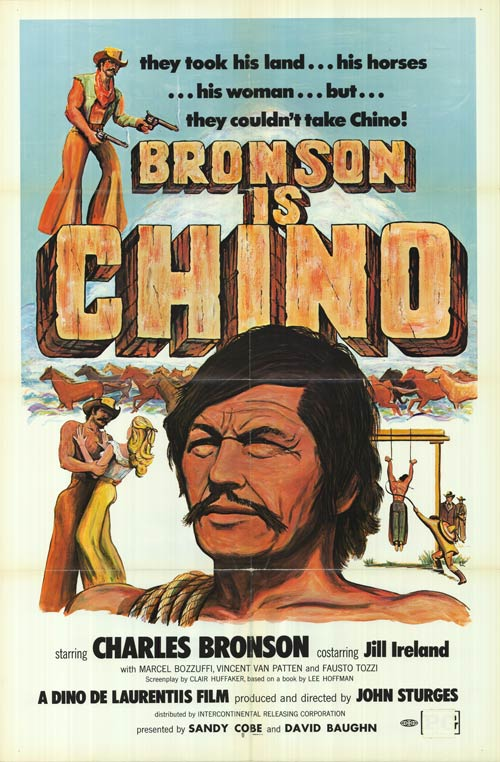
Chino (1973)

chino 2

By Richard Winters

My Rating: 3 out of 10

4-Word Review: Chuck and the kid.

Jamie (Vincent Van Patten) is a teen runaway in the old west that comes upon an isolated horse ranch run by Chino (Charles Bronson) who is ostracized by the locals for being a ‘half-breed’.  Chino reluctantly takes the boy under his wings and teaches him about how to take care of horses, but neither of them can completely escape the racism and hatred around them.

Filmed in Spain the rustic countryside has a certain visual appeal and the low-key music is a perfect score for this type of western. There is a barroom brawl and a shootout at the end, but overall this is standard stuff with little to help make it stand out. Everything this movie has to offer you’ve seen before and in most cases done better. That is not to say it is a bad movie, but it is lacking in imagination and seems content to simply borrow from an already overused formula. While the pacing isn’t exactly slow it isn’t compelling either. The characterizations, plot, and dialogue are held at the most simplistic level and if it weren’t for a brief bit of nudity by an attractive native woman I would almost say this thing was aimed solely for kids.

Bronson doesn’t show much range of emotion here and comes off in the wooden way his critics have always accused him of although he is still good in the action sequences. Jill Ireland’s appearance helps add a bit of life to the proceedings and the antagonistic banter that the two share while he tries to train her to ride a horse is fun to a minor extent as it the part where she walks in on him as he is standing buck-naked in a bathtub. However, having them fall in love so quickly and then want to get married is rushed and forced.

It is fun seeing Vincent Van Patten as a young teen, but his interaction with Bronson is dull. Their eventual ‘bonding’ is formulaic and clichéd and only helps in cementing this as a forgettable, pointless, low-budget foray.

The real stars of the picture are the horses that show much more of a screen presence than their human counterparts. In fact during the first half you see more of them than the people, which is just as well. There is even a shot showing two of them mating, which is the film’s sole unique moment and for some possibly even the highpoint.

My Rating: 3 out of 10

Released: September 14, 1973

Runtime: 1Hour 37Minutes

Rated PG

Director: John Sturges

Studio: Intercontinental Releasing Corporation

Available: DVD, Amazon Instant Video

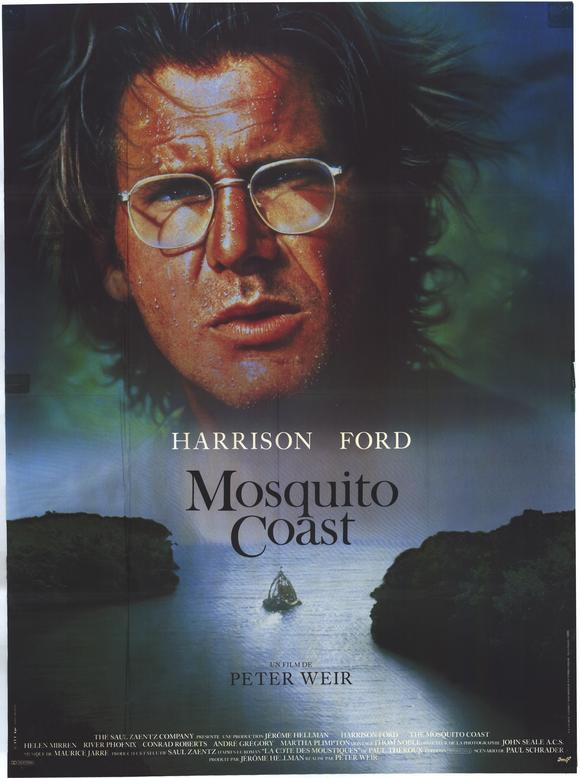
The Mosquito Coast (1986)

mosquito coast 2

By Richard Winters

My Rating: 7 out of 10

4-Word Review: Moving to the jungle.

Allie Fox (Harrison Ford) is a disgruntled, eccentric, and angry inventor who feels that the United States has lost its soul. When his new ice making invention is not met with the enthusiasm that he expects he decides to move to the jungles of Central America and start a whole new society of his own in his own vision while taking his wife and four kids with him.

Filmed mostly in the country of Belize Director Peter Weir does a terrific job of capturing the flavor of the region. The plot progresses in a slow linear fashion making the viewer feel that they are traveling along and experiencing the same things right along with the characters. I found myself more entranced with the unique sounds of the exotic birds and insects of the region than the visuals. There are definite shades of Werner Herzog’s Fitzcarraldo and Sam Peckinpah’s Ballad of Cable Hogue were we watch a man verging on sheer madness build a town from nothing while injecting his control and passion on all those around him.

Watching Allie’s vision and town come to life is fascinating and satisfying, which makes up most of the film’s first hour. However, the second hour deals with his eventual self-destruction and watching the whole place go up literally in flames and due mainly to his self-absorbed arrogant nature is rather depression and agonizing to go through. Having the man turn into an out-of-control tyrant that alienates those around him even his own family is telegraphed from the very beginning. Instead of being an insightful character study it is instead more like a draining experience that makes the viewer feel as exhausted and run over as Allie’s beleaguered family.

Helen Mirren’s character as the mother is poorly defined and becomes rather frustrating in the process. She seems like an intelligent woman with sufficient self-esteem, so it became baffling to me why she would go along with this nut of a husband and follow him loyally on all of his bizarre tangents. She does finally have an emotional breakdown of sorts near the end, but I felt that should have occurred way earlier like before they even left on their crazy journey. By remaining so passive and compliant to Allie and towing her four young children along with it made me almost believe that she was crazier than he was. Some may argue that she was ‘madly in-love’ with the man and therefore overlooked his many personality flaws, but it seemed to be taking that concept too much to the extreme.

River Phoenix and Jadrien Steele are excellent as Allie’s two sons. Both have amazingly expressive faces and the viewer finds themselves sharing most of their empathy with them. Watching them start out as idolizing their father and then learning to hate him only to grieve for him at the end is touching. My only complaint is the voice-over narration by Phoenix, which to me came off as unnecessary and heavy-handed.

Ford took a risky career move by playing a character that is not too likable, but I applaud his decision. A true actor takes roles that demand going out of the safety zone and for the most part he succeeds. I liked how he brings a certain level of humor to the otherwise abrasive character particularly when he goes on long and uncontrolled rants to the natives while they are helping to build his town and many respond with lost looks on their faces while he talks to them. My favorite part is when he lectures a young boy about America’s inflation while being drowned out by the noise of a chainsaw that he is using. . I realize the scar on his chin is from a car accident that he had in the 60’s, but there were so many close-ups of his face and you see it so vividly that I felt there should have been some explanation for it written into the script, which has been done in some of his other films.

Andre Greagory is fun as the missionary who comes to odds with the opinionated Allie. He supplies just the right balance of menace and humor to the role. The televised sermon that he gives while using props is funny. It is fun to see Butterfly McQueen in her last movie role as well as spotting a young Jason Alexander as a hardware store clerk. Martha Plimpton has a nice sarcastic way about her as River’s potential girlfriend and it is good to see a teen love interest that has more of a plain look and not some model taken straight off the cover of Seventeen Magazine.

The idea of showing how modern day suburbia has destroyed the rugged individualist, but how trying to rough it in the wilderness could pretty much end in the same way is a good one. However, the movie tends to be too downbeat and unbalanced. It is based on the Paul Theroux novel, which I suspect is probably better.

My Rating: 7 out of 10

Released: November 26, 1986

Runtime: 1Hour 57Minutes

Rated PG

Director: Peter Weir

Studio: Warner Brothers

Available: VHS, DVD, Amazon Instant Video

Breakheart Pass (1976)

breakheart pass 2

By Richard Winters

My Rating: 7 out of 10

4-Word Review: Chuck’s on a train.

John Deacon (Charles Bronson) is a prisoner on a train headed Fort Humboldt. The train is carrying medical supplies to help the people there who are suffering from a plague outbreak. Amongst the passengers on the train is a Governor (Richard Crenna) a U.S. Marshal (Ben Johnson), a priest (Bill McKinney) and a load of Calvary soldiers, but as the ride progresses strange things begin to happen. People disappear and then turn up dead. Everyone seems to have a secret to hide and what is inside the boxes labeled medical supplies isn’t medicine.

This is the first Bronson/Ireland production to be given a big budget and the wintry Rocky Mountain landscape is sumptuous. The plot itself is intriguing and full of interesting twists that grabs you right from the start and keeps you enthralled until the end. Based on the Alister Maclean novel who also wrote the script it is no surprise that it seems more like a spy/espionage thriller than a conventional western yet there is enough gritty elements to keep it passable at both ends. The mixture of the two genres is unique and exciting and for a bubblegum actioner this one hits the mark.

The stuntwork is impressive and one of the film’s highpoints. Some of the best moments are when a man is thrown from a train and you see him fall from a bridge all the way to the river below. What makes this stand out is that the conventional, lightweight mannequin was thankfuly not used. Instead it looks like a real human body that even thumps along the wooden posts of the bridge as it goes down making it vivid. Watching the trainload of soldiers spiral off the tracks and go crashing along the mountainside has the same realistic quality. The fight on top of one of the snowy train cars between Bronson and former boxer Archie Moore is well choreographed and the scene of a telegraph operator getting a bullet shot through his head is surprisingly graphic.

The supporting cast is good and for a while they outshine Bronson who seems in a way outclassed by their colorful personalities and different acting styles. However, as it evolves Bronson comes into his own and it becomes a lot of fun watching the way he singlehandedly outsmarts and outmuscles all of them.

Ireland is beautiful as always and manages to hold her own to the otherwise all male cast. The music becomes an excellent added element. The booming orchestral sound of the opening theme is reminiscent of ones used in classic westerns. The unique score played whenever the Indians appear on screen has an interesting beat and sound. This is an entertainment winner for not only Bronson fans, but for action lovers as well.

breakheart pass 1

My Rating: 7 out of 10

Released: December 25, 1975

Runtime: 1Hour 35Minutes

Rated PG

Director: Tom Gries

Studio: United Artists

Available: VHS, DVD, Amazon Instant Video

The Flim-Flam Man (1967)

flim flam man 2

By Richard Winters

My Rating: 6 out of 10

4-Word Review: Con-man finds apprentice.

Curley (Michael Sarrazin) is a young army deserter living in an over-turned and abandoned freight car in the rural regions of Kentucky. By chance he meets up with Mordecai Jones (George C. Scott) a traveling con-man who decides to use Curly as his apprentice as well as his assistance in some of his more elaborate schemes. At first Curley goes along with it, but when he fall in-love with Bonnie (Sue Lyon) one of Mordecai’s intended victims he decides he wants out much to Mordecai’s reluctance.

Scott really shines and this may be his best comic performance. Although he was only 38 at the time he looks and acts like a genuine old man even though his gray hair looks like it was frosted on much like what is done to white Christmas trees. In some way it might have been more authentic had an older actor played the role, but Scott is so much fun in the part that the movie may not have worked as well.

Sarrazin is solid in support. His quiet demeanor and understated performances never allowed him to get the recognition that he deserved, but he was always effective in these types of roles and having the character walk the moral tightrope and sometimes fall off makes him interesting and believable. Lyon is also good as the romantic interest. Although I felt the romance bogged things down a bit I still enjoyed her natural acting style that is devoid of any pretension.

Harry Morgan is fun as the headstrong sheriff who chases after Mordecai and Curly as is Albert Salmi as his dim-witted deputy. Salmi’s blank looking facial expressions are tops and the car chase that they have with the two culprits features some impressive comical stunt work and seems to tear-up the entire main street of the town.

The soundtrack by Jerry Goldsmith has wonderfully soothing melody with some great harmonica and trumpet solos. The on-location shooting in Kentucky captures the countryside and the hazy late summer sunshine of the region well.  For the most part the film is quite amiable and amusing, but predictable. The script lacks the unexpected twist or unique insight that would elevate it above being just the fluff that it is. The ending, which features Curly rigging the courthouse with dynamite and threatening it blow it up has a touching quality to it, but proves frustrating as it doesn’t show us what ultimately becomes of the characters.

My Rating: 6 out of 10

Released: August 22, 1967

Runtime: 1Hour 44Minutes

Director: Irvin Kershner

Studio: 20th Century Fox

Available: VHS