Category Archives: Movies Based on Novels

Desperate Characters (1971)

desperate characters

By Richard Winters

My Rating: 6 out of 10

4-Word Review: A marriage without love.

Sophie and Otto (Shirley MacLaine, Kenneth Mars) are stuck in a marriage that has fallen into a real rut. They no longer are able to communicate. Sure they ‘speak’ to each other, but neither one listens or seems to even care. Sophie has had a past affair, which Otto became aware of, but forgiven. The two now try to march on like nothing has happened, but the cracks clearly show even when they both deny it. Sophie looks for some answers from her friends, but finds that their marriages aren’t any better and that there may not be any solution other than just sticking with it.

The film to a degree has a provocative flair and seems almost cutting edge for its day. There is no music and the background sound is made up of the ambience of everyday, big city life. The opening shot consists of the camera slowly zooming into the couple’s New York loft with only the distant sound of children playing, which not only helps the viewer feel very integrated to the city that the characters live, but their quiet isolation as well.

The film also has very little action. The only real moment where things happen is when Otto chases a stray cat through their apartment in order to box it up and take to a vet to test for rabies after its bitten Sophie, which for what it is worth is quite interesting. The rest of the film deals with dialogue, but handled in a more sophisticated way than most as it has a consistent conversational tone that not only makes it more genuine, but something that the viewer must ‘read into’ in order to understand. Frank D. Gilroy’s script, which is based on a novel by Paula Fox, never once ‘tells’ the viewer what to think or feel. Instead we are shown regular people with everyday issues discussing the same things that real people do and it’s all left up to the viewer to interpret what it means, which in many ways I found highly refreshing.

Mars gives an outstanding performance in what was apparently his personal favorite and quite atypical from his other body or work, which mainly consisted of over-the-top comic characterizations. Even more surprisingly is that he gets featured in a nude scene from the back. MacLaine is also exceptional in what many fans consider her best work. She is usually effective with strong characters, but here she’s quietly vulnerable while being featured in a rare nude scene for her as well and her case from the front.

The film’s greatest weakness is that it comes off as rather cold and distant. It would’ve been more revealing had it shown even in flashback when the couple was happy and when or what seemed to happen to turn things for the worse. The film also has the philosophy that there is no alternative to their situation and that being in a ‘bad’ or unhappy marriage is better than being alone as it doesn’t even bother to ever touch upon the benefits of single life or an alternative lifestyle, which in the end makes this film seem old fashioned and dated despite its otherwise Avant-garde approach.

My Rating: 6 out of 10

Released: September 22, 1971

Runtime: 1Hour 27Minutes

Rated R

Director: Frank D. Gilroy

Studio: Paramount

Available: VHS, DVD, Amazon Instant Video, YouTube
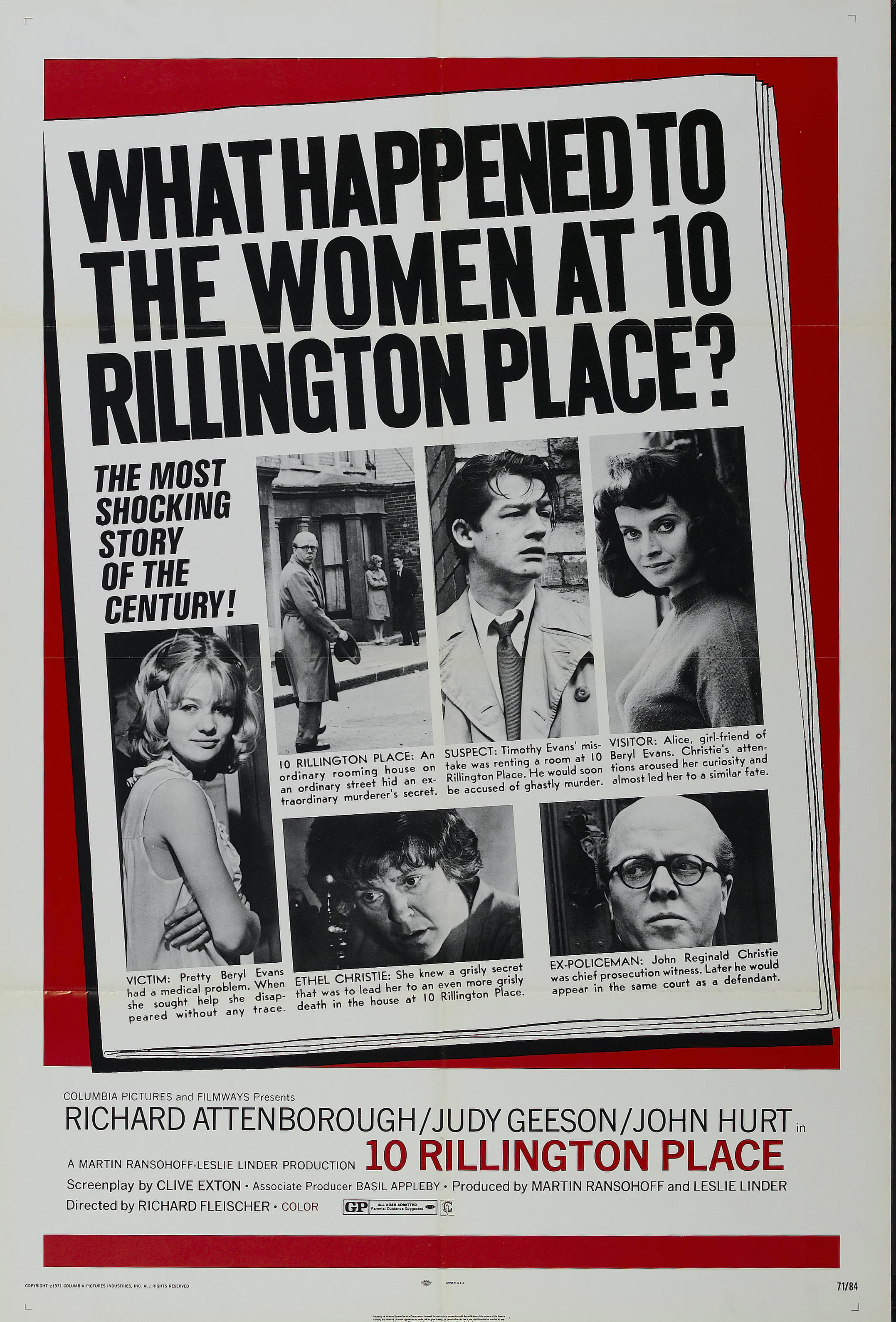
10 Rillington Place (1971)

10 rillington place 2

By Richard Winters

My Rating: 7 out of 10

4-Word Review: He enjoys strangling women.

This film depicts the true life account of John Christie, played here by Sir Richard Attenborough, who strangled eight women, had sex with their corpses and then hide their bodies in his London flat at 10 Rillington Place. The story begins with Christie having already murdered several women when Timothy and his wife Beryl (John Hurt, Judy Geeson) arrive looking for a place to stay and decide to rent a room from Christie who immediately takes a fancy to Beryl. When she confides in him that she is pregnant and looking for an abortion he uses it to his advantage by pretending to be a former Dr. who can secretly perform the procedure. He then strangles her after giving her some anesthesia and tells Timothy that it occurred during the abortion and threatens him not to go to the police since it was an illegal operation at the time and Timothy was aware that she wanted it done, which would have made him an accessory. However, after moving out his suspicions continue to nag him and he eventually goes to the police, which culminate in a dramatic trial with both men accusing the other of being a liar.

The film comes off as being quite authentic to the actual events with the dialogue taken straight off of the court transcripts. The exteriors were filmed at the actual flat were the murders occurred while the interiors scenes where shot at an apartment house that was just three doors down from Christie’s real life one. Richard Fleischer’s direction is low-key with emphasis put on keeping things real almost like a documentary instead of trying to sensationalize it. The music is used sparingly and has a certain quite tone of loneliness and detachment to it almost like it is representing the feelings and mood from Christie himself.

Attenborough and Hurt give strong performances and the diametrically divergent personalities of the two characters are what drive the film. Attenborough accepted the role without even having read the script. He wore a skin-like skull cap for the part, which gives him a very pronounced bald head and a creepy alien-like quality. I also really liked the scene where he looks at himself in the mirror just before he commits the murder with his eyes conveying a frightened and ashamed look like even he himself is horrified at the murderous out-of-control obsession that drives him. Geeson does well as the sympathetic victim and Pat Heywood is memorable in an understated role as Christie’s wife Ethel who initially believes her husband to be innocent, but then slowly becomes aware of what a monster he really is.

The film would have been stronger and a more multi-faceted had it shown even in brief flashback more of Christie’s background including the fact that he was dominated by his mother and older sisters and raised by a father who showed no emotion for him as well his lifelong struggles with impotence, which all could’ve helped explain why he became the way he did. It also might have allowed for more tension had the story started with the court case and leaving it a mystery to the viewer at the beginning as to which of the men was telling the truth instead of having the narrative done in a very matter-of-fact, by-the-numbers way. In either case the film is still quite strong and great example of how a true-life crime story should be done.

My Rating: 7 out of 10

Released: February 10, 1971

Runtime: 1Hour 51Minutes

Rated GP

Director: Richard Fleischer

Studio: Columbia Pictures

Available: DVD-R, Amazon Instant Video

The Boys from Brazil (1978)

exorcist

By Richard Winters

My Rating: 4 out of 10

4-Word Review: Mad doctor clones Hitler.

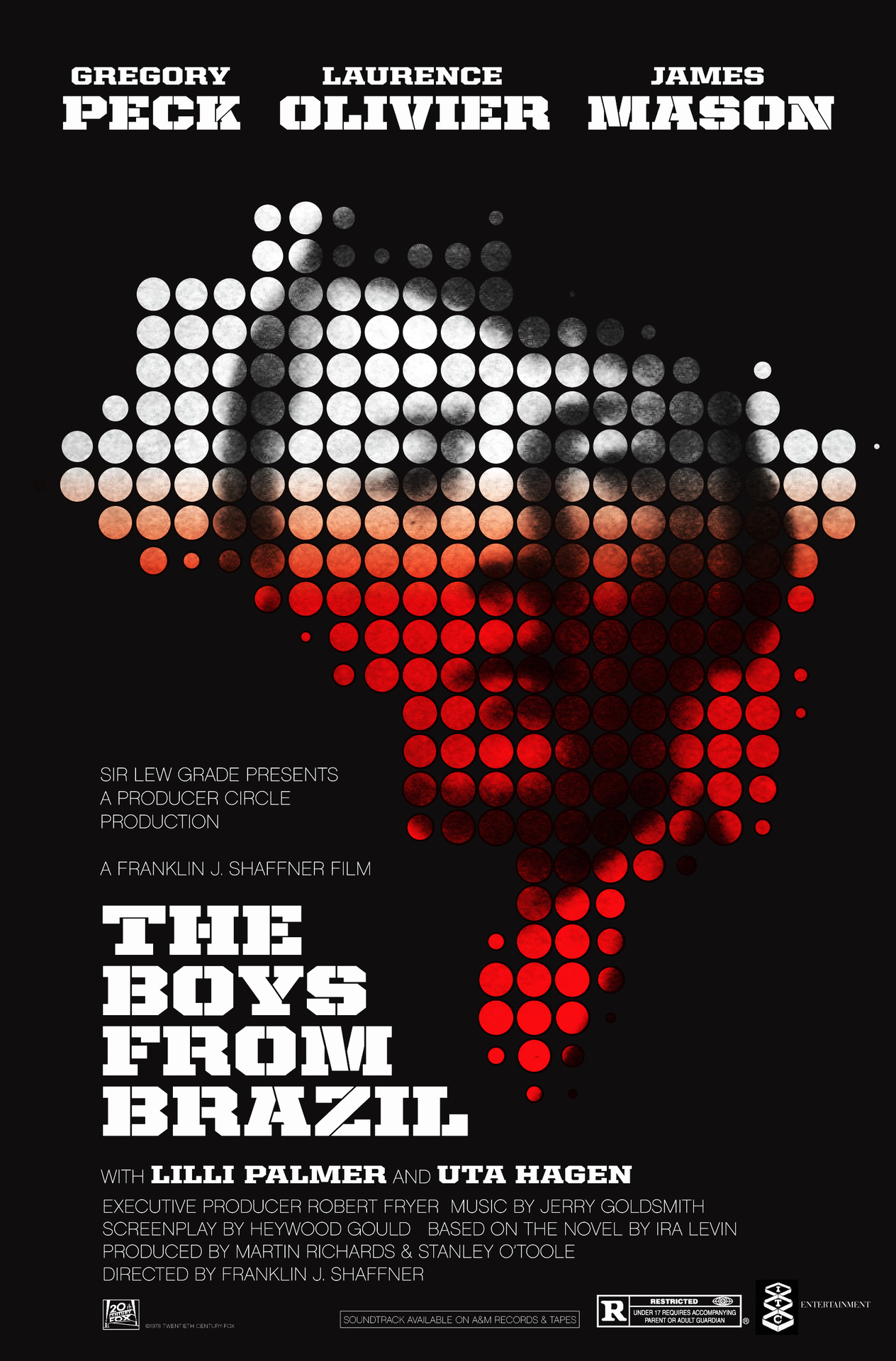
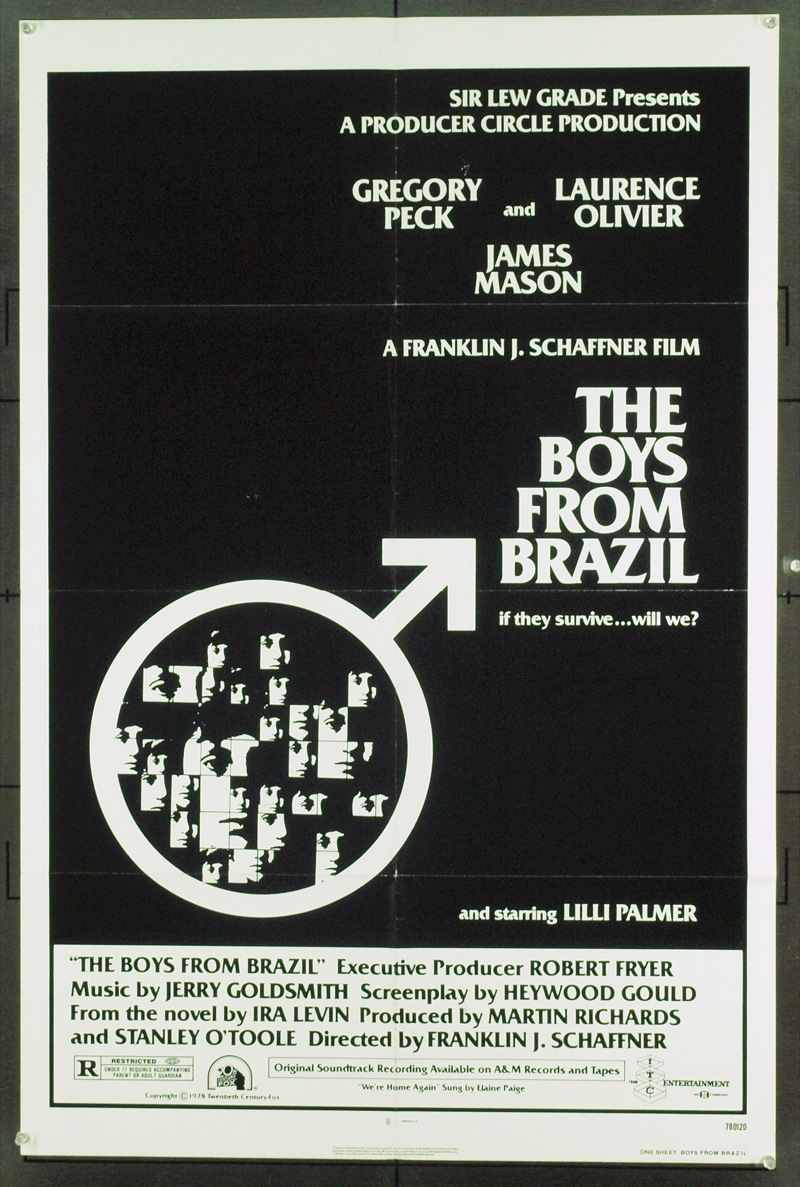
Based on the best-selling novel by Ira Levin the story details an elaborate plan devised by the elusive Josef Mengele (Gregory Peck) who has been hiding out in the jungles of Paraguay and has a secret meeting with several Third Reich war criminals that is overheard by novice Nazi Hunter Barry Kohler (Steven Guttenberg) and relayed to Ezra Lieberman (Laurence Olivier). The plan calls for these war criminals to go out and murder 94 65-year-old men who are living in various parts of the world as Mengele has saved a sample of Hitler’s DNA and impregnated 94 women with it at a Brazilian clinic. These Hitler clones have now grown to adolescence and need to be put in the exact same environment as the real Hitler had been in order to bring out the same personality traits, so it’s important that their fathers die at the same time as Hitler’s real father had. At first Lieberman cannot believe such an outrageous plot, but as the evidence mounts he realizes it is true and he may be unable to stop it.

The film has two great scenes which includes an eye popping death from a steep mountain bridge and a graphic moment where we see in close-up Mengele place the ovum with Hitler’s DNA into the women. Outside of these two moments the film is rather flat and cheesy with certain segments bordering on camp. The plot is intricate enough to keep you involved, but highly implausible and the characters take a long time to realize things that the viewer has already figured out long before.

It is fun seeing Peck playing a bad guy and this was his first villainous role since Duel in the Sun and although he does well in the part the character is so one dimensionally evil that it ultimately makes him boring. Olivier is not effective in the lead and comes off as frail and sickly with certain comical overtones given to the character that don’t work. The final confrontation between he and Peck in which the two roll around on the floor while grappling for a gun looks more pathetic than exciting and apparently the scene had to be reshoot several times because both actors kept breaking out into laughter over the absurdity of it. I did feel though that Guttenberg was perfectly cast as a wide-eyed schmuck that was in way over-his-head.

Spoiler Alert!

My biggest problem with the film though is the ending that turns out to be a big letdown. For one thing it takes place at a remote farmhouse, which seems too similar to a scene in Marathon Man, which came out just two years earlier, had a similar theme and also starred Olivier. It features nine Doberman pinchers with four of them that surround the farm’s owner (played by actor John Dehner) at all times. He uses them for protection as he is convinced someone is out to get him, which could’ve created quite an interesting scenario when Mengele travels to the home to kill him. However, the owner puts the dogs into another room the second Mengele tells him that they make him uncomfortable, which then allows Mengele to shoot the man without any problems, but why have the dogs for protection if you’re just going to put them away the minute some stranger doesn’t like them and if the character is so paranoid why even allow a stranger into your home without at least demanding some form of identification first?

End of Spoiler Alert!

The conclusion is unsatisfying as it leaves open a ton of unanswered questions. Not only is the plot full of loopholes, but it seems like only a springboard to a much more fascinating story, which is trying to hunt down all these Hitler clones that the film fails to realize.

the boys from brazil 1

My Rating: 4 out of 10

Released: October 5, 1978

Runtime: 2Hours 3Minutes

Rated R

Director: Franklin J. Schaffner

Studio: 20th Century Fox

Available: VHS, DVD, Blu-ray, Amazon Instant Video, Netflix Streaming

Compromising Positions (1985)

compromising positions

By Richard Winters

My Rating: 5 out of 10

4-Word Review: Who murdered the dentist?

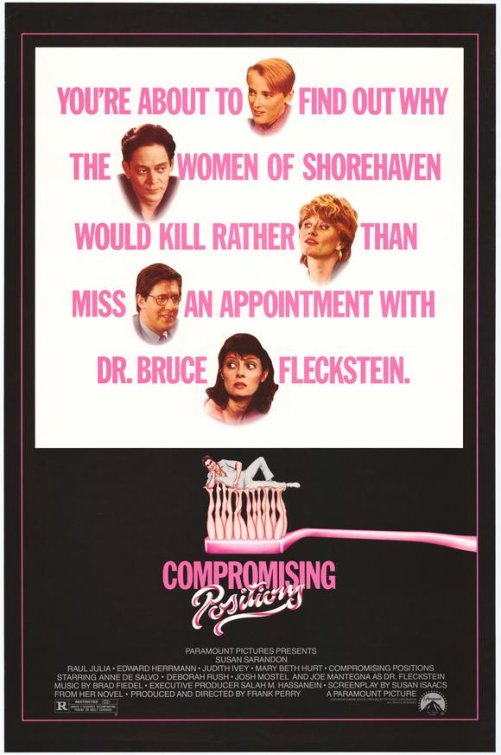
Bruce Fleckstein (Joe Mantegna) is a successful dentist who puts new meaning to the term ‘bedside manner’ as he flirts with all of his female patients and has affairs with many of them. When he turns up murdered it becomes a question of which of the many suspects did it, which intrigues housewife Judith (Susan Sarandon) and propels her to start her own independent investigation much to the consternation of her husband Bob (Edward Herrmann) who thinks it’s too dangerous. As the clues accumulate so do the advances of police detective David (Raul Julia) that she is working with, which quickly puts her marriage into jeopardy.

The film was produced and directed by Frank Perry who made many influential films during the 60’s and 70’s with his screenwriter wife Eleanor, but after their divorce the quality of his films diminished considerably. The last two that he made were in collaboration with Susan Isaacs with this one based on her novel of the same name. To an extent it works as the mystery angle is realistic enough to be interesting and the dark humor keeps it mildly entertaining.

Sarandon’s presence helps a lot and without her it wouldn’t have worked. Julia plays against type and it’s fun seeing him in more of a subdued type of role. The real scene stealer though is Judith Ivey who has some funny sarcastic lines and should’ve been seen more.

I also really liked how Sarandon’s character remains faithful to her husband despite her conflicts with him and the many advances that she gets from the police detective. Too many Hollywood pictures give the impression that marriage should be one long blissful union and the minute one partner isn’t completely receptive to the needs of the other then that entitles the other to cheat on them. Herrmann’s character is a borderline jerk, but he has legitimate reasons for why he feels the way he does and the movie refreshingly even gives him a moment to vent and explain them. I also thought that Julia’s character comes onto Sarandon much too quickly and the way he barrages into her bedroom while making aggressive advances seemed almost creepy.

The story does have a dated quality. Fleckstein is found to be distributing and printing porn, the kind with consenting adults and not kids, which the film portrays as being a ‘shocking revelation’ even though these days with the proliferation of it all over the net it is nothing but an afterthought to most. I also thought the idea that this guy would have BDSM sex with a lot of married women and even take explicit pictures of them, but still turn around and throw them some lines that he ‘loved’ them and they would all fall for it was ridiculous and unfairly portrayed women as being too easily manipulated and unsophisticated.

The resolution is limp and the film lacks anything that would help make it distinctive or memorable. The humor gets lost by the second half and the Ivey character should’ve been given more screen time and possibly even used as Sarandon’s investigative partner as her caustic take on things are the best thing about it.

My Rating: 5 out of 10

Released: August 30, 1985

Runtime: 1Hour 39Minutes

Rated R

Director: Frank Perry

Studio: Paramount

Available: VHS

The White Dawn (1974)

white dawn 2

By Richard Winters

My Rating: 5 out of 10

4-Word Review: Trapped in the artic.

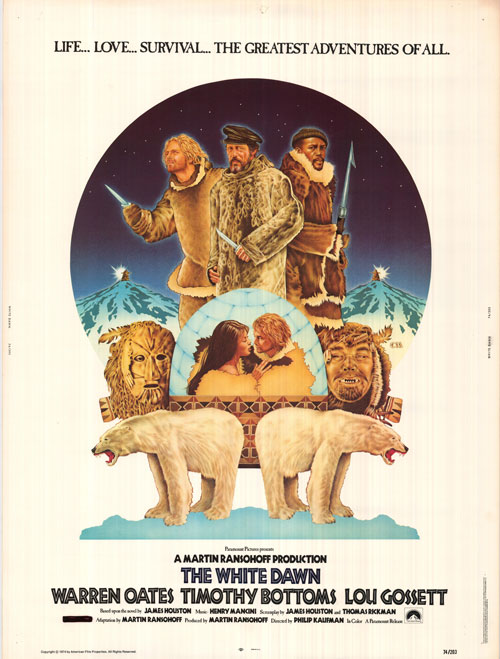
In 1896 three whalers inadvertently become lost from the rest of their crew and stranded all alone on an artic island. There is Billy (Warren Oates) who is the impulsive and belligerent one of the bunch and Daggett (Timothy Bottoms) who is more quiet and introspective as well as Portagee (Louis Gossett Jr.). After wandering in the snow and cold for many days they finally come upon an Eskimo tribe who takes them in with food and shelter. The men though never seem to fully appreciate what the Eskimos have done for them while at times even exploiting their kindness, which eventually leads to tensions from both sides.

Filmed on-location on Baffin Island in northern Canada it is based on the novel ‘The White Dawn: An Eskimo Saga’ by James Houston who also wrote the screenplay. He lived with the Inuit people during the 50’s and 60 and helped spread their art and culture to the rest of the world. The film though doesn’t seem all that revealing. Much of what happens is rather predictable and with scenes that tend to ramble. There are also other moments that are a bit bizarre like the scene during a celebration where two girls take off their shirts and then lock lips and proceed to blow air into each other’s mouths at an accelerated rate that might’ve been more interesting had it been explained what exactly they were doing and why.

The characters are dull and transparent in Oates’ case genuinely unlikable. The Eskimos lack any individual distinction and most viewers will fail to find themselves emotionally attached to anyone onscreen. The film probably would’ve worked better had it been a smaller tribe and just one person that they had rescued.

There are also a lot of scenes featuring animal deaths and cruelty that may upset some viewers. On the one hand I liked that it kept things real and hunting is certainly a part of their culture especially at that time, but some of it does get graphic. One scene has the group grabbing a goose from different ends and then literally pulling it apart while later on they slaughter some walruses that are peacefully bathing in the sun.

The film’s dark ending is interesting and the time the three attempt to escape from the tribe by stealing one of their boats is also intriguing, but otherwise I was aloof with it most of the way. I admire the attempt of bringing the Eskimo culture to a wider audience and the film really isn’t a bad movie, but it’s not a particularly gripping either.

My Rating: 5 out of 10

Released: July 21, 1974

Runtime: 1Hour 50Minutes

Rated PG

Director: Phillip Kaufman

Studio: Paramount

Available: DVD, Amazon Instant Video

Witches’ Brew (1980)

witches brew 1

By Richard Winters

My Rating: 4 out of 10

4-Word Review: Witch has ulterior motives.

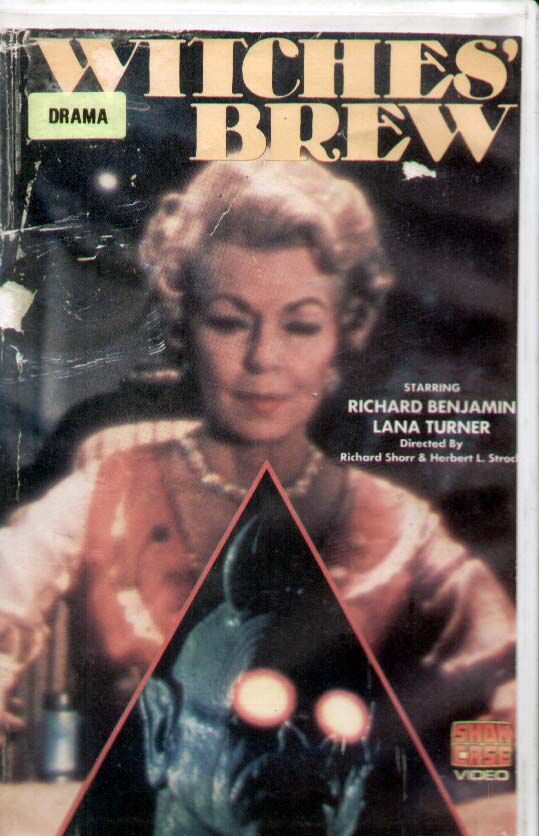
Margaret (Teri Garr) will do anything to help her husband Joshua (Richard Benjamin) get a promotion at a local college, so she decides to resort to witchcraft with the help of Vivian (Lana Turner) who is an expert on the matter. The problem is that two of Margaret’s closets friends Susan (Kathryn Leigh Scott) and Linda (Kelly Jean Peters) also have husbands that are vying for the same position, so they begin to practice witchcraft of their own, which conflicts with Margaret’s and causes Joshua to have a streak of terrible luck and even near tragedy. Vivian comes to their aid, but only because she harbors a dark secret that could cause Margaret her life.

This is a remake of 1944’s Weird Woman that starred Lon Chaney Jr. and Evelyn Ankers, which also got remade before in 1962 with Burn, Witch, Burn! Out of the three versions this one is considered the weakest. The set-up is alright, but the second half in which the cynical Joshua slowly comes to terms with the reality of witchcraft goes on way too long. The comedy and effects are much too restrained and do not take enough advantage of its wild concept. The final third does manage to have some interesting twists, but the climatic sequence is full of loopholes and unfinished story threads that left this viewer feeling unsatisfied and confused when it was over.

I’ve enjoyed Richard Benjamin and his sarcastic wit in other films, but here he comes off as a borderline jerk and has such a radically different temperament from his wife you wonder how they ever got married in the first place. Garr is far more appealing and should’ve been given the most screen time. Turner whose last film this was, doesn’t have all that much to do and locked into a role that is limited and rather thankless.

Director Richard Shorr was fired midway through the production and replaced by Herbert L. Strock, which may explain the film’s disjointed feel that never really comes off as the intended spoof that it wants to be and in some ways far edgier than you’d expect including one scene that has a disgruntled former student climbing to the top deck of a parking ramp and shooting at Joshua below in a Charles Whitman-like attack. There is also another segment that has a giant devil-like bat hatch from an oversized egg that might’ve worked had the special effects been better. In either case this film, which starts out with good potential never comes together and becomes rather flat and forgettable.

My Rating: 4 out of 10

Released: March 10, 1980

Runtime: 1Hour 38Minutes

Rated PG

Director: Richard Shorr, Herbert L. Strock

Studio: United Artists

Available: VHS

Soldier Blue (1970)

soldier blue 1

By Richard Winters

My Rating: 5 out of 10

4-Word Review: They massacre the Indians.

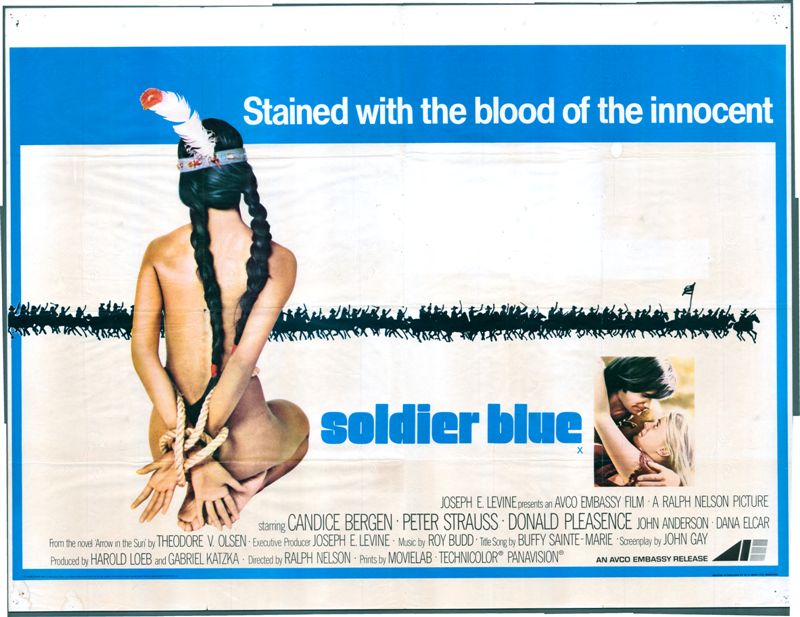
Two survivors of a Cheyenne Indian attack, the young and beautiful Cresta (Candice Bergen) and Honus (Peter Strauss) a private from the Calvary must travel through treacherous western terrain avoiding other attacks while also finding the Calvary’s base camp. Along the way the two start a romance despite wide differences in their temperaments and perspectives. Honus supports the position of his country and government without question while Cresta is more sympathetic to the Indians, but this all comes to a crashing halt when they witness an assault by the U.S. army on a peaceful Indian camp, which shocks Honus and changes his perspective on things forever.

The film is mainly known for its notoriously violent ending, which at the time was unprecedented for its use of explicitly savage imagery and remains controversial to this day, but before we get to that I’d like to go over what I did liked about the movie, which for the most part is still watchable.

Filmed in Mexico in October of 1969 the stunning views of the wide open terrain  is sumptuously captured by cinematographer Robert B. Hauser, which is enough to keep one enthralled with it despite its otherwise flimsy plot. I also enjoyed Buffy Sainte Marie’s rousing opening title tune, but the rest of the music score by Roy Budd seems misplaced. During the attack that starts out the film it is booming and orchestral almost like it wants to replicate the sound and mood of a conventional western even though this is supposedly a revisionist one. At other times it takes away from the potential grittiness by being played when it was not needed and sounding too modern for the time period.

Strauss in only his second film is marvelous and makes his naïve and rigid character believable and likable, but I was perplexed how someone lost in the wild for days and weeks and sometimes without food or even a gun could still remain clean shaven. Bergen as his female counterpart is great as well and beautiful. The fact that she is foul mouthed and very self-sufficient while Honas is more timid makes for a nice reversal of the sexual stereotypes, which helps propel the film during the first half. However, it eventually gets overplayed as Bergen’s character starts to display too many attitudes and behaviors from someone that was ahead-of-her-time until it seemed like she was really a late ‘60’s student radical that somehow got pulled into a western setting instead of a person that had actually lived during that era.

Donald Pleasence, a highly talented character actor who played many varied roles during his career, gets one of his best ones here while wearing false teeth that make him almost unrecognizable. His chase of the two when they destroy his wagon lends some much needed tension in what is otherwise a dull romance.

The Indian massacre that climaxes the film is based on the Sand Creek Massacre that occurred on November 29, 1864. Although the film incorrectly states during its denouncement that is was led by Nelson A. Mills it was actually U.S. Army Colonel John Chivington who ordered a band of 700 men to attack a peaceful Indian village where between 150 and 200 Indians were killed most of whom were women and children.

The film portrays Bergen’s character as being the only white person outraged at the slaughter, which isn’t true as many people from the era where appalled by the news when it was found out and the attack was condemned by the army after it was investigated.  Chivington was then forced to resign where he lived out the rest of his life in almost total ostracism by every community he moved to. There were also two officers in the Calvary who refused Chivington’s orders to attack and told the men under their command to hold their fire, which doesn’t get shown at all.

Although the movie does leave some effective haunting images it would’ve worked better had it been a documentary, or a reenactment that concentrated fully on the attack while also showing its aftermath and what lead up to it. It should’ve also been better researched, accurate and balanced instead of feeling the need to pander to the political fervor of its day with stagy over-the-top dramatics and a clumsily attempt to tie it into the My Lai Massacre that has forever stigmatized this as being nothing more than dated emotionally manipulative propaganda.

soldier blue 2

My Rating: 5 out of 10

Released: August 12, 1970

Runtime: 1Hour 55Minutes

Rated R

Director: Ralph Nelson

Studio: AVCO Embassy Pictures

Available: VHS, DVD, Blu-ray (Region 2), Amazon Instant Video, YouTube
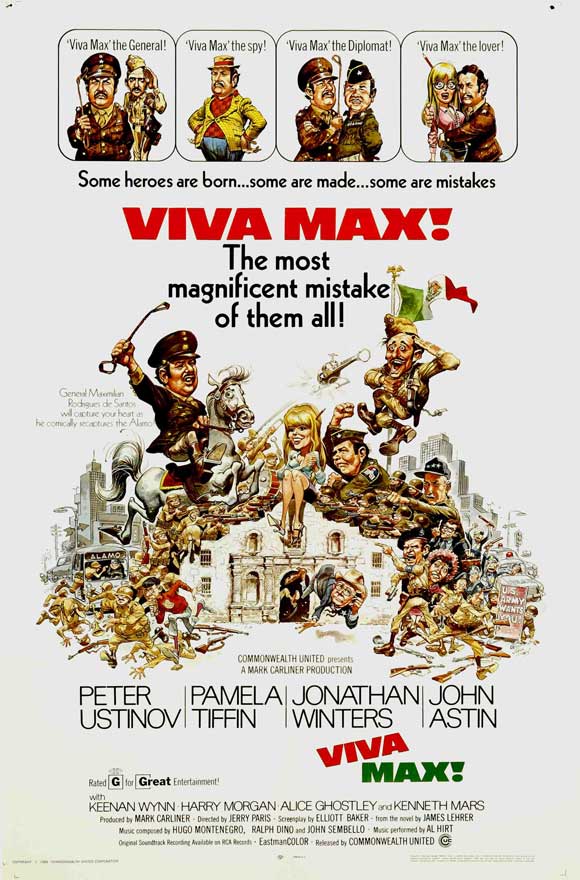
Viva Max! (1969)

viva max 2

By Richard Winters

My Rating: 3 out of 10

4-Word Review: Taking back the Alamo.

A small ragtag Mexican army led by the affable, but incompetent General De Santo (Peter Ustinov) decides to cross the border and recapture the Alamo. The process goes much easier than expected despite the fact that the army used no bullets in their guns. The National Guard is then sent in to weed them out, but they too decide not to load their guns with bullets leading to some unusual results.

The film is based on the novel written by PBS newsman Jim Lehrer and the movie’s behind-the-scenes politics ends up being much more interesting than the plot itself. Filmed in April of 1969 the production initially had permission from the state to film right on the actual site of the Alamo and a major portion was done there before various citizen groups became aware of it and began protesting the crew’s presence in what they considered to be sacred ground. Some of their protests was captured on film and incorporated into the story, but their loud presence eventually disrupted the production forcing some scenes to be done on an indoor studio soundstage while still others were completed in Italy.

The commotion and ‘controversy’ was not worth the effort as the film is an overall bore. The first 15-minutes are amusing and even mildly engaging, but once it gets inside to the actual Alamo the action and pace come to a screeching halt and kill any possible potential that the film may have had.

The script also has some illogical loopholes one of them being the army deciding to invade a place, but without using any ammunition, which is never explained and highly improbably. What is even more ridiculous is that the National Guard would decide not to use bullets in their guns either since this is the U.S. of A. where guns and force are considered a national birthright and thus makes this ill-conceived plot twist to be unbelievable to the extreme. The fact that De Santos and his men and able to freely leave at the end and go back to their country without dealing with any type of consequence for their actions is equally absurd.

Ustinov is funny and speaks in an authentic Mexican accent, but he’s unfortunately limited by the broad caricature of his role. John Astin comes off best as the Sergeant that’s second in command and does most of the actual disciplining and leading and Jonathan Winters is good as a clueless American general. Alice Ghostley lends some energy as an innocent bystander that becomes one of the army’s prisoners and Pamela Tiffin looks great wearing glasses and having her hair tinged in blonde.  Gino Conforti, Paul Sand, Jack Colvin, Anne Morgan Guilbert and Kenneth Mars can also be spotted in small roles, but even with their competent performances it fails to mask the film’s otherwise glaring inadequacies.

My Rating: 3 out of 10

Released: December 16, 1969

Runtime: 1Hour 34Minutes

Rated G

Director: Jerry Paris

Studio: Commonwealth United Entertainment

Available: VHS

The Driver’s Seat (1974)

drivers seat 1

By Richard Winters

My Rating: 3 out of 10

4-Word Review: Crazy lady goes traveling.

Lise (Elizabeth Taylor) is a middle-aged woman with seemingly no past who travels to Rome looking for someone to kill her. Her erratic behavior and weird motivations confuse those that she comes into contact with. She then meets Bill (Ian Bannen) a man who’s more interested in her sexually than anything else and he follows her around in a veiled attempt to get ‘lucky’ despite her repeated rebuffs.

The film is basically a mess that goes nowhere. It was based on a novel by Muriel Spark, who had written some acclaimed stuff in her day including ‘The Prime of Miss Jean Brodie’, so I can only imagine that the book made more sense and only bits and pieces of it were taken to create this screenplay. In either case it was a highly strange career move for Miss Taylor who made a lot of weird movie choices in the 70’s, which helped to destroy her once megastar status and tainted her other stellar work.

Her performance by itself isn’t too bad and it’s the one thing that helps keep things watchable. The way that she can go from being passive and helpless to snippy and bitchy within seconds is kind of fun and on a purely camp level even enjoyable. The whole thing seems almost like an extension of the character that she played in Who’s Afraid of Virginia Woolf? , which became her signature role during her later years.

Bannen lends good support as his leering Cheshire cat grin is a perfect counterpart to Taylor’s crazed glare and he effectively equals her nuttiness. I also loved his so-called macrobiotic diet in which he must attain one orgasm a day for it to work and if he misses one then he must make up for it by having two the next day, which ultimately gives him ‘indigestion’. Mona Washbourne a character actress noted for playing delightfully daffy old ladies is also on hand as one of the people Taylor befriends and their encounter inside the stall of a public bathroom is a gem.

Director Giuseppe Patroni Griffi manages to infuse some interesting visuals, which along with its fragmented narrative helps keep things cheaply alluring, but it eventually plays itself out and by the end becomes quite tiring and tedious. The biggest issue is that there never is any explanation for who this woman is or why she’s doing this, which makes the whole thing quite empty and pointless.

My Rating: 3 out of 10

Released: May 20, 1974

Runtime: 1Hour 42Minutes

Rated R

Director: Giuseppe Patroni Griffi

Studio: AVCO Embassy Pictures

Available: DVD-R, Amazon Instant Video

Tropic of Cancer (1970)

tropic of cancer

By Richard Winters

My Rating: 4 out of 10

4-Word Review: Writer living in Paris.

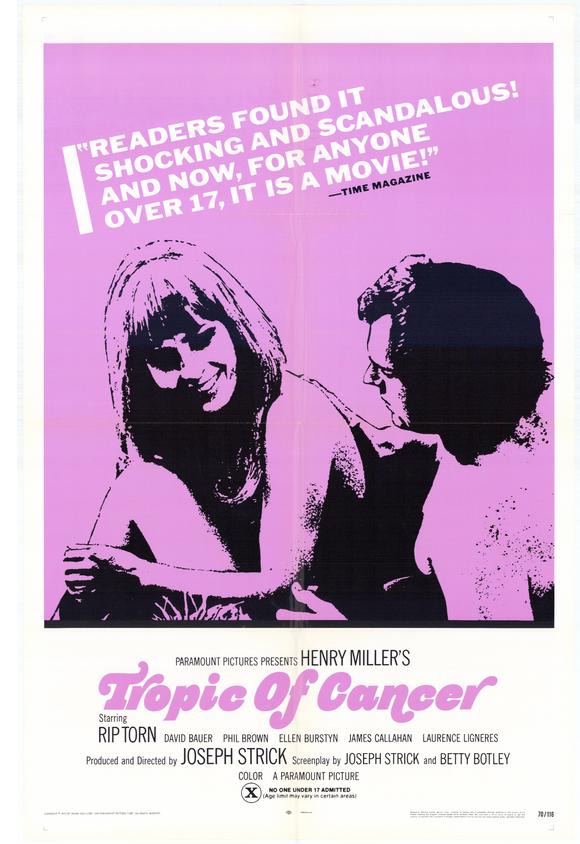
Rip Torn plays author Henry Miller living in Paris during the 1930’s and struggling to find work, shelter and money. He spends his time shoplifting items from food stands while also having sexual conquests with prostitutes and even the wives of his friends.

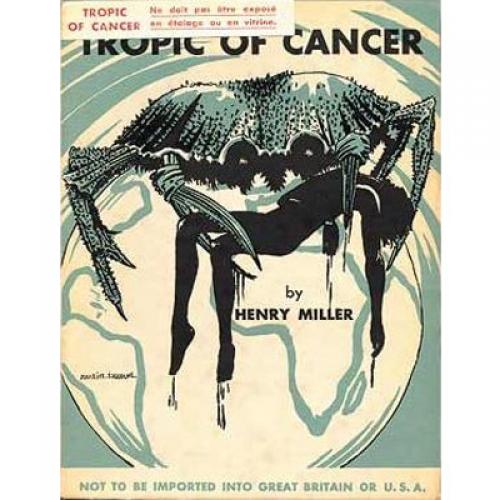
The film is based on Miller’s landmark novel that was published in France in 1934, but banned in the US until 1961 and even then went through several obscenity  lawsuits, which were finally all dropped in 1964 when the US Supreme Court deemed the book to have artistic merit. The novel, which is considered highly influential and won wide critical acclaim, has an odd mixture of stream-of-consciousness elements as well as autobiographical ones that works well in book form due to Miller’s first person narrative, but fails on the big screen. It was never meant to be made into a movie and director Joseph Strick’s ambitious attempt to make it into one, who just three years earlier tried to do the same thing with James Joyce’s equally unfilmable novel Ulysses seems futile and ridiculous.

The production looks cheap and lacks any type of atmosphere or visual flair. The setting is supposed to be the late 20’s, but it hardly seems like it. The acting is weak particularly by the supporting actresses playing the prostitutes who almost come off like people pulled off the street with no acting training of any kind.

The film’s most notorious claim to fame like with the book was its explicit sexual content that by today’s standards seems quite tepid. There are some nude scenes here and there including seeing actress Ellen Burstyn fully naked from the front, but it adds little. The best stuff is Torn’s voice over-narration describing his character’s sexual fantasies much of which was lifted directly from the novel. This was the first film to ever use the word ‘cunt’ and it gets said frequently. In fact it’s the character’s sexual conversations and the caustic way women get described in them that are the most amusing thing about the movie.

A few other funny moments include Miller having sex with a prostitute while she is also taking care of her sick mother and who would sometimes leave the bed to look in on her and although Miller initially pays the woman for her ‘services’ he eventually steals it back when she is away during one of her trips to her mother’s room. Miller’s roommate Carl (David Baur) has a great scene where he writes love letters to a woman he wants to have sex with and the two finally meet only to have the actual encounter not live up to the fantasy.

This was filmed at the same time as Quiet Days in Clichy, which was also based on the same novel. Both films were made in Paris and Henry Miller would routinely sit-in on the productions, which were done not far from the other. However, despite an admiral attempt the movie comes off as flat and boring and the viewer would be far better off skipping this and reading the source material instead as the only time it ever gels is when it uses text taken directly from the book.

tropic of cancer 2

My Rating: 4 out of 10

Released: February 27, 1970

Runtime: 1Hour 27Minutes

Rated X (Reissued as NC-17)

Director: Joseph Strick

Studio: Paramount

Available: DVD, Amazon Instant Video, YouTube