Category Archives: Movies Based on Novels

Quest for Fire (1981)

quest for fire

By Richard Winters

My Rating: 6 out of 10

4-Word Review: Cavemen search of fire.

After their tribe is attacked by another one and their only source of fire put out three male members from the group (Everett McGill, Ron Pearlman, Nicholas Kadi) set out to find fire from somewhere else and bring it back to the others.  Their quest is not easy as they are forced to travel through harsh terrain, escape from man eating tigers, and fight off a tribe of cannibals. They also meet up with Ika (Rae Dawn Chong) who comes from a more advanced tribe where the members live in huts instead of caves and who also harbors the secret to starting a fire, which she just might share with the others.

Filmed on-location in Canada, Scotland, and Kenya this film brings to life the true nature of prehistoric times in vivid detail and better than any other movie that has dealt with the same subject. The male actors were fitted with masks that gave them ape-like features and except for one brief moment there is no discernable line of dialogue and communication is spoken through grunts and groans as well as words not connected to modern day language. Some DVD issues do have subtitles, but to me this is taking the viewer out of the experience as the whole idea is to allow one a true sense of how things where like back then and therefore forcing one to try to understand things through the primitives means of communication during that period is the only way to do it and I’m thankful that the theatrical version and the streaming version that I saw did not offer them.

While I applaud the filmmaker’s commitment to keeping things close to the true form as possible and not willing to compromise it simply to make it more accessible to a mainstream audience I still found it to be confusing at spots and even at times boring. The opening battle between the two tribes seemed almost unintentionally funny and the loud, booming music played over most of the movie is a bit off-putting as there was clearly no music at the time of the setting, so silence or natural sounds would’ve kept it truer to the authentic tone.

There is also a scene where the men come upon the remains of some meat left from another tribe. The men are hungry and begin eating the remains only to realize that what they are chewing on is human flesh, which sickens them and they spit it out, but I wasn’t so sure that genuine Neanderthals such as the ones portrayed here would be so ‘civilized’ and instead more concerned with simply satisfying their hunger needs.

Rae Dawn Chong’s presence is a major plus and the movie gets more interesting when her character appears. She remains fully nude at all times while covered in body paint, but isn’t as erotic as you might think. The scene where she gets raped by the men late at night is brutal, but authentic to the animalistic level that I would assume sex would be approached with during that time period. The way her character ends up bonding and even forming a romantic attachment to the one of them as the film progresses is genuinely touching.

The film has a lot of lulls and may be just too unique for some. I found myself intrigued at certain parts and bored at others, but the scene where the men watch in amazement when Chong creates a fire for the first time is a surprisingly exhilarating moment where the viewer feels the same emotion that people back then must’ve felt, which to be able to convey such a feeling to a modern audience is an achievement in itself and a sign of astute filmmaking at its finest.

My Rating: 6 out of 10

Released: December 16, 1981

Runtime: 1Hour 40Minutes

Rated R

Director: Jean-Jacques Annaud

Studio: 20th Century Fox

Available: DVD, Blu-ray, Amazon Instant Video, YouTube
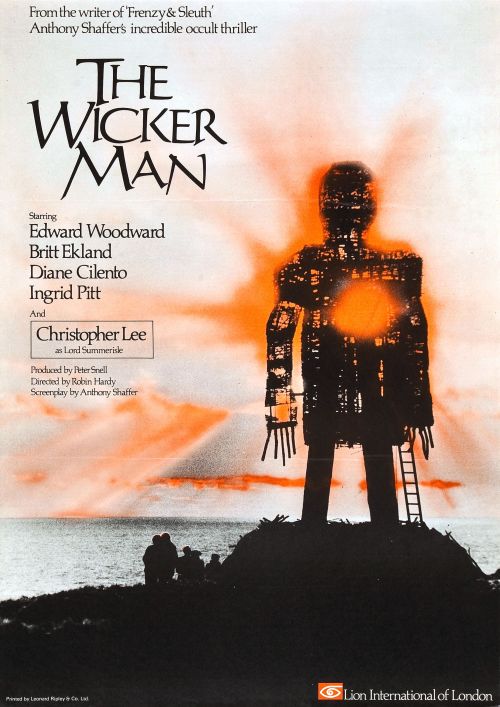
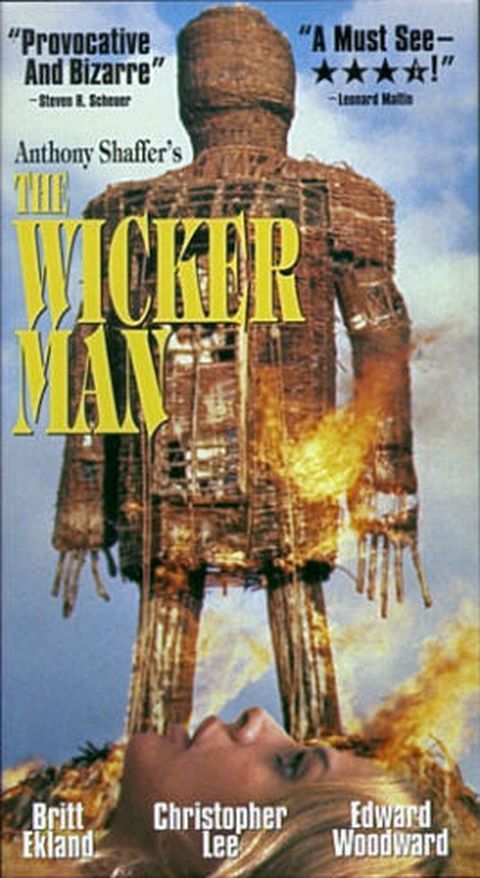
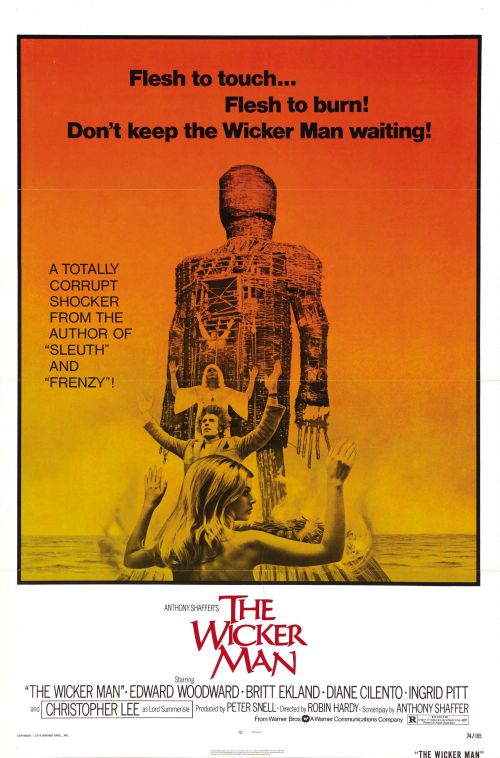
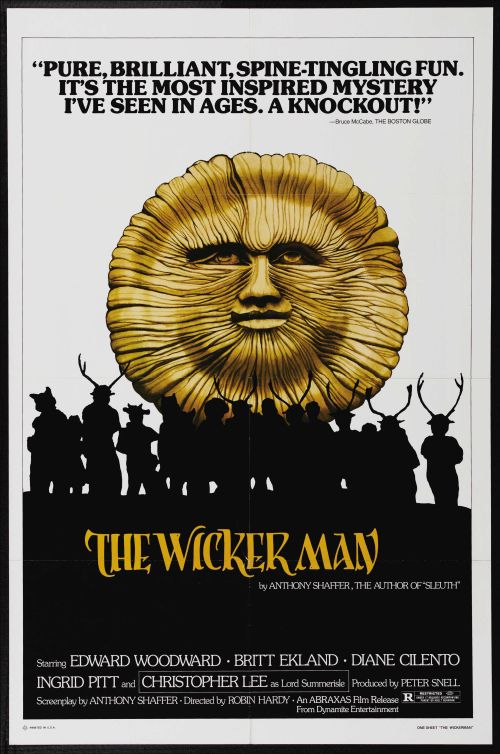
The Wicker Man (1973)

the wicker man 1

By Richard Winters

My Rating: 8 out of 10

4-Word Review: Pagans on an island.

Police sergeant Howie (Edward Woodward) receives a letter stating that their daughter named Rowan Morrison (Gerry Cowper) has disappeared and it compels him to travel by plane to an obscure island village off the coast of Scotland to find her. Once he arrives he finds nothing but resistance from the people and everyone denying that she even exists. He also learns that the people practice a pagan type of religion and begins to suspect that the girl’s disappearance may have something to do with the upcoming harvest celebration and decides to infiltrate the proceedings in order to weed-out the culprits and find the girl.

The film, which was inspired by the 1967 novel ‘Ritual’ by David Pinner, manages to be quite intriguing despite being material better suited for a short story. The whole concept is woven around the big twist that occurs at the end and everything that occurs beforehand is simply a lead up to that, which could’ve been a stretch for feature length but director Robin Hardy’s tight editing and deft use of atmosphere keeps things permanently lodged in the creepy and compelling even though I did figure out at around the 60 minute mark where it ultimately was headed. The film’s original length is supposedly longer than the 1Hour 28Minute release that is currently available, but to be honest I felt this was a perfect runtime for this type of story and stretching it out further would’ve simply been diluting it.

Edward Woodward, who later became familiar to American audiences with his starring role in the TV-show ‘The Equalizer’, is terrific in the lead and I liked that fact that the character wasn’t a completely ‘nice guy’ either, but instead rigidly entrenched in his Christian religious beliefs and arrogantly convinced that his spirituality was superior to anyone else’s. Christopher Lee again makes a good nemesis even though his mod hair style looks a bit goofy. Britt Ekland is on hand as well singing a weird song and even doing a provocative dance although the nude scenes of her from the waist down were done by a body double.

the wicker man 2

The only issue that I had with Anthony Shaffer’s script is the fact that the sergeant must go back to the mainland to get more men from the force to help him search for the girl, which to me was a bit of a loophole because I would think he could’ve just gotten on a phone and called in for more backup without arduously having to travel back. The facts that no one else knows where he is seemed a little implausible as well as most people working on the force have a supervisor that they must report to and who is at least somewhat aware of what case they are working on and where they are traveling to do it.

The ending though, which features an actual giant wicker man made of wood is an amazing site. When it gets set on fire with the victim and even some animals trapped inside of it is quite exciting and I liked how the point-of-view shifts between the people who view it from the ground as well as the victim seeing the people on the ground from inside the burning structure.

I remember seeing the 2006 remake starring Nicholas Cage in the theaters. While the details of it are vague I do recollect coming away from it finding grossly inferior in literally every way to this one and something that should be avoided at all costs.

the wicker man 3

the wicker man 4

My Rating: 8 out of 10

Released: December 10, 1973

Runtime: 1Hour 28Minutes

Rated R

Director: Robin Hardy

Studio: British Lion Film Corporation

Available: DVD, Blu-ray, Amazon Instant Video, YouTube
The Lady in the Car with Glasses and a Gun (1970)

lady in the car

By Richard Winters

My Rating: 5 out of 10

4-Word Review: Dead body in trunk.

Dany (Samantha Eggar) works as a secretary for Michael (Oliver Reed) who asks her to come to his place one evening to help him type an urgent report that needs to go out the next day. She agrees and then spends the night in his guest bedroom. The next morning she travels with his family to the airport where they board a plane for a vacation while she is instructed to drive their car back home, but along the way she takes a wrong turn and begins to come upon people who say they’ve seen her before even though she can’t remember them. Then she finds a dead body in the trunk and things get really bizarre.

The film, which is based on the novel by Sebastien Jasprisot and remade in 1992 and then again in 2015, has a certain appeal as the story is offbeat enough to keep you intrigued and manages to give a logical, or at least an attempted one, explanation at the end for why everything that occurs to Dany happened and the reason behind it. Unfortunately Anatole Litvak’s direction is bland despite a colorful opening montage and Reed, with his hair dyed gray, is miscast as a stuffy businessman.

One of the biggest issues though is the main character who behaves in ways that make little sense. Going to her boss’s place after work hours to write a report and even be instructed to drive his car back from the airport seems to be going well beyond the normal duties of an ordinary secretary and one that most likely would be met with resistance by anyone else and yet Dany obliges to his demands without question like she is a robot. Later a strange man (John McEnery) enters her car and makes an aggressive pass at her. Instead of leaving or running for help she instead gets into the car with him and takes him back to her hotel and goes to bed with him before she even knows what his first name is.

Spoiler Alert!

At the end we find out that Dany’s boss has set the whole thing up to make it look like Dany shot the man, whose dead body was in the trunk, in order to cover up for his wife (Stephane Audran) who was the one who really did it. Apparently she had been having affairs with many different men and shot this one when he refused to continue to see her. The husband was aware of all of these transgressions and would pay off the men to quit seeing her and when he found out that his wife had killed this one he concocts an elaborate scheme to get her off the hook, but why? Most men would not feel the need to come to the defense of an unfaithful wife especially one that continues to do it over and over again, which makes the whole storyline quite weak since it’s completely off-the-mark in terms of realistic human behavior.

End of Spoiler Alert!

My Rating: 5 out of 10

Released: October 22, 1970

Runtime: 1Hour 38Minutes

Rated R

Director: Anatole Litvak

Studio: Columbia Pictures

Available: None at this time.

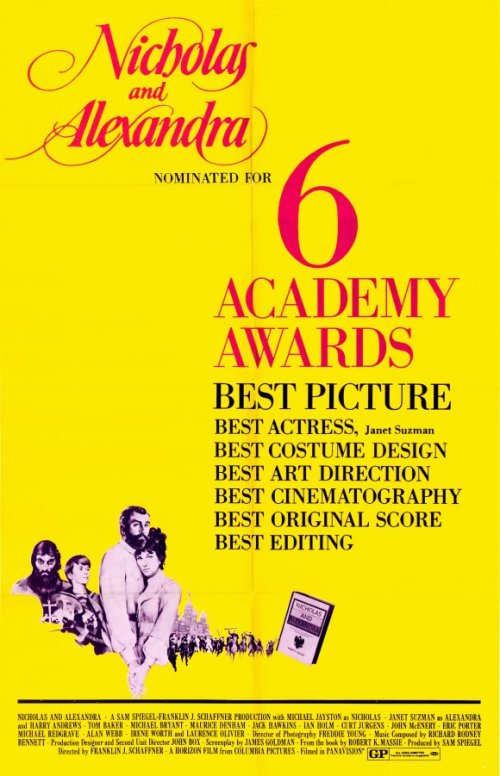
Nicholas and Alexandra (1971)

nicholasandalexandra1

By Richard Winters

My Rating: 9 out of 10

4-Word Review: The last Russian Tsar.

This film chronicles the life of Tsar Nicholas II (Michael Jayston) of Russia and his marriage to Alexandria (Janet Suzman). Based on the novel by Robert K. Massie it examines the height of his power and his apathy to the poverty of his people and his reluctance to listen to their needs, or consider a more democratic form of government. It also looks at his personal life including the birth of his son Alexei (Roderic Noble) who is diagnosed with hemophilia and his wife’s over-reliance on Grigori Rasputin (Tom Baker) a man pretending to have divine connections who ultimately uses his influence on Alexandra to take control over her political affairs when her husband is away. The film also portrays Russia’s involvement during WWI as well as the Tsar’s downfall and eventual exile in Siberia with his family.

The film is basically split up into three parts with the first hour looking at Nicholas’ family life while intercutting with scenes showing the discontent of the Russia people and the efforts of Vladimir Lenin (Michael Bryant) to create a revolutionary form of government. The second hour examines Russia’s war involvement and the many warnings that Nicholas is given not to get involved in it, but foolishly decides to anyways, which ultimately creates massive upheaval. The third hour looks at his abdication of power and the family’s exile and virtual imprisonment at the Ipatiev House in Yekaterinburg where they nervously await their fate.

Initially I thought the third hour would be the weakest as we all know they get shot and killed execution style, but to my surprise it is actually the strongest part of the film. To an extent tearing the characters away from their plush surroundings and forcing them to exist in bleak, squalor-like conditions actually humanizes them and allows the viewer to empathize with them particularly the four daughters who had nothing to do with their father’s harsh policies and just wanted a chance to grow up and live a normal life. The scene where the family is herded into the basement of the home in the early morning hours and forced to sit silently while awaiting their executioners is quite possibly one of the most intense moments ever captured on film.

The performances are uniformly strong particularly Suzman’s as well as Baker as the evil Rasputin who’s drawn out death scene may be one of the longest in movie history. Laurence Olivier in a small, but pivotal bit as the Prime Minister gets two commanding moments including his speech after the Bloody Sunday massacre and later his strong misgivings about the country’s war involvement.

The film is full of brilliant cinematography, direction, costumes and set pieces and is certainly something that must be watched on the big screen to be fully appreciated. I enjoyed the lavish interiors of the Winter Palace especially their walks down the elegant hallways that are lined with Royal guards, but found it equally interesting when Nicholas returns there after the war and forced to walk down these same hallways, which are now darkened and rundown. The many long distance shots of the flat and majestic landscape is also impressive particularly a view of a rolling sunflower field.

Although this film has never attained the well-known classic status of Doctor Zhivago, and in fact this was producer Sam Spiegal’s answer to that film when he was blocked from working on it, I still found it to be every bit as compelling and well directed.

My Rating: 9 out of 10

Released: December 13, 1971

Runtime: 3Hours 8Minutes

Rated GP

Director: Franklin J. Schaffner

Studio: Columbia Pictures

Available: DVD, Blu-ray, Amazon Instant Video


And Hope to Die (1972)

and hope to die

By Richard Winters

My Rating: 7 out of 10

4-Word Review: Kidnapping a dead girl.

Tony (Jean-Louis Trintignant) is on the run from a gypsy group out for revenge and as he is being chased by them he encounters another group of criminals headed by Charley (Robert Ryan) who after some conflict take him into their fold and gives him the nickname of Froggy. Their plan is to kidnap a teen girl who is set to be the star witness at a trial of a major head of a criminal organization. Unfortunately she commits suicide before they can get to her, so they pretend that she is still alive and go through the motions of the kidnapping so as to be able to collect the payout by the organization that hired them.

This is the second of director Rene Clement’s trilogy dealing with the theme of kidnapping. The first was The Deadly Trap and the third being Scar Tissue. Of the three this one is the best mainly because of its many offbeat touches. The wry sense of humor, which is deftly interwoven into an already intricate plot, is terrific and helps make the entire thing engaging from beginning to end. My favorite parts include a contest that Froggy plays with Charley where he can stand three cigarettes on end straight into the air, which he can do with ease while Charley can’t despite his repeated efforts. The eulogy that Charley gives during a makeshift burial of one of their cohorts is priceless and the action isn’t bad either including an exciting sequence in which the group walks across a thin ladder hundreds of feet in the air that connects one skyscraper to another.

The characterizations are well done and played to the hilt. Trintignant plays another one of his outsider-looking-in roles and the way he manages to mesh himself into the group that is initially reluctant to have him is quite amusing. Aldo Ray is a scene stealer playing the gang’s resident bonehead and Tisa Farrow, who is Mia’s younger sister and looks almost like she could be her twin, is appealing in her role as a volatile young lady who knows how to use a gun and not afraid to shoot it whenever she gets the least bit riled.

The actual kidnapping, which is based on the novel ‘Black Friday’ by David Goodis, doesn’t occur until the final thirty minutes with the first hour dealing exclusively with Froggy’s assimilation into the group, which may sound boring, but really isn’t. In fact there is very little about this movie that I didn’t like and my only complaint would be the lackluster ending that doesn’t offer much of a payoff. Otherwise I feel this is a great example of how to mix humor with action, but still managing to keep things believable, fresh and inventive.

My Rating: 7 out of 10

Released: September 15, 1972

Runtime: 1Hour 39Minutes

Rated PG

Director: Rene Clement

Studio: 20th Century Fox

Available: DVD (Region 2)

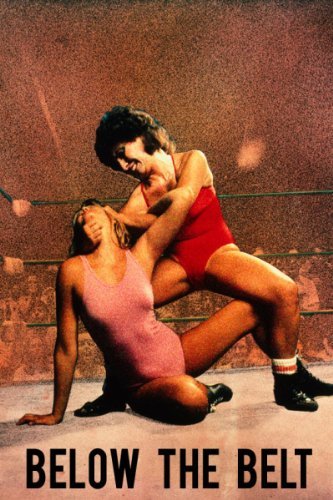
Below the Belt (1980)

below the belt 1

By Richard Winters

My Rating: 4 out of 10

4-Word Review: Waitress becomes a wrestler.

Rosa (Regina Baff) works as a waitress at a sports arena who one day catches the eye of wrestling promoter Bobby Fox (John C. Beecher) after she decks a guy who tries to get fresh with her. Fox is in need for a new wrestler to promote and feels she’d make a perfect fit despite her having no experience in the sport. Since she is bored with her job and low on funds she decides to take him up on his offer, but finds that life in the wrestling world can be quite lonely and grueling and the promises of fame and fortune are fleeting.

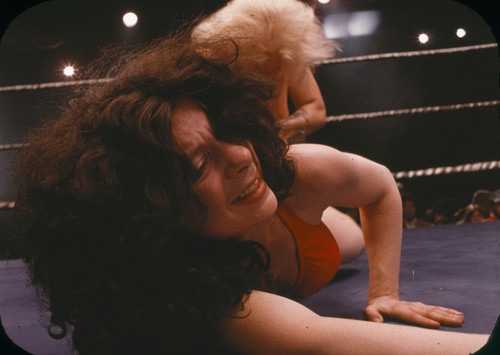
Unlike Grunt! The Wrestling Movie, which was reviewed last week, this movie does not take a fan’s perspective of the business nor does it get caught up in the colorful caricatures or silly storylines. Instead it reveals a rather bleak look at the hardships faced by those working the circuit and how emotionally and physically taxing it can be living on the road and going paycheck-to-paycheck. In fact there is more footage shown of them behind-the-scenes preparing for a bout than an actual match although the climax does feature Rosa, dubbed the Mexican Spitfire, taking on defending champion Terrible Tommy (played by real-life wrestler Jane O’Brien) who plays dirty, doesn’t have any front teeth and even beats up on the referee.

Comical moments get spread throughout, but they tend to get overplayed and don’t work. What grabbed me was the main character and how relatable her situation was particularly the way her life was unfocused and her inability to stick with any job for too long, which her boyfriend and father nag her about, but then when she tells them about her new found wrestling passion they scoff and show no support. I also liked how the film examines both side of the age spectrum including Thalia (K.C. Townsend) who lies about her age and pretends to be older than she is simply so she can escape her tedious small-town life and get into the wrestling circuit, which she considers her ‘big break’ while on the other end there’s Verne (Sierra Pecheur) who’s in her late 30’s and been in the business for many years and now feels trapped and unable to get out.

Baff, with her plain looks, is a good representation of the average young woman still struggling for direction, but her thin body made me think she wouldn’t be able to handle the rigor of the sport in real-life. Shirley Stoler is on the opposite end as she was quite overweight and humorously carries around a handgun with her to fight off all the would-be rapists that she feels are lurking in the shadows and ready to attack her at any minute. Dolph Sweet is also memorable as an aging wrestler who reluctantly realizes that the business and his passion for it have passed him by.

There’s a heavy dose of blues music that gets played frequently throughout. To some extent the soundtrack, with songs sung by Billy Preston, Jennifer Holliday and the Voices of Deliverance, lends flavor and distinction to the proceedings, but it also ends up becoming overdone and intrusive in a film that is alright, but tries a little too hard to make its point.

below the belt 2

My Rating: 4 out of 10

Released: December 10, 1980 (Filmed in 1974)

Runtime: 1Hour 34Minutes

Rated R

Director: Robert Fowler

Studio: Atlantic Releasing Corporation

Available: VHS

King Rat (1965)

king rat 1

By Richard Winters

My Rating: 6 out of 10

4-Word Review: An island prison camp.

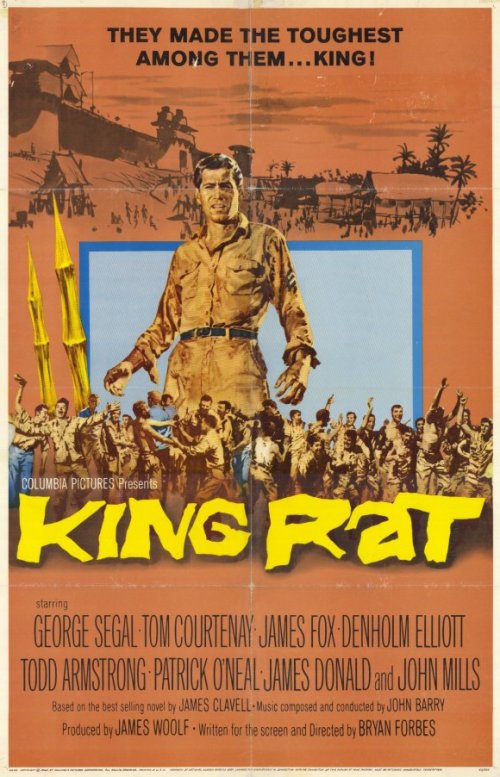
British and American POWs are held on an Island prison camp run by the Japanese during WW II. This camp is unlike the others as it does not have any walls, barbed wire fences, or prison guards. The men are allowed to roam freely while trapped on a tiny island with nowhere to go. Corporal King (George Segal) manages to wheel-and-deal his way to the top of the food chain by getting involved with the underground black market, which allows him to live the relative good-life while the other prisoners remain near starvation. He befriends Marlowe (James Fox) who can speak the Malaysian language, which he feels can come in handy as he gets involved with a diamond smuggling operation as well as selling deer meat, which unbeknownst to his customers is actually meat from rats who’ve feed off of the bodies of the other dead prisoners.

To some extent one can find some similarities to this and The Great Escape or Stalag 17 in that the prisoners have managed to create their own underground network without their captors being aware, but that is pretty much where the comparisons end. This film is darker and examines more the psychological deterioration that the men go through while realizing its themselves and each other that is more the enemy than the actual Japanese guards who are shown very little and have no presence at the camp or in the movie.

Segal gives a star making performance as a anti-hero who could easily be quite unlikable, but Segal’s engaging on-screen persona gives the character an added spark making him and his constant conniving more amusing than anything particularly with the way he barters with the Malaysian guards during their discussions on the price of the transfer of diamonds.

The supporting cast is outstanding as well especially Fox as the only sympathetic character and Tom Courtenay as the overzealous Grey and his never-ending crusade to take King and his cronies down. James Donald is also good as the no-nonsense Dr. with a very matter-of-fact bedside manner and a young Richard Dawson who gets the shock of his life when he comes in after the Japanese surrender to free the men of their enslavement only to find that they’re strangely reluctant to leave.

The film works in episodic fashion and while it maintains a gritty level it also has some lulls and few too many shifts in tone. There are though many unique and memorable moments including the ending where the men find themselves free to return home, but respond much differently than you’d expect. There is also a scene where the men kill a dog after it attacks some chickens and then later eat it as if it were a delicacy.

My Rating: 6 out of 10

Released: October 27, 1965

Runtime: 2Hours 14Minutes

Not Rated

Director: Bryan Forbes

Studio: Columbia Pictures

Available: DVD, Amazon Instant Video

The Dove (1974)

dove

By Richard Winters

My Rating: 5 out of 10

4-Word Review: Sailing around the world.

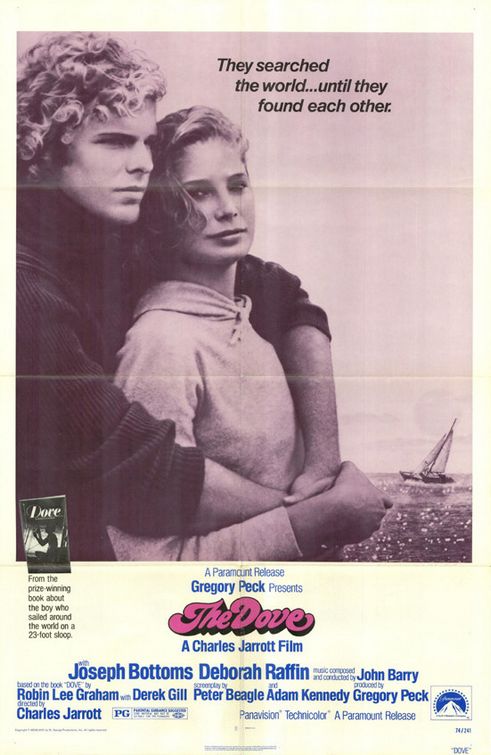
Based on a true story and produced by Gregory Peck this film examines the journey of Robin Lee Graham (Joseph Bottoms in his film debut) as he sails in his boat called The Dove around the world. When he starts out he is only 16, but through the course of his journey he goes through many adventures, meets a beautiful woman named Pattie (Deborah Raffin) who he eventually marries and returns home a full grown man.

The variety of exotic locales and stunning cinematography by Sven Nykvist are a chief asset, but the film starts off with absolutely no backstory. The viewer is hoisted onto the boat with the main character without having any idea who he is, his background, preparation, reason for doing this, or his relationship with his family. Bits and pieces of this come out later, but it would’ve been nice to have had some of this info from the start and would’ve allowed for more of an emotional connection to the character.

The first hour is spent more on land than at sea, which is another problem because it doesn’t get riveting until he is actually on the boat and fighting the many elements. The melodic mood music gets excessive and should’ve been toned down as well and the two songs sung by Lyn Martin, which could’ve been scrapped completely as the natural ambience of the sea is far more soothing.

Bottoms, who retired from acting in 1999 and now runs an art gallery, does quite well. His boyish face and variety of emotions that he goes through during his adventure ring quite true for someone of that age and help to make the character quite real. I also enjoyed how the character is astute in certain areas, but very awkward in others particularly with the way he tries to court Patti, which also leads to the film’s best line “I’m feelin’ romantic…in a horny kind of way.”

Raffin is stunningly beautiful and her acting is outstanding and I liked how the female character was portrayed as being older, wiser and more practical. The two share a great chemistry, but Robin’s relationship with his ornery pet cat Arvana is equally interesting even though its demise is unpleasant.

Familiar character actors pop up briefly playing pesky photographers from National Geographic magazine that carried the story through his trip. John Anderson has a funny bit here, but the best is Dabney Coleman who speaks with an Australian accent!

The actual journey began in September, 1965 and wasn’t completed until April of 1970 with many stops and starts in between, which the film does a good job of showing as at several points Robin abandons the mission only to finally start it back up several weeks or months later. Although the film gives the impression that he completed the full journey in reality he didn’t as he started it in Hawaii, but finished it in Long Beach, California also the boat that he used for his trip ending up getting destroyed in 1989 during Hurricane Hugo.

My Rating: 5 out of 10

Released: October 16, 1974

Runtime: 1Hour 45Minutes

Rated PG

Director: Charles Jarrott

Studio: Paramount

Available: VHS, Amazon Instant Video

Serpico (1973)

serpico

By Richard Winters

My Rating: 8 out of 10

4-Word Review: A cop fights corruption.

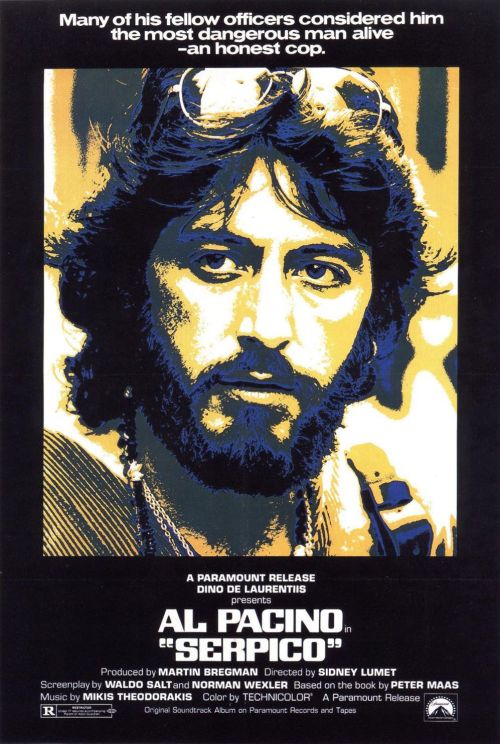
One of the followers of this blog has requested that I review this movie, so today we take a look at Frank Serpico (Al Pacino) a policeman who fought against corruption that plagued New York’s police department during the ‘60s. Even though many of his partners on the force would accept under-the-table payouts from criminal elements in exchange for ‘looking-the-other-way’ he wouldn’t and when he would tell his superiors about it nothing would get done. Instead they would transfer him to other precincts only for him to find the same problems there. It was only when he decided to report the issue to the New York Times that people started to take action, but in the process he also made himself a mark and vulnerable to having his unhappy comrades set him up to be shot while on-duty.

The film is based on the Peter Maas novel, which in turn recounts the life of the actual Frank Serpico and the events he went through while working on the force between the years of 1959 to 1972. Not only does he remain alive today, but according to recent reports is even considering, at the ripe old age of 79, a run at political office. Equally interesting is that he and Pacino roomed together during the summer that this was filmed and became close friends.

It’s been years since I’ve read the novel, but I felt this film sticks closely to what actually happened and the always reliable Sidney Lumet manages to keep things exciting and insightful. The dialogue is sharp and the on-location shooting, which was done in every borough of New York except Staten Island, gives the viewer an authentic feel of the city as well as the police environment.

The film also does a successful job at showing the drawbacks of accepting bribes without ever getting preachy or heavy-handed. One might think, like many of Serpico’s partners do, that taking some kickbacks isn’t that big of a deal, but then the film shows in one brief moment a policeman shoving another man’s head into a toilet when he doesn’t ‘pay up’, which hits home how the police become no better than organized crime who would notoriously demand ‘protection money’ from business owners.

The only thing I didn’t like was the music, which was too loud and jarring. Fortunately it’s put in only sparingly, but its melodic quality takes away from the grittiness and the film works far better by simply relying on the ambient sounds of the locations that the scenes are in. In fact this is one movie that could’ve done fine without any music at all.

Pacino is fantastic and I loved how the character starts out as this clean shaven, boyish looking fellow only to grow into a bearded, long haired guy as the story progresses, which symbolically connects with the way he becomes savvier to the system. The character also sports earrings long before it became vogue for males to wear them.

Tony Roberts does well as one of the few cops that sides with Serpico and tries to help him in his fight and F. Murray Abraham can be spotted near the end as a member of a vice squad who tries setting Serpico up to be killed. This movie also marks the film debuts of character actors Alan Rich and Kenneth McMillan. In my mind this is also the debut of Judd Hirsh. Some sources state that his first onscreen appearance is in Jump, which came out two years earlier, but I watched that film and couldn’t spot him anywhere, but her I was able to spot him right away.

My Rating: 8 out of 10

Released: December 5, 1973

Runtime: 2Hours 10Minutes

Rated R

Director: Sidney Lumet

Studio: Paramount

Available: VHS, DVD, Blu-ray, Amazon Instant Video, YouTube
Harrad Summer (1974)

harrad summer

By Richard Winters

My Rating: 6 out of 10

4-Word Review: Bringing sexual liberation home.

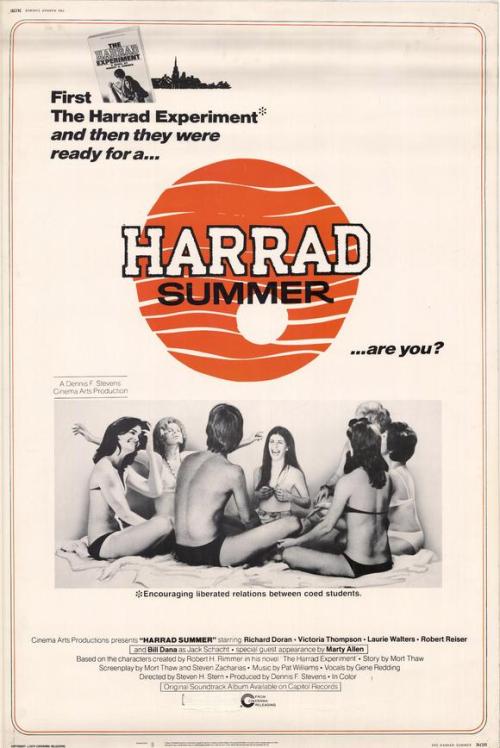
The school year is over and now the students of Harrad, which is the college that teaches and promotes open sexuality, go home for the summer and put what they’ve learned into action in their everyday lives. Like in the first film this sequel focuses on just four of the students who find that their parents and friends are not as broad minded as they are, which causes friction in not only their relations with them, but with each other as well.

This film for the most part works surprisingly well. Director Steven Hilliard Stern takes more of a playful approach to the material and mixes in some funny moments that overall are quite entertaining. The wide variety of locales elevates the stagnant feeling that the first one had and it also manages to address a wider variety of issues.

The story is broken up into three segments with each one focusing on the student’s home lives as they visit each of their parents for 2-weeks at a time as a group. The first part, which deals with Stanley’s (Robert Reiser) folks isn’t too interesting and is fortunately pretty brief. The visit to Harry’s (Richard Doran) is the most comical and the film’s highlight while Stanley’s conflicts with Sheila’s (Laurie Walters) father (Walter Brooke) during their visit to her folks seem contrived and pointless. The film never manages to get to Beth’s (Victoria Thompson) parents, which is probably just as well.

The film’s biggest drawback is that neither Don Johnson nor Bruno Kirby, who were so good in the first film, reprises their roles here and their absence is sorely missed as  Reiser and Doran don’t have the same acting talents and are quite weak in comparison. Thompson, who was blonde in the first film, now has, with no explanation, jet black hair, which makes her look exactly like her sister and fellow actress Hilary Thompson. Also, Emmaline Henry, who was best known for playing Mrs. Bellows in the ‘60s show ‘I Dream of Jeannie’ replaces Tippi Hedren who was unavailable for the sequel and James Whitmore’s role gets taken out completely.

The supporting cast is what gives the film its spark. Comedian Marty Allen, whose hair looks like the ultimate bird’s nest and usually gets more attention than his comic ability, is fun as a drunken party guest. However, Pearl Shear, who plays his wife, is the real scene stealer as an overweight middle-aged woman, who in Mrs. Roper-like fashion, eagerly wants to get involved with the kids and their new found sexual liberation and even takes part in a nudist session with them.

Bill Dana, famous for creating the Jose Jimenez character, is quite good as well playing Harry’s staunchly conservative father who can’t deal with the open sexuality of the younger generation only to surprisingly come around to it at the very end. He also gets the film’s best line when after denying to Harry that he ever had any affairs finally admits “Maybe I did a couple (women) in Vegas and a few in Cleveland, but what else is there to do in Cleveland.”

My Rating: 6 out of 10

Alternate Title: Love All Summer

Released: August 6, 1974

Runtime: 1Hour 43Minutes

Rated R

Director: Steven Hilliard Stern

Studio: Cinerama Releasing Corporation

Available: DVD