Category Archives: Movies Based on Novels

Demon Seed (1977)

demon seed 1

By Richard Winters

My Rating: 6 out of 10

4-Word Review: Computer impregnates a human.

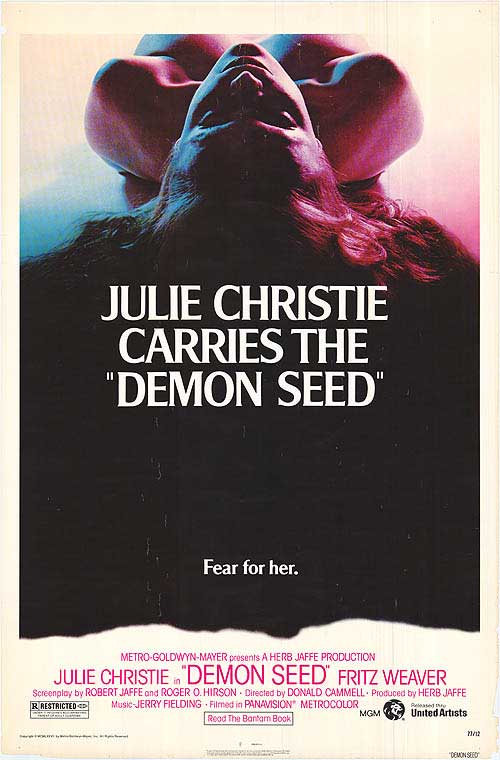
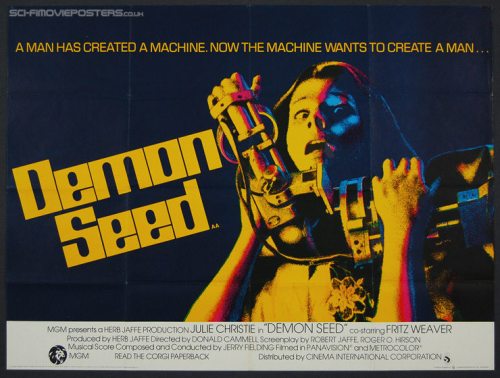
Based on an early Dean R. Koontz novel the story centers on Susan Harris (Julie Christie) who is married to Alex (Fritz Weaver) a man who has created a giant artificially intelligent computer named Proteus (voice of Robert Vaughn) as well as installing a computer inside their own home, which does all of their household chores and is fully automated via voice command.  Things seem to be going fine until Proteus starts to question the assignments that he has been given and his unhappiness with being ‘trapped inside a box’. To remedy the situation he decides to use the computer terminal inside the Harris’s home, so that he can overtake the house through his electronic commands and then impregnate Susan to have his child and therefore experience life as a person instead of a machine.

One of the things that got on my nerves right away was the way the film immediately telegraphs where it is going and reeks with ‘70s paranoia about computers ‘overtaking the world’, which was a prevalent fear during that era as computers were just in their infancy and their ultimate place in human society still not fully understood.

The Alex character is too ambivalent towards the warning signs and comes off like the clichéd super scientist with a child-like enthusiasm about his ‘creation’ and not the slightest concern for what might happen if things go wrong and the way he becomes so quickly shocked when the computer does start to behave in a way he had not considered seems almost laughable. Real-life scientists would most assuredly have considered these issues and had safeguards already put in place and the fact that the characters here don’t just doesn’t seem believable.

When the Proteus computer takes over Susan’s home I didn’t find it frightening, but more unintentionally funny for many of the same reasons. I don’t think that I myself could ever get used to a computer running everything for me and doing whatever I said at the sound of my voice. In the back of my mind, and in any sane person’s mind for that matter, I would be worrying about it malfunctioning and the consequences that it would entail, so when things finally do go wrong I found it laughable because anyone could have clearly seen it coming from the start. In fact the only thing that saves this thing from a being a complete dud is Christie’s brilliant performance and the fact that she gets you to see her character as a real human being and someone you care for and want to see rescued.

Spoiler Alert!

The script suffers from a myriad of other logical loopholes as well. One of them is the whole basic premise of how a computer can somehow manipulate human DNA in order to get supposedly his ‘genes’ into the child, so that it fully has his own traits and even his own voice. There is also no suitable explanation for how he was able to speed-up the gestation period from the 9 months to just 28 days. I was also surprised that the husband never bothers to call his wife during that 28-day period. Yes, I realize that they had just separated, but it was a very amicable one and I would still have thought he would’ve called-in at some point simply to check-in. There is also another character played by Gerrit Graham who comes into the house and tries to shut down the computer and is killed in the process making me believe that his disappearance would’ve caused suspicion and others would’ve come looking for him. There is also the issue of her mail, which I’m sure would’ve been piling up at her front door and causing both the mail carrier and neighbors to take notice.

End of Spoiler Alert!

The film is full of many colorful graphics and effects although they may no longer be considered as state-of-the-art as they once were. The idea is an intriguing one and Robert Vaughn gives the Proteus character a lot of menace with his voice, but he is still no HAL. The ending is really over-the-top, but in a wildly interesting sort of way even though it does nothing but create more questions than answers.
demon seed 3

My Rating: 6 out of 10

Released: April 8, 1977

Runtime: 1Hour 34Minutes

Rated R

Director: Donald Cammell

Studio: MGM

Available: DVD (Warner Archive)
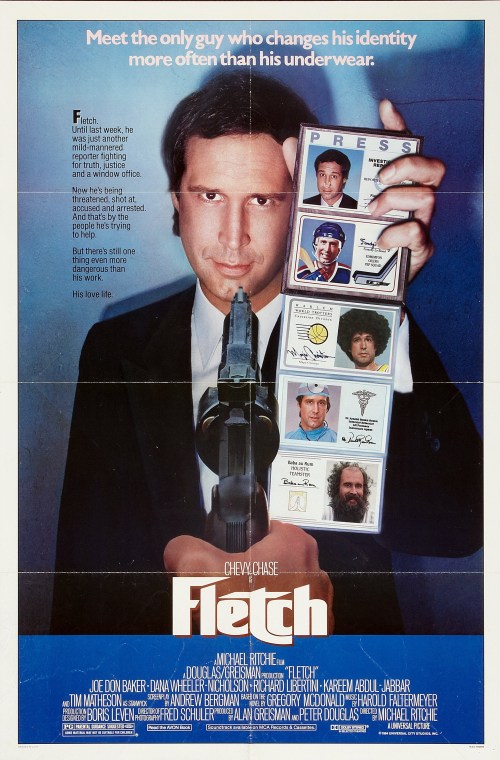
Fletch (1985)

fletch 1

By Richard Winters

My Rating: 5 out of 10

4-Word Review: Reporter has many disguises.

Irwin ‘Fletch’ Fletcher (Chevy Chase) works as a newspaper reporter writing articles under the byline of Jane Doe. While working on a story involving drug dealing at a nearby California beach he gets approached by Alan Stanwyck (Tim Matheson) who offers him a large sum of money to kill him. It seems that Mr. Stanwyck has been diagnosed with cancer and has only a short time to live. He wants Fletch to ‘put him out of his misery’ by entering his home at a certain day and time and offing him while making it look like it was just a random robbery gone bad. Initially Fletch agrees to do it, but then begins to do some research on Mr. Stanwyck and finds things just don’t add up.

Out of all the characters that Chase has played this one best suits his talents and personality. His deadpan delivery has always been his major selling point and this part takes full advantage of it while accentuating his smart-ass persona and minimizes the silly pratfalls, which were never funny anyways. The first half clicks nicely and it’s great to have a main character whose personal life is a realistic struggle as he lives alone in a depleted looking apartment complex and bitterly avoiding a divorce lawyer (George Wyner) representing his wife who cheated on him.

The plot is genuinely intriguing and had me hooked. Unfortunately the story takes on too much as it also continues to incorporate elements of the drug dealing at the beach story, which makes things too convoluted especially since the murder-for-hire scheme gets complex enough. The overblown idea to somehow tie both story threads together at the end is a misfire and an overreach. The ultimate explanation for why Stanwyck wanted Fletch to kill him is really lame and a big letdown.

The film is also too long and the humor loses its edge as it progresses. The idea that this reporter would so cleverly be able to infiltrate hospitals and businesses in order to get the information that he wanted is hard to believe and it would have come off better had his profession been a private investigator instead. Chases’s insubordinate behavior towards his boss (Richard Libertini) including at one point even giving him the one-finger-salute is pretty outrageous and would most assuredly get anyone else in the same circumstance fired and deservedly so. I was also unhappy with the portrayal of the cops as they are all shown to be corrupt, abusive and vulgar. Yes I realize there are bad cops out there, but there are also a lot of good ones too and this film makes no attempt to balance that.

Chase gets featured in every scene, so if you are not exactly a fan of his your tolerance will certainly be tested. The film does feature a plethora of familiar faces in minor roles many of whom are wasted although I did enjoy Geena Davis as Fletch’s faithful assistant.

My Rating: 5 out of 10

Released: May 31, 1985

Runtime: 1Hour 38Minutes

Rated PG

Director: Michael Ritchie

Studio: Universal

Available: DVD, Blu-ray, Amazon Instant Video, YouTube

Petulia (1968)

petulia 2

By Richard Winters

My Rating: 9 out of 10

4-Word Review: A very brief affair.

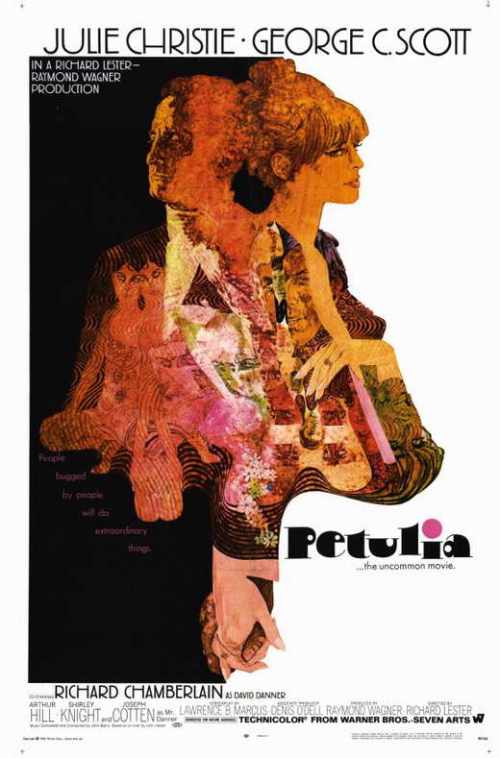
While attending a medical fundraiser Petulia (Julie Christie) who is a married rich socialite, decides to come-on to Archie (George C. Scott), a doctor who performed a life-saving surgery on a young Hispanic boy (Vincent Arias) that she brought to him a few months earlier. Archie is still hurting from his recent divorce to his wife Polo (Shirley Knight) and not sure he wants to jump into another relationship so quickly especially with a woman that behaves in such an eccentric way. However, her kooky personality and good-looks get the better of him and the two spend the night together. In the days that follow Archie learns of her abusive relationship with her husband David (Richard Chamberlain), but when he makes an attempt to help her get out of it she resists, which causes him a great deal of frustration as he is unable to get a good grasp on why she behaves the way that she does.

The film is based on the novel ‘Me and My Arch Kook Petulia’, which was written by John Haase who worked as a dentist and wrote his stories between his appointments. What makes this plot stand out from the rest of the romances is that it focuses on the chance meeting between two people who share an immediate attraction, but are unable due to various extraneous circumstances to ever get it into a relationship stage. They become like two-ships-passing-in-the-night and go on with their lives and even other relationships while quietly longing for ‘the-one-that-got-away’. Most movies portray romances where everything falls into line and works out while blithely ignoring the ones that get shown in this film even though these are much more common.

Director Richard Lester, who is better known for his slapstick comedies, shows an astute eye for detail and his fragmented narrative works seamlessly. I enjoyed the quick edits and color detail as well as the subliminal symbolism including showing the David and Petulia characters wearing all-white to display their sterile marriage as well as capturing David’s father (Joseph Cotton) sitting in front of a giant window that looked like a cobweb to help illustrate how he had entangled Petulia into his own personal web. The film, which was shot on-location in San Francisco, features great shots of the Golden Gate Bridge and the world famous cable cars as well as an interesting scene at the Jack Tar Motel, which has now been demolished but was famous for its ability to check customers into their rooms without the use of a live clerk, but instead through close circuit TV and a room key that would light up when the person passed by their assigned room.

The two leads give strong performances particularly Scott who for a change doesn’t play a character with a forceful personality, but instead someone who inadvertently gets bowled over by a woman who has an even stronger one than he. Even Chamberlain does well. Normally I find him to be quite bland, but here he is surprisingly effective.

This movie also marks the film debuts of many performers who are seen in brief, but quirky bits including: Richard Dysart as a virtual hotel clerk, Howard Hesseman as a hippie, Rene Auberjonois as a seat cushion salesman and Austin Pendleton as a hospital orderly. Members of the Grateful Dead get some funny moments while inside a grocery store and Janis Joplin can be seen onstage singing during the opening party sequence.

Romance fans will like this, but so will those living in the Bay area during the ‘60s as the city gets captured well. However, fans of that decade will also like it as it expertly exudes the vibe from the period and making it seem very real to the viewer even if they weren’t alive during the time it was made. Also, John Barry’s haunting theme nicely reflects the character’s mood and evasive film style.

petulia 1

My Rating: 9 out of 10

Released: June 10, 1968

Runtime: 1Hour 45Minutes

Rated R

Director: Richard Lester

Studio: Warner Brothers

Available: DVD, Amazon Instant Video, YouTube

Excalibur (1981)

excalibur 1

By Richard Winters

My Rating: 8 out of 10

4-Word Review: The sword is magical.

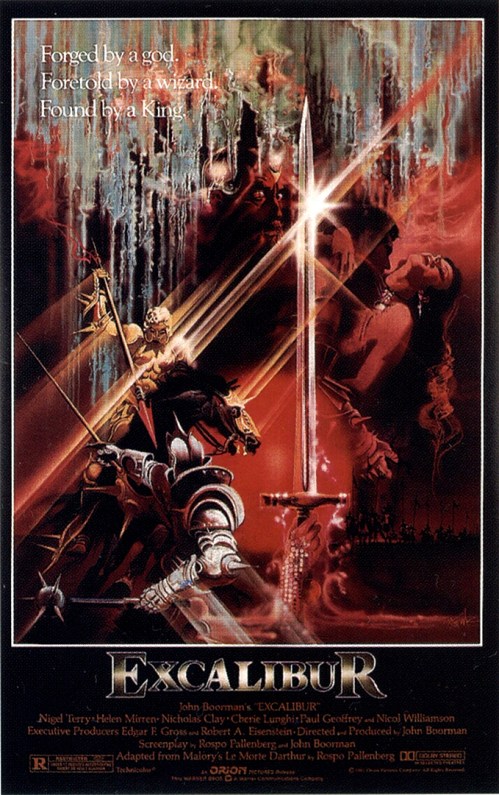
The mystical sword named Excalibur gets cast into a stone by Uther (Gabriel Byrne) and the wizard Merlin (Nicol Williamson) proclaims that the next man to be able to remove it will become the King of England. Many try and fail, but years later it is Uther’s illegitimate son Arthur (Nigel Terry) who is able to do it.  Although very young he is able to create the Kingdom of Camelot with the help of Merlin. He also marries Guenevere (Cheri Lunghi) who has an affair with his most trusted knight Lancelot (Nicholas Clay) and then his half-sister Morgana (Helen Mirren) steals away Merlin’s powers and uses them to try and destroy the kingdom.

The story is based on the book by Thomas Malory who supposedly wrote it while he was incarcerated. Although this film is considered a classic now it was not as well received when it was first released. Critic Roger Ebert called it ‘a mess’ and the great Pauline Kael described the dialogue as being ‘atrocious’. For me I found it long, but enjoyable even though I’m not crazy for this type of genre.

One of the things that I didn’t particularly care for, or find all that exciting were the battle scenes. Watching men roll around in the mud with their swords doesn’t come off as too interesting when compared to gun battles. There were also too many of them and all seemed too similar to the others with the final one ruined by having it shrouded in fog. In reality the knight’s armor was also always made by either steel or iron, but for this film they created it out of aluminum, which made it appear too flimsy and clanky. It is also given a bright glow, which was intentional, but I didn’t care for it.

What I did enjoy was the atmosphere particularly when they go off to search for the grail. The scene where the men approach an area that has dead bodies hanging from the trees and a crow sitting on a branch biting off one of the corpses’ eyeballs, which apparently took several days of continuously rolling the camera before the bird did what they wanted, is in one of the best moments in the film. I also liked the magical glow given off by Camelot when it is seen from a distance, but I would’ve liked a shot of the magical kingdom seen up close, which never occurs and was probably due to budgetary restraints, but would’ve been cool.

The performances are all-around excellent. Terry does quite well in the lead playing Arthur at different stages of his life, but I was most impressed at the way he came off as convincingly being only 19 at the beginning even though he was really already 35. Clay, who plays Lancelot, also looks like he was barely over 20 when in reality he was 34. Williamson is amusing as Merlin and Mirren is effectively evil as the villainess. This is also a great chance to see Patrick Stewart and Liam Neeson in some early roles.

The movie moves along briskly and is overall entertaining although some the scene transitions and dramatic arcs were awkward. Those that are into medieval fantasy will clearly enjoy it more.

My Rating: 8 out of 10

Released: April 10, 1981

Runtime: 2Hours 20Minutes

Rated R

Director: John Boorman

Studio: Orion Pictures

Available: DVD, Blu-ray, Amazon Instant Video

Doctors’ Wives (1971)

doctors wives

By Richard Winters

My Rating: 4 out of 10

4-Word Review: His wife sleeps around.

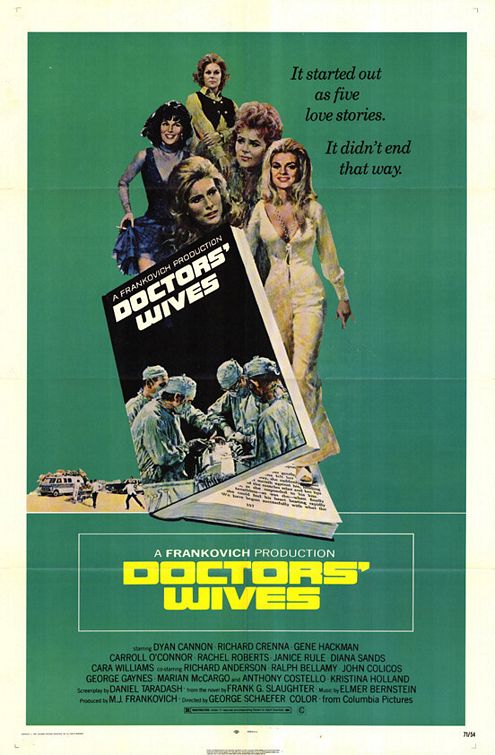
Several wives of prominent surgeons at a prestigious hospital get together for a game of cards, but one of the women, the oversexed Lorrie Dellman (Dyan Cannon), gives them a shocking proposition. Seeing that they are not satisfied with their sex lives, she tells them that she will sleep with each of their husbands and then critique their ‘performances’, so as to enlightened them as to what they might be doing wrong. The women turn down her ‘friendly’ offer, but then panic when Lorrie tells them that she has slept with ’50 percent’ of them already.  They have no time to worry though because the next day Lorrie is shot dead by her brain surgeon husband (John Colicos) after she is found in bed with one of the physicians. Now the women must try to figure out which doctor it was while worrying if their husbands were also involved with Lorrie at some other point.

The film, which is based on a novel by Frank Slaughter, is just too trashy and soap opera-like to take seriously. The productions values are strong and director George Schaefer shows a flair for the visual, which makes it watchable, but the characters are one-dimensional and the dialogue seemingly stripped straight out of a potboiler paperback.

Cannon, who’s billed as being the star, is on-screen for less than five minutes, which has to set some sort of record. Who on earth would ever accept a part to be the film’s ‘star’ if they are going to only be in it for that short of a period, or why bill someone as being such if they ultimately will have that little to do? In some ways I wished the character had remained as she is so outwardly slutty that it becomes campy and her initial proposition would certainly have created a more interesting scenario than what ultimately gets played out. Besides any character whose first words out of their mouth is “God, I’m horny” can’t be all that bad.

The supporting cast, which is made up of many familiar faces, are essentially wasted especially Gene Hackman in what may be the dullest role of his otherwise illustrious career although the way he repeatedly slaps his wife (Rachel Roberts) across the face after she confides in him that she once had a lesbian affair does have a certain outrageous quality.

Colicos is competent as the heavy, but Anthony Costello steals it as a young intern who sleeps with the middle-aged wives of his superiors. In real-life he was gay and ended up dying of AIDS at the young age of 45, but here successfully comes off as a flaming heterosexual who brags of his conquests and acts like going to bed with married women is as common place as taking out the garbage. His best bit comes when he beds fellow intern Sybil (Kristina Holland) who is making a sex documentary and narrates a ‘play-by-play’ of her sexual intercourse with him as it happens.

The film’s most memorable moment, and it’s a doozy, is when it shows in incredibly graphic style the operation of taking a bullet out of a man’s heart. A real pumping human heart was used and the footage would rival that of any educational film. Not only do we see them tear off the organ’s outer membrane, but we also watch as the doctor sticks his finger into it and then in one truly ghoulish shot pop the bullet out of it. It’s all real and done in close-up making it far more explicit than any gore movie out there and one of the most stomach churning things ever to be put in a mainstream Hollywood movie.

My Rating: 4 out of 10

Released: February 3, 1971

Runtime: 1Hour 41Minutes

Rated R

Director: George Schaefer

Studio: Columbia Pictures

Available: DVD-R

The Music Lovers (1971)

music lovers 1

By Richard Winters

My Rating: 6 out of 10

4-Word Review: Madness has no bounds.

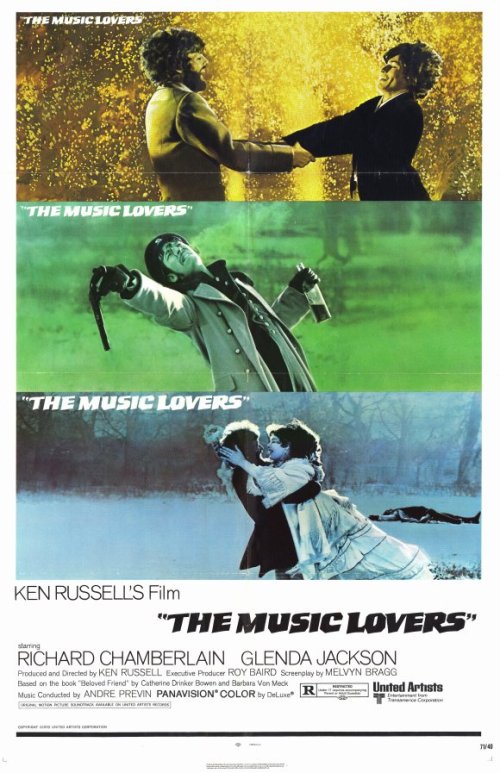
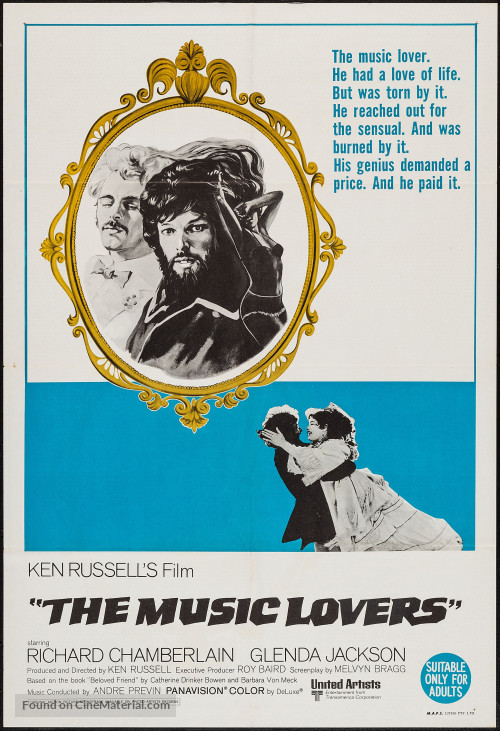
This is a revealing look at Russian composer Pyotr Ilyich Tchaikovsky (Richard Chamberlain) and based on his own personal correspondences as he fought his homosexual tendencies by marrying Nina (Glenda Jackson) a woman he really did not love. Her nymphomania becomes something he cannot satisfy and he eventually abandons her where they then both go on to suffer their own personal forms of madness.

Pianists and composers were like what rock stars are today and I liked how director Ken Russell handles the concert sequence by infusing in the thoughts of the people as they listen to the music and therefore allowing the viewer to visualize the experience of a concert goer.

The scenes with Nina in the asylum are a good example of the grotesque imagery, but they are also well orchestrated and quite memorable. However at times it also gets overdone and unintentionally comical especially the sequence involving Chamberlain’s ill-fated attempt at lovemaking to Jackson on a shadowy, bouncing train car.

Russell shows no feeling for the subject and seems more interested in using it only as an excuse to show off his flashy style. The viewer is never allowed to get emotionally attached to the characters as we are only given a fragment of what these people were like and never the whole picture. The emphasis seems exclusively on their dark and self-destructive sides and watching their descent into madness is not very inspiring or insightful.

The casting of Chamberlain was a poor choice as the guy seems to have a very limited acting range. He is good looking, but lacks the charisma and his facial expressions rarely change while he shifts badly from underplaying the part to overplaying it.

Jackson fares far better and this could be considered a real find for her fans because she plays a type of character that she has never done before, or since. Usually she plays strong willed people, but here her character is weak allows herself to be dominated and exploited shamelessly even by her own mother while also taking part in a very provocative nude scene.

Overall if you like Russell’s style then you will enjoy it more than others. Otherwise it comes off as shallow, moody, and fragmented with some real slow spots during the middle half.

music lovers 2

My Rating: 6 out of 10

Released: January 24, 1971

Runtime: 2Hours 4Minutes

Rated R

Director: Ken Russell

Studio: United Artists

Available: DVD, Amazon Instant Video

Money Movers (1979)

money movers 2

By Richard Winters

My Rating: 8 out of 10

4-Word Review: Employees become the thieves.

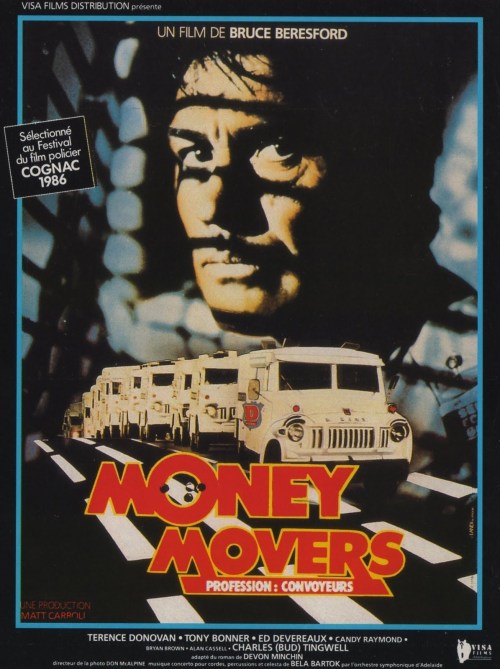
Lionel Darcy (Frank Wilson) runs an Australian armored truck business that transports payroll funds from one location to the other. After there is a robbery to one of his trucks he tries to increase security measures in order to prevent another one from occurring unaware that his own employees, with help of a local crime boss (Charles ‘Bud’ Tingwell) are planning an even bigger attack and everyone, even the police detective hired in to investigate the first crime, are in on it in one or the other.

The film is based on a novel by Devon Minchin, who worked as head of security for The Beatles when they were on tour in Australia and also owned at one time Australia’s largest armored car security company. The story itself is based on two real-life robberies that occurred in Sydney during the summer of 1970.

To me what stands out most about this film is how everyone, with the sole exception of Darcy, is thoroughly corrupt. There is no ‘good-guy’ in this movie, but instead of that being a turn-off it becomes almost like a running-joke where the viewer waits to find out what dark vice each new character will reveal to have. Fortunately they and their vices remain strangely engaging and this is mainly because none of them are portrayed as being inertly ‘evil’, but instead people sucked into an already screwed-up system and simply trying to make a living and doing it in the only way they know how.

Ed Devereaux , who plays a retired cop named Dick Martin, becomes the film’s reluctant protagonist although his presence gets refreshingly underplayed while having him look worn, aged and genuinely overwhelmed yet still remaining dedicated to his cause and ultimately managing to put a monkey wrench into the proceedings. Darcy, the only other non-corrupt character, is equally engaging albeit in an unconventional way as his utter cluelessness as just how criminally overrun his own company is, is a perfect comical testament to how many business owners and CEOs are thoroughly detached from the companies they run and the people they supposedly control.

The violence is graphic and impactful and one of the most memorable elements of the movie particularly during the final shootout that occurs inside the garage of the armor car company. There is none of this staged nonsense where the men have ‘manly’ fistfights that always get coupled with that annoying smacking sound-effect. Instead it gets captured in quick, ugly ways where the men desperately do whatever ugly tactic they can to stop the other one. The action is stark and unglamorous while given a bestial quality like starving animals fighting over a last piece of meat that leaves the viewer feeling like they’ve just witnessed an actual crime as it happened.

The film’s beginning is admittedly confusing and there should’ve been some backstory given before it jumps right away into the crime that features a dizzying array of shootings and double-crossings before the viewer is even able to figure out who is who. Yet after this awkward first part it manages to settle down while becoming a rapid-paced, in-your-face crime thriller that has proven to be highly influential and years-ahead-of-its-time.

money movers 1

My Rating: 8 out of 10

Released: February 1, 1979

Runtime: 1Hour 32Minutes

Rated R

Director: Bruce Beresford

Studio: Roadshow Film Distributors

Available: VHS, Amazon Instant Video 

The Hot Rock (1972)

hot rock

By Richard Winters

My Rating: 6 out of 10

4-Word Review: Stealing back stolen gem.

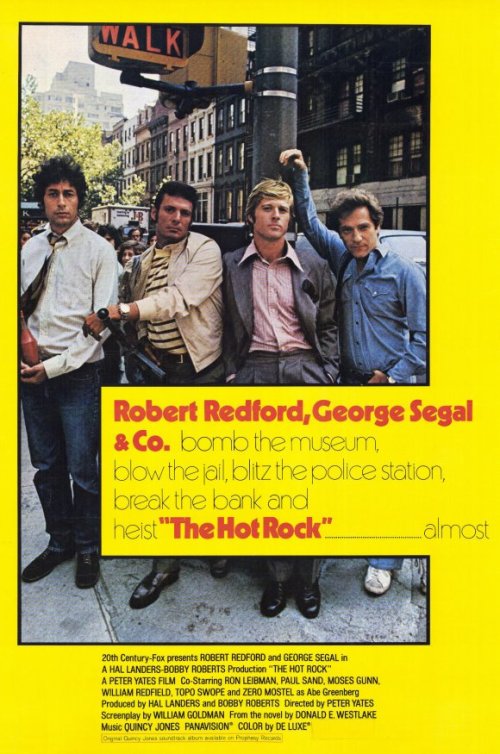
Having just been released from prison Dortmunder (Robert Redford) has no intention of ever going back because if he does it will be life, but even so he still can’t help but get caught up with the enticing offer that his brother-in-law Kelp (George Segal) has planned. The idea is to steal a valuable jewel from a New York museum where Dr. Amusa (Moses Gunn) will pay top dollar for what he believes was stolen from his African ancestors during colonial times. He even offers to help fund the mission and everything goes well until Greenberg (Paul Sand), who is one of the men on Dortmunder’s team, gets caught with the diamond and forced to swallow it. He then hides it inside the police station after he was forced to relieve himself. Now sitting in prison he promises the others he’ll show them where it is, but only if they agree to break him out of jail, which they do only to find further complications involving Greenberg’s dubious, double-crossing father (Zero Mostel).

Based on a Donald E. Westlake novel this film has all the trappings of being a fun, breezy outing and for the most part it is. The actors are game and Redford gives a surprisingly strong performance and maybe one of the best of his career while the supporting cast fall into their roles perfectly especially Mostel who easily steals it from the rest despite having only limited screen time. Director Peter Yates nicely paces the material although the set-up could’ve been more extended as the film spends only a few minutes on the planning phase and then jumps jarringly right into the actual crime making me feel more scenes of the preparation were filmed and then excised for possible shorter runtime purposes.

Spoiler Alert!

The actual crime is where the film falls apart as it starts getting a little too creative for its own good by incorporating too many offbeat touches that it can’t logically get its characters out of without going overboard into the implausible. The first issue comes when Dortmunder and Kelp try to break into prison in order to break Greenberg out of it. To me it just seemed too easy and they routinely open up prison doors that should certainly sendoff loud alarms almost immediately, but strangely don’t. I also couldn’t believe that Dortmunder would ever break into a place he so dearly wanted to stay out of. One misstep and he’d be stuck there for the rest of his life, so why even take the chance?

Later we learn, after they manage to get Greenberg out, that he has hidden the diamond inside the police station, which involves them flying a helicopter onto the roof of the police building, cutting off the power and phones lines and then releasing smoke bombs in order to get the officers out, which they do only to find that someone else has already gotten to the diamond, which was hidden inside the grimy sewage pipes. Later they find that it was Greenberg’s father, but how could some old man have been able to get to it when it took these four men a lot of effort just to get into the building?

The biggest implausibility though and the one that ‘jumped-the-shark’ for me is when, in an attempt to retrieve the diamond which Greenberg’s father has hidden in his safety deposit box in the bank that only he can access, they have a hypnotist hypnotize one of the bank employees, so that all Dortmunder needs to do is say a magic word and the bank employee will open up the father’s box for him.

I’ve tried hypnotism in the past and I can assure you that there is no way that someone can put anyone else into a trance-like state like they do here. It just doesn’t work that way a person’s conscious state doesn’t shut off nor can they be ‘tricked’ to do something against their will or that they are not aware of. If it was so easy to manipulate people in this way then we’d have robberies all over the world committed like this, but we don’t.

It also brings out more questions than answers like how were they able to get this woman to help put this bank employee into a trance? Did they offer her a part of the cut in order to keep her quiet and how would they know that they could trust her to begin with?

End of Spoiler Alert!

I really wanted to like this movie and the production is slick with a nice jazz score by Quincy Jones and a thrilling look at New York’s skyline from a helicopter, but the numerous plot holes became too much to overlook and ultimately made the story impossible to believe at all.

hot rock 3

My Rating: 6 out of 10

Released: January 26, 1972

Runtime: 1Hour 40Minutes

Rated GP

Director: Peter Yates

Studio: 20th Century Fox

Available: DVD

Laughter in the Dark (1969)

laughter in the dark

By Richard Winters

My Rating: 6 out of 10

4-Word Review: Man obsesses over teen.

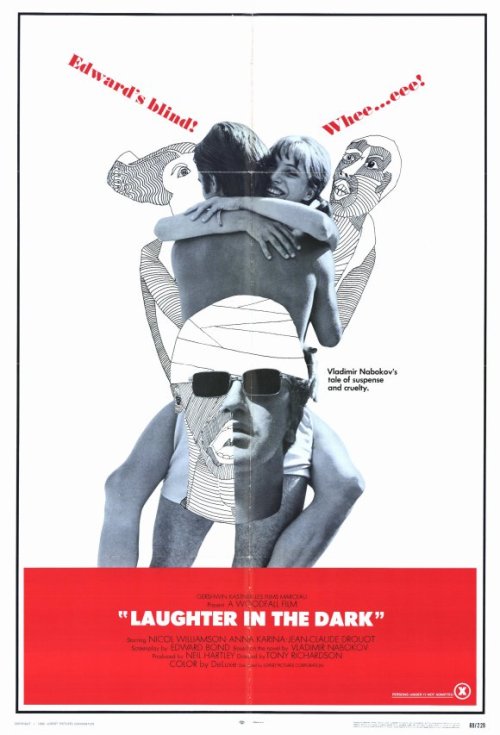
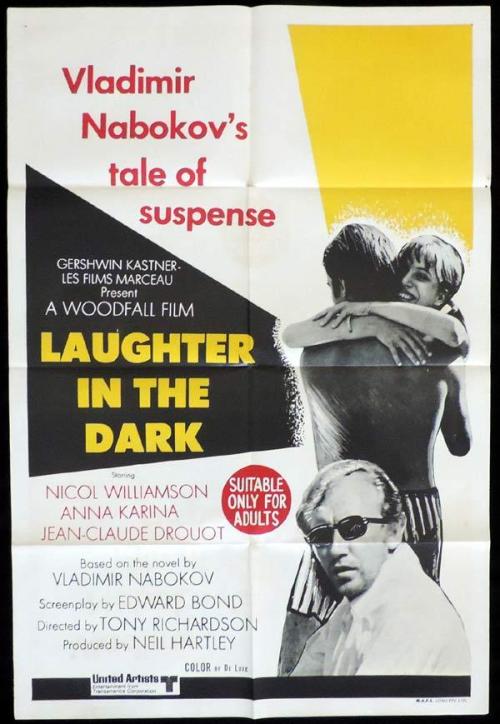
This film is based on an early novel by Vladimir Nabokov, who is more famous for writing Lolita and the story here has a similar theme to that one. The plot revolves around Edward (Nicol Williamson) who is a successful middle-aged art curator, but bored with his marriage and looking for an escape. While watching a film inside a theater one day he spots the beautiful Margot (Anna Karina). While she is only 18 he becomes madly obsessed with her and tries to start-up a relationship. She initially resists, but then realizes that he has a lot of money and decides to play-him. On the side she has a passionate relationship with Herve (Jean-Claude Drouot) who begins to work for Edward as his assistant. Initially Edward has no clue that Herve and Margot are cavorting around behind his back, but eventually he catches on and plots a dark revenge only to find himself as the victim.

While the story has its share of intriguing moments it suffers from featuring a main character that is not relatable.  Fantasizing about having sex with a beautiful, younger woman is fine, but he shouldn’t expect her to automatically reciprocate those same feelings and even if she does he should be concerned that it is only because of his money, which are thoughts that he never once seems to consider. He also spouts out right from the beginning of how much he ‘loves’ her like a lovesick 14-year-old, but a man his age would normally be wise enough to realize that there is a big difference between that and sexual attraction, which is all that this really is.

It also takes way too long for Edward to catch on to the affair occurring between Herve and Margot even though anyone else would’ve seen the red flags a mile-away. It is for these reasons and the way he gets taken advantage of time and again that makes the character come off as suffering from some serious mental defect that is not in any way a normal for even a halfway intelligent person.

It all would’ve worked much better had Richard Burton remained on as the film’s star. He was the original choice for the part and even filmed a few scenes before being kicked off the project due to repeatedly showing up drunk. Williamson is a fine actor and has an impressive resume, but he’s rather benign here while Burton would’ve been able to bring in an extra dimension and because he was older would’ve made the contrasting age difference between him and Margot even stronger.

Karina on the other hand is stunning and an absolute beauty to behold. She was much older than what the part called for, but her wicked, conniving performance more than makes up for it as she eats up every scene that she is in and everyone else in it.

It was filmed on the island of Majorca, which allows from some exotic Mediterranean scenery and Raymond Leppard’s harpsicord soundtrack is pleasing. I also, for the most part, enjoyed the story, which manages to remain intriguing all the way up until its unsatisfying conclusion. The drama though, particularly at the beginning, is clumsy and the whole thing ultimately comes off as a good director’s weakest work.

laughter in the dark 2

My Rating: 6 out of 10

Released: May 11, 1969

Runtime: 1Hour 44Minutes

Rated X

Director: Tony Richardson

Studio: Lopert Pictures Corporation

Available: None at this time.

Catch-22 (1970)

catch 22 2

By Richard Winters

My Rating: 8 out of 10

4-Word Review: The insanities of war.

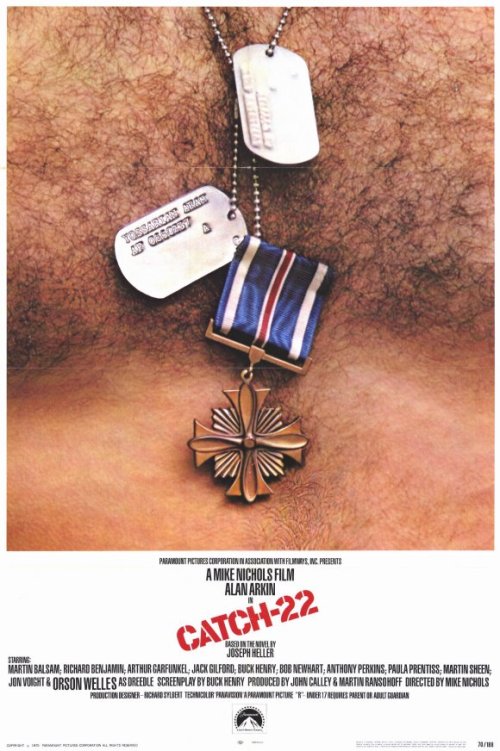
Having to fly numerous combat air missions has sent Word War II fighter pilot John Yossarian (Alan Arkin) to the brink of insanity. He goes to his unit’s psychiatrist Dr. Daneeka (Jack Gilford) asking him if he can be sent home. The doctor admits that anyone who feels that they are going crazy shouldn’t be flying, but there’s a problem known as ‘Catch-22’, which states that anyone who no longer wants to fly combat missions isn’t crazy but normal and therefore John’s request is denied and he is forced to remain while observing how utterly ridiculous everyone else is, particularly his military superiors, even though they’re considered to be the ‘normal’ ones.

The film is based on the best-selling novel by Joseph Heller, who started writing his novel in 1953 and would only spend 1-hour each day working on it until finally completing it 8 years later. The story is very loosely based on some of his experiences and emotions that he had as a fighter pilot during the war and it’s always nice watching something that was done, no matter how satirical, from an insider’s perspective and his numerous potshots at the nonsense that makes up the military hierarchy could easily be parlayed to anyone who has had to deal with bureaucracy at any level.

Certain changes were made in the novel’s transition to the big-screen, but overall screenwriter Buck Henry does well in bringing the fragmented narrative vibe of the book to the film. I was really impressed with the aerial sequences, which used the B-25 Mitchell and took 6 months to film. The cinematic style was years-ahead-of-its-time as well including having things occur in the background of a scene that has no connection to what the characters in front of the camera are discussing and at times even oblivious to.

The film features many laugh-out-loud segments with my favorite being the part where Yossarian attends a military award ceremony and accepts his medal while being, to the shock of the military brass that is handed out the medal, stark naked. Anthony Perkins, who plays the hopeless chaplain, is also quite funny in a rare, but interesting turn in a comedic role.

One of the things that I didn’t like about the film, although it didn’t bother me quite as much as it did when I first saw the movie many years ago, is the way the tone shifts from being quirky and hilarious at the beginning to somber and serious towards the end. I realize that the novel works in the same way, but the first half of the film successfully balanced the line of exposing the absurdities of war in a comedic vein while still showing the serious consequences without ever getting overwrought, so it’s a shame that the second half couldn’t have worked the same way instead of leaving the viewer with a gloomy, depressed feeling when it’s over and almost forgetting completely about the comedy that came before it. I also believe this is why this film failed at the box office while the similar M*A*S*H succeeded simply because that movie remained funny all the way through.

Arkin, in the lead, is miscast and seems too old for the part. His nervous, hyper persona doesn’t work and would’ve been more effective had it been toned down by being played by a younger actor who was more emotionally detached. The rest of the supporting cast though is great including Martin Balsam who makes cinematic history by being the first actor to ever appear sitting on a toilet in a movie.

My Rating: 8 out of 10

Released: June 24, 1970

Runtime: 2Hour 2Minutes

Rated R

Director: Mike Nichols

Studio: Paramount

Available: DVD, Amazon Instant Video, YouTube