Category Archives: Movies Based on Conspiracy Theories

F.I.S.T. (1978)

fist

By Richard Winters

My Rating: 7 out of 10

4-Word Review: Laborer becomes union leader.

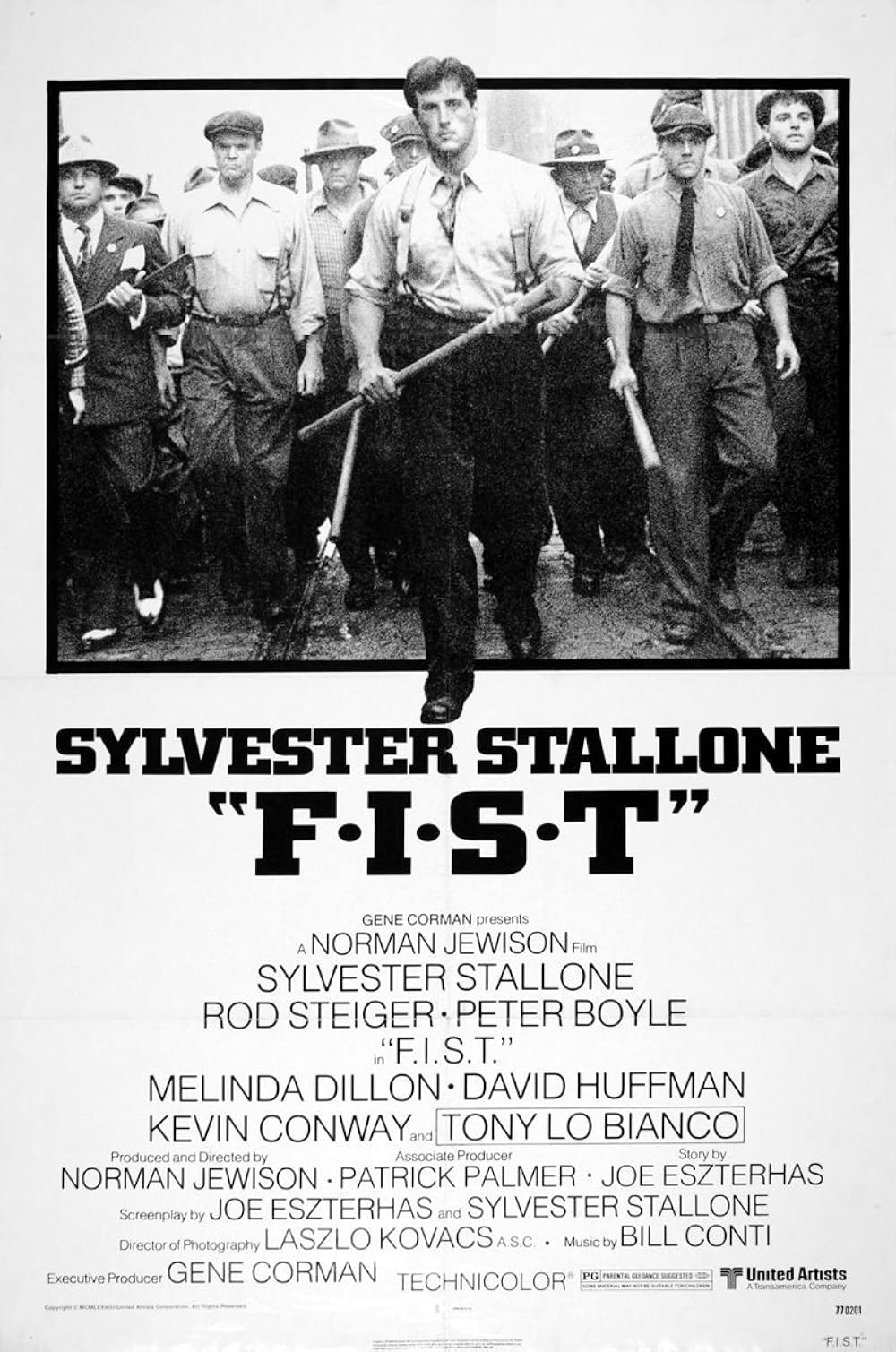
Set in the 1930’s in Cleveland the story centers on dock worker Johnny Kovac (Sylvester Stallone) who becomes so upset at the poor treatment of the employees that he leads a revolt that soon gets squashed by a management when Kovac goes to the office of Mr. Andrews (James Karen) who promises to bring his demands to ownership only for the next day to have Kovac and his friend Belkin (David Huffman) fired from their jobs. Impressed though by their tenacity truck driver Mike (Richard Herd) recruits them into his union telling them they would have a job of going out and recruiter others. Kovac initially refuses the offer until he finds out that a free car would come along with it. Kovac eventually rises up the union ladder until he becomes their national leader, but with the power and prestige also comes corruption and enemies.

This was Stallone’s first film after doing Rocky, which was a bit of a gamble by director Norman Jewison. He had wanted to cast Jack Nicholson in the role, Nicholson would later star in a similar film Hoffa, which came out 14 years later, but was so impressed at Stallone’s performance in the boxing film that he offered the role to him before he was even a household name. Jewison felt Sly was a star in the making just from what he saw in the preview of the film not knowing whether that movie was ultimately going to be a runaway success, or not. Had it not it might’ve put him in an awkward position as the studio wasn’t likely to finance a project that didn’t have guaranteed star power. As it was it became a blockbuster making the tables-turned a bit because Stallone could’ve easily backed out of the deal since it had only been a verbal agreement and he had since then been offered higher paying roles, but he kept to his word and took on this project, which surprised Jewison as many big names in Hollywood don’t always stick to their promises, but then later when the film didn’t do as well as expected Jewison’s blamed Stallone’s casting as part of the problem.

From my perspective I thought Stallone was terrific. His delivery does come-off as a bit monotone, but I felt that’s what added to the authenticity as this was a character with a limited education, so he probably wouldn’t sound real smart to begin with. Seeing Sly fight the system correlated with his real-life struggles as an actor trying to make it big in a competitive business, which helped to make it seem all the more genuine like this was a guy who had really lived the same type of life as the man he was playing.

In support I was highly impressed with David Huffman. This was an actor, whose career and life were sadly cut short in 1985 when he got stabbed to death, who I had always found quite bland. He had an attractive looking face, which I figured is what got him his foot-in-the-door, but his acting always came off as blah, but here he puts a lot of emotion into his role and it’s interesting to see the way his character grows and morphs throughout. James Karen and Tony Lo Bianco both have small parts, but there sinister facial expressions and ability to mug to the camera without it seeming obvious is what helps them stand-out. I was surprised though with Rod Steiger who gets second billing, but doesn’t appear until 1 Hour and 33 minutes in. His part, as a powerful senator, does ultimately become integral to the proceedings, but the fact that he underplays instead of his usual over-acting is what got me.

I thought the way Jewison captured the setting was great. It was actually shot in Dubuque, Iowa because by that time Cleveland no longer looked the way it once did, but the flavor and vibes from that period come-out strong and you feel right from the start that you’re being swept away to a bygone time. Stallone’s ascension into the ranks of union head prove riveting, but his corruption and downfall get glossed over and seemed rushed. I did though appreciated the way it examines worker’s unions from all angles both the good and bad making it seem less like a propaganda movie than Norma Rae, which came-out at around the same time, but only focused on the positive aspects of unions.

Spoiler Alert!

The ending, in which Kovac gets shot and killed while in his home came-off like a cop-out. It was intended to reflect at the time the recent disappearance of union head Jimmy Hoffa, but seeing the main character get assassinated without telling who was behind it proves unsatisfying. Sure we could probably surmise who the culprits were, but having to sit through a long movie only to be left with more questions than answers makes the viewer feel like watching it had been a big waste of time.

My Rating: 7 out of 10

Released: April 13, 1978

Runtime: 2 Hours 25 Minutes

Rated PG

Director: Norman Jewison

Studio: United Artists

Available: DVD, Blu-ray

Daniel (1983)

daniel

By Richard Winters

My Rating: 7 out of 10

4-Word Review: Researching his parent’s execution.

Based on the 1971 novel ‘The Book of Daniel’ by E.L. Doctorow, who also wrote the screenplay, which was inspired by the true story of Ethel and Joseph Rosenberg, who were convicted and executed in 1953 for being spies to the Soviet Union. The story here centers on Daniel (Timothy Hutton), the now grown son of Paul (Mandy Patinkin) and Rochelle (Lindsay Crouse), who many decades after his parent’s execution now decides to research their case to see if his parents really were spies, or not.

Despite being well produced the film failed at both the box office and with the critics, which is a shame as I felt director Sidney Lumet does some marvelous work here and creates a few powerful scenes. One is when the the FBI agents raid Daniel’s house, who is played at this stage by Ilan Mitchell-Smith, and the look of horror in his eyes as the home gets torn up from top to bottom and his father violently removed in handcuffs. Another great moment are the execution scenes filmed in the actual death chamber at the Sing Sing Prison. These moments are quite chilling as Lumet’s focuses in on the close-up shots of the two being strapped in and the leather flaps of their hoods pulled down over their frightened eyes and then seeing their bodies shake violently while a group of men sit quietly observing it is effectively disturbing and one of the more impactful execution segments put on film.

There are though some things that could’ve been done better. The jumping back and forth between time periods proves distracting and takes the viewer out of the story instead of wrapping them in. The book of which it’s based had a very fluid structure as well, but here the scenes involving Daniel and his sister as children prove far more impactful while segments involving Hutton all grown-up are weak by comparison. The film would’ve been more effective had it taken a linear structure.

Watching Hutton walk along the sidewalk while voice overs are heard from his sister, played by Amanda Plummer, chastising him for not caring more about what happened his parents, was unnecessary and heavy-handed as we had heard her saying all this earlier to him at the dinner table and could see by the shocked reaction on his face that it really got to him, so we didn’t need the same lines getting repeated again. The music particularly the singing, is way too intrusive and having almost no music and just relying on the action and visuals would’ve been far better.

I was also confused who Linda was, played by Tovah Feldshuh, whom Daniel comes upon at a dental office years later and acts like he knows her from childhood. I didn’t remember seeing a young Linda, though one is listed in the closing credits, and then it dawned on me that there was a quick moment when a snotty girl tells Daniel and his sister, when they’re kids, that they ‘smell’ while they’re riding in a car, but because this character does end up returning and playing a pivotal role to the plot I felt the confrontations between them as kids should’ve been more pronounced and extended instead of so fleeting that you completely forget about it.

Hutton, who turned down the starring role in Risky Business to be in this at the protest of his agent, gets wasted. He gives a strong performance, but is over shadowed by Ilan Mitchell-Smith. His character also had too wide of an arch as he seems to have a complete personality change after the argument with his sister even though I thought he should’ve been shown harboring the same feelings and questions about his parent’s death for a long time and decided to explore the case out of his own curiosity and anger. I also felt that both he and his sister should’ve done the investigation together instead of discarding her off to a mental institution and barely seen. I know the book had her going to a mental hospital as well, but we see them go through the trauma together as children and therefore it seemed only right that they should work as a team as adults to find the answers.

The film offers no conclusions. The parents are portrayed in a highly sympathetic way like they didn’t really do anything and it does play with the idea that there might’ve been another phantom couple ‘who were the real culprits’ though it doesn’t pinpoint to anyone specifically. I felt it would’ve been a stronger movie had it based itself on the real children of the Rosenbergs, Michael and Robert, and detailed things from their true-life experiences. Maybe they didn’t want the limelight, which is okay, but fictionalizing a real historical event with a lot of made-up people and situations doesn’t have the same profound effect.

My Rating: 7 out of 10

Released: August 26, 1983

Runtime: 2 Hours 10 Minutes

Rated R

Director: Sidney Lumet

Studio: Paramount

Available: DVD, Amazon Video, Paramount +

Rage (1972)

rage

By Richard Winters

My Rating: 6 out of 10

4-Word Review: Nerve gas kills son.

Living just outside of Rawlins, Wyoming is rancher Paul Logan (George C. Scott) and his 12-year-old son Chris (Nicholas Beauvy). Since the death of his mother a year earlier the two have shared a special bonding and routinely do many things together as Paul works to guide Chris from being a child to a man. One night they decide to go camping on the outer stretches of their property. While Paul sleeps in a tent his son stays outside in a sleeping bag, but by morning he’s unresponsive and bleeding from the nose. Paul takes his child to a nearby hospital where the doctors aren’t sure what’s caused the condition, but keep him under observation. Behind-the-scenes it’s revealed that Chris has become a unintended victim of a botched military operation from a nearby base where nerve gas was accidentally released to the public. Paul soon comes down with the effects of the exposure as well, but before he dies he intends to get to the bottom of what happened and bring street justice to all those who were behind it.

The film, which was the first theatrical feature that Scott directed, is a handled in an unusual way. Most movies that deal with government cover-ups/conspiracies usually keep it a mystery of who’s behind it. Both the victim and the viewer have no idea what’s going on behind-the-scenes and are left with trying to guess who may be responsible and only at the very end do things get revealed, but in some movies even then many questions remain left open. Here it gets shown right away who’s causing the crisis and why as there are many long, drawn-out meetings between the government agents who almost painstakingly detail of what went wrong and how they’re going to cover it up. In fact there’s more scenes, especially in the first half, with the military brass and their co-horts than with Scott making it almost seem like he’s just a side character.

Spelling everything out may seem like a bad idea as part of what creates the suspense in these types of stories is the unknown. Yet it still held moderate interest though the scenes are overly talky, at least the first two acts. It’s also not explained what happens to Dr. Caldwell (Richard Basehart). He initially goes along with the government agenda to keep things quiet, but eventually changes his mind and decides to tell Paul the truth, but then he’s confronted with the agents who bring him into a hospital room and close the door, but it’s never shown what they do with him. He’s reappears at the very end, but no explanation for where he was in-between, or how the government managed to make him ‘disappear’ for awhile. For a movie that seemed intent to explain everything I felt this was one area that needed to be better played out.

Spoiler Alert!

Where the film goes really off-the-beam is when Paul exacts his revenge, which has him killing many indiscriminate people. Some of it turns quite savage particularly when he blows up a police car and the cops jump out screaming in pain as the hot flames rise off their bodies. At one point he even shoots-up a cat who tries to come to the aid of its owner, which has to be some sort of cinematic first. Normally other movies with this type never have the hero kill anyone and will usually just hold people that they come upon, like cops or security guards, hostage by tying them up. Here though he blasts them away without pause. Some critics have said this was a mistake as the protagonist loses his likability factor with the viewer, but in some ways if you’re really going to try take on something as big as the government then ultimately things will get ugly especially if the person is willing to go ‘all-in’ making it in a nihilistic way quite realistic.

The ending though is what really hurts it as Paul dies while the government agents callously watch on and then flown away via helicopter to some undisclosed location. I know 70’s movies were notorious for their unhappy endings, but this one piles-on that notion a bit too much. Outside of blowing up the research center, which could easily get rebuilt, Paul’s actions made no difference. The viewer likes to see their hero have more of an effect on things and to end it like this makes it overly defeating. Had we gotten to know the Paul character better and there had been more of a backstory then maybe his final rage at the system would have had more of a dramatic effect, but as it gets presented here on an emotional scale it’s unsatisfying.

My Rating: 6 out of 10

Released: November 22, 1972

Runtime: 1 Hour 39 Minutes

Rated PG

Director: George C. Scott

Studio: Warner Brothers

Available: DVD-R (Warner Archive), Amazon Video, YouTube

Flashpoint (1984)

flashpoint

By Richard Winters

My Rating: 4 out of 10

4-Word Review: Digging up hidden money.

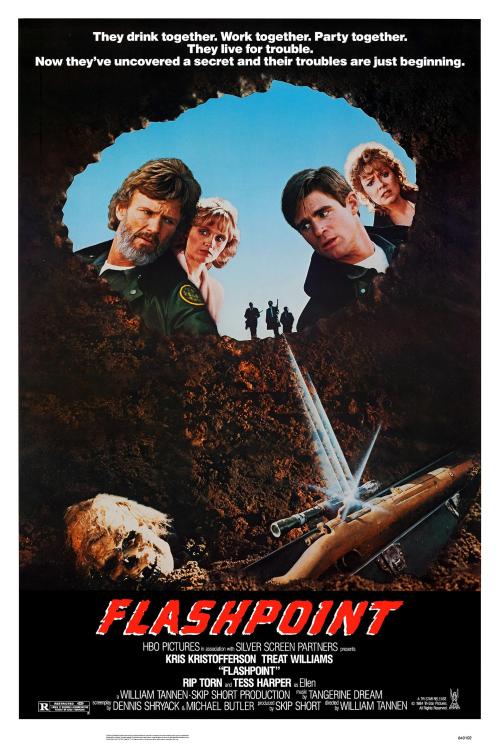
Bobby (Kris Kristofferson) and Ernie (Treat Williams) are border patrol agents who stumble upon a jeep buried in the sand. Once Bobby digs it up he finds a skeleton in the driver’s seat, a scoped rifle, and $800,000 inside a rusted toolbox. Both of them are unhappy in their jobs and Bobby thinks this would be the perfect time to skip town with the loot, but Ernie thinks it’s stolen money and needs to be investigated. Since the bills are all marked with the dates of 1962 and 1963 they presume this is around the time when the bank robbery, which is where they think the deceased driver got the money from, occurred, but upon an old newspaper research at their local library they can find no such robbery happening in the amount that they recovered. Soon they face more problems when a federal man named Carson (Kurtwood Smith) takes over the agency they work at and exerts extreme control over everything they do. Bobby feels Carson is somehow aware of the money they found and knows more about the driver’s identity than he lets on. While Bobby and Ernie hide the money they find Carson and his team of secret agents hot on their path as he sends them on dangerous missions in an attempt to kill them, so they won’t let on to anyone else about what they’ve found.

This is another example where an intriguing story idea, based on the novel of the same name by George LaFountaine, almost gets ruined by lackluster direction. The mystery is interesting enough to keep you invested but there are definite lulls and cheesy side stories that seem to be challenging the viewer to turn it off before it’s over. This was also another case where the setting is supposedly Texas, which gets mentioned quite a bit, and yet it was all filmed in and around Tucson, Arizona, which is a travesty especially since the deserts of Arizona and Texas have noticeably different characteristics. I also felt that if you’re going to have a story based in the desert you should then have the time period during the summer, instead of the winter like here, where the scorching heat could be used as an added element.

Kristofferson isn’t particularly well cast here in a part that was originally intended for Paul Newman. His laid-back style of acting isn’t riveting enough though I’ll give him props for the scene where he gets shot and must crawl several yards in the dirt with one arm that he can’t move due to it being paralyzed by the bullet, which looks quite arduous to do though he does it effectively and realistically. Williams is by far the superior actor and his distinct personality where he’s the idealist, plays-off well from Kristofferson’s more jaded mindset. You even get a full view of Treat’s bare ass, which comes near the beginning and while nobody necessarily asked for it and wasn’t needed to propel the plot some may enjoy it and as male asses go it’s not too shabby.

Rip Torn, whose hair is dyed gray, does well in support where his strong Texas drawl works nicely in the supposedly Texas setting. While he’s only seen sporadically during the first two acts, to the point where I started to wonder why he even bothered to take the role as it seemed miniscule and pointless, he does come on strong during the finale. Kurtwood Smith though is dull, which isn’t exactly his fault as the part is written too much like caricature, and every successful movie needs an interesting and memorable villain, which this one clearly isn’t.

While the action is fleeting it does have one good stunt, which features Treat trying to prevent a plane, which they think holds drugs, from taking-off by reaching in through the window of the cockpit and forcing the pilot to land it. It had me holding by breath, but it got ridiculous when the plane crashes and explodes, but Treat gets saved when he supposedly jumps off and into a lake, but you don’t see this occur and the other men all presume he went down with the plane only to have Treat jump out of the water intact, but if he had dived into the pool then the water would’ve had a ripple effect from where he went in instead of it being calm and placid like it is.

Spoiler Alert!

The twist at the end in where the money and driver of the jeep are connected to the assassination of John F. Kennedy is cool though it leaves more questions than answers. Of course that might’ve been the intention, but still I feel this is a good enough story idea that it should be revisited with a better director and hopefully one day someone talented will decide to remake it in a way that’s more intriguing than what we get here.

My Rating: 4 out of 10

Released: August 31, 1984

Runtime: 1 Hour 33 Minutes

Rated R

Director: William Tannen

Studio: TriStar Pictures

Available: DVD-R

The Domino Principle (1977)

domino

By Richard Winters

My Rating: 6 out of 10

4-Word Review: Hired for secret mission.

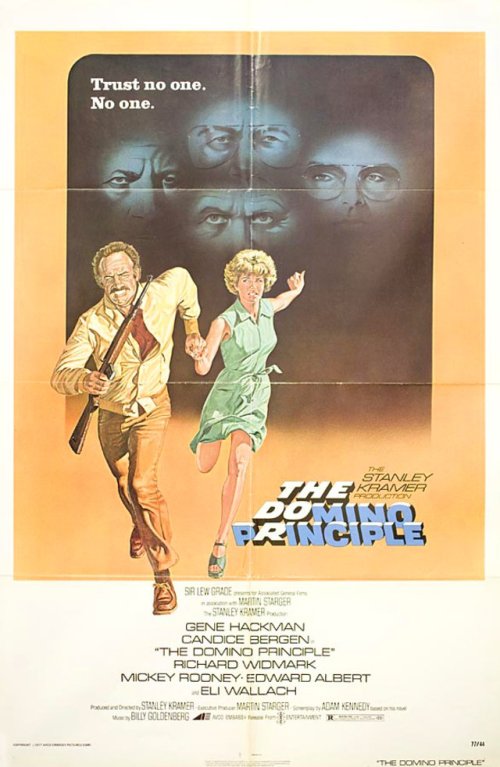
Roy Tucker (Gene Hackman) is in prison for the murder of his wife’s first husband, but gets approached by Tagge (Richard Widmark), who works for a secret organization and who offers to get both Roy and his cellmate Spiventa (Mickey Rooney) out of jail where they can have their freedom again, but with one hitch; he must carry out a mysterious mission that they themselves don’t yet know the details to yet. Roy is suspicious of the group’s intent, but longs to see his wife Ellie (Candace Bergen), so he agrees to go along with it. After getting out of prison through an elaborate escape plan that the secret group hatches Roy is then able to travel to Costa Rica using a passport that the group made for him. It is there that he spends a relaxing week with Ellie, but then Tagge and his men (Eli Wallach, Edward Albert) return and remind him of his commitment, which turns out to being the assassination of an important political figure. Once Roy realizes this he tries to back out, but soon realizes that he jeopardizes the life of his wife, who the group insists they will kidnap an kill, if he does.

The film is based on the novel of the same name written by Adam Kennedy, who also wrote the screenplay and at one time was an actor before eventually turning to writing. While the novel got great reviews the movie didn’t with many critics panning it including Leonard Maltin, who described it as a ‘muddled thriller’. Both Hackman and Bergen, in later interviews, have called it ‘terrible’ and even director Stanley Kramer wrote in his memoirs that he’d like to disown it. Much of the problem could be blamed on the different runtimes with a heavily edited 88-minute cut being completely confusing, but this version that I saw, which ran a full 101 minutes, I found to be captivating, at least through the first 90-minutes.

The real problem I had stemmed around Hackman, who gives a one-dimensional performance. There is one moment where he assaults the Edward Albert character after he refuses to let him see his wife, which I felt was justified and entertaining to watch, but he remains surly too much of the time and it would’ve been nice to have seen some other emotions seep through, if even for a few random moments. Bergin is totally miscast as the middle-aged wife and even wears a brunette wig in an effort to make herself seem older. She stated in interviews that she took the part so she could play an ‘ordinary person for once’ instead of a beautiful, glamourous person like she usually did, but I didn’t understand why she was even offered the role as there were plenty of actresses more Hackman’s age that would’ve been a better fit.

Spoiler Alert!

While I did enjoy the movie for the most part especially its scenic location shooting including one scene that takes place directly underneath the Golden Gate Bridge I did find the twist ending to be extremely dumb. This includes having Roy deciding not to shoot the intended victim by intentionally aiming his shots short in order to miss his human target only to find that his former cellmate Spiventa was also hired for the same mission, but without Roy knowing, and he kills the person while shooting at him from a different angle. The problem is that the viewer thinks Spiventa is already dead as we see him get shot by the mysterious group while underneath the bridge. Why Spiventa would fake his own death, or not tell Roy that he was in on the plan since the two had been quite close, is ever explained. It also doesn’t make sense why Roy would decide at the last second to pull back his shots and not kill the person he was assigned to assassinate. Sure, for moral reasons he probably felt bad about it, but he knew that his wife would be killed if he didn’t follow through, so how he was expecting to save the life of his target while also somehow keeping his wife alive after the group finds out Roy didn’t do what he was supposed to?

The final shot shows Roy, with gun in hand, walking along a beach, apparently intent on hunting down whoever was the behind-the-scenes man from the group who was giving out all the orders, which we the viewer never see. Keeping some elements of the organization a mystery is fine, but what annoyed me is that we see a rifle pointed right at Roy as he walks the beach, but then the film ends without us ever knowing if Roy got shot first, or if he survived to kill the head of the group. Some sort of resolution in this area should’ve been shown and leaving it so wide-open is not intriguing and instead quite frustrating.

My Rating: 6 out of 10

Released: March 23, 1977

Runtime: 1 Hour 41 Minutes

Rated R

Director: Stanley Kramer

Studio: AVCO Embassy Pictures

Available: DVD, Amazon Video, Shout Factory TV, Tubi, YouTube

Simon (1980)

By Richard Winters

My Rating: 4 out of 10

4-Word Review: College professor becomes brainwashed.

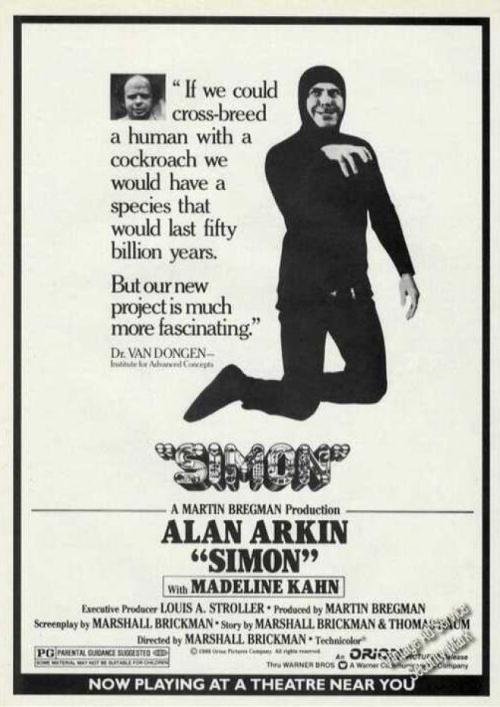
An underground group of scientists who enjoy playing elaborate pranks decide to brainwash a college professor named Simon Mendelssohn (Alan Arkin) into believing that he is an alien from another planet. After he is successfully brainwashed he then escapes from the institution and gets in with a religious cult who have a transmitter that can block the TV airwaves and allow him the ability to be seen by the entire nation where he tries to reform American culture while also becoming a celebrity sensation.

This extremely odd comical satire  seems out of place for a studio backed film and more in tune with a independent project as it’s unclear what specific type of audience the filmmakers were hoping to attract as mainstream viewers will most likely find the humor off-putting. One could describe it as being ahead-of-its-time, but the banal potshots at such overused targets as TV and American consumerism makes it seem more dated instead.

The movie would’ve worked better had it remained focused on one intended target and then ravaged the hell out of it instead of soft jabs at various safe targets, which makes its overall message muddled and unclear. There are some funny bits including watching Austin Pendleton, who is the head of the research group, making love to a giant telephone receiver, whose voice is supplied by Louise Lasser. It’s also funny having a brainwashed person such as Simon trying to brainwash others via the airwaves, which could’ve been really hilarious had they gone farther with this idea.

There’s signs that writer/director Marshall Brickman hadn’t fully thought through the quirky story idea to begin with. For instance why would this underground group of scientists allow a video crew in to film what they are doing as the members are seen at the beginning talking directly to the camera and answering questions by some unseen interviewer. Wouldn’t this allow their secret to get out and get them into trouble? The army that takes over the institute is too incompetent as Simon and his girlfriend Lisa (Judy Graubart) are able to escape from it too easily and their inability to locate Simon’s rogue TV transmitter even after days of searching is rather pathetic. I realize this is meant to be ‘funny’, but even a comedy should have some tension to it to make it more interesting and the army’s extreme buffoonery isn’t humorous at all, but just plain dumb instead.

Arkin is the one thing that saves it. His unusual acting style makes him hard to cast, but here he really delivers especially during the segment where he plays out the evolution of man, but without using any dialogue although it might’ve been funnier and more of an interesting contrast had his character not been so kooky to begin with, but instead some stuffy intellectual only to become zany once he was brainwashed.

Judy Graubart makes for a good anchor as the one normal person in the whole movie. She was best known for her work on the children’s TV-show ‘The Electric Company’ and this was her live-action film debut, which should’ve lead to a long line of film appearances, but instead she only had brief bits in two other movies and that was it.

There are signs of a great movie trying to break out and the overall concept has brilliant potential, but this is the type of film where you’ve got to go full-throttle and Brickman seems either unable or too timid to do that making what could’ve been sharp satire into a transparent, benign mess that offers only a few chuckles, but not much else.

My Rating: 4 out of 10

Released: February 1, 1980

Runtime: 1 Hour 37 Minutes

Rated PG

Director: Marshall Brickman

Studio: Orion Pictures

Available: DVD-R (Warner Archive) Amazon Video, YouTube

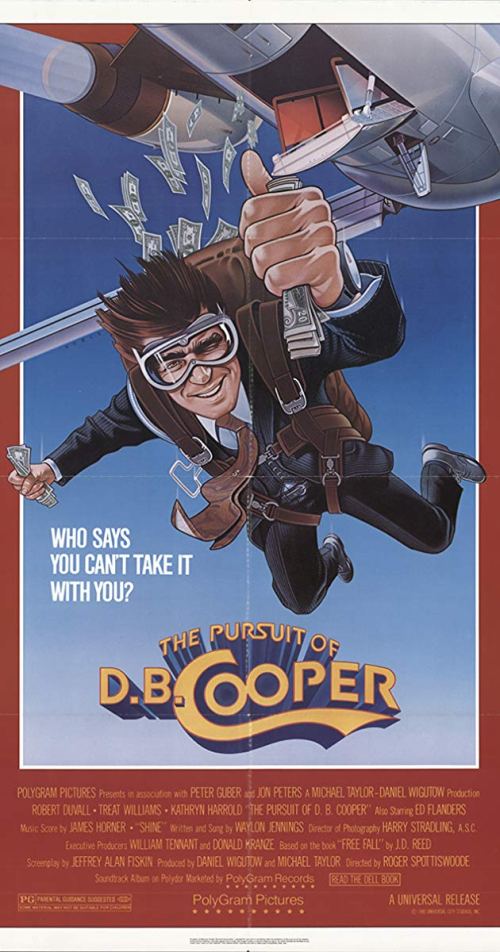
The Pursuit of D.B. Cooper (1981)

By Richard Winters

My Rating: 2 out of 10

4-Word Review: Hijacker eludes the authorities.

Loosely based on the real-life incident involving a man using the alias of Dan Cooper, but later reported in the media as D.B. Cooper, who hijacked a Boeing 727 as it flew towards Seattle, Washington on the night of November 24, 1971 and parachuted out of the plane with $200,000, but whose remains have never been found. In the film D.B. Cooper is the alias for Jim Meade and is played by Treat Williams as he parachutes into a wooden area and becomes chased by Bill Gruen (Robert Duvall) who was Meade’s sergeant in the army and feels he knows him better than anyone.

Had the film made some legitimate attempt at accuracy it might’ve been moderately intriguing, but right from the start it plays fast-and-loose with the facts including having the jump take places in the sunny daytime when in reality it occurred at night during a rainstorm. The time period is supposed to be late autumn, but many people are shown doing summertime activities like having a couple going skinny dipping in a pond even though it would’ve been too chilly for that. There’s also a ridiculous scene where Paul Gleason, playing a useless character that was not needed at all, going headfirst through the front windshield of a moving car and receiving a slight cut on his right cheek as his only injury.

John Frankenheimer was originally hired to direct, but after having numerous arguments with the producers over the film’s insipid script he was fired. He was then replaced by Buzz Kulik who tried turning it into a topical drama by portraying the Cooper character as being a disgruntled Vietnam Vet. Roger Spottiswoode and Ron Shelton were then brought it to ‘jazz-it-up’ a bit with some stunt-work and the chase scene down the rapids is impressive, but the humor they put in is dumb and the ‘Dukes of Hazard-like soundtrack ill-advised.

I started to feel that it would’ve worked better had it not connected itself to the real incident at all but instead had Williams portray a fictional character all together. It also should’ve analyzed the planning/preparation phase much more and shown him pulling off the actual hijacking instead of just starting out with the parachute jump.

While he doesn’t look anything like the sketches shown of the real Cooper I still found Williams to be fun in the lead and Kathryn Harrold lends great support as his resourceful wife. Duvall is solid as usual and even though it doesn’t take place in the Pacific Northwest, which is where the real incident occurred, I still enjoyed the sunny scenery, but that’s where the good points begin and end in a movie that clearly had misfired written all over it before even one frame of it was filmed.

My Rating: 2 out of 10

Released: November 13, 1981

Runtime: 1 Hour 40 Minutes

Rated PG

Director: Roger Spottiswoode, Buzz Kulik (Uncredited)

Studio: Universal

Available: DVD (Region 2), Amazon Video, YouTube.

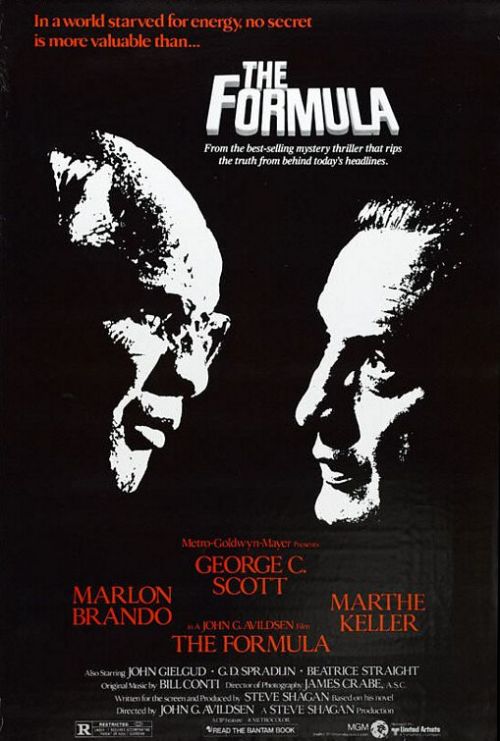
The Formula (1980)

By Richard Winters

My Rating: 3 out of 10

4-Word Review: Nazis create synthetic fuel.

While investigating the murder of his former police mentor, Lt. Barney Caine (George C. Scott) stumbles upon a an underworld of drug money and illicit funds that connect back to a petroleum company run by Adam Steiffel (Marlon Brando). He later learns that it has to do with a synthetic fuel invented by the Nazis during World War II that could be created from coal instead of oil, which if unleashed would unbalance the world markets and those that know about it are now being silenced permanently.

MGM offered to make the movie before Steve Shagan had even completed the novel of which is is based figuring that the topic of synthetic fuel would grab audiences since it conformed to the issue of the energy crisis that was making headlines during that era. Unfortunately the story works better in novel form because as a movie it amounts to nothing more than scene after scene of talking heads with no visual style or cinematic quality to it and the only interesting images, which include watching a frog swim across a chlorine filled pool and alligators munching on their lunch, has nothing to do with the actual plot at all.

Scott’s character is equally dull. He’s seen at the start leaving a movie theater with his son (Ike Eisenmann), which I guess is a cheap attempt to ‘humanize’ the character, but then he’s never seen with him again. He’s also initially straddled with a police partner (Calvin Jung) and their relationship gets off to a rocky start, which I thought would offer some secondary drama, but then he disappears too leaving him only with Marthe Keller, who replaced Dominique Sanda who Scott disliked because of her French accent, who acts as a potential love interest that is both stale and unneeded.

The film’s only entertaining aspect is Brando who manages to steal every scene he’s in by playing up the comic angle. He demanded complete control over how his character dressed and in the process sported a goofy comb-over and a hearing aid, which gives the guy a quirky charm. He also mostly ad-libbed his lines and refused to learn the ones in the script, which helps enliven the otherwise staid drama with some nice offbeat touches that I wished had been played-up more and it’s a shame that he wasn’t made the star as he’s the only thing that saves it.

The plot does have some intriguing qualities to it, but Shagan who also acted as the film’s producer, gives away all the secrets too early. Instead of waiting until the very end to find out what the code name Genesis stands for we’re told the answer at the halfway mark making the second half seem pointless and petering itself out with one of the dullest, most anti-climactic finales ever filmed.

My Rating: 3 out of 10

Released: December 19, 1980

Runtime: 1 Hour 57 Minutes

Rated R

Director: John G. Avildsen

Studio: MGM

Available: DVD

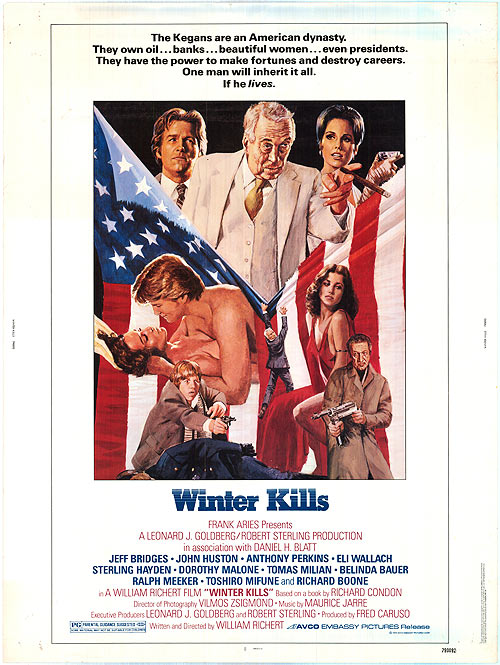
Winter Kills (1979)

By Richard Winters

My Rating: 6 out of 10

4-Word Review: Who assassinated his brother?

19 years after United States President Timothy Kegan is assassinated and an independent investigation concluded that it was the act of a lone gunman, his younger brother Nick (Jeff Bridges) gets a deathbed confession from a man (Joe Spinell) insisting he was the real killer hired by a secret underground organization. Nick goes to his rich father (John Huston) with the news and then decides to do an investigation of his own, but becomes entangled inside a web of lies and deceit that drives him further away from the truth instead of closer.

The film is based on the novel by Richard Condon and in many ways is a stunning filmmaking debut for director William Richert. The cinematography by Vilmos Zsigmond is richly textured with a colorful variety of backdrops, sets and atmosphere making it visually soar while the surreal tone helps give it an added edge.

Unfortunately the film suffered from many behind-the-scenes issues including running out of funding and forcing the cast and crew to put the production on hold while they went overseas to shoot The American Success Company in Germany and then used the proceeds from that one to finish this one. The final result is a fragmented narrative that at times gets too rushed. The story was significantly paired down from the novel, which leaves open a lot of loose ends and it should probably be remade as a miniseries.

The story is also permeated with a lot of dark humor which only makes the viewer even more confused. Some of it is genuinely funny, but it’s unclear what it’s trying to satirize. Certain absurd situations and oddball characters get thrown in for seemingly no reason and takes away from the otherwise compelling storyline while leaving the viewer baffled as to what the point of it was supposed to be and could easily explain why it bombed so badly at the box office during its initial run.

The casting is interesting. Jeff Bridges usually gets stuck in bland, transparent roles and that’s no different here, but he’s surrounded by so many eccentrics that his otherwise vanilla delivery seems refreshing and distinct. Huston is the real star in a bravura performance that steals the film and makes it memorable. There’s also a lot of recognizable supporting players that are on only briefly and if you blink you’ll miss them. This includes an uncredited appearance by Elizabeth Taylor who comes on near the end and has no lines of dialogue, but does clearly mouth the words ‘son-of-a-bitch’.

If you are looking for something that is offbeat, but still intriguing then this is well worth the effort. If it weren’t for its misguided humor this thing could’ve really had an impact although it does reveal its cards too soon and I was able to guess the twist ending long before it actually happened, but as a whole it has its moments and a potential cult following or sure.

My Rating: 6 out of 10

Released: May 11, 1979

Runtime: 1 Hour 26 Minutes

Rated R

Director: William Richert

Studio: AVCO Embassy Pictures

Available: DVD, Amazon Video

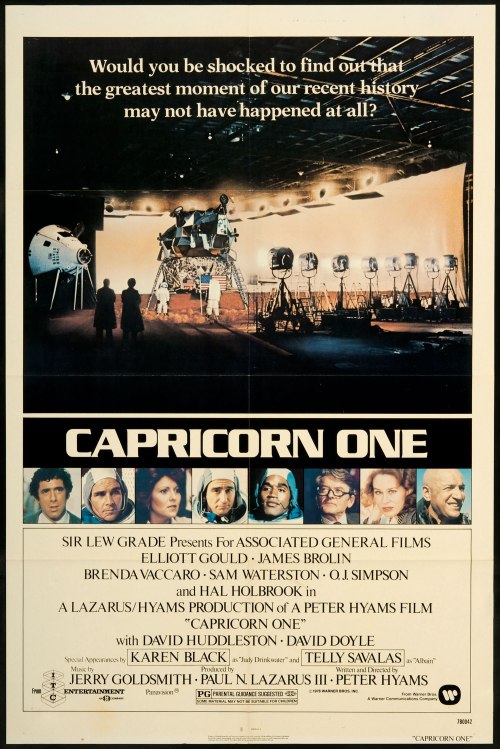
Capricorn One (1978)

By Richard Winters

My Rating: 6 out of 10

4-Word Review: Mars landing is fake.

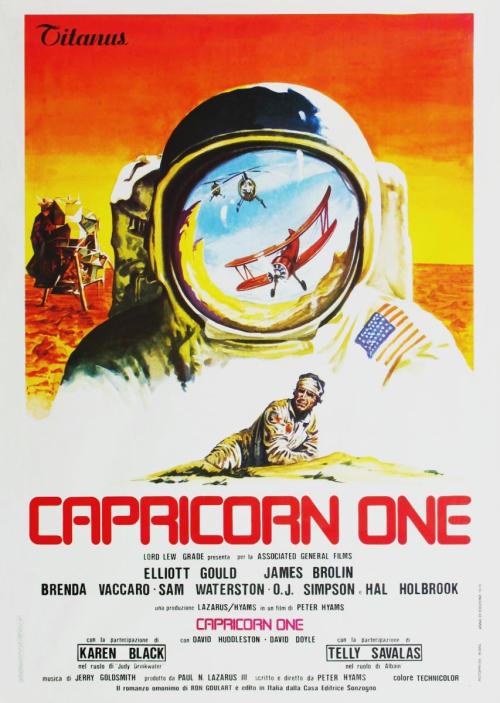
Due to finding out about having a faulty life support system James Kelloway (Hal Holbrook), who heads the NASA mars mission, decides to have the three astronauts (James Brolin, Sam Waterston, O. J. Simpson) removed from inside the rocket just before it is ready to blast off. He then allows the rocket to take off leaving everyone on the ground with the mistaken impression that the astronauts are still inside. The astronauts later walk onto a soundstage that is made to replicate the mars surface where they pretend to be walking on the planet live on television. As the rocket stays on mars the three astronauts remain trapped inside the NASA space center unable to let even their families in on their secret, but when the rocket returns to earth it gets accidently destroyed. Since the three men are still thought to be inside and since the government wouldn’t want to whole world to know it was a hoax the men are forced to make a daring escape across the hot desert in order to avoid being killed.

The script was originally written in 1969 and was an attempt by director Peter Hyams to take advantage of the moon landing conspiracy that was going on at the time, but no studio was willing to take it on, so it took 9 years and a change of planets before it finally got the green light. I’m not a big fan of conspiracy theories as I think a lot of them are too dependent on a great many people working together and being able to keep a secret in order for them to be pulled off. Since it’s hard for just two people to pull off a crime such as a murder without one eventually turning on the other, or breaking down under pressure, then it’s even harder to believe hundreds could keep quiet it in order to successfully pull off the so-called moon landing hoax, or that at some later time one of them wouldn’t have divulged the secret to a family member, friend, or even anonymously to the press.

In either case it’s an entertaining movie for the most part although the first hour is spotty and it only really gets gripping during second-half. To some degree I thought it would’ve been more interesting had the focus been on the people setting up the ruse and working to make the soundstage look like mars than on the astronauts. It also might’ve been more impactful to the viewer had they been given the idea that the landing was real and only when the men are seen walking on the mars surface does the camera pull back to show that it was all fake instead of revealing the conspiracy right from the start.

The problem that I had though was with Elliot Gould’s character. Don’t get me wrong I liked the way he plays the part as a sort-of disheveled, loser hero who strikes out with the ladies, but the fact that the government is on him so quickly and trying to kill him before he has even written one single report about the mars landing makes little sense. Later on he gets bailed out of jail by his boss, played by David Doyle, who openly admits to hating Gould and immediately fires him the second he pays his bail, but why spend company money on someone you don’t like and don’t want working for you?

Spoiler Alert!

The ending features a well photographed aerial chase through the skies that is very exciting, but the wrap-up in which James Brolin, who is the last surviving astronaut that manages to escape the deadly clutches of the government and appears to shock of everyone at his own funeral seems to ruin the premise. For conspiracy theories to hold their mystique there needs to be the idea that the bad guys were able to get away with it and that it is actually possible to successfully kill off all the possible leaks and manage to hold the rest to strict secrecy. By having someone survive only proves the point that I made earlier and thus makes all those other conspiracy theories that permeate modern culture seem dubious as well because mostly likely the same result would’ve ultimately happened with those that happened with this one.

End of Spoiler Alert!

My Rating: 6 out of 10

Released: June 2, 1978

Runtime: 2 Hours 3 Minutes

Rated PG

Director: Peter Hyams

Studio: Warner Brothers

Available: DVD, YouTube, Amazon Video, Blu-ray