Category Archives: Movies Based on Actual Events

Mississippi Burning (1988)

By Richard Winters

My Rating: 6 out of 10

4-Word Review: Searching for missing activists.

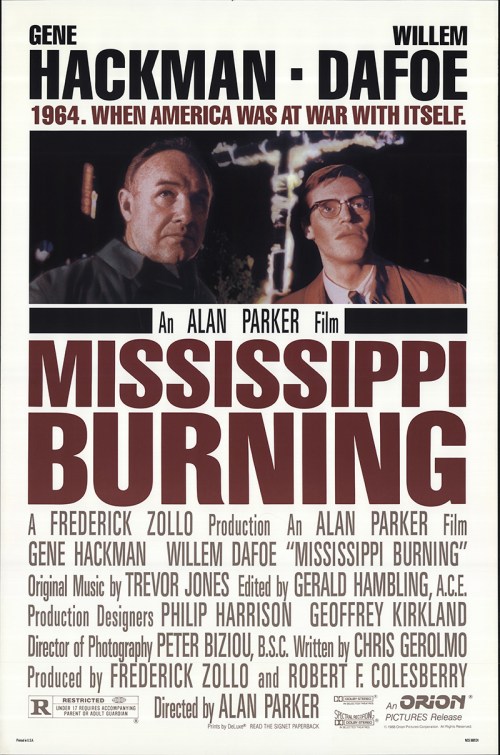
Rupert Anderson (Gene Hackman) and Alan Ward (William Dafoe) are two FBI agents sent to Jessup County, Mississippi in 1964 to investigate the disappearance of three civil rights activists who had been canvassing the area trying to get the African Americans registered to vote. The two soon find that any attempts to get to the truth are stymied by the town’s sheriff (Gailard Sartain) and his deputy (Brad Dourif) who exert a fear over the residents not to say anything. However, Rupert finds a ray-of-hope in the form of the deputy’s wife (Frances McDormand) who shows signs of harboring a dark secret. Rupert feels if he can somehow get her to talk that they could then crack the case.

The film is based on the murders of James Earl Charney, Andrew Goodman, and Michael Schwerner, who were killed on June 21, 1964 in Philadelphia, Mississippi while in the area promoting voter registration rallies.  Screenwriter Chris Gerolmo began writing the script after doing research on the incident and his intent was to keep the story as accurate as possible, but once Alan Parker was hired to direct big rewrites were made causing major friction between the two. The ultimate product, once it was eventually released, became quite controversial at the time mainly from surviving family members of the slain activists for the way the film fictionalized things.

Ultimately though I felt it was pretty well made and I was very impressed with the visual aspect that director Parker bought to it. Filmed on-location in several small towns throughout the state of Mississippi the film manages to bring to life the period in stunning detail. The only caveat being the portrayal of the white townspeople who all come-off as one-dimensional racist stereotypes. Of course we know there were bigots living there, but I suspect there had to be some that weren’t and even if the reason they didn’t come forward is because they were scared the film should’ve made an attempt to show this.

The portrayals of the two agents and the different ways they approach the case is interesting. I liked seeing Hackman in a more detached, laid-back character who isn’t as constantly intense as he usually is. Dafoe is good to with his hard-nosed, by-the-books mentality, but we learn absolutely nothing about their private lives especially Dafoe’s which makes him less interesting as we only see him in one type of setting. I thought it was a bit weird too that Dafoe, who in real-life was 25 years younger than Hackman, got cast in the role of Joseph Sullivan, who was the real-life FBI agent that he was portraying in the film, as Sullivan was in reality 9 years older than John Proctor whom Hackman portrayed.

Spoiler Alert!

Using Mrs. Pell, the deputy’s wife, played by McDormand, as the tipster that let the agents know where the dead bodies were buried, was creative license that the screenwriter used since at the time the identity of the real tipster, then known only as ‘Mr. X.’ was a mystery. Eventually in 2004 it was revealed to be that of Maynard King, a highway patrolman. Using the deputies wife in place of the patrolman was okay, but it becomes too obvious that she’ll eventually squeal since it’s made to look like she’s the only non-racist person in the town and thus signaling upfront that she’ll do the conscientious thing. It would’ve been more intriguing as she been a bigot and then to everyone’s shock ultimately reveal the secret anyways for whatever reason.

Having her husband bring home a group of men to observe him beating her when they become aware that she’s told the agents the victim’s whereabouts to me didn’t ring true. I would think any husband, even the abusive kind, would want to keep the couple’s arguments private and not let the whole world in on it. If he loved her even a little I would think he’d give her a chance to explain herself before her tore in on her, but bringing along friends to witness the event rarely occurs even in the most abusive of relationships. Even if it was done to protect his reputation (making sure the other racist townspeople knew he had nothing to do with his wife’s betrayal) I think he’d still have them stand outside the home while he beat his wife and not like it’s done here.

I was glad at least that upon Hackman’s urging a scene featuring him sleeping with McDormand was left on the cutting room floor. A law enforcement agent sleeping with a potential witness is highly unethical even if Hollywood movies do it all the time. Hackman should not have to sleep with her to get her to do the right thing nor does a budding friendship between a man and woman, especially if one of them is married, necessarily always have to automatically lead to sex because many times in reality it won’t.

The film’s second act is also problematic as it sets up the premise, agents looking for missing activists in a racist southern town, and then goes nowhere with it. No new wrinkles get entered in and too many ugly racial confrontations get shown until it becomes almost too depressing to watch. We understand up front the injustice that is going on and don’t need this to constantly get repeated like it does.

The ending scene has the whites now standing side-by-side with the blacks in unity, which is nice to see, but a bit over-the-top dramatically. Where were these open-minded white folks at the beginning, or are we to accept that this one incident as now ‘cured’ the town of it’s racist behavior and moving forward everyone will now hold hands and sing Kumbaya?

My Rating: 6 out of 10

Released: December 2, 1998

Runtime: 2 Hours 8 Minutes

Rated R

Director: Alan Parker

Studio: Orion Pictures

Available: DVD, Blu-ray, Amazon Video
The Super Cops (1974)

By Richard Winters

My Rating: 6 out of 10

4-Word Review: Arresting the drug dealers.

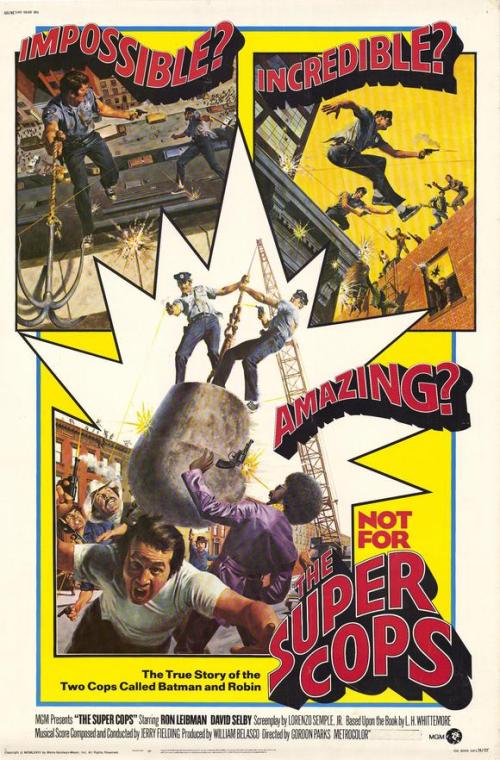
David Greenberg (Ron Leibman) and Robert Hantz (David Selby) join the police force hoping to be active in cleaning up the streets from drug dealers. Unfortunately for them once they go through the basic police training and graduate they’re assigned low level jobs like directing traffic, which they find boring. They decide to start using their off-duty hours to make arrests on their own, which gets them into trouble with their department, but their continuing efforts impresses the residents and soon makes them media heroes known as ‘Batman and Robin’.

The film, which was directed by Gordon Parks who also did Shaft, has plenty of engaging moments and I liked how it starts with the two going through the police training, which allows the viewer to see a full transition of the characters from average citizens to street cops. There’s also a lot of quirky comedy that really works including having the two hiding out inside a trash dumpster and ready to make an arrest only to have a large amount of garbage dumped on them just as they do. The bit at the end where two dueling factions of the police department try to arrest each other, even though neither side is sure which side has committed the worst crime, is quite amusing too.

The characters and situations are based loosely on real life events and it’s interesting how the actual Greenberg and Hantz are shown right at the start being interviewed about all of their arrests and then they appear later in the story playing two corrupt cops that get into a big fistfight with their film counterparts. Initially I thought Leibman looked too scrawny and outside of his bushy mustache didn’t resemble Greenberg all that much, but he makes up for it with a highly spirited performance. Selby is good too and I liked how there’s a contrast in personalities between the two although in real-life they had been best friends since childhood while the film makes it seem like they meet and become friends while in training.

The main problem with the film is that we never learn what makes these guys tick. Why are these two so motivated to arrest drug dealers even more so than a regular cop? Did they have a friend or family member die of a drug overdose in the past? And what about their private lives? Are these guys married, single, or gay? None of this gets shown or addressed, which ends up creating a placid effect. While the viewer may admire the relentlessness of the protagonists we’re also never emotionally tied-in to anything that goes on.

Showing the politics that occurs behind-the-scenes inside a police force and how this protocol system can sometimes stymie innovation or individuals that may want to work outside of it is commendable, but also ends up having a defeating quality to it. Every time these guys make any progress they end up falling back into the hands of the same administrators that want to make life miserable for them, and this gets repeated all the way until the bitter end making the viewer feel frustrated when it’s over instead of inspired.

It’s also interesting to note that Greenberg and Hantz weren’t exactly virtuous in their real-lives and ended up getting caught doing the same things that they arrested other people for doing here including Hantz who was forced to resign from the police force in 1975 after getting caught in possession of marijuana. Greenberg also spent two stints in jail once in 1978 for nine months for mail fraud and then again in 1990 for 4 years for insurance fraud.

My Rating: 6 out of 10

Released: March 20, 1974

Runtime: 1 Hour 30 Minutes

Rated R

Directer: Gordon Parks

Studio: MGM

Available: DVD-R (Warner Archive), Amazon Video

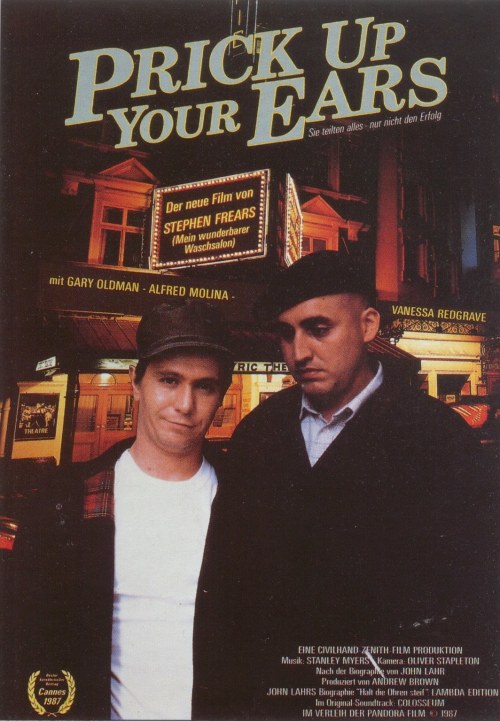
Prick Up Your Ears (1987)

By Richard Winters

My Rating: 7 out of 10

4-Word Review: Bio of Joe Orton.

This film, which is based on the biography of playwright Joe Orton that was written by John Lahr, has two diametrically different story lines going on at the same time. One part has John Lahr, played in the movie by Wallace Shawn, going around interviewing people that knew Orton when he was alive, which includes Orton’s theatrical agent Peggy Ramsey (Vanessa Redgrave). The other part delves into Orton’s (Gary Oldman) relationship with his Kenneth Halliwell (Alfred Molina) showing how it began and then eventually ending in tragedy.

The film, which was directed by the usually reliable Stephen Frears, starts out right away with the murder scene showing Halliwell covered with blood as he stands over Orton’s body that he has just killed, which to me was a mistake. Sometimes using flashbacks in films can help accentuate the story, but here it gives too much away way too soon. What’s the point of continuing to watch the movie if the viewer knows exactly how it will end? Even if one such as myself was aware of Orton’s demise, which occurred on August 9, 1967 in Islington, England, it still should’ve approached the material in a linear way having the murder occur at the very end after we had gotten to understand and feel for the characters and therefore making the act all that more impactful.

The story should’ve started with the scene, which doesn’t occur until 30 minutes in, where Halliwell and Orton are attending a acting improv class, which is where the two first meet and the funniest moment in the movie. In the scene the students are instructed to pass around a make-believe cat and when this invisible cat gets handed to Halliwell, and to the shock of the other students, but to the amusement of Orton, he kills it and then hands it back to the instructor.  This moment also perfectly reflects the black humor that became so apparent in Orton’s plays as well as conveying the weird dynamic that the two had.

When the film focuses solely on the two lead characters and their love-hate relationship it is quite interesting. Molina gives a powerhouse performance and dominates every scene that he is in. His mental deterioration is both vivid and horrorifying and  leaves a lasting impression. Yet there are also other moments where you feel sorry the guy and it helps to make sense of what lead to the tragedy as you see how Orton, who is much younger and better looking, openly have trysts with other men that he randomly meets while Halliwell, fully aware of what is going on, gets pushed into the background and unable to do anything about it.

The film is also filled with some memorable imagery. The scenes where Orton and sometimes Halliwell would pick up strangers for indiscriminate sex, like in dingy public restrooms with the lights turned off and even at times inside the bathroom stalls themselves while constantly in fear of getting caught and arrested, is well captured. The tiny room that the two lived in for years, with pictures that cover every inch of the walls, gets recreated to a perfect tee. Based on images of the actual room found on Google it looks exactly like the one in the movie and its claustrophobic dimensions hits home making it seem amazing that such significant long lasting stage plays, that were later made into movies, could’ve been written in such an insignificant space that seemed no bigger than someone’s walk-in closet.

The opening bit that focused on Orton’s agent and having her reminisce about her experiences dealing with him is boring and should’ve been taken out of the final cut. Viewers come into this wanting to learn more about Orton and his relationship with Halliwell and that’s where the film should’ve started and stayed. I admit Redgrave gives a very good performance as the agent, so having brief scenes with her in them that intercut between the ones dealing with the lovers might have been interesting, but too much time gets spent on the side characters that almost dismantles the entire rest of the film.

Spoiler Alert!

I didn’t like how loud crashing music gets abruptly played during the murder sequence either. The soundtrack had been quite subtle up until then, so having it suddenly get loud is jarring and goes against the tone of the rest of the film. It also puts too much of a theatrical quality to the murder that was not needed. The  visuals are all that is needed to show the shocking and gruesome nature of the act without music needing to be any part of it.

My Rating: 7 out of 10

Released: April 17, 1987

Runtime: 1 Hour 45 Minutes

Rated R

Director: Stephen Frears

Studio: The Samuel Goldwyn Company

Available: DVD

Outrageous! (1977)

By Richard Winters

My Rating: 7 out of 10

4-Word Review: Female impersonator befriends schizophrenic.

Robin (Craig Russell) works as a gay hairstylist during the day, but longs to be up on stage as a female impersonator.  Liza (Hollis McLaren) is a schizophrenic who leaves the hospital she was confine in and moves in with Robin her longtime friend. Both find ways to help each other with their problems, which allows Robin the confidence to finally get on stage in drag as Tallulah Bankhead, which makes him an instant hit and gets him a paid gig in New York City. However, when he moves away Liza’s condition worsens forcing Robin to decide what’s more important: his budding career, or his friendship.

The film is based on the shorty story ‘Making It’ by Margaret Gibson, which in turn was based on her experiences dealing with mental illness and her real-life friendship with Craig Russell whom she roomed with in 1971. The story nicely tackles the challenges of dealing with mental illness and how Robin’s support helps Liza overcome her demons that the other professional Dr’s and counselors that she sees don’t because they only view her as just another patient instead of a person.

The grainy, low budget quality works to the film’s advantage as it brings out the fringe, economically disadvantaged lifestyle that the two lived in while McLaren’s performance shies away from the cliches of mentally illness causing the viewer to see her as a regular everyday person, not just some ‘crazy’, valiantly fighting a nasty illness that she can’t always control.

The segments dealing with Russell’s onstage act are quite entertaining as well though when I first saw this film decades ago I found these moments to be off-putting as they turned it more into a documentary, or a comedy special that took the focus away from the actual essence of the story, which was the friendship. However, upon second viewing I liked the way it captures the gay club scene that was unique to that time period. Russell’s impersonations where he does Barbra Striesand, Judy Garland, Mae West and Bette Midler just to name a few are outstanding. I’ve seen some female impersonator acts before, but Russell’s far outshines any of the others I’ve ever watched as he gets the body language, voice, and facial expressions of the people he’s playing just right to the point that he completely disappears into the women characters until you can’t tell the difference.

While the film does have many touching moments I felt it should’ve shown how Robin and Liza first met instead of having it start with them already knowing each other when she moves in with him. Since they are such an odd pair capturing how and where this unique relationship all started and what element brought them together seemed crucial, but we never see it nor does it even get addressed in conversation. Having this backstory could’ve helped the film stay a little more centered on the relationship as well and prevented the over reliance on Russell’s stage routine, which while quite good, still takes up a bit more of the runtime than it should’ve.

My Rating: 7 out of 10

Released: July 31, 1977

Runtime: 1 Hour 36 Minutes

Rated R

Director: Richard Benner

Studio: Canadian Film Development Corporation

Available: DVD, Amazon Video

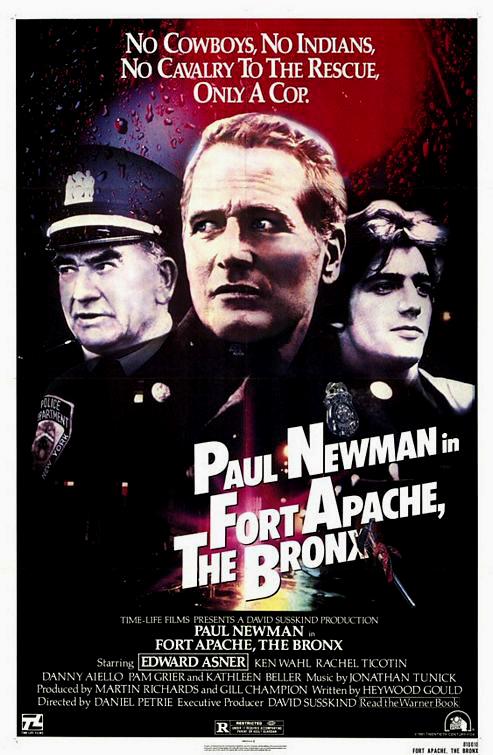
Fort Apache, The Bronx (1981)

By Richard Winters

My Rating: 7 out of 10

4-Word Review: Cops on the beat.

Murphy (Paul Newman) is a middle-aged cop working a beat in a tough Bronx neighborhood while partnered with Corelli (Ken Wahl) who is much younger. Murphy has become jaded to the corruption around him, but still feels a sense of purpose about coming forward when he witnesses a fellow cop killing an innocent bystander. Corelli, who also witnessed it, feels they should keep quiet about it, fearing the backlash they will inevitable get if they don’t, but Murphy quarrels with his conscious and considers risking his own safety and career in order to do the right thing.

While the film opened to mainly positive reviews and did quite well at the box office it was not without controversy as author Tom Walker, who had written the novel ‘Fort Apache’ which had a similar theme and storyline as this one, sued the production company claiming they had stolen many ideas from his book. However, the courts decided in the film’s favor arguing that the movie was filled with a lot of generalized stereotypes that is present in just about every cop film and therefore could not be signaled out as copyright infringement, which seemed more like a backhanded victory as it admits that a lot of what  you’ll see here is just one giant cliche.

From my perspective though I still enjoyed it especially the street scenes where the two protagonists find themselves dealing with petty crimes that makes up a lot of what real-life policemen have to deal with, as opposed to the sexy murder mysteries that cops in other police dramas get to investigate. The scene where Newman chases a suspect, but then runs out of breath and is unable to catch him nicely examines the exhausting physical nature of the job as well.

My biggest gripe has to do with a scene that comes right away, which involves a prostitute, wonderfully played by Pam Grier, who shoots and kills two unsuspecting cops sitting inside a squad car. The excuse is that these two were rookies and therefore not seasoned enough to catch the warning signs of what was going on, but I felt right away that something was off by the way the prostitute was fishing around her purse making me sense even before it happened that she was going for a gun and if I the viewer could’ve caught on to this then the two cops, whether they were new on the job or not, should’ve too.

Spoiler Alert!

I was disappointed that this storyline involving the psycho prostitute does not get fully played-out as she ends up getting killed in the middle of the film in a very random and uninteresting way, which ruins the anticipation/suspense of seeing her and Newman ultimately confront each other, which is what the viewer is primed into believing will happen.

The storyline dealing with the cop killing a defenseless man gets botched too as it occurs during the middle, but with no satisfying conclusion. We never get to see how Newman’s decision to come forward ultimately effected his life and safety.

I had problems with the sequence of events concerning Newman’s girlfriend, played by Rachel Ticotin, as well as we see her die from a lethal drug overdose, but this occurs before some gunmen take over the hospital where she worked as a nurse and held everyone hostage. It would’ve been far more suspenseful had the viewer at least thought that the girlfriend was one of the hostages instead of knowing upfront that she wasn’t, which ultimately makes this sequence less emotionally compelling.

End of Spoiler Alert!

Newman as usual gives a great performance and this marked the last role he played where his age was not a factor as his roles after this all dealt in some way with him becoming elderly. However with that said he still looks very much to be in his 50’s and he states at one point that he’s divorced with two daughters making me believe that they were most likely young adults, but instead we see a brief scene where he picks them up from school showing that they’re still young children, which given his very middle-aged appearance looked ridiculous.

Wahl is good as his young partner, but I felt his character should’ve been the one that was idealistic and wanted to go to the authorities while Newman, being older and more desensitized the one who tries to talk him out of it. Ed Asner, as the cantankerous new police chief gets wasted as does Pam Grier who’s real creepy and should’ve had both her character and motives explored much more.

My Rating: 7 out of 10

Released: February 6, 1981

Runtime: 2 Hours 5 Minutes

Rated R

Director: Daniel Petrie

Studio: 20th Century Fox

Available: DVD

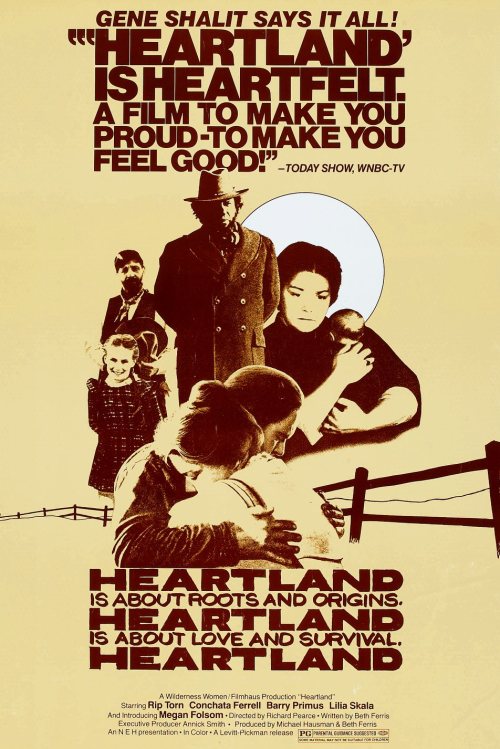
Heartland (1979)

By Richard Winters

My Rating: 7 out of 10

4-Word Review: Life on the frontier.

In 1910 a widow named Elinore (Conchata Ferrell) and her 7-year-old daughter Jerrine (Megan Folsom) travel to Wyoming where she gets a job as a housekeeper to rancher named Clyde (Rip Torn). The two slowly fall-in-love, eventually marry, and have a baby of their own. Unfortunately the harsh winter and remote locale takes its toll causing tragedy to both their small family and to the ranch itself.

The story is based on the letters written by Elinore Pruitt Stewart to her former employer as she described her adventures working on a ranch as a homesteader to Henry Clyde Stewart during the years of 1910 to 1914. The film stays very faithful in tone and content to the period and some of the most fascinating moments are simply observing the different chores that they had to do back then and what now comes off as very archaic.  Shooting the film on-location in the Rocky Mountain region, substituting Montana for Wyoming, and capturing all four seasons helps add to the authenticity.

Farrell’s strong personality gives life to her character and reveals the inner strength required to endure and survive the hardships of frontier life and it’s amazing how closely she resembled the real Elinore Stewart as evidenced by an old photograph of her taken in 1913. Torn is also quite good, but his thick Scandinavian accent makes it difficult to understand everything he says. I also really enjoyed Folsom as the young girl, who doesn’t have much dialogue, but more than makes up for it with her expressive face. Lilia Skala is also good as Mrs. Landuer a headstrong elderly neighbor who goes by the nickname of Grandma.

While the soundtrack matches the period flavor I felt there was too much of it and would’ve enjoyed more silence as that is pretty much all you would’ve heard anyways on the frontier during that time. I would’ve also liked more of a backstory to Elinore, specifically showing why she was widowed, in real-life her husband died in a railroad accident before their daughter Jerrine was even born, and yet it would’ve helped the viewer understand Elinore better had this been dramatized, or at least touched on.

The ending is also too abrupt. It brings up all the challenges in maintaining the ranch, but no conclusion as to whether they were able to withstand them all or not. Several story threads get left hanging even though in real-life Elinore lived 19 years past when this story took place and Clyde lived for another 35 years, so having some denouncement at the end explaining where they ultimately ended up past what we see here was in my opinion very much needed and the fact that it doesn’t occur makes the film seem like only half-a-movie.

There’s also some scenes that may make certain viewers uncomfortable. Many of them deal with animals getting killed including a wild pig that gets shot at point blank range and then skinned and gutted. Since this was apart of the frontier life back then I didn’t have a real problem with it, but others might. The most disturbing scene though deals with a cow trying to give birth and requires both Torn and Farrell sticking their hands inside the cow’s vagina at the same time in order to turn the calf around, so that its head will come out first. They then tie a rope around the calf’s head and yank him out in extremely explicit fashion. While some may consider this the miracle of birth others may not be able to stomach it, but overall it does help to heighten the realism either way.

My Rating: 7 out of 10

Released: September 22, 1979

Runtime: 1 Hour 36 Minutes

Rated PG

Director: Richard Pearce

Studio: Filmhaus

Available: DVD, Amazon Video

North Avenue Irregulars (1979)

By Richard Winters

My Rating: 7 out of 10

4-Word Review: Church ladies battle mobsters.

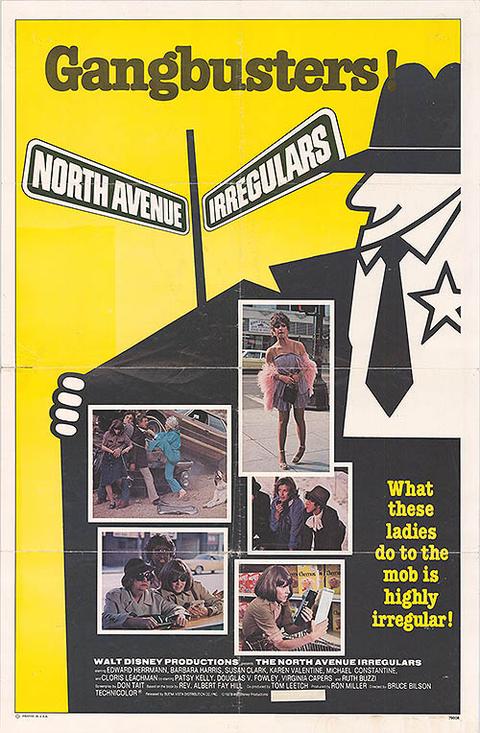
Reverend Michael Hill (Edward Herrmann) becomes the new pastor at the North Avenue Presbyterian Church, but right away things get off to a rocky start when the church’s funds get gambled away on a horse race. When Hill tries to retrieve the money he finds out that it is an illegal gambling joint run behind a dry cleaning business, who are always able to skillfully remove their presence before the police arrive. Hill goes on TV to lambaste organized crime in their town, which catches the attention of two treasury agents (Michael Constantine, Steve Franken) who want Hill to help them close down the gambling joints by having him hire men from his church to place bets at the parlors, but all of the men refuse. Hill then asks for the help of the church women who agree to do it and after some initial setbacks begin to make headway in taking down the area mobsters.

Usually I always say it’s important for films that are aimed for a young audience to have children playing the protagonist, but in this case the children characters have only small supporting roles and yet the film still manages to deliver the laughs. The main reason is the talented female cast who have distinctive personalities and convey comic form in different ways. Cloris Leachman is amusing as the middle-aged cougar with long finger nails, Virginia Capers is quite funny too as a heavy-set woman who doesn’t allow her big build to stop her from running several blocks in order to tail the bad guys and the variety of vehicles she drives with funny phrases painted on their windshields, which are all from her husband’s used car dealership, are humorous too. Barbara Harris as a suburban mother who chases the mobsters while driving in a station wagon packed full of kids in it is great too.

What may be surprising to many is that it’s all based on true events that occurred to Revenrend Albert Fay Hill when he took over as the minister at the North Avenue Presbyterian Church in New Rochelle, NY in 1961. It was there that he became a crusader against organized crime after the murder of a young man for not repaying his gambling debts. Like in the movie his fight gained the attention of US Treasury agents who wanted him to get his male parishioners to place bets with the mobsters, but the men all refused so he recruited their wives whose efforts managed to shut down several gambling houses, which lead to a front page write-up in The New York Times as well as Look magazine.

Of course the movie exaggerates things for comic effect, but it’s forgiven because the stunts are quite funny, which culminates in a massive car pile-up consisting of the demolition of 14 cars at the cost of $155,000. The scene involving the church getting blown up is amusing too because behind-the-scenes when it was first done the cinematographer forgot to put film in the camera forcing the crew to painstakingly rebuild the church just so they could try to do it all over again.

The film’s only weak element is Herrmann whose performance is certainly sincere and likable, but he’s never funny while Constantine is hilarious as the exasperated agent who has a virtual nervous breakdown dealing with the women and for that reason the film would’ve been more engaging had he been the lead character. I was also confused why the Reverend was  a single parent as there’s no explanation I could remember for what happened to the wife. In the book that this film is based, and in the true-life incident, the minster was married, so why was it decided that he should be single here? I got the idea it was because they wanted to create a romance between he and his secretary played by Susan Clark, but since nothing much comes from that it seemed unnecessary.

My Rating: 7 out of 10

Released: February 9, 1979

Runtime: 1 Hour 40 Minutes

Rated G

Director: Bruce Bilson

Studio: Buena Vista

Available: DVD, Amazon Video, YouTube

The Front (1976)

By Richard Winters

My Rating: 6 out of 10

4-Word Review: Covering for blacklisted writers.

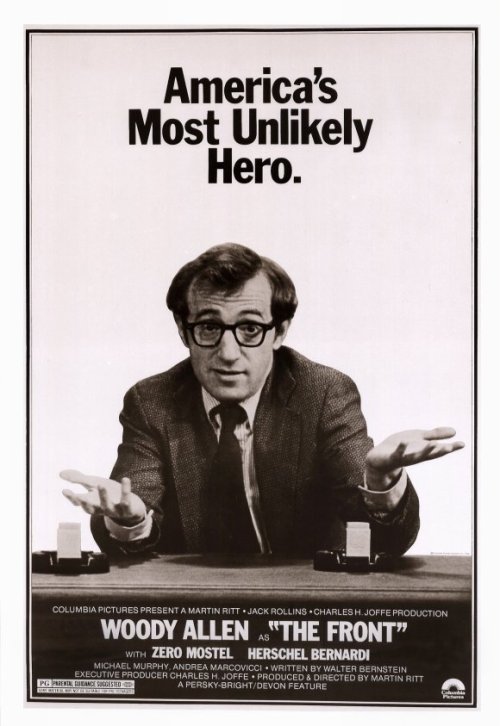
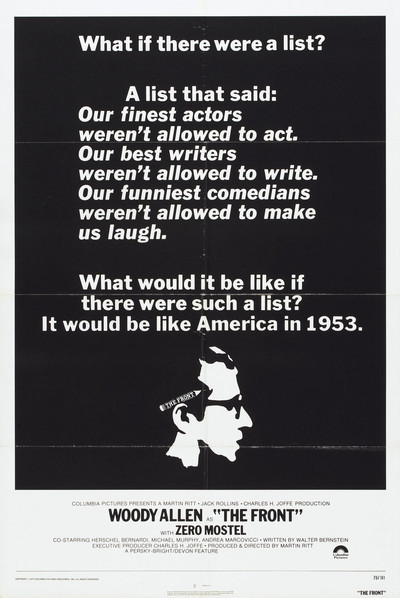
In 1953 during the height of the Red Scare where many working in Hollywood were blacklisted if they had any connections with communist sympathizers writer Alfred Miller (Michael Murphy) suddenly finds himself out of work and unable sell any of his scripts. He asks his friend Howard (Woody Allen) who works as a cashier at a cafe to act as a ‘front’ for him by selling his scripts to producers and acting as if he wrote them instead of Alfred. In exchange Howard would be able to collect 10 % of the profit, which he readily accepts. Soon Alfred’s other writer friends hire Howard to sell their scripts, which quickly makes him financially comfortable, but he soon sees the dark side of the business especially when he gets investigated for being communist sympathizer himself.

The film was written and directed by those who personally went through the blacklisting when it happened, which is great, but the film cannot seem to decide whether it wants to be a drama or comedy and takes too much of a timid, middle-of-the-road approach that is neither impactful nor memorable.  Lots of prime comedic potential gets completely glossed over like when Howard is forced to do a rewrite on a script in a hurry despite having no background, or knowledge on how to do it. This occurs twice and both times the film fails to show what he does to get out of the jam, he is shown for a couple of seconds on the phone presumably with Alfred getting advice, but it would’ve been funny hearing their conversation and seeing him quite literally sweat his way through the process.

Spoiler Alert!

The drama gets handled in too much of a genteel way too making the intended message mild and not something that completely connects emotionally with the viewer. The scene where Zero Mostel jumps out of a hotel window when he realizes his career is over happens much too fast. One second we hear the window being opened and the next second the camera quickly pans over to see that Mostel is no longer standing in the room making it seem more like he just disappeared into thin air. The ending where Howard finds himself forced to testify in front of the House of UnAmerican Activities panel is weak as well. The final 20 minutes is spent with this big build-up of what Howard will do when he is put in front of them, but the payoff is slight and hinges on him telling them to go ‘fuck themselves’, which is such an overused expression in this modern age that it hardly resonates as it once might’ve been.

End of Spoiler Alert!

Allen is an obnoxious protagonist that I did not find funny or sympathetic. He became so unlikable that I started wanting to see him get caught and even humiliated, which I don’t think was what the filmmakers intended the viewer to feel. I also thought it was ridiculous that this scrawny, dorky looking guy would be so brazen to come-on to hot looking women like he does. I know in the movies that he directs this always occurs and I looked past it as Woody simply revealing his diluted, narcisstic ego, but this film was done by a different director, so things should’ve been presented in a more realistic way by having the beautiful women laugh at Woody when he attempted to ask them out and forcing him to settle for someone his physical equal. I realize that Andrea Marcovicci’s character falls for Woody because she thinks he’s the writer of the scripts, but I would think after she went out with him for awhile she’d start to realize he wasn’t the same person she thought he was and not have to have it explicitly spelled out  for like it ultimately is.

It would’ve worked much better had Michael Murphy been cast as Howard as he was more able to convey likable qualities. Zero Mostel is also quite strong as the desperate comedian and had his character been cast in the lead it would’ve given the viewer a stronger feeling of what it was like to be blacklisted during that era as the story would’ve been told from the victim’s point-of-view instead of having those directly affected by the McCarthyism relegated to only supporting parts.

My Rating: 6 out of 10

Released: September 30, 1976

Runtime: 1 Hour 35 Minutes

Rated PG

Director: Martin Ritt

Studio: Columbia Pictures

Available: DVD, Amazon Video, YouTube

Scandal (1989)

By Richard Winters

My Rating: 5 out of 10

4-Word Review: Politician has an affair.

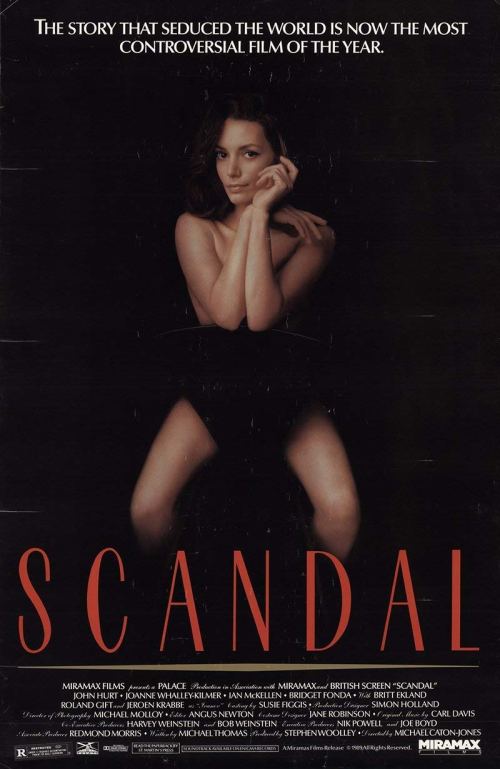
Based on the Profumo affair that rocked the British parliament in 1963 the story centers around an exotic dancer named Christine Keeler (Joanne Whalley-Kilmer) who catches the eye of Stephen Ward (John Hurt) a doctor with a thing for attractive young ladies. She moves in with him and the two share an unusual relationship where he pimps her and her friend Mandy (Bridget Fonda) out to members of the conservative party. Her sexual affair with one of the high-ranking officials of parliament, John Profumo (Ian McKellen) eventually reaches the attention of the press and leads to far-reaching ramifications for all involved.

Part of why this movie didn’t work for me and may not for others is that politicians getting involved in a scandal is no longer a big deal. We’re living in an age where political figures have been caught having affairs, even while in office, and it isn’t enough to have them removed. Yet this film expects the viewer to be in jaw-dropping shock from the first frame to the last even though in this cynical age it would be more shocking if one actually lived a squeaky clean life.

The first hour meanders along from one racy sex scene to the next until it almost seems like a soft core porn flick with no story. I had no idea where any of this cavorting around was going to lead and wasn’t really all that intrigued in finding out either. First time director Michael Caton-Jones takes too much of a detached approach to his characters. They all come off like wild sexual animals unable to control their inner urges, but with no other discernible differences making everything that goes on seem like one giant frolicking blur with no point.

Hurt gives a great performance, but I didn’t understand the motivations of his character. Why doesn’t he want to sleep with Christine and instead get more turned-on listening to her stories about her having sex with other men? What about him makes him this way, which the film should’ve helped answer, but doesn’t.

Whalley is too old for her part as she was supposed to be playing someone who was 19, but in reality was already 29. Having a true 19-year-old play the part, and have a definite look of innocence about her, may have given the provocative material a little more bite.  Her character also has the same issues as with Hurts. I got how she wanted to get away from her impoverished surroundings and sleeping with rich influential men could help her do that, but I didn’t understand why she liked her Hurt, or their unusual relationship.

The film ends with the court proceedings, which like with everything else doesn’t have the impact that it should. While the attention to detail and accuracy is impressive it would’ve worked better had it began with the trial and then worked backwards through flashback showing how they all got there instead of the linear narrative that it does take, which is too plodding. Focusing on only one of two characters would’ve helped too instead of trying to encompass so many of them where none of them are all that interesting or distinct.

My Rating: 5 out of 10

Released: March 3, 1989

Runtime: 1 Hour 46 Minutes

Rated R

Director: Michael Caton-Jones

Studio: Miramax

Available: DVD, Blu-ray (Region B/2)

Best Friends (1982)

By Richard Winters

My Rating: 3 out of 10

4-Word Review: Writing partners get married.

Richard (Burt Reynolds) and Paula (Goldie Hawn) have been working together as a screenwriting team for many years and have fallen in love in the process. Richard would like to take the next step and get married, but Paula resists afraid that this will ruin their friendship, but eventually she caves to his pressure and they tie-the-knot. Things though get rocky when they visit both of their relatives and when they return to L.A. seem destined for a break-up only to be forced to acclimate when they’re locked in a room and not allowed out until they revise the ending of their latest screenplay.

This film is similar to Romantic Comedy as both dealt with two people of the opposite sex working together as a writing team while romance blossomed in the process. Yet both films missed the mark by not focusing enough on the writing craft and the teamwork needed to get a script written. Only at the very end do we see the two working together, but because it waits so long to get to this point it’s not really worth it. In between we get immersed with drawn out segments dealing with each partner learning to deal with their kooky in-laws, which has been done in many other romances before and is neither fresh nor insightful.

I also didn’t like that it begins right away with them already in-love, which deprives the viewer the chance of seeing how the relationship began, which is usually half the fun. The couple are a bit too lovey-dovey and there’s never any fiery argument between them, which could’ve offered some tension in what is otherwise a flat story with very little that actually happens.

The script was written by Valerie Curtain and Barry Levinson, who based their own real-life experiences of working together and then ultimately marrying on the two characters and it would’ve been nice had they simply been cast as themselves. Hawn and Reynolds are okay but there’s a big age difference between the two and their presence also gives it too much of the glossy, big-star Hollywood treatment where as with Curtain and Levinson playing the roles would’ve made it seem more genuine and original.

My favorite part though is when they travel to Buffalo, New York in the dead-of-winter where they must deal with actual snow and cold and not the fake studio kind. However, Goldie’s parents, played by Barnard Hughes and Jessica Tandy, come-off too much like caricatures playing off the stereotype that everyone that gets old automatically become senile and eccentric. The things that they say and do are more cringe worthy than amusing and nothing that a real senior citizen would ever do.

Their visit with Burt’s parents, played by Keenan Wynn and Audra Lindley, improves a little as they act more normal, but it’s just as unfunny. The film also misses out on a prime comic opportunity as the two are informed that they need to revise their latest screenplay in a hurry and I thought it would’ve been quite amusing seeing them trying to work on it while cooped up in the home of Burt’s parents and trying to block out all the noise and chaos around them, but the film only teases with this idea, but eventually whiffs on it.

The story is unfocused and throws in all sorts of dumb things like Goldie’s sudden addiction to Valium pills that have nothing to do with the main plot. Having the film begin where it ends with the two locked in a room for days and forced to reassess their relationship while going back through certain highlights that the two had through flashback including showing how they first met would’ve given it more of a fragmented narrative and made it seem less drawn-out and mechanical.

My Rating: 3 out of 10

Released: December 17, 1982

Runtime: 1 Hour 56 Minutes

Rated PG

Director: Norman Jewison

Studio: Warner Brothers

Available: DVD, Amazon Video, YouTube