Category Archives: Moody/Stylish

Daisies (1966)

daisies 1

By Richard Winters

My Rating: 7 out of 10

4-Word Review: Girlfriends rebel from society.

Two young women (Ivana Karbanova, Jitka Cerhova) who are both named Marie decide that society has nothing to offer them and that they will not comply with its norms. They then proceed to jaunt through the streets of Prague causing havoc and destruction everywhere they go and with everyone they meet while also trying to find themselves and their true purpose in life.

This film is similar to Ingmar Bergman’s Persona, which was released the same year. Both films rely heavily on quick edits, jump cuts, bizarre imagery and unconventional narrative structures. The only difference is that at least Persona had a story behind it and two interesting characters. This film has neither. The two women behave too strangely to be relatable and the scenes seem disconnected. This is one film that takes the avant-garde, experimental approach to the most extreme. The result is a bit off-putting and took me until the halfway mark before I could get into it. Others may not even make it that far. Personal taste will gauge how much one gets into it as well as how much they get out of it.

On a completely visual level it is fascinating. The film goes from being black-and-white to color and then back again at random intervals. There is one scene in a restaurant where the scene changes to a different color filter each time a character speaks a different line of dialogue. The segment showing photos of a variety of butterflies done at a rapid fire pace is also interesting. The best part is probably near the end when the girls walk into a banquet hall and proceed to eat up all the food that is in it. In fact the film shows an amazing amount of eating. It seems like every other shot has the girls stuffing their mouths with some sort of edible. However, instead of making you hungry it ends up kind of grossing you out.

If there is anything that got on my nerves it was director Vera Chytilova’s use of sound. There was too much repetition of noises. For instance in the opening scene there is what sounds like a squeaking door that is implemented after each actress says her line that quickly becomes irritating. The slobbering, chewing sound as the girls eat the banquet food is overdone as is their background whispering that occurs near the end.

Many feel this is a movie about budding feminism and I would agree on that for the most part. I enjoyed how the women did not feel that they needed a man in their life to ‘be whole’ and in many ways seemed to manipulate and make fun of the male characters, or simply become bored with them especially when the men would convey to them their ‘undying love’.  However, to me it was more about the rebelling and disdain of the communist regime and living in an environment that promoted hard work and not much else. I liked the segment at the end where the two women proceed to be ‘good’ instead of ‘bad’ and try to clean up the mess that they made while trying to convince themselves that working hard will make them happy even though it really doesn’t.

I’ve seen a lot of weird sixties movies, but this one tops them all by a mile. It certainly doesn’t seem dated and easily transcends its era. Not only was it ahead-of-its-time, but I would maintain that it STILL is.

Although the runtime is listed as being 74 minutes the version I saw, which was from Czech New Wave, came out to being only an hour.

My Rating: 7 out of 10

Released: December 30, 1966

Runtime: 1Hour

Not Rated

Director: Vera Chytilova

Studio: Ustredni

Available: DVD
Repulsion (1965)

repulsion 1

By Richard Winters

My Rating: 8 out of 10

4-Word Review: She loses her mind.

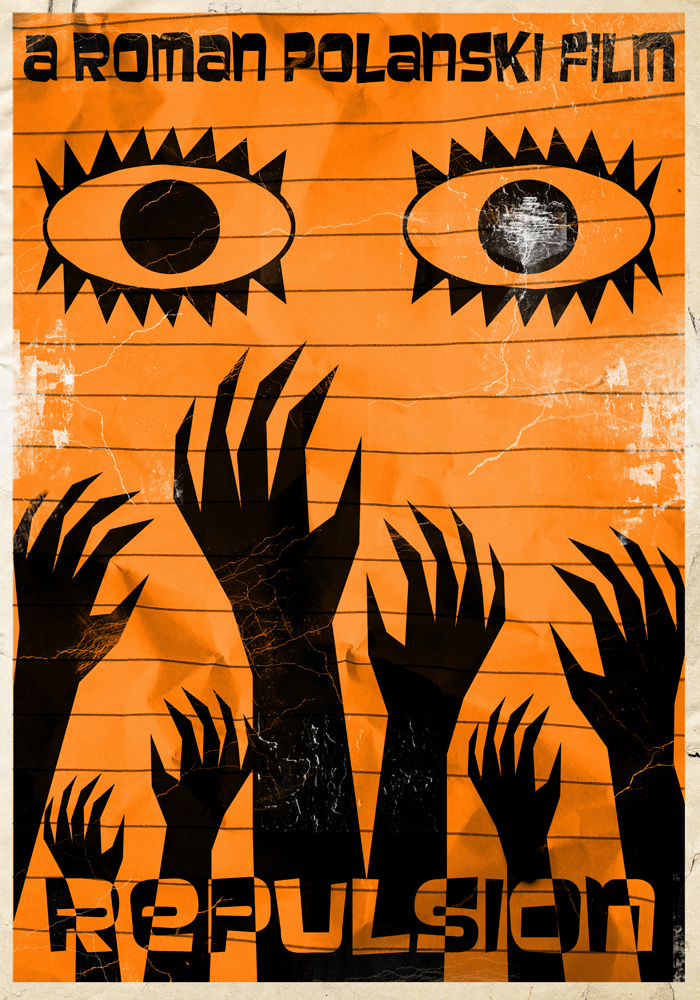
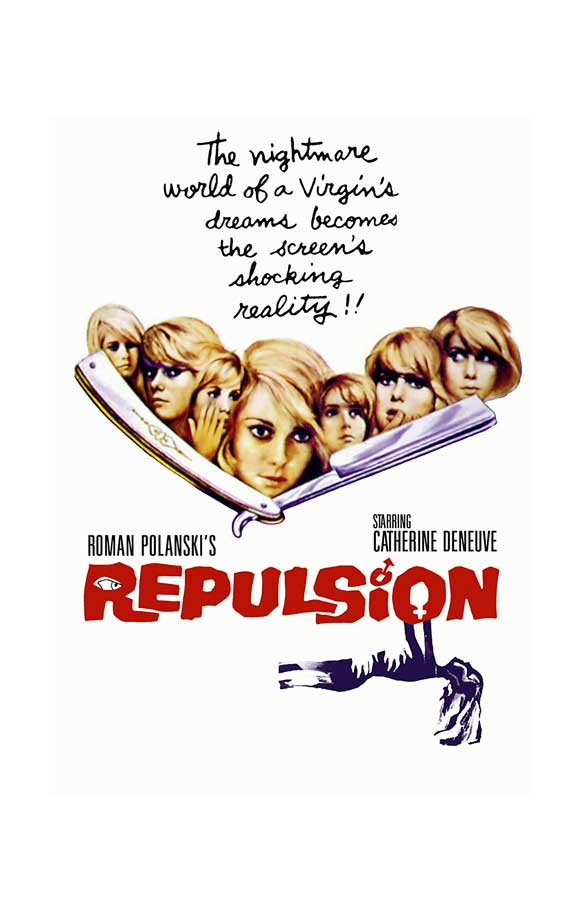
Love or loathe him one thing is for sure the controversial Roman Polanski has made some great movies and since today marks his 80th birthday I thought it would be good to review one of his films this being his first English language one. The story, which was written by Polanski and Gerard Brach centers on Carol (Catherine Deneuve) a beautiful but lonely young woman living in an apartment with her older sister Helen (Yvonne Furneaux) and Helen’s boyfriend Michael (Ian Hendry). Carol seems detached and troubled and when Helen and Michael go off for the weekend Carol begins to suffer hallucinations while inside the apartment that becomes increasingly more frightening and eventually leads to murder.

The film works at a slow and deliberate pace that some viewers may feel put-off by. Personally I felt it was effective and made it more realistic although things really don’t start to get intense until the final hour. For me it was the little things that made it intriguing for instance the way Carol becomes fascinated with the distorted reflection of herself in a teapot, or a rolling bottle of nail polish. Nothing is over-the-top, but instead subtle and restrained. This is one of the few films that seem to understand the thought process of the mentally ill and makes you feel like you are really inside their head and seeing things as they do, which is what makes it so unnerving. The low-key approach works because like with an actual person having a breakdown it starts with little things that slowly morph into bigger ones.

Polanski shows incredible control over the material. The stark black-and-white cinematography helps to heighten the ugliness of the situation. The variety of camera angles and movements creates an almost hypnotic effect. I loved the way, as Carol gets further into her demented state, that the dimensions of the apartment begins to change, or the hands coming out of the walls. My only complaint is I wished some of these effects had been played up even more. The rape sequences are quite effective and surprisingly explicit for its time period. Yet instead of hearing Carol’s screams during these moments we instead hear the ticking of a clock, which somehow makes it even more disturbing.

Deneuve gives one of her best performances and she was at the peak of youthful beauty here. The blank almost zombie-like look in her eyes is penetrating. You get the feeling that she not only truly understands the madness of her character, but actually is the character. Patrick Wymark is also memorable as the landlord who goes from being bombastic and demanding to kind and cuddling and eventually sexually deviant in a matter of only 10 minutes.

Normally I always like a background to the characters and when they are missing or vague I find it a weakness to the script while here it is strangely a strength. We can surmise that she was most likely abused sexually when she was younger, but the who, when, and why is never made clear. This though somehow makes the character and the situation more compelling and reflects back to how psychologically fragile the human condition can be and how these things can happen to anyone. The final tracking shot, which stops on a picture of Carol as a child showing an angry look on her face is great.

The imagery and psychological approach to this thing is still one-of-a-kind. The movie viewing experience on this one remains potent and aptly deserves its classic status.

repulsion 2

My Rating: 8 out of 10

Released: October 2, 1965

Runtime: 1Hour 45Minutes

Not Rated

Director: Roman Polanski

Studio: Compton Films

Available: VHS, DVD, Blu-ray, Amazon Instant Video

Medium Cool (1969)

medium cool 1

By Richard Winters

My Rating: 9 out of 10

4-Word Review: The 60’s up close.

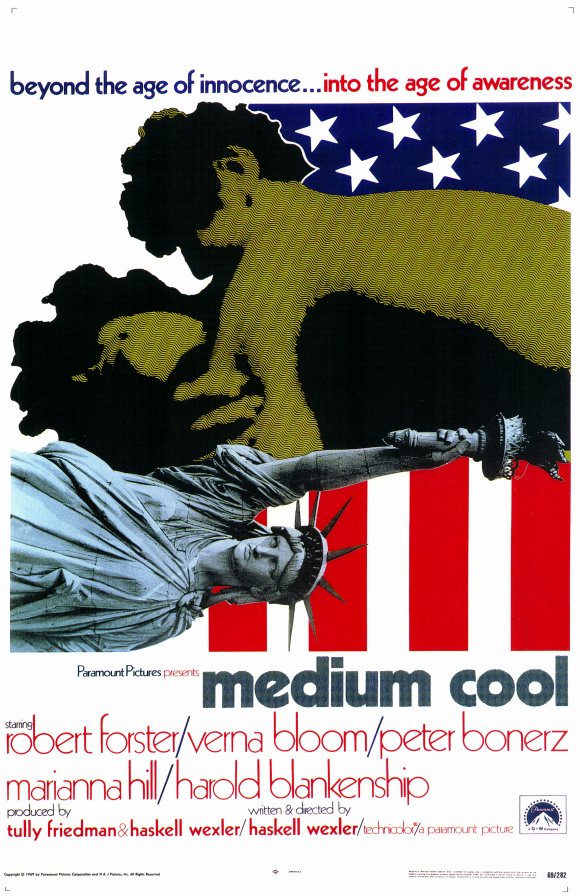
If you ever wanted to travel back in time and take part in the events of the tumultuous 60’s this film comes about as close to that as you can get. Watching this isn’t like viewing a movie, but more like an experience in itself. Acclaimed cinematographer Haskell Wexler who had previously worked in the documentary field heard that demonstrators were going to march at the 1968 Democratic convention in Chicago so he decided to hire a few actors and throw them into the fray while building a thin plot around it and creating a pseudo-reality effect. The story deals with news cameraman John Cassellis (Robert Forster) who meets and starts to date Eileen (Verna Bloom) who has just moved to Chicago from West Virginia with her 11-year-old son Harold (Harold Blankenship). As the convention and protests begin and John begins to cover it Harold runs away from home and Eileen goes into all the chaos to find him.

The scenes from the riots leave a major impact and even though I had already seen this film several times before I was amazed at how compelling it still was. Everything still seemed fresh with a clarity that makes you feel you are right there and a vividness that seems like it was filmed just yesterday. Watching the National Guard with their rifles raised marching down the streets of Chicago threatening crowds of people is incredible as is the sight of army tanks rolling down Michigan Avenue.  The people in the crowds are not actors and you see them getting clubbed by the police only a few feet from the camera. Watching them take the park benches in Grant Park and use them to build a shield from the police is exciting as are actual sound bites of reporters describing the action and at certain points being roughed up by the patrol as well. The look of fear and confusion on Bloom’s face at what she finds herself in the middle of it is authentic and helps build the tension.

Of course these scenes only make up the final fifteen minutes of the film, but the movie is filled with a variety of other unique moments that are all captured with the same vivid style and are equally memorable. The part where John and Eileen go to a roller derby and watch actual female players beat each other up with some even using their fists gets quite vicious. The scene showing hundreds of caged pigeons being set free and flying off in a giant flock that fills the sky is eloquent. There is even some effective erotica as a naked John chases his naked girlfriend Ruth (Marianna Hill) around his apartment before lifting her up by her legs and spinning her around in a circle.

The film also takes a great critical look at television news and the people who cover it. It shows how reporters and cameramen are very detached from the events and people that they are covering and how their need to capture that ‘great’ image or sound bite supersedes the human element.

Forster is perfect for the lead role. I loved his aggressive, blue collar, tough-guy attitude that perfectly reflects the Windy City. Peter Bonerz who plays Gus his sound man is great, but in the opposite way. His character is much more timid and wants to avoid confrontation at every turn and finds it difficult dealing with some black people who make him feel uncomfortable when he visits their apartment and even some young children when they start to climb on his car.

The only negative is that the song ‘Merry-Go-Round’ by Wild Man Fischer is not included in the most recent Criterion Collection DVD/Blu-ray release. The song was in the original release shown in theaters as well as the film’s first VHS version, which I saw. Unfortunately the song’s copyright holders sued Paramount stating that a VHS/DVD release is not the same as a theatrical/television broadcast, which they were under contract for to use and therefore could not include it in any later reissues, which is a real shame. The song has to be one of the strangest things you will ever hear and done by an eccentric one-of-a-kind artist. It has a weird alluring quality to it that gives personality and an extra edge to the film and in later versions gets replaced with ‘Sweet Georgia Brown’ better known as the theme for The Harlem Globetrotters, which is just not as effective.

My Rating: 9 out of 10

Released: August 27, 1969

Runtime: 1Hour 11Minutes

Rated R

Director: Haskell Wexler

Studio: Paramount

Available: VHS, DVD, Blu-ray (The Criterion Collection)

Going Places (1974)

going places

By Richard Winters

My Rating: 9 out of 10

4-Word Review: Guys with no morals.

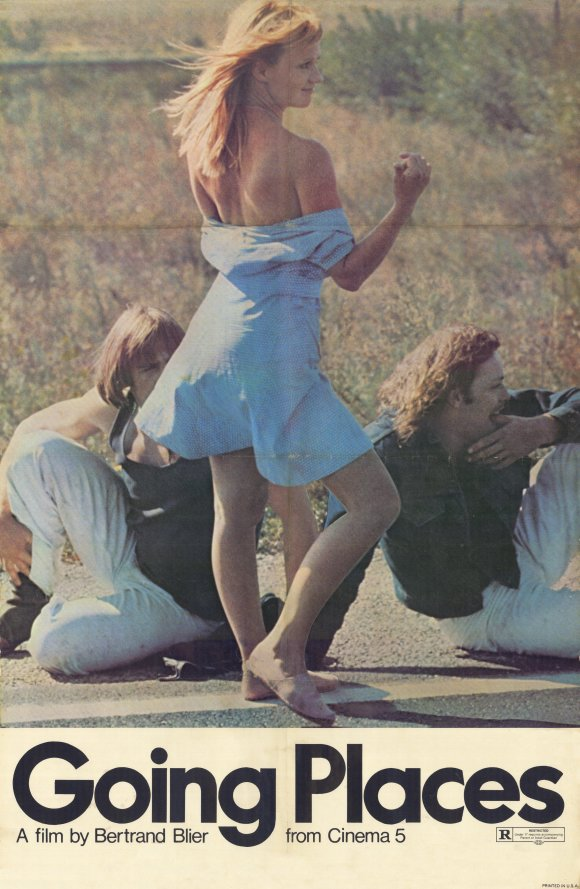
Two small time hoods (Gerard Depardieu, Patrick Dewaere) spend their days roaming the streets, robbing stores, and molesting women. In some ways this is truly an amazing film in what it is able to get away with. The two main characters are immoral, ignorant, insensitive, and brutal and the women are demeaned and degraded. The overall content is vulgar and perverse and yet somehow this thing comes off as a lyrical, offbeat delight that is pure entertainment.

It’s a definite original with every scene being an ingenious comic set-up. The scenario structure and use of locations is perfect. The pacing is fluid and director Bertrand Blier’s eye for detail near brilliant. The two hours move along like a breeze. It never gets boring and I actually almost wished it could have been longer.

The comic threads are hilarious and they get funnier and funnier as they go along. The guys’ constant, futile and very explicit attempts at getting a frigid woman (Miou-Miou) excited are a particular standout.

This is the type of black comedy that should be used as an example for all others. It’s consistently unique and manages to balance the ugly elements with the lighthearted without going overboard on either. It even throws in a surreal angle without a hitch.

Veteran French actress Jeanne Moreau has one of her finest latter career roles playing a lonely lady in desperate need of male attention. Her scene is well played out and even has a shocking conclusion. Depardieus ‘friendly’ conversation with a shopping mall security guard is another standout. The ultimate joke though may be in the film’s title as these guys are truly going nowhere.

My Rating: 9 out of 10

Released: March 20, 1974

Runtime: 1Hour 57Minutes

Rated R

Director: Bertrand Blier

Studio: Universal Pictures France

Available: VHS, DVD (Region 1 & 2), Amazon Instant Video

Exotica (1994)

exotica

By Richard Winters

My Rating: 8 out of 10

4-Word Review: Obsessed with a stripper.

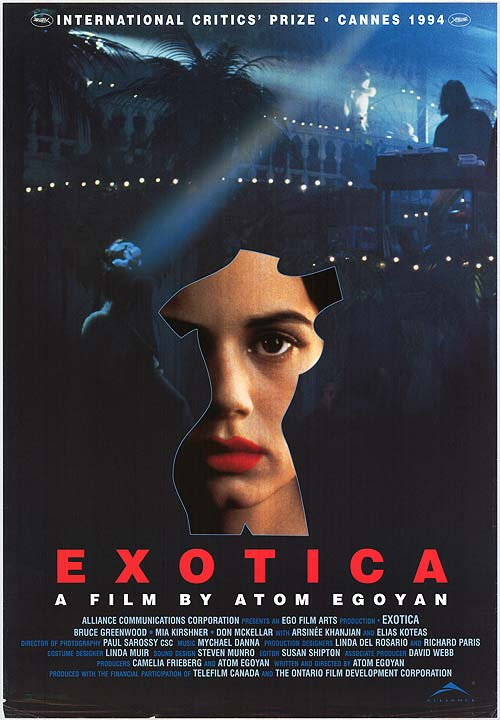
This is a fascinating and engrossing character study interweaving different characters and stories together until they become one. Bruce Greenwood plays Francis an accountant who frequents a strip bar and becomes fixated on a particular dancer named Christina (Mia Kirshner). Elias Koteas is the club D.J. who notices this obsession and becomes jealous since he at one time had a relationship with her. Thomas (Don Mckellar) is the nebbish pet shop owner who has a secret as well as a key between the three.

This is thoroughly compelling stuff that’s impossible to predict. The characters are believable, exposing traits you just don’t see in them at the start. Much like people you’d meet and get to know in real life each scene becomes like a piece to the puzzle.

Director Atom Egoyan may be a little too obsessed with tying everything together taking the final scene one step too far. Yet he still creates an interesting subtext. He seems to show how interconnected we all are to one another and how we can relate on different levels. The simple fact that we are human connects us no matter how ‘disconnected’ we may feel or be.

The sex club atmosphere is also taken from a different angle. He shows a much more complex and psychological motive behind it and how sex is only one element in it.

Like with Egoyan’s other films this thing is filled with a lot of philosophical banter and is quite humorless with a tendency to be a bit ‘heavy’. However, unlike The Sweet Hereafter it keeps moving and doesn’t get completely bogged down in it.

On the technical end the lighting is too washed out. The music selection is good, but oppressive. Overall though the film achieves what it wants too. It keeps your attention and remains thought provoking throughout.

My Rating: 8 out of 10

Released: May 16, 1994

Runtime: 1Hour 43Minutes

Rated R

Director: Atom Egoyan

Studio: Miramax

Available: VHS, DVD, Blu-ray

Cul-De-Sac (1966)

cul de sac 2

By Richard Winters

My Rating: 8 out of 10

4-Word Review: Bubbling beneath the surface.

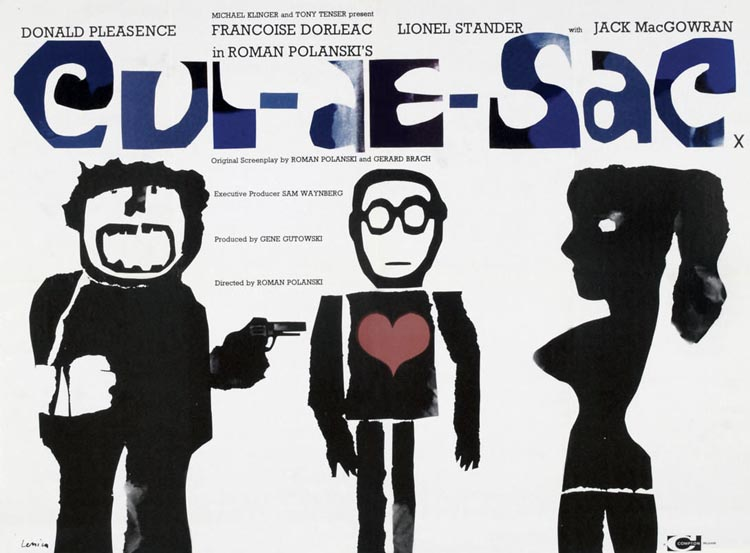
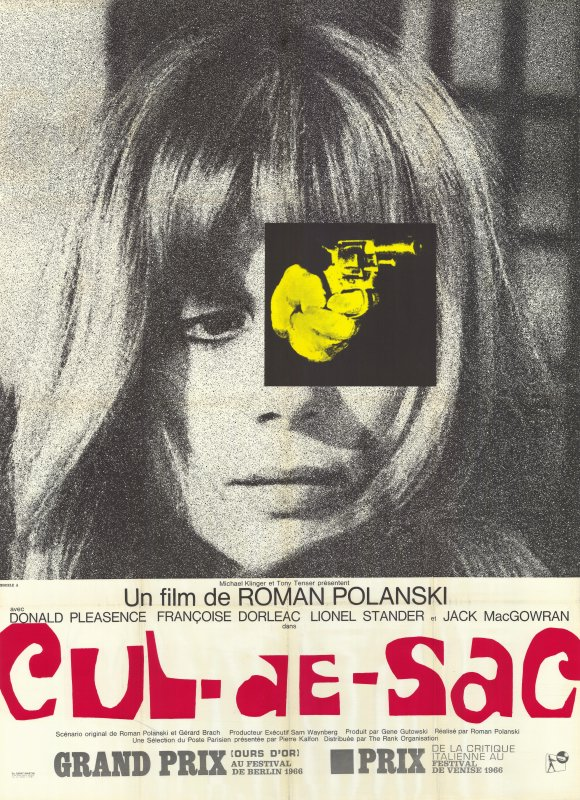
Albie and Richard (Jack MacGowran, Lionel Stander) are two gangsters on the run. Albie is injured with a gunshot wound and their getaway car has broken down. They come upon an isolated castle owned by George (Donald Pleasance) who lives there with his new wife Teresa (Francoise Dorleac, who tragically died in a car accident just one year after this film was released). George is very passive and timid and pretty much allows Richard to have his way as he takes over the place and his wife and yet as the situation progresses different shades of the character’s personalities begin to come to light.

Roman Polanski leaves his strong directorial touch from the exquisite opening shot, which shows an old car being pushed along on a desolate road amidst a very flat landscape until the end. In the hands of any other director this otherwise odd story probably would not have worked. Like with A Knife in Water Polanski makes great use of the quiet and serene atmosphere and as a viewer you feel like you are right there with the characters.  Filmed on-location at the Lindisfarne Castle on Holy Island in Northumberland, England the movie makes great use of the tranquil setting. I found it almost hard to believe that there was a film crew there as the isolation really grabs you and sucks you in. The quiet moments are the film’s strongest and I just loved the hooting owl heard in the background. The idea of filming it in black and white nicely compliments the film’s dark psychological undertones.

The film’s novelty is watching how the characters evolve and interact with one another. Donald Pleasance gives one of his best performances as the cowardly George. There have been many weak and frighten characters in cinema history, but Pleasance makes the character here quite interesting and the way he finally shows some bravado at the least likely moment is fascinating. Stander also excels with a character that initially comes off as a brute, but at strange times reveals a trusting and even child-like manner.

The movie can be viewed in different ways and doesn’t fit distinctly into any type of genre. To a degree it can work as a dark psychological character study, a mystery, film noir, a thriller, or macabre comedy. Approaching it as a comedy works best Polanski has not always had great success in that area and some of his comedies in particular the ill-advised Pirates have been complete disasters, but this one works. The best scene is when some of George’s old friends come to visit and bring along their bratty son who becomes an absolute terror to everyone.

The odd ending is open to interpretation and leaves a lasting impression. This is also a great chance to see Jacqueline Bisset in her film debut. She appears during the second half wearing glasses and saying little, but is as beautiful and alluring as ever.

cul de sac 1

My Rating: 8 out of 10

Released: November 7, 1966

Runtime: 1Hour 57Minutes

Not Rated

Director: Roman Polanski

Studio: Tekli British Productions

Available: DVD (The Criterion Collection) Blu-ray, Amazon Instant Video, Netflix streaming

Blade Runner (1982)

blade runner 2

By Richard Winters

My Rating: 7 out of 10

4-Word Review: Where are the replicants?

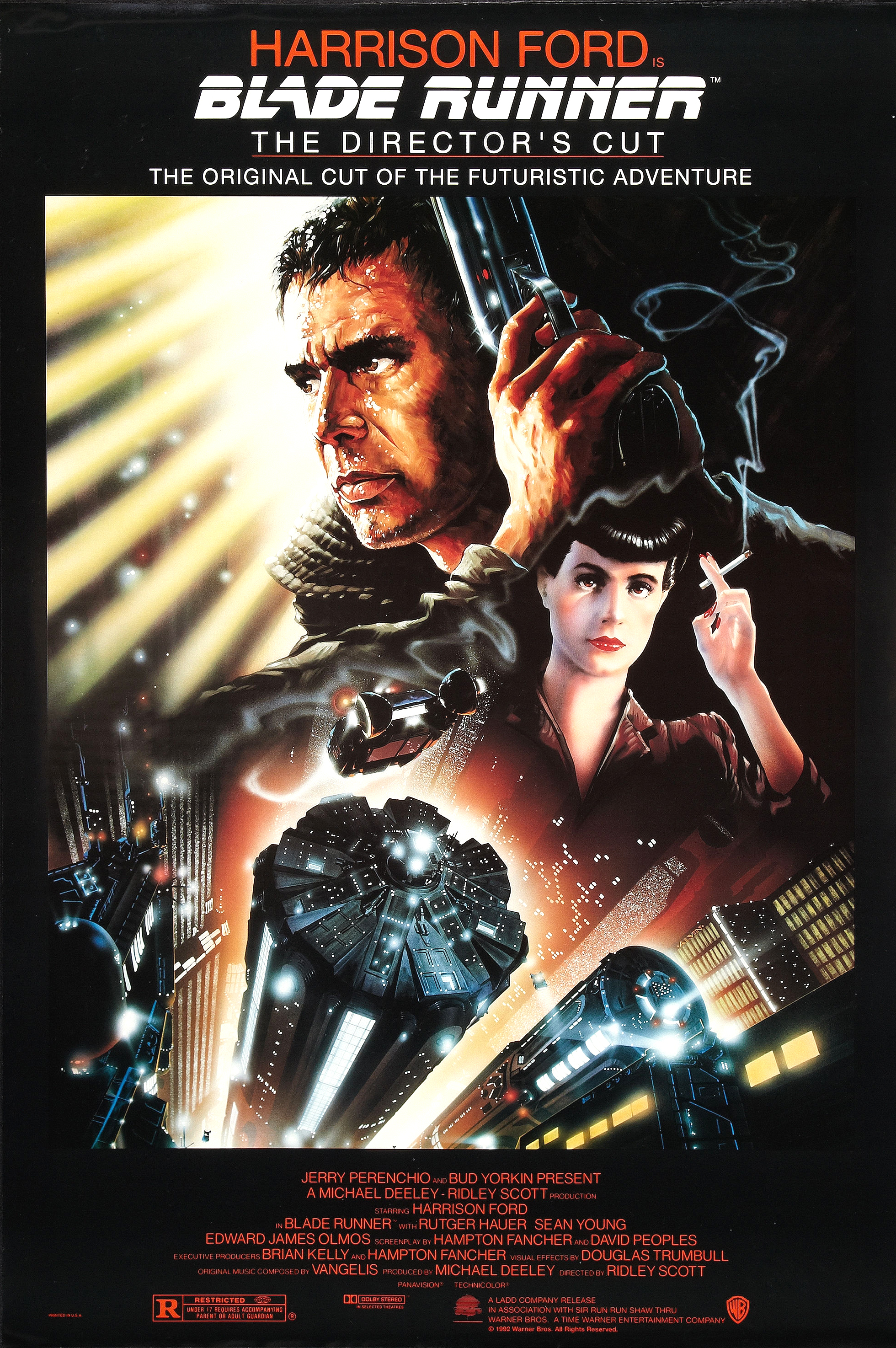
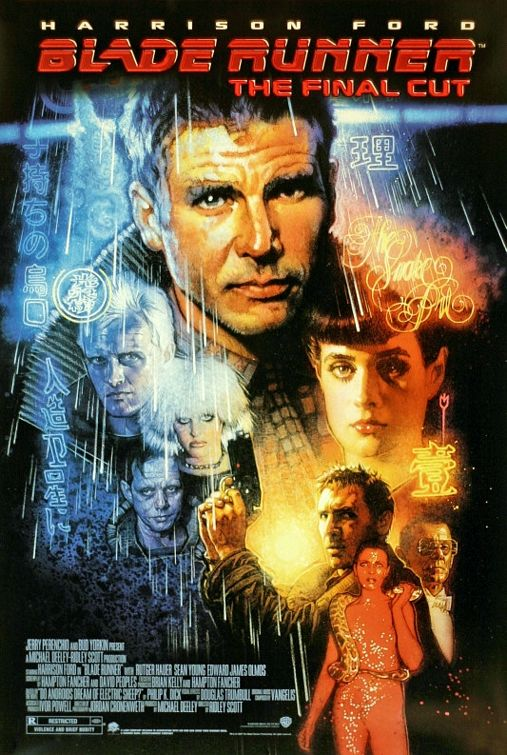
The movie, based on the novel ‘Do Androids Dream of Electric Sheep?’ by Phillip K. Dick, takes place in the year 2019 where human clones called replicants have been created and used basically as slave labor in off-world colonies. However, they create a mutiny and become a danger to the human race on Earth and are therefore banned from returning. If they do come back they are hunted down and killed by a special police force called Blade Runners. Rick Dekard (Harrison Ford) is one of those blade runners and is considered to be the best, but is burned out with his job. He is coaxed out of retirement when an especially dangerous group of replicants led by Roy Batty (Rutger Hauer) escape and return to the planet.

On a visual level this film scores a bulls-eye and is nothing short of awe inspiring. You truly get the feeling that you have traveled to a whole different world. It’s a very complete and intricate vision that can make this movie enjoyable to watch in that area alone. Having it perpetually raining and gloomy helps add to the decayed nihilistic tone of the story. Although it takes place in futuristic city of Los Angeles one might actually think it is China due to the large number of Chinese ads on billboards and oriental people seen in the backdrop of scenes. I can only presume this was a Chinese neighborhood of the city, but I wasn’t sure why the action was placed there. Personally, I have no problem with it and it does help add an extra flavor to the proceedings, but I still felt it needed more of an explanation, which never came. Quite possibly this is something that is explained in the Dick novel, but for those that haven’t read it and are coming in brand new to it all it could prove just a bit confusing.

I really liked the story idea, but felt, like a lot of the critics did at the time, that the pacing is off. There is so much emphasis put on the style and atmosphere that at times it seems like the plot is almost forgotten. The scenes are stretched out much longer than in a typical action/sci-fi picture, which in some ways makes it interesting, but in another way it seems unnecessary. There really isn’t any action or excitement until almost an hour in and even then it goes by too quickly. Too much emphasis is put into Deckard’s relationship with Rachael (Sean Young) a replicant that doesn’t even know that she is one. There is no real chemistry between the two actors and the whole romantic angle came off as forced and contrived and bogged the whole thing down.

Ford is at his crusty best. Few people can play a sarcastic character like he does and still come off as engaging. I liked the ‘been there, done that’ attitude of the character, but found that his ability to handle the replicants seemed woefully lacking. They seem to be constantly taking him by surprise and then throwing him around like he is a ragdoll. Without the defense of his gun, which in one scene gets slapped out of his hand like it is nothing, he seems utterly even hopelessly ineffectual. There are several moments when he is about to be killed by them and is only saved when someone else comes to his rescue. You would think that if someone is as savvy and cocky as this character is portrayed and considered ‘the best’ by his superiors that he would have acquired some sort of fighting technique or better skill at handling them. Instead he looks like he is completely in over his head.

Having a typical gun as the only weapon seems pretty conventional and unimaginative. I would have thought in the future the technology in the weaponry department would be more advanced. A little more James Bond-like gadgetry would have made the fight scenes more interesting. Also, the technique at telling whether the person is human or a replicant is awfully archaic.

Hauer as the leader of the bad guys was a terrific casting choice. I can’t think of any other actor living or dead who was better suited for the part, but unfortunately he gets terribly underused in the process. He is seen only sporadically in the first hour and is not as menacing and terrifying as he should be. The final showdown between the two is good and makes great use of the moody lighting and Victorian-like background set, but ends up fizzling at the end.

I came away with mixed feelings on this one. On a technical end it verges on being brilliant, but in other areas it is lacking. The tension needed to be played up more, the confrontations needed more sizzle, and the hero needed to be more in control of the situation.

However, I really liked Daryl Hannah who has just the right blend of sexiness and evilness in her part. Brion James is good simply because he appears very benign, but then surprises the viewer with an unexpected and unannounced viciousness. You also got to love Joe Turkel and his very funky glasses.

blade runner 1

My Rating: 7 out of 10

Released: June 25, 1982

Runtime: 1Hour 57Minutes

Rated R

Director: Ridley Scott

Studio: Warner Brothers

Available: VHS, DVD, HDDVD, Blu-ray, Amazon Instant Video

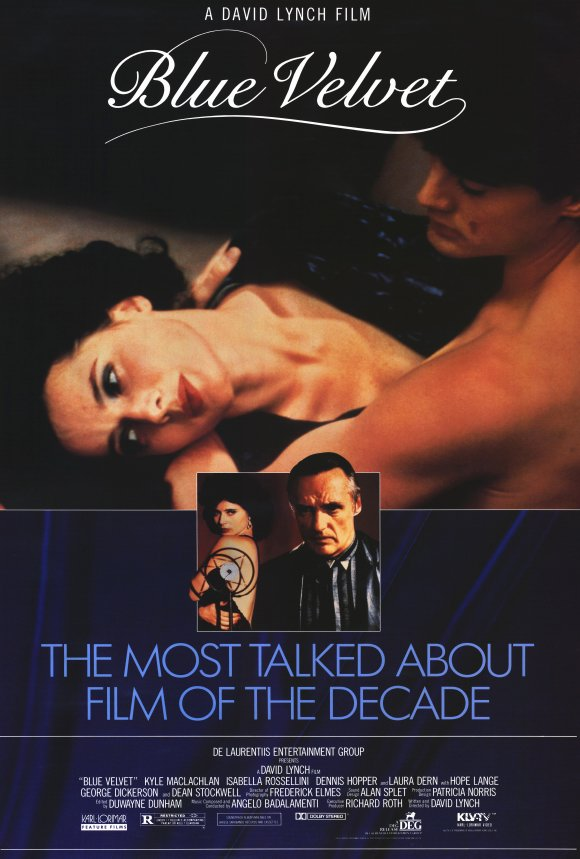
Blue Velvet (1986)

blue velvet 1

By Richard Winters

My Rating: 6 out of 10

4-Word Review: Whose ear is it?

Jeffrey (Kyle MacLachlan) is a young man living in a quiet small town who one day finds a mutilated human ear in an empty field. This gets him involved with a murky kidnapping case involving Dorothy (Isabella Rossellini) and a strange sinister man by the name of Frank (Dennis Hopper).

The offbeat plot evolves well and remains if nothing else captivating. Hopper makes the most of what was at the time his ‘comeback’ role creating a memorable villain. The casting of Rossellini was an inspired choice as she adds a unique flavor to the proceedings and sings a cool rendition of the title tune. The scene involving Dean Stockwell and his strange clan leaves a memorable impression as well.

Director David Lynch keeps a tight grip on his uniquely odd vision and makes sure that it permeates every sight and sound in the picture. The best part, or at least my favorite, comes at the beginning when the camera zooms into a nicely manicured front lawn until it shows an extreme close-up of all the bugs crawling around underneath it in the dirt.

I first saw this film upon its initial release and was mesmerized by it, but now twenty plus years later it doesn’t seem quite as cutting edge as it once did. There have been so many similarly weird films in the intermittent years that this one becomes lost in the shuffle and even dated.

Several scenes get stretched longer than they should be and the second half becomes draggy. The scene where Jeffrey is chased down by an angry boyfriend of Sandy (Laura Dern) only to have the naked Dorothy jump out of the bushes where the boyfriend then apologizes profusely seems now unintentionally funny. The contrived ending, which features a chirping mechanical robin, looks cheesy and tacky.

Despite the fact that the film has not stood the test of time it still has its moments, but it is no longer as fresh or original and the Hopper character is not as frightening as he once was.

My Rating: 6 out of 10

Released: September 19, 1986

Runtime: 2Hours

Rated R

Director: David Lynch

Studio: De Laurentiis Entertainment Group

Available: VHS, DVD (Special Edition), Blu-ray, Amazon Instant Video

Rider on the Rain (1970)

rider on the rain

By Richard Winters

My Rating: 5 out of 10

4-Word Review: Chuck is in control. 

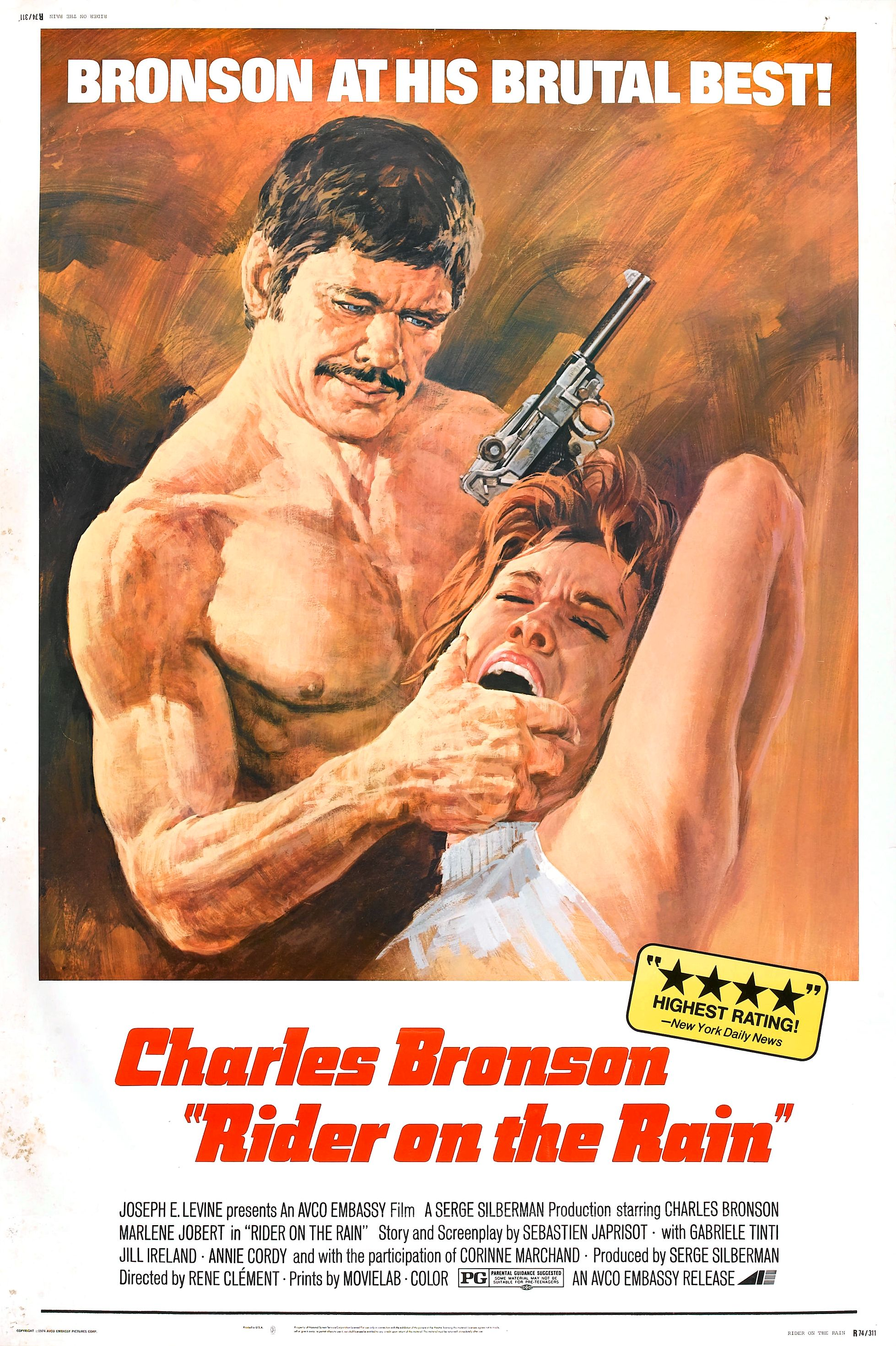
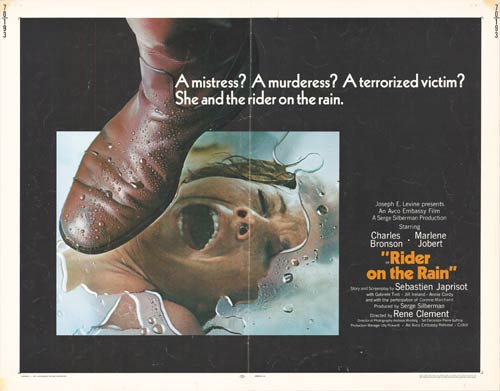
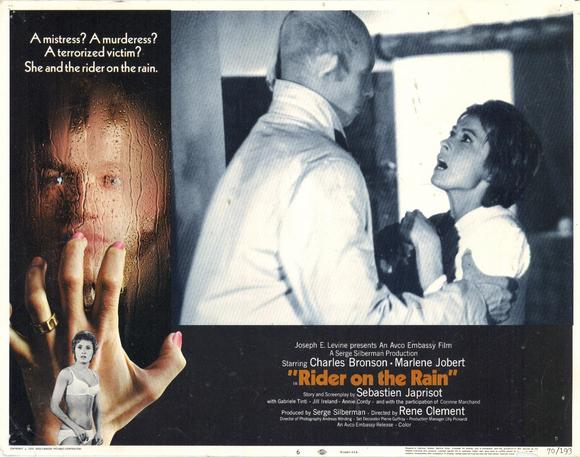
Supposedly the inspiration of The Doors song ‘Riders on the Storm’ this stylish mystery deals with Mela (Marlene Jobert) a beautiful young woman who finds herself being stalked by a strange bald headed man carrying a mysterious red bag. He follows her to her home where he then rapes her. She manages to get her hands on one of her husband’s rifles and shoots the man dead. She throws his dead body over a cliff and into the sea where she thinks that will be the end of it, but then an American by the name of Harry Dobbs (Charles Bronson) shows up who seems to know all about it and will not leave Mela alone until she confesses to the whole thing.

Director Rene Clement is a master at his craft. Every shot and scene has an evocatively stylish flair particularly at the beginning. The lighting, camera work, editing, and moody score by Francis Lai are first rate and help grab the viewer in right away and keep them hooked. There are strong shades of Hitchcock, but like with Hitch the performers become nothing more than pawns to the director’s vision. The actors seem a bit stifled and unable to create any nuance to their characters. Everything is done to propel the story, which is fine, but sometimes expanding the scenes to allow the actor’s to expound more gives a film a fresh and natural flow, which is lacking here. The rape sequence relies almost completely on the breathing sounds of Mela and some interesting edits, which I felt was good, but it could have been even more provocative and cutting edge had this part been extended and a little more graphic.

While the script by Sebastien Japrisot is full of intriguing twists and nicely complex the middle part dealing with Harry’s seemingly unending interrogation of Mela goes on much too long and bogs things down. I would have liked to have seen a little more variation of their roles where at times Mela would get the upper-hand, but for the most part Harry remains in complete control and Mela is dominated and confused throughout, which isn’t as interesting.

rider on the rain 2

Jobert is sexy and adds a definite sparkle to the film. Normally I prefer women with long hair, but her short cut gives her a youthful appeal. Her blue emerald-like eyes make a great contrast to her reddish hair and her freckles helps accentuate the youthful and naïve quality of the character. Her husband Tony played by Gabriele Tinti, has the chiseled boyish looks of a male model with a pair of baby blue eyes that is almost as stunning as Marlene’s making this couple enjoyable to watch for their looks alone for both male and female viewers.

Bronson is at his tough guy best. He takes on seven men in a room and kicks their ass without breaking a sweat. Unfortunately that is all the action that there is and there needed to be more of it. Jill Ireland appears briefly as a character that has little to do with the plot, but looks gorgeous nonetheless.

The film’s final plot twist is rather boring and the conclusion is weak and non-eventful. Mystery fans may enjoy the film’s winding story, but Bronson enthusiasts will be disappointed at the film’s lack of action.

rider on the rain 3

My Rating: 5 out of 10

Released: January 21, 1970

Runtime: 1Hour 55Minutes

Rated R

Director: Rene Clement

Studio: AVCO Embassy Pictures

Available: VHS, DVD

The Birthday Party (1968)

the birthday party 3

By Richard Winters

My Rating: 8 out of 10

4-Word Review: Tear up the newspaper.

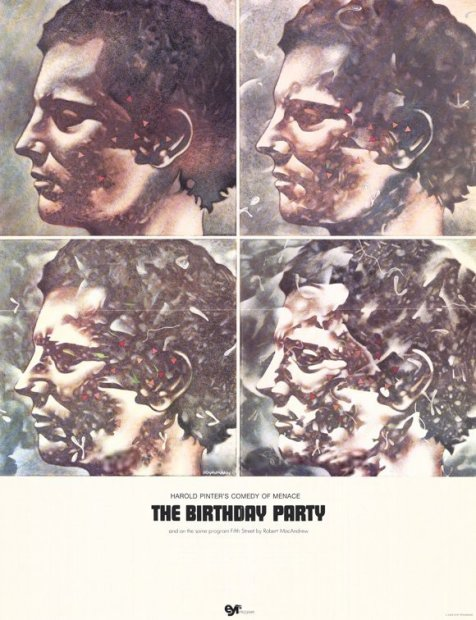
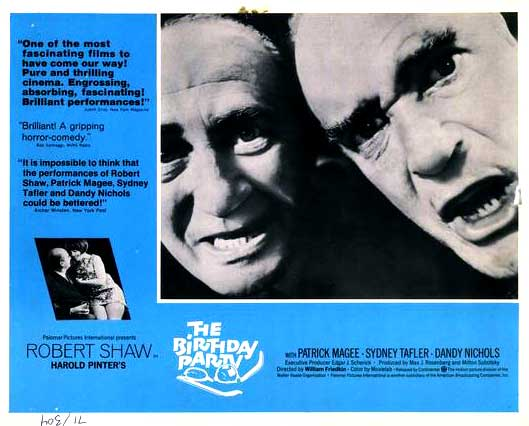
Since tomorrow will be my birthday I wanted to come up with a film that had birthdays as its theme and found this bizarre but fascinating obscurity. It is the story based on the play by Harold Pinter of Stanley Webber (Robert Shaw) a mysterious and private man who takes up lodging in a rundown British seaside house. He rents an upstairs room from Mr. and Mrs. Bowles (Moultrie Kelsall, Dandy Nichols) who are quite odd themselves. One day two men dressed in black suits (Patrick Magee, Sydney Tafler) come to pay Stanley a visit. They know something about Stanley’s past and their presence frightens him to the extent that it causes him to have a nervous breakdown.

On the surface this film shouldn’t work. There is an excessive amount of talking with dialogue that doesn’t say much and at times seems absurd. The set is drab and dirty with the camera seemingly locked down inside of it. There is never any explanation about Stanley’s past or what he is running from nor who the men are or what they know about him. The ending is elusive and the viewer will go away feeling more confused than they did at the start.

However, it is these ingredients that make the film so thoroughly intriguing. The seemingly banal dialogue is simply a façade for underlying thoughts and feelings. What Stanley is trying to run from is unimportant because it is really not about him at all and is instead more about ourselves, human nature and the quandary of our existence. It’s an examination of people’s futile attempts at trying to escape from who they are only to have society and life catch up with them. The set could be a metaphor for the inside of Stanley’s head. The grimy and decayed place symbolizes his decayed soul and the men in black suits are his conscience coming to haunt him.

Once you adjust to the eccentric narrative it then becomes a fantastic film for observing subtitles and nuance. Director William Friedkin shows a keenness for detail not only visually, but with the sound as well. The way the Magee character tears up a newspaper and the sound used for it could actually unnerve some viewers. Stanley’s meltdown scene is very unique and overall the direction is superb for such difficult material.

This movie was years ahead of its time, but for some it may be off-putting. However, it should be enjoyed by those who crave the avant-garde. It is also a rare chance to the see the normally strong-willed Shaw playing a very weak and vulnerable character. Nichols is also a stand-out playing an Edith Bunker type with a perverse streak lying just beneath the surface.

the birthday party 1

My Rating: 8 out of 10

Released: December 9, 1968

Runtime: 2Hours 3Minutes

Rated G

Director: William Friedkin

Studio: Palomar Pictures International

Available: VHS, DVD (Region 2)