Category Archives: Moody/Stylish

The Sailor Who Fell from Grace with the Sea (1976)

By Richard Winters

My Rating: 4 out of 10

4-Word Review: They dissect a cat.

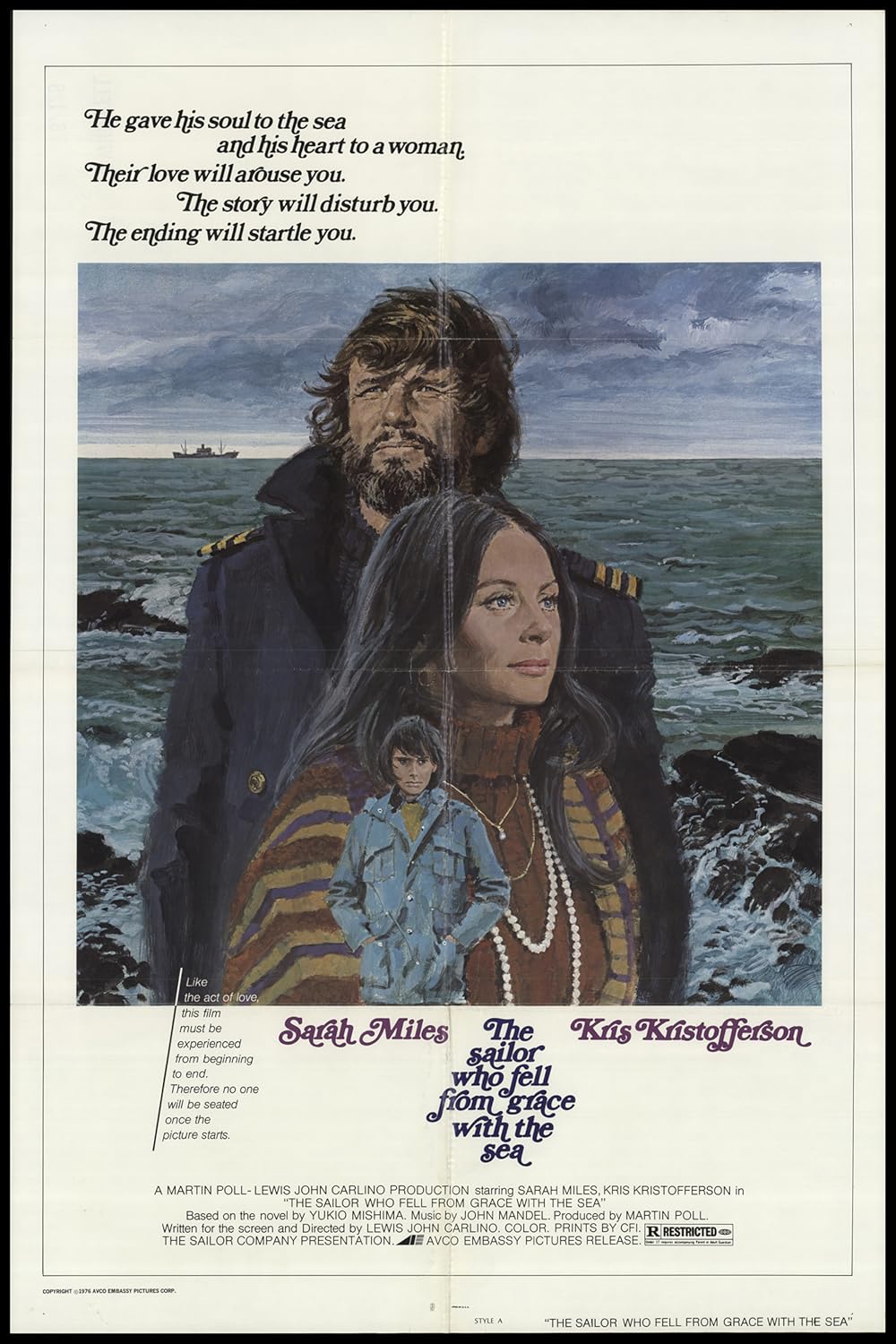
Jonathan (Jonathan Kahn) is a 14-year-old who lives with his mother (Sarah Miles) and nanny Mrs. Palmer (Margo Cunningham) in a beachfront house along the sea after the death of his father three years earlier. Jonathan enjoys his friendship with a group of boys lead by Chief (Earl Rhodes), but his mother does not approve due to Chief’s anti-social sentiment forcing Jonathan to have to sneak out on the sly to see them. One day Jonathan finds a peep hole in his bedroom wall that allows him to see inside his mother’s bedroom, and he begins to peer in on her when she’s undressed, and this creates an unhealthy arousal. When his mother begins a relationship with a sailor named Jim (Kris Kristofferson) he becomes jealous and conveys as much to Chief who devises a sinister plan to ‘solve the problem’.

Lewis John Carlino had a highly respected career as a screenwriter garnering 4 Academy Award nominations for best screenplay, but his three forays as director weren’t as successful and all started out well but ended up just missing the mark. This one was no exception as many critics at the time felt the problem lay in adapting a novel, that was written by Yukio Mishima, which was set in Japan, and trying to convert it to English society. The cultures differences that make up the complex Japanese society that were so integral to the characters in the book gets completely lost in the translation leaving the viewer feeling cold, detached, and genuinely confused when it’s over.

The on-location shooting filmed in Dartmouth, Devon, England, is excellent and the one thing that helps the movie stand-out particularly the isolated hillside house that gives the atmosphere an almost surreal-like feel. There’s also a really creepy performance by Rhodes who nails it as a highly intellectualized kid who displays no moral compass and effectively comes-off as a very believable young sociopath. However, these moments gets coupled with some very disturbing ones dealing with animal cruelty which includes a very drawn-out scene involving the killing and dissecting of a cat as well as putting a firecracker in a seagull’s mouth and while no animal was actually harmed during the production it still left many audiences at the time upset and will very likely do the same with viewers today.

The film’s biggest flaw though is that it doesn’t interpret the character’s actions in any way that helps makes sense of their motivations and for the most part they’re all quite two-dimensional. Jonathan’s arousal at seeing his naked mother needs much better explaining. Most kids aren’t this way, so what is it about his psyche that causes him to enjoy it without any guilt or shame? The movie gives us no clue, nor does it explain how his father died and when you add in the boy’s weird behavior and you start to wonder if the Jonathan maybe had something to do with it, which would’ve opened an interesting subtext if even brought up subtlety, but the script fails to touch on it.

The book makes the reasons for the son’s actions clearer. For instance in the novel the boy losses respect for the sailor when he sees him jump into a water fountain, which he considers to be undignified and the movie really needed to have some similar moment as the kid, like in the book, is initially in awe of the man, but it’s never totally clear what creates the deadly shift. Also, when the son is caught peeping in at his mom the response by his mother in the book is different as she feels the boy should receive a severe punishment, but the sailor, in hopes of becoming ‘friends’ with the kid whom he’s now helping to raise, resists, but the film flubs this scene too by treating it almost like a forgettable throwaway moment that has no impact versus one that would’ve helped reveal the sailor in a more in depth way.

Spoiler Alert!

The ending, which should’ve been a shocker, falls flat as well. In the novel it’s made clear that the boys plan to drug and dissect the sailor just like they did with the cat and they even bring along the tools to do it, in the movie we only witness him drinking the spiked tea. The camera then zooms way out showing the boys at an extreme distance where it’s not obvious what they’re doing. To really make a memorable impression we should’ve seen the boys stab the sailor several times with their knives, which would’ve been far more startling. I felt too there needed to be a reaction from the mother. Does she find out what they did, or does his violent demise remain a mystery? How does her relationship with her son evolve, or devolve afterwards? These questions remain unanswered making the movie seem less like a story and more as a concept that’s never adequately fleshed out.
My Rating: 4 out of 10

Released: April 5, 1976

Runtime: 1 Hour 45 Minutes

Rated R

Director: Lewis John Carlino

Studio: AVCO Embassy Pictures

Available: DVD, Blu-ray, Amazon Video, Plex, Roku Channel, Tubi, YouTube
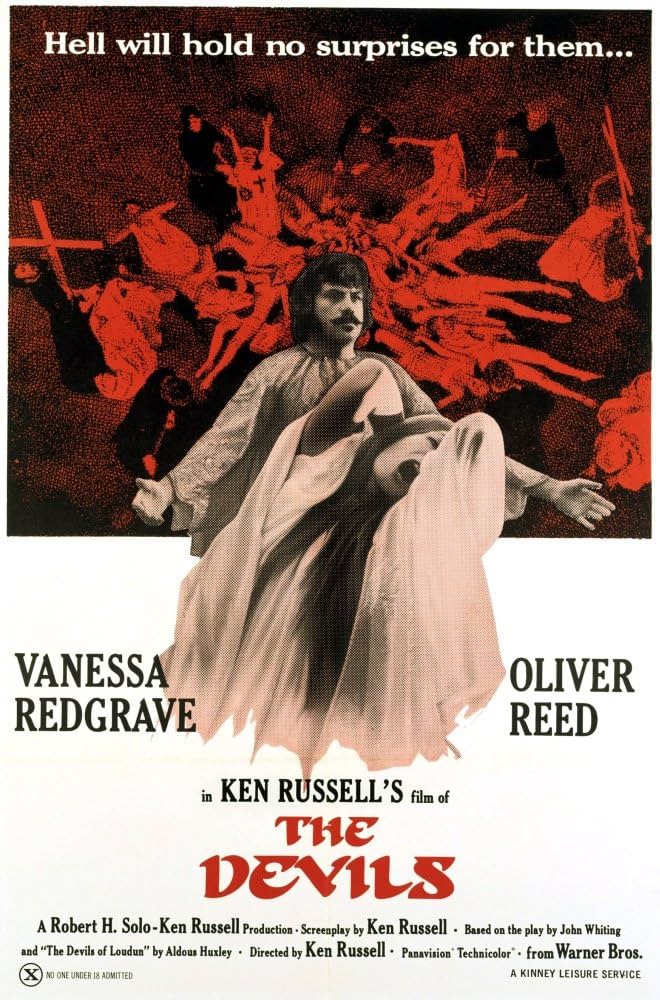
The Devils (1971)

devils1

By Richard Winters

My Rating: 9 out of 10

4-Word Review: Burned at the stake.

In the year 1634 the governor of Loudon, a small fortified city, dies, making Urbain Grandier (Oliver Reed), a priest with a secretly decadent lifestyle, the one in control. He’s idolized by the townspeople and the head nun at the local convent, Sister Jeanne des Anges (Vanessa Redgrave), secretly has sexual fantasies about him though because she suffers from having a hunch on her back is rarely ever seen outside and Urbain himself doesn’t know she exists. When Urbain secretly marries Madeleine (Gemma Jones) Jeanne becomes jealous causing her to confide to Father Mignon (Murray Melvin) that she’s been possessed by Urbain as well as accusing him of dabbling in witchcraft. This then leads to an inquisition headed by Father Pierre Barre (Michael Gothard) and a public exorcism, which has the nuns in the church strip and perform perverse acts before Urbain and his new wife are arrested and put on trial.

The story is based on the actual event, which was written about in the book ‘The Devils of Loudun’ by Aldous Huxley that was later turned into a stageplay. After the play’s success United Artists became interested in turning it into a movie and signed-on Ken Russell to direct due to his recent success in helming Woman in Love. Russell read the source material and became in his words ‘knocked-out by it’ and ‘wanted others to be knocked-out by it too’. This then compelled him to write an extraordinarily over-the-top script full of sex, violence, and graphic torture that so shocked the studio execs when they read it that they immediately withdrew their initial investment and refused to fund the picture threatening the project from being made even though many of the sets, constructed by set designer Derek Jarman, has already been painstakingly completed, but fortunately for them Warner Brothers swooped-in at the eleventh hour, which allowed the production to proceed.

The film’s release was met with major controversy with many critics of the day, including Roger Ebert who gave the film a very rare 0 star rating, condemning it. Numerous cuts were done in order to edit it down to a version that would allow it to get shown with the original British print running 111 minutes while the American one ran 108. Both were issued with an ‘X’ rating though even these cut out the most controversial scene, known as ‘The Rape of Christ’ segment, in which a group of naked nuns tears down and then performs perverse acts on a giant-sized statue of Jesus. This footage was deemed lost for many years before it was finally restored in a director’s cut version, that runs 117 minutes, that was shown in London in 2002. Yet even today this full version is hard-to-find with Warner Brothers refusing to release it on either DVD, or Blu-ray. They’ve even turned down offers from The Criterion Collection who wanted to buy it. While there was a print Warner released onto VHS back in the 80’s, this same version, got broadcast on Pay-TV, it’s edited in a way that makes the story incomprehensible, and only the director’s cut is fluid enough for the storyline to fully work.

It’s hard to know what genre to put this one into as this isn’t your typical movie and watching it is more like a one-of-a-kind experience that very much lives up to its legend and just as shocking today as it was back then. Yet, outside of all of its outrageousness it is quite effective. Each and every shot is marvelously provocative and the garishly colorful set pieces have a mesmerizing quality. The chief color scheme of white that lines the walls of the inside of the convent seemed to interpret to me the interior of a mental hospital, which helps accentuate the insanity of the frenzied climate. While things are quite over-the-top its ability to capture the mood of the times, the cruel way people treated each other and how they’re all steeped in superstition as well as the dead bodies from the plague that get stacked about, are all on-target and amazingly vivid.

The acting is surreal with both Reed and Redgrave stating in later interviews that they consider their performances here to be the best of their careers. Reed’s work comes-off as especially exhausting as he gets his head shaved and then is ridiculed in a large room full of hundreds of people before burned to death with make-up effects that are so realistic it’s scary. Redgrave, who walks around with her head twisted at a creepy angle, is quite memorable during the scene where she physically punches herself for having sexual fantasies, even puts a crucifix in her mouth at one point and masturbates with a human bone. Dudley Sutton and Murray Melvin with their very unique facial features and Michael Gothard, who initially comes-off with his long wavy hair as an anachronistic hippie flower child, but who becomes aggressively evil as the makeshift exorcism proceeds, all help round-out a most incredible supporting cast.

While the cult following for this remains strong and getting stronger and demand for a proper, director’s cut studio released DVD/Blu-ray is high Warner continues to rebuff the requests. There are though ways to find versions through Bing searches. Streaming services Shudder and Criterion Channel have shown the most complete prints to date, running roughly 111 minutes with most of the controversial scenes, including the Rape of Christ moments though these scenes are of a poorer, grainy and faded color quality since they never went through a professional digital transfer, but overall it’s still one of those movies you should seek-out because not only is it fascinatingly brilliant, but it’s something that could never be  made today and a true testament to the wild, unfiltered cinema of the 70’s that will forever make it the groundbreaking, unforgettable decade that it was.

My Rating: 9 out of 10

Released: July 16, 1971

Runtime: 1 Hour 57 Minutes (Director’s Cut)

Rated R (Originally X)

Director: Ken Russell

Studio: Warner Brothers

Available: DVD-R

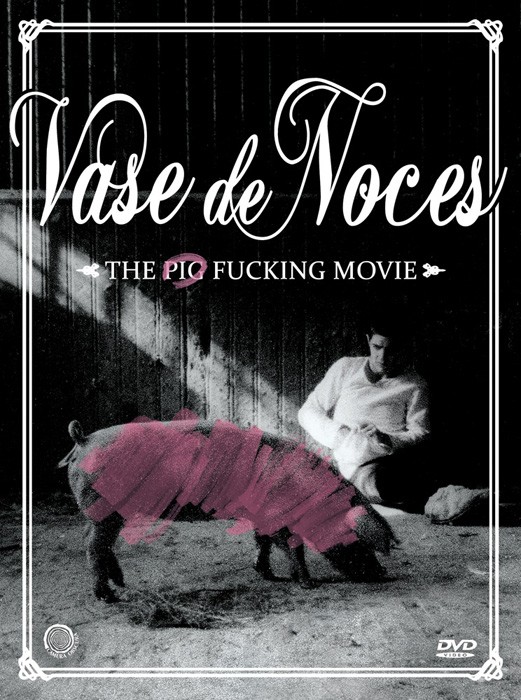
Wedding Trough (1975)

wedding

By Richard Winters

My Rating: 1 out of 10

4-Word Review: Man fucks his pig.

Bizarre, controversial film that was first shown at the Perth International Film Festival in Australia where it was immediately met with outrage and walkouts that quickly got it banned from being shown again by the government, a ban of which still stands today. Since then it’s turned-up sporadically a various film festivals throughout the decades, with the last one being in 2008 in Switzerland, but was never released theatrically and was considered an obscurity before finally getting a DVD issue in 2018. The film has no dialogue and shot in black-and-white at an abandoned farm in the outskirts of Belgium. It was directed by Thierry Zeno who had a noted fascination with all things morbid and followed this one up with a documentary on death and decay called Des Morts. This one deals with taboo subjects of zoophilia and coprophagia, which gets shown graphically. Many label this a horror movie for its grim and unrelenting subject matter, and some have even considered it a forerunner to Eraserhead

The plot description, which will contain SPOILERS, though in this case I feel is a good thing, so you know exactly what you’re getting into if you attempt to watch it, deals with a lonely farmer, played by Dominique Garny, who also co-wrote the screenplay, who begins to have amorous feelings towards his pet pig. One day he gets naked and has sex with it. Later on, the pig gives birth to three piglets. The man tries to bond with his brood by sleeping with them inside a giant basket, but the piglets prefer the comfort of their mother over him. Feeling that he’s now been ‘abandoned by his children’ it sends him into a rage causing him to kill the piglets by hanging them. This causes a great deal of stress for the mother pig who drowns herself in a nearby pond. The farmer now feels guilty about what he’s done, so he ‘punishes himself’ by concocting a drink made of his feces and urine and warms it inside a black pot before then forcing himself to swallow it.

While the sex scenes are simulated, though still graphic enough, the pooping and eating of it isn’t, which many will find gross enough. The hanging of the piglets though is quite unsettling. I’d like to feel that the ones that are hung were stillborn, since they do appear a bit smaller in size from the ones seen running around, but I’m not completely sure. However, the mother pig does become quite stressed in a very real way when she sees the dead piglets and runs around squealing in a high and frantic pitch, which is very disturbing.

Some have for decades sought this movie out as evidenced by the IMDb comments simply their love of shock cinema and this film’s notorious reputation for being at the top of the list. While it is unequivocally gross it’s also boring and disgusting with the abuse of the animals being the worst thing you’ll take from it. Not recommended.

Alternate Titles: Vase de Noces, The Pig Fucking Movie.

Released: April 11, 1975

Runtime: 1 Hour 19 Minutes

Not Rated

Director: Theirry Zeno

Studio: Zeno Films

Available: DVD-R

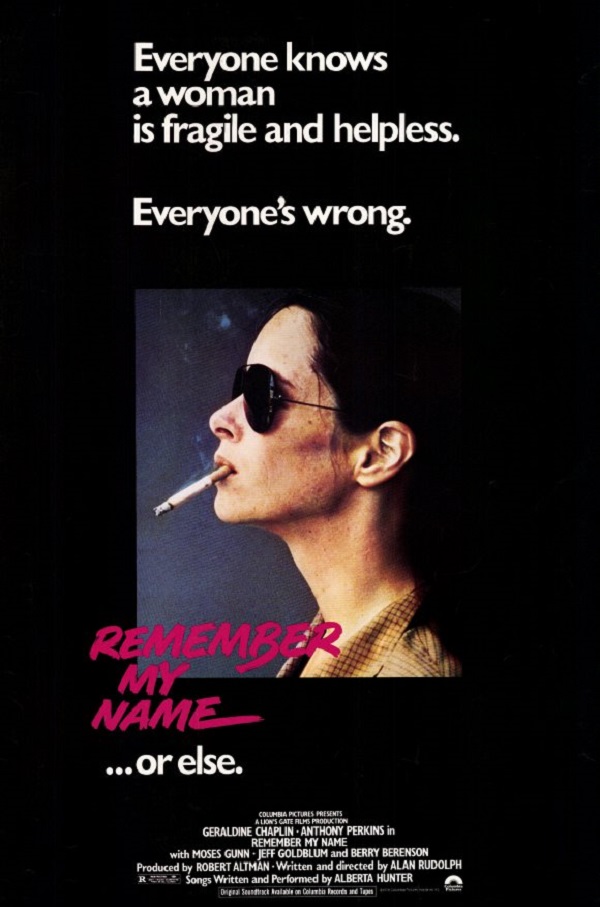
Remember My Name (1978)

remember

By Richard Winters

My Rating: 7 out of 10

4-Word Review: His ex-wife returns.

Neil (Anthony Perkins), who works as a local carpenter, is married to Barbara (Berry Berenson). While the two have their share of ups-and-downs they mostly find a way to work it out and get along. Then comes Emily (Geraldine Chaplin) whose been recently released from jail. She begins harassing the couple for no apparent reason. After she breaks the window of their home Barbara insists on pressing charges. Neil though resists while divulging that he had previously been in a relationship with her and because of certain things that occurred has a misplaced sense of guilt to cover-up for her actions. Barbara does not understand this and the two break-up while Neil decides to rekindle things, but while Emily initially seems receptive she may actually harbor ulterior motives.

Alan Rudolph does a marvelous job of directing this emphasizing the working-class existence with a pale color scheme and great use of on-location shooting, which gives the viewer a vivid and intimate portrait of the character’s lives and their environment. The use of showing that Emily had previously been in prison without actually saying it by simply using certain sounds and visuals as she sleeps is a genuinely inspired moment as is the use of the brief dialogue that reveals things slowly and deliberately using subtle hints that achieves a certain fragmented narrative.

Chaplin is brilliant and convincing in the lead and her unique colored eyes helps build a riveting psycho-like effect though with her extremely thin frame it’s hard to imagine she’d be able to take-on and even beat-up the Alfre Woodard character as she does though one could possibly justify it by saying she learned fighting skills while in jail. Perkins is also quite good, but the use of his real-life wife Berenson, who didn’t have a lot of acting training, hurts as her time on screen is rather blah including the otherwise tense confrontation that she has with Emily when Emily invades her home, which might’ve been a more interesting scene with a better qualified actress in the part.

While the first-half is quite slow I was thoroughly gripped and found the whole thing fascinating, but this tapered-off by the third act when Perkins and Chaplin rekindle things while at a restaurant. The scene gets done in amusing way as the couple keeps ordering alcoholic drinks one after the other, much to the consternation of the waiter, played by Terry Wills, but having Perkins go back immediately to Chaplin with almost no apprehension kills the intrigue. This is a woman that supposedly murdered someone before, so how does he know she can be trusted? Having him more defensive and cautious and even conflicted as he was technically still married would’ve helped continue the tension instead of deflating it.

Spoiler Alert!

The scene in which the Moses Gunn character, who was having a bit of a fling with Emily, goes back to her apartment apparently to murder Perkins who had been temporarily staying there, could’ve been done better. It’s only intimated that Gunn kills him as we see a nervous look on Perkins face as he hears somebody at the door and then it cuts away to the outside of the building with loud crashing music to display that there was violence, but I really felt it should’ve gotten played-out visually. Perhaps it could’ve been done Rear Window-style with it being captured through the windows, which would’ve stayed consistent with the film’s detached tone, but to leave the story’s most crucial moment up to speculation was a letdown.

The same can be said to Alfre Woodard’s character who promises revenge on Chaplin, but it never comes. A good physical confrontation between the two could’ve added some much needed action, which otherwise is sorely missing and makes the film seem incomplete. Having Chaplin terrorize the couple by messing up their flower garden is a bit too tame as any squirrel or raccoon could’ve done the same thing while putting a bloody animal on their doorstep, or nailing a graphic picture of the person she had killed before would’ve been far more frightening.

Overall I liked the style, but the attempt to keep things buttoned-down all the way through doesn’t work. At some point, just like with the ticking time bomb mentality of its main character, it needed to explode with violence that would’ve awakened the viewer with a shocking effect. The fact that this is only slyly hinted at is a letdown and doesn’t give the movie the strong pay-off that it should.

My Rating: 7 out of 10

Released: October 1, 1978

Runtime: 1 Hour 34 Minutes

Rated R

Director: Alan Rudolph

Studio: Columbia Pictures

Available: DVD-R, Tubi

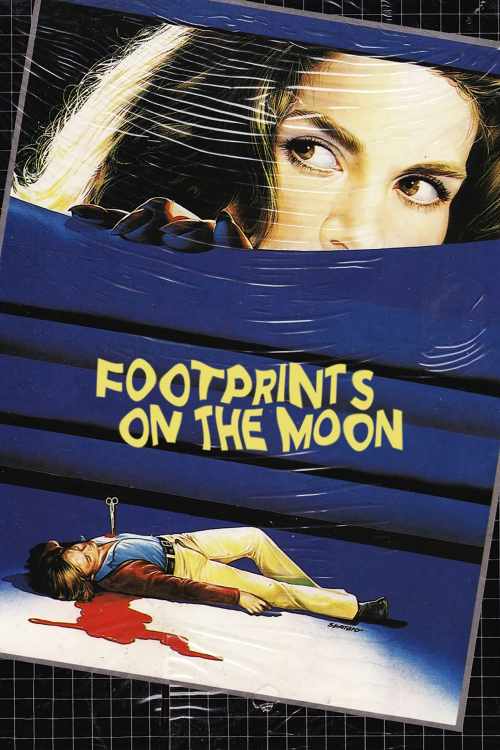
Footprints on the Moon (1975)

footprints5

By Richard Winters

My Rating: 4 out of 10

4-Word Review: Tormented by a nightmare.

Alice (Florinda Bolkan) is tormented by a constant dream involving an old movie she saw when she was younger that dealt with a man being left on the moon to die. She awakens one morning to find that she’s slept for over 2-days and when she arrives at her job she learns that she’s been fired for not showing up and not calling-in. She gets back to her apartment and spots a postcard revealing a hotel, which she vaguely remembers being at. She decides to travel there, which is off the Turkish coast, and meets people who say they’ve seen her before, but while wearing a wig and going by a different name.

The film’s chief asset is the directing by Luigi Bazzone, who had a brief 10-year career where he did 5 films and then inexplicably retired when he was only 46 and never to do another film after this one, which is a shame as he had many more years ahead of him and could’ve helmed a slew of interesting movies in the process. This one definitely relies on a good visual touch. The opening bit done on the moon has certainly a tacky quality, but is also captivating. It doesn’t exactly look authentic, but captured in a way that gives it a dream-like feel and makes it gripping. The island setting that Alice goes to, shot in Phaselis, has such a unique topography that it gives the whole thing a very outer worldly appeal and helps enhance the bizarre story elements.

Bolkan’s presence though does not help. She wears a perpetual scowl, outside of one moment when she smiles to greet a child, that makes her unappealing and hard to sympathize with. She also lost too much weight, reportedly 11 pounds by her own admission, making her look scrawny and like she could tip over with the slightest breeze. She already had a thin frame, so for her to lose anymore, makes her anorexic and not sexy particularly when she goes nude during a shower scene.

Her character is ghost-like and transparent. Some may say this is due to the twist, but for the viewer to get wrapped-up into the character’s quandary they need to see her as a multi-dimensional person. Instead we get someone with no apparent connections to the world around her. Having her go through the plot with some other friend beside her, which she could’ve fed-off of emotionally whenever she got upset, or confused would’ve helped tremendously. Trying to care about a person who’s not fleshed-out doesn’t work and I went through most of it feeling ambivalent about the protagonist’s fate.

Nicoletta Elmi, who plays a young girl that Alice meets while on the island, has far more appeal especially with her striking red hair and clear blue eye, and thus her scenes allow for some intrigue though her conversations with Alice seem to just be repeating themselves. Klaus Kinski is only on hand for a little while and never interacts with anyone making it seem like he’s in some other movie with no connection to this one. In fact his moments could’ve been cut, he only gets shown sporadically anyways, and the movie would not have been hurt by it.

The plot, which was based loosely on the novel ‘Las Huellas’ by Mario Fenelli, doesn’t have enough going on to hold the viewer’s attention. This is yet another example where had it been shortened it would’ve worked perfectly as an episode for the “Twilight Zone’, but here it labors along. It gives out a lot of tantalizing clues at the beginning, but the second act goes nowhere with not enough twists. The concept becomes highly strained with a character that doesn’t interact enough and the few conversations she has are bland and don’t allow the story to progress. The ‘surprise ending’ doesn’t make-up for the lulls and only leads to more questions than answers.

My Rating: 4 out of 10

Released: February 1, 1975

Runtime: 1 Hour 30 Minutes

Not Rated

Director: Luigi Bazzoni

Studio: Cineriz

Available: DVD-R, Amazon Video, Screambox

Dirty Little Billy (1972)

dirty

By Richard Winters

My Rating: 9 out of 10

4-Word Review: From awkward to outlaw.

Loosely based on the life of Billy the Kid the film centers on a young Billy Bonney (Michael J. Pollard) who moves to Kansas with his mother (Dran Hamilton) and her new husband Henry (Willard Sage). Billy and Henry don’t get along as Henry feels Billy is lazy and doesn’t help out enough with the farm chores. When Henry informs Billy one night that he needs to leave and never come back Billy does just that by hopping onto the nearest train that’s traveling back east only to at the last minute hop off of it and into a nearby small town where he encounters Goldie (Richard Evans) and his girlfriend Berle (Lee Purcell) who run a small gang of outlaws and are holed-up inside a bar run by Jawbone (Josip Elic). Initially Goldie and Billy are incompatible, but eventually Berle softens towards him and even allows him to go to bed with her. When Billy comes to their rescue when they have a confrontation with another gang he’s eventually welcomed into the group and ultimately becomes its new leader.

By the early 70’s the revisionist western, which portrayed the west in a less ideal way focused more on the realism and merged the good and evil theme so that it became less clear who the hero and bad guy were, became all the rage. Films like The Wild Bunch and McCabe and Mrs. Miller were critical darlings and set the standard for all westerns that followed. This film I considered to be one of the best and yet has strangely been overlooked and isn’t even in Wikipeadia’s list of revisionist westerns from that period, which is a real shame as this masterpiece deserves from more attention and if anything should be at the top of the list and figured prominently.

What’s even more baffling is that it was directed by Stan Dragoti a man that started out in commercial photography and had no aspirations for film directing until finally, at the age of 40, getting the offer to direct this one. The film is so highly stylized and has such a strong a precise artistic vision that I would liken this directorial debut to those of Richard Linklater, Quentin Tarantino, or Jim Jarmusch who burst into the film scene with a distinct style that took audiences and critics by storm while ultimately continuing each of their follow-up projects with the same unique approach and theme, but with Dragoti, who was married to supermodel Cheryl Tiegs, that was not the case. The films he did after this were all lightweight comedies that had a generic look and no resemblance to this one. How someone with no background in movies could helm something as flawless as this is hard to answer, but in the music world you have obscure bands who manage to make it big with one song and they end up being called one-hit-wonders and I guess in Dragoti’s case that’s what this movie was to him and his career.

The acting is masterful as well especially Pollard whose career was quite up-and-down. While he had been appearing in TV productions from as early as the late 50’s it wasn’t until his breakout role in Bonnie and Clyde that he came to the attention of audiences and studio heads alike. Trying to subsequently cast him in a film where he’d be the right leading man though was no easy task. The first attempt was Little Faus and Big Halseywhich did not do well at the box office and rumors of him fighting with his co-star Robert Redford didn’t help things. This role though, where his moody presence is put to perfect use, was a terrific fit and despite already being in his early 30’s his boyish face still gave off the late adolescence look that was needed. Lee Purcell is also fantastic in a sort of plain-Jane role where she wears no make-up, but still looks striking and her knife fight with another woman, played by Rosary Nix, is one of the movie’s top moments.

Overall, outside of the gritty visuals that have an almost poetic quality, what I liked most was how the characters didn’t seem locked into their time period like so many other historical type films. Too many other movies trying to recreate past eras end up having people who seem antiquated and not relatable while this bunch, particularly Billy and the outlaws came-off like people who could’ve easily fit-in with the hippies of the 60’s, or anyone that was living outside the system. They were simply looking for purpose and finding it by lashing out at a society that didn’t seem to want them, which in many cases is the common thread of most criminals of today as well.

My Rating: 9 out of 10

Released: October 25, 1972

Runtime: 1 Hour 33 Minutes

Rated R

Director: Stan Dragoti

Studio: Columbia Pictures

Available: DVD-R

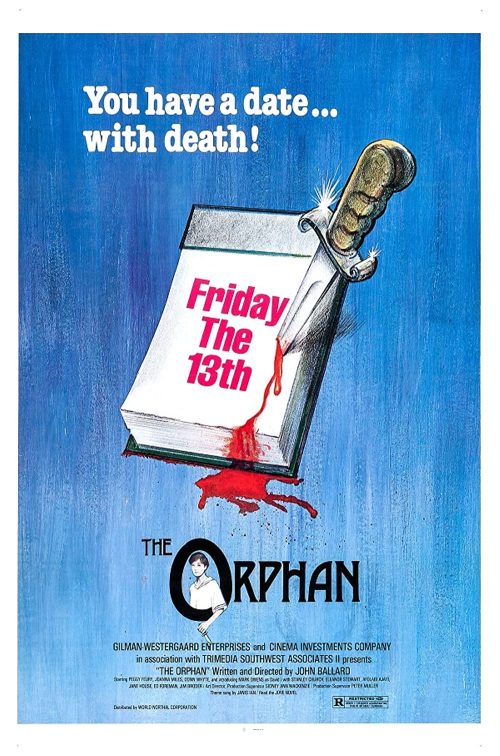
The Orphan (1979)

orphan

By Richard Winters

My Rating: 6 out of 10

4-Word Review: Oppressive aunt dominates kid.

David (Dan Owens) is a child of around 10 growing-up in the 1920’s who witnesses his mother (Joanna Miles) die a violent death and then later has to deal with his father’s untimely death as well.  His Aunt Martha (Peggy Fleury), who was the sister of David’s mother and who also had a secret affair with his father (Donn Whyte) years before, moves into the home and takes over as his adoptive parent. Since she had no children of her own she doesn’t know how to communicate with kids and instead lays down a lot of rules that David doesn’t like and pushes him into a make-believe world. He spends most of his time in an old backyard chicken coop where he talks to a stuffed monkey that he believes holds power and can make changes in his life for the better particularly when it comes to his aunt.

This film’s biggest claim-to-fame was its original title which was Friday the 13th: The Orphan and the producers of the Friday the 13th movie, which was filming around the same time that this one was released, feared it would get confused with theirs and thus went into negotiations to get the title changed. It was anticipated at that time that this one would do better as it took more of an old-fashioned approach to horror by working-off of atmosphere, imagery, and mood while the other one was an all-out slasher, which was still considered to be a fringe genre that would only attract small, select audience. Instead that one became a huge hit while this one fell into virtual obscurity.

For the most part I though it was an interesting and while not completely successful does have its moments. The pacing is indeed off especially during the first act where nothing much happens and there’s few if any frights, which made me start to wonder if it was even a horror movie at all, but it gets handled well on the technical end and I remained intrigued enough to keep watching. Things did improve by the second act and there’s a few creepy nightmare segments including David’s vision, captured with a fish-eye camera lens, of entering an orphanage, which is visually unnerving and I wondered if possibly writer/director John Ballard was going back to his own childhood experiences and the dark memories that he harbored as these scenes start to seem quite personal.

The acting by the kid is phenomenal. Usually child actors, even if they’re good, aren’t quite up to carrying a movie, but Owens does and I was surprised to find that he’s never appeared in any others as I felt he was talented enough to have a memorable career. He has, with his overbite, a creepy look about him and very much resembles, Ike Eisenmann, another famous child actor from the 70’s. However, I wasn’t sure if finding a kid that gave-off a scary vibe right away was necessarily the right move as the horror might’ve been more effective had he seemed cute and precocious initially, and someone the viewer could like, only to have, as a surprise twist, the dark elements come out later versus telegraphing it from the beginning.

Spoiler Alert!

There are a couple of good murders, but you’re going to have to wait until literally almost the very end to see them. The plot is also heavy-handed as it’s obvious that there’s going to be an ultimate clash between the kid and the aunt and endlessly dragging-it-out to where the viewer knows  where it’s headed, but takes its sweet time to get there, gets a bit frustrating. I also didn’t understand why the story had to take place in the 1920’s as I didn’t think it added anything and could’ve easily been set in the modern day and the attempts to make it seem like a period piece, especially on a low budget, doesn’t completely work.

Also, the plot synopsis in IMDb for this movie is inaccurate. It describes the kid as having ‘horrific headaches’, which he believes ‘make him commit murders’, but in the print I saw, which as supposedly the uncut, extended version there was no talk about headaches, or even observing him having one.

My Rating: 6 out of 10

Released: November 10, 1979

Runtime: 1 Hour 32 Minutes (Extended Cut)

Rated R

Director: John Ballard

Studio: Cinema Investments Company

Available: DVD-R (j4hi.com, dvdlady.com)

Figures in a Landscape (1970)

figures1

By Richard Winters

My Rating: 5 out of 10

4-Word Review: Chased by a helicopter.

Ansell (Malcolm McDowell) and MacConnachie (Robert Shaw) are two men on the run in the middle of a bleak, desolate desert. What they are escaping from is never clear, but they’re constantly hounded by a helicopter that seems intent at stopping them. They come upon a small village and steal food and supplies and then continue on their escape, but find trying to get along with each other is just as challenging as avoiding the copter.

I’m a big admirer of Joseph Losey’s films and I also enjoy movies that have an air of mystery and don’t feel the need to have to explain everything, but this attempt at avante garde doesn’t work. The Barry England novel or which this is based and received high critical praise when it came out in 1968 at least made it clear that these two were soldiers who were deserting for whatever reason, but the movie doesn’t even mention this. We’re simply left with a nothing-burger of seeing two guys we have no emotional connection with scurrying around the countryside, which gets old fast and has nothing to keep it compelling though the bird’s eye shots of them on the ground looking like dots as they run at least allows it to live up to its title.

Fans of the film will admit that the story is lacking, but the helicopter sequences and stunt work more than makes up for it, but I found this aspect to be underwhelming. The camerawork of showing the copter bearing down on them while splicing in shots from the pilot’s point-of-view is well handled, but it’s not as exciting as could’ve been because when the pilots have a chance to shoot the men they don’t. McDowell’s character explains that they (the helicopter pilots) are just ‘toying with them’, but the viewer can’t be expected to get wrapped-up in a silly cat-and-mouse contest that has no life or death consequence.

Much of the blame for why this comes-off more like a misguided experiment than an actual movie, can be attributed to Shaw, who was given permission to rewrite the script and promised to have it completed by the time shooting began, but didn’t. Apparently revisions were being made on a daily basis and no one knew where the plot was going, or how to end it, which ultimately makes for a flat and detached viewing experience.

The two leads do quite well with McDowell interesting as the younger of the two, but still more emotionally mature. Shaw is equally fine giving off a maniacal laugh that I’ve never heard him do before. Their bout with diarrhea at a most inopportune time is amusing. While some may find it gross it’s something that could happen to those who haven’t eaten in awhile and feeding off canned food, so in that way the movie tackles a realistic subject other escapees-on-the-run movies shy away from though the shaving aspect was a problem in reverse. I didn’t understand why Shaw would feel it’s so important for them to remain clean shaven when they’re just trying to survive and there’s no explanation for how they were able to remain without beards at the beginning when they were running around with their hands tied behind their backs.

In any case the movie desperately needed a conclusion as way too much is left open-ended. There should’ve been a final twist, like in an episode of the ‘Twilight Zone’ that makes sitting through it worth it. Ultimately it lacks focus with a concept better suited for a novel and never should’ve been made into a movie in the first place.

My Rating: 5 out of 10

Released: July 14, 1970

Runtime: 1 Hour 50 Minutes

Rated R

Director: Joseph Losey

Studio: 20th Century Fox

Available: DVD, Amazon Video

Insignificance (1985)

insignificance2

By Richard Winters

My Rating: 8 out of 10

4-Word Review: Celebrities in a room.

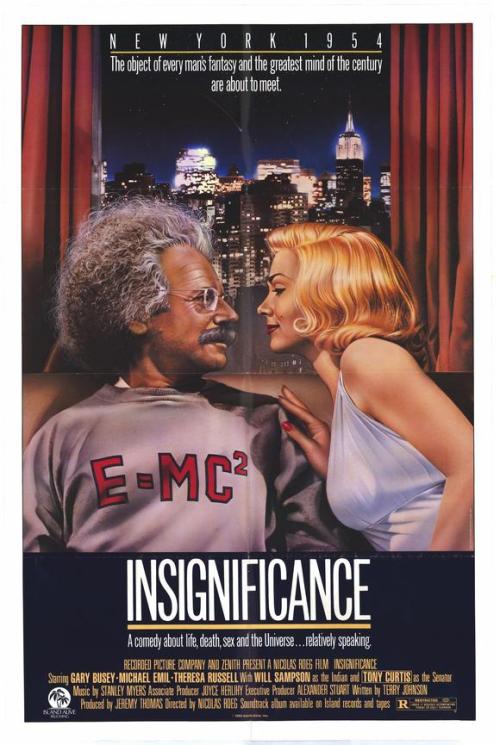
Inside a New York hotel room is a professor (Michael Emil) working on some calculations until he gets interrupted by The Senator (Tony Curtis) who tries to get him to appear before the committee trying to expose communists inside the U.S., which will be held the next day. The professor refuses and sends the Senator away, though the Senator says he’ll be back. Outside the hotel is a film shoot where the Actress (Theresa Russell) is performing a scene where a gush of wind blows up the white blouse she is wearing while standing over a street grate. After the shoot she has her chauffeur (Patrick Kilpatrick) take her to a toy store where she picks up some gadgets, which she takes to the hotel room for a visit she has with the professor where they discuss the theory of relativity. Later her husband the baseball player (Gary Busey) shows up and the two argue while the professor leaves. The next morning the senator returns to find the actress alone in bed, who he mistakenly thinks is a prostitute made-up to resemble Marilyn Monroe. When he threatens to seize the professor’s papers she agrees to have sex with him as a bribe, but the senator has a violent outburst just as the professor and the baseball player return to the room.

The film is based on the stageplay of the same name written by Terry Johnson that was performed onstage at the Royal Court Theater in London in 1982. The inspiration for the play came when Johnson found out that amongst Marilyn Monroe’s belongings that were retrieved after her death was a signed autograph picture of Albert Einstein and the idea of what the meeting between these two would’ve been like intrigued him enough to write a whole play around it. Director Nicholas Roeg saw the play and thought it would make for a great movie, but he wanted to expand it by entering in the character of Joe DiMaggio, who was Monroe’s husband at the time as well the senator, which represented Joe McCarthy.

Roeg’s superior use of visuals and non-linear, dream-like narrative is what keeps it interesting. I also liked the way Roeg had flashback scenes, which were not a part of the play, but added into the screenplay at Roeg’s request, showing traumatic moments in each character’s childhood that had an emotional impact on them and ended up defining who they ultimately became. These moments, as brief as they are, end up leaving the most lasting impression.

The acting is quite good particularly from Curtis whose career had waned considerably by this point, but his perpetual nervousness and the sweat that glistens off of his face is memorable. Busey is solid as a man who initially comes-off as a bully, but ultimately reveals a tender side. The lesser known Emil, who is the older brother of director Henry Jaglom and mostly only appeared in movies that were directed by him, completely disappears in his part until you can only see the Albert Einstein characterization and not the acting.

The only performance I had a problem with was Russell’s who goes way over-the-top with her put-upon impression of Monroe and comes-off like a campy caricature. Her breathless delivery sounds like she’s trying to hold in her breathe as she speaks and is quite annoying. Johnson had wanted Judy Davis, who had played the role in the stage version, to reprise the part for the movie, but Roeg, who was married to Russell at the time, insisted she be cast despite the fact that Russell really didn’t want to do it. While I never saw the stage play and have no idea if Davis would’ve been good I still feel anyone could’ve been better, or for that matter couldn’t have been any worse.

While the film does have its share of captivating elements it does fail to make the characters three-dimensional as they play too much into the personas that we already have of them while virtually revealing no surprises. It’s also a shame that the four are never in the room at the same time. There is one moment where the senator, the baseball player, and the professor meet in the front of the room, while the actress remains in the back behind the closed sliding glass doors, but this doesn’t count because she never interacts with the others during this segment, which is something that I had wanted to see. Overall though as an experimental, visual time capsule, it still works and the unexpected, provocative montage that occurs at the end makes it worthwhile.

My Rating: 8 out of 10

Released: May 11, 1985

Runtime: 1 Hour 49 Minutes

Rated R

Director: Nicholas Roeg

Studio: Island Alive

Available: DVD, Blu-ray (The Criterion Collection)

The Corruption of Chris Miller (1973)

corruption

By Richard Winters

My Rating: 8 out of 10

4-Word Review: Is he the killer?

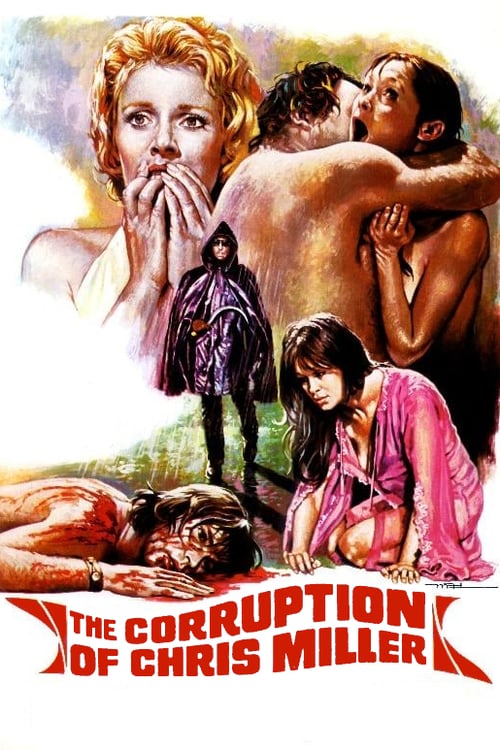
Ruth (Jean Seberg) has been abandoned by her husband leaving her alone in his large isolated estate with only his daughter Chris (Marisol) to keep her company. Chris has issues of her own as she was raped years earlier as a teen while in the girl’s shower at her school by a weightlifter and whenever it rains the sound of  falling water brings back the horrible memories, which cause her to lash out with a sharp object, as if defending herself, to anyone who comes near. Ruth has learned how to talk her down from these episodes, but she’s getting tired of dealing with it as well as the hateful comments that Chris gives her as she blames Ruth for her father leaving them. Barney (Barry Stokes) is the drifter who comes into their lives. Initially it was just for the night, but as he gets to know the two and their inner-dynamics he becomes intrigued as well as sexually attracted to Chris. He and Chris begin a romance, much to the displeasure of Ruth, who wants Barney to herself. Meanwhile there’s a rash of killings that are going-on in the nearby town and Ruth and Chris begin to believe that Barney may be the culprit. 

The film was helmed by renown Spanish director Juan Antonio Bardem and while differing some from the giallos released in Italy this is still considered in high regard by fans of the genre. Bardem’s use of mood and atmosphere are the main selling points. The house, both the one that Ruth and Chris reside in as well as the stately country manor that gets featured during the opening murder, are given strong foreboding presences and the non-stop pounding rain adds an eerie element. 

The gore isn’t quite up to the level of Italian horrors. There’s lots of blood, but the onscreen violence is minimal. There’s also a lot of soft-focused shots of horses galloping and of the beautiful Marisol riding on one until it almost seems like a non-horror film, but there’s enough underlying intrigue to keep it interesting through the slow spots. The climactic stabbing more than makes up for it as it features shots of the blade going directly into the naked flesh of the victim versus done over clothing where the prop knife can more easily be concealed. It also gets done in slow-motion, which makes it look even more horrifying, but in a visually striking sort of way. 

The acting is excellent and includes Seeberg, who was once the darling of the French New Wave during the early 60’s, but by this time had gracefully grown into middle-aged roles, of which she does well though her facial expressions are a bit overdone. Marisol, whose career began as a child singer, is terrific too and in some ways she upstages her co-star with her distinct eyes, which have an hypnotic effect that focuses your attention on her in every scene that she’s in.

Spoiler Alert! 

The twist ending is original though questionable. The reveal of the killer, played by Rudy Gaebel, is a bit mechanical as no explanation is given for what lead police to him, we just see him carted away in hand-cuffs, where having a smoking-gun reason that the viewer could understand would’ve been more satisfying. Having the townspeople celebrate his arrest seemed a bit precipitous as sometimes murderers can still have mistrials, or be deemed not guilty by a jury, so just having some guy nabbed by the authorities doesn’t end things it’s just the beginning especially since police can be known to sometimes arrest the wrong person.

Having pea sprouts grow through the cracks in the tar of the roadway, which causes the road crew to dig up that portion of the highway where they then discover the dead body of Barney, which Ruth and Chris buried there, is a problematic too. First I’m not sure pea sprouts would be a strong enough plant to create such cracks and it would take many years for that to happen. The police wouldn’t necessarily know who buried him as Chris was only seen in public with Barney once by a family that eventually got murdered, so there’s otherwise no direct link between him and the women. Therefore the discovery of  the corpse would not immediately lead to the women’s arrest, as the movie seems to want to imply, if ever. 

My Rating: 8 out of 10

Released: May 17, 1973

Runtime: 1 Hour 52 Minutes

Rated R

Director: Juan Antonio Bardem

Studio: Ibercine S.A.

Available: DVD, Blu-ray, Tubi