Category Archives: Low Budget

Willard (1971)

willard 1

By Richard Winters

My Rating: 4 out of 10

4-Word Review: He likes his rats.

Willard Stiles (Bruce Davison) is a young man still living at home with his domineering mother (Elsa Lanchester) and dealing with a demanding boss (Ernest Borgnine) at work. To escape his loneliness and frustration he befriends some rats that he finds in his backyard and starts training them to do his bidding. Soon he is getting revenge on all those who have wronged him by having his rats attack them, but ultimately the rats have an agenda of their own.

The film starts out poorly and doesn’t improve as it goes along. The main character seems too old for this type of thing and would be better suited for a bullied teen looking for revenge instead of a 27-year-old that’s still strangely living at home even though he has a job and could be out on his own. The idea that he would become so obsessed with rats after seeing one in his backyard and then be able to somehow ‘communicate’ with them and train them is highly farfetched and happens much too quickly.

The rats themselves aren’t very scary and in fact—I can’t believe I’m saying this either—they really kind of seemed cute most of the time and when Willard initially tries drowning them in a pool I was starting to feel sorry for them as I did when the Borgnine character kills one in the office. When Willard has them invade a party with snooty guests I found it to be quite funny and not ‘horrifying’ at all. The only thing I didn’t like about them was their incessant high-pitched screeching, which eventually becomes irritating.

Daniel Mann’s sterile direction lacks atmosphere or style and the film has a very cheap and dated look even for 1971. Alex North’s musical score is much too soft, melodic and playful for a horror film and at times seemed better suited for a Disney movie.

Davison with his blonde, blue-eyed all-American looks doesn’t have the right menacing quality for the part and Crispin Glover who played the role in the 2003 remake is a much better choice. Lanchester is fun as the overbearing mother as is Jody Gilbert as a meddlesome aunt who looks much more frightening than any of the rats. Borgnine adds some spunk and I loved the way his eyes grow big and round when he sees the rats invading his office and the part where he gets attacked by them is the best moment in the film.

Why this movie became the big hit that it did is a mystery to me. Only at the very end when we see hundreds of rats running across the floor does it ever get even slightly creepy, but overall it is lame and boring and a good candidate for Bad Movie honors.

My Rating: 4 out of 10

Released: June 18, 1971

Runtime: 1Hour 34Minutes

Rated GP

Director: Daniel Mann

Studio: Cinema Releasing Corporation

Available: VHS
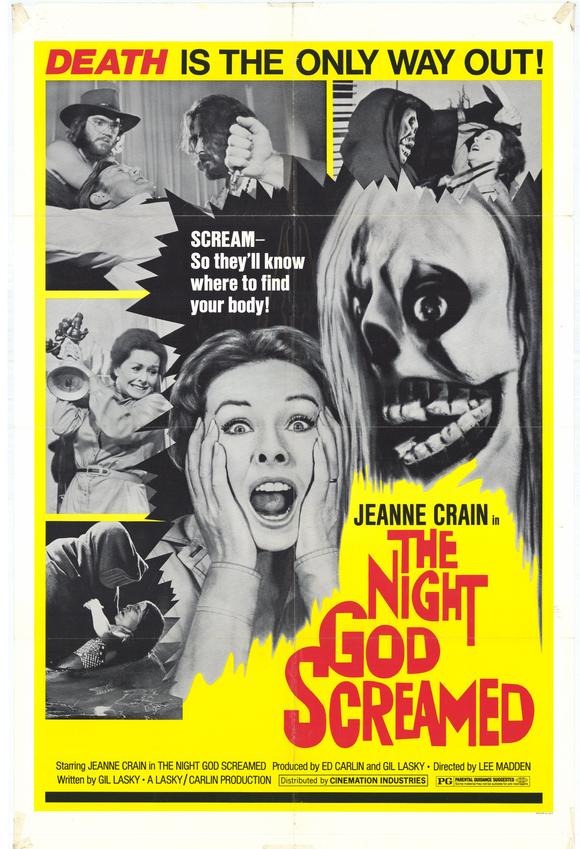
The Night God Screamed (1971)

the night God screamed 3

By Richard Winters

My Rating: 5 out of 10

4-Word Review: Nailed to the cross.

Willis and Fanny Pierce (Alex Nicol, Jeanne Crain) are an older, spiritual couple who drive along the national highways with a giant cross stuck to the top of their car. They come to a small town where Willis decides to start up a church. Unfortunately they get the unwanted attention of Billy Joe (Michael Sugich) who runs a Manson-like religious cult filled with drugged-out hippies. He feels Willis is potential competition, so late one night he and his cohorts sneak into the church and nail Willis to the cross all to the horror of Fanny who is so frightened she doesn’t do anything and instead hides in a closet. Billy Joe is later convicted of the crime and sent to prison, but his followers are not happy and seek revenge. When Fanny is hired to ‘babysit’ a group of older teens they go on the attack creating one long night of terror for Fanny and the teens.

Clearly this is a rip-off of the Charles Manson crimes, but for all of the films from that period that tried to capitalize on the fear that those crimes brought this has to be one of the better ones. The electronic music score, camera angles and shadowy lighting create an effective eerie feeling. The movie moves at a decent pace and the shot of Willis crucified to the cross is shocking and edgier than most other films from that period. The second half, which features Crain and the teens trapped in a house with the hooligans harassing them from outside manages to build up some decent tension.

Crain looks and behaves as if she were snatched directly out of the 1940’s and seems completely out-of-place with the period or other characters and yet the extreme contrast actually makes it more interesting. Sugich is great as the cult leader and it’s unfortunate he wasn’t on for the entire duration. I did think it was unrealistic though that he is seen at his trial without handcuffs, or a prison suit or even having his hair cut, which in reality I think would have happened and probably made him look even creepier.

Although the film is low budget and terribly dated I did think is was entertaining enough to be passable especially for fans of 70’s schlock. My biggest complaint comes with the twist ending, which although surprising isn’t completely plausible and leaves open too many loose ends. It reminded me too much of those ghost stories kids like to tell around a campfire that would always hinge on some unexpected ending and made this entire production seem more like a cutesy concept than an actual story.

My Rating: 5 out of 10

Released: June 4, 1971

Runtime: 1Hour 26Minutes

Rated GP

Director: Lee Madden

Studio: Cinemation Industries

Available: VHS, YouTube

Bells (1982)

bells 1

By Richard Winters

My Rating: 3 out of 10

4-Word Review: Don’t answer the phone.

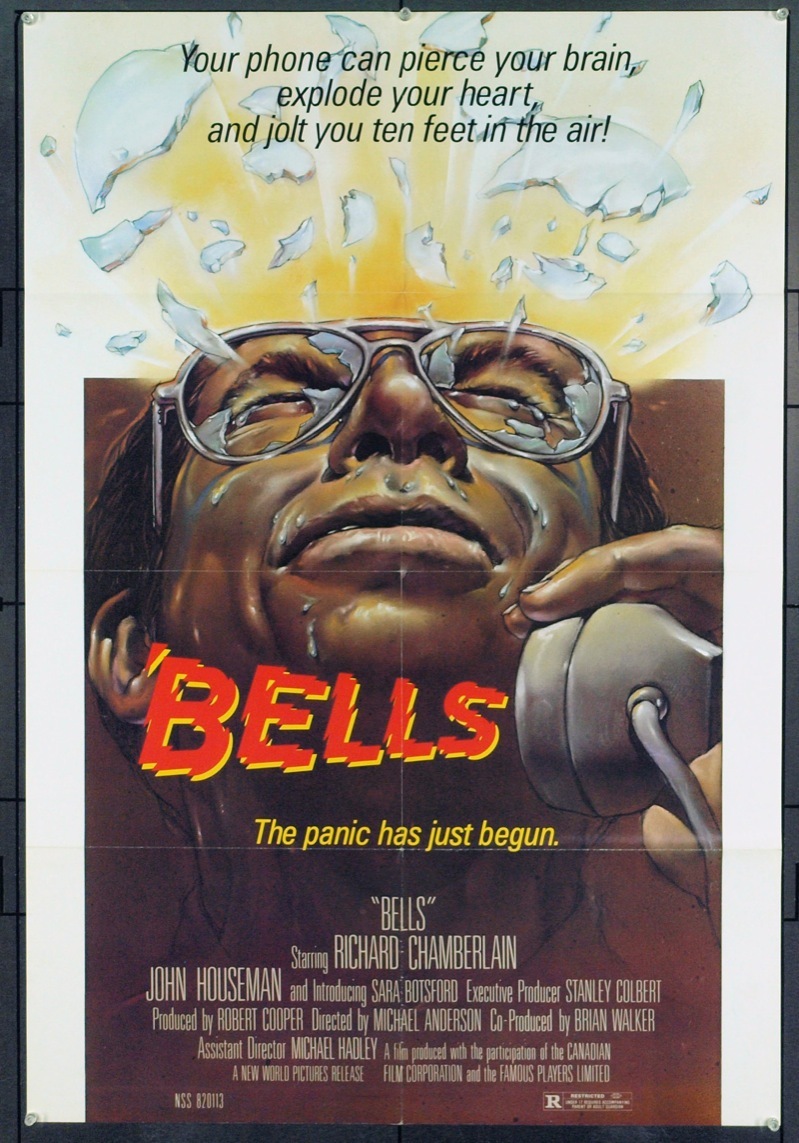
People are being killed throughout the city of Toronto by simply answering the phone. Apparently someone has come up with a device that can create a massive electronic blast that can go through the phone lines and kill anyone listening on the other end. The blast is so strong that it can even melt the receiver. Nat Bridger (Richard Chamberlain) who is a professor at a local college decides to take matters into his own hands and investigate on his own after one of his students is killed and the police seem to do nothing about it.

Initially I found this idea to be intriguing and original, but unfortunately it throws credibility completely out the window. Had it worked more with the idea of sending some loud noise at an extremely high decibel over the phone, which would then blow out the person’s ear drum, or something of that nature then I might have bought into it. Instead it has some sort of unexplained blast that literally makes the person at the other end blow off of their seat and fly backwards crashing into walls and windows, which seems utterly ridiculous and cartoonish. The film also offers no scientific explanation to how this device was created or done, which makes it farfetched and pointless.

Chamberlain’s one-dimensional acting doesn’t help and his presence in the lead role is quite generic as he plays a character that shows the street smarts and fighting ability of a seasoned cop instead of that of a college professor making things even more unrealistic. John Houseman gets a rather thankless supporting role as Chamberlain’s mentor and is pretty much wasted except for a bit where he disrupts a guided tour through a phone company which proves mildly amusing.

The technology is horribly dated making the entire thing a relic of a bygone era and irrelevant to today’s audiences.  The climatic sequence dealing with Chamberlain’s attempts to keep the bad guy on the phone while the police try to trace the number is highly clichéd and more boring than intense. Director Michael Anderson’s attempts to jazz things up a bit by photographing phones in intimidating ways with ominous music playing in the background comes off as unintentionally funny instead of scary.

This Canadian made thriller was originally released under the title above and ran for 95 minutes, but the Warner Home Video version, which was released in 1998 and goes under the title of Murder by Phone was trimmed by 15 minutes. The version reviewed here is from the original release although the film is so silly that watching the shorter cut might be preferred simply because it would mean less time wasted.

My Rating: 3 out of 10

Alternate Title: Murder by Phone

Released: May 11, 1982

Runtime: 1Hour 35Minutes

Rated R

Director: Michael Anderson

Studio: Canadian Film Development Corporation

Available: VHS (as Murder by Phone)

Thunder and Lightning (1977)

thunder and lightning

By Richard Winters

My Rating: 2 out of 10

4-Word Review: More southern fried nonsense.

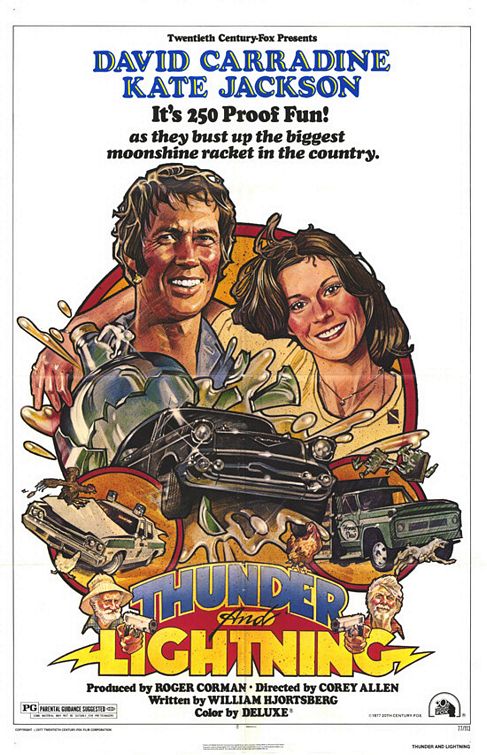
This is incredibly contrived good ol’ boy nonsense about competing moonshiners that gets taken into overdrive and just an excuse for a lot of smash-up car chases.

The filmmakers seem compelled to come up with every southern stereotype they can think of. There is the grizzled, uneducated, overall wearing, backwoods moonshiners, as well as the beer swilling pick-up truck driving rednecks with names like Bubba and Scooter, virtuous, but spunky southern daughter with an annoying hick accent and even a scene where a couple of down home boys jump into a car and shout “yahoo!” as it takes off. After about ten minutes this one-dimensional, uninspired mess makes you feel like you are brain dead.

The production values are poor with muffled sound and fast edits that makes some of the action hard to follow. The whole thing looks rushed and haphazardly put together simply so it could quickly cash in on the success of Smokey and the Bandit.

David Carradine’s performance is much too subdued as he seems to have no energy and is just mouthing his lines. Kate Jackson is pretty, but her personality is much too strong. The only fun piece of casting is Sterling Holloway in his last film appearance. He is probably best known as the voice of Winnie the Pooh and here plays a moonshiner.

The film does manage to have a few good moments. One is a unique speed boat chase done on a large swamp as well as is a segment where a minister preaches his sermon while wrestling with an alligator. There are also two hit men who like in Pulp Fiction have unusual conversations. Some of the strange topics include too much violence on TV, Captain Kangaroo, and even Norman Vincent Peale. There is even a cool inside joke that occurs when actor Charles Napier is having a fight with Carradine and he shouts out “Hey asshole knock off the Kung Fu shit!”

My Rating: 2 out of 10

Released: August 24, 1977

Runtime: 1Hour 35Minutes

Rated PG

Director: Corey Allen

Studio: 20th Century Fox

Available: VHS, DVD, Amazon Instant Video

Last Night at the Alamo (1983)

last night at alamo

By Richard Winters

My Rating: 6 out of 10

4-Word Review: Life at the bar.

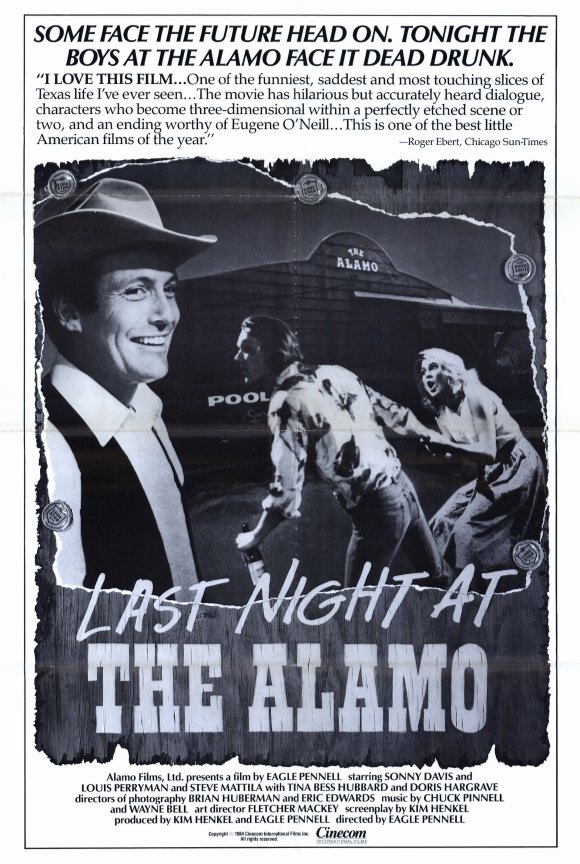
It’s the last night of business for The Alamo bar in Houston, Texas. Some developers have purchased the land and plan on constructing a skyscraper on the site much to the dismay of the regular patrons. There’s Icabod (Steven Mattila) a wiry, creepy looking fellow who seems to bitch about everything and anything. There is also Claude (Lou Perryman) who has just been kicked out of his house by his wife and spends he majority of the night on the phone begging her to let him comeback as well as Cowboy (Sonny Carl Davis) who has big dreams of becoming a Hollywood star, but can’t seem able to hold down a job for any lengthy duration.

The film was shot in black-and-white on a measly budget of $25,000. The majority of it was done inside a place called The Old Barn, which was a popular neighborhood bar in Houston. The scenes where done during the day, so as not to interfere with the regular customers coming in during the evening. Kim Henkel who is best known for penning The Texas Chain Saw Massacre wrote the screenplay as well as appearing as a character named Lionel. Director Eagle Pennell appears briefly as Bo and his wife Peggy can be seen as Ginger.

What makes this film so interesting is the fact that nothing really happens. Instead it gets filled with a lot of rhetorical arguments, insignificant conversations and down-and-out characters much of what you’re likely to find on a regular night at any neighborhood bar across the country. The film takes the ‘Cheers’ format, but with more of a caustic, darker sense of humor. Although this minimalistic approach may sound boring it actually isn’t and in many ways is surprisingly engaging, refreshing and even daring.

The eclectic cast, many of whom were local performers who had not appeared in a film before, really helps. The Davis character who wears a big cowboy hat to cover up is balding head and goes to great lengths to try to save the bar even calling the state capitol in Austin for assistance only to find that there is nothing they can do because nobody ‘important’ had ever gone there is especially endearing. Perryman, who was tragically murdered in 2009, is quite amusing in his desperate attempts to reconcile with his wife and Mattila has his moments as well particularly when he decides to hold a conversation with a wall because he feels it’s more interesting than talking to his girlfriend.

Barflies young and old should appreciate this low budget gem as it hits the essence of bar life and those that frequent them head on while taking an offbeat approach that most Hollywood films wouldn’t dare to do. Henkel and Pennell reteamed 10 years later to create the similarly themed Doc’s Full Service about people who frequent a Texas service station.

My Rating: 6 out of 10

Released: October 2, 1983

Runtime: 1Hour 21Minutes

Not Rated

Director: Eagle Pennell

Studio: Cinecom Pictures

Available: VHS

Cry Uncle (1971)

cry uncle

By Richard Winters

My Rating: 5 out of 10

4-Word Review: Murder, mystery and sex.

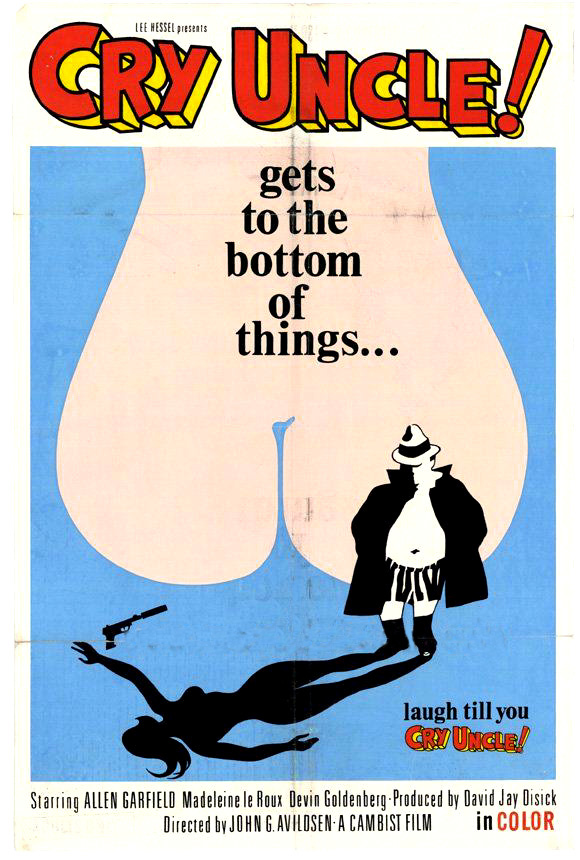
A down-and-out private eye (Allen Garfield) becomes embroiled in a complex case involving murder, intrigue, and a lot of sex.

This is one drive-in flick that definitely does not skimp on the sex. Not only is there a lot of it, but it is very explicit and done in outlandish ways. One features a couple having sex during the national anthem, while another has Garfield having sex with a prostitute while in front of a picture of Jesus. The most notorious though involves Garfield making love to a dead body while ragtime music plays in the background.

Garfield is quite amusing as a character that is always running his mouth off about something although the excessive shots of his nude overweight, out-of-shape body is enough to make anyone sick. Paul Sorvino is also funny in a cameo bit as a policeman plagued with a terrible case of smoker’s cough.

Although she delivers her lines well Madeleine Le Roux as the female lead is not sexy at all. Her face resembles that of Cruella De Vil’s in the Disney version of 101 Dalmatians and her body is very flat making her nude scenes unexciting. She also doesn’t seem too young either. Certain camera angles make her look like a youthful 30 while others give the impression that she is pushing 45.
The film is directed by John G. Avildsen who later went on to do Rocky and The Karate Kid. You can also spot famous schlock director/producer Lloyd Kaufman with a full head of curly hair playing a hippie.

For fans of low-grade, T & A, drive-in fare this one pretty much hits the target and makes the most of its low budget, underground roots although it is unable to sustain the slam-bang funny pace that it has at the beginning with a second half that is not as outrageous or inspired.

My Rating 5 out of 10.

Released: August 17, 1971

Runtime: 1Hour 27Minutes

Rated R

Director: John G. Avildsen

Studio: Cambist Films

Available: VHS, DVD, Amazon Instant Video

Dogs (1976)

dogs

By Richard Winters

My Rating: 3 out of 10

4-Word Review: The Dogs go crazy.

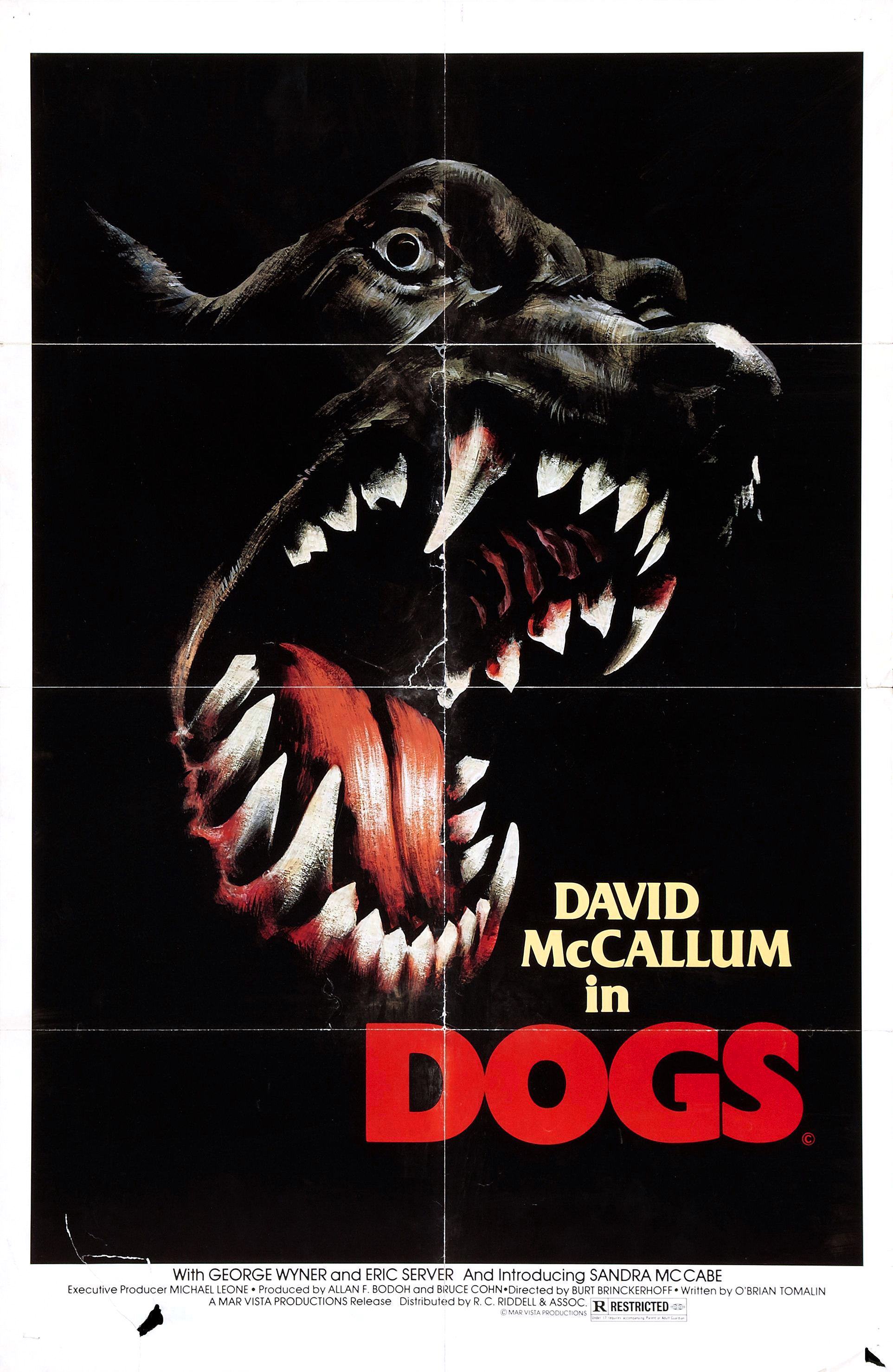
In a small California town the dogs begin to act strangely as these lovable pets are now turning on their owners and going on the attack while acquiring a pack mentality that puts fear into everyone. Harlan (David McCallum) is a professor at a nearby college who along with Michael (George Wyner) who is an expert in animal behavior search for answers while also fighting for their own lives from the onslaught of the attacks.

The film has some potential as actor-turned-director Burt Brinkerhoff adds shades of playfulness to the proceedings. I liked the segment where children bring their pet dogs to a formal showing only to be chased away by the suddenly evil mutts. The mob scenes are somewhat impressive as Brinkerhoff holds a handheld camera right in the middle of the group, which helps accentuate the chaos and fear. The extras who can usually be pretty poor actors in most movies actually seem scared here and give off genuine screams of terror. The scene where the college students become trapped in a library with the vicious dogs staring at them through a glass wall is kind of creepy as is the sound of their howling.

The special effects aren’t quite as successful. The shots of all the human carnage looks very much like people lying perfectly still with spots of food coloring thrown on their clothes.  The shot of a mutilated steer’s head is equally fake looking and it stays on it for too long although the dog attacks themselves are okay. My favorite is when a sweet old lady, which is played by Elizabeth Kerr who later went on to co-star in the ‘Mork and Mindy’ TV-series gets ambushed and eaten by a group of dogs, which includes her own cute little pooch and then dragged away.

McCallum, who is best known for starring in the 60’s spy show ‘The Man from U.N.C.L.E’ as well as ‘NCIS’, is weak in the lead role and whose presence almost seems transparent. He’s made to look like he is a part of the counter-culture with a beard and long hair, but instead comes off looking like some homeless guy that was dragged in off the streets. Sandra McCabe as his female counterpart is pretty pathetic and seems good for having a perpetually frightened look etched on her face, but not much else. Linda Gray who makes her official film debut and is cast in a smaller role should have been given the lead over McCabe as she shows much more flair.

The film’s biggest transgression though it that it never bothers to explain the reason for the dog’s strange behavior there is a brief conversation about some ‘secret experiments’ going on, but nothing that ever gets detailed or exposed. The lack of any true resolution or explanation is not only frustrating, but also makes watching this a rather pointless experience. The film also runs only 82 minutes despite the DVD cover stating that it is 91.

My Rating: 3 out of 10

Released: June 29, 1976

Runtime: 1Hour 22Minutes

Rated R

Director: Burt Brinkerhoff

Studio: American Cinema Releasing

Available: DVD

Dead Heat (1988)

dead heat

By Richard Winters

My Rating: 5 out of 10

4-Word Review: These cops are dead.

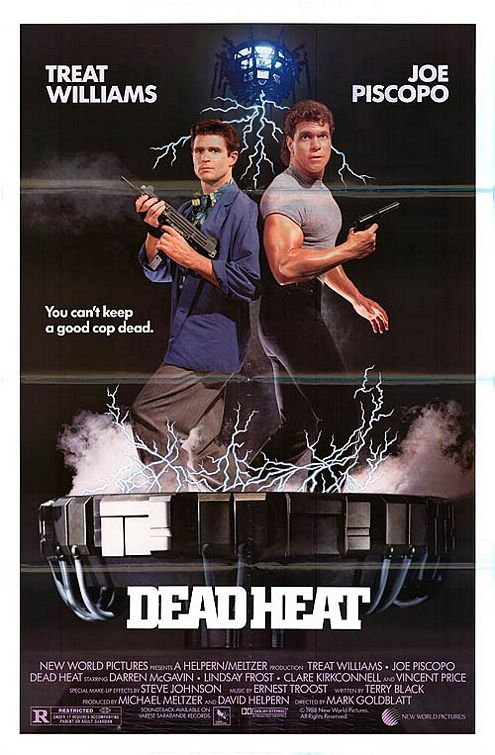
Roger and Doug (Treat Williams, Joe Piscopo) are two cops fighting bad guys that seem to be indestructible. They get shot at, but never die. Upon further investigation it seems some maniacal madmen (Darren McGavin, Vincent Price) have come up with a resurrection machine that can bring dead people back to life and they are being used as zombies to rob banks and commit other types of crimes. When the two cops end up being killed while on-duty they are put onto the resurrection machine themselves and ultimately making it dead cops chasing after the dead bad guys.

The film’s script by Terry Black is creative and has enough energy to be passably entertaining. Unfortunately the pace is too fast and the runtime too compact making the many elaborate twists and turns happen too quickly and conveniently and many times making no sense. Mark Goldblatt’s direction looks amateurish with a faded color and a film stock that looks like it was initially done on video and then transferred to film. The special effects are surprisingly good given the budget and for the most part the film’s only saving grace. The two best moments are when the two leads get attacked by produce at a meat market including that of a beheaded steer as well as when the Randi character (Lindsay Frost) decomposes right in front of Roger.

The acting is genuinely poor and Piscopo is especially weak, but has funny enough lines to at least be humorous. McGavin looks understandably embarrassed and seems to be simply going-through-the-paces while Price in one of his last film roles appears tired, old and frail.

William’s gives an okay performance and I liked how his is more subdued and educated character played off of Piscopo’s hyper one, but the way his character responded to things seemed weird. For instance when he finds out that he is dead and brought back to life for only a short time before decomposing he doesn’t respond with panic, but instead continues to go about his job in a very matter-of-fact way and when his partner is found dead in a particularly gruesome way he doesn’t react with any type of emotion or shock.

The film also fails to follow through on its own logic. For instance when Roger finds out he is dead and then gets cut on some glass he does not bleed, but later on when he gets shot there is blood coming out of his bullet holes. The bad guys cannot be killed by bullets because essentially they are dead already and yet somehow can still be stopped by electrocution or impalement with a pole, but why as essentially they should still be able to continue no matter what the injury.

The final act becomes like a cheesy B-horror movie that goes way over-the-top and overall the whole thing is badly disjointed. However, it’s an okay time-filler if approached with exceedingly low expectations.

My Rating: 5 out of 10

Released: May 6, 1988

Runtime: 1Hour 23Minutes

Rated R

Director: Mark Goldblatt

Studio: Image Entertainment

Available: VHS, DVD, Blu-ray, Amazon Instant Video

Rabid Dogs (1974)

rabid dogs 3

By Richard Winters

My Rating: 7 out of 10

4-Word Review: Terror filled car ride.

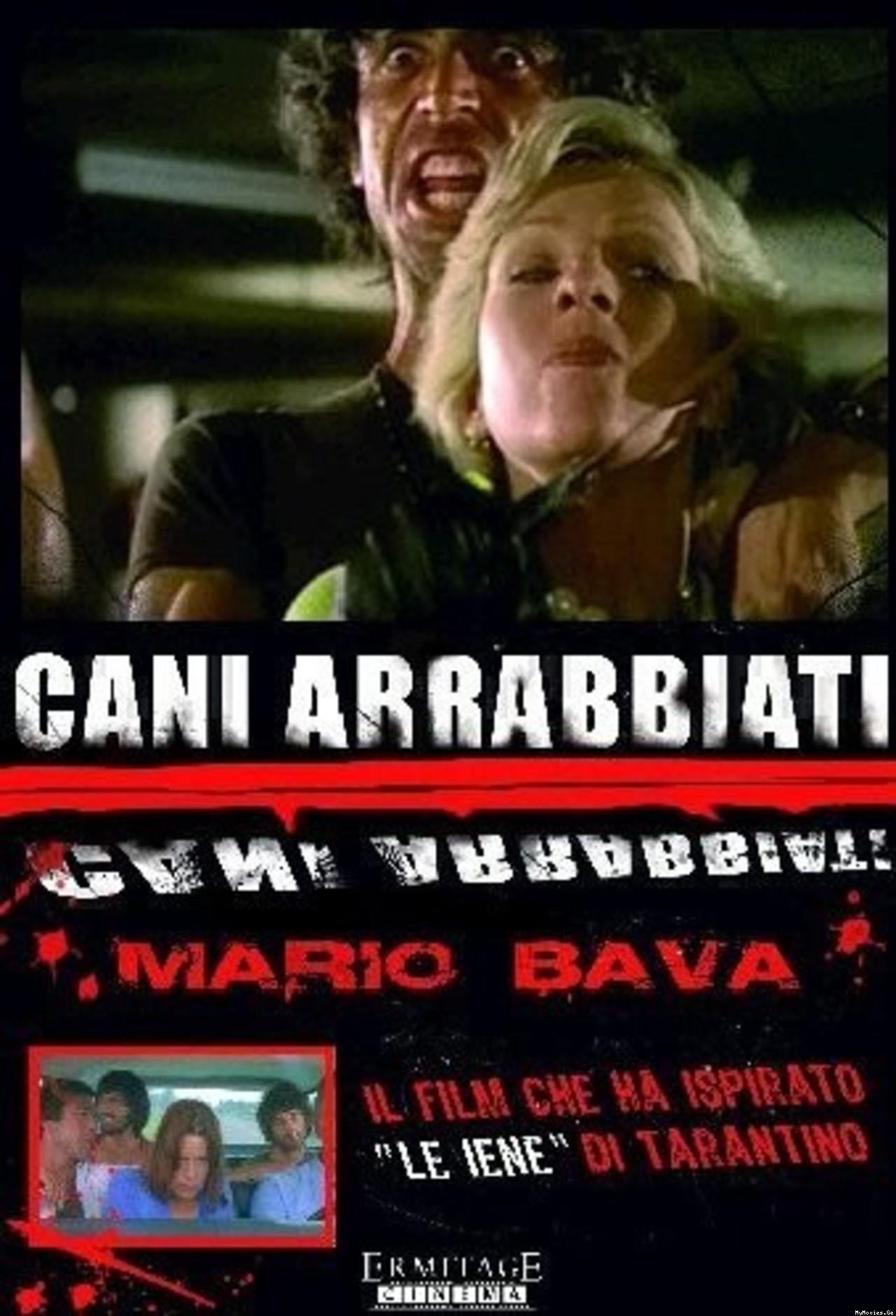
Four men decide to hijack a car that is delivering the payroll to the employees of a local Italian pharmaceutical plant. Both men inside the car are killed, but the four manage to get away with the money only to have the driver of the getaway vehicle shot in the back of the head by a security guard as well as having a bullet hole put into their fuel tank. The remaining three are then forced to find another car. There is the Doctor (Maurice Poli) who is the level-headed leader and mastermind. There is also Bisturi (Don Backy) a lanky child-like man prone to savagery without warning and Thirty-two (George Eastman) who can be equally savage especially with women. They kidnap a beautiful woman named Maria (Lea Lander) and then hijack another car driven by a father Riccardo (Riccardo Cucciolla) who is trying to take his sick son to the hospital. The six then go on a terrifying car ride through the Italian countryside while playing a game of cat-and-mouse with each other and eluding the authorities.

This film turned out to be Mario Bava’s swan song. His career had faded during the 70’s as his style of horror films were no longer considered chic and he made this film project a personal crusade to prove that he could keep up with the modern sensibilities by creating a film that was gritty, raw and violent. All things considered he succeeds valiantly. The film has a nasty edge right from the beginning and manages to stay at that tone throughout. The killers are truly mean and keep the viewer on edge with their unpredictable trigger-finger personalities. It achieves a level of ugliness reminiscent in a true crime that most Hollywood films never seem able to attain and its shoe-string budget and bare-bones approach becomes a major benefit.

For a film that takes place almost entirely inside a car the shot selections has an amazing amount of variety. Bava ended up having to do the cinematography himself because he couldn’t afford to keep the one he had hired on, which makes it all the more incrediable how brilliantly visual this is. The characters faces get up so close to the lens you literally feel like you can smell them and sense the sweat glistening off their bodies making you believe you are stuck in the car with them. The film is never boring or slow, the action well-choreographed with interesting  plot twists proving what an underrated genius Bava was and making me believe that despite the many difficulties getting produced this is his finest effort.

Backy who was and still is today a singer/songwriter with limited acting experience gives a great performance and is possibly the most memorable of the villains especially with his shocked expressions after he commits a particularly vile act proving that even he himself is shaken at his own savagery. Leander isn’t necessarily the best of actresses, but her perpetual look of shock and fear is quite entertaining. I was also impressed with the child actor who manages to stay asleep despite all the violence and chaos around him.

I also enjoyed the similarities to Last House on the Left including an exciting foot chase through a cornfield where you think the women is going to get away as well as a scene where the women is forced to urinate in front of the men while they laugh and mock her.

If you are a fan of 70’s exploitation than this lost gem deserves to be on top of any true fan’s list as it delivers-the-goods without ever watering things down for good taste. I also enjoyed the neat twist ending, which I saw coming, but it’s pretty cool anyways.

Years later Bava’s son Lamberto used existing footage from this film while adding new scenes with a different ending to create a movie called Kidnapped although I prefer this version better.

My Rating: 7 out of 10

Alternate Title: Kidnapped

Released: February 25, 1998 (Never released during Bava’s lifetime.)

Runtime: 1Hour 36Minutes

Not Rated

Director: Mario Bava

Studio: Spera Cinematografica

Available: DVD, Blu-ray, Amazon Instant Video

Norman…Is That You? (1976)

norman is that you

By Richard Winters

My Rating: 4 out of 10

4-Word Review: Gay son comes out.

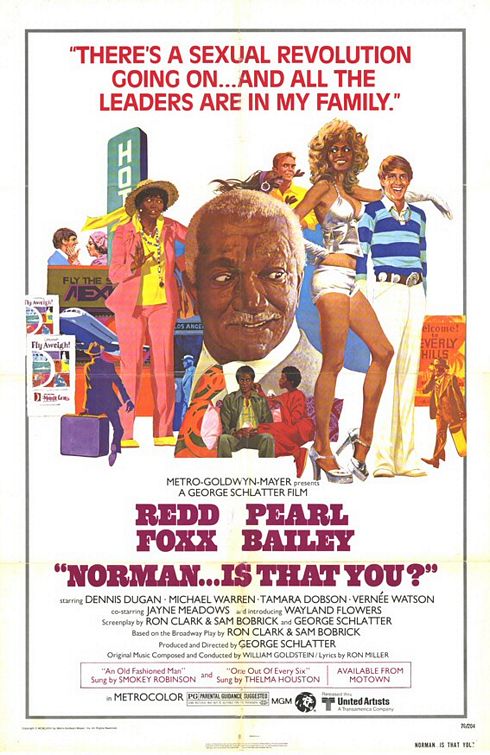
Ben (Redd Foxx) travels to L.A. to visit his son Norman (Michael Warren) after his wife Beatrice (Pearl Bailey) leaves him for his brother. However, unbeknownst to Ben Norman has come to terms with his closeted homosexuality and is now living with Garson (Denis Dugan). When Ben arrives unannounced Norman tries to keep his gay relationship a secret, but Ben eventually finds out about it and goes on a mission to have him ‘cured’.

The story was originally written as a play, but flopped and ran for only 12 performances in 1970. For whatever reason it was decided 6 years later to revamp the idea, but do it with a black cast instead. However, times have changed and most everything here seems quite dated. The Ben character could easily be considered homophobic by today’s standards and the gay jokes he makes seem out-of-line and even offensive.  The production, which was shot on video and then transferred to film, looks stagy and cheap with ‘the view’ of L.A.’s skyline that can be seen outside Norman’s patio door clearly being a painting. George Schlatter who is best known for producing the 60’s variety TV-show ‘Laugh-In’ makes his one-and-only cinematic directorial effort and is unable to overcome the script’s limitations.

Foxx is the only reason it is even slightly enjoyable. Just watching him walk around with his patented strut is amusing. However, the way he treats Garson simply for being gay is no longer considered funny and I felt the Garson character shouldn’t have put up with half as much as he does. Still, the part where Foxx dreams that he is a gay actor accepting the Academy Award is the film’s best moment.

Dugan plays up the flaming gay character relatively well, but Warren is a weak link as he says his lines like he is reading them off of a teleprompter and shows no emotion or variety of facial expressions. Having Bailey cast as Foxx’s wife seemed inspired, but the character gets wasted in trivial husband-and-wife arguments that knock this thing down to a TV-sitcom level. Jayne Meadows who appears as Garson’s mother is equally wasted and is in only one scene even though the character had great potential especially with the idea of setting her up on a date with Foxx.

There is enough comedic banter to save this from being a bomb, but just slightly. Although it is shown that the parents reluctantly come to terms with their son’s sexuality it still conveys the message that it is ‘okay’ to be openly prejudice towards the lifestyle, which likely could rub most of today’s viewers the wrong way.

My Rating: 4 out of 10

Released: September 29, 1976

Runtime: 1Hour 31Minutes

Rated PG

Director: George Schlatter

Studio: United Artists

Available: VHS, Amazon Instant Video, YouTube