Category Archives: Foreign Films

The Idiots (1998)

the idiots 2

By Richard Winters 

My Rating: 7 out of 10

4-Word Review: This is so retarded.

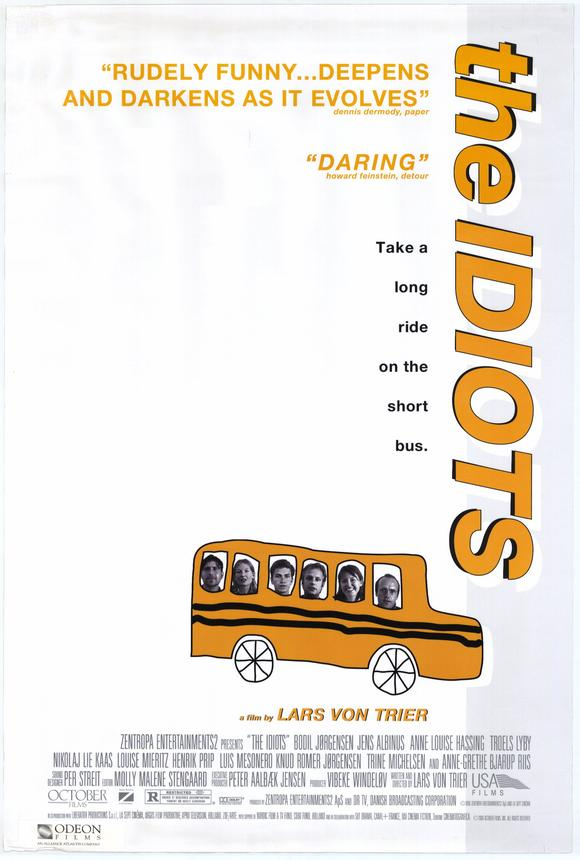
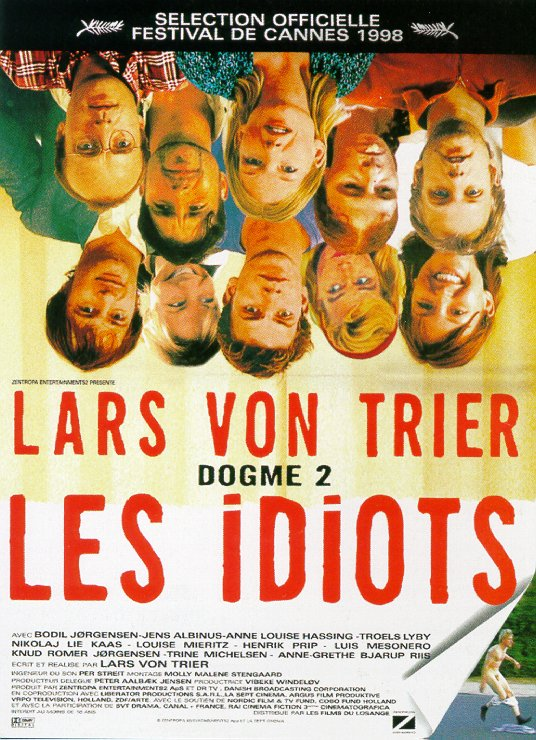
The Idiots is another shocking, controversial, and highly original work from filmmaking maverick Lars Von Trier.  This one involves a group of disenchanted people in their 20’s and 30’s, who decided to rebel from society by acting like they are mentally retarded.

Although certainly not in the best of taste, there are some funny bits here. The comedy works well because amidst all of the outrageousness it is also very revealing about human nature. One of the best segments involves an affluent couple who wish to purchase a large, upscale home.  As they are touring the place they are informed that a group of ‘retards’ live next door. The couple put on the politically correct facade by saying that wouldn’t be a problem even though their facial expressions say otherwise.  When the group pretending to be retarded pays them a visit the couple quickly runs off.  Another funny part, which may actually be the most outlandish of the whole film, involves a group of tough, tattooed bikers who help in very graphic fashion one of the group members pretending to be mentally handicapped go to the bathroom. The group’s visit to a factory is also hilarious.

The majority of the film though is actually quite serious and yes, even thought provoking. Von Trier does a good job of analyzing things from different angles while supplying no easy answers. It was interesting how the group mocks society for all of their rules and customs and yet when one of their own members starts to act erratic they tie him to a bed and refuse to free him until he ‘settles down’, thus proving that even they themselves need certain rules of behavior in order to function even if they don’t want to admit it.  Some other strong dramatic scenes involve the father of one of the members who tries taking his daughter from the group and back home with him.  There is also a revealing segment involving one of the members who decides to ‘drop back into society’ and return to his job as a college professor despite the protests from the other members.  The group also comes into direct contact with people who are actually mentally handicapped and how each of them responds to this is fascinating.

The characters are nicely fleshed out.  All of them show distinct personalities and evolve in interesting ways as the film progresses. Karen (Bodil Jorgenson) acts as they catalyst.  She comes upon the group by chance and acts as a sort of ‘conscience’ for the film.  Initially she is shocked and confused by the group’s behavior, but because she is stuck in an unhappy relationship and grieving the recent death of her son, she decides to tag along. Eventually she starts to see the benefits of ‘spassing out’ which is the group’s term for ‘finding your inner idiot’.

I liked how the film challenges the concept of true rebellion and shows how complex the fabric of society really is. Everyone would like to ‘drop-out’ at certain times and there is even a need for it, but finding the right place can be complicated. I have often felt that the true nonconformist is either living on the streets, is in prison, or a mental institution and the film pretty much comes to this same conclusion, but without advocating ‘fitting-in’ with the establishment as the answer either.

My complaints for the film centers mainly on the over use of the hand-held camera, which tends to get distracting after a while and gives the film a needless amateurish feel. I know with Von Trier’s ‘Dogma 95′ manifesto the hand-held camera is a major factor, but I think he could back off a little with it. There is also a ‘gross-out’ segment at the end where the group member’s start to drool out their chewed up food, which I found completely disgusting especially the way the camera captures it in close-up. The pacing is pretty good, but it does drag a little at times and I felt the film went on about twenty-five minutes too long.

Obviously this is a film that will not appeal to everyone and in fact I would say that the majority of people may find it off-putting.  That doesn’t mean it is a bad film because I think it is a pretty good one and I liked it overall.  However, what makes it a good film is the fact that it works off of its own vision and makes no compromises in doing so.  For most viewers especially American audiences who are used to a ‘mass-appeal’ approach to film-making, this type of concept may not connect. 
the idiots 3

My Rating: 8 out of 10

Released: May 20, 1998

Runtime: 1Hour 57Minutes

Rated R

Director: Lars Von Trier

Studio: Zentropa Entertainments

Available: VHS, DVD

The Luck of Ginger Coffey (1964)

the luck of ginger coffey

By Richard Winters

My Rating: 7 out of 10

4-Word Review: He needs a job.

Ginger Coffey (Robert Shaw) is a middle-aged man living in Montreal whose dreams and ambitions far outweigh his grim predicament. He moves from one low paying job to another convinced that his lot in life will improve. His wife Vera (Mary Ure) decides to leave him and Ginger tries to win her back while juggling two jobs and hoping to get a promotion in one that never seems to come.

As a vivid look at the daily lives of the everyday working class this film hits a solid bullseye. The conversations between the co-workers and the monotonous and sometimes demeaning job interview process and Ginger’s on-going arguments with his wife and daughter are all true to form. There is no pretension and director Irvin Kershner keeps everything at a bare-bones minimum giving it almost a documentary style and making the viewer feel immersed in the bleak environment. The outdoor shots of the city are unexciting and cinematically unappealing, but help reflect the grim level. Watching Ginger get kicked out of his apartment and have to carry what is left of his belongings and then place them on the outside sidewalk while he goes in to visit his daughter in her school is quietly powerful.

Robert Shaw is excellent. This is a man who had by all accounts had a very dominating and proud personality in real-life and usually played characters with the same traits, so seeing him play against type and succeed is interesting. What is really effective is that he makes the character very human and likable despite his constant goof-ups, which keeps the viewer compelled to his situation.

Ure, who at the time was married to Shaw in real-life, gives an equally outstanding performance. Her perplexed facial expressions are perfect and the fact that we see her character grow and become more confident is good.

I also must mention Liam Redmond as Ginger’s cantankerous boss, who is nicknamed by his employees as ‘Hitler’. Ginger’s rushed job interview that he has with him is one of the film’s highpoints as is the moment when Ginger dashes away from him when he is caught making a personal phone call.

The only real complaint I have with the film is the ending, which is for the most part non-existent. I have seen vague wide-open endings in my movie viewing lifetime, but this thing is a cop-out and really boring one at that. I think when a viewer has spent nearly two hours empathizing with his difficult  and precarious situation that they deserve some sort of finality, or at least a hint of what became of him and whether he ever did find that ‘luck’ that he was so convinced was out there.

My Rating: 7 out of 10

Released: September 21, 1964

Runtime: 1Hour 40Minutes

Not Rated

Director: Irvin Kershner

Studio: Continental Distributing

Available: YouTube

Antonia and Jane (1991)

antonia and jane 1

By Richard Winters

My Rating: 7 out of 10

4-Word Review: Friends aren’t always friends.

Jane (Imelda Staunton) is a depressed single woman slipping into middle-age and jealous of her lifelong friend Antonia (Saskia Reeves) who she feels is prettier and gets all the breaks. Jane pours her thoughts out to her therapist (Brenda Bruce), but the twist is that Antonia sees the same therapist and is having the same problems only in reverse as she is jealous of Jane. The first half-hour looks at things from Jane’s point-of-view while the second half shows it from Antonia’s.

The element that really makes this movie so enjoyable is the cutaways. Everything talked about during their sessions is recreated visually. These recreations are all quite funny. Some of my favorites are when Jane talks about a trip to Canada and we see her pushing over a tall pine tree with one hand. There is also the segment where Antonia’s 10-year-old son gives a raunchy stand-up comedy routine to his friends during his birthday party. The part where the two find themselves trapped in an old French war movie complete with them speaking fluid French and subtitles is quite creative as is the many different and colorful outfits that the two wear each year when they get together for their annual visit with the other.

Somehow friendships between females are quite different than the ones of their male counterparts. Harbored jealousies and insecurities seem to always lurk beneath the surface no matter how ‘happy’ their facades and this film explores them with biting and accurate detail as well as showing how skewed people’s perspectives can sometimes be. I also found myself digging the name Antonia and wondered why we don’t hear more women named that so…

Memo to all young couples and parents to be: Let’s get a few more  Antonias out there and a few less Ashleys. Thank You.

The Howard character played by Bill Nighy is also quite amusing. Jane meets him at an art exhibit where he displays big blown-up black and white photographs of twenty-four different naked rear-ends. The two go down the line and analyze each and every one, which in a strange way I thought was kind of interesting. I also got a kick out of the way he asks Jane out on a date.

Howard: Are you involved in a long-term monogamous mutually self-absorbed sexual relationship?

Jane: No.

Howard: Me neither.

In an effort to keep the quirkiness going the two women characters sometime do strange things that at times makes them hard to relate to and is the film’s only real weakness. For instance Antonia tells Jane that she is having an affair with Jane’s husband and Jane becomes very supportive of it and attends their wedding even though most people would probably want to kill their friend if they told them that and the unfaithful husband to boot. There is another scene where Antonia meets a stranger at a theater and goes back to his place for sex and even allows herself to get tied up during some kinky bondage games, which most viewers will consider being too reckless and putting oneself into too vulnerable a position with someone they don’t even know.

Usually films that seemed obsessed with tying everything together get overdone and annoying, but here the ironies are hilarious and become funnier as it goes along. Strangely it is the very end where the film loses it flamboyance and instead gives us a nice, simple scene of genuine human affection that leaves the strongest impact in this very offbeat and entertaining gem.

My Rating: 7 out of 10

Released: November 2, 1991

Runtime: 1Hour 15Minutes

Rated R

Director: Beeban Kidron

Studio: Miramax

Available: VHS

Exotica (1994)

exotica

By Richard Winters

My Rating: 8 out of 10

4-Word Review: Obsessed with a stripper.

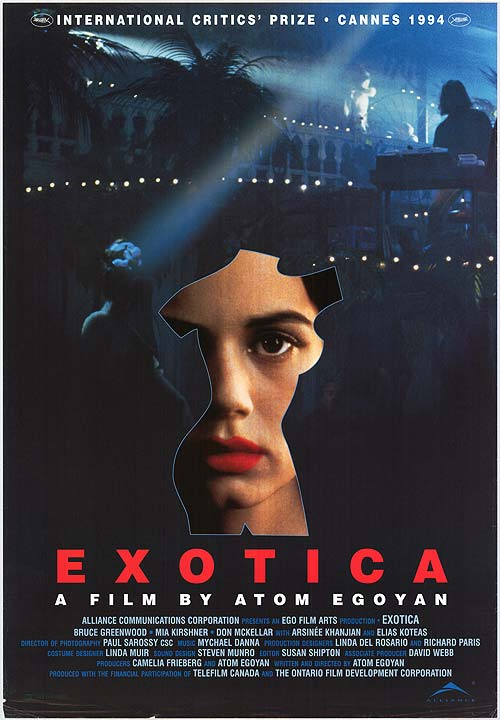
This is a fascinating and engrossing character study interweaving different characters and stories together until they become one. Bruce Greenwood plays Francis an accountant who frequents a strip bar and becomes fixated on a particular dancer named Christina (Mia Kirshner). Elias Koteas is the club D.J. who notices this obsession and becomes jealous since he at one time had a relationship with her. Thomas (Don Mckellar) is the nebbish pet shop owner who has a secret as well as a key between the three.

This is thoroughly compelling stuff that’s impossible to predict. The characters are believable, exposing traits you just don’t see in them at the start. Much like people you’d meet and get to know in real life each scene becomes like a piece to the puzzle.

Director Atom Egoyan may be a little too obsessed with tying everything together taking the final scene one step too far. Yet he still creates an interesting subtext. He seems to show how interconnected we all are to one another and how we can relate on different levels. The simple fact that we are human connects us no matter how ‘disconnected’ we may feel or be.

The sex club atmosphere is also taken from a different angle. He shows a much more complex and psychological motive behind it and how sex is only one element in it.

Like with Egoyan’s other films this thing is filled with a lot of philosophical banter and is quite humorless with a tendency to be a bit ‘heavy’. However, unlike The Sweet Hereafter it keeps moving and doesn’t get completely bogged down in it.

On the technical end the lighting is too washed out. The music selection is good, but oppressive. Overall though the film achieves what it wants too. It keeps your attention and remains thought provoking throughout.

My Rating: 8 out of 10

Released: May 16, 1994

Runtime: 1Hour 43Minutes

Rated R

Director: Atom Egoyan

Studio: Miramax

Available: VHS, DVD, Blu-ray

Visiting Hours (1982)

visiting hours 2

By Richard Winters

My Rating: 3 out of 10

4-Word Review: He doesn’t like women.

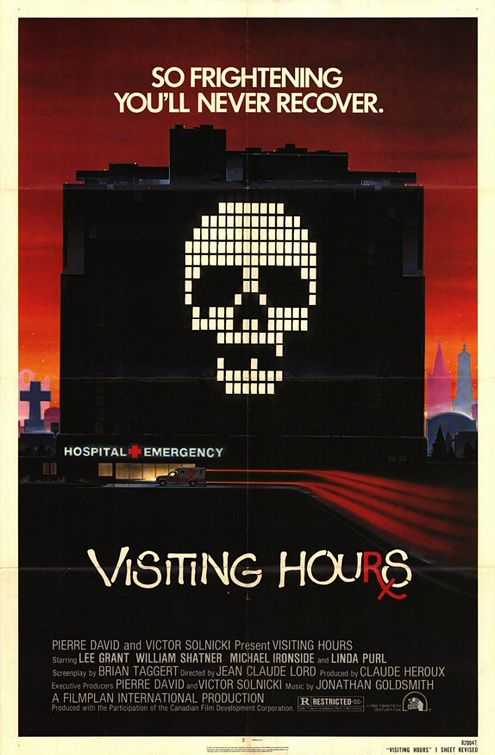
Deborah Ballin (Lee Grant) is an outspoken reporter who does a news segment dealing with domestic violence that angers misogynist Colt (Michael Ironside). For revenge he attacks her inside her home, but she manages to escape and gets treated at the local hospital. Unfortunately the psychotic Colt continues to stalk her inside the hospital, which causes her, other patients and the hospital staff to fear for their lives.

The script is predictable and unimaginative. It sticks to the tired 80’s slasher formula like it is a religion. The set-up is awkward and rushed while the rest of the film dealing with Colt’s perpetual stalking becomes prolonged and redundant. The scares lack excitement and the frights are non-existent. The only potentially interesting part that could’ve allowed this film to really stand out is when Deborah is taken into the operating room and put under anesthesia and thinks that the surgeon arriving to do the operation is Colt in disguise. The film teases the viewer with this possibility, but then chickens out.

The only novelty is having a 55-year-old actress as the heroine as opposed to the youthful, virginal looking types that get cast in these things in-part because of their screaming abilities. Having Grant playing a self-assured, confident character is refreshing change of pace for the genre, but then the film compromises even this by having Deborah’s young nurse played by Linda Purl become the target of Colt’s evil rage and by the end it’s Purl who has the most screen time.

Ironside is a competent actor and it is no surprise that he would be cast in the role of a killer due to his menacing facial features. He is talented enough to make the scenes he is in interesting despite the fact that he says less than 15 words during the whole film. Still the cutaways showing the reason for his mental illness being due to him witnessing as a child his mother throwing boiling water on his father is hooky. Also having him wear a small bell around his neck that rings every time he moves if awfully stupid for a person with a habit of stalking people.

The film has a similar concept to Halloween II that also dealt with a killer stalking a victim while inside a hospital, but here at least they use an actual hospital that is lighted the way a real hospital should be. The foot chase between Grant and Ironside that has them going to all areas of the building reminded me a little of the chase between Genvieve Bujold and Lance LeGault in the film Coma although that one is still far superior to the one here.

There are few mildly intense moments at the end that helps save this from being a complete boring waste, but still does little to make up for the rest of it that falls flat. Oh yeah, William Shatner also appears here in a pointless and dull role as Deborah’s boss.

My Rating: 3 out of 10

Released: May 21, 1982

Runtime: 1Hour 43Minutes

Rated R

Director: Jean-Claude Lord

Studio: 20th Century Fox

Available: DVD

Frantic (1988)

frantic

By Richard Winters

My Rating: 6 out of 10

4-Word Review: Where is his wife?

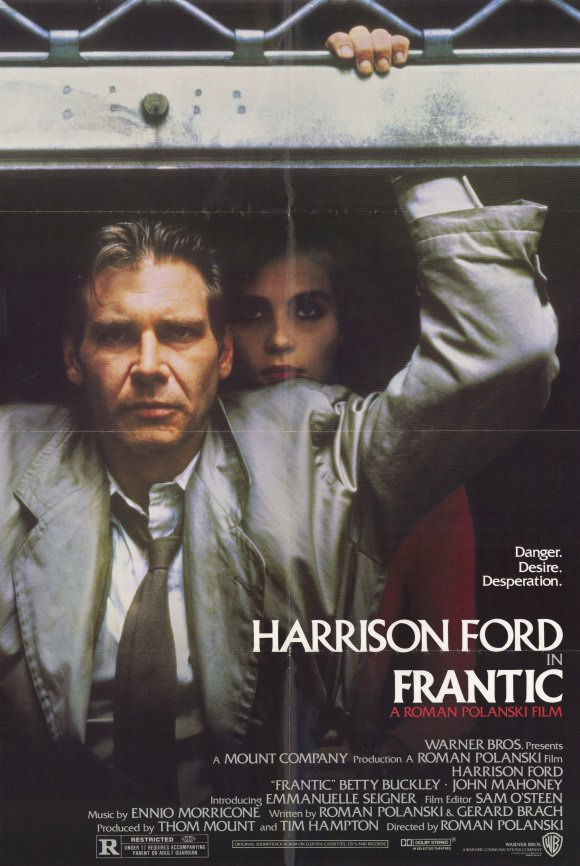
Dr. Richard Walker (Harrison Ford) and his wife Sondra (Betty Buckley) travel to Paris where he is to take part in a medical conference. They find when they get to the hotel room that they have a suitcase that looks like theirs, but is the wrong one. They call the mistake into baggage claims, but think nothing more of it. As Richard takes a shower his wife gets a call and then disappears. When Richard gets out of the shower he can’t find her anywhere. Asking around he finds some clues that leads him to believe that she was kidnapped and that it may have something to do with the mysterious suitcase.

The film starts out well with an interesting premise and some good Hitchcockian touches, but eventually it becomes just another conventional thriller that gets overblown and is full of loopholes. One that really annoyed me the first time I saw it has to do with Richard going to a local bar to ask if anyone has any information. He does this twice and both times a bar patron that is sitting next to him overhears the conversation and comes up with a crucial bit of information. If this were to happen once it would be considered a really lucky break, but to happen twice makes it seem too convenient and coincidental. However, the biggest plot hole is when the bad guys come to the hotel to kidnap the wife and hold her for ransom until they get their suitcase when instead they should have just taken the suitcase since it was RIGHT THERE to begin with.

Ford’s brash demeanor doesn’t seem particularly right for the part. Normally he can get away with it and even make it charming in a caustic sort of way, but here it doesn’t work. I did like that everything is seen from his point of view and the viewer is as perplexed as he is about the circumstances. One part has him crumpling up a piece of paper and eating it and I kept wondering how many takes they made him go through on that one before they got it right.

Emmanuelle Seigner, who at the time was director Roman Polanski’s girlfriend, comes off best. The two married about a year after the film was released and now 23 years and 2 kids later they are still a couple. She plays Michelle who Richard meets along the way and helps him find the bad guys with her inside information. I liked her youthful appeal and the contrasting ages and perspectives between her and Ford’s character make their scenes together interesting. However, the punk outfit she wears does nothing for her and looks tacky and at this point woefully out of style.

The on-location shooting in Paris helps give the film an extra appeal. I realize this is mainly because of Polanski’s exile there, but it is to the film’s benefit. I liked how the viewer mainly just sees the street scenes and local pubs and roadways giving the whole thing a sort of tourist perspective.

There is one exciting and very well filmed sequence showing Richard walking on a narrow and steep rooftop in order to get into Michelle’s apartment that proves to be the film’s most intense moment. Otherwise this thing never clicks and tends to get less suspenseful as it goes on. For basic entertainment it is okay, but there is little if any payoff. This pales badly alongside Michelangelo Antonioni’s L’avventura, which is another film with pretty much the same premise, but instead that one takes things in a much more offbeat, fascinating, and mind-expanding direction.

My Rating: 6 out of 10

Released: February 26, 1988

Runtime: 1Hour 59Minutes

Rated R

Director: Roman Polanski

Studio: Warner Brothers

Available: DVD, Blu-ray, Amazon Instant Video

The Family (1970)

the family

By Richard Winters

My Rating: 5 out of 10

4-Word Review: Hit man wants revenge.

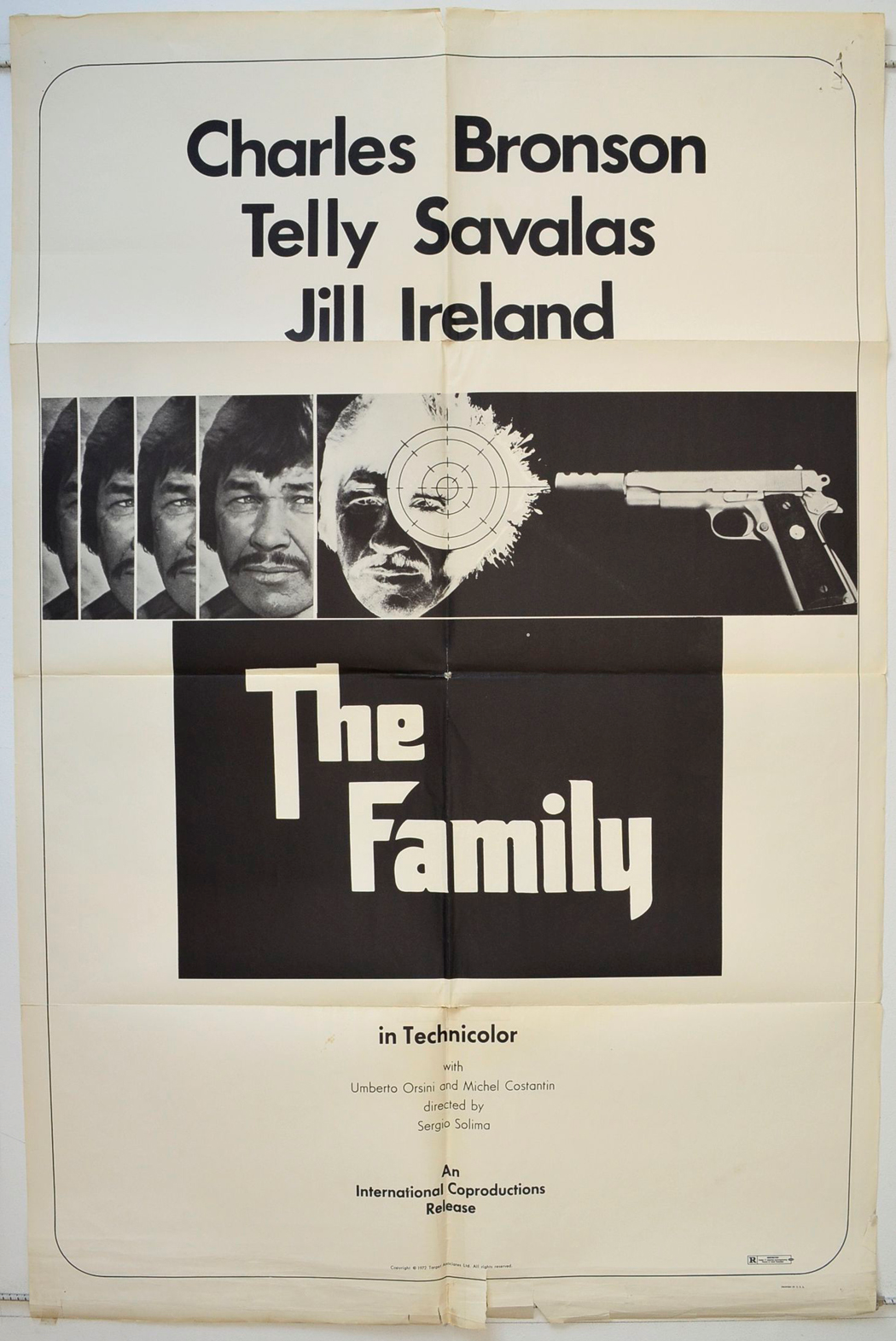
Jeff (Charles Bronson) is a retired hit man who finds himself set-up and nearly killed by girlfriend Vanessa (Jill Ireland). When he unexpectedly survives the ambush he plots his revenge by planning on killing her as well as her secret lover who put her up to it, but along the way he becomes harassed by Al (Telly Savalas) who wants to bring Jeff into their crime organization any way they can.

The movie features a great acid rock-like soundtrack that pumps the adrenaline and gives the proceedings a nice edgy feel. The scene where Jeff shoots a man from a distance while the victim is participating in a car race and blowing out his tire, which sends him crashing through a brick wall, is creative. However, the best part of the whole movie, which comes at the end and almost makes sitting through it worth it, is watching two people getting shot as they ride up a glass elevator by a gunman sitting on top of a roof of a building from across the street.

On the whole though the film, which credits six writers to the screenplay and includes the legendary Lina Wertmuller is rather standard. Somehow it always seems the more people that work on the screenplay the less creative it becomes and this proves no exception. The characters are one-dimensional and the twists aren’t all that clever. Outside of the action sequences the story plods at too slow of a pace and you feel the whole time you are watching it that you’ve seen it all before.

For a savvy hit-man Jeff seems to be too much of a pushover. I can understand getting double-crossed once, but then he keeps going back to Vanessa and she does it to him again and again making him seem like a schmuck. The Vanessa character is equally annoying.  She is too wishy-washy and would have gotten a better emotional response from the viewer had she been better defined, or written as being a complete and total bitch.

Bronson is okay in the lead although he doesn’t have too much to say, which is good. His best moments come when he is silent particularly the scene inside the prison cell when he allows a giant tarantula spider to crawl all over him while he serenely sits smiling and the other prisoners look on with shock and awe.

Ireland looks great as always and shows a lot of skin. There is a scene where there is a close-up of her breasts as well as her backside while she is lying in bed. There is a moment of frontal nudity when she gets out of shower and she can be seen through the slightly fogged glass of the shower door. However, her face is always conveniently hidden during all of these shots making me believe that a body double was used although none is credited.

Savalas, who is the only one that gives the film any real energy, is wasted and doesn’t appear until the second half.

The complete and uncut version of the film done on the recent Blue Underground DVD release features scenes that were omitted from earlier English language prints. Unfortunately because these scenes where never dubbed into English they are shown in their original Italian language format. This becomes quite distracting as characters will be speaking in English and then during the same scene start talking in Italian and then back to English. The DVD features subtitles during these moments, but the version on Amazon Instant Video, which is what I saw, doesn’t. What is worse is the fact that these added scenes really don’t add much and they could have just been left on the cutting room floor. Fans will many times flock to purchase the ‘complete and uncut’ versions of films while failing to realize that there was probably a reason this extra footage was cut in the first place, which is namely that they were perceived as being boring or pointless and usually are.

If you are looking for non-think formula action that has just enough style to make it passable then this film should fit the bill, but it is no classic.

My Rating: 5 out of 10

Alternate Title: Violent City

Released: September 17, 1970

Runtime: 1Hour 49Minutes

Rated R

Director: Sergio Sollima

Studio: Universal Film

Available: DVD, Amazon Instant Video (as ‘Violent City’)

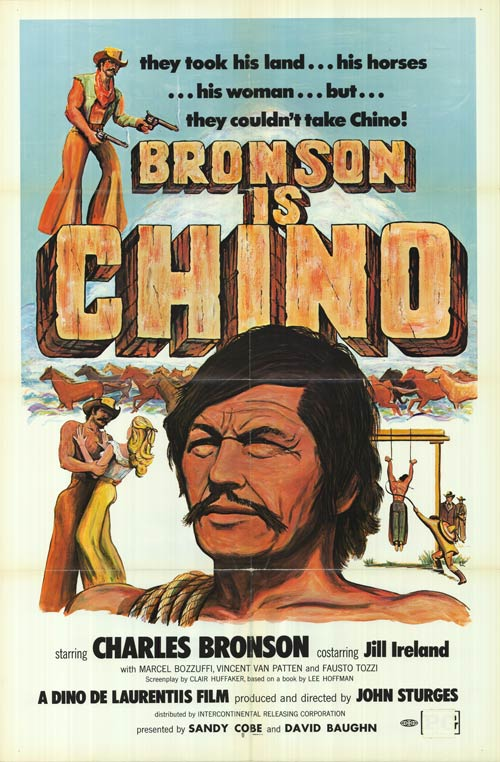
Chino (1973)

chino 2

By Richard Winters

My Rating: 3 out of 10

4-Word Review: Chuck and the kid.

Jamie (Vincent Van Patten) is a teen runaway in the old west that comes upon an isolated horse ranch run by Chino (Charles Bronson) who is ostracized by the locals for being a ‘half-breed’.  Chino reluctantly takes the boy under his wings and teaches him about how to take care of horses, but neither of them can completely escape the racism and hatred around them.

Filmed in Spain the rustic countryside has a certain visual appeal and the low-key music is a perfect score for this type of western. There is a barroom brawl and a shootout at the end, but overall this is standard stuff with little to help make it stand out. Everything this movie has to offer you’ve seen before and in most cases done better. That is not to say it is a bad movie, but it is lacking in imagination and seems content to simply borrow from an already overused formula. While the pacing isn’t exactly slow it isn’t compelling either. The characterizations, plot, and dialogue are held at the most simplistic level and if it weren’t for a brief bit of nudity by an attractive native woman I would almost say this thing was aimed solely for kids.

Bronson doesn’t show much range of emotion here and comes off in the wooden way his critics have always accused him of although he is still good in the action sequences. Jill Ireland’s appearance helps add a bit of life to the proceedings and the antagonistic banter that the two share while he tries to train her to ride a horse is fun to a minor extent as it the part where she walks in on him as he is standing buck-naked in a bathtub. However, having them fall in love so quickly and then want to get married is rushed and forced.

It is fun seeing Vincent Van Patten as a young teen, but his interaction with Bronson is dull. Their eventual ‘bonding’ is formulaic and clichéd and only helps in cementing this as a forgettable, pointless, low-budget foray.

The real stars of the picture are the horses that show much more of a screen presence than their human counterparts. In fact during the first half you see more of them than the people, which is just as well. There is even a shot showing two of them mating, which is the film’s sole unique moment and for some possibly even the highpoint.

My Rating: 3 out of 10

Released: September 14, 1973

Runtime: 1Hour 37Minutes

Rated PG

Director: John Sturges

Studio: Intercontinental Releasing Corporation

Available: DVD, Amazon Instant Video

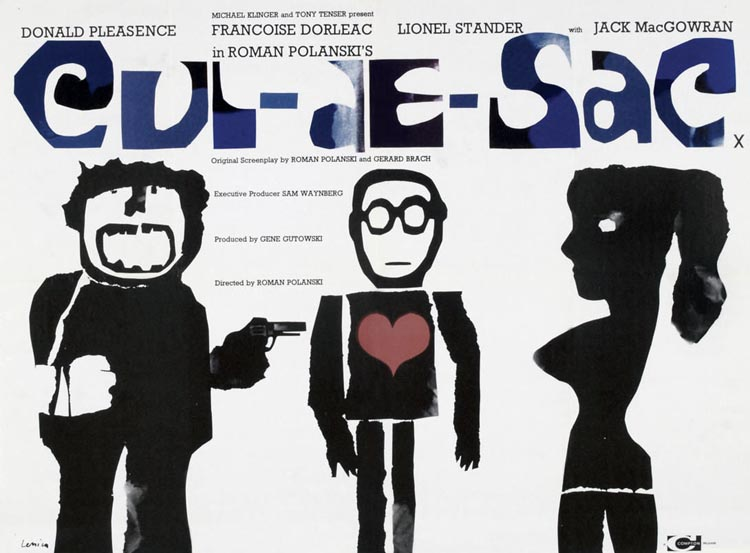
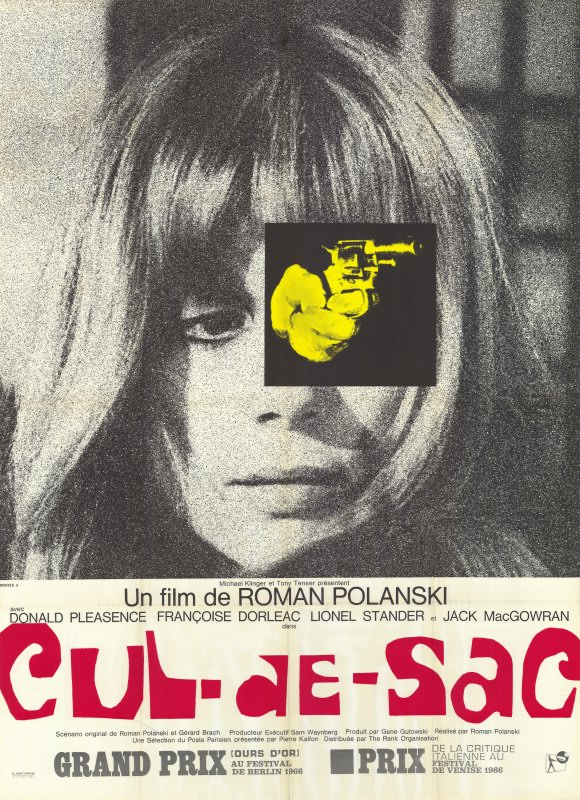
Cul-De-Sac (1966)

cul de sac 2

By Richard Winters

My Rating: 8 out of 10

4-Word Review: Bubbling beneath the surface.

Albie and Richard (Jack MacGowran, Lionel Stander) are two gangsters on the run. Albie is injured with a gunshot wound and their getaway car has broken down. They come upon an isolated castle owned by George (Donald Pleasance) who lives there with his new wife Teresa (Francoise Dorleac, who tragically died in a car accident just one year after this film was released). George is very passive and timid and pretty much allows Richard to have his way as he takes over the place and his wife and yet as the situation progresses different shades of the character’s personalities begin to come to light.

Roman Polanski leaves his strong directorial touch from the exquisite opening shot, which shows an old car being pushed along on a desolate road amidst a very flat landscape until the end. In the hands of any other director this otherwise odd story probably would not have worked. Like with A Knife in Water Polanski makes great use of the quiet and serene atmosphere and as a viewer you feel like you are right there with the characters.  Filmed on-location at the Lindisfarne Castle on Holy Island in Northumberland, England the movie makes great use of the tranquil setting. I found it almost hard to believe that there was a film crew there as the isolation really grabs you and sucks you in. The quiet moments are the film’s strongest and I just loved the hooting owl heard in the background. The idea of filming it in black and white nicely compliments the film’s dark psychological undertones.

The film’s novelty is watching how the characters evolve and interact with one another. Donald Pleasance gives one of his best performances as the cowardly George. There have been many weak and frighten characters in cinema history, but Pleasance makes the character here quite interesting and the way he finally shows some bravado at the least likely moment is fascinating. Stander also excels with a character that initially comes off as a brute, but at strange times reveals a trusting and even child-like manner.

The movie can be viewed in different ways and doesn’t fit distinctly into any type of genre. To a degree it can work as a dark psychological character study, a mystery, film noir, a thriller, or macabre comedy. Approaching it as a comedy works best Polanski has not always had great success in that area and some of his comedies in particular the ill-advised Pirates have been complete disasters, but this one works. The best scene is when some of George’s old friends come to visit and bring along their bratty son who becomes an absolute terror to everyone.

The odd ending is open to interpretation and leaves a lasting impression. This is also a great chance to see Jacqueline Bisset in her film debut. She appears during the second half wearing glasses and saying little, but is as beautiful and alluring as ever.

cul de sac 1

My Rating: 8 out of 10

Released: November 7, 1966

Runtime: 1Hour 57Minutes

Not Rated

Director: Roman Polanski

Studio: Tekli British Productions

Available: DVD (The Criterion Collection) Blu-ray, Amazon Instant Video, Netflix streaming

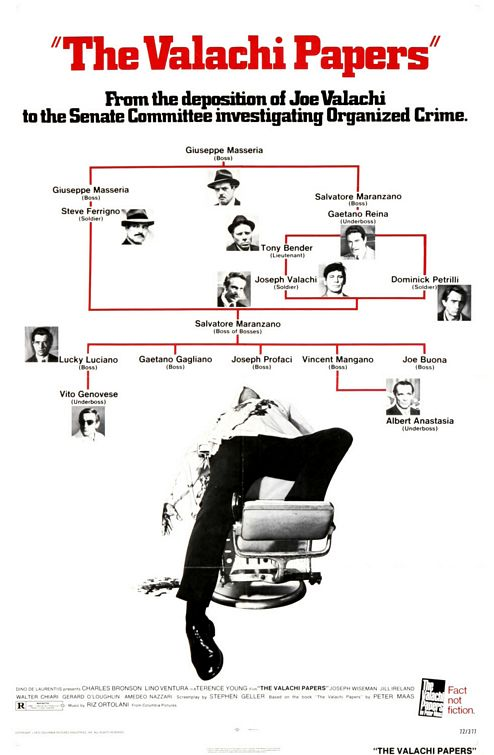
The Valachi Papers (1972)

the valachi papers 1

By Richard Winters

My Rating: 7 out of 10

4-Word Review: Testifying against the mob.

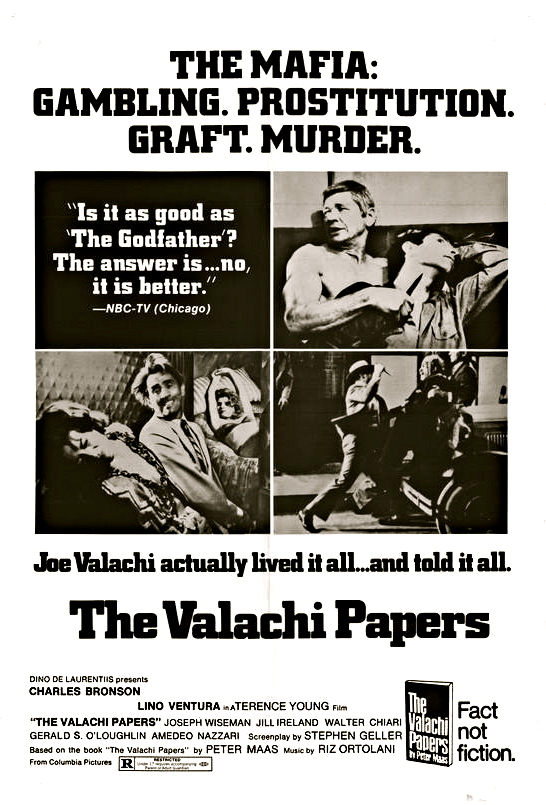
Based on the bestselling novel by Peter Maas this film chronicles the life of Joseph Valachi (Charles Bronson) who became the very first informant for the Mafia in their history. The story chronicles his life from a young man getting involved in the mafia culture to his eventual imprisonment and testifying in front of congress.

At the time of release this was compared closely to The Godfather with some critics outrageously saying it was better, but clearly it doesn’t come close. This film lacks the in-depth characterizations, lyrical quality, and an overall slick design. This film is also rather sloppily produced including one scene involving an exciting car chase taking place in the 1930’s. When the two cars go crashing through the wall of a warehouse and into the East river one can clearly see the Twin Towers of the World Trade Center, which weren’t built until 1970. There is also the Lucky Luciano character played by actor Angelo Infanti who wears a type of glasses that did not come into style until well into the 1970’s. However, as a whole the film is still amazingly compelling flick that ends up being both entertaining and somewhat informative. The music score has a terrific ominous tone to it and the prison scenes have a nice starkness.

The film was known at the time for its violence, which by today’s standards may not seem quite as startling or as excessive although the blood and bullets do come at regular intervals. My favorite was the shooting of an old crime boss inside a barbershop although the castration of a victim on top of a table inside a restaurant is pretty wild. However, for all of its violence the film does manage to have a sense of humor as well including a very amusing scene where one of Joe’s mob bosses sits in the living room of the mother of Joe’s girlfriend and asks the mother for her permission to allow Joe to marry her daughter while Joe sits nervously behind and tries to look proper.

Lino Ventura has the perfect face of a mob boss and was ideally cast. The scene of him inside the prison where he has stays in a well-furnished cell and even seems to have his own barber is funny. Joseph Wiseman displays great zest as the opposing crime boss Salvatore Maranzano and his agonizing yells of pain as he lies dying are effective.

Bronson seems perfectly cast as an uneducated simple man who is a follower and has his own quiky code of morality, which makes him strangely endearing. His wife Jill Ireland does not fare as well. She ports a brunette wig and her Italian accent borders on being horrendous to non-existent. Fortunately she is not given very many speaking lines as her British accent is constantly seeping through.

In many ways this film could best be described as an ugly cousin to Goodfellas. While this film lacks that film’s fluid directorial flair it still manages to be an engrossing true-life gangster soap opera like that one.

the valachi papers 2

My Rating: 7 out of 10

Runtime: 2Hours 5Minutes

Released: November 3, 1972

Rated R

Director: Terence Young

Studio: Columbia Pictures

Available: VHS, DVD