Category Archives: Drama

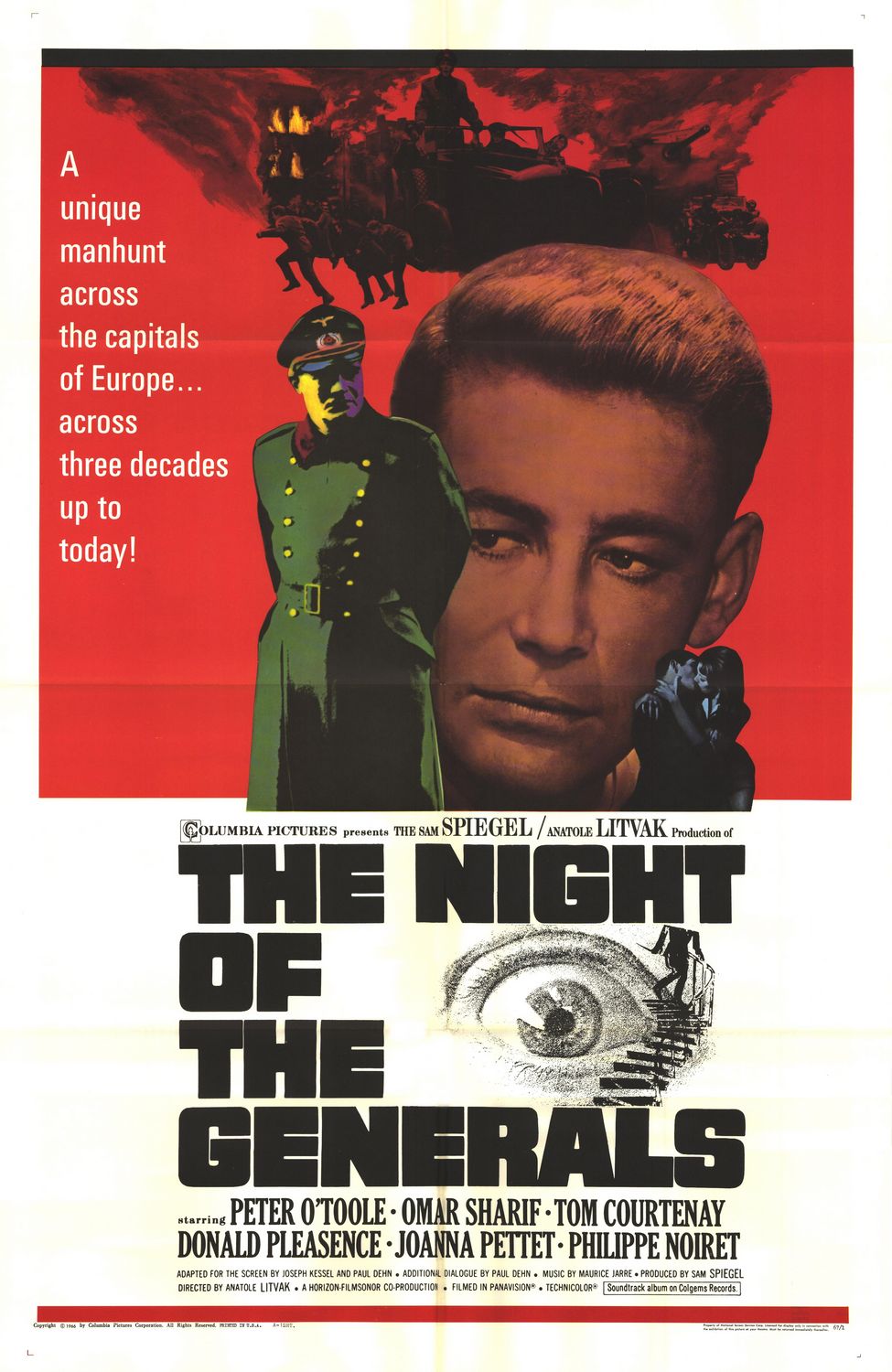
The Night of the Generals (1967)

night of the generals

By Richard Winters

My Rating: 5 out of 10

4-Word Review: A general kills prostitutes.

In 1942 during the height of the war a Polish prostitute is found murdered and sexually mutilated. A witness spotted a man leaving her room who was wearing a uniform that had a red stripe running down the side of his pants, which signified that he was a general. Major Grau (Omar Sharif) who is in charge of the investigation decides to interview three generals (Donald Pleasance, Peter O’Toole, Charles Gray) who were in the vicinity and have no alibi, but finds a lot of pressure not to pursue the case and it takes several decades before it finally unravels.

The storyline is compelling enough to keep you intrigued, but the script is talky with not enough action. Certain story threads seemed unnecessary and the film could have been more compact. The actors are mostly all British, but make no effort to speak in German accents despite playing Nazi roles. The music cues that are used whenever an important plot point is revealed or to transition to another scene are too loud and have a generic quality to them that does not appropriately reflect the time period.

O’Toole gives an interesting performance as psychotic ready to fall completely apart. His extreme emphasis on cleanliness especially to those that serve under him and his nervous twitches steal the film as well as a bit where he commands his men to destroy an entire block of a town simply to get at a couple of snipers. His bizarre reaction to a painting of Vincent Van Gogh that he spots in a gallery is intriguing especially when it occurs twice and his blank blue-eyed stare becomes almost piercing.

Sharif does quite well in support and despite being born and raised in Egypt does a convincing job as a Nazi and I think make-up was used to lighten his skin. Tom Courtenay is good as O’Toole’s assistant and the relationship that they form has some interesting subtexts to it.

Joanna Pettet’s appearance however seemed pointless and although the constant sparring she has with her mother (Joan Plowright) was fun it really didn’t add much to an already cluttered narrative. Christopher Plummer also gets stuck in a thankless part where he is seen for less than five minutes before promptly being killed off.

The identity of the killer gets revealed 45 minutes before the end, which hurts the suspense. I also didn’t like that the Sharif character gets killed off and the rest of the investigation is taken over by a Frenchman (Philippe Noiret) which seemed defeating since we had spent so much time siding with the character’s plight to seek justice despite all the obstacles. The film’s very final moment is supposed to be dramatic and poignant, but instead goes over-the-top and becomes weak and strained.

My Rating: 5 out of 10

Released: January 29, 1967

Runtime: 2Hours 25Minutes

Not Rated

Director: Anatole Litvak

Studio: Columbia Pictures

Available: VHS, DVD, Amazon Instant Video

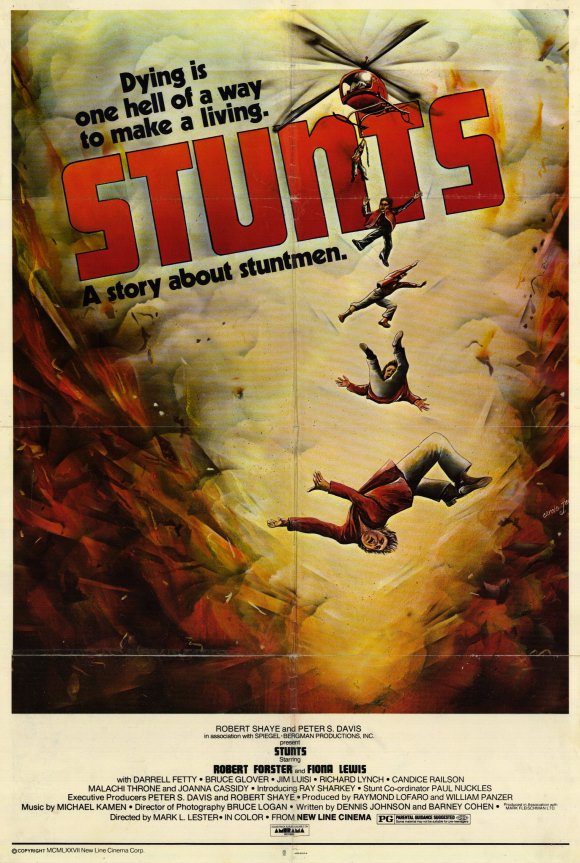
Stunts (1977)

stunts

By Richard Winters

My Rating: 4 out of 10

4-Word Review: Who’s killing the stuntmen?

Glen (Robert Forster) decides to join a movie production working as a stuntman when his brother mysteriously dies while doing a routine stunt. Soon more stuntmen meet similar fates. Will Glen be able to find out who’s behind these deaths before he becomes the next victim?

Director Mark L. Lester has done a lot of these standard low budget flicks and has achieved moderate success with them. The story itself is pretty basic and really doesn’t offer all that much tension or interest, but the pace is brisk and some of the stunt work entertaining. On a low-grade level it is okay.

I love Forster’s blunt, blue collar, say-it-like-it-is attitude and his presence elevates the story immensely. Bruce Glover who is the father of Crispin Glover plays one of the fellow stuntmen. Like his son he usually plays weird and eccentric characters, but here plays a normal one who you are even sympathetic to, which was a surprise turn.

The women characters aren’t locked into any dainty stereotype and are as tough and gruff as the men and I liked it. Fiona Lewis plays a journalist looking to write an article and what makes up the personality of stunt people and why they do it. She curses as much as Forster if not more and although the two eventually get into a relationship after a rocky start they continue to spar, which is fun. The beautiful Joanna Cassidy seems like just one of the guys and does all the same dangerous stunts they do and even knocks two guys flat on the their asses during a barroom brawl.

Candice Rialson doesn’t fare quite as well. Her best assets are with her clothes off and trying to turn her a dramatic actress clunks. She doesn’t even have a single nude scene here, which seemed almost like a waste. However, the segment where she keeps flubbing up her lines and they have to do continual reshoots to the consternation of the director (Malachi Thorne) is amusing.

The DVD issue from Synergy Entertainment, which is the same version you get if you buy or rent it from Amazon Instant is atrocious and looks like it was transferred straight off of a faded VHS tape. To some extent I was willing to forgive it as the graininess help reflect the low budget drive-in feel, but this version also edits out any time a character says the F-word, which got annoying. The picture is so blurry I couldn’t even read the credits to find out who did the catchy title tune ‘Daredevil is Gonna Make an Angel Out of You’, but whoever did it did well as it has a nice gritty beat and fun lyrics.

My Rating: 4 out of 10

Released: June 12, 1977

Runtime: 1Hour 29Minutes

Rated PG

Director: Mark L. Lester

Studio: New Line Cinema

Available: DVD, Amazon Instant Video

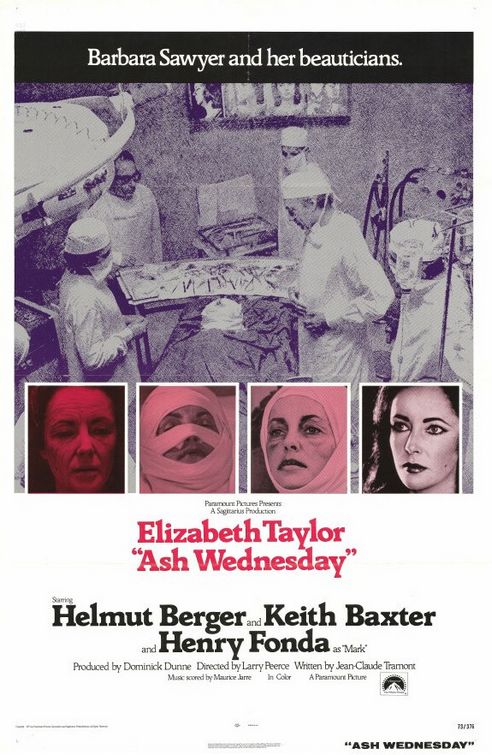
Ash Wednesday (1973)

ash wednesday 1

By Richard Winters

My Rating: 2 out of 10

4-Word Review: Liz gets a facelift.

Barbara (Elizabeth Taylor) is not aging gracefully. Her husband Mark (Henry Fonda) is having an affair with a much younger woman, but Barbara is determined to win him back. She decides to get a facelift and then spends her time afterwards at a winter resort in Italy where a young man name Erich (Helmut Berger) becomes intoxicated by her sudden youthful beauty and the two go to bed together. When her husband arrives she still strives to save the marriage, but finds that to him the facelift makes no difference.

The film’s biggest claim-to-fame is the graphic and vivid look at an actual facelift surgery that sickened many viewers who watched the film when it was first released. The footage is explicit, but fascinating as well as I never quite understood how this procedure worked, so seeing it from a medical viewpoint is to a certain extent educational. I also liked that during Barbara’s stay at the hospital she meets a middle-aged man named David (Keith Baxter) who has had several of the some procedures himself and showing that this wasn’t exclusively a woman’s issue although I was confused why a man would spend so much money having facelifts, but then not bother to dye his hair.

The effects of the procedure is a bit misleading because Liz was only 40 at the time and was put into heavy makeup to make her appear much older at the beginning, so the results of the surgery are really just her as she normally looked. The idea that a facelift would have such a galvanizing effect on everyone around her is also not realistic. A recent study found that many people who had the procedure ultimately only looked 3 to 5 years younger instead of the 10-plus that they had hoped for. Sometimes a facelift can make a person look even worse, or in my opinion a sort of ‘duckface’ that this movie doesn’t even hit on, but should’ve.

I also thought that the idea that this woman would want to stay with a man who is openly cheating on her was unrealistic. If this woman was poor, lonely and homely and he was her only source of a social outlet then maybe, but this guy was loaded and I would think most women would simply hire a good divorce lawyer and take the cheating cad to the cleaners and then merrily move on especially when she had already proven to herself that she could attract other more attractive men on her own anyways.

The role itself seems to be an extension of Taylor’s own personality in that of a woman living in an insular world obsessed with shallow problems because she has too much time and money on her hands and unable to either understand or portray an average person in a regular lifestyle even if she wanted to. The wide variety of big puffy hats and scarfs that she wears becomes a bit of a distraction and almost like a character into itself.

Fonda is wasted in another one his typical latter career roles that gives him very little to do. He doesn’t even appear onscreen until the final fifteen minutes and only then long enough to tell her he wants a divorce before promptly leaving.

The opening sequence showing the two stars aging through the years during the credits is interesting and well-done especially seeing Fonda when he was young. The musical score by Maurice Jarre has a nice classic flair to it and lifts this dreary production to a more classy level than it deserves, but unfortunately doesn’t get played much after the beginning.

The film probably would’ve worked better had the surgical procedure not happened right away, but instead been done in the middle and had more of a backstory at the beginning. The facelift scenes are actually the film’s highpoint and it goes rapidly downhill afterwards until it becomes a mind numbing train wreck that isn’t worth watching for any reason.

My Rating: 2 out of 10

Released: November 1, 1973

Runtime: 1Hour 39Minutes

Rated R

Director: Larry Peerce

Studio: Paramount

Available: VHS

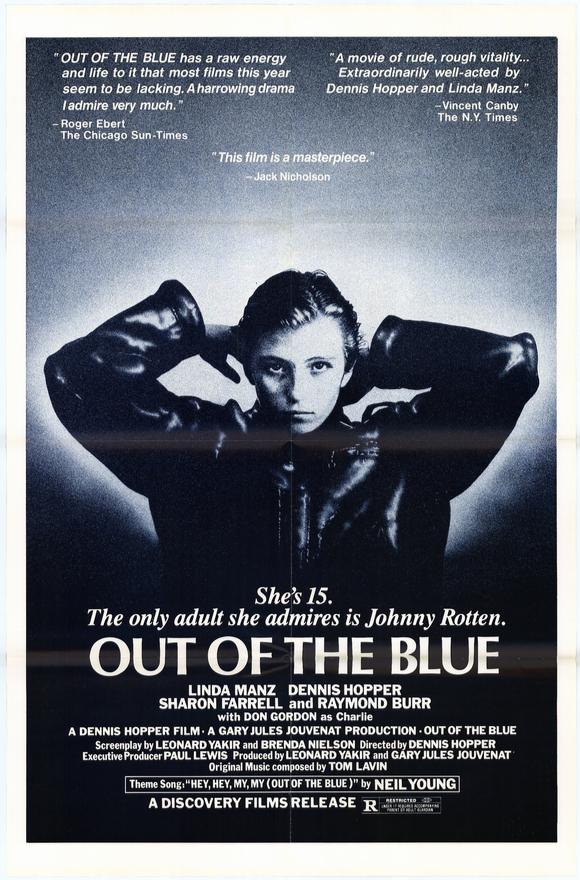
Out of the Blue (1980)

out of the blue 1

By Richard Winters

My Rating: 3 out of 10

4-Word Review: Daddy disappoints his daughter.

Marginal drama detailing the trials of a teen girl (Linda Manz) whose father (Dennis Hopper) is serving a five year sentence for killing a busload of kids while driving drunk. She recognizes the weaknesses in her mother (Sharon Farrell) and idolizes her father because she thinks he is better yet when he is released she realizes he has faults as well, which culminates in a shocking and unexpected finale.

One of the big problems with this film is that it becomes as aimless as the characters that it portrays. Hopper’s free-form directing style is too loose and undisciplined. Intended dramatic elements come off as weak and insignificant. The story has interesting moments, but ultimately misses the mark. The gritty scenes look staged and hackneyed and everything seems too familiar like stuff we’ve seen hundreds of times before. Director/star Hopper keeps reaching into his bag hoping to pull out another Easy Rider, but his avant-garde style now seems tiring and predictable.

The dark, ugly ending is a definite shock and it is the only thing that raises this from being a complete misfire. Had the film started with the ending and used it as a springboard for the rest of the movie than it might have been more compelling. The very graphic crash of Hopper’s truck into the school bus is the only other part that is impressive.

Manz has certainly come a long way from Days of Heaven or even as the mouthy kid in The Wanderers. She is a more poised actress and ready to carry the film. Her streetwise attitude and background is still apparent, but more polished and contained. This was the film that was going to make her a star and it probably could have had it been better.

Farrell as the mother is effective simply because her physical looks nicely reflects the rough life of her character. It is also fun to see Raymond Burr in a bit part only because he seems so out of place with the setting.

My Rating: 3 out of 10

Released: May 11, 1980

Runtime: 1Hour 34Minutes

Rated R

Director: Dennis Hopper

Studio: Discovery Films

Available: DVD

Echoes (1982)

mercedes mccambridge 1

By Richard Winters

My Rating: 5 out of 10

4-Word Review: Haunted by dead brother.

Michael (Richard Alfieri) is a young artist who is plagued by reoccurring dreams dealing with a menacing man out to get him. He goes to a psychic and learns that this is actually his dead twin brother who died at birth and is now reaching out in attempt to possess him.

This is a unique idea that is reminiscent of the later film (and book) The Dark Half and is some ways more intriguing. Unfortunately instead of approaching it like a thriller, occult, sci-fi, or mystery it instead treats it like a social drama(!?!). The majority of the film is spent on how his obsession with these dreams affects his relationship with his girlfriend, job, and other friends. There is no suspense or chills whatsoever. The ‘visions’ are unremarkable and non-distinctive. The music is too loud and way too heavy for what ends up being very dramatically trite stuff. The climax is hooky and laughable and there is never any explanation for why this happened or how.

There are also a lot of dramatic lulls that really hurt the film’s momentum. The whole first half hour is spent on his budding relationship with his girlfriend Christine (Nathalie Nell) before it even gets to the story and the way they get together is quite stodgy to begin with. By and large the characters and dialogue are bland even the menacing spirit of the dead brother is sterile.

Star Alfieri, who also co-wrote the screenplay, just doesn’t have a strong enough presence to really carry a picture. He also has one of those annoyingly pouty pretty boy looks. Co-star Nell helps add a little contrast by having a French accent and some very practical sensibilities.

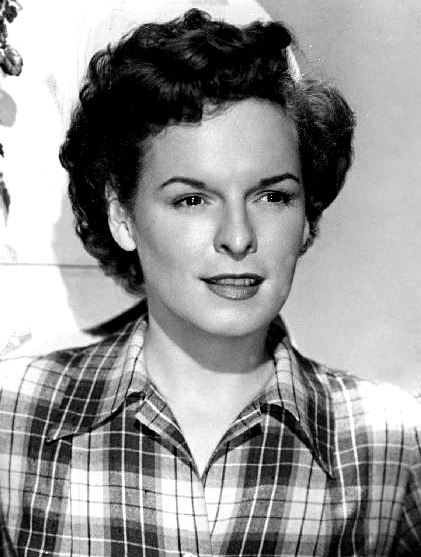
Gale Sondegard, Ruth Roman, and Mercedes McCambridge whose picture you see at the top of this post and is probably best known as the voice of the demon in The Exorcist give the film some distinction and are fun to watch even if they are given little to do. This was for all three their final film appearance. Mike Kellin has a great part as a terse art teacher who has a rather intense confrontation with student Alfieri during one of his classes that is pretty good and ends up being the film’s best moment.

You also get a chance to see a John “West Wing” Spencer. He is much younger here with more hair and a mustache and you might only recognize him through his voice.

Overall the movie is ineffective. The direction is competent enough to make it watchable, but there’s no excitement or thrills. With such an interesting idea it could have been and should have been a lot better.

My Rating: 5 out of 10

Alternate Title: Living Nightmare

Released: May 31, 1982

Runtime: 1Hour 29Minutes

Rated PG

Director: Arthur Allen Seidelman

Studio: Film Corp

Available: DVD as ‘Living Nightmare’

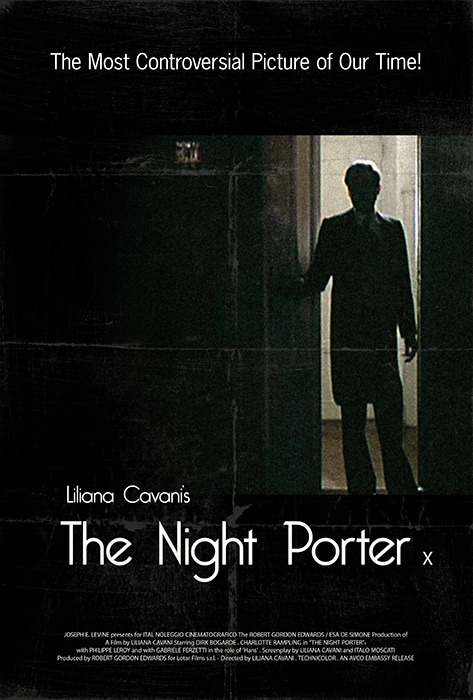
The Night Porter (1974)

the night porter 3

By Richard Winters

My Rating: 8 out of 10

4-Word Review: A strange sadomasochistic relationship.

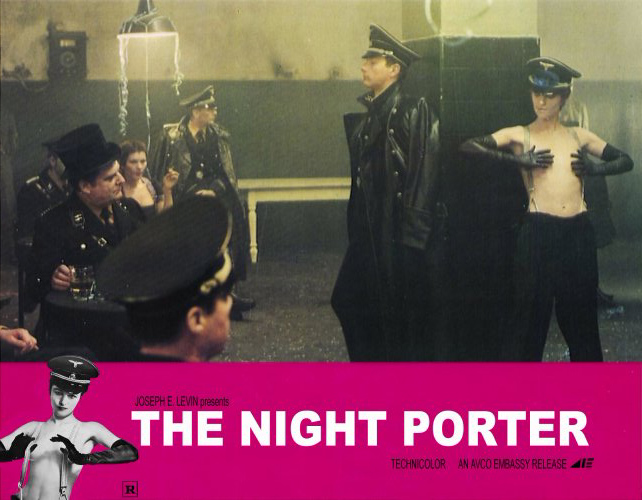
As the title suggests this film deals with the darkness of the human mind, relationships, sex and society as a whole and has a Freaudian theme of exploring the weird sexual obsessions of those who on the outside may seem perfectly functional and ‘normal’.

The story focuses on a concentration camp survivor Lucia (Charlotte Rampling) who twelve years later, by chance, meets her former captor Maximilian (Dirk Bogarde). She is now married while he is working as a night porter at the hotel she is staying at. The twist here is that she decides to go back to him and continue the bizarre sex rituals they once had.

The film’s most interesting aspect is focusing on the long term psychological ramifications of those surviving traumatic experiences. It looks both at the victims and the captors who now must learn to ‘rationalize’ their guilty conscious and it questions whether anyone can truly function normally after surviving such severe circumstances or whether society has any ability to make someone ‘adjust’.

This is definitely complex material and director Liliana Cavani has a good grasp on it. The shot compositions are full of stark shadows with a definite emphasis on the surreal, which comes to play the most during the sadomasochistic fantasy segments.

The problem with the film lies in the fact that it doesn’t have the intended strong impact. There’s no momentum or discernible tension. The characters are complex, but not that interesting and we really don’t care particularly what happens to them.

The films strongest point is actually in its final sequence, which brings the whole thing together. Like in any great movie there’s the one shot that says it all and here it’s the final one where visually, without saying anything, it shows just how isolated these outsiders truly are. It also exposes how their personal demons have imprisoned them and how dysfunctional society is at handling them.

the night porter 2

My Rating: 8 out of 10

Released: April 3, 1974

Runtime: 1Hour 58Minutes

Rated R

Director: Liliana Cavani

Studio: AVCO Embassy Pictures

Available: VHS, DVD, Blu-ray, Amazon Instant Video

Valley of the Dolls (1967)

valley of the dolls 2

By Richard Winters

My Rating: 5 out of 10

4-Word Review: The dolls are pills.

Usually when sites commemorate Sharon Tate it is on the anniversary of her murder, which is in August, but I decided to do things differently and talk about her in January when she was born. Had she lived she would have turned 71 this year and each Sunday this month I will review a 60’s film that she was in.

This one is probably her most well recognized part and it’s based on the bestselling novel by Jacqueline Susann who appears briefly as a reporter. Here Tate plays Jennifer North a woman with ‘no talent’ who must use her body and looks to get where she wants and she is constantly reminded of it by her mother who regularly calls to make sure she is doing her ‘breast exercises’. Eventually she stars in nudie films, which leads to a self-destructive downward slide. Patty Duke is Neely O’Hara a talented young singer who finds climbing to the top can be laced with drugs, alcohol and jealousy. Anne Welles (Barbara Parkins) makes up the third part of the trio as a small town girl who comes to the city looking for excitement, but finds more than she bargained for and eventually leaves.

If there is one thing that saves this otherwise trashy, standard script it is Mark Robson’s direction. Usually most directors come up with a color scheme based on the type of script that they have and mood they want to create, but Robson’s uses every color of the rainbow and more. The plush varied sets and interesting stop action photography that gets implemented from time-to-time keeps things moving at a brisk a visually interesting pace. John William’s score is excellent and Dionne Warwick’s song ‘The theme from Valley of the Dolls’, which charted at number 2 is like most of her work infinitely hummable.

valley of the dolls 1

Duke is lively as the caustic Neeley. She took on the role to get rid of her ‘goody-goody’ image and does so in grand style as her angry tirades and meltdowns are entertaining. While she is attractive Tate’s acting seems limited, but her character is by far the most likable. Parkins may be the least well known of the three, but her performance is solid as the film’s anchor.

Veteran actress Susan Hayward gives the best performance as the aging acerbic singer Helen Lawson who will allow no one to push her from the top. Her confrontation with Duke in the women’s bathroom where Duke pulls off Hayward’s wig and tries flushing it down the toilet and then Hayward’s response to it is by far the most memorable scene of the whole movie.

The story itself is predictable, clichéd and one-note. The characters are cardboard and the dialogue is stale. If it weren’t for Robson’s direction this would have been a ‘bomb’. However, it has attained a high cult following for its campiness, which if you view it from that perspective isn’t bad.

This same story was remade as a 1981 TV-movie starring James Coburn and Jean Simmons.  Also, a young Richard Dreyfuss can be spotted briefly as a stagehand.

valley of the dolls 3

My Rating: 5 out of 10

Released: December 15, 1967

Runtime: 2Hours 3Minutes

Not Rated

Director: Mark Robson

Studio: 20th Century Fox

Available: VHS, DVD, Amazon Instant Video, Netflix streaming

Billy Jack (1971)

billy jack 2

By Richard Winters

My Rating: 6 out of 10

4-Word Review: That’s one mean kick.

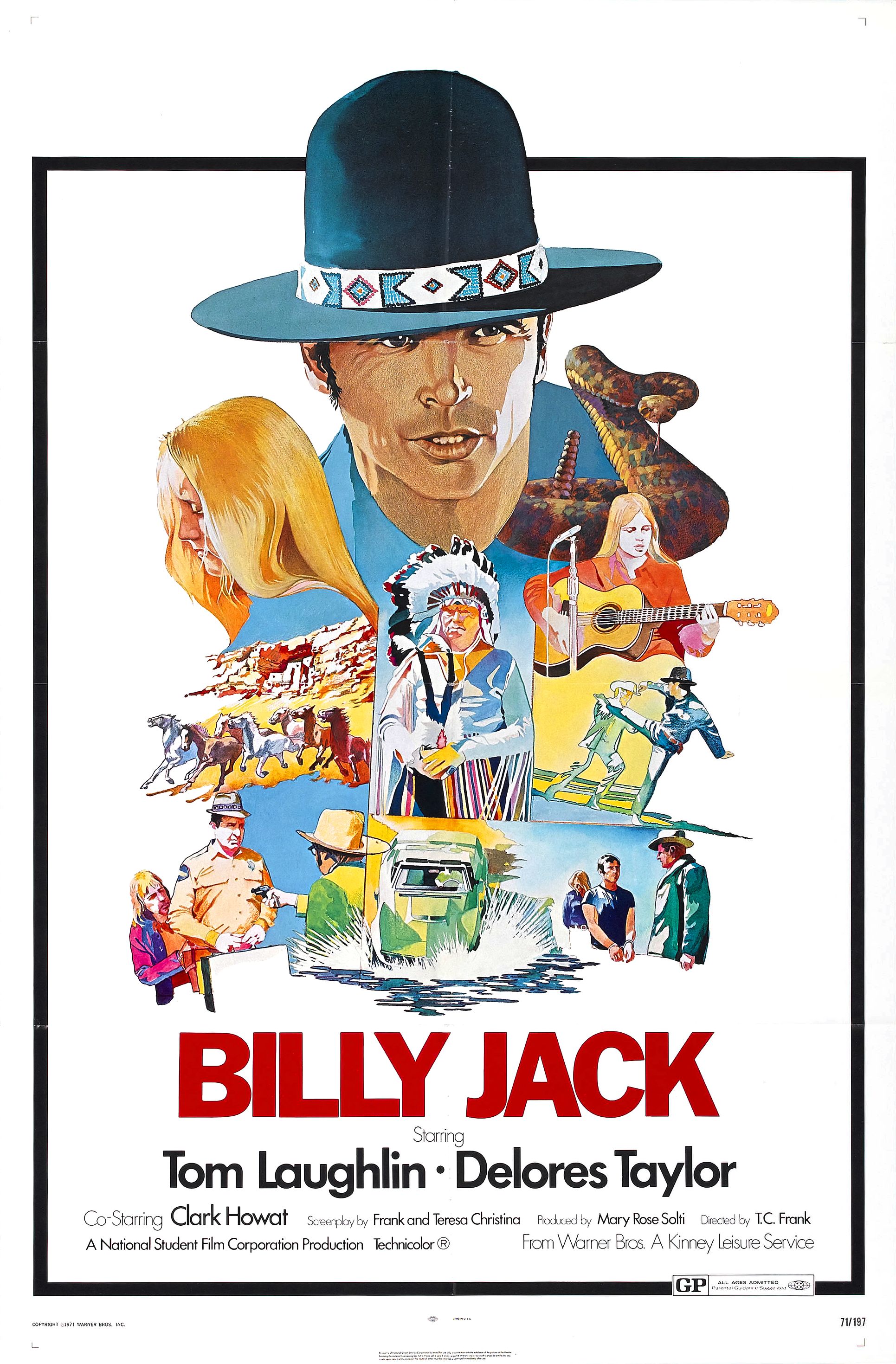
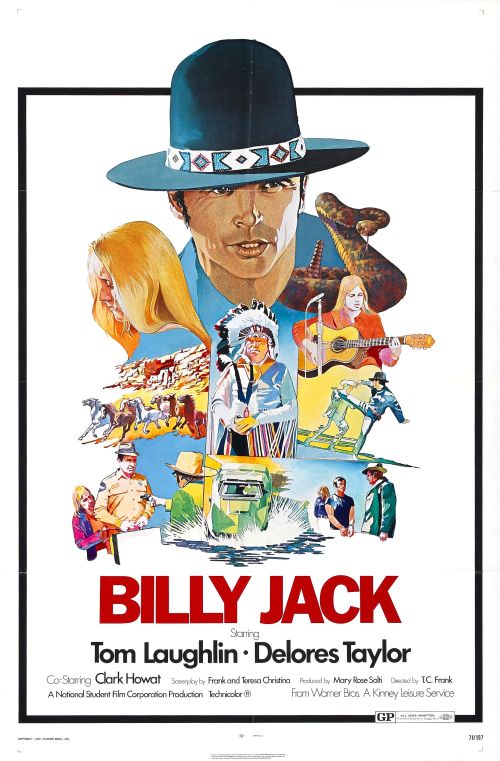
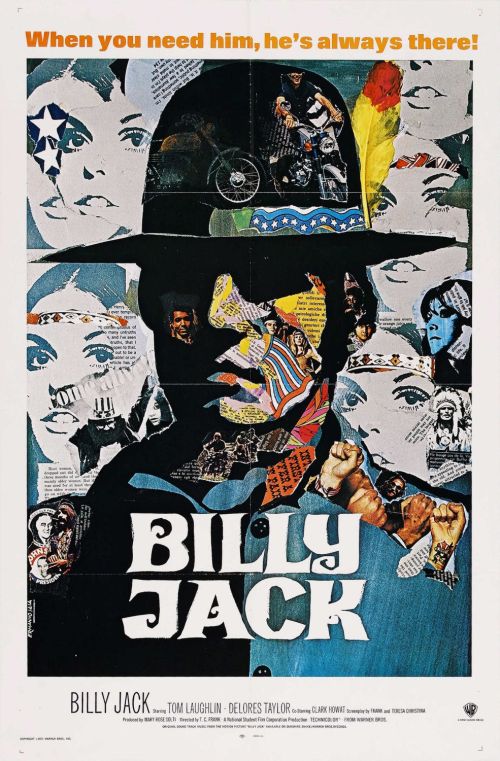
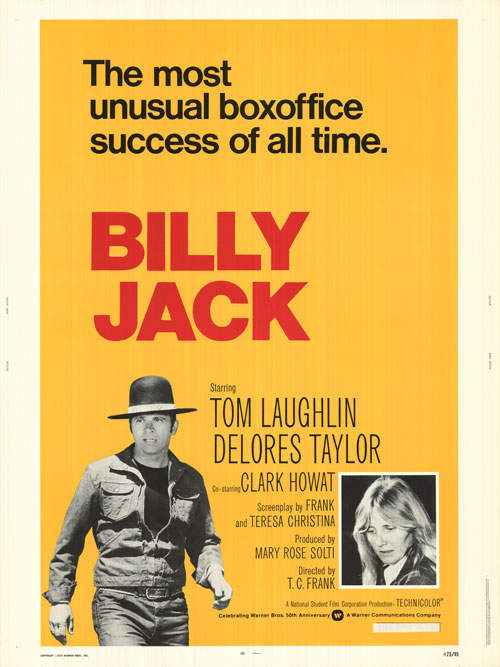
Barbara (Julie Webb) is the daughter of Mike (Kenneth Tobey) who is the deputy sheriff of the nearby town.  She comes home one day after having run away and advises him that she is now pregnant, but has no idea who the father is as she had taken part in a sex orgy at some hippie commune, which outrages her father so much he beats her severely. To escape she hides out at the nearby alternative Indian school run by Jean (Delores Taylor), but Mike tries to use his authority as an officer to force them to turn her over and it is up to half-breed Billy Jack (Tom Laughlin) to protect her and the rest of the school from the town’s vindictive force and prejudice.

Although this movie has justifiably been lambasted for years as being more political propaganda than an actual story it still has some surprisingly effective moments. One of the best is the fight scene that takes place in the middle of town where Billy fights off the bad guys by using a Hapkido fighting technique where he raises his leg and kicks his assailant in the face with his foot. Some of the skits done in the school by the students as well as other young performance artists are fun particularly the one where the parents and teens are forced to reverse roles and the majestic aerial photography of the rustic New Mexican landscape is breathtaking.

Writer/director Laughlin casts himself in the title role, which in some ways seems a little bit like a vanity project. The character is poorly defined and subsists too much on a mystique. Having him somehow survive being shot in the stomach is too extreme and Laughlin gives a very one-note performance and is able to show only one emotion, which is that of a brooding, constant anger.

Taylor, who was Laughlin’s real-life wife, comes off better. Her face is weathered and she is no beauty by the conventional standard, but she seems to genuinely exude the values of her character and the scenes showing her after she is raped as well as the one where she begs Billy Jack to surrender during a shootout are emotionally charged and well down.
billy jack 3

The rest of the supporting cast is so-so with the adults coming off better. It’s a great chance to see young stars in the making including Howard Hesseman and Richard Stahl a comic actor whose deadpan delivery is second-to-none. Some of the young school girls are cute including Debbie Schock who at the time was Laughlin’s kid’s real-life babysitter. However, the teens acting is poor and they are given too much screen time without any ability to carry the film. The worst is Stan Rice who plays Martin and whose frozen facial expressions and monotone delivery makes him seem like he is a zombie.

David Roya as Bernard Posner the main antagonist in the film gives a decent performance, but the character’s motivations are confusing. He is aggressive with everyone and yet when Billy Jack appears he freezes up even though Billy is nothing more than a shrimp of a guy wearing a dorky looking hat. One scene in a café has Billy going on a long overly-dramatic rant and he turns his back to Bernard who remains frozen in terror even though he could’ve easily just whacked Billy in the back of his head and knocked him out. Another scene has Billy standing next to Bernard’s car who is in the driver’s seat and orders him to drive the vehicle into the lake, which he obediently does even though I thought he could’ve put the car into reverse and either run Billy over or forced him to jump into the lake instead.

The idea was to show that Bernard was a coward, but even a coward can act aggressively if given the upper-hand and by having him behave in such a strange way makes these scenes and the film as a whole seem very implausible and amateurish. Apparently actor Roya had these very same concerns and he argued with Laughling about them, which ended up creating a lifelong rift between the two.

The characterizations are broad, but on an emotional level it still works particularly the final scene where the students line-up and defiantly raise their fists into the air as Billy Jack is being driven away. The film’s pacifist stance while still delivering a high quota of violence has taken a beating by the critics through the years, but I saw it a little bit differently. I interpreted the message to be that pacifism is good in theory, but not always effective in execution.
billy jack 1

My Rating: 6 out of 10

Released: May 1, 1971

Runtime: 1Hour 54Minutes

Rated GP

Director: Tom Laughlin

Available: VHS, DVD, Blu-ray, Amazon Instant Video, Netflix streaming

Charlie Bubbles (1968)

charlie bubbles 1

By Richard Winters

My Rating: 4 out of 10

4-Word Review: He’s detached from life.

Charlie Bubbles (Albert Finney) is a successful English writer who finds that he is no longer connected to the world around him. He sits in his office and views life from the television monitors around him. He has an affair with his secretary Eliza (Liza Minnelli in her film debut), but it means little. He travels to the countryside to visit his estranged wife Lottie (Billie Whitelaw) and his son Jack (Timothy Garland), but finds the effects of his detachment have worn off on them. No matter how hard he tries he cannot get his son to emotionally connect with him, which he finds troubling.

This is to date Finney’s only cinematic foray behind the camera and on a visual level it proves interesting. Most actors who turn to directing lack the needed cinematic eye, but Finney is just the opposite. The scene, which gets protracted, showing all the action inside Charlie’s sprawling home from within the television monitors that he has set-up is really cool. It’s like in the film Network where you see several monitors on top of each other and two per row. Each monitor shows a different room in the mansion as well as the garage. As the action moves from each room it also moves to a different monitor, which becomes fascinating to follow. The scene inside a hotel hallway with milk bottles and newspapers lined up at each door has an interesting design to it and the part where Charlie and Eliza come upon a lonely marching band in a desolate rundown part of the city has a unique visceral appeal. The massive food fight between Finney and actor Colin Blakely near the beginning of the film deserves a few points as well.

The downside to the direction is that the film is slow and almost as aloof as the character. The scenes become too extended and the dialogue has little to say. The segment inside a roadside diner has the sound of cars passing by it during the character’s conversation, which becomes distracting and unnecessary.

The Charlie character seems almost like he is sleepwalking and barely responds to anything. I realize this is to show his detachment, but it goes overboard. It’s like viewing a corpse who has no screen presence or energy and absolutely no connection with the viewer nor any ability to wrap them in to his quandary.

Minnelli makes for an odd choice to represent the film’s sexual tensions. She was never considered attractive and her constant and incessant chattering while the two ride in a car would be enough to make most men want to throw her out let alone make love to her. The sex scene itself is about as mechanical as you can get and lacks eroticism. It also becomes like a throwaway scene that doesn’t end up having that much to do with the story as a whole.

The viewer needs more of a background to this character in order to make him real and interesting. Simply showing someone who is detached doesn’t mean much unless we know why and if he was at any time any way else. The ponderous ending leaves a lot to be desired and watching this movie is similar to viewing a program on C-Span as it comes-off like a nonevent.

My Rating: 4 out of 10

Released: February 11, 1968

Runtime: 1Hour 29Minutes

Not Rated

Director: Albert Finney

Studio: Universal

Available: None at this time.

The Color Purple (1985)

the color purple 2

By Richard Winters

My Rating: 4 out of 10

4-Word Review: Sisters try to reunite.

Celie (Whoopi Goldberg) is a young black woman living in rural Georgia during the early 1900’s. She gets stuck in an arranged marriage to Albert (Danny Glover) who is abusive and has more of an interest in her younger sister Nettie (Akosua Busia).  When Nettie comes to visit them Albert tries to rape her and when she is able to fight him off it enrages him and her throws her out of the house and refuses to let the two sisters ever talk to each other again. Nettie makes efforts to contact Celie through letters, but Albert seizes them and takes them away before Celie can read them. Eventually Celie adjusts to the domineering ways of her husband until she becomes friends with Shug (Margaret Avery) who gives her the strength and confidence to stand up to him.

I have never read the Alice Walker novel from which this film is based, but I feel it would’ve worked better had Steven Spielberg not directed it as it unfortunately gets too much of the patented Spielberg treatment. Every scene reeks of a Hollywoodnized glossiness and certain scenes are so manipulative sappy that it becomes almost painful to watch. The musical score is overplayed and not reminiscent of the time period. A similar film like Sounder worked better because most of the scenes had no background music and was a better reflection of a quieter and slower paced era.

There are also moments of cute comedy, which seems a bit out-of-place and confuses what the underlying intent of the production was. Are the filmmakers trying to make a genuine recreation of a bygone era, or simply entertainment fluff and at points it gets very merged and hard to tell. This film also had some of the tackiest snow scenes I have ever seen. It looks like white stuff that was simply spray painted onto the ground and the shot showing snow falling while there is bright green foliage on all of the trees looks so ridiculous and I wondered why they had even bothered. Also, when talking about someone in a mocking manner as Celie and Nette do about Albert it is probably wise to at least close the bedroom door and make sure the source of your mockery isn’t standing right outside listening in.

Goldberg is good in an uncharacteristically restrained performance although her character is so extremely submissive that it frustrates the viewer and makes you want to reach out and shake her. Oprah Winfrey is quite engaging and simply watching the way she walks up the dirt road driveway when she first appears is a hoot. The scene where she is attacked by an angry mob of white people is the best dramatic moment of the whole film. Avery is also good simply because of her great singing voice and her vibrant rendition of ‘Sister’ is excellent although the ‘sing-off’ that she has near the end with a gospel church choir gets to be too much.

Glover gives one of his best performances and looks so much younger especially at the beginning that I had to do a double-take when I first spotted him. I liked the way that he is shown as domineering and cruel with Celie, but when out in the public he is quite intimidated and quiet with everyone else. Adolph Caesar who plays Albert’s father is a real scene stealer especially with his reaction to a glass of water that has Celie’s spit in it and the glib comments that he makes at the dinner table during a family confrontation.

The production values are great, but Spielberg over-directs and it becomes too slick for its own good. The story is never allowed to breathe on its own and a little more of a gritty, raw style was needed. The movie also goes on too long and takes a few too many tangents.

My Rating: 4 out of 10

Released: December 18, 1985

Runtime: 2Hours 34Minutes

Rated PG-13

Director: Steven Spielberg

Studio: Amblin Entertainment

Available: VHS, DVD, Blu-ray