Category Archives: Drama

My Beautiful Laundrette (1985)

my-beautiful-laundrette-1

By Richard Winters

My Rating: 6 out of 10

4-Word Review: Gay couple manage laundromat.

Genghis (Richard Graham) is a young Pakistani immigrant living in London and feeling frustrated by being trapped in his humble surroundings while living with his father (Roshan Seth) who due to his left leaning politics and alcoholism is unable to bring in any meaningful income. His Uncle Nasser (Saeed Jaffrey) is doing quite well even though some of his methods are unscrupulous. Nasser gets Genghis a job at his car washing facility, but Genghis has loftier goals. He wants to take over the rundown laundromat that Nasser owns and turn it into a thriving business with the help of his gay lover Johnny (Daniel Day-Lewis). Nasser agrees and is surprised to see what a success it becomes, but is unaware that Genghis and Johnny are funding it with the help of illegal drug money and Salim (Derrick Blanche) is onto their scheme and wants a part of the take.

The film’s screenplay was written by Hanif Kureishi who liked the title character came to Britain from Pakistan and has become a much celebrated playwright despite starting his career writing pornographic novels. The story brings out many complex issues that could prove fascinating to those unfamiliar with the political landscape of Great Britain during the Margaret Thatcher era. The problems and racism that those from Pakistan had to face in the U.K. are vividly brought to the forefront, but what is even more interesting is the pressures and loyalties that they were expected to follow amongst their own culture and families and how these could end up being just as conflicting and confining as those placed on them by the outside world.

I enjoyed many of the scenarios that the film brings out, but was frustrated that the story offers no conclusion to any of them. I was interested in seeing how Nasser would react to Genghis and Johnny’s relationship, but we never get to find out even though the film teases us with a scene where he begins to suspect it. There is also no conclusion as to what ultimately happens to their laundromat business, or whether they were successfully able to expand it, which again gets touched upon. We aren’t even able to find out if Salim was able to survive a vicious beating by some street punks or whether these same punks were ever brought to justice. Why bother bringing up all these story threads if they are just going to be left open and why should the viewer be sucked into the quandaries of these characters if it is all just leads to one big ambiguous ending?

Daniel Day-Lewis shot to stardom with his role here, but I didn’t really feel he had the body type to be considered a ‘tough guy’ or even a bouncer type. Sure he’s tall, but still pretty skinny and not exactly muscular. I also thought the trendy pseudo-hip getups and hairstyles that he and his gang have look tacky and I first saw this film back when it was released and I felt the same way about the outfits then that I do now.

The direction by an up-and-coming Stephen Frears is okay, but his use of a soundtrack that resembles the noise of a washing machine takes away from the gritty drama element that this story supposedly wants to be as does the onscreen opening and closing titles that spin around like clothes in a dryer.

my-beautiful-laundrette-2

My Rating: 6 out of 10

Released: August 18, 1985

Runtime: 1Hour 37Minutes

Rated R

Director: Stephen Frears

Studio: Working Title Films

Available: DVD, Blu-ray (Criterion Collection), Amazon Video
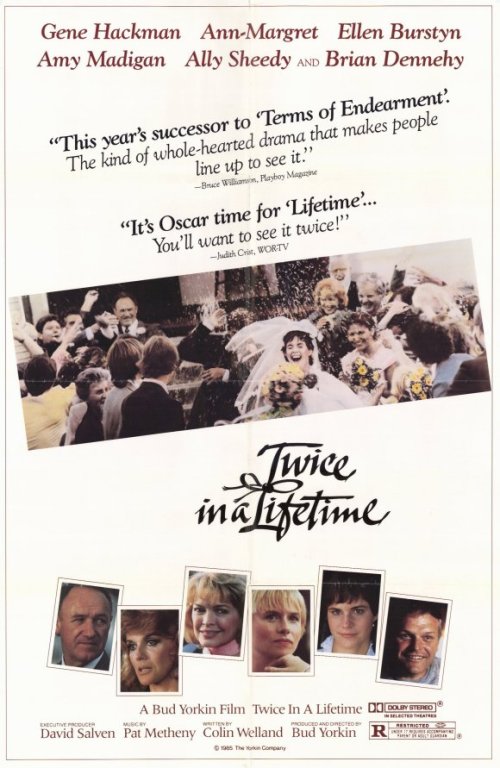
Twice in a Lifetime (1985)

twice-in-a-lifetime

By Richard Winters

My Rating: 6 out of 10

4-Word Review: He has an affair.

Harry MacKenzie (Gene Hackman) is a steel mill worker living in Seattle who has just turned 50. On the night of his birthday Kate (Ellen Burstyn), his wife of 30 years, tells him that he can go by himself to the local tavern to celebrate as she is not into the drinking. When he does he meets Audrey (Ann-Margret) who has just started working there. The two immediately hit-it-off and soon are in a relationship. When Harry finally tells his wife and family about it they are devastated, but learn to cope with it in unexpected ways.

The way Harry and Audrey’s relationship begins is too rushed as he simply spots her in a crowd and then quickly becomes entranced. If eyeing an attractive woman is all that it took then he should’ve been having a string of affairs way before this one. Making Audrey more of the instigator while Harry remained hesitant only to later realize how stale his marriage had gotten once the relationship started would’ve worked better. There is also no indication at the beginning that there was anything wrong with his marriage or that he was even bored with it.

It should’ve opened with Harry simply coming home one day and admitting to the affair and then focusing on everyone’s reactions, which would’ve been less contrived. I was also annoyed that two key scenes including when Kate first gets informed of the affair by a friend as well as Kate’s later confrontation with Harry are not shown. The film just cuts away before either of these conversations gets going, which to me was frustrating.

The second half is an improvement. I liked how the film sends the message that divorce isn’t always bad, but instead can act like a rebirth for both parties. I also enjoyed the on-location scenery of the Pacific Northwest and seeing Harry and Audrey sitting amongst a crowd at an actual Seattle Seahawks football game.

It was also great having Hackman playing a character that lacked confidence and at times was even socially awkward, but it’s Burstyn’s performance that really makes it special. Watching her shy character coming out-of- her-shell and learning to become independent is the film’s highlight. Unfortunately Amy Madigan as the eldest daughter is a turn-off as her angry outbursts come off as forced and overdone while the much quieter Ally Sheedy as the other daughter is far better.

Surprisingly no studio would agree to finance the picture even though the script was written by Colin Welland who had just won the Academy Award four years earlier for the film Chariots of Fire, so director Bud Yorkin was forced to put up his own money by using the earnings he had made through producing ‘All in the Family’, which helps explain why a clip from that show gets seen briefly. It could also be the reason why the production at times has a cheap look to it and like it had originally been shot of video and then later transferred to film. Paul McCartney, whom I’m a big fan of, does the closing tune, which unfortunately has to be the worst of his career.

My Rating: 6 out of 10

Released: November 8, 1985

Runtime: 1Hour 51Minutes

Rated R

Director: Bud Yorkin

Studio: Bud Yorkin Productions

Available: DVD, Amazon Video, YouTube

All the President’s Men (1976)

all-the-presidents-men

By Richard Winters

My Rating: 6 out of 10

4-Word Review: They take down Nixon.

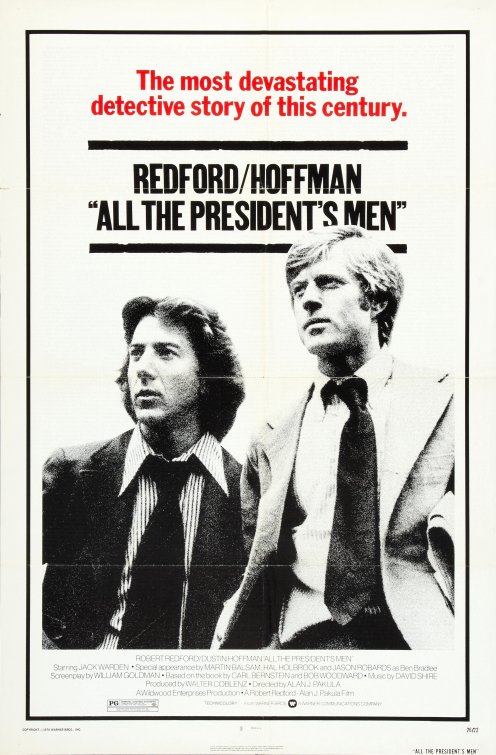
In the early morning hours of June 17, 1972 five men are found burglarizing the Democratic Headquarters at the Watergate Office complex in Washington D.C. The next day a young Washington Post reporter by the name of Bob Woodward (Robert Redford) is assigned to cover the case. Initially it was considered only a minor story, but as he digs further into the details he finds wider connections including links that lead directly to the White House. Together with Carl Bernstein (Dustin Hoffman),who is another reporter, the two men continue to research and end up battling one roadblock after another in their quest the uncover the truth.

If there is one area where this film really scores in it’s in the way that a journalist’s job gets portrayed. In fact many colleges show this film to their student who are majoring in the field in order to given them a realistic perspective of what the profession actually involves. For me I found it quite enlightening particularly the first hour. The many people and steps that a reporter has to go through just to get one solid lead is interesting as is the protocol system determining which story gets the front page and which don’t.

The layout of the newsroom was also fascinating as it all seemed very authentic and like they were working in an actual one. To my absolute shock I found out later that it had all been constructed on a film set, but so meticulously done that you couldn’t tell the difference. Initially several scenes were filmed in the real office using actual employees in the background, but the knowledge of being on camera made some behave in ways that they normally wouldn’t and this ultimately forced the filmmakers to decide to recreate it on a soundstage and use actors as the office crew.

The performances by the two leads are good, but neither of them resembles their real-life counterparts. Both Redford and Hoffman were already pushing 40 at the time and looking it while Woodward and Bernstein were still in their 20’s when this story occurred so the line that the Jack Warden’s character makes about these two being ‘young and hungry’ and looking for a good story to build their careers on doesn’t make as much sense.

The characters aren’t well fleshed out either. No time is spent on what these guys were like when not ardently following up leads, which is absolutely all we see them doing.  The original screenplay, which was written by Woodward and Bernstein, had a subplot involving the two trying to score with women, which would’ve helped add a comical touch and parts of that should’ve been kept in.

The second half lags as there are too many leads and names that get bantered about that don’t have faces connected to them making it seem like information overload that doesn’t help the viewer get as emotionally involved as they should. Having cutaways showing Nixon and/or is aides becoming increasingly more paranoid as the reporters closed in on them could’ve added that much needed extra dimension.

There is a stunning bird’s-eye shot of the inside of the Library of Congress, which is amazing and the fact that many of the scenes get filmed at the actual sites where the real-life instances occurred is both impressive and commendable. I also enjoyed the wide-array of recognizable faces that show up in bit parts including Valerie Curtain as a frightened source and Polly Holliday as an evasive secretary. They even cast Frank Wills the real-life security guard who broke the case wide open playing himself in the film’s opening scene, which is cool even though for me the film’s second half fails to be as entertaining as the first, which prevents it from being a classic.

My Rating: 6 out of 10

Released: April 4, 1976

Runtime: 2Hours 19Minutes

Rated PG

Director: Alan J. Pakula

Studio: Warner Brothers

Available: DVD, Blu-ray, Amazon Video, YouTube

Scarface (1983)

scarface

By Richard Winters

My Rating: 6 out of 10

4-Word Review: Refugee becomes drug lord.

Tony Montana (Al Pacino) is a Cuban refugee arriving in Miami hoping to make it big in the land of opportunity. At first he is forced to do low paying jobs, but finally gets his break when he is hired to do a job for a rich drug dealer named Frank Garcia (Robert Loggia). Soon Tony becomes infatuated with Frank’s girlfriend Elvira (Michelle Pfeiffer) and the two begin a torrid affair. When Frank tries to assassinate Tony by ordering a hit on him at a nightclub Tony gets his revenge by killing Frank and becoming the top drug lord, which makes him quite wealthy, but the strain of constantly having to watch his back for whoever may be out to get him eventually wears on his personality.

This is a remake of the 1932 Howard Hawk’s classic that came about when Pacino watched the original film in a theater and felt compelled to make a modern day update with the drugs being the source of the criminal activity instead of alcohol. The result is only so-so, but it gets helped immensely by an incredible set design. Tony’s all-black office and a luxurious hot tub placed in the middle of his already kitschy living room are eye-popping as are the chic and lively interiors of the nightclubs, posh restaurants and exotic resorts. The graphic shootouts are equally arresting and keenly shot and edited for ultimate excitement.

Director Brian De Palma again digs into his bag of borrowed Hitchcock shots in order to tell his story, but here it works pretty well. My favorite one is when he uses the camera to track outside of a room where the action is occurring and onto a quiet street below. Hitchcock did the same thing in Frenzy where the bad guy strangles a woman inside her apartment, but instead of showing the violent act the camera moves out of the apartment and onto a busy street outside. Here the camera takes an equally fascinating journey from a man getting chopped up by a chainsaw to an idyllic afternoon day just a few feet away.

The supporting cast is strong particularly Pfeiffer as Tony’s bitchy girlfriend whose ongoing acerbic responses act as a good barometer to Tony’s ever changing social standing. I also enjoyed the transformation of Loggia’s character from intimidating kingpin to wilting coward. Harris Yulin is also memorable as a corrupt cop who ends up playing things a little too cool for his own good.

The thing I hated about the movie was Pacino’s over-the-top performance. Normally I’ve found him to be a great actor, but here the character comes off as too cartoonish and one-dimensional. He possesses no interesting character arch and is creepy and unlikable from the beginning and proceeds to only get worse as it goes along, which makes following his rise and fall quite boring and predictable.

The runtime is too long and encompasses a lot of lulls in between the action bits in a story that seems to telegraph where it’s going right from the start. The Cubans are also portrayed in a negative and stereotypical way with only a slight attempt to balance it. Had it not been for the excellent production values this thing would’ve been a real bore.

I was also confused as to why Charles Durning’s voice gets dubbed in during a scene involving Tony’s conversation with an immigration officer. If De Palma was unhappy with the original actor’s performance as the immigration officer then he should have re-filmed it with Durning present instead of just using his voice because his style of speaking is quite distinctive and I was thrown out of the scene completely due to wondering why I was hearing Durning’s voice, but not seeing him.

My Rating: 6 out of 10

Released: December 9, 1983

Runtime: 2Hours 50Minutes

Rated R

Director: Brian De Palma

Studio: Universal

Available: DVD, Blu-ray, Amazon Instant Video, YouTube

The China Syndrome (1979)

china-syndrome

By Richard Winters

My Rating: 8 out of 10

4-Word Review: He senses the vibration.

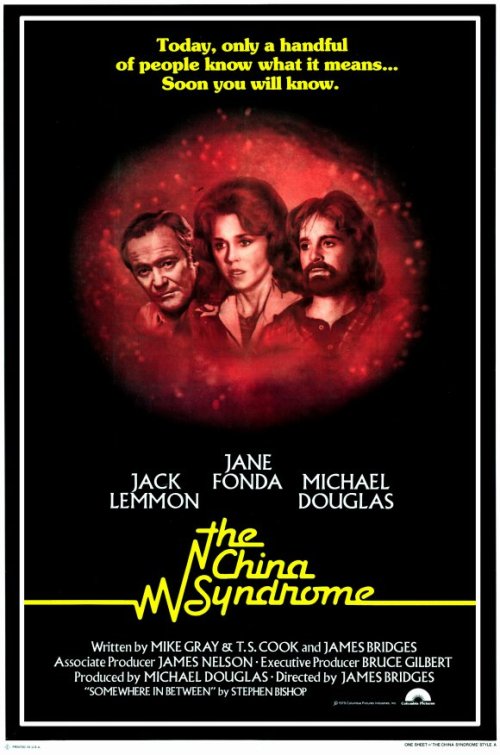
Kimberly Wells (Jane Fonda) is a television news reporter who along with Richard (Michael Douglas) her cameraman gets a chance to go inside a nuclear power plant and film its operations. While inside they witness the plant going through an emergency shutdown when the coolant to one of the nuclear reactors becomes dangerously low. Richard secretly films the nervous reactions of the men in the control room during the incident and wants to broadcast the footage on the news, but the station managers refuse for fear they might get sued. Later Kimberly comes into contact with Jack (Jack Lemmon) who is a shift supervisor at the plant and he informs her that the welds on the pumps are compromised and could lead to a core meltdown at some point. Richard, Kimberly and Jack then conspire to somehow get this information out to the public before it is too late while also avoiding those who wish to silence them.

One of the things I really enjoyed about this film is the way it remains completely realistic throughout and never once compromises anything simply for the sake of cheap drama. The behind-the-scenes politics of an on air news show is quite fascinating particularly how it is decided what constitutes ‘news’ and what doesn’t as well as the staff’s pecking-order and how an individual reporter has limited say on what topics they can actually report on.

The inside of the power plant is impressive particularly the scene where Jack goes inside the massive pump room to investigate a leak. The control room looks quite authentic and the film’s final twenty-five minutes take place solely inside of it, which makes for a gripping climax.

The film also has the distinction of having no musical soundtrack. Other than a song by Stephan Bishop which is played at the beginning there is no other music to be heard and quite frankly I didn’t miss it at all. The sound of the power plant’s emergency alarm going off is all that is needed to create tension and having the closing credits scroll to a deadening silence leaves a powerful impact. Apparently a score was composed by Michael Small, but it was rejected and rightly so as I listened to some of it and it had way too much of a disco sound and didn’t fit the theme at all.

The stars are excellent, but I was surprised how Fonda’s part gets increasingly pared down as the movie progresses. Douglas steals it away from her during an angry confrontation with his superiors, but ultimately Lemmon is the real star even though it deceptively doesn’t start out that way. The supporting cast is equally good including Wilford Brimley as a loyal, but quiet employee, Scott Brady as the cantankerous plant manager and Richard Herd as the steely and conniving owner.

As for the merits of the film’s message it’s hard to say. What was once a hot/trendy topic during the ‘70s and ‘80s now seems long forgotten. However, the script still brings up many good points no matter what one’s political leanings are and it’s great to watch a film that can be intelligent and entertaining at the same time without ever going overboard on either end.

My Rating: 8 out of 10

Released: March 16, 1979

Runtime: 2Hours 2Minutes

Rated PG

Director: James Bridges

Studio: Columbia Pictures

Available: DVD, Blu-ray (Region 0), Amazon Instant Video, YouTube

The Walking Stick (1970)

walking-stick

By Richard Winters

My Rating: 4 out of 10

4-Word Review: Polio victim becomes pawn.

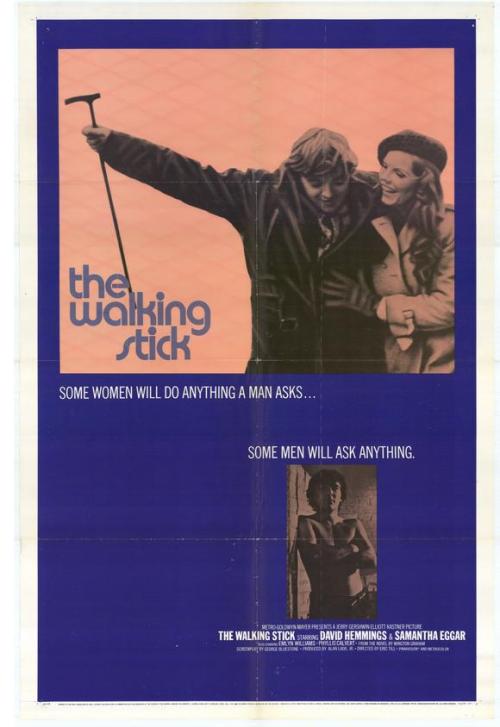
Deborah (Samantha Eggar) is a shy, lonely woman who suffered from polio as a young girl and now must rely on the use of a cane to get around. She still lives with her parents while suffering from claustrophobic tendencies due to being locked inside an iron lung as a child. She meets Leigh (David Hemmings) a struggling artist at a party and he asks her out. Initially she resists his advances, but eventually gives in. The two form a tight bound and even move in together, but her fairytale romance is short-lived once she realizes that she’s been pegged as a pawn and simply used by his gang for her inside knowledge of the auction house where she works to pull off a daring robbery.

The film, which is based on the novel by Winston Graham, is quite leisurely paced. To a degree I didn’t find this to be a problem as it still managed to hold my interest, but too much time is spent on the romance making it seem more like a drama.

The robbery and its planning doesn’t come into play until well over an hour in and seems like a whole different movie altogether. Certain hints should’ve been brought in from the beginning to make it clear to the viewer that despite all the romance this was still meant to be a thriller, which is just not obvious at all. The crime scenes do at least provide some action and quick edits, which normally would’ve made it exciting, but because it takes so long to get there it comes off as off-putting instead. The intended tension doesn’t work because we are less concerned if Leigh and his gang are going to get away with it and more upset at seeing Deborah being taken advantage of.

Eggar gives an outstanding performance and seeing this normally effervescent woman wearing a perpetual frown seemed almost startling, but she conveys her characters inner unhappiness quite well and mostly through her facial expressions alone. However, her character is also quite cold and acerbic. To a degree this is understandable as it’s clearly just a defense, but the viewer never sees enough of her softer side and therefore doesn’t emotional bond with her as they should.

Hemming’s more outgoing personality creates a nice contrast to Eggar’s introverted one, but his character is pretty benign. Dudley Sutton who plays his cohort would’ve made a better boyfriend as he is good at showing a dark side and would’ve kept the viewer more on edge.

The ending doesn’t provide any type of clear wrap-up and leaves a lot of loose ends hanging, which is a pity. The production values are decent and I liked the flashback scenes showing Debora being put into an iron lung, which is the film’s best cinematic moments, but the pace needed to be tighter with more emphasis placed on the story’s twists and turns.

My Rating: 4 out of 10

Released: April 15, 1970

Runtime: 1Hour 41Minutes

Rated GP

Director: Eric Till

Studio: MGM

Available: DVD-R (Warner Archive), Amazon Instant Video

Going Home (1971)

going-home

By Richard Winters

My Rating: 6 out of 10

4-Word Review: Father and son reunite.

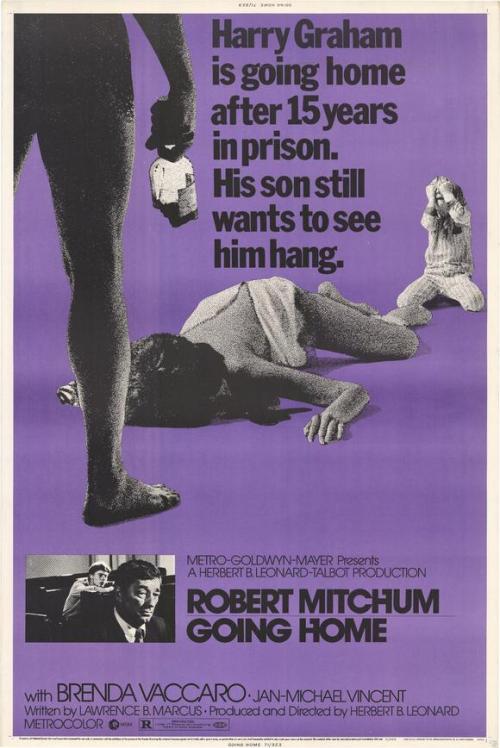
One night during a drunken rage Harry Graham (Robert Mitchum) kills his wife (Sally Kirkland), which gets witnessed by their 7-year-old son Jimmy (Jan-Michael Vincent). 13 years later Harry is paroled and Jimmy uses this opportunity to try and reconcile with his father and find out why he did it, but Harry has moved on. He has a new job and a girlfriend named Jenny (Brenda Vaccaro) and when Jimmy appears it creates an awkward tension that gets progressively worse.

One of the biggest problems with this film is that the characters and their motivations are not fleshed out enough and their actions make little sense. I’ve watched a lot of true-life crime shows and have found that in cases where this situation has occurred in real-life that the adult child will usually cease communication with their father and completely disown them, so it seemed strange why Jimmy would want to restart their relationship. If he was curious to know why Harry did it then he could’ve simply written him a letter with that question, which he never bothered to do while the man was incarcerated.

The film also fails to show what happened to Jimmy during the time Harry was in prison. He is shown arriving at an orphanage, but nothing about what does when he gets there or being put into a foster home and getting adoptive parents, or moving in with relatives, which is what usually occurs. He somehow has no friends or job and if this is because of his childhood trauma then it should get explained or more strongly implied, but it isn’t and it leaves a big void in the story.

Harry’s actions are equally confusing. The murder gets played out at the beginning and we see the stabbed mother crawl down the stairs and beg Jimmy for help and then Harry comes down and looks at the dead body before turning towards the boy with a guilty expression, but if  he feels so bad about what he has just done and the traumatic impact he’s put his son through then he should’ve thought of that beforehand. I would’ve expected to see a completely different set of emotions in the man’s eyes like anger, rage, insanity or even fear because now he knows he’ll will be going to prison, but guilt wouldn’t play into it, at least not that quickly if ever.

Mitchum’s character is straddled with conveying only one emotion throughout, which is guilt. We never tap into the other side of the man that propelled him to commit such a heinous act and his explanation, which is that he ‘just got drunk’ is insufficient. The character also pops up too conveniently at times. One moment is when Jimmy goes back to their former home, which has now been turned into a whorehouse and he hides in the basement. Harry comes looking for him and despite the fact that there are many people there and it’s a large place he immediately goes to the cellar, but how would he have known to look there? Another segment has him magically coming to Jimmy’s rescue when his son is accosted by a group of sailors underneath a boardwalk even though he was bowling in another building and would have no way of knowing what was occurring outside.

The film has solid production values and director Herbert B. Leonard shows flair with the location shooting, which was done in both New Jersey and Pennsylvania. There is also a good scene inside a chicken coop  and actor Josh Mostel (Zero’s son) has an interesting film debut playing Harry’s young, flippant parole officer who delights in demeaning his client as much as possible, but the story leaves open too many unanswered questions and isn’t impactful or relevant.

My Rating: 6 out of 10

Released: December 1, 1971

Runtime: 1Hour 37Minutes

Rated GP

Director: Herbert B. Leonard

Studio: MGM

Available: DVD-R (Warner Archive)

Persona (1966)

persona-1

By Richard Winters

My Rating: 9 out of 10

4-Word Review: Two women become one.

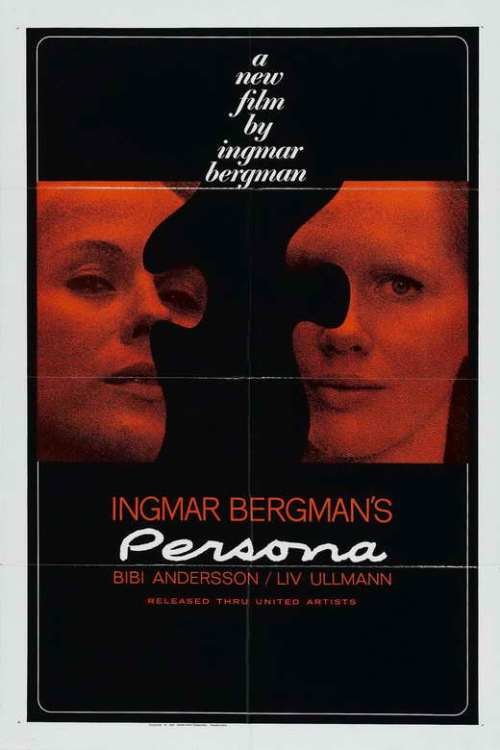
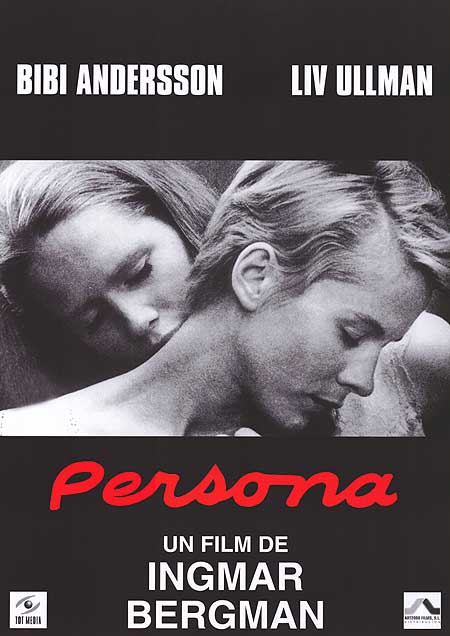
Elisabet (Liv Ullmann) is a famous stage actress who one day decides to quit speaking. Alma (Bibi Andersson) is a nurse at a mental hospital in charge of trying to get Elisabet to talk again, but her efforts prove futile, so the hospital administrator (Margaretha Krook) offers the two her island cottage hoping the quiet, secluded locale will prove more beneficial. As the days wear on Alma begins seeing Elisabet less as a patient and more like a therapist and divulges secrets about her life to her, which causes Alma to feel quite close to Elisabet and treat her almost like a confidant. Then she reads a letter that Elisabet has written where she describes Alma in a condescending way, which creates tension between the two that eventually spills over into a long ongoing confrontation.

This film was considered for many years to be one of the most bizarre and shocking movies ever made and this is mainly due to the strange and eclectic mix of images that gets shown at the beginning. Visions of a lamb being slaughtered, a nail getting pounded into a hand and a close-up of an erect penis flash before the screen while later there is even stock footage of a man setting himself on fire and moments where the film itself gets a hole burned through it.

For me the more subtle moments is what I enjoyed with my favorite scene being the one that occurs in the early morning hours when Elisabet quietly walks into Alma’s room as she sleeps while we hear the distant sound of a boat horn blowing in the background. The shot where the left side of Elisabet’s face gets superimposed next to the right side of Alma’s is also quite amazing.

persona-2

There have been many interpretations through the years over what this film’s ultimate message is. For me it shows how we are more alike than different and how what bonds two people to each may not always be readily apparent and might be something that comes out much later after initially seeming like they are two opposites. I also think it is a great examination at how fragile and interchangeable societal roles can be where someone can seem like the stronger one at one point only to later be shown as the weaker. Alma’s emotional meltdown is the most striking especially after seeming so confident and stable at first while Elisabet’s silence is initially perceived as a rejection to the ugly world around her, but later gets exposed as being more of a rejection of herself and the selfish nature that she harbors.

Andersson, who ironically and sadly can no longer speak in real-life after suffering a debilitating stroke in 2009, gives an excellent performance and I enjoyed how her character exudes ugly emotions like jealousy, envy and even anger and yet still manages to remain likable and relatable. Ullmann has the challenge of keeping her character interesting despite saying very little, but with her ever expressive eyes she does.

The scenic locale of the Faro island where this was filmed is nice, but a patient and doctor sharing someone else’s seaside resort and treating it more like a retreat than a therapy session seemed dubious and almost enough to make anyone fake mental illness if it could get them time off to go there. There is also no explanation to Alma’s fiancée and his feelings about her staying with Elisabet and not him. The sudden arrival of Elisabet’s husband is equally confusing. I liked the scene due to the symbolism that it brings out, but I didn’t understand how he was able to find them at such a remote location especially since he appeared to be blind. The segment seems almost like a dream, which is how I had initially interpreted it when I first saw this film year’s earlier, but it’s never made clear.

On the whole though these issues prove minor and in many ways help make the film even more interesting. My only real complaint is when Alma speaks to Elisabet in regards to her child and the camera stays glued onto Elisabet’s face, which captures her increasingly pained expressions, which is great, but then the scene gets played over while showing Alma’s face as she says the exact same things again, which was too repetitious in a film that is otherwise quite brilliant and a landmark in many ways.

persona-3

My Rating: 9 out of 10

Released: October 18, 1966

Runtime: 1Hour 23Minutes

Not Rated

Director: Ingmar Bergman

Studio: United Artists

Available: DVD, Blu-ray (Criterion Collection), Amazon Instant Video

The Good Mother (1988)

good-mother

By Richard Winters

My Rating: 4 out of 10

4-Word Review: She losses her daughter.

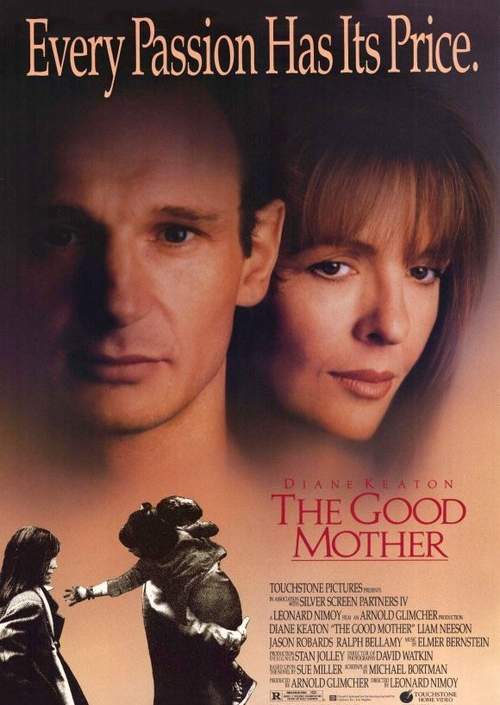
Anna (Diane Keaton) is a frigid woman who divorces her husband Brian (James Naughton) of many years and gets joint custody of their 6-year-old daughter Molly (Asia Vieira). After spending some time being single she meets up with an artist named Leo (Liam Neeson) who opens her up to a whole new sexual awakening. Her new liberated lifestyle affects her daughter as well. When Molly catches Leo getting out of the shower naked she inquires if she can touch his penis, which he allows and then later she crawls into bed with the couple as they make love. When Brian hears about this he demands full custody, which pits Anna against Leo as she fights the system to keep her daughter.

Keaton’s performance is the best thing as she plays the mother role for the third time in a decade and the exact reverse predicament of the character that she portrayed just before doing this one where she got stuck with a child that she didn’t want while here she loses one. I enjoyed Neeson’s Irish accent and Vieira is cute while it’s great seeing old-timers Ralph Bellamy and Teresa Wright in supporting roles.

Leonard Nimoy’s direction is solid for the most part. He was just coming off tremendous success with his earlier hit 3 Men and a Baby, so it was nice to see him take a creative challenge by tackling a different genre.  The story’s sensitive subject matter  is handled well including most importantly the scene showing the girl in bed with the two adults although the various other moments showing Anna’s and Leo’s intimacy is a little uncomfortable, but still captured tastefully without ever feeling that it is being overtly erotic.

The film’s biggest failing is the story itself. Although based on the best-selling novel by Sue Miller it doesn’t have enough twists to be compelling or enough of a visual quality to be cinematic. Too much time is spent at the beginning dealing with Anna’s childhood experiences with her cousin Babe (Tracy Griffith) that only has a thin connection to the rest of the plot and could’ve easily been cut and simply alluded to instead. The courtroom scenes lack impact and offer no new interesting revelations. The film also doesn’t bother to show two of the story’s most dramatic moments, which is when Molly tells her father about her experiences with Leo, or when Anna confronts Leo about it later, which to me should’ve been a must.

The ending leaves little impact making me wonder what point the filmmakers where trying to convey, or why a viewer should sit through it especially since it’s not based on a true story and meanders too long just for it to come to a very vague resolution.

My Rating: 4 out of 10

Released: November 4, 1988

Runtime: 1Hour 43Minutes

Rated R

Director: Leonard Nimoy

Studio: Touchstone Pictures

Available: DVD, Amazon Instant Video, YouTube

Walkabout (1971)

walkabout 1

By Richard Winters

My Rating: 7 out of 10

4-Word Review: Lost in the outback.

A teenage girl (Jenny Agutter) and her younger brother (Luc Roeg, but billed as Lucien John) find themselves trapped amidst the harsh climate of the Australian outback. After spending a couple of days walking in the heat they manage to come upon a watering hole, but find to their horror that it dries up overnight. Feeling almost ready to give up they spot an aborigine (David Gulpilil in his film debut) marauding through the desert as part of his walkabout where young men are cast off into the wilderness for several months as part of their journey to manhood. He helps find them water, food and shelter, but eventually the cultural differences between the three and their inability to effectively communicate become a problem.

The legendary Nicholas Roeg makes his directorial debut here and even casts his own son, who is excellent, as the 9-year-old boy.  The way the camera captures the desert by focusing on the different types of animal life and rock formations is impressive.  I also enjoyed the editing which cuts back and forth between the desert and modern civilization while examining how each are uniquely connected and commenting on how our advanced culture has made us regress and less able to survive the savage elements that our ancestors were able to.

There are also scenes of animal cruelty as the aborigine hunts a kangaroo by first injuring him and then, as the animal gives out a whimpering cry, he spears it. Later the viewer is shown scenes involving big game hunters who mow down water buffalo for sport while graphically slitting their throats.

The film was controversial for capturing Agutter, who was only 17 at the time that this was filmed, in the nude while swimming at a watering hole. The actress felt uncomfortable doing the scene and required only the minimum of the crew to be present while it was shot. To me the scene was unnecessary as it didn’t fit the character who was prim and proper and didn’t at all come off like the type of person who would suddenly become carefree and risk being spotted by the aborigine that she really didn’t know or the ‘embarrassment’ of being seen by her younger brother. The camera stays on her naked body far longer than needed and comes off like shameless voyeurism.

I had the same issue with the scene involving researchers at a weather station that resembles footage to a soft core porn flick instead as the men ogle the only woman in their group, become overtly aroused at glimpses of her bosom and in one truly absurd moment even has one of the them sucking on her finger. I realize scientists have sex drives too, but I would think they would be able to behave in a professional capacity when on the job and not act like they hadn’t gotten laid in years and like with the swimming sequence this scene has nothing to do with the main story and could’ve been cut out completely.

The presence of the radio weakens the story as well as supposedly they’re in the middle of nowhere and miles from civilization and yet somehow are able to pick up different radio stations that come in crystal clear without any static, which would mean that they must be much closer to a city than it seems and thus hurts the desolate feeling that the film otherwise tries hard to create.

Spoiler Alert!

The film is based on a 1959 novel of the same name that was written by Donald Gordon Payne under the pseudonym of James Vance Marshall. The script though differs from the book in two major ways, one of which I liked and the other I didn’t.

The first difference involves the reason for how the two children get stranded. In the book they are victims of a plane crash, but in the film it is because their father tries to kill them, which is offbeat and sends the message that this movie will be different from any you’ve seen before, which I liked. Normally I would’ve wanted an explanation for his behavior, but by keeping it a mystery it elevates the intrigue and if anything was a far more creative explanation for their predicament than the formulaic plane crash one.

However, the way the aborigine dies is ludicrous. In the book he is stricken with the flu virus that was inadvertently passed onto him by the boy, but in the movie he ends up killing himself when the girl does not respond to his attempts at courtship, which seemed excessively rash.

Rejection is a part of the human experience and transcends all cultures. Everyone will have to deal with it at some point in their lives. If everyone killed themselves the minute they are rebuffed by someone they were attracted to then virtually no one on would make it past adolescence. The idea that a normal, healthy and otherwise happy young man with no signs of mental illness, and the film does not show him as having any so we must assume that he doesn’t, would suddenly off himself over a girl he has just met and barely knew is absurd. In reality he probably would’ve just gotten frustrated and left them stranded while going back to his own tribe where I presume he’d meet other women who he’d bond better with due to being more culturally connected and most likely would’ve found more attractive anyways.

End of Spoiler Alert!

walkabout 2

My Rating: 7 out of 10

Released: July 1, 1971

Runtime: 1Hour 40Minutes

Rated R

Director: Nicholas Roeg

Studio: 20th Century Fox

Available: DVD, Blu-ray, Amazon Instant Video