Category Archives: Comedy/Drama

California Suite (1978)

california suite

By Richard Winters

My Rating: 7 out of 10

4-Word Review: Visitors at a hotel.

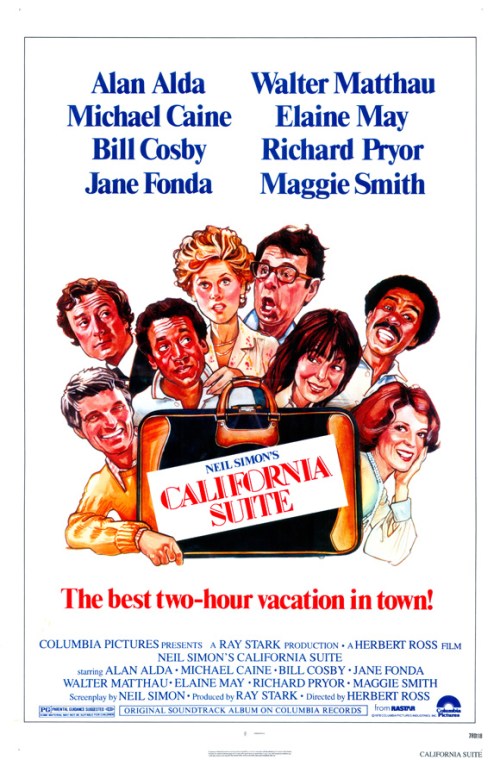
Based on the hit Neil Simon play, who also wrote the screenplay, the film follows five couples all staying at the same posh Beverly Hills hotel. Hannah and Bill (Jane Fonda, Alan Alda) are a divorced couple fighting over the custody of their teenage daughter (Dana Plato). Diana (Maggie Smith) is a famous British actress set to attend the Academy Awards ceremony and being escorted by Sidney (Michael Caine) a man she wants all for herself, but can’t because he is bisexual. Marvin (Walter Matthau) is in town to attend his nephew’s Bar Mitzvah and shocked to find that his brother (Herb Edelman) has sent a prostitute (Denise Galik) to his room to entertain him for the night only for her to promptly pass out drunk the next morning just as his wife (Elaine May) is about to arrive. The final segment deals with two bickering Dr’s (Bill Cosby, Richard Pryor) who can’t get along and seem to get themselves into one over-the-top calamity after another.

Many viewers have commented that they disliked the Fonda character as she came off as too cold and bitchy, but I’ve known many people who are like her who put up a very steely front in order to protect themselves emotionally, so for me her sarcasm worked and the way she delivered her acerbic lines is fun especially as she chews up the already transparent Alda character until it seems like he isn’t even there.

Smith and Caine’s segment seemed a bit trite and generic. The first part of it deals with her nervousness about attending the awards ceremony, which isn’t all that original. The second half examines her frustrations at the fact that Sidney can’t solely commit to her, but I couldn’t completely buy into this because she was playing a rich and famous, globe-trotting actress whom I’m sure could easily find another man if she wanted and didn’t have to cling to someone who didn’t fully want her like she were some lonely, small town housewife with no options.

The third segment dealing with Matthau and the unconscious prostitute is quite funny and had me laughing-out-loud while the scenes involving Cosby and Pryor’s constant arguing is incredibly dumb and even jarring as it features a lot of silly, slapstick humor that does not fit in with the more sophisticated tone of the rest of the film.

I was also not so crazy about the film’s pacing. The first hour deals almost exclusively with the dramatic segments while the second half focuses mainly on the comical ones, which came off as imbalanced. It would’ve worked better had the stories been evenly spread out in a rotating type fashion with a few minutes spent on each one before cutting to the next one. It would also have been cool had it taken a Slacker-like approach where the characters, who never once cross paths in this movie, would have instead passed by each other at certain points and the scene would then shift to the new characters that the other ones just passed.

I was also disappointed that we never get to see much of exterior of the hotel. We do see a bird’s eye view of it during the closing credits, but I thought shots of it should’ve been shown during the beginning. I have nothing against David Hockney’s artwork that does get used, but the hotel is a part of the film’s title and therefore should have taken precedence.

Overall though I felt it was a decent dramedy worth the price of admission. It also features a terrific and distinctive jazz score by Claude Bolling that I wish had been used even more throughout.

My Rating: 7 out of 10

Released: December 15, 1978

Runtime: 1Hour 42Minutes

Rated PG

Director: Herbert Ross

Studio: Columbia Pictures

Available: DVD, Amazon Instant Video, YouTube
Watermelon Man (1970)

watermelon man 1

By Richard Winters

My Rating: 7 out of 10

4-Word Review: White man becomes black.

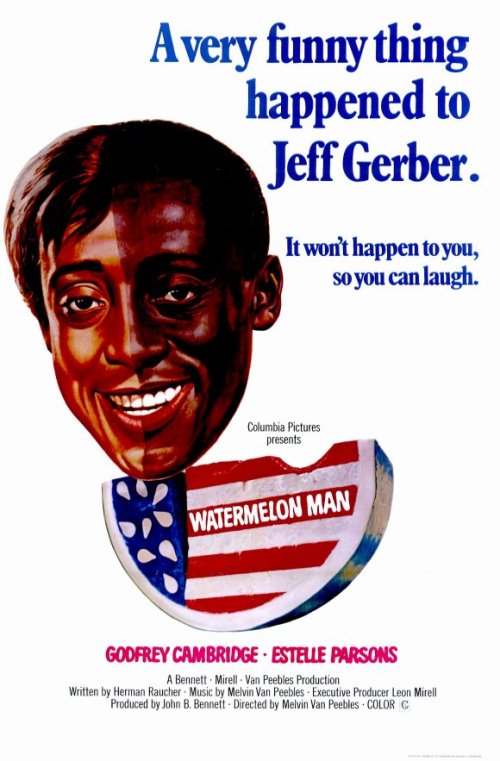
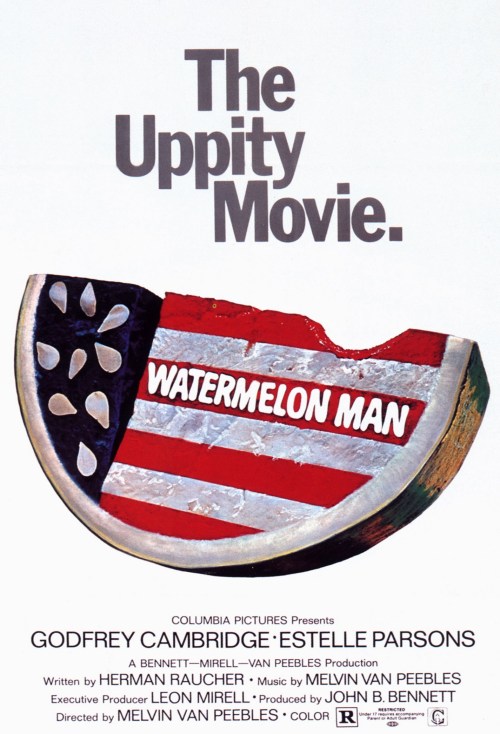
Jeff Gerber (Godfrey Cambridge) is a bigoted white man who wakes up one morning having suddenly turned black. At first he thinks he’s spent too much time under the sun lamp, but after he and his wife Althea (Estelle Parsons) try every concoction they can to return his skin back to its normal color and nothing works they finally accept the inevitable. Jeff’s lifestyle then changes in major ways. He loses his friends, his job and even forced to move out of his neighborhood giving him firsthand experience with how drastic the racial lines are.

The film was directed by Melvin Van Peeples who was at the front of the independent film movement during the ‘60s and doesn’t get enough credit for some of the groundbreaking films he made in that era, but this one remains his best and most famous work. While other films chose to present racial issues in very serious and dramatic ways this one takes the wacky comedy route and in a lot of ways becomes far more compelling. Some of the funniest moments comes when the characters discuss racial stereotypes, something filmmakers of today would shy away from for fear that they would be labeled racist, but here by bringing it all out-in-the-open it trusts that the viewer will see how silly and absurd they are without feeling the need to suppress anything.

Although Cambridge is never completely convincing as a white man despite an admirable job by the make-up department he still gives a splendidly engaging performance and without his presence this movie just wouldn’t have worked. Parsons is great as well with her character being quite supportive initially, but then eventually she turns her back on him like everyone else. Mantan Moreland is funny as a café waiter who laughs politely at all of Gerber’s dumb jokes when he is white, but gives him a completely different response once he turns black. Erin Moran can be spotted as the daughter and songwriter Paul Williams has a brief bit as a would-be employer.

There are moments where it shifts awkwardly between drama and comedy and there’s one scene where the action freezes completely and suddenly begins to display on-screen titles, which does nothing but take the viewer out of the story and should’ve been avoided. It also would’ve been nice had there been some explanation for why this all occurred. A potentially funny idea would’ve been having a scene where God decides to change Gerber into a black man to teach him a lesson and having the Almighty portrayed as being African American, which would’ve been considered quite edgy for the period and helped complement the already outrageous storyline.

Despite all the laughs the issues that it brings out are quite startling and not far from the truth, which makes this an integral part at revealing the problems that the black movement had during the early ‘70’s and still does and a film that deserves more critical praise than it’s been given.

watermelon man 2

My Rating: 7 out of 10

Released: May 27, 1970

Runtime: 1Hour 40Minutes

Rated R

Director: Melvin Van Peeples

Studio: Columbia Pictures

Available: DVD, Amazon Instant Video, YouTube
Lucky Lady (1975)

lucky lady

By Richard Winters

My Rating: 6 out of 10

4-Word Review: Three’s not a crowd.

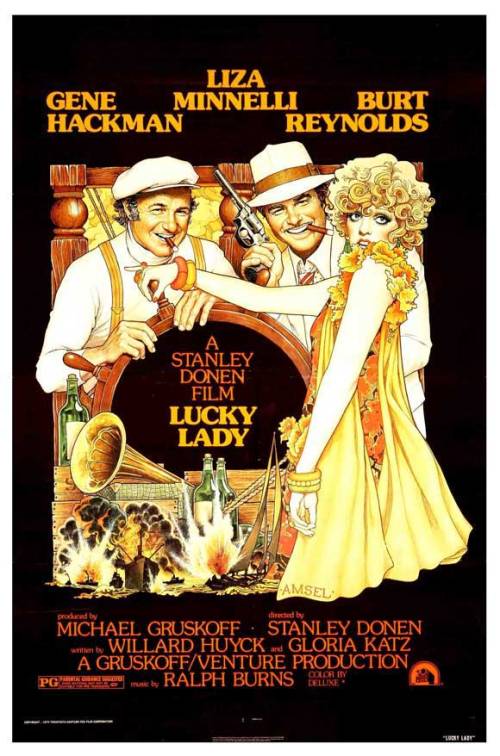
Walker (Burt Reynolds) and Claire (Liza Minnelli) make money by helping people illegally cross the Mexican border into the states, but when their third partner in the business dies and they almost get arrested they decide to get into an easier line of work. With the help of Kibby (Gene Hackman) they become rum-runners who transport liquor by boat under the cover of night during the prohibition era. As the three start to have some success and get to know each other they also form a love triangle and spend their evenings involved in a ménage-a-trois.

If you’re in the mood for non-think, grandiose style entertainment made in the same vein of classic movies from Hollywood’s golden era then you should find this more than satisfying. The plot moves along at a nice breezy pace with characters that are distinct and fun and full of snappy dialogue. The majority of the story takes place on water, but manages to remain quite exciting and ironically only becomes waterlogged when it goes on land. The lavish sets are splendid and the film could be enjoyed by simply taking in those alone.

The three leads are in top form and play against type. Minnelli, who actually looks sexy here in a flapper styled hairdo, is quite amusing with her acerbic one-liners. Reynolds is great as the klutzy member of the trio and Hackman is solid as always playing someone who seems meek at first, but eventually takes over things with his patented strong personality. Unfortunately John Hillerman, best known for playing Higgins in the ‘Magnum P.I.’ TV-series, is the only weak link of the cast playing a bad guy that never conveys enough menace to be truly threatening.

A young Robby Benson who was 18 at the time, but looks more like 14 is quite good in support. I was never all that impressed with the former teen heart throb, but here he is effective playing a shy kid who says little, but when he does say something it’s a gem. Geoffrey Lewis is also quite funny as an inept Captain of the Coast Guard. Mills Watson, who is best known for playing Deputy Perkins on the ‘The Misadventures of Sheriff Lobo’ TV-series can be spotted in a couple of scenes. IMDb does not have him listed here, but I recognized him and his name does come up on the closing credits as a character named Giff.

For lightweight entertainment the film does have quite a few action sequences that are surprisingly well choreographed and even quite bloody, but the climatic sequence becomes too cartoonish. I was also disappointed that the one unique element of the story, which is the three getting into a relationship, is only mildly touched upon and basically forgotten after the first hour. The film could’ve gone a lot farther with that and even made it the centerpiece of the plot, which would’ve helped make it more character driven and groundbreaking.

My Rating: 6 out of 10

Released: December 25, 1975

Runtime: 1Hour 58Minutes

Rated PG

Director: Stanley Donen

Studio: 20th Century Fox

Available: DVD


The Flamingo Kid (1984)

flamingo kid

By Richard Winters

My Rating: 7 out of 10

4-Word Review: Get rich selling cars.

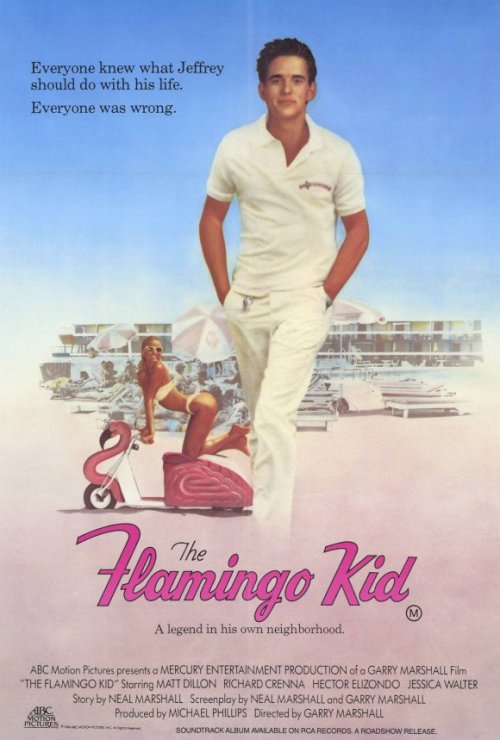
The year is 1963 and Jeffrey (Matt Dillon) is an 18-year-old still looking for direction. While working a summer job at the Flamingo Club he meets Phil Brody (Richard Crenna) who fills his head with big dreams of getting rich while selling cars. Jeffrey’s father (Hector Elizondo) wants him to go to college, but Jeffrey finds that idea to be boring and likes getting on the ‘fast-track’ to success better. After many arguments he finally moves out only to realize that Phil’s promises are empty and full-of-strings.

The movie is entertaining mainly because it manages to successfully suck you into a whole different time period. I loved the colorful cars with fins, the snazzy outfits and bouncy tunes. Most movies recreate a bygone era with an air of contempt about it, but this film makes the early ‘60s seem fun, nostalgic and full of opportunity. It also does a great job of exposing the different layers of American capitalism from those that feed off of it and exploit it, as with Crenna’s character, to those that are just happy to get by and not take any undue risks as with the father and then to the teens who are always convinced that attaining the American Dream is much easier than it really is.

The best part of the movie though is the way in analyzes the relationship between the son and father. So many movies seem to prefer looking at conflicts between mother and daughter, but fathers and sons can have just as many quarrels and this film delivers them in a way that is relatable and believable while also being a bit touching as well.

Dillon is terrific and I liked the way the character isn’t overly cocky or crude like in most ‘80s teen movies, but instead clumsy and socially awkward only to finally find the confidence when he needs it the most. Crenna is outstanding as is Elizondo, but I thought it was unusual that he got cast in the role since he is clearly Puerto Rican and Dillon, as is son, isn’t.

Jessica Walter as Crenna’s perpetually crabby wife is wasted even though she does look fine in a bikini despite already being in her mid-40s at the time of filming. Peter Costa is a scene stealer playing the same type of role that he later did in the ‘The Cosby Show’ as a shy child who doesn’t say anything, but still manages to get into everyone’s way.  John Turturro and Marisa Tomei can also be spotted in non-speaking bit parts.

My Rating: 7 out of 10

Released: December 21, 1984

Runtime: 1Hour 40Minutes

Rated PG-13

Director: Gary Marshall

Studio: 20th Century Fox

Available: DVD


Sweet Revenge (1976)

sweet revenge

By Richard Winters

My Rating: 6 out of 10

4-Word Review: Pretty lady steals cars.

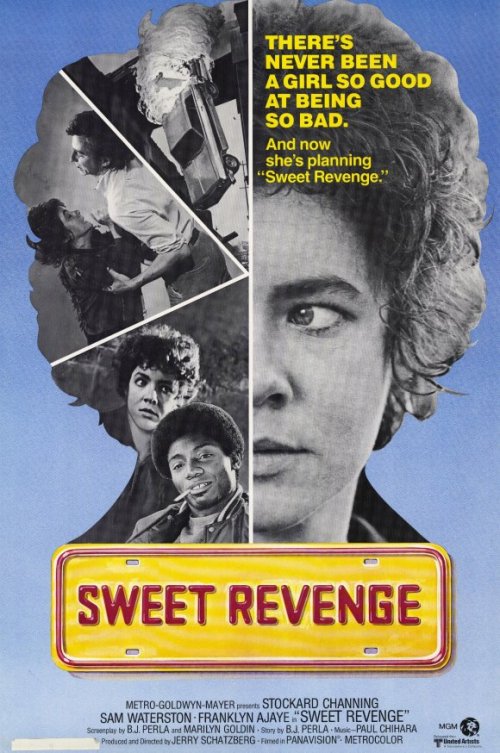
Despite squatting in an abandoned house, having no job, no money and virtually no life Vurrla (Stockard Channing) becomes obsessed with getting herself a brand new Dino Ferrari. She knows how to steal cars, so she decides to steal a Porsche, resell it to unsuspecting buyers and then a few days later steal the same car back and resell it again and continue this process until she has secured enough to pay for the Ferrari. The plan works smoothly, but public defender Le Clerq (Sam Waterston) has been following her and determined that she turn herself in before she gets herself into even deeper trouble.

As I watched this movie I found myself quite perplexed as to how Leonard Maltin in his Movie Guide could’ve given this thing a ‘bomb’ rating. This is certainly not a four-star flick, but it’s far from being bad one either. The plot moves along at a nice breezy pace with an engaging combination of drama, action and humor. The characters are believable and interact with each other in interesting ways. The on-location shooting of Seattle, which was done by renowned cinematographer Vilmos Zsigmond who died just this past New Year’s, is quite vivid and focuses on some of the city’s lesser known neighborhoods, which should be fun for those from the area as it is sure to bring back a flood of memories.

Channing is dynamic and especially enjoyable when she puts on different wigs and a variety of accents as she tries to sell the cars to different people and I wished these segments were played up more. Waterston’s character is much more controlled and practical making the two play off each other in revealing ways. Franklyn Ajaye lends great support as Vurrla’s streetwise friend and Richard Daughty is amusing as Vurrla’s dimwitted cohort and I was surprised that he seemingly disappeared off the face of the planet and never did a thing after this. This also marks the acting debut of Daryl Anderson who appears briefly getting out of his car and going inside only to have Vurrla sneak up and steal it a few minutes later.

On the negative side the film could’ve used a little more action. There is one car chase that occurs near the end, which turns inexplicably tragic and hurts the film’s otherwise lighthearted tone. The ending is frustratingly vague and outside of watching a Ferrari burn into a cinder offers no finality to the character’s eventual fate. There is also a segment where Channing and Daughty go shopping at a grocery store and for a brief couple of seconds the scene is shown through the lens of a black-and-white security camera making the viewer believe that the two are being monitored and will soon be arrested since they are shop lifting, but nothing ever happens, so why insert that shot if it serves no purpose?

My Rating: 6 out of 10

Released: June 16, 1976

Runtime: 1Hour 30Minutes

Rated PG

Director: Jerry Schatzberg

Studio: MGM

Available: DVD (Warner Archive)

Below the Belt (1980)

below the belt 1

By Richard Winters

My Rating: 4 out of 10

4-Word Review: Waitress becomes a wrestler.

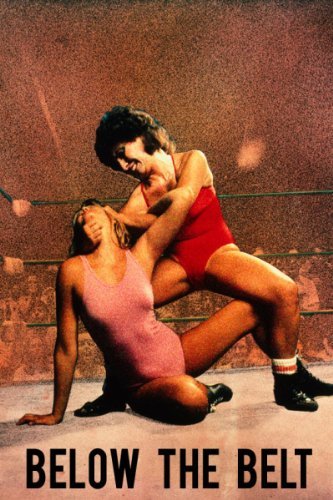
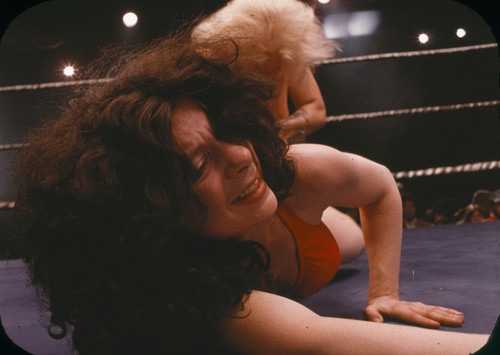
Rosa (Regina Baff) works as a waitress at a sports arena who one day catches the eye of wrestling promoter Bobby Fox (John C. Beecher) after she decks a guy who tries to get fresh with her. Fox is in need for a new wrestler to promote and feels she’d make a perfect fit despite her having no experience in the sport. Since she is bored with her job and low on funds she decides to take him up on his offer, but finds that life in the wrestling world can be quite lonely and grueling and the promises of fame and fortune are fleeting.

Unlike Grunt! The Wrestling Movie, which was reviewed last week, this movie does not take a fan’s perspective of the business nor does it get caught up in the colorful caricatures or silly storylines. Instead it reveals a rather bleak look at the hardships faced by those working the circuit and how emotionally and physically taxing it can be living on the road and going paycheck-to-paycheck. In fact there is more footage shown of them behind-the-scenes preparing for a bout than an actual match although the climax does feature Rosa, dubbed the Mexican Spitfire, taking on defending champion Terrible Tommy (played by real-life wrestler Jane O’Brien) who plays dirty, doesn’t have any front teeth and even beats up on the referee.

Comical moments get spread throughout, but they tend to get overplayed and don’t work. What grabbed me was the main character and how relatable her situation was particularly the way her life was unfocused and her inability to stick with any job for too long, which her boyfriend and father nag her about, but then when she tells them about her new found wrestling passion they scoff and show no support. I also liked how the film examines both side of the age spectrum including Thalia (K.C. Townsend) who lies about her age and pretends to be older than she is simply so she can escape her tedious small-town life and get into the wrestling circuit, which she considers her ‘big break’ while on the other end there’s Verne (Sierra Pecheur) who’s in her late 30’s and been in the business for many years and now feels trapped and unable to get out.

Baff, with her plain looks, is a good representation of the average young woman still struggling for direction, but her thin body made me think she wouldn’t be able to handle the rigor of the sport in real-life. Shirley Stoler is on the opposite end as she was quite overweight and humorously carries around a handgun with her to fight off all the would-be rapists that she feels are lurking in the shadows and ready to attack her at any minute. Dolph Sweet is also memorable as an aging wrestler who reluctantly realizes that the business and his passion for it have passed him by.

There’s a heavy dose of blues music that gets played frequently throughout. To some extent the soundtrack, with songs sung by Billy Preston, Jennifer Holliday and the Voices of Deliverance, lends flavor and distinction to the proceedings, but it also ends up becoming overdone and intrusive in a film that is alright, but tries a little too hard to make its point.

below the belt 2

My Rating: 4 out of 10

Released: December 10, 1980 (Filmed in 1974)

Runtime: 1Hour 34Minutes

Rated R

Director: Robert Fowler

Studio: Atlantic Releasing Corporation

Available: VHS

The Crazy World of Julius Vrooder (1974)

crazy world 2

By Richard Winters

My Rating: 4 out of 10

4-Word Review: Pretending to be crazy.

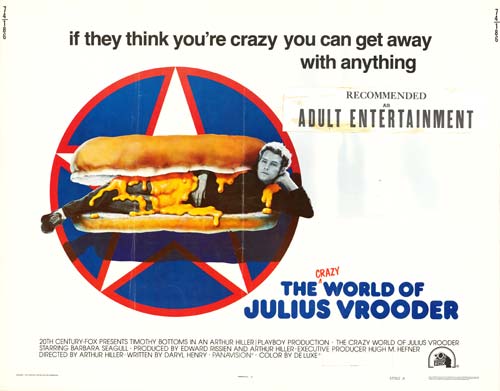
Vrooder (Timothy Bottoms) is a Vietnam Veteran who has returned from the war and is unable to cope with the stresses of everyday life, which eventually gets him checked into the psychiatric ward of a local VA Hospital. There he falls in love with Zanni (Barbara Hershey, but billed as Barbara Seagull) who works as a nurse there, but he is unhappy to find that she is already engaged to Dr. Passki (Lawrence Pressman). To escape his frustrations he hides out in an underground bunker that he has created near a local highway. The place comes complete with electricity and telephone service as well as an array of booby traps to tip him off if anyone comes near, but the heads of the local power and telephone companies’ start trying to track him down in an effort to stop his pilfering of their services, which could ultimately lead to an end to his days of freedom.

The film is cute, but a little too cute and was produced, believe it or not, by Hugh Hefner. It likens itself to being an offbeat comedy, but there really isn’t that much that is original about it and it comes off more like a tired anti-establishment flick with the proverbial authority figures portrayed in stale, one-dimensional ways. One could actually consider this as a weak cousin to One Flew Over the Cuckoo’s Nest with Vrooder being McMurphy, Passki being a toned-down male version of Nurse Ratched and the suicidal Alessini (Michael Cristofer) being like Billy Bibbit.

The only slightly diverting thing about this film, that otherwise suffers from having a limited budget and looks like it was shot initially on video and then later transferred onto film, are the scenes involving the heads of the power and telephone companies (Jack Murdock, Lou Frizzell) working together to track down the culprit who’s stealing their service. The climactic scene in which Jack Colvin plays an over-the-top Dirty Harry type cop obsessed with getting Vrooder and sending an entire armed police force into the forest to find him is amusing as is the mugshots shown of past felons who had stolen electrical and phone service, which were all made up of headshots from the film’s behind-the-scenes crew.

Bottoms is rather transparent, but Hershey, with her effervescent smile and naturally carefree persona, is far better as her simple presence naturally exudes the film’s hippie-like theme. This was the second of four films in which she was billed with the last name of Seagull and this was done as a personal tribute to seagull that she had accidentally killed while filming a scene in the movie Last Summer.

Albert Salmi, in a rare appearance without his mustache, is excellent in support as Vrooder’s good-natured, fun-loving friend Splint and I found it hard-to-believe that this same man who could play such a peaceful character so well would years later in real-life murder his wife before turning the gun onto himself. Elderly film director George Marshall also does well as the aging Corky and his performance should’ve merited supporting Oscar consideration.

This obscure movie also marks the film debuts of several performers, which includes not only Murdock’s and Cristofer’s, but Ron Glass’ as well who plays an hospital orderly and Dena Dietrich playing Vrooder’s mother who later became best known as Mother Nature in a series of commercials that ran during the ‘70s.

crazy world 1

My Rating: 4 out of 10

Released: October 18, 1974

Runtime: 1Hour 38Minutes

Rated PG

Director: Arthur Hiller

Studio: 20th Century Fox

Dear Heart (1964)

dear heart 3

By Richard Winters

My Rating: 7 out of 10

4-Word Review: Love at a convention.

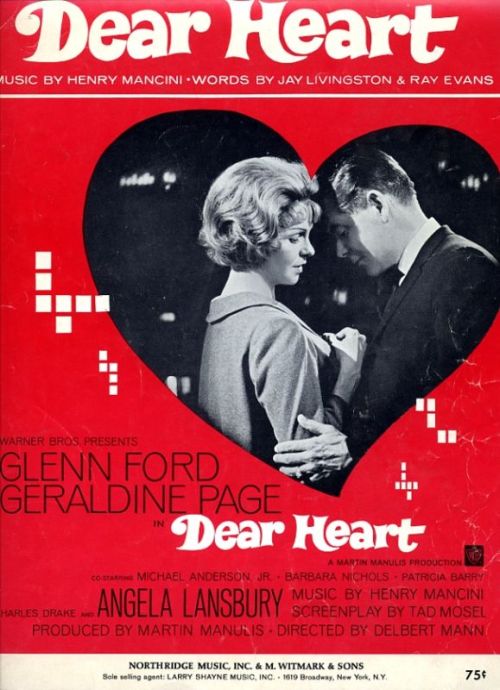
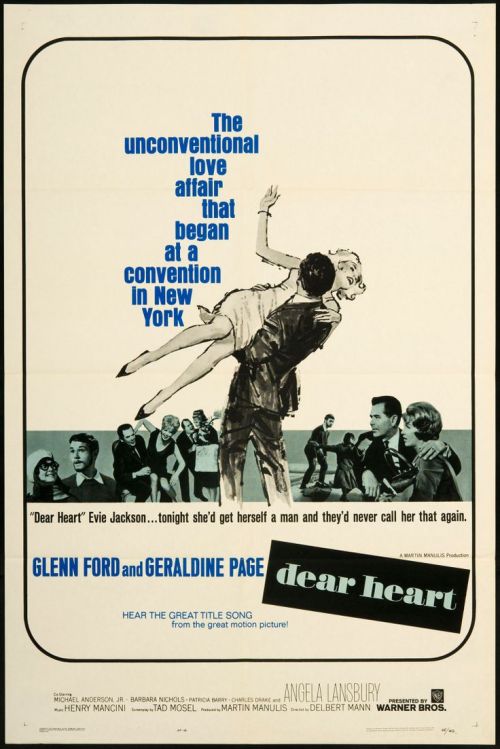
Harry Mork (Glenn Ford) is a greeting card salesman traveling through New York on business when he bumps into the quirky and very lonely Elvie (Geraldine Page) who’s attending a convention there and eyes Harry as a potential catch. Harry though is already engaged to Phyllis (Angela Lansbury) a woman he has only known through correspondence, but is starting to have second thoughts about when he meets her grown son (Michael Anderson Jr.). Elvie tries putting on some moves, but Harry keeps backing away unsure at age 48 if he even wants to settle down at all as he has at times still feels the itch for the occasional fling.

One of this film’s crowning achievements and something that becomes like a third character are the crowd scenes. This may sound inconsequential, but many films have a hard time getting background extras to behave like people amidst large groups of strangers do, but here for whatever reason it gets it right and seeing the dizzying stream of people going back and forth leaves a strong impression and helps accentuate the loneliness and isolation of the main characters particularly Elvie.

I also liked the way the characters hemmed and hawed with each other during the beginning stages. At times Elvie seems more into Harry than he is with her and then other times it gets reversed. Both characters at different points put up an array of defenses and it takes a while for either of them to trust the other and come out of their shells and move into an actual relationship, which is far more realistic than most movies that usually jumps ahead too quickly and never shows the awkward phase that most anyone else goes when testing the waters with someone that they’ve just met.

Page is excellent as always playing the eccentric type of character that she’s proven to be quite adept at, however her myriad of strange quirks got a bit ridiculous and overdone.

Ford is equally good especially with this type of comedy where he plays nervous characters unsure of how to deal with some of the offbeat people around him. I was disappointed though that there was a long drawn out sequence where he tries to get a clerk at the gift card shop (Barbara Nichols) up to his hotel room for a fling, but the film then cuts away and never follows through with what occurred once they got up to the room even though it is later intimated that things didn’t go too well.

The supporting cast of familiar faces lends great comic support, but the most memorable thing about the film is that it features both actresses who went on to play the Mrs. Kravitz character in the ‘Bewitched’ TV-Show. There’s Alice Pearce, who played Mrs. Kravitz for the first two seasons before she died of cancer and then Sandra Gould who replaced her and there’s even a surreal moment where the two have a bit of a confrontation, which I found to be pretty cool.

dear heart 2

My Rating: 7 out of 10

Released: December 2, 1964

Runtime: 1Hour 54Minutes

Not Rated

Director: Delbert Mann

Studio: Warner Brothers

Available: VHS, DVD (Warner Archive), Amazon Instant Video

Harrad Summer (1974)

harrad summer

By Richard Winters

My Rating: 6 out of 10

4-Word Review: Bringing sexual liberation home.

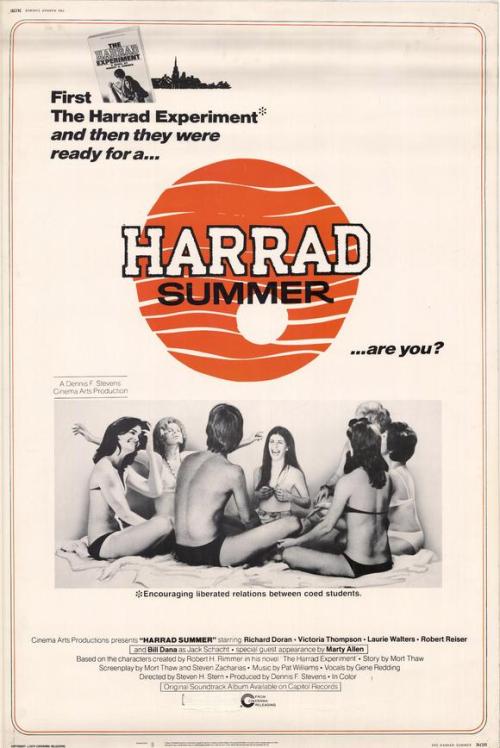
The school year is over and now the students of Harrad, which is the college that teaches and promotes open sexuality, go home for the summer and put what they’ve learned into action in their everyday lives. Like in the first film this sequel focuses on just four of the students who find that their parents and friends are not as broad minded as they are, which causes friction in not only their relations with them, but with each other as well.

This film for the most part works surprisingly well. Director Steven Hilliard Stern takes more of a playful approach to the material and mixes in some funny moments that overall are quite entertaining. The wide variety of locales elevates the stagnant feeling that the first one had and it also manages to address a wider variety of issues.

The story is broken up into three segments with each one focusing on the student’s home lives as they visit each of their parents for 2-weeks at a time as a group. The first part, which deals with Stanley’s (Robert Reiser) folks isn’t too interesting and is fortunately pretty brief. The visit to Harry’s (Richard Doran) is the most comical and the film’s highlight while Stanley’s conflicts with Sheila’s (Laurie Walters) father (Walter Brooke) during their visit to her folks seem contrived and pointless. The film never manages to get to Beth’s (Victoria Thompson) parents, which is probably just as well.

The film’s biggest drawback is that neither Don Johnson nor Bruno Kirby, who were so good in the first film, reprises their roles here and their absence is sorely missed as  Reiser and Doran don’t have the same acting talents and are quite weak in comparison. Thompson, who was blonde in the first film, now has, with no explanation, jet black hair, which makes her look exactly like her sister and fellow actress Hilary Thompson. Also, Emmaline Henry, who was best known for playing Mrs. Bellows in the ‘60s show ‘I Dream of Jeannie’ replaces Tippi Hedren who was unavailable for the sequel and James Whitmore’s role gets taken out completely.

The supporting cast is what gives the film its spark. Comedian Marty Allen, whose hair looks like the ultimate bird’s nest and usually gets more attention than his comic ability, is fun as a drunken party guest. However, Pearl Shear, who plays his wife, is the real scene stealer as an overweight middle-aged woman, who in Mrs. Roper-like fashion, eagerly wants to get involved with the kids and their new found sexual liberation and even takes part in a nudist session with them.

Bill Dana, famous for creating the Jose Jimenez character, is quite good as well playing Harry’s staunchly conservative father who can’t deal with the open sexuality of the younger generation only to surprisingly come around to it at the very end. He also gets the film’s best line when after denying to Harry that he ever had any affairs finally admits “Maybe I did a couple (women) in Vegas and a few in Cleveland, but what else is there to do in Cleveland.”

My Rating: 6 out of 10

Alternate Title: Love All Summer

Released: August 6, 1974

Runtime: 1Hour 43Minutes

Rated R

Director: Steven Hilliard Stern

Studio: Cinerama Releasing Corporation

Available: DVD

Creator (1985)

creator

By Richard Winters

My Rating: 2 out of 10

4-Word Review: Cloning his dead wife.

Harry Wolper (Peter O’Toole) is an eccentric college professor obsessed with the idea of cloning his dead wife. With the help of an undergraduate assistant named Boris (Vincent Spano) he sets up a makeshift shed in his backyard and uses the university equipment for his experiments. He employs the services of Meli (Mariel Hemingway) a 19-year-old in desperate need of funds whose egg he uses as part of the cloning process. After a while she starts to fall in love with him and as the fetus of his dead wife takes shape she becomes jealous and feeling that he should be more concerned with the living than the dead.

O’Toole is engaging as ever in the type of role that most suits his talents. Had the film stayed centered on him it would have been a joy to watch, but unfortunately it enters in the generic Spano who looks like he was pulled straight off of the cover of a men’s modeling magazine. I presume this was because the studio felt a movie centered on a man over 50 wouldn’t attract the all-important 16-30 year-old demographic, but despite being an obvious chick-magnet he adds little and there was period in the middle where he isn’t seen for a long time to the point where I forgot about him and didn’t miss him at all.

Hemingway adds quirky energy as the free-spirit and her kooky romance with O’Toole adds genuine spark, but the film regresses by spending too more time focusing on Spano’s relationship with fellow coed Barbara (Virginia Madsen). This romance is very formulaic and makes the film seem like two movies in one while sucking all of its offbeat potential right out. If anything Spano should’ve fallen for his robot that is by far funniest thing in the movie.

Spoiler Alert!

David Ogden Stiers makes for a good antagonist and John Dehner, in his last theatrical film appearance, is solid as O’Toole’s loyal colleague, but the film’s biggest problem is when it shift gears and destroys the whole cloning angle completely. It then centers on a mysterious illness that befalls the Barbara character that like in Love Story never gets explained and comes out of nowhere. She goes into an immediate coma and is put on life support where her parents (Rance Howard, Ellen Geer) agrees much too quickly and without bothering to even get a second opinion to take her off of it and allow her to die. This then forces Spano to talk to her endlessly until just as the she is about to be disconnected she ‘miraculously’ comes back to life, which is too implausible, too contrived and too cute for even the most hopeless of romantics and helps ruin the engaging performances of its two lead stars, which is the only good thing about it.

End of Spoiler Alert!

My Rating: 2 out of 10

Released: September 20, 1985

Runtime: 1Hour 47Minutes

Rated R

Director: Ivan Passer

Studio: Universal

Available: VHS, DVD, Amazon Instant Video