Category Archives: Comedy/Drama

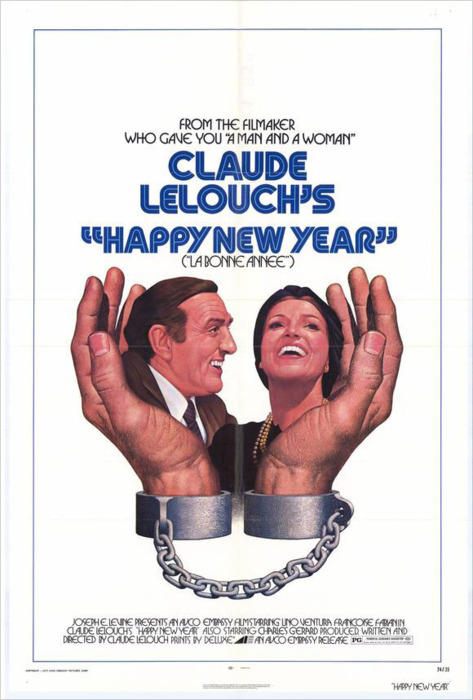
Happy New Year (1973)

happy new year

By Richard Winters

My Rating: 8 out of 10

4-Word Review: A robbery with romance.

Stylish, moody, charming, serene, glossy, and evocative are just a few of the words that come to mind when you view this film and that’s just after the first five minutes. This is truly a French picture. It has all the ingredients that lovers of that cinema enjoy. Unlike American films, French films take their time in telling their story and everything is leisurely paced. The viewer is actually allowed to soak in the visual experience without being told what to think. Director Claude Lelouch is a master at work. He wisely realizes that film viewing is a very personal experience. What the viewer will take from that experience is unique only to them. Thus you have a picture that stays rather wide open in regards to structure. The camera takes many wide shots, thus allowing the individual viewer to focus on whatever it is that intrigues them personally. The story, while still being focused, stays elusive and subtle throughout.

To say the plot is about a planned jewelry store heist is misleading since this only takes up a part of the movie. There is also a running mix of character study, romance, comedy, satire, and even drama. Some will enjoy the amusing banter and love-hate relationship of the two male leads. Others will like the blossoming romance between one of the crooks and a beautiful antique shop owner. Still others will like the wide array of conversational topics some of which include: unique observations on marriage, hairstyles, churchgoers, psychology, men’s definition of women, and women’s definition of men. There’s even a playful critique of an earlier Lelouch film A Man and a Woman.

Overall it’s perfectly made for the viewer with distinct tastes even though when you get right down to it, it really is just a piece of entertainment fluff made more intriguing because of its sophisticated approach. Like with its Wizard of Oz-like format where the beginning and end are in black and white while the middle is in color. Why do it this way? No reason, except, why not. Same with the long slow shots of actor Lino Ventura’s very lined and expressionless face, which manages to hold an unexplainable captivation.

The rather abrupt and elusive ending seems to be the film’s only real weak point and yet when taken into context with everything else, this too has its allure. An American version of this movie was made in 1987 under the same title and starring Peter Falk, but that version is far inferior to this one and not worth seeking out.

My Rating: 8 out of 10

Released: April 13, 1973

Runtime: 1Hour 30Minutes

Rated PG

Director: Claude Lelouch

Studio: Les Films 13

Available: DVD (Region 2)
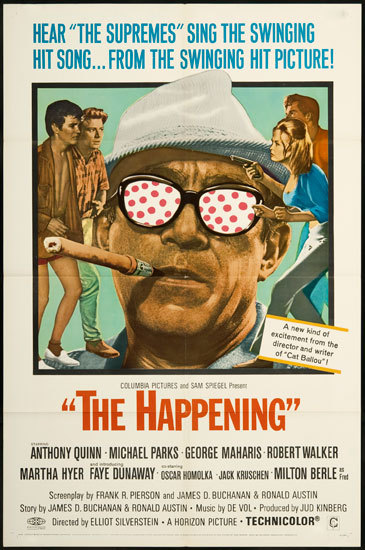
The Happening (1967)

the happening

By Richard Winters

My Rating: 3 out of 10

4-Word Review: Kidnap him for kicks.

After a night of partying a group of hippies wake up the next morning hung over. Sandy (Faye Dunaway) and Sureshot (Michael Parks) are two strangers that find that they’ve slept together outside for the night and slowly become acquainted. To escape a police raid that is rounding up the drunken partiers and arresting them for vagrancy they hop onto a nearby boat with two other men that they’ve just met Taurus (George Maharis) and Herby (Robert Walker Jr.). They happily go along the lake until some neighborhood kids who are dressed in army gear shoot at them with their toy guns. Taurus doesn’t appreciate this and docks the boat and chases them into their house. Inside is the boy’s father Roc Delmonico (Anthony Quinn) who is a former Mafia Kingpin. He thinks these four strangers are aware of his past and there to kidnap him. The group decides to play along with the ruse hoping to get some money from the ransom and also because they are just bored and looking for some kicks.

The set-up has to be one of the flimsiest I have ever seen and the fact that it took four writers to come up with something that is full of holes and ludicrous is all the more confounding.  The concept seems like something that never got past the first draft and very poorly thought out by everyone involved. The idea that four strangers who have known each other for just a few minutes could get together and kidnap someone that they don’t know on a mere lark is ridiculous. I would think a former kingpin would be better prepared for something like this and have a back-up plan instead of passively and stupidly falling into the kid’s clutches with no idea of what to do. The story would have been far stronger had this been a planned crime.

The film’s overall vapid nature is shocking when you realize that is was done on a good budget by a major studio and top director Elliot Silverstein making me wonder if anyone even cared or thought about what they were making, or simply more interested in getting into the mod mood of the times. The filmmakers portray the younger generation as being one-dimensional thrill seekers with no real or discernible personalities and in the process creates characters that are boring, unrealistic, and uninteresting. The attempts at hipness are shallow, flat, and ultimately annoying.

Despite the low plausibility the movie is slickly done making for periods of fluffy entertainment. Case in point is when the kids have their car pulled over by a policeman (Eugene Roche) when they go through a red-light and carrying Roc tied up in the trunk. In an attempt to create a ‘diversion’ Sureshot decides to get out of the car with his hands up in the air. When the cop tells him to put his hands down he refuses, which then somehow makes all the other cars on the road crash into each other. Yes, it is fun to see a big pile-up, but believing that something like that could happen over something so silly is pushing things too much to the extreme like with a lot of things in this movie.

Things improve during the second half when Roc with the help of the kids turns the tables on everyone he knows after finding out that no one is willing to pay for his ransom. The scene where they tear up his house is kind of funky despite the fact that all the furniture they smash up looks like obvious stage props. Unfortunately the ending is as weak as the beginning and offers no pay off, which most likely will make most viewers feel like they’ve wasted an hour and 45 minutes of their time.

Quinn is good and gives the script and character a lot more energy and heart than it deserves. Dunaway, in her film debut, is hot and plays the part of an immoral lady looking for cheap thrills even when she knows better quite well. Walker Jr. is good simply because he plays the only character that has any type of believability, but unfortunately he is not on enough to be completely effective. Maharis who is best known for his excellent work as Buz Murdock in the classic TV-show ‘Route 66’ is solid as the volatile and slightly unhinged member of the group.

Oskar Homolka has a few memorable moments as an aging crime boss. One scene has him in a steam room along with his henchman wrapped tightly in towels and looking like giant carrots while another segment shows him at a poolside surrounded by a bevy of beautiful bikini clad women, which like the first scene, is visually funny.

The Supremes sing the film’s theme song, which became a top ten hit, but it doesn’t get played until the closing credits and even then not in its entirety.

My Rating: 3 out of 10

Released: May 17, 1967

Runtime: 1Hour 41Minutes

Rated NR (Not Rated)

Director: Elliot Silverstein

Studio: Columbia

Available: None

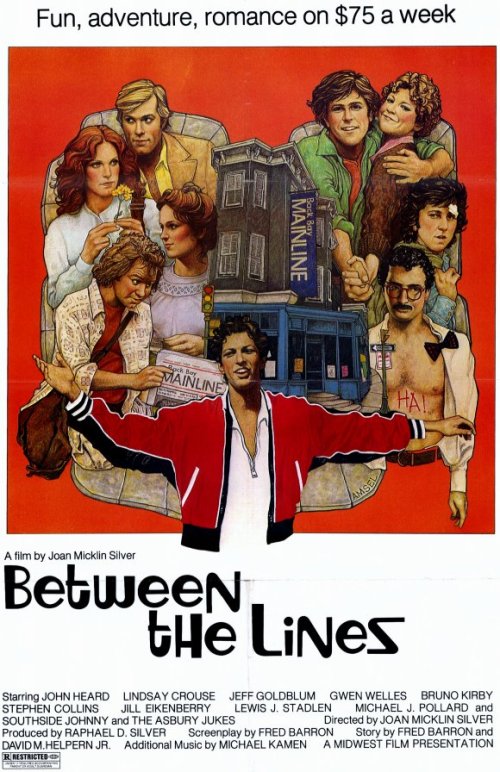
Between the Lines (1977)

between the lines

By Richard Winters

My Rating: 6 out of 10

4-Word Review: Newspaper get corporate takeover.

This is a look at an underground/counter-culture newspaper staff and the conflicts and concerns that they have at being taken over by a no-nonsense corporate owner (Lane Smith).

The film almost immediately takes you back to the bygone era of the late 70’s. The attitudes and conversations are realistic for that period and anyone who lived through it will most assuredly feel nostalgic .John Heard, Jeff Goldblum, and Bruno Kirby are engaging in their respective parts as is most of the cast. Stephen Collins is good also, but in an unusual role for him as he usually plays nice sensitive types, but here is a more driven, intense, and confrontational. This also works as a good unofficial statement to the death of the counter-culture movement and the eventual rise of materialism.

The story starts out well as it looks at the inside workings of an underground newspaper, but then spends too much of the middle part focusing on the relationships of some of the characters. Only at the end when the new owner takes over does it get back to the newspaper angle. Unfortunately it concludes just as things are getting interesting and we never get to see how the characters survive and adjust to the takeover. The film would have been much stronger and original had it stuck to scenarios involving the newspaper business and scrapped the relationship stuff, which tended to be derivative. Jon Korkes and Michael J. Pollard’s characters are seen too little and needed more screen time.

Also, when the film deals with the relationships there seems to be too much of a feminist bias as the men are always shown to be the ones at fault due to their ‘insensitive and selfish natures’ while the women come off the ones who are ‘reasonable and unfairly neglected’. This could be a product of the fact that it was directed by a woman as well as the era where men were somehow supposed to feel guilty simply because they were men.

This is fun as a time capsule as well as a great chance to see young stars in the making. However, the story does not take advantage enough of its original concept and ends up dealing with a lot of the same old scenarios and story lines that we’ve all seen before. Director Joan Micklin Silver and John Heard teamed up again two years later for Chilly Scenes of Winter, which I felt was better.

My Rating: 6 out of 10

Released:  April 27, 1977

Runtime: 1Hour 41Minutes

Rated R

Director: Joan Micklin Silver

Studio: Midwest Films

Available: DVD (MGM Vault)

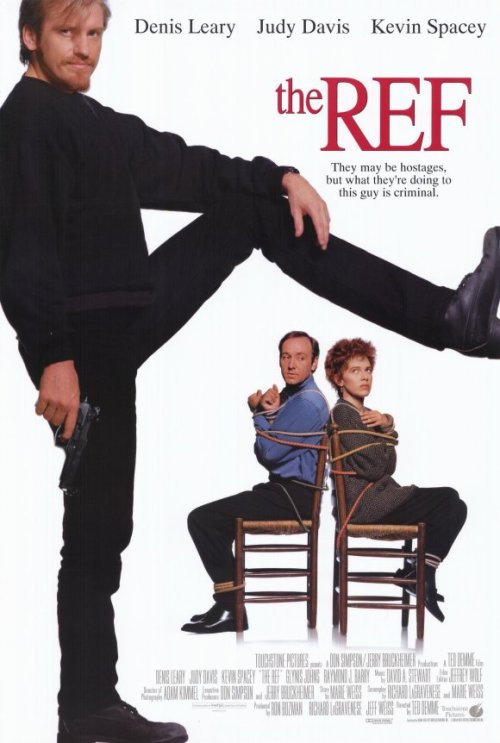
The Ref (1994)

The ref

By Richard Winters

My Rating: 5 out of 10

4-Word Review: Not in holiday spirit.

Gus (Denis Leary) is a burglar who takes a bickering couple (Kevin Spacey, Judy Davis) hostage and soon learns to regret it especially when the rest of the family comes over for a Christmas celebration and he is thrust into the middle of all of their squabbling.

The film starts off with a real bang as it takes a lot of satirical pot shots at marriage counseling, people who dress up like Santa, family parties, suburbia, bickering couples, and of course the holiday season itself. Christine Baranski is top-rate as the sarcastic mother and it is unfortunate she wasn’t given more screen time. Even her kids are funny. Glynis Johns is also excellent as Spacey’s mother. She takes command of her scenes even when star Dennis Leary can’t. For her age she looks fantastic and it is nice to see an older actress playing a character that isn’t just used as a throwaway device for senile jokes and aging.

However, star Leary can’t seem to act, at least not here. He shot to fame with his dark and edgy stand- up routines, but here falls into a character that is much too watered down and benign. This was supposed to be his vehicle, but in the end it seems like his character wasn’t even necessary. Baranski’s character is far more funny and memorable even though she has much less screen time.

Spacey and Davis don’t click as a couple. They share no chemistry and their bickering seems strained and contrived. The film also falls too far away from its original premise. Having a two-bit crook dealing with a bickering couple at first seems like a funny concept, but then the story starts to delve much too deeply into their personal problems until it becomes like a family drama that isn’t at all amusing or entertaining.

The film has a few funny bits, but not enough to sustain it the whole way. Leary is very weak in the lead and this thing completely loses steam by the end.

My Rating: 5 out of 10

Released: March 9, 1994

Runtime: 1Hour 33Minutes

Rated R

Director: Ted Demme

Studio: Touchstone Pictures

Available: VHS, DVD, Amazon Instant Video

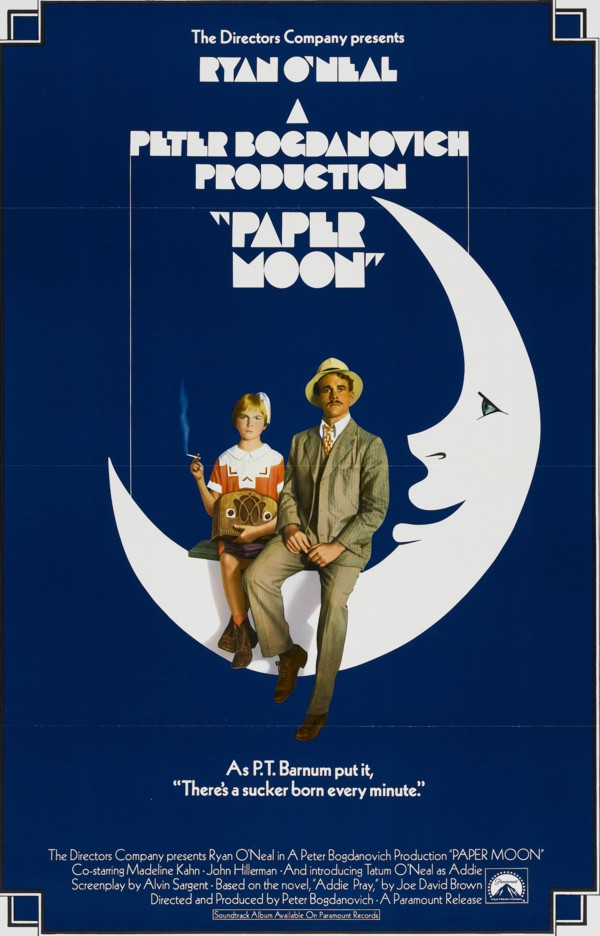
Paper Moon (1973)

By Richard Winters

My Rating: 7 out of 10

4-Word Review: Tatum is the star.

Due to the recent reality show airing on the Oprah Winfrey Network about Tatum and Ryan O’Neal trying to patch things up as father and daughter after years of acrimony I thought it was time to dig up this gem of a 70’s movie and give it a review. It is the story of  Addie (Tatum in an Academy Award winning performance) a 11 year old girl who has just lost her parents and comes into the custody of a traveling salesman/con-artist (Ryan). Their relationship starts out as contemptuous, but eventually evolves into a strong friendship as the two travel the lonely roads of Kansas selling Bibles door-to-door during the Depression.

Lazlo Kovac’s incredibly evocative black and white cinematography is the true star here. Absolutely everything is in focus and his ability to bring out the beauty and charm of the otherwise barren and stark Kansas landscape is an achievement in itself. Tatum is sensational and eats up every scene that she is in. Madeline Kahn as Trixie Delight is also great. The opening scene where she walks up with her breasts juggling up and down in her dress is memorable. The story itself works off of the cuteness formula, but somehow manages to pull it off without it becoming forced or annoying.

Ryan’s performance is a little too affected. At times he becomes badly upstaged by his daughter and seems even a little intimidated by her. The film might have been better served with someone else playing the part. Also the scene showing him in the aftermath of a big fight where he gets beat up by a group of four men looks cheesy. He comes away with only a few cuts and bruises when it reality it should have been a lot worse.

Overall this is a charming and entertaining movie that, scene for scene, hits all the right marks. On a technical level this film is brilliantly photographed and directed and effectively brings back the 1930’s period detail and feeling.

My Rating: 7 out of 10

Released: May 9, 1973

Runtime: 1Hour 42Minutes

Rated PG

Director: Peter Bogdanovich

Studio: Paramount

Available: VHS, DVD, Amazon Instant Video

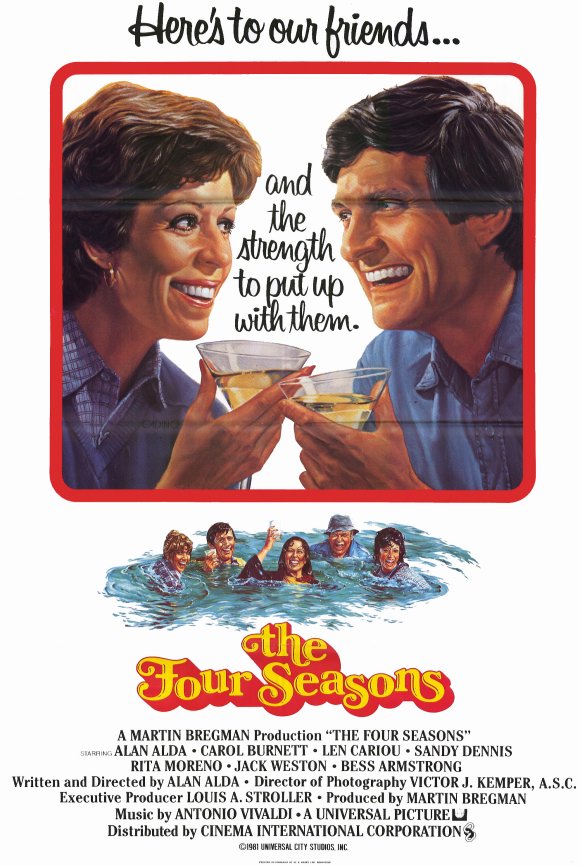
The Four Seasons (1981)

By Richard Winters

My Rating: 4 out of 10

4-Word Review: Car goes through ice.

This is an easygoing comedy-drama detailing three middle-aged couples who take vacations together during each season of the year. As the seasons change so does the level of their friendships. The chemistry of the group begins to unravel when Nick (Len Cariou) decides to divorce his wife Anne (Sandy Dennis) and bring along his attractive new young girlfriend Ginny (Bess Armstrong) on their trips. The women still feel a loyalty to Anne while Ginny makes the men more self-conscious about their age and virility.

This is certainly an interesting idea with lots of potential. The film has a good handle on the politics of friendship and how even the best of them can have underlying jealousies and misunderstandings. It also shows the tendency of how friends like to smooth things over by putting on a happy face and never really getting to the bottom of the issue.

It’s also refreshing in our youth obsessed culture to have a film focus solely on middle- aged people and have them actually act the part. The situations and their responses to them as well as the conversations all seem very authentic. There’s also some terrific outdoor photography and a great classical music score by Vivaldi.

Carol Burnett is the real surprise. Usually known for her over- the- top comedic performances she puts together a good low key dramatic one here. Weston though steals the film with his somewhat hammy performance as Danny the dentist and his reactions at seeing his prized new car go through the ice is amusing.

Like with a lot of movies written and directed by Alan Alda the film is too dramatically light. There is not enough conflict and it never reaches any peak. The dialogue needs to be crisper and some of the little ‘spats’ that the couples have particularly the one between Danny (Jack Weston) and Claudia (Rita Moreno) at the end seem forced and unfunny. The final result is rather empty and extraneous.

Be warned the film also features the worst rendition of “Strangers in the Night” that you will ever want to hear.

My Rating: 4 out of 10

Released: May 22, 1981

Runtime: 1Hour 47Minutes

Rated PG

Director: Alan Alda

Studio: Universal

Available: VHS, DVD

Wildcats (1986)

By Richard Winters

My Rating: 3 out of 10

4-Word Review: Goldie coaches boy’s football.

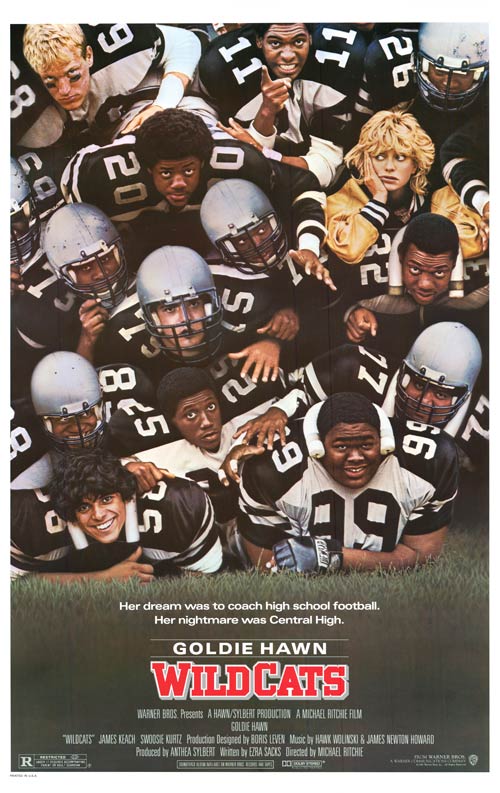
Due to football season starting on Wednesday I have decided to incorporate a football themed movie for today’s 80’s movie review. It is story about a divorced mother of two (Goldie Hawn), who coaches a high school girl’s track team, but decides she wants to live out her dreams by coaching football instead. Unfortunately the only football job she can find is with a losing boys’ team in a tough inner-city high school.

This is a very uninspired, by the numbers ‘feel good’ sports movie. There actually seems to be more drama than comedy and what little comedy you get really isn’t very funny. Having a woman coach a boy’s football team would be enough of a challenge, but forcing her to do it in a tough inner-city school seems unnecessary. The players are one-dimensional and uninteresting. Even Hawn’s character is dull although Hawn herself is still engaging. The climactic game sequence is so predictable and full of clichés that it becomes almost excruciating to sit through. The film is also plagued by having that annoying 80’s music sound.

On the plus side I found it fun to watch Wesley Snipes and Woody Harrelson in their film debuts. It is also great to see Nipsey Russell although they don’t give him enough to do. He looks like he was only 38 even though, at the time, he was actually 68!  Thad Thacker who is very large physically is amusing and the only interesting player on the whole team. His acting is nothing exceptional, but his ‘con-man’ routine has its moments. Actor James Keach, who plays the stereotypical ‘jerky’ ex-husband, ends up giving a surprisingly sturdy performance.

Overall the film is dull and predictable and hardly good for even a few cheap laughs. Why some people think this is so funny is beyond me because everything that is done here has been done better somewhere else.

My Rating: 3 out of 10

Released: February 14, 1986

Runtime: 1Hour 46Minutes

Rated R

Director: Michael Ritchie

Studio: Warner Brothers

Available: DVD, Amazon Instant Video

The Apprenticeship of Duddy Kravitz (1974)

By Richard Winters

My Rating: 8 out of 10

4-Word Review: Anything to get ahead.

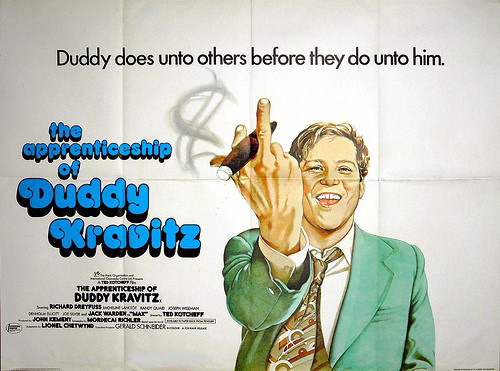
            Duddy Kravitz (Richard Dreyfuss) is a young Jewish man looking to make a name for himself and escape the working class existence of his father. He comes up with several schemes many of which aren’t legal and don’t work, but his aggressive nature drives him even as it alienates those around him.

I loved the Duddy character and I liked him because of his unlikableness. Yes, he is obnoxious, deceitful, conniving, brash, arrogant, crude, and aggressive to the point of running down anyone who might get in his way, but you are shown why he is that way. How the desperate world around him has brought out the ugliness and the allure of money and social prestige only makes it worse. Duddy is more of a victim of a capitalistic culture that promises with money comes happiness, but fails to mention all the sacrifices and compromises that must come with it.  The script by Mordecai Richler, which is based on his novel, does a terrific job on analyzing the idea of success on how the end doesn’t always justify the means and how a man who is poor but true to his values can be far richer than one who may have a fortune, but is hollow.

Dreyfuss does a terrific job and I consider this one of his best performances even though apparently he was dissatisfied with it personally. I liked the nervous energy and ticks that he gives the character that easily reveals the desperation and drive that he has inside. He manages to bring out the human side of his character making him relatable despite his many flaws. What is interesting is the way Duddy will display a certain sensitive side in brief and surprising moments.

Jack Warden is wonderful as the father a man who is well aware of his son’s faults, but remains loyal to his strive for success. The film’s final image, which features Warden is a gem especially when taken into effect everything that came before it. Joe Silver, a deep, gravelly voiced character actor has his best performance of his career as Farber. This is a man who shows deep devotion and respect to religion and spirituality, but then openly boasts to Duddy at how he cheated and back-stabbed a business partner.

Denhom Elliot is great in comic relief playing an alcoholic has-been filmmaker who makes a movie involving the bar mitzvah of Farber’s son that ends up showing everything from Adolf Hitler, to a naked woman’s breast, and even a man eating glass. He exhibits this to everyone in the synagogue and the facial reactions of Farber while he is watching it is hilarious.

The on-locations shooting in Montreal is well done. I felt like I was right there back in the 1950’s. The inside of Duddy’s home had a nice lived-in look and feel. There are images that stay with you long after it is over including the gorgeous forest and lake that Duddy hopes to one day own.

This is a perfect example of a compelling drama. Each scene works seamlessly with the others and the film continues to reveal more insight as it goes on. It also an excellent character detailing someone who is all too real and facing many difficult life decisions that we all face.

My Rating: 8 out of 10

Released: April 11, 1974

Runtime: 2 Hours

Rated PG

Director: Ted Kotcheff

Studio: Paramount

Available: VHS, DVD, Amazon Instant Video

Law and Disorder (1974)

By Richard Winters

My Rating: 6 out of 10

4-Word Review: Regular citizens become cops.

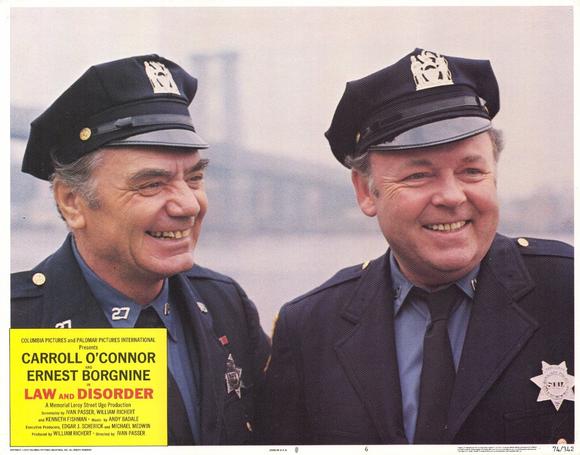
Due to the recent death of Ernest Borgnine I felt a review of this film, which features Borgnine in a very strong and effective performance, would be appropriate. The story deals with two middle-aged men named Willie and Cy (Carroll O’Connor, Ernest Borgnine) who after being robbed decide to join the police force as auxiliary cops. Their escapades start out as lighthearted and comical, but eventually they become faced with some serious consequences.

This is a rare film appearance for O’Connor who performed in a lot of movies during the 60’s, but did very little once he became a household name with ‘All in the Family’. It is fun to see him though the role doesn’t exercise his acting talents enough. He is a toned down version of Archie and comes off as boring and benign with a smiling face button on his coat that is annoying. His two best scenes come when he tries to pretend he is a young urban street punk and as a cab driver with a nice way of handling two obnoxious passengers.

It is actually Borgnine that steals the picture. Usually he is more of an unassuming supporting player, but here he comes into his realm. He is funny in a cantankerous way, but with some good dramatic moments in-between. Watching him angrily smash up a stolen bicycle with a lead pipe is intense and memorable. He proves that he might have made a good Archie Bunker had O’Connor not been available.

The female cast runs hot and cold in terms of performances.  It was fun to see Ann Wedgeworth, a native Texan, transplanted into the role of a Bronx housewife. Karen Black though is outrageously wasted in two very brief and meaningless scenes as an over-sexed hair stylist.

The story on the whole is alright. The beginning features a lot of amusing, fast paced comical adventures. The problem really begins towards the middle when the film shifts to a more serious tone, which bogs down the pace and fractures the narrative. You get roped into thinking this is a good comedy and then find it is anything but. The drama isn’t bad, but it doesn’t mesh well with the silliness. It also veers too much from the main premise making the message and point of view confusing. It tries to tackle too many topics, but fails to make any type of meaningful or lasting statement in the process.

Overall the film is good enough to keep you captivated and on the most part it is entertaining. Yet the story is disjointed and frustrating. The music played over the opening credits sounds like something for a senior citizens dance party and was a horrible choice. However, the on-location shooting of New York City is great and gives the viewer an authentic feel of an average urban neighborhood.

My Rating: 6 out of 10

Released: October 9, 1974

Runtime: 1Hour 44Minutes

Director: Ivan Passer

Studio: Columbia Pictures

Available: VHS, DVD

Boccaccio ’70 (1962)

By Richard Winters

My Rating: 7 out of 10

4-Word Review: It’s all about sex.

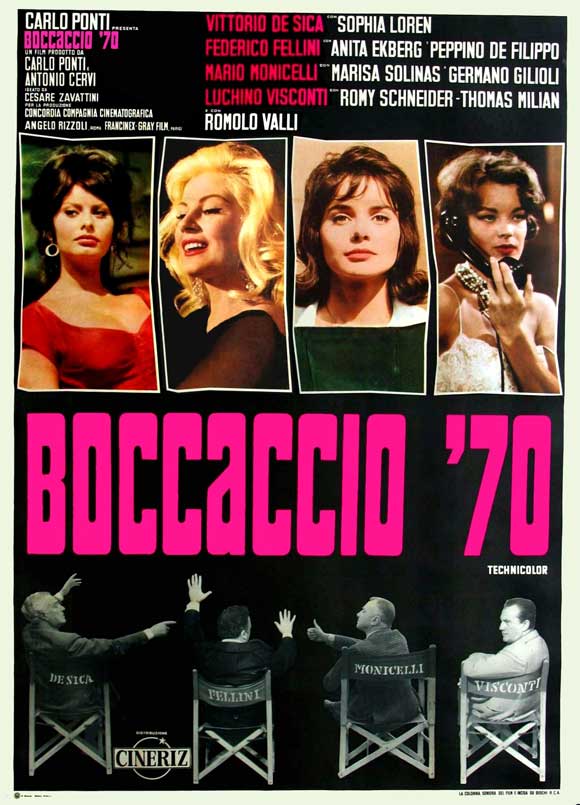
            This film, which is well over 3 hours, is a compilation of four different sex tales directed by legendary Italian greats: Federico Fellini, Vittorio De Sica, Luchino Visconti, and Mario Monichelli. The segments also star some of the most beautiful and sexiest women to ever grace the screen including: Sophia Loren, Anita Ekberg, and Romy Schneider. These ladies are at their most stunning and really light up the screen with their presence. Despite the extreme length the film moves along in a breezy fashion and I was actually surprised how quickly the time went.

The first segment directed by Monichelli and entitled ‘Renzo e Luciana’ was cut from the initial American theatrical release and it is easy to see why as it lacks the energy and flair of the others. It stars Marisa Solinas who doesn’t have the sex appeal and star power of the other leading ladies and apparently this was the reason why it was cut, but now has been restored on the recent Blu-ray release. The story is rather simple and deals with Luciana (Solinas) getting married to Renzo (Germano Gilioli), but having to move-in with her parents as they are unable to afford a home of their own. She also must keep her marriage a secret because the contract that she signed at the accounting firm that she works at strictly states that the female employees must remain single. This is so their overweight, lecherous boss can flirt and go out with them and threaten to fire them if they resist. Because of her financial situation and sparse job market Luciana is forced to put up with his advances. Although seeing two young newlyweds struggling as they start out can at times be touching this segment doesn’t have enough comedy, or drama to keep it afloat. The only lasting image one remembers from this is when Luciana goes to a public pool and sees her fat boss prancing around in nothing but a skimpy bikini bottom, which might be enough to make some viewers sick.

‘Le tentazioni del dottor Antonia’ is the second segment and directed by Fellini with his usual visual flair and style. The plot is about an older gentleman named Antonio (Peppino De Filipo) who is quite prudish and protests and tries to ban any type of public display of sexuality. When a giant billboard is erected in front of his apartment showing an alluring model (Ekberg) in a provocative pose while holding a glass of milk he becomes irate. His initial anger turns to horror as the giant model comes to life and begins to terrorize him in all sorts of comical ways. The special effects are pretty good. Filipo plays his role to a delightfully hammy level and Ekberg is striking. The ironic ending, which features a lot of surreal elements, is amusing.

The third feature is entitled ‘II lavaro’ and is directed by Visconti.  Here a rich young husband (Thomas Milian) can’t seem to avoid being caught cavorting with prostitutes despite the fact that he is married to the beautiful Pupe (Schneider). She decides that the only way to prevent this is by becoming a prostitute herself and then having him pay her to be his mistress. This segment starts out with a humorous and engaging tone, but eventually becomes talky, static, and stagy. Schneider is the best thing about it and is intoxicating in every scene that she is in. She not only speaks fluent Italian here, but German as well.

The final segment entitled ‘La riffa’ and directed by De Sica is by far the best. It is about a raffle that all the men in a small village get involved in to see who will win one night with the beautiful Zoe (Loren).  The irony here is when timid Cuspet (Alfio Vita) who looks and acts exactly like Rowan Atckinson’s Mr. Bean character, ends up winning it. De Sica nicely plays everything up to its full potential and captures the nuances and eccentricities of the characters well. Loren is both sexy and funny and shows a flair for frantic comedy. The sequence involving Cuspet and Zoe’s rendezvous is amusing, touching, and even a bit surprising.

My Rating: 7 out of 10

Released: June 26, 1962

Runtime: 3Hours 25Minutes

Rated NR (Not Rated)

Directed by: Federico Fellini,  Vittorio De Sica, Mario Monichelli, Luchino Visconti.

Studio: Cineriz

Available: VHS, DVD (Region 1 and 2), Blu-ray, Netflix Streaming