Category Archives: Comedy/Drama

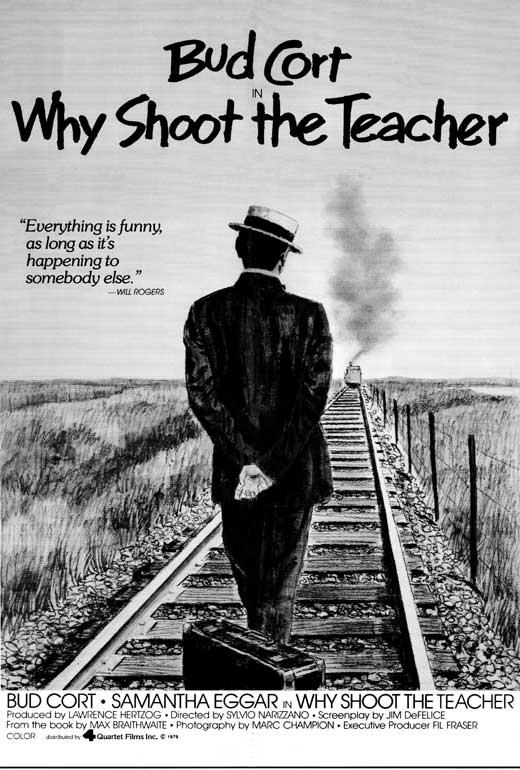
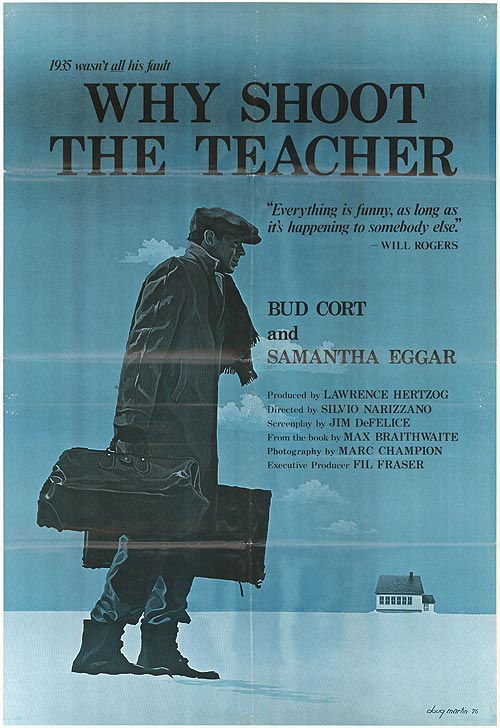
Why Shoot the Teacher? (1977)

why shoot the teacher 2

By Richard Winters

My Rating: 8 out of 10

4-Word Review: Not a good job.

If you hate your job then watching the escapades of Max Brown (Bud Cort) dealing with his should make you feel a lot better about yours, or even lucky. The setting is 1935 and Max has traveled to an isolated farming community in Saskatchewan Canada in order to live out his dream of being a school teacher. The problem is that he must live in the dingy basement of the school that has no running water and an outhouse that gets regularly overturned by the rowdy school children, sometimes with Max in it, and he is only paid $20 dollars a month for his efforts, which even back then was a paltry amount. What is worse is that the district can’t even afford to pay him so instead gives him promissory notes and forces him to be dependent on the generosity of the townspeople for his food. Since he had to borrow money for his train ride up there he is unable to go back and forced to spend the harsh Canadian winter all alone while dealing with difficult students and indifferent parents and adults.

Cort really shines. The fact that through all his diversity he still remains civil and upbeat makes the character quite appealing even though he does evolve and at times compromises from his initial ideals. The best example of this is when he eventually, despite his initial reluctance, uses the strap on one of the older bigger students while the rest of the school children watch through the school windows. Although Cort is best known for his starring role in Harold and Maude I’d actually say this is his best all-around performance.

Samantha Eggar another under-appreciated and underused performer is terrific in support as Alice Field a woman transplanted from England who like with Max finds herself alienated and unconditioned to the harsh climate. She also has a really amusing line when she states “Canada is a nice country…sometimes…in the spring.”

Filmed on-location in the tiny town of Hanna, Alberta the sprawling wheat fields create a tremendous sense of isolation as well as a distinctive sense of natural beauty. The story is filmed during all three seasons, which makes the viewer feel like they are battling the rigorous Nordic climate right alongside Max. One of the funniest moments is when the word ‘Spring’ is flashed on the screen while a raging blizzard goes on behind it making Canada one of the few places that can make Minnesota, where I am originally from, seem like a mild climate.

The film is wonderfully vivid and creates a rich multi-textured tapestry of life on the prairie. By keeping everything on a realistic level it helps recreate what life must have been like for a lot of rural school teachers during the period, which is what makes it so fascinating. The film’s faded washed-out color and archaic low budget technical approach only helps to accentuate the look and feel of the period. There are shades of Wake in Fright here that also dealt with a man teaching school in an isolated school house while battling the elements and I found it interesting to note that Ted Kotcheff who was the director of that film was listed as a production consultant on this one.

My only complaint about the film was the misleading title. There is no shooting of any kind of the teacher, or even any talk of it. Why they came up with that title, which is based on the book with the same title is a mystery. Unfortunately it may give some people the idea that this is a violent film when nothing could be further from the truth and may turn-off potential viewers from enjoying this endearing slice-of-life comedy/drama.
why shoot the teacher 1

My Rating: 8 out of 10

Released: June 23, 1977

Runtime: 1Hour 39Minutes

Rated PG

Director: Silvio Narizzano

Studio: Lancer Productions Limited

Available: VHS, DVD, Amazon Instant Video, YouTube
Cadillac Man (1990)

cadillac man2

By Richard Winters

My Rating: 6 out of 10

4-Word Review: Car salesman versus gunman.

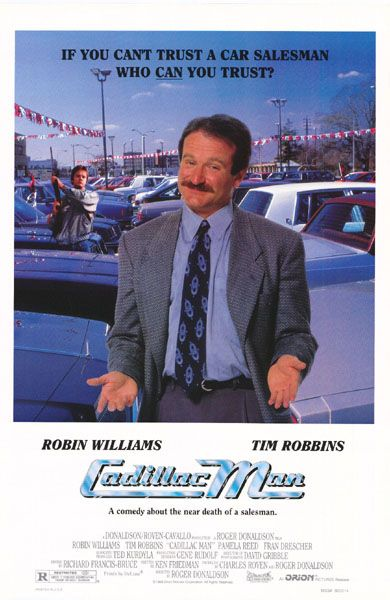
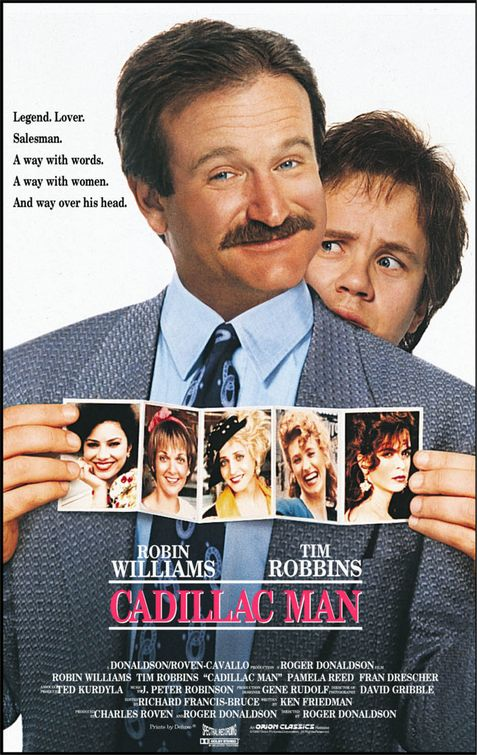
A jilted husband (Tim Robbins) goes off the deep end and with rifle in hand takes over a car dealership where he threatens to kill everybody inside. It’s up to Joey (Robin Williams) a quick-on-his-feet car salesman to use his ‘people skills’ to get everyone out of the predicament.

Outside of a funny opening funeral procession bit, the first thirty minutes are pretty dull. Too much time is spent on Joey’s interactions with friends and family members that are not funny or interesting. In fact the majority of the film seems more like a drama dealing with the daily stresses of life than it does a comedy. When the gunman first breaks into the dealership it is quite intense and even a bit horrific. The film does eventually catch its stride, but it all seems kind of transparent by the end. There is nothing to really distinguish this film from all the rest, which probably explains why it has pretty much been ignored. In many ways it seems very similar to Dog Day Afternoon.

However, I did like that everything is kept on a realistic and plausible level with dialogue and characters that are quite believable. Robbins makes for an engaging gunman and once the film settles into the hostage crisis there are a few genuinely funny moments. Fran Drescher’s pet poodle is memorable and one of the best pet performers I’ve seen.

If you are looking for a passable time-filler then this film has enough comedy and good moments to make it worth it, but it’s nothing more than that. Williams is energetic as always and it’s interesting to see him juggle both a comedy and drama here. It is also worth catching just to see Robbins in his breakout role.

cadillac man1

My Rating: 6 out of 10

Released: May 18, 1990

Runtime: 1Hour 37Minutes

Rated R

Director: Roger Donaldson

Studio: Orion Pictures

Available: VHS, DVD

Tilt (1979)

tilt 2

By Richard Winters

My Rating: 4 out of 10

4-Word Review: She’s a pinball wizard.

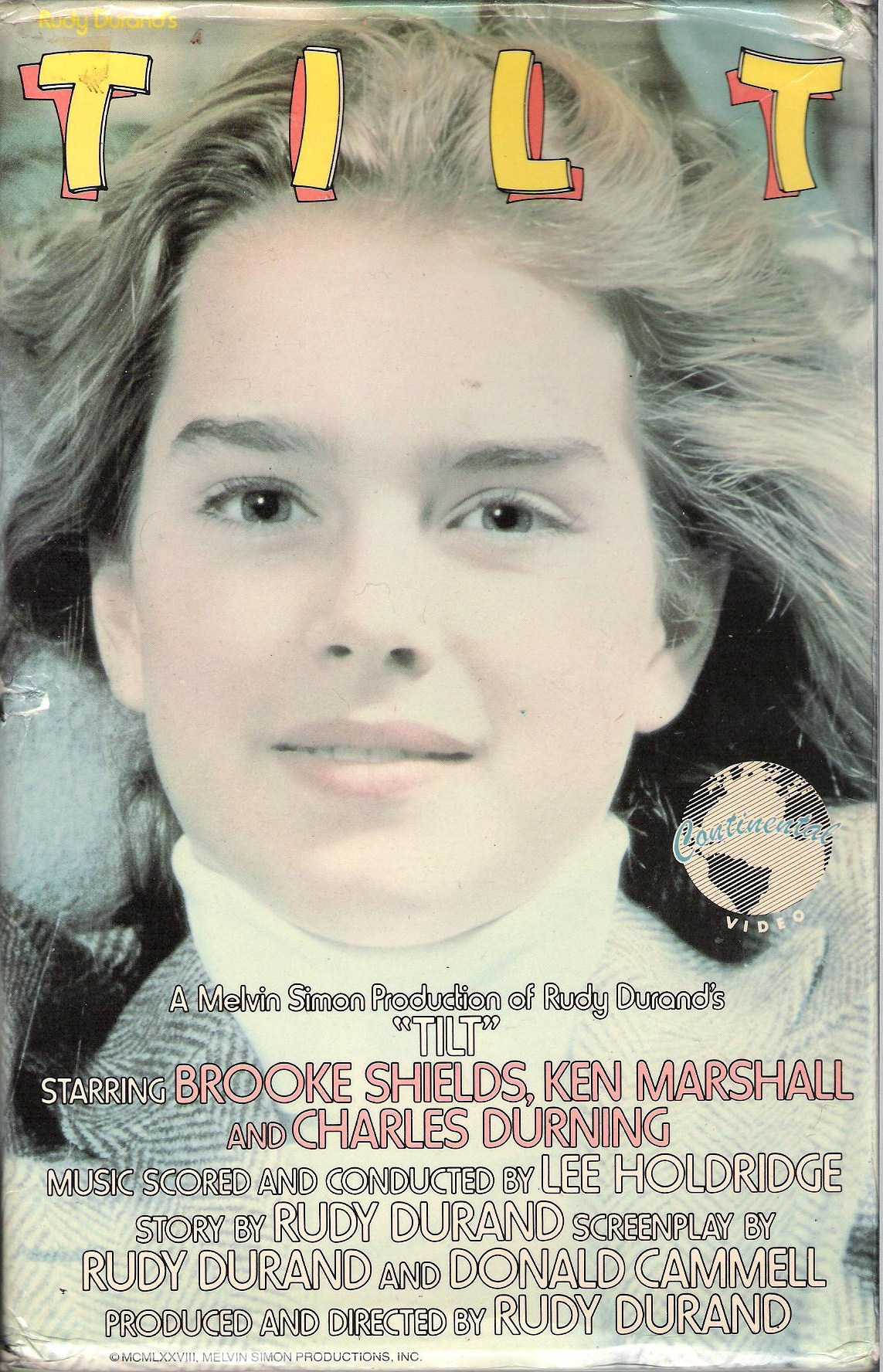
Brenda (Brooke Shields) who goes by the nickname Tilt is a 14-year-old pinball machine champion. When she becomes fed up with her overbearing father she decides to run away from home. She meets Neil (Ken Marshall) a man in his 20’s who is struggling to establish himself as a country music singer. He schemes to use Tilt’s pinball talents by hustling pinball patrons at bars and arcades around the country, but his real motivation is to have Tilt beat Harold Remmens (Charles Durning) who is nicknamed ‘The Whale’ due to his immense weight. The Whale is an arrogant bar owner who seems unbeatable at pinball and due to a few run-ins that he has had with Neil the two have become bitter enemies. Neil hopes to shatter his ego by having him get beat by an adolescent girl in a so-called pinball showdown, but Tilt has other ideas.

It is easy to see why this movie bombed at the box office and basically sat on the studio shelf for years. It seems to have no idea what audience to play too. There are too many adult references in it to make it suitable for teens especially preteens, but the story itself is so vapid that adults will be bored with it. The concept is offbeat enough that it might have worked as a comedy, or even parody, but director Rudy Durand approaches it as a standard drama, which due to the subject matter seems almost awkward. The 110 minute runtime is much too long for this kind of material and although it manages to move itself along it is never all that interesting with extraneous footage that should have been cut. Having faster cuts, juxtapositions, and even a non-linear narrative would have given it more energy and cinematic flair.

Having the action revolve solely around pinball games isn’t interesting. It is hard to follow the games and the constant footage of showing the inside of the arcade game as they are playing it becomes monotonous and fails to elicit any excitement. They is never any explanation as to what special skills Tilt or The Whale have that allows them to be so good, but it might have been a little more enlightening had one been forthcoming.

Shields is terrific and helps keep things afloat. She looks cute and wears pants with the words ‘pinball champ’ stenciled along her rear. Her ability and confidence at sharing scenes and holding her own with her much older adult counterparts is what makes her so special. One of the best scenes is when she hitches a ride with an ornery trucker (Geoffrey Lewis) who complains about the lack of morals in today’s world, but then turns around and tells her he has condoms in his shirt pocket and invites her to a rendezvous in the nearest hotel. Tilt says she will just as long as she can do it with both him and his wife, which gets her immediately booted out of the truck for being a ‘pervert’.

Marshall doesn’t have as much charisma as his younger female co-star and his Texas twang was a bit too strong for my taste. He travels the country and stays in the same hotel room with the girl knowing full well that she is only 14, but makes no sexual advances, which of course is good, but I kept wondering if this where the real world that he would most likely have tried something. I also found it strange that Tilt’s father (amusingly played by Gregory Walcott in a brief bit) wouldn’t have every police force in the country looking for her and once caught Neil would be thrown in jail even if he didn’t do anything because most likely no one would ever believe him.

Durning is excellent as always and gives the part a nice hammy turn and makes the movie, at least when he is in it, like the campy comedy that it should be. The little dance and moves that he makes while he plays the pinball games are amusing. His stomach bulges out even more than normal making it seem almost like he is pregnant. When Neil meets him after several weeks of not seeing him and states “You look like you have lost some weight” is the film’s one and only funny line.

The film’s final sequence in which Tilt and The Whale get together late at night in an empty bar and challenge each other to a pinball contest is the best scene in the whole movie. Their banter and interactions with each other gives the film a unique flavor. The surprise twist that occurs at the very end is cute and endearing and helps give this otherwise flat film more points than it deserves.

Also, look quick for Lorenzo Lamas and Fred Ward in small roles.

tilt

My Rating: 4 out of 10

Released: April 3, 1979

Runtime: 1Hour 50Minutes

Rated PG

Director: Rudy Durand

Studio: Warner Brothers

Available: VHS

Night Call Nurses (1972)

night call nurses 1

By Richard Winters

My Rating: 2 out of 10

4-Word Review: Sex makes good medicine.

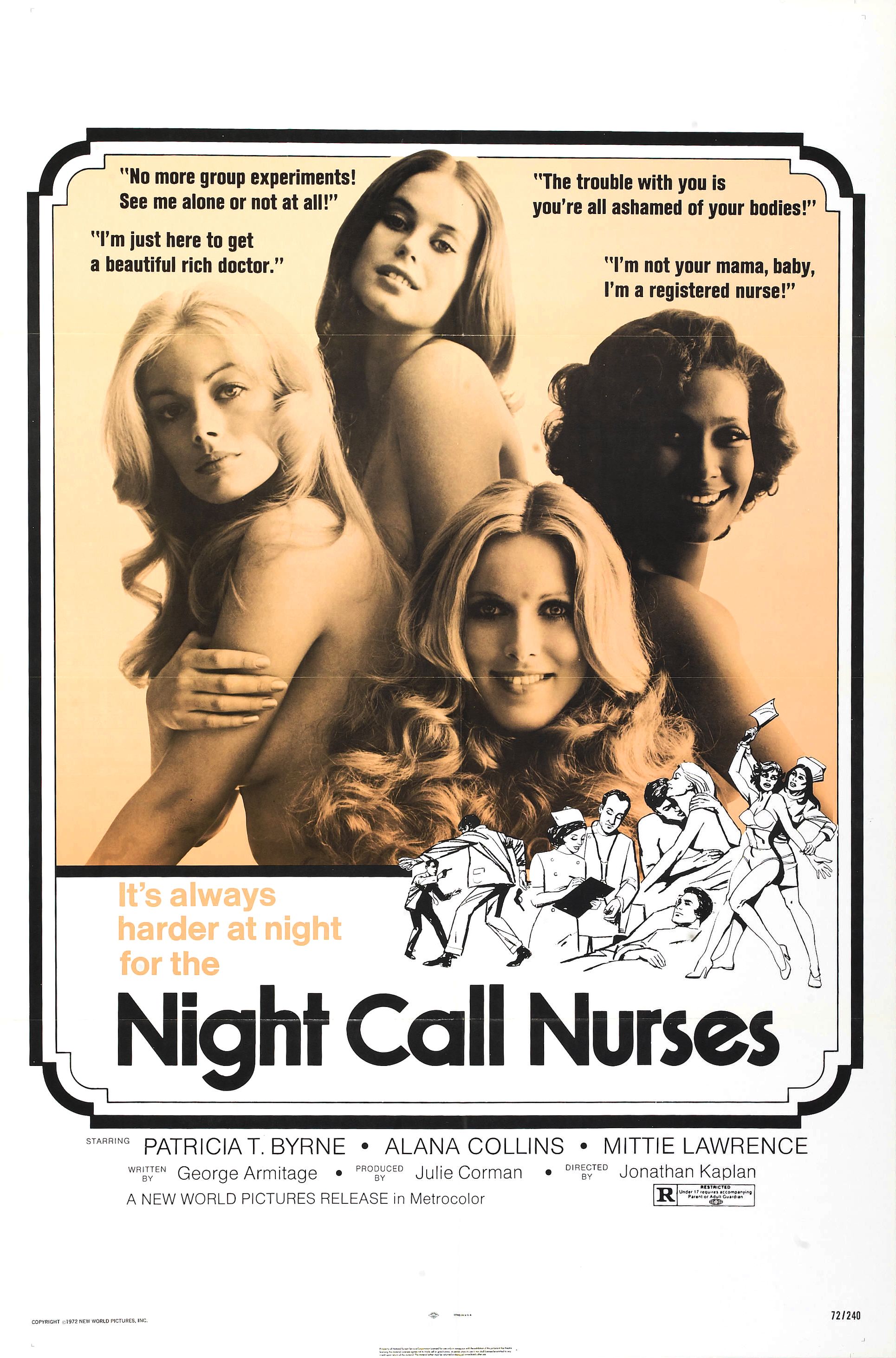
Barbara (Patty Byrne), Janis (Alana Stewart), and Sandra (Mittie Lawrence) are three young women starting out in the nursing field. The film analyzes their various and sometimes amusing predicaments while on the job as well as their sex lives.

The film moves at a decent pace, but seems disjointed with poor story and character progression. Things are thrown in just to keep it moving, but with no real connection to anything else. Amateurish production values permeate and Jonathan Kaplan’s directorial debut is for the most part best forgotten. The only mildly interesting scene involved a therapy group where all the members strip off their clothes as well as having one of the members think that she is being driven insane by the group’s instructor.

The attempts at lightheartedness and humor are strained and flat. Only one brief exchange during the entire duration managed to elicit a small chuckle from myself and it goes like this:

Male Patient: (While looking at the nurse’s nametag on her uniform) Is Janis your name, or the name of your left titty?

Janis: (While giggling) Janis is my name. Irene is the name of my left tiitty.

The acting is quite poor with everyone phoning in their parts. Alana Stewart who was at one time the wife of actor George Hamilton and later rock legend Rod Stewart as well as the mother of Ashley Hamilton and Kimberly Stewart mouths her lines in a lifeless and emotionless fashion that resembles her beautiful but blank blue eyes. However, recent pics of her are amazing as she looks like she hasn’t aged a day since she has done this and I’ll give her credit there. Despite only doing one other picture besides this one Byrne is the one that gives the strongest performance particularly her effective crying, which seems real.

There is enough nudity to satisfy the voyeurs including the opening sequence where one of the mentally-ill patients’ strips off her clothes and then jumps off the roof of a building. However, you basically only see their breasts and the sex is handled in such a mechanical and unimaginative way that it fails to titillate at all.

The Shout Factory DVD issue has a great picture quality much like Private Duty Nurses, but the sound is a problem. There is a background rumbling heard throughout that resembles talking to someone on the phone with wind blowing through the receiver, or speaking to someone in the car with the windows down and wind blowing in.

My Rating: 2 out of 10

Released: June 10, 1972

Runtime: 1Hour 14Minutes

Rated R

Director: Jonathan Kaplan

Studio: New World Pictures

Available: DVD (Roger Corman’s Nurses Collection) 

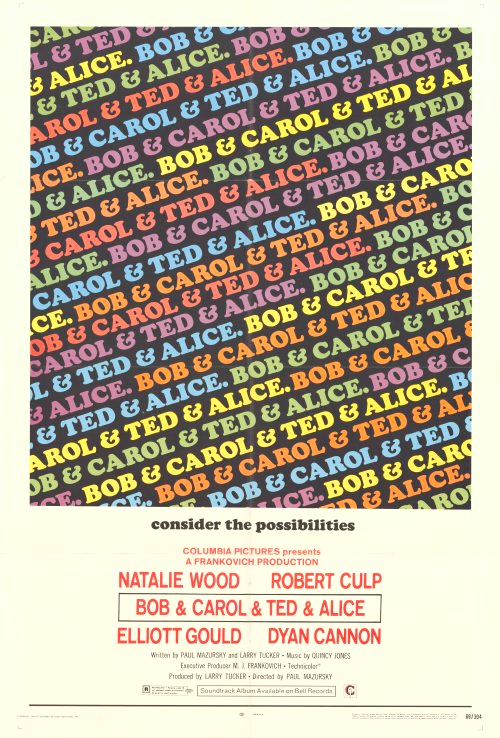
Bob & Carol & Ted & Alice (1969)

bob and ted and carol and alice 2

By Richard Winters

My Rating: 7 out of 10

4-Word Review: 60’s style mate swapping.

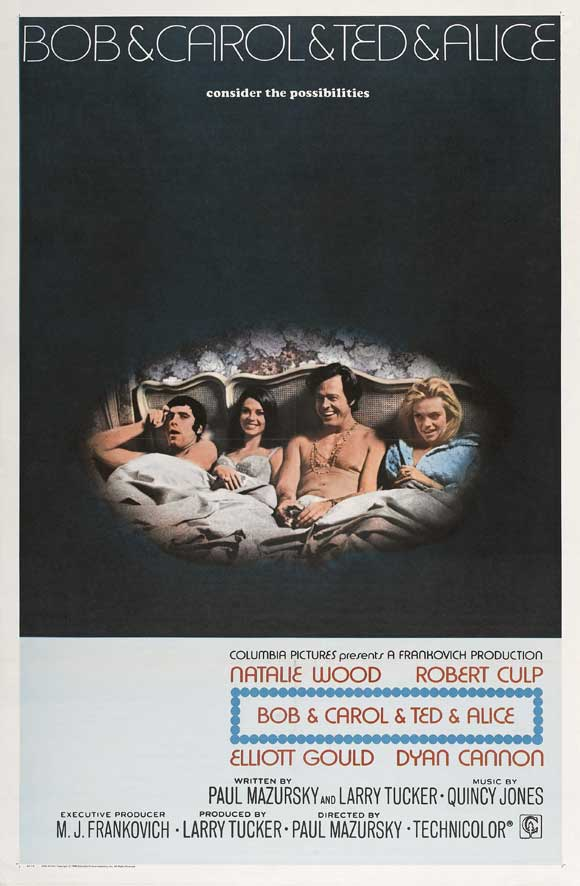
Bob and Carol Saunders (Robert Culp, Natalie Wood) attend a group therapy session at a remote cabin location. There they encounter other couples who learn to become open with their feelings and sexuality. When they return home they find that their friends Ted and Alice (Elliot Gould, Dyan Cannon) are too repressed and need to open up more with their true selves. At first the other couple is reluctant, but after spending more time with Bob and Carol and adjusting to their new way of thinking, which includes allowing their spouse to have sex with other partners they slowly come around and eventually all four have sex together.

Paul Mazursky makes a splendid directorial debut. During the late sixties most filmmakers were trying to reflect the times by making movies that featured quick edits, zany plots, and surreal elements, but Mazursky slows it all down keeping the humor on a subtle level and making great use of silence. The envelope pushing subject matter is handled in refreshingly non-judgmental way. Some films from the era would take on some of the more racy topics of the day, but still feel the need to put in a ‘moral center’, but fortunately here that is not the case. Mazursky shows a respect for his adult audience by keeping the entire thing on an uncompromised sophisticated level. When I first saw the film over 20 years ago I felt it was too talky, but upon second viewing that opinion has mellowed and I now find the long takes gives it a nice improvisational feel.

One of the best moments of the film is the very beginning where we see an aerial shot of the remote cabin where the group encounter takes place as well as the open nudity by the participants and Bob and Carol driving up through the scenic locale on a curving road. Quincy Jones’s booming orchestral score adds to the already striking ambience. The scenes from the encounter group is handled almost in a documentary style analyzing not so much what it talked about, but instead on the different emotional reactions that the members have throughout it. The scene where Bob admits to Carol that he had an affair and instead of being angered by it she accepts it, which turns them on enough that they end up making love on their bathroom floor is funny as is the opposite reaction that Ted and Alice have when Carol tells them the ‘good news’.  I also found Alice’s therapy session to be fascinating namely because it seemed quite authentic and was done by an actual licensed psychiatrist (Donald F. Muhich) who at the time was Mazursky real life therapist.

Wood gives a strong and amazing performance in one of her best and unfairly neglected roles. Having seen interviews that she gave I was aware that she was raised in a sheltered environment, so it is interesting seeing her in a part of a liberated woman embracing the new modern morality. The wild look in her eyes sizzles from the screen and she looks awesome in a bikini a well.

Cannon is good as Wood’s polar opposite a woman who is reluctant to let go of the values of her more repressed era and yet still curious about trying. Having the character evolve as the film progresses makes it  interesting.

The two male leads are okay, but the underpants that Gould wears during the final scene where they undress are overly big to the point of almost looking like adult diapers.

The only real complaint that I have with the film is that the famous scene where the four characters all go to bed together doesn’t happen until the very end, which could prove frustrating to some viewers since that scene is the film’s most famous and one that was used for its promotion. I had no problem with the film showing the various events that led up to it happening as it was essential and intelligently done, but it does not show what happens to the characters after they do it. I felt a better structure for the film would have been to have the scene where they go to bed together happen right away at the beginning and then spend the rest of the film cutting back and forth showing what lead up to it as well as scenes showing how the characters went on with their lives and how they dealt with each other afterwards.

This is a great film because it shows the 60’s experience from a middle-aged person’s perspective and the confusion that it created. People observing the new free love generation from the outside looking  in still straddled with the more repressive values of the past and unsure about how or even if they should jump in.

bob and ted and carol and alice

My Rating: 7 out of 10

Released: September 17, 1969

Runtime: 1Hour 45Minutes

Rated M (Later changed to R)

Director: Paul Mazursky

Studio: Columbia Pictures

Available: VHS, DVD, Amazon Instant Video

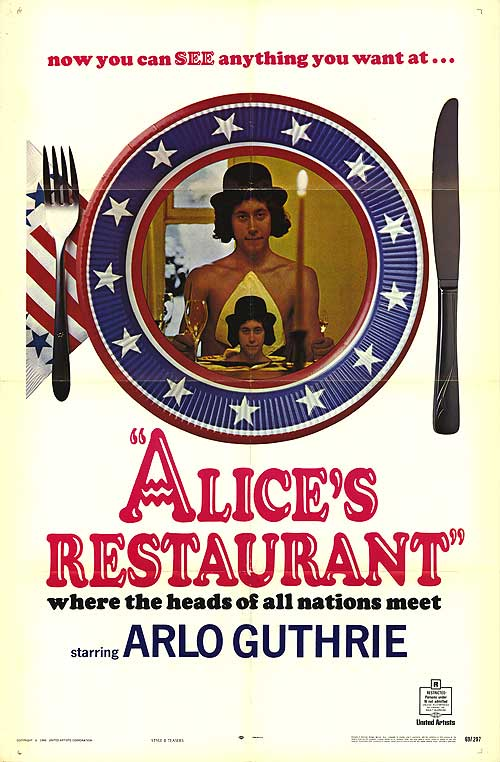
Alice’s Restaurant (1969)

alices resturaunt 2

By Richard Winters

My Rating: 7 out of 10

4-Word Review: Nobody likes the draft.

Attempt at making a movie out of Arlo Guthrie’s famous 18-minute song, which in itself was based on actual events succeeds for the most part although it seems to be biting off little more than it can chew. Pat Quinn plays Alice a middle-aged woman who along with her husband Ray (James Broderick) buys a church and turns it into a hippie retreat as well as a restaurant. Arlo plays himself and a friend of the couple who helps them in their endeavor. Things go well for a while, but then infighting, the draft, the death of some of the members, and basic overall disorganization do it all in.

Although Guthrie’s song has a bouncy, upbeat, and humorous quality to it the movie works in an opposite fashion. There are a lot of long dramatic takes with a tone that is overall downbeat and depressing. To some extent it succeeds at giving the viewer a vivid look at the late 60’s experience, but compared to the song it seems to be a bit of a letdown. However, there are still some great moments that will connect with you on a purely emotional level. One of them is seeing legendary folk singer Pete Seeger and Arlo playing a song for Arlo’s bedridden father Woody (Joseph Boley) and another includes the sights and sounds of an outdoor wintry funeral for one of their troubled friends.

There are some good comedic moments, but they all come pretty much in the second half making the film seem a bit disjointed and almost like two films rolled into one. The best moments in this area include Arlo’s attempts at dumping out garbage, which features a lot of good quick edits as well as the actual Officer William Obanhein mentioned in the song. Arlo’s army physical is also quite funny especially his experiences in the ‘Group W’ room, which also has an early appearance by character actor M. Emmet Walsh who talks so fast that he becomes incoherent.

The idea of casting Arlo in the lead works to some extent. Obviously the presence in his own story makes it more authentic, but he also seems too detached and shows little if any emotional range. He also looks incredibly young almost like he is only 14.

It is Broderick who comes off best and this is easily his best performance of his otherwise sporadic career. He seems light years away from the more conservative, fatherly figure that he played in the 70’s TV-show ‘Family’ and the fact that the character here is a middle-aged man trying to submerge himself with the youth movement while displaying obvious frailties in the process makes him fascinating to watch and help give the film an added layer.

When I first saw this film years ago I came away feeling that it was too downbeat and disjointed, but upon second viewing I have a greater appreciation for it. It seems now more prophetic and forewarning to the beginning of the end of the hippie movement and how their carefree youthful ideals simply weren’t going to survive amidst the harsh, practical realities of the world that it was in. The long, continuous shot of Alice’s sad, forlorn expression seen at the very end seems to be conveying this and thus makes this movie less of a relic and more perceptive than most people may realize.

My Rating: 7 out of 10

Released: August 20, 1969

Runtime: 1Hour 51Minutes

Rated R

Director: Arthur Penn

Studio: United Artists

Available: VHS, DVD, Amazon Instant Video

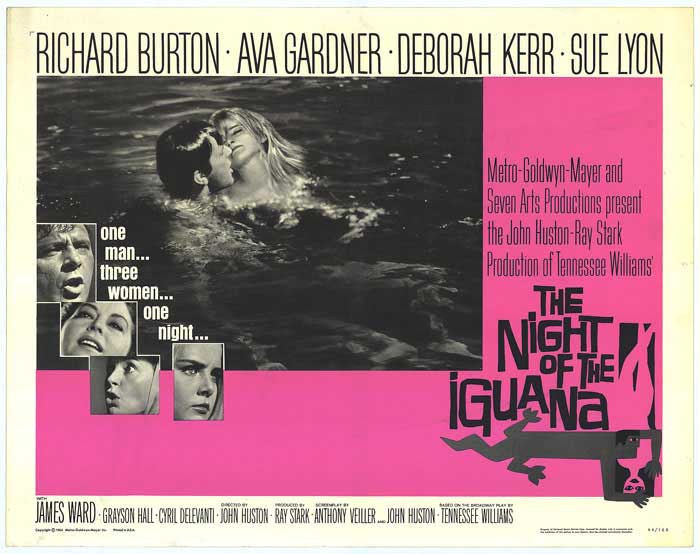
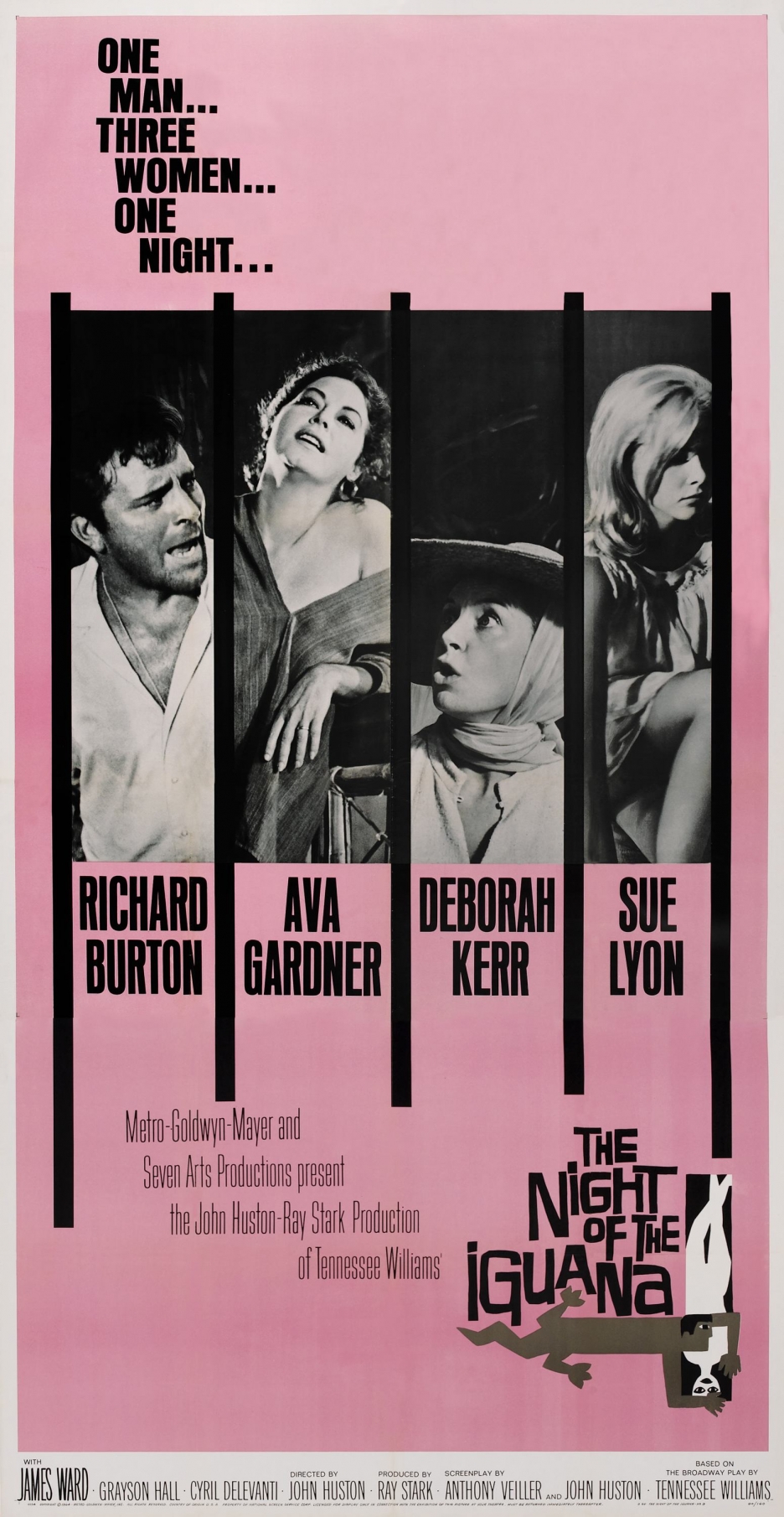
The Night of the Iguana (1964)

night of the iguana 2

By Richard Winters

My Rating: 6 out of 10

4-Word Review: Flawed clergyman loves women.

Lawrence Shannon (Richard Burton) loses his job as a clergyman when rumors surface of indiscretions he had with a young female parishioner, which pushes him to preach a ranting sermon at the pulpit that eventually drives all the members of the congregation out of the building. He then gets a job as a tour guide in Mexico and has the chore of leading a bus load of middle-aged women around the country. Charlotte (Sue Lyon) is a young nymph who takes a liking to Lawrence much to the chagrin of her over-protective chaperon Judith Fellowes (Grayson Hall). When Charlotte is caught in Lawrence’s bedroom late at night Ms. Fellowes promises that she will have it reported and get him fired. Unable to handle a another potential job loss Lawrence takes the bus load of women to an isolated seaside hotel run by Maxine (Ava Gardner) an old friend of his. He hopes that by somehow trapping them there he will be able to convince Ms. Fellowes to drop the charges, but along the way he meets Hannah (Deborah Kerr) who he starts to fall in-love with.

Unlike most of Tennesse William’s other plays this one, at least the first half, is full of energy and comical nuance. I found the group of ladies and Lawrence’s exasperated dealings with them to be quite amusing and the film moves along at an engaging pace. The second half though bogs down with more of William’s signature brooding drama that ends up hurting the flow. In many ways this film seems like two movies in one and the difference in tone and pace never gels. Despite a good nighttime conversation between Kerr and Burton I kept hoping the ladies and Ms. Fellowes would come back and felt the film was weaker without them.

Legendary director John Huston hits most of the right buttons here although it is not his best work. I was surprised and impressed to learn that Maxine’s hotel was built specifically for the production in an otherwise deserted region of the country. The building had an authentic old look and helped give the film added style and personality. I had mixed feelings with the black and white photography. On one had it helps bring out the dark recesses of its flawed characters and accentuate the moodiness of William’s script, but it also takes away from the exotic beauty of the locale.

Burton is good as usual and playing the part of an emotionally fractured, alcoholic character seems right up his alley. Gardner is great as the brassy Maxine and the scene of her making out with her two young, shirtless, maraca playing male assistants along the beach late at night is genuinely steamy. Kerr is in fine form as well and her more restrained demeanor makes a nice contrast to Gardner’s.

Lyon’s acting isn’t quite up to her costars and she seems particularly out of her league during her scene with Burton, but in the looks department she is unmatched. She is more filled-out and mature than in Lolita and in many ways even hotter. The scene of close-up shots of her moving her hips to a tune at a Mexican bar may excite some of the male viewers.

The under-rated Hall is excellent in her role as the heavy. Her craggy face and personality are perfect for the part and it rightly got her a supporting actress nomination.

In the final analysis this is not a bad version of Tennessee William’s material, but not a great one either.

night of the iguana 1

My Rating: 6 out of 10

Released: August 6, 1964

Runtime: 1Hour 58Minutes

Not Rated

Director: John Huston

Studio: MGM

Available: VHS, DVD, Amazon Instant Video

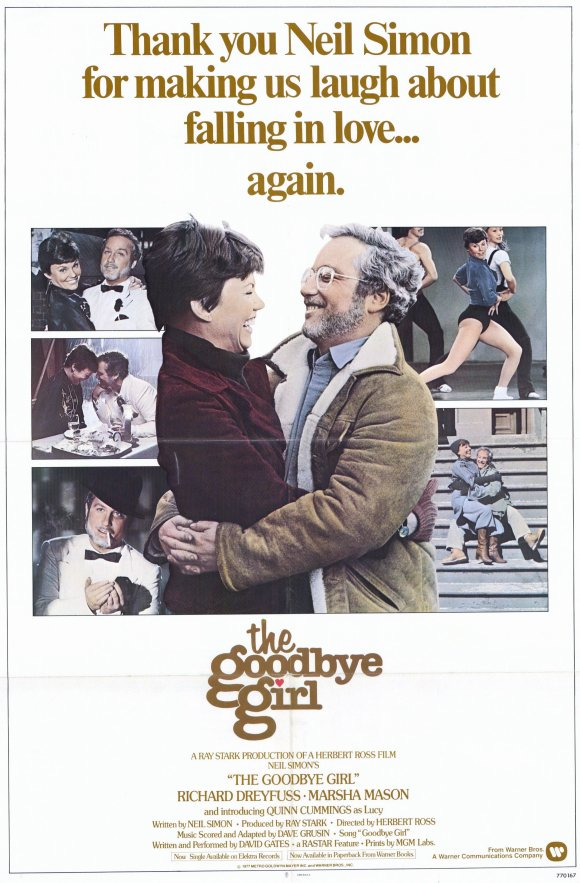
The Goodbye Girl (1977)

the goodbye girl 2

By Richard Winters

My Rating: 7 out of 10

4-Word Review: Goodbye doesn’t mean forever.

Paula (Marsha Mason) is a ‘dumped on’ single parent, whose live-in boyfriend has just left her, and now must contend with Elliot (Richard Dreyfuss) a rather obnoxious man who is subletting the apartment. Despite long odds the two end up ‘falling in love’ in this rather obvious, mechanical love story that is finely tuned to the female, especially those from that era. (The macho guy viewer will have run out of the room long before David Gates even has a chance to sing his soft rock title tune).

This was made when writer Neil Simon was still considered in vogue, although his patented one-liners are sparse and when they do come they are more cute than funny. This in some ways seems a retooling of his earlier ‘lovers in a New York apartment’ film Barefoot in the Park. Only here it’s a little rougher around the edges so it can appeal to a ‘hip’ audience. No clean-cut, cutesy newlyweds instead these people are more jaded to modern sensibilities and will routinely live with their partner even when they are not quite yet divorced.

If you can get past a rather strong late 70’s feel (gotta love that Fonzi poster hanging in the bedroom) then the characters remain solid and believable. No beautiful models living lavish and exciting lifestyles. These are average people just trying to make ends meet and find a little happiness along the way. It also doesn’t just show them when they are together, but also when they are out and alone in the ‘real world’, which allows us a rounded and sympathetic view of them.

Dreyfuss basically plays his usual opinionated, abrasive self. Whether the viewer sees the intended charm underneath is completely up to their own personal tolerance. His performance is good, but not exactly screaming for an Academy Award, which he won anyway, but then poked fun of it when he later hosted ‘Saturday Night Live’ on May 13, 1978.

Mason, who at the time was married to Simon, is the one who should have won it. Her performance is both believable and fluid. You truly see a lot of everyday people in her characterization and she clearly carries the film.

Quinn Cummings, as Paula’s daughter, is cute without being too precocious. Her sensibilities help compensate for the sometimes emotional immaturity of her adult counterparts. Though it really looks and seems dumb to have a ten year old still smearing food on the edges of her mouth and wearing a big napkin around her neck while eating.

Although I don’t always have a great eye for continuity errors this one has a doozy. When Dreyfuss comes home one night drunk he knocks over a table with a lot of stuff on it. He sticks his head out the window to shout something into the night air and then two seconds later comes back to where the table is standing and everything on it is neatly set.

My Rating: 7 out of 10

Released: November 30, 1977

Runtime: 1Hour 51Minutes

Rated PG

Director: Herbert Ross

Studio: Warner Brothers

Available: VHS, DVD, Amazon Instant Video

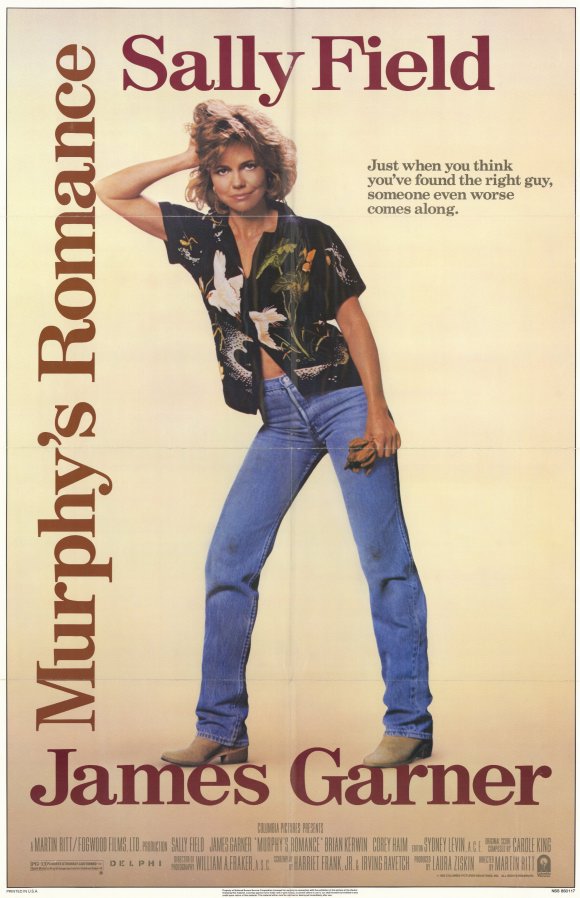
Murphy’s Romance (1985)

murphys romance 2

By Richard Winters

My Rating: 6 out of 10

4-Word Review: Love blossoms in desert.

Emma (Sally Field) is a divorced mother with teenage son Jake (Corey Haim) who moves to a small Arizona town and try to singlehandedly start up a horse ranch. Once there she meets Murphy (James Garner) an older gentleman who she starts to have feelings for only to have her ex-husband Bobby Jack (Brian Kerwin) show up and try to rekindle their relationship.

This is a very leisurely paced romantic movie that doesn’t add anything new to the genre, but does end up going down like a cold drink on a hot afternoon. The dialogue is snappy and the wrap-up quite pleasing. It keeps things on a realistic level by showing Emma struggling with a lot of chores and financial constraints and thus making it perfectly relatable to those who have moved and tried to start over. It is also nice to see Haim when he was still a cute kid and before he became the 80’s poster boy for trouble child stars. Unlike other romantic comedies there is no one moment that is particularly funny or engaging however the scene involving Bobby Jack and Murphy fighting over Emma during a country dance party is amusing.

On the negative side it tends to be too formulaic. It only gets interesting when the ex-husband arrives, but then the film plays this scenario out in much too obvious a fashion. It would have been better had the ex-husband not been such a prototypical jerk and there had been more conflict and intrigue as to who she would end up choosing.

There is also a scene where Bobby Jack tackles Emma into a mound of hay in an effort to rekindle some of their old passion, but Emma ends up becoming allergic to the hay. Although this was clearly done for obvious laughs it doesn’t seem too believable. This is a woman, who by her own admission, has been working with hay and horses since she was child so this affliction would have become apparent long before then or at least during the several hours that it is shown where they are shoveling it into the stalls. It is possible that she was only faking this reaction in order to get away from him, but if that were the case then it should have been made more clear to the viewer

This is tailor made for the romantic diehards and they should enjoy it even though others may find it only passable.

My Rating: 6 out of 10

Released:  December 25, 1985

Runtime:  1Hour 47Minutes

Rated PG-13

Director: Martin Ritt

Studio: Columbia

Available: VHS, D VD, Amazon Instant Video

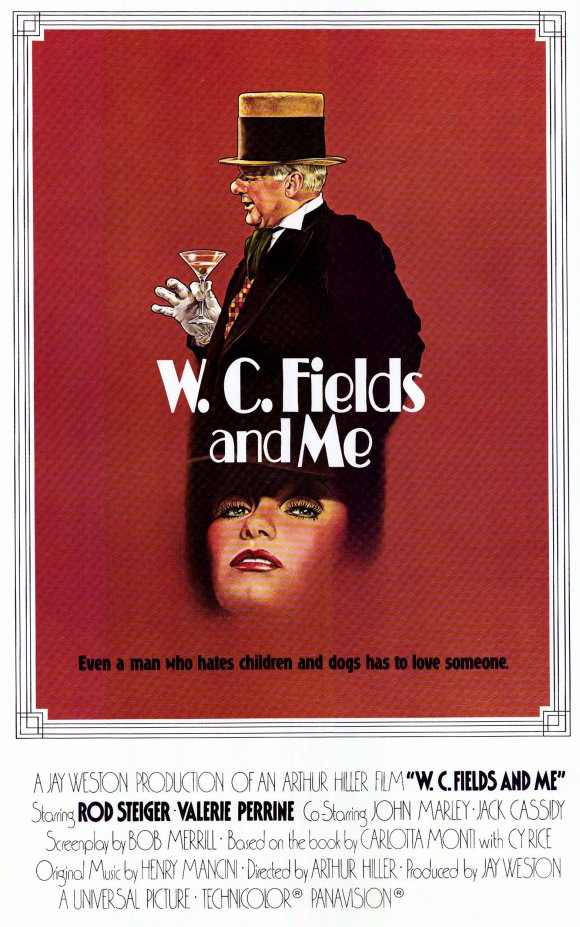
W. C. Fields and Me (1976)

W. C. Fields and me

By Richard Winters

My Rating: 6 out of 10

4-Word Review: Fields had a girlfriend.

Based on the memoirs from Carlotta Monti who was W.C. Field’s (Rod Steiger) companion for 14 years this film looks at their relationship as well as W.C.’s alcoholism and difficult personality.

This biography is highly romanticized and very light on the details. Apparently only one scene from the book is actually used in the movie. If one watches this in hopes of learning more about Field’s the man they will be disappointed. The tone seems similar to Oliver Stone’s The Doors where the intent is more on perpetuating the myth of its subject instead of tearing it down and showing the complete person. Just about everyone is familiar with Field’s drinking and cantankerous behavior, so having the film dwell exclusively in this area for the entire time is not interesting, or captivating.

The story would have been better served if it had been a complete bio beginning with Fields life as a child and then going all the way through to his death. Apparently he was born to an alcoholic father who beat him forcing Fields to run away from home at the age of 11 and live in a hole in the ground where he became dependent on stolen food and clothing for survival. He was in many fights and in and out of jail for most of his youth. Showing this could have been quite revealing, but instead the film skips past all of it and starts instead with Fields already in vaudeville and recreating a lot of corny comedy routines before having him drive off to Hollywood where his ascent to stardom seems much too easy and superficial.

Things improve during the second act when he begins his love-hate relationship with Carlotta (Valerie Perrine). Part of the reason this works is because Perrine is excellent. Her down to earth sensibilities really help balance the flamboyant ego’s around her and fit the character well. She is the one, not Steiger, who carries the movie and it was worthy of an Oscar nomination.

Steiger thought for sure that he would nab his second Oscar for his portrayal here, but instead didn’t even get nominated. His mimicking of Fields voice comes off as too rehearsed and effected. At times it gets annoying and just makes one want to watch a movie with the real Fields instead. His dialogue is too cutesy using lines borrowed from many of W.C.’s famous jokes and punch-lines. As expected he does induce the character with his famous Steigerisms and manages to not make it a complete misfire that it otherwise is. The scene, near the end, where Fields meets his now grown son that he hadn’t seen since he was three is his best moment.

Jack Cassidy is great in support as actor John Barrymore. The scene where he dies and his friends prop his dead body up into a chair and have him holding a liquor glass is amusing. Dwarf actor Billy Barty is good as Ludwig one of Field’s long-time friends. Some of the scenes the two share together are actually quite touching.

The film does a commendable job of recreating the period atmosphere. The music has a nice soothing quality to it and on the charm level it scores a bullseye. Despite my reluctance I found myself entertained by it, but as a biography it is flimsy, fictional and irrelevant.

My Rating: 6 out of 10

Released: March 31, 1976

Runtime: 1Hour 51Minutes

Rated PG

Director: Arthur Hiller

Studio: Universal

Available: Amazon Instant Video