Category Archives: Comedy

Way…Way Out (1966)

way way out

By Richard Winters

My Rating: 3 out of 10

4-Word Review: Living on the moon.

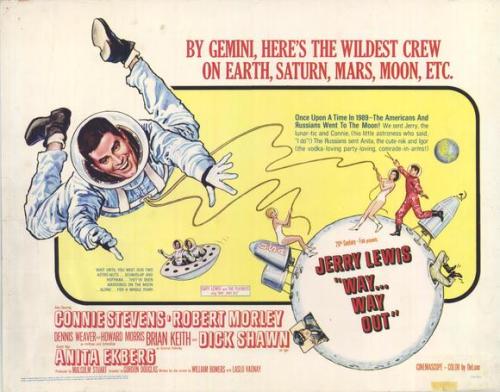
The year is 1989 and both the Russians and Americans have set-up bases on the moon. Each base has 2-people living in them. For the Russians things go smoothly mainly because they have a man and a woman (Dick Shawn, Anita Ekberg) cohabitating while the Americans have two men (Dennis Weaver, Howard Morris) who quickly go crazy because there are no women around for sex. NASA decides to replace the two men with a man and woman like the Russians have, but insist that unlike the Russians the American couple must be married. Pete (Jerry Lewis) who is a long time employee of the space agency is chosen and his female counterpart is fellow astronaut Eileen (Connie Stevens). The two had never met and are forced to accelerate their courtship and eventual marriage in a matter of 3 days before getting rocketed up into orbit.

To some degree this is an interesting idea and the first 15 minutes or so allows for some comic intrigue, but the filmmakers blow it by backing off of their novel approach and turning the whole thing into just another contrived romance. Stevens may be attractive, but her acting is limited and her presence adds no other added element to the proceedings besides being ‘eye candy’. The film would’ve been funnier had Pete been forced to go up with agency’s second choice, which was Esther (Bobo Lewis) who was a more aggressive, less attractive woman who could’ve added humorous conflicts. The spats between Pete and Eileen is banal and the second half devolves into one long drunken party between the American and Russian couple that isn’t funny and more like filler  put in when the writers ran out of ideas from their original concept.

From a sci-fi angle it is implausible. The rocket ship takes only a few minutes to get from earth to the moon and when they get there the lack of gravity is never addressed and they are able to walk around normally except for the few times when they get into fights, which sends one person flying off into the air when punched by the other. The earth that is shown in the sky has no clouds even though clouds can always be seen from just about every satellite shot taken of earth from space. The film also ruins the most intriguing element, which is seeing how they might’ve predicted things would look like in the ‘80’s from a ‘60’s perspective by having a narrator state right away that ‘little has changed’ in the past 23 years and therefore making no attempt to show anything from a futuristic viewpoint.

Lewis is amazingly restrained and doesn’t end up ruining things with his overacting, which instead gets done by Shawn. Weaver has a few good moments as the stressed out astronaut slowly going nutty as well as Brian Keith as a gruff American general, but Robert Morley is the funniest as the over-worked and over-burdened head of the space program.

Since one must set the bar very low from the beginning with any Lewis comedy this manages to be tolerable despite being more benign than it needed to be.

My Rating: 3 out of 10

Released: October 26, 1966

Runtime: 1Hour 41Minutes

Not Rated

Director: Gordon Douglas

Studio: 20th Century Fox

Available: DVD (Region 2), Amazon Instant Video

The Princess Bride (1987)

princess bride 1

By Richard Winters

My Rating: 7 out of 10

4-Word Review: Grandson likes bedtime story.

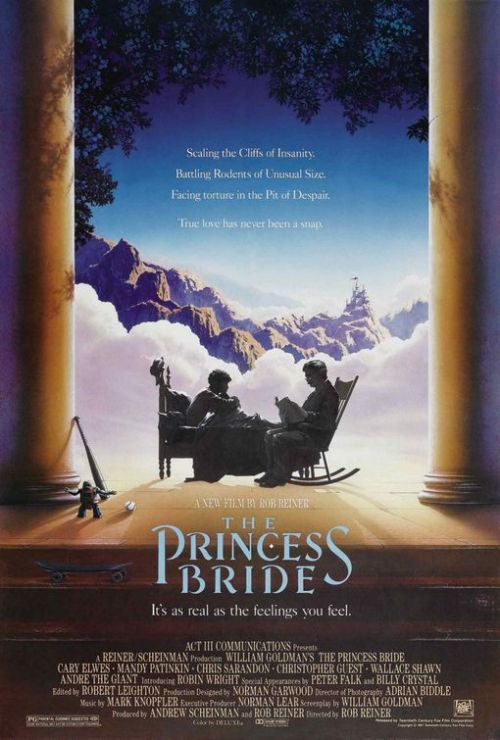
Based on the 1973 William Goldman novel, who also wrote the screenplay, a grandfather (Peter Falk) arrives to read to his sick grandson (Fred Savage) a fairytale. Initially the grandson is more interested in playing video games, but soon finds himself enraptured with the story despite his initial reluctance. The tale involves a country girl named Buttercup (Robin Wright) who falls in love with a farmhand named Westley (Cary Elwes). When Buttercup mistakenly thinks that Westley has been killed by some pirates she agrees to marry Prince Humperdinck (Chris Sarandon) only to end up getting kidnapped before her wedding and saved by Westley who was never dead to begin with. The two then must fight off the evil Prince who still insists on marry Buttercup and doing away with Westley.

The film, which was directed by Rob Reiner and produced by his former ‘All in the Family’ creator Norman Lear, is engaging from beginning to end and filled with endlessly funny dialogue and exciting adventures that remain pleasantly amusing throughout. My favorite moment is seeing a completely unrecognizable Billy Crystal hamming it up as an old man magician who tries to revive Westley while sounding like a comedian from vaudeville.

The special effects are impressive especially the shot showing Buttercup’s three kidnappers climbing a rope up a steep mountain while being followed close behind by Westley. To me though the best part is when Westley gets attacked by what appears to be a giant rodent that, with the exception of his fake looking fur, looks amazingly real and not like a stuntman in a body suit or a computerized image.

The performers are well cast with my favorite being former wrestler Andre the Giant who steals it despite having no acting experience and at times difficulty enunciating his words. The only negative is Christopher Guest as a six fingered man who supposedly attacked the Mandy Patinkin character when he was a child, but now that Patinkin has grown he faces Guest again even though Guest looks to be practically his same age and not someone who should be significantly older.

The story is basic and lacks the grandiose and dark quality that many of the classic Grimm fairytales possess. The banter between the grandson and Grandfather is fun and I wished it had cut back-and-forth between the two and the story more often than it does. The context is simple and straight forward and its ‘message’ of teaching kids to learn to enjoy reading is a bit too obvious, but overall as non-think escapism it scores a bullseye and through the years has managed to acquire a strong cult following.

My Rating: 7 out of 10

Released: September 25, 1987

Runtime: 1Hour 38Minutes

Rated PG

Director: Rob Reiner

Studio: 20th Century Fox

Available: VHS, DVD, Blu-ray, Amazon Instant Video, YouTube


License to Drive (1988)

license to drive

By Richard Winters

My Rating: 5 out of 10

4-Word Review: Driving without a license.

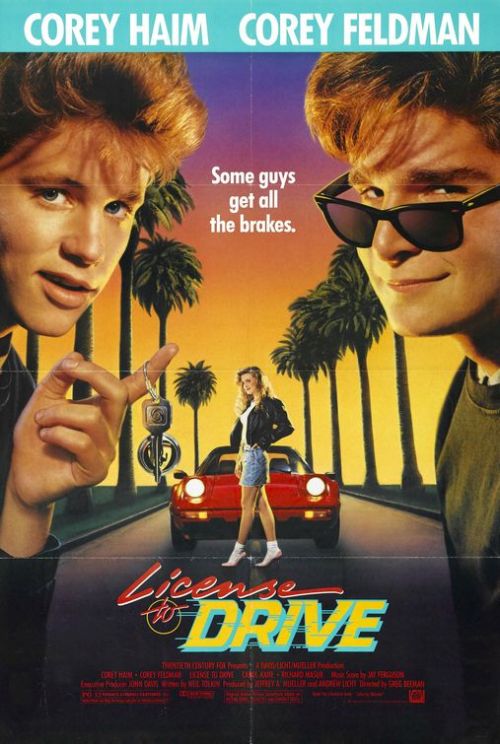
Les Anderson (Corey Haim) is in a jam. He has flunked the written portion of his driving exam and therefore has his license denied, but a really hot girl by the name of Mercedes Lane (Heather Graham) wants to go out with him and he needs some wheels to get there. So, after his parents (Richard Masur, Carol Kane) have fallen asleep he decides to ‘borrow’ his grandfather’s car and chaos results, which forces him to return home with the vehicle in less than pristine condition.

This film was quite controversial when it was first released as it contains a scene involving an intoxicated man (Henry Allan Miller) getting behind the wheel of Les’s car and driving it, which critics felt was ‘promoting’ drunk driving, or at the very least making light of it. To me the biggest problem with the segment is the fact that the driver gets into the car with the keys somehow in the ignition even though Les and his friends are in the back of the car using those very same keys to open up the trunk, so unless they had two sets of keys, which is never stated, it then flunks the logic test. I also thought the scene where Les tries to jump from one speeding car to another while out on the freeway was just as dangerous and more hair raising than funny.

Haim in my opinion is the best thing about the film. I know he got the reputation of being a Hollywood ‘bad boy’, but the kid does have a certain appeal. This was his second pairing with Corey Feldman, who I didn’t like as much as he came off more as a crude ‘80s teen caricature. This also marks Heather Graham’s official film debut since her uncredited appearance in Mrs. Soffel four years earlier did not have any speaking lines and here she is terrific. I also found Masur and Kane to be quite appealing as the parents who resemble real human beings and not like the grown-ups in some ‘80’s teen movies where they are portrayed as being oppressive, overbearing, out-of-touch jerks.

The humor though is only mildly amusing and how the Les character could’ve missed the answers on the test is hard to imagine as they relied on basic common sense that just about anyone could’ve answered. The film also fails to have the same whimsical quality as Adventures in Babysitting which came out around the same time and had the same adventurous night-on-the-town concept.

If you’re looking for an amiable time filler for a slow evening than this may do the trick, but overall it’s just an innocuous ‘80’s teen programmer at best.

My Rating: 5 out of 10

Released: July 6, 1988

Runtime: 1Hour 29Minutes

Rated PG-13

Director: Greg Beeman

Studio: 20th Century Fox

Available: VHS, DVD, Blu-ray, Amazon Instant Video

Promise Her Anything (1966)

promise her anything

By Richard Winters

My Rating: 6 out of 10

4-Word Review: Bachelor becomes a babysitter.

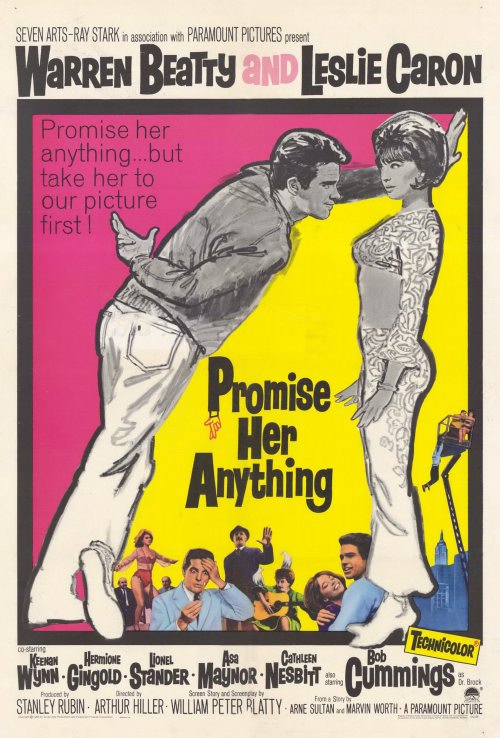
Harley (Warren Beatty) is a struggling filmmaker living alone in a rundown Greenwich Village apartment where he makes low-grade blue movies to pay the rent. Michele (Leslie Caron) moves into the apartment next door. She is a recently widowed mother who has Harley babysit her 2-year-old (Michael Bradley) while she romances the child psychologist (Robert Cummings) that she works for whom she feels will also make for a good father. The problem is that Harley falls for Michele and soon makes a play for her affections as well.

After recently reviewing other bachelor themed films from the ‘60s I felt this was a definite upgrade. Instead of portraying young single men living in plush pads and having cushy jobs this one shows a more realistic side with a character that struggles to make ends meet while also harboring a beatnik philosophy that young men of that time were starting to embrace. Arthur Hiller’s direction has shades of the offbeat and irreverent while Tom Jones’ singing gives it hipness.

I also enjoyed Beatty’s presence and felt this was one of his better comedies as the scenario takes full advantage of his detached, glib manner while also tapping into his notorious lady’s man image. The scenes where he talks about enjoying  the benefits of marriage, but without being married or expounding on the virtues of socialized medicine made the character seem downright ahead-of-his-time.

Cummings, in one of his last film appearances, is also fun and his stuffy, uptight ways makes for a great contrast to Beatty. Why someone who hates kids would ever decide to become a child psychologist makes little sense, but it’s still funny as is his banter with his more modern thinking mother (Cathleen Nesbitt).

Caron seemed miscast as she was already in her mid-30s at the time and an actress who was in her 20s and more Beatty’s age would’ve been a better fit. I also didn’t care for the character’s dated, old-school ways of thinking including the idea of marrying a man simply for the security that he could offer even if she didn’t love him or that children must have a father figure in their life or they will turn out ‘psychologically abnormal’ if raised only by a single parent. Her attempts at hiding the fact that she had a child until after the Cummings character had proposed to her and she’d securely ‘snared’ him is equally offensive.

The plot is paper thin and I’ll admit I watched this on my Amazon fire tablet and halfway in I accidently kicked the table it was sitting on and in my attempt to catch the tablet before it dropped to the ground I inadvertently jumped the film ahead by 20 minutes, but had no idea I had done so until it had ended. When I went back to review what I had missed I realized it hadn’t been much.

The undernourished script by William Peter Blatty has a few amusing bits, but nothing that’s laugh-out-loud funny. The climactic sequence in which Beatty tries to heroically save the child who’s trapped on a moving crane might’ve been more exciting had it not been so obviously done in front of blue screen.

My Rating: 6 out of 10

Released: February 22, 1966

Runtime: 1Hour 38Minutes

Not Rated

Director: Arthur Hiller

Studio: Paramount

Available: VHS, Amazon Instant Video, YouTube

Splash (1984)

splash 2

By Richard Winters

My Rating: 5 out of 10

4-Word Review: Man falls for mermaid.

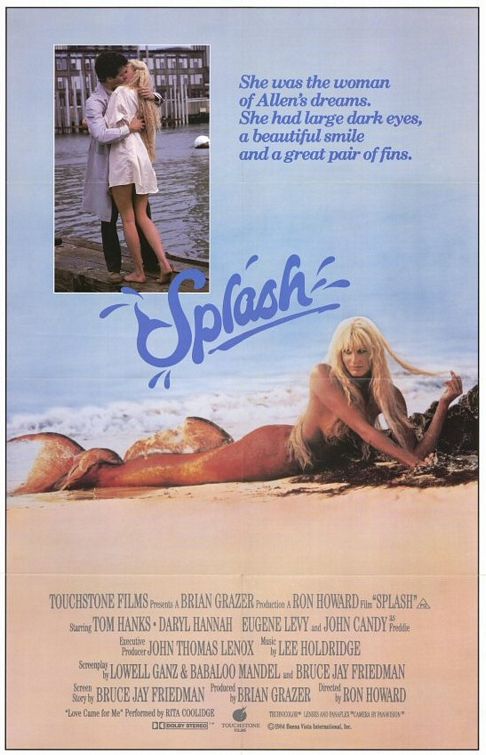
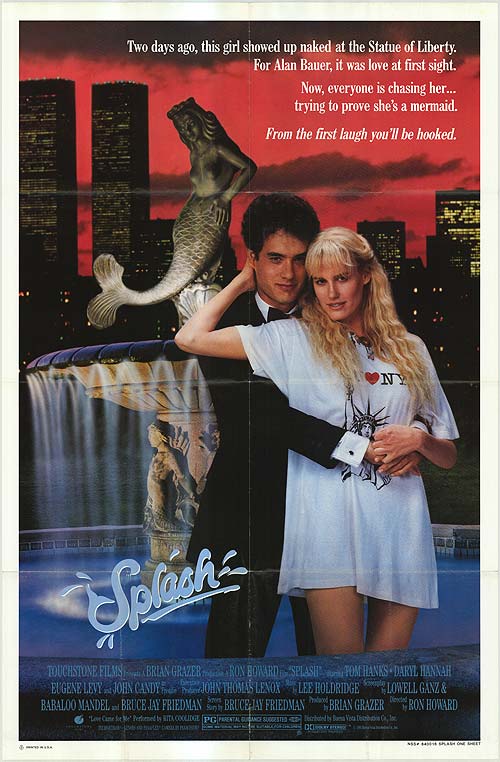
Allen (Tom Hanks) is stuck in a hapless job and a string of loveless relationships. After his last live-in girlfriend leaves him he becomes convinced that he will never find true love. Then on a whim he takes a trip to Cape Cod and goes out into the harbor in a small boat despite not being able to swim. When the engine conks out and he attempts to restart it he gets knocked into the water and his saved by a mysterious mermaid (Daryl Hannah). He returns to his New York home and mundane life only to find that the mermaid has sprouted legs and followed him. Allen doesn’t recognize the woman as the one who saved him, but he’s immediately smitten by her beauty nonetheless. They start up an awkward relationship, but when Allen proposes marriage she tells him she can’t as she has a dark secret, which is the fact that when she gets wet her legs turn into fins.

This was Ron Howard’s third foray behind the camera on a theatrical film and for the most part it’s a success. I enjoyed the mix of fantasy and surrealism and a love story that is cute, but not too cute. I loved the big city ambience including a scene involving classical street musicians and a visit to an outdoor ice skating rink. The climatic car chase through the downtown is funny especially when a group of soldiers manually overturn a taxi cab that is in their way.

Unfortunately the script, which is credited to four different writers, is full of major loopholes that to me ended up getting in the way of my enjoyment. I realize as a budding/struggling screenwriter that it is difficult to write a plot that is completely logical in every way and every story even the really good ones will usually have a few minor implausibility’s that one can overlook and forgive, but this one goes way beyond that.

For one thing I thought it was absurd that this mermaid who knew nothing of the English language when she came could somehow learn the language in one day simply by watching television. Yes, she may be able to pick up on some words, but to be able to learn their meanings and context is another story that just wouldn’t be possible for anyone to realistically grasp in such a short period of time. Besides I thought it was more interesting when she didn’t speak and it could’ve worked on that level alone. And while we’re at it who ended up paying for all those televisions in the department store that she destroys while in front of the sales staff when she states her name in such a high pitch that it explodes all of the screens?

I was also confused how the Eugene Levy character was able to track down the Hannah character and able to stalk her in his attempt to get her wet and expose her as a mermaid. He initially spots her under the ocean, but then later reads about her in a newspaper, but the article did not mention her name or whereabouts because at the time she hadn’t reconnected with Allen, so how would he know where to find her especially in the big, congested metropolis of New York?

I also had trouble with the scene where John Candy, who plays Allen’s brother, helps the Levy and Allen sneak the mermaid out of a science lab, but then ends up staying to take the blame while the others leave. The Candy character had no invested interest in the mermaid and came along only to help out, so why should he be the fall guy, or even agree to it?

Spoiler Alert!

There is also a scene where the mermaid buys Allen a giant water fountain and has it placed in his bedroom, which makes no sense because the doorway was clearly not big enough to get any of it through it. My biggest beef though is with the ending where the viewer learns that as long as Allen is with the mermaid he will be able to breathe underwater without any apparatus, which defies all laws of physics and seems thrown in to appease the hopelessly romantic masses who will buy into any contrived ‘happy ending’ no matter how utterly illogical. In some ways the idea that he couldn’t go with her and she would come back to visit him on occasion would’ve worked better because then they wouldn’t have to be with each other 24/7, which usually ends up being the cause of most break-ups anyways.

End of Spoiler Alert!

There is also the issue of how the mermaid manages to sprout human legs. Apparently there is a scene in the special edition DVD showing an old sea hag casting a spell on the mermaid, which allows her to have legs, but only for a short time. This scene was cut from the original release, which was a mistake as it was necessary to help explain the rest of the plot.

The movie does have its share of good points especially the casting of Hannah who seems born to play this role, but the truly great films do not require the viewer to overlook so many logic loopholes and unanswered questions in order to enjoy it.

splash 1

My Rating: 5 out of 10

Released: March 9, 1984

Runtime: 1Hour 51Minutes

Rated PG

Director: Ron Howard

Studio: Buena Vista

Available: VHS, DVD, Blu-ray, Amazon Instant Video, YouTube

Hello Again (1987)

hello again 4

By Richard Winters

My Rating: 3 out of 10

4-Word Review: Her life after death.

Lucy (Shelley Long) is married to Jason (Corbin Bernsen) a well-off plastic surgeon, but finds that she doesn’t fit in with his snobby clientele and feels out-of-place whenever she tries to hang out with them at dinner parties. She turns to her wacky friend Zelda (Judith Ivey) who dabbles in the occult, but her spells and magic do little until Lucy chokes on a chicken ball and Zelda is able to magically bring her back to life one year later. Now Lucy finds a new lease on things. Jason has gotten remarried to her former friend Kim (Sela Ward) and she uses this news to find a new love of her own and she’ll have to do it quickly because if she doesn’t find true love by the next full moon she’ll go right back to being dead again.

This is the second collaboration between director Frank Perry and writer Susan Isaacs and while their first effort Compromising Positions was just barely passable this one doesn’t even make it to that level. The script is unable to settle on any type of genre as it dabbles in drama, romance, comedy, social satire and fantasy, but ends up being only shallow nonsense in the end. A few of the tangents that it takes has potential to be interesting, but then it doesn’t go far enough with it. The comedy is light and inconsistent with the funniest moment being the one that was shown in its trailer where Lucy comes back to life and finds her shocked husband and friend in bed together and after that there’s very little else that’s even mildly amusing.

The fantasy elements are poorly thought out and leave a lot of unanswered questions. The climactic showdown between Lucy and Kim is flat and the caricatures of the rich and snobby crowd are clichéd to the extreme. I also didn’t find the scene where she chokes on a chicken ball to be a laughing matter as according to government statistics over 3,000 people in this country choke to death each year and if they really wanted to create some sort of goofy death it should’ve been something much more over-the-top.

Long isn’t leading lady material. Her image is so ingrained with the uppity and prim Diane Chambers persona from ‘Cheers’ that having her portray someone who is kind and humble comes off as insincere and phony and her attempts at being a comical klutz is annoying and completely unfunny.

This was Perry’s final directorial effort. He burst onto the film scene in the ‘60s and showed flashes of brilliance and new age vision, but his career declined markedly once he divorced from his screenwriter wife Eleanor and the stuff he did afterwards was barely even worth a look. He eventually was diagnosed with cancer and spent the last years of his life battling the disease and in 1995 even made a documentary about his fight called On the Bridge, which was far more compelling than this tripe.

My Rating: 3 out of 10

Released: November 6, 1987

Runtime: 1Hour 36Minutes

Rated PG

Director: Frank Perry

Studio: Buena Vista Pictures

Available: VHS, DVD, Amazon Instant Video, YouTube

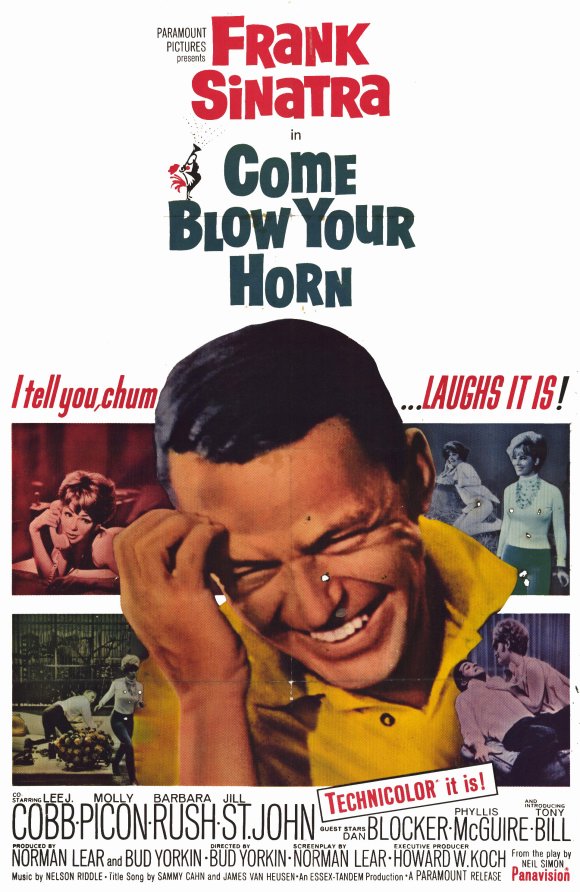
Come Blow Your Horn (1963)

come blow your horn

By Richard Winters

My Rating: 5 out of 10

4-Word Review: Kid brother moves in.

Buddy Baker (Tony Bill) has just turned 21 and is looking to get out into the world by moving in with his older brother Alan. Alan (Frank Sinatra) is living the bachelor’s dream by residing in a luxurious apartment in the heart of Manhattan while entertaining wild parties and a wide array of lovely ladies. Their parents (Lee J. Cobb, Molly Picon) do not feel that Alan and his lifestyle will be a good influence on Buddy and forbid him from doing it, but he does it anyways, which drives the father to disown his sons and cut out all communications with them.

This was the first Neil Simon play to be turned into a movie and it was loosely based on Neil’s relationship with his older brother Danny. For the most part it is talky and stagy while lacking Simon’s patented one-liners and humorous exchanges. It also has for some bizarre reason a musical number that comes out of nowhere at the 40-minute mark where Sinatra sings the film’s title tune and then just as quickly it goes back to being a straight comedy, which came off as jarring, out-of-place and misguided.

I did enjoy the film’s set design, which got nominated for an Academy Award, especially the interiors of Alan’s swanky apartment. However, I was confused why Buddy had to sleep in the same room as Alan as I would think such a large and fancy place would have more than just one bedroom. The movie also strongly implies that Alan is having sexual trysts with his lady friends, which would then imply that he must have a king sized bed somewhere, so why are only twin beds shown? He also has five telephones in the living room, which seemed beyond absurd and made me feel that if he had purchased a few less phones then he might’ve been able to afford a double bed.

Sinatra’s presence is the film’s weakest link as this type of comedy doesn’t mesh well with his otherwise caustic personality. He was too old for the part as he was not only pushing 50, but also only 4 years younger than Cobb who plays his father. I didn’t like Jill St. John’s ditzy character either as she was too dumb to be believable, which was not only painfully unfunny, but stereotypical and insulting to women.

I did like Tony Bill in his film debut and his nicely understated performance helps keep the film balanced. Dan Blocker is also great as a jealous husband and Molly Picon is a scene stealer as the mother. You can even spot Dean Martin as a wino in an uncredited cameo.

The fact that Alan doesn’t want to give up his swinging lifestyle despite the pressures from his girlfriend Connie (Barbara Rush) is the story’s one and only redeeming quality. I could never understand why a single man, who’s enjoying the bachelorhood at its most ideal, such as it is portrayed here, would want to suddenly throw it all for the married life. Most of the of films from that era with a similar theme would portray it as simply being the ‘magic of love’, but here the character is much, much more resistant to the idea and doesn’t change his ways until having a life altering event where he sees things from a different perspective, which made more sense.

Sinatra fans may want to check this out, but it is far from his best stuff and although the material is agreeable it is only slightly engaging and barely worth the time.

My Rating: 5 out of 10

Released: June 5, 1963

Runtime: 1Hour 52Minutes

Not Rated

Director: Bud Yorkin

Studio: Paramount

Available: VHS, DVD, Blu-ray, Amazon Instant Video

Blame it on Rio (1984)

blame it on rio 1

By Richard Winters

My Rating: 4 out of 10

4-Word Review: Sex with friend’s daughter.

Victor (Joseph Bologna) is going through a messy divorce and in order to escape from the stress he invites his friend Matthew (Michael Caine) to join him and his daughter Jennifer (Michelle Johnson) on a trip to Rio de Janeiro. Initially Matthew was to bring along his wife Karen (Valerie Harper), but at the last minute she bails out, so instead he takes his daughter Nicole (Demi Moore) who is also Jennifer’s best friend. During the trip Jennifer’s long dormant feelings for Matthew come to a head and the two end up having a fling. Matthew sees this as a secret one-night-stand as he doesn’t want it to jeopardize his long friendship with Victor, but Jennifer wishes for it to blossom into a love affair and even considers, much to Matthew’s reluctance, informing her father about it.

The film, which has been the last theatrical feature to date to be directed by the legendary Stanley Donen, has a zesty start that features soothing music, luscious scenery and sharp dialogue. Unfortunately it goes downhill from there with the third act being the real problem. Instead of becoming an interesting character study and analyzing whether this otherwise strong friendship could survive such a shocking event it instead veers off into silliness by entering in a crazy twist of Mathew’s wife having a secret affair with Victor, which didn’t seem realistic or believable and cements the whole thing as being nothing more than a dumb, shallow lightweight comedy.

The usually reliable Caine is miscast and his big Harry Caray-like glasses become almost a distraction. His costar Bologna is the one who steals it in a role nicely attuned to his brash, hothead persona.

The weakest link though is Johnson who despite looking great topless clearly has very little acting talent. Her character is poorly defined and written by two middle-aged men who were out-of-touch with the younger generation and had no idea how they ticked.  At the beginning she behaves too much like a child and then suddenly when she gets it on with Matthew she is like an out-of-control sensuous vamp, which made the character come off like two different people altogether. The fact that she shows no apprehension at all in having sex with Matthew who is much older made little sense as I would think that any normal person  would feel nervous and despite the attraction even some reluctance. She also shows no concern for how stressed the whole thing made Matthew feel, which unintentionally made her appear quite selfish.

Moore would’ve been much better in Johnson’s role and in many ways sexier. I had to chuckle a bit because in Leonard Maltin’s review of this film he mentions that Demi seemed ‘intimidated’ during her topless scene at the beach, which is actually an understatement as she looks downright uncomfortable, which in turn makes the viewer feel the same way.

This film is the American remake of the French comedy One Wild Moment, which came out six years earlier and will be reviewed later this week.

My Rating: 4 out of 10

Released: February 17, 1984

Runtime: 1Hour 40Minutes

Rated R

Director: Stanley Donen

Studio: 20th Century Fox

Available: VHS, DVD, Amazon Instant Video, YouTube

30 is a Dangerous Age, Cynthia (1968)

30 is a dangerous age

By Richard Winters

My Rating: 6 out of 10

4-Word Review: Life crisis at 30.

Rupert Street (Dudley Moore) is a struggling pianist and composer who with only six weeks until his thirtieth birthday feels that his life has been a failure. He sets out to change that by setting some very lofty goals, which is to write a musical and have it produced as well as getting married even though he has yet to find a girlfriend.

The film, which was directed by Joseph McGrath is filled with the wonderfully drool British humor that manages to be both lightly satirical and imaginative all at the same time. The rampant cutaways in which a character will be talking about something and then it cuts to show them doing what they are imagining or discussing lends a nice surreal quality. The banter that Moore has with a Registrar (Frank Thornton) where he tries to get a marriage license before even having picked out a woman is the high point of the film and a perfect example of the wacky humor of that era from that region of the world that balances being both subtle and over-the-top that I wish more American movies would be better able to replicate.

The supporting cast helps a lot and is full of comic pros. The elderly Eddie Foy Jr. is a scene stealer as Rupert’s best friend and so is Duncan Macrae, whose last film this was, as Rupert’s boss. Patricia Routledge is great as his kooky landlady and Suzy Kendall is highly attractive as his fiancée. There is also an amusing parody of 1940’s detective movies featuring John Bird as a self-styled film noir-like private eye.

Unfortunately the script, which was co-written by Moore, suffers from too much of loose structure. The jokes are poorly paced and many times the comic bits go on longer than they should. There is also an intermixing of musical numbers that features Moore at the piano, which does not work well with the rest of the film. Yes, Moore was also an excellent pianist, but this was no place to be showing it off and these segments only help to bog the film down as a whole. The ending, which features Moore having to witness the desecration of his musical by an overzealous director who has a different ‘vision’ for it is priceless, but in-between there are a lot of lulls and the film would’ve been helped immensely by having a tighter script and a more structured, plot driven story.

My Rating: 6 out of 10

Released: March 4, 1968

Runtime: 1Hour 25Minutes

Not Rated

Director: Joseph McGrath

Studio: Columbia Pictures

Available: VHS

Pardon Mon Affaire (1976)

pardon mon affair1

By Richard Winters

My Rating: 7 out of 10

4-Word Review: Married man wants hottie.

Etienne (Jean Rochefort) is a mild mannered, middle aged man who has lived a practical lifestyle both with his marriage and career and then one day goes absolutely gaga over a beautiful model named Charlotte (Anny Duperey) that he spots by chance in a parking garage. He goes to great, tireless lengths to meet her with no regard to how it is upsetting and even destroying his once quant and secure life.

This is the French version of what was later Americanized in The Woman in Red starring Gene Wilder. For the first five minutes the two films are almost identical as the opening scenario plays out in exact same fashion frame-for-frame, but then after that there are some distinct differences with this version being far superior to the remake. The disintegration of Etienne’s friend Bouly’s (Victor Lanoux) marriage is much funnier here as the philandering character gets upset when his wife leaves him we will realize its more because of his inflated, deluded ego thinking that somehow he is such a ‘great’ guy that his wife will tolerate his misgivings and when the harsh reality hits him that she won’t it’s a genuinely amusing meltdown to see. I also liked that the film cuts to a reaction shot of the main character as he observes his friend’s meltdown, which helps tie the scene more into the central plot and something that the Wilder version did not do.

I also liked how this film digs to a deeper level in regards to Etienne’s relationship with his male friends showing how competitive they are at times with each other, which is something that occurs even in the best of friendships, but when it counts they are still there to help their friend out of jam which came off as being very natural and real. The side story dealing with the homely female office worker which is played by Gilda Radner in the remake is also better handled. In the American version like with this one the character mistakenly thinks that Etienne is in love with her and not the model and when he doesn’t show up to their ‘dates’ like she expects she gets quite upset and trashes his car, but here Etienne attributes her outrage to the idea that she is aware that he wants to fool around with the model and thus does these things to defend his wife’s honor, so therefore he does not retaliate when she destroys his property for fear she will then go to his wife and tell her. In the remake this is never explained, which makes the main character’s reluctance to retaliate after his property is damaged seems strange and confusing.

This movie also has a side-story dealing with the daughter’s boyfriend hitting on Etienne’s wife something that only gets slightly touched upon in the remake. Here it gets played out more and the scenes watching this 17-year-old kid clumsily try to come on to this much older woman who has no interest in him are some of the most amusing moments in the movie.

The acting here is far better as well. The Charlotte character seems more like a real person instead of a one-dimensional sex object as LeBrock did. Rochefort is much funnier than Wilder and sports a brown mustache, which makes him seem very Inspector Clouseau-like. The American version, in an apparent attempt to make the protagonist more ‘marketable’ to a mass audience, conforms more to mainstream values by being portrayed as constantly guilt-ridden, but the character here is not shackled with such restraints and the way he recklessly chases after the woman even as it causes him more stress is what makes the movie so funny. It also has some very astute observations about marriage, middle-age, sex and the male animal while the remake is just vapid, silly escapism.

I presume the reason why the nuances of this one didn’t get transferred to the Hollywood version is because the producers felt that American audiences would not be ‘sophisticated’ enough to pick up on them, which is why I tell everyone who considers themselves to be a film lover to be sure to stay abreast of the foreign films that are out there. In most cases they are much more original, creative and observant to the human condition than anything that’s come out of Hollywood and the main reason for this is that they are treated more like an artistic endeavor with the director given full control while here the films are forced to work within a studio driven formula and treated more like a business byproduct made to give a profitable return on their investment and nothing more.

pardon mon affair2

My Rating: 7 out of 10

Released: September 22, 1976

Runtime: 1Hour 45Minutes

Rated PG

Director: Yves Robert

Studio: Gaumont

Available: VHS