Category Archives: British Movies

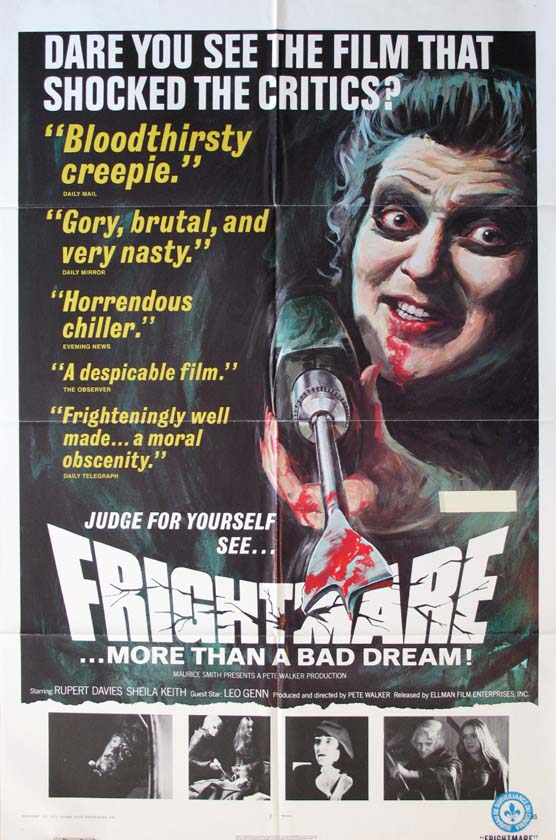
Frightmare (1974)

cover up 2

By Richard Winters

My Rating: 5 out of 10

4-Word Review: Mother likes eating humans.

After 15 years of being locked up in an asylum Dorothy and Edmund Yates (Sheila Keith, Rupert Davies) are freed, Dorothy was in there for killing 6 people and eating their flesh while Edmund helped cover it up from authorities. Now that they are deemed sane they are free to start their lives over. Jackie (Deborah Fairfax) is their oldest daughter and she secretly visits them on the side, but their youngest daughter Debbie (Kim Butcher) was just an infant when they were put away and does not know that they are out. Jackie tries to keep their parents past from her, but this proves difficult when Dorothy starts killing again and Debbie begins showing the same homicidal traits.

On the technical end this British made horror isn’t too bad. Director Pete Walker makes the most of his limited budget by keeping the story moving and never allowing it to get bogged down with endless dialogue. There is a surprising amount of gore that looks relatively realistic and the recent Kino Lorber Blu-ray transfer is excellent with sharp color and no graininess.

However, it’s not scary at all. Yes, the subject matter is a bit unsettling, but there are no shocks or surprises and no atmosphere or tension either. The twist ending might’ve been effective had the script not telegraphed it, so by the time that it does occur it’s a letdown since the viewer had already been anticipating it for quite a while.

The idea that anyone could ever be considered ‘sane’ after killing and eating 6 people is absurd as mental illness isn’t something that can be ‘cured’ and freeing anyone at any time after committing such a heinous crime is illogical. It made me wonder what test was given to see if Dorothy no longer had cannibalistic urges and had therefore ‘earned’ her freedom. Did they throw a human body in front of her and if she didn’t jump up and bite into it was she then deemed ‘normal’?

Although she doesn’t look anything like the drawing on the film’s promotional poster I did enjoy Keith in the lead especially the way she could quickly go from menacing to child-like. I also liked Butcher, who despite looking like she was way over 15, which was the supposed age of her character is fun as the rebellious teen particularly the scenes where she challenges the authority of her older sister.

My Rating: 5 out of 10

Released: November 6, 1974

Runtime: 1Hour 22Minutes

Rated R

Director: Pete Walker

Studio: Miracle

Available: DVD, Blu-ray, Amazon Instant Video

Kes (1969)

kes 1

By Richard Winters

My Rating: 6 out of 10

4-Word Review: Boy trains a kestrel.

Billy (David Bradly) is a poor working class youth living in Yorkshire who finds his existence to be bleak and pointless. He is bullied constantly by his older brother Jeb (Freddie Fletcher) and ignored by his burdened mother (Lynne Perrie) while also being picked on at school. As means of some solace he finds a nest of baby kestrels inside an abandoned building. He takes one of them and keeps it in his backyard shed where he trains it, which in return gives him a sense of purpose.

The film is based on the novel by Barry Hines who also wrote the screenplay and although the plot is basically the same it does vary in two major ways. The first one being that in the book everything takes place in one day and with a lot of use of flashbacks to explain the backstory, which I liked better, but here it’s given a linear narrative. The book also explains a bit more about the otherwise absentee father and even has one scene involving him while here the character is non-existent and never even mentioned.

On a purely cinematic level it is well made and nicely exposes Billy’s hopeless working class world without ever being heavy-handed. The drama is fresh and natural with each scene and character ringing true. The segments involving the training of the bird is the most engaging and I wished had been extended.

The children are fantastic without being too cute or precocious and respond to things in ways that are honest to their nature. The adult cast is good as well although not as likable. The teachers and school administrators, with their very old fashioned approach to discipline, come off as genuine jerks. At one point one of them even raps the open palms of the children’s hands with a cane, which makes their eyes well up with tears and is unpleasant to watch.

The worst is the segment involves Billy’s physical ed. teacher Mr. Sugden, which is played by Brian Glover who was an actual high school instructor at the time as well as a former wrestling. Here he plays a coach who brutally bullies his students in a scene that makes its point and then goes on too long with it. I also didn’t like that director Kenneth Loach superimposes the score of the soccer (football) game that the students are playing onto the screen, which wasn’t necessary as who wins the game was not important at all and hurt the film’s realism by distracting the viewer and taking them out of the story.

Some have complained about the thick dialect of the characters, which makes it hard at times to understand what they are saying. Certain American versions have been dubbed to make the lines uttered clearer although the version I watched, which was from the Criterion Collection, seemed to have the original accents intact, which I preferred as it kept it more authentic and for the most part I didn’t have any problem with it.

Spoiler Alert!

The only real issue that I had with the film is its downbeat ending. I realize that it is the same as the one in the book, but felt a bit frustrated that every time there is a movie dealing with a child taking care of an animal it always for some reason has to end in tragedy, which made it a bit formulaic. The kid never gets a break and having the falcon get killed at the end was like rubbing salt into the wound. The bird that actor Bradly buries apparently died of ‘natural causes’ but at the time he was under the belief that it had been killed simply to suit the purposes of the film and the angry reaction that you see on his face was very real.

End of Spoiler Alert!

kes 2

My Rating: 6 out of 10

Released: November 16, 1969

Runtime: 1Hour 50Minutes

Rated GP

Director: Kenneth Loach

Available: DVD, Blu-ray, Amazon Instant Video

30 is a Dangerous Age, Cynthia (1968)

30 is a dangerous age

By Richard Winters

My Rating: 6 out of 10

4-Word Review: Life crisis at 30.

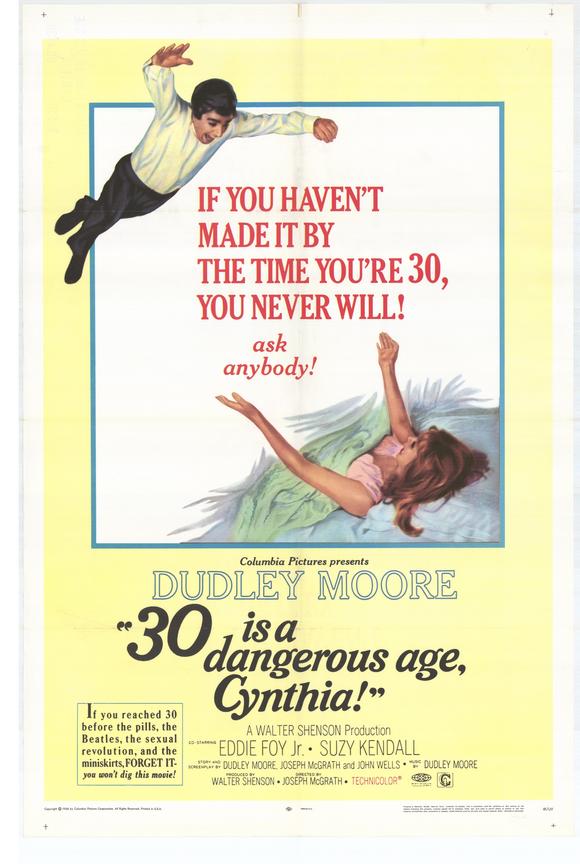
Rupert Street (Dudley Moore) is a struggling pianist and composer who with only six weeks until his thirtieth birthday feels that his life has been a failure. He sets out to change that by setting some very lofty goals, which is to write a musical and have it produced as well as getting married even though he has yet to find a girlfriend.

The film, which was directed by Joseph McGrath is filled with the wonderfully drool British humor that manages to be both lightly satirical and imaginative all at the same time. The rampant cutaways in which a character will be talking about something and then it cuts to show them doing what they are imagining or discussing lends a nice surreal quality. The banter that Moore has with a Registrar (Frank Thornton) where he tries to get a marriage license before even having picked out a woman is the high point of the film and a perfect example of the wacky humor of that era from that region of the world that balances being both subtle and over-the-top that I wish more American movies would be better able to replicate.

The supporting cast helps a lot and is full of comic pros. The elderly Eddie Foy Jr. is a scene stealer as Rupert’s best friend and so is Duncan Macrae, whose last film this was, as Rupert’s boss. Patricia Routledge is great as his kooky landlady and Suzy Kendall is highly attractive as his fiancée. There is also an amusing parody of 1940’s detective movies featuring John Bird as a self-styled film noir-like private eye.

Unfortunately the script, which was co-written by Moore, suffers from too much of loose structure. The jokes are poorly paced and many times the comic bits go on longer than they should. There is also an intermixing of musical numbers that features Moore at the piano, which does not work well with the rest of the film. Yes, Moore was also an excellent pianist, but this was no place to be showing it off and these segments only help to bog the film down as a whole. The ending, which features Moore having to witness the desecration of his musical by an overzealous director who has a different ‘vision’ for it is priceless, but in-between there are a lot of lulls and the film would’ve been helped immensely by having a tighter script and a more structured, plot driven story.

My Rating: 6 out of 10

Released: March 4, 1968

Runtime: 1Hour 25Minutes

Not Rated

Director: Joseph McGrath

Studio: Columbia Pictures

Available: VHS

10 Rillington Place (1971)

10 rillington place 2

By Richard Winters

My Rating: 7 out of 10

4-Word Review: He enjoys strangling women.

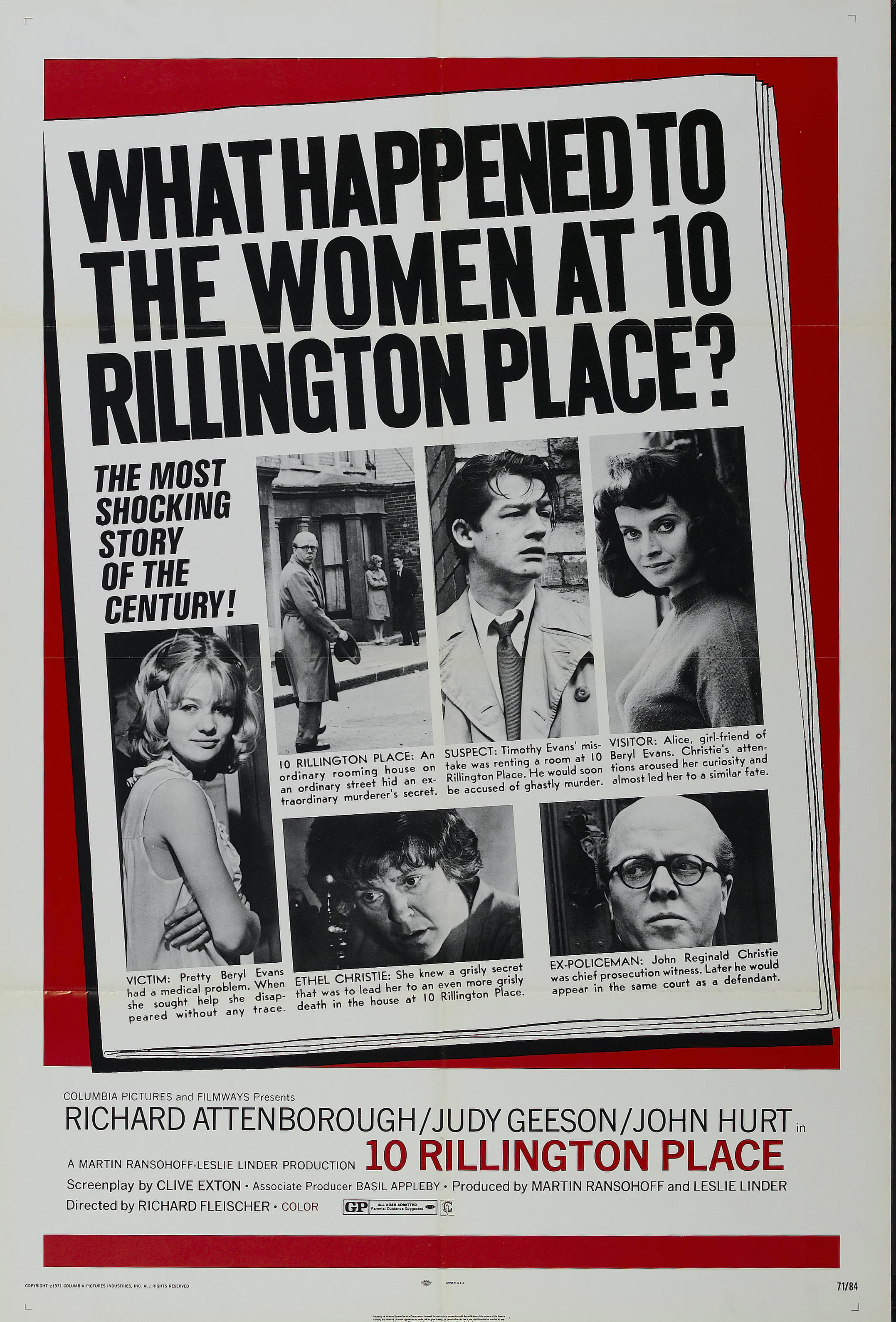
This film depicts the true life account of John Christie, played here by Sir Richard Attenborough, who strangled eight women, had sex with their corpses and then hide their bodies in his London flat at 10 Rillington Place. The story begins with Christie having already murdered several women when Timothy and his wife Beryl (John Hurt, Judy Geeson) arrive looking for a place to stay and decide to rent a room from Christie who immediately takes a fancy to Beryl. When she confides in him that she is pregnant and looking for an abortion he uses it to his advantage by pretending to be a former Dr. who can secretly perform the procedure. He then strangles her after giving her some anesthesia and tells Timothy that it occurred during the abortion and threatens him not to go to the police since it was an illegal operation at the time and Timothy was aware that she wanted it done, which would have made him an accessory. However, after moving out his suspicions continue to nag him and he eventually goes to the police, which culminate in a dramatic trial with both men accusing the other of being a liar.

The film comes off as being quite authentic to the actual events with the dialogue taken straight off of the court transcripts. The exteriors were filmed at the actual flat were the murders occurred while the interiors scenes where shot at an apartment house that was just three doors down from Christie’s real life one. Richard Fleischer’s direction is low-key with emphasis put on keeping things real almost like a documentary instead of trying to sensationalize it. The music is used sparingly and has a certain quite tone of loneliness and detachment to it almost like it is representing the feelings and mood from Christie himself.

Attenborough and Hurt give strong performances and the diametrically divergent personalities of the two characters are what drive the film. Attenborough accepted the role without even having read the script. He wore a skin-like skull cap for the part, which gives him a very pronounced bald head and a creepy alien-like quality. I also really liked the scene where he looks at himself in the mirror just before he commits the murder with his eyes conveying a frightened and ashamed look like even he himself is horrified at the murderous out-of-control obsession that drives him. Geeson does well as the sympathetic victim and Pat Heywood is memorable in an understated role as Christie’s wife Ethel who initially believes her husband to be innocent, but then slowly becomes aware of what a monster he really is.

The film would have been stronger and a more multi-faceted had it shown even in brief flashback more of Christie’s background including the fact that he was dominated by his mother and older sisters and raised by a father who showed no emotion for him as well his lifelong struggles with impotence, which all could’ve helped explain why he became the way he did. It also might have allowed for more tension had the story started with the court case and leaving it a mystery to the viewer at the beginning as to which of the men was telling the truth instead of having the narrative done in a very matter-of-fact, by-the-numbers way. In either case the film is still quite strong and great example of how a true-life crime story should be done.

My Rating: 7 out of 10

Released: February 10, 1971

Runtime: 1Hour 51Minutes

Rated GP

Director: Richard Fleischer

Studio: Columbia Pictures

Available: DVD-R, Amazon Instant Video

The Ragman’s Daughter (1972)

the ragmans daughter

By Richard Winters

My Rating: 5 out of 10

4-Word Review: Reminiscing about old times.

Tony, who is a middle-aged man (Patrick O’Connell) working a boring job at a cheese factory and stuck in an equally dull marriage with two kids, reminisces about his younger years when he met a beautiful woman named Doris (Victoria Tennant) and they committed petty thievery while also riding around on his motorbike. The film then intercuts between scenes of him when he’s younger, which is played by Simon Rouse in his film debut, and his life now where he struggles to make ends meet.

This film marks the directorial debut of Harold Becker as well as the acting debut of the lovely Tennant. It also marked the last of the British ‘kitchen-sink’ dramas that focused on the hardships and struggles of the working class. The story is a strange mix of gritty reality and romantic fantasy that has a few good moments, but as a whole doesn’t really work and if there is one thing that holds it all together its Kenny Clayton’s soothing and distinctive melodic score.

Part of the problem is that not enough happens. Tony is able to break into shops with too much ease and the way he is able to crack open a safe in less than a minute would make even a professional safe cracker jealous. Their robberies needed to have a little more tension or comedy to help keep it interesting instead of sliding into a pace that meanders so leisurely that it eventually becomes boring.

Tennant’s character is another issue. She is incredibly gorgeous and looks ripe for a magazine cover as a fashion model, which made me wonder why she would so quickly fall head-over-heels for Tony who has no money or job and is average looking at best. To some degree I could understand her need to break free from her oppressive and strict parents, but a beautiful woman like that would have many other potential suitors in her life and not simply dependent on Tony as being her only outlet.

Spoiler Alert!

The final twenty-minutes improves as Tony ends up getting caught and going to jail, which helps add some genuine drama. However, when he finally gets out he learns that Doris died tragically in a motorbike accident, which seemed unnecessarily severe. A much better ending would’ve had them reuniting for just one day and although now married to other people still managing to share some sort of special bond.

End of Spoiler Alert!

The film, which had a very limited release, has some potential, but suffers from a visual approach that at times looks too much like a shampoo commercial and a premise that doesn’t have enough action elements to keep it compelling.

My Rating: 5 out of 10

Released: November 11, 1972

Runtime: 1Hour 34Minutes

Not Rated

Director: Harold Becker

Studio: 20th Century Fox

Available: DVD (Through Netflix)

The Killing of Sister George (1968)

killing of sister george

By Richard Winters

My Rating: 6 out of 10

4-Word Review: TV character gets axed.

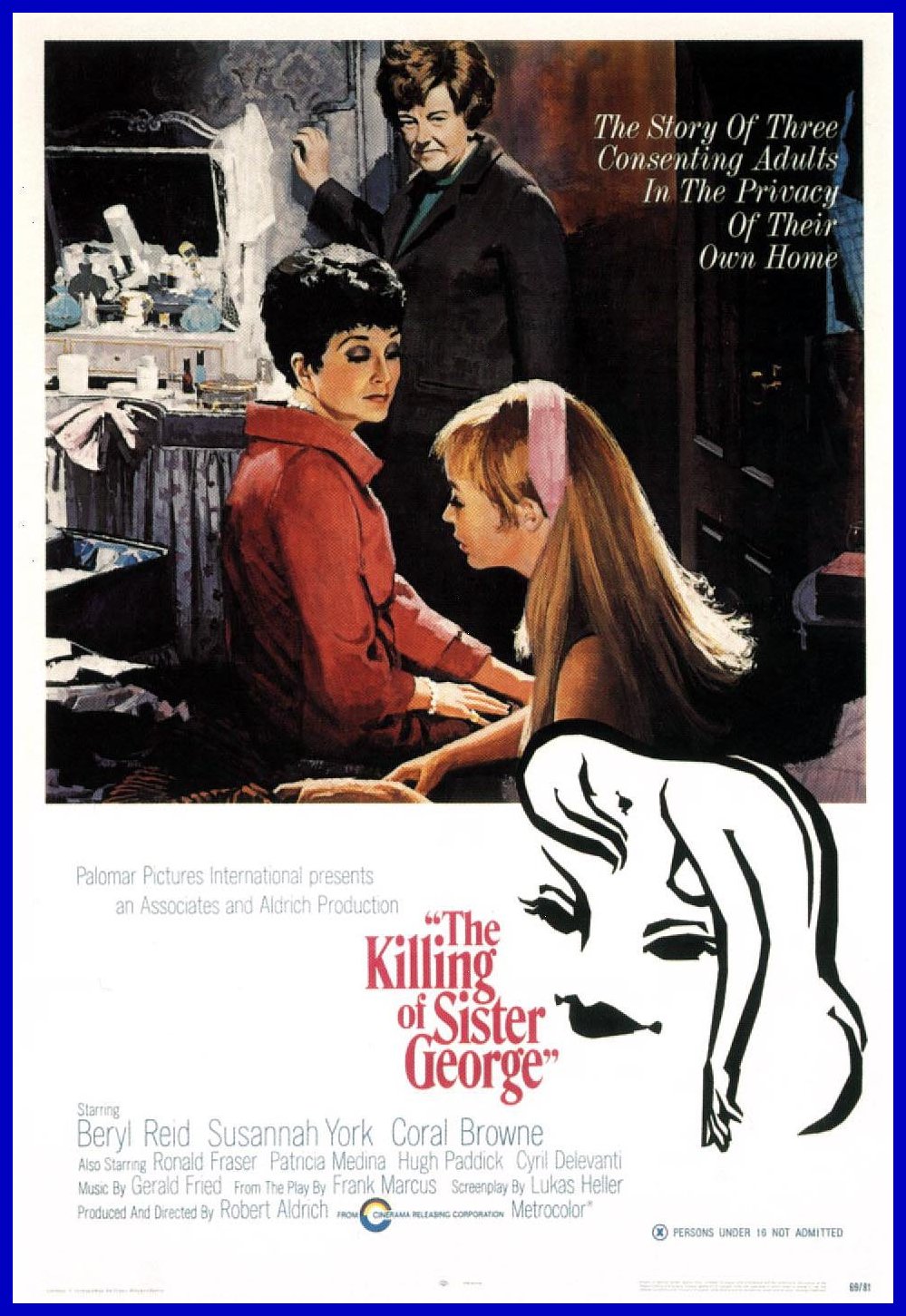
June Buckridge (Beryl Reid) is an aging actress playing the character of Sister George a scooter riding nun in a long running British TV soap opera. Her character no longer has the popularity that it once had and the producers have decided to kill her off by having her die in an ugly road crash with a truck. June is upset with this news as at her age parts are hard to come by and she takes her frustrations out on Childie (Susannah York) her much younger live-in lesbian lover, but she may lose her as well as one of the show’s producers Mercy (Coral Browne) has inklings to lure Childie away from June so she can have her all to herself.

After the immense box office success of The Dirty Dozen writer/director Robert Aldrich was given free rein to start up his own production company and he choose this as his first project. In many ways it is quite similar to his earlier and more well-known film What Ever Happened to Baby Jane?, but with sexual undertones. The film is based on the Frank Marcus play of the same name that ran for 205 performances and was nominated for the 1967 Tony Award. For its time this was considered quite controversial and groundbreaking especially the final scene that features a highly explicit sex scene between two women. It also is the first film to have a character utter the word ‘bullshit’ and one of the first to say the word ‘fuck’. Although the word itself gets drowned out by a car horn you can still clearly tell by reading Reid’s lips what she is saying.

The three female leads and their snarky exchanges with each other are the film’s chief asset especially Reid who recreates the same character that she played in the stage version that netted her a Tony. Her emotional, angry outbursts are entertaining and the scene where she forces Childie to eat and swallow the butt of her cigarette as ‘punishment’ is still quite edgy. Browne is equally good specifically during her provocative love scene with York, which was made all the more daring since she was 30 years older than York at the time.

The film’s overall staginess is a drawback. Many scenes are too talky and should’ve been trimmed while York and Reid’s Laurel and Hardy routine could’ve been cut out completely. Flashbacks showing how they first met would’ve helped and there needed to be an explanation to the weird child-like manner of York’s character, which quite possibly was based on an age-old gay stereotype. I also didn’t like the foreboding quality of the music that gets played just before Browne and York have their lesbian love scene, which seemed to suggest that something ‘creepy’ and ‘unnatural’ was about to take place and convinced me that despite the daring and ahead-of-its-time nature of the subject that the filmmakers themselves still had some very dated ideas about gays much like the majority of people from that era.

My Rating: 6 out of 10

Released: December 12, 1968

Runtime: 2Hours 18Minutes

Rated X (Reissued as R)

Director: Robert Aldrich

Studio: Cinerama Releasing Corporation

Available: DVD

A Jolly Bad Fellow (1964)

jolly bad fellow 2

By Richard Winters

My Rating: 5 out of 10

4-Word Review: He poisons his enemies.

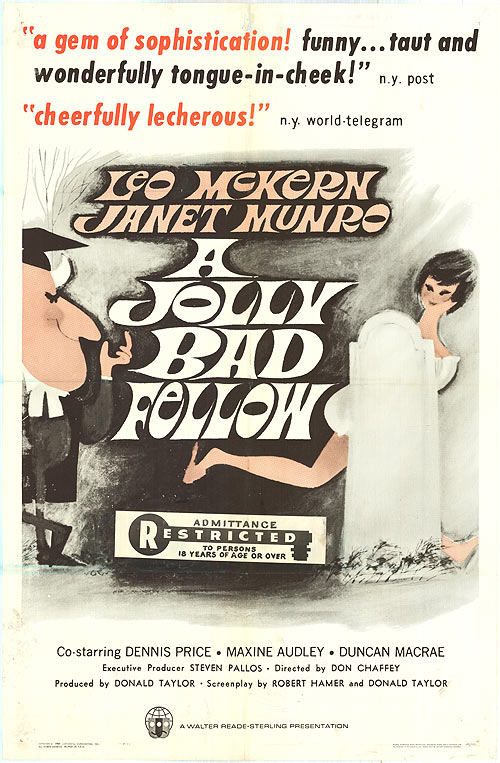
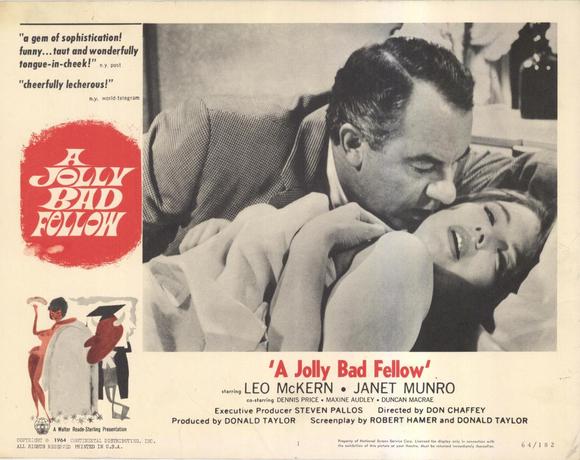
Professor Kerris Bowles-Ottery (Leo McKern) is a college professor working in the university’s science lab where he conducts experiments on mice. One day he accidently comes upon a poison that kills the mice, but only after sending them into a brief euphoric state, which he then decides to use on his enemies. Only a little bit of it is needed to work, so he is able to use all sorts of methods to get them to ingest it including putting it into their drinks, as well as the cigarettes they smoke, and even dabbing a bit of it on a tip of a pencil, which one of the character’s routinely likes to lick before he begins writing with it. Things go quite smoothly until his wife Clarinda (Maxine Audley) leaves him, which upsets him enough that he become careless and eventually culminates with ironic results.

The film’s chief asset is McKern’s presence whose acerbic delivery and facial expressions perfectly captures a stuffy, pompous curmudgeon in highly humorous fashion. He nails every scene that he is in, but his best moment comes at the very end when he hops into his car and begins driving at high speeds throughout the English countryside while giving off a loud, long maniacal laugh.

The plot is thick with satire, but doesn’t go far enough with it. Just when it seems to be catching its stride it bogs down with an affair that McKern has with a much young woman (Janet Munro) that didn’t make a lot of sense. I could see why he’d be into her, but no so much why she would have the hots for him although the fact that he does seem to truly love his wife even when he fools around on her and becomes upset when she decides to leave him was excellent irony.

The funniest element is when he poisons his enemies and rivals many of whom are as pompous and stuck-up as he is. Watching these refined, stuffy people suddenly act silly and child-like is quite amusing, but again the film stops short of packing the punch as these scenes should’ve been more extended, which is the one thing that makes this potentially hilarious film not half as funny as it could’ve been.

jolly bad fellow 1

My Rating: 5 out of 10

Alternate Title: They All Died Laughing

Released: March 15, 1964

Runtime: 1Hour 34Minutes

Not Rated

Director: Don Chaffey

Studio: British Lion Film Corporation

Available: DVD

The Collector (1965)

the collector 2

By Richard Winters

My Rating: 8 out of 10

4-Word Review: Collecting women like butterflies.

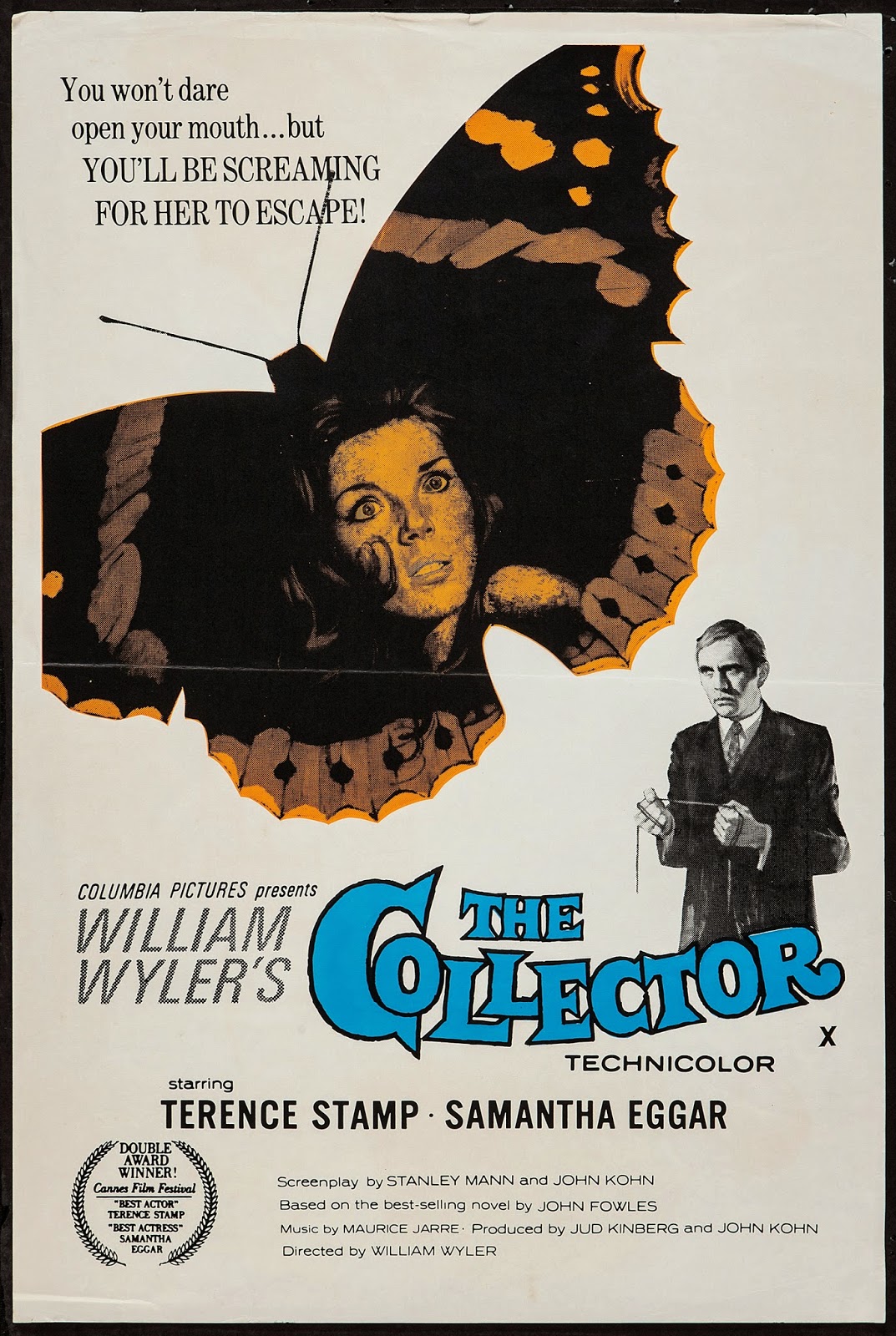
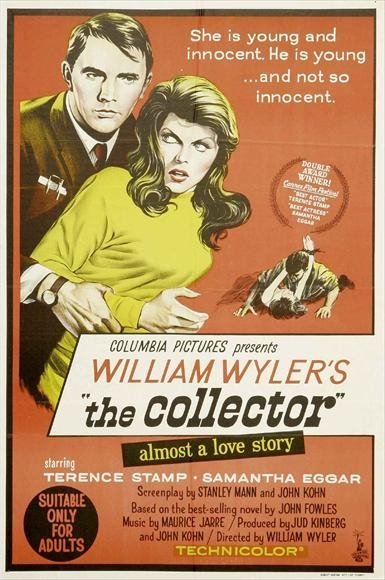
Freddie (Terence Stamp) is a withdrawn loner who collects butterflies for a hobby. One day he manages to win a lot of money in a football pool and uses it buy an old, isolated house in the English countryside. The place has a very large cellar, which gives him the idea that it can be used as a prison. It is then that he decides to kidnap beautiful art student Miranda (Samantha Eggar). He keeps her in the cellar, but fixes it up making it seem almost like an apartment. He treats her with the upmost respect and even knocks before entering her room. He buys her art supplies so she can continue her work and makes an agreement with her that he will let her go after 4-weeks, but hopes in between then that she will fall in love with him.

The film puts an interesting spin on the old ‘psycho kidnapping a beautiful woman’ theme and for the most part succeeds. The viewer ends up feeling almost as sorry for Freddie as they do his victim as it becomes clear that through his social awkwardness he is in even more of a prison than she. The way the two try to communicate and connect, which only ends up driving the them further apart is fascinating and their contrasting views about the book ‘Catcher in the Rye’ as well as the paintings of Picasso are equally revealing.

Stamp gives one of his greatest performances in his already illustrious career playing a character who weaves from being menacing to vulnerable and childlike. Eggar makes for an appealing victim and apparently turned Stamp down years earlier when he had asked for her date while the two were students in acting school.

the collector 4

William Wyler’s direction is perfect as he wisely decides to pull back without adding any unnecessary Hitchcock touches and thus allowing the interactions between the two characters to propel the film. His superimposed, colorful shots of butterflies seen over the closing credits are a nice added touch. My only minor grievance is the Maurice Jarre score, which seemed too melodic without enough of the dark foreboding undertones that music for a thriller should have.

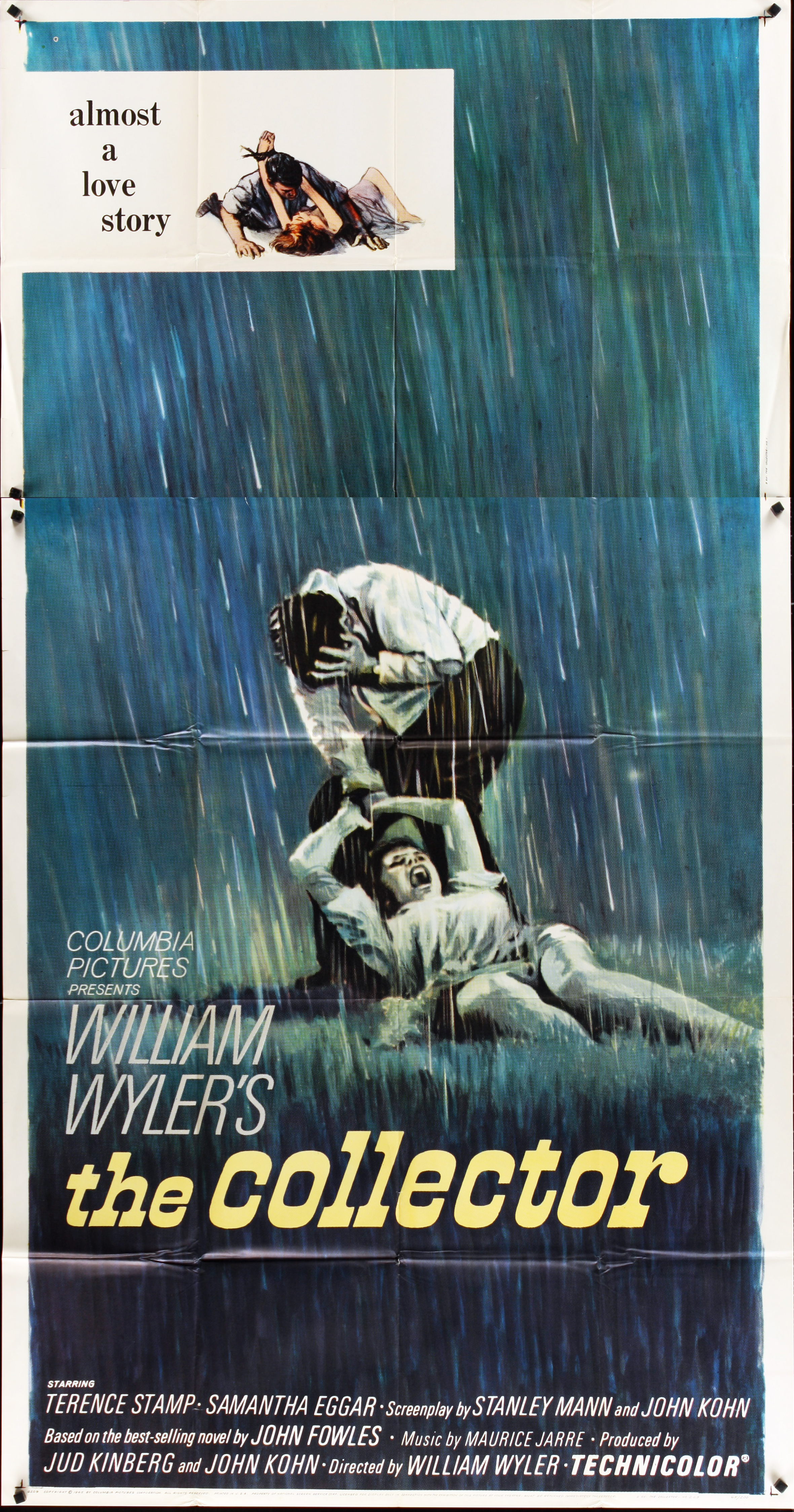
If you’re looking for the conventional thriller you may be disappointed as the emphasis is more on the psychological than the suspenseful. There are a few good tense moments including Miranda’s final attempt to escape during a nighttime rain storm, but for the most part the compelling element comes from the way these two multi-layered people deal with each other and ultimately reveal things about themselves that they didn’t know existed. The story also makes an excellent point of how everyone to a certain degree is trapped in a prison and the challenging if not impossible effort it can sometimes be to bond with others especially when reaching across different social-economic lines. The only thing that does get ruined is the ending, which no longer has the novelty or shock value that it once did.

the collector 3

My Rating: 8 out of 10

Released: June 17, 1965

Runtime: 1Hour 59Minutes

Not Rated

Director: William Wyler

Studio: Columbia Pictures

Available: VHS, DVD, Blu-ray, Amazon Instant Video

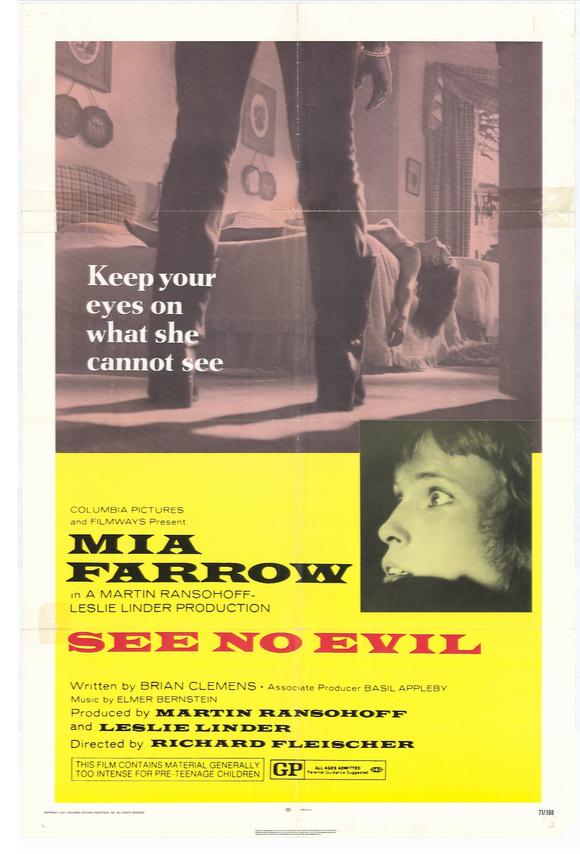
See No Evil (1971)

see no evil

By Richard Winters

My Rating: 7 out of 10

4-Word Review: Psycho stalks blind girl.

Sarah (Mia Farrow) is a young woman who becomes permanently blinded during a horse riding accident. After months of rehabilitation she returns to her family home in the English countryside. Dealing with her new handicap is awkward at first, but things go genuinely smoothly. Unfortunately a psychotic man harboring a petty grudge lurks in the shadows. One day while Sarah is away he murders her entire family and when she returns he goes after her, but the viewer is as in the dark as she is to his identity as all that is shown are the nifty looking cowboy boots that he walks in.

Veteran director Richard Fleischer takes Brian Clemens compact script and turns it into a visual masterpiece. The camera angles and shot compositions are not only perfect, but highly creative. One of the highlights is when Sarah comes home and doesn’t realize at first that her family is dead and only slowly becomes aware of it along with the viewer. The countryside, which was shot near Berkshire, England, is majestically captured particularly during the horse riding sequences. The pace is fast and intense and never lets up with twists that prove to be quite interesting.

Farrow has a limited range as an actress, but her delicate features and the character’s self-reliant nature make her easily likable and the viewer immediately becomes empathetic to her plight. The rest of the characters are well-rounded and believable with noted character actress Lila Kaye in a small, but memorable role as a gypsy mother.

The fact that the identity of the killer is kept a secret until the very end is an added bonus, but you actually do see his face in an earlier scene, but are not made aware that it is him, which I thought was pretty cool. The only misgivings that I had in this area is the fact that the killer supposedly murders these people in a fit of revenge for accidently splashing water on his precious boots when they drove past him in a car, but then later after he kills them he goes to bed and allows the droplets of blood from his victims to dry on his boots while he sleeps even though I felt with his obsessive preoccupation with them that he would have wiped that off right away. Also, for a man who brazenly murders a family in broad daylight for such a petty reason he seems to get a little too nervous about it afterwards even though if he is that crazy I would think that he would have remained cocky about it and felt that he would be able to murder anyone else who got in his way. He also puts up no fight in the end when he finally gets cornered making him look wimpy and making the climax a bit of a letdown.

Overall though I found this thriller to be highly entertaining and its effect has not diminished through repeat viewings. They don’t seem to be able to make them like this anymore, which is unfortunate.

My Rating: 7 out of 10

Alternate Title: Blind Terror

Released: September 2, 1971

Runtime: 1Hour 29Minutes

Rated GP

Director: Richard Fleischer

Studio: Columbia Pictures

Available: DVD, Amazon Instant Video

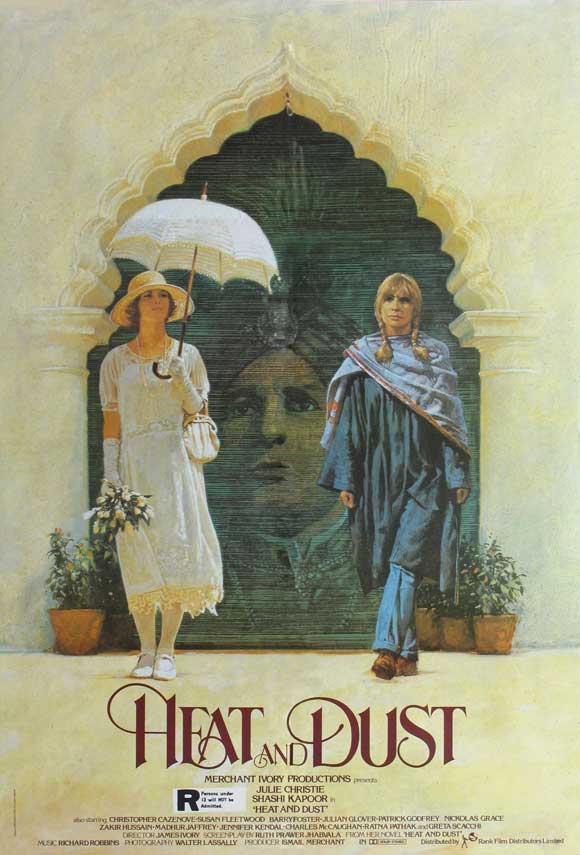
Heat and Dust (1983)

heat and dust

By Richard Winters

My Rating: 5 out of 10

4-Word Review: Illicit love in India.

Anne (Julie Christie) has acquired a great fascination with her long-lost Aunt Olivia (Greta Sachi) who was involved in scandal while living in India during the 1920’s. After doing some extensive interviews with Harry (Nickolas Grace) a man who knew Olivia and was friends with her during the period, Anne decides to make a trek to the region herself.  Although several decades removed Anne still manages to find some interesting things about her Aunt including her illicit affair with a local ruler named Nawab (Shashi Kapoor) which caused great scandal at the time and forced her to go into hiding.

The film has a unique structure in that it weaves back and forth between the ‘60s when Anne travels to the region and the ‘20s when Olivia was there. Initially this is slightly off-putting as it cuts back and forth quite suddenly and without warning, but eventually I adjusted to it and amazingly it comes off quite seamlessly most of the way. The film spends more time on Olivia, but by the end it’s cutting between the two every couple of minutes and it one cool moment even have the two come together in a surreal type of way. The only real problem I had with this is when Anne meets a young American man who has ‘purified’ himself from the capitalistic culture of the west, but then still seems to fall back on his old ways at times creating a tumultuous relationship with Anne that I found rather interesting and was upset when the film suddenly cut back to Olivia and then stayed with her for too long a time before going back.

I enjoyed the on-location shooting of India, which makes you feel almost like you’ve traveled there yourself. The film not only analyzes the crowded squalor of the big cities, but also the rocky beauty of its rugged terrain. The film immerses the viewer in the culture looking at both the positive aspects of it as well as the negative, which gives you an overall balanced viewpoint. However, I would have liked more an expansive look of the area with greater use of a wide angle lens and a few bird’s-eye shots of the city, but this was most likely limited because of budget restraints.

I enjoyed the wide-eyed idealism of the Olivia character and Sacchi captures it just right. Christie is also solid, but in the end a bit wasted. The film itself is interesting enough to hold your attention, but some of the scenes go on longer than necessary and could have easily been trimmed. The story seemed rather simple and predictable and has no action at all making the runtime excessive especially with a final payoff that is not too exciting and leaves more than a few loose ends open.

My Rating: 5 out of 10

Released: September 15, 1983

Runtime: 2Hours 13Minutes

Rated R

Director: James Ivory

Studio: Merchant Ivory Productions

Available: VHS, DVD