Category Archives: Black & White

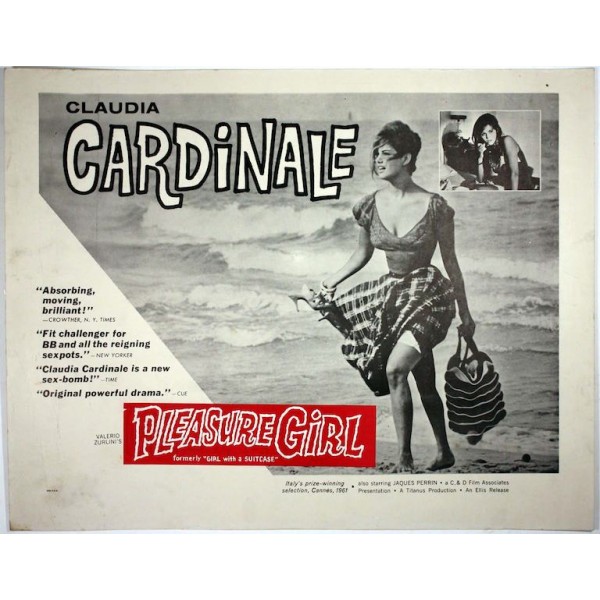
Girl with a Suitcase (1961)

girl with a suitcase

By Richard Winters

My Rating: 9 out of 10

4-Word Review: She likes shy guy.

This movie will start off a week long theme of romance movies in celebration of Valentine’s Day, which will be on the 14th. One romance movie from each decade will be reviewed starting with this sleeper from Italy that is well worth seeking out.

The story is about Aida (Claudia Cardinale) a young woman who is abandoned at a gas station after having a fight with her boyfriend. When she eventually tracks him down at his house she finds that she is actually more attracted to his younger brother Lorenzo (Jacques Perrin). Although Aida is more worldly-wise and Lorenzo shy and sheltered the two slowly form a bond that becomes emotionally compelling.

This is one of those films that despite being made over 50 years ago is still amazingly fresh. The characters are believable and reveal different layers of themselves in interesting ways. Claudia has never looked more beautiful and her performance here may be her best. Perrin is also excellent and the viewer cannot help but emphasize with him. The film packs some very powerful scenes and imagery that stays with you long after it is over and it manages to do it in a natural way that never seems forced.

If I have one complaint it is the fact that it becomes bit protracted especially at the end. Shaving the runtime by 30 minutes would have helped and possibly even made it stronger. However, Valerio Zurini’s direction is still top-notch.

The film features two fascinatingly fractured characters that are played to the zenith by the two leads. This is a film that deserves way more attention. The script, direction, and black and white cinematography are superb.

My Rating: 9 out of 10

Released: February 9, 1961

Runtime: 1Hour 55Minutes

Not Rated

Director: Valerio Zurlini

Studio: Ellis Films

Available: VHS, DVD

Inherit the Wind (1960)

By Richard Winters

My Rating: 6 out of 10

4-Word Review: Don’t teach Darwin theory.

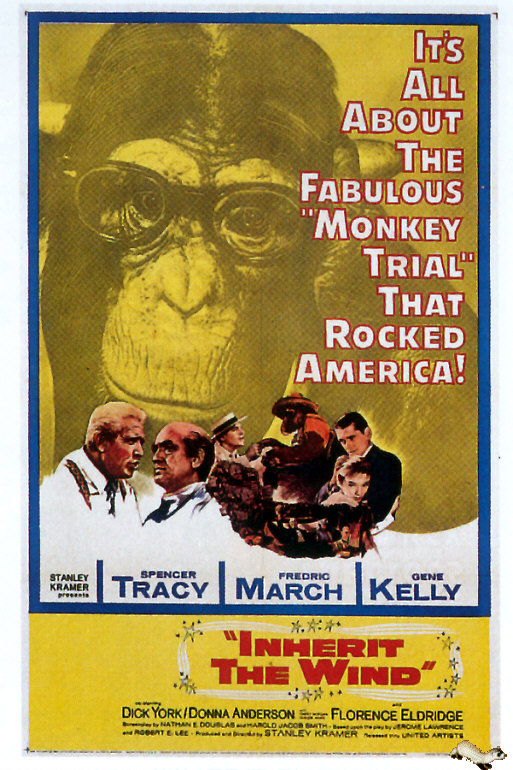
Bertam Cates (Dick York) is a  young school teacher who is put on trial for the teaching the Darwin theory of evolution in the film version of the hit stage play, which in turn was a variation of the famous trial of 1925.

Although labeled a ‘classic’ this film seems awfully stilted and heavy-handed. Everything gets overplayed with too much emphasis on high drama, which in certain instances becomes unintentionally funny. Director Stanley Kramer shows his bias from the beginning and doesn’t allow the viewer to come to their own realization on the issue. The townspeople are the embodiment of every small town cliché you can think of. The buildings that make up the town appear quite obviously to have been built on some studio back-lot. The same goes for the stagy indoor sets as well. Location shooting really helps even if it does go over budget. Just look at this film and then watch Joshua Logan’s Picnic and then decide which one gives you the stronger more lasting impression of small towns.

Fredric March is an accomplished actor, but goes over the top with his performance as the fundamentalist prosecutor Matthew Brady. He plays the character like he is a comical buffoon and uses too many exaggerated gestures and facial tics. Having the character go through a meltdown at the end is almost anticlimactic since he seemed destined for it from the very beginning. George C Scott, who played the same role in the Showtime remake, is much better.

Spencer Tracy as the defense attorney Henry Drummond is great and becomes the film’s main virtue. He is such a master of his craft that he is a joy to watch. He makes it seem all so effortless and natural and yet fascinating at the same time and the character he creates is quite memorable.

The courtroom showdown does allow for some fireworks and the final segment between Gene Kelly and Tracy proves interesting and introspective. The film does have some strong moments, but as a whole it seems kind of clunky.

My Rating: 6 out of 10

Released: July 21, 1960

Runtime: 2Hours 8Minutes

Rated NR (Not Rated)

Director: Stanley Kramer

Studio: United Artists

Available: VHS, DVD, Amazon Instant Video 

Seconds (1966)

By Richard Winters

My Rating: 8 out of 10

4-Word Review: Starting a new life.

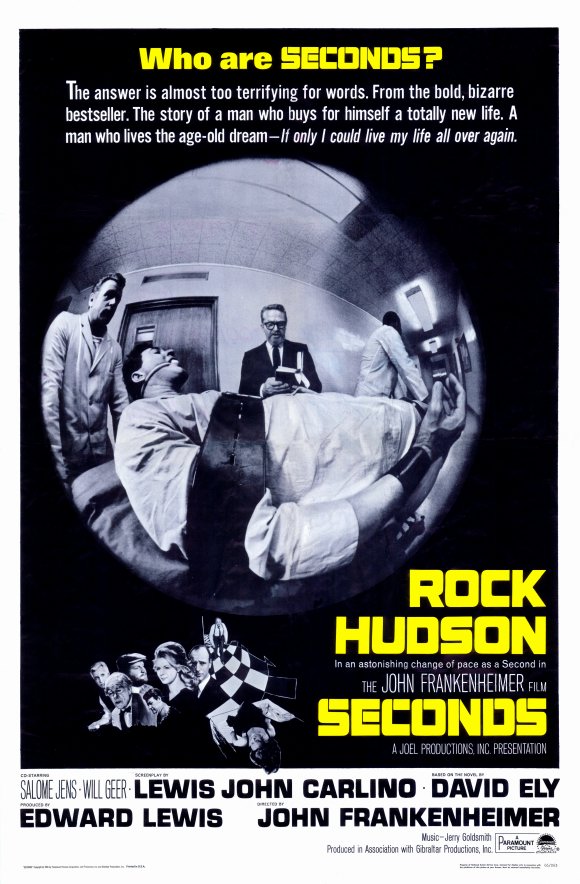
Arthur Hamilton (John Randolph) is a middle-aged man just going through the paces of life. He is stuck in a marriage that no longer has any spark and a job that is boring. His life is confined to the basic suburban rituals and he is quietly looking for a way out. Then he gets a call from Charlie Evans (Murray Hamilton) who he thought was dead. Charlie tells him that he is very much alive, but with a new identity. Arthur goes to a address that Charlie gives him and there he is told for $30,000 dollars he can be ‘reborn’ and given a completely new identity via plastic surgery as well as a whole new life with new friends and no connection to his dreary past. He would even be given a new set of fingerprints and new teeth while the death of his former self would be created in a way that it would leave no question, or suspicion.

This story is unique and fascinating on many levels. It pinpoints the monotony of middle-aged life and views living in suburbia not as the great American dream, but more as the American trap. I enjoyed the part where one of the Doctors named Davalo (Khigh Dhiegh) tells Arthur who has now been changed into Tony Wilson (Rock Hudson) that his new identity will be that of an established painter and he will no longer have to be quarantined with any responsibility and will instead be able to live the rest of his life pursuing is own individual interests, which is probably what everyone secretly desires.

The second half of the story where Tony tries to adjust to his new ‘dream’ lifestyle is equally as interesting if not more. Tony finds that his new friends and neighbors are other ‘reborns’ who will not allow him to backtrack into his old identity and seem compelled to keep in line with his new environment whether he was completely happy with it or not. During this segment I couldn’t help but think of the characters from Easy Rider and how Tony’s situation wasn’t much different. Both longed for complete personal freedom, but the more they tried to escape the societal strings the more they seemed to be dragged back into it. The part where Tony goes back to visit his wife while under the disguise of being a long lost friend of her late husband is revealing and dramatically the strongest part of the whole film.

John Frankenheimer’s direction is superb and intoxicating. The opening sequence featuring a lot of distorted imagery is excellent and creates a terrific mood for the story. The dream sequence where Arthur finds himself in a hotel room with another woman is captured in such a way that it looked almost like a Salvador Dali painting. The use of the fish-eyed lens that is put in at certain strategic moments is effective as well as stylish. The black and white cinematography is evocative and the organ playing soundtrack is distinct and moody.

Rock Hudson has always seemed to me as a weak leading man and apparently Frankenheimer considered him ‘lightweight’ as well, but when his first two choices turned down the role he decided to go with him and here it actually worked. I felt Hudson’s blank expression and confused demeanor fit well with the character’s situation. The part where he is shown tied to a bed and struggling to get out while his mouth is gagged is convincing. Veteran actor Randolph is quite good in the beginning playing Arthur a man who seems run over by life. The close-up of his nervous and sweating face leaves a strong impression. Will Geer is also excellent in support as the founder and head of the secret organization.

The twist ending is well done although I saw it coming long before our naïve protagonist did. Unlike the book it is clearer and less vague. This is one case where the film can make a great companion piece to the book, or vice versa. This is a definite sleeper of a movie screaming for more attention and has strong cult potential.

My Rating: 8 out of 10

Released: October 5, 1966

Runtime: 1Hour 46Minutes

Rated NR (Not Rated)

Director: John Frankenheimer

Studio: Paramount

Available: VHS, DVD,  Blu-ray (Criterion Collection) Amazon Instant Video

Paper Moon (1973)

By Richard Winters

My Rating: 7 out of 10

4-Word Review: Tatum is the star.

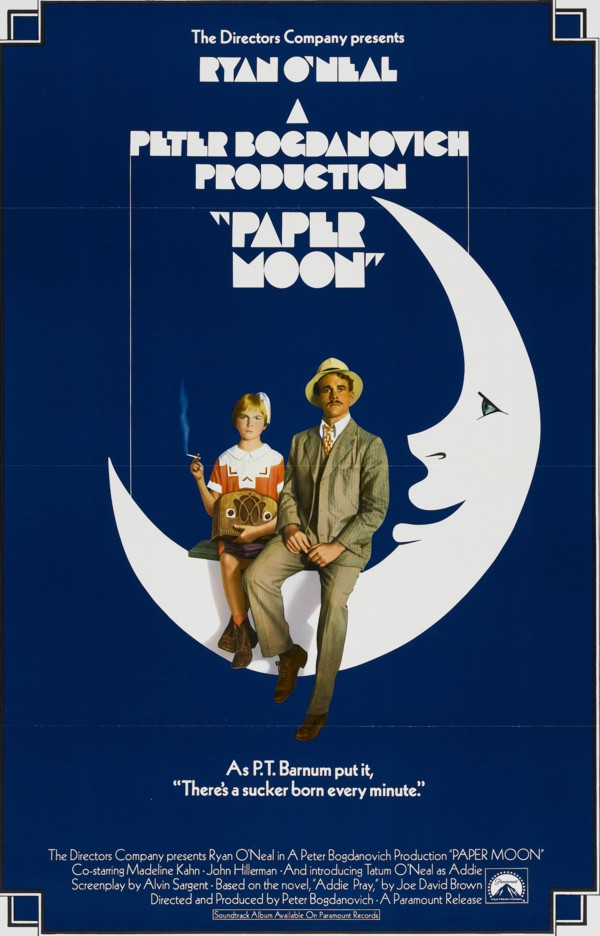
Due to the recent reality show airing on the Oprah Winfrey Network about Tatum and Ryan O’Neal trying to patch things up as father and daughter after years of acrimony I thought it was time to dig up this gem of a 70’s movie and give it a review. It is the story of  Addie (Tatum in an Academy Award winning performance) a 11 year old girl who has just lost her parents and comes into the custody of a traveling salesman/con-artist (Ryan). Their relationship starts out as contemptuous, but eventually evolves into a strong friendship as the two travel the lonely roads of Kansas selling Bibles door-to-door during the Depression.

Lazlo Kovac’s incredibly evocative black and white cinematography is the true star here. Absolutely everything is in focus and his ability to bring out the beauty and charm of the otherwise barren and stark Kansas landscape is an achievement in itself. Tatum is sensational and eats up every scene that she is in. Madeline Kahn as Trixie Delight is also great. The opening scene where she walks up with her breasts juggling up and down in her dress is memorable. The story itself works off of the cuteness formula, but somehow manages to pull it off without it becoming forced or annoying.

Ryan’s performance is a little too affected. At times he becomes badly upstaged by his daughter and seems even a little intimidated by her. The film might have been better served with someone else playing the part. Also the scene showing him in the aftermath of a big fight where he gets beat up by a group of four men looks cheesy. He comes away with only a few cuts and bruises when it reality it should have been a lot worse.

Overall this is a charming and entertaining movie that, scene for scene, hits all the right marks. On a technical level this film is brilliantly photographed and directed and effectively brings back the 1930’s period detail and feeling.

My Rating: 7 out of 10

Released: May 9, 1973

Runtime: 1Hour 42Minutes

Rated PG

Director: Peter Bogdanovich

Studio: Paramount

Available: VHS, DVD, Amazon Instant Video

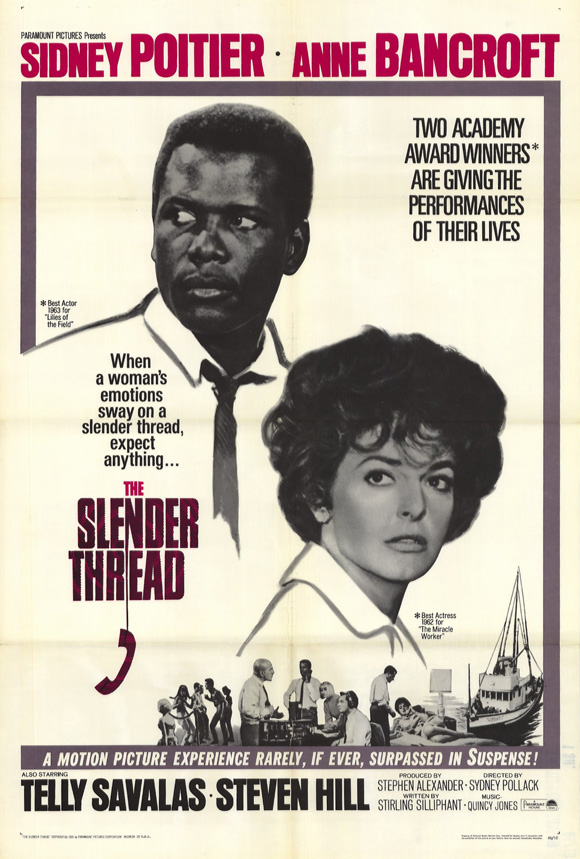
The Slender Thread (1965)

By Richard Winters

My Rating: 7 out of 10

4-Word Review: Desperate cry for help.

Inga (Anne Bancroft) is a middle-aged woman who has fallen into despair. She swallows a bottle of barbiturates and then in a last plea for help calls the local suicide hotline. On the other end is college student Alan Newell (Sidney Poitier) who is volunteering his time at the center and ill prepared for such a call. Despite this he manages to build a connection with her and the rest of the film deals with their conversation and Alan’s attempts at finding her location as well as flashbacks showing what brought Inga to such a desperate state.

This film will finally get its much awaited release onto both DVD and Blu-ray on October 16th and I highly recommend checking it out especially for those that can appreciate great film directing. This was Sydney Pollock’s directorial debut and his calculated touch is clearly what makes what could have otherwise just been a talky script into an intriguing visual showcase. The opening sequence showing an aerial shot of sprawling Seattle is excellent and sure to connect with those that live there. Pollock nicely adds some of the city’s unique architecture into the shots giving the fragmented narrative distinction. He also makes full use of the stark black and white photography. One of the most emotional and memorable scenes in the film is when Inga walks along a lonely beach and tries to help a crippled bird, which wouldn’t have been half as effective had it been done in color. Even the small things like watching a phone technician walking through rows and rows of telephone switchboards is captured with a pristine style that makes it intriguing. The pacing and editing is perfect and at no time does the film ever drag despite the fact that it could have done so if it had been put in less competent hands.

Poitier is exceptional in the lead. Initially I was put off with the idea of a 38 year old man still trying to play a college student, but Poitier is completely believable. It was nice seeing him in a role where the race card never came into play. The film cuts back and forth to the dramatic search by the police to find the woman, but in many ways I found Poitier’s banter with Inga and the many different psychological ploys he uses to try to connect with her far more riveting. Bancroft is equally as good and her distraught facial expressions leave an imprint. Steven Hill lends terrific support as her unhappy husband.

In the complaint department I felt that the music at the beginning seemed much too upbeat and jazzy for a film with such a somber subject. The Inga character gets unraveled too easily and quickly and certain viewers may be put off by her selfishness of trying to kill herself and abandoning her young son. The biggest issue though was with the ‘Hollywoodnized’ ending that devolved a bit too much into the cliché. Otherwise this is a sleeper waiting to be discovered.

Twenty-one years later Bancroft again starred in a film dealing with suicide only this time she played the person trying to talk the other one out of it. That film was entitled ‘Night Mother and will be reviewed on Monday.

My Rating: 7 out of 10

Released: December 23, 1965

Runtime: 1Hour 38Minutes

Rated NR (Not Rated)

Director: Sydney Pollock

Studio: Paramount

Available: VHS, DVD, Blu-ray 

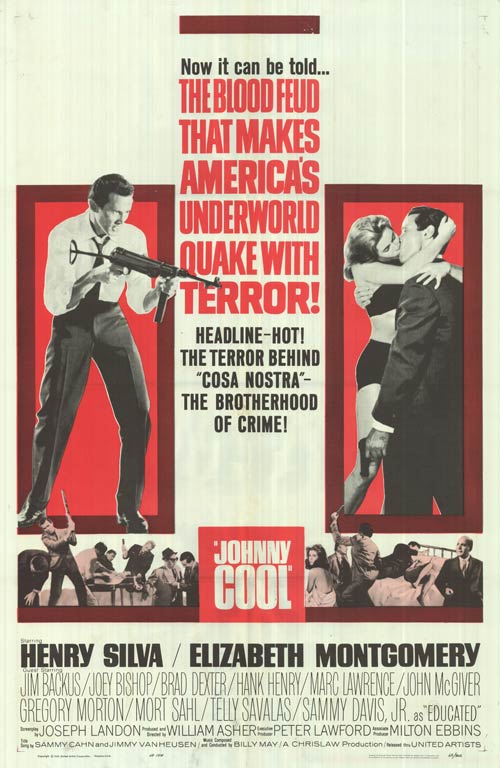
Johnny Cool (1963)

By Richard Winters

My Rating: 7 out of 10

4-Word Review: Top of crime world.

                Johnny Cool (Henry Silva) is really Giordano a man who grew to mythical proportions as an outlaw in a small Italian village after killing off some soldiers who tried to rape his mother. His exploits come to the attention of  Colini (Marc Lawrence) who has been exiled to Sicily because of his gangster past. He stages a fake assassination of Giordano in order to kidnap him and train him to go back to the United States and kill off the men that ordered his downfall. Johnny does this, but then becomes even more powerful than Colini was and soon he is both feared and hunted by the crime world.

The film, which was directed by William Asher, is nicely paced. I liked the fast, gripping action, the pounding music, and raw approach. The black and white photography nicely accentuates the gritty subject matter. Although it may seem a bit tame by today’s standards I still found most of it to be intense and uncompromising especially the ending.

Lots and lots of famous faces pop up everywhere, which is fun for a bit, but then takes you out of the story as it seems to become more like ‘spot the star’. Some of the cameos are small and pointless while others are more interesting. Sammy Davis Jr. has a tense scene playing a man with an eye patch who must role a specific number with the dice or be blown away by Johnny’s gun, which is aimed directly at his temple. Joey Bishop is funny as a fast talking used car salesman and his feeble attempts at making a play at the beautiful Dare (Elizabeth Montgomery). John McGiver is equally fun as a perplexed store manager who brings in a woman to his office after finding that she has been writing a lot of bad checks. The exchange he has with her is a perfect example of why sexual innuendos where a lot more interesting and creative back in the old days when the standard didn’t allow them to be as crass and vulgar as they are now. Here the lady states “I can make those bad checks good.” And McGiver responds after eyeing her figure “Yes, I think you can!”

Telly Savalas is wasted. The man is a great character actor especially as a villain. Playing a tough crime boss from Brooklyn is his forte and he could have really gone with it had they given him a bigger part. Marc Lawrence is equally evil as Colini and showing him only in one scene and then disappearing was disappointing. Jim Backus’s appearance was a mistake. A funny, talented man for sure, but I didn’t like that he did his Mr. Magoo laugh several times here as it did not fit the gritty mood.

Henry Silva has proven to be a great villain throughout his career, but in this role it just doesn’t work. His eyes have a weird type of stare that makes it look like he has been drugged. He delivers his lines in a monotone fashion. The character becomes overblown and some may find his use of the karate chop to be a bit cheesy. He kills a man on an escalator amidst a crowded airport and is able to get away. There are several other scenes where he is able to somehow get into a secure area and kill off people without any explanation for how he was able to do it.

Elizabeth Montgomery, who was at the time the wife of the director, is fantastic. She plays a brunette and does well with a multi-faceted character that goes from helpless victim to conniving double-crosser. She is shown in several scenes wearing no make-up and I liked the naturalistic quality. My only quibble is the scene where she gets roughed up by some gangsters, but the only mark left on her is a bruise on a shoulder even though a few bruises, scratches, and cuts on the face would have been not only more believable, but visually more effective.

My Rating: 7 out of 10

Released: October 2, 1963

Runtime: 1Hour 43Minutes

Rated NR (Not Rated)

Director: William Asher

Studio: United Artists

Available: DVD, Netflix streaming

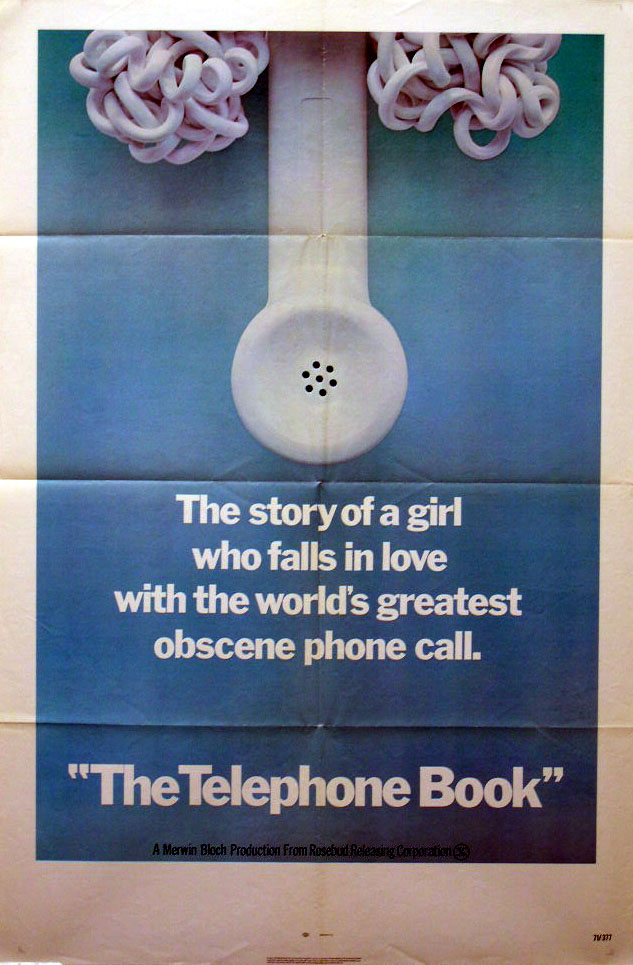
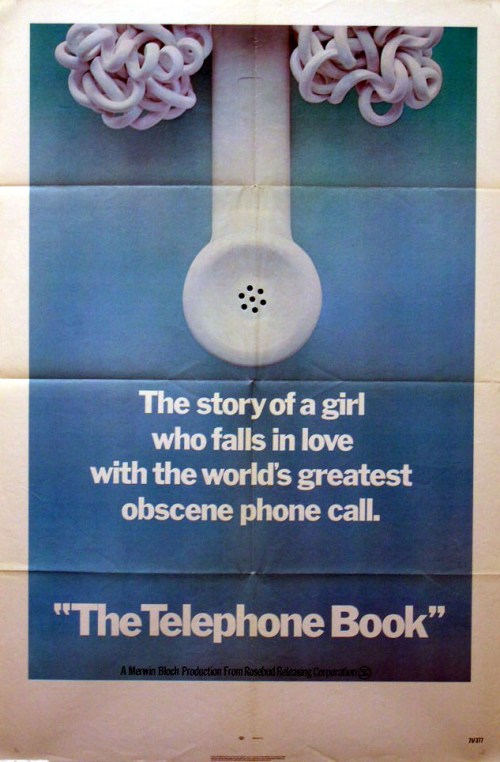
The Telephone Book (1971)

By Richard Winters

My Rating: 7 out of 10

4-Word Review: She likes obscene calls.

            Due to the recent death of writer/director Nelson Lyon on July 17th I felt it was time to dig up my old copy of this bizarre underground cult flick and give it another view. I stated in another review I made about this film that I considered it The Gone with the Wind of underground moviemaking and I still stand behind it. The film is hampered by its low budget and black and white photography, but I was impressed with it creative camera angles, editing, set design and music. Lyon showed a genuine vision and made the most out of what little resources he had. Even the content, which could be seen as pornographic by some, is presented in such a quick paced and diverting style that it becomes engaging and amusing.

The basic premise deals with Alice (Sarah Kennedy) an over-sexed young blonde living alone in an apartment with walls lined with wall paper that has hundreds of pictures of people in various sex acts. One day she gets a call from an obscene phone caller and she falls in love with him because it was the ‘most sweetest and most beautiful dirty call’ she had ever received and although she had received other obscene calls in her life this one ‘had class’. She becomes obsessed with meeting the man. He tells her that his name is John Smith and that he is ‘in the book’.  She goes through the telephone book to call him up, but because she lives in New York City she realizes there are a lot of John Smiths. The rest of the film deals with her encounters of all the various John Smiths that she meets as well as her climatic meeting with the real John Smith and the very weird conversation that she has with him.

The film’s structure is basically made up of a lot of vignettes all dealing with various forms of perversity. Some famous character actors appear in cameos and some of which prove to be quite outrageous and funny. Barry Morse best known for playing Lieutenant Gerard in the 1960’s TV-series ‘The Fugitive’ has one of the film’s best moments playing Har Poon ‘the greatest stag movie actor of all-time’. He has a scene where 10 naked ladies, at least that is how many I was able to count, all jump on top of him and begin sucking on his various body parts. There is Roger C. Carmel as a psychiatrist who enjoys exposing himself to ladies on a subway train, but when Alice decides to do the same thing in return he becomes shocked and repulsed. Character actress Lucy Lee Flippan makes her film debut here as a ‘reformed’ obscene phone caller who describes how when her husband was away at work and her kids where at school she would call up men at their jobs and talk dirty to them while masturbating  with a banana. There is also William Hickey playing a man suffering from a permanent and incurable erection.

The best appearance though comes from Norman Rose famous for narrating many films. Here he appears wearing a mask of a pig and playing the actual obscene phone caller. He describes how he calls 4 different women a night every week of the year except for two when he goes on vacation to ‘get out of the grind’. He also explains how he has perfected his obscene phone skills to the point that he could seduce the president of the United States if he wanted to, but doesn’t because he has ‘no political ambitions’. The conversation gets weirder including telling Alice about his foray into becoming an astronaut while he seductively washes her hair, but Lyon’s use of imagery during this segment keeps it interesting and even memorable. My only complaint would be that I wished he had taken off the mask so we could have seen what he really looked like.

The film ends with an eye popping animation segment dealing with a giant headless naked woman who squats down and has sex with a sky scrapper that needs to be seen to be believed. This is also the only part of the film that is in color.

Despite the fact that it was all done on a shoestring budget and with no character development I had few complaints although I didn’t understand how the obscene caller was always able to call up Alice and get a hold of her even when she was not at home and at someone else’s place. This was of course before cellphones, but I suppose demanding logic from a film that otherwise revels in the absurd would prove futile. The film did not do well on its initial run, but was rereleased in 2011 to much more positive reviews both here and in Europe. Through word of mouth it is expected to gain the cult following it deserves and maybe eventually a DVD or Blu-ray release.

Kennedy is delightful in the lead, but her appeal may depend on one’s personal tolerance. She looks and acts almost exactly like Goldie Hawn and was her replacement on the ‘Laugh-In’ show when Hawn left to concentrate on her movie career. I enjoyed Kennedy’s giddiness and child-like enthusiasm to all the perversions around her, but her voice sounds like she has sucked in helium and could prove annoying to some.

My Rating: 7 out of 10

Released: October 3, 1971

Runtime: 1Hour 24Minutes

Rated X

Director: Nelson Lyon

Studio: Rosebud Films

Available: VHS, DVD, Blu-ray 

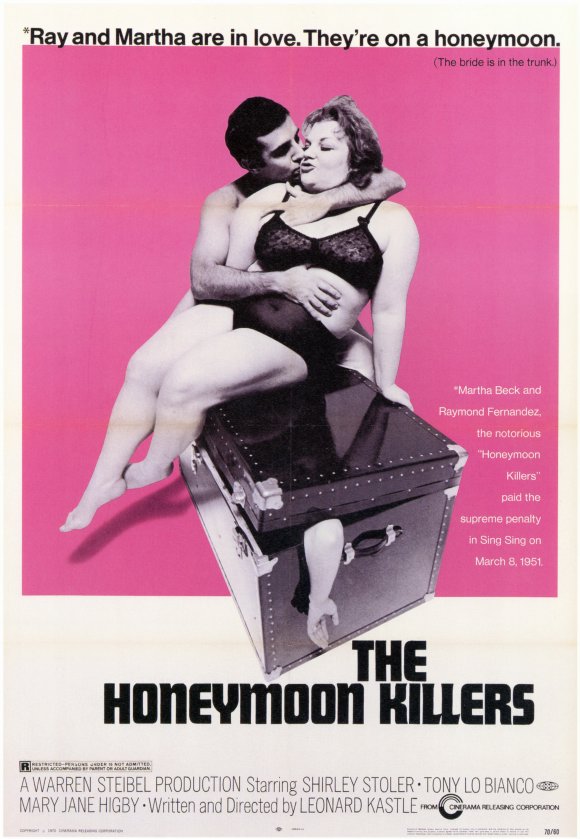
The Honeymoon Killers (1969)

By Richard Winters

My Rating: 7 out of 10

4-Word Review: Kill the old ladies.

A lonely and overweight nurse by the name of Martha Beck (Shirley Stoler) meets and falls in love with the shady Raymond Fernandez (Tony Lo Bianco) through a ‘lonely hearts’ club. As their relationship progresses he confides in her his practice of marrying women and then robbing them of their savings. She decides to get in on the scheme by posing as his sister. Together they roam the countryside and murder and rob lonely old ladies in this darkly humored tale that is based on actual events.

It is impossible to watch this film and not have actress Shirley Stoler imprinted on your mind forever after. The scenes of her working at the hospital make her seem like the ‘real’ Nurse Ratched. Lo Bianco is also perfectly cast in his role as Fernandez when one reads the actual account of the case the face and voice of Lo Bianco’s almost immediately comes to mind even before you’ve seen the film. His slow revelation at finding out just how vicious and cold Martha really is and that she ends up shocking even him is memorable. The crime sequences themselves are more like humorous vignettes. The lady victims are all humorously flawed and portrayed with such a variety of annoyances that you end up finding yourself looking forward at seeing them ‘get it’. The music played over the killings that starts out low as the crime begins and then builds to a loud and intense crescendo is terrific and the black and white cinematography nicely compliments the stark subject matter.

I was disappointed that although this is a story that is based on actual events for whatever reason the film is set in the present day when the actual events took place in the 1940’s.This was possibly done for budgetary reasons, but it would have made it much more authentic had it been kept in its proper time period. It would also have helped the viewer gain a little more understanding to the Martha Beck character had it given us more of a background on her. In real life Beck had been abused by her father and was also the mother of two children and yet the film never even mentions any of this.

The film wonderfully explores the twisted and sometimes pathetic nature of people in both the perpetrators and in the victims. This becomes much more than a simple reenactment of a true crime story and more like a dark expose of our fragmented world and the fringe characters that dwell in it.

Martin Scorsese was the film’s original director, but was fired early on due to creative differences. Leonard Kastle took on the reins and does a fine job. I like his grainy, cinema verite vision and it was a shame that this proved to be his only directorial effort

My Rating: 7 out of 10

Released: September 8, 1969

Runtime: 1Hour 48Minutes

Rated R

Studio: American International Pictures

Director: Leonard Kastle

Available:  VHS, DVD (The Criterion Collection) 

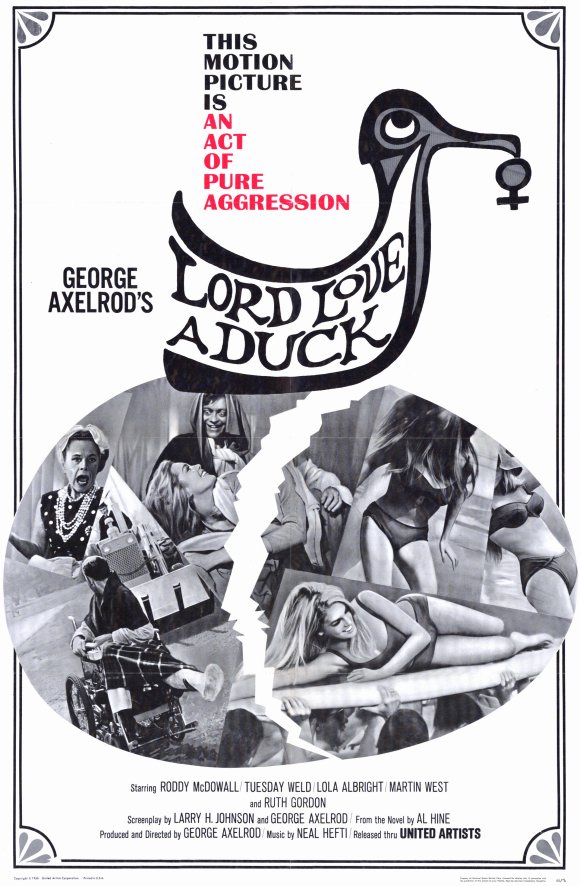
Lord Love a Duck (1966)

By Richard Winters

My Rating: 3 out of 10

4-Word Review: She wants it all.

If you ever wondered where political correctness got its start it was probably southern California in the mid 60’s. Here everything is neutralized and modified so as to ‘keep up with the times’. There’s even a drive-in church where the minister proudly exclaims that the Lord answers every prayer because “whatever happens is the answer”.

Tuesday Weld plays teenager Barbara Ann Greene who can’t be happy unless she has it all. She meets fellow high-schooler Allan Musgrave (Roddy McDowell) who because of his super intelligence is able to figure out ways for her to get what she wants. Yet the more she gets it the more unhappy she becomes.

It’s a satire on our consumer driven society, but it is too restrained and soft. A supposedly cutting edge film looking at our modernized world should have been filmed in color and not black and white. It also should have been faster paced with a heavier emphasis on the zany and outrageous. Instead we only get hints of this with a lot of slow segments and even some clumsy drama. The funny offbeat bits are spread out to thin and do not make up for the other parts that are boring and contrived.

There are some technical problems too including a lot of ‘outdoor’ shots that were really filmed indoors on a soundstage. They fortunately don’t do this anymore, but when they did it looked tacky. There is also a boom mike that is very obvious to see in several shots.

McDowell is not eccentric, nor unique enough for such an offbeat character. Although perpetually boyish looking he was way, way too old to be playing a high school student as he was 37 when this was filmed. Out of all the performers Harvey Korman comes off as the most amusing playing the overtly congenial school principal.

This film does feature an attractive cast. Of course Weld is always alluring, but she has competition from Jo Collins who was Playboy Playmate of 1965. There is also Lynn Carey daughter of the late actor MacDonald Carey from ‘Days of Our Lives’ fame. She is exceptionally good looking and watching here gyrate in a bikini to the latest dance craze is damn near pornographic. For her age Lola Albright, who plays Weld’s mother, is an absolute knockout and she can officially be crowned as a ‘milf’.

My Rating: 3 out of 10

Released: February 21, 1966

Runtime: 1Hour 45Minutes

Rated: NR (Not Rated)

Director: George Axelrod

Studio: United Artists

Available: VHS, DVD

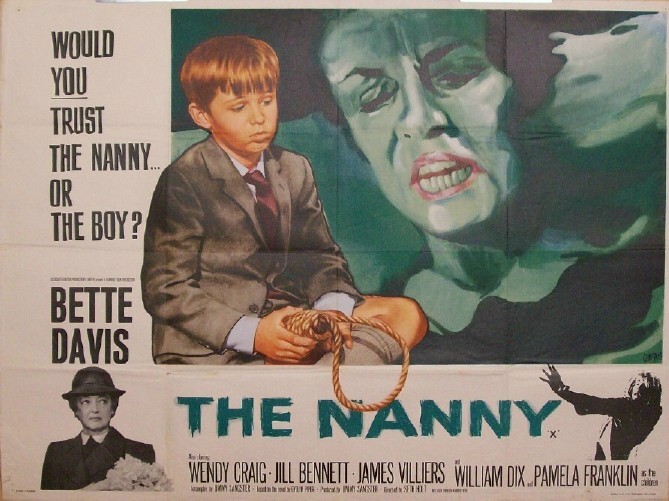
The Nanny (1965)

By Richard Winters

My Rating: 5 out of 10

4-Word Review: Kid doesn’t like nanny.

            Bette Davis plays a nanny to an upper-class British family whose oldest son Joey (William Dix) is accused of accidently killing his younger sister. Joey, who is only 10, is sent away to a home for disturbed children. When he returns he accuses the nanny as the one who did the killing and a psychological game of cat-and-mouse ensues.

Davis is sensational. She plays a type of character that she has never done before and the results are fascinating. She is much more subdued and evasive than usual and she falls into the role of the unassuming nanny in a seamless fashion. The different setting works well for her and I commend her tenacity for taking on a project that was not glamorous. She even puts on some thick eyebrows for her part and at times, especially at the beginning, she starts to resemble her most hated rival Joan Crawford.

Dix is amazingly good as the kid and it is a shame that he did only one other picture after this one. I liked the independent nature of the character and he plays off Davis quite well and showed no signs of being intimated by her. Making the adversaries have such extreme age difference and personalities gives the story an interesting edge that helps carry the picture.

The evocative black and white photography helps accentuate the dark-tone. The British setting along with the expected formalities of that culture, particularly that from the father character Bill (James Villers) give the film some distinction.

The first act though goes on way too long. We are given the general premise right up front and then have to spend the whole first hour going through the scenario that Joey doesn’t like his nanny and is suspicious of her again and again until it becomes derivative. When the second act does finally come about it seems too late. The revelation isn’t all that clever or creative and the climactic sequence desperately needed more action and punch. The final result is unsatisfying. The viewer is given an intriguing premise that it can’t sustain to the end ultimately making this a misfire despite the outstanding presence of Davis and some high production values.

There is also the issue of the three-year-old girl who is adorable and an absolute scene stealer and yet right up front you are made aware that she is killed, which makes the proceedings rather depressing. Having to then watch her actual death is disturbing and, for its time period, rather vivid and startling.

My Rating: 5 out of 10

Released: October 27, 1965

Runtime: 1Hour 31Minutes

Rated: NR (Not Rated)

Director: Seth Holt

Studio: Hammer Productions

Available: DVD