Category Archives: 80’s Movies

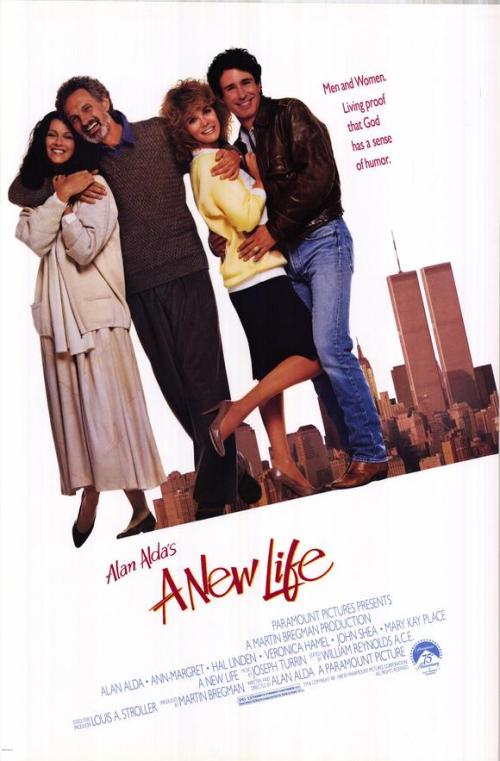
A New Life (1988)

By Richard Winters

My Rating: 2 out of 10

4-Word Review: Life after a divorce.

Steve (Alan Alda) is shocked to learn that his wife of 26 years Jackie (Ann-Margret) wants a divorce, which forces him back into the dating scene that proves awkward. He eventually meets Kay (Veronica Hamel) and the two hit-it-off while Jackie gets into a relationship with a young artist named Doc (John Shea). Kay and Steve get married, but Jackie tires of her relationship and decides she’d be better off single.

Despite sporting an afro and beard it’s still the same Alda making the same bland type of movie with this one being more vanilla than his first two directorial efforts. At least with The Four Seasons and Sweet Liberty there was a mildly amusing spin to it, but here it’s sterile to a mind numbing degree and filled with nothing but generic characters going through basic life events almost like an inoffensive TV-movie on steroids.

Cutting back-and-forth between Alda’s budding new relationship and then Ann-Margret’s doesn’t work. At least with Alda there was a character arch as he goes from being a curmudgeon to sensitive modern day male, while Ann-Margret starts out cold and then just stays that way. As an actress she seems to have a hard time showing any genuine emotion while her attempts to convey inner angst come off looking quite affected. I realize she’s had a long, solid career, but her presence here is just plain blah and her square jaw features makes her look more and more like a female impersonator the older she gets. I also never believed that these two people were ever really married as they lack chemistry and their strained ‘spats’ become as trite as the material

The most annoying thing though is the scene where Alda grabs his chest while playing tennis and complains about severe pains so he’s rushed to the hospital, which is where he meets Kay. However, the lab tests reveal nothing wrong with him and the whole event gets written off as being ‘no big deal’ and never mentioned again, which is absurd.  People don’t collapse to the ground crying out in pain over ‘nothing’ as there had to have been some cause for it, so what was it? Having a movie blithely skip over this and treat it like some meaningless anomaly simply as an excuse so his character could begin a romance with Kay is truly weak writing and makes this threadbare film even more shallow.

Hal Linden is fun as Alda’s glib, womanizing friend and he should’ve been in the movie more since he’s the only thing that gives it a modicum of life while scrapping the side-story dealing with Ann-Margret. Focusing solely on these two middle-aged bachelors trying to make a go of it in the trendy, single’s scene had potential. At least it would’ve been better than the overly pat thing we get here that fails to stand out in any way.

My Rating: 2 out of 10

Released: March 25, 1988

Runtime: 1Hour 44Minutes

Rated PG-13

Director: Alan Alda

Studio: Paramount

Available: DVD, Blu-ray, Amazon Video, YouTube
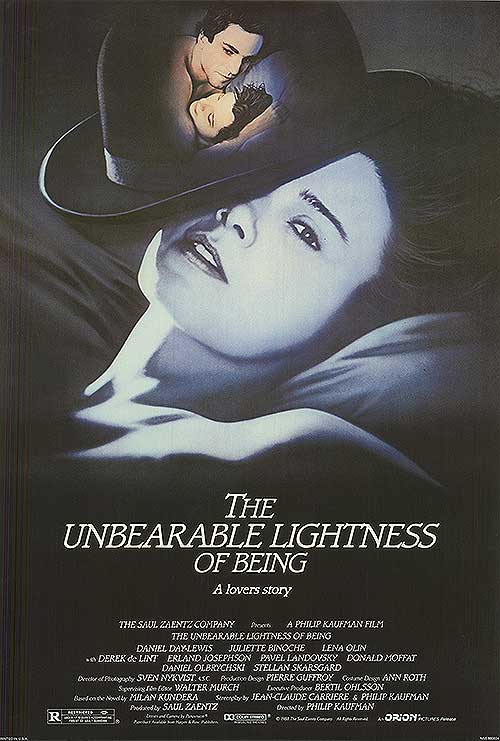
The Unbearable Lightness of Being (1988)

By Richard Winters

My Rating: 6 out 10

4-Word Review: He fails at monogamy.

Tomas (Daniel Day-Lewis) is a successful surgeon living in Prague during the 1960’s who has a way with the ladies. He enjoys his robust sex life, but then falls for the awkward and plain Tereza (Juliette Binoche) and the two get married even as Tomas continues to see other women on the side. Tereza becomes upset by this and threatens to leave him only for the two to get swept up into the events of the Prague Spring where Soviet tanks invade their country. They escape to Switzerland but Tereza is unhappy there as well and moves back to Czechoslovakia with Tomas later following. Although their living conditions under communist rule are harsh they still find that their mutual love keeps them happy anyways.

Although masterfully directed by Philip Kaufman I still found the characters to be poorly etched. Tomas’ ability to get beautiful women to literally throw themselves at him never gets properly explained. Yes he is good-looking, but there are a lot of handsome guys who aren’t able to get women to shed their clothes for them at seemingly the snap-of-the-finger. Some clear social skill or persuasive ability had to be shown and clarified to make the women’s behavior more understandable, but this never effectively gets addressed. The scene where Tereza gets ‘overpowered’ by Tomas’ aura when all he is doing is sitting at a table in a café reading a book, but it’s enough to get her to run up to him and tell him she’s available is a big stretch and makes this supposedly profound movie look like it was built on a very superficial foundation.

There’s also the question as to why Tomas would want to marry Tereza to begin with. This is a guy who can literally get any beautiful woman he wants so why settle for the dowdy/shy Tereza? What is it about her, or about his inner mind that would want to make him commit to her and not the others?

His relationship with Sabina (Lena Olin), who is his independent- minded off-again-on-again lover is far more believable and kind of made me wonder why Tereza even needed to be in the mix at all. As much as I liked Sabina I did find the storyline dealing with her budding relationship with Franz (Derek de Lint) to be rather unengaging. However the friendship that blossoms between her and Tereza as well as the underlying lesbian subtext is interesting and yet the film introduces this in a very long, drawn-out segment inside Sabina’s apartment only to then drop it without ever exploring it to its satisfying and full conclusion.

On the technical side it’s a splendid production. I particularly liked the imagery of the tanks rolling into the city and how Tomas and Tereza’s presence gets cropped into actual footage of the real-life event and how seamlessly it goes between black-and-white and color. Sven Nykvist’s cinematography is a marvel. Initially I felt his talents were wasted as the camera only captures the bleak colorless surroundings of old-town Prague, but then when the couple returns to the city after their brief foray in Switzerland the decay and grayness becomes even more pronounced and helps convey visually the depressing feeling of the communist oppression.

The film, which is based on the novel of the same name by Milan Kundera, has an interesting message, but it failed to give me as a viewer any type emotional impact. I was never able to understand what made these characters tick. This might’ve gotten better addressed in the novel, which I didn’t read, but gets lost in translation here and ends up hurting the provocative imagery that to some degree gets a bit over-the-top anyways. This could also help explain why despite being on the set as an ‘advisor’ Kundera expressed displeasure with the film version and refused to help promote it.

My Rating: 6 out of 10

Released: February 5, 1988

Runtime: 2Hours 53Minutes

Rated R

Director: Philip Kaufman

Studio: Orion Pictures

Available: DVD, Amazon Video, YouTube

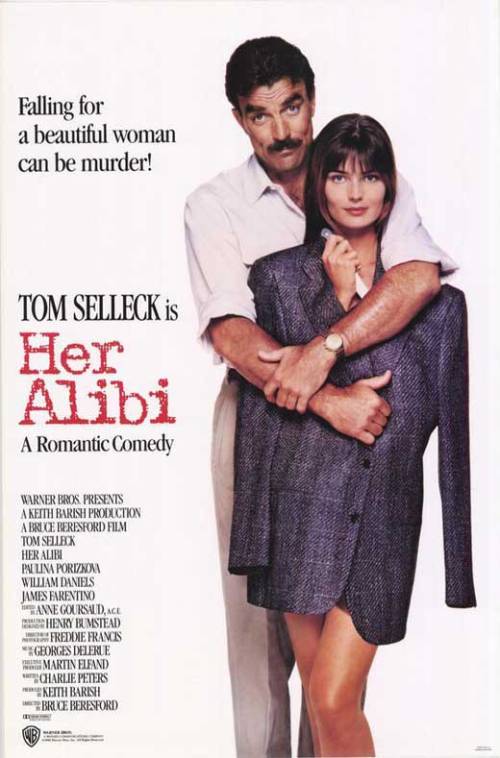
Her Alibi (1989)

By Richard Winters

My Rating: 2 out of 10

4-Word Review: Novelist falls for suspect.

Phil Blackwood (Tom Selleck) is the author of a successful series of mystery novels, but now finds himself dealing with writer’s block and unable come up with a plot for his next book. Then he meets the beautiful Nina (Paulina Porizkova) a Romanian woman charged with murder. With the help of his publisher Sam (William Daniels) they concoct an alibi that allows her to be released from jail on bond. She then moves in with him in his large home where Phil feeds off her presence to come up with his next story idea while also keeping an eye on her to make sure she won’t try to kill him when he is not looking.

Although Paulina got nominated for a Golden Razzie award for worst actress of 1989 (eventually losing out to Heather Locklear) I still came away feeling she was the best thing about this otherwise threadbare film. The former swimsuit model’s face is of course appealing and her accent is sexy, but what I liked even better is that she does not behave like most American beauties and instead is quite feisty, self-sufficient and opinionated. In many ways she upstages her more famous co-star by a mile and easily the one thing that helps propel this limp movie along.

Selleck has his charm, but he is not convincing at all as an author who should be nerdier and resemble a book worm.  The character appears to have had a very successful writing career already as evidenced by all the book covers of his novels that gets shown during the film’s opening credits, which is the coolest part of the movie. His large home makes it seem that he could retire in luxury and thus the storyline involving his writer’s block adds no urgency.

The film’s lighthearted tone makes it clear that Paulina is not a dangerous killer and that she’ll somehow be found innocent in the end making the scenes showing Selleck’s paranoia about her seem silly and adds no true tension or multi-dimension.

The romantic angle is equally botched as there is too much of an age difference between the two (20 years) making Selleck seem almost like a father figure. It’s also hard to understand why this beautiful young woman would fall for such a clueless idiot who comes off as a benign bumbling dope that she can easily manipulate. What’s worse is that she throws herself at him an hour into the runtime, so there’s no longer any question of romantic intent making the final 30 minutes virtually pointless.

Lots of slapstick scenes get thrown in that has nothing to do with the main story and simply there to pad the runtime. The dumbest of these occurs near the end where Selleck and friends think that they’ve eaten a dinner that was poisoned. In a misguided attempt to flush the poison out, Patrick Wayne, who plays Selleck’s brother, drinks Drano which is quite obviously dangerous. He spits it out, but that wouldn’t stop his mouth from burning, blisters from forming, or flesh from peeling away from his mouth, which doesn’t occur, but normally would’ve. Film characters drinking Drano had already been done before in the movie Magnum Force and it inspired real-life criminals to force their victims to drink it in the infamous Hi-Fi murders that happened in Ogden, Utah in 1974, so for that reason alone it should never be shown in another movie again and for such a superficial production like this to just randomly putting it in and acting like it’s ‘funny’ is utterly irresponsible.

The film starts out engagingly enough, but loses the air in its tire long before it’s over. Even the normally reliable William Daniels gets wasted. He is quite adept at playing pompous authority types, like in the TV-show ‘St. Elsewhere’, but not as a passive schmuck like here.

My Rating: 2 out of 10

Released: February 3, 1989

Runtime: 1Hour 34Minutes

Rated PG

Director: Bruce Beresford

Studio: Warner Brothers

Available: DVD (Warner Archive), Amazon Video, YouTube

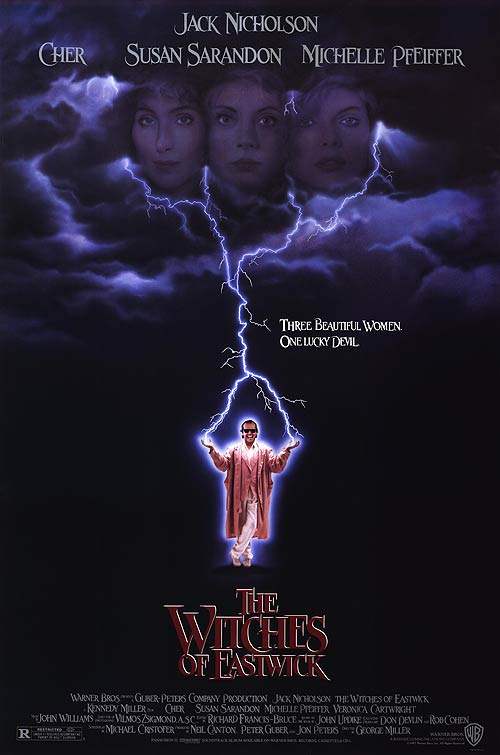
The Witches of Eastwick (1987)

By Richard Winters

My Rating: 7 out of 10

4-Word Review: Devil comes to town.

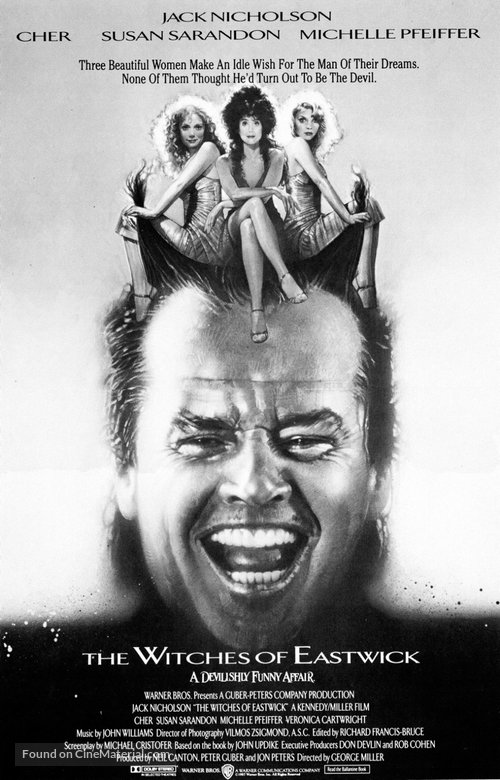
Based on the John Updike novel of the same name, the story centers on three single women (Cher, Susan Sarandon, Michelle Pfeiffer) living in the town of Eastwick, Rhode Island who are also witches, but don’t yet realize it. All three want to meet up with the man of their dreams, which ushers in Daryl Van Horne (Jack Nicholson). He is a rich playboy that buys the town’s landmark home the stately Lennox Mansion. The three women are initially seduced by his powers only to realize later that he is actually the devil incarnate and spend the rest of the time conjuring up a spell that will send him back to where he came from.

After achieving so much success with The Road Warrior franchise Australian director George Miller decided to take a stab at something completely different, but had to deal with studio politics during the production, which made the final product disjointed. However, despite an array of confusing plot points the offbeat elements are enough to hold your attention and keep things interesting.

The creative special effects add an imaginative flair, but tend to get overdone. I enjoyed the scene where Veronica Cartwright vomits out cherry seeds all over her house, which leaves an indelible impression, but then Nicholson does the same thing later inside a church where it becomes redundant and gross. Watching a floating tennis ball defying gravity is amusing, but not needed. This scene, where all four get together to play a game of tennis, should’ve instead focused on the underlying tensions between the characters, which would’ve given the movie some needed nuance.

I enjoyed Sarandon, who goes from being a repressed nerdette to sexual vamp, but overall the efforts of the game cast are wasted as there’s not enough distinction between the women’s personalities making them seem almost like the same person. The only female that is distinct and memorable is Cartwright who’s campy, over-the-top portrayal of a paranoid religious woman hits-the-mark and should’ve been enough to give her more screen time and at least one scene where she confronts Nicholson directly.

I would’ve preferred also that the women been aware right from the start that they were witches, which would’ve made them immediate adversaries to Nicholson instead of these dopey pawns that passively allow him to seduce them one-by-one in long drawn-out segments that become quite strained. In contrast Nicholson could’ve preyed on the other women in town while these same witches spent their time coming up with ways to stop him and thus creating more of a theatrical battle.

Nicholson is great, but his character like with the others is poorly etched. At the beginning he’s a conniving player who possesses the ability to manipulate these women almost seamlessly, but then during the second half this all changes, but with no clear explanation as to why. His speech though inside a church expounding on man’s ever daunting task to tap into the female’s psychic is priceless:

“Do you think God knew what he was doing when he created women, or do you think it was just another one of his minor mistakes like tidal waves?…If it was a mistake maybe we can do something about it; find a cure, then a vaccine, build-up our immune systems.”

The biggest issue though is that the film needed to be genre specific and played more like a horror movie with dark comical undertones instead of a serene/hybrid comedy. The New England setting is picturesque, but not right for this type of story. A better location would’ve been a town that was mostly cloudy and gloomy while containing buildings that were old and gothic, which would’ve helped to create an eerie atmosphere that is otherwise sorely lacking.

My Rating: 7 out of 10

Released: June 12, 1987

Runtime: 1Hour 58Minutes

Rated R

Director: George Miller

Studio: Warner Brothers

Available: DVD, Blu-ray, Amazon Video, YouTube
A Fish Called Wanda (1988)

By Richard Winters

My Rating: 6 out of 10

4-Word Review: These thieves double-cross.

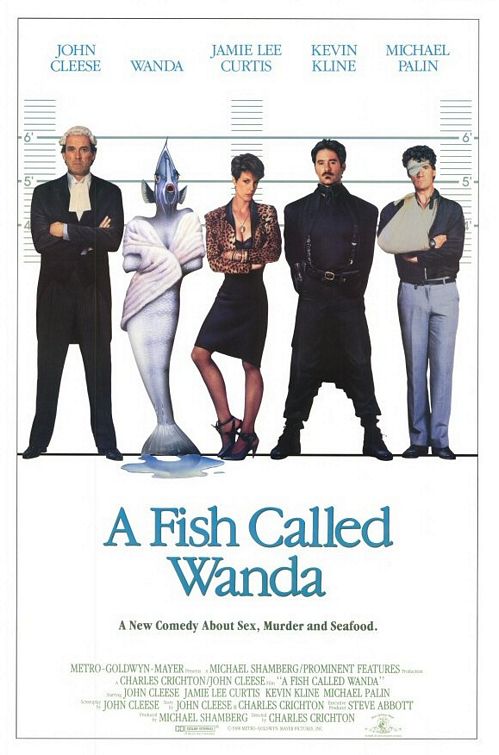
Four colorful characters commit a London diamond heist orchestrated by George (Ton Georgeson). After the crime is committed Wanda (Jamie Lee Curtis) and her lover Otto (Kevin Kline) call the police and have George turned in as they plan to abscond with all of the diamonds themselves. However, George with the help of his stuttering henchman Ken (Michael Palin) had the diamonds removed from the secret safe that Wanda and Otto thought it was in, so when the couple comes back to retrieve them they find that they’re gone. With George now in jail Wanda decides to seduce George’s lawyer (John Cleese) with the idea that George most likely told him where the loot is stashed, but this causes jealousy with Otto who is highly insecure and doesn’t like to be called stupid.

The story could probably best be described as a comical variation of The Asphalt Jungle in which a crime is successfully committed only to have all the participants turn on each other afterwards. This concept works for the first 45 minutes, but then wears itself out making me feel more of a backstory and a longer set-up was needed. These people are also not very likable and it would’ve been nice to see at least one of them do something, even if it was just briefly, that wasn’t completely underhanded.

Curtis is miscast as she has a very strong and grounded personality in real-life, which always comes through in the parts that she plays, so having her portray such a superficial woman willing to do anything for money seems out-of-sync. Her character is portrayed as being calculating and crafty, but she’s really quite one-dimensional as all she does is use her body and sex appeal to get what she wants, which seems sexist to presume that sex is the only ‘weapon’ that a woman can use and never her mind instead. A truly clever lady would be able to come up with more imaginative ways to manipulate a man and not just immediately feeling the need to prostitute herself. It also made me wonder what she was going to do when she got older and her looks faded as she seemed to have no ‘plan-B’.

Kline gets the showy role and it was enough to net him the best supporting actor Oscar. The character initially comes off as being quite obnoxious, but if you accept the fact that he is extremely insecure then it works and is even somewhat funny particularly the way he spies on Wanda when she’s with Cleese, but by the second half his antics turn too dark making him psychotic and I no longer found him amusing or enjoyable at all.

Palin’s character suffers a similar fate. Initially he’s this dimwit that everyone else overlooks, so you feel like cheering for him. Yet his constant stuttering becomes an overplayed one-joke that seems to mock those in real-life who may suffer from the same affliction. His character loses his appeal when he becomes all too willing to kill off an old lady to silence her as a witness. His inept attempts at killing her becomes the film’s running gag and turns this initially witty movie into slapstick nonsense similar to a live-action version of a Wiley E. Coyote/Road Runner cartoon.

Cleese is enjoyable as the a proper British barrister stuck in a loveless marriage and the scene where the film cuts back and forth between Cleese and is wife getting ready for bed and the way Kline and Curtis also gets ready for it is the funniest, most inspired moment in the movie.  His character though starts to take over the film by the second half even though it worked better when it gets played as an ensemble comedy and the way he goes from being a nebbish to sexually liberated is not interesting. I felt his blossoming romance with Curtis was too forced and having Curtis fall in love with him simply because he could speak in different accents, which is enough to get her overtly aroused, is quite contrived and ridiculous.

I would’ve liked some situation, other than the initial crime itself, put in that would’ve forced these characters to get along and have shown a different side to their personalities instead of just their devious/desperate one, which gets too protracted. The constant double-crossings run-out-of-steam making they’re shenanigans increasingly more strained as it goes along until it becomes just a big cluttered comical mess that despite a few good chuckles doesn’t seem worth it.

My Rating: 6 out of 10

Released: August 5, 1988

Runtime: 1Hour 48Minutes

Rated R

Director: Charles Crichton

Studio: MGM

Available: DVD, Blu-ray, Amazon Video, YouTube
Popeye (1980)

By Richard Winters

My Rating: 3 out of 10

4-Word Review: He doesn’t like spinach.

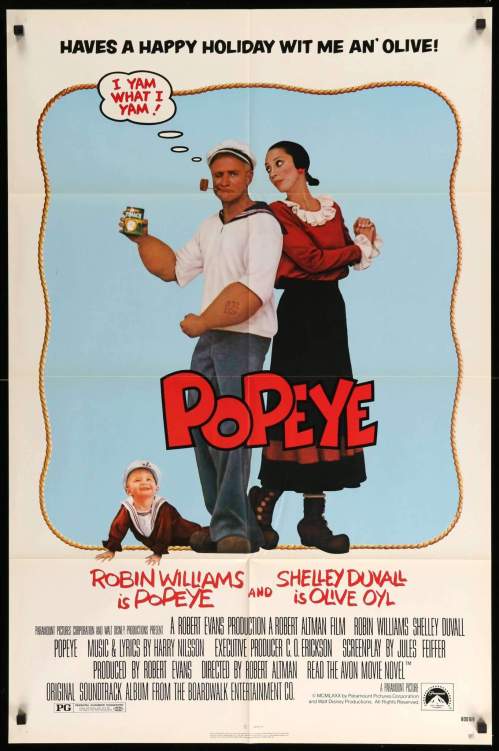
Popeye (Robin Williams) is a sailor who travels to the seaside village of Sweet Haven in search of his long lost father (Ray Walston). It is there that he moves into the upstairs room of the Oyl residence and becomes attracted to their daughter Olive (Shelley Duvall). Olive though is engaged to the gruff Bluto (Paul L. Smith) whose bullying ways is giving Olive second thoughts. When she tries to leave town in order to avoid the impending marriage she meets Popeye and they get into a relationship while also coming upon an orphaned baby that they name Swee’pea (Wesley Ivan Hurt), but Bluto becomes determined to destroy their union by kidnapping the child.

I remember watching the Popeye cartoons growing up and while I was never much of a fan this film version fails to replicate the original storylines. In the cartoons the relationship between Olive and Popeye seemed in constant flux and many times Olive would be ‘stolen away’ by Bluto’s courting and Popeye would have to win her back. Here the confrontations between Bluto and Popeye are played down significantly and there’s only two fight sequences between them and they last for only a few minutes.

The biggest difference though is that here Popeye doesn’t like spinach even though in the cartoons his spinach consumption was the whole reason he got his strength. Apparently when Popeye was introduced in 1929 he got his strength from rubbing the hairs on a magical whiffle hen named Bernice, but modern day audiences equate Popeye with spinach and changing this concept makes it seem like the film is not staying true to form. Kids who enjoyed the cartoons come to the movie expecting the same theme not watching something that’s going to take what they love into a completely different direction. What’s worse is that here there’s no explanation for how Popeye gets his amazing strength, which makes the already loopy storyline even dumber.

Williams gives a great performance, but his presence gets drowned out by the introduction of too many other characters including Paul Dooley as Wimpy who almost seems to have more screen time. Watching Walston play an older version of Popeye as the father is not funny, but instead incredibly annoying and again only helps to overshadow Williams’ great work.

I originally thought the casting of Duvall was inspired as I don’t think there’s any other actress living or dead who shares the physical traits of the Olive Oyl character quite as well as Duvall and in fact she admitted in interviews that she was nicknamed Olive Oyl by the school kids growing up. However, she overplays Olive’s nervous mannerisms which become repetitive and irritating while her attempts at singing are beyond bad.

The town of Sweet Haven, which took seven months to construct and consisted of 19 buildings built off the cost of Malta that still stands today, are the film’s strongest element, but everything else from its unfocused script evaporates into a mass sea of boredom. Robert Altman, who can be a great director at times, was the wrong choice for this type of production. He excels at doing existential adult dramas not kiddie flicks and children watching this thing will most assuredly become bored and the adults will too.

My Rating: 3 out of 10

Released: December 12, 1980

Runtime: 1Hour 54Minutes

Rated PG

Director: Robert Altman

Studio: Paramount

Available: DVD, Amazon Video, YouTube

Ruthless People (1986)

Ruthless People Movie Poster (1986)

By Richard Winters

My Rating: 4 out of 10

4-Word Review: His wife gets kidnapped.

Sam (Danny DeVito) wants to kill his shrewish wife Barbara (Bette Midler) so he can get her inheritance, but is unable to when she is kidnapped by a young couple (Judge Reinhold, Helen Slater) who demand ransom. Sam decides not to pay it, but mistakenly tells his lover (Anita Morris) about his plans and she with the help of her secret boyfriend Earl (Bill Pullman) scheme to use this information to extort him, but then a neighborhood psycho known as The Bedroom Killer (J.E. Freeman) throws everything into chaos by threatening to kill all of them.

The script was written by Dale Launer who at the time was a struggling salesman at a sound appliance store much like Judge Reinhold’s character in the movie, but like with many scripts written by first-timers there’s too many characters and a plot-heavy scenario that throws in one irony after another until it gets convoluted. Too much emphasis is placed on the concept and not enough on the characters with an end result that has no point to it other than just being very crass and over-the-top.

Everyone onscreen is simply a flimsy caricature used to propel the elaborate plot along and nothing more. The only one that is likable is Helen Slater whose nervous wide-eyed gaze makes her presence memorable. The film though would’ve worked better had it focused solely on the contrasting couples as well as having Reinhold and Slater shown working together more instead of Reinhold taking over and pushing Slater off to the side until she becomes almost forgotten.

DeVito is enjoyable, but Midler is annoying especially with her exaggerated facial expressions.  I also didn’t buy into the idea that this woman who is otherwise quite cynical and sarcastic would be naïve enough to believe that her husband still loved her and supposedly ‘worshipped the ground’ that she walked on even when he really didn’t. After living with somebody for 15 years, which is how long their marriage apparently was, you get a pretty clear view of your partner’s flaws no matter how hard they try to camouflage it. Even the most wide-eyed of people would’ve been at the very least suspicious that he might have ulterior motives as there’s always red flags and the fact that this lady was completely oblivious to them only proves how poorly fleshed-out the characters here are.

Spoiler Alert!

The story is overloaded with loopholes too. For instance Anita Morris and her lover Bill Pullman decide to play the tape of what they think is Sam murdering his wife on a VCR inside a TV-equipment store where all the other customers can see it, but why play something publicly that could potentially get them into a lot of trouble? If Pullman was able to afford a video camera, as he was the one who recorded the incident to begin with, then why couldn’t he also afford his own VCR?

It also takes too long for the police to suspect that Sam may have something to do with his wife’s disappearance even though in reality the spouse is always the prime suspect from the get-go. Having 8 police cars openly tailing Reinhold in hopes that he will lead them to his hideout is pretty stupid too. The idea is to not allow the suspect to be aware that you’re following him because otherwise he will just lead the police on a wild-goose-chase, which is exactly what he does here and any savvy veteran cop would’ve predicted that. I realize the filmmakers thought it would be ‘funny’ visually seeing all these police cars chasing the suspect, but it’s instead nonsensical. Every movie needs to have at least one person who is grounded and sensible even if everyone else is kooky. Having everyone behaving foolishly makes the story inane and unbelievable.

Reinhold’s ability to escape from his submerged vehicle after he drives it into a lake is equally questionable. Putting on a breathing apparatus underwater as he apparently does would be quite difficult if not impossible and how exactly was he able to make it seem like it was the Bedroom Killer (who was killed earlier in the film) as the driver of the getaway vehicle instead of himself? For that to happen the killer would’ve had to have been sitting in the driver’s seat where Reinhold was previously. Are we to believe that Reinhold had the dead killer’s body in the trunk of his car and while underwater somehow able to get the corpse from the trunk into the driver’s seat before the police got to it? The logistics of this is dubious, which is why having a scene done underwater showing him going through all of this should’ve been inserted in, but unfortunately isn’t.

End of Spoiler Alert!

Overall despite a few chuckles it’s a superficial mess and nowhere near the acerbic, dark satire that it likes to think it is. I disliked the gaudy Memphis style furniture used in DeVito’s home as well, which gives the production too much of a campy look.  Billy Joel’s ‘Modern Woman’, which gets played over the closing credits, seems to have nothing to do with the main theme and completely out of place. I also couldn’t stand the dresses that Helen Slater’s character designs. The movie acts like she has ‘talent’ and Midler really likes wearing them even though it looks like something you’d put on a clown and nothing I’d ever want to be seen in and I’d feel sorry for anyone who did wear them.

My Rating: 4 out of 10

Released: June 27, 1986

Runtime: 1Hour 33Minutes

Rated R

Directors: Jim Abrahams, David Zucker, Jerry Zucker

Studio: Touchstone Pictures

Available: DVD, Amazon Video, YouTube

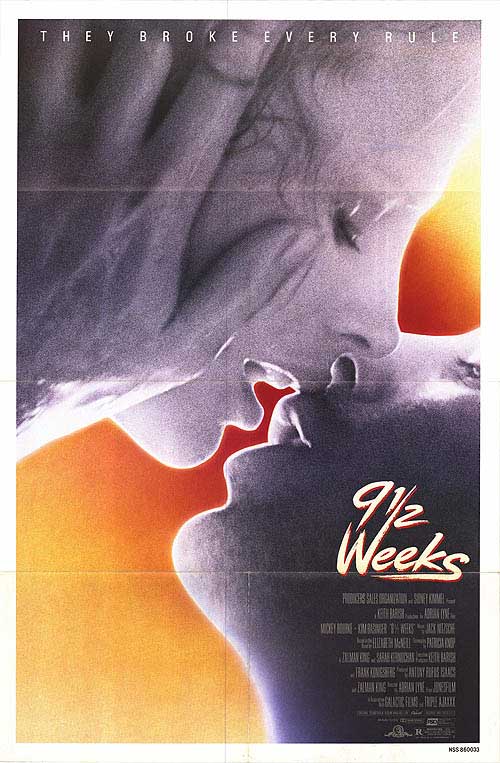
9 1/2 Weeks (1986)

By Richard Winters

My Rating: 3 out of 10

4-Word Review: A sexually charged relationship.

Elizabeth (Kim Basinger), a curator at a New York art gallery and recently divorced, meets John (Mickey Rorke) one day while shopping at a seafood place. Elizabeth is turned-on by John’s mysterious aura and they commence into having a torrid sexual affair that turns kinky, but eventually she becomes burnt-out by it and finds that besides the sex there is very little that they have in common.

The film is based on the novel of the same name written by Ingeborg Day under the pseudonym of Elizabeth MacNeil, which in turn was based on actual events that occurred to her when she was kept a virtual prisoner in her lover’s home for a period of two and a half months. The movie tones down the prisoner aspect and concentrates more on the erotic one, but the result is a confusing story that meanders without saying much of anything. The film was shelved for over two years because it kept getting bad responses from test audiences and constantly sent back to the studio for re-editing. When it was finally released it bombed badly at the box office.

The sexual aspect is tame and in these jaded times may even be considered laughable. The kink relies mainly on the use of blind folds and food items with the sex done from a feminine viewpoint that might arouse women, but unlikely to do the same for a man. The sexual games, as tepid as they are, get portrayed as being empowering to Elizabeth and something that allows her to release her ‘inner freak’, but I kept wondering what was John supposed to be getting out of all of this while she cavorts around naked or sucks provocatively on various food items. Maybe he was a voyeur that simply enjoyed watching and if so then it should’ve been made clearer because he comes off as nothing more than a transparent bystander otherwise.

We learn nothing about Elizabeth as the film progresses and her constantly giggly, screechy behavior makes her seem more like an immature schoolgirl and not a sophisticated, educated Manhattanite in her mid-30’s. She’s also too passive and easily manipulated without any reason given for why this is. Basinger’s performance is dull with a stunt double used during most of the sex scenes. Margaret Whitton who plays her best friend would’ve been far better in Basinger’s role because at least she shows some spunk and seemed genuinely human while Basinger is more like a zombie.

For a film with such strong erotic overtones there is surprisingly very little of it to see. The sex scenes show up in bits and pieces and then last for only a few minutes. In-between there’s long meandering segments that has nothing to do with the central theme and isn’t particularly interesting. The most memorable moment involves a conversation between Rourke and a bedding saleswoman (Justine Johnston) and even here things get botched because in one shot Rourke inadvertently knocks a vase off of a back shelf when he hops onto a bed in a showroom and then in the very next shot that same vase has magically gotten placed back.

I enjoyed the way director Adrian Lyne frames his shots as well as his color compositions and the provocative concept has a tantalizing quality, but Lyne seems confused about exactly what kind of message he wants to make with it and I think he was hoping that it would somehow manifest itself as the film progressed, but it never does. Bitter Moon, a film that came out 6 years later and had roughly the same idea, is far more impactful and worth your time in seeking out.

My Rating: 3 out of 10

Released: February 21, 1986

Runtime: 1Hour 57Minutes (Director’s Cut)

Rated R

Director: Adrian Lyne

Studio: MGM

Available: DVD, Amazon Video, YouTube

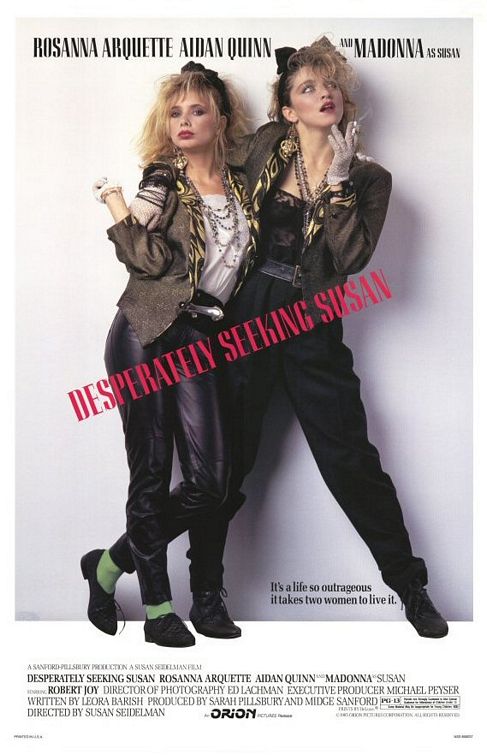
Desperately Seeking Susan (1985)

By Richard Winters

My Rating: 6 out of 10

4-Word Review: Bored housewife seeks excitement.

Roberta (Roseanna Arquette) is a suburban housewife who’s bored with her life and looking for diversion. She gets hooked on reading the singles ads in her local newspaper and becomes especially intrigued by a couple, Jim (Robert Joy) and Susan (Madonna) who communicate with each other solely through the ads. When they advertise that they want to meet each other at a certain location Roberta decides to go undercover to that locale, so she can spot what they look like. Through various mishaps she becomes mistaken as being Susan and even starts a relationship with Jim’s best friend Dez (Aiden Quinn), but Roberta’s husband Gary (Mark Blum) begins searching for her and in the process forms a friendship with Susan.

The motivation for this plot is just too kooky to be believed. Okay, so Roberta is bored with her life, fine, but why get so intrigued by messages from some couple that she has never seen? If there was some guy sending messages directly to her through the ads as a sort of secret admirer I could understand or maybe if she had seen Susan in passing and became attracted to her through some latent lesbian feelings I could go with that too, but the way it’s done here is wonky. If a person is bored with their lives then they can join a social group, start a new hobby, or have an affair with their mailman, but stalking a couple that they have never met or seen is pretty damn far down the list if even on it. The fact that her husband was aware of her obsession of looking at these ads and wasn’t worried is pretty absurd too. I know the guy is portrayed as being clueless, but that’s being just a little too clueless.

Casting Madonna as Susan doesn’t help. Sure she was a big pop superstar at the time, but that still doesn’t mean she could act. Her presence fails to have the intended spark as she plays basically just a caricature of her rock ‘n’ roll image with a character that is poorly defined, lacks any distinctive qualities and could easily describe any of the hundreds of punk vagabonds that roamed the streets of New York.

Arquette fairs better and is genuinely appealing to watch, but she is too young for the role. She was 26 at the time, but could easily come off as being just 20. Why would such a young woman become bored with her life so soon as she looked to have just gotten married and living a generally plush suburban existence? It would’ve made more sense casting an actress who was in her 40’s and spent years toiling away as a housewife to an aloof husband and found Susan to symbolize her latent youthful rebellion, which would’ve been funnier especially seeing a middle-aged woman trying to dress and act like a punk instead of a young woman who wasn’t all that far removed from the punk scene age anyways.

The story does have some funny, insightful moments, but they tend to be fleeting and the scenario could’ve and should’ve been played-up much more. The leisurely pace is unusual for a Hollywood movie making it seem almost like a European one instead. It also gives off a nice vibe of Manhattan’s East Village giving the viewer a true feeling of the underground club scene there and very similar in feel to Martin Scorsese’s After Hours, which also starred Arquette.

The film has strong satirical potential, but seems reluctant to fully go for the jugular and ends up being quite mild. I liked that fact that the character finds her suburban existence unfulfilling, which goes against the capitalist 80’s view of suburbia being the ultimate source of happiness and success, but that’s as edgy as this movie gets. Writer/director Susan Siedelman’s first feature Smithereens was far more caustic despite having a very similar theme. Perhaps with this being a studio film she felt that she had to tone things down, but this only helps to make the film feel flat and uneventful.

My Rating: 6 out of 10

Released: March 29, 1985

Runtime: 1Hour 44Minutes

Rated PG-13

Director: Susan Seidelman

Studio: Orion Pictures

Available: DVD, Blu-ray, Amazon Video

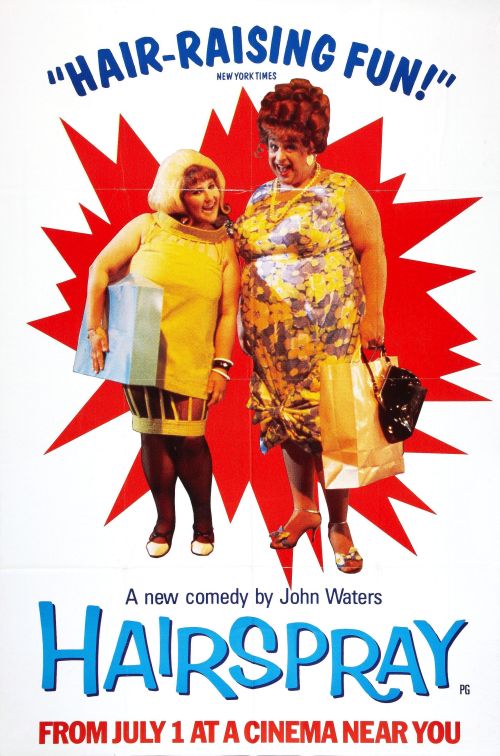
Hairspray (1988)

By Richard Winters

My Rating: 7 out of 10

4-Word Review: Integrate the dance show.

Tracy Turnblad (Ricki Lake) and her best friend Penny Pingleton (Leslie Ann Powers) audition for ‘The Corny Collins Show’ a local teen dance contest. Penny isn’t able to make the cut, but Tracy is much to the infuriation of the snotty Amber (Colleen Fitzpatrick) who was the show’s reigning dance queen. The rivalry between the two heats up even more when Tracy tries to integrate the show with black performers which incites Amber’s racist parents (Sonny Bono, Debbie Harry) to resort to desperate and violent means in order to keep the show segregated.

This was the movie where John Waters became a legitimate filmmaker who could use his craft to create a story instead of making a movie that was simply a foray into crude humor. When he first broke into the underground scene his films such as Mondo Trasho, Pink Flamingoes, and Female Trouble where refreshingly trashy and daring to show things other movies wouldn’t. The stark frankness and complete disregard of who it offended were both hilarious and groundbreaking, but by the time it got to 1981’s Polyester the formula had gotten stale and hearing campy characters shout incessantly at each other was becoming derivative while also exposing Waters as possibly being just a one-dimensional talent who was sadly losing his edge.

This film though was a complete change-of-pace with each shot and scene a loving tribute to his days growing up in Baltimore during the 50’s and early 60’s. The film has a lot of dance numbers that normally could bog the pace down, but here I got into the energy of it and it helped me to feel even more like I had been transported into a different time period. The musical soundtrack is filled with a lot of lesser known songs which most viewers will have never heard of and thus helping the film’s soundtrack avoid sounding like just another generic playlist from an oldies radio station.

Divine’s presence is much less crucial to the story’s plotline than in Waters’ past films. Sadly by this time his/her appearance was looking even more like just some fat guy wearing wig and no longer coming off in any way as being an overweight woman even though in the past films it was at times hard to tell. His physique looked so out of shape here that it should be no surprise that he died of a sudden heart attack just three weeks after the film’s release. In fact as the mother he really isn’t funny or engaging at all and only in a brief few scenes where he plays the station’s cantankerous owner Arvin Hodgepile does he show actual energy and gets a few laughs.

The original idea was to have Divine play both the roles of the mother and daughter, but fortunately that got nixed and Ricki Lake was brought in. She has a genuine, honest presence about her that creates instant empathy and it’s nice having a film showing an overweight person where her body type did not impede her from achieving her goals nor work as a detriment at keeping her down.

The supporting cast is eclectic, but unfortunately most are wasted particularly Jerry Stiller and Sonny Bono as the two fathers. Debbie Harry is great with her increasingly outrageous beehive hairdos, which become the most memorable and imaginative thing about the film. Lesser known actress Joanne Havrilla is quite funny as Penny’s racist mother especially the scene where she panics when trapped in a black neighborhood. John Waters himself gets some good comic bits playing Penny’s quack psychiatrist and Pia Zadora is engaging as a pot smoking beatnik.

The film is full of comical highlights that playfully runs the gamut between subtle, over-the-top and crude that somehow works to form a cohesive whole culminating in a very funny ‘race riot’ at the end. If the film has any fault it is in the fact that it treats racism in a little too much of a trivial way like it is just some silly thing that can be easily fixed instead of the serious and deep-rooted issue that it really is.

My Rating: 7 out of 10

Released: February 16, 1988

Runtime: 1Hour 32Minutes

Rated PG

Director: John Waters

Studio: New Line Cinema

Available: DVD, Amazon Video, YouTube