Category Archives: 80’s Movies

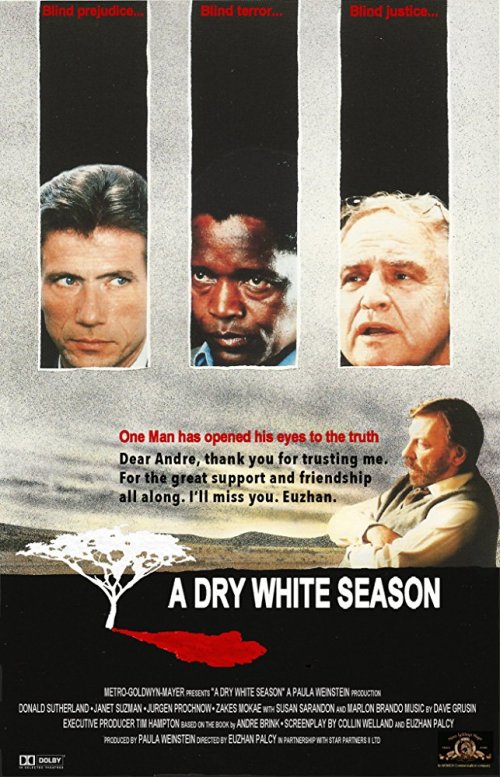
A Dry White Season (1989)

By Richard Winters

My Rating: 6 out of 10

4-Word Review: He fights social injustice.

The story centers on South African schoolteacher Ben (Donald Sutherland) who has led a peaceful law abiding suburban existence and has no idea about the social injustices around him. One day his black gardener (Winston Ntshona) comes to him complaining about how his son was beaten by police simply for attending a peaceful rally. Ben initially dismisses the claims and insists the son must’ve done something wrong, but when he investigates the issue further he finds some startling revelations about how far the authorities are willing to go to stop dissent and when Ben decides to challenge the police on this his life and security get put on the line.

The film is based on the novel of the same name by Andre Brink and directed by Euzhan Palcy who became the first Black woman to direct a film that was produced by a major Hollywood studio. For the most part the film is polished and well made and at the beginning emotionally effective as we see first hand the brutal treatment of the protesters by the police. I also liked how it shows both sides of the issue by having Ben’s wife Susan (Janet Suzman) admit that apartheid is wrong, but too afraid for its abolishment as she fears it might put the whites at too much of a disadvantage.

Unfortunately somewhere along the way it starts to lose steam and ends on a whimper that is nowhere near the emotional level that it began with. Part of the problem is that it suffers from a weak main character. Sutherland plays the part well, but it’s hard to understand how someone could live well into his middle age years and still have such extreme naivety to what was going on in the country that he resided in. He’s also dependent on those around him to do most of the legwork and you have to question what difference does our hero’s actions ultimately make anyways since apartheid continued on for many years after this film’s setting, which is 1976.

All of this could’ve been resolved had Marlon Brando’s character been made the protagonist. Brando came out of retirement to take on the supporting role and agreed to do it at union scale, which was far below his usual salary demands. His presence adds zest to the proceedings as a lawyer who is quite attuned to the corrupt system, but decides to give it a fiery court battle anyways and it’s a shame that he’s only in it for a brief period and then just completely disappears during the second half.

Spoiler Alert!

The ending differs a bit from the book and was added in by director Palcy, which has a black cab driver Zakes Mokae taking the law into his own hands and shooting the Jurgen Prochnow character, who plays a policemen, after he intentionally ran Sutherland over with his car. Palcy did this to show how even decent people can be pushed to violence, which I agree with, but she seems to feel the need to justify this by having a flashback ‘replay’ of all the previous events that drove Mokae to pull the trigger, which comes off as heavy-handed. If we’ve watched the movie then we already know what happened and don’t suddenly need a ‘refresher course’.

End of Spoiler Alert!

As a drama it’s an adequately compelling, but there’s other movies on the same subject and I can’t say this one stands out from those. I was also disappointed to find that the book from which this is based was fictional as I initially thought it was a true story since it takes place in a very specific year. I’m not saying some of what goes on here didn’t happen in a broad sense, but having it centered on verifiable events gives it more relevance and makes it seem more like telling a story as opposed to just making a political statement.

My Rating: 6 out of 10

Released: September 20, 1989

Runtime: 1 Hour 46 Minutes

Rated R

Director: Euzhan Palcy

Studio: MGM

Available: DVD, Blu-ray (Criterion Collection), Amazon Video, YouTube
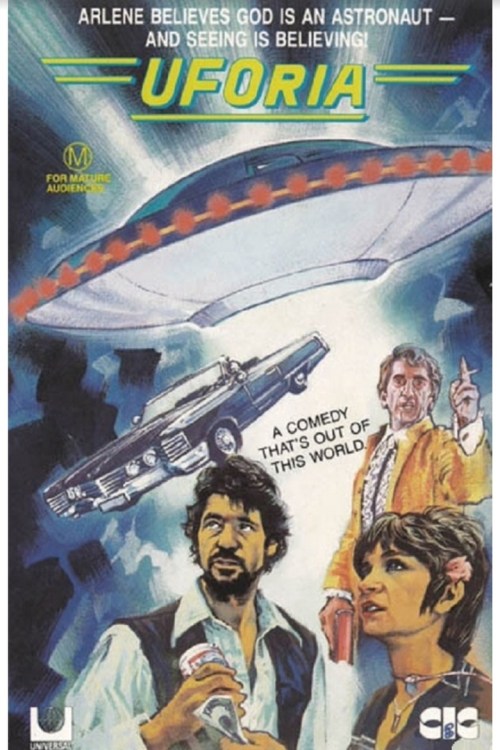
UFOria (1985)

By Richard Winters

My Rating: 4 out of 10

4-Word Review: She dreams about spaceships.

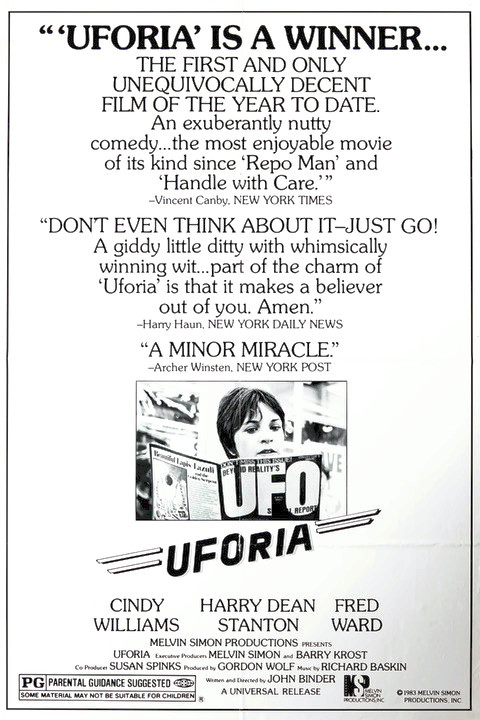
Arlene (Cindy Williams) is a lonely woman living in a small town and working at a local supermarket. One night she starts having dreams about a spaceship landing in town and taking her away. Her new boyfriend Sheldon (Fred Ward), who is a shady drifter always looking to make a quick buck, works with his brother Bud (Harry Dean Stanton), much to her consternation, to use her ‘visions’ to make money off of it by portraying her as communicating with some outer worldly messenger that’s connected to God.

This film was made in 1980, but sat on the shelf for 5 years and it’s easy to see why as it’s difficult to put it into any predefined genre. It’s certainly isn’t a sci-fi flick and in a lot of ways it really isn’t a comedy either. There are a few funny bits, but they get lost inside scenes that go on far longer than they should, which never allows the film to gain any traction or momentum.

Williams is not right for her part and fails to convey the downtrodden look of a lonely woman in a role that would’ve been better served had it been played by an actress with a more plainish, dumpy features like Kathy Bates. It’s also annoying that she has these vivid dreams, but the viewer never gets to see them. Movies are a visual medium and should take advantage of that element as much as possible by showing what’s happening instead of just having a character describe it.

Stanton isn’t right for his part either. In certain films his low-key style is perfect, but here he fails to effectively convey the animated, fiery delivery of a TV evangelist, which is a part that needed to be comically played-up much more.

Ward was the only one that I liked and he really comes into his own with a character that isn’t particularly likable, but has an interesting arch where he goes from being a cynical non-believer to eventually defending Arlene from those who mock her. He also drives his car in the most bizarre way that I’ve ever seen with his feet up on the dashboard and not on the pedals.

Spoiler Alert!

I was hoping that the ending would be a payoff for having to sit through such a slow, poorly paced film, but ultimately it falls flat just like everything else. I liked the idea of a spaceship suddenly appearing, but then the film cuts to the closing credits without examining what happened to the people, how they reacted to it, or what the aftermath was, which I found frustrating.

End of Spoiler Alert!

The small town setting filmed in Palmdale and Lancaster, California gives off just the right rustic look and prime stomping ground for fringey, eccentric people like the characters here.  While the film does have a definite cult appeal the offbeat elements get stymied inside a lethargic pace that never allows it to gel, or become captivating.

My Rating: 4 out of 10

Released: October 1, 1985

Runtime: 1 Hour 35 Minutes

Rated PG

Director: John Binder

Studio: Universal

Available: VHS

My Favorite Year (1982)

By Richard Winters

My Rating: 5 out of 10

4-Word Review: Babysitting an alcoholic actor.

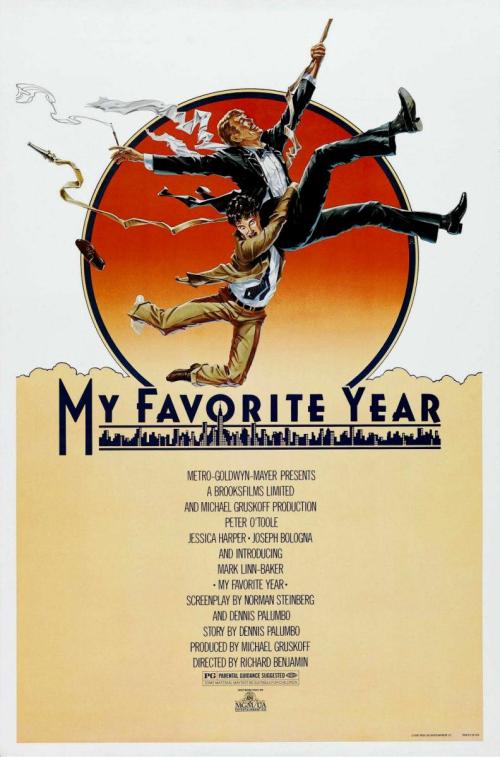
The year is 1954 and Benjy (Mark Linn-Baker), who works as a junior writer at a top rated TV variety show, is put in charge of babysitting a famous matinee idol named Alan Swann (Peter O’Toole) who is set to guest star on an episode of the show. Alan is a well known alcoholic who usually finds a way to stay constantly inebriated and it’s Benjy’s job to keep him sober, which proves challenging.

The first 30 minutes of the film has some snappy dialogue and a fast, engaging pace. It’s loosely based on a real-life incident where Mel Brooks, then working as a young writer on the TV-show ‘Your Show of Shows’, was put in charge of watching Errol Flynn and making sure he stayed away from the bottle, which he apparently did making the comic situations that occur here highly fabricated.

Unfortunately by the middle half it starts to lose steam and never fully recovers. It works best during the scenes where Baker and O’Toole are together, which is where the story should’ve stayed. Instead it unwisely tries to work in a ridiculous romantic side-story between Baker and Jessica Harper, which isn’t interesting at all and even slightly creepy as Harper has clearly stated she’s not interested in getting into a relationship with him and yet he continues to pursue her and even gets jealous and acts like he ‘owns’ her when he sees her with another guy.

The film also doesn’t take enough advantage of Joseph Bologna who plays the narcissistic/ego-driven star of the show that was apparently based on Sid Caesar. Nobody can play a brash, arrogant, obnoxious guy quite like Bologna and still manage to somehow remain likable and engaging in the process, so when you got him in the cast and in top form you should use his skills to its full potential, which this film doesn’t.

The Swan character ultimately gets overblown. I didn’t have a problem with his extreme drunkenness at the start, but he begins to behave too much like some overgrown man-child like when he impulsively jumps onto a policemen’s horse and rides it for no particular reason almost like he’s from a completely different planet and no longer even slightly resembling an actual person who must deal with real consequences. Watching him meltdown without restraint when he realizes he’ll be put on live television makes him pathetic and lacking even a modicum of professionalism. Anyone as emotionally fragile as he is would never even have a chance in the real Hollywood where one must put up a tough front in order to survive in it.

Richard Benjamin’s directorial debut isn’t bad, but it does have two glaring flaws. One occurs when Baker and O’Toole are on the rooftop of a building and their images are matted over a green screen, which causes orbs to appear around their heads, which is distracting and amateurish looking.  Another one comes when at the end O’Toole saves Bologna, who’s getting beat up by some thugs on live TV, by slashing the bad guy’s clothes with his sword, which wouldn’t occur since stage props don’t actually use real blades.

The brief appearances by the raspy voiced Selma Diamond and Cameron Mitchell are gems and the film also manages to work in a few poignant moments, which is nice. Overall though the concept gets stretched too thin and becomes too cute for its own good.

My Rating: 5 out of 10

Released: October 8, 1982

Runtime: 1 Hour 32 Minutes

Rated PG

Director: Richard Benjamin

Studio: MGM

Available: DVD, YouTube

Deal of the Century (1983)

By Richard Winters

My Rating: 5 out of 10

4-Word Review: Making money selling weapons.

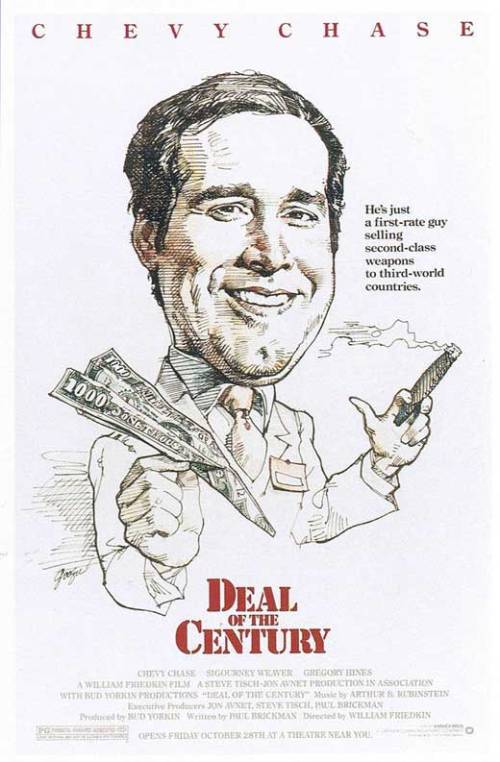
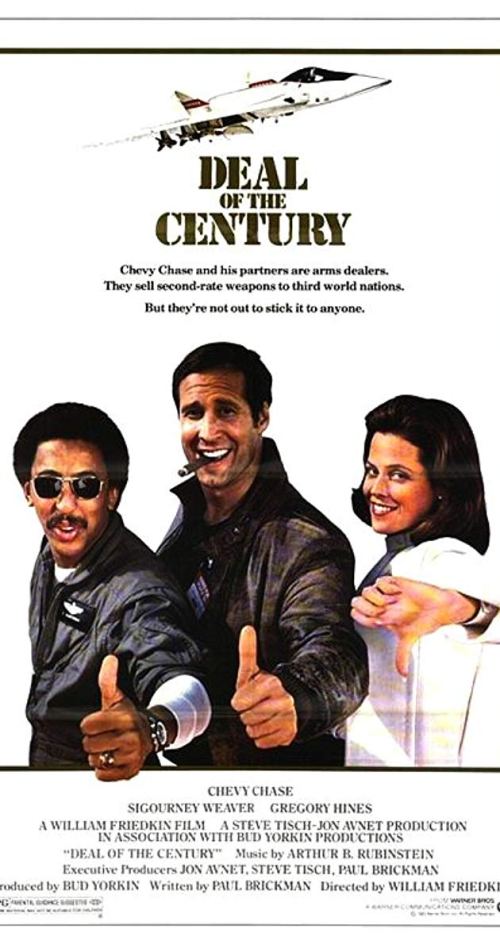
Eddie (Chevy Chase) is a American arms dealer selling weapons to both the rebels and military dictator of a small South American country. While there he meets Harold (Wallace Shawn) who works for a large contractor known as Luckup. Their weaponry is much more sophisticated and cutting edge so after Harold kills himself Eddie takes over the deal and successfully wins a big contract, but upon returning to the states he finds that the deal fell through, which forces him to return to the small country along with Harold’s widow Catherine (Sigourney Weaver) and his partner Ray  (Gregory Hines) to see if they can make another pitch.

The film is based on the novel of the same name by Bernard Edelman and makes some really good satirical points about how the arms race being driven more by corporate greed, which only helps to create wars instead of preventing them. Unfortunately the film’s tone is too muddled and goes haphazardly from lighthearted fare to dark humor while throwing in graphic violence that is jarring. There’s also a surprising number of scenes where the three main characters don’t appear in it at all.

Chase can be appealing if given the right material but his cynical smart-ass sense of humor doesn’t exactly make him lovable. Here his character is so consumed with making a deal that he becomes no different than the bad guys and someone the viewer doesn’t connect with or care for. The only positive thing about his character is that he gets shot in the foot early on and then unlike most other movies where the healing power gets sped up he instead spends the rest of the film in a cast, which is more realistic. The scene where he gets shot in the foot a second time and blood spews out of the cast until Sigourney stops it up with a cork is the film’s best moment.

Hines on the other hand is quite likable and his convergence to Christianity is funny and should’ve been played-up more. The scene where he gets into a confrontation with a Latino couple after a car accident is amusing, but having him suddenly go rogue at the end makes little sense and is kind of stupid.

Weaver, who doesn’t have any significant presence until almost 45 minutes in, is wasted and there’s no way that anyone as beautiful as her would marry a chump like Wallace Shawn, which makes the casting here quite nebulous. Vince Edwards, famous for starring in the 60’s medical drama ‘Ben Casey’, gets a surprisingly large role as a Luckup executive and I can only guess that this was because of his longtime friendship with director William Friedkin as otherwise by the 80’s he was way past his prime and largely forgotten.

There are some humorous bits here and there, but overall the pacing is poor and quite jumbled. Friedkin, better known for his dark dramas and horror films, appears to be out of his league and when compared to other Hollywood comedies this thing lacks finesse. The special effects are also really tacky, which ultimately sends this to a schlock level and becomes an embarrassment to all those who were involved.

My Rating: 5 out of 10

Released: November 4, 1983

Runtime: 1 Hour 39 Minutes

Rated PG

Director: William Friedkin

Studio: Warner Brothers

Available: DVD, YouTube

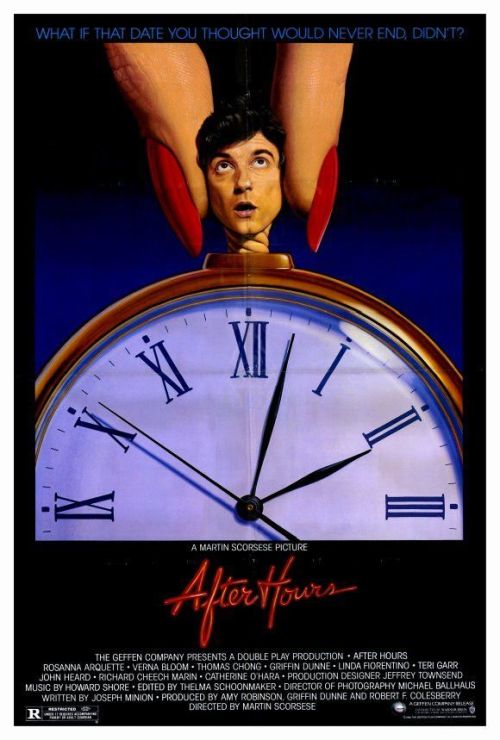
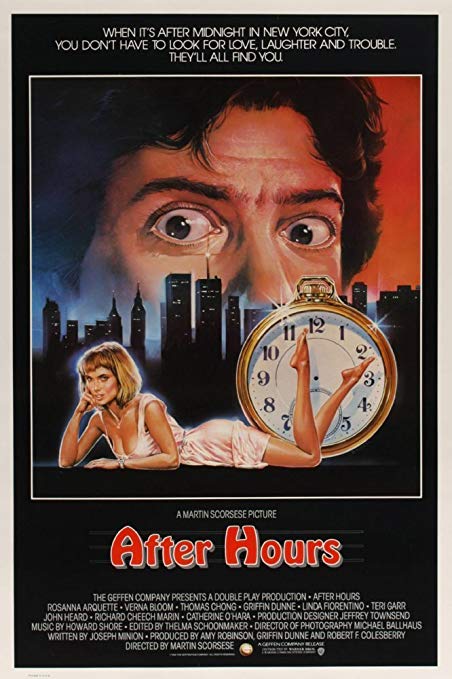
After Hours (1985)

By Richard Winters

My Rating: 8 out of 10

4-Word Review: Don’t stay out late.

Paul (Griffin Dunne) is a single man living in New York, who’s bored with his job and looking to spend his Friday night on the town in hopes that he might hook-up with an attractive woman. While at a late night cafe he meets Marcy (Rosanna Arquette) who tells him that she lives with a sculptress who makes and sells paperweights. Paul decides to use the excuse that he wants to buy one as his ruse to go over to her apartment in hopes of ‘getting lucky’. Yet when he arrives things quickly become surreal where everybody he meets behave in strange ways making his night-on-the-town a nightmarish event.

The film is based on a screenplay by Joseph Minion, who has written two other produced screenplays 1999’s On the Run and 1991’s Motorama that play off the exact same theme, and was done for the screenwriting class that he was taking at Columbia University, which got the attention of Dunne who optioned it as a project he felt would be a perfect fit for his acting style. Unbeknownst to him though was that the first part of it was based on a 30 minute-monologue piece called ‘Lies’ written by Joe Frank and broadcast on NPR radio in 1982 and when the film came out the studio was forced to pay Frank an out of court settlement because of it.

Many have felt the film’s theme is Paul’s emasculation by all the women that he meets, and to an extent that’s probably true, but for me I found it more interesting to see how despite the film’s surreal quality it’s still not that far off from truth. It’s like going out on a first date with a really attractive person who your’e excited about only to find as you get to know them that they’re really screwed-up, or meeting a new group of people who you initially think you have something in common with only to learn as you talk to them that you really don’t. It also nicely satirizes the hip/happening patrons of the club scene who walk around with a perpetual arrogant attitude of coolness, but in reality are quite hollow.

The production was filmed at night, which forced the crew to work for 10-straight weeks from sundown to sun up and then catch-up with their sleep during the day, but the effort was worth it as it helps create this underworld feel with no connection to the ‘proper’ daytime one. I also loved how it tries to explore New York’s club scene and the artsy SoHo district with all the eccentric personalities that make up that subculture, which helps to make New York the unique place that it is and which gets criminally ignored in most other movies that take place there.

The acting is excellent with everyone perfectly cast although the scenes I enjoyed the most involved Dunne’s exchanges with some lesser known performers like Murray Moston as a subway attendant and Clarence Felder as a nightclub bouncer. Credit must also go to Dunne himself who plays the normal guy role perfectly. Had he been too over-the-edge with it, or too nerdy it wouldn’t have worked as the character had to be someone the viewer could relate to while behaving/reacting to things in plausible ways in order to feed off the paradox that the more rational he was the more irrational everything else around him  became.

Spoiler Alert!

The ending proved to be the toughest part for director Martin Scorsese to implement. Originally Dunne’s character was driven away in the van still trapped in a the plaster sculpture that Gail (Verna Bloom) had put him in, but this got a negative response from the test audience, so they then considered having Dunne crawl into Bloom’s womb to hide and then getting ‘reborn’ out on the highway, but that was too bizarre.

The one that they finally came up with, which was suggested by director Michael Powell who came on as a consultant, has Dunne ending up at the office where he worked, which has added irony since most offices are boring places that people usually can’t wait to get out of.  However, it never shows how these experiences changed him and a scene should’ve been added showing Dunne afraid to ever leave and continuing to work late in the night after everyone else had gone before finally getting dragged out by the security guards.

The film also fails to explain how Dunne ever got back into his apartment since the bartender (John Heard) had taken his keys to his place earlier. A good alternative ending would’ve had Dunne falling out of the van not at the office, but at his apartment instead where he would’ve then be let in by his landlord. He would fall asleep in his bed feeling safe only to awaken with everyone that had been chasing him earlier now standing around his bedside having been let in by the bartender with the keys.

Overall this is the type of film that you wished had gone on longer as it gets funnier the more it goes on. My only quibble is that Dunne should’ve been forced to get the Mohawk when he was at the club as seeing him with one would’ve accentuated his beaten down mindset and made his appearance when he returned to work even more absurd.

My Rating: 8 out of 10

Released: September 11, 1985

Runtime: 1 Hour 37 Minutes

Rated R

Director: Martin Scorsese

Studio: Warner Brothers

Available: DVD, YouTube

The Great Outdoors (1988)

By Richard Winters

My Rating: 3 out of 10

4-Word Review: Friends ruin their vacation.

Chet (John Candy) decides to take his wife (Stephanie Faracy) and two kids (Chris Young, Ian Michael Giatti) on a well deserved family outing up to a lake resort town in Wisconsin. Unfortunately their fun excursion  gets crashed by their obnoxious friend Roman (Dan Aykroyd) and his wife Kate (Annette Bening) who along with their two creepy twin daughters (Hilary Gordon, Rebecca Gordon) proceed to turn the pleasant vacation into a nightmare.

Calling this John Hughes script paper thin is an understatement and it reminded me of an interview I once read where Hughes bragged that he could write his screenplays in a matter of only a day or two although with this one I’m surprised it took even that long. Not only is the premise devoid of any original ideas, but it seemed more like material for the Griswold family and I was confused why it wasn’t just made as part of the Vacation series although I preferred Candy over Chevy Chase as he’s much more likable without the sneering sarcasm, and his presence here helps make it at least modestly enjoyable.

The comedy also avoids becoming too farcical or lewd, which was nice, and manages to keep things semi-believable to what might occur to a regular family in the woods including my favorite part where the two men try to kill a bat that has gotten into the cabin. The setting, which was filmed on-location in Lake Bass, California is scenic and the woodsy cabin, built specifically for the film on a studio backlot, is impressive because you would never know the difference.

However, the animosity between the two characters, which is supposedly the heart of the humor, is not played-up enough or as half as much as I was expecting. In many ways it seemed almost like it was Candy who was more the obnoxious one particularly when he tells a scary story that gets everyone upset. The scene where he puts a candy bar on the hood of his car to attract a bear makes him look really stupid, and something that should’ve been done instead by the supposedly dopey second-banana character like Aykroyd.

The kids, especially the twin girls who seemed spookier than the twins in The Shining, are annoying and I thought it was weird that they are played-off as creepy for the majority of the film only to then near the end have the viewer expected to suddenly start caring for them when they get trapped in a cave.  As for the two boys they’re dull and transparent and the scenes dealing with the romance that the oldest one has with one of the teen waitresses (Lucy Deakins) are extremely formulaic and unnecessary and almost like it were put in simply to pad the runtime.

The running gag dealing with the talking raccoons is childish and the one dealing with a man (Britt Leach) constantly getting struck by lightning is completely ridiculous.  The story is nothing more than a procession of gags that lacks momentum or pace. The laughs are sporadic and subside after the 45-minute mark making the final half a chore to sit through and that includes the climactic bear attack, which is forced and over-the-top.

My Rating: 3 out of 10

Released: June 17, 1988

Released: 1 Hour 31 Minutes

Rated PG

Director: Howard Deutch

Studio: Universal 

Available: DVD, Blu-ray, Amazon Video, YouTube

Shaker Run (1985)

By Richard Winters

My Rating: 3 out of 10

4-Word Review: Transporting a deadly virus.

Judd (Cliff Robertson) is an aging stunt driver who along with his young protege Casey (Leif Garret) is finding it increasingly difficult to make ends meet. With barely any money on hand they decide to take up an offer from a mysterious woman (Lisa Harrow) who asks them to carry inside the trunk of their car a large container with a secret substance across New Zealand for undisclosed reasons. The desperate Judd reluctantly agrees only to later find that inside the container is a deadly virus sought after by the military who will stop at nothing to get their hands on it.

The wide-eyed plot mixes the genre of a cross-country road chase with that of an end-of-the-world sci-fi flick and the result is as cheesy as it sounds. It’s also hampered by cheap production values that makes it look more on par with a TV-movie than a theatrical one.

I didn’t care for the cold climate setting either. Filmed in July of 1984, which would be wintertime for the southern hemisphere, the New Zealand landscape looks quite bleak and brown with occasional pockets of snow and the  characters are all bundled up in heavy jackets. A good road movie should elicit inside the viewer the feeling of wanting to get out onto the open highway instead of longing to stay inside by a fireplace like it does here.

Robertson manages to add some life to the otherwise sterile material, which is nice to see as his film career nosedived in 1977 when he accused Columbia studio head David Begelman of forgery and was blacklisted as a result. When he was finally offered film roles again they were of the thankless supporting kind although here he gets the star treatment and it’s great seeing a guy in his 60’s handling the action as opposed to a young 20-something hunk like in most other films.

Leif Garrett, the androgynous teen hunk from the 70’s is adequate as his loyal young side-kick and has grown to be more filled-out and masculine looking. However, the remaining cast members are dull and this includes Shane Briant in a boring caricature of a cold, calculating villain as well Harrow who tags along with the two men on their drive, but comes-off more like unnecessary dead-weight.

Spoiler Alert!

The more the chase goes on the more contrived it gets and there’s an uneasy balance between realistic crashes to slapstick comedy. The resolution, in which Harrow ties a chain dangling from an overhead helicopter piloted by the CIA onto Robertson’s car so that they are whisked into the air while the evil government agents that had been chasing them drive off over a cliff, is not satisfying because the film made clear earlier that the CIA was just as deceitful as the other bad guys and couldn’t be trusted. Yet it never bothers to explain what ultimately happens to the virus, or whether it got into the right-hands and was destroyed.

My Rating: 3 out of 10

Released: August 15, 1985

Runtime: 1 Hour 33 Minutes

Not Rated

Director: Bruce Morrison

Studio: Mirage Films

Available: DVD, Amazon Video

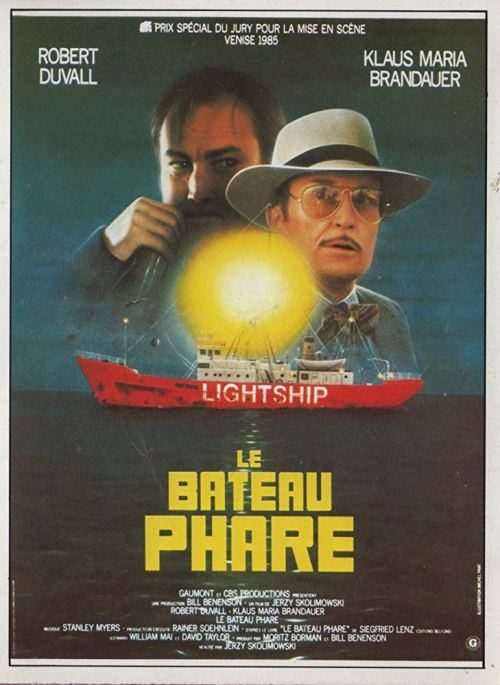
The Lightship (1985)

By Richard Winters

My Rating: 7 out of 10

4-Word Review: Hostages on a boat.

Captain Miller (Klaus Maria Brandauer) manages a stationary lightship with a small crew in the Atlantic and allows his teenage son Alex (Michal Skolimowski, but billed as Michael Lyndon) to come on board for a visit. While his son is there they take on board three men (Robert Duvall, William Forsythe, Arliss Howard) who were stranded at sea on a small boat. Once they board the vessel they quickly take over and hold the rest of the crew hostage. Alex wants to fight back immediately, but his father cautions him to take a more measured approach, which he finds to be cowardly and doesn’t hesitate to let his dad know it.

The film is a real mixed-bag with some good elements and some not so good ones to the point that it seems almost surprising that it was directed by such a legendary talent as Jerzy Skolimowski. The isolation aspects are good as you feel this boat is completely by itself out in the middle of the gray cold sea, which helps elevate the atmosphere particularly when Skolimoski forces the actors to perform outside even as a storm rages. However, the cinematography looks like it was filmed on videotape  and then transferred to film later, which gives the thing a cheap, low budget feel.

The most disconcerting aspect though is the action, or the lack thereof. The criminals overtake the ship too easily and quickly without enough of a buildup or explanation as to why they are doing it. There’s also way too many situations where the bad guys could’ve easily been overtaken particularly when all three put down their guns and go dancing/partying in one of the vessel’s downstairs cabins. Why couldn’t the rest of the crew simply used this opportunity to lock them inside?

There’s also just too much standing around and talking making it one of the most civilized hostage taking scenarios ever recorded. The bad guys are also too dense particularly the Forsythe character who speaks and acts so dimwitted that he seemed better suited for a comedy. Instead of the film building-up the tension for the viewer you start to wonder why any of what we’re seeing is even happening.

Duvall’s performance is a bright spot as he plays against type by speaking in a wispy voice and wearing a pencil thin mustache until he looks almost exactly like film director John Waters. Brandauer is excellent as well and his stoic, measured presence helps to keep it compelling, but what surprised me the most was that apparently during rehearsals Duvall and Brandauer played the opposite part and then decided to switch-up once shooting began, which would’ve made seeing the behind-the-scenes footage all the more fascinating. Lyndon though as the son is quite weak and outside of his pretty boy face has very little to offer and was most likely only got the part because he was the son of the director while his voice-over narration, which was apparently thrown in at the last minute, is completely unnecessary and only helps to take the viewer out of the story every time it gets used.

The climax is genuinely exciting as it’s not clear until the very end whether the captain will come through and save the ship, or just cowardly slink away. As I said at the top of this review it’s a real mixed-bag with a couple of choice dramatic moments that makes it worth it, but only if you’re patient.

My Rating: 7 out of 10

Released: September 1, 1985

Runtime: 1 Hour 28 Minutes

Rated PG-13

Director: Jerzy Skolimowski

Studio: CBS Theatrical Films

Available: DVD

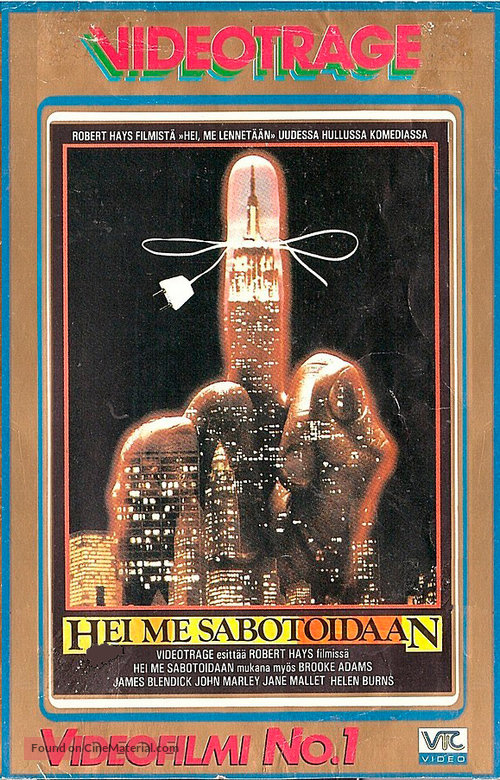
Utilities (1983)

By Richard Winters

My Rating: 2 out of 10

4-Word Review: Social worker battles bureaucracy.

Bob (Robert Hays) is a social worker who’s fed up with the utility companies who shut the heat off to a group of senior citizens when they can’t pay their bill, which almost causes them to freeze to death. He decides to get revenge by having his techno wiz friend Eddie (Benjamin Gordan) rig the companies computers so that the customers get paid directly by the same utility companies that have been screwing them over. Unfortunately Bob’s new girlfriend (Brooke Adams) who is also a cop won’t hesitate to turn him in if she finds out that he’s the one behind the scheme.

This was filmed in 1980, but sat on the shelf for 3 years and it’s easy to see why as the humor is quite flat.  For some reason it was produced by a Canadian company and filmed in Toronto, which they then try to mask as being Chicago and I’m not sure why. Can’t these types of scenarios happen in Canada or is the US the only one with greedy corporations? The effort to try and seem like an American film doesn’t work as Canadians have a much different sense of humor and the whole thing comes off, much like Fear is the Key another film produced by our friends to the north, but filmed here, very off-kilter right from the start.  It’s like the film’s director Harvey Hart doesn’t really understand American culture as the characters behave in ways unlike anyone that I know.

It’s also against the law to turn off the heat or gas  on someone between the months of November and March, or if the temperature dips below 32 even if it’s because they cannot pay their bill or are struggling with financial hardship. I’m not sure if the filmmakers knew this being from Canada, or if they thought the viewers would be unaware so it didn’t matter, but in either case it shoots the entire scenario down dead on arrival.

It’s fun watching Hays who’s best known for his starring role in the cult hit Airplane as he portrays a much different character here. Instead of just being this dull dimwit like in that film he’s much more emotional here and even aggressively opinionated, which is fine. The only problem I had is I couldn’t understand why he would want to date Adams who had him arrested when he tried to stop the gas company from turning off the heat as the two just didn’t seem to have much in common and if anything it would’ve been more fun had they remained adversarial throughout only to finally soften on each other at the very end.

I happen to be a big fan of satire, but it has to have an edge to it. Trying to lampoon greedy corporations is not at all interesting and too easy of a target. The company’s CEO, which is played by James Blendick, is portrayed too broadly and is nothing more than a boring caricature as are the elderly tenants who battle him. Potentially serious issues get lost in a script that wants to pad everything over in a cutesy way that ultimately proves to be both mindless and forgettable.

Alternative Titles: Getting Even, Up Your Gas Company

My Rating: 2 out of 10

Release: June 13, 1983

Runtime: 1 Hour 28 Minutes

Rated PG

Director: Harvey Hart

Studio: Astral Films

Available: VHS (Vestron Video)

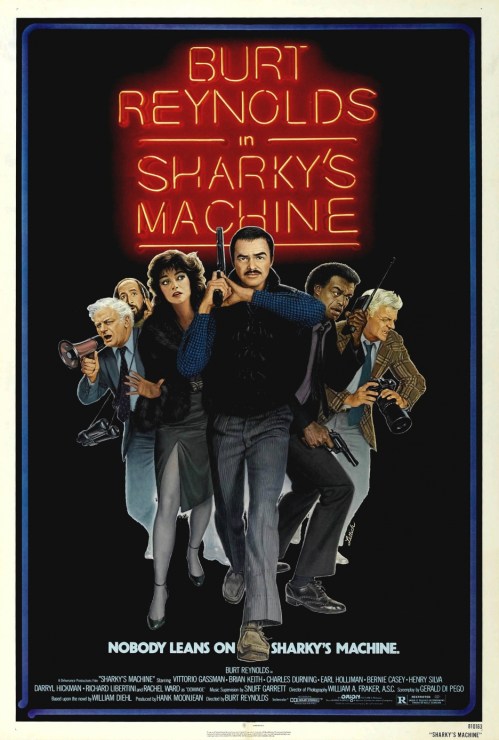
Sharky’s Machine (1981)

By Richard Winters

My Rating: 6 out of 10

4-Word Review: Cop tracks hooker’s killer.

Tom Sharky (Burt Reynolds) is a veteran cop who gets demoted to the vice division after getting involved in a drug deal bust gone wrong. It is here that he begins a 24-hour surveillance of high-class hooker Dominoe (Rachel Ward) who’s seeing a candidate for Governor that may have mob ties and could threaten not only her life, but Sharky’s as well.

This film marked Reynolds thankful break from his yahoo car chase comedies and helped albeit briefly revitalize his career and return him to being an actor who could parlay various genres as opposed to an aging actor relegated to lame B-comedies. For the most part his foray into this Dirty Harry clone is effective and proves he could still act when given the right material. As opposed to some of his earlier cop flicks such as Shamus his character here is not the source of any of the humor, but instead he plays it completely straight while simply responding to some of the goofy people and situations around him, which works just as well.

This also marked his third stab at directing, which is effective. I liked the gritty feel that permeates just about every shot and there’s some good, exciting, hard-edged action. I also like the leisurely pace that takes its time in telling the story and focuses at least somewhat on the investigation aspect of police work particularly the forensic end, which I wished had been extended more. What got me though and which gets a bit excessive is the obsession with the Westin Peachtree Plaza, which at the time was Atlanta’s tallest building, and the way the camera slowly zooms in on the skyscraper almost like it wants to make love to it.

Reynolds surrounds himself with an aging cast, men well over the age of 50 and 60, which I think was intentional because by comparison it makes him, who was 45, appear much younger. However, in retrospect I think this idea was a mistake. It’s not like these old pros were bad because they’re not in fact Charles Durning is quite amusing as Reynolds’ superior who gets off listening to the dirty talk between a hooker and her customer as well as looking over the luxurious apartment of a crime kingpin and stating “I think we’re working on the wrong side”, but these veterans do not help bring in younger viewers, which could’ve broadened Reynolds appeal and the whole reason why his star status tumbled during the 80s because his fan base was getting older while newer audiences weren’t being brought in.

Spoiler Alert!

The story is entertaining, but eventually jumps-the-shark when Domino supposedly gets shot and killed only to have it turn out to be some minor character named Tiffany instead, which doesn’t make a  lot of sense as dental records would’ve identified who the real victim was during the autopsy. It also would’ve made Sharky’s obsession to nab the shooter more compelling and personal had the victim really been Domino, who he was starting to have feelings for, instead of some woman he knew nothing about.

Their romantic angle might be the first time that a hooker falls-in-love with a vice cop. The fact that she’s initially defensive towards him, but then this leads to romance after he gets on top of her and slaps her across the face while also stating during a heated exchange “Don’t make me have to say what you really are!” is probably the most absurd thing of all.

Casting Henry Silva as the psycho gunman is boring because he’s played this type of role too many times and it’s just no longer interesting seeing him do it. Also, Reynolds main nemesis throughout the film was Vittorio Gassman who orchestrated the crimes and that’s who Reynolds should’ve been chasing down at the end instead of the lowly gunman who was simply carrying out orders.

The record breaking stunt showing Dar Robinson (doubling as Silva) doing a 220 foot free-fall from Atlanta’s Hyatt Regency Hotel really isn’t as impressive as it sounds. I remember watching a behind-the-scenes documentary showing what lengths the film crew went to capture it, but you end up only seeing a few seconds of it in the actual film making it seem like it really wasn’t worth the effort to put in.

My Rating: 6 out of 10

Released: December 18, 1981

Runtime: 2 Hours 2 Minutes

Rated R

Director: Burt Reynolds

Studio: Orion Pictures

Available: DVD, Blu-ray, YouTube