Category Archives: 80’s Movies

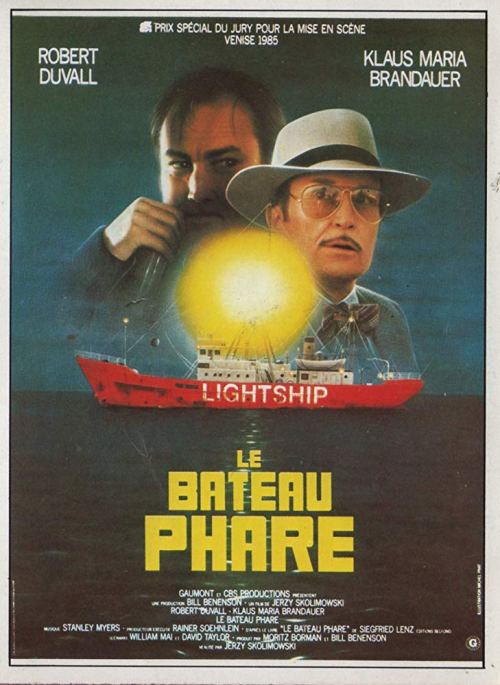
The Lightship (1985)

By Richard Winters

My Rating: 7 out of 10

4-Word Review: Hostages on a boat.

Captain Miller (Klaus Maria Brandauer) manages a stationary lightship with a small crew in the Atlantic and allows his teenage son Alex (Michal Skolimowski, but billed as Michael Lyndon) to come on board for a visit. While his son is there they take on board three men (Robert Duvall, William Forsythe, Arliss Howard) who were stranded at sea on a small boat. Once they board the vessel they quickly take over and hold the rest of the crew hostage. Alex wants to fight back immediately, but his father cautions him to take a more measured approach, which he finds to be cowardly and doesn’t hesitate to let his dad know it.

The film is a real mixed-bag with some good elements and some not so good ones to the point that it seems almost surprising that it was directed by such a legendary talent as Jerzy Skolimowski. The isolation aspects are good as you feel this boat is completely by itself out in the middle of the gray cold sea, which helps elevate the atmosphere particularly when Skolimoski forces the actors to perform outside even as a storm rages. However, the cinematography looks like it was filmed on videotape  and then transferred to film later, which gives the thing a cheap, low budget feel.

The most disconcerting aspect though is the action, or the lack thereof. The criminals overtake the ship too easily and quickly without enough of a buildup or explanation as to why they are doing it. There’s also way too many situations where the bad guys could’ve easily been overtaken particularly when all three put down their guns and go dancing/partying in one of the vessel’s downstairs cabins. Why couldn’t the rest of the crew simply used this opportunity to lock them inside?

There’s also just too much standing around and talking making it one of the most civilized hostage taking scenarios ever recorded. The bad guys are also too dense particularly the Forsythe character who speaks and acts so dimwitted that he seemed better suited for a comedy. Instead of the film building-up the tension for the viewer you start to wonder why any of what we’re seeing is even happening.

Duvall’s performance is a bright spot as he plays against type by speaking in a wispy voice and wearing a pencil thin mustache until he looks almost exactly like film director John Waters. Brandauer is excellent as well and his stoic, measured presence helps to keep it compelling, but what surprised me the most was that apparently during rehearsals Duvall and Brandauer played the opposite part and then decided to switch-up once shooting began, which would’ve made seeing the behind-the-scenes footage all the more fascinating. Lyndon though as the son is quite weak and outside of his pretty boy face has very little to offer and was most likely only got the part because he was the son of the director while his voice-over narration, which was apparently thrown in at the last minute, is completely unnecessary and only helps to take the viewer out of the story every time it gets used.

The climax is genuinely exciting as it’s not clear until the very end whether the captain will come through and save the ship, or just cowardly slink away. As I said at the top of this review it’s a real mixed-bag with a couple of choice dramatic moments that makes it worth it, but only if you’re patient.

My Rating: 7 out of 10

Released: September 1, 1985

Runtime: 1 Hour 28 Minutes

Rated PG-13

Director: Jerzy Skolimowski

Studio: CBS Theatrical Films

Available: DVD
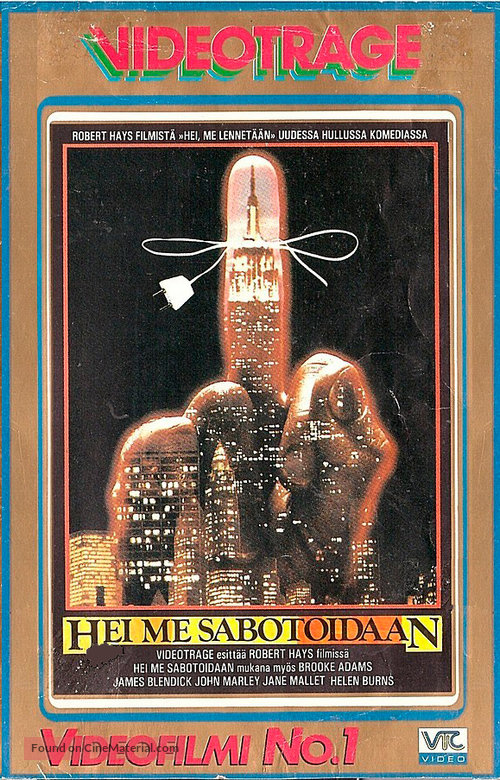
Utilities (1983)

By Richard Winters

My Rating: 2 out of 10

4-Word Review: Social worker battles bureaucracy.

Bob (Robert Hays) is a social worker who’s fed up with the utility companies who shut the heat off to a group of senior citizens when they can’t pay their bill, which almost causes them to freeze to death. He decides to get revenge by having his techno wiz friend Eddie (Benjamin Gordan) rig the companies computers so that the customers get paid directly by the same utility companies that have been screwing them over. Unfortunately Bob’s new girlfriend (Brooke Adams) who is also a cop won’t hesitate to turn him in if she finds out that he’s the one behind the scheme.

This was filmed in 1980, but sat on the shelf for 3 years and it’s easy to see why as the humor is quite flat.  For some reason it was produced by a Canadian company and filmed in Toronto, which they then try to mask as being Chicago and I’m not sure why. Can’t these types of scenarios happen in Canada or is the US the only one with greedy corporations? The effort to try and seem like an American film doesn’t work as Canadians have a much different sense of humor and the whole thing comes off, much like Fear is the Key another film produced by our friends to the north, but filmed here, very off-kilter right from the start.  It’s like the film’s director Harvey Hart doesn’t really understand American culture as the characters behave in ways unlike anyone that I know.

It’s also against the law to turn off the heat or gas  on someone between the months of November and March, or if the temperature dips below 32 even if it’s because they cannot pay their bill or are struggling with financial hardship. I’m not sure if the filmmakers knew this being from Canada, or if they thought the viewers would be unaware so it didn’t matter, but in either case it shoots the entire scenario down dead on arrival.

It’s fun watching Hays who’s best known for his starring role in the cult hit Airplane as he portrays a much different character here. Instead of just being this dull dimwit like in that film he’s much more emotional here and even aggressively opinionated, which is fine. The only problem I had is I couldn’t understand why he would want to date Adams who had him arrested when he tried to stop the gas company from turning off the heat as the two just didn’t seem to have much in common and if anything it would’ve been more fun had they remained adversarial throughout only to finally soften on each other at the very end.

I happen to be a big fan of satire, but it has to have an edge to it. Trying to lampoon greedy corporations is not at all interesting and too easy of a target. The company’s CEO, which is played by James Blendick, is portrayed too broadly and is nothing more than a boring caricature as are the elderly tenants who battle him. Potentially serious issues get lost in a script that wants to pad everything over in a cutesy way that ultimately proves to be both mindless and forgettable.

Alternative Titles: Getting Even, Up Your Gas Company

My Rating: 2 out of 10

Release: June 13, 1983

Runtime: 1 Hour 28 Minutes

Rated PG

Director: Harvey Hart

Studio: Astral Films

Available: VHS (Vestron Video)

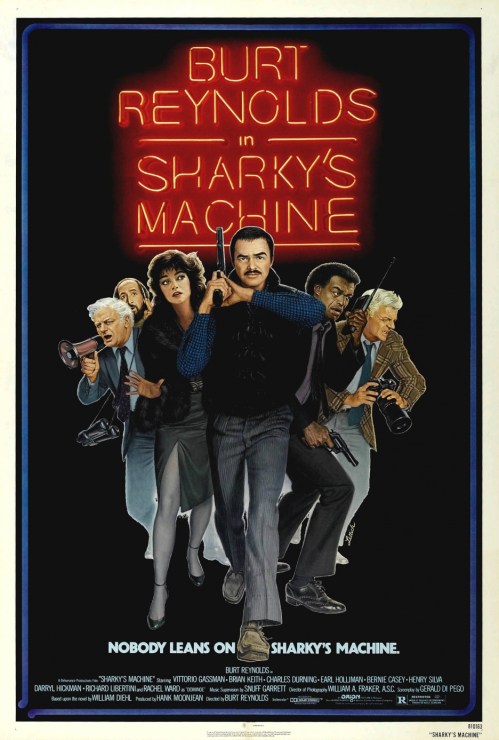
Sharky’s Machine (1981)

By Richard Winters

My Rating: 6 out of 10

4-Word Review: Cop tracks hooker’s killer.

Tom Sharky (Burt Reynolds) is a veteran cop who gets demoted to the vice division after getting involved in a drug deal bust gone wrong. It is here that he begins a 24-hour surveillance of high-class hooker Dominoe (Rachel Ward) who’s seeing a candidate for Governor that may have mob ties and could threaten not only her life, but Sharky’s as well.

This film marked Reynolds thankful break from his yahoo car chase comedies and helped albeit briefly revitalize his career and return him to being an actor who could parlay various genres as opposed to an aging actor relegated to lame B-comedies. For the most part his foray into this Dirty Harry clone is effective and proves he could still act when given the right material. As opposed to some of his earlier cop flicks such as Shamus his character here is not the source of any of the humor, but instead he plays it completely straight while simply responding to some of the goofy people and situations around him, which works just as well.

This also marked his third stab at directing, which is effective. I liked the gritty feel that permeates just about every shot and there’s some good, exciting, hard-edged action. I also like the leisurely pace that takes its time in telling the story and focuses at least somewhat on the investigation aspect of police work particularly the forensic end, which I wished had been extended more. What got me though and which gets a bit excessive is the obsession with the Westin Peachtree Plaza, which at the time was Atlanta’s tallest building, and the way the camera slowly zooms in on the skyscraper almost like it wants to make love to it.

Reynolds surrounds himself with an aging cast, men well over the age of 50 and 60, which I think was intentional because by comparison it makes him, who was 45, appear much younger. However, in retrospect I think this idea was a mistake. It’s not like these old pros were bad because they’re not in fact Charles Durning is quite amusing as Reynolds’ superior who gets off listening to the dirty talk between a hooker and her customer as well as looking over the luxurious apartment of a crime kingpin and stating “I think we’re working on the wrong side”, but these veterans do not help bring in younger viewers, which could’ve broadened Reynolds appeal and the whole reason why his star status tumbled during the 80s because his fan base was getting older while newer audiences weren’t being brought in.

Spoiler Alert!

The story is entertaining, but eventually jumps-the-shark when Domino supposedly gets shot and killed only to have it turn out to be some minor character named Tiffany instead, which doesn’t make a  lot of sense as dental records would’ve identified who the real victim was during the autopsy. It also would’ve made Sharky’s obsession to nab the shooter more compelling and personal had the victim really been Domino, who he was starting to have feelings for, instead of some woman he knew nothing about.

Their romantic angle might be the first time that a hooker falls-in-love with a vice cop. The fact that she’s initially defensive towards him, but then this leads to romance after he gets on top of her and slaps her across the face while also stating during a heated exchange “Don’t make me have to say what you really are!” is probably the most absurd thing of all.

Casting Henry Silva as the psycho gunman is boring because he’s played this type of role too many times and it’s just no longer interesting seeing him do it. Also, Reynolds main nemesis throughout the film was Vittorio Gassman who orchestrated the crimes and that’s who Reynolds should’ve been chasing down at the end instead of the lowly gunman who was simply carrying out orders.

The record breaking stunt showing Dar Robinson (doubling as Silva) doing a 220 foot free-fall from Atlanta’s Hyatt Regency Hotel really isn’t as impressive as it sounds. I remember watching a behind-the-scenes documentary showing what lengths the film crew went to capture it, but you end up only seeing a few seconds of it in the actual film making it seem like it really wasn’t worth the effort to put in.

My Rating: 6 out of 10

Released: December 18, 1981

Runtime: 2 Hours 2 Minutes

Rated R

Director: Burt Reynolds

Studio: Orion Pictures

Available: DVD, Blu-ray, YouTube

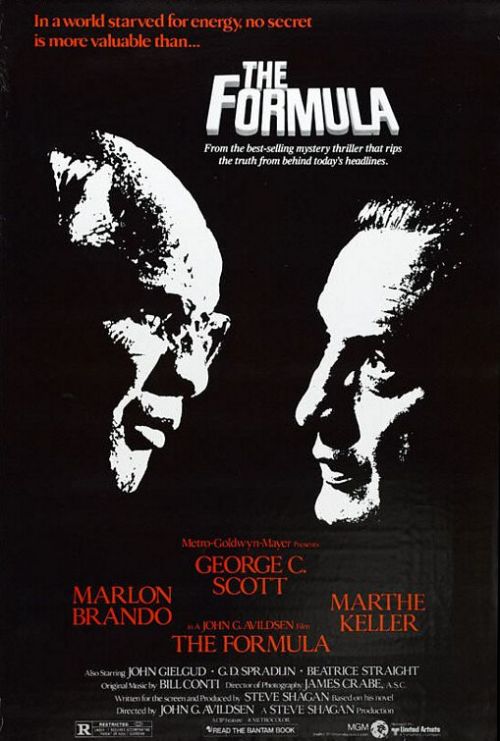
The Formula (1980)

By Richard Winters

My Rating: 3 out of 10

4-Word Review: Nazis create synthetic fuel.

While investigating the murder of his former police mentor, Lt. Barney Caine (George C. Scott) stumbles upon a an underworld of drug money and illicit funds that connect back to a petroleum company run by Adam Steiffel (Marlon Brando). He later learns that it has to do with a synthetic fuel invented by the Nazis during World War II that could be created from coal instead of oil, which if unleashed would unbalance the world markets and those that know about it are now being silenced permanently.

MGM offered to make the movie before Steve Shagan had even completed the novel of which is is based figuring that the topic of synthetic fuel would grab audiences since it conformed to the issue of the energy crisis that was making headlines during that era. Unfortunately the story works better in novel form because as a movie it amounts to nothing more than scene after scene of talking heads with no visual style or cinematic quality to it and the only interesting images, which include watching a frog swim across a chlorine filled pool and alligators munching on their lunch, has nothing to do with the actual plot at all.

Scott’s character is equally dull. He’s seen at the start leaving a movie theater with his son (Ike Eisenmann), which I guess is a cheap attempt to ‘humanize’ the character, but then he’s never seen with him again. He’s also initially straddled with a police partner (Calvin Jung) and their relationship gets off to a rocky start, which I thought would offer some secondary drama, but then he disappears too leaving him only with Marthe Keller, who replaced Dominique Sanda who Scott disliked because of her French accent, who acts as a potential love interest that is both stale and unneeded.

The film’s only entertaining aspect is Brando who manages to steal every scene he’s in by playing up the comic angle. He demanded complete control over how his character dressed and in the process sported a goofy comb-over and a hearing aid, which gives the guy a quirky charm. He also mostly ad-libbed his lines and refused to learn the ones in the script, which helps enliven the otherwise staid drama with some nice offbeat touches that I wished had been played-up more and it’s a shame that he wasn’t made the star as he’s the only thing that saves it.

The plot does have some intriguing qualities to it, but Shagan who also acted as the film’s producer, gives away all the secrets too early. Instead of waiting until the very end to find out what the code name Genesis stands for we’re told the answer at the halfway mark making the second half seem pointless and petering itself out with one of the dullest, most anti-climactic finales ever filmed.

My Rating: 3 out of 10

Released: December 19, 1980

Runtime: 1 Hour 57 Minutes

Rated R

Director: John G. Avildsen

Studio: MGM

Available: DVD

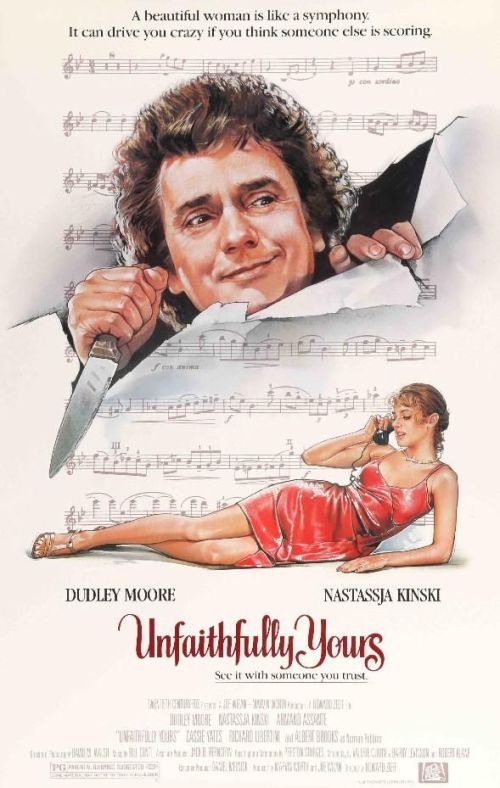
Unfaithfully Yours (1984)

By Richard Winters

My Rating: 7 out of 10

4-Word Review: Conductor suspects wife’s infidelity.

Claude Eastman (Dudley Moore) is a famous orchestra conductor who’s married to Daniella (Nastassja Kinski). While he is on vacation his friend Norman (Albert Brooks) hires a detective (Richard B. Shull) to keep an eye on her and he mistakenly thinks that she’s cheating on Claude with Maximillan (Armand Assante). When Claude finds this out he comes up with a crafty plot to kill her and frame it on Maximillian, but once he tries to put the plan into action everything goes awry.

This is a remake of the film with the same title that was released in 1948 and starred Rex Harrison. That film was quite funny especially the second-half, but it wasn’t perfect and this one makes several changes to the original script that I felt actually improved it. One of the changes is that while Claude is conducting the orchestra he comes up with the plan of how he wants to kill her, but in the original it was three different ideas while here it is only one. Some viewers have complained about this, but the truth is that the other two ideas weren’t very funny or interesting, so whittling it down to only one works better.

I also felt that it was dumb at how in the original Harrison had no interest in reading the report that the private eye hands him and at one point even tries to set it on fire, but I would think any reasonable person, even if they wanted to believe that their partner wouldn’t cheat on them, would still be curious enough to want to take a look at it. In this version Moore initially resists but eventually his curiosity gets the better of him, which is how I think 99 % of other people would act if in the same situation, which therefore makes Moore’s attempts at retrieving the report after initially discarding it all the more comical.

The actual murder plan though is better handled in the first one, where if done exactly right was rather ingenious and even believable. Here though the idea that Moore comes up with has a lot of glaring holes in it right from the start including the fact that he attempts to record his wife’s laughter/screams while inside a restaurant, but the noise of the other customers would conceivably drown out the wife’s voice. The recorder is also placed too far away from where the wife is sitting making whatever noise it does pick-up from her come off as quite muffled and distant.

I felt that Harrison’s acting in the original was what really made it work, but Moore does just as good here particularly in the animated way he conducts, which is a laugh onto itself. However, the scene where he mistakenly drinks some coke that is laced with crushed tranquilizer pills, which presumably should’ve knocked him out completely, but instead it makes him behave in a slightly drunken state is too reminiscent to the alcoholic character that he played in Arthur and therefore should not have been done here due to the comparison.

Although it doesn’t quite hold-up and loses steam by the end it’s still an entertaining ride. If you’re more into classic Hollywood films, or you want to watch and compare both, then I’d say the black-and-white original is just as good as both films had me laughing-out-loud at several points and both deserve a 7 out of 10.

My Rating: 7 out of 10

Released: February 10, 1984

Runtime: 1 Hour 36 Minutes

Rated PG

Director: Howard Zieff

Studio: 20th Century Fox

Available: DVD

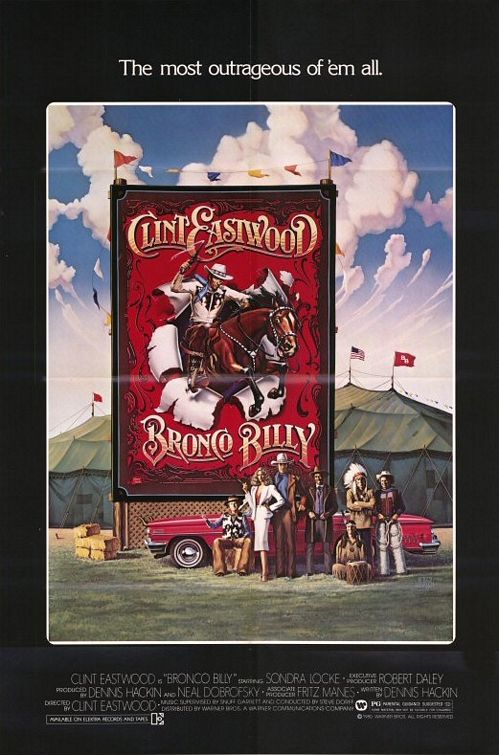
Bronco Billy (1980)

By Richard Winters

My Rating: 4 out of 10

4-Word Review: Rich lady and cowboy.

Bronco Billy (Clint Eastwood) is an aging modern-day cowboy who runs a traveling wild west show that is no longer attracting customers and making it hard for him to pay his employees. While at a gas station he meets Antoinette (Sondra Locke) a rich heiress with a haughty attitude who has just gotten dumped by her husband (Geoffrey Lewis) who also absconded with all of her money. Billy decides to hire her onto his show despite the fact that her presence causes animosity amongst the rest of his crew.

After Locke’s recent death, one person on Twitter, I don’t remember who, stated that this was the ‘greatest movie ever made’ and I’m not sure if he was joking or not, but if he wasn’t then I adamantly must disagree.  The film does start out okay and even has a certain charm to it, but the story and situations get too exaggerated until it’s impossible to take any of it seriously while also being too hokey to find funny.

The biggest logic gaps occur during the story thread dealing with Lewis being convinced to lie to the authorities that he killed Locke even though he really didn’t, so that he can get his share of her inheritance once he gets out. He’s told that if he pleads insanity that he will be ‘guaranteed’ to be released in only 3 years, but when in the history of the world has this ever happened and who would ever be dumb enough to believe it?  And that staying at a mental hospital is ‘no big deal’ and almost like a ‘resort’, which describes no mental hospital that I’ve ever head of.  There’s also no attempt by the police, or at least none is ever shown, to investigate the case to make sure Locke really has been murdered and try and retrieve her body.

The proverbial barroom brawl segment (must every western-themed film have this?) that occurs in the middle is as cliched and silly as it sounds and puts the whole rest of the film on a very cartoonish level. What’s even dumber is that during the brawl Locke goes outside to the parking lot where she gets accosted by two men, but just before they’re able to assault her Eastwood and his buddies magically appear to save her, but how could they have no known that she was in trouble when just a minute before they were shown taking part in the wild ruckus inside?

Locke’s rich-bitch personality is too much of a caricature and quickly becomes irritating to the point that when she eventually does soften, which takes awhile, it still doesn’t help. Having her able to shoot a pistol just as well as Billy seems out of character and never sufficiently explained. It would’ve been funnier had her dainty, cushy lifestyle been challenged more by throwing her into a rugged experience that she wasn’t used to, which doesn’t get played-up half as much as it could’ve or should’ve.

Eastwood’s character isn’t likable either. I would hate working for somebody that couldn’t pay me fore several months straight nor not allowing his employees to ad-lib any of their lines that he writes for them during the western skits that they put on even though people work better in their jobs when their allowed to have creativity and leeway in what they do and how they do it.

Why he would immediately fall head-over-heels for this woman is a mystery as Locke is only average in the looks department and her arrogant attitude is such an extreme turn-off that just about any guy would quickly dump her and never look back instead of continually pursuing her like Billy pretty much does here. Having them consummate their relationship should’ve only occurred at the very end while displaying much more of their personality clashes, which gets underplayed.

The scene where Billy and his gang try to hold-up a train is really funny and I enjoyed the inspired casting of having Woodrow Parfrey, who usually plays weirdo types, being cast as the head of the mental hospital, but other than that I felt the film was too predictable. You know where it’s headed right from the start and the theme of the old-fashioned, rugged individualist fighting more modern-day sensibilities has been done in so many other Eastwood films that here it becomes redundant.

My Rating: 4 out of 10

Release: June 11, 1980

Runtime: 1 Hour 56 Minutes

Rated PG

Director: Clint Eastwood

Studio: Warner Brothers

Available: DVD, Amazon Video, YouTube

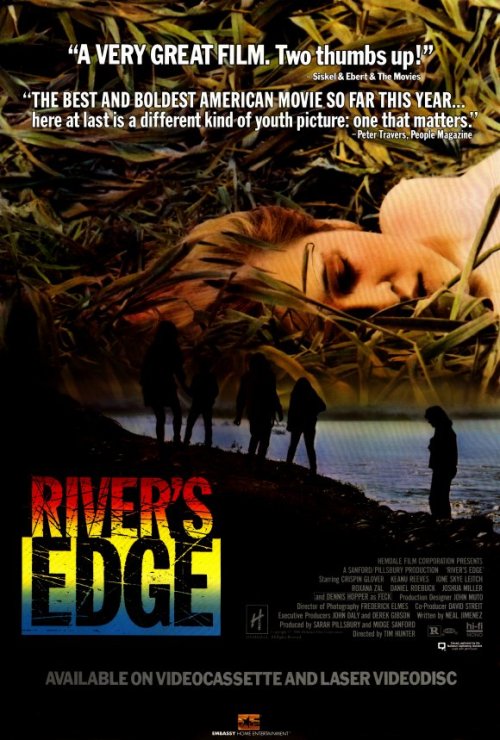
River’s Edge (1986)

By Richard Winters

My Rating: 7 out of 10

4-Word Review: Teens ambivalent to murder.

A high school clique must deal with conflicting issues when one of their members (Daniel Roebuck) murders his girlfriend (Danyi Deats) and leaves her nude corpse along the riverbed where he then proudly shows it off to anyone who wants to see it. Some of them consider going to the police while others like Layne (Crispin Glover) thinks they should simply bury the body and cover-up for John’s deeds since he’s their friend.

While I liked the film’s atmosphere and the strong drama I didn’t care for the preachy tone. This is most evident in the scenes with Jim Metzler playing a teacher who’s a baby boomer and brags about how great his generation is compared to today’s teens and even at one point wags his finger at them over their apathy, but never once answers why they’ve become that way. Every generation likes to feel that they’re superior to the one that comes after it and the film seems to want to align itself with that point-of-view; that the kids today just don’t seem to ‘get-it’, but what’s caused that? Is it just some ‘bad DNA’ or instead a crumbling societal structure and if so then the adults are partially to blame for it, which is a complex area that the film seems reluctant to go to.

The fact that there isn’t any real insight to the cause and it doesn’t even analyze the family life of all its characters is a bit frustrating. It does show the chaotic, broken home life to one of them, which could be construed as part of the problem, but then later this gets negated when the teen from that household is the one who ultimately goes to the police.

Keanu Reeves character is a further detraction as he becomes too much of the conventional hero. Watching him literally shake from guilt while sitting in a classroom gives away all the tension as it makes it clear he will eventually go to the police and it would’ve been more intriguing had this instead been kept a mystery. Initially we’re supposed to be ‘shocked’ that the teens don’t immediately run to the police upon discovering the body, but then having him later get accused of the crime once he does go only helps to make those that didn’t seem the wiser.

Dennis Hopper’s character is a problem too. He’s great actor who plays the part brilliantly even though it seems too similar, at least initially, to the one he played in Blue Velvet almost to the point of it being typecasting. Having the guy start out as this weird, overly eccentric, mentally unstable loner who goes around in public with his sex doll only to then turn around and become a moral authority to ‘the crazy kids of today’ is just too much of a weird clash.

Crispin Glover, with his androgenic looks and wild, hybrid VW that he drives around in, is the film’s true star and many might even say that he IS the movie. His warped idea of friendship, loyalty, and ‘honor’ is amusing and even engaging and in a offbeat way brings a sense of innocence to an otherwise jaded climate. The plot would’ve worked better had it made him the centerpiece by turning it into a black comedy where he becomes the anti-hero by trying to save his friend from getting into trouble, which ultimately would’ve hit home the same message that the drama does anyways.

Despite having its plot start from the middle and work into a nebulous finish, it’s still a gripping and groundbreaking film and something I found myself quite caught up in. I just wished it hadn’t felt the need to envelope it with a social message, but instead allowed the situation play out naturally with an ambiguous tone, which would’ve then forced the viewer to ponder the ramifications of it by themselves instead of trying to do it for them.

Although the film never mentions it this it is actually based, or at least inspired by a true incident that occurred in Milpitas, California when 14 year-old Marcy Renee Conrad was murdered by 16 year-old Anthony Broussard on November 3, 1981. After dumping the dead body into a ravine Broussard then showed it off to 10 of his friends who didn’t do anything about it until finally 2 of them decided to go to the police. However, there are some major differences from the real case to the one portrayed here. In the actual incident Marcy was also raped and Broussard was African American and his ultimate fate was much different than what happens to the killer in the movie.

My Rating: 7 out of 10

Released: August 7, 1986

Runtime: 1 Hour 39 Minutes

Rated R

Director: Tim Hunter

Studio: Island Pictures

Available: DVD, Blu-ray, Amazon Video

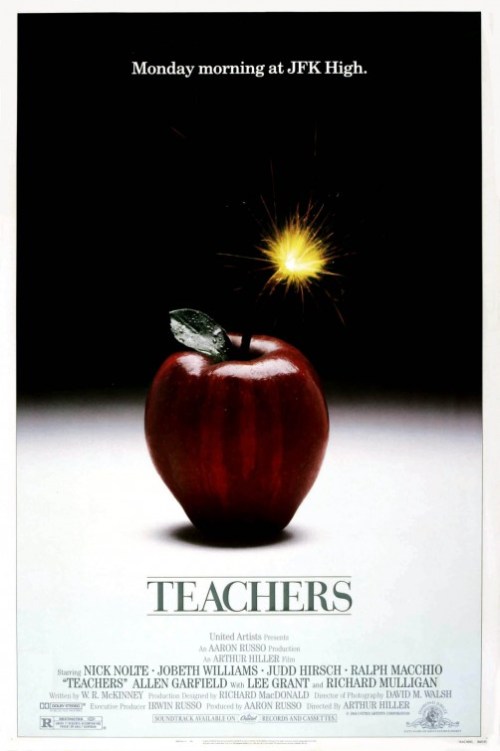
Teachers (1984)

By Richard Winters

My Rating: 5 out of 10

4-Word Review: Teaching can be difficult.

Alex (Nick Nolte) is a burned-out teacher who feels that the system is working against him as he tries to do his job in an inner-city school despite having no support from administrators. Things come to an ugly light when Lisa (JoBeth Williams) a former student of his who’s now an attorney takes part in a lawsuit suing the school for graduating a student who could not read.

Producer Irwin Russo drew on his 10-years as a teacher at an inner-city New York high school as the basis for the story and the film has some good trenchant points, but trying to put a satirical spin to it was a mistake. To make a good satire you gotta go all-in and this film timidly goes half-way with humor that at times, especially at the beginning, is off-putting. It’s not until the second-half when it gets more serious does it ever start catching its stride and the production would’ve been better had it remained a drama from the very beginning.

Nolte comes off like he’s suffering from one long hang-over, which may have been the intention, but the way he basically sleepwalks through the role gives the film no energy and makes the viewer feel as drowsy as he is. His relationship with Lisa, his former student, is forced and uninteresting and even a bit unbelievable since they look to be basically the same age. Judd Hirsh who plays the vice principal should’ve been the lead adult character as he does a great job of balancing the comedy with the drama by playing it straight and simply responding in sometimes glib and humorous ways to the insanity around him.

Ultimately it would’ve worked better had Ralph Macchio been made the star as he’s excellent despite the irony that he was already 23 at the time, but looking more like he was still in the eight grade. Crispin Glover as his goofball friend doesn’t work as well. Sometimes his pseudo-psycho characters are interesting, but here it is poorly defined and distracting. Laura Dern’s character is annoying as she plays another one of those perennial teen girls who gets pregnant and then wants an abortion, which has been so overused in so many other high school films that by now it seems like a cliche.

I did like the on-location shooting done at the former Central High School in Columbus, Ohio and the student body looks to be made up of actual teens and not just young adults trying to play one, but they did seem at times to be a bit unrealistically too well behaved. The scene where a teacher Mr. Stiles (Royal Dano) would fall asleep behind his desk and the students would still quietly do their homework made no sense as I would think they’d take advantage of the situation and goof-off instead.  Richard Mulligan’s role as an escaped mental patient pretending to be a substitute teacher is equally implausible as I thought the authorities would’ve caught up to him much sooner than they do although it is fun seeing him wearing a General Custer outfit as it looks quite similar to the one he wore in Little Big Man when he played the actual Custer.

There are a few good moments here and there, but it’s badly undermined by the misguided humor and corny ending. The eclectic supporting cast though is a treat to watch. I enjoyed William Schallert as a principal who seemingly wants to avoid confrontation at all costs as well as Lee Grant as a lawyer, which is the type of profession her acting style seems born to play. Originally the part was written for a man, but she plays it better than any guy ever could and I also enjoyed seeing her with a brunette hairdo instead of her usual red one, which makes her appear younger than she did in the 70’s.

My Rating: 5 out of 10

Released: October 5, 1984

Runtime: 1 Hour 47 Minutes

Rated R

Director: Arthur Hiller

Studio: MGM/UA

Available: DVD

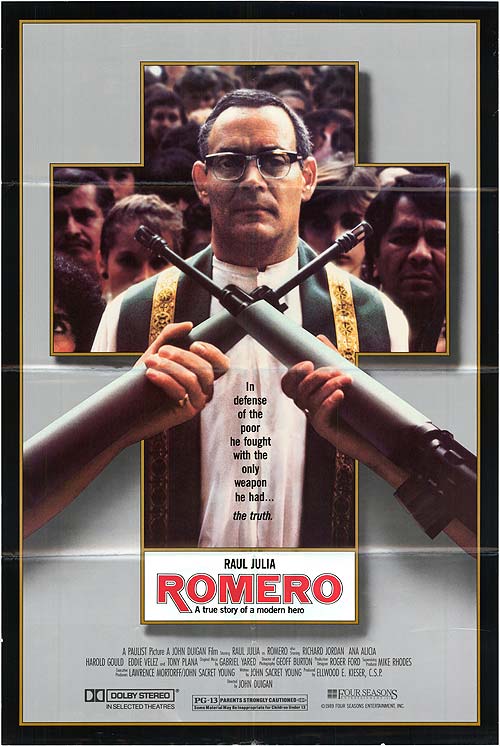
Romero (1989)

By Richard Winters

My Rating: 6 out of 10

4-Word Review: Priest battles the oppression.

Based on the life of Oscar Amulfo Romero (Raul Julia) the film centers on his ascent to Archbishop of San Salvador during the political turmoil of 1977. It was presumed that Romero who had traditionally always been reserved and apolitical would act as a nice balance between the authoritative military regime and the congregation, but as the oppressive authorities welded more of a dogmatic style and killed anyone who spoke out against it, Romero became the symbol of the resistance sending him into a perilous position where his livelihood and life came into serious doubt.

On the technical end this film does quite well and noted Australian director John Duigan creates a vivid atmosphere of the time period. Many scenes are quite disturbing and even gut-wrenching as we see the faces of men, woman, and children shot and killed in cold-blood. The part where Romero sits inside the squalor of a prison cell while hearing the moans of someone being tortured in the next one and unable to do anything about it except cry out was for me the most unsettling. The outdoor scenery has a scorched earth look, which nicely reflected the mood and mind-set of most of the people living there and every shot showing a military tank passing by got me jittery. Sometimes nothing would occur, but just seeing a tank was enough to make me nervous and to that end the film does its job as I’m sure that was the same feeling those that lived through the ordeal also felt.

Although Julia does not resemble the actual Archbishop who was in his 60’s at the time and looked much older than Julia who despite the dyed gray hair still appeared to be in his 40’s, his all-around performance is quite exemplary. Throughout his career he had played many flamboyant parts, so seeing him effectively portray a buttoned-down persona was quite interesting and a testament to his acting skill.

Spoiler Alert!

The only issue that I had was that on the emotional level it fails. Since it was produced by the Catholic church I presumed that we’re supposed to feel ‘inspired’ when it’s over and yet I walked away from it feeling anything but. I kept waiting for a Gandhi-like moment where we would see first-hand how all of his struggles finally came to fruition and how one person can truly move mountains and make a difference and yet that never happens. Instead he gets murdered while conducting a religious service and the war he sought to end continued to rage on for another decade killing an additional 60,000 to 90,000 more people.

Yes, there were indeed moments where Romero displayed amazing courage, but every time he revealed his bravery it just made his situation even worse. If the idea was to motivate the viewer to go out and be a hero it doesn’t work. If anything it unintentionally seems to state that laying low and keeping your mouth shut in the face of adversity is a good thing because at least you’ll remain alive and if you do choose to fight, it will only lead to death and nothing substantial to show for it.

My Rating: 6 out of 10

Release: August 25, 1989

Runtime: 1 Hour 42 Minutes

Rated PG-13

Director: John Duigan

Studio: Four Square

Available: DVD, Amazon Video

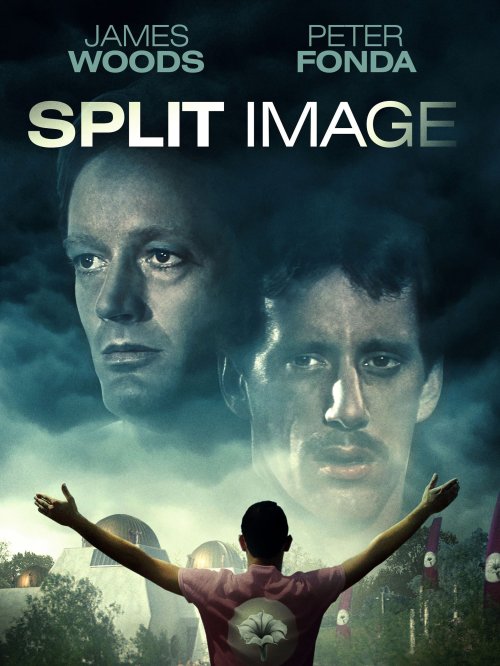
Split Image (1982)

By Richard Winters

My Rating: 6 out of 10

4-Word Review: Their son becomes brainwashed.

Danny (Micheal O’Keefe) is a struggling athlete who’s feeling overwhelmed by the demands and pressures of college life. He meets-up with Rebecca (Karen Allen) who invites him to a weekend stay at what turns out to be a religious cult run by Kirklander (Peter Fonda). It is there that Danny becomes brainwashed into the organization and cuts off all ties with his parents (Brian Dennehy, Elizabeth Ashley) who decide they have no option but to kidnap him and then have him deprogrammed by a brash, caustic deprogrammer (James Woods) who they find to be rude but helpful

This film is very similar to Ticket to Heaven that was produced in Canada and has the same story and structure. The Canadian production though is a bit better especially with the way it examines the protagonist getting acclimated into the cult. Both films have the young man becoming brainwashed in a matter of one weekend which to me is too quick. The Canadian film though at least examines the different activities that they go through to wear him down and it gets in your face with it, so the viewer feels as exhausted as the young man when t’s over while this film glosses over that part making the transition seem too extreme. The Canadian film also detailed the character’s constant inner turmoil even after he’d been indoctrinated while here Danny behaves like a light switch that completely changes from his old self in a snap and then never looks back, which is less realistic

The B-story dealing with a romance that he has with Rebecca while in the group degrades the the story to a sappy opera level and should’ve been left out. Allen certainly is perfect for her role as her bright, beaming blue eyes gives her character that brainwashed appearance, but the extended conversations she has with Danny are strained making me believe that the scenes inside the cult should’ve been cut as they’re corny instead of compelling and focused instead  solely on the parents point-of-view at trying to get him out.

The film though does score with the deprogramming segment, which gets much more extended here. Director Ted Kotcheff uses elaborate visual effects to convey Danny’s point-of-view and unlike in Ticket to Heaven the deprogrammer doesn’t allow the family and friends to sit-in on his sessions as he feared they won’t understand his methods, which is more believable.

Ashley as the mother is great especially her meltdown near the end with Danny when he tries to physically attack her.  I had some problems though with Dennehy’s character as he seemed much too calm and laid back and even starts singing as they drive to the cult location even though most people would be nervous and then later showing him breaking down and crying as he watched an old video of Danny is too overwrought.

Woods though perfectly captures the anti-hero with his intended brashness being more amusing than offensive. The part where he plays-out a scene to the movie Dr. Jekyll and Mr. Hyde starring Spencer Tracy was I’m convinced ad-libbed and a great example of  how his acting genius gives this movie a needed edge and whose presence keeps it watchable.

My Rating: 6 out of 10

Released: October 3, 1982

Runtime: 1 Hour 50 Minutes

Rated R

Director: Ted Kotcheff

Studio: Orion Pictures

Available: VHS, Amazon Video