Category Archives: 70’s Movies

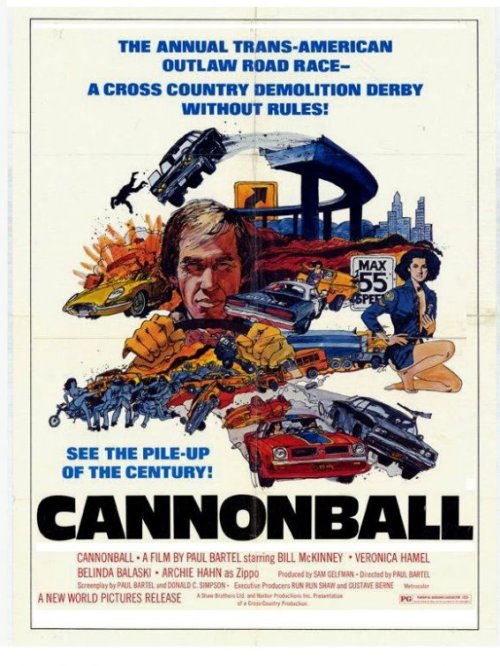
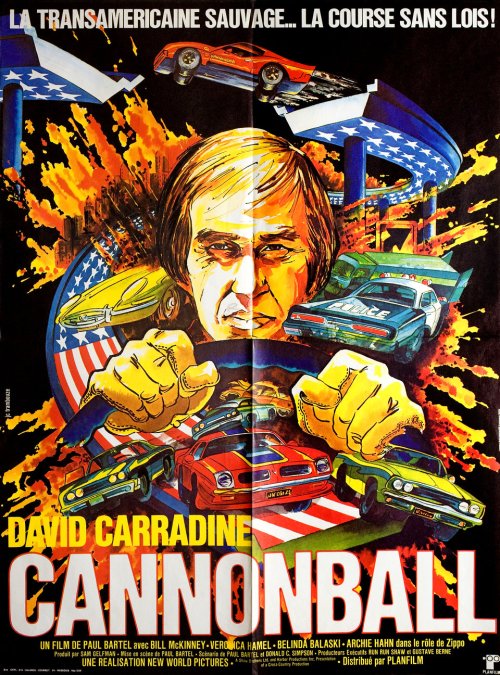
Cannonball! (1976)

cannonball-1

By Richard Winters

My Rating: 5 out of 10

4-Word Review: An illegal car race.

Wacky participants convene in Santa Monica to take part in an unsanctioned cross country car race. All drivers are accountable for any speeding tickets or injuries that they may accrue and the only rule is that the first person to arrive at a designated spot in New York City wins. Yet the race’s top driver Coy ‘Cannonball’ Buckman (David Carradine), who is on parole, risks being sent back to prison if he crosses the state line, but he decides to proceed any ways despite the objections of his lawyer girlfriend (Veronica Hamel) who eventually rides along with him.

This film is based on the same real-life race that inspired The Gumball Rally, but critic Leonard Maltin incorrectly states in older versions of his book that this film plagiarizes that one, which isn’t true as this movie came out first and adds in many different story angles.

Despite the fact that the production is plagued with the typically cheap Roger Corman look and seems more like an extension to Death Race 2000 I still preferred this to Gumball. Both films have characters that are decidedly cartoonish and neither film makes any attempt to recreate what really happened, but this movie has a darker edge and most thankfully a better soundtrack that doesn’t have a kiddie-like melody.

This film also reverses the race’s starting and end points. In both the real-life event and in Gumball the starting point was New York, but here it’s California, which is actually a plus. In Gumball the drivers seemed to go from the Big Apple to the desert southwest in a matter of only a few minutes, which made no sense. Here the film crew is allowed ample time to take advantage of the closed desert roads to do their car stunts, which aren’t bad, and it also sets up an ending in which driver Mary Woronov arrives in New York, but then gets lost in the congested traffic and can’t find the finish line, which is the film’s funniest bit.

The cast is much more eclectic. I really enjoyed Judy Canova in her final film appearance as her facial expressions are a hoot especially as she has her car gets rear-ended by Carradine’s. Dick Miller is entertaining as a man that tries to rig the race and Bill McKinney is very effective as the bad guy. Director Paul Bartel and producer Roger Corman have bit parts as does Carl Gottlieb the man who penned the screenplay for Jaws. Other directors make cameo appearances including Jonathan Kaplan, Allan Arkush, Joe Dante and even Martin Scorsese.

Yet what I really liked is the massive car pile-up that occurs near the end that features car after car crashing into an already existing accident and then exploding one after another into a ball of flames. This was considered quite controversial amongst the crew and star Carradine tried to convince Bartel not to put it in, but he insisted and I’m glad he did. Yes it’s morbid, but it helps put a touch of reality into the whole thing. The ‘70s were filled with a lot of silly car chase movies all with the running theme that people needed their ‘freedom’ and having a speed limit takes away all the ‘fun’, but there is a reason why those rules were put into place as what starts out as a good time can easily turn into something horrific in a matter of seconds. To me this was Bartel’s way of spitting-in-the-face at all those other inane road race movies that always took an innocuous angle while conveniently ignoring the ugly realities that existed just beneath the surface.
cannonball-2

My Rating: 5 out of 10

Released: July 6, 1976

Runtime: 1Hour 34Minutes

Rated R

Director: Paul Bartel

Studio: New World Pictures

Available: DVD, Amazon Instant Video
THX 1138 (1971)

thx-1138

By Richard Winters

My Rating: 9 out of 10

4-Word Review: Sex is not allowed.

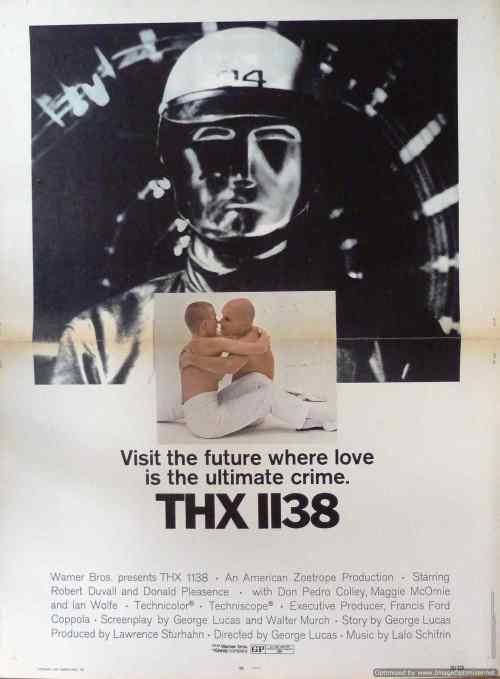
THX 1138 (Robert Duvall) is member of a futuristic, work camp-like society where everyone has shaved heads, forced to take drugs to control their emotions and avoid having sex, which is forbidden. His days are spent on the production line where he helps build police androids and at night he goes home to an apartment where he rooms with LUH 3417 (Maggie McOmie). She is unhappy with her situation and stops taking the required drugs while replacing THX’s with placebos. The two begin a sexual affair and are promptly arrested. THX is thrown into a modernistic prison that has no walls or bars and he eventually decides to attempt a daring escape with the help of SEN 5241 (Donald Pleasence) and a hologram known as SRT 9 (Don Pedro Colley).

This story is an extension to the student film that director George Lucas made while attending the University of California film school. That film was a 15 minute short entitled Electronic Labyrinth: THX 1138 4EB, which dealt with a man trying to escape from a futuristic world while being chased and monitored by government run computers. It won first place in the 1968 National Student Film Festival and was good enough to gain the attention of Francis Ford Coppola who offered to produce a feature film dealing with the same basic premise, but having more of a background to the character and his reason for escaping.

Reportedly Lucas considers this to be his favorite project and despite the fact that it did not do well at the box office I consider it to be his best stuff as well. The visuals are imaginative and striking and make you feel like you are entering a whole new world unlike any that had ever been created before. I especially liked the prison scenes where the characters are surrounded by nothing but an unending white as well as THX’s medical examination done exclusively by robotic arms. Having the characters framed towards the side of the screen instead of the center while action occurs just out of view helps accentuate the off-kilter vibe and was year’s ahead-of-its-time.

Even though there is very little dialogue or music the sound becomes an integral part of the film by relying on comments made by the androids who tell the people in a HAL-like tone to ‘stay calm’ as well as the state sanctioned god known as OHM who routinely advises his followers ‘to be happy’. The best part though comes when two techs have a casual a conversation while viewing through monitors the torture of THX.

The film is visually groundbreaking and one of the greatest directorial debuts of any director living or dead, but it still comes with a few caveats. One is the fact that the plot relies too heavily on the stereotypical Orwellian view of the future where everything is worse than it is today and people no longer have any individual rights. Yet technology has proven to make life increasingly easier for people and with more freedoms and options, so why would everything suddenly revert the other way? Maybe they were survivors of a nuclear holocaust and this society was humankind’s way of ‘starting over’, but that’s never made clear and it would’ve been nice to at least get a glimpse of the person, or people who were behind-the-scenes with the ultimate authority as well as some sort of backstory.

There is also the fact that everyone in this society needs to be working, but jobs today are increasingly being lost to automation every year and that trend will continue. Certain nations like Finland are already experimenting with paying their citizens a basic salary because there are more people than jobs available.  Citizens of future societies are predicted to have more free time than ever before, so why doesn’t the world in this film follow suit? If this society can build android cops why can’t they also build robots to do the all the other jobs too, which would then allow the humans to have more of an idyllic existence than a workaholic one?

I also wasn’t too crazy about the 2004 digital restoration, which added new special effects and footage. I last saw this film in 2001 and could tell right away that this version had been tampered with. I realize that Lucas has been known to do this with his Star Wars films, but to me it’s as bad as colorization. Why mess with something that is already good? The added computer effects does not ‘enhance’ anything, but instead desecrates the original vision and treats it like it were a video game than a movie.

My Rating: 9 out of 10

Released: March 11, 1971

Runtime: 1Hour 28Minutes

Rated R

Director: George Lucas

Studio:  Warner Brothers

Available: DVD, Blu-ray, Amazon Instant Video, YouTube

Picnic at Hanging Rock (1975)

picnic-at-hanging-rock-1

By Richard Winters

My Rating: 6 out of 10

4-Word Review: Where are the schoolgirls?

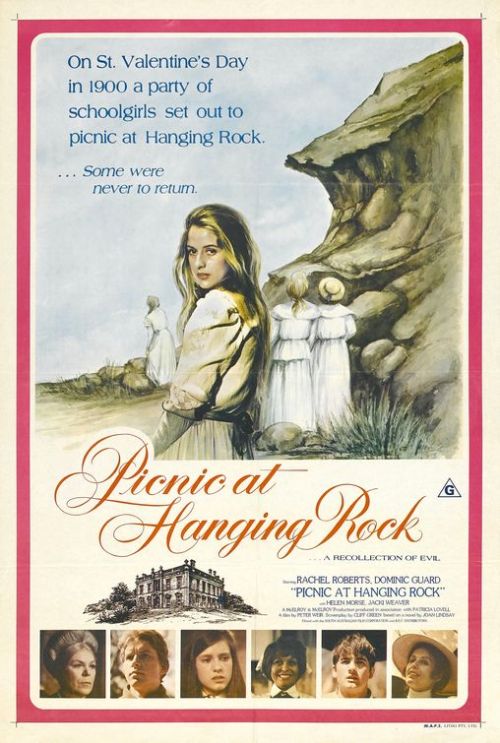
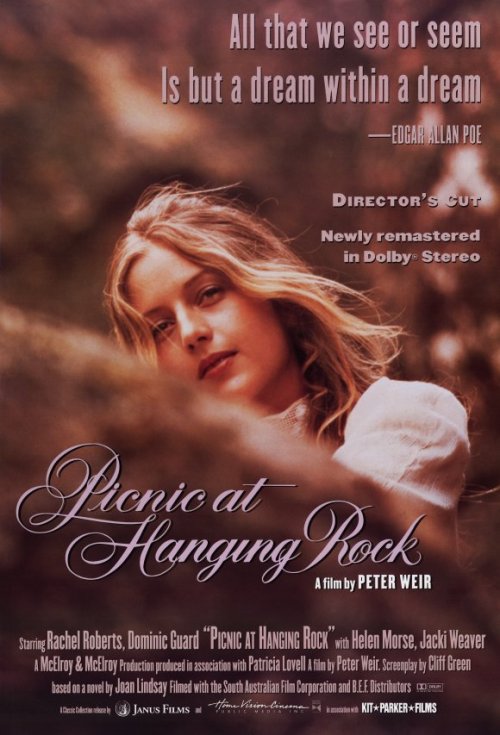
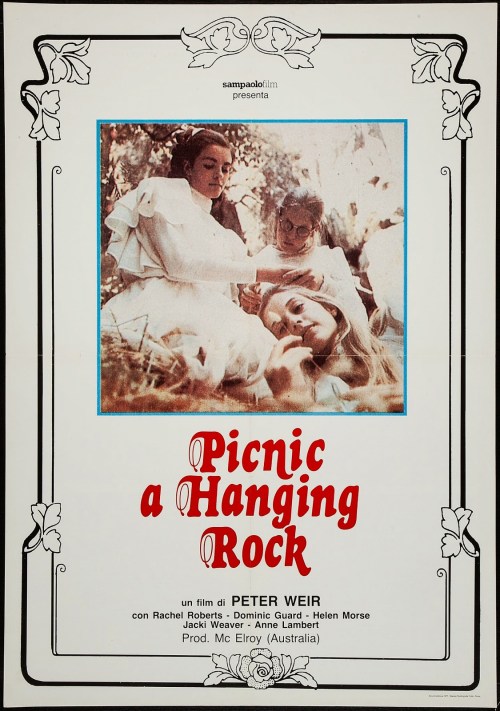
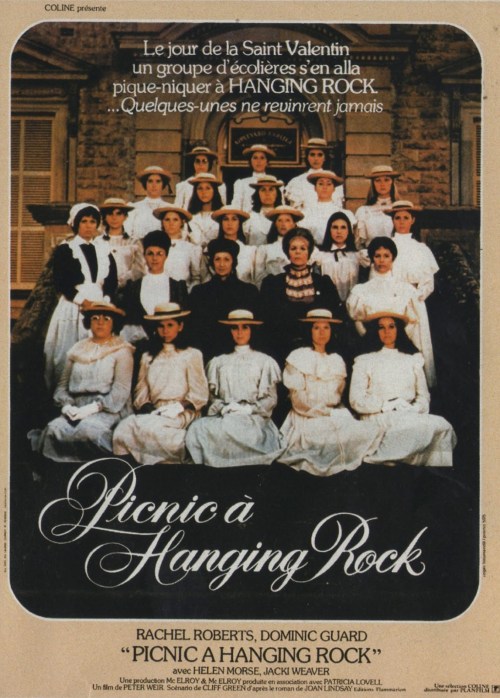
On Valentine’s Day in the year 1900 a group of Australian schoolgirls and two teachers (Vivean Gray, Helen Morse) set out to a rock formation known as Hanging Rock for a picnic. While there one of the girls named Miranda (Anne-Louise Lambert) decides to go exploring and three of the other girls follow. They proceed to climb the rocks, which frightens one of the girls (Christine Schuler) who runs back. By that evening the other three haven’t been located and a search party goes out by the local police to find them, which only leads to more questions than answers.

If one is in to mood pieces then this thing will be the perfect fit. The music and director Peter Weir’s ability to capture the rock formations in a way that makes them seem creepy and menacing is very well done. I found myself being strangely captivated most of the way while also impressed that the whole thing gets captured through a camera lens with a piece of bridal veil hung over it.

The story is based on the 1967 best-selling novel of the same name by Joan Lindsay. Despite many rumors to the effect and a follow-up novel called ‘The Murders at Hanging Rock’ this was not in any way based on a true story. Originally Lindsay wrote a resolution to the mystery that had the girls entering into some sort of time warp, but at the last minute that chapter was excised at the suggestion of her publisher, but then later published in 1987 as ‘The Secret of Hanging Rock’.

picnic-at-hanging-rock-2

The film on the other hand offers no resolution of any kind. Instead like in the book the main emphasis is on how the disappearance affects the people at the school and in the town. Rachel Roberts is a standout in this area playing the strict headmistress Mrs. Appleyard who initially comes off as quite composed and in control, but as the toll of the mystery continues her character unravels in increasingly more shocking ways, which is the film’s highlight.

Despite its cult following and the fact that it is included in the book ‘1001 Movies You Must See Before You Die’ I still came away frustrated and feeling like not enough happened to justify having to sit through two hours of viewing. On the technical end it is excellent and watching the different ways people cope and respond to the mystery is interesting, but this could’ve been played up a lot more.

Sometimes movies with vague endings are good as life doesn’t always give us nice and tidy wrap-ups, but this is one instance where it would’ve been better had there been more of a conclusion even if it had just thrown out some clues and then allowed the viewer to come to their own deductions. To some extent it does this as supernatural elements are introduced as well as the idea that it might’ve been a sexual crime, but even this is off-putting because it’s not connected to anything concrete or tangible and thus makes it all the more evasive.

Had this been based on an actual mystery, which for years is what a lot of people thought, then it would’ve been more acceptable and even fascinating, but the fact that it’s all made up hurts it and tears away the mystique that for a long time it relished under.

picnic-at-hanging-rock-3

picnic-at-hanging-rock-4

My Rating: 6 out of 10

Released: August 8, 1975

Runtime: 1Hour 47Minutes (Director’s Cut)

Rated PG

Director: Peter Weir

Studio: The Australian Film Commission

Available: DVD (Criterion Collection), Blu-ray (Region B/2), Amazon Instant Video, YouTube

picnic-5

This is a 2014 pic of Anne-Louise Lambert, who played Miranda in the film, sitting at the location of where the movie was filmed.

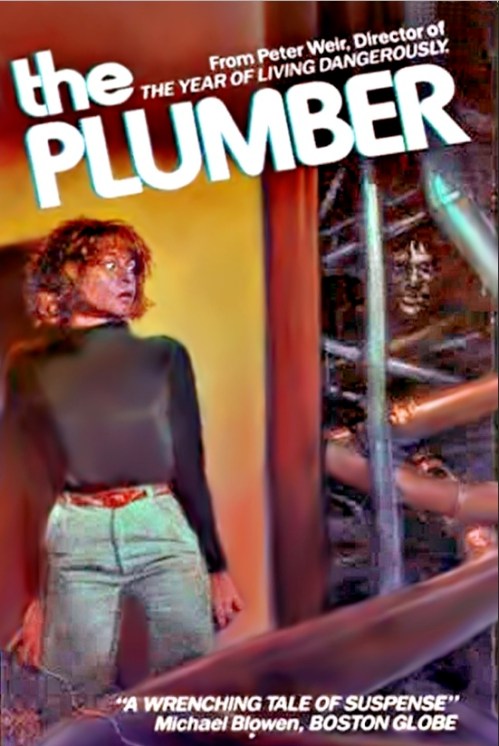
The Plumber (1979)

plumber 1

By Richard Winters

My Rating: 9 out of 10

4-Word Review: He destroys her bathroom.

Jill (Judy Morris) works inside her cramped apartment while her husband (Robert Coleby) goes off each day to teach at a local college. She is an educated woman who spends her time writing a thesis for an anthropology paper, but finds herself at a loss when one day a talkative plumber by the name of Max (Ivar Kants) enters her place insisting he needs to check her pipes. Even though there is nothing wrong with her bathroom he proceeds to tear it up anyways while conversing with her on a wide-range of increasingly uncomfortable topics. Her husband and her best friend Meg (Candy Raymond) feel she is making a big deal out of nothing and find the plumber to be nothing more than slightly eccentric, which makes Jill feel even more powerless to Max’s increasingly odd antics.

This film is an excellent testament to what a great director can do with very little.  What appears on the surface to be a low budget, one-joke flick is instead a cleverly disguised observation of the class system and the underlying prejudices and assumptions that exist on both ends. The story playfully jumps back and forth from being a black comedy to a thriller to even a psychological study, which not only helps to make it quite original, but highly unpredictable as well.

To me the most amusing aspect about it is the way we have this super intelligent, well-educated woman who can write long dissertations involving ancient African cultures, but when it comes to people in her own environment she is at a loss and unable to know how to respond or react to a stranger who on the outside should be completely inferior to her intellectually, but routinely gets the upper hand nonetheless. Having everyone around her ambivalent to her situation simply hits home how disconnected an individual can be to their surrounding even when they think that they aren’t.

Kants gives a great performance by creating a character whose ultimate motivation is never clear. Is he intentionally trying to terrorize her or like with her bathroom just trying to tear her down? He seems to do this not so much for who she is, but for what she represents, which is fighting back at a pretentious society that he feels unfairly looks down on him.

If this film, which is based on an actual incident that occurred with a couple of director Peter Weir’s friends, has any faults it is with the location. The apartment, where the majority of the action takes place, is incredibly cramped to the point that I was surprised a film crew could’ve even fit into it. Weir tries to dress up the place with some interesting African artwork, but it still looks drab and helps to make the visual portion of the film quite boring. Having Jill reside in a ritzy home in the suburbs would’ve made more of an interesting contrast and seeing the plumber tear up her posh bathroom would’ve been even funnier.

The fact that Jill immediately opens the door and lets Max inside without asking for any identification is another issue as it comes off as being too reckless and trusting.  Granted it was made in a more innocent era and the character does expound on this later on, but it is something that will make the film seemed dated or even off-putting to today’s viewers. I was also surprised that it took Jill so long to complain to the apartment’s landlord about the plumber’s antics as most people would’ve gone to him after the very first day.

In either case this is still a highly intriguing film that I’ve seen many times and continue to find just as funny and interesting with each viewing.

My Rating: 9 out of 10

Released: June 8, 1979

Runtime: 1Hour 15Minutes

Not Rated

Director: Peter Weir

Studio: The Australian Film Commission

Available: VHS, DVD

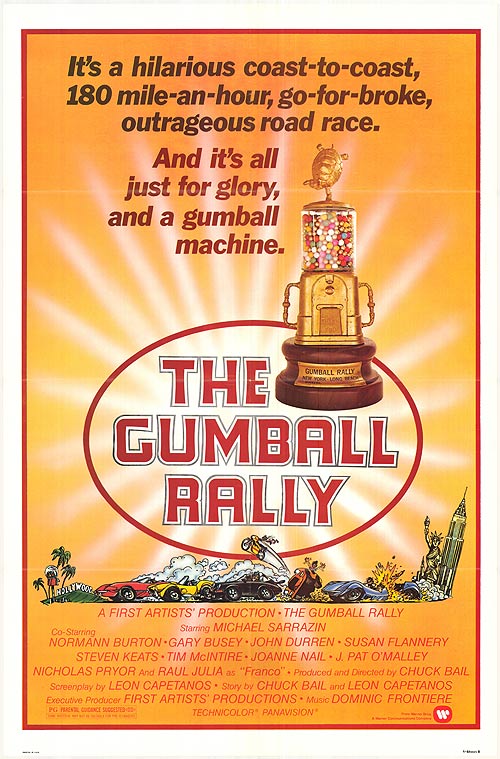
The Gumball Rally (1976)

gumball rally 1

By Richard Winters

My Rating: 5 out of 10

4-Word Review: An unofficial car race.

Every year a diverse group of individuals from all over the country converge onto New York to take part in a secret cross country race where drivers compete to see who can get from the east coast to the west coast first. There is no monetary prize or fame just a trophy filled with gumballs and one’s own ego as the reward. This year a cop named Roscoe (Norman Burton) is determined to stop the race and arrest those who are participating in it, but the drivers have some tricks up their sleeves to avoid his detection.

The film is based on the real-life race called The Cannonball Baker Sea-to-Shining-Sea Memorial Trophy Dash that was run four times between the years of 1971 and 1979. It was named after Erwin George Baker, whose nickname was Cannonball, and who in 1933 drove from coast-to-coast in a record time that stood for over 40 years.

Like in the movie the drivers were from all walks of life and the race was not officially sanctioned and had no rules other than getting to California at a preset location first. However, unlike the movie there were few accidents while the film jazzes it up with an excessive amount of crashes until comes off like a live action cartoon, which is the main problem as everything gets dragged down to a kiddie level and comes complete with a music score that sounds like it was pulled straight out of a 1930’s nickelodeon.

The characters are nothing more than caricatures with Tim McIntire’s being the only one that is believable. Raul Julia’s is particularly annoying playing a man who is supposedly obsessed with winning, but then still stops off to have sex with women along the way, which seems like a contradiction. Burton, who ironically ended up dying in a real-life car crash, gets stuck in a one-dimensional role of a relentless, but ineffective cop whose exasperated mannerisms and reactions quickly becomes tiring.

There are a few good stunts, which can be credited to the film’s director Chuck Bail, who worked as a stuntman and coordinator for the greater part of his career. Watching the cars speed down the closed off streets of Park Avenue and Broadway in New York City during the early morning hours is impressive especially as its captured from the passenger’s point-of-view. The race between two cars along the Los Angeles River is equally exciting as is the scene involving a car managing to drive on its side for about a full minute down a packed highway.

The various comical scenarios that befall the characters during the race though are inane and hardly worth even a chuckle. The only ones of a minor interest is when a couple (Tricia O’ Neil, Lazaro Perez) tries to get away from a motorcycle gang as well as two drivers (Steven Keats, Wally Taylor) who are disguised as cops and driving inside a phony police vehicle who come to the aid of man and his pregnant wife on the side of a road. However, the whole thing would’ve been much better had the script kept things on a real level that was more focused on the people involved and their backgrounds instead of the silly stunts.

gumball rally 2

My Rating: 5 out of 10

Released: July 28, 1976

Runtime: 1Hour 47Minutes

Rated PG

Director: Chuck Bail

Studio: Warner Brothers

Available: DVD, Amazon Instant Video, YouTube

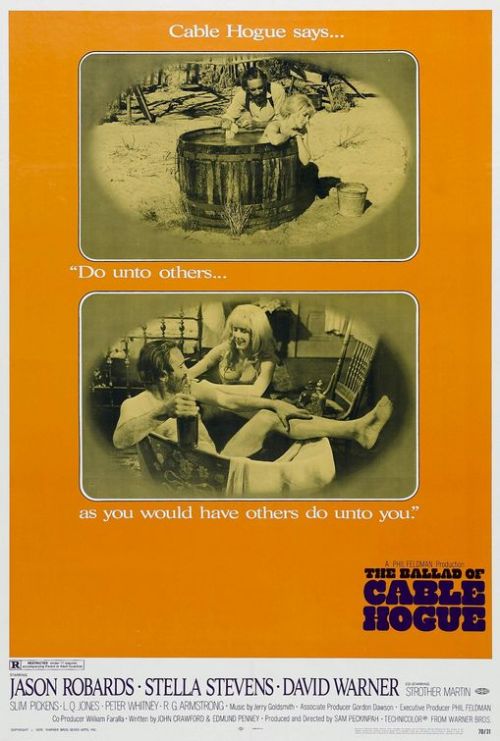
The Ballad of Cable Hogue (1970)

ballad of cable hogue

By Richard Winters

My Rating: 6 out of 10

4-Word Review: Desperate man finds water.

After he is betrayed by his two friends (L.Q. Jones, Strother Martin) and forced to survive in the middle of the desert without the benefit of food, water, a gun or even a horse Cable Hogue (Jason Robards) goes on a mad search for an oasis. After four days in the heat he collapses and just as he is ready to die he suddenly finds water in the most unlikely place. He uses this untapped spring to create a way station for the stagecoaches that travel through the area and becomes quite rich, but deep down he harbors the dark desire to get revenge on the two who wronged him and one day he finally gets his chance.

Theoretically a person can survive up to 4 ½ days, or 100 hours, without water if they are in a climate with a temperature of 72, but in much hotter conditions such as the one shown here it would be far less, so having the character survive like he does seems to be a an extreme stretch, but if you can get past that then the film is quite enjoyable at least at the beginning. The script was written by John Crawford and Edmund Penney who spent the majority of their careers working as character actors in B-movies and this was their one and only foray as writers. The story’s biggest asset is the main character that is expertly portrayed by the gifted Robards. His determination to beat long odds and find success even as he starts from rock bottom should resonate with most viewers and the character’s grit meshes well with director Sam Peckinpah’s perennial theme of rugged individualism.

The addition of David Warner as a dubious minister who helps Cable build his station is excellent and the film could’ve been an engaging buddy movie had it remained at this level. Unfortunately it felt the need to add in a love interest in the form of Stella Stevens, sans make-up, who portrays a whore that takes a liking to Cable. Stevens is not as strong of an actor as Warner and doesn’t know how to carry a scene like he does, so her time in front of the camera is boring and does nothing but bog down the pace while pushing Warner’s character out, which severely hurts the film’s rugged but whimsical chemistry.

Spoiler Alert!

Strother Martin’s character becomes yet another issue. He again gets straddled with the creepy, cowardly bad guy role of which is plays to perfection, but eventually made it seem almost like typecasting. To some extent I was happy to see him become humanized as it went along, but I didn’t like how Cable decides to leave his way station to him instead of the Warner character as he was the one who helped build it. Maybe Cable realized that with the invention of the automobile his station would no longer be prosperous and he would then be sticking Martin with a stinker instead of the goldmine that he thought, which is okay, but then he saves Martin’s life just a few minutes after he was ready to kill him, which became too much of a contradiction.

End of Spoiler Alert!

The film has some funny moments, but I didn’t like the fast motion running as it made it seem too cartoon-like. The numerous potshots at religion and those that expound on it are hilarious and I enjoyed how Peckinpah looks at capitalism from both sides where it is shown to greatly benefit an individual who is able to take advantage of a market demand, but also how it can coldly abandoned that same person the second that demand goes away.  The first 40 minutes are great, but then the story loses steam with comical moments that become too drawn out and have little to do with the main story as well as a protracted ending that really fizzles.

My Rating: 6 out of 10

Released: March 8, 1970

Runtime: 2Hours 1Minute

Rated R

Director: Sam Peckinpah

Studio: Warner Brothers

Available: DVD, Amazon Instant Video, YouTube

Walkabout (1971)

walkabout 1

By Richard Winters

My Rating: 7 out of 10

4-Word Review: Lost in the outback.

A teenage girl (Jenny Agutter) and her younger brother (Luc Roeg, but billed as Lucien John) find themselves trapped amidst the harsh climate of the Australian outback. After spending a couple of days walking in the heat they manage to come upon a watering hole, but find to their horror that it dries up overnight. Feeling almost ready to give up they spot an aborigine (David Gulpilil in his film debut) marauding through the desert as part of his walkabout where young men are cast off into the wilderness for several months as part of their journey to manhood. He helps find them water, food and shelter, but eventually the cultural differences between the three and their inability to effectively communicate become a problem.

The legendary Nicholas Roeg makes his directorial debut here and even casts his own son, who is excellent, as the 9-year-old boy.  The way the camera captures the desert by focusing on the different types of animal life and rock formations is impressive.  I also enjoyed the editing which cuts back and forth between the desert and modern civilization while examining how each are uniquely connected and commenting on how our advanced culture has made us regress and less able to survive the savage elements that our ancestors were able to.

There are also scenes of animal cruelty as the aborigine hunts a kangaroo by first injuring him and then, as the animal gives out a whimpering cry, he spears it. Later the viewer is shown scenes involving big game hunters who mow down water buffalo for sport while graphically slitting their throats.

The film was controversial for capturing Agutter, who was only 17 at the time that this was filmed, in the nude while swimming at a watering hole. The actress felt uncomfortable doing the scene and required only the minimum of the crew to be present while it was shot. To me the scene was unnecessary as it didn’t fit the character who was prim and proper and didn’t at all come off like the type of person who would suddenly become carefree and risk being spotted by the aborigine that she really didn’t know or the ‘embarrassment’ of being seen by her younger brother. The camera stays on her naked body far longer than needed and comes off like shameless voyeurism.

I had the same issue with the scene involving researchers at a weather station that resembles footage to a soft core porn flick instead as the men ogle the only woman in their group, become overtly aroused at glimpses of her bosom and in one truly absurd moment even has one of the them sucking on her finger. I realize scientists have sex drives too, but I would think they would be able to behave in a professional capacity when on the job and not act like they hadn’t gotten laid in years and like with the swimming sequence this scene has nothing to do with the main story and could’ve been cut out completely.

The presence of the radio weakens the story as well as supposedly they’re in the middle of nowhere and miles from civilization and yet somehow are able to pick up different radio stations that come in crystal clear without any static, which would mean that they must be much closer to a city than it seems and thus hurts the desolate feeling that the film otherwise tries hard to create.

Spoiler Alert!

The film is based on a 1959 novel of the same name that was written by Donald Gordon Payne under the pseudonym of James Vance Marshall. The script though differs from the book in two major ways, one of which I liked and the other I didn’t.

The first difference involves the reason for how the two children get stranded. In the book they are victims of a plane crash, but in the film it is because their father tries to kill them, which is offbeat and sends the message that this movie will be different from any you’ve seen before, which I liked. Normally I would’ve wanted an explanation for his behavior, but by keeping it a mystery it elevates the intrigue and if anything was a far more creative explanation for their predicament than the formulaic plane crash one.

However, the way the aborigine dies is ludicrous. In the book he is stricken with the flu virus that was inadvertently passed onto him by the boy, but in the movie he ends up killing himself when the girl does not respond to his attempts at courtship, which seemed excessively rash.

Rejection is a part of the human experience and transcends all cultures. Everyone will have to deal with it at some point in their lives. If everyone killed themselves the minute they are rebuffed by someone they were attracted to then virtually no one on would make it past adolescence. The idea that a normal, healthy and otherwise happy young man with no signs of mental illness, and the film does not show him as having any so we must assume that he doesn’t, would suddenly off himself over a girl he has just met and barely knew is absurd. In reality he probably would’ve just gotten frustrated and left them stranded while going back to his own tribe where I presume he’d meet other women who he’d bond better with due to being more culturally connected and most likely would’ve found more attractive anyways.

End of Spoiler Alert!

walkabout 2

My Rating: 7 out of 10

Released: July 1, 1971

Runtime: 1Hour 40Minutes

Rated R

Director: Nicholas Roeg

Studio: 20th Century Fox

Available: DVD, Blu-ray, Amazon Instant Video

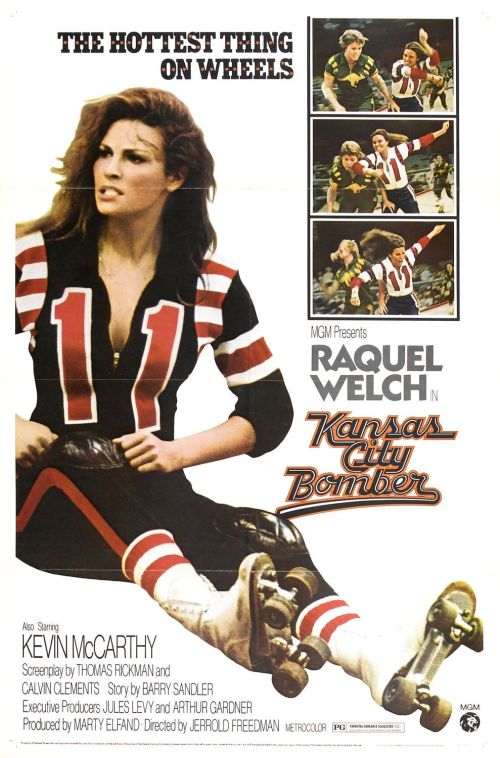
Kansas City Bomber (1972)

kansas city bomber

By Richard Winters

My Rating: 2 out of 10

4-Word Review: Life on roller derby.

Raquel Welch plays K.C. Carr a struggling mother of two who goes all-out as the star in the roller derby circuit. She plays for the Kansas City Bombers, but then gets into a grudge match with Big Bertha (Patti ‘Moo Moo’ Cavin) with the loser agreeing to leave Kansas City and never return. Through some cheating by other teammates K.C. loses, but is soon picked up by the Portland Loggers whose owner (Kevin McCarthy) is quite impressed with her and promises to make her a star. The two eventually get into a relationship, but then she gets into yet another grudge match this time with the aging Jackie (Helena Kallianiotes) and the loser agreeing to leave Portland forever.

During the ‘70s the roller derby sport was all-the-rage and several films during the period were produced on the subject including The Unholy Rollers, which was also released in 1972 and starred Claudia Jennings as well as Derby, which was a documentary on the sport and came out a year before this one. I once went to a roller derby game a few years back in Indianapolis and I found it to be inane and boring, but there were indeed some people there that seemed to really get into it. In fact if there is one thing that this film does well it is the way it captures the spectators. Seeing many of them with missing teeth and looking like they would not fare too well on a college entrance exam, but getting extremely worked-up with the action in front of them solidly hits-the-mark on the mentality that one will find when attending these events.

The action though looks horribly fake and it’s obvious that the performers are pulling their punches during the fight sequences. I initially thought this was intentional and to show how the sport is really just about acting, but the script wants to play it like it’s for real, which makes the phony staged action look all the more ridiculous.

Welch’s presence is another hindrance. She’s a beautiful looking lady, but her acting has always been suspect. She manages to convey a toughness during the game sequences, but the character is just too nice and naïve otherwise. The film makes efforts to show the hard life and dehumanizing conditions that working in the business entails and yet somehow we are expected to believe this is the one person that has managed to ‘rise above it’ when in reality it would’ve dragged her down to its level, or at least made her more world-wise. The scene where she becomes ‘shocked’ at how the players are being ‘used’ and expresses this to the Kevin McCarthy character gets a good comeback from him when he states “We’re all being used…that’s the American way. You outta know that by now!”  And the fact that she strangely doesn’t despite being supposedly a ‘seasoned’ player makes her character come off as poorly fleshed-out and hollow.

Her relationship with McCarthy is a major issue as he was 30 years older than her. The two share no chemistry and have little in common and watching this gray haired man walking hand-in-hand with a hot young chick comes off like an old fogey that’s  porking his granddaughter.

The unintentionally funny climactic finish is pathetic and features the replay of the same hokey shot done from 3 different angles. The ending also leaves open a slew of unanswered questions while wasting the talents of a young Jodie Foster who appears only briefly as Welch’s daughter. I also didn’t get why it was entitled the Kansas City Bomber as the character spends only a brief time there while the bulk of the story takes place in the Pacific Northwest.

My Rating: 2 out of 10

Released: August 2, 1972

Runtime: 1Hour 39Minutes

Rated PG

Director: Jerold Freedman

Studio: MGM

Available: DVD (Warner Archive), Amazon Instant Video, YouTube

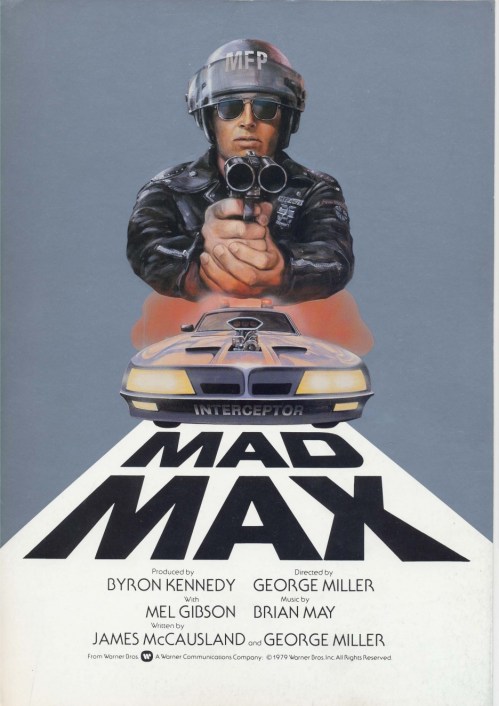
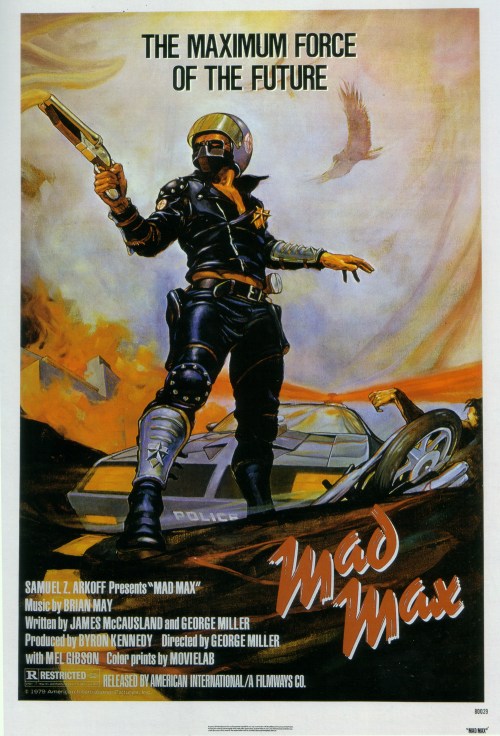
Mad Max (1979)

mad max 1

By Richard Winters

My Rating: 7 out of 10

4-Word Review:  Gang harasses cop’s family.

In the not so distant future where lawlessness is the norm motorbike gangs terrorize the Australian countryside and it’s up to highwayman known as the Main Force Patrol (MFP) to keep them under control. When one of the officers known as Max (Mel Gibson) kills a gang member during a high-speed chase the gang’s leader named Toecutter (Hugh Keyes-Byrne) gets his revenge by having his gang member’s destroy a small town and rape a couple. He also has the youngest member of his gang named Johnny (Tim Burns) kill Max’s partner Goose (Steve Bisley) by having his car set on fire with him still inside. After Max witnesses Goose’s charred remains he quits the force, but Toecutter and his men continue their harassment by this time setting their sights on Max’s wife (Joanne Samuel) and young child.

This film, which was produced by a generally novice crew including its director who at one time worked as a doctor inside a hospital emergency room, became a worldwide cult hit that has spawned many sequels and imitations. The intent was to create a “silent movie with sound” with the emphasis more on imagery and action than dialogue or story. For the most part it succeeds quite well in this area with some excellent car chases particularly the one at the beginning and coupled with the dry barren Australian countryside, which truly does give off a strong, desolate future-type look.

The film though lacks any backstory and one spends the greater part of the first hour asking ‘Who are these people and how exactly did they get there?’ The film can still be enjoyed without it, but comes off as poorly realized and lacking any type of depth. The narrative is also just a little too simple and obvious. When the wife decides to go off to get some ice cream when Max is at the car repair place it doesn’t take a genius to figure out that she’ll bump into the marauding gang when she gets there, which of course she does. Later, she goes for a walk in a forest, but Max doesn’t go with her, or give a gun for protection even though the gang is still on the loose, which seemed like really poor judgement.

There are also times when the film pulls away from the violence a little too soon and would have been more effective had it stayed on it for a while longer. One of these moments occurs during the rape sequence and another time is when Max visits Goose in the hospital, but instead of having the camera capture Goose’s burned face, which would’ve been much more graphic and disturbing, it instead looks at Max’s widening eyes, which is cheesy and cartoonish.

The film’s biggest issue though is the music score by Brian May, which is so loud and obnoxious and borders on being a distraction. The booming orchestral sound doesn’t jive at all with the futuristic setting and seems much better suited for a 1940’s serial instead. The images would be enough to set the tone and having the blasting music added in makes it come off as heavy-handed and amateurish.

Byrne as the gang leader is distinct looking and effectively menacing although his evilness could’ve been played up even more. Sheila Florance though is a lot of fun as the elderly, gun-toting Aunt May who single-handedly tries to take down the gang with only her and her rifle. However, it’s Gibson that steals it with his young, baby-face that makes him look like a choirboy and heightens the intrigue by having such a contrasting look to the gang members and making the viewer wonder if he really can take them down or not.

mad max 2

My Rating: 7 out of 10

Released: April 12, 1979

Runtime: 1Hour 28Minutes

Rated R

Director: George Miller

Studio: Roadshow Film Distributors

Available: DVD, Blu-ray, Amazon Instant Video, YouTube

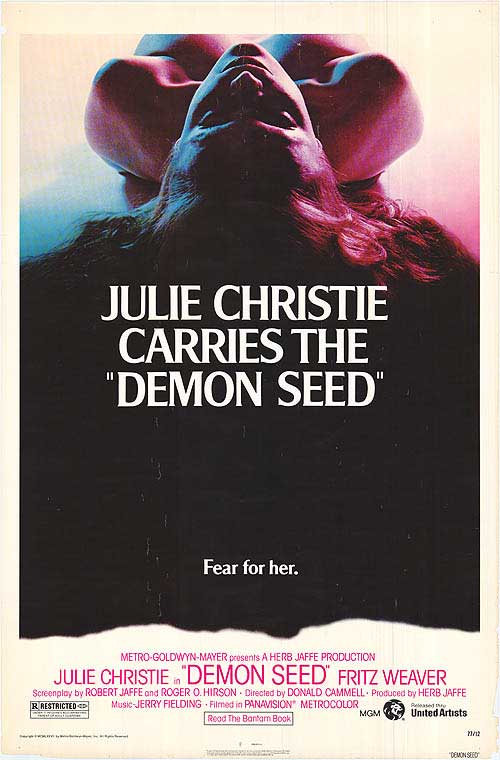
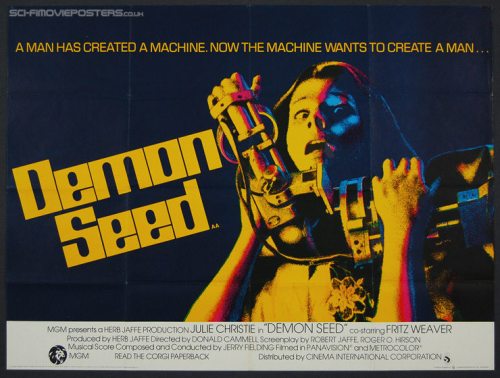
Demon Seed (1977)

demon seed 1

By Richard Winters

My Rating: 6 out of 10

4-Word Review: Computer impregnates a human.

Based on an early Dean R. Koontz novel the story centers on Susan Harris (Julie Christie) who is married to Alex (Fritz Weaver) a man who has created a giant artificially intelligent computer named Proteus (voice of Robert Vaughn) as well as installing a computer inside their own home, which does all of their household chores and is fully automated via voice command.  Things seem to be going fine until Proteus starts to question the assignments that he has been given and his unhappiness with being ‘trapped inside a box’. To remedy the situation he decides to use the computer terminal inside the Harris’s home, so that he can overtake the house through his electronic commands and then impregnate Susan to have his child and therefore experience life as a person instead of a machine.

One of the things that got on my nerves right away was the way the film immediately telegraphs where it is going and reeks with ‘70s paranoia about computers ‘overtaking the world’, which was a prevalent fear during that era as computers were just in their infancy and their ultimate place in human society still not fully understood.

The Alex character is too ambivalent towards the warning signs and comes off like the clichéd super scientist with a child-like enthusiasm about his ‘creation’ and not the slightest concern for what might happen if things go wrong and the way he becomes so quickly shocked when the computer does start to behave in a way he had not considered seems almost laughable. Real-life scientists would most assuredly have considered these issues and had safeguards already put in place and the fact that the characters here don’t just doesn’t seem believable.

When the Proteus computer takes over Susan’s home I didn’t find it frightening, but more unintentionally funny for many of the same reasons. I don’t think that I myself could ever get used to a computer running everything for me and doing whatever I said at the sound of my voice. In the back of my mind, and in any sane person’s mind for that matter, I would be worrying about it malfunctioning and the consequences that it would entail, so when things finally do go wrong I found it laughable because anyone could have clearly seen it coming from the start. In fact the only thing that saves this thing from a being a complete dud is Christie’s brilliant performance and the fact that she gets you to see her character as a real human being and someone you care for and want to see rescued.

Spoiler Alert!

The script suffers from a myriad of other logical loopholes as well. One of them is the whole basic premise of how a computer can somehow manipulate human DNA in order to get supposedly his ‘genes’ into the child, so that it fully has his own traits and even his own voice. There is also no suitable explanation for how he was able to speed-up the gestation period from the 9 months to just 28 days. I was also surprised that the husband never bothers to call his wife during that 28-day period. Yes, I realize that they had just separated, but it was a very amicable one and I would still have thought he would’ve called-in at some point simply to check-in. There is also another character played by Gerrit Graham who comes into the house and tries to shut down the computer and is killed in the process making me believe that his disappearance would’ve caused suspicion and others would’ve come looking for him. There is also the issue of her mail, which I’m sure would’ve been piling up at her front door and causing both the mail carrier and neighbors to take notice.

End of Spoiler Alert!

The film is full of many colorful graphics and effects although they may no longer be considered as state-of-the-art as they once were. The idea is an intriguing one and Robert Vaughn gives the Proteus character a lot of menace with his voice, but he is still no HAL. The ending is really over-the-top, but in a wildly interesting sort of way even though it does nothing but create more questions than answers.

demon seed 3

My Rating: 6 out of 10

Released: April 8, 1977

Runtime: 1Hour 34Minutes

Rated R

Director: Donald Cammell

Studio: MGM

Available: DVD (Warner Archive)