Category Archives: 70’s Movies

Superman (1978)

By Richard Winters

My Rating: 8 out of 10

4-Word Review: The Man of Steel.

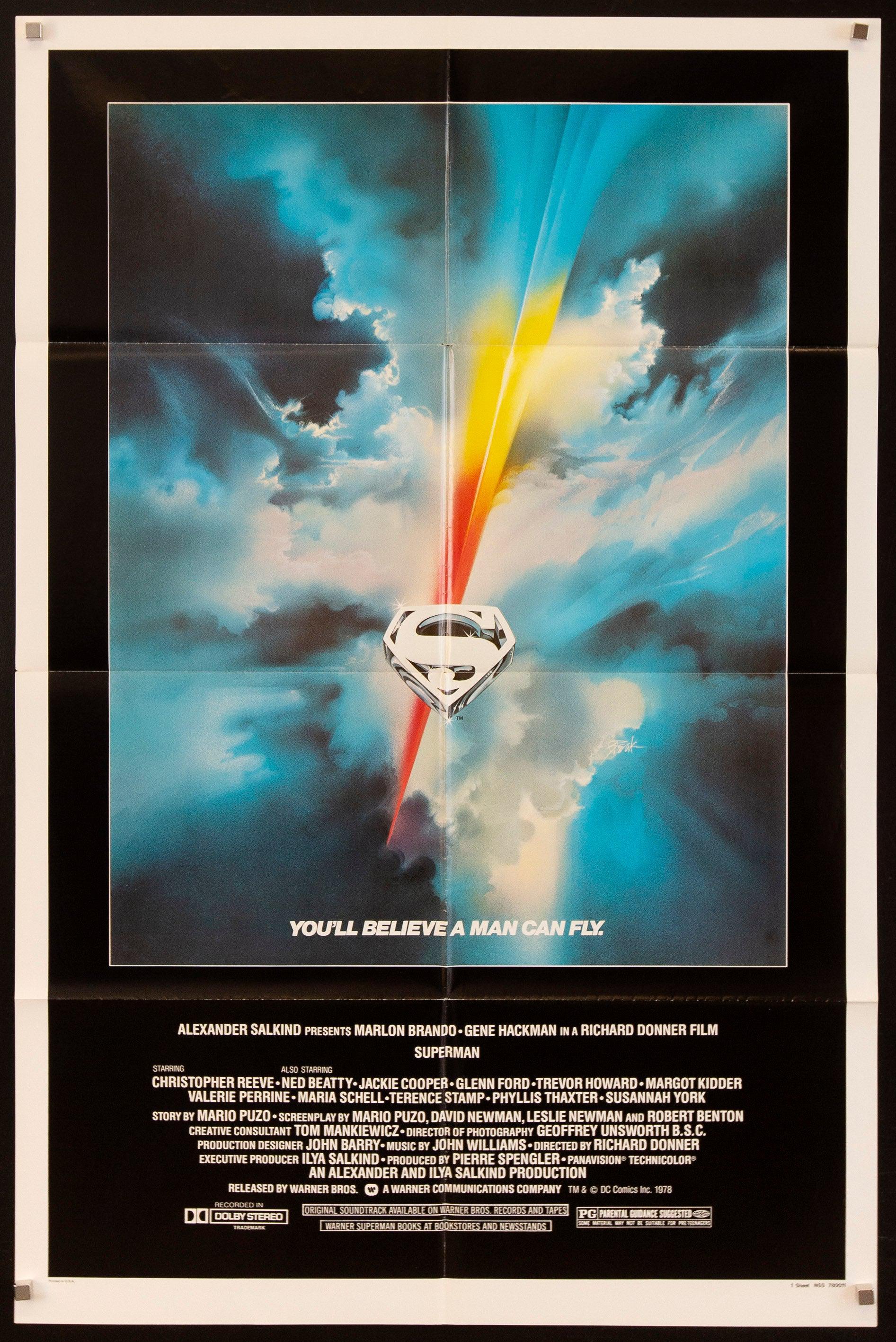
As the planet Krypton gets set to be destroyed by its exploding sun, Jor-El (Marlon Brando) and his wife Lara (Susannah York) put their child on a spaceship that takes him to the planet earth. It is there that his spaceship crash lands into a wheat field that his spotted by Jonathan (Glenn Ford) and Martha (Phyllis Thaxter) who take the child in and treat him as their own. The boy is named Clark (Christopher Reeve) and as he grows, he begins to show amazing abilities including running faster than is humanely possible and incredible strength. Once he becomes an adult, he gets a job as a reporter at the Daily Planet newspaper where he meets fellow reporter Lois Lane (Margot Kidder). He even saves her, while dressed as a superhero, from a helicopter accident and becomes known initially as the ‘caped wonder’ before finally being coined as Superman. His publicity attracts the attention of criminal mastermind Lex Luthor (Gene Hackman) who devises a plan to steal missiles and use them to create an earthquake along the San Andreas fault and thus casting off coastal California into the ocean and turning the desert land he purchased into prime real estate. Superman attempts to stop him, but Lex has found one thing that can stop him: a meteorite known as kryptonite.

At the time this film, which suffered from numerous behind-the-scenes problems and infighting, was made it was the most expensive one ever produced with a whopping $55 million budget. While the effects were mesmerizing for many back-in-the-day I don’t know if they still all hold-up. The flying segments particularly over the Statue of Liberty is impressive to a degree but can’t quite equal today’s technology and appears like two people in front of a greenscreen as does the giant red sun that moves in to destroy Kyrpton. Watching the young Clark Kent running alongside a train looks tacky too like he’s being held up by invisible wires, which he was, and his feet aren’t really ever touching the ground. In all fairness though the earthquake segment and the destruction of the Hoover Dam and the shaking of the Golden Gate Bridge remains top notch.

The script though, which takes on quite a lot and had to be slimmed down from its original 500-page version that was written by Mario Puzo, feels rushed at times and glosses over certain things that I felt should’ve been a little more drawn-out particularly when the Kents find the boy crash land in the field. The film makes it look like they just left the remains of the spaceship in the field making me think other people in the area would’ve also come upon it later and would start a panic that some alien had come out of it and invaded the town. Later on, we come to realize that the ship got hidden inside their barn, but there’s no scene showing them transporting it, or how they went about doing that, which I felt should’ve been put in for the simple sake of clarity.

Watching Superman orbit the earth in an attempt to get it to spin backwards and supposedly ‘turn back time’ is kind of cool to see and an interesting concept though not totally plausible. Making the world rotate the other way would certainly change some things like having the sun rise in the west instead of the east and have the ocean waves go in a different direction among other things, but causing everything to essentially ‘rewind’ and go back to the way they were even bringing certain people who had died suddenly back to life just wasn’t completely convincing though it’s not enough to hurt the movie as a whole.

Most fans will likely tell me I’m quibbling about the Clark Kent disguise though when you really think about it it’s not much of a disguise at all. I admit watching this muscular guy dressed in a suit and acting all clumsy and wimpy is amusing especially the way Reeve plays it but besides combing his hair in a different direction than when he’s Superman the only other difference is that he wears glasses. However, that would be tantamount to saying someone who does wear glasses but then comes to work one day without them would not be recognized by any of his friends, or co-workers especially when he’s still speaking in the same voice making me believe that Lois and Jimmy, played by Marc McClure, should and would’ve caught on to this pretty quickly. I realize the comic book did it this way, but when it got updated into a movie, they should’ve reenvisioned it a little by adding more to the Clark get-up like besides just glasses he’d also have a mustache, or goatee and speak a bit differently, so having those close to him not catch-on would be more understandable.

I think what I enjoyed most was Hackman, who didn’t play a lot of villains during his career but is highly enjoyable here. Initially he didn’t want to take the part as he felt playing a campy character would tarnish his reputation of being a serious actor, but the change of pace does him good and proves if anything how versatile he is. His refusal not to shave his head, as the Lex Luthor in the comic is bald, works in his favor as his hair gets styled differently in each scene in order to represent him wearing a wig, which creates a creative visual. Valerie Perrine is great too as his girlfriend Miss Teschmacher who helps contrast his delusional personality with her more grounded sensibilities and I just loved the way he’d yell out her name every time he got annoyed with her, which is the comedy highlight.

The rest of the supporting cast though, made up of big name starts like Trevor Howard, Maria Schell, and even Larry Hagman didn’t seem needed and given such few lines I was surprised why they’d even take the roles unless it was because of the money. Brando is an equal waste. He’s given top billing and paid an exorbitant amount of money including a percentage of the profits despite refusing to memorize his dialogue and even having his lines written on the baby’s diaper for him to read off of as he puts the child into the spaceship. Had the producers skipped the unimportant ‘star power’ and cast lesser knowns in these roles they could’ve saved themselves a lot of money, which in retrospect might’ve lessened the tensions they had with director Richard Donner for going over budget and ultimately lead to his firing and a very tumultuous follow-up Superman II, which will be covered in the next review.

My Rating: 8 out of 10

Released: December 10, 1978

Runtime: 1 Hour 23 Minutes

Rated PG

Director: Richard Donner

Studio: Warner Brothers

Available: DVD, Blu-ray, Amazon Video, YouTube
For the Love of Benji (1977)

By Richard Winters

My Rating: 6 out of 10

4-Word Review: Secret code on paw.

Benji (Benjean) and his dog mate Tiffany along with Cindy (Cynthia Smith), Paul (Allen Fiuzat), and their nanny Mary (Patsy Garrett) arrive at the airport to board a plane that will take them to Crete, Greece where they plan to vacation. While waiting in-line Mary visits with the man standing behind her, Chandler Dietrich (Ed Nelson), who seems nice and she, along with the two kids, start-up a friendship. Unbeknownst to them he’s not such a swell guy but instead a spy who’s stolen a secret formula that can accelerate the production of oil. He sneaks into the baggage room and imprints this formula onto Benji’s paw while the animal is stuck in a cage. Things though don’t go as planned because Benji and Tiffany don’t arrive in Greece when the plane does causing much confusion. When he does finally get spotted by a baggage handler he escapes from his cage and runs through the city streets lost and alone. He manages to find the hotel that his owners are staying at but is afraid to go up to them when he sees they’re with Chandler. Once Chandler realizes that Benji is in the vicinity he buys a large Doberman dog to go sniff him out and thus retrieve the formula still imprinted on his paw.

For a follow-up this isn’t bad, and the change of scenery helps. The film also features some exciting chase sequences including the climactic one with Benji trying to escape Chandler who attempts to run him down with his sports car. The segments though dealing with Benji roaming the city streets I didn’t find interesting, nor does it have the gripping quality that they had in the first installment and to have added a dramatic quality to it the children should’ve been lost with Benji and thus caused even more of an urgency. Also, the opening scenes get done in Greek with no subtitles, so it’s impossible to understand what’s said and for the sake of clarity should’ve been spoken at the very least in broken English.

Garret is delightful as the tubby nanny and the scene where she tries to nervously hold a suspected criminal, played by Art Vasil, with a gun despite clearly not knowing how to handle one, is entertaining. The children however seem used only as props to get excited when they see Benji and despondent when they don’t. Surprised too that Peter Breck, who played their father in the first one, isn’t here. It’s stated that he’ll be arriving a week later, but his character was the only one in the first film that had any discernable arch as he initially didn’t like the dog but learned to accept it when the pooch saved the kids, so it would’ve been interesting to see how his relationship with the pet had progressed.

Nelson is the most effective as he’s a smart and cunning villain that creates quality tension every moment, he’s on screen and his somber eyes along with his salt and pepper hair create a creepy vibe. My only issue is that there’s no explanation for how he’s able to get into the baggage area without being detected. He’s in there for several minutes as he drugs the dog, so you’d think some employee would’ve walked in on him, but don’t. Did he bop a security guard on the head to gain access, or knock him out with the same drug he used on the dog? Either way it should’ve been shown as well as explained how he was able to just open the door to the room as you would think it would’ve been locked and a key, or pass code needed for entry.

Spoiler Alert!

The climactic sequence gets a bit botched as Benji arrives at the hotel the family is staying at only to see it surrounded by police. Then Nelson drives up in his car with a gun pointed at Cindy’s head in an attempt to get the dog to jump into the vehicle. However, it doesn’t make much sense for Nelson to go into an area where police are visibly all over as there’s no real chance for escape. It would’ve worked better had the police not been seen up front making Nelson’s arrival seem more plausible as he’d be under the impression no cops were there and more tense as the viewer would think it was all up to Benji to save the girl and no one else to help. Once Benji bites Nelson’s arm forcing him to drop the gun then the police could’ve suddenly appeared by jumping out of the bushes, or wherever, and arrested him.

My Rating: 6 out of 10

Released: June 10, 1977

Runtime: 1 Hour 25 Minutes

Rated G

Director: Joe Camp

Studio: Mulberry Square Releasing

Available: DVD, Blu-ray

Benji (1974)

By Richard Winters

My Rating: 8 out of 10

4-Word Review: Dog saves kidnapped children.

Benji (Higgins) is a stray dog who resides in an empty house that some consider haunted in the outskirts of a small town. He regularly visits Cindy (Cynthia Smith) and Paul (Allen Fiuzat) who are children who live in a big home with their father (Peter Breck) and housekeeper Mary (Patsy Garrett). The children want to keep the dog as their own, but the father refuses insisting that strays can carry diseases and therefore it wouldn’t be safe. One day three people (Deborah Walley, Christopher Connelly, Tom Lester) break into the abandoned home, but do not notice Benji, or his poodle companion Tiffany, who hide behind a table. The three, who are led by a fourth person named Mitch (Mark Slade), plot a kidnapping and to Benji’s shock it turns out to be the two children that are the victims. He tries to alert Mary and the father, but is unable to get them to understand until he comes up with a clever tactic to clue them in. Will he be able to get them and the police to catch-on soon enough before the kidnappers move the children out of the home and into an undisclosed location?

The film was a labor of love for writer/director/producer Joe Camp who worked in advertising before deciding to get into filmmaking. The inspiration came while he was watching Lady and the Tramp on TV and concluded that there weren’t enough quality children’s films out there and decided to attempt to change that. However, when he shopped his storyline around to the various studios it got roundly rejected, so he decided to use his background in marketing to make and distribute the film himself. It was made on a modest budget of $500,000 but ended up making $45 million.

Compared to other children’s films this is an improvement as both the children and adults are portrayed as being smart, realistic people. In other kiddie flicks it seems it always has to be one way or the other with the kids being the naive ones saying cutesy, silly things and the adults chuckling about it, or dispensing preachy ‘life lessons’, or its the kids that are in the know while the adults are out-of-touch, so it’s nice when both sides can be shown as sensible and even when there are disagreements it gets handled in a respectful manner. The soundtrack doesn’t have that cheesy, singsong saccharine quality like you usually hear in this type of genre, but is instead distinct, jazzy, and even toe-tapping.

It’s impressive how the film gets literally inside the head of the dog and you see everything, including the camera angles, from his point-of-view. Most other films with animals as characters don’t do that. Usually they get paired with a human friend/owner who helps ‘narrate’ what the animal is thinking, but here there’s none of that. I was thinking, but willing to forgive the moment when one of the kidnappers pulls out a gun and Benji reveals a frightened expression though animals really won’t know what a gun is, but director Camp smartly inserts a visual showing the dog encountering a gun in the past when police confront a robber and thus explaining why the dog would understand its danger, which other filmmakers wouldn’t have bothered to show, or even thought through.

I have only two criticisms. The first one is a relatively mild complaint dealing with the behavior of the bad guys, particularly Connelly and Lester’s characters who seem unrealistically spooked by the house even though two big, tough rugged guys who are streetwise enough to commit a bold kidnapping shouldn’t believe such childish things. When they broke into the house, they should’ve gone through the entire place including the upstairs to make sure no one else, including a possible vagrant, was residing there. Also, when the kids are kidnapped, the perpetrators should’ve worn masks, or blindfolded the kids, so as not to be identified later, which seems like something that should’ve been a no-brainer.

Spoiler Alert!

The biggest issue though is when Mitch kicks the little dog named Tiffany and it appears that he’s killed her. While it does show at the very end that she was only injured as the she hobbles out of the vet clinic wearing a cast on her tiny legs it is still very traumatic for a child to see such a violent act on a defenseless animal. I remember when I watched this movie at the age of 5 in the theaters, I cried all the way home afterwards. A few years later when we watched it again on Showtime with my younger brother and sister, they cried about it too. A scene like that, even if the dog is eventually shown as surviving, wasn’t necessary and the movie should’ve certainly been given a PG-rating as the G-rating is misleading.

My Rating: 7 out of 10

Released: October 17, 1974

Runtime: 1 Hour 25 Minutes

Rated G

Director: Joe Camp

Studio: Mulberry Square Releasing

Available: DVD, Blu-ray

Every Which Way But Loose (1978)

By Richard Winters

My Rating: 4 out of 10

4-Word Review: A bare-knuckle brawler.

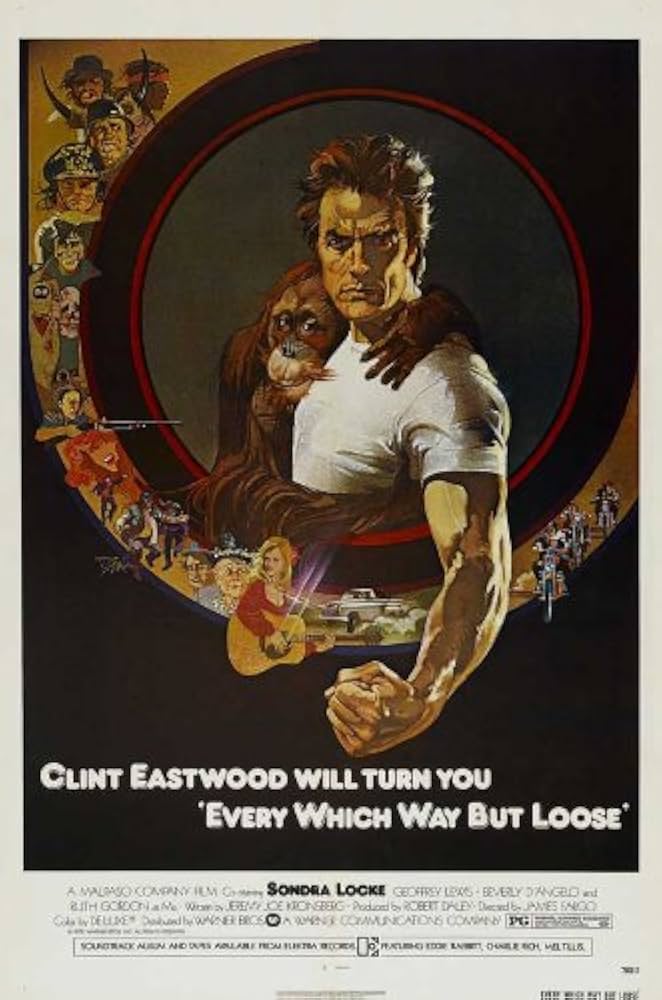
Philo (Clint Eastwood) is a truck driver still living with his mother (Ruth Gordon) and who compensates his income with bare-knuckle fights where people can make bets either on, or against him. He also travels around with an orangutan named Clyde whom he won as compensation for one of his fights. One day while waiting in his pick-up at a red light a biker gang known as The Black Widows and led by Cholla (John Quade) pull up beside them and begin harassing the ape. This creates a confrontation, and the bikers seek a vendetta on Philo determined to challenge him to a fight and begin stalking him until he agrees. Philo is also being chased by Putnam (Gregory Walcott), a cop upset at Philo over a misunderstanding that occurred while the two were in a bar. Meanwhile Philo is also trying to find Lynn (Sandra Locke) a singer he fell for who moved away to Colorado with her boyfriend, but Philo travels there in an attempt to find her and win her back, but Putnam and the Black Widows are in hot pursuit. 

The script is the product of Jeremy Joe Kronsberg, who after watching Smokey and the Banditbecame ‘inspired’ to write this one and was convinced it would make the perfect follow-up vehicle for star Burt Reynolds. However, when he shopped it around to the studios, they all rejected it, so he decided to send it off to Clint Eastwood’s secretary in the hopes that Clint, being good friends with Burt, would show him the script and convince him to do it. Instead to everyone’s surprise Clint, who was looking to broaden his appeal, decided to take on the starring duties himself and even cast Kronsberg as one of the biker gang members.

Many of those close to Clint thought it was a bad career move, and the critics savaged the film upon its initial release, but at the box office, which is what really counts, it did very well and became one of the highest grossing films of Eastwood’s career. A major reason for this is its rural appeal where everyone is essentially a redneck and white collar, college educated suburbanites just don’t exist. Instead, one’s social standing hinges on how much they down at the bar and whom they beat-up, which helps create a strong and surreal atmosphere. Initially though with this type of mentality I thought the setting should’ve been Texas and not California as when most people think of Cali they connect it with rich Hollywood stars and Malibu mansions when in reality that’s only a portion of the state and on the east end it’s much more rustic with a far more blue collar attitude and the movie does a good job of exposing this. 

It’s fun to see Eastwood not taking himself so seriously and being laid-back even smiling versus having him constantly look at everybody with his patented squinty-eyed stare. In support I though Ruth Gordon was great. Usually she plays ditzy old dames, but here she’s crusty and ornery and the segment where this ‘vulnerable old woman’ single-handedly shoots-up the biker gang when they invade her property is the movie’s highpoint. Bevery D’Angelo quite good too playing a free-spirited flower child named Echo. While she doesn’t have anything funny to say it’s nice having a character who’s quiet and subdued to help balance all the other wackiness. 

The script though is in desperate search for a story that never really transpires. Too much hinges on random events strung together by the thinnest of threads versus being connected by actual motivations and momentum. Having Eastwood, a tall and intimidating looking guy, constantly getting harassed for no reason, doesn’t make a lot of sense. The biker gang should’ve hounded him because they were hired by someone who lost to him in a fight and was bitter about it and the cop could’ve been hassling him because he lost a bet on one of his fights and thus wanted some compensation. While these may not be deep and profound motives at least they give a reason for what’s happening versus having things strung together by a lot of disconnected events that come out of nowhere. 

Spoiler Alert!

Sondra Locke though almost saves it. Her hyper and sarcastic personality makes for a nice contrast to Eastwood’s, and I liked how he pursues her as a love interest only to ultimately realize that she’s a psycho and he’d be better off without her. Most other movies have the concept that ‘lover conquers all’ and you’re better off with someone, even if they’re seriously flawed, than without, so having this movie take the alternative viewpoint is a refreshing change of pace and thus deserves some credit. 

My Rating: 4 out of 10

Released: December 20, 1978

Runtime: 1 Hour 55 Minutes

Rated PG

Director: James Fargo

Studio: Warner Brothers

Available: DVD, Blu-ray, Amazon Video, YouTube
Avalanche Express (1979)

avalanche2

By Richard Winters

My Rating: 2 out of 10

4-Word Review: Defector on a train.

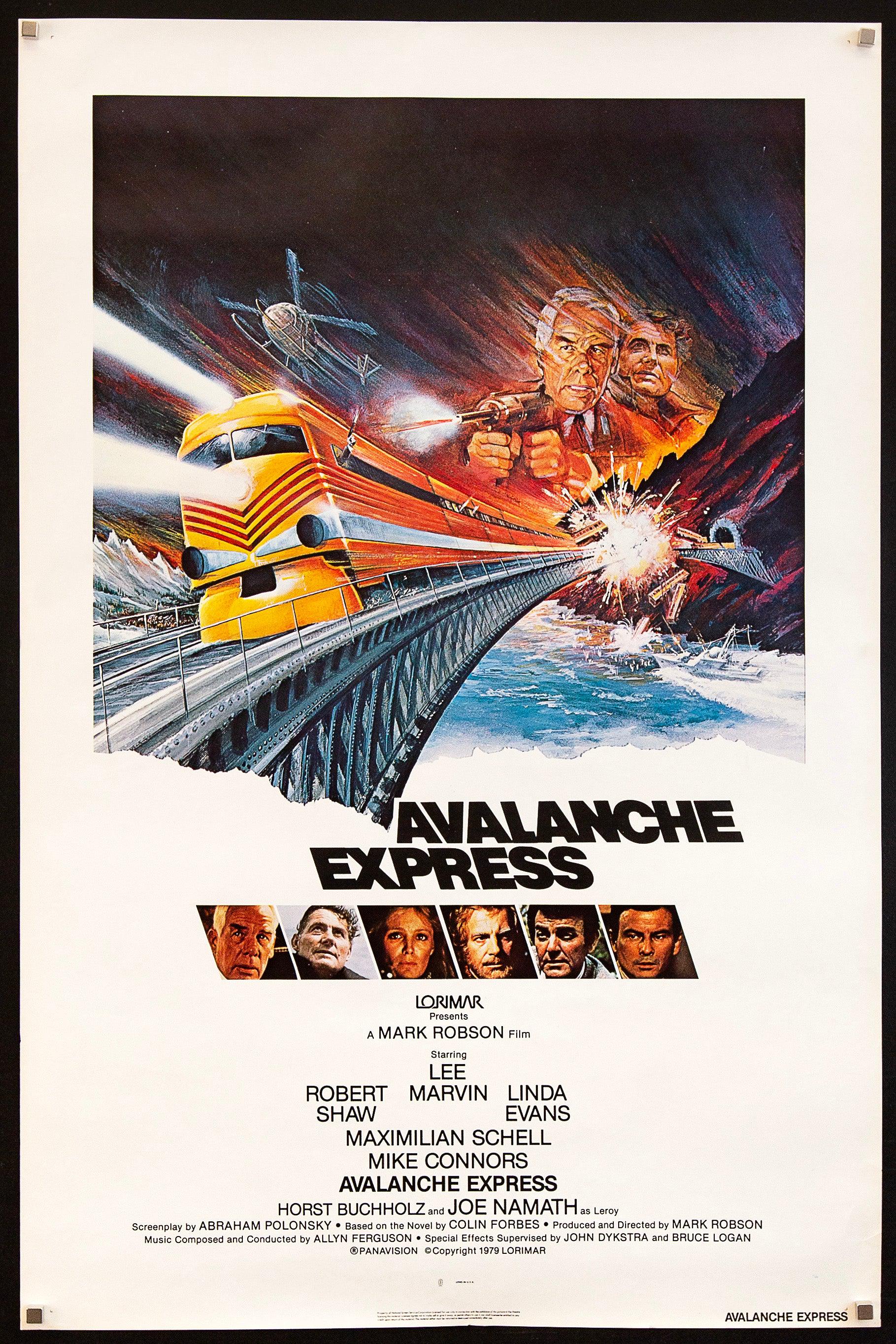
Based on the 1977 Colin Forbes novel of the same name the story centers around General Marenkov (Robert Shaw) a soviet agent who’s decided to defect to the west. Harry (Lee Marvin) is the CIA agent in charge of extraditing Marenkov back to the U.S., but to do so they must travel via train across Europe. Nikolai (Maximilian Schell) is a KGB agent assigned to stop Marenkov’s escape and tries many ways to stymie his trip before finally settling on creating an avalanche, which will not only impede the train ride that Marenkov and Harry are on, but if done right should completely destroy it and end the lives of everyone inside.

The film was noted for its many difficulties during the shoot including the death of its director Mark Robson from a heart attack with only 2-weeks left of filming forcing Monte Hellman to step in and complete the production. The biggest problem though was that during the post-production it was deemed that the opening scene, which featured Shaw speaking to his soviet counterparts in broken English, should be redone with Russian dialogue. However, Shaw too had already died from a sudden heart attack in August and thus was no longer able to come-in for reshoots, so they settled on his voice being dubbed by Robert Rietti for that scene. This would’ve been fine had they stopped there, but instead they came to the conclusion that for the sake of consistency Shaw’s voice should be dubbed by Rietti for the entire film, which was a huge mistake.

Shaw has a highly distinctive and wonderfully articulate delivery and for the viewer to miss out on that is downright criminal. I think most audiences could’ve forgiven that his voice sounded a bit different during the opening bit and probably wouldn’t have even cared or noticed since they were so busy focusing on the subtitles anyway. It becomes like a bait and switch, since Shaw’s name headlines the cast, but since somebody else does his speaking it’s like he’s not really in it and thus a big rip-off to his fans who came to see the movie simply because of him.

The special effects are equally abhorrent. There’s been many movies that have created fake snow scenes, but this one has to be the cheapest looking one yet. The falling flakes look more like Styrofoam and the white stuff on the ground resembles foam from a bathtub especially as the vehicles slush their way through it like it’s a white liquid. The sequence showing the train gliding down the tracks is clearly of the miniature variety and will fool no one.

The casting is a mess too especially the appearance of Joe Namath, a great football player, but a threadbare actor who has no business being in a big budget Hollywood picture. He’d be okay for a TV-movie with other B-performers, but for something that’s supposed to be taken seriously his presence makes the thing even more tacky than it already is. Even stalwart leading man Marvin fails here as he shows no emotion even when it’s warranted, like when he gets word that train they’re on is headed for disaster and yet he remains hyper stoic like he’s a robot with no feelings. Having him get shot dead early on only to return later isn’t the gotcha they thought it would be as I was predicting he’d reappear as there’s simply no way a big-name star like him would sign onto a movie just to be killed off right away.

Linda Evans is good simply because she has the ability of playing a cold, bitchy lady quite well. It could almost be described as her forte and her snippy comments and icy behavior towards Marvin during the first half are engaging and helps give the proceedings a bit of a dramatic flair. Turning the two into lovers though during the second half ruins all the underlying tension and since they don’t share much of a chemistry anyways having them remain adversarial throughout would’ve worked better.

Schell as the villain is as cardboard as he was playing the bad guy in The Black HoleHis career is long and distinguished, but his success is clearly not in these types of roles though he does at least get the film’s one good line. It comes when he’s told he must go undercover in disguise by playing someone who does not smoke. Since his character is a chain smoker, he panics that he won’t be able to go on without a cigarette and exclaims “That’ll kill me’.

My Rating: 2 out of 10

Released: October 19, 1979

Runtime: 1 Hour 28 Minutes

Rated PG

Director: Mark Robson

Studio: 20th Century Fox

Available: DVD-R (Warner Archive), Amazon Video, YouTube

The Out-Of-Towners (1970)

outoftowners

By Richard Winters

My Rating: 6 out of 10

4-Word Review: Travel plans go awry. 

George (Jack Lemmon) is set to have an interview in New York City for a possible job promotion with his company. He brings along his wife Gwen (Sandy Dennis) for what he hopes will be a fun-filled trip in which they can explore the new city they hope to eventually relocate in, but things don’t go as planned. Their flight is forced to circle JFK Airport for hours before it’s diverted to the Logan Airport in Boston and then requiring them to take a train ride back to the Big Apple causing them to arrive there very late. Once they do make it, they find their hotel reservations expired since they hadn’t thought to call or wire, to tell them to hold it. They’re then mugged, and while being escorted by police to a local armory, where they plan on spending the night, they become involved with two liquor store robbers who hijack the squad car they’re in and force them out into Central Park in the middle of the night. This then leads to several more calamities, but despite everything George manages to somehow make it to his interview on time, but when offered the position he’s now not so sure he wants to accept it. 

Originally writer Neil Simon was planning on using this concept as a segment to his 1968 play Plaza Suite, but since that play was already divided up into three other segments it was deemed too many and thus this one got thrown out. He then tried making it into its own stage play but realized it would require too many different set pieces and ultimately came to the conclusion it would work better as a movie. Unlike his other works this one does not rely on dialogue for its primary humor as instead the intended laughs come from the situations, but it’s more like a dumb comedy in that what occurs isn’t all that clever, or original and relies solely on the exasperated reactions of the characters. 

Some of it goes overboard particularly an underground gas explosion that blows a manhole cover that George is standing on into the air and temporarily causes him to lose his hearing, which I found quite disturbing. What’s worse is that the cover comes crashing down just inches from George’s head, which could’ve been fatal and was apparently a mistake as it was intended to go up only a few feet and thus it could’ve really killed him had it hit him, but being the trooper that Lemmon was he remained in character despite the issue. However, exploding gas lines don’t happen that often giving the film an unintended surreal quality, or a piling-on effect and for that reason I would’ve excised that segment completely from the movie. 

The characters aren’t that lovable especially George who comes-off as what would be called today as a female Karen, or ‘Kevin’ as he complains about everything right from the start making him obnoxious and annoying. Had the character shown a laid-back Midwestern mentality, since that’s where he’s from, and been more congenial about things, only to finally get exasperated at the very end as it built up, would’ve worked better as by that time the audience could’ve forgiven him after what they’ve been through, but having him be so quick tempered already at the beginning doesn’t allow for any character arch and having him constantly threaten to sue everyone who has wronged him quickly becomes redundant. Sandy Dennis is better as she takes things in more of a strident fashion and makes a healthy contrast to George. The small bit parts made-up of a recognizable B-list actors are fun though they should’ve been given more amusing things to say. 

Spoiler Alert!

The overall point of the story is muddled. Supposedly it’s a harsh assessment on New York, but the couple’s problems aren’t exclusive to the city as they have issues when they go to Boston and even on their plane ride back when it gets hijacked to Cuba making it seem more like a cursed trip versus a nightmare place. Taking potshots at NYC isn’t hard either as most people have complaints about it even those that have lived there for their whole lives making the premise too obvious. A much more original idea that could’ve given it a fresher perspective would’ve had the couple already living in New York, but tired of the crime and rundown urban conditions, so they decide to move to a small Midwestern town but find unexpected problems at every turn and thus return to the city where they conclude that despite the less-than-ideal elements they’re still better off. 

My Rating: 6 out of 10

Released: May 28, 1970

Runtime: 1 Hour 37 Minutes

Rated G

Director: Arthur Hiller

Studio: Paramount

Available: DVD, Blu-ray (Reg. B/2), Amazon Video, YouTube

Hurricane (1979)

hurricane

By Richard Winters

My Rating: 3 out of 10

4-Word Review: Tropical cyclone strikes island.

Charlotte (Mia Farrow) is the daughter of Navy Captain Charles (Jason Robards) who was appointed governor of a small island of Alava, which is under U.S. control. She comes to the island for a visit as she hasn’t seen her father in quite a while and immediately becomes attracted to Matangi (Dayton Ka’ne) who works as a houseboy at her father’s estate. A romance blossoms between the two and when her father finds out he puts Matangi in jail on trumped-up charges, but Charlotte is able to find a way for him to escape, but as they go on the run her father sets out to find them and put Matangi back behind bars just as a massive hurricane descends.

The film is a remake of the 1937 movie that was directed by John Ford and in itself an adaptation of the novel of the same name by James Norman Hall and Charles Nordhoff. After completing the runaway hit King Kong, another remake of a 1930’s movie, producer Dino De Laurentiis became inspired to tackle a second classic from the same era. He was most enthused with this one due to the hurricane effects as he was convinced that with modern technology it could be more vivid than the original and even hired the same man, Glen Robinson, who did the special effects for that one to recreate it here, but with modern film capabilities that had been unavailable when the story was first produced. So much focus was admittedly put into the ending that things like character development, which director Jan Troell had come onboard to work-on, were largely ignored causing Troell to consider it an unpleasant experience and he spent the remainder of his career making films in his homeland of Sweden as he felt after this that working on a Hollywood project wasn’t to his liking.

The casting of Farrow is part of the problem as the role called for a woman in her 20’s even though she was already well into her 30’s, but since she had what Dino described as an ‘eternal face of an 18-year-old’ he decided to hand her the part anyways. Her character though is so one dimensional that her time on the screen isn’t captivating. Ka’ne, who was an Hawaiin surfer with no acting experience, does better than expected though he only did one other movie after this before retiring from the business and working the rest of years as a compost truck driver and hotel doorman. Max Von Sydow is good in support playing a doctor who utters the film’s best line, most likely ad-libbed from his well-known atheist roots where he asks why a painting of Adam would require him to have a belly button since if he was created from dust then he’d have no need for an umbilical cord.

The biggest issue is the romantic angle as it occurs too quickly. An interesting relationship is one that has a challenge and this one should’ve had several as Mia’s father was clearly not going to be happy about her seeing Ka’ne and therefore she should’ve been apprehensive about getting involved, or even suspicious as how did she know he wasn’t just using her for leverage to get the old man to soften his stance on policies Ka’ne wanted changed? Instead, they fall into each other’s arms in a seamless few minutes and the whole first hour is spent with them dreamily swimming around in the ocean in a lovesick fashion, which is dull. Having the character of Moana appear, played by Ariirau Tekararere, who was the woman Ka’ne was arranged to marry, offers some potential, but since she barely speaks and when she does it’s in her native tongue without the benefit of subtitles, her presence doesn’t offer much.

Spoiler Alert!

The finale, which is all about the hurricane, is somewhat exciting, but it’s not perfect. The destruction of the homes appear like they’re miniature models and seeing constant shots of blowing rain becomes tiring, but watching the people leave the church while Priest Trevor Howard continues to pray at the pulpit is kind of funny and having the ship burst through the wall was cool too.

However, I wasn’t exactly sure that the couple really got ‘saved’ at the end like the viewer is supposed to believe. Yes, they survived the storm but were now stuck on a tiny sandbar in the middle of the ocean with no source of food, or transportation. Unless some help came along, which wasn’t guaranteed, they weren’t going to survive long. Thus, it’s not a real ‘happy’ ending because although they weren’t killed right away like the others doesn’t mean they won’t die an even more painful death of starvation.

My Rating: 3 out of 10

Released: April 12, 1979

Runtime: 2 Hours

Rated PG

Director: Jan Troell

Studio: Paramount

Available: DVD, Blu-ray (Import Reg. A/B/C)

The Friends of Eddie Coyle (1973)

eddie

By Richard Winters

My Rating: 4 out of 10

4-Word Review: Gunrunner tries avoiding sentencing.

Eddie (Robert Mitchum) is an aging gunrunner living in Massachusetts whose career in crime has taken a toll on his family. He feels his life in and out of jail has caused him to lose connection with his kids and wants to avoid a repeated stint in the slammer. Another sentencing is likely as he’s been charged with hijacking a truck, so he works with special agent Dave Foley (Richard Jordan) to help reduce his pending time, or get it cleared altogether, by agreeing to give him tips of other crooks he’s worked with, of planned crimes that are about to take place including a string of bank robberies that have been occurring throughout the area and being carried out by people Eddie knows. While Eddie is able to give Dave some help it’s not enough and he continues to be squeezed to offer more names and when he does his former associates become convinced, he’ll sell-out on them, so they devise a plan that’ll quiet him once and for all. 

The film is based on the 1972 novel of the same by George V. Higgins that won numerous accolades including by such famous authors as Norman Mailer and Elmore Leonard who called it the ‘best crime novel ever written’. While the film does closely follow the story in the book, and received equally positive reviews, it did very poorly at the box office. A lot of the problem is that while the actions is captured in a gritty and unglamourous way, the idea behind the film was to give a harsher viewpoint of those working in the criminal underworld as The Godfather had been deemed at the time as being too romanticized, the characters are not people to get emotionally vested in and the plot fails to garner any momentum. The crimes get carried out in too much of a methodical way and lack tension. The viewer doesn’t care what happens to these people and thus the movie ends up lacking much of a point.

There were certain things that I did like. The gray and brown late autumn landscape helps accentuate the cold, soulless lives of the characters. The bank robberies are captivating for a while as it focuses on the intricacies of carrying out such daring heists and the planning though I felt seeing one of these was enough and having to go through two of them made it redundant and unnecessary. 

Mitchum gives an excellent performance and certainly appears and acts like someone who’s been beaten down enough by the system that’s he’s willing to do whatever he can to self-preserve. His attempts at a New England accent aren’t bad either. However, I would’ve liked to see some interaction with him and his kids as this is the whole motive for why he turns informant as he wants to spend more time with the family and not go to jail, but we never see any actual communication that he has with them albeit a brief moment with his wife. Had there been more family moments where the viewer could actually feel the character’s quandary on an emotional level than they might’ve been more wrapped-up in seeing him get through it, but by the way it gets done here there’s very little if any of that. He’s also not in it enough and there’s long stretches where we see Steven Keats, a fellow gunrunner, who’s more adept at showing the anxiety and paronia that goes into someone living the fringe lifestyle that he does and thus it would’ve been a more captivating film had it focused on him instead. 

Spoiler Alert!

The ending is the biggest letdown. While it’s the same one as in the book it’s too uneventful to be riveting or impactful. It features Eddie getting invited to a hockey game by Peter Boyle, a fellow hood, and another man who after the game take a drunken Eddie out for the ride where he passes-out and thus gives them the opportunity to conveniently shoot him, which they do. While I did enjoy close-up footage of an actual hockey game as it features players in an era where they didn’t have to wear helmets, I did find the way Eddie falls prey to the men to be too easy. This was a career criminal, so he should’ve in the back of his mind been well aware that his ‘friends’ may start to suspect him of being the snitch that he is and put on a more defensive mind set. I was fully expecting him to be faking passing out and at the last second jumping out of the car and trying to get away, which could’ve led to an exciting climactic foot chase, but stupidly falling into their trap without a peep of a fight isn’t an adequate payoff. He might as well had just shown up to the event with a bullseye tattooed to his forehead that said ‘shoot me’ as it ends-up playing-out in pretty much the same way. 

My Rating: 4 out of 10

Released: June 26, 1973

Runtime: 1 Hour 43 Minutes

Rated R

Director: Peter Yates

Studio: Paramount Pictures

Available: DVD, Blu-ray (The Criterion Collection), Amazon Video

Johnny Got His Gun (1971)

johnny1

By Richard Winters

My Rating: 4 out of 10

4-Word Review: Left with no face.

Joe (Timothy Bottoms) finds himself stuck on a hospital bed, covered with a white sheet and unable to communicate with any of the doctors or nurses. As a soldier fighting in WWI, the last thing he remembers is being hit with an artillery shell and he presumes he’s injured and the medical staff is just trying to make him well again, but ultimately, he comes to the conclusion that he’s lost all of his limbs and even his face. The only thing left is his brain, which allows him to relive the memories of the past, but with no ability to express himself, or see or hear anything, like a prisoner in his own body. Locked away in a utility room, so his disturbing condition won’t be seen by others, he tries to suffocate himself but finds even that to be impossible. Eventually he’s able to use morse code by banging his head against his pillow to alert the staff that he’s still conscious and not a vegetable, but his demands to be toured around in a glass coffin in order to show the public the horrors of war go unheeded.

The film is based on the 1939 novel of the same name by Dalton Trumbo, which was inspired by the real-life case of Curly Christian, a Canadian WWI soldier who lost all four of his limbs during battle. The book was met with many accolades from the critics and was even considered for a movie as early as the 1940’s when it was to star a young William Holden, but funding for the project fell through. By the 1960’s when anti-war sentiment grew during the Vietnam years renewed interest in bringing the novel to the big screen mounted and plans were put in place to have Luis Bunuel direct, but yet again funding became an issue and the pre-production was paused for several years until Trumbo himself decided to take it on by working with private investors to get the required capital. The modestly budgeted film was then given a limited release in the summer of ’71 but was never a hit and largely forgotten until revived in 1989 when the heavy metal group Mettalica used footage from the film in their music video ‘One’.

The film has some interesting aspects including having the present-day scenes shot in black-and-white while Joe’s memories and dreams are done in color. Timothy Bottoms, in his film debut, is excellent. For most of the movie we only hear his voice-over of his thoughts, but within that limitation he plays it well and uses his tone eloquently to convey his emotions and inner angst. The supporting cast such as Jason Robards as Joe’s caustic father help give the movie a bit of an edge and Diane Varsi as the sympathetic nurse who shows compassion with Joe’s dismal predicament and quarrels internally about what to do including considering shirking her professional responsibility in order to put him out of his misery, is quite good too.

The structure though doesn’t fully work. The memories of past events, including his home life and upbringing, are too general, stuff that could’ve happened to anybody and thus nothing stands-out. The dream sequences don’t have enough visual flair and are much too talky. Trumbo may be the master of the written word, but his cinematic sense is lacking, and the film drones along putting the viewer to sleep instead of reeling them in emotionally. The anti-war message may have been ground-breaking for the ’30’s, but by the time of the movie’s release there were too many other art mediums saying the same thing, so what gets said here is nothing new and comes-off as redundant and even preachy.

My biggest complaint though is that we never see Joe’s actual physical state. During the whole movie he remains conspicuously covered by a white sheet, which I found to be a cop-out. I wasn’t opposed to keeping what he looked like a mystery for most of the way as revealing it right away would’ve taken away the shock effect, but at some point, it needed to be exposed to the viewers horrified eyes. Just constantly describing something doesn’t work in movies, maybe in books, but in film one should always go for the visual. Not sure why it wasn’t done here. Maybe they thought it would be too costly to create the special effects, or the gruesomeness would sicken the audience, but wasn’t that supposed to be the whole point? By keeping it at a ‘tasteful’ level it misses-the-mark and one of the main reasons why the movie doesn’t have as strong of an impact as it could’ve.

My Rating: 4 out of 10

Released: August 4, 1971

Runtime: 1 Hour 52 Minutes

Rated PG

Director: Dalton Trumbo

Studio: Cinemation Industries

Available: DVD, Blu-ray, Amazon Video

The Prisoner of Second Avenue (1975)

prisoner

By Richard Winters

My Rating: 4 out of 10

4-Word Review: Out of a job.

Mel (Jack Lemmon) has just lost his job that he’s had for 22-years and fears that at age 48 it will be hard for him to find another one. Edna (Anne Bancroft) goes out to find employment of her own in order to pay for the bills and while she’s initially sympathetic to Mel’s problems she becomes annoyed at the way he doesn’t do anything about it besides just complain about everything. Having their place get robbed in broad daylight, a garbage collector’s strike, noisy neighbors, and a massive New York heatwave all lead to Mel having a mental breakdown where he begins to believe all sorts of conspiracy theories. He also gets into loud verbal sparring with one of his upstairs neighbors. His brother Harry (Gene Saks) tries to get his two sisters, Pauline (Elizabeth Wilson) and Pearl (Florence Stanley) to chip-in to help pay for Mel’s therapy, but they’re reluctant making Edna feel like she’s in this all on her own while becoming openly frightened at Mel’s deteriorating state.  

The film is based on Neil Simon’s Broadway play of the same name that premiered on November 11, 1971, that starred Peter Falk and Lee Grant. The script was written by Simon but doesn’t do enough to differentiate it from a stage play with a boring visual design that falls flat and barely ever seems to get out of the apartment and when it does the moments are equally uninteresting. The ongoing potshots at New York City living have been done before and nothing that gets said here that is ground-breaking, or even mildly amusing. The plot and humor meanders and are too unfocused to be either riveting, or captivating. 

Lemmon gives a good performance, but he’s played this type of character before and his perpetual complaining about everything and anything quickly becomes tiring. I actually sided with the upstairs neighbor who throws cold water on him when he stands outside bellowing into the night air about his problems, which would annoy anyone. Bancroft’s Brooklyn accent is too affected and her wide-eyed responses to Lemmon’s constant shouting lends no spark making her character come off as transparent. Watching her fight-back a little or even get into a sparring match with Lemmon could’ve added some much-needed comic spark, but for the most part the scenes between them are dull and one-dimensional. 

It’s hard to feel sorry for a guy who makes no effort to help himself. Instead of him being shown moping constantly around the apartment each day in his bathrobe we should’ve seen him going out to job interviews, or even sprucing-up his resume and I was genuinely shocked why none of this happened. How does he really know the job market is so ‘tough’ if he doesn’t venture to go out and test it? Since his wife is able to get a job rather quickly it starts to seem like it’s not so hard to find one making the protagonist and his inactions all the more infuriating. 

Spoiler Alert!

What’s even more confounding is he’s able to somehow ‘snap out of’ his sorry state without actually finding another job. It’s not clear either what event gets him to change his thought patterns he just starts telling everyone that he’s ‘over it’ and back to being his old productive self, but in a good movie this should be seen by the viewer without the character having to explain it. Since he’s still not gainfully employed what’s to say he couldn’t easily fall back into the doldrums and therefore seeing him working at someplace new would’ve been a more complete ending. 

The side-story dealing with him buying a giant snow shovel in order to get back at his neighbor for throwing water on him, isn’t satisfying either. For one thing if money is so tight why waste it on something he really doesn’t need? His revenge plan is a bit confusing too. The idea, I guess, is that he’ll wait for the first big snowfall then climb up on the apartment roof and shovel the white stuff down on the neighbor’s balcony, but this is yet another thing that should’ve been put into action in front of the camera as him just alluding to what he’s going to do isn’t as satisfying. 

My Rating: 4 out of 10

Released: March 14, 1975

Runtime: 1 Hour 38 Minutes

Rated PG

Director: Melvin Frank

Studio: Warner Brothers

Available: DVD, Blu-ray, Amazon Video, YouTube