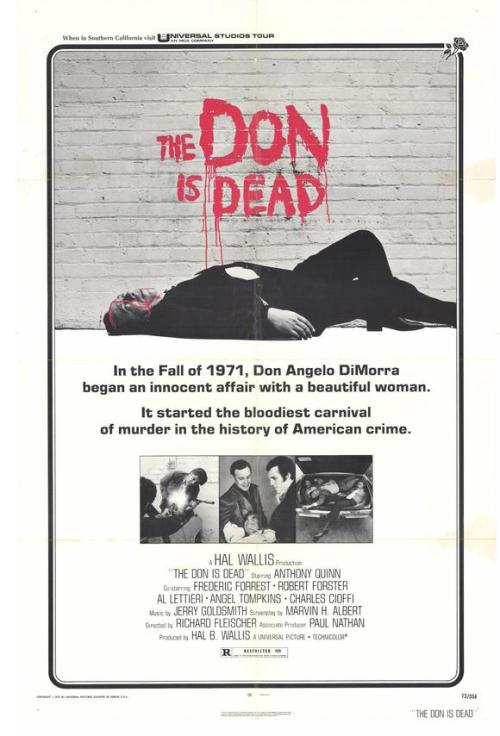
Category Archives: 70’s Movies

Black Eye (1974)

By Richard Winters

My Rating: 5 out of 10

4-Word Review: Find the walking cane.

An old walking cane with a distinctive silver handle that had been used as a prop in many old Hollywood movies is stolen by a prostitute named Vera (Nancy Fisher) after it is laid on top of a casket of deceased actor at his funeral. Later Vera is murdered inside her apartment by a man named Chess (Frank Ashmore) who retrieves the cane, but not before coming into a violent confrontation with Shep (Fred Williamson) a black private eye who lives across the hall from her. Chess manages to escape, but Shep decides to track him down in an effort to find out why everyone is after the cane and what secret it might hold.

The film is an okay blend of action and mystery that tends to show its cards to soon. The revelation for why the cane is so much in demand is quite predictable and makes the viewer feel like they wasted an hour and a half of their time watching a pedestrian plot that leads nowhere. Director Jack Arnold dresses the story up by inserting offbeat scenes and eccentric characters that only adds a mild diversion to the proceedings, but still culminates with a flat finish.

Former pro football player Fred Williamson who played for the Kansas City Chiefs during the ‘60s is the best thing about the movie. Other athletes who turned to film acting after their sports careers were over were not as adept in front of the camera. Jim Brown for instance was great on the gridiron, but lacked an ability to play anything more than a hardened tough guy whose facial expression never changed. Williamson has more of an appeal because he doesn’t take himself or his role too seriously while also showing an ability to play either comedy or drama.

His female co-stars though are wasted and really didn’t need to be in it at all. Theresa Graves looks beautiful, but her character has no integral link to the story the lesbian angle dealing with the relationship that she has with her white girlfriend (played by Rosemary Forsyth) seems to be thrown in simply to give the film a certain perceived ‘kinky’ edge. Forsyth for her part has her voice dubbed and for what reason I don’t know, but it’s distracting and unnecessary.

88 year-old Cyril Delevanti, in his final film appearance, is quite amusing as an elderly man who’ll stop at nothing to get his cane back, but character actor Richard Anderson is a detriment. He plays a father who hires Shep to find his missing runaway daughter (Susan Arnold). At the end Williamson and Anderson get into a fistfight with Anderson doing his own stunts, which looks fake. A shot capturing him lowering his foot towards the camera in a dramatic attempt to show him stomping on Williamson (with the camera working as being Williamson’s P.O.V.) doesn’t work because it is clear that he is restraining his foot so it doesn’t actually hit the camera and break it. If you’re going to do a shot from this angel then have the foot actually pounce onto the camera even if it means damaging it because that would make it appear more authentic, or otherwise don’t do it at all.

For those that enjoy blaxploitation flicks from the ‘70s you may give this one, which is based on the novel ‘Murder on the Wild Side’ by Jeff Jacks, a slightly higher rating than I did. Some of the action is good especially a scene where Williamson escapes out of a immobile elevator and shimmies his way down the elevator shaft, but overall there’s nothing else about it that is distinctive to raise it above all the other black action films that are out there.

My Rating: 5 out of 10

Released: May 17, 1974

Runtime: 1Hour 37Minutes

Rated PG

Director: Jack Arnold

Studio: Warner Brothers

Available: DVD-R (Warner Archive), Amazon Video

Almost Summer (1978)

By Richard Winters

My Rating: 2 out of 10

4-Word Review: A high school election.

Bobby DeVito (Bruno Kirby) schemes to get even when Christine (Lee Purcell) is able to get high school hunk Grant (Robert Resnick) knocked out of the race for class president and thus allowing her to run unopposed. For revenge Bobby decides to nominate a shy new kid Darryl (John Friedrich) as her challenger. Darryl is initially unsure about taking on the challenge, but eventually gets into it only to eventually drop-out himself when he realizes Bobby has used some underhanded tricks in order to help him win.

The script is too simplistic and better suited as a ‘life lesson’ film that teachers show to kids in grade school. The action gets too locked into the students and the high school scene instead of broadening the situation out to include the school’s faculty like it did in Alexander Payne’s Election, which was far superior because it took the central scenario and connected it not only the foibles of teens, but adults as well. In fact very few adults get seen here making it seem like they were sucked away to some distant cosmos and the teens were left to run everything.

The film is refreshing to some extent because unlike most other teen flicks there’s no crude humor or sexual innuendos and the kids behave like young adults in the making instead of delayed adolescents, which is nice. However, the story is so boringly basic and told in such a straight-forward manner that after a while I actually wanted a sex joke or two to pop-in simply to have given the thing some life.

The situation needed to be played-up a lot more. Lee Purcell, who portrays a teen here only to ironically portray the mother of one just five years later in Valley Girl, is dull, but only because the part is painfully underwritten. The character is not mean enough for the viewer to really hate her. She is also too easily broken as evidenced by the scene where she breaks down into tears because she arrives at a debate with her hair still wet.

The Darryl character is equally benign. At first he comes off like a truly awkward teen, which could’ve been fun seeing this dopey geek upend a beauty queen at her own game, but the guy slides into the noble hero role too quickly. He becomes too-good-to-be-true making him nothing more than a transparent, good-guy cliché.

Some other reviewers have commented on Didi Conn and how her goofy, supporting presence helps enliven the film. Personally I’m not a fan of the actress as her geeky looks and squeaky voice gets on my nerves, but when a film is as bland as this one I suppose she does help it, which just prove how really bad it is. I also thought ‘Almost Summer’ was a weird title as everything that goes on here happens during the school year. A better title would’ve been ‘Almost Over’ because the whole time I was watching it I kept asking ‘Is this thing almost over?’

My Rating: 2 out of 10

Runtime: 1Hour 23Minutes

Released: September 22, 1978

Rated PG

Director: Martin Davidson

Studio: Universal

Available: None at this time.

Agatha (1979)

By Richard Winters

My Rating: 4 out of 10

4-Word Review: Agatha Christie runs away.

Despondent over her husband’s affair famous British novelist Agatha Christie (Vanessa Redgrave) decides to go away for a while to collect her thoughts. She then gets into a car accident while on the road and having her car disabled she first takes a train and then a cab to the Old Swain Hotel where she registers there under an assumed name. The police find her disabled car and fear that Agatha may have drowned in a nearby lake, been kidnapped, murdered by her husband Archie (Timothy Dalton) or committed suicide. A nationwide search begins that encompasses thousands of volunteers that scour the nearby countryside for clues. Meanwhile American reporter Wally Stanton (Dustin Hoffman), working off of  a tip from Agatha’s secretary, decides to check into the same hotel and begins following Agatha around where he keeps notes on everything she does while also falling in love with her in the process.

The film is loosely based on Agatha Christie’s real-life 11-day disappearance that occurred in 1926. No explanation was ever given for the reason nor was it even mentioned in her autobiography. Had there been some actual research about what might’ve transpired during those 11-days then this would be worth a look, but, as the film plainly states at the beginning, it is simply an ‘imaginary solution to an authentic mystery’, so then what’s the point?

Most likely it was nothing more than a woman looking to escape to some quiet location for a short respite that unfortunately due to the press getting wind of it, spiraled quickly out-of-control. The film’s low point comes in the side-story dealing with Agatha’s attempts to kill herself through a jolt of electricity from sitting in a Bergonic chair, but is saved at the last second by Wally who grabs her from the chair just as she’s shocked. Yet as he lays her limp body on the floor he doesn’t perform CPR, but instead shouts at her to ‘breath’ several times and despite no scientific study proving that this ‘technique’ can actually work she still miraculously begins breathing again anyways.

I have never read a biography on Christie, so I have no idea what her real personality was like, but the film portrays her as being a complete wallflower lacking any type of confidence and so painfully shy it’s pathetic. The character is so transparent it’s almost like she’s not even there. Hoffman’s character was completely made-up and the way he chain smokes reminded me too much of the character that he had played in Midnight Cowboy. His growing ‘love’ for her and the way he later expresses it is extremely forced and corny. Also, why is Hoffman given top billing when the main subject is Agatha?

Johnny Mandel’s soothing score is the best thing. I also liked the shot of the thousands of volunteers searching for her along the vast countryside, but everything else about the movie gets either under cooked or overbaked. The scene where Agatha tries to do a triple bank shot while playing pool gets badly botched. We initially see it captured from above where the entire pool table is in view. The pool ball banks off the side and rolls towards the corner pocket, but then it slows up and it becomes clear that it won’t make it to the pocket, so director Michael Apted cheats by cutting to a close-up of the ball and having it magically regain speed, which easily makes it into the corner pocket. The attempt was to ‘trick’ the viewer into believing that this was a continuation of the same shot but any halfway savvy person will realize this close-up was shot later and edited in.

The film’s poster tells us that ‘What may have happened during the next 11 days is far more suspenseful than anything she ever wrote’, but it really isn’t and in fact it’s not even close. The original intent by screenwriter Kathleen Tynan was to make this into a documentary after researching the true facts of the case, which would’ve been far better than the flimsy fanciful thing we get here.

My Rating: 4 out of 10

Released: February 9, 1979

Runtime: 1Hour 38Minutes

Rated PG

Director: Michael Apted

Studio: Warner Brothers

Available: DVD-R (Warner Archive), Amazon Video, YouTube

Mr. Majestyk (1974)

By Richard Winters

My Rating: 6 out of 10

4-Word Review: Don’t touch his watermelons!

Vince Majestyk (Charles Bronson) is a Colorado watermelon farmer who gets into a conflict with Bobby (Paul Koslo) who wants to force Vince to use unskilled drunks to harvest his crop instead of migrant workers. When Vince successfully forces Bobby and his crew off of his property Bobby then goes to the police with assault charges, which lands Vince in jail. It is there that he comes into contact with Frank Renda (Al Lettieri) a notorious hit man. While the two are being transferred by bus to another prison Renda’s men attack it in a shootout, but when the driver is killed Vince takes control of the bus and drives it off into the Colorado wilderness. There he holds Renda hostage while trying to broker a deal with the police where he’ll ‘trade’ Renda for his freedom, but things don’t go quite as planned.

Many people don’t realize that during the ‘70s Bronson did quite a few offbeat films with St. Ives and From Noon Till Three being his two biggest, but this one comes in as an honorable mention. I’ve watched a lot of movies in my lifetime and can usually guess where they’re going, but this one kept me genuinely intrigued most of the way. The script is enlivened with its vivid on-location shooting done mostly in La Junta, Colorado, which includes a well-staged shootout done in the center of town as well as a car chase that takes advantage of an area with scenic rock formations.

The biggest surprise though is Bronson. Sometimes he comes off as stiff and wooden, but here he’s engaging and even reveals a playful side. His character also makes a few miscalculations, which helps him seem more human as opposed to the standard rugged good guy who is always able to think-on-his-feet and constantly able to achieve miraculous split-second decisions.

I was disappointed though with Al Lettieri. He was so effectively nasty in The Getaway that I didn’t think it could be topped or even attempted and yet just two years after that one he again gets cast in virtually the same type of role making it seem like typecasting to the extreme. I was hoping that he would expose a softer side to his persona at some unexpected moment, but it never occurs and he just proceeds to being one mean, angry s.o.b. which quickly becomes boring and one-dimensional.

Lee Purcell though is terrific as his girlfriend. She had played only rural, country girl types before this, so it was great seeing her portray someone more sophisticated and despite her young age, only 26 at the time, she shows great composure alongside her much older male co-stars. Her cool, collected manner makes for an intriguing contrast to Lettieri’s hyper one and should’ve been explored more.

Linda Cristal as Bronson’s love interest is less impressive. Playing a feisty Hispanic woman comes off almost like a cliché and their relationship is forced. She does come in handy as the getaway driver, which I feel is the only reason her character was put into the story to begin with.

Despite the unpredictable touches the beginning is quite contrived, which includes an opening title sequence better suited for a TV-show. The script was written by Elmore Leonard, which made it disappointing as I was expecting there to be some sort of subtext to it, but in the end it’s rather run-of-the-mill with the offbeat elements not enough to make it anything more than a transparent diversion.

My Rating: 6 out of 10

Released: July 12, 1974

Runtime: 1Hour 43Minutes

Rated PG

Director: Richard Fleischer

Studio: United Artists

Available: DVD, Blu-ray, Amazon Video

The Cat from Outer Space (1978)

By Richard Winters

My Rating: 3 out of 10

4-Word Review: Cat alien seeks assistance.

Jake (voice of Ronnie Schell) is an alien who closely resembles a cat that lands his disabled spaceship on earth and is unable to get help from his mothership to return back to his planet. Using his powerful collar that allows him to speak telepathically he seeks the assistance of Frank Wilson (Ken Berry) a lab assistant who seems smart enough to understand Jake’s dilemma. Before they can do anything though the army comes in and takes the spaceship and stores it inside a warehouse under tight security forcing Frank and the cat to break into the building in order to retrieve the ship and get the cat back to his planet.

I admit that when I was 9-years-old I watched this movie and came away thinking it as ‘pretty cool’ and for a kid I suppose this could still seem passable, but for any discerning adult it’s nothing more than mumbo-jumbo sci-fi. The biggest issue is the collar, which allows the cat way too much power.  He, or anyone else touching it, can do virtually anything even flying through the air or moving other objects through mind control. The thing is so powerful that you hardly feel that the cat is in any type of real danger, which hurts any potential tension. The plot has one caveat, which is if the collar is ever taken off of the cat then he is helpless. Yet this rarely occurs and when it does he, or somebody else, is able to retrieve it quickly making this plot-point a mute issue. The collar even allows him to fly a disabled plane making me wonder why then he couldn’t just use it to do the same thing to his disabled spaceship.

Spoiler Alert!

The film is different from other Disney films of that era in that it doesn’t end with a climactic car chase, but instead has a hair-rising finish in the air with Berry standing on top of an airplane wing trying to rescue his girlfriend Sandy Duncan who is trapped on a helicopter that has no pilot. The stunt work for this is quite impressive and exciting, but I kept wondering how long a helicopter could go in the air without a pilot before it would spin out-of-control and crash. Of course this finally does occur once Duncan is conveniently rescued, but I kind of felt in reality it would’ve happened much sooner.

The film’s final scene involves the cat getting sworn in as a United States citizen, which is pretty loopy since he’s still allowed to go around wearing his collar, but how could the government trust anyone with that since it would virtually allow them to do just about anything? And wouldn’t it attract foreign powers looking to steal if for their own nefarious means making the film’s ending seem more like just a beginning to a far more complex subplot.

End of Spoiler Alert!

The cast is unusual for a typical Disney film too in that there’s not a single child or teen present even though it’s a movie aimed for kids. Instead it has Berry who is so utterly benign he becomes offensive in his inoffensiveness. McLean Stevenson as his sports betting pal is fun and Harry Morgan is quite amusing playing another one of his blustery overly-authoritative characters. Schell, who speaks for the cat, gets a small role as one of the members of the army, but has his voice dubbed. James Hampton, who appeared with Berry in the TV-show ‘F-Troop’, can be spotted in a small role as well.

My Rating: 3 out of 10

Released: June 9, 1978

Runtime: 1Hour 44Minutes

Rated G

Director: Norman Tokar

Studio: Buena Vista

Available: DVD, Amazon Video, YouTube

Podcast: An Enemy of the People (1978)

Listen to me discuss with Todd Liebenow from Forgotten Films the movie ‘An Enemy of the People’ a really obscure 1978 film starring Steve McQueen in an atypical role as a scientist living in 1800’s Norway. Todd fills his podcast with a lot of old commercials and movie clips as well.  My written review of the film will follow later in the week.

https://www.podomatic.com/podcasts/forgottenfilmcast/episodes/2018-04-10T18_48_20-07_00

The Concorde … Airport ’79 (1979)

By Richard Winters

My Rating: 2 out of 10

4-Word Review: Missile targets passenger plane.

A corrupt arms dealer, Kevin Harrison (Robert Wagner), has his deadly surface-to-air missile system target a Concorde airplane while it’s in the air when he finds out that one of the passengers on board, a news reporter named Maggie Whelan (Susan Blakely), has incriminating information on him that she plans to report on once the plane lands. Captain Joe Patroni (George Kennedy) uses his superior piloting skills to avoid the missile, but then learns Harrison has installed a device on the plane that knocks-out its cargo door causing the plane to literally rip apart and forcing a dangerous emergency landing in the Alps.

This terrible idea for a movie came from its producer Jennings Lang who greedily wanted to squeeze out a story from an already tired formula if he felt it could continue to make a profit. Sometimes it’s best to get out while you’re ahead, but Lang, who wrote the story for this one, didn’t see it that way and ended up making a clunker that’s even worse than Airport 1975, which was already notorious for being one of the worst disaster flicks ever made. The plot here has all the trappings of being written by someone more interested in turning a profit than creating an actual movie as the characters are one-dimensional and the situations contrived.

The espionage undertone makes it seems more like a James Bond flick with most of the action occurring on the ground than in the airplane. Watching the plane trying to avoid the missile isn’t exciting because the unconvincing special effects clearly look like images being matted onto the screen. The scenes showing the passengers screaming as the plane turns upset down become laughable and get shown with a boring regularity. The part where Eddie Albert’s chair goes through the floor is the film’s unintentional comic highpoint particularly when he states “I thought I had the best seat on the plane.”

Yet the craziest element in the story is the fact that the plane, after the passengers spent the whole flight being terrorized by incoming missiles, lands in Paris and the people spend the night in a hotel. Then the next day they all happily board the plane again, which simply would not happen as there is no way that anyone anywhere would get back onto a plane, especially so quickly if ever, after what they had just gone through.

George Kennedy gives a solid performance and helps to give the film some minor credibility in what would turn out to be his last major film role as he would be relegated to minor supporting roles and B-movies afterwards. The rest of the cast though either gets wasted; particularly Mercedes McCambridge who only gets a few speaking lines, or become just plain irritating.

Jimmie Walker is the most annoying playing a goofball who boards the plane while still carrying his saxophone, which would never be allowed in reality, and even starts playing it creating worse noise pollution than the singing nun did in Airport 1975 and should’ve been enough to have had him thrown off the airline…while it was still in the air. Tacky B-celebrity Charo appears briefly as a nutty lady who tries bringing her dog on board. Fortunately she gets booted off before the plane takes off because otherwise I would’ve been rooting for it to have crashed.

The only interesting aspect about the movie is the plane itself. The Concorde was the fastest commercial jet built that had maximum speeds that were twice the speed of sound. I thought it was cool the way the plane light up signs informing the passengers once they had reached Mach 1 and made me wish I could’ve flown on one, but sadly the Concorde ceased operations in 2003 even though flying in one was quite safe. Ironically the only crash that occurred during its 30 year history happened with the plane that was used in this film, Flight 4590, which crashed minutes after take-off on July 25, 2000, killing all 109 on board.

My Rating: 2 out of 10

Released: August 17, 1979

Runtime: 1Hour 53Minutes

Rated PG

Director: David Lowell Rich

Studio: Universal

Available: DVD, Amazon Video, YouTube

Airport ’77 (1977)

By Richard Winters

My Rating: 7 out of 10

4-Word Review: Plane crashes into ocean.

Rich tycoon Philip Stevens (James Stewart) invites his high society friends to his home in Palm Beach, Florida by flying them over on his luxury jet. Unfortunately a gang of hijackers have decided to use this opportunity to steal some expensive artwork, which is also on the plane, by rigging the venting system with sleeping gas, which temporarily knocks-out the Captain (Jack Lemmon) along with all the passengers. Then as everyone sleeps the thieves steal the artwork while the co-captain (Robert Foxworth), who is in on the crime, pilots the plane, but while going into some heavy fog the plane grazes an offshore oil rig that sends the craft and everyone on it into the ocean forcing the panicked people to figure out some way to signal those on the ground that they need help.

Although Airport 1975 did well at the box office it was critically maligned and producer Jennings Lang wanted to come up with some way to keep the theme fresh and inventive. In most ways the film succeeds and can be considered an admirable sequel as the silly humor from the first two is taken out and the audience gets left with a high adrenaline disaster flick that is convincing and compelling.

Unfortunately the first 35 minutes almost kills it as the film is too intent on setting up contrived soap opera-like storylines for all of its characters. The lovesick gaze that Kathleen Quinlan gives to blind musician Tom Sullivan as he plays a romantic tune on the piano is sappy enough to make some viewers want to turn the movie off completely. The side-story dealing with Lemmon’s relationship with head stewardess Brenda Vaccaro was not needed, although the way he rescues her at the end is quite cool, and is too similar to one between Dean Martin’s and Jacqueline Bisset’s characters in the first film. Lee Grant can play a bitch with a capital ‘B’, but here it gets over-the-top making her so unlikable I didn’t care if she lived or died. I was hoping that, through the course of the film, her character would be forced to show a sympathetic side at some point, but she never does.

If you can get past the clunky beginning then you’ll be rewarded with a genuinely exciting and tense second-half. The special effects are well done and watching the cast, who bravely did most of their own stunts, get doused with gallons of rushing water inside the plane is a tense and impressive moment.

Lemmon is excellent and his presence helps elevate it from just being a cheesy disaster flick. Christopher Lee is good in an uncharacteristically sympathetic role making me believe that maybe he should’ve played more of these types of parts in his career. Foxworth is also effective as the duplicitous co-pilot. He’s played bad guys before, so watching him become evil wasn’t a stretch, but I enjoyed how the camera cuts back occasionally to show his guilt-ridden face as he watches the others struggle to survive.

Screen icon James Stewart is wasted in a part that gives him very little to do other than standing around with a perpetually concerned look on his face and it would’ve been more interesting having him on the plane with the others. George Kennedy gets his token appearance as Joe Patroni the only character to appear in all four Airport films, but it hardly seems worth it. His caustic, brash personality that made him so engaging in the first movie is completely lost here making him dull and transparent and virtually pointless to the main story.

While it does seem a bit too similar to The Poseidon Adventure it still has some great underwater footage particularly when the rescue naval crew puts balloons underneath the craft in an attempt to lift the plane out of the water, which is unique and not shown in any other movie and makes this worth catching just for that.

My Rating: 7 out of 10

Released: March 11, 1977

Runtime: 1 Hour 54 Minutes

Rated PG

Director: Jerry Jameson

Studio: Universal

Available: DVD, Amazon Video, YouTube

Airport 1975 (1974)

By Richard Winters

My Rating: 3 out of 10

4-Word Review: Stewardess pilots the plane.

A businesses man (Dana Andrews) suffers a fatal heart attack while piloting his private plane causing his aircraft to fly directly into the cockpit of a Boeing 747, which kills the co-pilot (Roy Thinnes), the navigator (Erik Estrada) and seriously injures the pilot (Efrem Zimbalist Jr).  This forces the plane’s head stewardess (Karen Black) to take control of the plane even though she has no experience. Those at the control tower try to direct her via a headset on what to do, which helps steady the jet while they devise a way to get a professional pilot onto the craft in order to land it.

Compared to Airport this is a real letdown. In the first film the individual passengers came off like real people all suffering from their own personal dilemmas, but here they’re more like cardboard caricatures that barely have any speaking lines and there only to show panicked expressions and not much else.

The dialogue and ‘drama’ quickly becomes inadvertently campy. Linda Blair plays a Pollyanna-like girl suffering from an undisclosed illness who befriends a nun (Helen Reddy) who breaks out into an impromptu song on a guitar that would have most passengers complaining of noise pollution. Playing herself is aging silent film actress Gloria Swanson who dictates her autobiography into a tape recorder as she is on the plane, which seems dumb because it allows the other passengers to overhear it although at least for their benefit it will allow them to avoid having to buy the book once it’s published since they will know all about the juicy details already. The only entertaining passenger is Myrna Loy as a tipsy old lady who enjoys drinking boilermakers.

The plane’s excessively wide interior and its large seats make it seem more like the inside of a luxury train. The plane even has a winding stairwell at the center of it for people to walk up. I’ve flown on many jets in my life and have never seen one with an upstairs/downstairs. If you’ve been on a plane that has had one then please let me know. (Note since this review was written one of the followers to this blog, Rob, has supplied us with pics of an actual 747 from that era and proves that indeed these things described above did exist at one time in a plane, so please be sure to check-out his links to pics in the comments section.)

The special effects get badly botched. The sequence involving the small engine plane crashing into the jet looks fake as the plane gets shown through the cockpit window and is quite obviously matted in on a bluescreen. You can clearly tell too that an inflatable dummy was used as the co-pilot when he gets sucked out through the hole that is formed from the crash. The scene where the replacement pilot (Ed Nelson), who tries to board the plane to help land it, is killed when his release cord becomes caught in the jagged metal, comes-off as unintentionally  funny instead of horrific.

The outdoor aerial footage shot over the Wasatch Mountains is the film’s one redeeming element. I also enjoyed Karen Black in what is likely her definitive role. She has played so many kooky, offbeat characters that it’s interesting seeing her portray a normal one. I just wished that she would’ve piloted the plane the whole way through and even landed it. Having Charlton Heston, as a professional pilot, literally ‘drop-in’ and takeover is far less compelling. It also seems quite sexist by intimating that women aren’t capable of taking on challenges to their completion and at some point a man must step-in even when the women seem to be handling the situation quite well without them.

My Rating: 3 out of 10

Released: October 18, 1974

Runtime: 1Hour 47Minutes

Rated PG

Director: Jack Smight

Studio: Universal

Available: DVD, Amazon Video, YouTube

Airport (1970)

By Richard Winters

My Rating: 8 out of 10

4-Word Review: Terror in the skies.

During a major snowstorm at Chicago’s Lincoln International Airport manager Al Bakersfield (Burt Lancaster) must scramble to keep the place open while trying to get a disabled jet plane that is stuck in the snow off the runway. Meanwhile on a flight headed for Italy there’s the mentally unhinged Guerrero (Van Heflin) sitting with a bomb in his briefcase set to go off and explode the airplane and killing everyone inside, so that his family back home can collect on the insurance money.

The film is based on the best-selling novel by Arthur Hailey and despite some critics, like Pauline Kael, hating it for its soap opera-like dramatics I still came away feeling it was perfect crackerjack entertainment. The characters on the plane are quite diverse with unique problems and personalities making them seem like real people that the viewer becomes genuinely concerned for. The special effects, particularly those done inside the plane, are effective and the film has a nice dramedy balance.

The only drawback, and I hesitate to bring this up as I think they did the best they could’ve done under the circumstances, are the special effects dealing with the snow storm. It was shot at the Minneapolis/St. Paul airport during the winter of 1969, but unfortunately the whole time the film crew was there the weather remained sunny forcing them to eventually have plastic snow shown falling while the in the background the sky remains crystal clear and sunny. The snow shown falling during the nighttime scenes is equally problematic. I resided for many years in the North Country and I know that when it snows at night the sky gives off a bright white glow and it’s never pitch black like it is here.

The film was considered innovative at the time for its use of the split-screen particularly when it would show people talking on the phone to each other. Director George Seaton wisely doesn’t overplay this and uses the device sparingly for the most part however the segment where Lancaster is shown in one square talking to his wife, who is in another square along with their two daughters who each pop-up in their own individual squares it starts to resemble the opening to ‘The Brady Bunch’.

The acting by the female performers is quite strong. I was really impressed with Jean Seberg, her career started back in 1958 when she beat out 18,000 other applicants to get the starring role in Otto Preminger’s Saint Joan despite her lack of acting experience and although her performance in that film was lambasted by the critics I felt here she was solid and she could’ve easily carried the film during the scenes at the airport without Lancaster’s presence, who plays her boss, being needed at all.

Jaqueline Bisset is equally good as the stewardess who knows how to think on her feet.  I liked how this role didn’t take advantage of her looks or sexiness and instead kept it focused solely on her dramatic acting ability and I loved her shoulder length hair cut here as opposed to her really long hair style that she usually sports. Helen Hayes is hammy as the old lady stowaway, which netted her an Oscar, but Maureen Stapleton, who was also nominated for best supporting actress, is quite good too. Her talents lie more in her expressive face particularly the moment when she looks out the airport window and witnesses the plane carrying her husband, who she knows has a bomb, take off.

Dean Martin is excellent on the male end. Typically he comes off as tipsy and laid-back, but here he surprisingly takes the reins and helps propel the picture. George Kennedy is also surprisingly strong. Most of the time his presence amounts to nothing more than token supporting parts, but here he plays the gruff, brash airline mechanic to great effect and could help explain why his character was the only one to appear in all four airport movies.

The film does come off like it was released in the ‘50s instead of the 70s by having a cast that was mostly past their prime, but it’s by far the best disaster flick from the ‘70s, and there were a lot of them, as well as better than any of the three sequels that followed it.

My Rating: 8 out of 10

Released: March 5, 1970

Runtime: 2Hours 17Minutes

Rated G

Director: George Seaton

Studio: Universal

Available: DVD, Blu-ray, Amazon Video