Category Archives: 60’s Movies

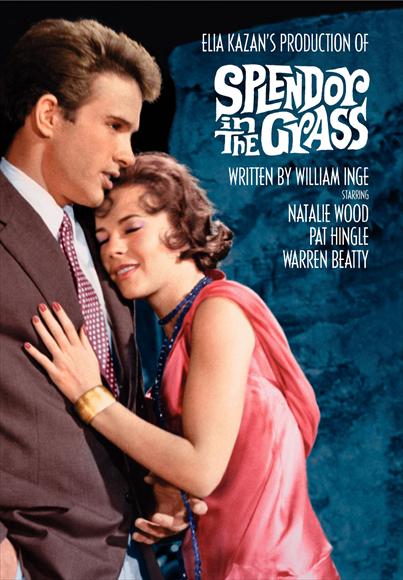
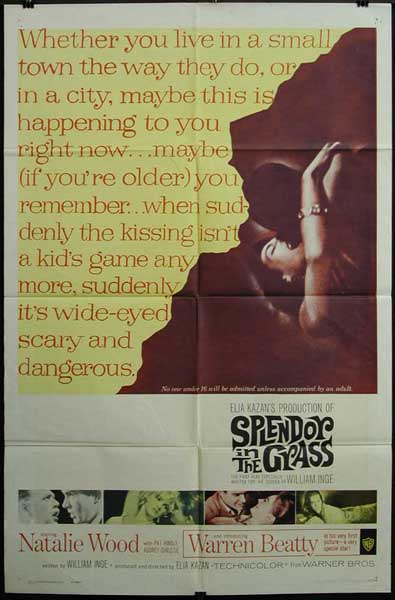
Splendor in the Grass (1961)

splendor in the grass 1

By Richard Winters

My Rating: 7 out of 10

4-Word Review: Learning to move on.

The year is 1928 and Wilma (Natalie Wood) is a high school girl living in a small Kansas town and madly in love with Bud (Warren Beatty). The two share a strong even obsessive relationship and Bud wants to marry her, but his domineering father (Pat Hingle) wants him to wait and go to college for 4 years first. Because Wilma is a ‘nice girl’ he cannot have intimate relations with her before marriage, so in order to alleviate his sexual tensions his father advises that he have sex with a ‘loose woman’ and thus has a fling with Juanita (Jan Norris) who is also one of Wilma’s classmates. When Wilma finds out about this she is devastated and it sends her into a mental breakdown and eventually committed to a psychiatric hospital.

Despite being set in a bygone period the film is hardly dated at all. The characters are real and going through much of the same dilemmas people today have including dealing with parents who push their children to go into fields of study that they aren’t interested in. The film is amazingly frank for its era and director Elia Kazan wisely pulls back by having long takes which allows his eclectic cast to propel the film forward with their performances alone.

Although the setting is Kansas it unfortunately wasn’t filmed there and thus fails to capture the majestic beauty of the plains like Picnic did which was based on another William Inge story. The intention was to shoot it there, but due to a drought it was instead done in northern New York near the Catskills, which has a far different climate and topography. The only exterior shot of the town is that of Wilma’s house, which doesn’t allow the viewer to get any idea of the town’s layout or atmosphere.

All around there are some great performances, but Hingle is a standout in what is quite possibly the best role of his career as he owns every scene that he is in. The only unfortunate thing is that it is never explained what caused the character’s very obvious limp.

Barbara Loden who later went on to marry Kazan in real-life is a scene-stealer as well playing Hingle’s rebellious, flapper daughter Ginny. Her meltdown at a New Year’s Eve party is memorable, but the character then disappears midway through and is never seen again. There is an eventual brief explanation of her whereabouts, but I felt a scene with her at the end was definitely needed.

Wood looks quite possibly at her most beautiful here both with long hair during the first half and then with a short cut during the second part. Beatty makes an outstanding film debut. Usually he is best playing detached characters, but here he plays an emotional one and does it surprisingly well.

The film features a high amount of first time performances from actors who all look very, very young. Phyllis Diller can be seen briefly as a nightclub comedienne. Ivor Francis makes his film debut as Wood’s psychiatrist and Sandy Dennis can be spotted as Wood’s classmate while Martine Bartlett makes her debut as an exasperated English teacher. There is also Zohra Lampert as a waitress explaining to Beatty what pizza is while he tells her about Kansas and you can very briefly spot Eugene Roche and even Godfrey Cambridge.

The film makes some great statements about learning to adjust to life’s twists and turns and living in situations that are not the most fulfilling. Inge, who based many of these characters on people he knew growing up, shows a keen understanding for human nature and his script won a much deserved Oscar.
splendor in the grass 2

My Rating: 7 out of 10

Released: October 10, 1961

Runtime: 2Hours 4Minutes

Not Rated

Director: Elia Kazan

Studio: Warner Brothers

Available: DVD, Amazon Instant Video, YouTube
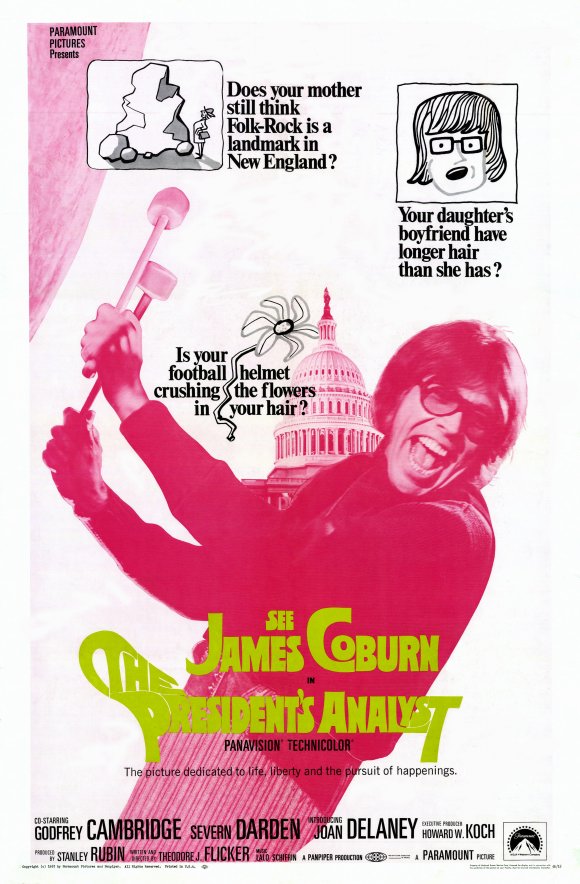
The President’s Analyst (1967)

The presidents analyst 1

By Richard Winters

My Rating: 7 out of 10

4-Word Review: Analyst on the run.

Dr. Sidney Schaefer (James Coburn) is a well-regarded therapist who gets offered the job as personal analyst to the President. At first Sidney is greatly honored, but eventually realizes that he may have taken on more than he bargained for. For one thing he must be on call to see the President at any hour of the day or night. Then he is forced to break-up with his girlfriend Nan (Joan Delaney) because it is found that he talks in his sleep and may be inadvertently giving away state secrets. When he tries to quit his job he finds himself being chased by government agents as well as spies from other countries intent on using or even killing him because of his perceived inside knowledge.

The film’s biggest achievement is writer/director Theodore J. Flicker’s visual flair where he uses every chance he can to enhance a scene by adding some interesting cinematic touches. For instance the part where Sidney talks with his mentor (Will Geer) about taking the job while looking at some weird art exhibits helps add an offbeat touch to a conversation that otherwise is rather ordinary. I also liked the throwaway segment showing Sidney walking by New York’s landmarks including the Brooklyn Bridge and even standing at the torch of the Statue of Liberty. These scenes don’t necessarily progress the plot, but help add flavor and mood and something a lesser director might not even consider. Sometimes it’s the little things that get added to the picture that make it special and Flicker shows a good understanding of that and it’s unfortunate that he left Hollywood in the early 80’s to devout full attention to his award-winning sculpting as I think he had the potential for making a lot more interesting films.

The comedy itself is quite funny and most importantly very original. Watching all the different foreign spies end up killing each other while also trying to nab Sidney as he hangs out undercover with a rock band is creative. The best part though is when he gets kidnapped while inside a phone booth and taken by truck to an underground headquarters where he is interrogated while still remaining locked in the booth.

The film offers a chance at seeing Barry McGuire best known for his 60’s rock song ‘Eve of Destruction’ in a rare acting role as a guitarist in a rock band. Godfrey Cambridge is quite engaging as an American spy and I loved how he was secretly friends with his Russian counterpart Kydor played by Severn Darden. Jill Banner who gave a hypnotic performance in the cult classic Spider Baby is seen here as a groupie named Snow White.

The film’s only real transgression is the fact that we never see the President or Sidney’s sessions with him. I believe this was because at the time there was still some respect for the position and the filmmaker’s didn’t want to completely devalue it by portraying some nut in the office, but it still seemed to miss out on some great comical potential as well as making the viewer feel that they are being a bit cheated. I also didn’t think that the President would have discussed important government affairs or foreign policy with his analyst like he supposedly does here. I would have thought that he would have been so burned out talking about that stuff that he would have wanted to discuss more personal issues that had nothing to do with politics.

At times this film borders on getting a bit too wacky and out-of-control. This type of idea could have been taken in a wide array of different directions and there were moments where I wished it had been a little more reeled in and subtle, but it always manages to save itself by constantly coming up with unique and funny segments.

My Rating: 7 out of 10

Released: December 21, 1967

Runtime: 1Hour 43Minutes

Not Rated

Director: Theodore J. Flicker

Studio: Paramount

Available: VHS, DVD, Amazon Instant Video, YouTube

Did You Hear the One About the Traveling Saleslady? (1968)

did you hear the traveling saleslady

By Richard Winters

My Rating: 3 out of 10

4-Word Review: Saleslady saves family farm.

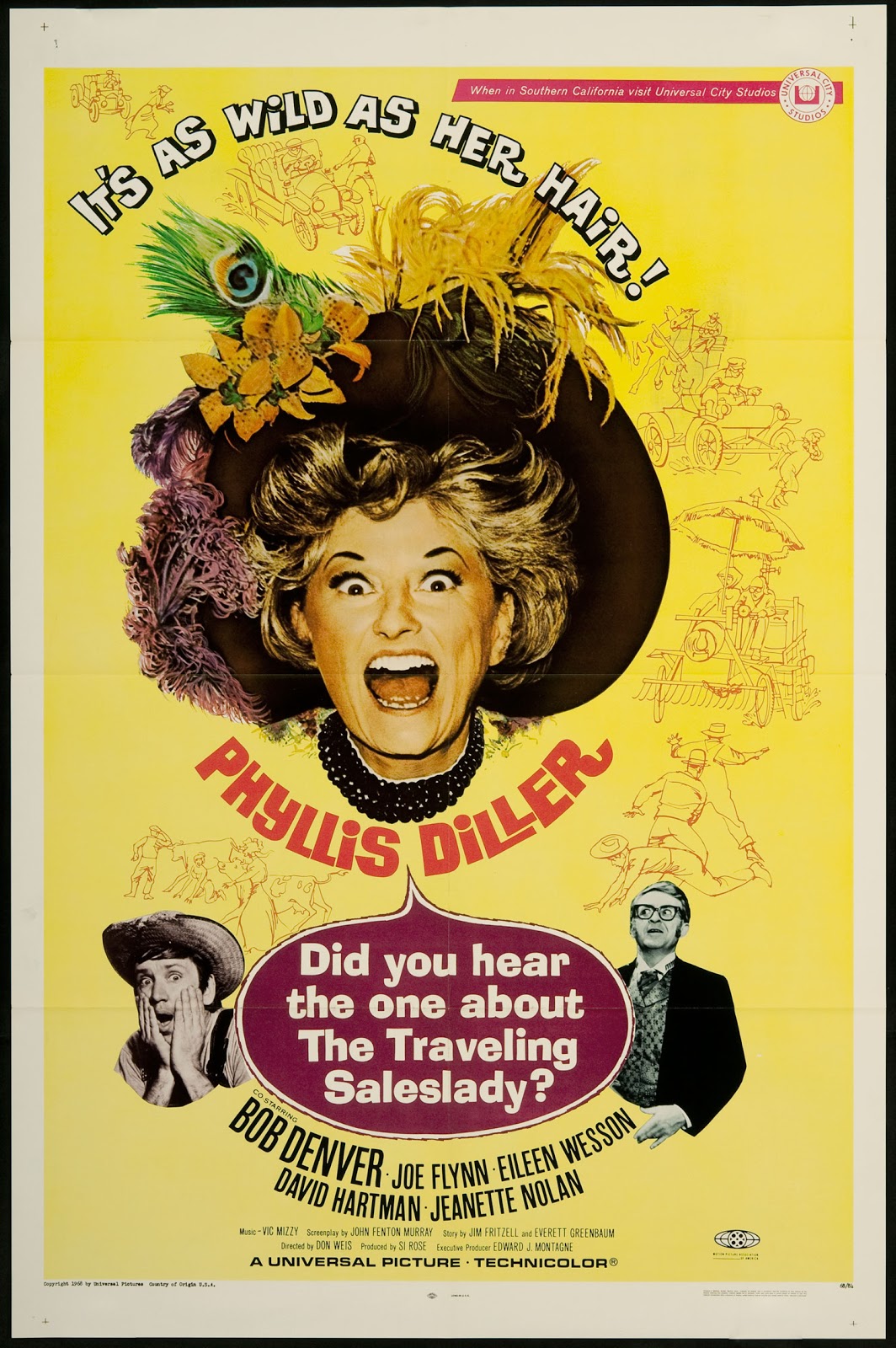
Agatha (Phyllis Diller) is a traveling saleswoman who arrives in a small Missouri town in the summer of 1910 trying to sell a piano that can play by itself. During a demonstration of it one of the townspeople, the kindly, but inept Bertram (Bob Denver) accidently destroys it. Agatha now finds herself stuck with a piano she can’t sell and nowhere to go. Bertram allows her to stay at his family farm, which is at risk of being foreclosed by the town’s greedy banker Hubert Shelton (Joe Flynn). Bertram and Agatha come up with a way to save the farm by winning an automobile race in a wild vehicle created by Bertram using parts from the destroyed piano.

It seems hard to believe in retrospect that eccentric comedian Diller was ever considered star making material, but she did 8 films during the 60’s with 4 of them centered on her flamboyant persona. All of them tanked both critically and at the box office with this one being the last of them. I imagine trying to come up with a scenario using Diller as the centerpiece would be no easy task, but this screenplay penned by John Fenton Murray is too broadly written to be even remotely interesting and seemed already badly dated even for its era. The humor is locked in a kiddie level with a plot that is excessively simplistic and won’t intrigue anyone over the age of 6.

Diller pretty much just plays herself, which would be alright if some her jokes and lines were actually funny, but none of them are. The reoccurring gags centered on her whacky outfits, ugly appearance and horses that go crazy the second she reveals any part of her legs gets old fast. Denver’s character is nothing more than an extension of Gilligan and Flynn is pretty much being the same character he was in ‘McHale’s Navy’.

The film is watchable if you come into it with extremely low expectations, but that is not saying much. None of the gags work and the town’s set was clearly filmed inside Universal’s studio lot, which looks phony and annoying. Denver’s milking machine invention, which can milk 6 cows at once, has potential, but when the cows escape and rampage the entire town it becomes forced humor at its worst, which goes likewise for the climatic and silly car race.

My Rating: 3 out of 10

Released: July 14, 1968

Runtime: 1Hour 34Minutes

Not Rated

Director: Don Weis

Studio: Universal

Available: None at this time.

Gambit (1966)

gambit 2

By Richard Winters

My Rating: 6 out of 10

4-Word Review: Foolproof plan has holes.

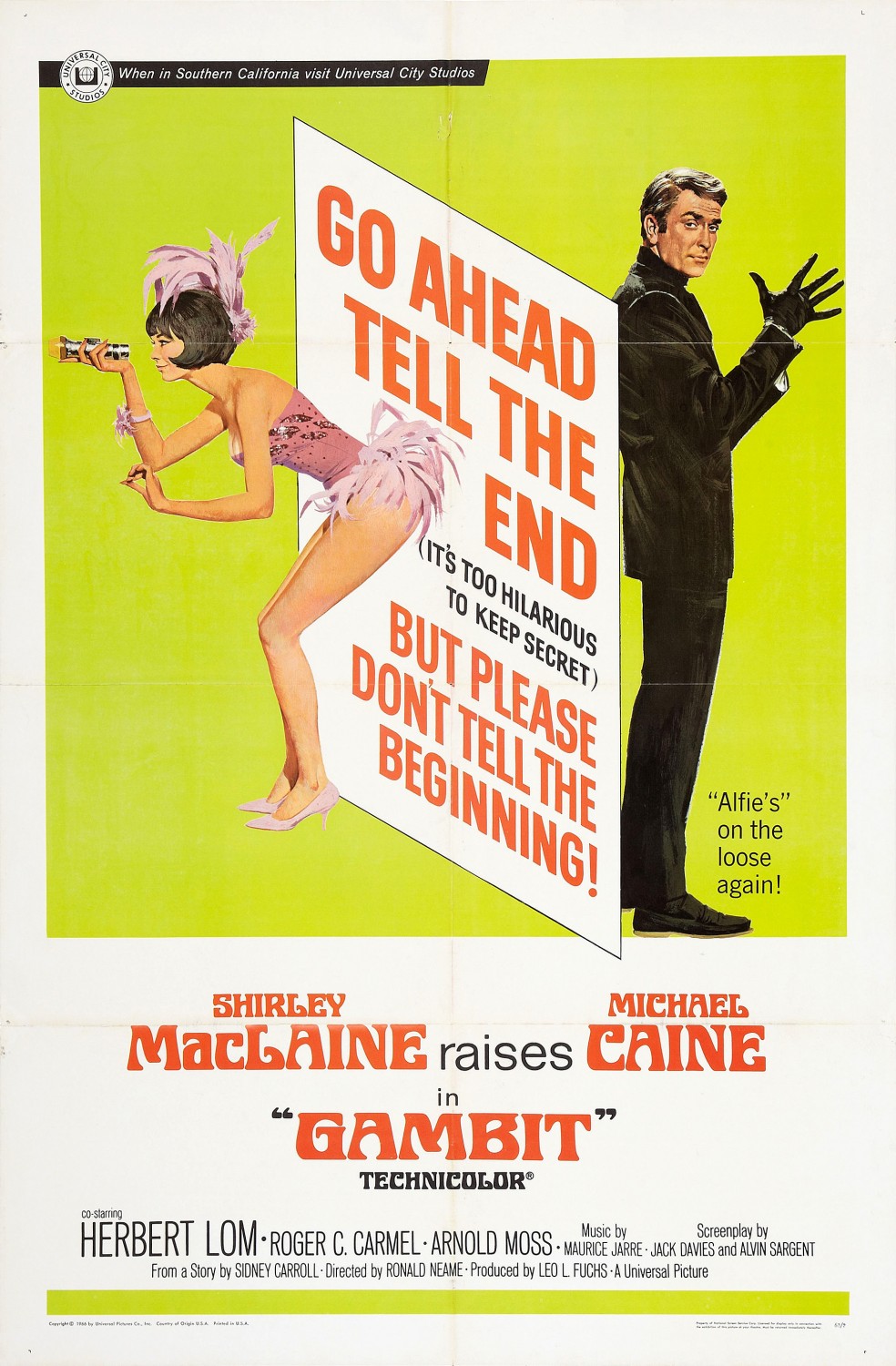
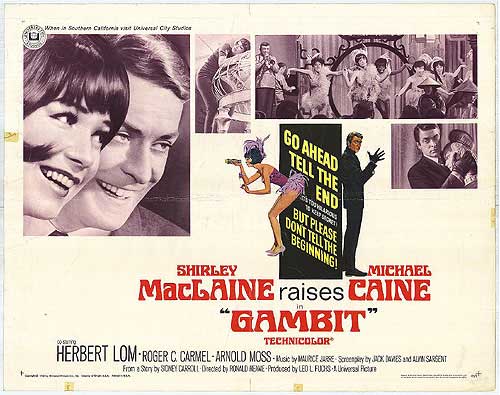
Harry (Michael Caine) is an international cat burglar looking to make his biggest steal yet. He recruits dance girl Nicole (Shirley Maclaine) to pose as his wife and with the help of some makeup and a different hairstyle made to resemble the late wife of reclusive millionaire Shabandar (Herbert Lom). The idea is to use this uncanny resemblance to get Shabandar’s attention who will then invite them up to his reclusive mansion. While Shabandar remains entranced with this woman Harry will use the time to steal an expensive statue that is in Shabandar’s home. Unfortunately Harry fails to factor in the human element, which sends his ‘foolproof’ plan into disarray.

This movie is fun most of the way and great escapism for a slow evening. The novel twist of showing how the plan should work, which takes up the first part and then showing what really happens is quite amusing. The movie works almost as a parody to all those slick heist movies and spy films that always have elaborate schemes, but usually overlook the human element in the process and if anything I wished they had played this up even more.

Maclaine is a delight and for the first 30 minutes doesn’t utter a single word. She has always been good as vulnerable characters and here is almost child-like. The contrasting personalities and verbal exchanges between her and Caine are amusing and something that I wished had also been played up a bit more.

The real problem is the blossoming romance between the two that doesn’t make any sense. The two know each other for only a couple of days and yet somehow ‘fall madly in love’ despite the fact that Harry is very rude and detached towards Nicole the whole time.  Harry also finds Nicole to be quite irritating and even explicitly tells her as much, so why he would suddenly fall for her is just as ridiculous. The idea, which is quite prevalent in 60’ movies, that two single people of the opposite sex must become a couple by the end of the movie is quite contrived and mechanical and in some ways diminishes the story by always forcing a happy ending even when it is not natural or needed.

There are a few other loopholes that hurts the story as well. One of them is while Harry is inside Shandabar’s home he opens up a statue and reaches in to take out the equipment needed to for the crime, but how was he able to do this? Did he sneak into Shandar’s home at some earlier point and put the statue there and if so how was it not detected by Shandabar? This is not explained, which seriously affects the credibility. There is another moment later on where Nicole sneaks back into Shandabar’s home while Harry is committing the robbery, but it is never explained how she was able to do that since there were guards everywhere, which required Harry earlier to go to elaborate means to do it himself.

Spoiler Warning!!!

The twist ending, which has Harry returning the original statue to Shandabar, but keeping the copy of it and using it to resell to the gullible public who thinks it’s the original is kind of cool. However, when Harry smashes the statue replica to pieces in an effort to show Nicole that he has ‘reformed’ from his criminal ways and retain her affections I knew immediately that there must have be even more statue copies hidden somewhere else, which there is, because there was no way his friend Emile would have taken something like that as lightly as he does otherwise.

End of Spoiler Warning!

gambit 1

My Rating: 6 out of 10

Released: December 21, 1966

Runtime: 1Hour 49Minutes

Not Rated

Director: Ronald Neame

Studio: Universal

Available: VHS, DVD (Region 1 & 2), Blu-ray (Region B), Amazon Instant Video

The White Bus (1967)

the white bus 1

By Richard Winters

My Rating: 6 out of 10

4-Word Review: Bizarre tour through Manchester.

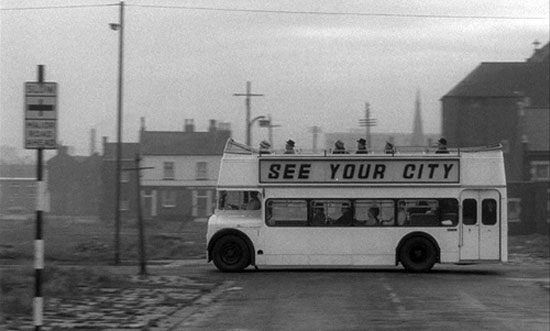
Patricia Healey plays a young lady who is never given any name that is bored with her job and looking for a diversion. While walking through some of the slum sections of the city she comes upon a white double-deck tour bus headed by the Mayor (Arthur Lowe) promising to show her the exciting areas of town. The tour group visits a factory, library and even witness a civil service drill of people saving victims from burning buildings that had been attacked during an unnamed war. In the end the young lady breaks from the group and goes wandering the streets herself looking into windows of homes where she learns a lot more about ‘the real’ city that she lives in that the tour bus could never show.

the white bus 2

This short film, which only runs 45 minutes was directed by Lindsay Anderson who later went on to collaborate with Malcolm McDowell in the classic if…., O Lucky Man! and Britannia Hospital. Anderson’s films were known for their surreal qualities, absurd situations and bizarre characters. This film proves to be no exception and part of the fun of watching the movie is never knowing what strange thing will happen next.  There are some weird moments for sure including the young lady envisioning herself hanging by the neck from a rope connected to the rafters of the ceiling at her job while the cleaning crew obliviously works around the dead body like it is not there. To me though the best moment is when she witnesses a group of people pushing a polio victim inside an iron lung through a lonely train station.

The film is mostly done in black-and-white, but occasionally for no reason or warning will flip over to color for a few seconds and then back to black-and-white again. These intervals become more frequent towards the middle of the film, but then go back to all black-and-white during the final fifteen minutes. In some ways I found this to be diverting and interesting initially, but eventually it became distracting and pointless.

the white bus 3

Healy does well in the lead and speaks only 9 words of dialogue through the whole thing. Her prominent light blue eyes look like emeralds and she exudes a nice detached quality where she at times seems a confused and curious about her surroundings as the viewer. Classic British character actor Lowe offers some moments of levity as he leads the group through a library while expounding on his opinions about ‘dirty books’.

This movie also marks the film debut of Anthony Hopkins, but to be honest I couldn’t spot him anywhere. Supposedly he can be seen in the background of one scene singing a song in German, but I couldn’t find it. I even went back through the scene selections re-watching moments that had some singing, but I still didn’t see him. If anyone knows exactly where he appears in the film and could let me know I would be forever grateful.

My Rating: 6 out of 10

Alternate Title: Red, White and Zero

Released: December 9, 1967

Runtime: 46Minutes

Not Rated

Director: Lindsay Anderson

Studio: United Artists Corporation

Available: DVD (MGM Limited Edition Collection), Amazon Instant Video

Minnesota Clay (1964)

minnesota clay 2

By Richard Winters

My Rating: 6 out of 10

4-Word Review: Gunfighter loses his sight.

Minnesota Clay (Cameron Mitchell) is a revered gunfighter stuck in a work camp prison for a crime he didn’t commit. One day he manages to escape and tracks down Fox (Georges Riviere) the man who withheld evidence that would have gotten him off. Fox is now the self-imposed sheriff and extorting money from the citizens of a town in order to keep them ‘safe’.  One of the townspeople is Minnesota’s grown daughter Nancy (Diana Martin) although she is not aware of this and local rancher Jonathan (Antonio Casas) is the only other person that does. As Minnesota tries to figure out a way to exact his revenge while also saving his daughter and townspeople from the reign of terror he realizes that he is losing his sight and doesn’t have much time before he goes completely blind.

For a basic spaghetti western this isn’t too bad. It certainly is no Sergio Leone masterpiece, but it fortunately isn’t the cheap looking, boring mess that some of the ones on the very bottom end of the genre are. The pace is quick with enough gunfights to appease any western fan. Director Sergio Corbucci manages to camouflage the low budget with a background and sets that look reasonable authentic. The plot is nothing special, but has enough twists and turns to keep it mildly interesting although having the Estella character (Ethel Rojo) one minute set-up Minnesota to be killed and then the next minute express her undying love for him gets a bit too dizzying.

One of the chief assets is amazingly Mitchell himself. His acting career started strong in the 1950’s including his critically acclaimed role as Happy Loman in the original Broadway version and eventual 1951 film Death of a Salesman, but a rumored drinking problem lead to a decline in the quality of roles. By the 1980’s he was lodged into doing a procession of grade Z productions simply for the money including shockingly co-starring in a non-sexual role in a porn film Dixie Ray Hollywood Star. Yet here he still shows to be the solid actor that he could be. He carries the picture well and having him a bit older than the conventional gunslinger makes it interesting.

The final shootout done when Minnesota has lost his sight and must rely completely on his heightened sense of hearing is well done and the best moment in the film. It lasts for almost fifteen minutes and has a certain surreal quality due to it happening in the middle of the night and neither man able to see the other. It might have been more interesting though had the character lost his sight at the very beginning, which would have made the entire story more distinctive as the majority of it is pretty ordinary and forgettable.

My Rating: 6 out of 10

Released: November 12, 1964

Runtime: 1Hour 25Minutes

Not Rated

Director: Sergio Corbucci

Studio: Harlequin International Pictures

Available: DVD (Mill Creek)

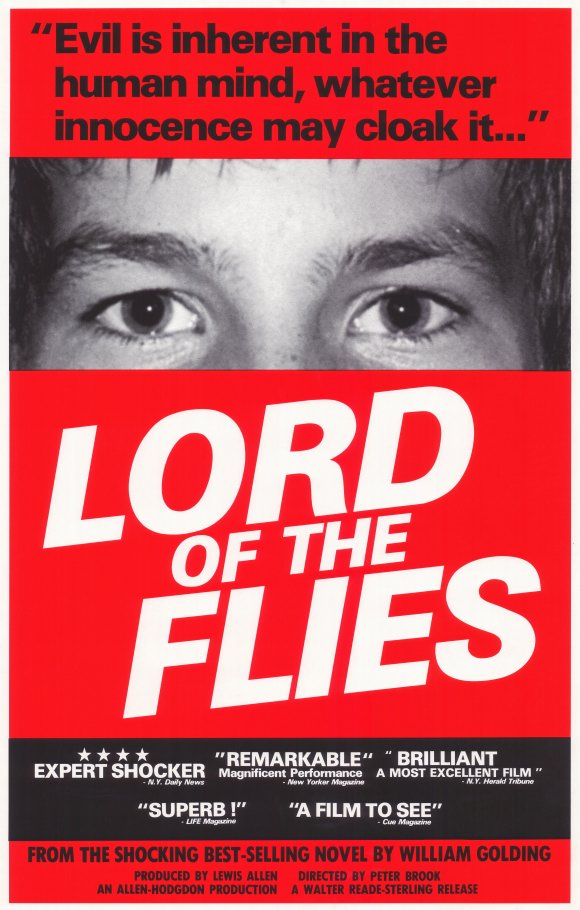
Lord of the Flies (1963)

LOTF

By Richard Winters

My Rating: 8 out of 10

4-Word Review: Kids turn into savages.

Based on the William Golding novel that has been required reading for most high school students. The story centers on a group of British schoolboys who survive a plane crash on an uninhabited tropical island. The boys are of varying ages, but none older than 14. Ralph (James Aubrey) is chosen as their leader, but finds almost immediate friction from Jack (Tom Chapin) who is an aggressive type that likes to hunt and doesn’t tolerate being told what to do. As things progress Jack breaks off from the main group and eventually starts his own following that comes to odds with Ralph’s. More and more of the boys join Jack and start to display savage behavior that leads to two deaths and puts the frightened Ralph on the run and into hiding.

It has been three decades since I’ve read the book, so I can’t really compare it with the film. The criticisms that I have are aimed solely at the film although as I remember the book had some of the same issues. One of the biggest ones is just the fact that there are so many survivors from a plane crash and all of them are conveniently the kids while all the adults perishing, which seems to play too much against the odds. There are also no scratches, bruises or injuries, which you usually come about with a crash even amongst those that survive it. Director Peter Brook does a clever job of intimating a plane disaster at the beginning over the opening credits through use of photographs, which I found to be creative, but showing an actual destroyed plane with kids getting out of it would have given it a little better foundation.

There is also another segment where the kids are convinced some sort of strange beast is on the island and as they go searching for it, it is found to a pilot in a helmet who was killed while trying to parachute to safety. Yet the kids don’t seem to realize this and remain frightened of it. I realize the setting is the 1940’s around the time of the war, but I would still think the kids of that time would have been sophisticated enough to recognize a dead man in a fighter helmet and the fact that they don’t seems pretty odd and even farfetched.

Overall though I really enjoyed the film and feel reluctant to watch the 1990 remake as I am afraid it would ruin the experience of this one.  It was filmed on-location off the island of Vieques in Puerto Rico during late August of 1961. The entire cast was made up of amateur actors who had not read the book. There was no actual script and the boys were allowed to ad-lib their lines, which helps give it an extra air of realism.

lord of the flies 1

I will admit there are shots where some of the boys look bored and detached from things, but then again I suppose boys that age can be that way anyways no matter what situation they are, so in some ways it doesn’t really hurt things. Hugh Edwards who plays Piggy is a real standout and apparently got the role simply by writing a letter to director Brook and informing him that he was fat and wore spectacles.

The black and white photography helps heighten the dark undertones. The shot showing a close-up of the pig’s head on top of a stake with flies’ going in and out of its mouth and nostrils is quite impressive and a brilliant realized moment from the book. The climatic sequence where Ralph must run through the burning foliage to escape the other boys is quite intense. The shot showing a dead boy’s body floating in the water under the moonlight has an evocative flair, but fake looking to the extent that the child was stabbed to death and yet has no visible wounds or blood coming out.

On the DVD commentary Brook states that he likes to believe something like this couldn’t happen. That we have somehow evolved enough as a human race where this savagery would be impossible, but I respectively this disagree. I think this could very well happen in this day and age which is what makes this an infinitely fascinating look at human nature and ultimately a great movie.

lord of the flies 3

My Rating: 8 out of 10

Released: August 13, 1963

Runtime: 1Hour 32Minutes

Not Rated

Director: Peter Brook

Studio: Continental Distributing

Available: VHS, DVD (Criterion Collection), Amazon Instant Video

Hotel (1967)

hotel 2

By Richard Winters

My Rating: 6 out of 10

4-Word Review: Drama at the hotel.

Warren Trent (Melvyn Douglas) has been the owner of a large, luxurious New Orleans hotel for years, but finds that his old fashioned business ideas no longer mesh with the modern consumer. The place is losing money and he turns to Peter (Rod Taylor) the hotel manager and loyal employee to help find a suitable buyer.  Curtis O’Keefe (Kevin McCarthy) wants to purchase the place, but his plans call for too many changes that Peter doesn’t like. However, Curtis’s beautiful girlfriend Jeanne (Catherine Spaak) takes an interest in Peter that makes Curtis uneasy. There is also the Duke of Lanbourne (Michael Rennie) staying as a guest with his wife Caroline (Merle Oberon) who inadvertently kills a child during a hit-and-run accident that the two try desperately to cover up. On top of this is Keycase (Karl Malden) a small-time crook who has made copies of all the room keys and uses them to break into the rooms of the guests and steal their money while they sleep.

I loved the locale, but the film fails to capitalize on it. We never see a bird’s eye view of the city despite numerous references to its distinct landmarks and although there are a few outdoor scenes done in its crowded neighborhoods there wasn’t enough of them and the viewer fails to take in the full unique flavor of the region. None of the characters have southern accents or characteristics and in a lot of ways the setting could just as easily have been downtown Manhattan.

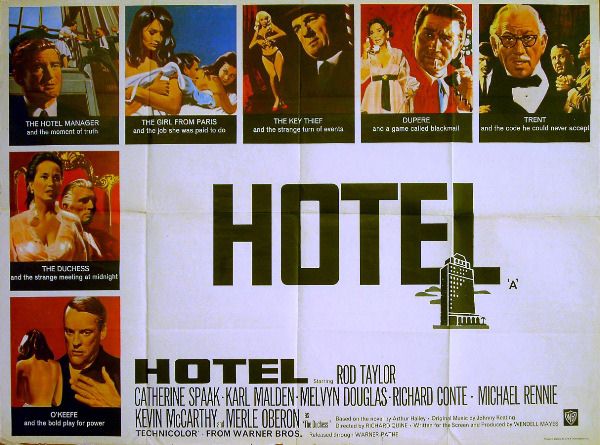
I was also disappointed that we never see an actual shot of the building. There are a few exterior shots of the entrance way, but nothing of the building as a whole despite a drawing of one on the movie poster, which then fails to give the viewer a complete sense of the hotel’s presumed immensity. The interior background has the expected gaudiness, but it is rather unimaginative and I actually felt the interior of Peter’s small, loft apartment was more visually creative and interesting.

Johnny Keating’s music score is yet another issue. It is distinctive and melodic at the beginning particularly over the opening credit sequence that features a colorful drawing of the hotel that I liked, but during the second half it becomes too jazzy, loud and obnoxious.

Catherine Spaak with her delicate beauty is a major asset. Not only is she drop-dead gorgeous, but she can act as well. McCarthy gets a good latter career role as the spiritual, but crafty businessman who will stop at almost nothing to get his way. It is also great to see Merle Oberon in her second-to-last film as the perpetually conniving Duchess.

Based on the Arthur Hailey novel it is inevitable to compare this to the classic Grand Hotel, which was far superior. However, the drama is intriguing enough to keep it interesting on a passive level. The scene involving a jammed elevator and the desperate attempts to save the occupants is exciting and well photographed and worth catching simply for that.

My Rating: 6 out of 10

Released: January 19, 1967

Runtime: 2Hours 4Minutes

Not Rated

Director: Richard Quine

Studio: Warner Brothers

Available: VHS, DVD (Warner Archive)

The V.I.P.s (1963)

the vips2

By Richard Winters

My Rating: 3 out of 10

4-Word Review: Drama at the airport.

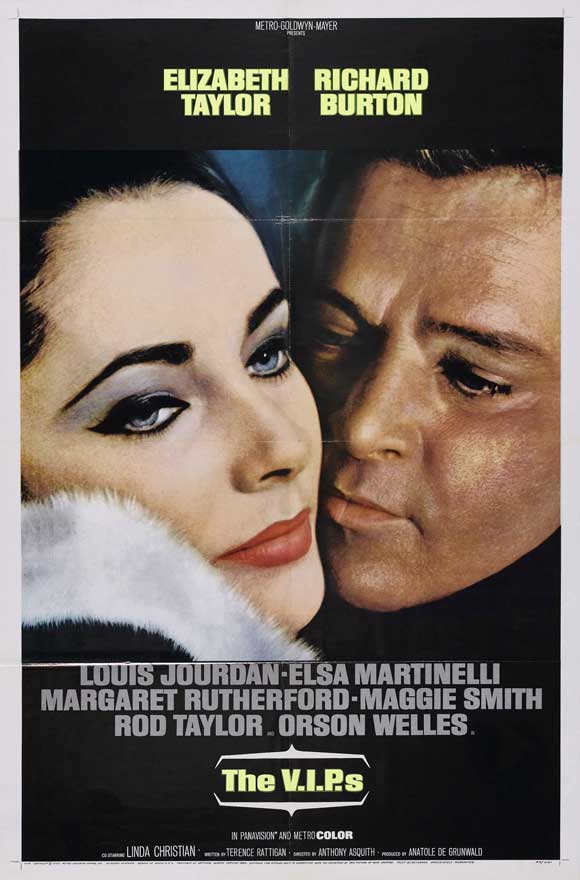
Several diverse characters come together at London’s Heathrow Airport. All have urgent needs that require them to board a certain flight that they hope will take off as soon as possible. Frances (Elizabeth Taylor) is the wife of rich tycoon Paul (Richard Burton) and is secretly having an affair with gambler/playboy Marc (Louis Jourdan). She has left him a ‘dear John’ letter at home and hopes to be well on her way to New York before he reads it. Les (Rod Taylor) is a businessman who also hopes to get to the Big Apple quickly to avoid the hostile takeover of his company. Max (Orson Welles) is a famous movie director traveling with his vapid starlet Gloria (Elsa Martinelli) and hoping to leave England before he is forced to pay an enormous tax penalty. Unfortunately for them a fog rolls in, which delays the flight and sends everyone’s plans into disarray.

The drama has some potential at the beginning, but the 2-hour runtime is much too long for this type of material. Whatever compelling elements the threads may have had when it started become lodged in endless talk and boredom. The scene where Burton smashes Liz’s hand against a mirror is the only time there is any action and Terence Rattigan’s soap opera script is too clichéd. Director Anthony Asquith’s direction shows no visual flair and fails to capture the airport in any type of interesting way. The background sets look like they were built on a soundstage and the fog effects are quite tacky.

Margaret Rutherford won the supporting Oscar for her portrayal of an aging Duchess. She adds some much needed humor particularly in the segment where she has difficulty getting her hat box into the plane’s luggage compartment. However, like with the story thread concerning the Orson Welles character she is seen to briefly and their scenes are spread so far apart that you almost forget all about them.

Spoiler Warning!

There is also another segment where a complete stranger played by actress Maggie Smith approaches the Burton character and asks him for a hundred and fifty three thousand pounds and he gives it to her in the form of a blank check, which had me floored. Men like him don’t become rich by handing out a lot of money to anyone who asks especially people they don’t know. Some may argue that because the character was considering suicide that he didn’t care anymore, but it still seemed too much of a stretch and for me sent this already stale drama into the realm of the absurd and ridiculous.

End of Spoiler Warning

Every story thread gets a nice, convenient happy ending that gives the whole thing a TV-sitcom quality and barely worth the effort to sit through. The production has some glossy aspects and certainly big-name stars, but ends up being a buildup to nothing.

the vips1

My Rating: 3 out of 10

Released: September 19, 1963

Runtime: 1Hour 59Minutes

Not Rated

Director: Anthony Asquith

Studio: MGM

Available: DVD, Amazon Instant Video

Something Wild (1961)

something wild 1

By Richard Winters

My Rating: 5 out of 10

4-Word Review: Rape and its aftermath.

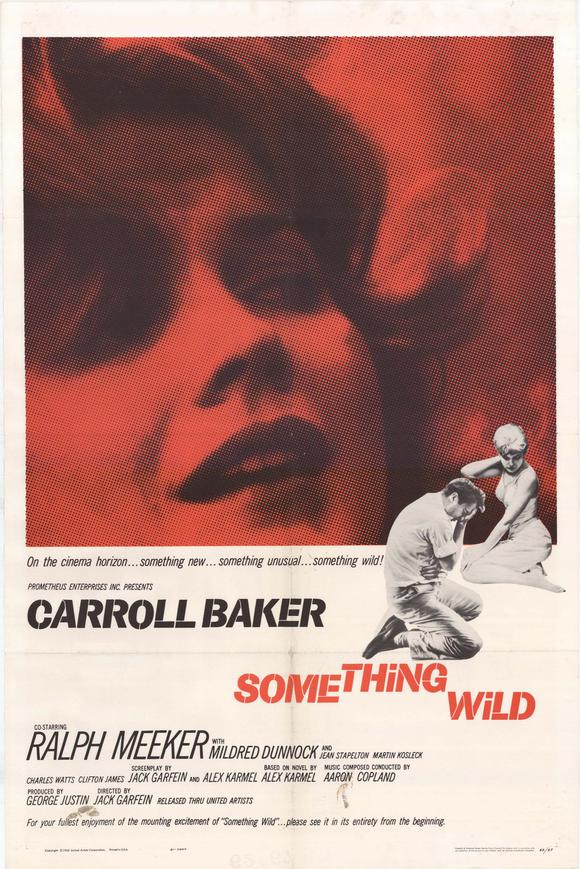
Mary Ann (Carroll Baker) is raped one night while she is walking home from school. For whatever reason she decides not to go to the police and instead keeps the whole incident to herself, but living with her domineering mother (Mildred Dunnock becomes too much and she decides to run away. She finds herself a cheap apartment in a seedy part of the city and a job at a five and dime store. However, the emotional effects of the rape begin to gnaw at her psychologically. She no longer wants to get close to anyone, which alienates her from those around her. She considers suicide, but at the last minute is saved by Mike (Ralph Meeker) who takes her back to his modest basement apartment. There he imprisons her and refuses to let her leave until she falls in love with him.

In some ways this film was ahead-of-its-time. The dazzling opening credit sequence by Saul Bass is eye popping. Director Jack Garfein who at the time was married to Baker and just off of his success of The Strange One continues his push of exploring ideas with dark psychological undertones. The rape scene for its time is surprisingly graphic and the film doesn’t have a single line of dialogue uttered for the first fifteen minutes. New York gets captured in a cinema vertite style reminding me of the influential ‘Naked City’ TV-series that was out at the same time. The black and white photography helps accentuate the story’s grittiness and the surreal dream sequence that Mary Ann has towards the middle of the film is visually creepy and impressive.

Although not the strongest of actresses Baker still manages to give a compelling performance and although she was already pushing 30 she still looked very much like she was 18 or even younger. Meeker an outstanding actor who unfortunately isn’t very well known is solid. The film also offers a great chance to see young stars in the making including Diane Ladd in her film debut as well as Jean Stapelton as Mary Ann’s nosy neighbor and Doris Roberts as a petulant co-worker. There is even Clifton James with a full head of hair.

Unfortunately the film ultimately misses-the-mark and part of the problem is Mary Ann’s decision of not going to the police after she is attacked, which is never explained. This could have been because of the stigma placed on rape victims at the time, but it still comes off as frustrating and even off-putting to the viewer. Mike’s apartment is just a little too bare-bones looking almost like a prison cell instead. Maybe this was the director’s attempt at symbolizing how ‘imprisoned’ Mike and Mary Ann were, but if that was the case it was much too obvious. Realistically someone usually enlivens and personalizes the place where they live by at least putting up a few pictures on the walls. Also, Mary Ann’s doesn’t seem to put up much of an attempt at escaping. Mike locks the door from the inside and then passes out drunk and she could have just gone through his pockets to get the key. She is also left alone for several hours a day while he goes to work, which would have been enough time to cut through the bars on the windows, broken through the door, or even yelled for help out the open window.

Cinematically it has its moments particularly during the first hour, but the story itself seems dated and the character’s motivations confusing and unclear ultimately making it an experimental misfire.

My Rating: 5 out of 10

Released: December 23, 1961

Runtime: 1Hour 52Minutes

Not Rated

Director: Jack Garfein

Studio: United Artists

Available: DVD, Amazon Instant Video