Tag Archives: Woody Allen

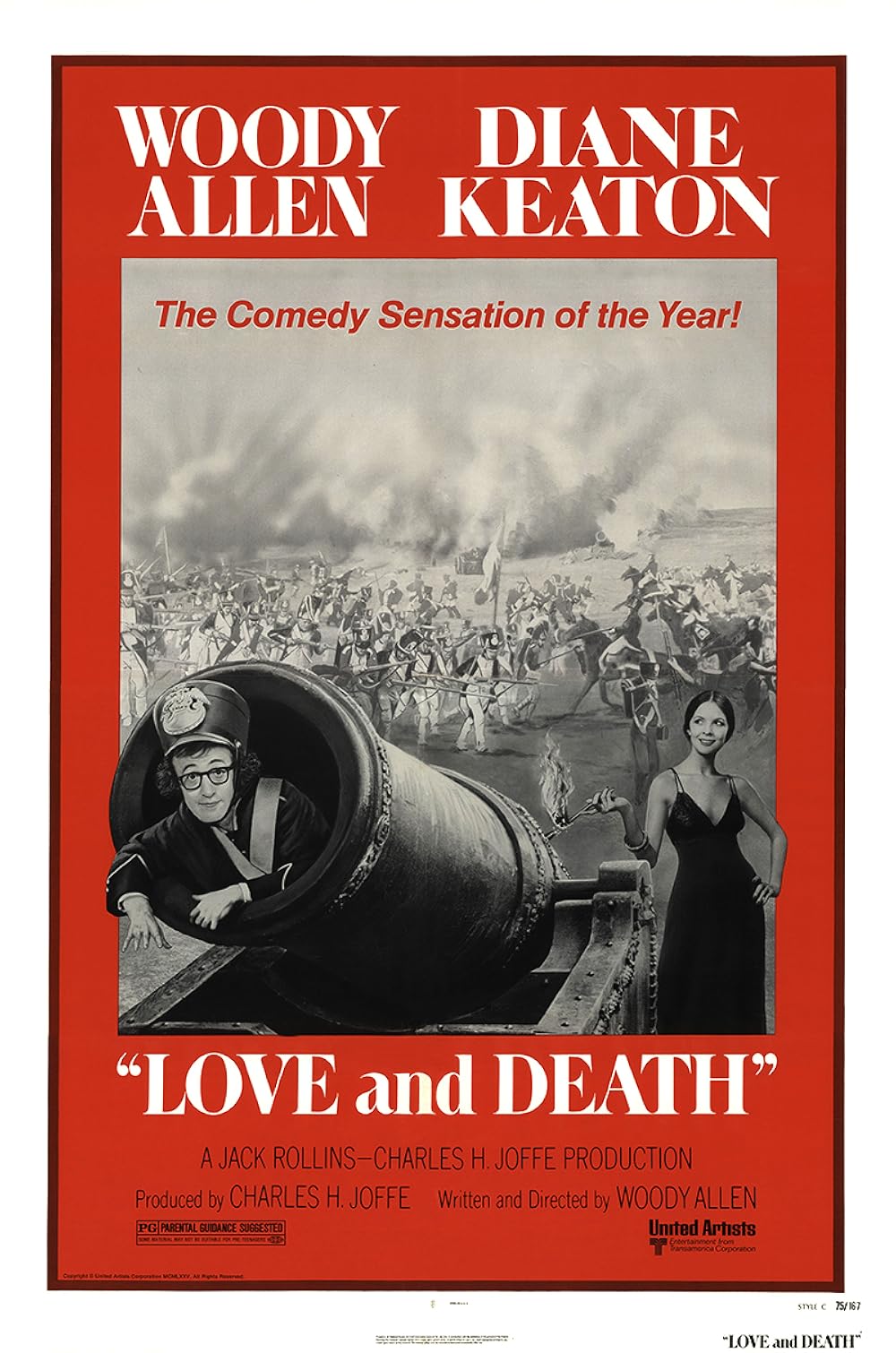
Love and Death (1975)

By Richard Winters

My Rating: 5 out of 10

4-Word Review: Attempting to assassinate Napolean.

Boris (Woody Allen) is a scrawny guy who gets overlooked by others as his three brothers tower over him. He’s secretly in love with Sonja (Diane Keaton) who he’s been friends with since childhood, yet she’s instead infatuated with Ivan, one of Boris’ brothers. However, none of his brothers are into her, so she marries someone else while Boris remains a bachelor who occasionally fools around with beautiful women like a Countess (Olga Georges-Picot), which causes her lover Anton (Harold Gould) to challenge Boris to a gun duel. Thinking Boris won’t be able to survive the dual Sonja agrees to marry him if he survives, which he miraculously does. Once married they then concoct a plan to assassinate Napolean (James Tolkan) unaware that who they’re really going after is actually an undercover double.

Allen was in the midst of writing a screenplay dealing with a New York couple who try to solve a murder, which became Manhattan Murder Mystery, but was going through a writer’s block, so he began reading a novel about Russian history, which then inspired him to write this script. Since it was nearing the deadline to have a script ready for production, he decided to submit this one, which immediately went into filming while the other one didn’t end up getting completed until 1993.

Many critics and fans at the time liked this one and it ended up making $9 million at the box office off of a $3 million budget with Gene Siskel especially enjoying it as he gave it 4 stars while commenting that he liked Allen’s return to a ‘gag driven dialogue’ versus ‘attempting to develop a story’, but personally for me I felt this was what was wrong with it. While it does start out funny as it parodies 18th Century Russian society and has one really great bit dealing with a ‘hygiene play’ warning soldiers about VD and condoms it does tend to meander quite a bit. The middle part is the most sluggish with many of the gags falling flat almost like he’d run out of ideas and was just trying to desperately throw anything in to keep it going making it come off more like an unending skit instead of a movie.

Allen’s presence while amusing most of the way becomes a bit of a detriment. Much of this can be blamed on the fact that he’s playing essentially the same character that he does in all of his movies. Case in point comes at the beginning before he officially says anything on screen and I thought to myself I bet he’s going to mention something about atheism and sure enough that’s exactly what he does talk about making it predictable and redundant. Would’ve been nice for irony’s sake had he played someone who had a deep belief in God only to lose his faith after he goes through the war, which would’ve created a nice character arc of which there really isn’t one.

There’s also the issue of him having no Russian accent nor making even a slight attempt at one. Granted Keaton doesn’t speak in an accent either though maybe you can chalk it up to her great acting that she still seems of the period anyways while Allen very much comes off like someone who doesn’t really belong there. He repeatedly makes anachronistic statements, which from time to time are amusing, but technically don’t fit within the setting. It actually would’ve made more sense to have Allen simply be a modern-day New Yorker who finds a time machine and gets zapped away into 18th Century Russia and then wanders around making comments about things, which wouldn’t have disrupted the film all that much and besides adding one little scene at the beginning showing him going into the time travel contraption there wouldn’t have needed to be anything else changed. It literally would’ve been the exact same movie and in some ways been a lot funnier, and perceptive, because of it.

It does end on a strong note as it pokes fun of Ingmar Bergman movies and even has Jessica Harper showing up. Yet I still felt most of the way it throws in whatever it can for a cheap laugh with much of the jokes, particularly in the middle, not really landing. Many fans didn’t like the way Allen crossed over to doing drama just a few years later, but after watching this I started to believe he had used up all of his comical concepts that by this time was just repeating itself and thus his foray into more serious subjects was inevitable.

My Rating: 5 out of 10

Released: June 10, 1975

Runtime: 1 Hour 25 Minutes

Rated PG

Director: Woody Allen

Studio: United Artists

Available: DVD, Blu-ray, Amazon Video, YouTube
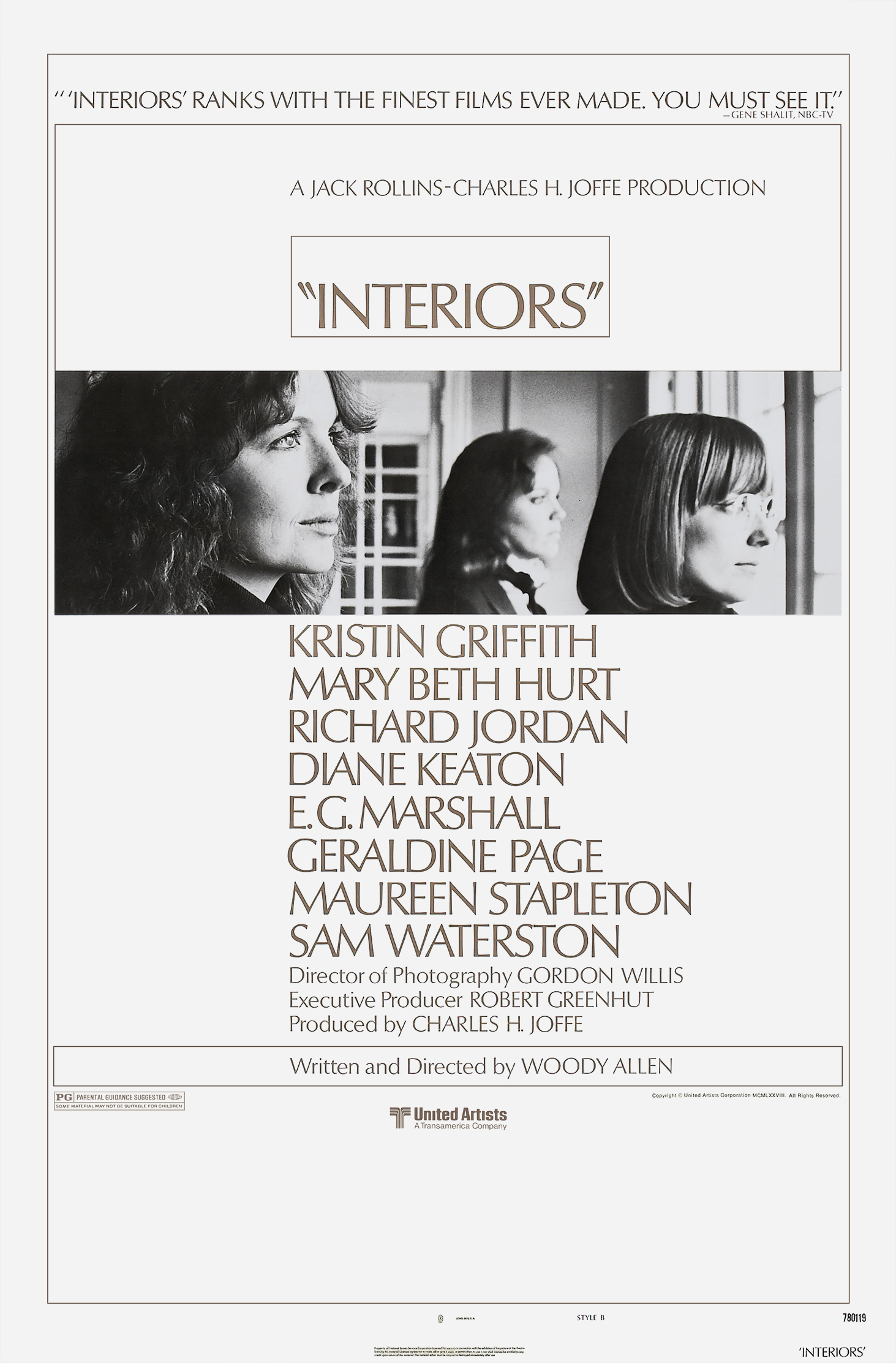
Interiors (1978)

interiors

By Richard Winters

My Rating: 8 out of 10

4-Word Review: Artistic family harbors turmoil.

Eve (Geraldine Page) is an interior decorator whose emotions she keeps bottled-up and who also has a controlling and temperamental nature to not only her husband Arthur (E.G. Marshall), but also her three grown daughters: Renata (Diana Keaton), Flyn (Kristin Griffin), and Joey (Mary Beth Hurt). One morning, while at the breakfast table, Arthur announces to not only Eve, but also the two other daughters present, that he wants a separation though he insists it’s not ‘irrevocable’. Eve becomes upset and refuses to face it. While the two do separate she continues to cling to the delusion that they’ll ultimately reunite. When it finally becomes painfully clear that is not going to happen she then attempts suicide. While she’s in the hospital recovering Arthur goes out and meets Pearl (Maureen Stapleton) whom he quickly falls in love with. When he brings her home to meet the family they’re shocked at how he intends to marry her while his former wife is still in the hospital. This then brings out the hidden hostilities that the daughter’s feel towards their parents as well as each other and in Renata’s case the repressed envy that her own husband Frederick (Richard Jordan) feels for her.

This was Woody Allen’s first dramatic film, which was a big deal when it was first released as he’d only done wacky comedies before this and many were curious and apprehensive about him trying something so completely different from his past work. While he’d been trying to get a drama produced for years his investors constantly nixed the idea fearing that because he attracted audiences through his funny stuff that anything with a serious nature would turn-off would-be theatergoers and be a financial flop, but after the monumental success of Annie Hall they finally decidedly to relent and gave Woody the chance to spread his artistic wings.

The result overall is downright impressive. It’s clearly inspired by the films of Ingmar Bergman, his cinematic idol, but in some ways this is even moodier and more poignant than some of his stuff. While his later dramas fell into becoming a cliche of themselves using many of the same elements taken from this one, namely pretentious artistic characters living in New York who suffer from pretentious problems and relationships, here it’s fresh making the issues that they go through seem illuminating versus rehearsed and contrived like in some of his later works.

That’s not to say I didn’t find some problems here. The fact that we have characters, in this case Keaton, talking directly to the screen, apparently in an attempt to show that she’s speaking with a therapist, is a bit of a cop-put as she’s able to convey her deep seated thoughts and feelings verbally without forcing the director to have to show it through her actions and conversations, which may be more difficult to do, but also more rewarding for the viewer. Arthur’s decision to tell Eve that he wanted to leave while sitting a the meal table with the two daughters present seemed rehearsed. Normally when a couple decides to split they do it privately and have it out through a discussion or argument versus a canned speech that Arthur does, which comes-off like he’s orating in front of a group of people.

Woody’s attempts though to show the struggles and challenges people have who pursue creative endeavors I felt were quite well done. In his later dramas I found it annoying how many characters worked as artists because it reality only a very small portion of the populace can make a living that way, but here I was able to forgive it. I liked how we see close-up the challenges of this by the way Renata writes a poem on paper but is constantly scratching out words that she puts down showing the many drafts an author must go through before it eventually might come-out perfectly. The fact that it’s later revealed that her father helps fund her poetic passions made sense too as a poet able to live-off of their writings is about as rare as it gets.

Richard Jordan’s character is the one I found the most fascinating and I was genuinely surprised that while other cast members were nominated for the Oscar he wasn’t even though to me he’s superb.  The way his character broods incessantly about not getting the critical accolades that he expects and how it turns him into a mopping, alcohol drinking mess who snips at his wife’s perceived shortcomings in an immaturely emotional attempt to bring her down to his level was completely on-target composite of the insecure artist. The scene where he tries to rape Flyn, so he can have the pleasure to ‘fuck someone who’s inferior to me’ fit the personality of someone who harbors frustration that they’re able to mask with a veil of civility most of the time but will allow it to come-out when alone in the presence of someone more vulnerable.

The real star though is the cinematography by Gordon Wills, who ironically went on to make his directorial debut in a movie called Windowswhich was the original title for this one. The gray, cold color schemes and shots showing an ice-covered tree branch effectively reflects the icy emotions of the family and the lack of music with long pauses of silence and empty rooms help symbolize how alienated each member is from the other. The most pronounced moment involving the crashing waves of the ocean and the almost dream-like ‘conversation’ that Joey has with her mother is by far the film’s most memorable element and something that will stay with you long after it’s over.

My Rating: 8 out of 10

Released: August 2, 1978

Runtime: 1 Hour 32 Minutes

Rated R

Director: Woody Allen

Studio: United Artists

Available: DVD, Blu-ray, Freevee, Pluto, Amazon Video, YouTube

Crimes and Misdemeanors (1989)

crimes1

By Richard Winters

My Rating: 7 out of 10

4-Word Review: Threatening to tell wife.

Judah (Martin Landau) is an eye doctor whose mistress of several years, Dolores (Anjelica Huston), is threatening to tell his wife (Claire Bloom) about their affair. Judah tries to persuade her not to, but she insists on going through with it unless he gets a divorce, which he refuses to do. Feeling he has no other option he hires his brother (Jerry Orbach) to do a hit on her in order to get her off of his hands. Once the job is done Judah then becomes wracked with guilt and though he had been a non-believer for many years begins to rekindle the fear of the wrath of God for what he’s done. Meanwhile Cliff (Woody Allen) is a struggling documentary filmmaker who gets a job filming a movie of a obnoxious comedian (Alan Alda) who’s highly narcissistic and difficult to deal with.

The film is unusual in that it has two correlating stories that go on at the same time with very little that links them. The only connecting thread is a Rabbi, played by Sam Waterston, who is friends with both Alda and Landau, as well as Cliff and Judah getting together briefly at a party to have a discussion near the end. Otherwise it’s like two separate movies with one being semi-funny while the other is made to be more like a searing drama and character study. While it’s engaging most of the way I felt the segment dealing with the egotistical celebrity wasn’t interesting or comical enough to be worth having especially since Alda didn’t seem able to convey an obnoxious jerk in a way that was amusing. The film also goes off on several tangents including Cliff counseling his sister about a date she had where a man tied her up and defecated on her that didn’t have anything to do with the main story and just taking up runtime for no reason. There’s also segments that I did find intriguing like the mysterious phone calls Judah gets late at night where the caller immediately hangs up when Judah answers that I felt should’ve been explored more.

A good way to have solved this and would also have tied-in Allen’s character better would’ve had him filming a documentary on Judah who could’ve been portrayed as this heroic eye doctor who saved the vision of underprivileged kids, or even gone to Africa for awhile to help heal the vision of the kids there and thus his efforts were considered a suitable material for a film. Alda’s character could’ve been cut out totally and not missed. Judah could’ve still be conniving behind-the-scenes about how to get rid of the other woman and thus the irony of him being lionized in front of the camera, but a complete jerk behind it would’ve been even more accentuated and interesting.

As it is the moments with Landau are still quite strong. His career during the 80’s had nearly tanked with him having to accept co-starring roles in low budget horrors just to keep busy only to finally get his name revitalized with his role in Tucker: A Man and His Dreams in 1987 that lead to an Academy Award nomination for best supporting actor and helped him get better quality work including this one. Here his expressive blue eyes come into play particularly after the dirty deed gets done and he begins having reoccurring visions of himself as a boy going to synagogue and quarreling with his moral depravity, which is effective.

This is also the rare movie where Allen plays someone who is actually likable. Normally his incessant whining and misguided belief that he’s more sexually attractive than he is and can bed any hot women I’ve found annoying, but here he’s more of a ignored chump who’s still struggling to make a name for himself and this makes him endearing. Instead of aggressively coming onto women in tacky ways he instead shyly courts Mia Farrow who plays a sort-of nerdette here and their scenes together are cute.

Spoiler Alert!

The ending in which Allen and Landau meet briefly and he tells Allen about this ‘great’ movie idea in which a husband finds away to kill off his mistress, which is essentially what he’s really done, and feels no guilt afterwards doesn’t really work. For one thing it’s hard to believe that he’d wake-up one day, as he describes, and no longer feel any remorse and could just go on normally as he had felt so guilty about it earlier that you’d think it would’ve left some sort of lasting affect. The viewer should’ve also seen this realization play-out visually through the story versus having him just describe it.

I realize Allen’s whole point was to show that the universe doesn’t dispense justice and sometimes people really can get away with murder and can go on living happy lives unlike in the movies where it’s expected that the bad guy should suffer some consequence. Yet realistically I actually think Landau would’ve been caught, or at least been more of a suspect than he is. He was already questioned by the police earlier due to all the phone calls he had with the victim and I don’t think his flimsy excuse would’ve sufficed. Since he had been to her apartment many times including even on the night of the murder that most likely one of the other tenants would’ve spotted him coming and going and all the police would’ve had to do was show his picture around for him to be easily fingered by someone else living in the building. Thus watching Landau confidently leave his discussion with Allen thinking he could go on happily with his life only to have a detective there with handcuffs would’ve been funnier and in a lot ways ultimately more believable.

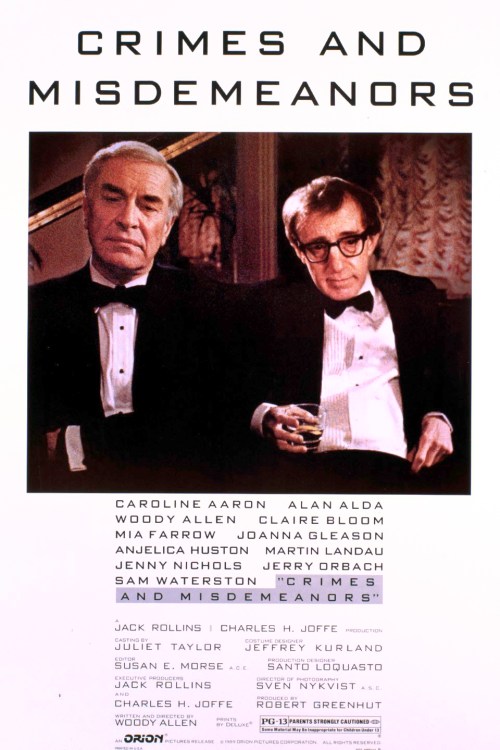
The film’s promotional poster, as seen above, doesn’t get the mood of the scene right. If you look at the poster it seems like Landau is the despondent one who’s suffering from inner turmoil while Woody is nonchalant, but if you watch the movie it’s Landau that is at complete ease while Woody is in turmoil over Mia getting married to Alda, so the poster is essentially misleading.

My Rating: 7 out of 10

Released: October 12, 1989

Runtime: 1 Hour 44 Minutes

Rated PG-13

Director: Woody Allen

Studio: Orion Pictures

Available: DVD, Blu-ray

Broadway Danny Rose (1984)

broadway2

By Richard Winters

My Rating: 5 out of 10

4-Word Review: Talent agent becomes beard.

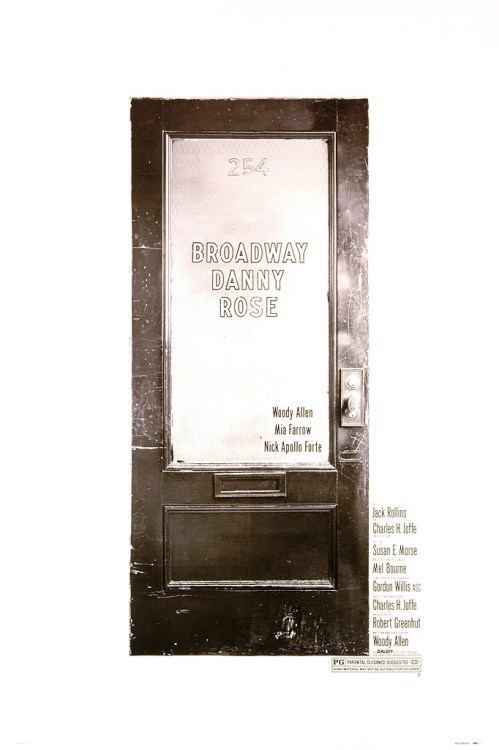
Danny Rose (Woody Allen) is a hapless talent agent who represents clients who are down-and-out, but seeking a comeback. Lou (Nick Apollo Forte) is a singer who uses Danny as his agent. Since he has some potential and might even get hired by a big star, in this case Milton Berle who plans on tabbing him as his opening act, Danny will do anything to keep Lou happy especially since Danny’s other clients tend to drop him once they become famous, which Danny doesn’t want to happen again. In order to appease him Lou has Danny acting as a ‘beard’, or a person who pretends to being a boyfriend to someone he really isn’t. In this case it’s to Tina (Mia Farrow) a woman whose been dating a gangster. Danny acts as her boyfriend to draw attention away from Lou, but her ex-gangster lover becomes jealous and thinking Danny to be the real boyfriend sends out a hit on him forcing both he and Tina to go on-the-run.

While this film did well with the critics I felt it was pretty much a letdown. What annoyed me most was the washed-up, aging comedians sitting around a cafe table and essentially telling the story, which gets done in flashback. I felt these comedians, who say nothing that is funny, or even slightly amusing, served no real purpose except for maybe padding the runtime, which was short already, and the scenario could’ve easily played-out without constantly cutting-back to these guys to add in their useless side commentary. This also cements Allen’s transition from being hip and edgy. which he was considered as during the 70’s, to out-of-touch with day’s youth and young adults by the 80’s as no one in this movie appears to be under 40.

It’s confusing too what time period this is all supposed to be taking place in. Supposedly the cutaways to the comedians is present day though with it being shot in black-and-white it hardly seems like it, and then the scenes with Danny are apparently things that happened in the 60’s. This though gets completely botched not only because of the cars they drive, which are of an 80’s variety, but there’s also a scene where Lou and Danny are walking on a sidewalk and go past a theater marque advertising Halloween III, which was  a film that was released in 1982.

On the plus side I enjoyed Mia’s performance of a hot-headed, highly oppionated Italian especially with the dark glasses and bouffant hair-do, which could’ve been done up even more. She’s known as being such a serious actress, who’s marvelous in drama, but to see her able to handle the comedy and even become the centerpiece is a real treat. Woody and her make for a quirky couple, she’s actually taller than him when they stand side-by-side, and she really gets in some good digs on him. Though with that said I actually wished that Nick had played the role of Danny as his amateurish acting made his doopy character funnier and the scenes between him and yappy Mia could’ve been a real riot.

There are a few laugh-out-loud moments, though it certainly takes it sweet time getting there. Watching Woody and Mia attempt to escape the killer by running through a field of tall grass I liked as too the scene where they are chased into a warehouse filled with parade floats and the hydrogen that escapes from them, due to the shooting bullets, causing their voices to become extremely high-pitched. The rest of the humor though relied heavily on Italian-American stereotypes that have been done hundreds of times before and isn’t original. I was also surprised that it has walk-on cameos by Howard Cossell and Milton Berle, who even appears in drag during the Thanksgiving Day parade, but are given no lines of dialogue.

My Rating: 5 out of 10

Released: January 27, 1984

Runtime: 1 Hour 25 Minutes

Rated PG

Director: Woody Allen

Studio: Orion Pictures

Available: DVD, Blu-ray, Amazon Video, Freevee, Tubi, YouTube

Stardust Memories (1980)

stardust2

By Richard Winters

My Rating: 5 out of 10

4-Word Review: Director unhappy with career.

Sandy Bates (Woody Allen) is going through a lull in his career. While he’s had success in the past at making comedies he’d like to now move into more serious material that’s dramatic in nature though his many fans and studio heads insist he should stick with what made him famous and what the public wants. While attending a film retrospective of his movies at the Stardust Hotel he ponders about his life. He remembers a fling that he had with a beautiful actress named Dorrie (Charlotte Rampling) that didn’t work out due to her insecurities about herself and her career. He also meets up with a young woman named Daisy (Jessica Harper) whom he’s attracted to and openly flirts with even as his current lover Isobel (Marie-Christine Barrault) flies into town and announces that she’s left her husband and wishes to commence with a committed relationship with Sandy whom she expects will also help with raising her two children. As Sandy ponders what to do next he finds out that the studio has reshot a different ending to his latest movie, which further sours him on the business.

Many critics at the time gave this negative reviews feeling it was too self-indulgent and more like a personal diary than a movie. I did though like the black and white photography by Gordon Willis, which is so pristine that just watching the characters walking into an empty room with sunlight pouring through the windows looks dazzling. Allen’s comments on the film business are honest and relatable and it’s interesting to see that even when one becomes a proven commodity he can still be pressured by producers to change his films into something he’s not happy with simply for the sake of having more of a commercial appeal, which proves no matter how successful, or ‘big-name’ you get that’s one obstacle that seemingly will hamper everyone. Allen’s constant run-ins with his fans, which becomes the film’s running joke, and their odd requests as they pander to him in hopes of making it big in the business themselves are quite funny and true to form.

The story though is structured in such a fragmented way that it’s hard to get into. Sandy’s relationship with Dorrie is especially confusing. For one thing he comes onto her while she’s on a film set by telling her how beautiful she is, which seem to be the oldest and corniest come-on lines in the book and yet she’s fully taken aback with his compliments and this immediately turns into a relationship though in reality most women would likely give the guy the eye-roll and a quick rebuff. This though may be part of the joke by showing that because Sandy is a well-known director he’s able to get away with the corny lines that other guys wouldn’t, but even so these scenes are strained and annoying.

I felt Sandy’s conversations with Daisy was far more interesting and his budding relationship with her should’ve been explored much more, but isn’t, which wastes away a fabulous performance by Harper who plays the one character in the movie that I found relatable. Barrault is engaging as well particularly the scene where she does her facial exercises and having the story focus on his on-going relationship with her while also seeing Daisy on the side would’ve created the intriguing juxtaposition that was needed, but otherwise missing. Dorrie on the other hand comes-off like a caricature of just about every Hollywood starlet out there making her moments contrived and unnecessary.

While there are a few funny moments with the best one being Sandy’s close encounter with a group of space aliens it’s never enough to carry the picture. Having a more conventional storyline instead of the dream-like tone would’ve allowed the viewer to get more into what was going on emotionally versus sitting through what seems like an experimental movie that never quite catches its stride. Having Allen play somebody that wasn’t so much like himself would’ve helped too as it’s almost a joke to think he’s playing anyone else and should’ve just called himself Woody and made it more like a pseudo-documentary, which is what it ultimately is anyways.

I was though struck by the one part where Dorrie comes home furious with Woody for staring at her 13-year-old cousin the whole night they were at dinner and implying that he may have unhealthy feelings for her and thus essentially at least mentally ‘cheating on her’. Woody doesn’t really put up much of a defense, which I found even more amusing since 30 years later in real-life he got accused of improper behavior. Now, I wasn’t there and don’t know what happened and don’t want to make it sound like I’m trying to make conclusions, or taking sides. In the eyes of the law he’s innocent until proven guilty in a court of law, but I still couldn’t help seeing the irony. Maybe it was just a coincidence, or maybe he was subconsciously revealing through the Sandy character something he may harbor. Hard to say, but given the hindsight it’s difficult to walk away and not have that moment stand out.

My Rating: 5 out of 10

Released: September 26, 1980

Runtime: 1 Hour 28 Minutes

Rated PG

Director: Woody Allen

Studio: United Artists

Available: DVD, Blu-ray, Amazon Video

The Purple Rose of Cairo (1985)

purple1

By Richard Winters

My Rating: 7 out of 10

4-Word Review: Breaking the fourth wall.

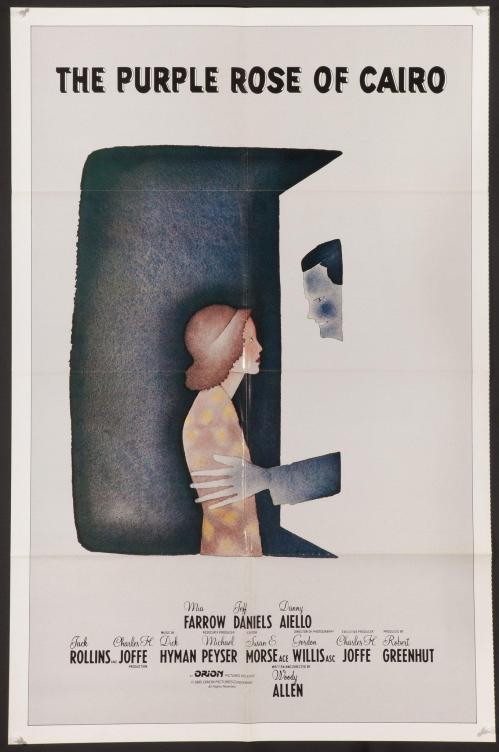
Cecilia (Mia Farrow) is a lonely woman living in 1935 who’s stuck in a dead-end job and an abusive marriage. As an escape she regularly goes to the movies and becomes especially entranced with one called ‘The Purple Rose of Cairo’ particularly the dashing young man character named Tom (Jeff Daniels). Tom notices Cecilia continuing to attend each showing and thus breaks out of the black-and-white movie he is in and into the real world just so he can speak with her as he feels he’s falling in love. Cecilia tours him around the small New Jersey town where she lives while the rest of the cast in the movie he’s left sit around and hope he’ll come back, so they can continue on with the story. The actor, Gil Shepherd (also played by Daniels), who played Tom in the movie hears about Tom jumping out of the screen and heads to New Jersey in order to coax him back, but Tom is having too much fun getting to know Cecilia and has no intention of returning to the phony life of the movie world. In the meantime Gil also meets up with Cecilia and the two begin to hit-it-off. Will Cecilia choose Gil over Tom and if so will this get Tom to go back into the movie once and for all?

This was the first of Woody Allen’s nostalgic picture that would replicate the time and place of when he grew up and in fact the theater where Cecilia watches her movies was the Kent Playhouse, which Allen had gone to when he was 12 and which he describes ‘one of the great, meaningful places of my boyhood’. His ability to capture working class life and Cecilia’s bleak existence is completely on-target making the opening 20-minutes one of the most impactful of the whole film. Farrow is nothing short of excellent and Danny Aiello, who got this part to make-up for getting passed over in Broadway Danny Rose, is quite good too particularly with the way he’s able to show the human side of his character despite him being quite abusive and domineering to his wife otherwise.

The comedy takes off when Tom literally jumps out of the screen and Allen is very creative at thinking out every conceivable angle at not only how the other patrons in theater respond, which is some of the funnier bits in the film, to the characters onscreen, who are also quite amusing most notably Zoe Caldwell who plays the Countess and has some great zingers, but also the film’s producer (Alexander Cohen) and how he responds to the ‘calamity’. Some may argue that it’s missing a cause, since film characters don’t jump out of the screen everyday what allowed it to happen in this case, which the movie never answers, but for me that’s what made it even more amusing as everyone reacts in wildly different ways to the unexplainable and if anything Allen at least doesn’t cop-out by turning it into some sort of dream that Cecilia had, which would’ve been disappointing. I’d rather have as some odd fluke in the universe than reverting to an overused dream gimmick.

My one complaint was Daniels who’s deadly dull. He has a few amusing responses to things, but he’s bland most of the way. Michael Keaton was cast in the part initially, but after 10-days of filming Allen decided he seemed ‘too contemporary’ and thus had him replaced, which is a shame as Keaton has a more dynamic onscreen presence while Daniels seems too transparent. I didn’t like the entering in of the actor character either as that just started to make it too confusing. The actor should’ve been wildly different than the character he played, extreme narcissistic ego, which would’ve been hilarious. While he does show some of these traits it’s not enough and it gets hard telling the difference between the two. Having a rich Hollywood actor, who would most likely already be in a relationship anyways, falling in love with a nondescript housewife didn’t make a lot of sense. While the scenes between Cecilia and Tom are quite endearing, the moments between her and Gil are boring and start bogging the whole thing down.

Spoiler Alert!

Some have complained about the so-called ‘unhappy ending’, which Leonard Maltin in his review described as ‘a heartbreaker’, but I found it to be a perfect. The odds that a relationship between a up-and-coming Hollywood star and a New Jersey housewife would actually work are pretty slim. Besides Cecilia’s love affair wasn’t with people anyways, but with movies and their ability to sweep her away from her sad existence and into a fantasy world and on that level it’s a happy one as Cecilia returns to the theater all broken-hearted only to again forget her troubles when she gets wrapped-up in a Fred Astaire and Ginger Rogers flick proving that movies would always be there for her even when people won’t.

My Rating: 7 out of 10

Released: January 26, 1985

Runtime: 1 Hour 22 Minutes

Rated PG

Director: Woody Allen

Studio: Orion Pictures

Available: DVD, Blu-ray, Amazon Video, Tubi, YouTube

Zelig (1983)

zelig1

By Richard Winters

My Rating: 4 out of 10

4-Word Review: Wanting to fit in.

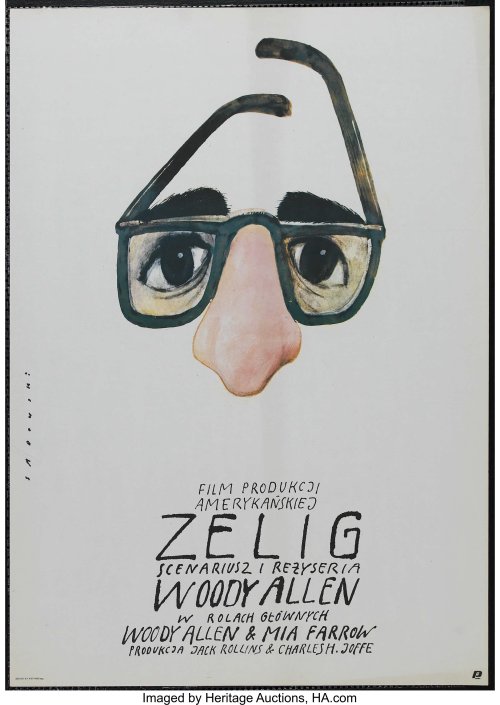
Leonard Zelig (Woody Allen) is a man living in the 1920’s and 30’s who has an uncanny ability to reflect the personalities and features of those he’s surrounded with. Even if he’s in the company of someone of a different race, or ethnicity, he can still acquire their traits, including their skin color, until he looks exactly like them. He becomes known as a the human chameleon and Dr. Eudora Fletcher (Mia Farrow) , a psychiatrist, becomes determined to find the root cause. She takes him on as a patient and under intense hypnosis comes to the realization that his deep need to be liked by others causes him to conform to the most extreme ways imaginable. Through her therapy she gets him to become more confident in expressing his own opinions, but this leads to him arguing with others over the most mundane reasons, which leads to several fights. She again puts him under hypnosis, so that he’ll become more of centrist, but this then leads to even further complications.

Allen was inspired to do this movie when his friend Dick Cavett was hosting a history series on HBO and a segment was done where Cavett’s likeness got spliced into an historical image. While the effects of using old newsreel footage and photos from long ago and inserting in cast members to make it seem like they were there when the picture was taken may not seem like that big of a deal today, but back in the 80’s it was very much talked about. I remember an entire segment of CBS Morning News hosted by Diane Sawyer going in depth about the ‘incredible’ special effects and ‘how did they do it?’ With digital filmmaking and movies like Forrest Gump we’re used to it, but back then it was state-of-the-art and got nominated for several awards. To help make it look as authentic as possible cinematographer Gordon Willis used vintage cameras and lenses from the 20’s and then stomped on the negatives of the film in his shower to help create the crinkles and scratches.

While telling the story through newsreel footage is certainly diverting and many times amusing I was fully expecting after about 20 minutes or so that it would eventually become more like a normal movie with the plot being propelled by actual characters, dialogue, and conventional scene structure, but instead it sticks with the novelty until the bitter end, which for me was a mistake as it makes the viewer too detached from the people in the movie to the point that they become distant caricatures that we really care nothing about. Much comedy is also lost as everything hinges on the voice-over narration of Patrick Horgan and how he describes what’s going on versus having it played out. A great example of this is when Allen gets into an argument with someone over whether ‘it’s a nice day, or not’, but all we see of it is some grainy, black-and-white figures in a distance that appear to be squabbling when witnessing the actual argument in real-time would’ve been so much funnier.

My favorite moment had nothing do with the special effects, but instead was the scene with Farrow and Allen where she tricks him, using reverse psychology, into admitting he really wasn’t a psychiatrist like her, and the movie needed more segments like this one. The vintage footage is nice for awhile and highly creative, but ultimately makes it come-off like a one-note joke, or an experimental film that’s misses the most basic elements of a good story, which is character development. It’s a shame too as Farrow gives a strong performance, which gets overshadowed. Usually she’s best at playing emotionally fragile types, but here is a strong woman and does quite well though I thought it was ridiculous that in color segments where here character is speaking in the modern day as an old woman another actress, Ellen Garrison, plays the part when they could’ve easily had Farrow doing it by dying her hair gray and putting on a few wrinkles. So much effort was put into the black-and-white vintage stuff that they forgot about the simplest of all special effects: stage make-up.

There’s also a host of other famous faces that have cameo bits as they talk about the fictional Zelig in the modern-day like historians discussing a past event, or famous person. Of these includes Susan Sontag, Saul Bellow, Irving Howe, and John Morton Blum, but like with the newsreel element it gets overplayed and derivative. It also brings to question what exactly was the movies’ point. Was it a satire on conformity and if so it could’ve gone much deeper, or poking fun at documentaries, which could’ve been played-up much more too. In either case it’s a misfire that’s engaging for awhile, but eventually, even with its short runtime, wears itself out.

zelig2

My Rating: 4 out of 10

Released: July 15, 1983

Runtime: 1 Hour 19 Minutes

Rated PG

Director: Woody Allen

Studio: Orion Pictures

Available: DVD, Blu-ray

September (1987)

september1

By Richard Winters

My Rating: 7 out of 10

4-Word Review: Drama at summer home.

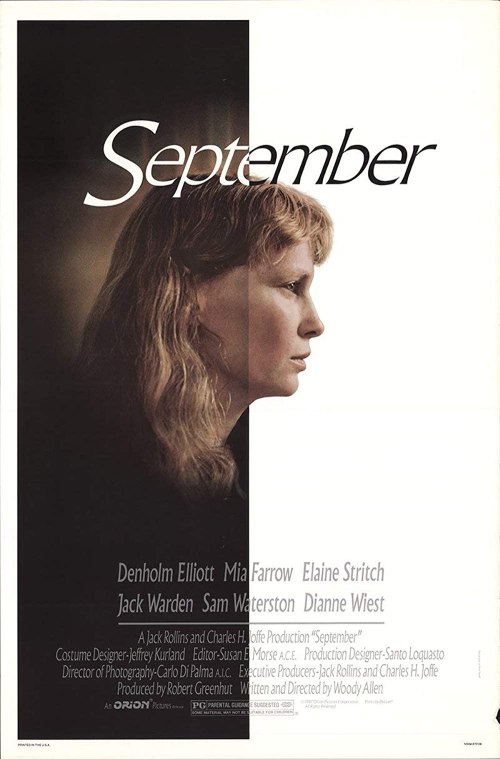
Layne (Mia Farrow) has decided to spend the summer at the country home of her mother’s (Elaine Stritch) in order to recuperate after a suicide attempt. With her during her stay is her best friend Stephanie (Dianne Wiest). Layne is also madly in-love with her neighbor Peter (Sam Waterston) who is a struggling author who wants to write a book about Layne’s mother’s life, who was at one time a well-known actress, but who also shot her late husband in self-defense though it was reportedly Layne who pulled the trigger. Howard (Denholm Elliott) is Layne’s other neighbor who is smitten with her though she has no feelings for him as all of her emotions are tucked away towards Peter, who is more into Stephanie, a married woman with children. During the course of one night while an electrical storm occurs and the power goes out everyone makes their true feelings for the other known, but not everyone responds to the revelations the way they’d like.

This movie is unusual, or at least the behind-the-scenes production, in that two to three versions of every scene was shot and then writer/director Woody Allen took all the footage and edited it together only to be dissatisfied with the final result and decided to shoot it again, but with different actors. In the original production Charles Durning played Layne’s stepfather, but in the second version he is replaced by Jack Warden, and Maureen O’Sullivan played Layne’s mother. Since Maureen was Mia’s real-life mother it’s ashame she wasn’t kept on for the second version. Granted Elaine is excellent, but seeing a mother and daughter acting together would’ve given an interested added nuance that unfortunately gets lost with the redo.

The scenario has its share of intriguing elements, but Allen’s concept of trying to create a filmed stageplay was a mistake as the whole thing has a very static feel right from the start. The internal conflicts are not apparent right away and the first act comes-off like nothing more than lingering conversations with no idea what connects them until the second act kicks, but by that time some viewers may have already gotten bored with it. In Interiors, which was Allen’s first drama, the story clicked quickly because there was a main nemesis, which helped create the tension that’s lacking here. Having a few more characters including a couple that was invited over, but calls-in when their house gets flooded, could’ve helped enliven things.

The acting is uniformly excellent especially Farrow, who’s always had a gift for playing vulnerable characters though with this one she’s more assertive. Wiest is fabulous too though with her super short brunette haircut she looks too similar to Farrow in Rosemary’s Baby and for that reason she should’ve been given a different hairstyle. The short cut also makes Wiest’s squinty look where she constantly appears like someone who’s just walked into bright sunlight, more apparent. The male cast is overall wasted. Warden gets one poignant moment where he describes the cold, lonely universe, but otherwise doesn’t have much else to say, or do and overall gets dominated and upstaged by the caustic and brassy Stritch as his wife. Elliot has one good line early on, but then disappears for a good chunk of it only to get a walk-on towards the end, but by that point I had quite literally forgotten all about him.

The film would’ve worked better had it had stronger character arcs, but overall not much really happens. There’s brief moments of confrontations, particularly Layne’s arguments with her mother, where things appear to be getting juicy only to have them pull back and become civil again. Same thing happens when Layne catches Stephanie with Peter, a slight blow-up and then back to mundane. The characters don’t really grow, or change and everything gets treated like a minor, little tiff that quickly blows-over making the viewer feel at the end that there wasn’t much point in watching it.

On a side note I was also disappointed to learn that the whole thing was shot on an indoor sound stage. With the title of September and the location being Vermont I was fully expecting sights of beautiful fall foliage as the northeast can be one of the best areas for that during the autumn. Since Allen’s dramas can get quite talky I thought the scenic locale could help at least visually fill-in the slow spots, but we ultimately get none of that. The intention was to shoot it at Farrow’s Connecticut country house, the house had inspired Allen to write the screenplay in the first place, but by the time he was finished with the script it was already winter and thus the autumn look and feel would’ve been lost. Credit though should go to the lighting and set design as you still get a feel of Vermont during the night time scenes where you hear realistic sounds of crickets and night bugs outside. The light coming through the windows certainly looks like actual sunlight, but why would people keep their blinds closed when most anyone would have them open to take in the majestic countryside. Why bother even having a home in the country if the idea is to close the windows off from it? It’s also not logical for the sunlight to be shining through all the windows from any direction in the house as the sun can only be in one place in the sky, so some of the windows should not have had sunlight coming through though here all of them do.

My Rating: 7 out of 10

Released: December 18, 1987

Runtime: 1 Hour 22 Minutes

Rated PG

Director: Woody Allen

Studio: Orion Pictures

Available: DVD-R, Blu-ray (Region B/2), Tubi, YouTube

Another Woman (1988)

another

By Richard Winters

My Rating: 6 out of 10

4-Word Review: She reanalyzes her life.

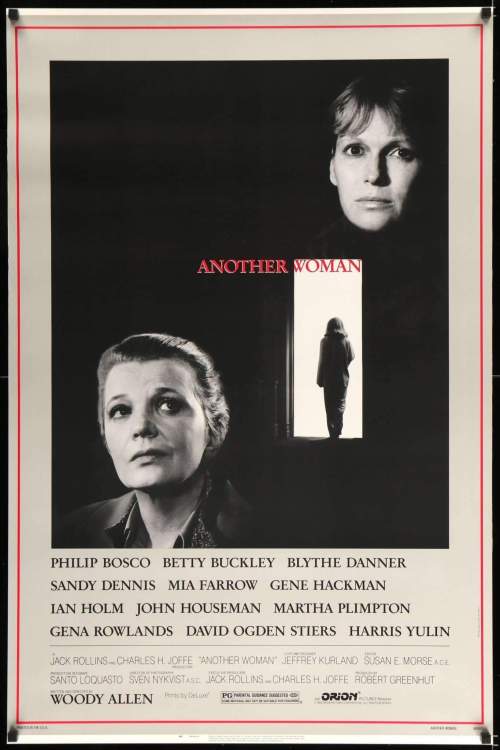
Marion (Gena Rowlands) is a college professor over 50, whose taken a leave of absence in order to write a book. Due to the construction at her place she sublets another apartment in order to have it quiet for her writing, but finds that it’s next to a psychiatrist’s office and through the vent can hear everything that the patients talk about. She becomes especially intrigued with a young pregnant woman named Hope (Mia Farrow) who talks about how empty her life is and this touches a cord with Marion, who despite being much older, feels the same way about her own life. This then forces her to reanalyze how she’s treated her family and friends through the years and causing her to face some harsh realities about herself.

While writer/director Woody Allen has the reputation of a being an intellectual as well as a perfectionist, the film’s opening shot had to be rewritten several times before he was happy with it, it’s surprising how dumb he is with basic physics. The idea that Marion could put a couple of couch cushions over the vent and this would be enough to blot out all of the noise coming from the neighboring apartment just doesn’t ring true. Sure it might muffle the voices a bit, but not a complete block of sound to where she’d hear no noise at all and having the vent be in another room in the apartment, which would’ve allowed her the convenience of simply closing that room’s door in order to cut-off the noise, would’ve worked better.

I was also surprised how later on in the film, Marion tells the psychiatrist about the ‘acoustical irregularities’ that allows her to hear everything that’s said in his office and the Dr. admits to being aware of this, but says he’ll ‘correct it’. What kind of psychiatrist though would knowingly allow his patient’s most personal thoughts to get out for others to hear? This made me think the plot would’ve worked better as one of Allen’s comedies where a writer puts the stories overheard from the patients into their book and when it becomes a best-seller, both the author and Dr. get sued and tormented by the angry patients sending them to a psychiatrists of their own.

Like with all of Allen’s dramas the cast of characters are entirely made-up of upper middle-class intellectuals, which gives the film an elitist, snobby vibe by implying that these types of people are the only ones sophisticated enough to have complex problems that people in the lower socio-economic classes supposedly don’t. They seem too much like caricatures as well who have the exact same interests (writing, the arts, and going to operas) and it would’ve been nice had there been one working class person who wasn’t into all of these things thrown into the mix simply to give it a better balance.

The fact that just about all of the characters are having affairs, many times with each other, makes it too soap opera-like. The scene where Gena bumps into Sandy Dennis and her husband and the three go to a pub for drinks gets particularly over-the-top when Dennis bluntly accuses her husband of paying too much attention to Gena. In most cases if a wife has a problem with her husband’s behavior she’ll keep it to herself and then bring it up later when the two are alone and not out in public for everyone to hear especially to a friend that she hasn’t seen in awhile and is only an acquaintance.

I didn’t like Marion as she’s too cold and while I realize this was intentional she’s not the type of person that the viewer can warm-up to, or care that much about. Mia Farrow’s character is far more appealing and I wanted more of her and was shocked how little screen time she ultimately gets. The part wasn’t even meant for her as she was set to play Marion before she got pregnant and then when Dianne Weist, who was originally cast as Hope, had to leave the production due to illness and her replacement, Jane Alexander, didn’t approach the character the way Woody wanted, so it was eventually given to Farrow, who does quite well despite the fact that she was already in her 40’s at the time even though the person she was playing was supposed to be in their 20’s.

The film does end on a strong note, but it does take awhile before it gets there and comes-off as clunky and unintentionally funny at other points. The scenes with John Houseman, who plays Marion’s father, are particularly hammy as he sits at the dinner table conveying his lines like he still thinks he’s Professor Kingfish speaking to an auditorium full of students. However, David Ogden Stiers impression of Houseman (he plays a younger version of him during a flashback scene) is spot-on and the movie is almost worth catching just for that.

My Rating: 6 out of 10

Released: October 14, 1988

Runtime: 1 Hour 21 Minutes

Rated PG

Director: Woody Allen

Studio: Orion Pictures

Available: DVD, Amazon Video, Blu-ray (Region 0), YouTube

Bananas (1971)

bananas2

By Richard Winters

My Rating: 8 out of 10

4-Word Review: From nebbish to dictator

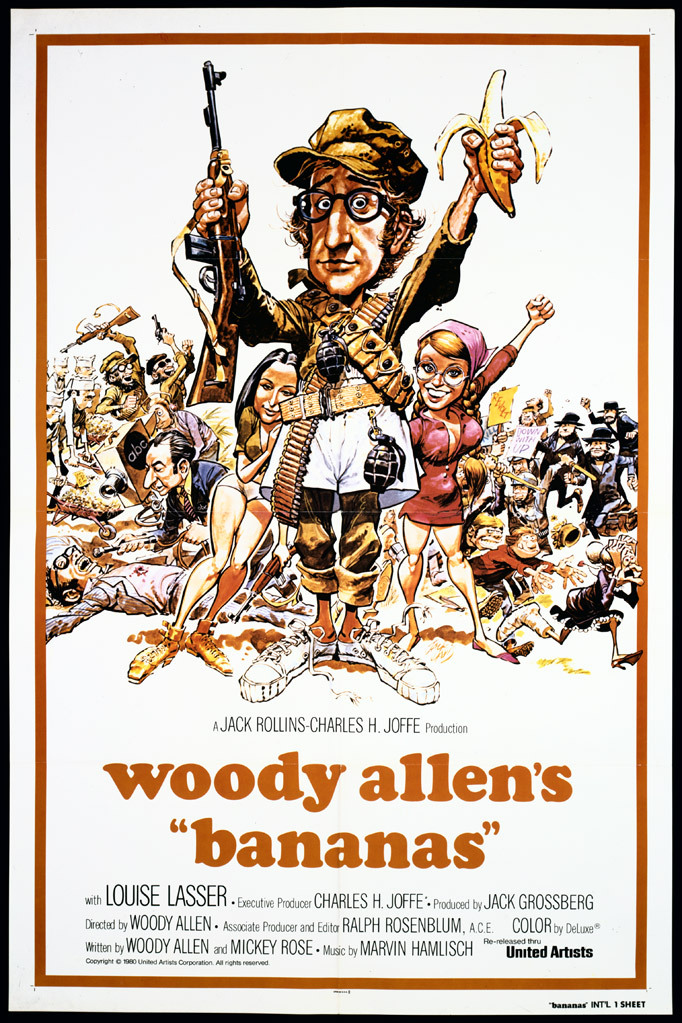
Fielding Mellish (Woody Allen) is a shy, meek individual who works as a product tester, but comes to realize that his job has too many pitfalls and wants to pursue another line of work. One night while in his apartment he receives a knock at his door and meets Nancy (Louise Lasser) who is a social activist. Fielding doesn’t have much interest in politics, but finds Nancy attractive, so he pretends to be into her social causes. Their relationship though does not survive, but Fielding decides to travel to the Latin country of San Marcos anyways, which is where the couple was planning to go to before the breakup. The country is suffering through a revolution and Fielding inadvertently gets caught up in it to the extent that he becomes their acting leader and travels back to the US to ask for foreign aid, but once home Nancy recognizes Fielding for who he really is and this soon has him put on trial.

This was done during the period when Woody was just trying to be funny and without all the pretension and nostalgia that make up so much of his later work, which I don’t care for as much. While there are draggy spots, particularly during the second act, the beginning and end are so strong that it more than makes up for it especially the climactic court sequence, which is laden with a lot of non-sequitur sight gags that didn’t come into vogue in movies until 10 years later when it was introduced to mainstream audiences with great success in the movie Airplane. 

What I really liked though is that Woody actually seems to playing a character here and not just himself. No endless whining about his hypochondriac conditions, or New York being vastly superior to L.A., or how Ingmar Bergman is the greatest film director. This stuff seems to work into many of his later scripts and characters, but here he just plays an average blue collar guy whose only ambition is to get laid, which is wonderful and I really enjoyed pairing him with Lasser. The two had already divorced  by the time this was filmed, but she agreed to remain on as his co-star, which is great as I’ve always said she’s the female version of Woody and in many ways can easily upstage him in just about every scene they share. People like Diane Keaton and Mia Farrow, who became his co-stars in his later movies, were too normal and didn’t compliment Allen’s quirky style like Lasser does and it’s just a shame she disappears during the second act as her presence would’ve prevented it from getting as draggy as it does. 

While most of the gags are quite funny and even inventive I did have a problem with a few of them. The opening bit, which features a televised assassination of the country’s leader, manages to make even Howard Cosell, an obnoxious, egotistical sportscaster that I never cared for, enjoyable especially as he fights his way through the crowd to get an interview with the dying dictator. However, if you’re going to show a guy getting shot then some blood is needed. Allen said he wanted to avoid this because he feared it would hurt the film’s ‘light comic tone’, but its been proven in movies like Shaun of the Dead that gore and comedy can still work together and having Cosell ask the leader ‘how does it feel’ as he lies there bloodied would’ve been dark comedy gold.

The segment where Woody walks into an operating room to tell his parents (Stanley Ackerman, Charlotte Rae), who are both surgeons performing an operation, that he’s traveling to another country, is for the most part an aspiring bit except that in the scene the patient (Hy Anzell) is awake and talking. There is simply no way that anyone being cut open wouldn’t be put under anesthesia, so having him speak is not only unrealistic, but not necessary as the humor from the segment comes from Woody’s interactions with his folks and not from anything that the patient says. 

Overall though this still comes as highly recommended especially for Woody cinephiles looking to take in his wide body of work. His more serious directorial efforts are good too, but in a different way. Yet its his irreverent style that tests the movie making formula, which he does here, that I enjoy the most and while he has done many comedies after this they cease to have the same rapid-fire zaniness as this one. I also have to mention the cigarette commercial that takes place during a Catholic mass, which is the best ad-spoof I’ve ever seen. It did end up being condemned by the National Catholic Office of Motion Pictures, but it was worth it.

 My Rating: 8 out of 10

Released: April 28, 1971

Runtime: 1 Hour 22 Minutes

Rated PG

Director: Woody Allen

Studio: United Artists

Available: DVD, Blu-ray (Region B/2), Amazon Video, YouTube