Tag Archives: Tuesday Weld

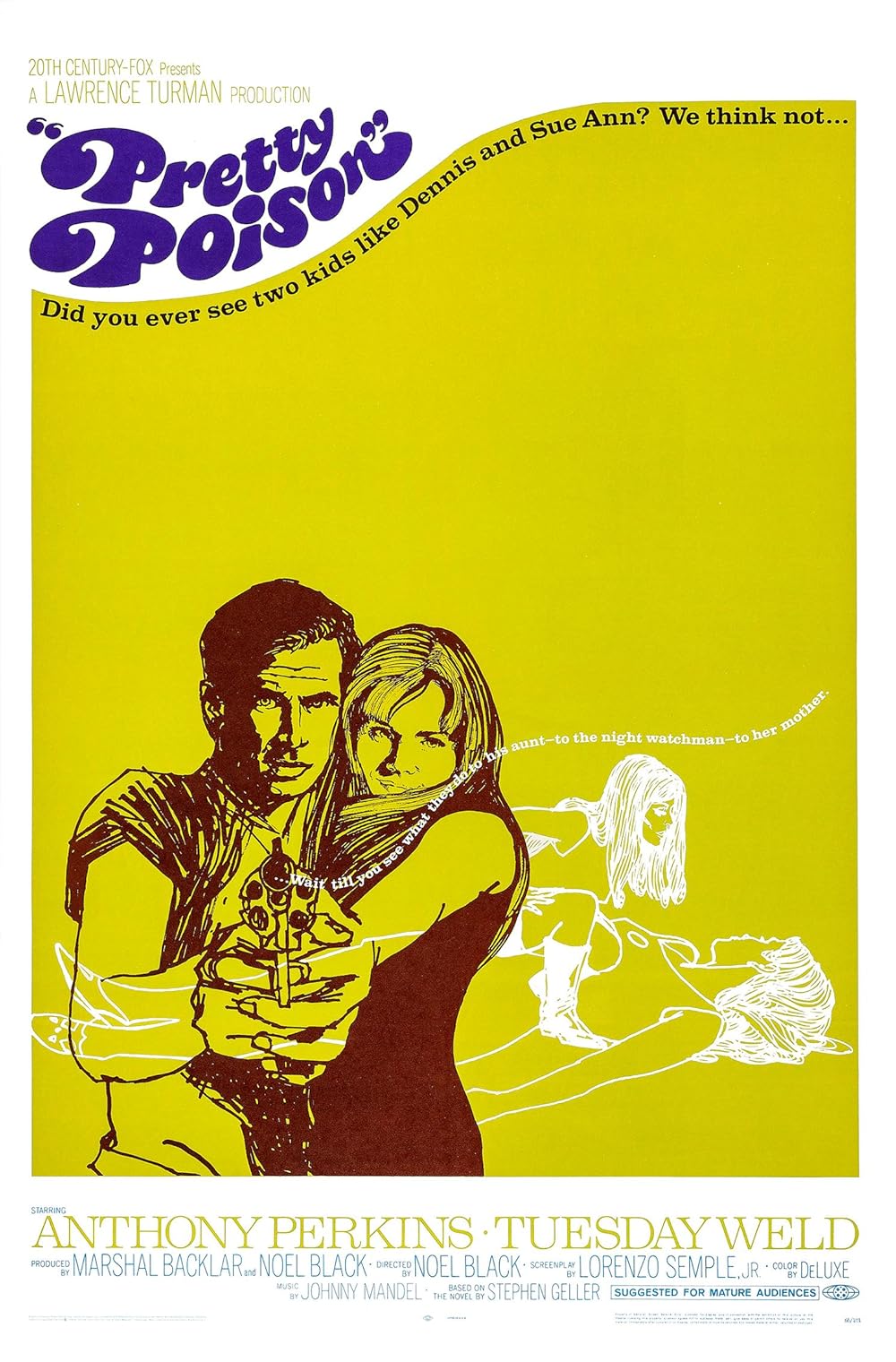
Pretty Poison (1968)

By Richard Winters

My Rating: 7 out of 10

4-Word Review: Manipulated by attractive teen.

Dennis (Anthony Perkins) has been released from the mental institution after serving several years there for setting a home on fire. He gets a job at the local factory but finds it boring and begins to escape into fantasies. He spots pretty 17-yeard-old Sue Ann (Tuesday Weld) while she rehearses with her high school marching band and immediately becomes smitten. He’s never had experience dating anyone, so he decides he’ll pretend to be a CIA agent on a secret mission as a way to impress her and get her attention. He’s disgusted at the way the factory where he works at dumps pollution into the river and thus comes up with a scheme to destroy it using her help, but when a security guard spots them, Sue Ann kills him. Dennis is shocked with Sue Ann’s brazenness and realizes she’s not as innocent as she appears. He tries to cover-up the killing but finds that Sue Ann’s only getting started as her next target is her mother (Beverly Garland). Will Dennis try and stop it, or figure that appeasing her murderous desires may be the only way to keep her from going after him?

The film is based on the 1966 debut novel ‘She Let Him Continue’ by Stephen Geller and directed by Noel Black, who was just coming off the success of his award winning short Skaterdater and this was considered perfect material for his feature film debut. He described the story as “a Walter Mitty type who comes up against a teenybopper Lady MacBeth”. It was shot on-location in Great Barrington, Massachusetts, which gives it a quant small town atmosphere where supposedly ‘nothing ever happens’ and Beverly Garland gives a terrific supporting performance as the caustic mother.

However, Black had no background in working with actors leading to many confrontations behind-the-scenes between he and Weld and keeping the shooting production on schedule proved equally challenging, which got the studio to believe they’d hired a director who was in over-his-head and helped bring in added pressures. When the movie finally did get released, it fared poorly at the box office. Black felt this was because of the recent assassinations of Martin Luther King and Robert Kennedy, which made the studio timid to distribute it and thus few people saw it though in recent years its acquired a small cult following. 

One of the elements that really makes it work is Perkins who gives a splendid performance. Initially I thought it was a mistake to cast him as he would seem too much like his earlier, more famous character of Norman Bates, but he plays this part much differently. Here he comes off as smarter and less crazy. He does dabble in make believe at times but only does it to mask his insecurities and lack of life experience. Watching his emotional arc where he goes from feeling confident, thinking he’s in control with this supposedly naive young teen, only to ultimately have to grapple with his slow realization that it’s really she who’s pulling-the-strings is the most captivating thing in the movie. 

Weld seemed initially to be perfectly cast as she had already shown a propensity at playing characters quite similar to this one in classic episodes of ‘Route 66’ TV-show and ‘The Fugitive’. However, her age clearly belies her as she was 24 at the time it was filmed and looking nowhere near 17. Having a true teen playing the role may have made what she does even more shocking. She later said in interviews that she hated working on this project mainly because Black wouldn’t let her improvise her lines and you could see she just wasn’t fully into it, and it diminishes somewhat the full effect.  

Spoiler Alert!

While it’s intriguing the whole way the ending, which has Dennis calling the police and allowing himself to be put into jail, didn’t have quite the bang I was hoping for. Dennis had fallen hard for Sue Ann to the extent he felt she had ‘changed his life’ and gave meaning to his otherwise lonely existence. When people are in love with someone, they tend not to see the same red flags that others do, so even though she does some evil things I was expecting him to make excuses for it. Like she killed the nightwatchman not so much because she was a sociopath, but more because of her ‘love’ for him and knowing it would help him in his ‘secret mission’. The murder of the mother could’ve been approached the same way in his mind. She killed her only so they could be together, and he would view it as an ‘unselfish’ act versus a selfish one.

Seeing someone who starts out a bit cocky thinking he can ‘trap’ others with his fantasies only to learn that his own fantasy had trapped him would’ve been quite ironic. He could still be convinced of her love even as he’s arrested and thus his final meeting with her, in which he realizes that she’s betrayed him by going to the police, would’ve had more of an impact.

I didn’t feel that Dennis should’ve had to spoon-feed to his psychiatrist, played by John Randolph, that Sue Ann was really the killer, as the doctor should’ve been smart enough to figure this out for himself. Watching the psychiatrist then follow Sue Ann around in his car as she finds another man (Ken Kercheval) that she intends to manipulate leaves things too wide open. What exactly will this lead to? Will the doctor stop her from killing again before it’s too late, or will Sue Ann realize she’s being followed and have the doctor killed? This is something I feel the film should’ve answered. 

My Rating: 7 out of 10

Released: September 18, 1968

Runtime: 1 Hour 29 Minutes

Rated R

Director: Noel Black

Studio: 20th Century Fox

Available: DVD, Blu-ray, Amazon Video, YouTube
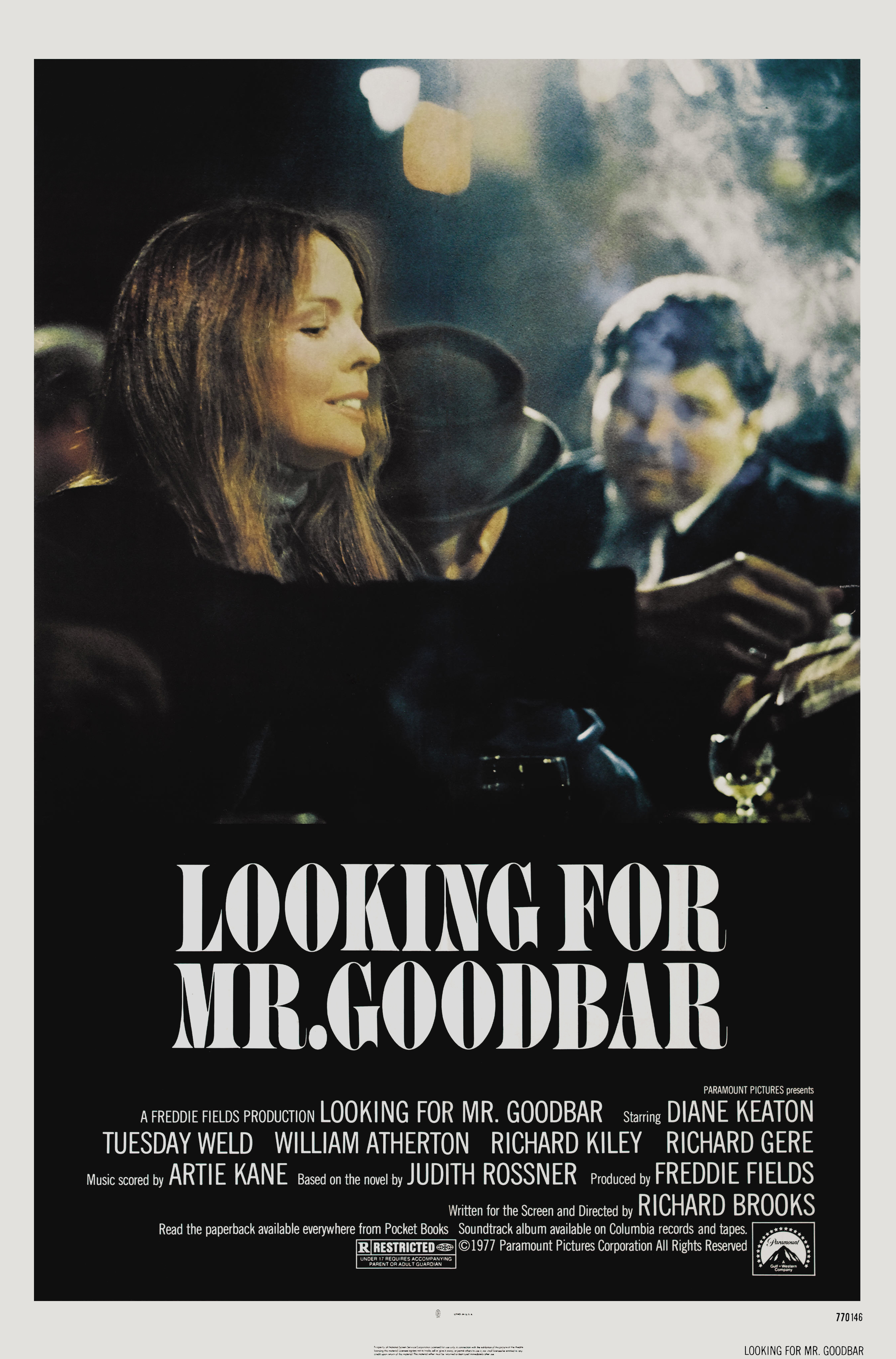
Looking for Mr. Goodbar (1977)

looking

By Richard Winters

My Rating: 7 out of 10

4-Word Review: School teacher sleeps around.

Theresa (Diane Keaton) is a young school teacher trying to get over the break-up with Martin (Alan Feinstein) a married college professor of whom she’d been in a relationship with for several years. Tired of living with her parents (Priscilla Pointer, Richard Kiley) and her domineering father she decides to get a studio apartment near the club scene. She picks-up Tony (Richard Gere) at a bar one night and takes him home. His volatile, drug induced behavior scares her at first, but eventually she enjoys his unpredictable ways. When he disappears for long periods she begins bringing more strangers home finding the one-night-stands to be a liberating change from her repressive catholic upbringing, but the more she partakes in this edgy lifestyle the more danger she puts herself in.

The film is based on the Judith Rossner novel of the same name, which itself is based on the true story of Roseann Quinn. Quinn was a school teacher living in New York City who had a propensity of bringing home men she’d meet from a bar that was across the street from her studio apartment. On the evening of January 1st, 1973 she invited John Wayne Wilson, a man she met at the bar, back to her place for intended sex, but instead it resulted in murder when he was unable to achieve an erection and he felt she was making fun of him.

Rossner read about the incident in a newspaper and became intrigued with the case and intended to write about it for an upcoming article in Esquire magazine, but the editor feared legal action since it was based on an actual case and reneged on the assignment, so Rossner turned it into a novel using fictional names for the real-life people. It got published in 1975 to rave reviews and instantly became a best seller, which caught the attention of writer/director Richard Brooks who had turned other true crime stories into hits such as In Cold Blood and felt he could do the same with this. In fact the film did quite well as it raked in $22.5 million and was the top movie in the country on its opening weekend.

While Rossner openly detested the film version I felt it does a great job of exposing the bleak, lonely existence of the 70’s single’s scene and how sexual liberation can end up being just as much of a trap, if not more, as monogamy. The dim, dark lighting, particularly inside Theresa’s apartment brings out the grim existence, and twisted personalities, of its characters nicely. The viewer feels as caught up in the depressing, aimless world as the protagonist and its the vividness of the 70’s young adult, city culture that makes this an excellent film to see simply to understand the motivations of the people who lived it. While on paper reading about someone that was a school teacher for deaf students during the day turning into a reckless, sexually promiscuous lady by night may seem shocking and hard to fathom, the film seamlessly fills-in-the-blanks to the extent  that you fully grasp, from her stifling family and religious upbringing as well as her painful break-up and insecure body image, to what drove her to it and thus cultivates a very revealing character study.

Keaton, Kiley and Tuesday Weld, who plays Theresa’s older sister who experiments with the wild lifestyle herself, are all stand-outs, but the film also has some great performances from actors who at the time were unknowns. Gere is especially good, quite possibly one of the best acting jobs of his career, as the creepy, but still strangely endearing Tony. LeVar Burton has very few lines, but still makes an impression with his pouty facial expressions as the older brother to one of Theresa’s deaf students. Tom Berenger though turns out to being the ultimate scene stealer as the psychotic who’s so on edge with his personal demons that he lashes violently out over the smallest of provocations.

Spoiler Alert!

While the film is known mainly for its notorious ending, which still packs a bit of a punch, its effect is muted by director Brooks unwisely telegraphing it ahead of time. Virtually the whole movie is done from Theresa’s point-of-view and yet at the very end it cheats it by having a scene between Gary and his gay lover giving the viewer an unnecessary warning about his mental state, which wasn’t needed. For one thing in the real-life incident the assailant was a married man and not gay, so adding in the gay subtext and using it to explain his psychosis could be considered homophobic and armchair psychology. It also hurts the shock value as the audience knows what’s coming versus having them as surprised as Theresa when he suddenly lashes out unexpectedly, which would’ve made for a more emotionally impactful, gripping finish.

My Rating: 7 out of 10

Released: October 19, 1977

Runtime: 2 Hours 16 Minutes

Rated R

Director: Richard Brooks

Studio: Paramount

Available: DVD

Who’ll Stop the Rain (1978)

wholl

By Richard Winters

My Rating: 8 out of 10

4-Word Review: Drug deal gone bad.

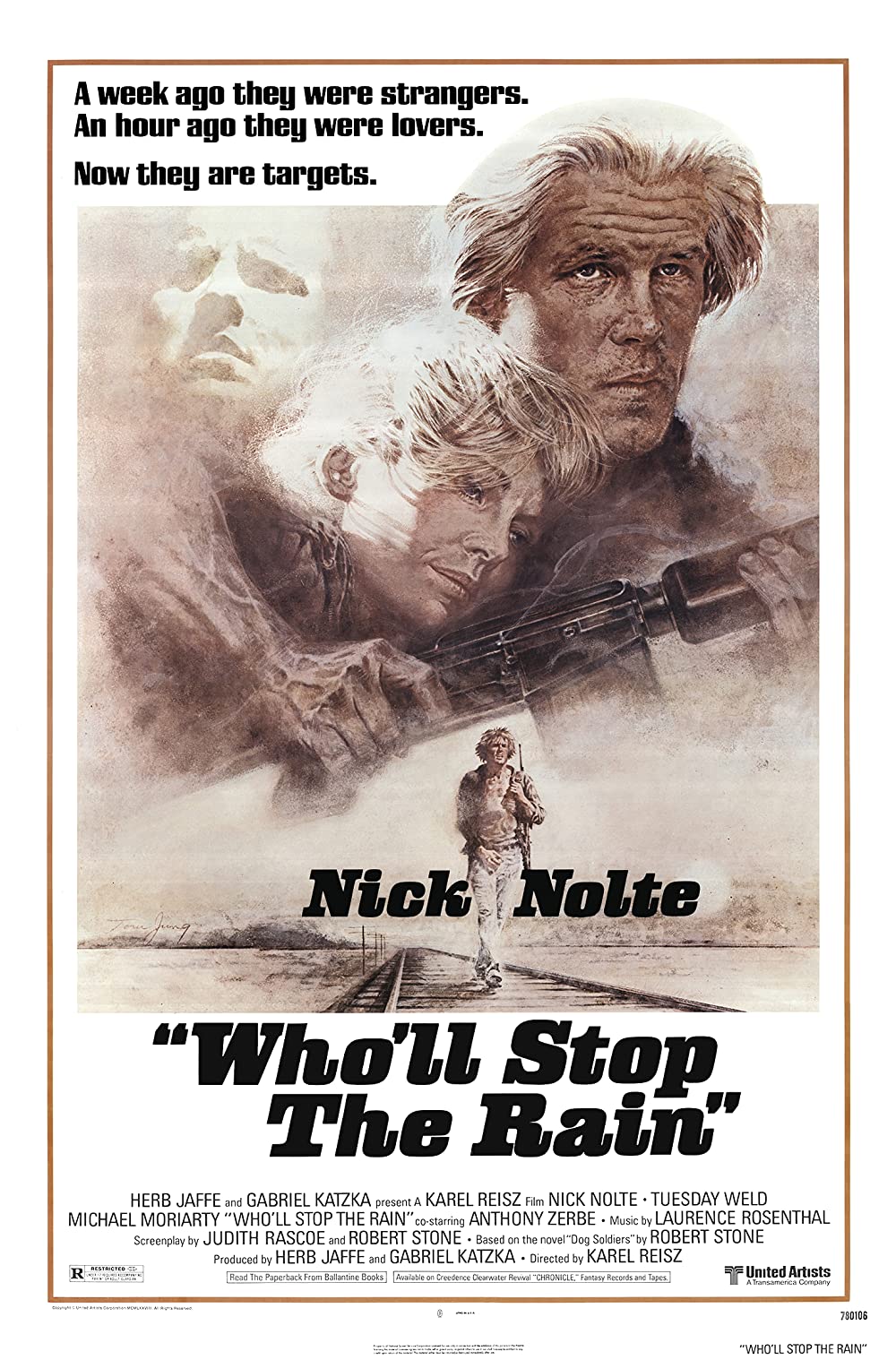
John Converse (Michael Moriarity), a war correspondent working in Saigon, approaches his friend Ray (Nick Nolte), a merchant marine, about smuggling a large bag of heroin out of the country and into the US. Ray has dealt marijuana before, but never the hard stuff and is reluctant at first, but due to his friendship with John he eventually agrees. He is told to go to San Francisco where he’ll drop-off of the drugs for payment with John’s wife Marge (Tuesday Weld). Once he gets there though he realizes he’s been followed forcing both he and Marge to go on a dangerous trip to not only elude the bad guys, but also get rid of the incriminating evidence.

The film is based on the 1974 novel ‘Dog Soldiers’ by Robert Stone, who also co-wrote the screenplay. The theme of the novel was to examine the loss of optimism and youthful ideals of the 60’s and the beginning of the age of cynicism that came during the 70’s, which for that purpose the time period should’ve been 1970 as keeping it in the present day, in this case 1978, makes it seem a bit dated and losses the context of the message. The story itself though is still quite engrossing with some of the most disturbing scenes being the ones dealing with a young, affluent suburban couple (James Granna, Timothy Blake) going to a drug party of sorts that had Ray, Marge and Ray’s friend Eddie (Charles Haid) who give them illicit substance for the first time and their immediate hallucinogenic reaction I found both frightening and impactful.

The performances are uniformly excellent especially Nolte, who was not yet an established movie star and the producers wanting instead Kris Kristofferson for the role only to finally give-in after the persistent lobbying of director Karel Reisz. Tuesday Weld is also dynamic falling into the role of a drab, middle-aged housewife with ease and completely losing the young, sexy starlet appeal that she had previously. My favorite though was Moriarty, whose glazed over eyes and emotionless demeanor perfectly reflects the apathy and soullessness of his character.

On the downside I found the character’s motivations to be confusing particularly the way Marge, who did not know Ray before this, agrees to go with him as he tries to outrun the baddies, but how would know she could trust him, or that he wasn’t in on the scheme? When she dropped her child off with some friends that’s where I felt she should’ve also gone and going back into Ray’s car, instead of calling the police, or advising her friend to do so, seemed reckless and too trusting that this stranger had her best interests at heart. In the book Ray’s intentions are not quite as noble as he decides to bring Marge along more for insurance as he think’s he’s been double-crossed by John, but presumes with Marge along he can use her as a decoy, while in the film it’s because he’s genuinely concerned for her safety. Marge too is betrayed differently as she’s not aware of the drug deal in the film, but in the book she was and I felt these nuances should’ve been brought up in the movie and the fact that they aren’t makes it less realistic and losses the whole point of the story.

John’s relationship with Danskin and Smitty (Richard Masur, Ray Sharkey), the two henchmen to corrupt FBI agent Antheil (Anthony Zerbe) gets botched too. For one thing the make-up effects are too slight as John is put through a wide array of physical tortures by the two in an attempt to get him to tell them where the heroin is and yet after it’s all over the only sign of the struggle is a slight cut on his forehead when instead his entire face should’ve been severely bruised, bloodied, and swelling. Afterwards he becomes too palsy with them even reading a book in their presence and joking around though you’d think he’d remain frightened after what they put him through and never letting down his guard in their presence because he’d know their violent side. I also didn’t like how the two start out as nasty criminals, but by the end become clueless comic foils, which hurts both the tension and grim realism.

The film though does recover especially in the final act when Ray takes Marge to an isolated cabin in New Mexico to hide-out in and then are followed by the villains culminating in a unique showdown. The isolation of the place, which sits amongst the beautiful mountains of the region is both picturesque and tranquil, and is based off of author’s Ken Kesey’s home in California where he wired the nearby trees with lights and sound effects to enhance their LSD experiences, and thus this creates an interesting battle between Ray and the thugs as he uses these same props to disorient them and it helps the movie stand-out with its memorable conclusion.

My Rating: 8 out of 10

Released: August 11, 1978

Runtime: 2 Hours 6 Minutes

Rated R

Director: Karel Reisz

Studio: United Artists

Available: DVD, Blu-ray

I Walk the Line (1970)

By Richard Winters

My Rating: 8 out of 10

4-Word Review: Sheriff covers for moonshiners.

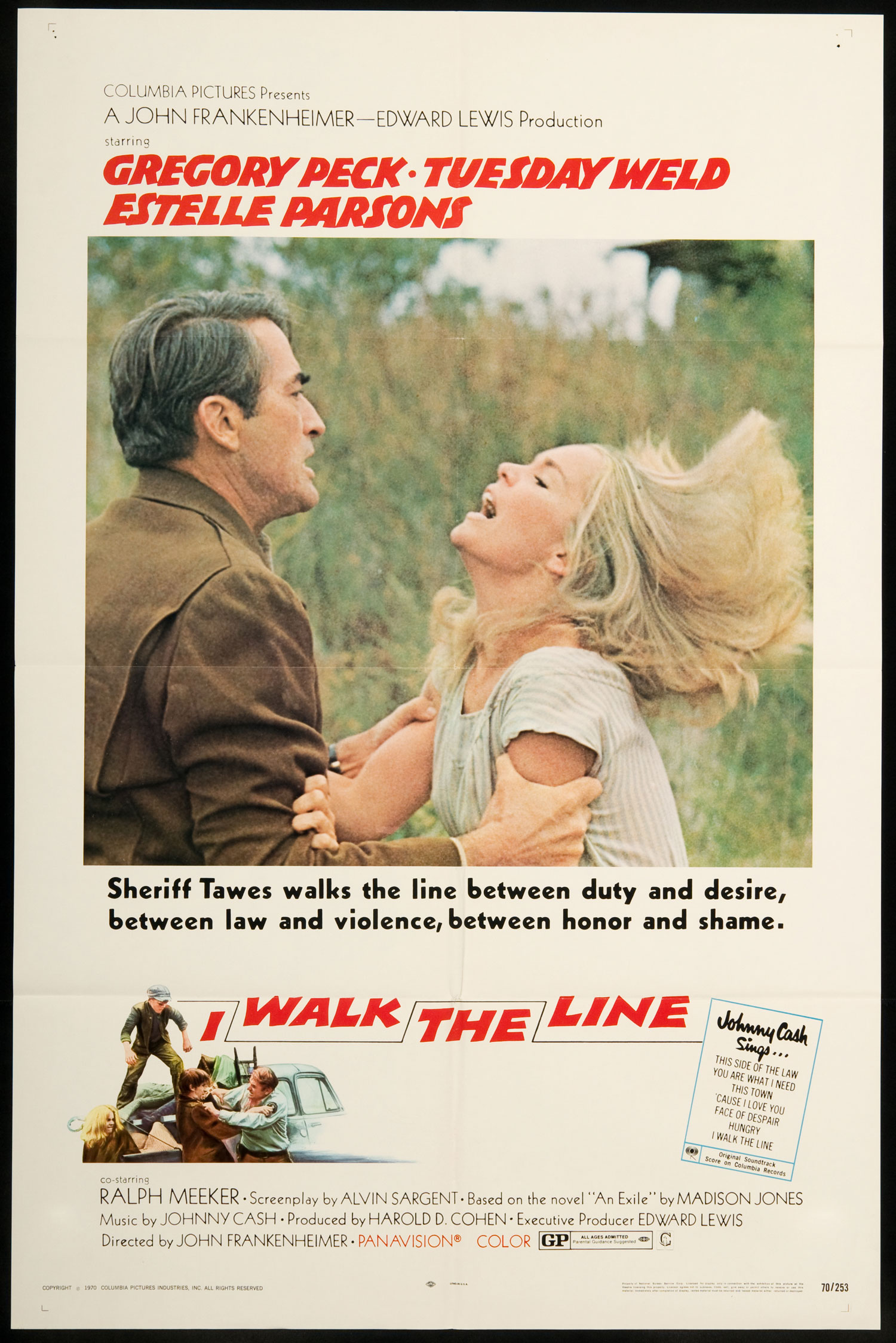
Aging Sheriff Henry Tawes (Gregory Peck) has always been a strong pillar of his community, but recently has found himself bored with his domestic life and looking for diversion. He becomes smitten with Alma (Tuesday Weld) a young woman half his age, who lives on the poor side of town with her father (Ralph Meeker) who runs an illegal distillery. Despite the risks Henry begins an open affair with her with her family’s blessing as long as Henry agrees not to report their distillery, but then a federal agent (Lonny Chapman) arrives in town threatening to shut down every moonshiner he finds. Henry’s deputy Hunnicutt (Charles Durning) also becomes suspicious of Henry’s shady actions, which forces Henry to take some calculated risks, which all backfire on him in shocking ways.

This film is a perfect testament to something that I’ve mentioned before on this blog, which is how shooting a film on-location in an actual small town versus one being built on a studio backlot can make all the difference on whether it succeeds at the box office, or not. This one was done in the tiny hamlet of Gainesboro, Tennessee, which has just over a 1,000 people and in fact its downtown, which includes the prominent courthouse, barely looks any different now then it did when principle photography took place in October of 1969. Director John Frankenheimer makes good use of the townsfolk focusing in on their old, weathered faces at the beginning and glum expressions, which helps accentuate Henry’s bored and static life as well as the abandoned, decrepit house the lovers meet-in, which illustrates their empty, vanquished souls.

The script by Alvin Sargent, which is based on the novel ‘An Exile’ by Madison Jones, allows the visuals and action to do most of the talking while keeping the dialogue subtle and concise. I even enjoyed the music interludes by Johnny Cash. Some critics at the time complained that there was no need for this as Johnny’s words that he sings seem to be simply explaining what the viewer is already seeing onscreen, but the music still conveys a raw southern flavor and Cash’s singing style makes it seem more like he’s talking to the viewer and like he’s another character in the film.

Peck’s performance is good here despite the fact that Frankenheimer wanted Gene Hackman for the role, but was forced to settle with Peck because he was already under contract with the studio. Normally Hackman would’ve been the better choice, but here Peck’s usual stiffness and detached delivery brings out convey his character’s inner turmoil. Durning is outstanding as his nefarious deputy and with his energetic and impulsive presence because an interesting contrast to Peck’s more reserved one.

Spoiler Alert!

Weld is great too even though the part she plays seems very similar to the one that she did in Pretty Poison although here at least the character isn’t portrayed as being completely evil, but instead somewhat naive and sheltered, which helps make her more multi-dimensional. Her motivations though are confusing and the film’s one major drawback. I could not understand, and the film never bothers to make clear, why she’d want to stay stuck with her family and their dismal, impoverished situation. Granted she didn’t really love Henry, which is obvious, but she had already manipulated him quite a bit,  and even had sex with him,so why not run off with him like he wanted and use his money to live a better life while also siphoning some of it back to her family to help them too?

Even if one would argue that she had a close-knit bond to her family it still doesn’t make sense. Many young woman have close ties to their family, but at some point they still leave the nest especially when vanquished to abject poverty otherwise. With her good looks a lot of doors could be opened, so why not see what else is out there? It comes out later that she’s married to another man who’s in jail, but the film glosses over this like she’s not any more in love with him than Henry and still doesn’t help to explain much. It also would’ve worked better had the viewer been left in the dark until the end as to whether she was really in-love with Henry or not instead of making it obvious that she was playing him, which lessens the shock effect for what occurs at the end.

My Rating: 8 out of 10

Released: October 12, 1970

Runtime: 1 Hour 37 Minutes

Rated GP

Director: John Frankenheimer

Studio: Columbia Pictures

Available: DVD, Amazon Video, YouTube

Author! Author! (1982)

By Richard Winters

My Rating: 4 out of 10

4-Word Review: Playwright has family issues.

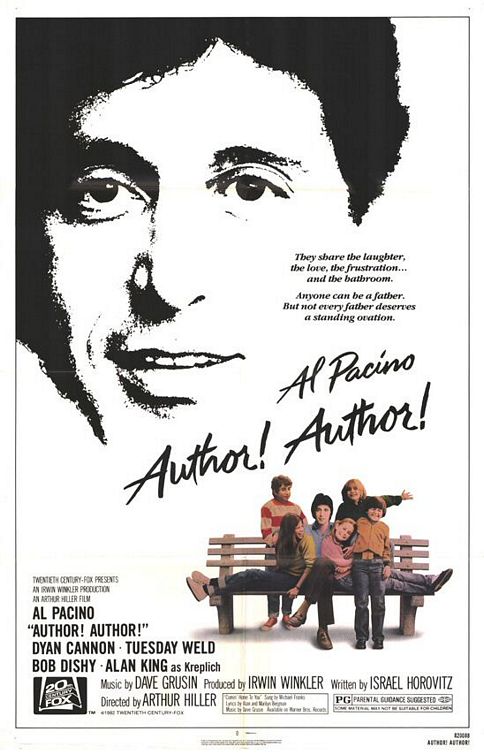
Ivan (Al Pacino) is a playwright struggling to get his next creation ‘English with Tears’ financed and produced. While he has managed to attain the necessary funding he still has a second act that everyone feels ‘needs work’, but before he can tackle that his wife Gloria (Tuesday Weld) leaves him for another man (Frederic Kimball). Now he must contend with raising the five kids alone with four of them being hers from a previous relationship.

The screenplay was written by Israel Horovitz and loosely based on his own experiences as a single parent. Horovitz has written many plays, over 70 of them, several have been considered at least in their day as groundbreaking, so this thing seems incredibly contrived by comparison. The scenes dealing with Ivan’s struggles in regards to his play and the politics that ensue in order to get it made are the most interesting aspects of the movie and the story should’ve solely focused on this angle while the home-life stuff proves sterile and better suited for a sitcom.

The kids seem too connected to the adult world around them. Children can certainly be astute at times, but they still dwell in their own little bubbles and this film shows no awareness of that and instead has them saying lines that more likely would’ve been uttered by an adult. Benjamin H. Carlin has a few cute moments as the young Geraldo, but Ari Meyers, who would later go on to star in the TV-show ‘Kate and Allie’ gives the best performance when she breaks down into tears as she describes the hardships of being booted around from one household to the next.

It’s nice seeing Pacino doing light comedy, which is a real change of pace for him, but he’s too intense and does not play off of Weld, who is more emotionally restrained, well at all. The scene where he tries to physically drag her into a taxi cab isn’t funny, but scary instead and most likely would’ve had those who were standing around witnessing it trying to intervene, or calling the cops.

Dyan Cannon is not effective as the kooky actress who stars in his play and then later moves in with him. Had her character’s eccentricities been played up more she might’ve at least been amusing, but the script doesn’t go far enough with this and having her call him up out-of-the-blue and ask to go to bed with him seemed too outrageously forward. There was some dramatic potential when, after she moves in with him and his kids, she is then asked to move out when Weld’s character comes back into the picture. This could’ve opened the door to a lot of dramatic fireworks and given the film a real lift, but instead she just leaves quietly and is essentially forgotten, which then begs the question why even bother introducing her character at all?

The scenes where Ivan frets about his play and the audience reactions to it are the best parts of the film because it shows the inner anxieties of just about any playwright or screenwriter out there, which is why this should’ve been the central point of the movie as it is the only thing that helps the story stand out. By comparison the family life stuff is generic and filled with too much manufactured cutesiness. It also wastes the talents of Alan King who is mildly amusing, at least at the beginning, as the play’s producer as well as the legendary comedy team of Bob Elliot and Ray Goulding who play the part of the play’s financiers.

The film’s title song ‘Coming Home to You’, which plays over the opening credits as well as the closing ones is so overly sugary that it is enough to make you want to turn the movie off before it’s even begun. It got nominated for a Razzie award for worst original song and it should’ve won as there could not be anything that would be worse, but what is even more amusing is that no one gets credited for singing it, which should’ve been a signal to director Arthur Hiller not to feature it in the film because if the song’s own singer is embarrassed by it then who else would like it.

My Rating: 4 out of 10

Released: June 18, 1982

Runtime: 1Hour 50Minutes

Rated PG

Director: Arthur Hiller

Studio: 20th Century Fox

Available: DVD

Play It As It Lays (1972)

play it as it lays 2

By Richard Winters

My Rating: 2 out of 10

4-Word Review: Her life is empty.

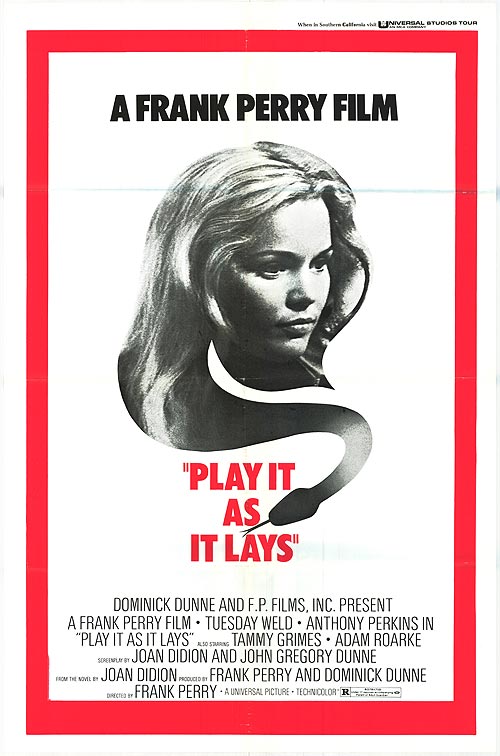
If there ever was a title that aptly described its picture it’s this one as this thing truly does just lay there like a dead body. It’s another one of those stories about a beautiful actress/model (Tuesday Weld) who has fame, fortune, and looks and yet still feels empty. She is a part of the ‘been there, done that’ crowd that now wonders what there is left to do and the plot gets told in a fragmented narrative that at first seems diverting, but eventually goes nowhere.

It was made in an era where if the message wasn’t sad and depressing then it wasn’t ‘important’. The filmmakers have already made up their minds that life is depressing and meaningless and then proceed to beat the viewer over the head with it in each and every scene. Supposedly then the audience is to walk away thanking them for the beating.

The characters represent everything that is irritating about the Hollywood crowd. They are self- absorbed and self-loathing. They fail to put meaning into their lives and yet somehow life has failed them if meaning doesn’t just come up and punch them in the nose. Whine and moan, take a drug hit, whine and moan, go to bed with a stranger, and whine and moan some more.

It’s hard to become attached to those who are so detached from themselves and even harder to like those who can’t stand themselves. Eventually you just give up, especially when the film works on the same spiritless level as the characters. You begin to just laugh at it since every despondent look and quasi philosophical discussion soon becomes redundant making this drama more like high cliché.

Weld and Antony Perkins teamed up earlier in Pretty Poison which has a much more original storyline and interesting characters and you should watch that one instead.

My Rating: 2 out of 10

Released: October 19, 1972

Runtime: 1Hour 39Minutes

Rated R

Director: Frank Perry

Studio: Universal

Available: None at this time

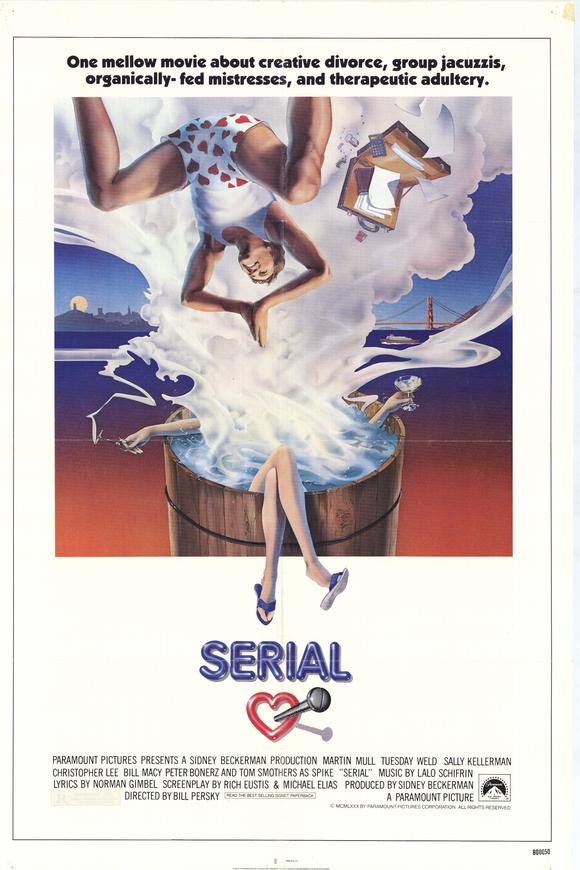
Serial (1980)

serial

By Richard Winters

My Rating: 4 out of 10

4-Word Review: He doesn’t like fads.

The world has turned into one giant fad and everyone and everything is a part of it. Martin Mull is the one remnant of sanity as he tries to survive in it while still keeping his balance.

There is hardly anything cinematic about this picture. Take out some of the ‘dirty’ references and you have a TV-movie. In many ways it’s barely a movie at all, but more of a compilation of skits running along the same theme.

Mull is definitely a good anchor as his glib, sardonic comments help keep this thing churning. The rest of the characters though don’t resemble real people in any way and many of the fads shown weren’t really followed by that many to begin with. It’s pretty restrained and soft and fails to attain the acidic wit of the Cyra McFadden novel of which it is based.

Attacking trendy people isn’t too difficult and this film fails to supply any new perspective on the subject. This is probably the most annoying thing about it, which is that it is as vapid and superficial as the people and lifestyles it tries to mock.

The film does manage to be fast paced and there are a few slightly amusing bits, which could prove entertaining to those on a really, really slow night. Of the good stuff there is a dog groomer who shouts to his barking dogs to “Shut up you sons of bitches.” There is also Mull going to an orgy and having to step through a whole mass of naked bodies before he can find his girlfriend. Kudos also must go out to the climatic finale that features a gay biker gang lead by Christopher Lee who rampage (on their motorbikes!) the home of a religious cult. The running gag of having Tuesday Weld constantly referring to the Pamela Bellwood character as a ‘cunt’ isn’t bad either.

Also, Ed Begley Jr. can be heard on the radio as a DJ in the opening sequence.

serial 2

My Rating: 4 out of 10

Released: March 28, 1980

Runtime: 1Hour 26Minutes

Rated R

Director: Bill Persky

Studio: Paramount

Available: DVD